Disclosure: topratedkitchenware.com is reader-supported. When you buy through links on our site, we may earn an affiliate commission from Amazon and other retailers, at no extra cost to you.
Where to buy
Some guides shop for an occasion; this one shops for a habit. The best indoor electric grills for cooking are the machines that survive daily use — preheating while you chop, handling proteins, vegetables and breakfasts across a week, and washing without a negotiation. The six verified picks below were chosen for that everyday test, from a 10 by 20 inch griddle to a pressed contact classic, and every one is linked so you can check the latest price on Amazon as you weigh the routine each one implies.
- Hamilton Beach Searing Grill 25360 — Best Family Daily Cooker. A lidded 118 square inch grill serving six, with PFAS-free removable grate and heat to 450 degrees.
- Chefman XL Electric Griddle — Best for Batch Cooking and Breakfasts. A 10 by 20 inch immersible flat top with slide-out drip tray for the week’s biggest jobs.
- Chefman Smokeless Indoor Electric Grill — Best Low-Smoke Daily All-Rounder. A smokeless-design tabletop grill with extra-large surface, drip tray and dishwasher-safe parts.
- Elite Gourmet 12-Inch Indoor Electric Grill — Best Compact Daily Cooker. A 12-inch lidded grill at 1200 watts with drip tray, for daily cooking for one or two.
- NAUQUOHZ 1500W 2-in-1 Smokeless Indoor Grill — Best for Widening the Daily Menu. A 1500-watt 2-in-1 with swappable grill and griddle plates and cheese pans for variety.
- George Foreman 4-Serving Indoor Grill — Fastest Daily Dinners. A 4-serving contact press with removable plates, fast heat-up and a grease-reducing design.
Read the full guide ↓ for badges, honest trade-offs, a comparison table and the detail behind every pick.
Cooking — plain, daily, unglamorous cooking — is the hardest brief an indoor grill can be given. Specialty machines shine once a week; a cooking grill has to perform on the tired Tuesday, with whatever the fridge holds, and be clean before the evening ends. The best indoor electric grills for cooking are therefore judged here on range, recovery and routine: the breadth of ordinary foods they handle, the steadiness of their documented heat or power, and the washing system their listings describe, because a grill that is hard to clean is a grill that quietly stops cooking.
The six picks cover the everyday formats honestly. The Chefman XL Griddle is the flat-top workhorse for breakfasts, vegetables and batch proteins. The Elite Gourmet is the compact lidded cooker for one or two. The Chefman Smokeless is the open tabletop all-rounder with a stated smokeless design. The Hamilton Beach 25360 is the lidded family cooker with a removable PFAS-free grate. The NAUQUOHZ 2-in-1 swaps plates to widen the menu, and the George Foreman presses the fastest dinners in the guide. Between them, a household’s whole week is cookable without lighting the hob.
This guide is the cluster’s daily-use center: the apartment constraints on several of these machines are handled in Best Indoor Grills For Apartments, the open-format analysis in Best Indoor Electric Open Grills, and the pressed-format comparison in Best Indoor Grills And Sandwich Presses. Here the question is narrower and more demanding — which of these machines would you still be cooking on, gladly, in six months?
Key Takeaways
- Daily cooking rewards range and routine over peak specifications: formats that handle the week’s actual menu win.
- The Chefman XL Griddle is the batch and breakfast anchor — a 10 by 20 inch immersible top with a slide-out tray.
- The Hamilton Beach 25360 is the family daily cooker: lidded, 118 square inches, PFAS-free removable grate, heat to 450 degrees.
- The NAUQUOHZ 2-in-1 widens the daily menu with swappable grill and griddle plates at 1500 watts.
- The George Foreman cooks the fastest daily dinners — two-sided, pressed, with removable plates to wash.
- The Elite Gourmet and the Chefman Smokeless cover the compact and low-smoke ends of daily cooking respectively.
In this guide
Quick Picks
Badges follow the week: batch anchor, compact daily, low-smoke all-rounder, family cooker, menu widener and fastest dinners. Read the pick that matches your household’s ordinary menu first; the detailed reviews keep every trade-off visible.
| Pick | Badge | Best for | Check |
|---|---|---|---|
| Hamilton Beach Searing Grill 25360 | Best Family Daily Cooker | Families cooking proteins and vegetables nightly | Check on Amazon |
| Chefman XL Electric Griddle | Best for Batch Cooking and Breakfasts | Breakfasts, vegetables and batch proteins | Check on Amazon |
| Chefman Smokeless Indoor Electric Grill | Best Low-Smoke Daily All-Rounder | Daily cooking in open-plan and shared spaces | Check on Amazon |
| Elite Gourmet 12-Inch Indoor Electric Grill | Best Compact Daily Cooker | Singles and couples cooking daily | Check on Amazon |
| NAUQUOHZ 1500W 2-in-1 Smokeless Indoor Grill | Best for Widening the Daily Menu | Households that cook varied menus daily | Check on Amazon |
| George Foreman 4-Serving Indoor Grill | Fastest Daily Dinners | Weeknight dinners on the shortest clock | Check on Amazon |
How These Picks Were Chosen
Everyday suitability was audited from the verified listings alone: formats and plate systems for menu range, stated temperatures or wattages for cooking steadiness, and the cleaning hardware — trays, removable plates, immersible tops, dishwasher-safe parts — that decides whether daily cooking stays daily. No specification appears in this guide that its listing does not state, and where a listing is silent on a maximum temperature, the spec box works with what is stated and says why.
No hands-on testing is claimed. The comparison is the one a buyer can verify: documented format against documented menu, documented cleaning against an honest assessment of household tolerance. That second comparison is weighted deliberately heavily here, because this keyword is cooking rather than occasions — the sixth month matters more than the first weekend, and the sixth month is decided at the sink. The same machines appear under a searing-first lens in the steak guides of this cluster, including Best Indoor Electric Steak Grills, for readers whose daily cooking is unusually beef-led.
The 6 Best Indoor Electric Grills for Cooking
The reviews run across the week’s formats, from the family cooker and the batch anchor to the fastest and most compact picks. Each one maps the pick onto a week of ordinary cooking, names its honest limitation, and closes with the household it serves.

Hamilton Beach Searing Grill 25360
Badge: Best Family Daily Cooker
Strengths
- Lidded 118 square inch surface listed as serving six, the family daily capacity
- PFAS-free removable grate that keeps a nightly grill honestly clean
- Adjustable control to a stated 450 degrees across the daily protein range
Trade-offs
- No viewing window, so the daily check is a brief lid lift
- A single grate format; breakfast and flat-top jobs need another surface
- Family capacity is a family footprint on the counter or in the cupboard
Key specs from the verified listing
- Format: Lidded searing grill
- Cooking surface: 118 square inches, serves 6
- Maximum temperature: 450 degrees Fahrenheit
- Grate: PFAS-free removable nonstick
- Housing: Stainless steel
The family daily cooker is the hardest job in this guide: family portions, nightly frequency, mixed proteins and vegetables, and a wash that cannot become a second shift. The Hamilton Beach 25360 is built to that specification — contained lidded cooking for the splatter reality of family dinners, 118 square inches for the portions, heat to 450 degrees for the range, and a removable PFAS-free grate because a grill used nightly accumulates residue nightly and must be able to shed it.
Nothing in its listing is exotic, and that is the point: daily cooking rewards the complete ordinary package over the spectacular partial one. The missing window is its one daily friction, priced honestly against its sibling’s design. The single-format limit is real — this grill will not griddle the Saturday pancakes — and households should buy it as the protein-and-vegetable engine it is, pairing it mentally with a hob or the griddle pick in this guide for the flat jobs. As an engine, it is the guide’s family recommendation.
Best for: families cooking proteins and vegetables most nights / Not suited for: households wanting one surface to also griddle breakfasts
Check on Amazon to confirm the current configuration and check the latest price on Amazon before you buy.

Chefman XL Electric Griddle
Badge: Best for Batch Cooking and Breakfasts
Strengths
- A 10 by 20 inch flat surface cooks a family batch or a full breakfast in one layer
- Slide-out drip tray collects the week’s rendered fat in one washable part
- Immersible top with removable control makes the big surface the easiest full wash here
Trade-offs
- A flat top gives no grill ridges or lid, so seared-and-contained jobs belong to other picks
- The largest storage footprint in the guide
- No maximum temperature is stated in the listing, so heat is judged by format and control
Key specs from the verified listing
- Format: Open flat-top griddle
- Cooking surface: 10 x 20 inches
- Drip tray: Slide-out
- Controls: Removable temperature control
- Cleaning: Immersible flat top with control removed
Daily cooking has a center of gravity, and for many households it is the flat top: eggs and pancakes at breakfast, a mountain of sliced vegetables at dinner, chicken pieces and burgers in a single layer whenever the week demands volume. The Chefman XL owns that center with the guide’s biggest everyday surface and the wash to match — tray out, control off, whole top in the water. A cooking appliance used daily must wash daily, and this is the only pick whose entire cooking surface immerses.
The listing’s story is area and immersion rather than a headline temperature, and the guide honors that: no maximum is printed because none is stated. In daily terms the trade is generous — you surrender ridges and a lid, and you gain the surface that the largest share of ordinary cooking actually uses. Households whose week is steak-led should pair this assessment with the lidded and ridged picks in this guide; households whose week is batch-led will find this is the machine the other five are compared against.
Best for: households whose daily cooking is breakfasts, vegetables and batches / Not suited for: steak-led cooks who need ridges, a lid and a stated high maximum
Check on Amazon to confirm the current configuration and check the latest price on Amazon before you buy.

Chefman Smokeless Indoor Electric Grill
Badge: Best Low-Smoke Daily All-Rounder
Strengths
- Smokeless design stated in the listing, the daily-comfort feature for shared spaces
- Extra-large surface with adjustable control covers the week’s proteins and vegetables
- Drip tray plus dishwasher-safe parts, a daily wash with no hand-scrubbing step
Trade-offs
- An open surface asks more splatter management than the lidded picks
- Daily fatty cooking still tests any design; the routine in the how-to section is part of the product
- Extra-large tabletop format needs its storage space between uses
Key specs from the verified listing
- Format: Open tabletop grill, smokeless design
- Surface: Extra-large grilling surface
- Controls: Adjustable temperature control
- Drip tray: Included
- Cleaning: Dishwasher-safe parts, nonstick surface
Daily cooking in an open-plan home has an audience: the household lives where the grill cooks, every night. The Chefman Smokeless is the all-rounder for that floor plan, pairing the stated smokeless design with an extra-large single surface that takes the week’s ordinary loads — chicken, burgers, fish, vegetables — in uncrowded layers, and a wash that ends in the dishwasher rather than at the sink. Frequency is where its design pays: a benefit felt once is a feature; felt nightly, it is the reason the grill stays out and stays used.
The design claim is credited as the listing states it and bounded as this guide always bounds it: ordinary daily cooking is its ground, and very fatty or sugary sessions remain the cook’s management problem. The adjustable control suits the daily range from gentle vegetables to hard-seared proteins, and the tray keeps the fat ledger honest between washes. For shared-space households, it is the daily default; for lid-preferring cooks, the Hamilton Beach in this guide trades the smoke design for containment.
Best for: open-plan households cooking daily in shared space / Not suited for: cooks who want a lid’s containment as their daily default
Check on Amazon to confirm the current configuration and check the latest price on Amazon before you buy.

Elite Gourmet 12-Inch Indoor Electric Grill
Badge: Best Compact Daily Cooker
Strengths
- Compact 12-inch lidded format sized to daily portions for one or two
- Drip tray and easy-clean parts keep the daily wash proportionate
- Five temperature settings with heat to a stated 450 degrees and fast heat per the listing
Trade-offs
- Daily cooking for more than two becomes a rounds-based routine
- 1200 watts is the lowest stated power here, with recovery to match
- The round surface is awkward for long vegetables and large flat items
Key specs from the verified listing
- Format: Round grill with glass lid
- Size: 12 inches
- Power: 1200 watts
- Maximum temperature: 450 degrees Fahrenheit
- Settings: 5 temperature settings
- Extras: Drip tray, cool-touch handles
For one or two people cooking daily, proportionality is the whole game: a grill sized to the portion, a wash sized to the meal, a footprint sized to the kitchen. The Elite Gourmet is that proportion in appliance form — a 12-inch lidded grill with a tray, five settings and heat to 450 degrees that handles the solo and couple menu of chicken, fish, vegetables and burgers without asking its owner to manage a family machine for a single portion.
Its limits are the honest arithmetic of its size: rounds for guests, slower recovery at 1200 watts, a round geometry that prefers fillets and burgers to asparagus bundles. None of those touches the daily case it is built for, and its glass lid adds the small daily pleasure of watching food without lifting and losing heat. As the compact end of everyday cooking — the same role it plays for Best Indoor Grills For Apartments — it is complete, contained and correctly sized.
Best for: singles and couples who cook daily and wash proportionally / Not suited for: households cooking for four or more every night
Check on Amazon to confirm the current configuration and check the latest price on Amazon before you buy.

NAUQUOHZ 1500W 2-in-1 Smokeless Indoor Grill
Badge: Best for Widening the Daily Menu
Strengths
- Removable grill and griddle plates double the daily menu on one 1500-watt base
- Smokeless design stated in the listing for everyday indoor use
- Cheese pans and dishwasher-safe parts add variety without adding washing pain
Trade-offs
- The widest menu comes with the widest parts count to store and wash
- Plate swaps between courses add a hot-plate pause to the routine
- No maximum temperature stated, so heat comparisons run on wattage and format
Key specs from the verified listing
- Format: 2-in-1 open grill and griddle, Korean barbecue style
- Power: 1500 watts
- Plates: Removable nonstick grill and griddle plates
- Design: Smokeless, stated in listing
- Extras: 3 cheese pans, dishwasher-safe parts
Menu fatigue is the daily cooker’s silent enemy, and the NAUQUOHZ answers it with hardware: a grill plate for the ridged jobs, a griddle plate for the flat jobs, cheese pans for the evening the menu turns Korean, all on one base at 1500 watts. For households whose daily cooking roams — stir-fry-style vegetables and meats one night, breakfast-for-dinner the next — the swap system keeps one appliance at the center of the week instead of three competing for the counter.
Variety has a friction cost and the review prices it: more parts in the cupboard and the sink, a pause when plates change mid-menu, and heat described by wattage and control rather than a stated maximum. For the roaming menu those costs buy real range; for a fixed menu of chicken and vegetables they buy nothing, and the simpler picks above are the honest recommendations. Judged as the menu widener for daily cooking — a role the sandwich-press comparison in Best Indoor Grills And Sandwich Presses approaches from the pressed side — it has no rival in this lineup.
Best for: households whose daily menu roams across formats / Not suited for: cooks with a fixed simple menu who value fewest parts
Check on Amazon to confirm the current configuration and check the latest price on Amazon before you buy.
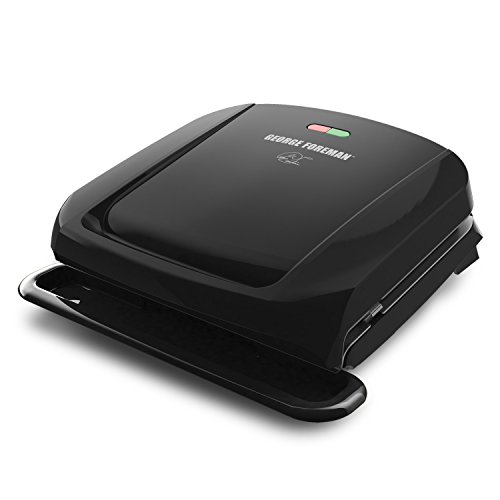
George Foreman 4-Serving Indoor Grill
Badge: Fastest Daily Dinners
Strengths
- Two-sided contact cooking, the fastest daily format in the guide
- Fast heat-up stated in the listing, shortening the whole dinner routine
- Removable plates and a grease-reducing design solve the press’s historic cleanup problem
Trade-offs
- Four servings per load caps family daily cooking in rounds
- Pressed format excludes delicate, loose and open-faced daily foods
- Simpler controls than the adjustable picks; the press has one way of cooking
Key specs from the verified listing
- Format: Contact grill, hinged two-sided plates
- Capacity: 4 servings
- Plates: Removable nonstick plates
- Design: Grease-reducing sloped design, fast heat-up
- Controls: Simple contact-grill controls per listing
Every daily-cooking guide needs its speed answer, and the George Foreman is this one: food between two hot plates, cooked from both sides at once, with the sloped grease-reducing design moving fat away while it happens and removable plates ending the cleanup argument that used to follow. Burgers, chicken breasts, pressed sandwiches, sturdy vegetables — the weeknight core menu — come off this machine faster than off any other pick in the guide, and on tired Tuesdays speed is not a luxury feature; it is the feature that decides whether cooking happens at all.
The press’s discipline is its boundary: it presses. Delicate fish, loose vegetables, eggs and anything open-faced belong to the other formats, and the four-serving ceiling turns family dinners into two quick rounds rather than one load. The listing’s promises are fast heat-up and grease handling, credited here without invented numbers. As the speed specialist in a daily lineup — bought knowingly alongside its limits — it earns the closing badge and, in many households, the highest uses-per-week count of any pick in this guide.
Best for: households whose daily cooking is a race against the evening / Not suited for: cooks whose menu leans delicate, loose or open-faced
Check on Amazon to confirm the current configuration and check the latest price on Amazon before you buy.
Comparison Table
Daily cooking comparison privileges the routine columns — format range, cleaning system, capacity rhythm — over peak figures, because the routine is what a cooking grill is bought for.
| Pick | Form | Surface and heat (from listing) | Cleaning notes (from listing) | Check |
|---|---|---|---|---|
| Hamilton Beach Searing Grill 25360 | Lidded searing grill | 118 square inches, to 450 degrees | PFAS-free removable nonstick grate | Check on Amazon |
| Chefman XL Electric Griddle | Open flat-top griddle | 10 x 20 inch surface; maximum not stated in listing | Slide-out drip tray; immersible top | Check on Amazon |
| Chefman Smokeless Indoor Electric Grill | Open tabletop grill, smokeless design | Extra-large surface; adjustable control | Drip tray; dishwasher-safe parts | Check on Amazon |
| Elite Gourmet 12-Inch Indoor Electric Grill | Round grill with glass lid | 12-inch surface, 1200 watts, to 450 degrees | Drip tray; easy-clean parts | Check on Amazon |
| NAUQUOHZ 1500W 2-in-1 Smokeless Indoor Grill | 2-in-1 open grill/griddle | 1500 watts; temperature control | Removable plates; dishwasher-safe parts | Check on Amazon |
| George Foreman 4-Serving Indoor Grill | Contact press grill | 4-serving plates; fast heat-up per listing | Removable nonstick plates | Check on Amazon |
How to Choose the Best Indoor Electric Grills for Cooking Every Day
Map your actual week before comparing a single pick. Count the breakfasts, the protein nights, the vegetable loads, the sandwiches, the batch sessions. The format that covers the largest share of that real map is your format: flat top for batch-and-breakfast weeks, lidded for protein-and-vegetable weeks, plate-swap for roaming weeks, press for speed weeks, compact for one-or-two weeks, smokeless-design for shared-space weeks. The badges in this guide are those maps already drawn.
Then interrogate the wash with unusual honesty, because daily cooking multiplies it by hundreds. Removable plates, an immersible top, dishwasher-safe parts, a slide-out tray — each pick documents a different subset, and the subset you will perform nightly without resentment is a better predictor of your sixth month than any heat figure. If two picks tie on menu, buy the one whose wash matches your sink habits.
Finally, treat stated heat as a sufficiency question rather than a contest. Daily proteins and vegetables live in the middle ranges every pick here documents — 450 degrees where stated, solid wattage where stated — and the household that cooks daily will notice recovery, evenness and control long before it notices a ceiling it rarely touches. Buy sufficiency plus routine, and the grill becomes infrastructure.
- Menu map: The share of your real week each format covers: batches, breakfasts, proteins, pressed items, shared sessions.
- Cleaning system: Count the documented wash features and match them to nightly tolerance; daily use forgives nothing at the sink.
- Capacity rhythm: One-layer family loads, rounds for two, waves at a table — pick the rhythm your evenings already keep.
- Heat sufficiency: Stated maximums and wattages here all cover daily cooking; value control and recovery over ceiling.
- Storage and parts: Plate systems widen menus and cupboards alike. Count parts as honestly as servings.
- Space and smoke context: Open-plan daily cooking weights the stated smokeless design; lidded homes weight containment.
One habit separates households that keep a daily grill from households that store one: a fixed place in the week. Give the machine two standing jobs — Tuesday proteins, Saturday breakfast, whichever fits — and the routine builds itself around them. Appliances with standing jobs get washed, maintained and replaced when they wear; appliances waiting for inspiration get neither.
How to Build a Daily Cooking Routine Around an Indoor Electric Grill
A daily grill routine is a small system: station, sequence, wash, repeat. The steps below install that system for any format in this guide.
- Give it a station: One position, cord managed, tongs and tray within reach, plates stored fitted or beside it. Setup friction is the daily routine’s first enemy.
- Preheat inside the prep: Switch on when chopping starts. By the time food is ready, every format here is at working heat, and the evening has lost no minutes to waiting.
- Cook the menu in format order: On plate systems, sequence courses by plate; on single surfaces, sequence by fat and delicacy — vegetables and lean items before the fattiest load.
- Rest and hold without fuss: Finished batches hold warm under a lid or tented while the next cooks. Daily cooking is waves, and planning the waves is the skill.
- Wash in the same cleanup as the plates: Grill parts join the dinner wash the same night — sink, immersion or dishwasher as the listing allows. A grill washed with the dishes never becomes a project.
- Reset the station dry: Parts dried, tray emptied, primary plate fitted. Tomorrow’s cook should meet a ready machine, not a disassembled one.
Households new to the routine should start with two standing jobs a week rather than a daily ambition; frequency grows from success, and the guides for the neighboring formats — Best Indoor Grills Canada readers face the same routine questions in their market — all converge on that modest, durable starting point.
Troubleshooting
Problem: food sticks despite the nonstick surface → what to do: Preheat fully, dry the food, and wait for natural release before moving it. Most sticking is a cold start or an impatient first flip.
Problem: the grill is getting slower across the week → what to do: Residue is insulating the plate. Give the removable parts a full wash as the listing allows; daily cooking needs a weekly deep-clean beat in the routine.
Problem: dinners queue because everything cooks at once → what to do: Stagger by design: start the longest items first, hold finished batches warm, and let the format’s second surface or the hob take one course.
The Sixth-Month Test: What Daily Use Actually Reveals
Month one reveals cooking; month six reveals ownership. By then every household knows its pick’s real specifications, which are never the printed ones: how long the wash actually takes, which plate is always fitted and which lives in a drawer, whether the tray gets emptied mid-session or only under protest, and whether the machine’s footprint has been forgiven. The picks in this guide were badged with the sixth month in mind — immersible tops, removable plates, dishwasher-safe parts and proportionate sizes are month-six features wearing month-one clothing.
The corollary is a buying instruction: when two picks tie on the menu, choose by the ownership facts, not the cooking facts. The grill that washes your way, stores your way and sizes to your household will out-cook the marginally stronger machine that fights you nightly, because it will be used on the nights the other is skipped — and skipped nights are where daily value is actually lost.
One Grill or a Grill Plus One: Planning the Daily Kitchen
Honest planning admits that no single format in this guide covers every daily job: the griddle cannot press, the press cannot griddle, the lidded grill cannot host a table, the table machine cannot contain like a lid. Households solve this in one of two documented ways — a plate-swap machine that carries two formats in one footprint, or a primary grill paired with the hob for the jobs outside its format. Both are respectable systems; the failure mode is pretending a single-format pick will stretch, and then blaming it for the stretch marks.
Choose the primary by the week’s center of gravity and let the secondary be whatever already exists in the kitchen. The daily guides in this cluster are written to compose that way — the open, lidded, pressed and table formats each documented on their own terms, so a household can assemble a system from honest parts instead of hunting for a mythical universal machine.
- Batch-and-breakfast center: Chefman XL Griddle as primary.
- Protein-and-vegetable center: Hamilton Beach 25360 as primary.
- Roaming menu: NAUQUOHZ 2-in-1 as the two-format primary.
- Speed center: George Foreman, with the hob covering delicate work.
- One-or-two center: Elite Gourmet, proportionate and complete.
A Week of Dinners on the Daily Picks
Monday: chicken and vegetables under the Hamilton Beach lid, grate in the sink by eight. Tuesday: the press takes burgers and pressed sandwiches at speed, plates off and washed in minutes. Wednesday: the griddle carries a full flat top of peppers, onions and sliced chicken for wraps, tray slid out and emptied once. Thursday: the 2-in-1 runs a roaming menu — grill plate for proteins, griddle plate for the flat sides — and Friday belongs to the Chefman Smokeless in the open-plan room, with the dishwasher closing the week’s washing.
The weekend is where the compact pick earns its keep in a second home, a small flat or a quiet household of two: a lidded breakfast, a pair of fillets, a wash proportionate to the meal. No single machine cooked the whole week in this sketch, because no household’s week is single-format — the guide’s six picks are a repertoire, and the reader’s job is to cast the one or two roles their own week actually performs.
The Breakfast Test: What Morning Cooking Reveals About a Grill
Breakfast is the daily-cooking audit nobody designs for and everybody performs. It is cooked half-awake, on a clock, with foods — eggs, pancakes, bacon-style items, sliced potatoes, toast-adjacent breads — that punish the wrong format instantly. The griddle pick passes the test natively, the plate-swap pick passes it with its flat plate fitted, the lidded and compact picks pass a smaller version of it, and the press passes only the sandwich portion. A household whose grill must earn a morning place should weigh that audit heavily, because breakfast frequency rivals dinner frequency in most homes and exceeds it in many.
Morning also audits the wash without mercy: a grill that cannot be cleaned inside the breakfast cleanup will not be used at breakfast twice. The immersible top, the removable plates and the dishwasher-safe parts scattered across this guide’s listings are, in this light, breakfast features as much as dinner features. Judge your finalist at 7 a.m., mentally, with the school run pending — the honest result of that exercise predicts more satisfaction than any specification in the comparison table.
Energy, Time and the Real Cost of Cooking Indoors
Daily cooking decisions accumulate into household economics, and an indoor grill’s ledger has three entries worth understanding. Time: a preheated grill that cooks a protein and its vegetables in one session replaces a hob, an oven preheat and a tray of pans, and the saving is measured in weeknight minutes rather than in any utility figure. Attention: lidded and pressed formats free the cook during the cook, while open formats ask for presence — a real cost on busy evenings and a pleasure on slow ones. Washing: the parts count and method in each listing is a nightly tax or a nightly triviality, and across a year the difference is measured in hours.
Energy comparisons between small electric appliances and ovens are often exaggerated in both directions, and this guide makes no utility claims for any pick, because no listing states consumption beyond wattage where given. What can be said honestly is that cooking a two-person dinner on a 12-inch lidded grill heats a smaller thing than cooking it in a full oven, and that the household that cooks daily on a right-sized appliance wastes less of everything — heat, time, attention and food — than the household that fires its largest appliance for its smallest meals.
When the Hob Still Wins: an Honest Boundary for Daily Grills
A cooking guide that never concedes ground to the stove is a sales document, so here is the concession in full. Liquids belong to pans: sauces, soups, braises and anything that simmers is hob work, and no pick in this guide pretends otherwise. Delicate eggs, loose small items and very wet batters belong to pans or to the griddle plate at most. Large roasts and whole birds belong to ovens. The grill’s daily empire is the dry-heat middle — proteins, vegetables, breads, sandwiches, breakfasts — and inside that empire it is faster, simpler and easier to wash than the alternatives for most households.
Recognizing the boundary improves the purchase: a household that knows its grill will partner the hob buys the format that covers the hob’s dry-heat weaknesses, rather than a format that duplicates its strengths. That is the system thinking behind this guide’s badges, and it is why the final recommendation assigns standing jobs instead of crowning a universal winner. The best daily kitchen in this cluster is not the one with the best grill; it is the one where grill and hob each do the work they are honestly for.
Maintenance Calendar: Keeping a Daily Grill at Full Performance
Daily appliances reward a calendar more than a crisis response, and a grill’s calendar has three simple beats. Nightly: the working wash — plates, trays and surfaces cleaned as their listings allow, because tomorrow’s performance is set by tonight’s residue. Weekly: the detail beat — tray channels checked, the area under the appliance wiped, plates inspected for the buildup that nightly washing misses, especially after a fatty week. Seasonally: the honest audit — cords and controls checked, the station reorganized, plates that have left the rotation stored away, and the standing jobs reassigned if the household’s menu has drifted.
Performance complaints about mature grills — slower searing, more smoke, sticking where food once released — trace back to missed beats far more often than to failing hardware. Residue insulates, residue smokes, residue sticks. The picks in this guide were chosen partly for how gracefully they accept the calendar: immersible tops forgive a busy week, removable plates make the weekly beat thorough, dishwasher-safe parts make the nightly beat nearly free. Buy the machine whose maintenance calendar your household will actually keep, and the sixth-month test described earlier stops being a test at all.
Teaching a New Cook on an Indoor Grill
An indoor electric grill is an underrated teaching instrument, and households with a new cook — a teenager, a partner expanding their range, a housemate on a rotation — should weigh the fact. The formats here forgive in instructive ways: the lidded picks contain a beginner’s splatter and hold a forgiving heat, the press removes the flipping decision entirely, the griddle shows cause and effect across a whole visible surface, and the plate-swap machine teaches format thinking by making the student choose a surface before choosing a temperature. Every mistake is visible, most are recoverable, and the wash teaches the maintenance habit in the same lesson as the cooking.
That pedagogical value has a purchasing consequence: a household buying partly to teach should prefer the format whose feedback the student will read best, which is usually the visible one — griddle or lidded-with-glass — over the format whose virtues are speed or enclosure. The daily menu learned on such a machine transfers to every other appliance in the kitchen afterward, which makes the humble cooking grill, chosen well, the highest-leverage purchase in this entire cluster for a household with someone learning to feed themselves.
Common Buying Mistakes
Buying a specialty format for a general week
A press-only or session-only machine serving a general daily menu will frustrate by Wednesday. Match the primary format to the week’s center of gravity.
Undervaluing the wash at purchase
Daily cooking multiplies cleanup by hundreds of repetitions. A wash you resent is a grill you will stop using, whatever it cooks like.
Chasing a heat ceiling the menu never uses
Daily proteins and vegetables live in the documented middle ranges. Control, recovery and evenness are the daily virtues; ceilings are weekend bragging.
Leaving the grill unassigned in the week
Appliances without standing jobs drift to the cupboard. Assign two weekly jobs at purchase and the routine defends itself.
Final Recommendation
For the general daily brief, start with the Hamilton Beach Searing Grill 25360 if your week is family proteins and vegetables — lidded, capacious, removable-grate honest — or the Chefman XL Electric Griddle if your week is batches and breakfasts on the big immersible flat top. The Chefman Smokeless Indoor Electric Grill is the shared-space daily default, with its stated smokeless design and dishwasher finish.
The NAUQUOHZ widens the roaming menu, the George Foreman wins the tired Tuesdays, and the Elite Gourmet keeps small households proportionate. Check the latest price on Amazon for your finalist, confirm its plates and cleaning system in the current listing, and assign it two standing jobs the day it arrives — that assignment, more than any specification, is what makes a grill a cooking grill.
Frequently Asked Questions
Which grill suits cooking every single day?
The one whose format covers your week’s center and whose wash you will perform nightly: the Hamilton Beach 25360 for family proteins and vegetables, the Chefman XL Griddle for batches and breakfasts, the Chefman Smokeless for open-plan homes.
Is a griddle or a grill better for daily cooking?
Griddles cover breakfasts, vegetables and batches; ridged and lidded grills cover seared proteins and contained cooking. Plate-swap models like the NAUQUOHZ 2-in-1 exist precisely because the honest answer is usually both, in sequence.
How important is a removable plate for daily use?
Decisive over time. Removable, immersible or dishwasher-safe parts are what keep a nightly grill clean enough to stay nightly; fixed surfaces are the compromise to accept only knowingly.
Can these grills handle a full week’s menu without the hob?
Mostly, with format awareness: the six picks together cover proteins, vegetables, breakfasts, pressed items and shared sessions. Delicate and liquid-based cooking still belongs to pans, which the guide treats as a system partner, not a rival.
What power or temperature does daily cooking need?
The documented middle ranges suffice: 450 degrees where stated, 1200 to 1500 watts where stated, with control and recovery mattering more than ceilings for everyday foods.
How do I stop a daily grill from smelling up the kitchen?
Clean starts, tray discipline, same-night washing and ventilation. A stated smokeless design, like the Chefman’s, is the strongest product-side starting point for shared spaces.


