Disclosure: topratedkitchenware.com is reader-supported. When you buy through links on our site, we may earn an affiliate commission from Amazon and other retailers, at no extra cost to you.
Where to buy
For readers comparing the best makes of bbq grills, here is the short version. Six makes of BBQ grill are compared below — four gas carts, a charcoal offset smoker-grill and a premium charcoal kettle — and all six are linked. Each name links to its Amazon listing so you can check the latest price on Amazon and confirm the full specification. BBQ is the operative word on this page: these are makes judged on how they handle barbecue cooking — zones, smoke, low-and-slow patience and crowd capacity — not just on grilling burgers.
- Nexgrill 4-Burner Propane Gas Grill with Stainless Steel Lid — Best All-Round Gas Make. Nexgrill 4-burner pattern: 52,000 BTU, 526 sq. in., cast iron grate, ignition, thermometer. (check the latest price on Amazon)
- Monument Grills Mesa II 4-Burner Propane Gas Grill 410FBZ — Best Broil-Led Gas Make. Monument Mesa II 410FBZ pattern: Advanced Broil Zone, stainless, folding shelves. (check the latest price on Amazon)
- AMERLIFE 6-Burner Propane Gas Grill with Side Burner — Best Crowd-Canvas Make. AMERLIFE 6-burner pattern: 60,000 BTU, 650 sq. in., cast iron, warming rack. (check the latest price on Amazon)
- Charbroil Portable 1-Burner Propane Gas Grill 465133010 — Best Portable Make. Charbroil portable pattern 465133010: one burner, aluminized steel, 11,000 BTU. (check the latest price on Amazon)
- Royal Gourmet CC1830S Charcoal Grill and Offset Smoker — Best Offset BBQ Make. Royal Gourmet CC1830S pattern: barrel grill plus offset smoker, 783 sq. in. (check the latest price on Amazon)
- Weber Original Kettle Premium Charcoal Grill, 22-Inch — Best Kettle Make. Weber Kettle Premium pattern: 22-inch, thermometer, dampers, One-Touch cleaning. (check the latest price on Amazon)
Read the full guide ↓ for badges, honest trade-offs, a comparison table and the reasoning behind every pick.
The best makes of bbq grills earn the title at the intersection of two crafts. BBQ asks a grill to do more than sear: it asks for zones that hold different heats for hours, room for large cuts, some relationship with smoke, and the patience of a fire that can be fed, damped or dialed without drama. The six makes below — four propane designs, one charcoal barrel with an offset smoker, one premium kettle — each embody a different theory of how a BBQ grill should be made, and this guide compares the theories as much as the products.
The word “makes” is doing real work in this keyword. A make, read generously, is a design line: the Nexgrill 4-burner pattern at 52,000 BTU, the Monument Mesa II pattern with its broil zone, the AMERLIFE six-burner pattern, the Charbroil portable pattern, the Royal Gourmet offset pattern and the Weber Premium kettle pattern. Each pattern recurs across the wider pool in siblings and sizes, and each makes different promises about what BBQ is. Choosing among makes is choosing which promises match your cooking.
For the gas-only construction argument and the maker-evidence ranking behind several of these names, see the companion guides in this cluster. This page stays with the BBQ question across fuels, and it keeps the program’s evidence rule throughout: only title-stated facts are treated as specifications, and no maker history or performance folklore is printed.
Key Takeaways
- All six makes are linked; the judging lens is BBQ capability — zones, size, smoke and fire patience — across both fuels.
- The Royal Gourmet CC1830S is the only true offset design: a charcoal grill and offset smoker with 783 sq. in. and an adjustable charcoal pan.
- The Weber Kettle Premium is the charcoal purist’s make: built-in thermometer, heat control dampers and One-Touch cleaning on the 22-inch kettle pattern.
- AMERLIFE’s six-burner make offers the largest gas canvas: 650 sq. in. with cast iron grates and a warming rack.
- Nexgrill and Monument bring the modern gas patterns: full specification discipline versus a named broil zone and printed claims.
- The Charbroil portable is the reminder that a make can be a small, honest pattern too — one burner, aluminized steel, a printed model number.
In this guide
Quick Picks
Badges here name the BBQ role each make plays best — offset smoking, kettle craft, crowd canvas, specification discipline, broil-led searing and portable simplicity. The detailed reviews test each role against the title evidence.
| Pick | Badge | Why it is here |
|---|---|---|
| Nexgrill 4-Burner Propane Gas Grill with Stainless Steel Lid | Best All-Round Gas Make | The gas make with every BBQ-relevant column stated: zones, area, monitoring, ignition. |
| Monument Grills Mesa II 4-Burner Propane Gas Grill 410FBZ | Best Broil-Led Gas Make | The gas make organized around a named broil zone and testable printed claims. |
| AMERLIFE 6-Burner Propane Gas Grill with Side Burner | Best Crowd-Canvas Make | The largest BBQ canvas among the gas makes, with the holding hardware to use it. |
| Charbroil Portable 1-Burner Propane Gas Grill 465133010 | Best Portable Make | The small make done honestly — BBQ’s portable corner, with identity intact. |
| Royal Gourmet CC1830S Charcoal Grill and Offset Smoker | Best Offset BBQ Make | The only make with a designed smoke path: offset chamber, adjustable pan, side door. |
| Weber Original Kettle Premium Charcoal Grill, 22-Inch | Best Kettle Make | The kettle pattern at its most complete: monitoring, control and cleaning all named. |
How These Picks Were Chosen
The six makes were selected from the verified pool to span BBQ’s real design space: two charcoal theories (offset barrel and premium kettle), three full-size gas theories (enumerated, broil-led and maximum-scale) and one portable theory. A BBQ guide that only compared gas carts would miss the fuel on which BBQ was built; a guide that only compared charcoal would miss how most households now actually cook outdoors. The span is the method.
Evidence was scored on BBQ-relevant columns first: cooking area, zone potential (burner count or fire arrangement), smoke relationship (an offset chamber, a kettle’s lid-down convection, or none stated), monitoring (a named thermometer) and fire management (dampers, an adjustable charcoal pan, a side door, burner layout). General construction columns — materials, identity, workspace — were scored second, using the same title-only rule as the rest of the cluster.
Two honesty notes belong up front. First, the gas makes’ smoke relationship is indirect at best — none states a smoker function — so their BBQ case rests on zones, area and control, and the reviews say so. Second, this is a research-led guide: no brisket was cooked and no fire was timed for this page. What is compared is design evidence, and design evidence, read carefully, is most of what separates BBQ makes before the first cook ever happens.
A boundary note belongs in this guide, because BBQ briefs divide more finely than one page can serve. Every make compared here is a freestanding grill for a patio, deck or yard. If your BBQ station is being built into a brick or stone outdoor kitchen, none of these freestanding patterns drops into that structure — the cluster treats that built-in brief separately in Best Masonry Grills, and the honest advice is to shop that brief on its own terms rather than adapting a cart make to a masonry opening it was never designed for.
Best makes of bbq grills — The 6 Picks in Detail
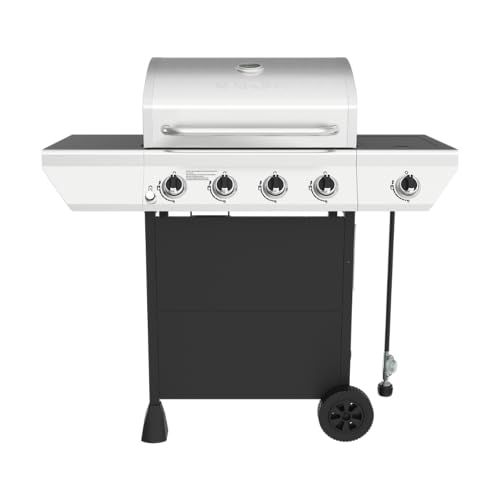
Nexgrill 4-Burner Propane Gas Grill with Stainless Steel Lid
Badge: Best All-Round Gas Make
Strengths
- Four burners plus a side burner over 526 sq. in. — real zone architecture
- Matte finish cast iron grate for sear work within a BBQ layout
- Built-in thermometer and electronic ignition both stated
Trade-offs
- No smoker function stated — smoke flavor needs your own workarounds
- Cast iron grate carries the seasoning and rust-care contract
- Stainless lid rather than a full stainless body on this variant
Key specs from the listing title
- Fuel: propane gas
- Burners: 4 plus side burner
- Output: 52,000 BTU
- Cooking space: 526 sq. in.
- Grate: matte finish cast iron
- Lid: stainless steel
- Ignition: electronic
- Monitoring: built-in thermometer
Nexgrill’s 4-burner make is the gas pattern against which the others here are measured, because its title states the full BBQ checklist in one pass: four burners plus a side burner, 52,000 BTU, 526 square inches, a matte finish cast iron grate, electronic ignition and a built-in thermometer. For BBQ cooking — where a session mixes searing, indirect roasting and holding — that combination is the complete toolkit: zones from the burners, area for large cuts, a sear-capable grate, and monitoring for the lid-down hours.
The make’s wider pattern strengthens the file. Its larger sibling in the pool repeats the same grammar at 60,000 BTU and 626 square inches with a cabinet, so a household can enter this make at one size and understand the other instantly. Design lines earn trust that way: not by one good model, but by a grammar that holds while sizes change. BBQ cooks, who often graduate from a first grill to a bigger one, benefit from that continuity more than most buyers.
The honest boundary is smoke. No smoker function is stated, so wood-smoke flavor on this make is the cook’s improvisation — a smoker tube or tray is an accessory answer, not a design feature — and purists should weigh the offset and kettle makes below before deciding gas is their BBQ fuel. Within gas, though, this is the all-round make to beat, as the construction-first view in Best Manufacterur Of Bbq Grills also concludes.
Best for: Gas households wanting one make that covers searing, roasting and holding / Not suited for: Smoke-first BBQ cooks who want a designed smoke path

Monument Grills Mesa II 4-Burner Propane Gas Grill 410FBZ
Badge: Best Broil-Led Gas Make
Strengths
- Advanced Broil Zone gives the make a named high-heat architecture
- Exact identity: Mesa II 410FBZ on the Mesa line
- Stainless body with foldable side shelves
- Printed claims — fast assembly, 500°F in 5 minutes — invite verification
Trade-offs
- Claims are claims until you test them; this guide measured none
- No total output or cooking area stated in the title
- Broil-led design prioritizes searing over low-and-slow subtlety
Key specs from the listing title
- Fuel: propane gas
- Burners: 4
- Searing: Advanced Broil Zone
- Body: stainless steel
- Shelves: foldable side shelves
- Heat-up claim in title: 500°F in 5 mins
- Model: Mesa II 410FBZ
Monument’s Mesa II make answers the BBQ question from the fire end: an Advanced Broil Zone as the named centerpiece of a stainless 4-burner with foldable side shelves. Broil-led design suits the BBQ repertoire’s high-heat half — steaks, chops, chicken skin, the finishing sear on reverse-seared roasts — and a dedicated zone is the honest architecture for it, because it concentrates capability where it is used instead of pretending the whole grate is a steakhouse.
The make’s identity discipline matches its design confidence. Mesa II 410FBZ is printed in full, the body material is stated, and the title carries the survey’s most testable promises: fast assembly and a heat-up figure of 500°F in 5 minutes. This guide reports those as the maker’s claims — specific, checkable and unverified here — and credits the make for printing numbers it can be held to. BBQ buyers should run both tests in the first week; a make that invites measurement deserves measurement.
The gaps are the plain sizing numbers, absent from the title and waiting at the listing. And the design’s center of gravity should be read honestly: a broil-led make is a searing philosophy first, and its low-and-slow case rests on ordinary burner zoning rather than on any stated smoke or holding system. Households whose BBQ is steak-night-led will find this the most characterful gas make in the set — a judgment the cluster’s maker survey reaches independently.
Best for: Sear-led BBQ households wanting a named broil architecture / Not suited for: Low-and-slow purists, or buyers who need sizing numbers up front

AMERLIFE 6-Burner Propane Gas Grill with Side Burner
Badge: Best Crowd-Canvas Make
Strengths
- Six burners plus a side burner across 650 sq. in. — the biggest layout here
- Cast iron grates give the large canvas a proper sear surface
- Warming rack and built-in thermometer support crowd choreography
- Regulating valve stated among a fully enumerated file
Trade-offs
- Scale means zones and simultaneity, not per-burner ferocity
- Largest cleaning and footprint commitment among the gas makes
- No line or model identity printed in the title
Key specs from the listing title
- Fuel: propane gas
- Burners: 6 plus side burner
- Output: 60,000 BTU
- Cooking area: 650 sq. in.
- Grates: cast iron
- Extras: warming rack, built-in thermometer, regulating valve
AMERLIFE’s make is the crowd answer, and BBQ is where crowd capacity stops being a luxury. Six burners plus a side burner across 650 square inches, with cast iron grates and a warming rack, describe a specific choreography: burgers and dogs in volume, chicken finishing indirect, corn and sides rotating through zones, finished food holding warm on the rack while the next batch lands. Most grills can cook a family dinner; this make is designed for the cookout, which is a different discipline with different failure points — and area plus holding space are exactly where cookouts fail.
The numbers deserve the disciplined reading this cluster applies everywhere. Sixty thousand BTU over six burners is simultaneity power, not sear power; the cast iron grates concentrate what heat there is into proper marks, and the thermometer keeps the lid-down work honest. A regulating valve is stated in the file, a small fuel-path detail that suits a grill expected to run long, multi-batch sessions where steady delivery matters more than drama.
Identity is the make’s thin column — no line name, no model number in the title — so crowd households should document this purchase with extra care and complete the listing check before committing. The trade may be entirely rational: if your BBQ life is measured in gatherings, the canvas is the feature, and the canvas here is the largest gas one in the set. The same scale-first logic, judged from the manufacturer side, appears in Best Manufacterur Of Bbq Grills.
Best for: Hosts whose BBQ means volume, simultaneity and holding space / Not suited for: Small households, or identity-first maker shoppers

Charbroil Portable 1-Burner Propane Gas Grill 465133010
Badge: Best Portable Make
Strengths
- Printed model identity (465133010) on the simplest make in the set
- Aluminized steel body stated — a light, weather-tolerant portable material
- Single-burner convective design: almost nothing to fail
- Honest 11,000 BTU sizing with no inflated promises
Trade-offs
- One burner means one zone — BBQ technique is minimal by design
- No grate material or monitoring stated in the title
- Capacity serves one to two people, not a BBQ gathering
Key specs from the listing title
- Fuel: propane gas
- Burners: 1
- Output: 11,000 BTU
- Body: aluminized steel
- Format: portable convective
- Model: 465133010
A makes guide that only honored large grills would misunderstand BBQ, which also happens at tailgates, campsites, balconies and boat-adjacent picnics where the grill travels. Charbroil’s portable make — a single-burner convective grill in aluminized steel at 11,000 BTU, model 465133010 — is the portable pattern done with the same discipline this cluster demands of flagships: identity printed, material named, output stated without inflation. Small is a brief, and this make fills it cleanly.
Its BBQ technique is honestly minimal, and the review should not pretend otherwise. One burner is one zone; there is no indirect side, no smoke chamber, no holding rack. What it offers is direct-fire cooking for small batches — the oldest BBQ there is — in a body light enough to be present where larger makes cannot go. A portable that is actually carried gets used; a portable that is technically portable and practically heavy becomes garage furniture, and aluminized steel’s lightness is this make’s quiet core virtue.
Judge it as the survey’s closing argument about makes in general: a make is a pattern of decisions, and the decisions here — simplicity, lightness, printed identity, honest numbers — cohere completely. Households needing a second, traveling grill, or a first grill for a very small space, are this make’s people. Everyone else should read its file as the standard of coherence to demand from the larger makes above, which is how the Best Medium Gas Grills guide uses the same lesson for mid-size shoppers.
Best for: Traveling, tailgate and small-space cooks wanting an honest portable / Not suited for: Zone cooking, smoking, or feeding more than two people

Royal Gourmet CC1830S Charcoal Grill and Offset Smoker
Badge: Best Offset BBQ Make
Strengths
- Offset smoker design stated — a true smoke path, unique in this set
- 783 sq. in. total, the largest cooking figure in the guide
- Adjustable charcoal pan and side door give real fire management
- Lid thermometer and front and side tables complete the BBQ workstation
Trade-offs
- Charcoal offset cooking is the most skill- and time-demanding pattern here
- Barrel-plus-offset footprint is the largest in the set
- No gas convenience: every session starts with building a fire
Key specs from the listing title
- Fuel: charcoal
- Cooking area: 783 sq. in.
- Format: barrel grill with offset smoker
- Charcoal handling: adjustable charcoal pan, side door
- Monitoring: lid thermometer
- Model: CC1830S
This Royal Gourmet make is the guide’s BBQ traditionalist, and its title contains the word none of the gas makes can use: smoker. The CC1830S pattern pairs a barrel charcoal grill with an offset smoker chamber, and that offset geometry is the classic low-and-slow architecture — fire in the side box, heat and smoke drawing across the food, the cook managing temperature at a distance from the flame. For ribs, brisket-style cooks and smoked chicken, this is not a feature among features; it is the entire design’s reason to exist.
The supporting file shows a maker who understands the offset workflow. Total cooking area is stated at 783 square inches, the largest figure in this guide. The charcoal pan is adjustable, so fire height — and therefore intensity — is a control, not a guess. A side door serves the fire without dumping the chamber’s heat. A lid thermometer monitors the long cooks, and front and side tables stage the work. Each element answers a known offset-cooking pain, which is what a mature make looks like in any category.
The costs are the craft’s costs, stated plainly. Offset charcoal cooking demands time, fuel management and a learning curve the gas makes simply do not have; the footprint is the set’s largest; and there is no button to press on a busy Tuesday. Households who want BBQ as a weekend discipline will find this the most complete make in the guide. Households who want BBQ flavor on a weeknight schedule should take the gas makes seriously instead — and neither household is wrong, which is precisely what a makes comparison exists to reveal.
Best for: Weekend BBQ cooks wanting a true offset smoke path and fire control / Not suited for: Weeknight convenience seekers or small patios

Weber Original Kettle Premium Charcoal Grill, 22-Inch
Badge: Best Kettle Make
Strengths
- Built-in thermometer — the kettle pattern with monitoring included
- Heat control dampers give the charcoal fire a real throttle
- One-Touch cleaning system makes ash a designed routine
- 22-inch premium kettle format suits family BBQ batches
Trade-offs
- Charcoal only — fire-building is part of every session
- Kettle format has no offset chamber for true separated smoking
- No side table or cabinet storage in this listing’s file
Key specs from the listing title
- Fuel: charcoal
- Size: 22-inch kettle
- Monitoring: built-in thermometer
- Control: heat control dampers
- Cleaning: One-Touch cleaning system
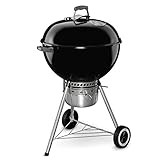
The kettle is BBQ’s most enduring make, and this Premium version of the pattern shows why it endures: the title completes the kettle’s three historic gaps. Monitoring: a built-in thermometer, so lid-down kettle cooking — where most kettle BBQ actually happens — is measured rather than intuited. Control: heat control dampers, the kettle’s throttle, named as a system. Cleaning: the One-Touch system, which turns ash from a scoop-and-pray chore into a designed sweep. A 22-inch kettle with those three completions is not a basic grill; it is a finished one.
Kettle BBQ technique deserves its reputation. Bank the coals to one side and the kettle becomes a two-zone cooker; close the lid and its domed convection roasts whole chickens and ribs with a steadiness that surprises first-time owners; arrange a water pan and patience and it will hold a low cook respectably. What it will not do is separate fire from food the way the offset make does — kettle smoking is direct-adjacent smoking, a different and lighter smoke profile that many cooks honestly prefer.
As a make, the Premium kettle’s lesson is refinement over reinvention. Nothing here is a new idea; everything here is a known idea completed. Households choosing between this and the offset should choose by smoke intensity and ceremony: the offset for the full separated-smoke discipline, the kettle for the versatile, quicker, cleaner everyday BBQ craft. Either way, charcoal’s case in this guide rests on these two makes — and it rests well, a cross-fuel conclusion the Best Material For Bbq Grills guide approaches from the materials side.
Best for: Charcoal households wanting the complete, refined kettle pattern / Not suited for: True offset-smoke devotees or gas-convenience seekers
Read as a set, the six makes also map BBQ’s effort curve with unusual clarity. The portable asks minutes of setup and one zone of attention. The gas carts ask a preheat and a zoning plan. The kettle asks a fire arrangement and damper patience. The offset asks an afternoon and a tending rhythm. None of these is a defect; they are prices, denominated in time, for different flavors of result. The most common BBQ disappointment this guide sees in the evidence is not a bad grill — it is a household that bought a high-effort make for a low-effort life, or starved a serious cooking habit with a make that could not grow. Match the effort price to the life first, and the make shortlist shortens itself.
Comparison Table
BBQ columns come first in this table — area, zone or fire architecture, and the smoke relationship each title actually states. Where a title states no smoke function, the table says so.
| Pick | Fuel | Headline spec from title | Link |
|---|---|---|---|
| Nexgrill 4-Burner Propane Gas Grill with Stainless Steel Lid | propane gas | Burners: 4 plus side burner; Output: 52,000 BTU | Check on Amazon |
| Monument Grills Mesa II 4-Burner Propane Gas Grill 410FBZ | propane gas | Burners: 4; Searing: Advanced Broil Zone | Check on Amazon |
| AMERLIFE 6-Burner Propane Gas Grill with Side Burner | propane gas | Burners: 6 plus side burner; Output: 60,000 BTU | Check on Amazon |
| Charbroil Portable 1-Burner Propane Gas Grill 465133010 | propane gas | Burners: 1; Output: 11,000 BTU | Check on Amazon |
| Royal Gourmet CC1830S Charcoal Grill and Offset Smoker | charcoal | Cooking area: 783 sq. in.; Format: barrel grill with offset smoker | Check on Amazon |
| Weber Original Kettle Premium Charcoal Grill, 22-Inch | charcoal | Size: 22-inch kettle; Monitoring: built-in thermometer | Check on Amazon |
How to Choose Among Makes of BBQ Grills
Decide your smoke position first, because it divides the field cleanly. If separated, sustained wood smoke is the point of your BBQ, only one make here is designed for it: the offset. If lid-down convection with a light smoke kiss is your preference, the premium kettle is the classic answer. If smoke is optional and convenience is king, the gas makes compete on zones and area, with smoke left to your own accessories. No amount of burner quality converts a gas cart into an offset smoker, and honest makers’ titles — as here — never claim otherwise.
Match zone architecture to your menu’s simultaneity. Gas zones come from burner count: four burners (Nexgrill, Monument) give a sear zone, a roast zone and a hold zone; six burners (AMERLIFE) add volume more than subtlety. Charcoal zones come from fire arrangement: a kettle’s banked coals, an offset’s separated fire. One burner (the portable) is one zone, proudly. Count the different heats your typical session needs at the same moment, and let that number — usually two or three — pick the architecture.
Size for the session you repeat, not the feast you imagine. The figures here run from a portable’s unstated-but-small grate to 783 square inches on the offset. Area you use monthly is a cost in patio, fuel and cleaning; area you lack weekly is a cost in batches and timing. BBQ’s large cuts complicate the math — a single brisket-style cook can justify area that weeknight burgers never would — so weight your large-cut frequency honestly before crowning the biggest make.
Score fire management as a feature, not a chore preference. Dampers, adjustable charcoal pans and side fire doors on the charcoal side; burner layout, regulating valves and thermometers on the gas side — these are the controls your long cooks will live or die by. A make that names its fire-management hardware, as the offset and the premium kettle both do, is telling you its designers have run long cooks themselves. A make silent on management is asking you to improvise the hardest part of BBQ.
Close with the make’s pattern, not just the product. A design line whose grammar repeats across sizes — Nexgrill is this set’s example — makes your next grill easier to choose and your current one easier to support. A singular pattern — the offset, the broil-led Mesa — asks for commitment to one philosophy. Both are legitimate; the mistake is buying a philosophy accidentally while shopping for a product, which is the error this entire guide exists to prevent.
How to Run Each BBQ Pattern Well
On gas makes, BBQ is a zoning discipline. Preheat fully, establish a hot zone and a gentle zone before food lands, and cook large cuts indirect — burners off beneath the food, heat arriving from the sides — with the lid down and the thermometer as your session log. Use the side burner for sauces and beans so the main event never competes for your attention, and let the warming rack, where fitted, hold finished food at serving heat rather than cooking it further.
On the kettle make, BBQ is a fire-arrangement discipline. Bank lit coals to one side for a two-zone fire, set the dampers half-open as your starting point, and drive temperature in small damper moves with patience between them — kettle fires answer slowly and overshoot punishes haste. A drip pan under the indirect side keeps the bowl cleaner and steadies humidity; the One-Touch sweep after each cook keeps the ash path — and therefore next session’s airflow — clear.
On the offset make, BBQ is a fire-tending discipline. Run a small, clean fire in the side box rather than a large smoldering one; thin, pale smoke is the goal and thick white smoke is the warning. Feed the fire in small additions through the side door, watch the lid thermometer’s trend rather than its instant reading, and resist opening the cook chamber — every look costs heat the offset’s geometry recovers slowly. Long cooks reward the cook who intervenes least, earliest.
Troubleshooting crosses all patterns with the same logic. Problem: temperature will not climb → fuel or airflow is the limit, so add fuel or open the intake path before blaming the grill. Problem: temperature runs away on charcoal → close the intake damper partway and wait a full interval before judging the move. Problem: gas zones blur together → the grate is heat-soaked from an over-long full-power preheat; rest the gentle zone with its burner low and let separation re-establish before the next batch.
Offset, Kettle and Cart: Three Theories of BBQ Fire
The offset theory separates fire from food entirely: combustion lives in its own box, and only heat and smoke travel. Its virtues are smoke purity and chamber steadiness; its costs are size, fuel and attention. The kettle theory integrates fire and food in one vessel and separates them by arrangement — banked coals, lids and dampers doing the work geometry does in an offset. Its virtues are versatility and economy; its costs are a lighter smoke profile and a smaller margin for error on very long cooks.
The gas cart theory abolishes the fire as a variable: burners deliver dialed heat, and BBQ becomes a zoning and timing exercise. Its virtues are repeatability and weeknight feasibility; its cost is that smoke, the flavor at BBQ’s origin, becomes an accessory rather than the medium. None of these theories is the correct one. They are three settlements between flavor, effort and time, and the makes in this guide are their clearest current statements in the verified pool.
What “Make” Adds That “Model” Does Not
A model is a product; a make is the pattern that product shares with its siblings — the specification grammar, the control philosophy, the identity discipline. This guide leans on the distinction because BBQ buyers graduate: the kettle owner adds an offset, the 4-burner household steps to a six-burner, the portable owner buys a cart. When the make’s pattern is coherent, that graduation is a continuation; when each model is an island, every purchase restarts the learning curve.
Read for pattern wherever the pool shows you siblings. Nexgrill’s repeated grammar across two sizes is pattern evidence. Charbroil’s numbering habit from portable to cabinet is pattern evidence. Weber’s completion of the kettle pattern — thermometer, dampers, cleaning system on the Premium — is pattern evidence of a third kind: a make refined over its own history of models. The titles cannot show you a factory or a founding date, and this guide invents neither; but pattern, visible in the listings themselves, is real and it is enough to choose on.
One more cross-make pattern deserves a sentence: the two charcoal makes carry the guide’s only named fire-management hardware for long cooks — dampers and a cleaning system on the kettle; an adjustable pan and a side door on the offset — while the gas makes carry the only named ignition and monitoring electronics. That division is not an accident of this pool. It reflects what each fuel still asks the cook to do: on charcoal, you are the fuel system, so the hardware serves your hands; on gas, the machine is the fuel system, so the hardware serves your information. Choose the make whose hardware serves the role you actually want to play.
Common Buying Mistakes
The first makes mistake is buying a gas cart for an offset’s job — expecting designed, sustained smoke from a machine whose title never claims a smoker function — then blaming the grill for the mismatch. The second is the reverse snobbery: dismissing gas makes for weeknight BBQ, where their zoning and repeatability are genuinely superior tools. Both errors come from ranking fuels instead of matching patterns to sessions.
The third mistake is under-sizing the fire-management column. Buyers compare area and output, then discover on the first long cook that dampers, pans, doors and thermometers were the features that mattered. The fourth is ignoring the make’s pattern when the pool shows it: a coherent line makes parts, accessories and your next purchase easier, and choosing an island model for a small headline advantage often costs more across ownership than it saves at checkout.
To see what the makes mean in practice, run one imaginary Saturday through three of them. On the offset, the day starts before the house wakes: fire lit in the side box, chamber climbing slowly, the big cut on by mid-morning and the cook’s work reduced to small wood additions and damper patience while the yard fills with the smell that brings neighbors to fences. On the big gas cart, the same gathering starts at a civilized hour: zones set with dials, the main cut roasting indirect, sides rotating through the side burner and the warming rack, the cook free to be a host because the machine holds the temperatures the offset cook must personally defend. On the premium kettle, the day splits the difference — coals banked after breakfast, a lid-down roast through the afternoon with two damper adjustments, ash swept in seconds when it ends. Same friends, same food, three different distributions of effort, attention and smoke. That distribution — not area, not output, not even materials — is what a ‘make’ really sells, and it is why this guide insists on comparing patterns rather than crowning products. Choose the Saturday you actually want to live, repeatedly, for years, and the correct make is the one already running it.
Final Recommendation
For most BBQ households, the all-round recommendation is the Nexgrill 4-burner make: complete zone architecture, a cast iron sear surface, stated monitoring and ignition, and a line grammar that repeats at the larger size. Sear-led households should take the Monument Mesa II and test its printed claims with relish. Crowd households should take the AMERLIFE canvas and its warming rack, with purchase documentation kept carefully.
Charcoal households have the guide’s two most characterful choices. The Royal Gourmet offset is the full BBQ discipline — separated smoke, adjustable fire, the largest area here — and the Weber Kettle Premium is the refined everyday craft: monitored, damped and easy-cleaning. The Charbroil portable, finally, is the traveling make and the coherence lesson in one small package. All six are linked above; match the pattern to your sessions, verify at the listing, and the make will take care of the models that follow.
Check on Amazon — Nexgrill 4-Burner Propane Gas Grill with Stainless Steel Lid (Best All-Round Gas Make)
Check on Amazon — Monument Grills Mesa II 4-Burner Propane Gas Grill 410FBZ (Best Broil-Led Gas Make)
Check on Amazon — AMERLIFE 6-Burner Propane Gas Grill with Side Burner (Best Crowd-Canvas Make)
The makes will keep evolving — sear systems will spread, specification grammars will tighten, some pattern in this guide will look dated in a few seasons. The reading method will not date. Area, zones, smoke path, fire management, materials, identity: six questions, asked in that order, of any make that appears next season or next decade. A buyer who owns those questions owns the category, and the six files above — offset, kettle, enumerated cart, broil cart, crowd cart and portable — are as good a training set as the current market publishes.
Frequently Asked Questions
What is the difference between a make and a model in this guide?
A model is the single product; a make is the design pattern it belongs to — the specification grammar, control philosophy and identity habits it shares with siblings in the same line. This guide compares makes because BBQ buyers tend to stay within a pattern as their cooking grows, and pattern coherence predicts that experience.
Which make is best for true smoked BBQ?
The Royal Gourmet CC1830S, because it is the only design here with a stated offset smoker chamber — fire separated from food, with an adjustable charcoal pan, side door and lid thermometer for long cooks. The kettle offers lighter, integrated smoke; the gas makes state no smoker function at all.
Can a gas grill be a good BBQ grill without a smoker function?
Yes, for the large part of BBQ that is zoning, roasting and holding: multi-burner gas makes run indirect cooks, hold temperatures steadily and handle crowds well. What they do not provide by design is sustained wood smoke. If smoke is occasional rather than central to your cooking, a gas make is a rational BBQ choice.
Why is a one-burner portable in a best-makes guide?
Because makes are patterns, and the portable pattern — light aluminized body, single honest burner, printed model identity — is a coherent answer to the traveling and small-space brief. It is not a family BBQ grill and is never presented as one; it is the set’s standard for design coherence at small scale.
Offset or kettle: how should a charcoal buyer choose?
Choose by smoke and ceremony. The offset separates the fire for purer, longer smoke and demands tending; the premium kettle integrates the fire for versatility, quicker sessions and easier cleaning, with a lighter smoke profile. Both state real fire-management hardware — dampers and cleaning on the kettle, adjustable pan and side door on the offset.
What should I verify at the listing for these makes?
For the Monument, the unstated total output and cooking area. For every make, the exact grate dimensions against your largest regular cook, and any control or monitoring detail the title leaves open. Verify the current price at the listing as well, since this guide prints none.


