Disclosure: topratedkitchenware.com is reader-supported. When you buy through links on our site, we may earn an affiliate commission from Amazon and other retailers, at no extra cost to you.
Where to buy
The six grills below are the verified shortlist for best metal for bbq grills, chosen because their listing titles actually state the metals they are built from — cast iron grates, porcelain-enameled cast iron, stainless steel lids and bodies, and aluminized steel. Each name links to its Amazon listing, where you can check the latest price on Amazon and confirm the current configuration before you buy.
- Weber Spirit E-425 Gas Grill — Best Overall
- Monument Grills 4-Burner Propane Gas Grill, Mesa II 410FBZ — Best Stainless Steel Build
- Nexgrill Propane 4-Burner Gas Grill with Side Burner — Best Mixed-Metal Family Grill
- IdeaMaxx 3-Burner Propane Gas Grill with Cast Iron Grates — Best Cast Iron Grates on a Compact Cart
- AMERLIFE 60,000 BTU 6-Burner Propane Gas Grill with Side Burner — Best for Crowds
- Charbroil Portable Convective 1-Burner Propane Gas Grill — Best Portable Metal Choice
Read the full guide ↓ for who each pick suits, the honest limitations to weigh, and the checks that matter before you order.
Ask ten grill owners what the best metal for bbq grills is and you will hear ten confident answers, because the question hides three different questions. Which metal makes the best cooking grate? Which metal survives longest as a lid, body and firebox? And which metal suits the way you actually cook — high and fast, low and slow, or somewhere in between? This guide separates those questions, then ranks six verified grills by what their titles honestly state about their materials: cast iron, porcelain-enameled cast iron, stainless steel and aluminized steel all appear here, in different parts of different grills, and the differences matter more than any single slogan about one wonder metal.
The short version is this. Cast iron is the searing metal: heavy, heat-holding, and demanding about seasoning and drying. Porcelain-enameled cast iron keeps most of that performance and adds a glass-like coating that resists rust and releases food more easily, at the cost of being chip-prone. Stainless steel is the longevity metal for lids and bodies, resisting rust-through for years, though it holds less heat than cast iron and shows every fingerprint. Aluminized steel is the practical metal of portable grills, a coated steel that shrugs off storage conditions. None of these is best at everything, which is why this guide matches metals to jobs instead of crowning one material for the whole grill.
Every pick below is a real grill whose verified title states its materials or — in the one case flagged honestly in its review — leaves a component unstated, and readers comparing across the wider grills cluster will also find useful context in Best Mid Range Grills, where several of these same machines are judged on value rather than on what they are made of.
Key Takeaways
- There is no single best metal for a whole grill: cast iron wins at the grate, stainless steel wins at the body and lid, and coatings decide how much maintenance you owe.
- Porcelain-enameled cast iron is the low-maintenance way to keep cast iron searing performance — just never strike it with hard metal tools.
- Stainless steel in a title may describe only the lid or the body; check which component is stainless before paying for the word.
- Aluminized steel is a legitimate material choice for portable grills that live in sheds and car boots, where corrosion resistance beats mass.
- Bare cast iron grates need seasoning and dry storage; if you will not do that small chore, choose an enameled or coated grate instead.
- Judge a grill as a system of materials — grate, lid, firebox, burners — not by the single metal named largest in the marketing.
In this guide
Quick Picks
- Weber Spirit E-425 Gas Grill — Badge: Best Overall. A dedicated Sear Zone with Boost Burners gives a genuinely hotter patch for steaks without overheating the whole grate. Check on Amazon
- Monument Grills Mesa II 4-Burner Propane Gas Grill — Badge: Best Stainless Steel Build. The Advanced Broil Zone concentrates heat for finishing and crisping, much like a sear station. Check on Amazon
- Nexgrill 4-Burner Propane Gas Grill, 526 Sq In — Badge: Best Mixed-Metal Family Grill. A stated 526 square inches of cooking space is a clear, family-plus-guests capacity figure. Check on Amazon
- IdeaMaxx 3-Burner Propane Gas Grill — Badge: Best Cast Iron Grates on a Compact Cart. Three burners give a genuine two-zone layout: two lit for searing, one low or off for indirect cooking. Check on Amazon
- AMERLIFE 6-Burner Propane Gas Grill — Badge: Best for Crowds. A stated 650 square inches is the largest cooking area in this pool, with room for several food groups at once. Check on Amazon
- Charbroil Portable 1-Burner Propane Gas Grill — Badge: Best Portable Metal Choice. A true portable format: one burner, compact body, made to travel to campsites, tailgates and small balconies. Check on Amazon
How These Picks Were Chosen
Every product in this guide comes from a verified pool checked against Amazon catalog data on 2026-11-20. Materials are quoted only where the verified title states them: cast iron grates on the IdeaMaxx, AMERLIFE and Nexgrill, porcelain-enameled cast iron on the Weber Spirit E-425, stainless steel on the Monument body and the Nexgrill lid, and aluminized steel on the Charbroil Portable. Where a title does not state a component’s material — the Charbroil Performance-style gaps you will see flagged in the reviews — this guide says so plainly and writes “material not stated in title” rather than guessing. That restraint matters in this category more than most, because metal claims are exactly where grill marketing gets creative.
The ranking weighs the cooking surface first, because the grate is the metal your food touches and the one that decides sear quality, then the lid and body metals that decide how many seasons the grill survives, then the practicalities of burner layout, stated cooking area and storage. This is a research-led guide built from verified listing data and well-established material behaviour; it does not claim laboratory testing, and it prints no prices, because prices move — use the links to check the latest price on Amazon. Readers whose main question is budget rather than metallurgy should start with Best Mid Range Cost Barbeque Grills and come back here for the material detail.
The 6 Best Metal for BBQ Grills Options, Judged Material by Material
Read each review as a materials report first and a grill review second. The badge tells you the job the grill does best; the metal notes tell you what you will be maintaining in year three. One pick carries an honest gap — a component whose material its title does not state — and it is flagged where it occurs rather than smoothed over.

Weber Spirit E-425 Gas Grill
Badge: Best Overall
Strengths
- A dedicated Sear Zone with Boost Burners gives a genuinely hotter patch for steaks without overheating the whole grate.
- Porcelain-enameled cast-iron grates combine cast iron heat retention with an easier-cleaning enamel surface.
- Four burners make true multi-zone cooking easy: sear zone, direct zone and indirect zone at once.
Trade-offs
- The sear focus means part of the grate runs deliberately hotter, so delicate food needs to be kept clear of that corner.
- Porcelain enamel can chip if struck with metal tools, so grate handling needs a little care.
- No cooking area is stated in the verified title, so size comparisons rely on the four-burner format.
Mini spec box (verified title data only)
- Fuel: Propane gas
- Burners: 4, with Sear Zone and Boost Burners
- Grates: Porcelain-enameled cast iron
- Extras: Weber Works rails
- Colour: Black
The Weber Spirit E-425 is the sear specialist of this pool. Its four burners include a Sear Zone with Boost Burners, a layout designed to push one section of the grate well beyond the temperature of the rest. For steak nights that matters more than raw burner count: a hard, fast crust on the sear side, then a move to a calmer burner to finish to temperature, is exactly how experienced grillers already cook, and this grill builds that workflow into the hardware rather than leaving it to technique alone.
The grates are porcelain-enameled cast iron, a combination that keeps cast iron’s heat-holding character while the enamel layer makes stuck-on residue less of a chore and protects the iron beneath. Weber Works rails add a mounting system for accessories along the front, which suits cooks who like a tidy, everything-within-reach station. The limitation to weigh is discipline: a boost zone is unforgiving if you wander off, and thin fish fillets or asparagus left over the boost burners will overcook while the rest of the load is still raw. Cooked with attention, though, this is the most deliberately zoned grill in the group.
On the material question, the E-425 makes the strongest combined case in this pool. Its grates put porcelain enamel over cast iron, which is the pragmatic answer for most households: cast iron’s heat mass does the searing, and the enamel skin handles the rust and cleaning problems that make bare cast iron a chore. The body metal is not the headline here — the verified title does not make a stainless claim for it — so this grill’s material story is deliberately grate-first, and for the surface that touches your food, that is the right priority.
Best for: steak-focused cooks who want cast iron searing without bare-iron upkeep / Not suited for: buyers who want a fully stainless body as the headline feature

Monument Grills 4-Burner Propane Gas Grill, Mesa II 410FBZ
Badge: Best Stainless Steel Build
Strengths
- The Advanced Broil Zone concentrates heat for finishing and crisping, much like a sear station.
- A stated heat-up claim of 500 degrees in five minutes signals burners tuned for fast preheats.
- Foldable side shelves keep the storage footprint smaller than fixed-shelf rivals.
Trade-offs
- No cooking area or BTU figure is stated in the verified title, so two headline numbers are missing.
- Fast, hot burners reward attention; slow, gentle cooking needs the far burners managed carefully.
- Stainless steel shows fingerprints and heat discolouration, so it asks for regular wiping to look its best.
Mini spec box (verified title data only)
- Fuel: Propane gas
- Burners: 4, with Advanced Broil Zone
- Body: Stainless steel (as stated in the verified title)
- Heat claim: 500 degrees F in 5 minutes (as stated in the verified title)
- Side shelves: Foldable
- Model: Mesa II 410FBZ
The Monument Mesa II is a four-burner stainless steel propane grill with an Advanced Broil Zone, foldable side shelves and a verified heat-up claim of 500 degrees in five minutes. That claim tells you the design intent: this is a grill tuned for speed. Fast preheats suit weeknight cooking, where the difference between grilling and ordering in is often the fifteen idle minutes a slow grill spends warming up. The broil zone then gives a high-heat finishing area for melting cheese, crisping chicken skin or putting a final char on peppers.
The stainless steel construction is the other headline. Stainless resists the rust-through that ends the life of painted steel fireboxes, and it cleans down to a bright finish with a soft cloth, though it will show heat tint around the lid over time — a cosmetic patina, not a failure. Foldable shelves repeat the storage-friendly trick seen elsewhere in this pool. The gaps in the verified data are the caveat: neither a BTU total nor a cooking area is stated in the title, so this grill asks to be judged on its burner layout, its broil zone and its materials rather than on a spec-sheet shootout.
The Monument is the stainless argument in this guide. Its verified title states stainless steel construction for the grill itself, not just a trim piece, and stainless is the metal that decides longevity: it resists the rust-through that kills painted fireboxes and lids, season after season, in a way no coating on mild steel quite matches. Pair that body with the broil zone and fast heat-up claim and the material story is coherent — a grill built to live outside, heat quickly and be wiped down rather than nursed. If your priority is the metal of the machine rather than the metal of the grate, this is your pick.
Best for: buyers who prioritise a corrosion-resistant stainless body for outdoor life / Not suited for: cooks who want cast iron grate mass as the first priority
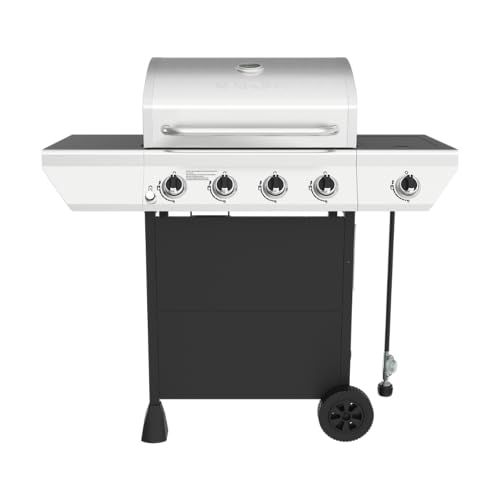
Nexgrill Propane 4-Burner Gas Grill with Side Burner
Badge: Best Mixed-Metal Family Grill
Strengths
- A stated 526 square inches of cooking space is a clear, family-plus-guests capacity figure.
- The side burner keeps sauces, beans and sautéed toppings off the main grate.
- Electronic ignition and a built-in thermometer cover the two everyday conveniences cooks actually use.
Trade-offs
- A stated 52,000 BTU across four burners is strong output that needs managing on low settings for delicate food.
- The matte cast iron grate needs seasoning care to stay at its best.
- The verified title also carries the word Portable, which sits oddly on a full four-burner cart grill of this size.
Mini spec box (verified title data only)
- Fuel: Propane gas
- Burners: 4, plus side burner
- Output: 52,000 BTU (as stated in the verified title)
- Cooking space: 526 sq in (as stated in the verified title)
- Grates: Matte finish cast iron
- Lid: Stainless steel
- Ignition: Electronic
- Extras: Built-in thermometer
This Nexgrill pairs a four-burner main box with a side burner, a stainless steel lid and a stated 526 square inches of cooking space. That combination is the classic full-service patio formula: enough grate to run burgers for a group on one side and corn or peppers on the other, a side burner for the pot work, and a lid thermometer plus electronic ignition to remove the two small frictions — guessing the temperature and fighting a reluctant starter — that put people off weeknight grilling.
The matte finish cast iron grate is a thoughtful middle choice. It holds heat like cast iron should, and the matte finish is less prone to the sticky first-cook behaviour of glossy coatings, though like all cast iron it wants a light oil film after cleaning. One honest oddity deserves naming: the verified title ends with the word Portable. Treat that as listing language rather than a description of reality. This is a cart grill with a side burner and a 526 square inch grate; it moves around a patio on its wheels, but nobody is carrying it to a picnic. Judge it as the full-size machine it is, and it makes a strong case.
The Nexgrill is the clearest lesson in this guide that a grill is several metals at once. Its lid is stainless steel — the right metal where weather hits — while its grate is matte finish cast iron, the right metal where food lands. That is not a compromise; it is correct engineering, and it is why this grill ranks above single-material rivals for family use. When you assess it, assess the pairing: stainless where corrosion threatens, cast iron where heat matters. The one title word to ignore is Portable, addressed in the main review; the metals, unlike that word, are exactly as described.
Best for: families who want each metal used where it performs best / Not suited for: minimalists who want one material story and the smallest footprint

IdeaMaxx 3-Burner Propane Gas Grill with Cast Iron Grates
Badge: Best Cast Iron Grates on a Compact Cart
Strengths
- Three burners give a genuine two-zone layout: two lit for searing, one low or off for indirect cooking.
- Cast iron grates hold heat well and lay down strong sear marks once properly preheated.
- Foldable side shelves shrink the storage footprint, which suits smaller patios and camping transport.
Trade-offs
- No cooking area is stated in the verified title, so capacity has to be judged from the burner layout rather than a square-inch figure.
- No side burner, so sauces and sides compete for main-grate space.
- Foldable shelves are handy but offer less rigid prep space than fixed steel shelves.
Mini spec box (verified title data only)
- Fuel: Propane gas
- Burners: 3
- Output: 38,200 BTU (as stated in the verified title)
- Grates: Cast iron
- Side shelves: Foldable
- Colour: Black
The IdeaMaxx is a three-burner propane grill built around cast iron grates and a stated 38,200 BTU output. That output, spread across three burners, is squarely in the working range for everyday family grilling: enough heat to sear burgers and steaks properly, without the scorch-first behaviour of oversized burner arrays cooking a modest weeknight load. The foldable side shelves are the design signature here. They give you landing space for trays and tools while you cook, then fold away so the grill stores against a wall or travels to a campsite without the wide stance of a fixed-shelf cart.
In use, the sensible way to run this grill is as a two-zone machine. Keep two burners at medium-high for direct work and the third low, and you have a holding zone for finished food, a gentle zone for chicken pieces that flare, and a safe corner for vegetables. Cast iron grates reward a full preheat: give them time to soak up heat, oil the food rather than the grate, and the release improves markedly. The honest limitation is information, not performance: with no cooking area stated in the verified listing title, buyers comparing strictly by square inches will find this model harder to place than rivals that publish a number.
The IdeaMaxx puts its material money into cast iron grates on a three-burner cart, and for cooks who grill more than they host, that is the right spend. Cast iron’s virtue is thermal mass: once hot, it does not flinch when cold food lands, so sear marks form instead of steaming. The discipline it asks in return is small but non-negotiable — dry the grates after washing, keep a light oil film on them, and never leave them wet under a closed lid for a week. The body material is not stated in the verified title, so judge this grill as a grate-led purchase, which is honestly how it presents itself.
Best for: regular weeknight grillers who value sear quality over spec-sheet size / Not suited for: owners who know they will skip grate seasoning and drying

AMERLIFE 60,000 BTU 6-Burner Propane Gas Grill with Side Burner
Badge: Best for Crowds
Strengths
- A stated 650 square inches is the largest cooking area in this pool, with room for several food groups at once.
- Six burners allow three distinct heat zones with a burner to spare.
- The warming rack keeps finished food hot without further cooking while the next batch grills.
Trade-offs
- Six burners and 650 square inches make this a genuinely large grill that dominates a small patio.
- More burners mean more parts to clean and more propane used on small cooks.
- Cast iron grates at this size are heavy to lift for firebox cleaning.
Mini spec box (verified title data only)
- Fuel: Propane gas
- Burners: 6, plus side burner
- Output: 60,000 BTU (as stated in the verified title)
- Cooking area: 650 sq in (as stated in the verified title)
- Grates: Cast iron
- Extras: Warming rack, built-in thermometer, regulating valve
The AMERLIFE is the capacity pick of the pool: six burners, a stated 60,000 BTU output, a side burner and a stated 650 square inches of cooking area, plus a warming rack above the main grate. Numbers like that change what a grill is for. This is a machine for parties, multi-family cookouts and batch cooking — ribs on the indirect side, burgers in the middle, vegetables at the front, buns warming on the rack — all running at once without the queueing that makes big-grill days stressful.
The regulating valve and built-in thermometer in the verified title point at control to match the size, and control is what a six-burner grill lives or dies by. Run well, you light only the burners the meal needs; run lazily, you heat 650 square inches to cook four sausages and wonder about the propane bill. The cast iron grates suit the high-heat, high-volume brief and will sear in bulk. The honest limitation is footprint and appetite: this grill needs a patio that can spare the space and a household that regularly cooks for a crowd, or its size becomes the reason it gets used less, not more.
At party scale, material behaviour changes. The AMERLIFE’s cast iron grates are not just about sear marks; across a stated 650 square inches, cast iron’s heat retention is what keeps the far corners of a loaded grate cooking instead of cooling every time the lid lifts for another tray of burgers. Thin steel grates on a grill this size would show hot and cold patches within minutes. The trade is weight and upkeep multiplied by area: a lot of cast iron to season, lift and keep dry. For the crowd cook who maintains their kit, that trade is worth it; the metal is doing structural work in the cooking, not decoration.
Best for: hosts cooking full grates for large groups / Not suited for: small households that would maintain a lot of cast iron for little use

Charbroil Portable Convective 1-Burner Propane Gas Grill
Badge: Best Portable Metal Choice
Strengths
- A true portable format: one burner, compact body, made to travel to campsites, tailgates and small balconies.
- A stated 11,000 BTU from a single burner is concentrated heat for its size class.
- Aluminized steel is a practical, corrosion-aware choice for a grill that lives in car boots and storage boxes.
Trade-offs
- One burner means one heat zone: no indirect side, no holding zone.
- Capacity is for two to four people at most; group cooking means batches.
- No side shelves, side burner or warming rack — everything happens on one small grate.
Mini spec box (verified title data only)
- Fuel: Propane gas
- Burners: 1
- Output: 11,000 BTU (as stated in the verified title)
- Body: Aluminized steel (as stated in the verified title)
- Format: Portable
- Colour: Black
The Charbroil Portable is the honest small grill of this pool: a single-burner propane unit in aluminized steel with a stated 11,000 BTU output, built to be carried rather than parked. Everything about the design follows from that brief. One burner keeps the weight and the plumbing simple. The convective layout wraps heat around food under the lid, which helps a small grill cook more evenly than its size suggests. Aluminized steel — steel coated with an aluminium alloy — is a sensible body material for a grill that will be stored in sheds and car boots, because the coating resists the corrosion that bare steel invites.
Cooking on it is a discipline of batches and timing. Sear the steaks, rest them wrapped while the vegetables grill, then bring everything together at the table. There is no indirect zone, so thick cuts are best finished with the lid down and the burner low, turned often. The limitation is absolute and should not be talked around: this grill cannot do what a four-burner cart grill does, and a household of six will outgrow it in a single summer. For one or two people, for camping, tailgating and tiny balconies, its smallness is not a compromise at all — it is the entire point.
The Charbroil Portable is where aluminized steel earns its place in a guide about grill metals. A portable grill lives a harder material life than a patio fixture: it is stored damp, carried in car boots, left in tents and sheds. Aluminized steel — steel coated with an aluminium alloy — resists that corrosion cycle better than bare or lightly painted steel, at a weight a one-burner portable can carry. It will never sear like cast iron and it is not meant to. Its material claim is survival in transit, and judged on that claim, it is the most honestly specified small grill in this pool.
Best for: campers, tailgaters and balcony cooks who need a grill that travels / Not suited for: anyone feeding more than four or wanting a second heat zone
Comparison Table
The table below compares the six picks on the material facts stated in their verified titles. Where a title does not state a component, the honest entry would be a blank — read the individual reviews for exactly which component is stated and which is not.
| Pick | Fuel | Layout | Stated highlight | Status | Link |
|---|---|---|---|---|---|
| Weber Spirit E-425 Gas Grill | Propane gas | 4, with Sear Zone and Boost Burners | Porcelain-enameled cast iron | Linked recommendation | Check on Amazon |
| Monument Grills Mesa II 4-Burner Propane Gas Grill | Propane gas | 4, with Advanced Broil Zone | Stainless steel (as stated in the verified title) | Linked recommendation | Check on Amazon |
| Nexgrill 4-Burner Propane Gas Grill, 526 Sq In | Propane gas | 4, plus side burner | 52,000 BTU (as stated in the verified title) | Linked recommendation | Check on Amazon |
| IdeaMaxx 3-Burner Propane Gas Grill | Propane gas | 3 | 38,200 BTU (as stated in the verified title) | Linked recommendation | Check on Amazon |
| AMERLIFE 6-Burner Propane Gas Grill | Propane gas | 6, plus side burner | 60,000 BTU (as stated in the verified title) | Linked recommendation | Check on Amazon |
| Charbroil Portable 1-Burner Propane Gas Grill | Propane gas | 1 | 11,000 BTU (as stated in the verified title) | Linked recommendation | Check on Amazon |
How to Choose the Best Metal for BBQ Grills for Your Cooking
Start at the grate, because grate metal is a cooking decision before it is a durability one. Cast iron holds heat in reserve: preheat it fully and it sears through the chill of cold food, producing the crust that defines grilled flavour. Its costs are weight and care. Porcelain-enameled cast iron keeps roughly that performance and adds a sealed surface that resists rust and cleans with a brush and hot water, but the enamel is a glass coating — drop a grate or lever it with a screwdriver and it chips, exposing iron that then needs the care you were avoiding. Plain steel and chrome-plated grates, seen on smaller grills, are light and cheap to replace but give up heat mass; food steams before it sears if the grate is crowded.
Then consider the lid and body, because those metals decide lifespan. Stainless steel is the benchmark: it does not rust through in normal outdoor life, it tolerates heat cycles, and its weaknesses are cosmetic — fingerprints, water spots and a straw-coloured heat tint near the firebox. Painted or porcelain-coated steel is the mainstream alternative and can last for years under a cover, but once the coating is breached at a scratch or a leg joint, rust works underneath it. Aluminized steel sits between: the aluminium-rich coating protects the steel core sacrificially, which is why it appears on portable and value grills that expect rough storage. When a title says stainless, always ask which part is stainless — a stainless lid over a painted firebox is a legitimate design, but it is not a stainless grill.
Burners and internals are the third material layer, and the one titles state least often. Burner tubes live in the harshest environment in the grill — direct flame, dripping fat, winter moisture — and their material decides whether a grill lights evenly in year four. Because the verified titles in this pool rarely state burner materials, this guide does not score them; instead, treat burner condition as a maintenance item you control: brush the tubes, clear the ports, and keep the firebox free of the grease-and-ash paste that corrodes everything it touches. The same applies to hardware and fasteners, which are the first rust you will actually see on any grill.
Match the material package to your storage reality, not your intentions. A grill that lives under a covered porch, used weekly and wiped down, can thrive in porcelain-coated steel with cast iron grates. The same grill left uncovered beside a sprinkler needs stainless outside and enameled or stainless surfaces inside. A portable that lives in a car boot needs aluminized or coated steel and parts that tolerate being moved. Be honest about which owner you are: the best metal for bbq grills is, in practice, the best metal for the storage and care you will actually give it, and a humbler material maintained beats a premium material neglected every single season.
Finally, use the stated numbers as supporting evidence, not as the decision. Cooking area tells you capacity, BTU output tells you burner strength, and burner count tells you zoning options — but none of those numbers tells you whether the grate will sear in year three or the lid will rust at the handle in year two. Read titles for materials first and numbers second, cross-check the cluster’s value view in Best Mid Range Gas Grills if gas is your fuel, and remember that every pick in this guide earned its place because its title states its materials plainly enough to be judged.
How to Season, Clean and Protect Grill Metals, Step by Step
Metal care is where grill ownership is won or lost, and it differs by material. The routine below covers the metals in this guide — cast iron, porcelain enamel, stainless steel and aluminized steel — in the order you will meet them across a season. None of it is difficult; all of it is cheaper than replacement grates.
- Season bare cast iron grates before the first cook: heat the grill, wipe the grates with a thin film of high-heat cooking oil on a folded paper towel held in tongs, and let it bake until the smoking stops. Repeat twice more across the first week of cooking.
- After every cook, brush grates while warm — a brass or nylon brush on porcelain enamel, any grill brush on bare cast iron — then leave the burners on high for a few minutes to burn off residue.
- Wash cast iron only when necessary, dry it on the heat immediately, and finish with the lightest oil film. Never soak cast iron, and never leave it wet under a closed lid.
- Clean porcelain-enameled grates with hot water, a brush and patience; soak stuck food loose rather than chipping at it, and never use a metal scraper across the enamel.
- Wipe stainless steel lids and bodies with a soft cloth along the grain, using warm soapy water for grease; dry afterwards to prevent water spots, and accept heat tint as patina rather than damage.
- Empty ash and grease regularly whatever the fuel: ash plus moisture forms a corrosive paste that attacks fireboxes, burners and fasteners of every metal.
- Before winter or long storage, clean everything, oil cast iron, dry all surfaces, and cover the grill — or store portables like the aluminized Charbroil indoors where possible.
Two habits deserve emphasis because they prevent most metal failures. The first is drying: more grill rust is caused by water left sitting — in a firebox after rain, on grates after washing, inside a lid lip — than by any defect in the metal itself. The second is inspecting the cheap parts: fasteners, hinge pins and burner ports corrode first, and replacing a rusted bolt in spring is a small job, while the seized, snapped bolt it becomes by autumn is not. A ten-minute inspection at the start of the season, grate off and torch in hand, tells you the true material condition of your grill better than any specification sheet.
Troubleshooting quick reference
- Problem: cast iron grates show orange rust spots → scrub with a brush, wash, dry on the heat, re-season with a thin oil film; the rust is surface-level unless the iron is pitting.
- Problem: porcelain enamel has chipped to bare iron → keep the chip clean and oiled like cast iron; small chips are cosmetic, spreading flakes mean the grate is near replacement.
- Problem: stainless lid looks stained and rainbow-tinted → wash along the grain and dry; heat tint is a surface colour change, not corrosion, and chasing it with abrasives does more harm than the tint.
Stainless Steel vs Cast Iron: The Argument, Settled by Component
The stainless-versus-cast-iron debate persists because both sides are right about different parts of the grill. Cast iron advocates are describing the grate: nothing at consumer prices sears like preheated cast iron, because thermal mass is physics, not preference. Stainless advocates are describing the structure: nothing at consumer prices survives weather like stainless, because corrosion resistance is chemistry, not preference. The settled answer is the one the Nexgrill in this guide embodies — stainless where weather attacks, cast iron where food lands — and the grills that disappoint are usually the ones that used one metal everywhere for marketing simplicity.
There is one more nuance worth knowing: stainless steel also exists as a grate material, in rod form, and it is the professional kitchen choice for durability and easy cleaning, trading a little sear intensity for a surface that never needs seasoning. None of the six verified titles in this pool states stainless rod grates, so that option is discussed here for completeness but not ranked — this guide only ranks what it can verify. If a future listing states stainless grates explicitly, judge it as the low-maintenance grate option and compare its rod thickness, because thin rods give up the heat retention that makes the material worthwhile.
What best metal for bbq grills means for charcoal and kettle grills
Although this pool is mostly gas, the material question crosses fuels. Charcoal kettles and barrels — the wider cluster covered in Best Mid Size Grills — live or die by their bowl coatings, because a charcoal fire sits directly against the metal and ash holds moisture against it between cooks. Porcelain-coated steel bowls, like the NATUREPON kettle’s in neighbouring guides, exist precisely because porcelain enamel is one of the few surfaces that tolerates direct charcoal heat and ash contact for years. When you shop charcoal, the bowl and lid coating is the material headline; the grate is secondary, because charcoal itself provides the searing heat that gas grills need grate mass to achieve.
The practical takeaway is to ask the material question in the right order for the fuel. For gas: grate metal first, then lid and body, then internals. For charcoal: bowl coating first, then grate, then hardware. For portables of either fuel: whatever resists your storage conditions, because transport and damp storage kill more small grills than cooking ever does. Keep that order in mind and the marketing language in any listing becomes easy to decode — you will know which metal claim matters and which is decoration.
Common Buying Mistakes
Most grill material disappointments are not bad luck; they are one of these five mismatches between metal, storage and expectations.
- Buying bare cast iron grates while knowing you will not season or dry them — choose enameled grates and be happier.
- Paying for the word stainless without checking which component is stainless; a lid is not a body.
- Storing a grill uncovered in sprinklers or coastal air and blaming the metal when the storage was the problem.
- Attacking porcelain enamel with metal scrapers and wire wheels, then calling the resulting chips a defect.
- Judging a grill by BTU and area alone while ignoring grate material, the spec that decides searing.
Final Recommendation
For most buyers, the Weber Spirit E-425 is the right first choice: its porcelain-enameled cast-iron grates are the best cooking surface in this pool, its sear zone is a genuine functional extra, and its material story is honest about being grate-led. If your priority is the machine’s own survival outdoors, take the Monument Mesa II and its stainless construction. Families who want the mixed-metal formula at full size should look at the Nexgrill 526, and hosts who cook for crowds should step up to the AMERLIFE, whose cast iron earns its upkeep at that scale.
The IdeaMaxx is the quiet value in the list — cast iron grates and a sensible three-burner layout for regular cooks — while the Charbroil Portable owns the travel brief outright, aluminized steel and all. Whichever you choose, you are really choosing a maintenance relationship with a set of metals; pick the one whose small chores you will actually do, and the grill will repay you for years. Readers still narrowing by size rather than material will find the companion view in Best Midsize Bbq Gas Grills.
Shortlist in one line: start with Weber Spirit E-425 Gas Grill, Monument Grills Mesa II 4-Burner Propane Gas Grill, Nexgrill 4-Burner Propane Gas Grill, 526 Sq In — check the latest price on Amazon for each, confirm the configuration matches the verified title data used in this guide, and order the one whose size and fuel fit your patio.
Frequently Asked Questions
What is the best metal for bbq grill grates?
Cast iron and porcelain-enameled cast iron are the strongest grate materials in this guide. Bare cast iron sears hardest and needs seasoning and drying; porcelain-enameled cast iron, like the Weber Spirit E-425’s grates, keeps most of the searing performance with easier cleaning and rust resistance, as long as the enamel is not chipped by hard tools.
Is stainless steel better than cast iron for a grill?
For different parts, yes and no. Stainless steel is the better lid and body metal because it resists rust-through for years outdoors. Cast iron is the better grate metal because its heat mass sears food more effectively. The best-designed grills, like the Nexgrill in this guide, use each where it wins.
What is aluminized steel, and is it any good?
Aluminized steel is steel coated with an aluminium alloy, used on the Charbroil Portable in this pool. The coating protects the steel from corrosion, which makes it a sensible, honest material for portable grills that are stored in sheds and car boots. It is a durability choice, not a searing choice.
How do I stop cast iron grill grates from rusting?
Season them with thin oil films baked on by heat, dry them on the grill after any washing, store the grill covered, and never leave the grates wet under a closed lid. Light surface rust is not fatal: brush it off, dry the grate on the heat and re-season.
Does porcelain-enameled cast iron need seasoning?
No. The enamel seals the iron, so seasoning is unnecessary and the grate should be cleaned with hot water and a brush instead. Protect the enamel from impacts and metal scrapers, because a chip exposes the iron beneath, which then needs oiling like bare cast iron.
Which grill metal lasts longest outdoors?
Stainless steel bodies and lids, like the Monument Mesa II’s stated construction, generally last longest outdoors because the metal itself resists corrosion rather than relying on a coating. Longevity still depends on care: ash removal, grease control and a cover extend the life of every metal in this guide.


