Disclosure: topratedkitchenware.com is reader-supported. When you buy through links on our site, we may earn an affiliate commission from Amazon and other retailers, at no extra cost to you.
Where to buy
The picks below are the verified models for this guide to best stick blenders australia. Linked names lead to their Amazon listings, where you can check the latest price on Amazon, confirm the exact configuration, and read current owner feedback. Start with the first pick if you want the shortest route: Check on Amazon for the MasterChef Immersion Blender 400W.
- MasterChef Immersion Blender 400W — Best Overall
- Bonsenkitchen Immersion Hand Blender — Best for Beginners
- Cuisinart Smart Stick CSB-175 2-Speed Hand Blender — Best for Deep Pots
- OVENTE HS560B Electric Hand Blender 300W (Black) — Best Budget Pick
- Cuisinart CSB-179 Smart Stick Variable Speed Hand Blender — Most Versatile
- OVENTE HS560R Electric Hand Blender 300W (Red) — Best on a Budget in Red
Read the full guide ↓ for the detailed reviews, the honest trade-offs behind every badge, and the checks that matter more than any headline claim.
Finding the best stick blenders australia wide sounds like a simple shopping trip until the listings start mixing local stock with imports, US model names with Australian ones, and wattage claims with no context. This guide cuts through it: six verified stick blenders, what each one is genuinely for, and the Australia-specific checks — voltage, plugs, and sizing — that decide whether a good blender on paper is a good blender in your kitchen.
Every pick here is a true immersion design that blends in the pot, the pan or the beaker, because that is the job the stick format exists for. The range runs from simple two-speed sticks to a variable-speed set with a chopper and whisk, so the right answer depends on your cooking, not on a single headline number. Prices and ratings are deliberately not printed — both move constantly — so each pick is positioned by tier and linked for a live check.
One boundary before the reviews: this guide is research-led. It is built from verified product data, maker specifications, and accumulated owner experience reported for these models — not from invented hands-on claims. Where a model has a real limitation, the review says so plainly. If you are comparing neighbouring searches while you decide, the discussion in Best Stick Blenders Commercial Australia covers closely related ground, and Best Stick Blenders High Power Australia is worth reading alongside this guide.
Key Takeaways
- Check voltage and plug on every listing: Australia uses 230-240V and Type I plugs, and imported stock is common in this category.
- For soups and sauces, shaft reach and a quiet motor matter more than headline wattage.
- Two speeds are enough for most households; variable control earns its place for emulsions and baby food.
- A chopper-and-whisk set can retire two other appliances in a small Australian kitchen.
- Buy for the pot you use weekly — deep stockpot cooking rewards the 8-inch shafts in this guide.
In this guide
Quick Picks
These are the six picks for best stick blenders australia at a glance. The badge each model carries here is the same badge used in its detailed review below, so you can jump straight to the full review of any model that catches your eye.
| Pick | Badge | Best for |
|---|---|---|
| MasterChef Immersion Blender 400W | Best Overall | Most households balancing power, control and everyday ease |
| Bonsenkitchen Immersion Hand Blender | Best for Beginners | First-time stick owners who want foolproof two-speed operation |
| Cuisinart Smart Stick CSB-175 2-Speed Hand Blender | Best for Deep Pots | Soup makers working in deep stockpots |
| OVENTE HS560B Electric Hand Blender 300W (Black) | Best Budget Pick | Buyers who want the core jobs done simply and affordably |
| Cuisinart CSB-179 Smart Stick Variable Speed Hand Blender | Most Versatile | Small kitchens that want one motor to prep, whisk and blend |
| OVENTE HS560R Electric Hand Blender 300W (Red) | Best on a Budget in Red | Colour-led buyers who want the simple OVENTE layout in red |
Badges are judgements, not decorations: each one is defended in the detailed review, including the trade-offs that come with it. If two picks share your shortlist, the comparison table further down lines their formats and key specifications up side by side.
How These Picks Were Chosen
Every model in this guide comes from a verified pick pool checked against Amazon’s catalogue data, so the names, configurations, and images you see here correspond to real, current listings. That verification step matters more than it sounds: blender line-ups change constantly, model names repeat across years and colours, and a guide is only useful if the machine it describes is the machine you can actually buy.
The ranking weighs what Australian buyers specifically need to check — voltage and plug compatibility on imported listings, metric capacity thinking, and which stick formats suit Australian kitchens and cooking habits, alongside the everyday fundamentals: usable power for the format, control at the switch, shaft reach or container size as the format demands, how much cleaning the machine asks for, and whether its attachments map onto jobs people do weekly. Features that sound impressive but rarely get used were given little weight. Badges were assigned after the ranking, to describe each model’s genuine strength rather than to make every pick sound like a winner at everything.
Two honesty notes. First, prices are not printed in this guide because they change constantly; every pick is positioned by tier, and the links let you check the latest price on Amazon in one click. Second, no star ratings or review counts are quoted, for the same reason — they move, and a frozen number would mislead you. What does not move is format, capacity, and design, and those are what this guide judges. Readers working through Best Stick Blenders C Australiaommercial will find the same standards applied there.
The 6 Best Options for Best stick blenders australia
Six models, six different answers. Read the badge first, then the trade-offs — the right pick is the one whose trade-offs you mind least.

MasterChef Immersion Blender 400W
Badge: Best Overall
Strengths
- Variable speed plus a turbo boost gives more control than a plain two-speed switch
- Stainless steel stick suits hot-pan blending and rinses clean
- 400W motor is a step up from the basic 300W class for thicker purees
Trade-offs
- Corded design ties you to a socket near the stove
- No chopper or whisk attachments are listed, so it is a blending-only tool
- Variable-speed dial models reward a gentler start to avoid splashing
At a glance
- Motor: 400W (from listing title)
- Variable speed control with turbo boost
- Stainless steel blending stick
- Stated uses: pureeing, baby food, soup
The MasterChef is the control pick among the simple sticks. A variable dial lets you start slow in a shallow pan of sauce and build speed as the vortex forms, and the turbo boost is there for the last stubborn pieces in a soup pot. The stainless stick handles hot liquids directly in the pan, which is the whole point of the format: blend where the food already is, and wash one stick instead of a jug, a lid and a base.
For an Australian buyer, this model also has to survive a practical check the specification sheet does not show: the listing’s voltage and plug. Australia runs 230-240V with Type I sockets, and marketplace listings are not always local stock. Treat that check as part of this pick’s review — the blending case for it is made above, and it only becomes a recommendation once the electrical details on the live listing match an Australian kitchen.
In daily use, the format shapes everything: how you load it, how you clean it, and which jobs become effortless. Owners of a well-matched format tend to fall into a rhythm quickly — a handful of regular tasks done the same reliable way each week — and that rhythm, more than any single feature, is what a good purchase actually buys. If this model’s rhythm matches your routine, it belongs on your shortlist; if its trade-offs cut across that routine, one of the other picks here will serve you better, and the review does not pretend otherwise.
Best for: most households balancing power, control and everyday ease / Not suited for: buyers whose needs clash with the trade-offs listed above
Check on Amazon to see the current listing for the MasterChef Immersion Blender 400W, confirm the configuration, and check the latest price on Amazon.

Bonsenkitchen Immersion Hand Blender
Badge: Best for Beginners
Strengths
- Simple two-speed operation with almost no learning curve
- Stainless steel blades handle the everyday soup, puree and emulsion jobs
- Light, portable stick format stores in a drawer
Trade-offs
- Two speeds only, so delicate emulsions get less fine control
- No attachments are listed beyond the blending stick itself
- Smaller motor class means fibrous loads need patience and short bursts
At a glance
- 2 mixing speeds (from listing title)
- Stainless steel blades
- Stated uses: smoothies, purees, baby food, soup, emulsions
The Bonsenkitchen is the straightforward option: two speeds, stainless blades, and a job list that covers what most households actually blend — soup in the pot, a puree for the baby, a quick emulsion for a dressing. It does not pretend to be a food processor. Its appeal is that a new cook can use it well within a minute of unboxing, and an experienced cook can reach for it without thinking about settings at all.
For an Australian buyer, this model also has to survive a practical check the specification sheet does not show: the listing’s voltage and plug. Australia runs 230-240V with Type I sockets, and marketplace listings are not always local stock. Treat that check as part of this pick’s review — the blending case for it is made above, and it only becomes a recommendation once the electrical details on the live listing match an Australian kitchen.
In daily use, the format shapes everything: how you load it, how you clean it, and which jobs become effortless. Owners of a well-matched format tend to fall into a rhythm quickly — a handful of regular tasks done the same reliable way each week — and that rhythm, more than any single feature, is what a good purchase actually buys. If this model’s rhythm matches your routine, it belongs on your shortlist; if its trade-offs cut across that routine, one of the other picks here will serve you better, and the review does not pretend otherwise.
Best for: first-time stick owners who want foolproof two-speed operation / Not suited for: buyers whose needs clash with the trade-offs listed above
Check on Amazon to see the current listing for the Bonsenkitchen Immersion Hand Blender, confirm the configuration, and check the latest price on Amazon.

Cuisinart Smart Stick CSB-175 2-Speed Hand Blender
Badge: Best for Deep Pots
Strengths
- The 8-inch reach blends in deeper pots without tilting the pan
- Quiet DC motor suits early-morning and open-plan kitchens
- One-touch slide control is easy to operate with one hand
Trade-offs
- 300W is the modest end of this guide for very thick or fibrous loads
- Two speeds give less emulsion control than a variable dial
- The long shaft needs a tall enough storage drawer or a hook
At a glance
- Motor: 300W quiet DC motor (from listing title)
- 8 in. reach for in-pot blending
- 2 speeds with one-touch slide control
- Model: CSB-175SVP1
The CSB-175’s defining number is its reach. Eight inches of shaft gets the blade bell properly submerged in a stockpot, which means less splashing, fewer half-blended pockets at the edges, and no need to decant soup into a shallower vessel. The quiet DC motor is the other half of its character: it does the in-pot jobs without the shriek that makes people postpone them. For households whose blending is mostly soups and sauces, that combination is exactly right.
For an Australian buyer, this model also has to survive a practical check the specification sheet does not show: the listing’s voltage and plug. Australia runs 230-240V with Type I sockets, and marketplace listings are not always local stock. Treat that check as part of this pick’s review — the blending case for it is made above, and it only becomes a recommendation once the electrical details on the live listing match an Australian kitchen.
In daily use, the format shapes everything: how you load it, how you clean it, and which jobs become effortless. Owners of a well-matched format tend to fall into a rhythm quickly — a handful of regular tasks done the same reliable way each week — and that rhythm, more than any single feature, is what a good purchase actually buys. If this model’s rhythm matches your routine, it belongs on your shortlist; if its trade-offs cut across that routine, one of the other picks here will serve you better, and the review does not pretend otherwise.
Best for: soup makers working in deep stockpots / Not suited for: buyers whose needs clash with the trade-offs listed above
Check on Amazon to see the current listing for the Cuisinart Smart Stick CSB-175 2-Speed Hand Blender, confirm the configuration, and check the latest price on Amazon.

OVENTE HS560B Electric Hand Blender 300W (Black)
Badge: Best Budget Pick
Strengths
- Simple, proven two-speed layout at the accessible end of the range
- Stainless steel blades cover the core soup and puree work
- Compact stick stores almost anywhere
Trade-offs
- 300W motor asks for softened ingredients and short bursts on thick loads
- No whisk, chopper or beaker is listed in the title data
- Two-speed control is coarse for fine emulsions
At a glance
- Motor: 300W (from listing title)
- 2 mixing speeds
- Stainless steel blades
- Colour: black (HS560B)
- Stated uses: smoothies, purees, baby food
The OVENTE HS560B in black is the keep-it-simple pick. A 300W motor and two speeds will not win a specification contest, but the jobs this format exists for — a pan of soup, a batch of baby food, a smoothie in a tall beaker — are well inside its ability when ingredients are cut sensibly and the bell stays submerged. It is the kind of tool that earns its drawer space by being grabbed often, not by being impressive on paper.
For an Australian buyer, this model also has to survive a practical check the specification sheet does not show: the listing’s voltage and plug. Australia runs 230-240V with Type I sockets, and marketplace listings are not always local stock. Treat that check as part of this pick’s review — the blending case for it is made above, and it only becomes a recommendation once the electrical details on the live listing match an Australian kitchen.
In daily use, the format shapes everything: how you load it, how you clean it, and which jobs become effortless. Owners of a well-matched format tend to fall into a rhythm quickly — a handful of regular tasks done the same reliable way each week — and that rhythm, more than any single feature, is what a good purchase actually buys. If this model’s rhythm matches your routine, it belongs on your shortlist; if its trade-offs cut across that routine, one of the other picks here will serve you better, and the review does not pretend otherwise.
Best for: buyers who want the core jobs done simply and affordably / Not suited for: buyers whose needs clash with the trade-offs listed above
Check on Amazon to see the current listing for the OVENTE HS560B Electric Hand Blender 300W (Black), confirm the configuration, and check the latest price on Amazon.
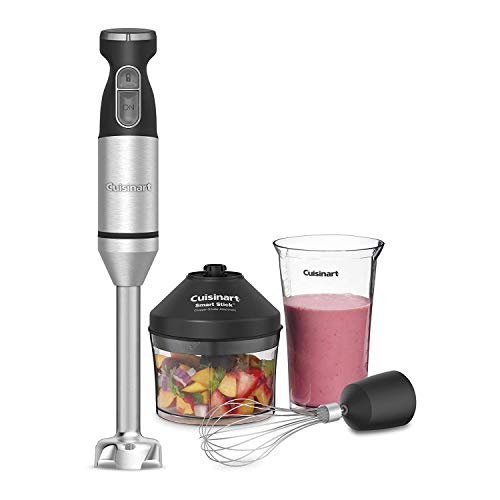
Cuisinart CSB-179 Smart Stick Variable Speed Hand Blender
Badge: Most Versatile
Strengths
- The chopper, whisk and measuring cup turn one motor into a small prep station
- Variable speed suits both gentle emulsions and firm purees
- The 8-inch shaft reaches into deep pots like its two-speed sibling
Trade-offs
- More attachments mean more washing and more storage pieces
- 300W is modest for the chopper on very hard ingredients
- The set format costs more counter-organising effort than a bare stick
At a glance
- Motor: 300W quiet motor (from listing title)
- Variable speed control
- 8 in. shaft
- Includes chopper, whisk and measuring cup
- Stainless steel finish
The CSB-179 is what the stick format becomes when it grows ambitions. The same quiet 300W motor and long shaft handle the in-pot work, but the chopper takes over onions, nuts and herbs, the whisk handles eggs and cream, and the measuring cup doubles as the blending beaker. For a small kitchen, that set can retire two other appliances. The honest cost is logistics: attachments live somewhere, get washed separately, and reward owners who put things back in the same place.
For an Australian buyer, this model also has to survive a practical check the specification sheet does not show: the listing’s voltage and plug. Australia runs 230-240V with Type I sockets, and marketplace listings are not always local stock. Treat that check as part of this pick’s review — the blending case for it is made above, and it only becomes a recommendation once the electrical details on the live listing match an Australian kitchen.
In daily use, the format shapes everything: how you load it, how you clean it, and which jobs become effortless. Owners of a well-matched format tend to fall into a rhythm quickly — a handful of regular tasks done the same reliable way each week — and that rhythm, more than any single feature, is what a good purchase actually buys. If this model’s rhythm matches your routine, it belongs on your shortlist; if its trade-offs cut across that routine, one of the other picks here will serve you better, and the review does not pretend otherwise.
Best for: small kitchens that want one motor to prep, whisk and blend / Not suited for: buyers whose needs clash with the trade-offs listed above
Check on Amazon to see the current listing for the Cuisinart CSB-179 Smart Stick Variable Speed Hand Blender, confirm the configuration, and check the latest price on Amazon.
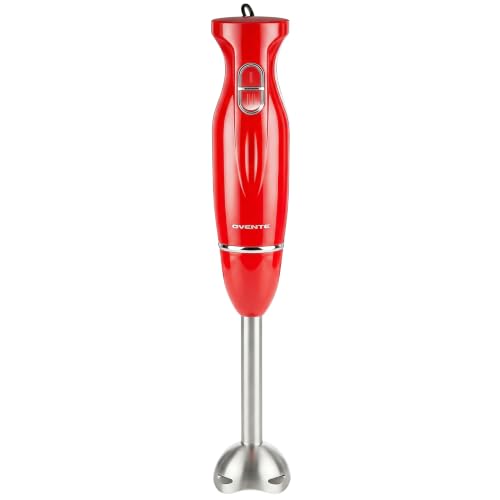
OVENTE HS560R Electric Hand Blender 300W (Red)
Badge: Best on a Budget in Red
Strengths
- The red finish is easy to spot in a crowded drawer
- Same simple two-speed layout as the black HS560B
- Stainless blades handle the everyday blending list
Trade-offs
- Functionally identical to the black version, so choose on colour and availability
- 300W class limits very thick or fibrous blending
- No attachments are listed beyond the stick
At a glance
- Motor: 300W (from listing title)
- 2 mixing speeds
- Stainless steel blades
- Colour: red (HS560R)
- Stated uses: smoothies, purees, baby food
The HS560R is the red twin of the black OVENTE above: same 300W motor, same two speeds, same stainless blades. That is not a criticism. Colour is a legitimate reason to choose between identical tools — a red stick is found faster in a mixed drawer and claimed more happily by the cook who picked it. Judge it on the same terms as its sibling: an honest, simple blender for soups, purees and smoothies, used within its size.
For an Australian buyer, this model also has to survive a practical check the specification sheet does not show: the listing’s voltage and plug. Australia runs 230-240V with Type I sockets, and marketplace listings are not always local stock. Treat that check as part of this pick’s review — the blending case for it is made above, and it only becomes a recommendation once the electrical details on the live listing match an Australian kitchen.
In daily use, the format shapes everything: how you load it, how you clean it, and which jobs become effortless. Owners of a well-matched format tend to fall into a rhythm quickly — a handful of regular tasks done the same reliable way each week — and that rhythm, more than any single feature, is what a good purchase actually buys. If this model’s rhythm matches your routine, it belongs on your shortlist; if its trade-offs cut across that routine, one of the other picks here will serve you better, and the review does not pretend otherwise.
Best for: colour-led buyers who want the simple ovente layout in red / Not suited for: buyers whose needs clash with the trade-offs listed above
Check on Amazon to see the current listing for the OVENTE HS560R Electric Hand Blender 300W (Red), confirm the configuration, and check the latest price on Amazon.
Comparison Table
The six picks side by side. Format and headline specification explain most of the real difference between them; use this table to narrow the field, then read the full reviews of your finalists.
| Pick | Format | Headline spec | Badge |
|---|---|---|---|
| MasterChef Immersion Blender 400W | corded stick blender with variable speed and turbo boost | 400W (from listing title) | Best Overall |
| Bonsenkitchen Immersion Hand Blender | corded stick blender with two mixing speeds | 2 mixing speeds (from listing title) | Best for Beginners |
| Cuisinart Smart Stick CSB-175 2-Speed Hand Blender | corded stick blender with 8-inch reach and one-touch slide control | 300W quiet DC motor (from listing title) | Best for Deep Pots |
| OVENTE HS560B Electric Hand Blender 300W (Black) | corded stick blender with two mixing speeds | 300W (from listing title) | Best Budget Pick |
| Cuisinart CSB-179 Smart Stick Variable Speed Hand Blender | corded stick blender set with chopper, whisk and measuring cup | 300W quiet motor (from listing title) | Most Versatile |
| OVENTE HS560R Electric Hand Blender 300W (Red) | corded stick blender with two mixing speeds | 300W (from listing title) | Best on a Budget in Red |
Notice how much of the decision this short table already settles. Once the verified models are on the table, the choice is about fit — your kitchen, your batch sizes, your regular jobs — far more than about one model being universally better than another. The guide at Best Stick Blenders Comparison Chart applies the same side-by-side approach to a related shortlist.
How to Choose the Right Blender for the Job
Start with the vessel, because the vessel decides the format’s value. A stick blender earns its place when your blending happens inside something else — a soup pot, a sauce pan, a tall beaker — and the alternative is a transfer, a jug wash, and a portion lost to the sides. If your blending is mostly standalone drinks in large batches, a countertop machine is the honest answer instead, and no stick review should talk you out of that.
Next, reach and control. Shaft length decides which of your pots the bell can work in while staying submerged; control style decides your emulsions. Two speeds are enough for soups and purees. A variable dial or trigger earns its keep the day you make mayonnaise, whip a dressing, or blend for a baby whose texture target changes month by month.
Then read the attachment list against your week. A chopper and whisk turn a stick into a small prep station and can retire other tools in a small kitchen — but every attachment is a part to wash and store. Buy the set if you will use it weekly; buy the bare stick, gladly, if you will not.
For Australian buyers, add one line to the framework: electrical fit before everything. A verified 230-240V listing from a seller you can claim warranty from beats a marginally cheaper import on every measure that matters after the box is opened.
Finally, think about cleaning before you buy, because cleaning is where blenders are abandoned. Sticks rinse in seconds; jugs and attachment sets ask for a routine. Neither is wrong, but the honest match between a machine’s upkeep and your patience is worth more than one extra function. The notes in Best Stick Blenders Consumer Reports go deeper on matching a machine to a household in this category.
How to Use a Stick Blender Well, From First Soup to Daily Habit
A short routine that covers ninety percent of what a stick blender is asked to do in an Australian kitchen.
- Fill the pot or beaker so the blade bell can sit fully submerged with room for the vortex to form.
- Submerge the bell before switching on, start on the lowest speed, and let the vortex establish before moving the stick.
- Move slowly in a gentle tilt-and-lift pattern, keeping the bell below the surface at all times.
- For thick purees, work in bursts: blend, pause to let food fall back onto the blades, then blend again.
- For emulsions, keep the bell on the bottom at a gentle speed until the mixture thickens, then raise it slowly.
- Switch off before lifting the bell out, then rinse the stick immediately while the residue is still wet.
Troubleshooting
Problem: the blend is uneven with chunks surviving at the edges → the vortex is not moving the food. Keep the bell submerged, tilt slowly to draw the edges in, and give thick mixtures a pause so food falls back onto the blades.
Problem: splashing coats the counter → the bell broke the surface while running, or the vessel is too shallow for the load. Stop, deepen the vessel or reduce the batch, submerge fully, and restart at the lowest speed.
Problem: the motor strains and slows → the load is too thick, too frozen, or too large for the format. Add liquid a spoonful at a time, cut pieces smaller, and work in bursts rather than one continuous run.
Care between uses is brief but non-negotiable: rinse or wash the parts that touched food while they are still wet, dry them fully, and store the tool where it will actually be reached for. A clean, dry, accessible blender gets used; a dirty one in a deep cupboard does not. More routine guidance sits in Best Stick Blenders For Kitchens for readers who want it.
Buying a Stick Blender in Australia: Voltage, Plugs and Local Stock
The single most important Australia-specific check is electrical. Australian homes run 230-240V at 50Hz with Type I three-pin sockets. Stick blenders sold through Australian retailers are built and certified for that supply. The same model name sold through an international marketplace listing may be a 110-120V US unit, which will not run safely — or at all — on Australian power without a step-down transformer that costs more than the blender. Before any purchase, confirm the listing states Australian voltage and an Australian plug, or that the seller is shipping local stock.
Warranty follows the same geography. A locally supplied unit carries Australian consumer guarantees that are straightforward to claim; a grey import can leave you negotiating with an overseas seller over a low-cost appliance, a contest nobody wins. This is why this guide links listings rather than printing prices: the live listing is where voltage, plug, seller and warranty details can be verified at the moment you buy, and those four details matter more to an Australian buyer than a small difference in the headline figure.
Sizing language differs too. Australian recipes work in millilitres and litres, and beaker and pot capacities on local packaging follow suit, while US listings quote quarts and ounces. The conversion that matters is practical: a stick blender’s beaker work happens in the 500-800ml band, and its pot work is limited by shaft reach rather than pot volume. Judge the picks here by shaft length and control, and the unit conversions will take care of themselves.
What Australian Cooking Asks of a Stick Blender
Australian home cooking gives a stick blender a particular workout: pumpkin and minestrone soups through winter, curry pastes and sauces, dips like hummus in small batches, baby food in the family years, and smoothies and frappes when the weather turns. Notice the pattern — most of it is in-pot or in-beaker work in modest quantities, exactly the stick format’s home ground. Batch-frozen-drink production is the exception, and it is the one job on the list that honestly belongs to a countertop machine.
Heat and humidity shape storage more than visitors expect. A stick that lives in a drawer near the stove will be used constantly in an Australian summer, when nobody wants to wash a jug blender after a quick smoothie. Corded models — every pick in this guide — also sidestep the battery degradation that hot garages and sunlit benches accelerate in cordless tools, one more reason the simple corded stick suits local conditions well.
Finally, consider the bench itself. Australian kitchens in newer homes trend open-plan, which promotes the quieter motors in this guide from luxury to household diplomacy. Blending soup at nine at night or a smoothie at six in the morning is a different act in an open-plan flat than in a closed kitchen, and the picks here were ranked with that reality in mind.
More Practical Guidance Before You Decide
Clean the stick while it is still wet. Ten seconds under a running tap, or a quick blend in a beaker of warm soapy water, removes almost everything. Leave the same residue to dry overnight and the two-minute job becomes a soaking-and-scrubbing job — the point at which appliances quietly fall out of use.
Judge a stick by its shaft and its switch before its wattage. Reach decides which of your pots it can work in; the switch decides whether you can control it one-handed while the other hand steadies the pan. Wattage matters, but it is third on the list, not first.
Storage decides whether a blender gets used. A stick that lives in the front of a drawer, cord loosely looped, will blend three times a week. The same stick buried under a slow cooker lid will blend three times a year. Plan the home for the tool before the tool arrives.
For baby food, texture control is the product. The ability to stop at chunky, or continue to silky, in the same batch — and to blend a small quantity without it hiding under a jug blade — is why the stick format dominates this job in household after household.
A beaker is a blender accessory, not packaging. Tall, narrow and stable, it concentrates food around the blade bell and stops a small batch from spreading into a thin, unblendable layer. If a set includes one, keep it with the stick; if not, a tall measuring jug does the same work.
Noise is a household feature, not a footnote. A blender used at breakfast in an open-plan home is heard by everyone in it. Quieter motors and shorter jobs are worth real money to households that blend early, late, or near sleeping children.
Accessories should be bought by the week, not by the photograph. Before valuing any set, list the attachments you would genuinely use in an ordinary week — not at Christmas, not in a hypothetical dinner party month. The set that matches that list is good value at almost any tier; the set that exceeds it is storage wearing a discount.
A tamper, a beaker or a second container changes a blender more than a program does. Physical tools that move food toward the blades, hold the right batch size, or let you blend and store in one vessel alter daily results. When comparing two finalists, weigh the physical kit in the box as heavily as the electronic features on the panel.
Batch size honesty saves more purchases than any review. Most households blend smaller quantities than they imagine when they shop, because shopping imagination defaults to the biggest gathering of the year. Recall your last ten blends and size the machine for the median one; the outlier batch can always be made in two rounds.
Lids, seals and cords are the unglamorous failure points. A seal that weeps, a lid that needs two hands and a prayer, a cord too short for the socket by the stove — these are the details that turn a good specification into a daily irritation. They are worth checking in owner feedback for the exact configuration you are buying.
Temperature is a blending variable, not just a cooking one. Hot liquids expand and splash more readily, frozen ingredients resist and stall weak motors, and room-temperature mixtures behave better than either extreme. A blender that suits your usual temperature — the soup household versus the frozen-drink household — is the one that will feel powerful in your hands.
The second week tells the truth about a blender. Novelty carries the first week; by the second, the machine is either in the routine — stored where it should be, washed without resentment, reached for without thinking — or it is beginning its migration toward the back of a cupboard. Judge any purchase by whether its design survives that second week.
Recipes adapt to tools more than tools adapt to recipes. Once a blender is in the house, households quietly rewrite their regulars around what it does well: the soup gets blended in the pot, the sauce gets finished at the stove, the smoothie moves to the beaker. Buying the format your cooking wants to become is a better strategy than buying for the cooking you think you should do.
Weight and grip decide one-handed work. A stick blender is operated with one hand while the other steadies a hot pot, and a countertop container is lifted full, one-handed, to pour. In both cases the hand is the interface, and a design that respects grip, balance and switch placement will outperform a stronger design that fights the hand using it.
Water is the cleaning medium that matters. Models whose food-contact parts tolerate a simple rinse or a honest soak get cleaned immediately; models that demand disassembly, brushes and caution get cleaned eventually. Since eventual cleaning is how residues, odours and stains accumulate, rinse-ability is a performance specification in disguise.
Think about the second owner of your attention: the person who shares your kitchen. A blender only one household member can operate confidently — because its controls are cryptic or its assembly is fiddly — is a blender that creates a bottleneck person. Simple, legible controls are a household feature, not a dumbing-down.
Longevity is mostly boring engineering. Metal drive components where rivals use plastic, seals that can be replaced rather than glued, containers that survive thermal shock — none of it photographs well, and all of it decides whether a blender is a three-year or a ten-year purchase. At premium tiers, this is what the money is actually for.
Your counter’s height and your cabinets’ clearance are specifications too. A tall countertop machine that cannot open under a wall cabinet will live somewhere worse, and a stick too long for the drawer will live somewhere else entirely. Measure the room before the machine arrives; the tape measure is the cheapest accessory in this entire guide.
Finally, buy the blender for the cook you are on a tired Wednesday, not the cook you are on a motivated Sunday. The tired-Wednesday cook needs the tool that is already out, already clean, and obvious to operate. Every design choice in this guide was weighed against that cook, because that is the one who decides whether a purchase was worth it.
Keep the bell submerged. Almost every stick-blender failure — splashing, air pockets, uneven texture — starts with the blade guard breaking the surface while the motor runs. Submerge first, start second, and tilt the stick slowly to move the vortex rather than lifting it out and plunging it back in.
Common Buying Mistakes
Australian buyers make a few mistakes that shoppers elsewhere rarely face. The electrical one comes first, because it can end the purchase on day one.
- Buying the format after the brand. Decide stick, personal, or countertop first; the best brand in the wrong format is still the wrong machine.
- Chasing headline wattage. Power matters inside a format, not across formats, and control at the switch changes results more than another hundred watts.
- Ignoring vessel size. Small batches vanish under big blades and big batches overwhelm small sticks. Match the machine to your typical quantity, not your largest ever.
- Trusting a printed price or a frozen rating. Both move constantly. Position by tier, check the live price at the moment of buying, and judge the machine on format and design.
- Skipping the cleaning question. The best machine on paper loses to a lesser machine you actually wash. Match upkeep to your real patience, not your best intentions.
- Overloading the first use. New owners crowd the vessel, get a poor result, and blame the format. One honest, correctly sized first blend teaches more than a week of reviews.
Final Recommendation
For most readers, start with the MasterChef Immersion Blender 400W: it carries its badge because its format, control, and specification suit the widest range of readers chasing best stick blenders australia. You can Check on Amazon for its current listing. If your work leans toward the strengths of the second pick instead, the Bonsenkitchen Immersion Hand Blender is the alternative we would buy in that situation — Check on Amazon for that listing too. Compare your finalists against your vessel sizes and your weekly jobs, and choose the one whose trade-offs you mind least. That comparison, honestly made, is the whole decision.
Frequently Asked Questions
Can I use a US stick blender in Australia?
Not directly. US models are built for 110-120V, while Australian sockets supply 230-240V. Plugging a US unit in without a suitable step-down transformer can destroy the motor immediately. Buy a listing that states Australian voltage and plug, and treat any listing that is silent on voltage as a listing to skip.
What size stick blender suits a family soup pot?
Look at shaft reach rather than wattage. An 8-inch shaft keeps the blade bell submerged in a deep stockpot, which prevents splashing and blends the full depth evenly. Two of the picks in this guide offer that reach.
Is a variable speed worth it for Australian home cooking?
For soups and purees, two speeds genuinely suffice. Variable control earns its place for emulsions like mayonnaise and aioli, and for baby food, where the target texture changes as the child grows. Match the control to your recipe list, not to the specification sheet.
Corded or cordless for an Australian kitchen?
Every pick in this guide is corded, which suits the format: full power for as long as the job takes, no battery to degrade in a hot kitchen, and no charging routine. Cordless sticks trade that certainty for freedom from the socket, which matters most in kitchens with few bencheside outlets.
How do I clean a stick blender after soup?
Rinse the stick under a running tap immediately, or blend a beaker of warm water with a drop of detergent for a few seconds, then rinse and dry. The job takes under a minute while residue is wet and much longer once it dries.
Why does this guide not print Australian prices?
Because marketplace prices in this category move constantly and differ between local and imported stock. Each pick is positioned by tier instead, and the links let you check the live price — and the voltage and seller details that matter more — at the moment you buy.


