Disclosure: topratedkitchenware.com is reader-supported. When you buy through links on our site, we may earn an affiliate commission from Amazon and other retailers, at no extra cost to you.
Where to buy
The picks below are the verified models for this guide to best single serve coffee makers environmental. Linked names lead to their Amazon listings, where you can check the latest price on Amazon, confirm the exact configuration, and read current owner feedback. Start with the first pick if you want the shortest route: Check on Amazon for the Tastyle Mini Single Serve (K310IC).
- Tastyle Mini Single Serve (K310IC) — Best Low-Waste Starter
- Keurig K-Express (Evergreen) — Pod-Only — Covered for Contrast
- Keurig K-Express (Mint) — Pod-Only in a Second Finish
- Hamilton Beach FlexBrew Advanced 4-in-1 — Best for Grounds and Pods
- Ninja Single Serve Coffee Maker (PB051) — Most Flexible Low-Waste Pick
- Keurig K-Elite (Brushed Silver) — Premium Pod-Only Option
Read the full guide ↓ for the detailed reviews, the honest trade-offs behind every badge, and the checks that matter more than any headline claim.
The best single serve coffee makers environmental searches come from a fair worry: the format’s convenience has historically been paid for one plastic pod at a time. This guide ranks six verified machines by their waste profile first. Three picks can brew from grounds — the route that removes the pod from the bin — and those three are linked. The other three are pod-only on their listings’ own evidence, and they are covered prose-only, reviewed honestly as the contrast: good machines whose every cup structurally produces a used pod.
That structure is the guide’s argument in miniature. The greenest single-serve machine is not a special eco model; it is an ordinary machine whose daily routine happens to run on grounds or a reusable filter. Read the three linked reviews for the practical choices, and the three prose-only reviews for a clear-eyed account of what pod-only convenience costs in waste — so whichever way you buy, you buy it knowingly.
One boundary before the reviews: this guide is research-led. It is built from verified product data, maker specifications, and accumulated owner experience reported for these models — not from invented hands-on claims. Where a model has a real limitation, the review says so plainly. If you are comparing neighbouring searches while you decide, the discussion in Best Single Serve And Carafe Coffee Makers covers closely related ground, and Best Single Serve And Full Pot Coffee Makers is worth reading alongside this guide.
Key Takeaways
- Three picks brew from grounds (Tastyle, FlexBrew, Ninja) and are linked; three pod-only Keurigs are covered prose-only as the contrast.
- Grounds brewing removes the per-cup pod entirely — the largest single waste lever in this category.
- Dual-input machines let a household cut pod use gradually instead of quitting pods overnight.
- Pod-only machines are reviewed honestly here: their convenience is real, and so is one used pod per cup.
- Compostable grounds and a reusable filter are the everyday wins; no machine in this category is impact-free.
In this guide
Quick Picks
These are the six picks for best single serve coffee makers environmental at a glance. The badge each model carries here is the same badge used in its detailed review below, so you can jump straight to the full review of any model that catches your eye.
| Pick | Badge | Best for |
|---|---|---|
| Tastyle Mini Single Serve (K310IC) | Best Low-Waste Starter | Travellers and small households starting a grounds habit alongside pods |
| Keurig K-Express (Evergreen) | Pod-Only — Covered for Contrast | Readers who want the mainstream platform and accept pod waste knowingly |
| Keurig K-Express (Mint) | Pod-Only in a Second Finish | Buyers weighing the same pod-only platform in another finish |
| Hamilton Beach FlexBrew Advanced 4-in-1 | Best for Grounds and Pods | Households cutting pod use with a grounds option on board |
| Ninja Single Serve Coffee Maker (PB051) | Most Flexible Low-Waste Pick | Drinkers who want the widest low-waste flexibility in one machine |
| Keurig K-Elite (Brushed Silver) | Premium Pod-Only Option | Buyers choosing the premium pod tier with eyes open about waste |
Badges are judgements, not decorations: each one is defended in the detailed review, including the trade-offs that come with it. If two picks share your shortlist, the comparison table further down lines their formats and key specifications up side by side.
How These Picks Were Chosen
Every model in this guide comes from a verified pick pool checked against Amazon’s catalogue data, so the names, configurations, and images you see here correspond to real, current listings. That verification step matters more than it sounds: coffee maker line-ups change constantly, model names repeat across years and colours, and a guide is only useful if the machine it describes is the machine you can actually buy.
The ranking weighs waste profile first — whether each machine can brew from grounds or a reusable filter on the evidence of its own listing — then everyday merit among the machines that pass that test, alongside the everyday fundamentals: reservoir size against refill habits, brew-size range against the cups a household actually uses, how much cleaning the machine asks for, and whether its flexibility maps onto drinks people make weekly. Features that sound impressive but rarely get used were given little weight. Badges were assigned after the ranking, to describe each model’s genuine strength rather than to make every pick sound like a winner at everything.
Two honesty notes. First, prices are not printed in this guide because they change constantly; every pick is positioned by tier, and the links let you check the latest price on Amazon in one click. Second, no star ratings or review counts are quoted, for the same reason — they move, and a frozen number would mislead you. What does not move is format, capacity, and design, and those are what this guide judges. Readers working through Best Single Serve And Pod Coffee Makers will find the same standards applied there.
The 6 Best Options for Best single serve coffee makers environmental
Six models, six different answers. Read the badge first, then the trade-offs — the right pick is the one whose trade-offs you mind least.
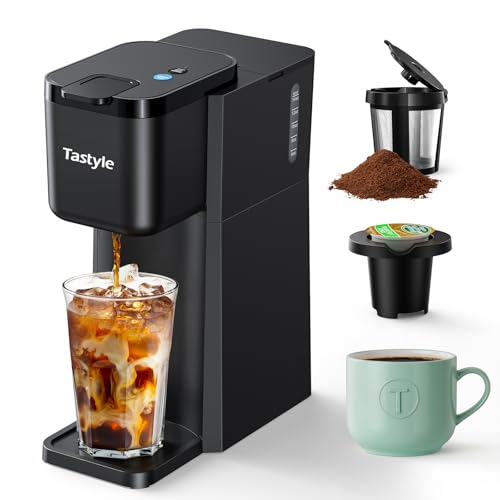
Tastyle Mini Single Serve (K310IC)
Badge: Best Low-Waste Starter
Strengths
- Takes both K-Cup pods and grounds in a mini footprint
- Hot and iced brewing at the smallest size in this guide
- 6 to 14 oz size range covers espresso-style short cups through travel mugs
Trade-offs
- Mini format means a small water capacity and refill-per-session rhythm
- Lesser-known brand than the Keurig and Hamilton Beach names here
- Iced brewing in a mini machine depends heavily on using enough ice
At a glance
- Brews K-Cup pods and grounds (from listing title)
- Brew sizes from 6 to 14 oz
- Brews hot and iced coffee
- Recipe book included
- 120V; stated settings: home, travel, RV, office, dorm
- Model: K310IC, version 2.0; colour: classic black
The Tastyle Mini packs an unusual amount of range into the smallest body in this guide: K-Cup pods or grounds, hot or iced, and brew sizes from 6 to 14 ounces, with a recipe book in the box nudging owners past plain black coffee. Its stated habitats — home, travel, RV, office, dorm — are exactly where a mini brewer earns its keep, and the 120V specification is printed in its title, which this guide appreciates. The trade is capacity and brand familiarity: you refill more often, and the name carries less long-term track record than the big brands. For portable and small-space brewing, the feature mix is genuinely strong.
For the environmental brief, this review scores the machine’s waste pattern before its convenience: what goes in the bin after each cup, whether a grounds route exists on the listing’s own evidence, and what habits the design encourages. A delightful machine that structurally requires a disposable pod per cup is marked as exactly that, however good the coffee is.
In daily use, the format shapes everything: how you fill it, how you clean it, and which drinks become effortless. Owners of a well-matched brewer tend to fall into a rhythm quickly — a handful of regular drinks made the same reliable way each week — and that rhythm, more than any single feature, is what a good purchase actually buys. If this model’s rhythm matches your routine, it belongs on your shortlist; if its trade-offs cut across that routine, one of the other picks here will serve you better, and the review does not pretend otherwise.
Best for: travellers and small households starting a grounds habit alongside pods / Not suited for: buyers whose needs clash with the trade-offs listed above
Check on Amazon to see the current listing for the Tastyle Mini Single Serve (K310IC), confirm the configuration, and check the latest price on Amazon.
Keurig K-Express (Evergreen)
Badge: Pod-Only — Covered for Contrast
Coverage note: This pick is covered prose-only because, on the evidence of its verified listing, it brews K-Cup pods only — no grounds mode or reusable-filter path is stated — and pod-only brewing is the waste pattern this environmental guide exists to help readers avoid. It is reviewed accurately as the contrast case, with no Amazon link and no image, so the pod-only trade-off is visible rather than hidden.
Strengths
- 42 oz reservoir covers several cups between refills
- Strong Brew button gives a real strength lever on the same pod
- Travel mug friendly clearance suits commuter routines
Trade-offs
- Pod-only format per the listing — no grounds basket is stated
- Three Keurig K-Express finishes in this guide are the same machine in different colours
- Reservoir water needs regular refreshing in low-use kitchens
At a glance
- 3 brew sizes (from listing title)
- 42 oz removable reservoir
- Strong Brew button
- Travel mug friendly
- Works with all K-Cup pods
- Colour: evergreen
The K-Express is the mainstream Keurig formula done cleanly: a 42-ounce removable reservoir, three brew sizes, and a Strong Brew button that slows the water’s pass through the pod for a bolder cup. The evergreen finish is the only thing separating this listing from its mint, black and warm stone siblings in this guide — same machine, same specification, different colour — so choose it because the colour suits your kitchen, and judge the platform on the reservoir-and-Strong format that all four share. For most single-cup households, this is the configuration the rest of the guide is measured against.
For the environmental brief, this review scores the machine’s waste pattern before its convenience: what goes in the bin after each cup, whether a grounds route exists on the listing’s own evidence, and what habits the design encourages. A delightful machine that structurally requires a disposable pod per cup is marked as exactly that, however good the coffee is.
In daily use, the format shapes everything: how you fill it, how you clean it, and which drinks become effortless. Owners of a well-matched brewer tend to fall into a rhythm quickly — a handful of regular drinks made the same reliable way each week — and that rhythm, more than any single feature, is what a good purchase actually buys. If this model’s rhythm matches your routine, it belongs on your shortlist; if its trade-offs cut across that routine, one of the other picks here will serve you better, and the review does not pretend otherwise.
Best for: readers who want the mainstream platform and accept pod waste knowingly / Not suited for: buyers whose needs clash with the trade-offs listed above
Keurig K-Express (Mint)
Badge: Pod-Only in a Second Finish
Coverage note: This pick is covered prose-only because, on the evidence of its verified listing, it brews K-Cup pods only — no grounds mode or reusable-filter path is stated — and pod-only brewing is the waste pattern this environmental guide exists to help readers avoid. It is reviewed accurately as the contrast case, with no Amazon link and no image, so the pod-only trade-off is visible rather than hidden.
Strengths
- Same 42 oz reservoir and Strong Brew platform as its colour siblings
- Mint finish brightens small kitchens and is easy to spot in listings
- Travel mug friendly for weekday commutes
Trade-offs
- Identical mechanically to the other K-Express finishes — colour is the only difference
- Pod-only per the listing title
- Light finishes show coffee splashes more readily than dark ones
At a glance
- 3 brew sizes (from listing title)
- 42 oz removable reservoir
- Strong Brew button
- Travel mug friendly
- Works with all K-Cup pods
- Colour: mint
The mint K-Express is mechanically the evergreen, black and warm stone K-Express: 42-ounce reservoir, three brew sizes, Strong Brew, travel mug clearance. Its review is therefore short on new mechanics and honest about it — the reason to pick this listing is the finish and current availability, not a hidden feature. That is not a weakness. In a category where colour variants crowd search results, naming them plainly as one machine in four finishes is the most useful thing a guide can do, and the mint version earns its place for kitchens where a soft colour is genuinely preferred.
For the environmental brief, this review scores the machine’s waste pattern before its convenience: what goes in the bin after each cup, whether a grounds route exists on the listing’s own evidence, and what habits the design encourages. A delightful machine that structurally requires a disposable pod per cup is marked as exactly that, however good the coffee is.
In daily use, the format shapes everything: how you fill it, how you clean it, and which drinks become effortless. Owners of a well-matched brewer tend to fall into a rhythm quickly — a handful of regular drinks made the same reliable way each week — and that rhythm, more than any single feature, is what a good purchase actually buys. If this model’s rhythm matches your routine, it belongs on your shortlist; if its trade-offs cut across that routine, one of the other picks here will serve you better, and the review does not pretend otherwise.
Best for: buyers weighing the same pod-only platform in another finish / Not suited for: buyers whose needs clash with the trade-offs listed above

Hamilton Beach FlexBrew Advanced 4-in-1
Badge: Best for Grounds and Pods
Strengths
- Brews with pods or with grounds — the widest input choice among the pure single-serve picks
- Dedicated hot and iced brewing in one machine
- 45 oz removable reservoir is the largest among the single-serve-only picks here
Trade-offs
- Single-serve side only — there is no batch carafe function on this model
- Pod-plus-grounds flexibility means two brewing parts to rinse
- Iced results still depend on ice quality and cup size discipline
At a glance
- 4-in-1 single-serve format (from listing title)
- Brews hot and iced coffee
- Removable 45 oz reservoir
- Uses pod packs and grounds
- Fast brewing noted in listing
- Colour: black
The FlexBrew Advanced 4-in-1 is the flexibility pick: it takes pod packs when the morning is rushed and loose grounds when it is not, brews hot or over ice, and holds 45 ounces of water so neither mode needs constant refilling. That combination quietly answers several different searches at once, which is why it recurs across this wave’s guides. Its honest boundary is batch size — every cup is brewed one at a time, so a house that regularly serves six people at once will queue at it. For one-to-three-cup households that want options, it is the most adaptable machine in this pool.
For the environmental brief, this review scores the machine’s waste pattern before its convenience: what goes in the bin after each cup, whether a grounds route exists on the listing’s own evidence, and what habits the design encourages. A delightful machine that structurally requires a disposable pod per cup is marked as exactly that, however good the coffee is.
In daily use, the format shapes everything: how you fill it, how you clean it, and which drinks become effortless. Owners of a well-matched brewer tend to fall into a rhythm quickly — a handful of regular drinks made the same reliable way each week — and that rhythm, more than any single feature, is what a good purchase actually buys. If this model’s rhythm matches your routine, it belongs on your shortlist; if its trade-offs cut across that routine, one of the other picks here will serve you better, and the review does not pretend otherwise.
Best for: households cutting pod use with a grounds option on board / Not suited for: buyers whose needs clash with the trade-offs listed above
Check on Amazon to see the current listing for the Hamilton Beach FlexBrew Advanced 4-in-1, confirm the configuration, and check the latest price on Amazon.

Ninja Single Serve Coffee Maker (PB051)
Badge: Most Flexible Low-Waste Pick
Strengths
- Four brew styles give the widest drink range among the single-serve picks
- Up to 24 oz cup sizes handle oversized mugs and big travel cups
- 56 oz reservoir is the largest on any single-serve-only pick here
Trade-offs
- Bigger and heavier than the mini brewers — not a portable pick
- Style menus add a small learning curve over one-button machines
- Single-serve only — the 24 oz ceiling is one large cup, not a pot
At a glance
- Takes K-Cup pods and grounds (from listing title)
- 4 brew styles
- Cup sizes up to 24 oz
- 56 oz removable reservoir
- Model: PB051; colour: black
The Ninja PB051 is the maximalist single-serve machine: pods or grounds, four brew styles, cup sizes running up to 24 ounces, and a 56-ounce reservoir behind it all. Where the minis in this guide strip the format down, the Ninja builds it up, and for households whose ‘single cup’ is often a large travel mug of something stronger or richer than standard, that headroom is the whole argument. It gives up portability to get there — this is a countertop resident, not a travel companion — and its menu rewards a minute of reading on day one. After that, it is the most capable one-cup brewer in this pool.
For the environmental brief, this review scores the machine’s waste pattern before its convenience: what goes in the bin after each cup, whether a grounds route exists on the listing’s own evidence, and what habits the design encourages. A delightful machine that structurally requires a disposable pod per cup is marked as exactly that, however good the coffee is.
In daily use, the format shapes everything: how you fill it, how you clean it, and which drinks become effortless. Owners of a well-matched brewer tend to fall into a rhythm quickly — a handful of regular drinks made the same reliable way each week — and that rhythm, more than any single feature, is what a good purchase actually buys. If this model’s rhythm matches your routine, it belongs on your shortlist; if its trade-offs cut across that routine, one of the other picks here will serve you better, and the review does not pretend otherwise.
Best for: drinkers who want the widest low-waste flexibility in one machine / Not suited for: buyers whose needs clash with the trade-offs listed above
Check on Amazon to see the current listing for the Ninja Single Serve Coffee Maker (PB051), confirm the configuration, and check the latest price on Amazon.
Keurig K-Elite (Brushed Silver)
Badge: Premium Pod-Only Option
Coverage note: This pick is covered prose-only because, on the evidence of its verified listing, it brews K-Cup pods only — no grounds mode or reusable-filter path is stated — and pod-only brewing is the waste pattern this environmental guide exists to help readers avoid. It is reviewed accurately as the contrast case, with no Amazon link and no image, so the pod-only trade-off is visible rather than hidden.
Strengths
- K-Elite is Keurig’s premium-tier single-serve line in this pool
- Brushed silver finish suits appliance-matched kitchens
- Full K-Cup catalogue access
Trade-offs
- The pool listing title states few specifications — verify reservoir size, brew sizes and any iced or temperature settings on the live listing before buying
- Pod-only format per the listing title; no grounds function is stated
- Premium-tier positioning within the Keurig range
At a glance
- Single-serve K-Cup pod format (from listing title)
- Finish: brushed silver
- Brand line: Keurig K-Elite
The K-Elite occupies the premium shelf of Keurig’s single-serve range, and its brushed silver finish is the visible part of that positioning. The verified pool data for this listing is unusually terse — the title confirms the K-Cup single-serve format and the finish, and little else — so this guide deliberately does not print reservoir, size or feature claims for it. What can be said honestly is where it sits: above the K-Express class in Keurig’s own line-up, aimed at buyers who want the flagship version of the pod routine. Check the live listing for the exact configuration, and let that verified detail, not a badge, close the decision.
For the environmental brief, this review scores the machine’s waste pattern before its convenience: what goes in the bin after each cup, whether a grounds route exists on the listing’s own evidence, and what habits the design encourages. A delightful machine that structurally requires a disposable pod per cup is marked as exactly that, however good the coffee is.
In daily use, the format shapes everything: how you fill it, how you clean it, and which drinks become effortless. Owners of a well-matched brewer tend to fall into a rhythm quickly — a handful of regular drinks made the same reliable way each week — and that rhythm, more than any single feature, is what a good purchase actually buys. If this model’s rhythm matches your routine, it belongs on your shortlist; if its trade-offs cut across that routine, one of the other picks here will serve you better, and the review does not pretend otherwise.
Best for: buyers choosing the premium pod tier with eyes open about waste / Not suited for: buyers whose needs clash with the trade-offs listed above
Comparison Table
The six picks side by side. Format and headline specification explain most of the real difference between them; use this table to narrow the field, then read the full reviews of your finalists.
| Pick | Format | Headline spec | Badge |
|---|---|---|---|
| Tastyle Mini Single Serve (K310IC) | mini single-serve brewer for K-Cup and grounds, hot and iced | Brews K-Cup pods and grounds (from listing title) | Best Low-Waste Starter |
| Keurig K-Express (Evergreen) | single-serve K-Cup pod brewer with reservoir | 3 brew sizes (from listing title) | Pod-Only — Covered for Contrast |
| Keurig K-Express (Mint) | single-serve K-Cup pod brewer with reservoir | 3 brew sizes (from listing title) | Pod-Only in a Second Finish |
| Hamilton Beach FlexBrew Advanced 4-in-1 | single-serve brewer for pods and grounds, hot and iced | 4-in-1 single-serve format (from listing title) | Best for Grounds and Pods |
| Ninja Single Serve Coffee Maker (PB051) | single-serve combo brewer for pods and grounds | Takes K-Cup pods and grounds (from listing title) | Most Flexible Low-Waste Pick |
| Keurig K-Elite (Brushed Silver) | single-serve K-Cup pod brewer, premium tier | Single-serve K-Cup pod format (from listing title) | Premium Pod-Only Option |
Notice how much of the decision this short table already settles. Once the verified models are on the table, the choice is about fit — your counter, your cup sizes, your regular drinks — far more than about one model being universally better than another. The guide at Best Single Serve Coffee Makers Compatable With Kcups applies the same side-by-side approach to a related shortlist.
How to Choose the Right Coffee Maker for the Job
Start with the bin, not the brochure. After a week of drinking, what has each candidate machine put there? A pod-only routine deposits a used pod per cup. A grounds routine deposits compostable grounds and, at most, filter paper — or nothing at all with a reusable filter. That weekly picture, multiplied by a machine’s working life, is the environmental decision; everything else is refinement.
Then be honest about adherence. A grounds machine whose basket you resent will drift back to pods or fall out of use, and an unused machine is the worst footprint of all. Dual-input machines — two of the linked picks — are the pragmatic middle: pods remain available for the rushed morning while grounds quietly become the default. Choose the greenest routine you will actually keep.
Secondary factors still count, in their place. A machine that lasts a decade beats a marginally thriftier one replaced twice; a right-sized reservoir avoids heating water nobody drinks; and a repairable, descale-friendly design stays out of landfill longer. Weigh longevity after the waste profile, and you have the environmental ranking in the right order.
Finally, think about cleaning before you buy, because cleaning is where coffee makers are abandoned. Reservoirs need refreshing, drip trays need rinsing, and pod needles need the occasional check. None of it is hard, but the honest match between a machine’s upkeep and your patience is worth more than one extra function. The notes in Best Single Serve Coffee Makers For Small Office go deeper on matching a machine to a household in this category.
How to Run a Lower-Waste Single Serve Routine
The machine sets the ceiling; habits set the result. These steps get the linked picks in this guide to their lowest-waste routine.
- Make grounds the default and pods the exception: keep the reusable filter or grounds basket in the machine, not in a drawer.
- Fill the grounds basket level, without hard tamping, and empty it into compost or the food-waste bin while it is still warm and loose.
- Rinse the filter immediately after brewing; a clean filter needs no disposable paper and no scrubbing later.
- Right-size the water: fill reservoir models for the day’s expected cups rather than keeping a full tank heated and refreshed indefinitely.
- If you keep pods for guests or rushed days, store them visibly as the exception — what is in front of your hand is what gets brewed.
- Descale with the maker’s routine on schedule; a scaled machine wastes energy and shortens its own life, which is the largest footprint of all.
Troubleshooting
Problem: the cup tastes weak or watery → the brew size is too large for the pod or grounds load. Drop one size, use a strength setting if the machine has one, and check the grounds fill level on reusable filters.
Problem: the machine sputters or drips slowly → mineral scale or a clogged piercing needle is the usual cause. Run the maker’s descaling routine, then inspect the needle area with the machine unplugged and clear any debris as the manual describes.
Problem: coffee tastes stale despite fresh pods → the reservoir water has sat too long or the drip tray and holder carry old residue. Refresh the water, rinse the holder and tray, and run one water-only cycle before the next cup.
Care between uses is brief but non-negotiable: empty and rinse the drip tray, refresh reservoir water that has sat for days, and leave the pod compartment open to dry after the last cup. A clean, dry, ready brewer gets used; a neglected one quietly stops being reached for. More routine guidance sits in Best Single Serve Coffee Makers Hot Cold for readers who want it.
The Pod Question, Stated Plainly
A used pod is a small object, and its defenders are right that one pod is trivial. The environmental case is arithmetic, not aesthetics: a two-cup-a-day household sends hundreds of pods a year out of the kitchen, in a format whose materials are mixed and whose recycling routes are patchy and effortful. Against that, grounds are compostable almost everywhere and arrive in a bag that serves dozens of cups. The comparison is not close, and this guide does not pretend it is.
That is why the three pod-only Keurigs — including the premium K-Elite — sit prose-only here despite being, in convenience terms, excellent machines. An environmental guide that linked them with a green framing would be laundering the very pattern the reader came to avoid. Their reviews describe their genuine merits so that a reader who chooses them anyway does so with the trade-off in plain sight.
Nuance still matters. Pod recycling programmes exist in some regions, some pods are sold as compostable under specific conditions, and a pod habit that replaces a half-wasted pot of coffee has its own arithmetic. The guide’s position is the practical one: where a grounds route exists on equal convenience terms — as it does on the three linked picks — it is the lower-waste default.
Longevity Is an Environmental Feature
The largest single footprint in any coffee machine is the machine itself: its materials, manufacture and shipping, amortised over every cup it ever brews. A brewer retired in year two carries roughly five times the per-cup machine footprint of the same brewer retired in year ten. Durability, descaling discipline and repairable design are therefore environmental specifications, not just value ones.
This cuts in favour of boring virtues: established platforms, simple mechanisms, parts that rinse rather than disintegrate. It also cuts against buying any machine — green-credentialed or not — for a routine you will not keep. The most sustainable single-serve coffee maker is the one still on your counter, still descaled, still brewing grounds in year eight.
Apply that lens to the linked picks: the FlexBrew and Ninja are countertop commitments whose flexibility keeps them relevant as habits change, and the Tastyle’s dual inputs do the same in miniature. Flexibility is longevity insurance — a machine that can change with your routine is a machine you do not replace when the routine changes.
More Practical Guidance Before You Decide
Noise matters more in open-plan homes. Pod brewers are brief but not silent: pumps vibrate, and the sound carries at dawn. Placing the machine on a mat, away from a shared wall, and choosing a model whose brew cycle is short are small decisions that decide whether early coffee is a household pleasure or a household negotiation.
A drip tray is a design confession. Removable trays that rinse in seconds get cleaned; fixed trays with crevices get wiped eventually and stained permanently. Since yesterday’s coffee residue is tomorrow’s off flavour, tray design is a flavour specification in disguise, and worth a look in any listing’s photographs before you buy.
Guests expose single-serve logic honestly. One-cup machines serve guests sequentially, which is charming for two visitors and a queue for six. Households that host often should weigh that queue when choosing between a pure single-serve machine and a combo with a batch side — the right answer is the one that matches your actual hosting pattern, not your largest imagined party.
Temperature consistency beats temperature claims. A brewer that delivers the same heat cup after cup matters more than one that advertises a peak figure it reaches once. Preheating the mug with hot water on cold mornings, and running a water-only cycle after the machine has sat idle, both tighten the consistency of any model in this guide.
Keep the piercing needles clean. Pod machines pierce foil with small needles that slowly accumulate coffee oils and grounds. A monthly check — machine unplugged, needle inspected, any debris cleared with the tool or method the maker describes — prevents the weak, sputtering brews that owners often blame on the pods themselves.
Buy pods the way you drink, not the way you shop. Bulk boxes lower the per-cup cost but lock you into one roast for months, and variety packs cost more per cup while teaching you what you actually like. A sensible pattern is a variety phase first, then bulk buying of the two or three pods that survived it.
Loose-leaf tea in a coffee brewer needs a rinse discipline. Machines with reusable filters can brew tea well, but coffee oils linger in shared parts. A water-only cycle before and after tea, and a filter reserved for tea if you brew it often, keep both drinks tasting like themselves rather than like each other.
Power draw is a dorm and RV detail. Small brewers in the 600W class coexist happily with dorm circuits and modest inverters, while full-size machines demand more. If the brewer is headed for a dorm room, an RV or a small office on a shared circuit, the wattage line in the specification is worth reading before the feature list.
Measure your cups, not your hopes. Most households own one mug they reach for daily, and its height and volume decide more about brewer satisfaction than any feature menu. The tape measure and a kitchen scale settle in two minutes what a month of reviews cannot: whether your cup fits, fills, and tastes right from a given machine.
Cleaning rhythm beats cleaning intensity. A ten-second rinse of the tray and filter after the last cup of the day prevents the weekly deep-clean from ever being necessary. Machines fall out of use through accumulated small neglects, not single disasters, and the owners who keep a tiny daily rhythm keep their brewers for years.
Strength settings repay experimentation. A Strong Brew style button works by slowing extraction, and it changes some pods dramatically and others barely at all. Spend one pod of each favourite on a strong-versus-regular comparison before deciding your default; the setting you settle on should be chosen by taste, not by the assumption that stronger is always better.
Think about the second drinker. A machine only one household member can operate confidently — because its menu is cryptic or its pod loading is fiddly — creates a bottleneck person who makes everyone’s coffee. Legible controls and an obvious loading action are household features, and they matter more with every person who shares the machine.
End-of-life thinking belongs in a coffee purchase. Pod machines concentrate waste in the pods themselves, while grounds machines spread it across filters and packaging. Choosing grounds capability, reusable filters, or pod recycling routes where they exist are the practical levers available at purchase time; no brewer choice makes the footprint zero, and guides that imply otherwise are selling something.
Finally, buy for the routine you actually have. The right single-serve brewer is the one whose fill, load, brew and rinse steps fit the morning you live now — not the slower, more ceremonial morning you might live in another house. Every pick in this guide was judged against real routines, because that is where coffee machines succeed or quietly stop being used.
Water is the main ingredient you control. Single-serve brewers heat quickly and forgive a lot, but stale reservoir water and heavily chlorinated tap water both print straight through into the cup. Filling with fresh water, and emptying a reservoir that will sit unused for days, improves every machine in this guide more than any accessory you can buy for it.
Descaling is the maintenance task that decides lifespan. Mineral scale slows heating, drops brew temperature, and eventually trips error states on pod machines. How often depends on your water hardness, but the rhythm that works is simple: descale on a calendar reminder rather than waiting for the machine to complain, and run a plain water cycle afterwards before the next real cup.
Pod storage quietly shapes flavour. Pods are sealed, but heat and light still age coffee, and a pod carousel baking beside a sunny window undoes the convenience it was bought for. A drawer or a shaded counter spot keeps a month’s supply tasting like the first week, and first-in-first-out rotation stops the oldest pods drifting to the back.
Brew size is a strength control in disguise. The same pod brewed at a smaller size tastes stronger and at a larger size tastes thinner, because the water-to-coffee ratio is doing the work. Before concluding a pod is weak or a machine is underpowered, run the size above and below your usual and taste the difference — it is the cheapest experiment in coffee.
Common Buying Mistakes
Environmental buying mistakes are usually framing mistakes — small print read as a headline virtue.
- Buying the format after the brand. Decide pod, grounds, or combo first; the best brand in the wrong format is still the wrong machine.
- Ignoring your actual cup. Height and volume decide whether your daily mug fits and fills. Measure it before reading another review.
- Chasing reservoir size alone. A big reservoir on a one-cup-a-day habit means stale water; a tiny one on a family habit means constant refills. Match it to the routine.
- Trusting a printed price or a frozen rating. Both move constantly. Position by tier, check the live price at the moment of buying, and judge the machine on format and design.
- Skipping the cleaning question. The best machine on paper loses to a lesser machine you actually rinse. Match upkeep to your real patience, not your best intentions.
- Overloading the first week with accessories. Pod carousels, spare filters and syrups can wait. One honest week of plain brewing teaches you what, if anything, the routine is missing.
Final Recommendation
For most readers, start with the Tastyle Mini Single Serve (K310IC): it carries its badge because its format, controls, and specification suit the widest range of readers chasing best single serve coffee makers environmental. You can Check on Amazon for its current listing. Compare your finalists against your cup sizes and your weekly drinks, and choose the one whose trade-offs you mind least. That comparison, honestly made, is the whole decision.
Frequently Asked Questions
Which picks in this guide produce no pod waste?
The three linked picks — the Tastyle, the Hamilton Beach FlexBrew and the Ninja PB051 — all brew from grounds on their listings’ evidence, so a grounds routine in any of them sends no pods to the bin. All three also accept pods, so the waste choice is per-cup and yours.
Why are the Keurig picks not linked in this guide?
On their listings’ evidence they are pod-only machines with no stated grounds mode, and this guide’s brief is environmental. They are reviewed prose-only, honestly, as the contrast — convenient machines whose every cup produces a used pod.
Are grounds really better than recyclable pods?
In most households, yes in practice: grounds are compostable at home with no programme to join and no pods to rinse, dry and post. Pod recycling can work where a scheme genuinely operates, but it depends on consistent effort that grounds simply do not require.
Can I use a reusable filter in a pod-only machine?
Some pod machines accept model-specific reusable filter accessories, sold separately. None is part of the verified listings for the prose-only picks here, so this guide does not claim it — check the live listing for your exact model if that route interests you.
Does a bigger reservoir waste energy?
Only marginally in heating terms; the bigger waste is stale water poured away and refreshed. Match reservoir size to daily cups — the linked Ninja’s 56 oz suits busy households, while the mini Tastyle suits one or two cups without a stored tank at all.
What is the single greenest change I can make?
Switch the default cup to grounds. Keep pods, if you keep them, for the genuinely rushed exception. That one habit change outweighs every other adjustment in this guide combined.


