Disclosure: topratedkitchenware.com is reader-supported. When you buy through links on our site, we may earn an affiliate commission from Amazon and other retailers, at no extra cost to you.
Where to buy
Shoppers comparing the best thermal pot coffee makers usually want two things at once: an honest shortlist and a clear view of what each option actually is. The six products below are the verified options for this guide; picks whose verified type matches this keyword’s core carry Amazon links; the rest are reviewed in full but presented prose-only, and the sources file records why.
- BUNN 55200 CSB3T Speed Brew Platinum Thermal Coffee Maker, 10-Cup — Best for Speed; 10 cup, thermal drip coffee maker.
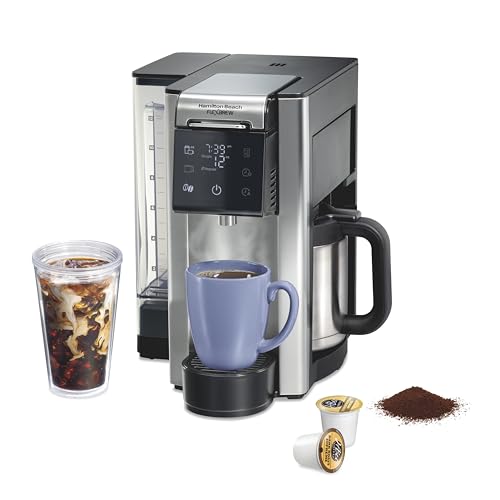
- Hamilton Beach Flexbrew Advanced 5-in-1 Drip & Single Serve Coffee Maker, 12 Cup Thermal — Most Versatile Pot; 12 cup thermal (plus single serve), drip and single serve combo coffee maker.
- KRUPS 12-Cup Programmable Thermal Carafe Coffee Maker with 3 Strengths — Best for Strength Choice; 12 cup, thermal drip coffee maker.
- MuellerLiving French Press Coffee Maker, 34oz Stainless Steel — Best Insulated Press Alternative; 34 oz, french press. Prose-only in this guide.
- Veken 34oz French Press Coffee Maker, 1 L — Best Glass Press Alternative; 34 oz (1 L), french press. Prose-only in this guide.
- Keurig K-Express Single Serve K-Cup Pod Coffee Maker, Black — Best Single-Cup Alternative; 42 oz reservoir; single serve, single serve pod coffee maker. Prose-only in this guide.
A ‘thermal pot’ coffee maker means the pot itself is the insulation — a sealed, double-wall carafe that carries the coffee’s heat to the table. Three machines here brew into exactly that; two French presses and a pod machine are reviewed afterward as the category’s close relatives and its opposite, without links.
Read the full guide ↓
The best thermal pot coffee makers are defined by the vessel at their center. A thermal pot — a double-wall insulated carafe — replaces both the glass jug and the warming plate of an ordinary drip machine: coffee brews into it, the lid seals, and the pot itself keeps the coffee hot at the table, on the counter or out on the porch, with no power and no cooking. If your household’s ritual is carrying the pot to where the people are, this is your category.
Three verified picks brew into a true thermal pot and carry this guide’s links: the fast BUNN Speed Brew Platinum, the Hamilton Beach Flexbrew combo whose drip side fills a 12 cup thermal pot, and the KRUPS with three strengths and a double-wall carafe. Three more pool products circle the category without entering it: two French presses — manual pots in their own right, one of them double insulated steel — and a Keurig pod machine with no pot at all. Those three are reviewed in full, prose-only, because the comparison between a brewed thermal pot and a pressed pot is a real decision households make.
Choose the linked three by personality — speed, versatility, strength control — and use the prose-only reviews to confirm that a machine-brewing thermal pot, rather than a manual press, is the pot your mornings actually want. The pot-format shortlist from the single serve side is our guide to Best Single And Pot Coffee Makers, the closest sibling of this category.
Key Takeaways
- Three picks brew into a true thermal pot and are linked; two French presses and a pod machine are prose-only relatives and opposites.
- A thermal pot holds heat by insulation and travels to the table — no warming plate, no power cord at serving time.
- The BUNN is the speed pick, the Flexbrew the versatility pick, the KRUPS the strength pick within the linked three.
- French presses are also ‘pots’ — one here is even double insulated — but immersion brewing is a different method with different habits.
- Pre-warming and promptly rinsing the pot are the two habits that decide how good thermal-pot coffee tastes.
- A pod machine’s absence of any pot is the clearest category line in this guide.
In this guide
Quick Picks
| Pick | Badge | Capacity | Type |
|---|---|---|---|
| BUNN 55200 CSB3T Speed Brew Platinum Thermal Coffee Maker, 10-Cup | Best for Speed | 10 cup | Thermal drip coffee maker |
| Hamilton Beach Flexbrew Advanced 5-in-1 Drip & Single Serve Coffee Maker, 12 Cup Thermal | Most Versatile Pot | 12 cup thermal (plus single serve) | Drip and single serve combo coffee maker |
| KRUPS 12-Cup Programmable Thermal Carafe Coffee Maker with 3 Strengths | Best for Strength Choice | 12 cup | Thermal drip coffee maker |
| MuellerLiving French Press Coffee Maker, 34oz Stainless Steel | Best Insulated Press Alternative | 34 oz | French press |
| Veken 34oz French Press Coffee Maker, 1 L | Best Glass Press Alternative | 34 oz (1 L) | French press |
| Keurig K-Express Single Serve K-Cup Pod Coffee Maker, Black | Best Single-Cup Alternative | 42 oz reservoir; single serve | Single serve pod coffee maker |
The linked rows share one trait — a machine that brews into an insulated pot. The prose-only rows show the two ways to miss that definition while still making coffee in something pot-shaped, plus the potless alternative.
How These Picks Were Chosen
This guide is research-led. Every pick comes from a verified product pool checked against Amazon’s catalog data on 2026-11-21: the brand, model and product type in each listing title were confirmed before a product could be recommended, and only picks whose confirmed type matches the core of this keyword carry purchase links. Where a pool product turned out to be a different kind of machine — a press beside drip brewers, a pod machine beside thermal pots — it is reviewed honestly in full but presented prose-only, with no link and no image, and the reduction is recorded in the article’s sources file.
The comparison itself weighed the things that decide daily satisfaction with this class of machine: carafe or cup capacity against household size, programmability against real routines, brew strength control against the beans people actually buy, and the cleaning burden each format quietly imposes. No hands-on testing is claimed; this is a structured comparison of verified specifications and established category knowledge, written so you can see exactly why each pick earned its badge — and where each one will frustrate you.
The 6 Best thermal pot coffee makers Picks, Reviewed in Detail
Reviews follow pool order: the three thermal pot machines first, then the two presses, then the pod machine. Each review states plainly which side of the category line the product sits on, and why.

BUNN 55200 CSB3T Speed Brew Platinum Thermal Coffee Maker, 10-Cup
Badge: Best for Speed
The BUNN CSB3T Speed Brew Platinum is the speed entry in this pool: BUNN’s Speed Brew approach keeps water ready so a 10-cup thermal pot brews far faster than a cold-start drip machine, and the stainless steel build with a thermal carafe suits counters where the machine works every single day. It is the pick for people whose complaint about drip coffee is the wait, not the taste.
Speed changes what a thermal pot is for: when a 10-cup pot brews as fast as the BUNN’s ready-water design allows, the thermal pot stops being a weekend luxury and becomes the daily default — brew, seal, carry to the table, and the machine is forgotten until tomorrow. Its stainless build suits that daily-carry life, and its pot is the smallest of the linked three, which suits couples who finish what they brew.
Thermal brewing lives or dies on what happens after the water turns off. A glass carafe on a warming plate keeps cooking the coffee, which is why the last cup from a plate-held pot tastes stewed; an insulated carafe simply holds the heat the coffee already has, so the flavor you brewed is the flavor you pour an hour later. The trade is discipline: pre-warm the carafe with hot water on cold mornings, rinse it soon after the pot is finished, and never leave coffee sitting in it overnight, because yesterday’s oils become tomorrow’s first-cup bitterness.
Strengths
- Speed Brew design is built around fast full pots
- Stainless steel construction suits heavy daily use
- Thermal carafe holds the pot’s heat after the fast brew
Trade-offs
- 10 cup capacity is smaller than the 12 cup rivals here
- A ready-water design uses standby energy to stay fast
- Fewer programmable frills than the feature-led models
| Specification | Detail |
|---|---|
| Capacity | 10 cup |
| Type | Thermal drip coffee maker |
| Key features (from listing) | Speed Brew fast brewing; stainless steel; thermal carafe |
| Construction | Stainless steel with thermal carafe |
Best for: Impatient households that brew a full pot daily / Not suited for: Occasional brewers who would rather have a cold-start machine
Check on Amazon to check the latest price on Amazon and confirm the current configuration before you buy.
Hamilton Beach Flexbrew Advanced 5-in-1 Drip & Single Serve Coffee Maker, 12 Cup Thermal
Badge: Most Versatile Pot
The Hamilton Beach Flexbrew Advanced 5-in-1 is two machines sharing one reservoir: a 12 cup thermal programmable drip side for the household pot, and a single serve side that takes pods or grounds for one mug at a time, hot or iced. The 60 oz removable reservoir feeds both, which is why this is the natural bridge pick whenever a household cannot agree on one brewing format.
The Flexbrew’s thermal pot is one half of a two-format machine, and that is its pot argument: the household that gathers gets a 12 cup thermal pot brewed on the drip side, while the same machine’s single serve side handles the solo cups that would otherwise leave the pot half-drunk and stale. If your pot is often wasted because one drinker defects to single cups, this is the machine designed around your exact problem.
Combo machines exist for households that argue. One drinker wants a pod before a commute, another wants a pot on weekends, a third brews grounds because they buy beans from a local roaster. A shared reservoir and a shared footprint settle the argument, at the cost of complexity: two brew paths to descale, two sets of parts to rinse, and controls that take a week to become automatic. If your household genuinely brews both ways every week, that trade is worth it; if not, a single-format machine will always feel simpler.
Strengths
- Full thermal drip pot and single serve in one footprint
- Takes both pods and grounds on the single serve side
- 60 oz removable reservoir is easy to fill and clean
Trade-offs
- The most complex machine in this pool to learn
- Two brew paths mean two sets of parts to keep clean
- Overkill if your household only ever brews one way
| Specification | Detail |
|---|---|
| Capacity | 12 cup thermal (plus single serve) |
| Type | Drip and single serve combo coffee maker |
| Key features (from listing) | 5-in-1 drip and single serve; hot and iced; 12 cup thermal programmable drip side; pods and grounds; 60 oz removable reservoir |
| Construction | Thermal carafe (drip side) |
Best for: Mixed households that need a pot some days and a pod others / Not suited for: Single-format households that value simplicity
Check on Amazon to check the latest price on Amazon and confirm the current configuration before you buy.

KRUPS 12-Cup Programmable Thermal Carafe Coffee Maker with 3 Strengths
Badge: Best for Strength Choice
The KRUPS thermal model gives the strength decision three clear stops instead of a vague dial: three brew strengths on a 12-cup programmable machine with a double-wall thermal carafe. The 24-hour programmability covers the set-it-tonight routine, and the strength range is the honest way to handle a household where one drinker wants mild and another wants bold from the same beans.
The KRUPS treats the thermal pot as the end of an argument: three strength settings let the household agree the brew once, then the double-wall pot holds that agreed pot at temperature while people arrive at the table in their own time. Its 24-hour programmability extends the same courtesy to the schedule. For households whose pot serves staggered risers, strength-plus-insulation is the combination that ends both the re-brew and the reheat.
Thermal brewing lives or dies on what happens after the water turns off. A glass carafe on a warming plate keeps cooking the coffee, which is why the last cup from a plate-held pot tastes stewed; an insulated carafe simply holds the heat the coffee already has, so the flavor you brewed is the flavor you pour an hour later. The trade is discipline: pre-warm the carafe with hot water on cold mornings, rinse it soon after the pot is finished, and never leave coffee sitting in it overnight, because yesterday’s oils become tomorrow’s first-cup bitterness.
Strengths
- Three distinct brew strengths cover a household’s range
- 24-hour programmable scheduling
- Double-wall thermal carafe holds heat without a plate
Trade-offs
- Strength settings change extraction, not bean quality — weak beans stay weak
- A 12 cup machine is sized for households, not solo drinkers
- Thermal carafe needs prompt rinsing like all insulated pots
| Specification | Detail |
|---|---|
| Capacity | 12 cup |
| Type | Thermal drip coffee maker |
| Key features (from listing) | 24-hour programmable; 3 brew strengths; double-wall thermal carafe |
| Construction | Double-wall thermal carafe |
Best for: Households divided on how strong the pot should be / Not suited for: Solo drinkers who brew a mug at a time
Check on Amazon to check the latest price on Amazon and confirm the current configuration before you buy.
MuellerLiving French Press Coffee Maker, 34oz Stainless Steel
Badge: Best Insulated Press Alternative
The MuellerLiving press takes the French press format and builds it from stainless steel instead of glass: a 34 oz double insulated body with a four-filter press system, designed to strain out more of the fine sediment that single-screen presses let through. The insulation slows heat loss compared with a glass beaker, but the format is still immersion brewing you pour and drink, not a drip machine with a thermal carafe.
The Mueller press is the strongest of the prose-only relatives: a stainless, double insulated pot that brews by immersion and strains through four filters. It holds heat better than a glass press and survives travel and knocks, but it does not brew itself, does not drip, and its coffee must be poured off the grounds. As a manual thermal-ish pot it is genuinely good; as a thermal pot coffee maker, it is a different species — hence prose-only.
Immersion brewing is the oldest controlled method in this guide: grounds steep in hot water, then a press separates them. The cup is heavy-bodied because paper never filters the oils out, and the skill is in the timing — pour the water, wait, press slowly, and decant everything at once. Leave pressed coffee sitting on its grounds and it keeps extracting toward bitterness, which is why press drinkers pour into mugs or a serving vessel the moment the plunge is done.
Strengths
- Stainless double insulated body is durable and slows heat loss
- Four-filter system targets a cleaner press cup
- No electricity, pods or paper filters needed
Trade-offs
- Still a French press — not a thermal drip coffee maker
- Coffee left on the grounds keeps extracting and turns bitter
- Hand washing the press assembly is part of every brew day
| Specification | Detail |
|---|---|
| Capacity | 34 oz |
| Type | French press |
| Key features (from listing) | Stainless steel; 4 filter screens; heat resistant; double insulated |
| Construction | Stainless steel, double insulated |
Best for: Press drinkers who want steel durability and insulation / Not suited for: Shoppers who need a programmable thermal pot
Prose-only in this guide: this pick does not carry a purchase link here because its confirmed type does not match this keyword’s core — see the sources file for the reasoning. It is reviewed in full so the comparison stays honest.
Veken 34oz French Press Coffee Maker, 1 L
Badge: Best Glass Press Alternative
The Veken is a 34 oz French press: thickened glass, a stainless steel press assembly, and a design that keeps plastic away from the brewed coffee. It makes a rich, full-immersion cup with no electricity at all — but it is a press, not a thermal drip machine: there is no insulated carafe, no programmability, and the coffee should be poured off once pressed or it keeps extracting.
The Veken’s glass pot makes the press method’s trade-offs visible: you can watch the steep, the body is thickened glass with stainless fittings, and no plastic touches the coffee. What it cannot do is hold a morning’s heat like an insulated carafe or brew unattended. It is reviewed here because pot shoppers cross this line constantly, and the honest label — manual press, prose-only — is what lets them cross it knowingly.
Immersion brewing is the oldest controlled method in this guide: grounds steep in hot water, then a press separates them. The cup is heavy-bodied because paper never filters the oils out, and the skill is in the timing — pour the water, wait, press slowly, and decant everything at once. Leave pressed coffee sitting on its grounds and it keeps extracting toward bitterness, which is why press drinkers pour into mugs or a serving vessel the moment the plunge is done.
Strengths
- Full-immersion brewing gives a heavy, rich cup
- No plastic touching the coffee during brewing
- Works anywhere, with no power or pods involved
Trade-offs
- Not a thermal carafe machine — coffee does not stay hot for hours
- Glass beaker needs careful handling
- Grounds disposal and washing are entirely manual
| Specification | Detail |
|---|---|
| Capacity | 34 oz (1 L) |
| Type | French press |
| Key features (from listing) | Thickened glass; stainless steel brewer; no plastic touching the coffee |
| Construction | Thickened glass and stainless steel |
Best for: French press lovers who decant and drink promptly / Not suited for: Anyone shopping for a thermal carafe drip machine
Prose-only in this guide: this pick does not carry a purchase link here because its confirmed type does not match this keyword’s core — see the sources file for the reasoning. It is reviewed in full so the comparison stays honest.
Keurig K-Express Single Serve K-Cup Pod Coffee Maker, Black
Badge: Best Single-Cup Alternative
The Keurig K-Express in black is the straightforward pod machine in this pool: three brew sizes from a 42 oz removable reservoir, a Strong Brew button for a bolder cup, and travel mug clearance for the morning commute. It brews one cup at a time into your mug — there is no carafe at all, thermal or otherwise — which is exactly why it sits in a different category from the thermal pot machines it is listed beside.
The K-Express is this guide’s control case: a respected pod machine that contains no pot whatsoever. One cup at a time, from a reservoir, into a mug. If reading its review makes you realize your household never actually shares coffee, that is valuable — but if the shared, carried, kept-hot pot is the ritual, the linked three are the shortlist and this is the contrast that proves it.
Pod brewing trades control for certainty. The dose, grind and packing are decided for you, the machine handles temperature and pressure, and the result is the same cup on a tired Tuesday as on a fresh Saturday. What you give up is everything a pot brewer takes for granted: batch size, strength by ratio, and coffee that waits for you. Judge a pod machine on reservoir size, cup clearance and how honestly its strong setting performs, because those are the variables the format actually leaves you.
Strengths
- Fast, consistent single cups with almost no cleanup
- Strong Brew button helps pods taste less watery
- 42 oz reservoir covers several cups between refills
Trade-offs
- No carafe — it cannot brew or hold a pot
- Pod format costs more per cup than ground coffee over time
- Not a thermal machine in any sense
| Specification | Detail |
|---|---|
| Capacity | 42 oz reservoir; single serve |
| Type | Single serve pod coffee maker |
| Key features (from listing) | 3 brew sizes; 42 oz removable reservoir; Strong Brew button; travel mug friendly; works with all K-Cup pods |
| Construction | Plastic body, removable reservoir |
Best for: Solo pod drinkers who want one mug at a time / Not suited for: Households shopping for a thermal carafe brewer
Prose-only in this guide: this pick does not carry a purchase link here because its confirmed type does not match this keyword’s core — see the sources file for the reasoning. It is reviewed in full so the comparison stays honest.
Comparison Table
| Pick | Capacity | Type | Key features |
|---|---|---|---|
| BUNN 55200 CSB3T Speed Brew Platinum Thermal Coffee Maker, 10-Cup — Check on Amazon | 10 cup | Thermal drip coffee maker | Speed Brew fast brewing; stainless steel; thermal carafe |
| Hamilton Beach Flexbrew Advanced 5-in-1 Drip & Single Serve Coffee Maker, 12 Cup Thermal — Check on Amazon | 12 cup thermal (plus single serve) | Drip and single serve combo coffee maker | 5-in-1 drip and single serve; hot and iced; 12 cup thermal programmable drip side; pods and grounds; 60 oz removable reservoir |
| KRUPS 12-Cup Programmable Thermal Carafe Coffee Maker with 3 Strengths — Check on Amazon | 12 cup | Thermal drip coffee maker | 24-hour programmable; 3 brew strengths; double-wall thermal carafe |
| MuellerLiving French Press Coffee Maker, 34oz Stainless Steel — prose-only | 34 oz | French press | Stainless steel; 4 filter screens; heat resistant; double insulated |
| Veken 34oz French Press Coffee Maker, 1 L — prose-only | 34 oz (1 L) | French press | Thickened glass; stainless steel brewer; no plastic touching the coffee |
| Keurig K-Express Single Serve K-Cup Pod Coffee Maker, Black — prose-only | 42 oz reservoir; single serve | Single serve pod coffee maker | 3 brew sizes; 42 oz removable reservoir; Strong Brew button; travel mug friendly; works with all K-Cup pods |
Pot capacity and type tell the story: three machine-brewed thermal pots of 10-12 cups, two 34 oz manual press pots, and one potless pod machine. Compare the linked three on features; compare the presses on method; do not compare across those lines by accident.
How to Choose a Thermal Pot Coffee Maker
Start with the pot’s job in your house. If the pot travels — to the table, the desk, the porch — insulation and a sealing lid are the purchase, and brewing features are secondary. If the pot mostly sits beside the machine, capacity and programmability matter more. The linked three split exactly along those lines: the BUNN’s compact fast pot for daily couples, the Flexbrew’s household pot with a single serve escape hatch, the KRUPS’s programmable pot for staggered households. Readers weighing the pot against single serve formats can compare Best Single Serve And Full Pot Coffee Makers for the other side of the argument.
Check the lid and the pour. A thermal pot earns its keep through its lid: it must seal for heat and open for pouring without dripping down the carafe’s side at the table. Listing data cannot fully judge this, so weigh it when you handle or trial a machine — a pot that dribbles will be resented daily, however hot it keeps the coffee.
Decide machine pot versus press pot honestly. The presses in this guide make excellent coffee with no power and travel anywhere, but they demand a kettle, a timer in your head, and prompt decanting. A thermal pot machine asks only for night-before loading. Households that romanticize the manual ritual and then skip it on busy mornings should buy the machine; households that genuinely press daily already know it.
Size the pot to the gathering. Ten cups for couples, twelve for households and hosts — translated into your real mugs. A thermal pot’s heat retention is best when it is reasonably full, so the right size is also the hotter size across a long morning.
How to Use a Thermal Pot Coffee Maker Well
- Pre-warm the pot. Fill the carafe with hot water while the machine heats, then empty it as brewing starts. The pot will hold the coffee’s heat instead of absorbing its first degrees.
- Brew the full intended amount. Thermal pots hold heat best near full; brew the size your gathering will drink rather than a token amount in a large carafe.
- Seal the lid immediately. Heat escapes through the opening far faster than through double walls. A sealed pot at the table outlasts an open one beside the machine.
- Serve from the pot, not the machine. Carry the pot to the people; every trip back to the counter is heat lost and ritual broken.
- Rinse the pot the same day. Coffee oils line insulated walls. A prompt hot rinse is the entire secret to a pot that never tastes of last week.
Troubleshooting. Problem: coffee cools by the second hour → the pot was not pre-warmed, was under-filled, or the lid stood open; fix all three before blaming the insulation. Problem: pouring dribbles → wipe the lid’s seal and pour with a steady, committed tilt; a hesitant half-pour is what runs down the side. Problem: the pot tastes stale → deep-clean with a brush and mild detergent; residue, not the coffee, is the flavor you are noticing. The all-steel angle on thermal pots is covered in Best Stainless Steel Thermal Coffee Makers.
Thermal Pot vs French Press Pot: Two Pots, Two Philosophies
This guide’s prose-only presses deserve a fair hearing, because ‘pot’ shoppers genuinely choose between these philosophies. The thermal pot machine brews by drip, unattended, into insulation, and serves a household across hours. The press pot brews by immersion, attended, in minutes, and serves the people present right now. The Mueller’s double insulated steel narrows the heat gap between them; nothing narrows the labor gap, because the labor is the press’s point — control, ritual, and a heavy-bodied cup no drip basket produces.
The deciding question is temporal. Coffee for a gathering that assembles slowly belongs in a thermal pot. Coffee for a moment that everyone is already present for can be pressed. Households that host both kinds of morning sometimes own both — which is a more honest outcome than forcing either pot to do the other’s job.
Taking the Pot Outside: Thermal Pots Beyond the Kitchen
A sealed thermal pot is the only brewer output that travels well: to a porch, a workshop, a garden table or a home office down the hall, with no cord and no reheating. That portability is an underrated reason this category exists. The linked machines brew in the kitchen, but their pots work everywhere — and the same insulation that keeps a pot hot through a slow breakfast keeps it hot through a morning of DIY or a desk-bound deadline.
It is also where the presses re-enter the conversation as travel kit rather than home brewers: the steel Mueller in a cabin bag, the glass Veken left at home. Read this guide’s shortlist as a system — a machine pot for the house, perhaps a press for away — and the prose-only section stops looking like a rejection and starts looking like a map.
The lid is a component, not an accessory. When you compare thermal pots in person or in listings, give the lid the attention usually saved for the brewer: how it seals, how it pours, whether it comes apart for washing. Coffee residue hides in lid mechanisms, and heat escapes through them — the lid is where a good pot quietly becomes a mediocre one, and where a well-kept pot stays good for years.
One Pot or Two? Serving More Than Coffee
Households that entertain often ask whether a second thermal pot is worth owning — one for regular, one for decaf, or a spare for the table while the machine brews again. The linked machines’ carafes are their own answer: a sealed pot frees the brewer for a second batch, which is a rhythm no glass-and-plate setup matches. If your gatherings regularly empty a 12-cup pot, the category’s real upgrade is not a bigger machine but the habit of brewing sequentially into insulation.
The Pot as Tableware: Serving From a Thermal Carafe
A thermal pot changes the etiquette of coffee at home. Instead of trips to the kitchen, the pot sits where the conversation is, and refills become part of the table’s rhythm rather than interruptions to it. That is why this guide weighs lids, pours and capacity so heavily: a pot that dribbles embarrasses itself publicly, three times a breakfast. If you entertain, treat the carafe’s manners as a first-class specification — pour water from a filled carafe before committing to a machine if you can, and notice whether the last cup pours as cleanly as the first.
The linked machines’ pots are built for that table life. The presses, for all their virtues, serve a smaller circle: a press pot empties in one round, which suits a moment, while a thermal pot sustains an occasion.
Decaf households need the pot most. Mixed regular-and-decaf tables are where thermal pots quietly shine: brew one pot, seal it, and the machine is free — for a second pot, for tea water, for nothing. The alternative, a warming plate occupied by the wrong coffee, serves nobody. If your gatherings split on caffeine, the Flexbrew’s two-format design and the sequential-brewing rhythm described in this guide’s extras are written for you.
Cleaning the pot is cleaning the flavor. Because a thermal pot’s interior is hidden, its cleanliness is a matter of routine rather than inspection. The households that love their pots in year three are the ones that rinsed in week one. Build the rinse into the clearing of the table — the pot is already in your hand — and the category’s one real maintenance burden disappears into a habit you will never think about again.
Thermal Pots Beyond Coffee
An insulated pot that holds coffee’s heat holds anything’s heat, and owners quietly use theirs for tea service, mulled drinks in winter, and hot water for a table’s worth of individual infusions. That second life matters when you choose capacity: a 12 cup pot earns its cupboard space across more occasions than its coffee duty alone suggests. It is also one more reason the pot, rather than the machine, is the product to choose carefully in this category — machines stay in kitchens, but a good pot goes everywhere the household gathers.
Reading a thermal pot’s specification like an owner. Beyond capacity, three details predict pot happiness: whether the lid is replaceable, whether the carafe’s mouth admits a brush, and whether the pot is sold separately as a spare. Manufacturers that support the pot as a component expect it to be used hard and kept long. When you compare the linked three, those support signals — visible in listings and parts pages — are worth a minute of your attention, because the pot will be handled ten thousand times in its life.
Hotter is not always better at the table. A thermal pot’s virtue is steadiness, not maximum heat: coffee held at a drinkable temperature for hours beats coffee held scalding for one. If your household’s complaint is that the second cup is too hot to drink rather than too cold, the pot is not failing — your serving rhythm is. Pour earlier, let cups stand a minute, and let the pot do the holding it was built for. Category veterans calibrate the ritual to the vessel, not the other way round.
The spare-pot strategy for hosts. Households that entertain monthly should know the category’s open secret: a second thermal carafe, filled while the first circulates, outperforms any single larger machine at a gathering. The linked brewers’ pots make that rhythm possible because brewing and serving are decoupled — the machine works in the kitchen while the party happens elsewhere. It is the deepest reason this format exists, and the one first-time buyers most often discover a year late.
One last pot habit: warm the cups, too. A thermal pot keeps coffee hot until the pour, but a cold thick mug steals heat at the finish line. A splash of hot water in the mugs while the pot brews — or cups kept near the machine — preserves the temperature the carafe worked to hold. It is the smallest ritual in this guide and the one guests notice without knowing why: coffee that arrives hot, in a warm cup, from a pot that traveled to the table.
Common Buying Mistakes
Buying capacity for the household you wish you had. A 12 cup thermal pot for a one-mug drinker means stale half-pots or wasted coffee; a 14 oz single serve for a four-person house means a morning queue. Count the cups your home actually drinks on a weekday and buy for that number, not for holidays.
Ignoring what happens after brewing. Coffee quality is decided as much by holding as by brewing. A warming plate stews, a thermal carafe protects, a pod machine sidesteps the question entirely. Shoppers who compare only brew features and never holding methods are disappointed by the second cup, not the first.
Skipping the cleaning math. Every format bills you in maintenance: carafes to rinse, reservoirs to descale, press screens to scrub, pod needles to clear. The machine you will actually clean weekly beats the superior machine you will clean never.
Trusting a feature word without checking the specification. Programmable, thermal, strong and timed all mean specific things. Read the confirmed specification — capacity, carafe type, brew sizes — rather than the marketing adjective, which is exactly the discipline this guide applied when it downgraded mismatched picks to prose-only.
Final Recommendation
For the classic thermal pot household, the KRUPS is the balanced default: programmable, strength-adjustable, and built around a double-wall pot that holds the morning together. The BUNN is the pick when the pot is a daily couple’s ritual and speed decides whether it happens at all. The Flexbrew is the pick when the pot competes with single cups inside the same household and needs a machine that concedes both. Community discussion of these same machines is gathered in Best Thermal Coffee Makers Reddit.
Whichever linked machine you choose, treat the pot as the product: pre-warm it, seal it, carry it, rinse it. The brewing is the easy half.
To act on this guide: start with the BUNN 55200 CSB3T Speed Brew Platinum Thermal Coffee Maker, 10-Cup; start with the Hamilton Beach Flexbrew Advanced 5-in-1 Drip & Single Serve Coffee Maker, 12 Cup Thermal; start with the KRUPS 12-Cup Programmable Thermal Carafe Coffee Maker with 3 Strengths — each link lets you check the latest price on Amazon and confirm the current configuration.
Frequently Asked Questions
What is a thermal pot coffee maker?
A coffee maker that brews into a thermal pot — an insulated, usually double-wall carafe — instead of a glass jug on a warming plate. The pot keeps coffee hot by insulation, can be carried to the table, and does not cook the coffee while it waits. The three linked picks in this guide are thermal pot machines.
Is a French press a thermal pot coffee maker?
Not in this category’s sense. A press is a manual immersion pot: it brews by steeping and must be poured off its grounds. The Mueller press here is even double insulated, but neither press brews by machine or holds coffee like a carafe, so both are reviewed prose-only.
How long will a thermal pot keep coffee hot?
Long enough for a household morning when the pot is pre-warmed, reasonably full and kept sealed — and noticeably less when any of those is skipped. This guide avoids fixed hour promises because fill level and lid discipline change the answer more than brand does.
Which linked pick is best for a couple?
The BUNN CSB3T: its 10-cup thermal pot is the right size for two daily drinkers, and its speed suits a weekday routine. Couples who host often should step up to the 12-cup KRUPS or Flexbrew.
Can the Flexbrew’s pot side and single serve side work for the same household?
That is exactly its design: a 12 cup thermal pot on the drip side for shared mornings, and pods or grounds on the single serve side for solo cups. It is the versatility pick for households split between the two habits.
Why does my thermal pot pour badly?
Usually the pour, not the pot: a slow, hesitant tilt breaks the stream against the lid. Wipe the seal, open the pour mechanism fully where fitted, and pour with one steady motion. If dribbling persists on a new machine, that is a legitimate reason to exchange it — you will perform this motion daily for years.


