Disclosure: topratedkitchenware.com is reader-supported. When you buy through links on our site, we may earn an affiliate commission from Amazon and other retailers, at no extra cost to you.
Where to buy
The picks below are the verified shortlist for this guide to best steel pressure cookers for indian cooking. Each linked name takes you to its Amazon listing, where you can check the latest price on Amazon, confirm the current configuration, and read the newest owner feedback before you decide. Picks covered without a link are labelled prose-only in their reviews, with the reason stated plainly.
- T-Fal Secure Trendy Stainless Steel Pressure Cooker, 8.5 qt — Best Overall for Indian Cooking
- Instant Pot Duo 6 Qt 7-in-1 Electric Pressure Cooker — Best Electric All-Rounder
- Cosori Pressure Cooker 6QT, 9-in-1 — Best for Spice-Heavy Cooking
- Instant Pot Duo Mini 3 Quart 7-in-1 Electric Pressure Cooker — Best for Small Households
Read the full guide ↓ for how each pick performs, where each one compromises, and which households each one actually suits.
The best steel pressure cookers for indian cooking are not a marketing subcategory; they are the centre of the Indian kitchen itself. The pressure cooker is the appliance Indian home cooking is built around, whistling on the hob through dal, chickpeas, rajma, rice, biryani bases and steamed idli, several times a day in many households. Steel is the material that survives that life: turmeric and tamarind, tomato and mustard oil, metal serving spoons, daily scrubbing, and the sheer frequency of use that wears out lesser vessels. This guide verifies its pool against both halves of the keyword, pressure cooking and steel construction.
Four picks pass in full and are linked. The T-Fal Secure Trendy is the stovetop representative, an 8.5-quart stainless steel pot with a steam basket included and induction compatibility, the closest in spirit to the classic Indian hob cooker. Three Instant Pot and Cosori electrics bring the programme-led school: the Duo 6 Qt, the Duo Mini 3 Quart for small households, and the Cosori 6QT with its stainless steel build and ceramic pot surface for spice-heavy cooking. Two picks are prose-only: a Crock-Pot slow cooker that does not pressure cook at all, and a Sweetcrispy whose listing specifies a ceramic pot without verifying steel. The general steel category behind this guide is covered in Best Steel Pressure Cookers.
The buying guide is written for this cuisine specifically: capacity for Indian batch habits, how the whistle tradition translates to electric programmes, steel’s behaviour with acidic and spiced food, and the accessories, separators and steaming racks, that Indian pressure cooking uses. The how-to section covers the core techniques, dal, chickpeas from dried, and steaming, and every review keeps its linked or prose-only status plainly visible.
Key Takeaways
- Four picks verify for this keyword and are linked: the T-Fal stovetop steel cooker, the Instant Pot Duo and Mini, and the Cosori 6QT.
- Two picks are prose-only: the Crock-Pot is a slow cooker with no pressure function, and the Sweetcrispy’s steel vessel is not verified on its listing.
- The T-Fal is the traditionalist’s pick: stovetop, steel, induction-ready, with the steam basket Indian steaming needs.
- Electric picks trade the whistle for programmes: set the time for dal or chickpeas and let the machine manage pressure and release.
- Steel is the right material for this cuisine: it shrugs off turmeric, tamarind, tomato and metal utensils that punish coatings.
In this guide
Quick Picks
- Best Overall for Indian Cooking: T-Fal Secure Trendy Stainless Steel Pressure Cooker, 8.5 qt — a pick defined by an 8.5-quart stovetop pressure cooker in stainless steel with a five-point safety system, two cooking modes, a steam basket included and a dishwasher-safe body, induction compatible.
- Prose-Only: Slow Cooker, Not Pressure: Crock-Pot Programmable Slow Cooker with Locking Lid, Stainless Steel, 7-Quart (prose-only in this guide) — a pick defined by a 7-quart programmable slow cooker in stainless steel with MyTime technology that adjusts cooking, and a cook-and-carry locking lid.
- Best Electric All-Rounder: Instant Pot Duo 6 Qt 7-in-1 Electric Pressure Cooker — a pick defined by a 6-quart 7-in-1 electric pressure cooker in stainless steel that slow cooks, makes rice and yogurt, steams, sautes, warms and sterilizes.
- Best for Spice-Heavy Cooking: Cosori Pressure Cooker 6QT, 9-in-1 — a pick defined by a 6-quart 9-in-1 electric pressure cooker with a ceramic coating pot, a dozen safety features, and rice, slow cook, sous vide and saute modes in stainless steel and silver.
- Best for Small Households: Instant Pot Duo Mini 3 Quart 7-in-1 Electric Pressure Cooker — a pick defined by a 3-quart mini 7-in-1 electric pressure cooker in stainless steel that slow cooks, cooks rice, steams, sautes, makes yogurt, warms and sterilizes.
- Prose-Only: No Steel Pot Verified: Sweetcrispy 16-in-1 Electric Pressure Cooker, 8QT (Companion Listing) (prose-only in this guide) — a pick defined by an 8-quart 16-in-1 electric pressure cooker with a dozen presets, a ceramic pot, and slow cook, rice, steamer, saute, soup and yogurt functions, with a recipe book included.
How These Picks Were Chosen
Our method applied the keyword’s two tests to the supplied pool. Test one, pressure: the listing must establish a pressure cooker, by programme, locking pressure lid or stovetop pressure design; the Crock-Pot slow cooker fails it outright and is prose-only. Test two, steel: the listing must state steel construction for the cooker or its vessel; the Sweetcrispy specifies a ceramic inner pot without a steel vessel claim and is prose-only on that ground. The four remaining picks pass both tests and are linked and pictured.
Specifications come only from the verified listings, no hands-on testing is claimed, and prices and fixed ratings are excluded because both change too quickly to print honestly. Indian cooking technique in this guide is described in general, established terms, the way the cuisine’s home cooks practise it, rather than as claims about any single machine’s programmes. The rice side of the Indian kitchen connects to Best Small Pressure Cookers For Rice.
The 6 Best Options for Best Steel Pressure Cookers For Indian Cooking

T-Fal Secure Trendy Stainless Steel Pressure Cooker, 8.5 qt
Badge: Best Overall for Indian Cooking
Strengths
- The included steam basket makes it a true steam cooker out of the box, not an accessory hunt
- Stainless steel body is dishwasher-safe and induction compatible, rare thoroughness in a stovetop design
- A five-point safety system addresses the stovetop pressure cooker’s old reputation head-on
Trade-offs
- Stovetop format means you manage the heat; there is no programme to walk away from
- Eight and a half quarts is a big, heavy pot when full of water and food
- No electric modes: no slow cook, no yogurt, no timer
Key specifications (from the verified listing)
- Capacity: 8.5 quart
- Format: stovetop pressure cooker
- Material: stainless steel
- Safety: 5-point safety system
- Modes: 2 cooking modes
- Extras: steam basket included
- Compatibility: induction compatible
- Care: dishwasher-safe body
The T-Fal Secure Trendy is an 8.5-quart stovetop pressure cooker in stainless steel, with a five-point safety system, two cooking modes, a steam basket in the box and a dishwasher-safe body that works on induction. It represents the established European school of pressure cooking: a serious pot, used on the hob, built to be handed down rather than replaced. For steam cooking its credentials are direct, because the included basket lifts vegetables, fish and dumplings over the water in the pressure environment that cooks them fast and keeps their colour. T-Fal, part of the Groupe SEB family that also makes steam and pressure cookware under several names, brings a deep spare-parts culture to the category, and the safety system is the modern answer to every old pressure cooker story.
For Indian cooking specifically, the T-Fal Secure Trendy Stainless Steel Pressure Cooker, 8.5 qt is judged on the cuisine’s real workload: it is an 8.5-quart stovetop pressure cooker in stainless steel with a five-point safety system, two cooking modes, a steam basket included and a dishwasher-safe body, induction compatible. That workload means dried legumes several times a week, a dal that begins with a tempering of spices in oil, rice and steamed items in rotation, and acidic, deeply spiced sauces that test any vessel. A pick that pressure cooks but cannot take a tadka’s heat, or that is steel in name but coated where the food sits, will be found out by this cuisine faster than by any other. This review applies that standard openly.
There is also the question of rhythm for the T-Fal Secure Trendy Stainless Steel Pressure Cooker, 8.5 qt. Indian home cooking uses the pressure cooker in short, frequent bursts, a quick dal, a fast chickpea curry, rice timed to land with the sabzi, rather than in occasional long projects. Machines earn their place by being ready for that rhythm: easy to seal, easy to wash between the lunch dal and the dinner rice, and sized so a modest batch pressurises happily. The verdicts in this guide weigh that daily rhythm alongside capacity and material, because it is how the cooker will actually live.
Best for: steam cooks who want a steel stovetop pressure cooker with the basket included / Not suited for: anyone who wants electric programmes and walk-away cooking
Check on Amazon for the current listing, configuration and latest price.
Crock-Pot Programmable Slow Cooker with Locking Lid, Stainless Steel, 7-Quart
Badge: Prose-Only: Slow Cooker, Not Pressure
Strengths
- MyTime technology adjusts the cook so food is ready at the time you set, not when the timer runs out
- Locking lid seals the crock for transport to gatherings and potlucks
- Programmable timing suits overnight steel cut oats that must finish at breakfast, not before
Trade-offs
- Programmable electronics add complexity a manual dial never asks of you
- Seven quarts is generous for one or two people and stores large
- The locking lid’s gasket needs a careful wash to stay fresh
Key specifications (from the verified listing)
- Capacity: 7-quart
- Technology: MyTime adjusts the cooking cycle
- Lid: cook-and-carry locking lid
- Finish: stainless steel
- Controls: programmable
- Serving guide: sized for larger households and gatherings
This programmable Crock-Pot takes the 7-quart stainless format and fixes the classic slow cooker complaint, food that is ready hours before the people are. Its MyTime technology adjusts the cooking cycle toward the serving time you choose, which for steel cut oatmeal is the difference between oats that held perfectly and oats that sat cooking into paste. The cook-and-carry locking lid is the other headline: the lid clamps down so a full crock can travel to a brunch or a holiday kitchen without decorating a car boot. Programmable controls, a stainless finish and a family-size crock make it the convenience-led entry in the slow cooking half of this guide, aimed at households whose mornings run to a schedule.
For Indian cooking specifically, the Crock-Pot Programmable Slow Cooker with Locking Lid, Stainless Steel, 7-Quart is judged on the cuisine’s real workload: it is a 7-quart programmable slow cooker in stainless steel with MyTime technology that adjusts cooking, and a cook-and-carry locking lid. That workload means dried legumes several times a week, a dal that begins with a tempering of spices in oil, rice and steamed items in rotation, and acidic, deeply spiced sauces that test any vessel. A pick that pressure cooks but cannot take a tadka’s heat, or that is steel in name but coated where the food sits, will be found out by this cuisine faster than by any other. This review applies that standard openly.
There is also the question of rhythm for the Crock-Pot Programmable Slow Cooker with Locking Lid, Stainless Steel, 7-Quart. Indian home cooking uses the pressure cooker in short, frequent bursts, a quick dal, a fast chickpea curry, rice timed to land with the sabzi, rather than in occasional long projects. Machines earn their place by being ready for that rhythm: easy to seal, easy to wash between the lunch dal and the dinner rice, and sized so a modest batch pressurises happily. The verdicts in this guide weigh that daily rhythm alongside capacity and material, because it is how the cooker will actually live.
Best for: scheduled households whose oats must be ready at a set breakfast time, and cooks who carry dishes to gatherings / Not suited for: minimalists who prefer a dial to a programme
Prose-only pick: this model is reviewed in full above but carries no Amazon link in this guide, because it does not match this keyword’s core brief. The reason is recorded in this article’s sources file.

Instant Pot Duo 6 Qt 7-in-1 Electric Pressure Cooker
Badge: Best Electric All-Rounder
Strengths
- Pressure cooking turns steel cut oats into a short morning job instead of an overnight one
- Slow cook mode keeps the traditional method available in the same pot
- The stainless steel inner pot handles acidic and savoury cooking without coating worries
Trade-offs
- Pressure cooking has a learning curve: liquid ratios and release methods matter
- Six quarts is mid-size; the largest batch cooks may want more
- One pot doing seven jobs means one pot is busy when you want two of them
Key specifications (from the verified listing)
- Capacity: 6 quart
- Functions: 7-in-1 electric pressure cooker
- Modes include: pressure cook, slow cook, rice, yogurt, steam, saute, warm
- Finish: stainless steel
- Brand line: Instant Pot Duo
The Instant Pot Duo 6 Qt is the machine that moved pressure cooking into ordinary kitchens: a 7-in-1 electric pressure cooker in stainless steel that pressure cooks, slow cooks, makes rice and yogurt, steams, sautes, warms and sterilizes. For steel cut oatmeal it offers the fork in the road this whole guide is about, because it can cook the same oats two ways: slowly overnight on the slow cook setting, or under pressure in a fraction of the time on a weekday morning. The stainless inner pot is a real part of its appeal for grain cooking, since oats cooked daily will test any coating, and steel simply scrubs clean. It is the reference point of the multi-cooker class, and the pick the others are measured against.
For Indian cooking specifically, the Instant Pot Duo 6 Qt 7-in-1 Electric Pressure Cooker is judged on the cuisine’s real workload: it is a 6-quart 7-in-1 electric pressure cooker in stainless steel that slow cooks, makes rice and yogurt, steams, sautes, warms and sterilizes. That workload means dried legumes several times a week, a dal that begins with a tempering of spices in oil, rice and steamed items in rotation, and acidic, deeply spiced sauces that test any vessel. A pick that pressure cooks but cannot take a tadka’s heat, or that is steel in name but coated where the food sits, will be found out by this cuisine faster than by any other. This review applies that standard openly.
There is also the question of rhythm for the Instant Pot Duo 6 Qt 7-in-1 Electric Pressure Cooker. Indian home cooking uses the pressure cooker in short, frequent bursts, a quick dal, a fast chickpea curry, rice timed to land with the sabzi, rather than in occasional long projects. Machines earn their place by being ready for that rhythm: easy to seal, easy to wash between the lunch dal and the dinner rice, and sized so a modest batch pressurises happily. The verdicts in this guide weigh that daily rhythm alongside capacity and material, because it is how the cooker will actually live.
Best for: cooks who want steel cut oats both ways, overnight slow or fast under pressure, in one steel pot / Not suited for: anyone who refuses any pressure-cooking learning curve
Check on Amazon for the current listing, configuration and latest price.
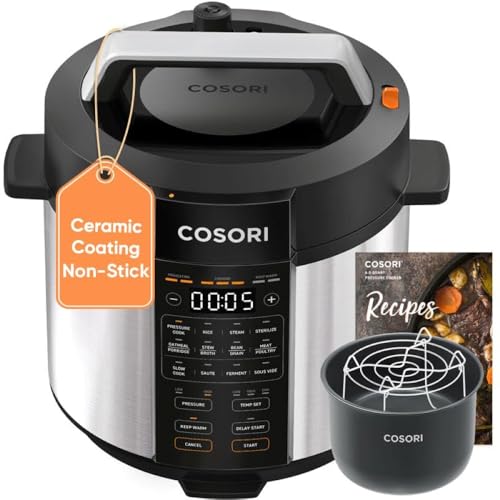
Cosori Pressure Cooker 6QT, 9-in-1
Badge: Best for Spice-Heavy Cooking
Strengths
- Nine functions including sous vide give it the widest mode list in this guide’s pressure half
- Ceramic coating pot releases sticky oatmeal with less soaking than bare metal
- A dozen stated safety features speak to cautious first-time pressure cooks
Trade-offs
- Ceramic coatings need gentler utensils and handling than a steel pot
- Sous vide and extra modes are wasted on households that only ever make oats and stews
- The silver and stainless finish shows splashes readily
Key specifications (from the verified listing)
- Capacity: 6 quart
- Functions: 9-in-1 pressure cooker
- Pot: ceramic coating inner pot
- Safety: 12 safety features
- Modes include: rice cooker, slow cook, sous vide, saute
- Power: 1100W
- Finish: stainless steel, silver
The Cosori 6QT is a 9-in-1 electric pressure cooker with a ceramic coating pot, twelve stated safety features and a mode list that runs from rice and slow cooking through saute to sous vide, in a stainless steel and silver finish at 1100W. Its argument in an oatmeal guide is the pot: steel cut oats are famously adhesive, and a ceramic-coated interior is the design answer for cooks whose first question is always about the washing up. Under pressure it cooks oats quickly; on slow cook it handles the overnight method; and the safety-feature count is there for households new to pressure cooking who want the reassurance spelled out. It is the comfort-and-clean-up-led pressure pick.
For Indian cooking specifically, the Cosori Pressure Cooker 6QT, 9-in-1 is judged on the cuisine’s real workload: it is a 6-quart 9-in-1 electric pressure cooker with a ceramic coating pot, a dozen safety features, and rice, slow cook, sous vide and saute modes in stainless steel and silver. That workload means dried legumes several times a week, a dal that begins with a tempering of spices in oil, rice and steamed items in rotation, and acidic, deeply spiced sauces that test any vessel. A pick that pressure cooks but cannot take a tadka’s heat, or that is steel in name but coated where the food sits, will be found out by this cuisine faster than by any other. This review applies that standard openly.
There is also the question of rhythm for the Cosori Pressure Cooker 6QT, 9-in-1. Indian home cooking uses the pressure cooker in short, frequent bursts, a quick dal, a fast chickpea curry, rice timed to land with the sabzi, rather than in occasional long projects. Machines earn their place by being ready for that rhythm: easy to seal, easy to wash between the lunch dal and the dinner rice, and sized so a modest batch pressurises happily. The verdicts in this guide weigh that daily rhythm alongside capacity and material, because it is how the cooker will actually live.
Best for: clean-up-first households that want pressure speed with a ceramic pot and extra modes / Not suited for: cooks who want to scrub a steel pot with anything in the drawer
Check on Amazon for the current listing, configuration and latest price.

Instant Pot Duo Mini 3 Quart 7-in-1 Electric Pressure Cooker
Badge: Best for Small Households
Strengths
- Three quarts is the right size for one or two people’s daily steel cut oats, with no waste
- The full Duo function set survives the shrink to mini format
- Small footprint and lighter weight suit small kitchens, dorms and RVs
Trade-offs
- Three quarts caps batch cooking; a family breakfast outgrows it fast
- Small pots need scaled-down recipes, and many published recipes assume six quarts
- Pressure and slow functions share one small pot, so it is always the bottleneck
Key specifications (from the verified listing)
- Capacity: 3 quart
- Functions: 7-in-1 mini electric pressure cooker
- Modes include: slow cook, rice, steam, saute, yogurt, warm, sterilize
- Finish: stainless steel
- Format: mini, for small households
The Instant Pot Duo Mini takes the Duo formula, 7-in-1 electric pressure cooking with slow cook, rice, steam, saute, yogurt, warm and sterilize modes, and shrinks it to a 3-quart stainless steel machine for small households. For steel cut oatmeal that sizing is often the smartest in this guide, because oats for one or two people cook properly in a small pot, where a half-empty large cooker wastes energy and counter space and tempts over-batching that ends in the bin. The Mini pressure-cooks a morning portion quickly and slow-cooks an overnight portion gently, so the method choice survives the size cut. It is the small-household answer in a category that usually assumes a crowd.
For Indian cooking specifically, the Instant Pot Duo Mini 3 Quart 7-in-1 Electric Pressure Cooker is judged on the cuisine’s real workload: it is a 3-quart mini 7-in-1 electric pressure cooker in stainless steel that slow cooks, cooks rice, steams, sautes, makes yogurt, warms and sterilizes. That workload means dried legumes several times a week, a dal that begins with a tempering of spices in oil, rice and steamed items in rotation, and acidic, deeply spiced sauces that test any vessel. A pick that pressure cooks but cannot take a tadka’s heat, or that is steel in name but coated where the food sits, will be found out by this cuisine faster than by any other. This review applies that standard openly.
There is also the question of rhythm for the Instant Pot Duo Mini 3 Quart 7-in-1 Electric Pressure Cooker. Indian home cooking uses the pressure cooker in short, frequent bursts, a quick dal, a fast chickpea curry, rice timed to land with the sabzi, rather than in occasional long projects. Machines earn their place by being ready for that rhythm: easy to seal, easy to wash between the lunch dal and the dinner rice, and sized so a modest batch pressurises happily. The verdicts in this guide weigh that daily rhythm alongside capacity and material, because it is how the cooker will actually live.
Best for: singles and couples who cook steel cut oats in the quantity they actually eat / Not suited for: families and batch cooks
Check on Amazon for the current listing, configuration and latest price.
Sweetcrispy 16-in-1 Electric Pressure Cooker, 8QT (Companion Listing)
Badge: Prose-Only: No Steel Pot Verified
Strengths
- Sixteen functions and twelve presets are the deepest programme library in this guide
- Eight quarts handles the largest batches and family-size cooks
- Ceramic pot eases the sticky-food clean-up that pressure cooking creates
Trade-offs
- The biggest footprint here, and eight quarts is overkill for small households
- A lesser-known brand means a thinner accessory and support ecosystem
- Preset abundance means a learning curve before the machine feels simple
Key specifications (from the verified listing)
- Capacity: 8 quart
- Functions: 16-in-1 electric pressure cooker
- Presets: 12 preset programmes
- Pot: ceramic inner pot
- Modes include: slow cook, rice, steamer, saute, soup, yogurt maker
- Extras: recipe book included
This companion listing of the Sweetcrispy 16-in-1 presents the same 8-quart electric pressure cooker platform: twelve presets, a ceramic pot, and slow cook, rice, steamer, saute, soup and yogurt functions with a recipe book included. Two listings for one platform usually reflect a variant, bundle or listing refresh, and the honest advice is to compare the two live listings side by side at purchase time and take whichever configuration is current, rather than treating them as different machines. Judged as a cooker, the platform’s argument is abundance, the largest capacity here with the longest programme list, in a ceramic-pot design aimed at households that cook in quantity and wash up accordingly. The brand’s track record is thinner than the big names in this guide, and that belongs in the decision.
For Indian cooking specifically, the Sweetcrispy 16-in-1 Electric Pressure Cooker, 8QT (Companion Listing) is judged on the cuisine’s real workload: it is an 8-quart 16-in-1 electric pressure cooker with a dozen presets, a ceramic pot, and slow cook, rice, steamer, saute, soup and yogurt functions, with a recipe book included. That workload means dried legumes several times a week, a dal that begins with a tempering of spices in oil, rice and steamed items in rotation, and acidic, deeply spiced sauces that test any vessel. A pick that pressure cooks but cannot take a tadka’s heat, or that is steel in name but coated where the food sits, will be found out by this cuisine faster than by any other. This review applies that standard openly.
There is also the question of rhythm for the Sweetcrispy 16-in-1 Electric Pressure Cooker, 8QT (Companion Listing). Indian home cooking uses the pressure cooker in short, frequent bursts, a quick dal, a fast chickpea curry, rice timed to land with the sabzi, rather than in occasional long projects. Machines earn their place by being ready for that rhythm: easy to seal, easy to wash between the lunch dal and the dinner rice, and sized so a modest batch pressurises happily. The verdicts in this guide weigh that daily rhythm alongside capacity and material, because it is how the cooker will actually live.
Best for: households wanting the largest stand alone electric cooker with the deepest preset list / Not suited for: small households and brand-ecosystem-first buyers
Prose-only pick: this model is reviewed in full above but carries no Amazon link in this guide, because it does not match this keyword’s core brief. The reason is recorded in this article’s sources file.
Comparison Table
| Pick | Badge | Key specifications | Best for |
|---|---|---|---|
| T-Fal Secure Trendy Stainless Steel Pressure Cooker, 8.5 qt | Best Overall for Indian Cooking | Capacity: 8.5 quart; Format: stovetop pressure cooker | steam cooks who want a steel stovetop pressure cooker with the basket included |
| Crock-Pot Programmable Slow Cooker with Locking Lid, Stainless Steel, 7-Quart | Prose-Only: Slow Cooker, Not Pressure | Capacity: 7-quart; Technology: MyTime adjusts the cooking cycle | scheduled households whose oats must be ready at a set breakfast time, and cooks who carry dishes to gatherings |
| Instant Pot Duo 6 Qt 7-in-1 Electric Pressure Cooker | Best Electric All-Rounder | Capacity: 6 quart; Functions: 7-in-1 electric pressure cooker | cooks who want steel cut oats both ways, overnight slow or fast under pressure, in one steel pot |
| Cosori Pressure Cooker 6QT, 9-in-1 | Best for Spice-Heavy Cooking | Capacity: 6 quart; Functions: 9-in-1 pressure cooker | clean-up-first households that want pressure speed with a ceramic pot and extra modes |
| Instant Pot Duo Mini 3 Quart 7-in-1 Electric Pressure Cooker | Best for Small Households | Capacity: 3 quart; Functions: 7-in-1 mini electric pressure cooker | singles and couples who cook steel cut oats in the quantity they actually eat |
| Sweetcrispy 16-in-1 Electric Pressure Cooker, 8QT (Companion Listing) | Prose-Only: No Steel Pot Verified | Capacity: 8 quart; Functions: 16-in-1 electric pressure cooker | households wanting the largest stand alone electric cooker with the deepest preset list |
How to Choose the Right Option for Best Steel Pressure Cookers For Indian Cooking
Size for legumes, rice and the family batch
Indian pressure cooking batches differently: dal and chickpeas expand, rice for a family is a volume, and festival cooking doubles everything. Six quarts is the settled electric standard and covers a family dal or a chickpea curry with room for the foaming legumes do; the 8.5-quart stovetop T-Fal suits bigger households and batch cooks; the 3-quart Mini is honestly sized for one or two people’s daily dal and rice. Leave headroom in every case: a pressure cooker filled to the brim with expanding legumes is a safety and mess problem, not a bargain.
Whistle tradition, electric translation
Generations of Indian cooks timed by whistles, the pressure releases of a stovetop cooker, and the stovetop pick here belongs to that tradition: you manage the heat, count the time at pressure by experience, and rest the cooker off the heat. Electric machines replace the whistle with a set time and an automatic keep-warm, which suits households cooking around work and school schedules. Neither is more authentic in result; the dal does not know what timed it. Choose the control style your household will actually enjoy using daily.
Steel against spice, acid and metal spoons
This cuisine is the stress test for pot materials: turmeric stains, tamarind and tomato acids etch, mustard seeds pop in hot oil, and food is served with metal spoons straight from the pot. Stainless steel takes all of it without complaint and scrubs bright again, which is why the Indian market’s own pressure cooker tradition is overwhelmingly steel and aluminium, never coated. Where a linked pick uses a ceramic pot surface, as the Cosori does within its steel build, its review weighs the easier washing against the gentler handling spice cooking must then observe.
The tadka question: browning and tempering in the pot
Much Indian pressure cooking starts in the same pot: oil, whole spices, onion, ginger and garlic, browned before the legumes and liquid join. Electric picks answer with a saute mode; the stovetop pot answers with the hob itself, where its steel base gives the most direct browning of any pick here. If your cooking builds its base in the cooker, and most Indian home cooking does, weigh the saute performance and the pot’s tolerance for high initial heat as first-order features, not extras.
Accessories the cuisine actually uses
Indian pressure cooking has an accessory culture: separator containers that cook dal and rice simultaneously in one pressure cycle, steaming racks for idli and dhokla, and spare gaskets, because a cooker used three times a day wears its seal faster than a weekend machine. The T-Fal’s included steam basket speaks directly to the steaming tradition. Before buying any pick, check its accessory and gasket availability on the live listing; the small-cooker rice angle is covered in Best Small Stainless Steel Rice Cookers.
How to Cook the Indian Staples: Dal, Chickpeas and Steamed Dishes
Dal is the daily foundation. Rinse the lentils, toor, moong or masoor, until the water runs clearer, then combine with water, turmeric and salt in the cooker at a generous ratio, since dal thickens as it stands. Pressure cook until the lentils collapse into softness, a short cycle for split red lentils, longer for toor, then release naturally and whisk the dal smooth. The tempering is the soul: heat ghee or oil separately or on saute, bloom cumin or mustard seeds, garlic, dried chillies and curry leaves, and pour the sizzling tadka over the dal, where it should hiss on contact.
Chickpeas and rajma begin the night before, in water, because dried legumes pressure cook evenly only when soaked, and soaking shortens the cook and improves the texture. Drain, cover with fresh water and a little salt, and pressure cook until a bean crushes easily between finger and thumb with no chalky centre. Electric machines make this a set-and-forget programme; the stovetop pot asks for the cook’s timing, learned once and remembered forever. Cook a full batch: both freeze beautifully in their liquor, which turns a weeknight curry into an assembly job.
Rice in the pressure cooker is a rhythm dish, timed to land as the rest of the meal does. Rinse basmati, use a leaner water ratio than a rice cooker would, and cook for a short pressure cycle with a natural rest off the heat, which finishes the grains in their own steam and keeps them separate. The separator technique, dal in one container and rice in another inside the same large cooker, is how one pressure cycle produces two dishes, and the bigger picks here have the room for it.
Steaming belongs to this cuisine as much as pressure does: idli, dhokla, modak and steamed vegetables all cook in vapour, in the T-Fal’s included basket or on a rack in the electrics’ steam mode. Fermented batters like idli’s want gentle, atmospheric steam rather than pressure, so use the steam function or the stovetop pot unpressurised, and give the moulds room for the rise. The same basket steams the vegetables for a mixed sabzi while a dal cooks below in the larger machines.
Care in this cuisine is about spice and frequency. Wash the pot promptly, because turmeric and tamarind left sitting will mark even steel temporarily and will flavour the next mild dish; a bicarbonate soak lifts the colour. Check the gasket often, since a thrice-daily cooker ages it quickly, keep the vent clear of dal foam, which is this cuisine’s characteristic residue, and dry the steel before storing. A cooker maintained this way will whistle, or beep, through years of daily service.
- Problem: dal foams out of the vent → the cooker was too full, or the lentils were unrinsed. Rinse until the water clears, respect the maximum fill for legumes, and let pressure release naturally for foaming dishes.
- Problem: chickpeas are hard in the middle → they were unsoaked or undercooked. Soak overnight, cook until a bean crushes without chalkiness, and remember that old dried beans take longer than fresh stock.
- Problem: turmeric has stained everything yellow → steel recovers with a bicarbonate soak and sunlight; coated and plastic parts stain more permanently, which is one reason this cuisine prefers steel.
The Pressure Cooker as the Indian Kitchen’s Centre
In most Western kitchens the pressure cooker is an occasional tool; in Indian kitchens it is closer to the hob itself in importance, used for the daily dal, the weekly legume batch, rice on demand and half the steamed repertoire. That centrality explains the category’s shape: durability over novelty, steel over coatings, gaskets treated as household consumables like salt, and sizes chosen for family rhythm rather than dinner-party peaks. A guide to these cookers that ignored the cuisine’s habits would misjudge every pick in it.
It also explains why the electric transition is genuinely debated in Indian households. Programmes and timers serve working schedules beautifully, and the Instant Pot class has won a real following, while the stovetop pot’s defenders point to its browning, its whistle-timing intuition and its independence from electronics. This guide stocks both schools deliberately, because the honest answer is that the cuisine thrives in either, and the household’s rhythm should decide. The general steel argument behind both is laid out in Best Stainless Steel Pressure Cookers For Gas Stove.
Separators and Stacked Cooking: One Cycle, Two Dishes
The separator container set, stackable steel vessels that sit inside a large pressure cooker, is the Indian kitchen’s quiet masterpiece: dal below, rice above, vegetables in a third tier, all cooked in one pressure cycle with no flavours mingling. It turns the cooker’s capacity into parallelism, and it is a technique the bigger picks here, the 8.5-quart stovetop and the 6-quart electrics, can genuinely host while the Mini cannot. Households cooking for families on a schedule should weigh separator room as a real feature.
The same stacking logic serves steaming: a rack over a cooking dal can steam vegetables for the same meal, finishing both together. None of this needs special electronics, only room, a rack and the cook’s sequencing. When you compare the picks, imagine your household’s commonest two-dish meal and ask which machine cooks it in one cycle; that imagined Tuesday is a better buying guide than any function count.
Common Buying Mistakes
- Buying a slow cooker for a cuisine whose core technique is pressure, then wondering why the dal takes all day.
- Filling the cooker past its legume maximum and redecorating the kitchen with dal foam.
- Skipping the soak for chickpeas and rajma, then blaming the cooker for chalky centres.
- Choosing a coated pot for daily spice cooking and watching turmeric and metal spoons end it within a few years.
- Ignoring gasket condition on a cooker used several times a day, until sealing fails mid-dal.
- Buying the 3-quart Mini for a joint family’s batch habits, or the 8.5-quart pot for one person’s daily dal.
Final Recommendation
For most households cooking Indian food, the Instant Pot Duo 6 Qt is the first choice: steel-built, programme-led, the right size for a family dal or chickpea batch, with saute for the tempering base. Traditionalists and larger households should take the T-Fal, the stovetop steel pot whose included basket and induction base fit the classic kitchen, and one or two people should choose the Duo Mini without hesitation. The Cosori suits spice-heavy cooks who value its pot’s easy washing within a steel build.
The two prose-only picks are not recommended for this keyword: the Crock-Pot cannot pressure cook, and the Sweetcrispy’s steel vessel is unverified, though both are described fairly in their reviews. Choose a linked pick, keep its gasket fresh and its vent clear of dal foam, and it will carry the cuisine’s daily rhythm for years. The stackable-accessory angle is covered in Best Stackable Pans For Pressure Cookers.
Ready to decide? Compare T-Fal Secure Trendy Stainless Steel Pressure Cooker, 8.5 qt, Instant Pot Duo 6 Qt 7-in-1 Electric Pressure Cooker and Cosori Pressure Cooker 6QT, 9-in-1 on Amazon to check the latest price on Amazon and the current configuration of each.
Frequently Asked Questions
Which cooker here is closest to a traditional Indian pressure cooker?
The T-Fal Secure Trendy: a stovetop stainless steel pressure cooker used on the hob, with the cook managing heat and timing as the whistle tradition teaches, plus a steam basket for idli-style steaming. The electric picks translate the same jobs into programmes.
Can an electric cooker make dal as well as a stovetop one?
Yes. The method is identical, soaked or rinsed lentils, water, turmeric, pressure, a natural release and a tadka to finish; only the timing mechanism differs, a set programme instead of counted whistles. Many households keep the stovetop pot for big batches and use the electric daily.
What size pressure cooker suits Indian family cooking?
Six quarts covers most families for dal, chickpeas and rice; eight and a half quarts suits larger households, batch cooking and separator sets; three quarts suits one or two people cooking fresh daily. Always leave headroom for foaming legumes.
Why is steel preferred for Indian cooking?
Because the cuisine is hard on vessels: turmeric, tamarind and tomato acids, high-heat tempering, metal serving spoons and several uses a day. Stainless steel tolerates all of it, scrubs clean and never sheds a coating, which is why the cuisine’s own cooker tradition is steel.
Can I cook dal and rice at the same time in one cooker?
In the larger picks, yes, using separator containers stacked inside the pot, dal in one and rice in another, in a single pressure cycle. The 6-quart electrics and the 8.5-quart stovetop have the room; the 3-quart Mini does not.
How often should the gasket be replaced on a daily-use cooker?
Inspect it regularly and replace it when it cracks, stiffens or seals reluctantly; a cooker used several times a day ages its gasket far faster than a weekend machine. Keeping a spare gasket in the drawer is standard practice in Indian kitchens.


