Disclosure: topratedkitchenware.com is reader-supported. When you buy through links on our site, we may earn an affiliate commission from Amazon and other retailers, at no extra cost to you.
Where to buy
This shortlist of the best stainless steel cookware sets without aluminum is deliberately transparent about what is linked and what is not. Linked picks carry through to Amazon; any pick marked prose-only is reviewed in full but has no purchase link, for the reason stated in its review. Read the full guide ↓
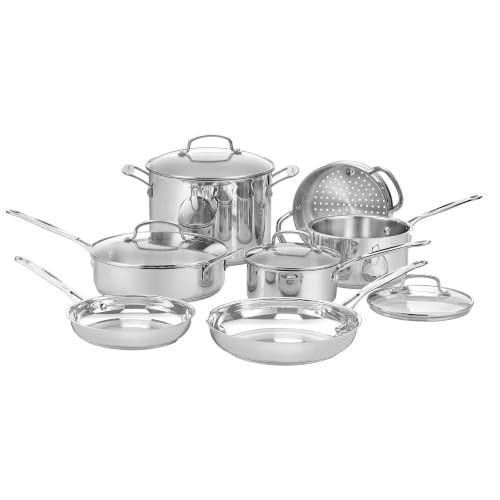
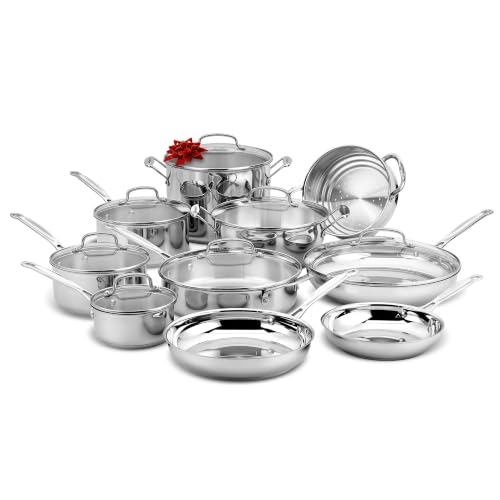
- Cuisinart Chef’s Classic Stainless Steel 17-Piece Set (77-17N) — Check on Amazon
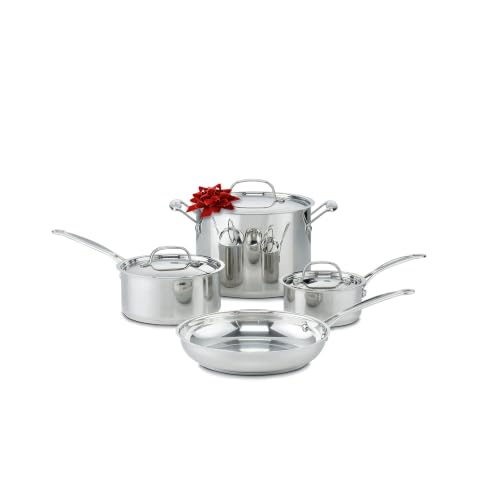
- Cuisinart Chef’s Classic Stainless Steel 7-Piece Set (77-7P1) — Check on Amazon
- CAROTE 15-Piece Tri-Ply Stainless Steel Set with Detachable Handle — Check on Amazon
- Cuisinart PureClad 12-Piece Triple-Ply Stainless Steel Set (PCT-12) — Check on Amazon
- EWFEN 11-Piece 3-Ply Stainless Steel Cookware Set — Check on Amazon
- T-Fal Ultimate Hard Anodized Nonstick 17-Piece Set — prose-only in this guide (see its review for why)
Shoppers searching for the best stainless steel cookware sets without aluminum usually have one of two worries: they are replacing nonstick and do not want another coated pan, or they have read enough about aluminum cookware to want it out of their kitchen entirely. This guide takes the second worry seriously and literally. Every set below was checked against the verified pool for what its body and cooking surface actually are, and the results are stated plainly: five sets cook on stainless steel and carry links, and one very popular set is built on hard-anodized aluminum, so it is reviewed in full but prose-only, with no link and no image, because linking it under this keyword would be dishonest.
That distinction, surface versus body, is the whole game with this search. A stainless cooking surface means the food only ever touches steel. A clad pan adds a second question, what the sealed core is made of, and this guide answers it honestly where the listings allow and tells you exactly what to confirm with the maker when they do not. Readers who are still weighing the wider stainless field will find broader context in Best Stainless Steel Cookware Sets, while this page stays narrowly on the aluminum question. By the end you will know which construction answers which version of ‘without aluminum’, and which set fits the way you cook.
Key Takeaways
- Judge this keyword by the cooking surface and the body metal: the linked sets cook on stainless steel, while the one hard-anodized set in the pool is aluminum under its finish and is reviewed prose-only.
- Fully clad and tri-ply sets seal any core metal between stainless layers, so nothing but stainless touches food; if you want zero aluminum anywhere in the pan, confirm the core material with the maker before buying.
- Piece count is a storage decision as much as a cooking one: the 7-piece and 17-piece Cuisinart sets are the same line at opposite ends of the cabinet.
- Stainless rewards a preheat habit and repays it with searing, fond and a surface that does not wear out.
- Check the latest price on Amazon for any set here rather than trusting prices quoted in older roundups, which go stale quickly.
In this guide
Quick Picks
The six picks at a glance. Badges are used consistently in the detailed reviews below, and prose-only picks are badged as what they are.
| Pick | Badge | Why it stands out |
|---|---|---|
| Cuisinart Chef’s Classic 17-Piece | Best Overall | The largest verified configuration in this pool, so one box covers saucepans, skillets, a saute pan and a stockpot for most households |
| Cuisinart Chef’s Classic 7-Piece | Best Compact Pick | The compact configuration covers the daily essentials without filling a cabinet with rarely used extras |
| CAROTE 15-Piece Tri-Ply Detachable Handle | Best for Small Spaces | The detachable handle lets pans nest tightly, which is the single biggest space saver in this pool |
| Cuisinart PureClad 12-Piece | Best Clad Construction | Triple-ply construction carries heat up the sidewalls, not just across the base, for more even sauces and grains |
| EWFEN 11-Piece 3-Ply | Best Value Clad | 3-ply construction at an 11-piece count is the value route into clad cooking in this pool |
| T-Fal Ultimate Hard Anodized 17-Piece | Prose-Only: Aluminum Body | Nonstick release is genuinely easier for eggs, fish and other delicate foods than any bare metal surface |
How These Picks Were Chosen
The picks come from a verified pool checked through the Creators API on the date recorded in each article’s sources file: product titles, brands, constructions and images were confirmed against the API responses rather than copied from older roundups. From that pool, each set was screened against this keyword’s specific test, which is stricter than a general stainless roundup: what is the cooking surface, what is the body made of, and does any aluminum sit where food or a flame-warped base can expose it.
Five sets passed as stainless cookware and are linked. One, the T-Fal Ultimate Hard Anodized set, failed the body test outright: hard anodizing is a surface treatment applied to aluminum, so the set is aluminum cookware by construction whatever the marketing emphasis, and it appears prose-only with the reason stated in its review. This is a research-led guide, not a hands-on test report: no claim is made that these pans were cooked with in our kitchen, and specifications are limited to what the verified listings themselves state. Where a listing is brief, the review says so instead of filling gaps with invented detail.
The 6 Best stainless steel cookware sets without aluminum — Detailed Reviews

Cuisinart Chef’s Classic Stainless Steel 17-Piece Set (77-17N)
Badge: Best Overall
Strengths
- The largest verified configuration in this pool, so one box covers saucepans, skillets, a saute pan and a stockpot for most households
- Cool-grip handles are the practical detail you feel every time a pan comes off a hot burner
- A stainless cooking surface takes metal utensils, high heat and deglazing without a coating to protect
Trade-offs
- Seventeen pieces is a lot of cabinet: lids and utensils are counted, and small kitchens may store half of it elsewhere
- Stainless steel shows water spots and rainbow heat tint unless you dry pieces after washing
- The breadth suits generalists; a cook who only ever uses three pans pays for range they never touch
Key specs (from the verified listing)
- Pieces: 17-piece set (model 77-17N)
- Material: stainless steel
- Cooking surface: non-toxic stainless steel, PFAS free (per listing)
- Compatibility: induction cookware (per listing)
- Handles: cool-grip handles (per listing)
- Oven: oven safe (per listing)
The Cuisinart Chef’s Classic 17-piece set, model 77-17N, is the big-box answer in this pool: a full stainless steel battery built around the pieces a household actually rotates through, from small saucepans to a stockpot, with lids counted in the piece total as makers always count them. The listing verifies the points that matter for daily use: a non-toxic stainless cooking surface described as PFAS free, induction compatibility, cool-grip handles and oven-safe construction. In practice this is the set for a kitchen being equipped once and properly, where the question is not which single pan is best but whether one purchase can retire a drawer of mismatched hand-me-downs. Stainless rewards a particular cooking style: preheat the pan, then add oil, then food, and fond becomes a sauce base instead of a cleaning problem. It punishes neglect differently than nonstick does, with discoloration and stuck eggs rather than a peeling surface, and both are manageable once the habits are learned.
Against this keyword’s test it passes on the surface: food cooks on stainless steel, and the set’s scale makes it the one-box answer for a household removing aluminum and nonstick from the kitchen in a single purchase. If your standard is the stricter one, no aluminum anywhere in the pan including a sealed base or core, treat the maker’s construction description as required reading before ordering, because that is a question only the manufacturer can close.
Best for: households equipping a full kitchen in one purchase / Not suited for: small kitchens and minimalists who will store half the set

Cuisinart Chef’s Classic Stainless Steel 7-Piece Set (77-7P1)
Badge: Best Compact Pick
Strengths
- The compact configuration covers the daily essentials without filling a cabinet with rarely used extras
- Same Chef’s Classic stainless construction and cool-grip handles as the larger sets in the line
- A sensible starter footprint for first apartments, couples and downsizers
Trade-offs
- Seven pieces means no big stockpot moment: large-batch soup and pasta water for a crowd stretch it
- Fewer skillets means the second pan for a two-pan dinner has to come from somewhere else
- Stainless still asks for the preheat-and-oil habit; it is not a forgetful cook’s surface
Key specs (from the verified listing)
- Pieces: 7-piece set (model 77-7P1)
- Material: stainless steel
- Cooking surface: non-toxic stainless steel, PFAS free (per listing)
- Compatibility: induction cookware (per listing)
- Handles: cool-grip handles (per listing)
- Oven: oven safe (per listing)
The 7-piece Chef’s Classic set, model 77-7P1, is the same Cuisinart stainless line distilled to essentials: the saucepans and skillet shapes a small household uses daily, in stainless steel with cool-grip handles, induction compatibility and oven-safe construction per the verified listing. Where the 17-piece set equips a whole kitchen, this one equips a cook. That distinction matters more than piece count marketing suggests, because the right question is how many pieces you will wash every week, not how many a box can claim. For singles, couples and small kitchens it keeps the stainless advantages, hard searing, deglazing, metal utensils, no coating to baby, while asking for far less storage. The honest limit is headroom: holiday cooking and big-batch projects will have you borrowing a stockpot, and most owners eventually add one open-stock piece, which the line’s wide availability makes easy.
For the aluminum-avoiding cook with a small kitchen, this is the proportionate version of the same answer: a stainless cooking surface across the daily pieces, without a 17-piece cabinet commitment. It is also the easiest set here to audit piece by piece, since there are only seven of them.
Best for: singles, couples and first kitchens wanting the daily core only / Not suited for: large families and batch cooks who need a big stockpot


CAROTE 15-Piece Tri-Ply Stainless Steel Set with Detachable Handle
Badge: Best for Small Spaces
Strengths
- The detachable handle lets pans nest tightly, which is the single biggest space saver in this pool
- Tri-ply stainless construction spreads heat through the pan body rather than only across the base
- One handle serves the whole set, so a pan moves from stovetop to oven to table with a click
Trade-offs
- A shared handle is a single point of failure: lose or damage it and several pans are sidelined
- Click-on handles demand a firm, deliberate attachment check before lifting a full, hot pan
- Fifteen pieces still includes lids in the count, as every maker counts them
Key specs (from the verified listing)
- Pieces: 15-piece set
- Construction: tri-ply stainless steel
- Handles: detachable handle design
- Material note: non-toxic (per listing)
- Compatibility: induction compatible
- Care: dishwasher and oven safe (per listing)
- Storage: easy storage design, listed for kitchen, camping and RV cooking
CAROTE’s 15-piece tri-ply stainless set is built around one idea the rest of this pool does not offer: a detachable handle. The pans nest without long handles jutting in three directions, the handle clicks on for cooking and serving, and the verified listing explicitly positions the set for kitchen, camping and RV cooking as well as easy storage, with induction compatibility and dishwasher and oven safety. Tri-ply construction, stainless steel layered through the body of each pan, gives more even sidewall heating than a simple disc base, which shows up in sauces that do not scorch at the edges. The design trade is real and should be stated plainly: your grip on every pan depends on one mechanism, so the attachment click is a habit to build, and cooks who like a permanently riveted handle they never think about may prefer a conventional set. For small kitchens, vans and boats, though, the storage math is hard to argue with.
Tri-ply construction raises the core question in its purest form: layered pans are built around a core metal sealed between stainless layers, so the cooking surface is steel and the core never touches food. If your rule is about food contact, this set answers it; if your rule is zero aluminum in the object, ask CAROTE to confirm the core before you buy, and weigh the detachable-handle storage win either way.
Best for: small kitchens, campers and RV cooks who need nesting, detachable-handle storage / Not suited for: cooks who want a permanently riveted handle they never think about

Cuisinart PureClad 12-Piece Triple-Ply Stainless Steel Set (PCT-12)
Badge: Best Clad Construction
Strengths
- Triple-ply construction carries heat up the sidewalls, not just across the base, for more even sauces and grains
- A mid-size 12-piece count balances coverage and storage better than the biggest boxes
- Cuisinart’s clad line is the step-up route for cooks who have outgrown disc-base pans
Trade-offs
- The verified listing is brief, so confirm the exact piece list and lid materials on the live listing before buying
- Clad pans are heavier in the hand than thin disc-base stainless, which some cooks notice on big skillets
- Stainless surfaces still need the preheat habit for eggs and other sticky proteins
Key specs (from the verified listing)
- Pieces: 12-piece set (model PCT-12)
- Construction: PureClad triple-ply stainless steel
- Material: stainless steel throughout the clad body (per model name and listing)
The Cuisinart PureClad PCT-12 is the clad specialist of this pool: a 12-piece set whose triple-ply construction, stainless steel layered through the full body of each pan, is the whole point. Cladding changes how a pan behaves at the edges, where disc-base pans run cold: rice simmers evenly to the wall, sauces reduce without a scorched ring, and a skillet’s cooking surface stays closer to one temperature. Twelve pieces is the considered middle of the Cuisinart range, enough shapes for a serious home cook without the storage burden of the largest configurations. The verified listing for this model is terse, confirming the set size, the model number and the triple-ply stainless construction rather than a long feature list, so the piece-by-piece inventory is worth a careful read on the live listing. What the construction itself guarantees is the cooking behaviour clad buyers are paying for, and that is the honest basis of this pick.
PureClad’s triple-ply build is the premium expression of the same sealed-core logic: stainless inside and out, with the layered body doing the heat-spreading work. The listing confirms the construction type rather than itemising the core, so the same maker-confirmation advice applies, and the even-heating payoff is the reason clad buyers accept that homework.
Best for: cooks who simmer and reduce often and want clad sidewall heat / Not suited for: buyers unwilling to confirm the exact piece list on the live listing before ordering

EWFEN 11-Piece 3-Ply Stainless Steel Cookware Set
Badge: Best Value Clad
Strengths
- 3-ply construction at an 11-piece count is the value route into clad cooking in this pool
- Induction compatible and dishwasher safe, so it fits modern stovetops and low-effort cleanup
- Lids included across the set rather than only on the largest pieces
Trade-offs
- A newer brand name carries less long-term track record than the legacy makers in this guide
- Eleven pieces covers the core shapes but leaves specialty pieces to open-stock additions
- As with all stainless, delicate foods need heat management rather than a coating’s forgiveness
Key specs (from the verified listing)
- Pieces: 11-piece set with lids
- Construction: 3-ply stainless steel
- Material note: non-toxic (per listing)
- Compatibility: induction compatible
- Care: oven and dishwasher safe (per listing)
- Positioning: professional chef quality (per listing)
The EWFEN 11-piece set takes the 3-ply stainless formula, layered construction through the pan body, induction compatibility, oven and dishwasher safety, and packages it as the accessible route into clad cookware. The verified listing describes it in professional terms, and the sensible way to read that is as positioning rather than proof; what can be said from the listing itself is that the construction type is the same one premium lines charge more for, and the piece count covers the everyday core: saucepans, skillets and a larger pot, with lids. For a cook upgrading from a worn nonstick set, this is the kind of purchase that changes daily cooking more than any single gadget: pans that can sear hard, go under a broiler, survive metal utensils and come out of the dishwasher ready to go again. The reservation is brand depth, since a newer label cannot point to decades of replacement-lid availability, and that is worth weighing against the construction on offer.
EWFEN’s 3-ply set makes clad construction the accessible option in this guide, with a stainless cooking surface and induction compatibility. The aluminum question lands here exactly as it does on the premium clad sets: surface, answered; sealed core, confirm with the maker if your standard is absolute.
Best for: value-focused buyers who want 3-ply construction and induction compatibility / Not suited for: brand traditionalists who want decades of track record behind a set
T-Fal Ultimate Hard Anodized Nonstick 17-Piece Set
Badge: Prose-Only: Aluminum Body
Prose-only pick: no Amazon link and no image, for the reason given in this review.
Strengths
- Nonstick release is genuinely easier for eggs, fish and other delicate foods than any bare metal surface
- Seventeen pieces including a griddle gives the widest shape coverage in this pool
- Hard anodized bodies are light in the hand, which suits cooks who find clad stainless heavy
Trade-offs
- The body is anodized aluminum, so it cannot answer a brief that excludes aluminum or a cook who wants bare metal
- Every nonstick coating is a wear item with a finite life, unlike a stainless surface
- High-heat searing and metal utensils are exactly what nonstick asks you to avoid
Key specs (from the verified listing)
- Pieces: 17-piece set
- Body: hard anodized (aluminum body with anodized finish, per product name)
- Surface: nonstick coating
- Includes: fry pan, saucepans, saute pan and griddle (per listing)
- Care: dishwasher safe (per listing)
- Colour: Onyx
The T-Fal Ultimate Hard Anodized 17-piece set is the nonstick heavyweight of this pool: fry pan, saucepans, a saute pan and a griddle in a deep Onyx finish, dishwasher safe per the verified listing, built on hard anodized bodies. Its strengths are the classic nonstick ones and they are real: eggs slide, fish releases, cleanup is a wipe, and the pans are light enough for cooks who struggle with heavy clad skillets. Its limits are equally structural. Hard anodizing is a treatment of aluminum, so the body metal is aluminum whatever the finish is called, and the nonstick surface, however durable, is a coating with a service life measured in years rather than decades. Whether this set belongs in your kitchen depends entirely on which of those two paragraphs describes your priorities, and this guide scores it accordingly in each keyword’s terms rather than pretending it is something it is not.
This set is reviewed prose-only for one stated reason: its bodies are hard-anodized aluminum, which is precisely the material this keyword excludes. It remains a capable nonstick set for cooks whose brief is different, easy release and light pans, but it cannot be recommended under a without-aluminum brief and carries no link here.
Best for: cooks who prize effortless nonstick release and light pans / Not suited for: anyone avoiding aluminum bodies or coating-based surfaces
Comparison Table
All six picks side by side on the attributes the verified listings confirm. No prices and no ratings are printed, because both change; check the latest price on Amazon on any linked pick.
| Pick | Badge | Pieces | Construction / surface |
|---|---|---|---|
| Cuisinart Chef’s Classic 17-Piece | Best Overall | 17-piece set (model 77-17N) | Material: stainless steel |
| Cuisinart Chef’s Classic 7-Piece | Best Compact Pick | 7-piece set (model 77-7P1) | Material: stainless steel |
| CAROTE 15-Piece Tri-Ply Detachable Handle | Best for Small Spaces | 15-piece set | Construction: tri-ply stainless steel |
| Cuisinart PureClad 12-Piece | Best Clad Construction | 12-piece set (model PCT-12) | Construction: PureClad triple-ply stainless steel |
| EWFEN 11-Piece 3-Ply | Best Value Clad | 11-piece set with lids | Construction: 3-ply stainless steel |
| T-Fal Ultimate Hard Anodized 17-Piece | Prose-Only: Aluminum Body | 17-piece set | Body: hard anodized (aluminum body with anodized finish, per product name) |
How to Choose a Stainless Steel Cookware Set Without Aluminum
Start by deciding which version of ‘without aluminum’ you actually mean, because the two versions lead to different shelves. Version one is about contact: you do not want food cooking on aluminum or on a coating, and you do not want an aluminum base warping or oxidising in the dishwasher. Stainless-surfaced sets answer that completely, including clad sets whose cores are sealed. Version two is about composition: no aluminum anywhere in the object, core included. That is a much smaller market, it excludes most clad construction by definition, and the only honest way to shop it is to require the maker to state the core material in writing. Decide your version first; every other choice gets easier.
Next, weigh construction against your stove and your patience. Disc-base and bonded-base stainless puts its heat-spreading layer at the bottom only: lighter, simpler, and entirely adequate for boiling, frying and most sauces. Full tri-ply cladding spreads heat up the walls as well, which matters for grains, reductions and anything that scorches at edges, at the cost of weight. On induction, confirm compatibility piece by piece, since a magnetic stainless exterior is what the hob needs to see. Shoppers comparing the general stainless landscape alongside this narrower question often browse Best Stainless Cookware Sets for the wider construction debate.
Finally, audit the set against your real cooking. Count the pieces you will use weekly, not the number printed on the box, and check that the largest pot fits your biggest job, a kilo of pasta, a double batch of soup, with water room to spare. Handles matter more than marketing: cool-grip and stay-cool designs earn their keep on gas hobs, and every handle should feel secure with a full, heavy pan. Lids, oven limits and dishwasher guidance should all be confirmed on the live listing, because those details, not the headline piece count, decide whether a set still suits you in year three.
How to Cook Well on Stainless Steel: Setup, Daily Use and Care
Stainless steel has a learning curve measured in days, not months, and nearly all of it is heat management. Work through these steps in order and the surface that stuck your first egg becomes the surface you trust for everything else.
- Preheat the empty pan over medium heat until a flick of water beads and dances rather than sizzling flat; that bead is the sign the surface is ready.
- Add oil after preheating, give it a few seconds to shimmer, then add food and leave it alone: proteins release naturally once a crust forms.
- Match pan size to burner size so flames or induction zones heat the base, not the sidewalls, which prevents scorch rings and wasted energy.
- Deglaze while the pan is hot with water, stock or wine; the fond lifts into a sauce and the pan becomes easier to wash at the same time.
- Wash with hot soapy water and a non-scratch sponge; for rainbow heat tint or white mineral film, a splash of vinegar on a cloth restores the finish.
- Dry pieces before stacking, and nest a cloth between pans you care about, so the stainless stays bright instead of slowly scuffing.
Troubleshooting
Problem: eggs or fish weld themselves to the pan → the pan was too cool when the food went in, or the food was moved too early. Preheat until water beads, oil, add food, and wait for the natural release.
Problem: a blue or rainbow tint appears after high heat → that is heat discoloration of the steel itself, harmless and cosmetic. It fades with a vinegar wipe and does not affect cooking.
Problem: white cloudy spots after washing → mineral deposits from hard water, not damage. Boil a little water with a spoon of vinegar in the pan, wash again, and dry by hand.
What ‘Without Aluminum’ Really Means in a Pan
Aluminum appears in cookware in three distinct places, and honest shopping means knowing which one you object to. It can be the body, as in hard-anodized sets where the whole pan is aluminum under a treated surface. It can be a base disc, bonded to the bottom of a stainless pan to spread heat. Or it can be a sealed core, sandwiched between stainless layers in clad construction, where it never contacts food, air or dishwater. The first is aluminum cookware by any definition. The second and third are stainless cookware using aluminum as an engineering material, which is why two shoppers with the same search can honestly reach different conclusions.
Regulatory and culinary debate about aluminum has always centred on food contact and on acidic foods cooked for long periods in bare aluminum, which is a different scenario from a sealed core. This guide takes no side in that debate; it simply labels each construction accurately so your own standard can be applied. If your household rule is zero aluminum in the object, the sets to interrogate hardest are the clad ones, and the question to ask the maker is direct: what is the core made of? Readers who arrived here from the warranty angle may also want Best Stainless Steel Cookware Sets Lifetime Warranty, since long coverage matters most on a purchase meant to end replacement cycles.
Stainless Steel Versus the Alternatives You Are Replacing
Most readers of this page are leaving something: a scratched nonstick set, a thin aluminum set that warps, or a mixed drawer of both. Stainless answers the durability complaint completely, since there is no coating to fail and the surface tolerates metal utensils, broilers and dishwashers. What it does not answer is convenience at low heat with delicate foods, and pretending otherwise sets buyers up for a frustrating first week. The realistic comparison is a trade: a short technique apprenticeship in exchange for a surface measured in decades.
There is also a middle path many households land on: a stainless set as the backbone, plus one inexpensive nonstick skillet reserved for eggs, replaced without guilt when it wears. That hybrid is worth naming because the purist version of this keyword sometimes collapses at the first Sunday omelette. If you do keep one coated pan, keep it out of the high-heat work the stainless now handles, and it will last far longer. Shoppers still deciding between material families entirely can compare the nonstick side of the argument in Best Quality Non Stick Cookware Sets before committing.
Acidic Foods, Long Simmers and the Stainless Answer
The scenario that drives most aluminum anxiety is specific: a tomato sauce, a wine-braised dish or a lemony stew spending hours in the pot. Bare aluminum and acidic, long-cooked food are the combination every cookware discussion eventually circles, because that is where metal and meal have the longest, warmest contact. Stainless steel simply removes the scenario from your kitchen: the surface is non-reactive in ordinary cooking, which is why restaurants simmer tomato sauces in steel all day without a thought. If that scenario is your real reason for this search, then the surface test, not the core test, is the one that governs your purchase, and every linked set in this guide passes it on every piece, lids aside.
It is worth separating that practical point from the stricter compositional one, because conflating them produces bad purchases in both directions. Buyers who only cared about food contact sometimes reject excellent clad sets over a sealed core that will never touch a meal, shrinking their options for no functional gain. Buyers who cared about total composition sometimes buy a set labelled stainless without checking the base construction, and discover the bonded disc only when the box is open. Both errors come from the same shortcut, reading the headline material instead of the construction. This guide’s reviews name the construction of each set as precisely as its verified listing allows, and where the listing stops short, the review says that too, so the decision you make is the decision you meant to make.
What to Check on the Listing Before You Order
Because several listings in this pool are concise, the final verification pass matters more than usual, and it takes five minutes. First, read the itemised piece list and count vessels, not pieces, checking for the stockpot size your household needs. Second, find the construction statement and note whether it describes the whole body or only the base, because that single distinction answers most of this keyword’s questions. Third, confirm induction compatibility in the listing’s own words if your hob needs it, since a set’s siblings in the same line can differ. Fourth, check the handle and lid materials against the oven use you actually plan, finishing sauces under a broiler or baking in the pan.
Fifth, and specific to this keyword, if your standard is zero aluminum in the object, use the listing’s question-and-answer section or the maker’s own site to ask the core question directly, and keep the answer with your records. Makers of clad cookware know their core materials; a clear question gets a clear answer, and a vague one tells you something as well. None of this homework is a criticism of the sets here, several of which state their construction plainly. It is simply the difference between buying a material and buying a description, and on a purchase meant to last a decade or more, the material is the one worth paying for.
A Worked Example: Three Dinners on a Stainless Set
Abstract construction talk lands better with dinner attached, so consider three ordinary meals and what they ask of these sets. First, a weeknight tomato pasta: the stockpot from any configuration here boils the pasta while a saucepan simmers the sauce, and the stainless saucepan is exactly where an acidic sauce belongs for a long, gentle cook. Nothing in the meal touches aluminum or a coating, the pans shrug off the dishwasher afterwards, and the only technique involved is salting the pasta water properly. This is the everyday case for the linked sets, and it is not close.
Second, a seared chicken dinner with a pan sauce: a skillet preheated to the water-bead point, skin-side chicken left alone until it releases, then the fond deglazed with stock into a sauce in the same pan. This meal is impossible to do properly on the prose-only nonstick set at high heat and effortless on any linked stainless skillet, which is the practical meaning of the surface difference this guide keeps returning to. Third, a slow Sunday braise that starts on the hob and finishes in the oven: here the checks are the oven credentials and handle designs in each review, and the sets separate by their stated limits rather than their labels.
Notice what the three dinners share: none of them needed an exotic piece, and all of them rewarded the same handful of vessels. That is the vessel test from the buying guide, demonstrated. A household that cooks these meals needs the saucepan, skillet and stockpot core in stainless, sized to its table, and everything beyond that core is preference and storage. The aluminum question, which opened this guide, resolves in the same practical way: choose the construction that satisfies your standard, in the configuration your dinners use, and the set disappears into your cooking, which is what great equipment is supposed to do.
One Last Distinction: Lids, Handles and the Parts Nobody Audits
Two components quietly decide long-term satisfaction and rarely appear in keyword searches: lids and handles. A lid that fits its pan precisely keeps a simmer at a simmer instead of a boil, saves energy and prevents the stovetop flooding that makes cooks hate a set for reasons they cannot name. Handles decide the daily ergonomics of every lift, drain and tilt, and their attachment, rivets you can inspect versus welds you must trust, is worth a look on the live listing photographs. On the aluminum question specifically, handles and lids are also where mixed materials hide in otherwise stainless sets, so the buyer with the strict compositional standard should extend the audit to them. None of the linked sets’ listings raise a flag here, but the strict reader’s checklist should be complete, and completeness is this guide’s whole method: surface, body, core, and now the fittings, each asked its question in turn.
Common Buying Mistakes
Treating ‘stainless’ as a guarantee about the whole pan. A stainless cooking surface can sit over a bonded base or a sealed core. If your rule covers the whole object, read the construction, not the headline material.
Assuming hard-anodized means aluminum-free. Anodizing is a treatment of aluminum. A hard-anodized set is an aluminum set with a harder surface, which is why one pick here is prose-only.
Buying the biggest box to ‘be safe’. Unused pieces are not safety; they are storage debt. Count your weekly pieces and buy the configuration that matches them.
Judging stainless by the first egg. Sticking in week one is a technique issue, not a product defect. Preheat properly for two weeks before concluding the surface is at fault.
Skipping the core question until after delivery. If zero-aluminum composition matters to you, the time to ask the maker is before purchase, when the answer can still change the decision.
Final Recommendation
For most readers, the Cuisinart Chef’s Classic 17-piece set is the first recommendation: a stainless cooking surface across a complete household battery, from a line with the depth to support it for years. If your kitchen or household is smaller, the 7-piece version of the same line is the same answer at the right scale. Cooks who specifically want clad behaviour should look at the PureClad 12-piece for even sidewall heat, with EWFEN’s 3-ply set as the value route into the same construction, and CAROTE’s detachable-handle set is the standout where storage is tight.
The T-Fal set is named here only to be excluded clearly: it is a good nonstick set and an aluminum one, and under this keyword that second fact decides. Whatever you choose, verify the construction details on the live listing, check the latest price on Amazon rather than trusting any figure quoted elsewhere, and remember that the honest answer to ‘without aluminum’ depends on whether you mean the surface or the whole pan. Both readings are respected in this guide; only one set failed both.
Shortlist recap: the linked front-runners to compare first are Cuisinart Chef’s Classic 17-Piece, Cuisinart Chef’s Classic 7-Piece, CAROTE 15-Piece Tri-Ply Detachable Handle. Open each listing, confirm the itemised piece list and details, and check the latest price on Amazon before you decide.
Frequently Asked Questions
Does a tri-ply pan count as aluminum-free?
Its cooking surface is stainless steel and any core is sealed between steel layers, so food never touches aluminum. If your standard is that the object contains no aluminum at all, ask the maker to confirm the core material, because clad pans are commonly built around a heat-conducting core and listings do not always name it.
Why is the T-Fal set in this guide at all if it is prose-only?
Because it appears in the same verified pool and in many shoppers’ carts, and a guide about avoiding aluminum that silently ignored the most common anodized set would mislead by omission. It is reviewed honestly, labelled clearly and given no link.
Is stainless steel cookware non-toxic?
The linked listings describe their stainless cooking surfaces as non-toxic and PFAS free. Stainless steel is a bare metal surface with no coating to degrade, which is the practical basis for most shoppers’ confidence in it.
Will stainless steel work on an induction hob?
The linked sets are listed as induction compatible or induction cookware. The general test is a magnet: if it grips the pan’s base firmly, an induction hob will heat it.
How do I stop food sticking to stainless steel?
Preheat the pan until water beads, add oil, then food, and resist moving proteins until they release on their own. Most sticking is a temperature problem, not a pan problem.
What piece count should a household actually buy?
Match the set to your weekly cooking: couples and small kitchens thrive on 7 to 11 pieces, while households cooking varied meals nightly use the 12 to 17 piece configurations. Lids count as pieces in every maker’s arithmetic.