Disclosure: topratedkitchenware.com is reader-supported. When you buy through links on our site, we may earn an affiliate commission from Amazon and other retailers, at no extra cost to you.
Where to buy
The picks below are the verified shortlist for this guide to best selling food processors. Each linked name takes you to its Amazon listing, where you can check the latest price on Amazon, confirm the current configuration, and read the newest owner feedback before you decide.
- Ninja Professional Plus Food Processor, 9-Cup, 1000W (BN601) — Best Selling Overall Pick
- Cuisinart Mini Food Processor, 3-Cup — Best Selling Mini
- Hamilton Beach Food Processor, 10-Cup (70730) — Best Selling Family Pick
- BLACK+DECKER Food Processor, 8-Cup, 450W — Best Selling Mid-Size
- Cuisinart Core Custom 4-Cup Mini Chopper (MCH-4) — Best Selling for Small Batches
- KitchenAid 3.5 Cup Food Chopper, Empire Red (KFC3516ER) — Best Selling for Control
Read the full guide ↓ for how each pick performs, where each one compromises, and which households each one actually suits.
The best selling food processors earn their volume the slow way, by being bought, kept and bought again as gifts and replacements, and popularity at that scale is a signal worth reading carefully. This guide presents the verified pool’s most mainstream machines and explains what their sales success does and does not prove, because a bestseller is evidence of fit for many households, not a guarantee of fit for yours.
The shortlist is a portrait of the category’s centre of gravity: the Ninja Professional Plus with its presets, the Hamilton Beach 10-cup family machine, the BLACK+DECKER 8-cup, and the three minis, two Cuisinarts and the KitchenAid, that dominate small-jobs counters. These are the machines a new buyer is most likely to be offered by friends, family and algorithms alike, and each review separates the durable reasons for its popularity from the bandwagon noise around it. The value reading of the same machines lives in Best Prices Food Processors.
Popularity’s real gift to a buyer is information density: heavily sold machines accumulate deep owner feedback, stocked parts and known quirks. The lens sections show how to spend that gift wisely, using the crowd’s experience as an audit while keeping the final decision where it belongs, on your own job list.
Key Takeaways
- Sales volume signals broad fit and deep parts support, not universal fit for every kitchen.
- The Ninja, Hamilton Beach and Cuisinart Mini are this pool’s centre-of-gravity machines.
- Bestsellers accumulate the most owner feedback, which makes their quirks the best documented.
- Buy a bestseller when your household is the mainstream one it was designed for.
- Niche needs, very small or very large, are served by the pool’s edges, not its centre.
In this guide
Quick Picks
- Best Selling Overall Pick: Ninja Professional Plus Food Processor, 9-Cup, 1000W (BN601) — a pick defined by a 1000W 9-cup processor with Auto-iQ presets that chop, slice, puree and mix dough.
- Best Selling Mini: Cuisinart Mini Food Processor, 3-Cup — a pick defined by a compact auto-reversing mini processor that chops in one direction and grinds in the other.
- Best Selling Family Pick: Hamilton Beach Food Processor, 10-Cup (70730) — a pick defined by a full-size 10-cup processor with a bowl scraper that keeps food moving without stopping.
- Best Selling Mid-Size: BLACK+DECKER Food Processor, 8-Cup, 450W — a pick defined by a mid-size 450W processor that covers shred, slice, mince, grind and puree in an 8-cup bowl.
- Best Selling for Small Batches: Cuisinart Core Custom 4-Cup Mini Chopper (MCH-4) — a pick defined by a 4-cup mini chopper with an auto-reversing SmartPower blade and dishwasher-safe parts.
- Best Selling for Control: KitchenAid 3.5 Cup Food Chopper, Empire Red (KFC3516ER) — a pick defined by a 3.5-cup chopper with two speeds plus pulse and a dishwasher-safe work bowl.
How These Picks Were Chosen
The pool was verified through the Creators API, each model confirmed, with only specifications from the verified listings appearing in this guide. For a best-selling lens, selection favoured the designs that define their classes in the mainstream market: the preset-led Ninja flagship alternative, the scraper-equipped Hamilton Beach family machine, the mid-size BLACK+DECKER, and the mini class’s establishment, the reversing-blade Cuisinart Mini, its 4-cup Core Custom sibling and the two-speed KitchenAid chopper.
Each review distinguishes why the machine sells, the design decision, from the fact that it sells, which is merely the echo. That distinction is the guide’s method: popularity is treated as a clue pointing at virtues you can verify in the specification, never as a virtue in itself. Readers whose needs sit at a specific size can cross-check Best Prices On 8 Cup Food Processors alongside.
This is a research-led guide. No hands-on testing is claimed, and no sales figures, scores or review counts are printed, because those numbers move constantly and would date the page. The analysis rests on the verified specifications and on reasoning about what sustained popularity in this category actually tracks.
The 6 Best Options for Best Selling Food Processors

Ninja Professional Plus Food Processor, 9-Cup, 1000W (BN601)
Badge: Best Selling Overall Pick
Strengths
- 1000W is the strongest motor figure in this guide, and it shows on dough and dense loads
- Auto-iQ presets run chop, slice, puree and dough programs without guesswork
- 9-cup bowl, three blades, feed chute and pusher cover the full repertoire
Trade-offs
- Preset-led control is less manual than dial-and-pulse purists prefer
- Full-size footprint and parts count, like every big machine here
- Grey finish only in this listing
Key specifications (from the verified listing)
- Power: 1000W (from verified listing)
- Capacity: 9 cups (from verified listing)
- Programs: Auto-iQ presets to chop, slice, puree and mix dough; 3 blades; dishwasher-safe parts; model BN601
The Ninja Professional Plus BN601 brings the biggest number in this guide, a 1000W motor, and wraps it in Auto-iQ presets that run chopping, slicing, pureeing and dough mixing as programs rather than guesswork. The 9-cup bowl and three-blade set cover the full processor repertoire, and the feed chute and pusher handle the disc work. It is the pick for cooks who want power with a autopilot option, strong enough for dough and dense purees, guided enough that a first-time processor owner gets good results on day one.
The Ninja Professional Plus Food Processor, 9-Cup, 1000W (BN601) sells in volume because it is a 1000W 9-cup processor with Auto-iQ presets that chop, slice, puree and mix dough. Strip away the bandwagon and that design fact is what remains, a machine whose central virtue matches a need an enormous number of households genuinely have, which is the only foundation popularity can honestly be built on.
Volume brings its own secondary virtues to the Ninja Professional Plus Food Processor, 9-Cup, 1000W (BN601): feedback deep enough to audit, parts stocked widely enough to trust, and quirks known well enough that its review here can name them in advance. A buyer of a bestseller is never the first to discover anything about their machine, and there is real comfort in that.
There is a final, practical test that separates a good shortlist entry from a great one, and the Ninja Professional Plus Food Processor, 9-Cup, 1000W (BN601) passes it: the week-two test. In week one any new processor is a novelty that gets used because it is new. By week two the novelty is gone, and the machines still on the counter are the ones whose size, controls and cleanup fit the household’s actual rhythm. Everything in this pick’s verified design, its capacity class, its blade system and the way its parts wash, points toward surviving that test in the kitchens its review describes, which is ultimately the only endorsement that compounds.
Best for: power-first cooks who knead dough and puree dense loads, and beginners who like presets / Not suited for: cooks who want purely manual control or a mini footprint
Check on Amazon for the current listing, configuration and latest price.

Cuisinart Mini Food Processor, 3-Cup
Badge: Best Selling Mini
Strengths
- Auto-reversing SmartPower blade gives distinct chop and grind modes in one small bowl
- 24 oz. bowl is the right size for herbs, garlic, nuts and small sauce batches
- Brushed chrome finish and a footprint that lives happily on the counter
Trade-offs
- 3-cup class capacity is a hard ceiling for family-size batches
- No slicing or shredding discs, so it is a blade-only machine
- Small bowl means liquids must stay modest to avoid leaks at the lid
Key specifications (from the verified listing)
- Capacity: 3-cup / 24 oz. (from verified listing)
- Blade: auto-reversing SmartPower stainless blade, chop and grind modes
- Finish: brushed chrome
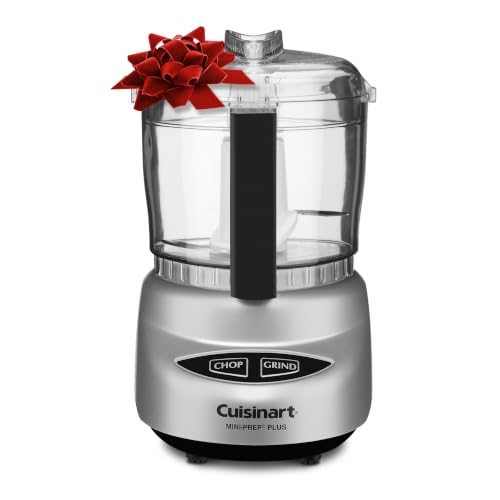
The Cuisinart Mini is the small-bowl specialist of this shortlist. Its auto-reversing blade is the clever part: run it one way and the sharp edge chops herbs, onions and nuts; reverse it and the blunt edge grinds spices, hard cheese and coffee-adjacent jobs. The 24 oz. bowl keeps it honest, this is a machine for the small, frequent jobs that make cooks reach for a knife and board out of habit, and it does those jobs in seconds with a bowl that rinses clean just as fast.
The Cuisinart Mini Food Processor, 3-Cup sells in volume because it is a compact auto-reversing mini processor that chops in one direction and grinds in the other. Strip away the bandwagon and that design fact is what remains, a machine whose central virtue matches a need an enormous number of households genuinely have, which is the only foundation popularity can honestly be built on.
Volume brings its own secondary virtues to the Cuisinart Mini Food Processor, 3-Cup: feedback deep enough to audit, parts stocked widely enough to trust, and quirks known well enough that its review here can name them in advance. A buyer of a bestseller is never the first to discover anything about their machine, and there is real comfort in that.
There is a final, practical test that separates a good shortlist entry from a great one, and the Cuisinart Mini Food Processor, 3-Cup passes it: the week-two test. In week one any new processor is a novelty that gets used because it is new. By week two the novelty is gone, and the machines still on the counter are the ones whose size, controls and cleanup fit the household’s actual rhythm. Everything in this pick’s verified design, its capacity class, its blade system and the way its parts wash, points toward surviving that test in the kitchens its review describes, which is ultimately the only endorsement that compounds.
Best for: daily small jobs: herbs, garlic, nuts, small sauces and grinding spices / Not suited for: family-size batches or any slicing and shredding work
Check on Amazon for the current listing, configuration and latest price.

Hamilton Beach Food Processor, 10-Cup (70730)
Badge: Best Selling Family Pick
Strengths
- 10-cup bowl handles family batches, doughs and big shredding jobs in one load
- Built-in bowl scraper folds food back toward the blade while it runs
- Slicing, shredding, mincing and pureeing covered by the included discs and blade
Trade-offs
- Full-size footprint needs real counter or cupboard space
- More parts to wash than any mini chopper in this guide
- Plastic bowl class build rather than a premium metal body
Key specifications (from the verified listing)
- Capacity: 10 cups (from verified listing)
- Functions: slice, shred, mince and puree
- Feature: Easy Clean bowl scraper; model 70730; stainless steel accents
The Hamilton Beach 70730 is the workhorse format most households picture when they say food processor: a 10-cup bowl, a chopping blade plus slicing and shredding discs, and enough room to make a slaw, a pie dough or a double batch of salsa without splitting it. Its signature detail is the bowl scraper, a simple arm that sweeps the bowl wall as it runs, which matters more than it sounds, because uneven bowls are the main reason processors leave a ring of unprocessed food above the blade line.
The Hamilton Beach Food Processor, 10-Cup (70730) sells in volume because it is a full-size 10-cup processor with a bowl scraper that keeps food moving without stopping. Strip away the bandwagon and that design fact is what remains, a machine whose central virtue matches a need an enormous number of households genuinely have, which is the only foundation popularity can honestly be built on.
Volume brings its own secondary virtues to the Hamilton Beach Food Processor, 10-Cup (70730): feedback deep enough to audit, parts stocked widely enough to trust, and quirks known well enough that its review here can name them in advance. A buyer of a bestseller is never the first to discover anything about their machine, and there is real comfort in that.
There is a final, practical test that separates a good shortlist entry from a great one, and the Hamilton Beach Food Processor, 10-Cup (70730) passes it: the week-two test. In week one any new processor is a novelty that gets used because it is new. By week two the novelty is gone, and the machines still on the counter are the ones whose size, controls and cleanup fit the household’s actual rhythm. Everything in this pick’s verified design, its capacity class, its blade system and the way its parts wash, points toward surviving that test in the kitchens its review describes, which is ultimately the only endorsement that compounds.
Best for: family prep, slaws, doughs and big shredding or slicing sessions / Not suited for: tiny counters or cooks who only ever make single portions
Check on Amazon for the current listing, configuration and latest price.

BLACK+DECKER Food Processor, 8-Cup, 450W
Badge: Best Selling Mid-Size
Strengths
- 8-cup bowl is the sweet spot between mini choppers and full-size machines
- 450W motor with attachments to shred, slice, mince, grind and puree
- Stainless steel blade and a feed chute sized for real vegetables
Trade-offs
- Mid-size bowl still means batching for very large prep days
- Disc-based slicing gives one thickness rather than adjustable cuts
- Controls are simple rather than programmable
Key specifications (from the verified listing)
- Capacity: 8 cups (from verified listing)
- Power: 450W (from verified listing)
- Blade: stainless steel; attachments for shred, slice, mince, grind and puree
The BLACK+DECKER 8-cup sits deliberately in the middle of this guide: bigger than the minis, lighter than the 10 and 14-cup machines, and powered by a 450W motor that covers the five jobs its listing names, shredding, slicing, mincing, grinding and pureeing. For a household of two to four that preps most nights, the 8-cup bowl is usually the size that gets used rather than admired, large enough for a meal’s worth of vegetables, small enough to wash without resentment.
The BLACK+DECKER Food Processor, 8-Cup, 450W sells in volume because it is a mid-size 450W processor that covers shred, slice, mince, grind and puree in an 8-cup bowl. Strip away the bandwagon and that design fact is what remains, a machine whose central virtue matches a need an enormous number of households genuinely have, which is the only foundation popularity can honestly be built on.
Volume brings its own secondary virtues to the BLACK+DECKER Food Processor, 8-Cup, 450W: feedback deep enough to audit, parts stocked widely enough to trust, and quirks known well enough that its review here can name them in advance. A buyer of a bestseller is never the first to discover anything about their machine, and there is real comfort in that.
There is a final, practical test that separates a good shortlist entry from a great one, and the BLACK+DECKER Food Processor, 8-Cup, 450W passes it: the week-two test. In week one any new processor is a novelty that gets used because it is new. By week two the novelty is gone, and the machines still on the counter are the ones whose size, controls and cleanup fit the household’s actual rhythm. Everything in this pick’s verified design, its capacity class, its blade system and the way its parts wash, points toward surviving that test in the kitchens its review describes, which is ultimately the only endorsement that compounds.
Best for: households of two to four wanting one mid-size machine for nightly prep / Not suited for: very large batch days or cooks wanting programmable controls
Check on Amazon for the current listing, configuration and latest price.

Cuisinart Core Custom 4-Cup Mini Chopper (MCH-4)
Badge: Best Selling for Small Batches
Strengths
- 4-cup bowl is a useful step up from 3-cup minis for dips and dressings
- Auto-reversing SmartPower blade covers chopping and grinding in one unit
- Dishwasher-safe parts make the small-job cleanup genuinely small
Trade-offs
- Blade-only machine: no slicing or shredding discs
- 4 cups still means batching for crowd-size prep
- White and stainless finish shows every splash until wiped
Key specifications (from the verified listing)
- Capacity: 4 cups (from verified listing)
- Blade: auto-reversing stainless steel SmartPower blade
- Model: MCH-4, white/stainless steel; dishwasher-safe parts
The Cuisinart Core Custom MCH-4 is the mini for cooks who found 3-cup bowls just slightly too small. The extra cup sounds trivial and is not: it is the difference between a batch of hummus that fits and one that climbs the lid. It keeps the family’s auto-reversing SmartPower blade, sharp edge to chop, blunt edge to grind, and pairs it with dishwasher-safe parts, so the machine’s whole ownership proposition is speed at both ends of the job, seconds to process, seconds to clean.
The Cuisinart Core Custom 4-Cup Mini Chopper (MCH-4) sells in volume because it is a 4-cup mini chopper with an auto-reversing SmartPower blade and dishwasher-safe parts. Strip away the bandwagon and that design fact is what remains, a machine whose central virtue matches a need an enormous number of households genuinely have, which is the only foundation popularity can honestly be built on.
Volume brings its own secondary virtues to the Cuisinart Core Custom 4-Cup Mini Chopper (MCH-4): feedback deep enough to audit, parts stocked widely enough to trust, and quirks known well enough that its review here can name them in advance. A buyer of a bestseller is never the first to discover anything about their machine, and there is real comfort in that.
There is a final, practical test that separates a good shortlist entry from a great one, and the Cuisinart Core Custom 4-Cup Mini Chopper (MCH-4) passes it: the week-two test. In week one any new processor is a novelty that gets used because it is new. By week two the novelty is gone, and the machines still on the counter are the ones whose size, controls and cleanup fit the household’s actual rhythm. Everything in this pick’s verified design, its capacity class, its blade system and the way its parts wash, points toward surviving that test in the kitchens its review describes, which is ultimately the only endorsement that compounds.
Best for: dips, dressings and small batches that overflow a 3-cup mini / Not suited for: slicing, shredding or crowd-size processing
Check on Amazon for the current listing, configuration and latest price.

KitchenAid 3.5 Cup Food Chopper, Empire Red (KFC3516ER)
Badge: Best Selling for Control
Strengths
- Two speeds plus pulse give real control over texture in a mini format
- Stainless steel multi-purpose blade and dishwasher-safe bowl keep cleanup easy
- Easy cord wrap makes it a tidy drawer or counter resident
Trade-offs
- Chopper format only: no discs for slicing or shredding
- 3.5-cup bowl is for small batches by design
- Empire Red finish is a statement colour not every kitchen wants
Key specifications (from the verified listing)
- Capacity: 3.5 cups (from verified listing)
- Controls: 2 speeds plus pulse
- Model: KFC3516ER, Empire Red; stainless steel multi-purpose blade; easy cord wrap
KitchenAid’s 3.5 Cup Chopper is the control-freak mini of the group. Where most small choppers offer one button and optimism, this one offers two speeds plus pulse, and pulse is the control that decides whether onions come out diced or pureed. The stainless steel multi-purpose blade, dishwasher-safe bowl and easy cord wrap complete a design clearly meant to live within reach and be used daily, and the Empire Red finish makes it the one pick in this guide that doubles as counter decor.
The KitchenAid 3.5 Cup Food Chopper, Empire Red (KFC3516ER) sells in volume because it is a 3.5-cup chopper with two speeds plus pulse and a dishwasher-safe work bowl. Strip away the bandwagon and that design fact is what remains, a machine whose central virtue matches a need an enormous number of households genuinely have, which is the only foundation popularity can honestly be built on.
Volume brings its own secondary virtues to the KitchenAid 3.5 Cup Food Chopper, Empire Red (KFC3516ER): feedback deep enough to audit, parts stocked widely enough to trust, and quirks known well enough that its review here can name them in advance. A buyer of a bestseller is never the first to discover anything about their machine, and there is real comfort in that.
There is a final, practical test that separates a good shortlist entry from a great one, and the KitchenAid 3.5 Cup Food Chopper, Empire Red (KFC3516ER) passes it: the week-two test. In week one any new processor is a novelty that gets used because it is new. By week two the novelty is gone, and the machines still on the counter are the ones whose size, controls and cleanup fit the household’s actual rhythm. Everything in this pick’s verified design, its capacity class, its blade system and the way its parts wash, points toward surviving that test in the kitchens its review describes, which is ultimately the only endorsement that compounds.
Best for: texture-sensitive small jobs where pulse control decides the result / Not suited for: disc work of any kind, or batches beyond a few cups
Check on Amazon for the current listing, configuration and latest price.
Comparison Table
Read the table by columns rather than rows: the badge column tells you the role each pick plays in this guide, the specification column keeps the comparison on verified facts from the listings, and the best-for column is the one to weigh against your own kitchen, because fit is decided there and nowhere else. Capacities and wattages are the manufacturers’ listing figures; no prices or ratings appear, for the reasons this guide has given throughout.
| Pick | Badge | Key specifications | Best for |
|---|---|---|---|
| Ninja Professional Plus Food Processor, 9-Cup, 1000W (BN601) | Best Selling Overall Pick | Power: 1000W (from verified listing); Capacity: 9 cups (from verified listing) | power-first cooks who knead dough and puree dense loads, and beginners who like presets |
| Cuisinart Mini Food Processor, 3-Cup | Best Selling Mini | Capacity: 3-cup / 24 oz. (from verified listing); Blade: auto-reversing SmartPower stainless blade, chop and grind modes | daily small jobs: herbs, garlic, nuts, small sauces and grinding spices |
| Hamilton Beach Food Processor, 10-Cup (70730) | Best Selling Family Pick | Capacity: 10 cups (from verified listing); Functions: slice, shred, mince and puree | family prep, slaws, doughs and big shredding or slicing sessions |
| BLACK+DECKER Food Processor, 8-Cup, 450W | Best Selling Mid-Size | Capacity: 8 cups (from verified listing); Power: 450W (from verified listing) | households of two to four wanting one mid-size machine for nightly prep |
| Cuisinart Core Custom 4-Cup Mini Chopper (MCH-4) | Best Selling for Small Batches | Capacity: 4 cups (from verified listing); Blade: auto-reversing stainless steel SmartPower blade | dips, dressings and small batches that overflow a 3-cup mini |
| KitchenAid 3.5 Cup Food Chopper, Empire Red (KFC3516ER) | Best Selling for Control | Capacity: 3.5 cups (from verified listing); Controls: 2 speeds plus pulse | texture-sensitive small jobs where pulse control decides the result |
How to Choose the Right Option for Best Selling Food Processors
Use popularity as a shortlist, not a verdict
The correct use of ‘best selling’ is as a first filter: these machines fit the mainstream household, so if your household is mainstream in size and habits, start here and choose among them on the details. If your needs are specific, tiny batches only, dough weekly, liquids in volume, let the specific sections of this guide overrule the popularity order without hesitation. The crowd is a witness, not a judge.
Read the reasons behind the volume
Ask of each bestseller: what does it do that its rivals at its tier do not? The answers in this pool are concrete, a bowl scraper, an auto-reversing grind blade, timed preset programs, and they are checkable in the listings. A machine whose popularity you can explain mechanically is a safe buy; a machine whose popularity is only itself should make you careful, because echoes fade and designs remain.
Bank the parts and feedback dividend
High-volume models enjoy the deepest support ecosystems: replacement bowls and blades stocked for years, answers to every ownership question already written by earlier owners, and accessory availability that niche models cannot match. For a ten-year appliance, that dividend is a genuine feature, and it is the strongest rational argument for buying inside the bestseller class when the fit is otherwise equal.
Check your household against the mainstream honestly
Bestsellers are designed for the centre: families of three to five, mixed cooking, weekly batch habits. Measure yourself against that centre without flattery. The single cook who mostly makes dips is not poorly served by this list, the minis are on it precisely for them, but they are served by its edge, and knowing which part of the list is yours is the whole exercise.
How to Buy a Bestseller Without Buying the Bandwagon
Start by writing your five jobs and your household size, before looking at any popularity order. Then read this shortlist as a matching exercise and mark the two machines whose best-for lines describe your kitchen. Popularity may break a tie between those two, since the better-supported line is the safer decade-long bet, but it should never promote a machine whose size or design misses your jobs into the final pair.
Audit the finalists with the crowd’s evidence, which bestsellers provide in abundance. Read the critical patterns for recurring complaints and check each against your jobs; read the questions owners asked and the answers they received about parts and durability. A bestseller’s documentation is its hidden specification sheet, and ten minutes in it tells you more about year three than any product page.
Then buy, and stop comparing. The bandwagon’s last trick is to keep you browsing after the decision, where every other bestseller’s virtues will be advertised at the machine you chose. The fit you verified is the fact; the noise is the market doing its job. Cook something in the new machine this week, and let use, not rankings, have the final word.
- Problem: the bestseller feels wrong for your cooking → it may genuinely be the mainstream’s machine rather than yours; re-check the size and best-for match before assuming a defect.
- Problem: owner feedback seems contradictory → different household shapes are reporting; filter every pattern by whether the reviewer’s jobs resemble yours.
- Problem: a part wears out years in → this is where bestsellers repay you; search the model number and expect the bowl or blade to be stocked.
What Sales Volume Actually Measures
Volume measures the overlap between a design and the distribution of households: how many kitchens a machine fits, at a tier they accept, from a name they trust. It does not measure excellence at any single job, which is why the best machine for a specialist is routinely not the best selling one. Understanding that keeps popularity in its place, as evidence about fit breadth, and stops it masquerading as evidence about quality depth, which must be read from the design itself.
There is also a feedback loop to discount: visibility breeds visibility, and a machine stocked and promoted everywhere sells partly because it is everywhere. The loop inflates the centre and starves the edges regardless of merit. This guide’s reviews therefore argue each pick from its specification outward, treating volume as the last confirming detail rather than the opening claim. The same machines read through a pure value lens appear in Best Prices On Full Sized Food Processors.
Why Minis Dominate Unit Sales and What It Teaches
Count units rather than revenue and the mini class rules this category, for a simple reason: the commonest processing jobs are small. Herbs, garlic, a dip, a handful of nuts, these happen daily in millions of kitchens, and a 3-cup machine that lives on the counter serves them better than any flagship in a cupboard. The Cuisinart Mini’s long presence near the top of the category is the market repeatedly discovering that arithmetic.
The teaching for buyers is to count their own jobs the same way. If your week’s processing is ninety percent small, your main machine should be a mini whatever the prestige order says, and the full-size purchase, if it comes, is the auxiliary. Best-selling lists, read by units, have been quietly giving that advice for years; this guide simply says it out loud.
Reading a Bestseller List From Other Countries and Other Years
Popularity travels imperfectly, and a thoughtful buyer discounts accordingly. A model that leads sales in a market of large families and big kitchens may sit awkwardly in a market of small flats, and last year’s leader may have been revised, renamed or quietly cheapened since its crown was earned. The machines in this guide were verified as they are sold now, in this market’s listings, which is the only popularity that should count for a purchase made today: current, local and attached to a configuration you can inspect.
The durable lesson underneath the caution is that bestseller status is a claim about a relationship between a design and a population, and relationships change when either side does. Your household is one side of that relationship, and it is the side you know best. Bring that knowledge to the list, let the crowd testify about support and staying power, and then decide as the world’s leading expert on your own kitchen, which, for this purchase, is exactly what you are.
The Bestseller’s Hidden Specification: Support
No product page lists ‘replacement bowl available in year six’ among its features, yet for a decade-scale appliance it may be the most valuable line item of all. Bestsellers carry it by default: volume justifies the parts pipeline, third parties stock what the maker misses, and every breakage you might suffer has been suffered, documented and solved publicly before you. Buying a bestseller is partly buying that invisible infrastructure.
This reframes the popularity question usefully. You are not following the crowd’s taste; you are purchasing the crowd’s infrastructure, its parts, its answers, its accessory market. Judged that way, the premium a mainstream machine sometimes carries over an obscure rival is not a brand tax but an insurance premium, and often a fairly priced one.
Gift-Giving and the Bestseller Effect
A large share of bestseller volume is gifts, and gift logic explains several of this pool’s shapes. Givers choose machines that are useful in any kitchen, hard to already own in duplicate, and simple to learn: a description the minis fit perfectly, which is one reason the Cuisinart Mini and the KitchenAid chopper are perennial. Receivers, meanwhile, disproportionately keep and use exactly those small, daily machines, reinforcing the cycle with genuine satisfaction rather than mere marketing.
If you are buying for yourself, you can steal the gift logic: choose the machine a thoughtful friend who knew your kitchen would choose. That is usually the one matched to your commonest jobs rather than your most ambitious ones, and it is rarely the biggest box in the category.
When the Bestseller Is the Wrong Buy
Honesty requires the counter-case. If your cooking is specialised, raw vegan volume, serious dough work, liquids at scale, the mainstream machine will serve you adequately and satisfy you rarely, because its design compromises were made for the centre you do not inhabit. Equally, if your household is one person with a small counter, the family bestseller is a monument. In both cases the pool’s edges, the powerful Ninja at one end, the 1.5-cup-class minis’ spirit at the other, are where your machine lives.
The guide’s structure is built for that honesty: every review carries a not-suited-for line, including the bestsellers’, because a list that cannot tell you when to leave the centre is a sales pitch, not a guide. Read those lines as carefully as the badges.
How Bestsellers Age: The Second-Hand and Hand-Me-Down Test
A telling test of this category is what survives to be handed down, resold and re-bought, and the mainstream lines pass it conspicuously: the Cuisinart minis and the family Hamilton Beach format circulate for years because their parts and their usefulness persist. Machines that fail the test vanish from circulation regardless of their launch noise, which is why longevity in the market is the one popularity statistic that cannot be faked for long.
For the buyer, the implication is calm: a machine that has already survived a decade of the market’s judgement, with its design essentially intact, has been reviewed by the only panel that never lies, which is time. This guide leans on that panel’s verdict while still insisting you check the fit, because time can certify a design and still not certify it for your counter.
Common Buying Mistakes
- Assuming the best selling machine is automatically the best machine for your household.
- Ignoring the not-suited-for lines because the badge says bestseller.
- Buying the family-size volume leader for a one-person, small-jobs kitchen.
- Dismissing bestsellers as mere marketing and losing the parts-support dividend.
- Reading popularity as a quality score instead of as evidence of fit breadth.
- Letting post-purchase rankings browsing replace actually cooking with the machine.
Final Recommendation
If your household is the mainstream one, families cooking mixed meals in weekly rhythms, buy with the crowd confidently: the Ninja Professional Plus for presets and power, the Hamilton Beach 10-cup for scraper-equipped family capacity. Their volume is earned, their support is deep, and their quirks are documented well enough that you will meet no surprises.
If your centre of gravity is small and daily, the bestseller that matters to you is the Cuisinart Mini, with the KitchenAid chopper as the control-led alternative and the BLACK+DECKER 8-cup as the one-machine compromise. Popularity’s lesson, properly read, was never ‘buy the biggest name’; it was ‘buy the machine whose fit has been proven by households like yours’.
Ready to decide? Compare Ninja Professional Plus Food Processor, 9-Cup, 1000W (BN601), Cuisinart Mini Food Processor, 3-Cup and Hamilton Beach Food Processor, 10-Cup (70730) on Amazon to check the latest price on Amazon and the current configuration of each.
Readers researching the wider category will also find Best Prices On 8 Or 10 Cup Food Processors and Best Prices On Breville Food Processors useful background before they decide.
Frequently Asked Questions
Does best selling mean best quality?
No. Volume measures fit breadth across many households plus trust and availability. Quality lives in the design, blade, parts, construction, which is why this guide argues each bestseller from its specification and treats its popularity as confirming evidence, not the claim itself.
Why do the same food processors sell year after year?
Because their designs match durable household patterns: minis match the daily small jobs, family machines match weekly batch cooking, and established lines keep parts available so owners replace like with like and gift what they know.
Should I buy a bestseller or a niche model?
Buy the bestseller when your household matches the mainstream it was designed for, and bank its support and feedback advantages. Buy the niche model when your cooking is genuinely specialised and the niche design answers a need the centre compromises away.
Are best selling minis popular just because they are cheap?
Price helps, but the deeper reason is job frequency: most processing jobs in most kitchens are small and daily, and a counter-resident mini serves them best. Their longevity at the top of the category reflects use, not just affordability.
What extra benefit do I get from a high-volume model?
Infrastructure: replacement parts stocked for years, owner answers to nearly every question already written, accessories widely available, and quirks so well documented that you can audit them before buying. For a ten-year appliance, that support is a real feature.
Can a bestseller still be the wrong choice?
Yes, whenever your household sits far from the centre: very small, very large, or specialised in its cooking. Every review in this guide carries a not-suited-for line, including the bestsellers’, to mark exactly those cases.