Disclosure: topratedkitchenware.com is reader-supported. When you buy through links on our site, we may earn an affiliate commission from Amazon and other retailers, at no extra cost to you.
Where to buy
The picks below are the verified shortlist for this guide to best small food processors. Each linked name takes you to its Amazon listing, where you can check the latest price on Amazon, confirm the current configuration, and read the newest owner feedback before you decide. Picks covered without a link are labelled prose-only in their reviews, with the reason stated plainly.
- Cuisinart Mini Prep Processor, 3-Cup (24 oz) — Best Overall Small Processor
- Cuisinart Core Custom 4-Cup Mini Chopper MCH-4 — Best for Real Meals in Mini Form
- KitchenAid 3.5 Cup Food Chopper KFC3516, Empire Red — Best Compact Design
Read the full guide ↓ for how each pick performs, where each one compromises, and which households each one actually suits.
Small is a size class, not a compliment, and this guide to the best small food processors applies it strictly. A small processor means a mini bowl, roughly the three-to-four-cup class, a footprint that stores in a drawer or a corner of the counter, and a workload of daily small jobs: garlic, herbs, nuts, dressings, salsas and pesto. Measured against that definition, three picks in the verified pool qualify and are linked with images. Three larger machines, a 9-cup, a 10-cup and an 8-cup, are capable processors reviewed in full as prose-only entries, because calling a 10-cup bowl small would mislead the exact readers this keyword serves.
That split is the most useful thing in the article. Many cooks buy a full-size processor for good reasons and then watch it gather dust, because washing a large bowl to mince two cloves of garlic is a chore nobody repeats. The mini class exists to be used daily, and the three linked picks below are the pool’s genuine minis, from Cuisinart’s two generations of the idea and KitchenAid’s design-led chopper. Readers weighing the wider category can compare with Best Prices Food Processors afterwards.
Key Takeaways
- Only three picks here are genuinely small: the Cuisinart Mini Prep 3-cup, the Cuisinart Core Custom 4-cup and the KitchenAid 3.5-cup chopper.
- The Ninja 9-cup, Hamilton Beach 10-cup and BLACK+DECKER 8-cup are reviewed prose-only; they are good processors, but they are not small.
- Small processors are choppers at heart: they chop, grind, mince and puree, and most do not slice or shred with discs.
- The 4-cup Core Custom is the roomiest true mini; the 3-cup Mini Prep is the smallest footprint.
- Buy small for daily use frequency, not for batch size; a mini that is washed in a minute gets used every day.
In this guide
Quick Picks
- Prose-Only: Full-Size Powerhouse: Ninja Professional Plus Food Processor BN601, 9-Cup (prose-only in this guide) — a pick defined by a 9-cup full-size food processor with Auto-iQ presets for chopping, slicing, pureeing and mixing dough, three blades, a feed chute and pusher, and dishwasher-safe parts.
- Best Overall Small Processor: Cuisinart Mini Prep Processor, 3-Cup (24 oz) — a pick defined by a 3-cup (24 oz) mini chopper with an auto-reversing SmartPower blade that chops in one direction and grinds in the other, in brushed chrome.
- Prose-Only: Largest Bowl: Hamilton Beach Food Processor 70730, 10-Cup (prose-only in this guide) — a pick defined by a 10-cup food processor and vegetable chopper for slicing, shredding, mincing and pureeing, with an easy-clean bowl scraper and stainless steel finish.
- Prose-Only: Mid-Size All-Rounder: BLACK+DECKER Food Processor, 8-Cup, 450W (prose-only in this guide) — a pick defined by an 8-cup food processor and vegetable chopper with a stainless steel blade and 450W of power, with attachments to shred, slice, mince, grind and puree.
- Best for Real Meals in Mini Form: Cuisinart Core Custom 4-Cup Mini Chopper MCH-4 — a pick defined by a 4-cup mini chopper that chops and grinds with an auto-reversing stainless steel SmartPower blade, with dishwasher-safe parts, in white and stainless steel.
- Best Compact Design: KitchenAid 3.5 Cup Food Chopper KFC3516, Empire Red — a pick defined by a 3.5-cup food chopper with a dishwasher-safe work bowl, a stainless steel multi-purpose blade, two speeds plus pulse, and an easy cord wrap, in Empire Red.
How These Picks Were Chosen
We built this shortlist from the verified pick pool supplied for this keyword and applied the keyword’s own test first: is the bowl genuinely in the small, mini class, as verified in the listing? Three picks passed, the two Cuisinart minis and the KitchenAid chopper, and they are linked with their images. The three larger machines failed that single test while passing the general quality tests we apply to any processor, so they are reviewed in full as prose-only entries with the reason stated, following the rule that a pick outside the keyword’s core stays unlinked.
Specifications come only from the verified listings, no hands-on testing is claimed, and prices and fixed ratings are excluded because both change too quickly to print honestly. Capacity figures quoted are the listings’ own, which matters in a guide where capacity is the whole argument. Readers comparing family-size machines can continue to Best Prices On Full Size Food Processors.
The 6 Best Options for Best Small Food Processors
Ninja Professional Plus Food Processor BN601, 9-Cup
Badge: Prose-Only: Full-Size Powerhouse
Strengths
- Auto-iQ presets take the guesswork out of the four jobs processors do most
- A 9-cup bowl handles family-size batches in one load
- Three blades plus slicing coverage make it a genuine all-rounder
Trade-offs
- A 9-cup bowl is full-size, not a small or mini processor
- The footprint and storage height suit open counter space, not tight cupboards
- Presets help beginners but give less manual control than pulse-only purists want
Key specifications (from the verified listing)
- Capacity: 9-cup bowl
- Presets: Auto-iQ programs for chop, slice, puree and dough
- Blades: 3 blades included
- Feed chute and pusher included
- Care: dishwasher-safe parts
- Finish: grey (BN601)
The Ninja Professional Plus BN601 is a 9-cup food processor built around Auto-iQ presets that chop, slice, puree and mix dough, with three blades, a feed chute and pusher, and dishwasher-safe parts. Ninja’s pitch is automation: instead of pulsing and peeking, the cook picks a program and lets the machine run a timed pattern designed for that job. In a family kitchen that pitch lands well, because the 9-cup bowl swallows the onion-carrot-celery base of a soup or a double batch of salsa without a second load. Judged purely as a processor it is one of the strongest all-rounders in this pool. Judged against this keyword, though, one fact governs its placement: nine cups is a full-size bowl, and no honest reading of the word small covers it.
Judged against the small core of this keyword, the Ninja Professional Plus Food Processor BN601, 9-Cup must be described exactly: it is a 9-cup full-size food processor with Auto-iQ presets for chopping, slicing, pureeing and mixing dough, three blades, a feed chute and pusher, and dishwasher-safe parts. Where the bowl is a true mini, this review weighs daily usability, texture control and clean-up. Where the bowl is full-size, the review says so in its first breath and then judges the machine fairly as the larger processor it is, because a good big processor bought knowingly beats a small one bought by mistake.
There is a second honesty in the Ninja Professional Plus Food Processor BN601, 9-Cup worth naming. Small processors reward a different technique: ingredients cut to even, modest pieces, liquid kept below the bowl’s working line, and pulse used as the main control rather than a switch left running. A mini asked to behave like a full-size machine, overloaded and run continuously, produces the uneven, half-pureed results that give the class a bad name it does not deserve.
Best for: families wanting preset-driven, full-size processing power / Not suited for: anyone whose brief is genuinely small; this is a 9-cup full-size bowl
Prose-only pick: this model is reviewed in full above but carries no Amazon link in this guide, because it does not match this keyword’s core brief. The reason is recorded in this article’s sources file.

Cuisinart Mini Prep Processor, 3-Cup (24 oz)
Badge: Best Overall Small Processor
Strengths
- A true mini footprint that lives on the counter without crowding it
- The auto-reversing blade gives chop and grind from one blade
- Ideal capacity for garlic, herbs, nuts, dressings and baby-food portions
Trade-offs
- Three cups is a hard ceiling; family batches need a second machine or two loads
- No slicing or shredding discs, so it is a chopper, not a full processor
- Small bowls splash with very wet ingredients if overfilled
Key specifications (from the verified listing)
- Capacity: 3-cup / 24 oz work bowl
- Blade: auto-reversing SmartPower blade
- Modes: chop and grind
- Finish: brushed chrome
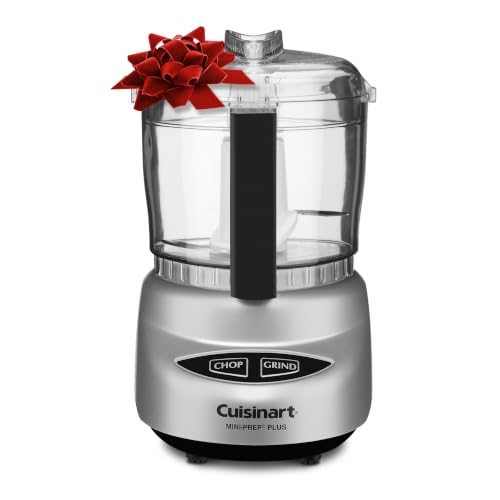
The Cuisinart Mini Prep is a 3-cup, 24-ounce mini processor whose auto-reversing SmartPower blade chops with one direction of spin and grinds with the other, in a brushed chrome body. It is the archetype of the small processor: a machine bought for the jobs that happen daily rather than weekly, the garlic and herb mince for tonight’s sauce, a handful of nuts for a salad, a quick dressing emulsified in the bowl it will be served from. Its limit is written on the box, three cups, and within that limit the design is honest and proven. For a one- or two-person household, this is the size class that actually gets used, washed and used again.
Judged against the small core of this keyword, the Cuisinart Mini Prep Processor, 3-Cup (24 oz) must be described exactly: it is a 3-cup (24 oz) mini chopper with an auto-reversing SmartPower blade that chops in one direction and grinds in the other, in brushed chrome. Where the bowl is a true mini, this review weighs daily usability, texture control and clean-up. Where the bowl is full-size, the review says so in its first breath and then judges the machine fairly as the larger processor it is, because a good big processor bought knowingly beats a small one bought by mistake.
There is a second honesty in the Cuisinart Mini Prep Processor, 3-Cup (24 oz) worth naming. Small processors reward a different technique: ingredients cut to even, modest pieces, liquid kept below the bowl’s working line, and pulse used as the main control rather than a switch left running. A mini asked to behave like a full-size machine, overloaded and run continuously, produces the uneven, half-pureed results that give the class a bad name it does not deserve.
Best for: one- and two-person households doing daily small chops, grinding and dressings / Not suited for: families needing slicing discs or family-size batches
Check on Amazon for the current listing, configuration and latest price.
Hamilton Beach Food Processor 70730, 10-Cup
Badge: Prose-Only: Largest Bowl
Strengths
- The built-in bowl scraper saves the stop-scrape-restart cycle
- A 10-cup bowl is the largest capacity in this pool
- Covers slicing and shredding as well as chopping and pureeing
Trade-offs
- Ten cups is a full family-size bowl, the opposite of this keyword’s small core
- The bowl scraper helps, but the bowl is still a large wash-up job for a small task
- Too much machine for a garlic-and-herbs workload
Key specifications (from the verified listing)
- Capacity: 10 cups
- Functions: slice, shred, mince and puree
- Feature: easy-clean bowl scraper built in
- Model: 70730
- Finish: stainless steel styling
The Hamilton Beach 70730 is a 10-cup food processor and vegetable chopper for slicing, shredding, mincing and pureeing, distinguished by an easy-clean bowl scraper that sweeps the bowl wall while the machine runs. That scraper is a genuinely thoughtful answer to the processor’s oldest annoyance, food riding above the blade line while the bottom over-processes, and the 10-cup bowl makes this the batch-cooking entry in the pool, the one that grates a block of cheese or slices a bag of onions in a single session. Its quality as a processor is not in question here. Its size is: ten cups is the largest bowl in this guide, and a guide to small processors has to say so plainly.
Judged against the small core of this keyword, the Hamilton Beach Food Processor 70730, 10-Cup must be described exactly: it is a 10-cup food processor and vegetable chopper for slicing, shredding, mincing and pureeing, with an easy-clean bowl scraper and stainless steel finish. Where the bowl is a true mini, this review weighs daily usability, texture control and clean-up. Where the bowl is full-size, the review says so in its first breath and then judges the machine fairly as the larger processor it is, because a good big processor bought knowingly beats a small one bought by mistake.
There is a second honesty in the Hamilton Beach Food Processor 70730, 10-Cup worth naming. Small processors reward a different technique: ingredients cut to even, modest pieces, liquid kept below the bowl’s working line, and pulse used as the main control rather than a switch left running. A mini asked to behave like a full-size machine, overloaded and run continuously, produces the uneven, half-pureed results that give the class a bad name it does not deserve.
Best for: batch cooks wanting the pool’s largest bowl and a bowl scraper / Not suited for: small households and anyone shopping for a compact machine
Prose-only pick: this model is reviewed in full above but carries no Amazon link in this guide, because it does not match this keyword’s core brief. The reason is recorded in this article’s sources file.
BLACK+DECKER Food Processor, 8-Cup, 450W
Badge: Prose-Only: Mid-Size All-Rounder
Strengths
- The broadest attachment list in this pool, five named jobs
- 450W is honest mid-range power for an 8-cup bowl
- BLACK+DECKER is a familiar, widely serviced appliance brand
Trade-offs
- An 8-cup bowl is mid-to-full size, not a small processor
- 450W asks for sensible batch sizes with very hard foods
- A multi-attachment kit is more parts to store and wash
Key specifications (from the verified listing)
- Capacity: 8-cup bowl
- Power: 450W
- Blade: stainless steel blade
- Attachments: shred, slice, mince, grind and puree
The BLACK+DECKER 8-cup food processor pairs a stainless steel blade and 450W motor with attachments to shred, slice, mince, grind and puree, the broadest named job list in this pool. It is the value-shaped all-rounder of the group: a household that wants one machine to cover the weekly prep roster without stepping up to the premium tier will find its specification persuasive, and the brand’s service network is a practical plus. In this guide, though, it is measured against one word, small, and an 8-cup bowl with a full attachment kit does not meet it. It is reviewed in full so a reader who relaxes the size requirement can still judge it fairly.
Judged against the small core of this keyword, the BLACK+DECKER Food Processor, 8-Cup, 450W must be described exactly: it is an 8-cup food processor and vegetable chopper with a stainless steel blade and 450W of power, with attachments to shred, slice, mince, grind and puree. Where the bowl is a true mini, this review weighs daily usability, texture control and clean-up. Where the bowl is full-size, the review says so in its first breath and then judges the machine fairly as the larger processor it is, because a good big processor bought knowingly beats a small one bought by mistake.
There is a second honesty in the BLACK+DECKER Food Processor, 8-Cup, 450W worth naming. Small processors reward a different technique: ingredients cut to even, modest pieces, liquid kept below the bowl’s working line, and pulse used as the main control rather than a switch left running. A mini asked to behave like a full-size machine, overloaded and run continuously, produces the uneven, half-pureed results that give the class a bad name it does not deserve.
Best for: households wanting one mid-size machine with five attachment jobs / Not suited for: buyers who need a genuinely small footprint and bowl
Prose-only pick: this model is reviewed in full above but carries no Amazon link in this guide, because it does not match this keyword’s core brief. The reason is recorded in this article’s sources file.

Cuisinart Core Custom 4-Cup Mini Chopper MCH-4
Badge: Best for Real Meals in Mini Form
Strengths
- Four cups is the sweet spot for small households that cook real meals
- The auto-reversing blade covers chopping and grinding in one unit
- Dishwasher-safe parts make a small machine genuinely low-effort
Trade-offs
- Still a chopper class machine; no slicing or shredding discs
- Four cups will not take a family soup base in one load
- White finish shows turmeric and tomato stains more than dark finishes
Key specifications (from the verified listing)
- Capacity: 4-cup mini bowl
- Blade: auto-reversing stainless steel SmartPower blade
- Modes: chop and grind
- Care: dishwasher-safe parts
- Model: MCH-4
- Finish: white / stainless steel
The Cuisinart Core Custom MCH-4 is a 4-cup mini chopper with an auto-reversing stainless steel SmartPower blade for chopping and grinding, and dishwasher-safe parts, in a white and stainless finish. Four cups is the considered size in the mini class: enough bowl for a proper batch of pesto, a salsa for four, or the chopped base of a weeknight curry, in a body that still stores like a mini. The Core Custom line is Cuisinart’s modern take on its own mini formula, and the dishwasher-safe parts matter more than they sound, because a small processor only earns its counter space if cleaning it is never a reason to reach for a knife instead.
Judged against the small core of this keyword, the Cuisinart Core Custom 4-Cup Mini Chopper MCH-4 must be described exactly: it is a 4-cup mini chopper that chops and grinds with an auto-reversing stainless steel SmartPower blade, with dishwasher-safe parts, in white and stainless steel. Where the bowl is a true mini, this review weighs daily usability, texture control and clean-up. Where the bowl is full-size, the review says so in its first breath and then judges the machine fairly as the larger processor it is, because a good big processor bought knowingly beats a small one bought by mistake.
There is a second honesty in the Cuisinart Core Custom 4-Cup Mini Chopper MCH-4 worth naming. Small processors reward a different technique: ingredients cut to even, modest pieces, liquid kept below the bowl’s working line, and pulse used as the main control rather than a switch left running. A mini asked to behave like a full-size machine, overloaded and run continuously, produces the uneven, half-pureed results that give the class a bad name it does not deserve.
Best for: small households that cook real meals and want the roomiest mini bowl / Not suited for: cooks needing slicing and shredding discs
Check on Amazon for the current listing, configuration and latest price.

KitchenAid 3.5 Cup Food Chopper KFC3516, Empire Red
Badge: Best Compact Design
Strengths
- Two speeds plus pulse give more texture control than most minis
- The cord wrap keeps a small machine tidy in a drawer or on the counter
- KitchenAid’s chopper line is a long-running, well-supported design
Trade-offs
- Empire Red is a statement finish that will not suit every kitchen
- A chopper, not a disc processor: no slicing or shredding
- The 3.5-cup bowl still caps batch size for bigger households
Key specifications (from the verified listing)
- Capacity: 3.5-cup work bowl
- Blade: stainless steel multi-purpose blade
- Controls: 2 speeds plus pulse
- Storage: easy cord wrap
- Care: dishwasher-safe work bowl
- Model: KFC3516ER
- Finish: Empire Red
The KitchenAid 3.5 Cup Food Chopper KFC3516, in Empire Red, combines a dishwasher-safe work bowl and stainless steel multi-purpose blade with two speeds plus pulse and an easy cord wrap. The two-speed-plus-pulse control is its distinguishing detail in the mini class, where many rivals offer a single button: low speed and pulse give the cook a fighting chance at a coarse, even chop instead of the mini class’s usual slide toward puree. The cord wrap sounds trivial until a small machine has to live in a drawer, where a loose cord tangles with everything it touches. In Empire Red it is also the one pick here that treats a small appliance as a design object.
Judged against the small core of this keyword, the KitchenAid 3.5 Cup Food Chopper KFC3516, Empire Red must be described exactly: it is a 3.5-cup food chopper with a dishwasher-safe work bowl, a stainless steel multi-purpose blade, two speeds plus pulse, and an easy cord wrap, in Empire Red. Where the bowl is a true mini, this review weighs daily usability, texture control and clean-up. Where the bowl is full-size, the review says so in its first breath and then judges the machine fairly as the larger processor it is, because a good big processor bought knowingly beats a small one bought by mistake.
There is a second honesty in the KitchenAid 3.5 Cup Food Chopper KFC3516, Empire Red worth naming. Small processors reward a different technique: ingredients cut to even, modest pieces, liquid kept below the bowl’s working line, and pulse used as the main control rather than a switch left running. A mini asked to behave like a full-size machine, overloaded and run continuously, produces the uneven, half-pureed results that give the class a bad name it does not deserve.
Best for: small kitchens wanting speed control, tidy storage and a design-led finish / Not suited for: cooks who need discs, or who batch-cook for a family
Check on Amazon for the current listing, configuration and latest price.
Comparison Table
| Pick | Badge | Key specifications | Best for |
|---|---|---|---|
| Ninja Professional Plus Food Processor BN601, 9-Cup | Prose-Only: Full-Size Powerhouse | Capacity: 9-cup bowl; Presets: Auto-iQ programs for chop, slice, puree and dough | families wanting preset-driven, full-size processing power |
| Cuisinart Mini Prep Processor, 3-Cup (24 oz) | Best Overall Small Processor | Capacity: 3-cup / 24 oz work bowl; Blade: auto-reversing SmartPower blade | one- and two-person households doing daily small chops, grinding and dressings |
| Hamilton Beach Food Processor 70730, 10-Cup | Prose-Only: Largest Bowl | Capacity: 10 cups; Functions: slice, shred, mince and puree | batch cooks wanting the pool’s largest bowl and a bowl scraper |
| BLACK+DECKER Food Processor, 8-Cup, 450W | Prose-Only: Mid-Size All-Rounder | Capacity: 8-cup bowl; Power: 450W | households wanting one mid-size machine with five attachment jobs |
| Cuisinart Core Custom 4-Cup Mini Chopper MCH-4 | Best for Real Meals in Mini Form | Capacity: 4-cup mini bowl; Blade: auto-reversing stainless steel SmartPower blade | small households that cook real meals and want the roomiest mini bowl |
| KitchenAid 3.5 Cup Food Chopper KFC3516, Empire Red | Best Compact Design | Capacity: 3.5-cup work bowl; Blade: stainless steel multi-purpose blade | small kitchens wanting speed control, tidy storage and a design-led finish |
How to Choose the Right Option for Best Small Food Processors
Decide what small has to mean in your kitchen
Small processors divide into one class with two tempers. The three-to-four-cup minis in this guide chop, grind and puree the small jobs of daily cooking, and they do it in bodies that store anywhere. What they do not do is slice and shred with discs or swallow a family batch. If your weekly reality is sauces, dips, marinades, baby food and chopped aromatics, a mini is not the compromise option, it is the correct one. If it is coleslaw for eight and grated cheese by the block, you are shopping for the prose-only class instead, and this guide shows those machines honestly too.
Match bowl size to your real batch, not your biggest one
The right mini is sized to the batch you make most often, not the largest you can imagine. A 3-cup bowl is perfect for a couple’s salsa and useless for a freezer-cooking Sunday; the 4-cup Core Custom stretches to a family pesto while staying a mini. Overfilling any small bowl is the classic error: food above the blade line rides uncut while the bottom liquefies. Buy for the eightieth-percentile batch and accept two loads on the rare biggest day.
Chopping control is the mini class’s real specification
Listings rarely advertise it, but texture control is what separates the minis. An auto-reversing blade, as on both Cuisinarts here, folds grinding into the same unit. Two speeds plus pulse, as on the KitchenAid, give the cook a coarse chop option instead of an express ride to puree. Judge a mini by how it promises control, button layout, pulse access, blade design, because that is what you will feel in every bowl of salsa.
Clean-up decides whether small stays useful
A mini’s entire value proposition is frequency, and frequency dies at the sink. Dishwasher-safe bowls and blades, as several picks here offer, are therefore a core specification rather than a footnote. Count the parts you will wash after a garlic mince: bowl, lid, blade. If the honest answer makes you reach for a knife instead, the machine was wrong however good its motor is. The size comparison across classes is developed in Best Prices On 8 Or 10 Cup Food Processors.
Know when the answer is not small at all
Some kitchens genuinely need the prose-only class: weekly meal-preppers, large families, anyone whose processor earns its place slicing and shredding in volume. There is no virtue in forcing those workloads into a 3-cup bowl. Read the prose-only reviews as full reviews, because they are; they simply carry no links in a guide whose keyword they do not match.
How to Use a Small Food Processor Well
Technique matters more in a mini than in a big machine. Cut ingredients into even, roughly one-inch pieces before they go in, so the blade meets uniform resistance. Keep the bowl at or below its working fill, especially with wet ingredients, and use pulse in short bursts, checking texture between them, because a mini moves from chopped to pureed in seconds. For grinding, spices, coffee-adjacent jobs and breadcrumbs, use the blade’s grind direction where the design offers one, and work in the small quantities the bowl was built for.
Cleaning is part of the technique. Rinse the bowl and blade immediately after use, before garlic and herb oils dry onto the plastic, and use the dishwasher where the listing confirms the parts are safe. Dry the blade fully before storage; a small blade stored damp in a closed bowl is the class’s one avoidable failure. Store the cord wrapped where the design provides for it, and keep the blade’s edge guarded in a drawer, because mini blades are handled far more often than big ones.
Problem: the top of the bowl is chunky while the bottom is soup -> the bowl was overfilled or the pieces were uneven; work in two smaller loads and cut evenly first. Problem: herbs turn to green paste -> they went in wet and ran too long; dry herbs thoroughly and pulse briefly. Problem: the motor strains and smells warm -> the load is too hard or too large for a mini; halve it, and let dense jobs like nut butter rest between bursts.
Mini Chopper Versus Small Full Processor: Drawing the Line
The market blurs a line this guide keeps bright. A mini chopper, all three linked picks here, is a blade-in-a-small-bowl machine: it chops, minces, grinds and purees, and that is the whole repertoire. A small full processor, which this pool does not contain in verified form, adds a feed tube and discs for slicing and shredding in a bowl of perhaps five to seven cups. Shoppers who need sliced potatoes or shredded cabbage from a compact machine are shopping for that second class, and none of the linked minis should be bought expecting it.
Knowing which side of the line you are on prevents the commonest small-processor disappointment, the buyer who wanted a compact slicing machine and received an excellent chopper. Read the function list, not the product name: if discs are not named, they are not included. Readers who decide they do need discs in a modest bowl can start from Best Prices On 8 Cup Food Processors, where the mid-size class begins.
The Daily-Use Argument for Going Small
The strongest case for a mini is not price or storage, it is frequency. Cooking improves when prep friction falls: the cook who can mince garlic, ginger and chilli in twenty seconds seasons more boldly, makes fresh salsa instead of opening a jar, and turns leftover herbs into pesto instead of compost. A full-size processor imposes a wash-up tax on every one of those impulses; a mini, rinsed in a minute, does not. That is why experienced small households often own a mini and no other processor at all.
The counter-argument is equally real and this guide’s prose-only reviews embody it: households that cook in volume get their frequency from a big bowl instead, grating and slicing in single loads. The honest question is which tax your kitchen would rather pay, the mini’s small batches or the big machine’s big wash-up. Your last month of cooking answers it more reliably than any review.
What Small Processors Do Better Than Big Ones
Emulsions are the mini’s quiet speciality. A small bowl keeps a vinaigrette or mayonnaise in constant blade contact, where a large bowl lets a small quantity fling to the walls and never come together. The same geometry serves pesto, chimichurri and romesco, sauces whose quantities are naturally mini-sized and whose texture depends on everything passing the blade evenly. Several of the linked picks make this their daily work, and it is work a 10-cup bowl does measurably worse.
Nut and crumb jobs follow the same logic. A handful of nuts for a salad, breadcrumbs from a stale heel of bread, a spice-adjacent grind of dried chillies: all are two-minute mini jobs and ten-minute annoyances in a machine built for volume. Owning the small tool converts these from recipes skipped to habits kept, which is the real return on a mini’s modest counter footprint.
Storage, Counters and the Small-Kitchen Reality
Small processors are bought by small kitchens, so storage deserves the same rigour as capacity. The linked minis here store in a deep drawer or a cupboard corner; the KitchenAid’s cord wrap exists precisely because drawer storage tangles loose cords into every neighbouring utensil. Measure your intended spot before ordering any machine, bowl height with the lid on is the dimension that decides whether a cupboard door closes.
Counter permanence is the other model: a mini left out gets used, and the brushed chrome and Empire Red finishes in this pool are designed to be left out without shaming a kitchen. Decide which model is yours, drawer or counter, and let it steer the pick: drawer cooks should prize the cord wrap and the smallest body, counter cooks the finish they will look at daily.
Sizing a Mini to a Household of One, Two or Four
A household of one should buy the smallest honest bowl, the 3-cup class, because its batches are dressings, single salsas and chopped aromatics for one pan. A household of two lives in the same class but uses it twice as often, which argues for the dishwasher-safe parts that protect the habit. A household of four that cooks sauces and bases at home scale is the 4-cup Core Custom’s natural home, the one mini here sized for a family pesto or a curry base without a second load.
Households larger than four should read the prose-only reviews without embarrassment. The correct processor for a family of six is a family processor, and this guide’s refusal to link one under a small keyword is a labelling discipline, not a judgement that big machines are worse. Several of them are excellent; they are simply excellent at a different size, and the reader who needs that size now has three full reviews to choose from.
Blade Care and the Small Parts That Matter
Mini blades are handled constantly, washed constantly and stored in drawers, so their care decides the class’s longevity. Wash the blade separately rather than leaving it in the bowl, dry it before storage, and never reach blindly into a soapy sink where a mini blade is hiding; the class’s one real safety rule is that small blades are easy to forget and sharp enough to remind you. A blade stored in its bowl with the lid on stays guarded and findable.
The bowls themselves age by scratching and staining, turmeric and tomato being the usual authors. A paste of baking soda and water, left briefly and rinsed, handles most staining without harsh abrasives that cloud the plastic further. None of this is specialised knowledge, but in a machine bought for daily use, small maintenance done weekly is what separates a five-year appliance from a one-year disappointment.
When a Mini Is the Second Processor, Not the Only One
Many serious kitchens run two machines: a full-size processor for weekend volume and a mini for the daily twenty jobs that are too small for it. In that architecture the mini is not a compromise at all, it is the specialist that keeps the big machine’s wash-up tax off weekday cooking. The linked picks here were chosen with that role in mind as much as the solo role, because a mini that only made sense alone would serve half its real market.
If that is your kitchen, the choice between the three linked minis turns on the gap in your big machine’s life: buy the 4-cup if your daily overflow is sauces and bases, the 3-cup if it is aromatics and dressings, and the KitchenAid if counter appearance matters in an open-plan space where the mini will live in view.
Common Buying Mistakes
- Buying a 9- or 10-cup machine for a small-processor workload and never using it.
- Expecting a mini chopper to slice and shred when no discs are named in its listing.
- Overfilling a small bowl, then blaming the blade for uneven results.
- Running a mini continuously instead of pulsing, and pureeing everything by default.
- Ignoring dishwasher-safety when frequency of use is the whole point of the purchase.
- Storing a damp blade in a closed bowl and shortening its life.
Final Recommendation
For most small households, the Cuisinart Core Custom 4-Cup is the first pick: the roomiest true mini bowl in the pool, an auto-reversing blade that chops and grinds, and dishwasher-safe parts that protect the daily-use habit. The original Mini Prep 3-cup remains the pick for the tightest storage and the smallest households, and the KitchenAid 3.5-cup is the choice for cooks who want two speeds plus pulse and a finish worth leaving on the counter.
The three prose-only machines stay in the guide deliberately: if your reflection while reading is that your batches are bigger than any mini, the Hamilton Beach’s bowl scraper, the Ninja’s presets and the BLACK+DECKER’s attachment range are reviewed in full above, unlinked, so the comparison is available without mislabelling their size. Readers continuing into the mid-size class can start from Best Prices On Cuisinart Food Processors.
Ready to decide? Compare Cuisinart Mini Prep Processor, 3-Cup (24 oz), Cuisinart Core Custom 4-Cup Mini Chopper MCH-4 and KitchenAid 3.5 Cup Food Chopper KFC3516, Empire Red on Amazon to check the latest price on Amazon and the current configuration of each.
Frequently Asked Questions
What size counts as a small food processor?
In this guide, the mini class: bowls of roughly three to four cups, in bodies that store in a drawer or a counter corner. Eight cups and above is mid-to-full size, which is why the 8-, 9- and 10-cup picks here are reviewed prose-only.
Can a small processor replace a full-size one?
For households whose processing is chopping, grinding, mince and puree work in small batches, yes. If you slice and shred in volume, or batch-cook for a family, a mini complements a big machine rather than replacing it.
Do small processors slice and shred?
The linked minis here do not; they are chopper-class machines and their listings name no discs. If slicing and shredding matter, shop the mid-size class and confirm discs are named in the listing before ordering.
Why are three picks not linked in this guide?
Because their bowls, 8, 9 and 10 cups, are not small, and this guide links only picks that match the keyword’s core requirement. They are reviewed in full as prose-only entries, with the reason recorded for each one.
How do I stop a mini from turning everything into puree?
Pulse in short bursts and check between them, cut ingredients evenly, and keep wet loads modest. The KitchenAid’s two speeds plus pulse and the Cuisinarts’ controlled chopping exist for exactly this.
Is a 4-cup mini big enough for a family?
For sauces, salsas, pesto and chopped bases for four, generally yes. For soup bases and freezer batches, expect two loads, or accept that your household is a prose-only, full-size customer.