Disclosure: topratedkitchenware.com is reader-supported. When you buy through links on our site, we may earn an affiliate commission from Amazon and other retailers, at no extra cost to you.
Where to buy
Shopping for best toasters that knob dail won t be hot? Start with the shortlist below — each name links to its current Amazon listing where the pick is linked, so you can check the latest price and availability in one click. Picks marked prose-only are reviewed in full further down but carry no buying link, for reasons the reviews explain honestly. Read the full guide ↓
- BLACK+DECKER 2-Slice Toaster with Extra-Wide Slots — Best for Bagels and Thick Slices (reviewed below, prose-only)
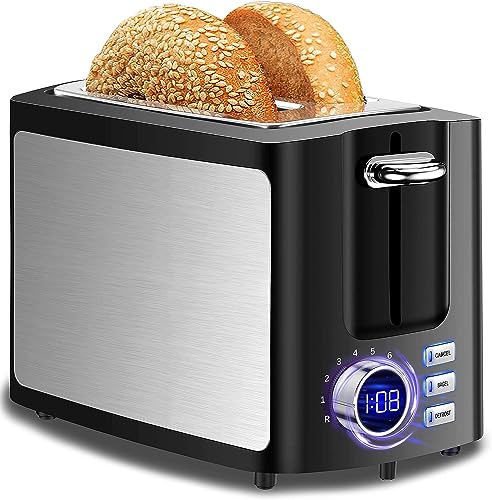
- Hommater 2-Slice Wide Slot Toaster with LCD Display — Most Precise Shade Control (reviewed below, prose-only)
- Amazon Basics 2-Slice Toaster — Best Budget Pick (reviewed below, prose-only)
- Elite Gourmet 2-Slice Cool-Touch Toaster (ECT1027B) — Best Cool-Touch Pick — Our Recommendation
- Hamilton Beach Extra-Wide Slot 2-Slice Toaster (22634) — Best for Easy Retrieval (reviewed below, prose-only)
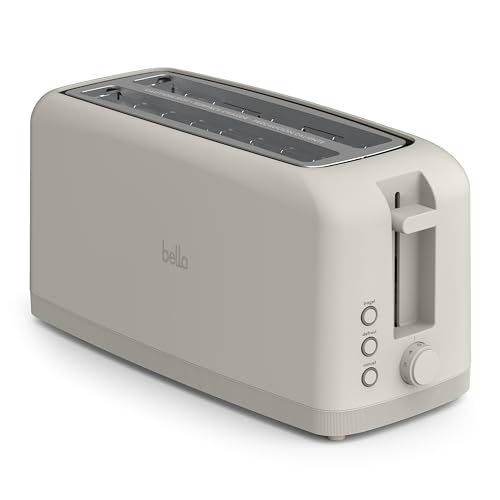
- bella Fits-Anywhere Slim Toaster, 4-Slice — Best Slim 4-Slice Design (reviewed below, prose-only)
If you have ever grabbed a toaster dial mid-cycle and pulled your hand back, you already understand the search behind best toasters that knob dail won t be hot: you want a toaster whose controls — and ideally its whole exterior — stay comfortable to touch while it works. It is a more reasonable demand than it sounds. Toasters concentrate serious heat in a small box, that heat migrates into housings and metal controls, and the dial is the one part you are guaranteed to touch, often while steadying the machine with your other hand.
This guide treats the question honestly. Among the six verified toasters in our pool, exactly one states a cool-touch design in its confirmed product data, so that model is the linked recommendation here. The other five are still reviewed in full below — several are excellent toasters — but they are presented prose-only, because their verified data makes no claim about how hot their controls or housings get, and we will not invent one. Along the way we explain why controls heat up, which materials and layouts resist it, and how to judge any toaster on this point before you buy. If your shortlist is still wider than this page, our comparison of Best Toasters On Sale applies the same standards to a neighbouring search.
Key Takeaways
- Only one pick in this pool — the Elite Gourmet ECT1027B — carries a verified cool-touch claim, so it is the linked recommendation for this specific concern.
- Control heat comes from the housing: when the body warms up, a metal dial mounted on it warms up too, so cool-touch construction matters more than dial shape.
- Plastic or insulated controls on a cool-touch body are the safest combination; bare metal dials on thin steel housings are the riskiest.
- The other five picks are reviewed prose-only because their verified data is silent on control heat — silence is not a failure, but it is not a promise either.
- Whatever you buy, give any toaster clearance on all sides; a machine wedged under a cabinet traps heat and runs hotter everywhere, controls included.
In this guide
Quick Picks
| Toaster | Badge | Why it stands out | Listing |
|---|---|---|---|
| BLACK+DECKER 2-Slice Toaster with Extra-Wide Slots | Best for Bagels and Thick Slices | Extra-wide slots swallow bagels, Texas toast and thick artisan slices without forcing or trimming | Prose-only — see review |
| Hommater 2-Slice Wide Slot Toaster with LCD Display | Most Precise Shade Control | Nine shade settings offer the finest browning granularity in this group | Prose-only — see review |
| Amazon Basics 2-Slice Toaster | Best Budget Pick | Extra-wide slots handle bagels and thick slices that defeat standard slots | Prose-only — see review |
| Elite Gourmet 2-Slice Cool-Touch Toaster (ECT1027B) | Best Cool-Touch Pick — Our Recommendation | Cool-touch housing is the standout safety trait — the exterior is designed to stay comfortable to touch | Check on Amazon |
| Hamilton Beach Extra-Wide Slot 2-Slice Toaster (22634) | Best for Easy Retrieval | Toast Boost lifts small slices and muffin halves higher, so fingers stay away from hot slots | Prose-only — see review |
| bella Fits-Anywhere Slim Toaster, 4-Slice | Best Slim 4-Slice Design | Four-slice capacity doubles the throughput of every other pick in this group | Prose-only — see review |
How These Picks Were Chosen
Every toaster in this guide comes from a verified product pool: each model was cross-checked against current listing data, and the specifications quoted in the reviews — slot dimensions, shade counts, functions, power — are taken only from that confirmed data. Where a specification is not confirmed, the review says so rather than guessing. That discipline matters in a category where listings love vague adjectives: ‘wide’ means nothing until a slot dimension is attached to it, and a function only counts if the model in front of you actually lists it.
The comparison itself weighed the things that decide daily satisfaction. Slot fit came first, because bread that sits properly browns evenly and bread that is squeezed cannot. Shade control came next — not just how many steps a dial offers, but whether the steps give usable separation between light and dark. Then came the supporting cast: retrieval height for small items, crumb-tray design, safety features such as auto shutoff and cool-touch housings, and the honesty of each model’s trade-offs. Readers comparing neighbouring searches will find the same method applied in our guide to Best Toasters Online, so the shortlists can be read side by side.
A note on method and limits: this is research-led guidance, built from verified specifications, manufacturer information and the accumulated pattern of owner experience with each design — not a claim that we ran a test kitchen. Where judgement enters, we show it: every review names an honest limitation, every pick carries a ‘not suited for’ line, and the final recommendation explains who should overrule it. Prices are deliberately not printed, because they change; each linked pick invites you to check the current figure on Amazon instead.
The 6 Best toasters that knob dail won t be hot — Detailed Reviews
BLACK+DECKER 2-Slice Toaster with Extra-Wide Slots
Badge: Best for Bagels and Thick Slices
Strengths
- Extra-wide slots swallow bagels, Texas toast and thick artisan slices without forcing or trimming
- Seven shade settings give a wide, usable range from barely warmed to deeply browned
- The extra lift lever raises small items like English muffins high enough to grab safely
Trade-offs
- Only two slots, so breakfast for a crowd runs in batches
- No defrost or reheat function is listed, so frozen bread needs a shade bump and a watchful eye
- The wide slots can let very thin slices lean, which may brown one face faster than the other
At a glance:
- Format: 2-slice pop-up toaster
- Slots: extra-wide, sized for bagels and thick bread
- Shade settings: 7
- Functions: bagel mode
- Retrieval: extra lift lever for small slices
- Cleaning: removable crumb tray
The BLACK+DECKER earns its place the simple way: it is built around the bread people actually eat. The extra-wide slots are the headline, because bagels, thick-cut bakery loaves and frozen waffles all drop in without the squeeze-and-shove routine that narrower toasters demand. Bagel mode concentrates the heat where a bagel needs it, and the seven-step shade dial covers the full spread of household preferences, from the person who wants warm and pale to the person who wants a proper crunch. In everyday terms this is a toaster that removes friction from the morning rather than adding features to manage.
The detail owners tend to appreciate most is the extra lift lever. Short items — muffin halves, small end pieces, mini bagels — sit deep in any toaster, and fishing them out with fingertips near hot elements is how breakfasts go wrong. The lift raises them clear. The removable crumb tray keeps the counter and the toaster’s interior tidier with a quick slide-out shake. The honest limitation is throughput: two slots is two slots, and there is no listed defrost program, so frozen slices are a manual adjustment rather than a button press. On the specific question of hot controls, its verified data makes no cool-touch claim, so judge it as a strong general toaster rather than a confirmed cool-running one.
Ownership, day to day, is where this design quietly wins people over. The crumb tray comes out without a fight, the wide slots mean fewer torn bagel halves, and the lift lever becomes one of those features you miss instantly when you use someone else’s toaster. It does not ask you to learn anything, join anything or update anything; you set the dial, and breakfast happens. For households whose mornings are already complicated enough, that absence of fuss is a feature in its own right, and it is a large part of why this model anchors so many of the shortlists in this wave.
Best for: bagel lovers and thick-slice households that toast two portions at a time / Not suited for: large families who need four slices at once
Hommater 2-Slice Wide Slot Toaster with LCD Display
Badge: Most Precise Shade Control
Strengths
- Nine shade settings offer the finest browning granularity in this group
- The LCD countdown shows exactly how long is left, ending the guess-and-check routine
- A full function set — bagel, defrost, cancel and reheat — covers frozen and second-round toast properly
Trade-offs
- The display and electronics add complexity that a purely mechanical toaster avoids
- Nine shades is more precision than most households will ever use beyond two favourite settings
- Wide slots are still a two-slice format, so family breakfasts queue up
At a glance:
- Format: 2-slice pop-up toaster
- Slots: wide slot design
- Display: LCD digital countdown timer
- Shade settings: 9
- Functions: bagel, defrost, cancel, reheat
The Hommater is the control seeker’s pick, in the best sense. Where most toasters in this group offer six or seven shade steps, it offers nine, and it pairs them with an LCD countdown timer that tells you precisely where the cycle stands. That combination matters more than it sounds: repeatability is the quiet frustration of toasting, and a visible countdown plus fine-grained settings is how you land on the same result every morning instead of re-learning a vague dial. The function list is complete, too — bagel, defrost, cancel and reheat are all present, so frozen bread and a second warming pass are handled by design rather than improvisation.
In daily use this is the toaster for the household member who has an exact preference and wants it honoured. The wide slots take bagels and thicker slices, and the reheat function rescues toast that sat while the eggs finished. The trade-off is philosophy as much as hardware: a display-driven appliance has more to go wrong over a long life than a spring and a dial, and buyers who just want toast, fast, may never touch most of the nine settings. If precision is what you value most in a toaster, though, nothing else in this pool offers as much of it. On the specific question of hot controls, its verified data makes no cool-touch claim, so judge it as a strong general toaster rather than a confirmed cool-running one.
There is a small ritual worth adopting with this model: spend the first week deliberately finding your numbers. Try your bread a step apart on consecutive mornings, note where the countdown lands for your perfect slice, and from then on the display turns that knowledge into a guarantee. Owners who do this tend to become quietly evangelical about countdown toasting, because the alternative — hovering, peering into slots, cancelling early out of nerves — disappears from the morning entirely. It is a different relationship with a toaster than a dial offers: less feel, more certainty.
Best for: precision seekers who want a countdown and fine shade steps / Not suited for: buyers who prefer the simplest possible mechanical controls
Amazon Basics 2-Slice Toaster
Badge: Best Budget Pick
Strengths
- Extra-wide slots handle bagels and thick slices that defeat standard slots
- Dedicated defrost, cancel and bagel buttons cover the three jobs owners actually use
- Cord wrap and a removable crumb tray make it tidy to store and simple to clean
Trade-offs
- Six browning settings is the joint-fewest here, so mid-shade fine-tuning is coarser
- The black and silver finish is functional rather than a design statement
- Two-slice capacity means back-to-back rounds for bigger households
At a glance:
- Format: 2-slice pop-up toaster
- Slots: extra wide, sized for bagels
- Browning settings: 6
- Buttons: defrost, cancel, bagel
- Power: 900W
- Extras: removable crumb tray, cord wrap
- Finish: black and silver
The Amazon Basics toaster is the straightforward value play in this pool: extra-wide slots, six browning settings, and the three buttons that matter — defrost, cancel and bagel — without decorative extras inflating the design. At 900 watts it sits in the normal power range for a two-slice toaster, heating quickly enough for weekday mornings. The extra-wide slots deserve emphasis because they are what separates a useful budget toaster from a frustrating one: bagels and thick bakery slices fit properly, so browning stays even instead of scorching the squeezed edges.
Practical touches round it out. The removable crumb tray empties in seconds, and the cord wrap keeps the counter run short and neat, which small kitchens appreciate every single day. Where it asks for compromise is refinement: six shade steps means the difference between adjacent settings is noticeable, so your perfect shade may live between two clicks, and the finish is plain workwear rather than countertop jewellery. For a dorm, a first apartment, a rental, or a second toaster that simply has to work, that trade is exactly right. On the specific question of hot controls, its verified data makes no cool-touch claim, so judge it as a strong general toaster rather than a confirmed cool-running one.
What this model understands is that most toaster dissatisfaction is not about browning at all — it is about the fifth minute of ownership, repeated daily: the cord trailing across the counter, the crumbs that never quite leave, the bagel that had to be forced. The cord wrap, the tray and the wide slots are answers to exactly those irritations, chosen over decorative upgrades. In a small kitchen, or a second home, or a student room where the toaster shares a counter with everything else a person owns, that priorities list reads very sensibly indeed.
Best for: budget-minded buyers, dorms and first kitchens that still toast bagels / Not suited for: design-led kitchens or shade perfectionists

Elite Gourmet 2-Slice Cool-Touch Toaster (ECT1027B)
Badge: Best Cool-Touch Pick — Our Recommendation
Strengths
- Cool-touch housing is the standout safety trait — the exterior is designed to stay comfortable to touch
- 1.25-inch extra-wide slots are explicitly sized for bagels and thick bread
- Six shades cover the everyday range without an overwhelming dial
Trade-offs
- Six shades is coarser control than the seven- and nine-step rivals here
- No defrost or reheat button is listed in the verified product data
- The black finish shows crumbs and fingerprints more readily than lighter colours
At a glance:
- Format: 2-slice pop-up toaster
- Housing: cool-touch exterior
- Slots: 1.25-inch extra-wide
- Shades: 6
- Functions: cancel, plus bagel and thick-bread suitability
- Colour: black
- Model: ECT1027B
The Elite Gourmet ECT1027B leads with the feature its name promises: a cool-touch exterior. Toaster housings get hot — sometimes surprisingly hot — and in a kitchen with children, crowded counters or a toaster parked beside the fruit bowl, an exterior designed to stay comfortable to touch is a genuine everyday safety advantage rather than a marketing garnish. It is also the trait that matters when you steady the toaster with one hand while working the lever with the other, a move people make far more often than manuals admit.
Beyond the housing, the fundamentals are right: 1.25-inch extra-wide slots take bagels and thick bread, six shade settings span the normal range, and a cancel function lets you stop a cycle that is heading too dark. It keeps the brief simple, which suits households that want safety and competence without a control panel to study. The compromises are control depth — six shades cannot match the nine-step precision elsewhere in this group — and a shorter listed function set, with no defrost button in the verified data, so frozen bread is a manual shade adjustment.
Think about where toasters actually live: beside the kettle, under the cupboards, within reach of whoever is making breakfast — including, in many homes, children old enough to toast but young enough to grab first and think later. A housing designed to stay cool changes the risk profile of that whole corner of the kitchen. It also changes the adult experience more than expected, because steadying a toaster while pressing its lever is a two-handed job, and doing it against a hot shell is a small daily unpleasantness most people simply accept until they no longer have to.
Best for: families and anyone who prioritises a cool-touch exterior / Not suited for: buyers who want maximum shade steps or a defrost program
Hamilton Beach Extra-Wide Slot 2-Slice Toaster (22634)
Badge: Best for Easy Retrieval
Strengths
- Toast Boost lifts small slices and muffin halves higher, so fingers stay away from hot slots
- Auto shutoff adds a calm safety net if a cycle is ever interrupted or a slice sticks
- Seven shades plus bagel and defrost buttons cover the complete everyday brief
Trade-offs
- The blue finish is a personality choice that will not suit every kitchen scheme
- Two slots still cap throughput for family breakfasts
- No reheat function is listed, so cooling toast goes back in on a low shade instead
At a glance:
- Format: 2-slice pop-up toaster
- Slots: extra-wide slot design
- Browning control: 7 shades
- Buttons: bagel and defrost
- Safety: auto shutoff
- Retrieval: Toast Boost lifts small items higher
- Cleaning: slide-out crumb tray
- Colour: Kitchen Makeover Blue
- Model: 22634
Hamilton Beach sweats the two moments where toasters annoy people most: getting small items out, and worrying about a cycle left running. Toast Boost answers the first, lifting slices higher at the end of the cycle so English muffins and short ends come out with fingers well clear of the heat. Auto shutoff answers the second, cutting power if the cycle cannot complete normally — the kind of quiet safety feature you never think about until the day it matters. Around those two ideas sits a complete specification: extra-wide slots, seven browning shades, and dedicated bagel and defrost buttons.
The slide-out crumb tray keeps cleanup to a few seconds, and the Kitchen Makeover Blue finish makes this the one pick in the group that treats the toaster as a visible accent rather than an appliance to hide — a plus in a cheerful kitchen, a mismatch in a monochrome one. It is a two-slice machine, so the family-batch limitation applies as it does to most of this pool, and there is no listed reheat mode. As an all-round, safety-minded daily driver, though, it is very easy to recommend. On the specific question of hot controls, its verified data makes no cool-touch claim, so judge it as a strong general toaster rather than a confirmed cool-running one.
The colour deserves one honest paragraph of its own, because it is the first thing a buyer will either love or reject. Kitchen Makeover Blue is a deliberate, cheerful statement in a category of stainless sameness, and in a kitchen with pale units and wooden worktops it can be the single accent that makes the counter look designed rather than assembled. In a monochrome or industrial scheme it will fight everything else in the room. Neither reaction is wrong — but decide it before the box arrives, because this toaster’s mechanical case is strong enough that the finish is genuinely the main question.
Best for: households that toast small items often and value auto shutoff / Not suited for: buyers who want a neutral stainless or black finish
bella Fits-Anywhere Slim Toaster, 4-Slice
Badge: Best Slim 4-Slice Design
Strengths
- Four-slice capacity doubles the throughput of every other pick in this group
- The slim profile claims back counter depth while still taking long and wide slices
- The long, wide slot layout suits artisan loaves and sourdough shapes that square slots reject
Trade-offs
- The verified data lists no shade count or function buttons, so control depth is unconfirmed — check the listing
- A long-slot footprint is slim front-to-back but wide side-to-side, which not every counter run suits
- A long-slot format means slices share one extended space rather than sitting in four separate slots
At a glance:
- Format: 4-slice toaster
- Slot: extra long and wide slot layout
- Profile: slim Fits-Anywhere design
- Colour: Oatmilk
The bella Fits-Anywhere is the format rebel of this pool: a slim-profile four-slice toaster built around an extra long, wide slot. That layout solves two problems at once. Capacity doubles compared with every two-slice rival here, so family breakfasts stop being a relay race. And long artisan slices — the sourdough ovals and bakery batons that standard slots either reject or toast with a pale, bent overhang — lie flat and brown along their full length. The slim body is the third trick, trading depth for width so the toaster hugs the backsplash instead of jutting into your prep space.
The Oatmilk colour gives it a soft, modern look that sits comfortably in light, Scandinavian-leaning kitchens. The honest caveat is information: the verified listing data for this model does not state a shade-setting count or a function list, so buyers who care about defrost programs or precise browning steps should confirm those details on the product page before ordering. What is confirmed — capacity, slot shape and profile — is exactly what its target buyer is shopping for, and on those three points nothing else in this group competes. On the specific question of hot controls, its verified data makes no cool-touch claim, so judge it as a strong general toaster rather than a confirmed cool-running one.
Living with a long-slot toaster teaches one lesson quickly: bread shape stops being a constraint you plan around. The end of the sourdough that used to get grilled, the wide farmhouse slice that used to get trimmed, the four rounds for the table that used to take two cycles — all of it simply fits, in one pass, while the slim body leaves the front of the counter free for buttering and plating. That is a workflow upgrade as much as an appliance upgrade, and it is why owners of long-slot machines rarely return to square slots willingly.
Best for: families and artisan-bread lovers short on counter depth / Not suited for: buyers who need a confirmed defrost program and shade specification
Comparison Table
| Toaster | Format | Shade control | Key extras | Badge | Listing |
|---|---|---|---|---|---|
| BLACK+DECKER 2-Slice Toaster | 2-slice | 7 shades | Bagel mode; extra lift lever | Best for Bagels and Thick Slices | Prose-only |
| Hommater 2-Slice Smart Toaster | 2-slice | 9 shades | LCD countdown; bagel/defrost/cancel/reheat | Most Precise Shade Control | Prose-only |
| Amazon Basics 2-Slice Toaster | 2-slice | 6 settings | Defrost/cancel/bagel buttons; cord wrap; 900W | Best Budget Pick | Prose-only |
| Elite Gourmet Cool-Touch Toaster | 2-slice | 6 shades | Cool-touch housing; 1.25-inch slots | Best Cool-Touch Pick — Our Recommendation | Check on Amazon |
| Hamilton Beach Extra-Wide Slot Toaster | 2-slice | 7 shades | Toast Boost; auto shutoff; bagel and defrost | Best for Easy Retrieval | Prose-only |
| bella Fits-Anywhere Slim Toaster | 4-slice | See listing | Extra long, wide slot; slim profile | Best Slim 4-Slice Design | Prose-only |
Reading Toaster Specifications Like an Engineer
Specification sheets for toasters are short, but every line on them predicts something about your mornings. Reading them properly — knowing what each figure can and cannot tell you — is the fastest way to see past marketing order and rank models by what they will actually do on your counter.
Power and heat-up behaviour
Wattage is the specification buyers most often misread. A higher figure generally means the elements reach working temperature faster and recover heat more quickly between back-to-back cycles, which matters at family breakfasts. It does not, by itself, mean better toast: browning quality lives in element layout and slot fit. In this pool, the one confirmed power figure is the Amazon Basics model at 900W, a normal rating for a two-slice machine. Where a listing does not state wattage, treat that as missing information rather than a warning — but do not pay a premium for a wattage claim either, because speed of heat-up is a convenience measured in seconds.
Slot dimensions are the real headline
The most consequential numbers on any toaster listing are the slot dimensions, and they are the ones most often hidden behind the word ‘wide’. The Elite Gourmet in this pool does it properly, stating 1.25-inch extra-wide slots — a figure you can measure your bagel against. A standard bagel half needs roughly that much room to sit without squeezing; a thick farmhouse slice needs nearly as much. When a listing gives no dimension, the honest reading is ‘unconfirmed’, and the reviews here say so where it applies. Length matters too, and it is where long-slot designs like the bella change the game: an oval sourdough slice that no square slot accepts lies flat along a long slot and browns end to end.
Shade dials, sensors and the myth of the perfect number
A shade setting is not a temperature; it is a time-and-heat instruction interpreted by each machine differently, which is why the same number produces different toast on different models — and different toast on the same model when the bread changes. More steps, like the nine on the Hommater design here, give finer control over that instruction, and a countdown display shows the instruction being executed. Neither guarantees a result; they guarantee adjustability and visibility, which are what let you converge on your result and then repeat it. Judge a control system by whether you can find your setting quickly and whether the machine honours it consistently, not by the raw count of numbers on the dial.
Housing materials and the specifications nobody prints
Finally, some of the most important traits never appear as numbers at all. Housing construction decides how hot the exterior and controls become — the reason one model in this pool can claim a cool-touch design while others make no claim either way. Lift height decides whether small items are retrievable without improvisation. Crumb-tray design decides whether cleaning happens weekly or never. These traits appear in listings as phrases rather than figures, and they are easy to skim past on the way to the wattage. Do not skim: across years of ownership, the unnumbered specifications shape more breakfasts than the numbered ones.
How to Choose the Right Toaster for Your Kitchen
Toasters look simple, and the differences that matter hide in five decisions. Work through them in this order — capacity, slot fit, shade control, functions, and the daily details — and the right model usually identifies itself before you ever look at a finish or a brand badge.
Start with capacity: how many slices, honestly?
Count the people who eat toast at the same time on your busiest morning, not your average one. One or two people eating together are perfectly served by a two-slice machine, and five of the six picks in this guide are exactly that. Three or more simultaneous eaters turn two-slice toasting into a relay, and that is when a four-slice design earns its counter space. Be honest about rhythm as well as headcount: a household that staggers breakfasts across an hour gains nothing from capacity it never uses in parallel, and would be better served by a stronger two-slice model.
Slot fit decides browning quality
The slot is where toast is made or ruined. Standard sandwich slices fit almost anything, but modern bread habits are wider: bagels, thick farmhouse cuts, sourdough ovals and frozen waffles all need room to sit flat and centred. A slice that is squeezed touches one element more than the other and browns in stripes; a slice that leans does the same. Every pick in this guide offers extra-wide or long slots, and that is deliberate. Measure your usual loaf’s widest slice against the slot dimensions in the specifications, and treat a proper fit as non-negotiable — it matters more than any other single specification, a point we also make when readers compare Best Toasters Over 100.
Shade control: steps, separation and repeatability
Six, seven or nine settings — the count matters less than the separation between them and whether the same setting repeats the same result. A dial with wide, decisive steps is easy to learn: most owners live on two settings, one for bread and one for bagels, and a good toaster honours those settings day after day. Finer control, like the nine-step design in this pool, helps households whose members disagree about darkness, and a countdown display removes the last guesswork. Whatever the count, expect a short calibration period with any new machine: run your usual bread at a mid setting, adjust once, and write the winning number inside a cupboard door.
Functions worth having — and the rest
Four functions cover nearly every real need. Bagel mode toasts the cut side properly while warming the crust. Defrost handles bread from the freezer without a pale, soggy middle. Cancel rescues a cycle that is heading too dark. Reheat warms toast that waited while the rest of breakfast caught up. If a function you need is not listed for a model, treat it as absent — the reviews in this guide flag every gap of that kind, including models whose function lists could not be confirmed from verified data. Beyond those four, most extra programs are decoration; buy them only if your routine genuinely uses them.
The daily details: retrieval, crumbs and safety
Finally, judge the moments brochures skip. Retrieval: can you lift a muffin half or a crumpet out without fingertips near hot elements? High-lift levers and boost features exist because this is a real, daily friction. Crumbs: a tray that slides out cleanly gets emptied; a tray that sticks gets ignored until the toaster smells. Safety: auto shutoff and cool-touch housings are invisible until the day they are not, and in households with children or tight counters they are worth real priority. None of these details photographs well, and all of them decide whether a toaster is still loved in year three.
How to Use, Clean and Look After Your Toaster
A toaster rewards a small amount of technique and a small amount of routine. The steps below cover setup, daily use and the maintenance that keeps browning even and the kitchen smelling like breakfast rather than burnt crumbs.
- Place it properly. Set the toaster on a stable surface with clearance on all sides and headroom above — heat and steam rise, and low cabinets suffer. Keep the cord run short and direct to the outlet, and never operate the machine pushed into a corner.
- Run one empty cycle first. New elements carry manufacturing residues; a single empty cycle on a medium setting burns them off so your first real slice does not taste of the factory.
- Calibrate your setting. Toast your usual bread at the middle setting, then adjust one step at a time across the next few breakfasts. Note the numbers for bread, bagels and frozen slices separately — they will differ, and writing them down ends the daily guessing.
- Centre every slice. Drop bread in the middle of the slot, not against one wall. Centred slices brown evenly on both faces; leaning slices stripe. For one slice in a two-slice toaster, the same rule applies — centre it in its slot.
- Use the right program. Bagel mode for halved bagels, cut side facing as the manual directs; defrost for anything from the freezer; cancel the moment a cycle smells too dark rather than letting it finish and scraping the evidence.
- Retrieve with the lift, not your fingers. Use the lever lift or boost feature for small items. If something is genuinely stuck, unplug the toaster and let it cool before doing anything else — and never insert metal into a plugged-in toaster.
Cleaning is a two-minute weekly habit. Unplug the machine and let it cool fully. Slide out the crumb tray, empty it, wipe it and replace it. Turn the toaster upside down over the bin and shake gently to dislodge what the tray missed. Wipe the exterior with a slightly damp cloth — on a cool-touch housing, after it has cooled — and keep water away from the slots and controls. Readers setting up a broader breakfast station may also find our notes on Best Toasters Ratings useful for the appliances that sit alongside the toaster.
Troubleshooting: three common problems
Problem: toast browns unevenly, with pale corners or a dark stripe → what to do: centre the slice in the slot, confirm the bread actually fits the slot width without squeezing, and check the crumb tray — a heavy crumb build-up reflects heat unpredictably. If one slot always misbehaves while the other is fine, an element may be failing and the machine is nearing replacement.
Problem: the lever will not stay down → what to do: confirm the toaster is plugged in and the outlet works — most levers are held by an electromagnet and will not latch without power. Clear any crumb jam around the carriage, and never force the lever down with weight or tape.
Problem: smoke or a burnt smell from a new or cleaned toaster → what to do: cancel the cycle and unplug. The usual cause is crumb build-up or a sugary item — a frosted pastry or a slice with jam on its face — shedding residue onto the elements. Clean the tray, shake out the interior once cool, and keep sweet fillings facing up and centred on the next attempt.
Why Toaster Dials and Knobs Get Hot in the First Place
A toaster is essentially a set of exposed heating elements inside a thin box, and physics does the rest. Radiant heat from the elements warms the inner walls; conduction carries that warmth through the housing; and anything attached to the housing — including the browning dial, the lever and any metal trim — becomes part of the same warm surface. Back-to-back cycles make it worse, because the second and third rounds start with a machine that is already hot, which is why a dial that feels fine at 7 a.m. can be genuinely unpleasant by the third batch of a family breakfast.
Design choices decide how much of that heat reaches your fingers. Insulated or double-wall housings interrupt the conduction path. Controls made from heat-resistant plastic rather than metal stay far cooler, because plastic conducts heat poorly. A dial mounted on a plastic fascia, away from the hottest wall, runs cooler than one bolted through thin steel. This is why the cool-touch designation on the Elite Gourmet matters: it describes the housing itself resisting heat transfer, which protects everything mounted on it — dial, lever and the hand that steadies the machine alike.
There is also a technique element. If your current toaster’s dial runs hot, set the shade before you press the lever rather than adjusting mid-cycle, avoid back-to-back maximum-shade cycles when you can, and let the machine cool between large batches. Those habits help with any model — but they are workarounds, and a buyer shopping specifically on this concern should not have to rely on them when a cool-touch option exists.
How to Judge Control Heat When You Shop
Start with the words manufacturers actually use. ‘Cool-touch’ or ‘cool touch exterior’ in a product’s confirmed description is a design claim about the housing, and it is the strongest signal available without handling the machine. Its absence tells you nothing definitive — plenty of perfectly decent toasters simply do not advertise the trait — but if staying cool is your headline requirement, buy the claim, not the hope. That principle is exactly why this guide links one pick and presents the rest without links: the recommendation follows the evidence.
Next, look at the controls themselves in product photos. Chunky plastic dials with a textured grip generally stay comfortable; slim metal dials and metal levers are the ones owners complain about. Check where the dial sits, too — low on the body and close to the slots usually means warmer than a control set into an insulated front panel. Finally, think about who uses the toaster. In a household with children who are learning to make their own breakfast, or anyone with reduced grip strength who steadies the machine while turning the dial, cool-touch construction stops being a nicety and becomes the sensible default.
Common Buying Mistakes
- Assuming a premium finish means cool controls. Polished metal looks upmarket and conducts heat beautifully — straight into the dial. Finish and thermal behaviour are unrelated; check for an explicit cool-touch design instead.
- Testing the dial after one light cycle. Control heat builds across cycles. A toaster that feels fine after one round of light toast may be genuinely hot by the third round, which is the scenario that matters for families.
- Wedging the toaster into a tight corner. Trapped air means a hotter housing, hotter controls and harder work for the elements. Leave breathing room on every side.
- Grabbing the lever or dial to steady a rocking toaster. If the machine moves when you press the lever, fix the real problem — position and cord routing — rather than holding the hottest parts.
- Ignoring the question because the listing does not mention it. Silence in a listing is not a cool-touch promise. If this trait decides your purchase, choose the model that states it.
Final Recommendation
For the exact concern in this search, the answer is the Elite Gourmet Cool-Touch Toaster (ECT1027B) (Check on Amazon) — it is the one pick whose verified design directly addresses hot exteriors and controls, and it pairs that with properly wide slots and a sensible shade range.
If control heat turns out to be a preference rather than a deal-breaker, the wider pool opens up: the Hamilton Beach model reviewed above adds Toast Boost and auto shutoff, and the Hommater adds the finest shade control of the group. But buy those for their strengths, with eyes open about what is not claimed — not as substitutes for a confirmed cool-touch design.
Still weighing neighbouring options before you commit? The guide to Best Toasters Nz covers the closest alternative search with the same verified-pool method.
Frequently Asked Questions
Do toaster knobs really get hot enough to matter?
On many models, yes — especially metal dials on thin steel housings during back-to-back cycles. The heat is rarely dangerous, but it is uncomfortable, and it is worst exactly when you are adjusting the dial mid-breakfast. Cool-touch housings and plastic controls are designed to prevent it.
What does cool-touch actually mean on a toaster?
It means the exterior housing is constructed — usually with insulation or heat-resistant materials — so the outside surfaces stay comfortable to touch during use. It protects your hand on the body, the dial and the lever alike, because all of them mount to that housing.
Which pick in this guide is confirmed cool-touch?
The Elite Gourmet ECT1027B is the only one of the six whose verified product data states a cool-touch design, which is why it is the linked recommendation. The other five may or may not run cool at the controls; their confirmed data simply does not say.
Can I make my current toaster’s dial less hot?
Partly. Set the shade before starting the cycle, avoid adjusting mid-cycle, keep clearance around the machine so heat escapes, and let it cool between large batches. If the dial is metal and the housing is thin steel, though, these are mitigations rather than a fix.
Are plastic dials better than metal dials for heat?
For this specific concern, yes. Plastic conducts heat far less readily than metal, so a plastic dial on the same housing will feel noticeably cooler. Metal controls win on looks and perceived durability, which is the trade-off manufacturers are making.
Should I avoid a toaster entirely if its controls get warm?
Not necessarily — warm controls are common and usually harmless for adults who know to expect it. It becomes a stronger reason to switch if children use the toaster, if you steady the machine while adjusting, or if back-to-back family batches are your normal routine.