Disclosure: topratedkitchenware.com is reader-supported. When you buy through links on our site, we may earn an affiliate commission from Amazon and other retailers, at no extra cost to you.
Where to buy
The six models below are the verified picks for this guide to best rv gas grills. Each name links to its Amazon listing, where you can check the latest price on Amazon, confirm the current configuration, and read the newest owner feedback before you decide.
- Charbroil Performance Series 4-Burner Gas Grill Cabinet with Side Burner
- Nexgrill Propane 4 Burner Gas Grill with Side Burner (626 Sq. In.)
- IdeaMaxx 3-Burner Propane Gas Grill with Cast Iron Grates
- Weber Spirit E-425 Gas Grill
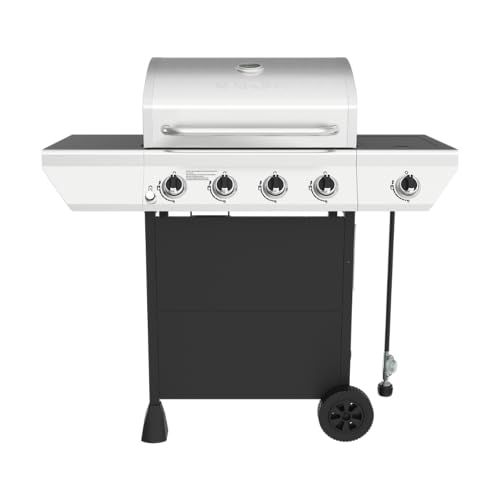
- Nexgrill Propane 4-Burner Gas Grill with Stainless Steel Lid
- AMERLIFE 60,000 BTU 6-Burner Propane Gas Grill with Side Burner
Read the full guide ↓ for the ranking logic, the honest limitations of every pick, and the buying checks that matter more than any headline claim.
The case for gas at a campsite is easy to make: the best rv gas grills light in seconds, shut off the moment dinner ends, need no ash disposal, and face fewer campground restrictions than any flame alternative. For RVers, that convenience is worth real money. But gas convenience comes in a format problem — most gas grills are built as backyard carts, and a cart that is perfect beside a patio can be impossible to store in a motorhome. This guide grades six verified propane grills against RV reality: which can travel in any sense, which belong beside a parked rig, and which only make sense on a seasonal site.
Stated plainly at the start: none of these six picks is a tiny tabletop unit of the kind sold in RV accessory catalogs. The most travel-friendly pick here, the IdeaMaxx three-burner, earns that label with foldable side shelves and a listing that names camping among its uses — it is a compact cart you might transport in a tow vehicle or store in a large bay, not a grill that vanishes into a drawer. The other five are full-size four- and six-burner carts with cabinets and side burners, and this guide treats them honestly as long-stay and seasonal-site machines. RVers whose travel style is constant motion should read the IdeaMaxx review and the buying guide closely, and compare our notes on Best Portable Gas Grills For Rv for the smaller format class.
Why write about big grills for RV readers at all? Because a large share of RV life is stationary in practice: snowbird winters in one park, summer seasons at a lake lot, month-long stays near family. In those settings the RV is a home, the site is its yard, and a full-size gas grill beside it is not a mistake — it is the kitchen upgrade that makes the season. The reviews below therefore split cleanly by lifestyle. Each verdict line names the RVer a grill serves, and the guide never pretends a 626-square-inch cart is coming along on a cross-country tour.
One more framing note on fuel: every pick in this pool is a propane grill, which is the right gas for RV life. Propane is portable, refillable almost everywhere RVers travel, and independent of any utility connection. Fixed natural-gas grills — the kind compared in our research on Best Natural Gas Barbecue Grills — belong to houses with a plumbed line, and no RV setup in this guide depends on one. Within propane, the decisions that matter are burner count, cooking area, storage format, and how the grill will connect to the tanks you already carry or keep at your site.
Key Takeaways
- All six picks are propane carts, not tabletop portables; the IdeaMaxx 3-burner is the most travel-friendly thanks to foldable side shelves and a camping-oriented design.
- The Weber Spirit E-425 is the premium pick, with a sear zone and porcelain-enameled cast-iron grates for serious cooking at a long-stay site.
- Nexgrill’s 626 sq. in. model and the six-burner AMERLIFE are crowd machines for seasonal sites and rally hosting — stationary by design.
- The Charbroil Performance cabinet model keeps the tank and tools enclosed, which keeps a long-stay site tidy.
- Measure transport space before buying: for most motorhomes, even the compact pick here travels in a tow vehicle or site storage, not a cargo bay.
- Propane’s instant shutoff and wide campground acceptance make gas the lowest-friction outdoor fuel for RV life.
In this guide
Quick Picks
All six picks cook on propane; they differ in size, output, and how honestly they fit RV life. The badges below rank them by RV role — travel-friendly first, then the stationary roles ranked by cooking quality.
| Pick | Badge | Why it earns its place |
|---|---|---|
| Charbroil Performance Series 4-Burner Gas Grill Cabinet with Side Burner | Best Cabinet Pick for Seasonal Sites | A four-burner cabinet cart with a side burner — enclosed tank storage keeps a long-stay site looking intentional. |
| Nexgrill Propane 4 Burner Gas Grill with Side Burner (626 Sq. In.) | Most Powerful | 60,000 BTU and the pool’s largest verified cooking area — the heavy artillery for parked-RV hosting. |
| IdeaMaxx 3-Burner Propane Gas Grill with Cast Iron Grates | Best for Traveling RVers | Foldable side shelves and a camping brief in its own listing make this the most transport-conscious gas grill here. |
| Weber Spirit E-425 Gas Grill | Best Premium | A four-burner with a dedicated sear zone and porcelain-enameled cast-iron grates — the cook’s grill of the pool. |
| Nexgrill Propane 4-Burner Gas Grill with Stainless Steel Lid | Best Mid-Size | 526 sq. in. and 52,000 BTU with cast iron grates — the balanced middle between the compact and crowd classes. |
| AMERLIFE 60,000 BTU 6-Burner Propane Gas Grill with Side Burner | Best for Crowds | Six burners, 650 sq. in., and a warming rack — the largest verified cooking area here, built for rally-scale dinners. |
How These Picks Were Chosen
Every pick in this guide comes from the verified pool assigned to it: each grill was cross-checked against its Creators API listing for brand, model identity, and headline specifications, and only confirmed listings carry Amazon links here. The comparison weighed the specifications that decide RV usefulness — burner count and total BTU output where the listing states it, cooking area where stated, grate material, side burners, cabinet or shelf design, and any portability feature the listing actually claims, such as the IdeaMaxx’s foldable shelves.
This is a research-led guide. We did not cook on these grills, haul them between campsites, or time their preheats, and nothing below claims otherwise. What research can settle honestly is the match between verified specifications and known RV constraints: cargo and tow-vehicle space, propane logistics, campground acceptance of gas grills, and the difference between a grill that moves weekly and one that anchors a seasonal site. Where a listing omits a figure — several omit cooking area or weight — the review flags the gap rather than filling it with a guess.
The ranking principle is fit, not firepower. The most powerful grill in the pool is not the best RV gas grill for a traveler, and the guide says so in its own review. Readers whose rigs have room for a true portable should also see Best Portable Gas Grills For Rv Camping, and those comparing against a home-base setup can consult Best Natural Gas Bbq Grills to understand what they are deliberately not buying.
The 6 Best RV Gas Grills, Reviewed One by One
Each review states what the grill is, how it fits RV life, three strengths, three trade-offs, its verified specifications, and a verdict naming who should buy it. The verdicts are the heart of this guide: gas grills are easy to buy and hard to transport, so fit comes first in every assessment.

Charbroil Performance Series 4-Burner Gas Grill Cabinet with Side Burner
Badge: Best Cabinet Pick for Seasonal Sites
Strengths
- Four burners plus a side burner cover a full family menu with a sauce or side on the go
- Cabinet design encloses the propane tank and cooking tools at the site
- A mainstream model line, which makes covers and replacement parts easy to source
Trade-offs
- Full-size cabinet cart: stationary in every practical sense for RV use
- The verified listing states no BTU or cooking-area figure, so compare dimensions on the listing
- Black finish shows dust and pollen at an outdoor site more than stainless does
Key specs
- Fuel: Propane gas
- Burners: 4 burners plus side burner
- Format: Cabinet cart, black (model 463253925)
- Output / area: Not stated in the verified listing
The Charbroil Performance cabinet grill is the tidy-site pick. Four burners and a side burner give a seasonal RVer the cooking range of a home backyard, while the cabinet underneath encloses the propane tank and the clutter — brush, spray, tray, spare lighter — that otherwise migrates across a campsite. At a long-stay park where your site is effectively your front yard for months, that enclosed storage is not a cosmetic extra; it is the difference between a site that looks settled and one that looks improvised.
Cooking capacity is family-scale. Four burners allow genuine zone work: a hot pair for searing, a cooler pair for finishing, and the side burner for the corn pot or the pan sauce that always seems to appear at RV dinners because the galley inside is small. Charbroil’s Performance line is a mainstream staple, which matters for a grill that will live outdoors far from the store it came from — covers, grates, and ignition parts for common models are the easiest to replace mid-season.
The RV verdict is unambiguous: this grill does not travel. It is a cabinet cart that belongs beside a parked rig on a seasonal or long-stay site, and the verified listing’s silence on BTU output and cooking area means you should confirm both figures on the listing against your headcount before ordering. Bought for the right lifestyle, it is a dependable, tidy anchor for a season of outdoor cooking.
Best for: Seasonal and long-stay RVers who want family-scale gas cooking with enclosed site storage / Not suited for: Traveling RVers or anyone expecting the grill to store in or on the RV

Nexgrill Propane 4 Burner Gas Grill with Side Burner (626 Sq. In.)
Badge: Most Powerful
Strengths
- 626 sq. in. of cooking space is the largest verified figure among these picks
- 60,000 BTU total output delivers strong searing heat and wide zone range
- Electronic ignition and built-in thermometer remove the two common campsite annoyances
Trade-offs
- Largest format in this guide — purely stationary, beside a parked RV
- High output consumes propane briskly when all burners run; plan refill logistics
- More cooking space than a couple or small family will use on a typical night
Key specs
- Fuel: Propane gas
- Burners: 4 burners plus side burner, 60,000 BTU per the listing
- Cooking area: 626 sq. in.
- Body: Stainless steel, double-door cabinet
- Ignition: Electronic; built-in thermometer
By verified numbers, this Nexgrill is the strongest grill in the guide: 60,000 BTU of total output, 626 square inches of cooking space, four main burners plus a side burner, electronic ignition, and a built-in thermometer, all in a stainless steel body over a double-door cabinet. For the RVer whose seasonal site hosts the neighborhood — rally dinners, family weekends, the fish fry after a good day on the lake — this is the grill that never makes you cook in shifts.
The specifications translate into real cooking advantages. High total output means the grates recover heat quickly after a cold batch of burgers lands, which is where lesser grills turn steaks grey. Four burners divide into zones for direct and indirect cooking, so ribs can sit off the flame while potatoes crisp over medium heat. The cabinet swallows the tank and tools, keeping a long-stay site as tidy as the Charbroil’s, and electronic ignition spares you the windy-day lighter ritual entirely.
Nothing about this grill travels, and its appetite deserves a plan: run all five burners hard through a long season and you will visit the propane refill station on a schedule. The honest summary is that this is a parked-RV appliance of genuine capability. If your RV life is a seasonal site with a social calendar, it is arguably the pick of the pool; if your RV life has wheels that turn weekly, it is not a candidate at all.
Best for: Stationary RVers who host groups and want maximum verified power and space / Not suited for: Travelers, small households, or sites far from propane refills

IdeaMaxx 3-Burner Propane Gas Grill with Cast Iron Grates
Badge: Best for Traveling RVers
Strengths
- Foldable side shelves shrink the footprint for transport and storage — unique in this pool
- The listing names portable outdoor and camping use, matching how RVers actually live
- Cast iron grates hold heat for a proper sear, and three burners allow basic zone cooking
Trade-offs
- Still a three-burner cart at heart — ‘portable’ here means movable, not tabletop-tiny
- 38,200 BTU is mid-pack output; large batches will test its recovery heat
- The listing states no cooking-area figure, so verify dimensions before buying
Key specs
- Fuel: Propane gas
- Burners: 3 burners, 38,200 BTU per the listing
- Grates: Cast iron
- Format: Foldable side shelves; portable outdoor / camping positioning per the listing
The IdeaMaxx is the pick for RVers who actually move, with one honest qualification: portable is a relative term in this pool. Its foldable side shelves are the only genuine transport feature among these six grills, and its own listing positions it for portable outdoor and camping use. Folded down, it presents the smallest package here — the grill most likely to ride in a tow vehicle’s bed, a large cargo bay, or a site storage box, and the one a traveling couple can realistically set up and put away without a production.
As a cooker it is better than its travel brief suggests. Three burners at a combined 38,200 BTU give you a hot zone and a holding zone, which covers the way campsite dinners actually happen: sear the chops, move them aside, grill the vegetables where the heat is gentler. Cast iron grates are the right choice for this job — they hold heat through the moment cold food lands and leave the sear marks that make gas grilling satisfying rather than merely convenient. For two to four people, this is a complete outdoor kitchen in the smallest footprint the pool offers.
The limits are scale and specification gaps. Big groups will outrun its grate, and the verified listing does not publish a cooking-area figure, so measure the listing’s dimensions against both your transport space and your typical headcount. It also remains a cart grill — a determined traveler with a small rig should still compare the tabletop class in Best Portable Gas Grills For Rv. Judged within this pool, though, the IdeaMaxx is the only pick designed with movement in mind, and it earns the travel badge without contest.
Best for: Traveling RVers who want real burner cooking in the most transportable format in this pool / Not suited for: Groups larger than four or buyers who need a stated cooking-area figure before ordering

Weber Spirit E-425 Gas Grill
Badge: Best Premium
Strengths
- Sear Zone with boost burners delivers the high-heat crust other picks approximate
- Porcelain-enameled cast-iron grates combine sear quality with easier cleaning
- Weber Works rails accept a system of prep and storage accessories
Trade-offs
- Premium-tier positioning: the most considered purchase in this pool
- A full four-burner cart — stationary at a long-stay or seasonal site
- The listing states no total BTU or cooking-area figure to compare directly
Key specs
- Fuel: Propane gas
- Burners: 4 burners with Sear Zone and boost burners
- Grates: Porcelain-enameled cast iron
- Features: Weber Works accessory rails
The Spirit E-425 is the grill for the RVer who cooks seriously and stays long enough to enjoy it. Its headline feature is a dedicated Sear Zone with boost burners — a section of grate that runs deliberately hotter than the rest, built for the steakhouse crust that standard burners struggle to produce. Around that party trick sits a well-judged whole: four burners for zone control, porcelain-enameled cast-iron grates that sear like cast iron but clean more easily, and Weber Works rails that accept prep trays and accessory holders to expand the tiny workspace every RV site imposes.
At a seasonal site, those details compound. The sear zone ends the compromise between a grill that can do burgers for the family and one that can do a proper ribeye for two. The grates reward a quick brush while warm and resist the rust anxiety of bare iron left outdoors — still season and cover them, but the enamel is forgiving. And a major brand’s accessory and parts ecosystem matters when a grill lives outside for months far from a dealer: igniters, grates, and covers for a Spirit are about as findable as grill parts get.
The qualifications are price tier and place. This is a premium-positioned grill, and it is a stationary one: four burners in a full cart that will live beside a parked RV, not in it. The verified listing also omits a total BTU figure and cooking area, so direct numerical comparison with the Nexgrill above is not possible from verified data — what you are buying is the sear system, the grates, and the brand’s support depth. For the long-stay cook who values those, it is the finest grill in this guide.
Best for: Long-stay RVers who cook seriously and want a real sear zone and premium grates / Not suited for: Travelers, or buyers who rank raw cooking area per purchase above cooking quality
Nexgrill Propane 4-Burner Gas Grill with Stainless Steel Lid
Badge: Best Mid-Size
Strengths
- 526 sq. in. hits the family-size sweet spot without the largest footprint in the pool
- 52,000 BTU across four burners plus side burner gives strong all-round output
- Matte-finish cast iron grates deliver real searing heat retention
Trade-offs
- A mid-size cart is still a cart — it lives beside a parked RV, not inside one
- Cast iron grates need seasoning discipline to stay rust-free outdoors
- Sits close to its bigger Nexgrill sibling; choose deliberately between them
Key specs
- Fuel: Propane gas
- Burners: 4 burners plus side burner, 52,000 BTU per the listing
- Cooking area: 526 sq. in.
- Grates: Matte-finish cast iron
- Ignition: Electronic; built-in thermometer; stainless steel lid
This second Nexgrill is the balanced option in the pool: 526 square inches of cooking space, 52,000 BTU of total output, four burners plus a side burner, electronic ignition, a built-in thermometer, and matte-finish cast iron grates under a stainless steel lid. For a family spending a season at one site, that specification reads like the answer to a checklist — big enough for dinner plus sides in one pass, powerful enough to sear properly, and sized below the pool’s largest carts.
The cast iron grates are the cooking highlight. Cast iron’s heat retention is what turns a gas grill from a food warmer into a searing tool, and the matte finish is the practical variant for outdoor life. Zone cooking works as it should across four burners, and the side burner handles the pot that the RV’s small galley stove would rather avoid — sweet corn, beans, or a big batch of camp coffee at breakfast. The listing even uses the word portable, which in context means the cart moves around a site and patio with ease, not that it tours in a cargo bay.
Seasoning discipline is the honest cost: cast iron stored outdoors wants a light oil coat after cleaning and a cover between uses, or surface rust will visit. And the choice between this grill and its 626-square-inch sibling should be made on headcount, not appetite for specifications — families of four to six will never miss the extra hundred square inches. As the middle path of this guide, it may be the easiest recommendation of the six for a typical seasonal family.
Best for: Seasonal families who want cast-iron searing and family-size space in a mid-size cart / Not suited for: Traveling RVers, or cooks who will not maintain cast iron outdoors

AMERLIFE 60,000 BTU 6-Burner Propane Gas Grill with Side Burner
Badge: Best for Crowds
Strengths
- 650 sq. in. is the largest verified cooking area in this guide
- Six burners allow multiple temperature zones across a very wide grate
- Warming rack keeps finished food hot while later batches cook — essential for crowds
Trade-offs
- The biggest, heaviest commitment here: a fixed resident of a seasonal site
- Cast iron grates at this scale are a real cleaning and seasoning workload
- Running six burners consumes propane at a rate that demands refill planning
Key specs
- Fuel: Propane gas
- Burners: 6 burners plus side burner, 60,000 BTU per the listing
- Cooking area: 650 sq. in.
- Grates: Cast iron, with warming rack
- Features: Built-in thermometer, regulating valve
The AMERLIFE is the rally grill: six burners, 60,000 BTU, 650 square inches of cast iron grate, a warming rack above, and a side burner on the flank. That is more cooking area than the largest Nexgrill in this guide and enough zones to run a genuine production line — burgers searing at the hot end, chicken finishing in the middle, vegetables at the gentle end, and finished food holding on the warming rack instead of going cold on a picnic table. For the RVer who hosts the park’s potluck or feeds a multi-generational family week at a lake lot, this is the tool built for the job.
Six burners buy a subtler benefit than raw capacity: temperature geography. A wide grate with independent zones lets one cook manage different foods at different stages without moving anything off the grill, which is the difference between a relaxed host and a frantic one. The built-in thermometer and regulating valve support steadier management across that big box, and cast iron grates deliver the sear that a crowd of burger eaters expects.
Everything about the format is stationary, and the running costs scale with the capability. Six burners drink propane, 650 square inches of cast iron is a serious brush-and-season commitment after every cook, and the grill will occupy its site pad like furniture. Buy it when the hosting is real and recurring; for a couple touring quietly, it is several grills’ worth of excess. In its intended role, nothing else in this pool feeds a crowd as completely.
Best for: Seasonal RVers and rally hosts who regularly cook for large groups / Not suited for: Couples, travelers, or anyone whose site time is measured in nights, not months
Comparison Table
Six propane carts, six different RV roles. The decisive columns are verified output and area — and the last one, which states plainly whether the grill can travel at all or belongs to a parked rig’s site.
| Pick | Fuel / type | Cooking space / output | RV fit | Listing |
|---|---|---|---|---|
| Charbroil Performance Series 4-Burner Gas Grill Cabinet with Side Burner | Propane, 4 burners + side burner | Not stated in listing | Stationary sites only | Check on Amazon |
| Nexgrill Propane 4 Burner Gas Grill with Side Burner (626 Sq. In.) | Propane, 4 burners + side burner | 626 sq. in., 60,000 BTU | Stationary sites only | Check on Amazon |
| IdeaMaxx 3-Burner Propane Gas Grill with Cast Iron Grates | Propane, 3 burners | 38,200 BTU; area not stated | Most travel-friendly here | Check on Amazon |
| Weber Spirit E-425 Gas Grill | Propane, 4 burners + sear zone | Not stated in listing | Stationary sites only | Check on Amazon |
| Nexgrill Propane 4-Burner Gas Grill with Stainless Steel Lid | Propane, 4 burners + side burner | 526 sq. in., 52,000 BTU | Stationary sites only | Check on Amazon |
| AMERLIFE 60,000 BTU 6-Burner Propane Gas Grill with Side Burner | Propane, 6 burners + side burner | 650 sq. in., 60,000 BTU | Stationary sites only | Check on Amazon |
How to Choose the Right Gas Grill for Your RV Setup
Begin with the lifestyle question, because it does most of the choosing. If your RV moves every few nights, the honest shortlist from this pool has one name — the IdeaMaxx, with its foldable shelves — and you should also research the true tabletop class before deciding. If your RV sits for weeks or a season at a time, all six picks are legitimate, and the decision becomes the more familiar one of headcount, searing quality, and storage tidiness. Neither answer is a compromise; they are different hobbies that happen to share a vehicle.
Size the cooking area to the group you actually feed. Solo travelers and couples cook comfortably on a three-burner footprint. Families of four to six are the natural match for the 526-square-inch class. The 626- and 650-square-inch grills earn their keep only when eight or more plates are genuinely regular — otherwise you are preheating a ballroom to cook two steaks, and paying for the propane to do it all season. Burner count matters less as a power brag than as zone control: three burners is the practical minimum for a hot zone and a holding zone at once, and six burners is a crowd-production tool.
Propane logistics deserve a plan before the grill arrives. All six picks are standard tank-fed grills. At a seasonal site, a full-size tank beside the grill plus a known refill source within a reasonable drive is the whole system. Traveling RVers should think about how the grill’s tank travels — secured, upright, and in an approved location, never loose in living space — and whether the grill itself rides in a tow vehicle, since none of these carts belongs inside a motorhome’s living area and few fit its bays. Some RVers ask about tapping the RV’s onboard propane system; that is a job for a qualified technician with the right fittings and regulator arrangement, not a campsite improvisation.
Finally, weigh grate material and upkeep honestly. Cast iron — on the IdeaMaxx, the mid-size Nexgrill, and the AMERLIFE — sears best and asks for seasoning discipline outdoors. Porcelain-enameled grates, like the Weber’s, trade a little of that raw sear for easier cleaning and rust forgiveness. Stainless bodies shrug off site weather better than painted finishes. The best rv gas grills for your season are the ones whose maintenance you will actually perform in month three, not the ones with the most impressive first-weekend specifications.
How to Set Up, Cook On, and Maintain a Gas Grill at Camp
Site setup for a gas grill is mostly about placement and connections. Set the grill on level ground — gravel, concrete, or a grill mat — with generous clearance from the RV’s walls, slide-outs, and awning, and never under the awning fabric. Connect the tank, open the valve slowly, and check fittings with soapy water if anything was disconnected for transport; bubbles mean stop and reseat the connection. Confirm the park allows the grill where you have placed it, and keep a clear path between grill and picnic table, because that walk, tray in hand, is where campsite spills happen.
Cooking with zones, the core gas skill
Preheat with the lid closed for ten to fifteen minutes so the grates, not just the air, get hot. Set one side of the grill hot and the other medium or low. Sear proteins over the hot zone, then move them to the gentler side to finish without burning — this two-step is how thick chicken breasts and pork chops cook through with good color instead of a charred outside and a raw middle. Use the side burner for sauces and sides so the main grate stays a grilling surface, and rest meat on a warm plate while the last vegetables finish.
Cast iron care for outdoor grills
After cooking, brush cast iron grates while they are still warm, let the grill cool, and wipe the grates with the thinnest coat of high-heat cooking oil — this is the seasoning maintenance that keeps iron rust-free outdoors. Porcelain-enameled grates need only the brush and a gentler hand, since aggressive scraping can chip enamel. Empty and clean the grease tray regularly; at a campsite, a neglected grease tray is an animal attractant as well as a flare-up waiting to happen.
Shutdown and storage between stays
Turn off the burners, then close the tank valve, and let the grill cool fully before covering it. A breathable fitted cover is the single best accessory for any grill living at a seasonal site. If the grill will sit unused for weeks, close the tank and store it upright in the park-approved location. Before the next cook, check for spider webs in venturi tubes and confirm the igniter clicks — the two most common reasons a stored gas grill misbehaves on its first night back.
Troubleshooting
Problem: One burner lights weakly or not at all → check for a blocked port or an insect nest in the tube, and confirm the tank is not nearly empty; a safety device in modern regulators can also limit flow if the tank valve was opened too fast, so close everything, wait, and reopen slowly. Problem: Flare-ups scorch food → trim excess fat, move food to a cooler zone rather than spraying water, and clean the grease tray before the next cook. Problem: Uneven heat across the grate → preheat longer with the lid closed, and rotate food between zones instead of fighting the grill’s natural hot spots.
Propane Logistics for RVers: Tanks, Refills, and Travel Days
A gas grill joins the RV’s propane ecosystem, and that ecosystem has a rhythm. At a seasonal site it is simple: a tank at the grill, a refill station in the nearest town, and a mental note of how fast a heavy hosting month drinks fuel. On the road it needs more thought. The grill’s tank must travel secured and upright in an approved compartment — never inside the living space — and the grill itself needs a legal, stable home, which for every cart in this pool means a tow vehicle, a truck bed, or site storage rather than a motorhome bay.
Consumption planning is the quiet skill. A grill run nightly for a family uses propane at a pace that surprises owners of backyard grills used twice a month, and the six-burner picks multiply that pace when fully lit. The practical habits are easy: keep the lid down, light only the zones you need, and know where the next refill is before the current tank feels light. RVers comparing stationary alternatives can see the contrast in our guide to Best Portable Gas Grills For Rv Camping, where the smallest formats trade capacity for exactly this kind of travel simplicity.
Seasonal-Site Living: When the Big Grill Is the Right Grill
There is a version of RV life — winters in the desert or Florida, summers on a northern lake — where the RV barely moves and the site becomes a small homestead. In that life, the logic of this guide inverts: the big carts stop being compromises and become the correct tools. A cabinet grill that anchors the outdoor kitchen, a sear zone for Saturday steaks, a six-burner for the family reunion week — these are home appliances that happen to sit beside a home with wheels.
The seasonal cook’s real enemies are weather and neglect, not transport. Sun degrades covers and knobs, rain finds every unprotected seam, and a grill that cooked beautifully in October can greet spring with rusty grates and a dead igniter. The habits in the how-to section — covering, oiling cast iron, clearing tubes and trays — are what separate a grill that serves five seasons from one that serves one. Buy the big grill for the seasonal life if that is your life; just maintain it like the outdoor appliance it is.
Common Buying Mistakes
The defining mistake in this category is buying a backyard cart for a traveling life. It happens because cart grills look like the ‘real’ option next to small portables, and because nobody measures the cargo bay in the showroom. One trip later the grill is in a storage unit and the RVer is cooking on a borrowed picnic grate. The fix is embarrassingly simple: decide whether you are a mover, a long-stay traveler, or a seasonal resident, and buy only what that life can carry or park.
A second mistake is treating propane as an afterthought. Running out mid-cook at a remote site, transporting a tank loose in a compartment full of gear, or attempting a home-made connection to the RV’s propane system are all versions of the same error. Propane is a wonderfully safe fuel when handled by the book — secured tanks, leak checks after reconnection, and professional help for any system tap — and unforgiving of improvisation.
Finally, do not let headline BTU do the choosing. Total output figures are not comparable across grill sizes — what matters is heat where the food sits, grate material, and whether the grill’s zones match how you cook. A mid-output grill with cast iron grates and zones you use will out-cook a bigger number on paper for most families, and it will do it on less propane all season.
Final Recommendation
For the traveling RVer, the answer in this pool is the IdeaMaxx 3-Burner Propane Gas Grill with Cast Iron Grates: foldable shelves, a camping brief, three burners, and cast iron grates in the most transportable package here. It will not vanish into a drawer, but it is the only pick designed with movement in mind. For the long-stay cook who wants the best food this pool can produce, the Weber Spirit E-425 Gas Grill is the premium choice — its sear zone and enameled cast-iron grates are worth their tier at a site you will occupy for months.
Hosts should scale up deliberately: the AMERLIFE 60,000 BTU 6-Burner Propane Gas Grill with Side Burner feeds the largest crowds, the two Nexgrills split the difference between power and balance, and the Charbroil Performance keeps a seasonal site tidy behind cabinet doors. Every pick here is a good gas grill in its proper place. Choose by the life your RV actually lives — mover, stayer, or seasonal resident — and the grill will feel like it was made for you.
Frequently Asked Questions
Are any of these gas grills truly portable enough for a motorhome?
Only in a limited sense. The IdeaMaxx, with foldable side shelves and a camping-oriented design, is the most transportable pick here and may ride in a tow vehicle or large bay. The other five are full-size carts intended for stationary use beside a parked RV. RVers who need a grill that stores inside the rig should look at the tabletop portable class instead.
Can I run one of these grills from my RV’s onboard propane system?
These are standard tank-fed grills with their own regulators. Connecting any grill to an RV’s onboard low-pressure system is a job for a qualified technician using the correct fittings for that specific setup — it should never be improvised at a campsite. Most RVers simply run the grill from its own tank, which keeps the RV’s supply reserved for the furnace, stove, and water heater.
How much propane will a season of grilling use?
It depends on burner count, how often you cook, and how much of the grate you light. A couple grilling a few nights a week on part of a three-burner will sip fuel compared with a six-burner hosting weekly crowds. The habits that save the most are simple: preheat with the lid down, light only the zones you need, and shut down promptly after cooking.
Is cast iron or porcelain-enameled grate better for outdoor RV life?
Cast iron sears harder and holds heat better, but it needs a light oil coat after cleaning to resist rust outdoors. Porcelain-enameled cast iron — like the Weber Spirit’s grates — gives up a little searing edge for easier cleaning and more rust forgiveness. For a grill living outside all season, enamel is the lower-maintenance choice; for a covered grill and a cook who enjoys upkeep, bare cast iron rewards the effort.
What should I check before the first cook after winter storage?
Brush and inspect the grates, empty the grease tray, check burner tubes for spider webs or nests, test the igniter, and leak-check the tank connection with soapy water. Stored grills most often fail from a blocked tube or a dead igniter, both of which are five-minute fixes when caught before guests arrive.
Do campgrounds allow full-size gas grills at RV sites?
Most parks that host long-stay and seasonal RVers accept gas grills used outdoors with sensible clearance, and propane faces fewer restrictions than charcoal or wood. Rules still vary — some parks specify placement, pads, or storage requirements — so confirm at check-in, especially for seasonal stays where the grill becomes a semi-permanent site feature.


