Disclosure: topratedkitchenware.com is reader-supported. When you buy through links on our site, we may earn an affiliate commission from Amazon and other retailers, at no extra cost to you.
Where to buy
If you are shopping for best individual coffee makers, start with the six picks below. Linked picks carry a direct Amazon link so you can check the latest price on Amazon and confirm the current configuration before you decide. We never print a fixed price here, because prices and availability change. Every pick is a genuine single-serve machine for individual coffee, so all six are linked.
- Keurig K-Express Single Serve (Black) — Best Overall. Check on Amazon for current listing details.
- Keurig K-Express Single Serve (Warm Stone) — Best Finish Alternative. Check on Amazon for current listing details.
- Elite Gourmet Single-Serve 14 oz — Best Pod-Free Pick. Check on Amazon for current listing details.
- Keurig K-Mini Mate Single Serve — Best for Tiny Spaces. Check on Amazon for current listing details.
- Tastyle Mini Single Serve Hot and Iced — Most Flexible. Check on Amazon for current listing details.
- Keurig K-Express Single Serve (Evergreen) — Best Bold-Finish Pick. Check on Amazon for current listing details.
Read the full guide ↓ for how each pick handles the job, where each one compromises, and which households each one actually suits.
The best individual coffee makers exist because households stopped drinking coffee in sync. One person rises at six and wants a strong cup immediately; another drifts down at nine for something milder; a third wants iced coffee in July and a travel mug in January. A shared pot serves none of them well. The six verified picks in this guide are all single-serve machines, but they embody different answers to the individual brief: reservoir-fed pod convenience in three Keurig K-Express finishes, a grounds-based personal brewer from Elite Gourmet, the ultra-compact fill-per-cup K-Mini Mate, and Tastyle’s dual-input machine that brews hot or iced.
Unlike our cup-size-focused companion coverage, this guide judges the individual brief at household level: how the machine fits a kitchen’s rhythm, its running costs, its water habits and its counter politics. A single-serve machine is a decade-long appliance relationship, and the honeymoon features matter less than the Tuesday-morning ones.
If your household is only pretending to be individual — if a shared pot still anchors most mornings — start instead with our roundup of Best Drip And Pod Coffee Makers and treat this guide as the specialist detour.
Key Takeaways
- Individual machines serve unsynchronised households; that rhythm fit is the real brief.
- The K-Express trio is one machine in three finishes — decide format first, colour last.
- Pods buy speed at a per-cup premium; grounds buy economy and choice; the Tastyle refuses the dilemma.
- Reservoir convenience suits multi-cup homes; fill-per-cup freshness suits one-cup rituals.
- Iced capability (Tastyle) is a genuine category divider, not a gimmick, for summer drinkers.
- Descaling discipline decides how long any of these machines stays pleasant.
In this guide
Quick Picks
| Pick | Badge | Headline spec | Why it is here |
|---|---|---|---|
| Keurig K-Express Single Serve (Black) | Best Overall | 3 brew sizes | Reservoir pod convenience with Strong Brew |
| Keurig K-Express Single Serve (Warm Stone) | Best Finish Alternative | 3 brew sizes | The same machine in a pale finish |
| Elite Gourmet Single-Serve 14 oz | Best Pod-Free Pick | 14 oz single-serve capacity | Grounds-based personal brewing, travel-mug format |
| Keurig K-Mini Mate Single Serve | Best for Tiny Spaces | Brews up to 12 oz per cup | Fill-per-cup minimalism for tiny spaces |
| Tastyle Mini Single Serve Hot and Iced | Most Flexible | 6 to 14 oz brew sizes | Pods or grounds, hot or iced |
| Keurig K-Express Single Serve (Evergreen) | Best Bold-Finish Pick | 3 brew sizes | The same machine in deep green |
The Quick Picks table doubles as a map of the individual-coffee philosophies on sale today. Nothing here brews a pot, and that is the point: every design dollar went into the single cup and the person drinking it. Readers furnishing a whole kitchen rather than solving one person’s coffee may find the broader, design-first perspective of Best Designed Coffee Makers a useful counterweight before committing counter space.
How These Picks Were Chosen
The picks were drawn from the verified single-serve pool to cover the format’s real branches: reservoir pod machines in three finishes, a fill-per-cup mini, a grounds-based personal brewer and a flexible pods-or-grounds model with iced capability. We compared reservoir size, brew-size range, input type and footprint from the verified listings, and we have been blunt about duplication: three listings are the same K-Express machine in different colours, and the reviews treat colour as colour rather than inventing performance differences.
This is research-led guidance built from verified listing data and manufacturer specifications, with no invented hands-on claims. No prices or rating scores are printed, because both change constantly; the per-cup economics of pods versus grounds, which do not change, are discussed openly in the buying guide instead.
The 6 best individual coffee makers picks, reviewed in detail

Keurig K-Express Single Serve (Black)
Badge: Best Overall
Strengths
- Reservoir covers several cups before refilling
- Strong Brew gives a bolder cup from the same pod
- Three sizes cover espresso-style shots to travel mugs
Trade-offs
- Pods cost more per cup than ground coffee
- Pod format will not suit plastic-averse buyers
- No ground-coffee basket in the standard format
Key specs from the verified listing: 3 brew sizes; 42 oz removable reservoir; Strong Brew button; K-Cup pod format; Black finish.
The K-Express in black is Keurig’s streamlined single-serve machine: three brew sizes, a 42 oz removable reservoir and a Strong Brew button for a more intense cup. It is the set-it-on-the-counter, press-one-button formula at its most direct.
For individual coffee, the machine is judged by how gracefully it serves one person’s exact preference, repeatedly, without asking the household to synchronise around it. In practice that makes it a fit for solo drinkers and couples who want a fast pod coffee with minimal counter footprint and minimal thought. The review prose in this guide is research-led: we compared verified listing data, manufacturer specifications and the documented design of each model rather than claiming hands-on bench testing we did not do, and we would rather state that plainly than dress a desk comparison up as a lab report.
The honest limitation is that households drinking four or more cups a day will feel pod costs and pod waste in a way drip drinkers never do. None of that makes it a bad buy; it defines the buyer it serves. Match this pick against your own routine — how often you use it, how much you make at once, and how much counter and cupboard space it can honestly claim — and the right answer usually becomes obvious.
Looked at as a weekly routine rather than a specification sheet, the Keurig K-Express Single Serve (Black) asks little of its owner beyond the basics its listing confirms: 3 brew sizes; 42 oz removable reservoir; Strong Brew button; K-Cup pod format; Black finish. Its clearest strength in practice — reservoir covers several cups before refilling — is the one you will feel every time you use it, while its most relevant compromise — pods cost more per cup than ground coffee — is the one to weigh before ordering rather than discover after. Owners who match a tool to their habits rarely regret a purchase in this category; owners who buy a headline and hope their habits change usually do.
Best for: Unsynchronised households brewing several solo cups daily / Not suited for: Pod-averse households unwilling to use refillable options
Check on Amazon to see the current listing, configuration and delivery options for the Keurig K-Express Single Serve (Black).
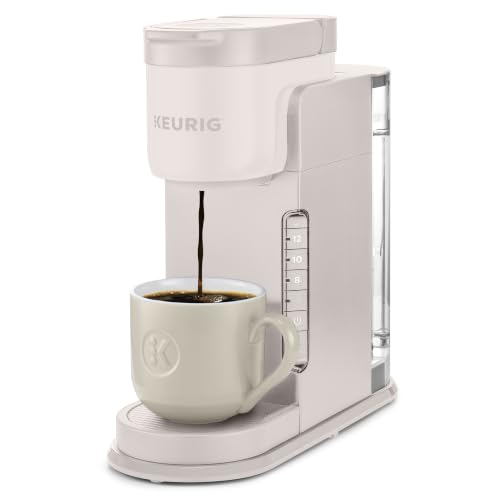
Keurig K-Express Single Serve (Warm Stone)
Badge: Best Finish Alternative
Strengths
- Same proven K-Express mechanics in a softer finish
- Reservoir and Strong Brew match the black version
- Light colour suits bright, modern kitchens
Trade-offs
- Functionally identical to the black K-Express in this pool
- Light finishes show coffee splashes more readily
- Pods remain the running cost to accept
Key specs from the verified listing: 3 brew sizes; 42 oz removable reservoir; Strong Brew button; K-Cup pod format; Warm Stone finish.
This Warm Stone K-Express is mechanically the same machine as the black one: three brew sizes, 42 oz removable reservoir and Strong Brew, finished in a pale stone tone that disappears into lighter kitchens.
For individual coffee, the machine is judged by how gracefully it serves one person’s exact preference, repeatedly, without asking the household to synchronise around it. In practice that makes it a fit for buyers who have already chosen the K-Express formula and are really choosing a finish. The review prose in this guide is research-led: we compared verified listing data, manufacturer specifications and the documented design of each model rather than claiming hands-on bench testing we did not do, and we would rather state that plainly than dress a desk comparison up as a lab report.
The honest limitation is that do not expect a different cup from the black model; the honest difference here is colour and current listing details. None of that makes it a bad buy; it defines the buyer it serves. Match this pick against your own routine — how often you use it, how much you make at once, and how much counter and cupboard space it can honestly claim — and the right answer usually becomes obvious.
There is also the question of what living with the Keurig K-Express Single Serve (Warm Stone) feels like after the first week. The verified configuration — 3 brew sizes; 42 oz removable reservoir; Strong Brew button; K-Cup pod format; Warm Stone finish — settles into a routine quickly, and the design choices behind it favour the jobs this guide keeps returning to. Where it asks for cooperation, the review has already named it: functionally identical to the black k-express in this pool. Where it simply gets on with the work, that is its headline strength at play: same proven k-express mechanics in a softer finish. Judge it on that balance, not on any single line of its listing.
Best for: Bright kitchens wanting reservoir convenience in a soft tone / Not suited for: Buyers expecting any performance gap over the black model
Check on Amazon to see the current listing, configuration and delivery options for the Keurig K-Express Single Serve (Warm Stone).

Elite Gourmet Single-Serve 14 oz
Badge: Best Pod-Free Pick
Strengths
- Reusable filter takes grounds, so no pod lock-in
- Travel mug format brews straight into the commute
- One-touch simplicity at a small footprint
Trade-offs
- 14 oz is one serving, then you brew again
- 600W class means a slower cup than big machines
- Grounds need measuring rather than pod popping
Key specs from the verified listing: 14 oz single-serve capacity; 600W power; One-touch operation; Travel mug included format; Reusable filter for grounds and loose leaf.
Elite Gourmet’s single-serve brewer makes a 14 oz cup with one touch, brewing grounds through a reusable filter directly toward travel-mug duty. It is the pod-free route to a personal coffee maker, with a 600W footprint to match.
For individual coffee, the machine is judged by how gracefully it serves one person’s exact preference, repeatedly, without asking the household to synchronise around it. In practice that makes it a fit for commuters and grounds loyalists who want one fresh cup, in the mug, with no pod drawer in the kitchen. The review prose in this guide is research-led: we compared verified listing data, manufacturer specifications and the documented design of each model rather than claiming hands-on bench testing we did not do, and we would rather state that plainly than dress a desk comparison up as a lab report.
The honest limitation is that back-to-back cups for guests will feel slow; this is a personal machine in the strictest sense. None of that makes it a bad buy; it defines the buyer it serves. Match this pick against your own routine — how often you use it, how much you make at once, and how much counter and cupboard space it can honestly claim — and the right answer usually becomes obvious.
One more practical lens: who else in the household will use the Elite Gourmet Single-Serve 14 oz, and for what? Its confirmed specification — 14 oz single-serve capacity; 600W power; One-touch operation; Travel mug included format; Reusable filter for grounds and loose leaf — makes it approachable for some users and excessive or insufficient for others, and a purchase that serves two people’s routines is worth more than a theoretically superior one that serves a single narrow job. Its defining strength, that it can reusable filter takes grounds, so no pod lock-in, compounds in value the more often the machine is used, which is why frequency of use appears in every verdict in this guide.
Best for: Grounds drinkers wanting one fresh personal cup / Not suited for: Pod devotees who refuse to measure grounds
Check on Amazon to see the current listing, configuration and delivery options for the Elite Gourmet Single-Serve 14 oz.
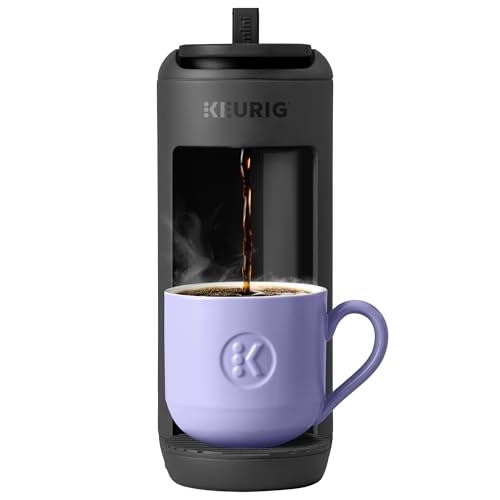
Keurig K-Mini Mate Single Serve
Badge: Best for Tiny Spaces
Strengths
- Smallest footprint in this pool for tight counters
- Fill-per-cup means no stale reservoir water
- Travels easily between home, office and dorm
Trade-offs
- Every cup starts with a fresh fill and heat cycle
- 12 oz ceiling rules out the biggest travel mugs
- No reservoir convenience for multi-cup mornings
Key specs from the verified listing: Brews up to 12 oz per cup; Compact portable format; K-Cup pod format; Black finish; Fill-per-cup water design.
The K-Mini Mate shrinks the Keurig idea to its minimum: pour in water for one cup of up to 12 oz, add a pod, brew. No reservoir, no standby bulk, just a compact machine that can live almost anywhere.
For individual coffee, the machine is judged by how gracefully it serves one person’s exact preference, repeatedly, without asking the household to synchronise around it. In practice that makes it a fit for dorm rooms, desks, camper vans and genuinely tiny kitchens where every inch is argued over. The review prose in this guide is research-led: we compared verified listing data, manufacturer specifications and the documented design of each model rather than claiming hands-on bench testing we did not do, and we would rather state that plainly than dress a desk comparison up as a lab report.
The honest limitation is that households that brew several cups in a row will miss a reservoir within the first morning. None of that makes it a bad buy; it defines the buyer it serves. Match this pick against your own routine — how often you use it, how much you make at once, and how much counter and cupboard space it can honestly claim — and the right answer usually becomes obvious.
Looked at as a weekly routine rather than a specification sheet, the Keurig K-Mini Mate Single Serve asks little of its owner beyond the basics its listing confirms: Brews up to 12 oz per cup; Compact portable format; K-Cup pod format; Black finish; Fill-per-cup water design. Its clearest strength in practice — smallest footprint in this pool for tight counters — is the one you will feel every time you use it, while its most relevant compromise — every cup starts with a fresh fill and heat cycle — is the one to weigh before ordering rather than discover after. Owners who match a tool to their habits rarely regret a purchase in this category; owners who buy a headline and hope their habits change usually do.
Best for: Single drinkers in dorms, offices and tiny kitchens / Not suited for: Multi-cup mornings in busy households
Check on Amazon to see the current listing, configuration and delivery options for the Keurig K-Mini Mate Single Serve.
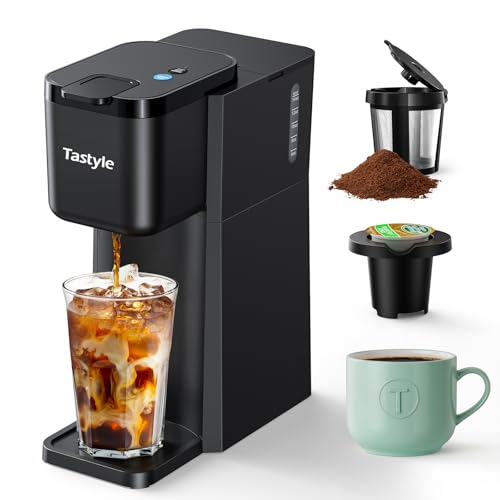
Tastyle Mini Single Serve Hot and Iced
Badge: Most Flexible
Strengths
- Pods or grounds: the most flexible input in this pool
- Iced mode adds a drink the others cannot make
- Wide 6 to 14 oz range covers small cups and big mugs
Trade-offs
- Mini format means modest water capacity
- Jack-of-all-trades design has more modes to learn
- Less established pod ecosystem support than Keurig itself
Key specs from the verified listing: 6 to 14 oz brew sizes; K-Cup pods and ground coffee both supported; Hot and iced coffee modes; Recipe book included; Mini format.
Tastyle’s mini single-serve machine accepts both K-Cup pods and ground coffee, brews hot or iced, and covers 6 to 14 oz sizes, with a recipe book in the box to encourage using the range.
For individual coffee, the machine is judged by how gracefully it serves one person’s exact preference, repeatedly, without asking the household to synchronise around it. In practice that makes it a fit for indecisive drinkers who want pods on rushed days, grounds on slow days and iced coffee in summer. The review prose in this guide is research-led: we compared verified listing data, manufacturer specifications and the documented design of each model rather than claiming hands-on bench testing we did not do, and we would rather state that plainly than dress a desk comparison up as a lab report.
The honest limitation is that flexibility means compromise: pod purists and grounds purists can each find a more specialised machine. None of that makes it a bad buy; it defines the buyer it serves. Match this pick against your own routine — how often you use it, how much you make at once, and how much counter and cupboard space it can honestly claim — and the right answer usually becomes obvious.
There is also the question of what living with the Tastyle Mini Single Serve Hot and Iced feels like after the first week. The verified configuration — 6 to 14 oz brew sizes; K-Cup pods and ground coffee both supported; Hot and iced coffee modes; Recipe book included; Mini format — settles into a routine quickly, and the design choices behind it favour the jobs this guide keeps returning to. Where it asks for cooperation, the review has already named it: mini format means modest water capacity. Where it simply gets on with the work, that is its headline strength at play: pods or grounds: the most flexible input in this pool. Judge it on that balance, not on any single line of its listing.
Best for: Households split between pods, grounds and iced coffee / Not suited for: Single-input purists who dislike compromise designs
Check on Amazon to see the current listing, configuration and delivery options for the Tastyle Mini Single Serve Hot and Iced.

Keurig K-Express Single Serve (Evergreen)
Badge: Best Bold-Finish Pick
Strengths
- Full K-Express feature set in a deep green finish
- Reservoir size suits multi-cup days
- Strong Brew rescues lighter pods
Trade-offs
- Same mechanics as the other two K-Express listings here
- Colour choice is a commitment on the counter
- Pod running costs apply as with all pod machines
Key specs from the verified listing: 3 brew sizes; 42 oz removable reservoir; Strong Brew button; K-Cup pod format; Evergreen finish.
The Evergreen K-Express completes the colour trio in this pool: the same three brew sizes, 42 oz removable reservoir and Strong Brew button, in a deep green that suits traditional and wood-toned kitchens.
For individual coffee, the machine is judged by how gracefully it serves one person’s exact preference, repeatedly, without asking the household to synchronise around it. In practice that makes it a fit for K-Express buyers furnishing a kitchen where black feels harsh and pale finishes feel fragile. The review prose in this guide is research-led: we compared verified listing data, manufacturer specifications and the documented design of each model rather than claiming hands-on bench testing we did not do, and we would rather state that plainly than dress a desk comparison up as a lab report.
The honest limitation is that as with its siblings, judge this listing on finish and current details, not on any expected difference in the cup. None of that makes it a bad buy; it defines the buyer it serves. Match this pick against your own routine — how often you use it, how much you make at once, and how much counter and cupboard space it can honestly claim — and the right answer usually becomes obvious.
One more practical lens: who else in the household will use the Keurig K-Express Single Serve (Evergreen), and for what? Its confirmed specification — 3 brew sizes; 42 oz removable reservoir; Strong Brew button; K-Cup pod format; Evergreen finish — makes it approachable for some users and excessive or insufficient for others, and a purchase that serves two people’s routines is worth more than a theoretically superior one that serves a single narrow job. Its defining strength, that it can full K-Express feature set in a deep green finish, compounds in value the more often the machine is used, which is why frequency of use appears in every verdict in this guide.
Best for: Colour-committed kitchens wanting the proven format / Not suited for: Anyone treating finish as a performance feature
Check on Amazon to see the current listing, configuration and delivery options for the Keurig K-Express Single Serve (Evergreen).
Comparison Table
| Pick | Badge | Format | Control / feature | Standout point |
|---|---|---|---|---|
| Keurig K-Express Single Serve (Black) | Best Overall | 3 brew sizes | 42 oz removable reservoir | 3 sizes, 42 oz reservoir |
| Keurig K-Express Single Serve (Warm Stone) | Best Finish Alternative | 3 brew sizes | 42 oz removable reservoir | 3 sizes, 42 oz reservoir |
| Elite Gourmet Single-Serve 14 oz | Best Pod-Free Pick | 14 oz single-serve capacity | 600W power | 14 oz, grounds, 600W |
| Keurig K-Mini Mate Single Serve | Best for Tiny Spaces | Brews up to 12 oz per cup | Compact portable format | Up to 12 oz, fill-per-cup |
| Tastyle Mini Single Serve Hot and Iced | Most Flexible | 6 to 14 oz brew sizes | K-Cup pods and ground coffee both supported | 6–14 oz, dual input, iced |
| Keurig K-Express Single Serve (Evergreen) | Best Bold-Finish Pick | 3 brew sizes | 42 oz removable reservoir | 3 sizes, 42 oz reservoir |
Compared side by side, the pool’s real axes are input and water. Input runs from pods-only convenience through the Tastyle’s dual freedom to the Elite Gourmet’s grounds-only economy. Water runs from the 42 oz reservoir’s multi-day convenience to the K-Mini Mate’s fresh-every-cup purity. Every buyer sits somewhere on those two axes; locate yourself honestly and the table shortlists itself. The premium tier above this pool is surveyed in Best Deluxe Coffee Makers for readers wondering what more money actually buys.
How to Choose the Right Option for best individual coffee makers
Start with household rhythm. Count how many individual cups your home brews on a weekday and whether they cluster or scatter. Clusters favour reservoirs; a single scattered cup favours fill-per-cup freshness. Households whose cups cluster around a shared pot moment do not need this category at all — the carafe machines in Best Coffee Makers With Metal Carafe will serve them better and cheaper.
Then settle the input question for the long term. Pods are a subscription you do not sign: convenient forever, premium-priced forever. Grounds are a habit: cheaper, freer, slightly messier. Dual-input machines like the Tastyle postpone the decision indefinitely, which for mixed households is the decision. The value analysis in Best Discount Coffee Makers quantifies the pod premium across the wider market if you want the arithmetic in full.
Finally, consider the second drink. Iced coffee, tea-strength cups, decaf after dinner — individual machines shine precisely at these edge drinks that a pot serves badly. If your household’s edge drinks are weekly, weight flexibility (Tastyle, Strong Brew) heavily. If they are yearly, ignore them and buy the simplest format that nails the morning cup.
How to Build a Single-Serve Routine That Stays Fresh
Single-serve brewing is simple, and its quality lives in small habits. Use fresh water — a reservoir left standing for a week makes a week of flat cups. Run a water-only cycle after flavoured pods before brewing a plain coffee. Descale on schedule: small machines have narrow water paths, and scale that a big drip machine would shrug off will slow a single-serve brewer to a dribble and cool the cup.
- Fill with fresh water daily where the design allows, or refresh the reservoir every few days.
- Warm the mug with hot water on cold mornings so the small brew does not land in a cold cup.
- Use the Strong Brew setting for larger sizes so a big cup does not taste diluted.
- Empty the used-pod bin before it becomes a science project; rinse the drip tray weekly.
- Descale when the machine asks, not when it gives up.
Problem: the cup tastes weak at the largest size → what to do: use Strong Brew if fitted, choose a bolder pod or grounds, and accept that the biggest sizes stretch any single-serve dose. Problem: coffee tastes of the previous drink → what to do: run a water-only rinse cycle between flavoured and plain drinks. Problem: the machine brews slowly or splutters → what to do: descale, check the needle area for grounds build-up per the manual, and confirm the reservoir is seated.
Pods versus Grounds: The Long-Term Economics of One Cup
The pod premium is not a scandal; it is a trade — money for seconds, consistency and zero mess, repeated daily. What surprises households is the compounding: a modest per-cup difference becomes a significant annual figure at two or three cups a day, every day, for years. Grounds invert the trade: the coffee is cheaper and the choice is wider, paid for in measuring, tamping habits and filter washing.
The grown-up answer for many homes is the hybrid: a dual-input machine, pods for the 6 a.m. blur and grounds for the weekend’s slower cup. That is the Tastyle’s entire argument, and it is a good one. Enthusiasts who also keep a cold brewer for summer will recognise the same portfolio thinking in our notes on Best Cold Brew Coffee Makers Geek, where one trick per machine beats one machine per trick.
One Machine, Several Drinkers: Making Individual Coffee Social
Individual machines have a reputation for antisocial coffee — everyone alone with their pod. Used well, they are the opposite: the decaf drinker, the strong-coffee drinker and the iced-coffee teenager all get their exact drink at the same breakfast, something no pot has ever achieved. The social failure mode is logistics, not concept: an empty reservoir, a full pod bin and a queue at the machine.
The fixes are household systems, not features: refill the reservoir when you empty it, keep pods or grounds stocked where the machine lives, and let the machine’s speed work in sequence rather than parallel. Deal-hunters furnishing that station sometimes watch seasonal pricing events; our tracking of Best Deals On Kuerig Coffee Makers follows the Keurig end of that market for exactly those moments, though this guide itself never prints prices.
Water, Scale and the Quiet Maintenance of Small Machines
Every individual coffee maker is a small water system pretending to be an appliance, and its long-term happiness is decided by water far more than by coffee. Hard water lays scale through narrow paths; standing reservoir water grows stale and then faintly musty; a neglected pod bin turns a precision machine into a smell with a power cord. None of this is dramatic, and all of it is preventable with the least glamorous routine in the kitchen: fresh water, an emptied bin, a monthly wipe and descaling when the machine asks.
The economics of neglect are worth stating. A descaled-on-schedule machine brews at full temperature and full speed for years; a neglected one brews cooler and slower within a season, and its owner concludes the brand was overrated. In truth the brand was fine and the water was not. Filtered water stretches every interval in this paragraph and improves the cup on day one — the rare maintenance step that is also a flavour upgrade.
Treat this section as part of the purchase decision. If your household will not descale anything, ever, choose the simplest format in the pool and accept its shorter prime. If you will, every machine here will repay the discipline, and the differences between them return to where they belong: rhythm, input and the quality of one person’s cup.
The Second Cup Problem: Decaf, Guests and Household Diplomacy
Every individual coffee household eventually faces the second cup problem in one of its forms. The decaf drinker at 9 p.m., for whom a shared pot is pointless and a pod machine is perfect. The guest who wants ‘just a small one’ while the household’s pot drinkers are mid-carafe. The teenager whose iced coffee bears no relation to anyone else’s order. Individual machines were, in a sense, invented by these moments, and how gracefully a machine handles them is a fair test of the format choices in this pool.
Reservoir machines handle the second cup best logistically: water is waiting, the cup is quick, and the host stays in the conversation. Dual-input machines handle it best diplomatically: the decaf grounds, the special pod, the iced variation all live in one footprint. Fill-per-cup machines handle it most slowly and most freshly — a trade some households gladly make and busy hosts should not.
There is a etiquette layer, too. A stocked, clean, ready individual machine is a hospitable object; an empty, blinking, pod-less one turns a simple offer of coffee into a small production. If you host often, keep the station guest-ready as a matter of routine — reservoir filled, pods or grounds stocked, a clean mug within reach — and the machine will make you look like a better host than any pot ever did.
Judge your final shortlist by imagining that 9 p.m. decaf request arriving tonight. The machine that answers it without fuss, mess or a lecture about descaling is the machine your household will still love in year three, and it is almost certainly the right row of the comparison table for you.
Placement advice that sounds trivial and is not: put the individual machine where the water is. A reservoir carried across a kitchen twice a day will eventually be carried once too often, and a fill-per-cup machine exiled from the sink becomes a chore. Ten centimetres of counter planning at purchase time outperforms most feature differences in this pool.
For households keeping both a pot machine and an individual machine, assign territories: the pot owns weekend mornings and guests, the individual machine owns weekdays and edge drinks. Machines with clear territories get maintained; machines in ambiguous competition both end up dirty, empty and blamed. The reviews above are written with those territories in mind.
The environmental ledger of individual coffee deserves one balanced paragraph. Pods concentrate waste per cup; pots waste coffee per half-drunk carafe; cafés waste cups per visit. No format is innocent, and the honest household simply chooses which waste it prefers to minimise — grounds and refillable options on the single side, right-sized pots on the other — rather than pretending its preferred format has none.
There is a skill dividend to individual brewing that pots never pay: you learn your own taste quickly, because every cup is a controlled experiment with one variable changed at a time. Households that switch to individual machines often report, a year later, that they simply know more about the coffee they like — an unexpected benefit that never appears on a box.
Keep the first month’s impressions written somewhere, even as a phone note: which sizes you actually used, which input won, which setting mattered. When this machine eventually retires, that note is the buying guide for its successor — more accurate for your household than any review, including this one, can ever be.
Think, finally, about where individual coffee sits in a household’s whole drinks economy. The same kitchen may run a kettle for tea, a cold brewer for summer afternoons and a pot machine for Sunday — and the individual machine’s job is to be the fastest, most personal node in that network, not to replace it. Bought with that modest, clear brief, every machine in this pool succeeds. Bought as a universal solution, each one disappoints in a different direction, and the disappointment gets blamed on the machine rather than the brief.
That is why this guide has returned so often to rhythm, rhythm, rhythm. Coffee equipment is unusual among appliances in being used daily, socially and half-awake; small mismatches compound into real irritation, and small fits compound into real affection. An individual coffee maker chosen for the household you actually are — its hours, its disagreements about strength, its decaf drinker and its iced-coffee teenager — will feel less like an appliance and more like a member of the household staff.
One last household scenario deserves a place in the decision: the early riser and the light sleeper sharing a wall with the kitchen. Individual machines are brief but not silent — pumps and heaters announce themselves — and a reservoir model that can be set up the night before, needing one press rather than a filling-and-measuring performance, is measurably kinder at 5 a.m. than any design requiring assembly. If your household spans time zones under one roof, let that first quiet press weigh as heavily in the choice as any brew statistic, because a machine that respects the sleeping is a machine the whole household defends.
Common Buying Mistakes
Buying individual machines for a pot household. If everyone drinks the same coffee at the same time, a pot is cheaper and better. Ignoring the pod premium’s annual maths. Small per-cup numbers compound into real money. Choosing colour before format. Three finishes of one machine cannot rescue the wrong format. Letting reservoir water age. Standing water is the silent flavour killer of this category. Skipping descaling until failure. Narrow water paths punish neglect faster than drip machines do. Forgetting the edge drinks. Decaf, tea-strength and iced cups are where individual machines justify themselves; buy for them too.
Final Recommendation
The Keurig K-Express, in whichever finish your kitchen prefers, is the default individual coffee maker for most homes: reservoir convenience, three sizes and Strong Brew in a compact footprint. The Tastyle is the smarter buy for households split between pods, grounds and iced coffee; the Elite Gourmet serves grounds loyalists; and the K-Mini Mate remains the tiny-space champion. Buy the format your rhythm demands and the finish your kitchen enjoys. Keurig K-Express Single Serve (Black) remains on the shortlist for unsynchronised households brewing several solo cups daily. Keurig K-Express Single Serve (Warm Stone) remains on the shortlist for bright kitchens wanting reservoir convenience in a soft tone. Elite Gourmet Single-Serve 14 oz remains on the shortlist for grounds drinkers wanting one fresh personal cup.
Frequently Asked Questions
Who should buy an individual coffee maker instead of a drip machine?
Households whose members drink different coffee at different times, solo drinkers, and anyone whose second drink of the day is decaf, weak or iced. Synchronised same-coffee households are better served by a pot.
Are pod machines wasteful compared with grounds machines?
Pods create more packaging waste per cup and cost more per cup; grounds create less waste and more kitchen mess. Dual-input machines let households balance the two day by day.
How many cups can a reservoir machine make before refilling?
The K-Express format’s 42 oz reservoir covers several typical cups. Exact counts depend on your chosen brew sizes; larger sizes drain any reservoir quickly.
Can an individual coffee maker make iced coffee?
In this pool, the Tastyle is built for hot and iced. With other machines, brew a strong small cup over a full glass of ice — acceptable, but not the designed path.
What is Strong Brew actually doing?
It slows the water’s passage through the coffee, extracting more and compensating for larger cup sizes or lighter pods. It is the setting to use whenever a big cup tastes thin.
How long should an individual coffee maker last?
With fresh water habits and on-schedule descaling, years of daily service is a reasonable expectation. Neglect of descaling is the main life-shortener in this category.


