Disclosure: topratedkitchenware.com is reader-supported. When you buy through links on our site, we may earn an affiliate commission from Amazon and other retailers, at no extra cost to you.
Where to buy
The quickest route to each pick is below. Linked picks go straight to their Amazon listing so you can check the latest price on Amazon; picks marked prose-only failed a core requirement of this keyword — the detailed reviews explain exactly why, and they carry no purchase link so there is no confusion about the recommendation.
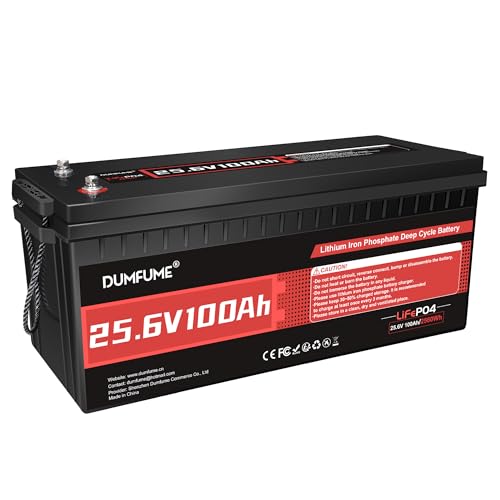
- yeagulch 24V 314Ah LiFePO4 Battery — check the latest price on Amazon
- SUPER EMPOWER 12V 100Ah LiFePO4 Battery, Group 24 (2 Pack) — check the latest price on Amazon
- Xeanerol 24V 5Ah Lithium Battery — prose-only in this guide (see its review below)
- Qwenoer 22.2V–24V 10Ah Lithium Battery — prose-only in this guide (see its review below)
- VEMDIA 12V 100Ah LiFePO4 Battery (Group 31) — prose-only in this guide (see its review below)
- SUPER EMPOWER 12.8V 100Ah LiFePO4 Battery (Group 31) — prose-only in this guide (see its review below)
Read the full guide ↓
A 24 volt trolling motor is a serious piece of propulsion, and the best trolling motor battery for 24 volt system duty has to satisfy three requirements that have nothing to do with each other: the right voltage, delivered natively or by a properly matched series pair; enough energy for a real day at real thrust settings; and a discharge rating that survives full-power runs against wind and current without tripping. Batteries that meet all three are a short list in any pool. Batteries that meet only the first — the voltage printed in the title — fill page after page of search results, and most of this guide’s prose-only section exists to explain why they do not belong on a boat.
The researched pool divides into exactly those camps. Two linked picks can genuinely power a 24V trolling motor: one native 24V battery of very large capacity, and one matched pair of 12V batteries designed to be wired in series. The other four products are documented without links: two are small 24V project packs whose entire energy budget would not run a trolling motor for an hour, and two are single 12V batteries that cannot serve a 24V system on their own.
Read the runtime maths in the buying guide before choosing between the two architectures. Trolling motors are almost never run at full thrust all day, so honest sizing uses your real thrust habits — and the difference between the native battery and the series pair is mostly about how much reserve you want when the wind picks up for the run home.
Readers comparing propulsion setups often research the 12V side too, and Best Deep Cycle 12 Volt Trolling Motor Battery Auto Zone covers that neighbouring category.
Key Takeaways
- Only two pool products can truly power a 24V trolling motor: the native 24V battery and the matched 12V pair wired in series.
- Voltage in the title is not qualification — the 24V project packs store a small fraction of a trolling day’s energy.
- Size by watt-hours at your real thrust settings, not by the motor’s maximum draw, and keep reserve for wind and current.
- A series pair must be bought matched, charged evenly, and treated as one battery for its whole life.
- The BMS rating is a propulsion specification: full-thrust runs are exactly where an undersized BMS trips.
In this guide
Quick Picks
All six products researched for the best trolling motor battery for 24 volt system brief, at a glance. Badges match the detailed reviews that follow.
| Pick | Badge | Headline specification | Status |
|---|---|---|---|
| yeagulch 24V 314Ah LiFePO4 Battery | Best Overall — Native 24V Capacity | Nominal voltage: 24V; Capacity: 314Ah; Energy: 8038.4Wh | Linked |
| SUPER EMPOWER 12V 100Ah LiFePO4 Battery, Group 24 (2 Pack) | Best Series-Pair Foundation | Nominal voltage: 12V; Capacity: 100Ah per battery (2 pack); Energy: 1280Wh per battery | Linked |
| Xeanerol 24V 5Ah Lithium Battery | Prose-Only: 5Ah Project Pack | Nominal voltage: 24V; Capacity: 5Ah; Chemistry: Lithium-ion (Li-ion) | Prose-only |
| Qwenoer 22.2V–24V 10Ah Lithium Battery | Prose-Only: Ride-On Project Pack | Nominal voltage: 22.2V–24V; Capacity: 10Ah; Chemistry: Lithium-ion (Li-ion) | Prose-only |
| VEMDIA 12V 100Ah LiFePO4 Battery (Group 31) | Prose-Only: Single 12V Unit | Nominal voltage: 12V; Capacity: 100Ah; Case size: Group 31 | Prose-only |
| SUPER EMPOWER 12.8V 100Ah LiFePO4 Battery (Group 31) | Prose-Only: Single 12V Unit | Nominal voltage: 12.8V; Capacity: 100Ah; Energy: 1280Wh | Prose-only |
How These Picks Were Chosen
Screening for this keyword tested each pool product against the three requirements of 24V trolling duty. Voltage: native 24V, or a matched pair explicitly sold for series use. Energy: enough watt-hours for a realistic day at mixed thrust, which eliminated both project packs immediately — 5Ah and 10Ah are electronics budgets, not propulsion budgets. Discharge: a BMS rating compatible with a trolling motor’s working and peak draws. Single 12V batteries, however good, were set prose-only because a 24V system cannot run on one, and the guide links the factory-matched pair rather than asking buyers to assemble pairs from singles. Specifications come from verified listing data, certifications and cycle figures are reported as maker-stated, and no on-water testing is claimed — runtime guidance is arithmetic from stated capacities and typical motor draws, labelled as such.
The 6 Best Options for trolling motor battery for 24 volt system

yeagulch 24V 314Ah LiFePO4 Battery
Badge: Best Overall — Native 24V Capacity
A 24 volt trolling system wants two things from its battery: native 24V delivery and enough energy to hold thrust through wind, current, and a long day. This yeagulch is the pool’s only native-24V propulsion-class battery: 314Ah and 8038.4Wh behind a 200A BMS, with a maker-stated 15000+ cycle class, low-temperature protection, and UL 1973 / UN38.3 certifications named in the listing. Its listing explicitly names trolling motors. The 200A BMS matters at the top of the thrust range, where a 24V motor at full power draws heavily and a lesser BMS would trip or throttle the day. The honest cost is size and weight: this is a big battery that needs a proper compartment and a plan for lifting it. For a dedicated 24V fishing boat, it is the single-unit answer.
Look at the specification as a system rather than a headline. The nominal voltage of 24V and a energy of 8038.4Wh defines what this battery can safely deliver hour after hour, while the stated cycle class tells you the duty it was built for. In a powering a 24 volt trolling motor through a full day on the water role, that combination matters more than any single number: a battery is only as useful as the weakest link between its capacity, its discharge ceiling, and the protection that keeps it alive when conditions turn cold, hot, or careless. Buyers who match those three things to their real load rarely think about the battery again, which is exactly the point.
Strengths
- Native 24V output with very large single-unit capacity
- A 200A BMS matches the heavier continuous loads of a 24V system
- Maker-stated UL 1973 and UN38.3 certifications are named in the listing
Trade-offs
- 314Ah at 24V is a big, heavy unit — plan the compartment and lifting help
- Capacity this large is oversized for light-duty 24V use
- Single-unit failure takes the whole bank offline, unlike paired smaller units
| Nominal voltage | 24V |
|---|---|
| Capacity | 314Ah |
| Energy | 8038.4Wh |
| Chemistry | Lithium iron phosphate (LiFePO4) |
| BMS | 200A BMS |
| Cycle class | 15000+ deep cycles (maker-stated) |
| Certifications (maker-stated) | UL 1973, UN38.3 |
| Protection | Low-temperature protection |
Best for: buyers who need powering a 24 volt trolling motor through a full day on the water and whose loads fit this battery’s stated limits / Not suited for: buyers whose voltage, capacity, or discharge requirements fall outside the specification above

SUPER EMPOWER 12V 100Ah LiFePO4 Battery, Group 24 (2 Pack)
Badge: Best Series-Pair Foundation
The alternative architecture is the series pair: two matched 12V batteries wired to deliver 24V. This SUPER EMPOWER two-pack — two Group 24 100Ah units, each 1280Wh with a 100A BMS and low-temperature cutoff, and stated 4P4S expansion support — is sold in exactly the matched form series wiring demands. In series, the pair presents 24V at 100Ah, a working day’s energy for most 24V motors at realistic thrust settings, with the practical advantages of lighter individual units and Group 24 cases that fit standard trays. The discipline it demands is balance: charge the pair evenly, keep connections immaculate, and treat the two batteries as one system component for life. For most 24V boats, this is the pragmatic pick.
The honest way to judge this battery is against the job named in this guide — powering a 24 volt trolling motor through a full day on the water. Its nominal voltage of 12V and a energy of 1280Wh per battery is the figure to hold against your own load list. Everything else about the design, from the case format to the protection features, exists to make that central specification usable in the real world: in a compartment that gets hot in summer, on mornings when the temperature sits below freezing, and on the day someone connects a load bigger than the plan allowed. That is what the BMS is for, and it is why its rating appears in the spec box rather than in a footnote.
Strengths
- Two matched batteries in one purchase — ready for a series pair or a parallel bank
- Group 24 cases are smaller than Group 31 for tight compartments
- Stated 4P4S expansion leaves room to grow the system later
Trade-offs
- You pay for two batteries even if your system only needs one
- Series use for higher voltage demands matched charging discipline
- Two units mean two sets of terminals and cables to install and maintain
| Nominal voltage | 12V |
|---|---|
| Capacity | 100Ah per battery (2 pack) |
| Energy | 1280Wh per battery |
| Case size | Group 24 |
| Chemistry | Lithium iron phosphate (LiFePO4) |
| BMS | 100A BMS |
| Protection | Low-temperature cutoff |
| Expansion | Supports 4P4S expansion, up to 20.48kWh |
Best for: buyers who need powering a 24 volt trolling motor through a full day on the water and whose loads fit this battery’s stated limits / Not suited for: buyers whose voltage, capacity, or discharge requirements fall outside the specification above
Xeanerol 24V 5Ah Lithium Battery
Badge: Prose-Only: 5Ah Project Pack
The Xeanerol pack is 24V, and that is the end of its qualifications. At 5Ah with a project charger and cable connector, built for DIY projects, RC cars, LED strips, and CCTV, it stores roughly one-fortieth of the energy a trolling day requires and its discharge design is for electronics, not propulsion. A trolling motor would drain it in minutes even if the connections could be made. It is prose-only because including it as a trolling pick would be a disservice dressed as thoroughness; it is documented so that anyone who meets it in a search sorted by ’24 volt’ understands why voltage alone never qualifies a battery for this job.
Two ownership details separate a good purchase from a frustrating one here. First, charging: this battery expects a lithium-profile charger or a charge controller set for LiFePO4, and using the right profile is the cheapest lifespan insurance available. Second, expectations: maker-stated cycle figures describe laboratory duty, so the sensible reading is comparative, not absolute. Set against those two disciplines, the nominal voltage of 24V and a chemistry of Lithium-ion (Li-ion) and the overall design make this a battery you install, configure once, and then mostly ignore — the correct experience for a power component.
Strengths
- Ships with its own 2A charger and cable connector for small projects
- Very light and compact for bench, RC, and lighting experiments
- A ready-made pack for low-draw 24V electronics
Trade-offs
- 24V output — it cannot run a 12V system without conversion
- 5Ah is project-scale energy, far below deep-cycle storage batteries
- Lithium-ion chemistry, not LiFePO4, with a project-pack rather than storage-battery design
| Nominal voltage | 24V |
|---|---|
| Capacity | 5Ah |
| Chemistry | Lithium-ion (Li-ion) |
| Included | 2A fast charger and cable connector |
| Intended use (maker-stated) | 24V DIY projects, RC cars, LED light strips, CCTV cameras |
Best for: buyers who need powering a 24 volt trolling motor through a full day on the water and whose loads fit this battery’s stated limits / Not suited for: buyers whose voltage, capacity, or discharge requirements fall outside the specification above
Qwenoer 22.2V–24V 10Ah Lithium Battery
Badge: Prose-Only: Ride-On Project Pack
The Qwenoer pack fails the same way at twice the capacity: 22.2V–24V and 10Ah, lithium-ion, with bare leads and a charger, made for kids’ ride-on cars and DIY projects. Ten amp-hours is a toy’s energy budget. A 24V trolling motor at moderate thrust draws that down in well under an hour, and the pack’s construction — bare leads, project connectors — is not marine propulsion hardware. Prose-only, again as a warning: the project-pack corner of the 24V market sits one careless click away from the trolling search results, and its products share nothing with propulsion batteries except a number in the title.
Look at the specification as a system rather than a headline. The nominal voltage of 22.2V–24V and a chemistry of Lithium-ion (Li-ion) defines what this battery can safely deliver hour after hour, while the stated cycle class tells you the duty it was built for. In a powering a 24 volt trolling motor through a full day on the water role, that combination matters more than any single number: a battery is only as useful as the weakest link between its capacity, its discharge ceiling, and the protection that keeps it alive when conditions turn cold, hot, or careless. Buyers who match those three things to their real load rarely think about the battery again, which is exactly the point.
Strengths
- Includes its matched charger, which suits small project builds
- Bare leads make it easy to wire into custom low-draw projects
- Compact pack for ride-on toys and electronics
Trade-offs
- A project pack, not a deep-cycle storage or propulsion battery
- 10Ah is far too little energy for trolling or household backup
- Lithium-ion chemistry rather than the LiFePO4 used by storage batteries
| Nominal voltage | 22.2V–24V |
|---|---|
| Capacity | 10Ah |
| Chemistry | Lithium-ion (Li-ion) |
| Included | 25.2V 2A charger |
| Connections | Bare leads wire and cable connector |
| Intended use (maker-stated) | Kids ride-on cars, DIY projects, solar panels, LED light strips, CCTV cameras |
Best for: buyers who need powering a 24 volt trolling motor through a full day on the water and whose loads fit this battery’s stated limits / Not suited for: buyers whose voltage, capacity, or discharge requirements fall outside the specification above
VEMDIA 12V 100Ah LiFePO4 Battery (Group 31)
Badge: Prose-Only: Single 12V Unit
The VEMDIA is a good 12V battery — 100Ah, Group 31, a 100A BMS, a maker-stated 15000-cycle class — and it is prose-only here because a single 12V unit cannot power a 24V system. Its relevance is architectural: two of them in series would form a 24V bank, and buyers committed to Group 31 cases sometimes build exactly that. But this guide links what is sold and verified as a unit, and as a unit it is a 12V battery in a 24V brief. It is documented so the series option is visible with its conditions — matched units, balanced charging, double the connections — rather than implied as a shortcut.
The honest way to judge this battery is against the job named in this guide — powering a 24 volt trolling motor through a full day on the water. Its nominal voltage of 12V and a case size of Group 31 is the figure to hold against your own load list. Everything else about the design, from the case format to the protection features, exists to make that central specification usable in the real world: in a compartment that gets hot in summer, on mornings when the temperature sits below freezing, and on the day someone connects a load bigger than the plan allowed. That is what the BMS is for, and it is why its rating appears in the spec box rather than in a footnote.
Strengths
- Standard Group 31 case fits the trays and boxes most upgraders already own
- 100A BMS covers typical RV, marine, and cabin continuous loads
- Maker-stated deep-cycle class suits daily solar cycling
Trade-offs
- Full-size case, so it saves weight over lead-acid but not space
- No stated low-temperature heating — cold charging relies on BMS cutoff behaviour
- A single unit cannot serve loads above its BMS discharge ceiling
| Nominal voltage | 12V |
|---|---|
| Capacity | 100Ah |
| Case size | Group 31 |
| Chemistry | Lithium iron phosphate (LiFePO4) |
| BMS | Built-in 100A BMS |
| Cycle class | 15000 deep cycles (maker-stated) |
| Intended use (maker-stated) | Solar systems, home energy, RVs, marine |
Best for: buyers who need powering a 24 volt trolling motor through a full day on the water and whose loads fit this battery’s stated limits / Not suited for: buyers whose voltage, capacity, or discharge requirements fall outside the specification above
SUPER EMPOWER 12.8V 100Ah LiFePO4 Battery (Group 31)
Badge: Prose-Only: Single 12V Unit
The SUPER EMPOWER Group 31 sits in the same position as the VEMDIA: a strong single 12V battery — 12.8V, 100Ah, 1280Wh, a 100A BMS, low-temperature cutoff, and stated 4P4S expansion — that cannot serve a 24V motor alone. As half of a series pair it would work, and its expansion support is genuinely relevant to bank-building. It is prose-only because the linked series recommendation in this guide is the matched two-pack above, sold as a pair; steering buyers to assemble a pair from single listings, when a factory-matched pair exists in the same pool, would be worse guidance. Its presence here marks the boundary of the recommendation honestly.
Two ownership details separate a good purchase from a frustrating one here. First, charging: this battery expects a lithium-profile charger or a charge controller set for LiFePO4, and using the right profile is the cheapest lifespan insurance available. Second, expectations: maker-stated cycle figures describe laboratory duty, so the sensible reading is comparative, not absolute. Set against those two disciplines, the nominal voltage of 12.8V and a energy of 1280Wh and the overall design make this a battery you install, configure once, and then mostly ignore — the correct experience for a power component.
Strengths
- Stated 4P4S expansion support makes it a building block for larger banks
- Low-temperature cutoff protects the cells during cold-weather charging
- Group 31 footprint matches common RV and marine battery compartments
Trade-offs
- Expansion only pays off if you actually plan a multi-battery bank
- A single unit’s 100A BMS caps continuous discharge like its peers
- Series and parallel wiring adds cabling and balancing homework the listing cannot do for you
| Nominal voltage | 12.8V |
|---|---|
| Capacity | 100Ah |
| Energy | 1280Wh |
| Case size | Group 31 |
| Chemistry | Lithium iron phosphate (LiFePO4) |
| BMS | 100A BMS |
| Protection | Low-temperature cutoff |
| Expansion | Supports 4P4S expansion, up to 20.48kWh |
Best for: buyers who need powering a 24 volt trolling motor through a full day on the water and whose loads fit this battery’s stated limits / Not suited for: buyers whose voltage, capacity, or discharge requirements fall outside the specification above
Comparison Table
The six products side by side on the attributes that decide this category. No prices and no ratings — both change too often to print honestly; use the links to check the latest price on Amazon.
| Product | Voltage | Capacity | Chemistry | Status | Link |
|---|---|---|---|---|---|
| yeagulch 24V 314Ah LiFePO4 Battery | 24V | 314Ah | Lithium iron phosphate (LiFePO4) | Linked | Check on Amazon |
| SUPER EMPOWER 12V 100Ah LiFePO4 Battery, Group 24 (2 Pack) | 12V | 100Ah per battery (2 pack) | Lithium iron phosphate (LiFePO4) | Linked | Check on Amazon |
| Xeanerol 24V 5Ah Lithium Battery | 24V | 5Ah | Lithium-ion (Li-ion) | Prose-only | Prose-only |
| Qwenoer 22.2V–24V 10Ah Lithium Battery | 22.2V–24V | 10Ah | Lithium-ion (Li-ion) | Prose-only | Prose-only |
| VEMDIA 12V 100Ah LiFePO4 Battery (Group 31) | 12V | 100Ah | Lithium iron phosphate (LiFePO4) | Prose-only | Prose-only |
| SUPER EMPOWER 12.8V 100Ah LiFePO4 Battery (Group 31) | 12.8V | 100Ah | Lithium iron phosphate (LiFePO4) | Prose-only | Prose-only |
How to Choose: Best Trolling Motor Battery for a 24 Volt System Buying Guide
Native 24V versus a series pair: the real architectural choice
A native 24V battery is one unit, one BMS, one set of connections, and no balance to maintain — the simplest system that can work, and the architecture of this guide’s first pick. A series pair of 12V batteries splits the same job across two units: lighter to handle individually, able to use standard 12V case sizes and chargers (with the right series charging discipline), and redundant in the narrow sense that one failed unit is cheaper to replace. Its costs are doubled connections — every one a potential resistance and corrosion point — and the lifelong requirement that the pair stay matched in age, capacity, and state of charge. Neither architecture is universally better; the native battery suits a dedicated installation, the pair suits boats where weight handling and standard trays matter.
Runtime maths at real thrust settings
Trolling motors draw modest current at the low and middle thrust settings where they spend most of their lives, and heavy current only at maximum. Honest sizing starts from your habits: if you fish at half thrust for six hours with bursts at full power, estimate the average draw, multiply by hours, and convert to watt-hours. The series pair offers 24V at 100Ah — about 2560Wh nominal. The native battery offers roughly three times that. Anglers who spot-lock in current all day, troll at speed, or fish big windy water should weight the maximum-draw hours heavily; the BMS and the capacity both need to survive the worst hour of the day, not the average one, and a reserve for the run back is not optional equipment.
The BMS as a propulsion component
On a boat, a tripped BMS does not just stop a load — it can leave you without propulsion where you are. Match the battery’s continuous discharge rating against the motor’s maximum draw with margin, because cold water, a fouled prop, or a heavier-than-usual boat all push real draws upward. The native pick’s 200A BMS and the pair’s series behaviour should both be read against your specific motor’s stated maximum current, which the motor maker publishes. If your motor’s maximum sits close to a battery’s ceiling, that battery is the wrong choice no matter how attractive its capacity looks; propulsion is the load class where undersizing announces itself at the worst possible moment.
Charging a 24V trolling system
Native 24V batteries charge from a 24V lithium-profile charger or a suitable onboard unit. Series pairs offer a choice: a 24V charger across the pair, or periodic individual charging of each 12V unit to restore balance — many experienced owners do both, using the 24V charger routinely and an individual top-up a few times a season. What a series pair must never experience is chronic imbalance, where one battery consistently works harder and ages faster until the pair’s performance collapses toward the weaker unit. Low-temperature protection on the linked picks guards winter charging; store the batteries partially charged, and bring them to a full, balanced charge before the season’s first trip rather than the night before.
For the broader 24V ecosystem on the boat and beyond, Best Power Wheels 24 Volt is an unexpected but popular detour among our readers.
How to Install and Care for a 24V Trolling Battery System
Install for the marine environment first and the electrical diagram second. The battery or pair must be secured so it cannot move in a seaway — strapped in a tray or compartment that also keeps it as dry as the boat allows — with terminals protected from accidental contact with tools, tackle, or a loose anchor. Use marine-grade cable of the size the motor maker specifies for your run length, tinned where possible, with properly crimped and sealed connectors; every connection in a boat is a corrosion experiment, and heat-shrink with adhesive lining is the difference between a connection that lasts a season and one that lasts a decade. Fit the fuse or breaker the motor maker specifies, in the place they specify it.
For a series pair, the installation ritual has one extra commandment: the jumper cable between the two batteries is part of the propulsion circuit and must be the same gauge and quality as the main runs, kept as short as the layout allows, with its connections given the same care. Label both batteries with their position and install date, and photograph the wiring before the first outing. Commission the system on the trailer or at the dock: run the motor through its range, watch for heat at any connection after a sustained run, and confirm the charger brings the system — or each unit — to full without complaint. A connection that warms under load is telling you its resistance is too high; fix it now, not after it fails offshore.
Seasonal care is simple and mostly about charge state and connections. Rinse nothing electrical; instead, inspect terminals for corrosion at every charging session, keep them clean and tight, and re-check after the first trips of the season when everything has settled. Store batteries partially charged in a cool, dry place, and if the boat winters somewhere freezing, remember the linked picks’ low-temperature protection will pause charging until the batteries warm — plan the spring commissioning charge for a mild day or a heated space. Treat the pair, if you run one, as a single battery in every record you keep: same hours, same charges, same history.
Problem: the motor cuts out at high thrust → suspect the BMS ceiling or a high-resistance connection before the motor; check every terminal for heat after a run, verify the battery’s discharge rating against the motor’s stated maximum draw, and inspect the series jumper on a pair.
Problem: one battery of a series pair is consistently lower than the other → the pair is drifting out of balance. Charge each unit individually to full, then return to series service, and add individual top-ups to the seasonal routine.
Problem: runtime has shortened noticeably over a season → first audit the boat, not the battery: a fouled prop, a heavier load, or fishing stronger current all raise real draws. If the boat is unchanged, test each battery’s delivered capacity individually.
Workshop power for installation day is covered in Best Grinder Power Tool 20 Volt for readers equipping the bench at the same time.
Spot-Lock, Current, and the Case for Reserve Capacity
Modern 24V trolling motors spend much of their working life holding position — spot-lock against wind and current — which is a peculiar load: continuous, variable, and occasionally maximal when a gust or a wake demands a correction. That duty profile is why reserve capacity matters more in trolling than in most battery jobs. A battery sized exactly to a calm day’s arithmetic has nothing left for the afternoon the wind builds, and the failure arrives precisely when the motor is working hardest to keep you on the fish and off the rocks.
This is the native 24V battery’s strongest argument: its very large capacity converts reserve from a calculation into a default. The series pair answers with adequacy plus discipline — enough energy for honest days, provided the owner’s thrust habits match the estimate. Neither answer is wrong, but they suit different anglers: the one who fishes big water in all weather should buy reserve; the one who fishes sheltered lakes at modest thrust can bank the pair’s savings in money and handling weight.
Weight Distribution and Handling on Smaller Boats
Battery choice moves weight around a boat, and on smaller hulls that is a performance decision, not just a lifting inconvenience. A single very large native battery concentrates its considerable weight in one compartment — often forward, where trolling batteries live, which can help a bow-mount setup or hurt a light hull’s trim depending on the boat. A series pair splits the same job into two lighter units that one person can carry to the charger, install without help, and position with some freedom to balance the boat.
Handling matters across the whole ownership cycle, not just installation day: batteries come out for winter, for service, and for charging in boats kept on trailers without onboard chargers. The pair’s individual units are manageable lifts; the native battery is a planned, two-handed, possibly two-person job. Be honest about who will actually move the battery in February, and let that answer weigh alongside the electrical specifications — the best system is the one that gets maintained, and maintenance follows handling.
And for comparing tool-platform voltages while the boat is in the garage, see Best Dewalt 20 Volt Impact 887 Or 885.
Ownership Notes Worth Reading Before You Order
A note on how trolling runtime claims should be read wherever you meet them: any single ‘hours of runtime’ figure silently assumes a thrust setting, a boat weight, and weather. Makers and sellers choose flattering assumptions. Your defence is the arithmetic in this guide — your motor’s published draw at the settings you actually use, multiplied by your hours, compared against watt-hours with reserve. That calculation is unfashionable next to a headline number, but it is the only version of the truth that applies to your boat, your water, and your fishing.
Propeller condition belongs in a battery guide for one reason: it is the commonest hidden load. A dinged, fouled, or wrong-pitch prop makes the motor draw more current for the same thrust, which reads exactly like a battery losing capacity. Before concluding that a battery has faded, clean and inspect the prop, check the shaft for fishing line — a classic silent drag — and confirm the motor’s mounting depth is where the maker intends. Batteries are blamed for a great deal of hydrodynamics.
Finally, think about failure posture. On the water, a battery system should fail safe and, ideally, fail obviously: a tripped protection that resets, a monitor that shows the truth, connections that can be inspected by eye and hand. The installations that cause real trouble are the ones that degrade silently — a corroding jumper, an imbalancing pair, a chafing cable — which is why this guide keeps returning to inspection rituals. Ten minutes with the compartment open, a few times a season, is the entire maintenance philosophy of a reliable trolling system.
Charging infrastructure at the dock or the house deserves the same realism as the battery itself. A system that fishes two consecutive days needs overnight recovery with margin, and that is a charger specification, not a hope. If you routinely return with the battery well down and leave again at dawn, size the charger to restore the full day’s use in the hours actually available, and treat anything less as a constraint on the second day’s fishing rather than a saving.
Breakers and fuses in a trolling circuit deserve a precise word, because they are often confused with the battery’s own protection. The BMS guards the battery; the breaker guards the wiring and the motor, and it is sized and placed according to the motor maker’s instructions, not the battery’s rating. Replacing a specified breaker with a larger one ‘because it kept tripping’ removes protection from exactly the circuit that announced a problem. If a correctly sized breaker trips in normal use, the fault is real — find the hot connection, the chafed cable, or the struggling motor — rather than promoting the breaker.
And a small discipline that separates quiet boats from troubleshooting boats: log the system’s behaviour for the first season. A notebook line after each trip — hours fished, rough thrust mix, charger time to full — builds the dataset that makes every later judgement easy. When something changes in year three, that log tells you whether the battery, the boat, or your fishing changed. Memory insists everything is the same; the log knows better, and it costs thirty seconds a trip.
One last consideration is resale and handover: boats change owners, and a trolling battery system with documented installation — battery models, purchase dates, wiring photographs, charger settings — transfers its value with the boat. An undocumented system, however good, reads to a buyer as a question mark. The same paperwork that makes your own troubleshooting faster makes the boat easier to sell, which is a rare case of diligence paying twice.
Common Buying Mistakes
- Buying a 24V project pack because the voltage matched, and discovering on the water that 5Ah or 10Ah is minutes of propulsion, not hours.
- Wiring a series pair from two unmatched batteries bought at different times, then chasing the imbalance for the rest of their lives.
- Sizing capacity from the motor’s cruising draw alone and leaving no reserve for wind, current, or the run home.
- Ignoring the BMS rating until it trips at full thrust — the one moment propulsion matters most.
- Using undersized or poorly crimped cable and blaming the battery for voltage drop that lives entirely in the wiring.
Final Recommendation
For a dedicated 24V trolling installation, the native yeagulch 314Ah is the first recommendation: one unit, a 200A BMS that respects full-thrust duty, trolling named in its own listing, and enough energy that reserve stops being a calculation. If the boat and the crew can handle its size and weight, it is the simplest correct answer in this pool.
Start with the yeagulch 24V 314Ah LiFePO4 Battery if it matches your requirements.
The SUPER EMPOWER 12V 100Ah LiFePO4 Battery, Group 24 (2 Pack) is the alternative to weigh before you decide.
For most other 24V boats, the matched SUPER EMPOWER pair is the pragmatic best trolling motor battery for 24 volt system use: standard cases, manageable individual weight, honest capacity for real fishing days, and an expansion path if the system grows. The four prose-only entries define the traps — project packs with a trolling keyword’s voltage and none of its energy, and single 12V batteries in a 24V brief. Match voltage, energy, and discharge rating together, and the motor will simply work, all day, every trip.
Frequently Asked Questions
How long will a 24V 100Ah battery run a trolling motor?
It depends on thrust. At moderate settings drawing an average of 15–20 amps, a 24V 100Ah battery (about 2560Wh) delivers roughly five to six hours; at sustained high thrust drawing 40 amps or more, closer to two hours. Your motor’s published draw at each setting and your own habits give the real figure — the buying guide’s method turns that into a personal estimate.
Can I use two 12V batteries for a 24V trolling motor?
Yes — wired in series, two matched 12V batteries present 24V, and it is a standard, legitimate architecture. The conditions are strict: same model, same age, bought as a pair, charged with balance in mind, and treated as one battery thereafter. The matched two-pack in this guide exists precisely to make those conditions easy.
Why not just use the biggest 24V battery I can find?
Capacity beyond your days buys weight, cost, and a harder installation without buying runtime you will use. The native pick’s 314Ah suits big water and long days; a sheltered-lake angler carries that surplus as dead weight for years. Size to your worst realistic day, with reserve — not to the largest number in the catalogue.
What size charger does a 24V trolling system need?
A lithium-profile charger matched to the system voltage — 24V for a native battery or across a series pair — with an output that refills your typical day’s use overnight. Series-pair owners often add the ability to charge each 12V unit individually for balancing. Undersized chargers are a false economy on a boat that fishes consecutive days.
Will a lithium battery damage my trolling motor?
A correctly chosen LiFePO4 battery is the standard modern upgrade for trolling systems and suits the motors well; the motor sees a steadier voltage across the day than lead-acid delivers. The requirements are the ones in this guide: correct voltage, adequate BMS rating for the motor’s maximum draw, and the motor maker’s specified fuse and cable sizes respected.
How do I store trolling batteries over winter?
Partially charged, disconnected, cool and dry, with a check every couple of months. Charge them somewhere they can warm above freezing before the spring top-up, since low-temperature protection pauses charging in the cold. Series pairs should be stored at matched charge levels and individually topped up before being returned to series service.