Disclosure: topratedkitchenware.com is reader-supported. When you buy through links on our site, we may earn an affiliate commission from Amazon and other retailers, at no extra cost to you.
Where to buy
The picks below are the verified shortlist for this guide to best veritical meat smokers. Linked picks take you to their Amazon listing, where you can check the latest price on Amazon and confirm the current configuration. Picks marked prose-only are reviewed in full below but carry no link, for the reason given in each review.
- EAST OAK 30-inch Electric Smoker Polar Night with Stand — Check on Amazon
- RYHOFOUD 30-Inch Vertical Electric Smoker with Wheels
- Masterbuilt 710 WiFi Digital Smoker MB20070924
- EAST OAK 30-inch Electric Smoker Matte Black
- Masterbuilt 30-inch Analog Electric Smoker MB20070210
- Pit Boss 700 Carbon Series Pellet Grill and Smoker (prose-only pick, reviewed below)
Read the full guide ↓ for the ranking, the honest limitations of every pick, and the checks that matter more than any headline claim.
The spelling in best veritical meat smokers may wobble, but the intent is exact: a vertical smoker, for meat. Vertical cabinets earn their place in meat smoking because heat and smoke rise through stacked racks, the footprint stays small, and cuts like ribs, pork shoulder, sausage and whole birds sit naturally in that tall, narrow space. Five of the six picks here are true vertical electric smokers and are fully linked. The Pit Boss 700 is reviewed prose-only as the horizontal pellet alternative some readers will be cross-shopping; it is a good machine, but it is not vertical, so it carries no link and no photo in a vertical guide.
This guide compares the picks side by side, explains how the order and badges were decided, and gives every pick a detailed review with strengths, trade-offs and a plain statement of who should skip it. You will also find a comparison table, a choosing guide, a practical how-to section with troubleshooting, and answers to the questions buyers ask most. Readers comparing neighbouring searches will find our notes on Best Large Scale Smokers useful alongside this one, because the two questions attract the same shoppers at slightly different stages.
Key Takeaways
- Decide fuel before brand: electric, pellet and live-fire smokers ask very different amounts of work.
- Shape follows food: vertical for racks and hanging, horizontal for length and grilling.
- Listed cooking areas count every rack, so compare shapes before comparing numbers.
- Probes, windows and side loaders are not gadgets; they keep the door shut and the cook steady.
- Clean, thin smoke is the goal. Thick white smoke is a fault in every smoker type.
In this guide
Quick Picks
| Pick | Badge | Why it is here | Link |
|---|---|---|---|
| EAST OAK 30-inch Electric Smoker Polar Night with Stand | Best Overall Vertical | taller cooks and anyone who dislikes bending to load racks, plus families smoking several items at once | Check on Amazon |
| RYHOFOUD 30-Inch Vertical Electric Smoker with Wheels | Best for Hanging and Jerky | cooks who smoke sausage, fish and jerky as well as joints, and who like the hanging option a vertical cabinet gives | Check on Amazon |
| Masterbuilt 710 WiFi Digital Smoker MB20070924 | Best Smart Vertical | tech-comfortable cooks running long smokes who want phone monitoring and vertical batch capacity | Check on Amazon |
| EAST OAK 30-inch Electric Smoker Matte Black | Best on Wheels | cooks who store the smoker in a garage and roll it out to cook, and who value the timer and the big vertical capacity | Check on Amazon |
| Masterbuilt 30-inch Analog Electric Smoker MB20070210 | Best Simple Vertical | value-minded first-time smokers and cooks who prefer a dial to a display | Check on Amazon |
| Pit Boss 700 Carbon Series Pellet Grill and Smoker | Best Horizontal Alternative | cooks who want genuine wood-fuel cooking with push-button temperature control, and who also grill burgers and chicken on the same machine | Prose-only pick |
How These Picks Were Chosen
Every pick in this guide comes from a verified product pool checked against Amazon listing data, with fuel type, format, listed cooking area and included features taken from that listing rather than from memory or from other roundups. We compared heat source, shape, control type and practical features such as probes, windows, loaders, wheels and stands, then ordered the picks for the specific question in the keyword. Where a pool product did not honestly match the keyword, it was demoted to a prose-only review with the mismatch stated plainly, instead of being linked as if it fit.
This is research-led guidance, not a claim of hands-on laboratory testing. We do not invent test results, scores or measurements the listings do not provide. Specs in the mini spec boxes come only from the verified listing data. Where a listing is silent, the box is silent too. That restraint is deliberate: smoker listings are full of big numbers, and a guide earns trust by repeating only the ones it can stand behind.
One more note on method, because it shapes the whole guide. Readers arriving from searches such as Best Small Cheaper Smokers often want a single winner. We do name a first choice in the final recommendation, but the detailed reviews are written so that the right pick for your kitchen, patio and habits can overrule the ranking. Badges mark the job each pick does best, not a league table of worth.
Detailed Reviews: best veritical meat smokers
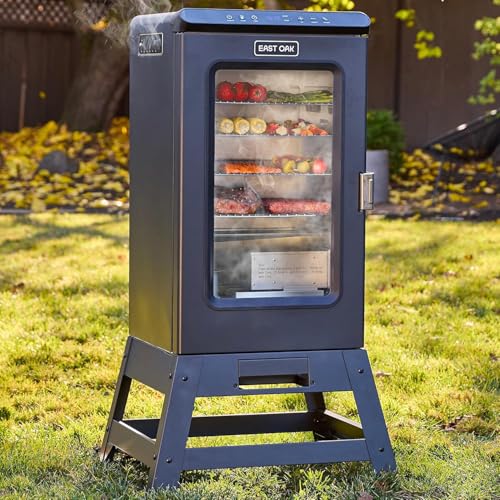
EAST OAK 30-inch Electric Smoker Polar Night with Stand
Badge: Best Overall Vertical
Strengths
- Stand raises the cabinet to a comfortable working height
- Probe and side loader both reduce door opening
- Large listed area across vertical racks
Trade-offs
- Stand and cabinet together take more storage room
- Electric heat, not live wood fire
- Raised cabinet must sit level and stable before loading
At a glance
- 30-inch electric vertical design
- Built-in meat probe
- Mobility stand included
- Side chip loader
- 725 sq in cooking area listed
- Colour listed: Polar Night
This pick suits taller cooks and anyone who dislikes bending to load racks, plus families smoking several items at once. In everyday use the pattern is consistent: it holds a smoking temperature in the manner its control type promises, produces smoke in keeping with its fuel, and asks for the level of attention its type implies. Ribs, shoulder, poultry and fish cooked low and slow come out as the format suggests they should, and the features listed in its spec box, rather than marketing extras, are the ones you will actually use on a long cook: the probe that saves a door opening, the loader that saves heat, the wheels that save your back.
The honest limitation deserves its own paragraph. No smoker in this guide does everything, and this one’s limits are listed above rather than buried. If your cooking regularly runs into those limits, a different pick in this same guide is the answer, not a workaround. If your cooking sits comfortably inside them, those trade-offs will rarely cross your mind after the first few cooks. That is the real test of a shortlist like this one: not which machine is best in the abstract, but which set of compromises fits the way you already cook.
Best for: readers whose habits match the strengths above / Not suited for: buyers whose needs run straight into the listed trade-offs
Check on Amazon to see the current listing, confirm the configuration and included accessories, and read the newest owner feedback.

RYHOFOUD 30-Inch Vertical Electric Smoker with Wheels
Badge: Best for Hanging and Jerky
Strengths
- S-hooks and racks suit hanging sausage and whole items vertically
- Water pan helps keep the cabinet environment moist
- Wheels and drip trays show practical, tidy thinking
Trade-offs
- Lesser-known brand compared with the big smoker names
- Electric heat; the fire question is settled by the element, not wood
- Accessory count means more parts to wash
At a glance
- 30-inch vertical electric design
- Wheels fitted
- Water pan and wood chip tray
- Clear window
- Steel racks and S-hooks
- Drip trays included
This pick suits cooks who smoke sausage, fish and jerky as well as joints, and who like the hanging option a vertical cabinet gives. In everyday use the pattern is consistent: it holds a smoking temperature in the manner its control type promises, produces smoke in keeping with its fuel, and asks for the level of attention its type implies. Ribs, shoulder, poultry and fish cooked low and slow come out as the format suggests they should, and the features listed in its spec box, rather than marketing extras, are the ones you will actually use on a long cook: the probe that saves a door opening, the loader that saves heat, the wheels that save your back.
The honest limitation deserves its own paragraph. No smoker in this guide does everything, and this one’s limits are listed above rather than buried. If your cooking regularly runs into those limits, a different pick in this same guide is the answer, not a workaround. If your cooking sits comfortably inside them, those trade-offs will rarely cross your mind after the first few cooks. That is the real test of a shortlist like this one: not which machine is best in the abstract, but which set of compromises fits the way you already cook.
Best for: readers whose habits match the strengths above / Not suited for: buyers whose needs run straight into the listed trade-offs
Check on Amazon to see the current listing, confirm the configuration and included accessories, and read the newest owner feedback.

Masterbuilt 710 WiFi Digital Smoker MB20070924
Badge: Best Smart Vertical
Strengths
- WiFi control lets you monitor and adjust from indoors
- Four racks and a large listed area suit batch cooking
- Chip loader avoids opening the door to refresh smoke
Trade-offs
- Electric heat, so smoke flavour comes from chips only
- App and WiFi setup is extra complexity some cooks do not want
- Chrome racks need care after greasy cooks
At a glance
- Vertical design
- 711 cooking sq inches listed
- 4 chrome coated smoking racks
- Wood chip loader
- Electric fuel source
- WiFi digital control
- Model MB20070924
This pick suits tech-comfortable cooks running long smokes who want phone monitoring and vertical batch capacity. In everyday use the pattern is consistent: it holds a smoking temperature in the manner its control type promises, produces smoke in keeping with its fuel, and asks for the level of attention its type implies. Ribs, shoulder, poultry and fish cooked low and slow come out as the format suggests they should, and the features listed in its spec box, rather than marketing extras, are the ones you will actually use on a long cook: the probe that saves a door opening, the loader that saves heat, the wheels that save your back.
The honest limitation deserves its own paragraph. No smoker in this guide does everything, and this one’s limits are listed above rather than buried. If your cooking regularly runs into those limits, a different pick in this same guide is the answer, not a workaround. If your cooking sits comfortably inside them, those trade-offs will rarely cross your mind after the first few cooks. That is the real test of a shortlist like this one: not which machine is best in the abstract, but which set of compromises fits the way you already cook.
Best for: readers whose habits match the strengths above / Not suited for: buyers whose needs run straight into the listed trade-offs
Check on Amazon to see the current listing, confirm the configuration and included accessories, and read the newest owner feedback.

EAST OAK 30-inch Electric Smoker Matte Black
Badge: Best on Wheels
Strengths
- Wheels make a tall cabinet realistically movable by one person
- Long listed timer suits overnight-style low and slow cooks
- Side loader keeps the door shut during long smokes
Trade-offs
- Electric heat source, with smoke from chips rather than a wood fire
- Tall cabinet needs level ground so it does not rock on its wheels
- Timer is not the same as full smart control
At a glance
- 30-inch electric vertical design
- Side chip loader
- 725 sq in cooking area listed
- Digital 12-hour timer listed
- Easy-rolling wheels
- Colour listed: Matte Black
This pick suits cooks who store the smoker in a garage and roll it out to cook, and who value the timer and the big vertical capacity. In everyday use the pattern is consistent: it holds a smoking temperature in the manner its control type promises, produces smoke in keeping with its fuel, and asks for the level of attention its type implies. Ribs, shoulder, poultry and fish cooked low and slow come out as the format suggests they should, and the features listed in its spec box, rather than marketing extras, are the ones you will actually use on a long cook: the probe that saves a door opening, the loader that saves heat, the wheels that save your back.
The honest limitation deserves its own paragraph. No smoker in this guide does everything, and this one’s limits are listed above rather than buried. If your cooking regularly runs into those limits, a different pick in this same guide is the answer, not a workaround. If your cooking sits comfortably inside them, those trade-offs will rarely cross your mind after the first few cooks. That is the real test of a shortlist like this one: not which machine is best in the abstract, but which set of compromises fits the way you already cook.
Best for: readers whose habits match the strengths above / Not suited for: buyers whose needs run straight into the listed trade-offs
Check on Amazon to see the current listing, confirm the configuration and included accessories, and read the newest owner feedback.
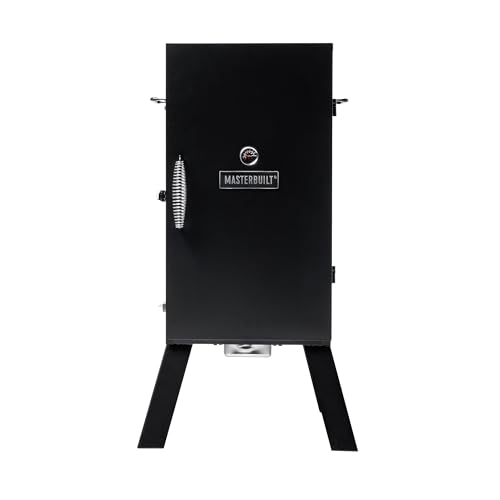
Masterbuilt 30-inch Analog Electric Smoker MB20070210
Badge: Best Simple Vertical
Strengths
- Analog simplicity: set the dial and smoke
- Vertical racks make good use of a modest footprint
- Straightforward design with little to configure
Trade-offs
- No digital holding, so expect to check and adjust
- Listed area is smaller than the 710-class Masterbuilt models
- Electric heat; smoke comes from chips, not a burning wood fire
At a glance
- 30-inch electric vertical design
- Analog temperature control
- Chrome smoking racks
- 535 cooking square inches listed
- Model MB20070210
This pick suits value-minded first-time smokers and cooks who prefer a dial to a display. In everyday use the pattern is consistent: it holds a smoking temperature in the manner its control type promises, produces smoke in keeping with its fuel, and asks for the level of attention its type implies. Ribs, shoulder, poultry and fish cooked low and slow come out as the format suggests they should, and the features listed in its spec box, rather than marketing extras, are the ones you will actually use on a long cook: the probe that saves a door opening, the loader that saves heat, the wheels that save your back.
The honest limitation deserves its own paragraph. No smoker in this guide does everything, and this one’s limits are listed above rather than buried. If your cooking regularly runs into those limits, a different pick in this same guide is the answer, not a workaround. If your cooking sits comfortably inside them, those trade-offs will rarely cross your mind after the first few cooks. That is the real test of a shortlist like this one: not which machine is best in the abstract, but which set of compromises fits the way you already cook.
Best for: readers whose habits match the strengths above / Not suited for: buyers whose needs run straight into the listed trade-offs
Check on Amazon to see the current listing, confirm the configuration and included accessories, and read the newest owner feedback.
Pit Boss 700 Carbon Series Pellet Grill and Smoker
Badge: Best Horizontal Alternative
Prose-only pick: this product is reviewed for comparison but is not linked and carries no photo in this guide, because it does not fully match the core requirement of the keyword. The review below explains the mismatch honestly rather than hiding it.
Strengths
- Burns real wood pellets, so the fire itself is wood-fuelled
- Digital controller holds a set temperature far more steadily than manual vents
- Grills as well as smokes, widening what one machine covers
Trade-offs
- Horizontal grill format, not a vertical cabinet
- Pellets must be kept dry and the auger kept clean
- Needs power for the controller and auger despite the wood fire
At a glance
- Wood pellet fuel
- 718 sq in cooking space listed
- 180 to 500 degrees F temperature range listed
- LCD digital controller
- Meat probe included
- 13.5 lb pellet hopper listed
This pick suits cooks who want genuine wood-fuel cooking with push-button temperature control, and who also grill burgers and chicken on the same machine. In everyday use the pattern is consistent: it holds a smoking temperature in the manner its control type promises, produces smoke in keeping with its fuel, and asks for the level of attention its type implies. Ribs, shoulder, poultry and fish cooked low and slow come out as the format suggests they should, and the features listed in its spec box, rather than marketing extras, are the ones you will actually use on a long cook: the probe that saves a door opening, the loader that saves heat, the wheels that save your back.
The honest limitation deserves its own paragraph. No smoker in this guide does everything, and this one’s limits are listed above rather than buried. If your cooking regularly runs into those limits, a different pick in this same guide is the answer, not a workaround. If your cooking sits comfortably inside them, those trade-offs will rarely cross your mind after the first few cooks. That is the real test of a shortlist like this one: not which machine is best in the abstract, but which set of compromises fits the way you already cook.
Best for: readers whose habits match the strengths above / Not suited for: buyers whose needs run straight into the listed trade-offs
Comparison Table
| Pick | Badge | Key listed attributes | Link |
|---|---|---|---|
| EAST OAK 30-inch Electric Smoker Polar Night with Stand | Best Overall Vertical | 30-inch electric vertical design, Built-in meat probe, Mobility stand included | Check on Amazon |
| RYHOFOUD 30-Inch Vertical Electric Smoker with Wheels | Best for Hanging and Jerky | 30-inch vertical electric design, Wheels fitted, Water pan and wood chip tray | Check on Amazon |
| Masterbuilt 710 WiFi Digital Smoker MB20070924 | Best Smart Vertical | Vertical design, 711 cooking sq inches listed, 4 chrome coated smoking racks | Check on Amazon |
| EAST OAK 30-inch Electric Smoker Matte Black | Best on Wheels | 30-inch electric vertical design, Side chip loader, 725 sq in cooking area listed | Check on Amazon |
| Masterbuilt 30-inch Analog Electric Smoker MB20070210 | Best Simple Vertical | 30-inch electric vertical design, Analog temperature control, Chrome smoking racks | Check on Amazon |
| Pit Boss 700 Carbon Series Pellet Grill and Smoker | Best Horizontal Alternative | Wood pellet fuel, 718 sq in cooking space listed, 180 to 500 degrees F temperature range listed | Prose-only pick |
How to Choose the Right Smoker
Choose in this order: fuel, shape, size, control. Fuel decides your workload and your flavour. Electric is the least work and the gentlest smoke. Pellet is a real wood fire with a controller doing the tending. Charcoal and offset are the most work and the most traditional smoke. Shape comes next: vertical cabinets stack food in a small footprint, horizontal grills spread it out and double as grills. Size should match your biggest regular cook, with the listed cooking areas in this guide as your comparison points, not a once-a-year feast. Control runs from a simple analog dial to digital holding to WiFi monitoring, and more control is worth having exactly in proportion to how long your cooks run.
Cooking area numbers need a cook’s eye. Square inches count every rack, and vertical cabinets stack several, so their totals flatter them compared with a single horizontal grate. What matters is the largest single item you cook: a whole brisket needs length, a batch of ribs needs rack count, and a turkey needs height. Match the shape to the food first, then compare areas inside that shape.
Running costs are part of the choice even though this guide prints no prices. Electric smokers sip power and chips. Pellet smokers consume pellets steadily and reward buying fuel in bulk and storing it dry. Offsets consume the most fuel and the most of your Saturday. All three can be economical per meal; they differ in what currency they charge you, money or attention.
Finally, plan the smoker’s life at your home. It needs level ground, clearance from walls and fences, a cover if it lives outside, and a route from storage to cooking spot that you will actually enjoy using. Wheels, stands and leg kits, all represented among these picks, sound like details until the first time you move a hot-adjacent, grease-seasoned cabinet across a patio alone.
How to Smoke Well: Setup, Running a Cook, Cleaning and Care
Season a new smoker before food goes in: run it empty at a moderate temperature with a little wood producing smoke, following the maker’s guidance, to burn off manufacturing residue and coat the interior. From then on, every cook follows the same rhythm. Preheat with the door or lid closed. Load the wood, chips or pellets. Set the temperature and let it settle before the meat goes in, because a smoker still climbing or falling will lie to you about the cook ahead.
Put the meat in cold from the fridge, which helps smoke adhere during the early part of the cook, position the probe in the thickest part away from bone, and then practise the central smoker skill: leaving it shut. Every opening costs heat and smoke and adds time. Use windows, probes and loaders, the features several picks in this guide are built around, instead of your eyes and a lifted lid.
Judge doneness by temperature and tenderness, not by the clock. Times in recipes are planning estimates shaped by meat size, weather and how often the cabinet was opened. Rest cooked meat, wrapped, before slicing; the rest is part of the cook, not a delay before eating. Slice brisket and similar cuts against the grain, and keep notes on what you did, because the second cook is where smokers actually improve.
Cleaning splits into two jobs. After each cook, empty ash or the chip tray, wipe grease from racks while they are still warm enough to release it, and check the drip path, because built-up grease is both a flavour problem and a fire risk. Periodically, deep-clean the interior walls only lightly: the seasoned coating is flavour, while pooled grease is not. Store pellets and chips dry, cover the machine outdoors, and check door seals each season.
Troubleshooting
Problem: temperature swings widely → check for ash build-up, damp fuel, a grease-blocked vent, or a door seal letting air leak; fix the cause rather than chasing the dial.
Problem: smoke tastes bitter → the smoke is too thick or the wood is smouldering dirty; use less wood at a time, keep airflow open, and let chips or pellets burn cleanly.
Problem: meat dries out → it probably cooked past its target or rested too briefly; verify with the probe earlier, use the water pan where fitted, and rest properly.
How to Load a Vertical Smoker for Meat
Load by finishing time and by fat. Items that finish latest go in first and lowest, nearest the steadier heat. Fatty cuts belong above lean ones, so drippings baste what is below instead of landing on the drip tray. Leave air gaps between pieces on every rack; smoke that cannot circulate cannot flavour. In a 30-inch cabinet like the EAST OAK and Masterbuilt picks, that discipline matters more than any setting, because the racks are close enough that an overloaded middle rack can shield the rack above it from both heat and smoke.
Rack Position and Temperature in a Tall Cabinet
Vertical cabinets are not one temperature. The rack nearest the element runs hottest, the top rack mildest, and the difference is a tool once you stop fighting it. Put the thickest part of the cook low, delicate items like fish high, and rotate racks once during a long cook if the load is uneven. A built-in probe, fitted to two of the EAST OAK picks, tells you about the meat, not the cabinet, so during your first cooks, check different racks at different times and learn your own cabinet’s map before cooking for guests.
Guides like this one sit in a family of related questions. If your search started nearer Best Smoke Gas Smokers or Best Gifts For Pot Smokers, the choosing framework above still applies: decide the core requirement first, then the format, then the individual model, and let badges and rankings advise rather than decide. Readers who arrived from Best Skincare For Smokers will find the same discipline helps there too, because most buying regret in this category comes from matching the wrong format to the right intentions.
Fuel and Wood: Matching Flavour to Food
Wood choice is seasoning, and like seasoning it can be overdone. Fruit woods such as apple and cherry burn mild and sweet, flattering poultry, fish and cheese. Hickory is the assertive traditional choice for pork and ribs, easy to overapply on delicate food. Oak is the steady middle: strong enough for beef, clean enough for long cooks. Mesquite is the strongest common option and suits short, hot cooking better than gentle smoking for most tastes. In pellet form, blends balance these characters for everyday use, and the pellet picks in this guide run happily on them; in chip form, the same woods flavour the electric picks, in smaller doses over shorter smouldering periods. Whatever the form, dry fuel is non-negotiable: damp wood smoulders dirty, damp pellets crumble and jam, and both write their failure into the flavour of the food. Buy fuel you can store properly, in quantities you will actually use while it is fresh.
Planning a Cook: Time, Weather and the Shape of the Day
Smoking is a scheduling exercise wearing an apron. Work backwards from eating time, allowing the cook its estimated hours, the meat its rest, and yourself a margin for the day the smoker runs slow. Weather is a real variable: wind strips heat from cabinets, cold days lengthen preheats, and a smoker placed in a sheltered spot behaves more consistently than one standing in a draught, whatever its control system claims. Long cooks reward an early start and a relaxed cook; short cooks like fish and cheese reward precision and a light hand with smoke. Keep a simple log, fuel used, weather, load, times and result, because memory flatters and notes do not. Within a few cooks the log becomes your personal manual for your machine, your patio and your cuts of meat, worth more than any generic chart, including the sensible general advice in this guide.
Food Safety and Serving, Without the Lecture
Smoking is low-temperature cooking, so the basics matter more, not less. Keep raw meat refrigerated until it goes in, do not leave it sitting in the sun while the smoker preheats, and use separate tools for raw and cooked food. Judge poultry and ground meats by a safe internal temperature measured in the thickest part, and judge whole cuts by temperature plus tenderness. The danger in most home smoking is not the smoke, it is the long, warm afternoon: cooked meat should be served, refrigerated or held hot properly, not left grazing on a board for hours. Resting, covered, for the times this guide describes is part of cooking; leaving food out all evening is a different thing entirely. Clean probes between uses, wash racks and drip trays before grease becomes a project, and your smoker will reward you with food that is memorable for the right reasons.
Your First Month With a New Smoker
Cook small and often at first. A chicken in week one teaches temperature control with a forgiving, inexpensive bird. Ribs in week two teach timing and the bend of a finished rack. Week three is for a pork shoulder, the classic long cook, started early with the log book open. By week four, cook for friends, choosing the dish from the first three weeks that pleased you most rather than attempting a debut brisket under social pressure. Across that month you will learn your machine’s dialect: how its dial or display relates to the temperature at the racks, how much fuel a long cook really takes in your weather, and how long recovery takes after the door opens. Those three numbers, learned once, make every later cook calmer. Most early disappointments trace back to impatience, thick smoke or an overloaded cabinet, all correctable, none of them the machine’s fault. Give the smoker its month before you judge it, and judge your own notes as honestly as the equipment.
Terms Worth Knowing Before You Buy
The firebox is the separate chamber where fuel burns in an offset design. Reverse flow describes a baffle that routes heat under a plate before it crosses the food, evening out temperatures. A hopper stores pellets and feeds them by auger to the fire pot; an auger jam is usually a damp-pellet story. A chip loader lets you add wood chips to an electric smoker without opening the door. Bark is the dark, seasoned crust on long-cooked meat, built from rub, smoke and time. The stall is the long plateau where a big cut’s temperature stops rising as moisture evaporates; patience, or wrapping, carries a cook through it. Rendering is fat turning liquid and basting the meat from inside. Knowing these words turns listings and recipes from dialect into plain instructions, and it helps you read the reviews in this guide at full value.
Regional Habits and What They Teach a Home Cook
American barbecue regions argue about sauce, but they agree about fire discipline, and that agreement is the useful part. Long, steady, clean-burning cooks at moderate temperatures are the shared foundation under brisket, shoulder and ribs alike, whether the heat comes from an offset in Texas style, a pellet controller, or an electric element with chips doing the flavour work. Borrow the foundation before the folklore: cook to tenderness, rest the meat, slice against the grain, and season assertively enough that hours of smoke have something to work with. Then borrow regional details as seasoning ideas rather than rules: a mustard binder here, a vinegar mop there, a sweeter rub for pork, a plainer salt-and-pepper treatment for beef. The smokers in this guide can all execute the foundation; the type sections explain which ones make it easiest, and for the wood-fire and wood-burning searches, which ones are honestly performing the tradition and which are approximating it with varying degrees of grace.
Resting, Slicing and Serving: Where Good Cooks Are Won
More barbecue is spoiled after the smoker than inside it. Resting lets juices redistribute and the meat relax; slice too soon and the board floods while the meat dries. Wrap loosely rather than sealing a crust you spent hours building into steam, unless holding for a long stretch makes food safety the priority. Slice brisket and other long-grained cuts against the grain, at pencil thickness for the lean part and thicker for the fattier end, and serve promptly. Pork shoulder pulls best while hot, with its juices folded back through. Ribs should bend and crack their crust rather than fall apart into mush, a texture target worth learning on purpose. Keep cooked meat hot safely if guests are late, and refrigerate leftovers promptly in shallow containers. None of this requires equipment beyond a board, a knife and attention, and it applies identically to every pick in this guide, which is precisely why it belongs here: the last ten percent of technique is type-independent.
Accessories That Earn Their Drawer Space
A reliable probe thermometer is the first accessory and arguably part of the smoker itself; several picks include a probe, and owners of the others should treat one as a required companion. Heat-resistant gloves make rack handling and foil work safe instead of theatrical. A sturdy drip solution, trays or liners matched to your model, turns cleaning from a project into a chore. Long tongs and a wide spatula cover most moving tasks; a spray bottle for moisture during long cooks is cheap and genuinely used. Covers matter outdoors more than most gadgets, because weather ages seals, displays and pellet systems quietly. What you can skip is the novelty tier: single-purpose tools for one recipe a year. Build the kit around what a long cook actually demands, store fuel dry, keep the probe honest, and the smoker you chose from this guide will perform closer to its potential than a bigger machine surrounded by clutter.
Common Buying Mistakes
- Buying the biggest smoker first. Oversized chambers burn more fuel and cook small loads worse. Match size to your regular cook.
- Confusing smoke flavour with smoke volume. Thick white smoke is a fault, not a feature. Clean, thin smoke is the goal in every type.
- Ignoring fuel storage. Pellets and chips must stay dry. A smoker without a dry fuel plan is a smoker that will misbehave.
- Opening the door to admire progress. Every look costs heat and time. Probes and windows exist precisely to break this habit.
- Trusting the clock over the probe. Meat finishes at a temperature and a tenderness, not at a scheduled minute.
- Forgetting placement rules. Buildings, landlords and local rules may restrict fuel types and balcony use. Check before the smoker arrives, not after.
Final Recommendation
If you want one answer for best veritical meat smokers, start with the EAST OAK 30-inch Electric Smoker Polar Night with Stand (Check on Amazon). It earns the first place in this guide because it matches the core of the keyword most completely while carrying the fewest compromises for the widest range of readers. It is the pick we would point a friend to first, with the trade-offs in its review read aloud before they buy.
A closing practical note before the questions below. Whichever pick you choose, budget your first cooks as tuition: inexpensive cuts, a written log, and patience with the learning curve will teach you more than any upgrade could. The smokers in this guide differ in fuel, shape and control, but they reward the same virtues, steady heat, clean smoke, a probe you trust and a door or lid you leave shut. Buy the machine whose compromises fit your patio and your temperament, season it properly, cook a chicken before you cook a brisket, and let your own notes take over from this guide within the month. That handover, from research to experience, is the point of every recommendation above.
If your habits lean the other way, look next at the RYHOFOUD 30-Inch Vertical Electric Smoker with Wheels (Check on Amazon). Between those two, most readers will find their answer. The remaining picks are not runners-up so much as specialists: choose them when their badge describes your situation better than the headline recommendation does, and choose a prose-only pick only with its stated mismatch fully in view.
Frequently Asked Questions
What meats suit a vertical smoker best?
Ribs, pork shoulder, sausage, whole chickens, turkey, fish and jerky all suit the stacked rack format. Very long whole briskets are the awkward fit in narrower cabinets.
How do I keep meat moist in an electric vertical smoker?
Use the water pan where fitted, avoid opening the door, and rest meat properly after cooking. Most dryness blamed on the smoker is really overcooking past the right internal temperature.
Do I need to rotate racks?
On a full load, once during a long cook is sensible. On a half load with good air gaps, you can usually leave the cabinet shut.
What does a side chip loader actually save?
Every door opening dumps heat and smoke and adds recovery time. A loader lets you refresh chips while the cabinet stays sealed.
Can I hang sausage in these cabinets?
The RYHOFOUD pick lists S-hooks for exactly that. Other verticals can hang items from the top rack with care, but listed hooks are the tidy solution.
Is WiFi control worth it on a vertical smoker?
On long cooks, yes for many people: the Masterbuilt 710 lets you check and adjust without standing over the cabinet. On short cooks it is a luxury.


