Disclosure: topratedkitchenware.com is reader-supported. When you buy through links on our site, we may earn an affiliate commission from Amazon and other retailers, at no extra cost to you.
Where to buy
The best depth for bathroom sinks is the specification buyers feel every day and listings state least clearly, so this guide is explicit about what each listing does and does not tell you. Every pick below is verified against its Amazon listing; footprints are quoted from the listings, and where a bowl depth figure is not stated in the listing title, the review says so and tells you what to confirm.
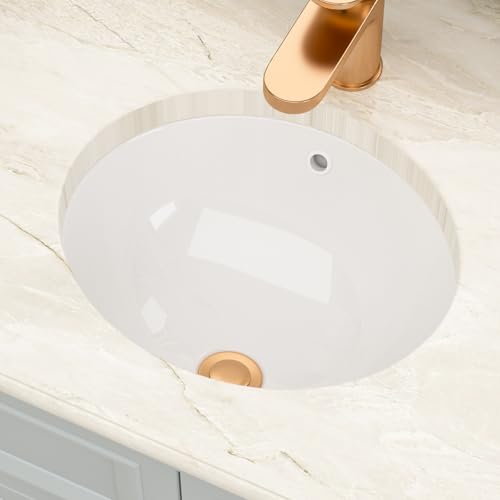
- CHIKESI 19 x 15 Oval Undermount Sink — a full-size undermount whose depth sits below the counter, keeping rim height exactly where your vanity sets it.
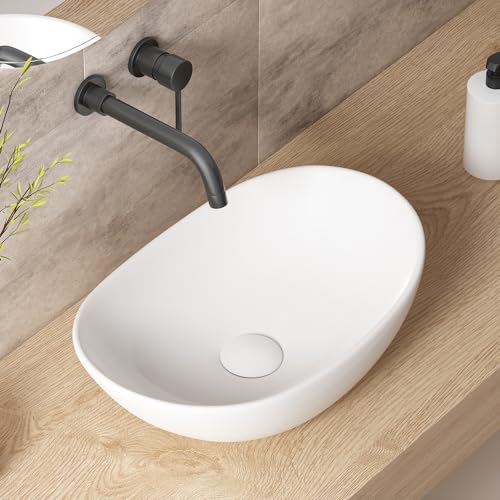
- KMOEM 16 x 13 Oval Vessel Sink — a compact vessel whose whole depth sits above the counter — plan a lower vanity or accept a higher rim.
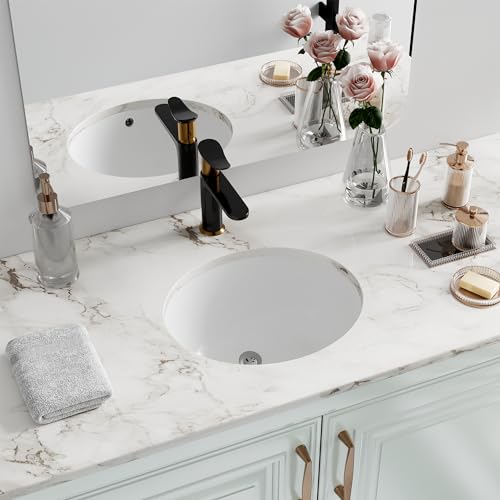
- Hugsleek Oval Undermount Sink — interior and exterior sizes both stated — the easiest pick here to plan depth and cutout around.
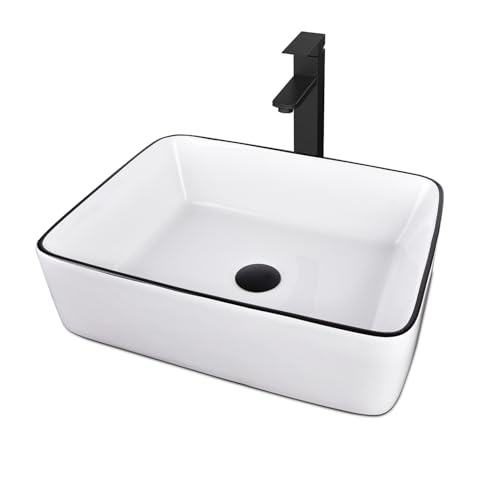
- Kichae 16 x 12 Rectangular Vessel Sink — a compact rectangle whose straight walls give a different depth feel — vertical sides, flat base, modern line.
- KGAR 18 x 13 Vessel Sink with Faucet and Drain — the faucet is in the box, and a bundled faucet is matched to the bowl height by the maker — one depth variable removed.
- Kohler Caxton Oval Undermount Sink — the mainstream Caxton oval — the reference size and depth class countless vanities were built around.
Read the full guide below for the badge picks, the honest trade-offs, and the sizing checks that decide whether a sink feels generous or cramped once it is plumbed in.
Ask ten people about the best depth for bathroom sinks and you will get ten answers, because depth is really three different measurements wearing one name. There is the bowl depth itself — rim to drain — which decides splash and how much water the bowl holds. There is the installed depth: where that bowl sits relative to the counter, which for a vessel means height added on top and for an undermount means space taken below. And there is the rim height the whole arrangement produces, which decides whether washing your face feels natural or like reaching into a bucket on a shelf.
This guide works through all three, using six verified sinks as the worked examples: three undermount ovals whose depth hides below the counter, two vessels whose depth stands on top of it, and one vessel kit whose bundled faucet removes the commonest depth mistake of all. Along the way it gives you the sums to do with your own vanity measurements, because the right depth is not a universal number — it is the number that falls out of your vanity height, your household heights, and how the bowl gets used.
One honesty note before the picks: most listings, including most below, headline the footprint and leave the bowl depth to the detail page. Where that is the case, the reviews flag it rather than inventing a figure. Treat that as a feature of this guide, not a gap — depth is exactly the specification you should never buy on a guess. If you are planning the whole vanity run rather than one bowl, Best One Piece Low Profile Toilets covers the matching low-profile thinking for the neighbouring fixture.
Key Takeaways
- Bowl depth, installed position, and total rim height are three different things — a good choice balances all three, not just the first.
- Undermount bowls (CHIKESI, Hugsleek, Kohler Caxton) put depth below the counter, so rim height stays at standard vanity height.
- Vessel bowls (KMOEM, Kichae, KGAR) put depth above the counter: rim height equals vanity height plus vessel height, so plan a lower vanity.
- Deeper bowls splash less and hold more; shallower bowls are easier for children and quicker for a simple hand wash.
- Several listings state footprint but not bowl depth — always confirm the depth figure on the listing page before ordering a bowl chosen for its depth.
In this guide
Quick Picks
Six sinks chosen to span the depth decisions: below-counter depth, above-counter depth, and a kit that matches its own faucet to its bowl. Badges match the detailed reviews.
| Pick | Badge | Installation | Footprint from listing | Link |
|---|---|---|---|---|
| CHIKESI 19 x 15 Oval Undermount Sink | Best All-Round Depth Balance | Undermount | 19 x 15 in | Check on Amazon |
| KMOEM 16 x 13 Oval Vessel Sink | Best Compact Vessel Depth | Above-counter / drop-in vessel | 16 x 13 in | Check on Amazon |
| Hugsleek Oval Undermount Sink | Best Measured Fit | Undermount | 18 x 15 in exterior; 16 x 13 in interior bowl | Check on Amazon |
| Kichae 16 x 12 Rectangular Vessel Sink | Best Small Rectangular Vessel | Above-counter vessel | 16 x 12 in | Check on Amazon |
| KGAR 18 x 13 Vessel Sink with Faucet and Drain | Best Depth-Matched Kit | Above-counter vessel | 18 x 13 in | Check on Amazon |
| Kohler Caxton Oval Undermount Sink | Best Classic Replacement Depth | Undermount | 17 x 14 in | Check on Amazon |
Read the table by installation family first. Within the undermounts, the choice is mostly washing volume versus cabinet clearance. Within the vessels, the choice is total rim height versus the vanity you pair them with. Cross-family comparisons only make sense once you know which side of the counter your depth will live on.
If you take one habit from this guide, take the tape-measure habit: write down your vanity height, the vessel height or bowl depth of the pick you like, and the sum or clearance, before anything is ordered. Depth regrets are almost always arithmetic that nobody did.
How These Picks Were Chosen
The six picks were drawn from a verified pool of bathroom sinks cross-checked against their Amazon listings on the check date recorded in the accompanying sources file. For a depth-led guide, selection weighted two things: a spread of installation formats, because format is the biggest depth variable, and clarity of stated dimensions, because a depth guide built on unstated numbers would be worthless. The Hugsleek earns its place partly for stating interior and exterior sizes separately — the exception that proves how rarely listings do it.
Every dimension quoted in the reviews comes from the listing itself. Where a listing title does not state bowl depth, the review says so plainly and identifies it as a figure to confirm on the listing page; no depth figure has been invented for any pick. General depth guidance in the buying-guide section is presented as planning reasoning — how to combine vanity height, bowl depth, and user height — rather than as a specification of any product.
This is a research-led guide, not a hands-on test: we did not install six bowls at six heights and survey a panel of washers. What it does instead is what a careful installer does — separate the three meanings of depth, show the arithmetic for each format, and flag the compatibilities (cabinet clearance, faucet clearance, drain position) that decide whether a chosen depth works once plumbed. Prices are never printed; check on Amazon for the current figure on any pick.
The 6 Best Bathroom Sinks for Getting the Depth Right, Reviewed One by One
Each review states the footprint the listing gives, names what the listing does not give, and works the depth arithmetic for that format. The verdict line tells you whose bathroom the depth suits — and whose it does not.

CHIKESI 19 x 15 Oval Undermount Sink
Badge: Best All-Round Depth Balance
Strengths
- Undermount format puts the bowl depth below the countertop, so working rim height stays at standard vanity height — comfortable for adults and children alike.
- A 19 x 15 oval gives the washing volume that makes a normal-depth bowl feel generous rather than splashy.
- Overflow and a standard 1.75-inch drain opening keep the plumbing side entirely conventional.
Trade-offs
- The listing states footprint, not bowl depth — confirm the exact bowl depth on the listing page if you are matching a specific comfort target.
- Bowl depth below the counter eats cabinet space; check drawer boxes and trap clearance in shallow vanities.
- Undermount fitting needs a cut, sealed countertop edge, so it is a renovation-stage decision.
| Installation | Undermount (under counter) |
|---|---|
| Shape | Oval |
| Footprint | 19 x 15 in |
| Material | Glossy porcelain |
| Overflow | Yes |
| Drain opening | Standard 1.75 in |
Depth in an undermount is the friendliest kind: the bowl hangs below the counter, so every inch of washing depth is available without raising the rim your wrists and your children have to reach over. This CHIKESI pairs that format with a full-size 19 x 15 oval, which is why it anchors this guide — for most households, a standard-depth undermount oval at standard vanity height is the combination that simply feels right at 7 a.m., and the depth question answers itself.
Two checks still apply. The listing gives the footprint rather than a bowl-depth figure, so if you are replacing a bowl you found unusually shallow or deep, confirm the exact depth on the listing page before ordering. And remember the hidden half of undermount depth: the bowl occupies cabinet space below, where it must clear drawer boxes and the trap. Measure the cabinet as carefully as the counter. Do both, and this is the lowest-risk depth decision in the guide.
Best for: most households, as the standard-depth undermount benchmark / Not suited for: shallow vanity cabinets with top drawers that need the space under the counter

KMOEM 16 x 13 Oval Vessel Sink
Badge: Best Compact Vessel Depth
Strengths
- Compact 16 x 13 footprint keeps the raised-rim effect modest and suits a lower vanity or a floating top planned around it.
- Above-counter or drop-in fitting lets you set the bowl on an existing top without cutout work, and even trial the height before final fixing.
- Oval interior keeps the usable washing depth centred under the faucet stream.
Trade-offs
- All of a vessel depth is above the counter, so on a standard-height vanity the rim will sit noticeably high — measure total height for children and shorter users.
- The listing states footprint, not bowl depth; check the listing page for the vessel height before committing.
- No overflow is stated in the title, so pair it with a drain intended for a non-overflow bowl.
| Installation | Above-counter / drop-in |
|---|---|
| Shape | Oval |
| Footprint | 16 x 13 in |
| Material | White porcelain ceramic |
A vessel sink turns the depth question into a height question. The bowl depth you wash in is the same bowl height everyone has to reach over, because the whole vessel sits on top of the counter. The KMOEM keeps that equation manageable: it is the compact vessel in this pool, and on a sensibly low vanity — or a wall-hung top set a few inches lower to compensate — the total rim height lands where a standard sink would, with the design presence of a vessel as the bonus.
The mistake to avoid is fitting any vessel, this one included, onto a full-height vanity without doing the sum. Rim height is vanity height plus vessel height, and the listing states the footprint rather than the height, so take the vessel height from the listing page and add it to your vanity before ordering. Households with children or shorter users should do that sum twice. Get it right and the KMOEM is a comfortable, deliberate-feeling wash point; get it wrong and no bowl depth will save the ergonomics.
Best for: planned vessel installations on a lower vanity or floating top, and compact bathrooms / Not suited for: standard-height vanities used by children, unless the total rim height is checked first
Hugsleek Oval Undermount Sink
Badge: Best Measured Fit
Strengths
- Interior bowl (16 x 13 in) and exterior (18 x 15 in) are stated separately, so washing room and cabinet footprint can be planned independently.
- The moderate interior suits shallower-feeling washing — comfortable for quick hand and face washing without a cavernous bowl.
- Undermount format keeps rim height at counter height regardless of bowl depth.
Trade-offs
- Bowl depth itself is not among the stated dimensions — confirm it on the listing page if depth is your deciding factor.
- The 16 x 13 interior is the smallest undermount washing area here; hair washing and soaking feel it.
- No overflow is stated in the title, and the title mixes vessel and under-counter wording — verify both points before ordering.
| Installation | Under-counter (undermount) |
|---|---|
| Shape | Oval |
| Interior bowl | 16 x 13 in |
| Exterior | 18 x 15 in |
| Material | White porcelain ceramic, fireclay (as listed) |
Depth planning starts with honest dimensions, and this Hugsleek listing is the most helpful in the pool: it separates the 16 x 13 interior your hands experience from the 18 x 15 exterior your countertop and cabinet experience. That distinction is where most depth disappointment is born — a bowl advertised by its exterior size washes smaller than expected — and here you can judge the real washing area before money moves.
In use, the moderate interior reads as a shallower, quicker wash bowl: ideal for hand and face washing, less ideal for anyone who fills a bowl deeply. The listing does not state the bowl depth itself, so treat depth as a figure to confirm on the listing page rather than assume — the guide flags this rather than guessing, because depth is the entire subject of your search. As an undermount, rim height stays at counter level, which keeps the ergonomics standard even while you deliberate about the bowl below it.
Best for: buyers replacing a bowl like for like who want the true interior size stated up front / Not suited for: anyone who needs a deep, fill-it-up bowl, or who cannot confirm the unstated depth before ordering

Kichae 16 x 12 Rectangular Vessel Sink
Badge: Best Small Rectangular Vessel
Strengths
- Straight, near-vertical walls mean the bowl keeps most of its footprint at the base, so the usable depth feels consistent rather than pinched.
- The 16 x 12 footprint is the narrowest here, suiting slim tops where depth front-to-back is the constraint.
- Flat base sits stably on the counter and makes the vessel height easy to measure and plan around.
Trade-offs
- Rectangular corners catch the faucet stream and splash more than ovals — land the stream mid-bowl and consider an aerator.
- Vessel height is not in the title; the listing page figure must be added to your vanity height before ordering.
- No overflow is stated in the title, so the drain must be chosen for a non-overflow bowl.
| Installation | Above-counter vessel |
|---|---|
| Shape | Rectangle |
| Footprint | 16 x 12 in |
| Material | Porcelain ceramic |
Rectangular vessels play by slightly different depth rules. An oval bowl narrows as it deepens, so its floor is smaller than its rim; a straight-walled rectangle like this Kichae keeps its walls close to vertical, so the depth you get is usable across most of the 16 x 12 footprint. For hand washing that reads as a deeper, more businesslike bowl than the dimensions suggest, and the flat base makes the whole vessel sit — and measure — predictably on the counter.
The depth cautions are the vessel cautions plus one. Add the vessel height from the listing page to your vanity height to get the true rim height, exactly as with the oval vessel above. Then mind the stream: a rectangle corner will throw water that an oval would have caught, so faucet reach and an aerator matter more here. The narrow 16 x 12 plan is a genuine asset on slim tops, where front-to-back depth of the vanity — not the bowl — is usually the binding constraint.
Best for: slim vanity tops and modern schemes that want straight-walled, consistent washing depth / Not suited for: high-flow faucets without an aerator, or buyers who have not checked total rim height

KGAR 18 x 13 Vessel Sink with Faucet and Drain
Badge: Best Depth-Matched Kit
Strengths
- The included faucet is chosen by the maker to suit this vessel height, removing the most common depth error — a faucet too short for the rim.
- Matte black faucet and pop-up drain are included, so stream height, reach, and drain style arrive as one tested combination.
- The 18 x 13 rectangular basin gives a broad washing area in a marble-pattern ceramic finish.
Trade-offs
- The bundle fixes your faucet style and finish; if the matte black or the faucet shape is wrong for your room, the convenience evaporates.
- Total rim height still depends on your vanity — the kit solves faucet matching, not the vanity-plus-vessel sum.
- Rectangular corners need the stream centred to keep splash inside the bowl.
| Installation | Above-counter vessel |
|---|---|
| Shape | Rectangular |
| Footprint | 18 x 13 in |
| Material | Ceramic, white marble pattern |
| Included | Matte black faucet and pop-up drain |
Half of all vessel depth problems are actually faucet problems: a bowl of perfectly good depth paired with a faucet whose spout barely clears the rim, so hands wash against the bowl wall and water lands where it splashes. This KGAR kit deletes that failure mode. Because the maker bundles the faucet and pop-up drain with the 18 x 13 basin, the spout height and reach are the maker responsibility — matched to this vessel before the box was sealed.
What the kit cannot do is choose your vanity height, and the rim-height sum still applies: vanity plus vessel equals the height everyone reaches over. Plan the vanity a little lower, as the how-to section explains, and the KGAR becomes the most forgiving route into vessel depth in this guide. The marble-pattern ceramic and black hardware also settle the room style in the same decision — a benefit if you like it, a lock-in if you do not. Judge the look honestly, check the vanity sum, and this is a low-risk pick.
Best for: first vessel installations where faucet-to-bowl matching is the worry / Not suited for: buyers who already own a faucet, or schemes that cannot take matte black hardware

Kohler Caxton Oval Undermount Sink
Badge: Best Classic Replacement Depth
Strengths
- A long-running mainstream model, so its size class is the one plumbers and countertop shops encounter most — replacements and templates are familiar territory.
- Mid-size 17 x 14 oval balances washing room against cabinet clearance beneath the counter.
- Undermount depth keeps the rim at counter height, preserving standard ergonomics in a like-for-like swap.
Trade-offs
- The title states footprint only; confirm the bowl depth figure on the listing page if you are matching an existing bowl precisely.
- Mid-size means mid-depth feel — households wanting a notably deep bowl should compare the larger picks.
- The listing title does not state an overflow, so verify if that feature is required.
| Installation | Undermount |
|---|---|
| Shape | Oval |
| Footprint | 17 x 14 in |
| Brand line | Kohler Caxton |
| Colour | White |
Replacement is where depth questions get practical: the new bowl must suit the cutout, the cabinet, and the muscle memory of everyone who used the old one. The Caxton oval is the classic reference in this class — a 17 x 14 undermount from a major maker, in the size range that a generation of vanities was built around. As a like-for-like swap it keeps rim height, reach, and washing feel familiar, which is precisely what a replacement should do.
The homework is confirmation, not redesign. The listing title gives the footprint; take the bowl depth from the listing page and compare it with the bowl coming out, especially if the old one felt shallow under a strong faucet. Check the overflow position too, since the title does not state one. Households planning the neighbouring fixtures at the same time often consult Best Made Toilets for the same reason they choose a Caxton — mainstream models make future parts and replacements boring, and boring is a virtue in plumbing.
Best for: like-for-like undermount replacements on standard vanities / Not suited for: anyone seeking a noticeably deeper bowl than the mainstream standard
Comparison Table
Footprints are as listed. Bowl depth is stated in a listing title only rarely in this category; the table therefore compares the depth-relevant facts that are stated — format, footprint, and overflow — and the reviews flag each pick depth figure to confirm.
| Pick | Badge | Shape | Material from listing | Overflow | Link |
|---|---|---|---|---|---|
| CHIKESI 19 x 15 Oval Undermount Sink | Best All-Round Depth Balance | Oval bowl | Glossy porcelain | Yes | Check on Amazon |
| KMOEM 16 x 13 Oval Vessel Sink | Best Compact Vessel Depth | Oval bowl | White porcelain ceramic | Not stated in listing title | Check on Amazon |
| Hugsleek Oval Undermount Sink | Best Measured Fit | Oval bowl | Porcelain ceramic / fireclay (as listed) | Not stated in listing title | Check on Amazon |
| Kichae 16 x 12 Rectangular Vessel Sink | Best Small Rectangular Vessel | Rectangle bowl | Porcelain ceramic | Not stated in listing title | Check on Amazon |
| KGAR 18 x 13 Vessel Sink with Faucet and Drain | Best Depth-Matched Kit | Rectangular basin | Ceramic, white marble pattern | Not stated in listing title | Check on Amazon |
| Kohler Caxton Oval Undermount Sink | Best Classic Replacement Depth | Oval bowl | Ceramic (Caxton line) | Not stated in listing title | Check on Amazon |
How to Choose the Best Depth for Bathroom Sinks
Begin with rim height, because it is the number your body actually negotiates with. Rim height is where the top edge of the bowl sits above the floor. For an undermount or drop-in bowl, that is simply the vanity height. For a vessel, it is the vanity height plus the vessel height — the sum that catches people out. As a planning approach, decide the rim height your household finds comfortable first, then work backwards: vessel buyers should choose a vanity lower than standard by roughly the vessel height, so the rim lands in the same place a conventional sink would put it.
Next, bowl depth proper: the distance from rim to drain inside the bowl. Deeper bowls contain splash, hold a useful volume for soaking or hair rinsing, and keep the faucet stream further from your hands. Shallower bowls feel quicker and more open for a simple hand wash, are kinder to children reaching in, and splash more readily under a strong stream — which is a faucet problem as much as a bowl problem, fixable with reach and an aerator. Neither extreme is correct; the main bathroom of a family that rinses hair wants depth, the powder room that sees thirty-second hand washes does not need it.
Then account for the hidden depth. An undermount bowl hangs below the counter into the cabinet, where its depth must clear drawer boxes, stored items, and the trap. A deep undermount in a vanity with a top drawer is a classic collision, discovered at fitting time. A vessel, by contrast, takes no cabinet space at all — one of its underappreciated virtues in drawer-heavy vanities. Measure the cabinet interior before choosing an undermount depth class, and if drawers rule the space, let the format decision make itself.
Match depth to users. Children and shorter adults are best served by standard rim heights and moderate bowl depth — the undermount picks here, at ordinary vanity height, are the safe pattern. Taller households can enjoy a vessel on a standard vanity precisely because the raised rim suits them. Anyone with limited reach or who washes seated should treat rim height as an accessibility specification, not a style outcome, and choose the undermount route where the height is set by the vanity alone. Renovation planners coordinating the whole room often check Best Toilets Seat For Elongated Toilets in the same pass, since seat height and rim height are the same ergonomic conversation.
Finally, verify the actual figure before you buy. As this guide has flagged throughout, many listings headline footprint and put bowl depth in the detail specifications. Find it, write it next to your vanity height, and do the sum for your format. If a listing will not tell you the depth of a bowl you are buying for its depth, that is a reason to choose a different bowl — the picks above include options whose makers state their dimensions with unusual completeness, and rewarding that clarity is how the category improves.
How to Set Up a Bathroom Sink at the Right Depth
Installation is where depth decisions become permanent, so work in the order below and check heights before anything is sealed or fixed. A bowl at the wrong height cannot be adjusted later without starting again — but it can always be caught at the dry-fit stage.
- Measure and record three numbers before starting: vanity top height, the bowl depth or vessel height from the listing, and the resulting rim height for your format.
- Dry-fit the bowl in place and have the tallest and shortest regular users stand at it, miming a face wash. This thirty-second test catches height mistakes no drawing will.
- For a vessel, confirm the faucet spout clears the rim with room for hands beneath the stream, and that the stream lands near the bowl centre.
- For an undermount, check inside the cabinet: bowl underside against drawer boxes, trap position, and storage you actually use — with the bowl held in place, not imagined.
- Fix the bowl (silicone bed for a vessel; sealant and clips for an undermount), connect the drain and trap, and fill the bowl to test both the seal and the real washing depth with water in it.
- Live with it for a day before final silicone finishing where the format allows, and adjust faucet aeration if splash suggests the stream — not the depth — is the problem.
After fitting, depth maintenance is minimal: keep the drain clear so the bowl empties at its designed rate, and if an overflow is fitted, flush its channel monthly so the safety depth you paid for stays available. A bowl that drains slowly behaves like a shallower bowl — water rises toward the rim during use — so a slow drain is, in effect, a depth problem, and the fix is the drain, not the sink.
If splash remains an issue after a correct installation, work through the variables in order: aerator first, then faucet flow, then stream landing point. Only when all three are right and splash persists is the bowl genuinely too shallow for its use — and that conclusion, reached by elimination, is the one worth acting on. The same measure-twice discipline applies across the renovation; Best Pull Down Touchless Kitchen Faucet For Shallow Sinks exists because the kitchen version of this exact depth-and-faucet mismatch is just as common.
Troubleshooting Depth Problems
Problem: the rim feels uncomfortably high after fitting a vessel → what to do: the lasting fixes are a lower vanity or a shallower vessel at the next change; in the meantime a stable step for shorter users and a faucet with good downward stream angle make the height workable rather than annoying.
Problem: water splashes out even though the bowl seemed deep enough → what to do: check where the stream lands and fit an aerator before replacing anything; a stream striking the bowl wall near the rim splashes out of bowls of any depth.
Problem: an undermount bowl fouls the top drawer of the vanity → what to do: a shallower bowl in the same footprint class, or a drawer box notched around the bowl and trap by a cabinet maker — plan this at dry-fit stage, where it is a choice rather than a rescue.
Deep vs Shallow Bowls: What Daily Life Actually Prefers
Deep bowls win the tasks nobody photographs: rinsing hair without flooding the counter, soaking a flannel, filling from the tap without the stream bouncing out, washing with a bandaged hand held high. Shallow bowls win the ninety percent: the thirty-second hand wash, the quick face splash, the child on a step stool who can actually reach the water. Most households do both kinds of task in the same sink, which is why the standard-depth middle — represented here by the undermount ovals — outsells both extremes and satisfies most people.
The deciding question is which failure you would rather avoid. A too-shallow bowl fails loudly, with water on the counter every day. A too-deep bowl fails quietly, with shorter users leaning and reaching in a way that only becomes a complaint over months. If your household spans a wide height range, weight the quiet failure more heavily: splash can be fixed with an aerator, but rim and reach geometry cannot be fixed with accessories.
Depth and the Rest of the Bathroom: Cabinets, Mirrors, and Splash Zones
Bowl depth radiates outward into the room. A deeper bowl or a raised vessel pushes the splash zone lower and closer, which is kind to mirrors and painted walls; a shallow bowl under a tall faucet throws droplets up and out, and the mirror becomes a daily wipe. Cabinet planning is the other half: undermount depth is borrowed from storage, and a bathroom that needs its drawers should either choose a moderate undermount or take the vessel route and keep the cabinet whole.
Lighting and mirror height complete the picture. A raised vessel rim brings hands and face closer to the mirror, which some users love for shaving and makeup and others find cramped under a low cabinet. Stand at your current sink and mime the morning routine before choosing — the room you have is the best simulator of the room you are planning, and depth is the specification most worth simulating. Planners working through the whole suite often read Best Portable Toilets Jacksonville style guides for other rooms with the same mindset: dimensions first, products second.
Depth for Children, Guests, and Ageing in Place
Households are not one height, and depth choices land differently on each member. Children meet a sink at rim height first: a raised vessel that delights a tall adult can put the rim at a small child chest height, turning hand washing into a climb and a splash negotiation. The undermount pattern — rim at ordinary vanity height, moderate bowl depth — is the kindest default for mixed-height households, and a sturdy step stool closes the remaining gap more safely than a shallower bowl ever will.
Ageing in place argues the same direction with higher stakes. A seated user, or anyone with limited reach, needs the rim predictable and the bowl shallow enough that hands reach water without leaning into the vanity. That is a specification to choose deliberately at renovation time, not to improvise later. Guest bathrooms sit between the two: guests span every height, so the standard-depth, standard-height middle of this guide is the hospitable choice there too.
Faucet Height: The Other Half of the Depth Equation
Every depth decision in this guide has a silent partner: the distance from the faucet spout to the bowl floor. Too small, and hands wash cramped against the stream with no room to rub together; too large, and the falling water gains the energy to splash out of bowls of any depth. When you change bowl depth or switch formats, re-check this gap as automatically as you re-check the drain — it is the measurement that decides whether a correctly deep bowl actually behaves like one.
Practical pairing follows from it. Undermounts at standard height take standard faucets, which is their quiet superpower. Vessels need tall or wall-mounted faucets chosen for the specific rim, which is why the bundled KGAR kit removes a real risk rather than a trivial one. If you keep an existing faucet, let it vote on the bowl: measure its spout height and reach first, and only shortlist bowls whose depth and rim position keep the stream landing mid-bowl with hand room beneath it.
Water pressure is the third partner in the same equation, and the one nobody writes down. A deep bowl under a gentle stream behaves beautifully; the same bowl under a high-pressure supply with no aerator can still throw droplets from the impact point. Before blaming any dimension, run the tap at the flow you actually use and watch where the water lands and how it leaves the stream. Depth, faucet, and pressure are a system — tune them as one and the arguments about which single number is correct mostly dissolve.
Common Buying Mistakes
Depth mistakes share a theme: a single number was considered and the other two were not. These are the six versions that recur.
- Fitting a vessel on a full-height vanity without adding vessel height to vanity height, producing a rim only the tallest user enjoys.
- Choosing an undermount by footprint alone and discovering its depth collides with the vanity top drawer.
- Buying a bowl for its depth from a listing that never stated the depth, and receiving whatever the mould happened to be.
- Blaming a shallow bowl for splash that was actually a mis-aimed, unaerated faucet stream.
- Picking a deep bowl for a children bathroom, where reach matters more than capacity.
- Ignoring the drain: a slow drain makes any bowl behave shallower, because water backs up toward the rim in use.
Every one of these is prevented by the same three-line note: vanity height, bowl depth or vessel height, and the sum or clearance they produce. Write it down before ordering, dry-fit before fixing, and depth stops being a gamble and becomes what it should be — a specification you chose on purpose.
Final Recommendation
For most bathrooms, choose CHIKESI 19 x 15 Oval Undermount Sink. A standard-depth undermount oval at standard vanity height is the depth combination with the fewest ways to go wrong: rim height you already know, cabinet behaviour you can measure, and washing volume that handles everything from hand washing to hair rinsing.
If you are set on a vessel, KMOEM 16 x 13 Oval Vessel Sink on a deliberately lower vanity is the compact route to a correct rim height, and Hugsleek Oval Undermount Sink is the undermount for buyers who want the interior washing size stated honestly before they commit. The KGAR kit, reviewed above, remains the safest vessel route of all for anyone worried about faucet matching.
Whatever you choose, do the three-line sum, dry-fit with your tallest and shortest users, and confirm any unstated depth figure on the listing page first. Depth done that way is invisible for years — which is the highest compliment a bathroom dimension can earn.
Frequently Asked Questions
What is the standard depth for a bathroom sink bowl?
There is no single mandated figure, which is why this guide teaches the arithmetic instead of a magic number. What matters is the combination: bowl depth for splash and capacity, and total rim height for comfort. A standard-depth undermount at a standard vanity height suits most households; vessels need the vanity lowered to keep the same rim height. Always confirm the exact bowl depth on the listing page of the sink you choose, since many listings headline footprint only.
Is a deeper bathroom sink always better?
No. Deeper bowls contain splash and hold more water, but they ask shorter users and children to reach further in, and an undermount depth is borrowed from cabinet space. Shallower bowls are quicker for simple hand washing. The right depth is the one matched to your users and tasks — family hair-rinsing argues for depth, a powder room does not.
How does a vessel sink change the depth calculation?
A vessel puts its entire depth above the counter, so rim height equals vanity height plus vessel height. To keep a comfortable rim height, pair a vessel with a lower vanity or floating top. Also check that the faucet clears the raised rim and lands its stream mid-bowl — or choose a kit like the KGAR in this guide, where the maker has matched the faucet to the bowl.
Will an undermount sink reduce my vanity storage?
Yes, by the depth of the bowl below the counter, plus the trap. In a vanity with a top drawer this can be a real collision, which is why the guide insists on measuring the cabinet interior at dry-fit stage. A vessel sink takes no cabinet space at all — one of its practical advantages in drawer-heavy vanities.
Why do so many listings not state the bowl depth?
Footprint sells sinks — it is the number that decides whether a bowl fits a top — so listings headline it, with bowl depth left in the detailed specifications or, occasionally, absent. For a depth-led purchase, treat an unstated depth as a step in the process: find the figure on the listing page, or choose a pick whose maker states dimensions completely, as the Hugsleek listing does for interior and exterior size.
Can the wrong depth be fixed after installation?
Splash blamed on depth can often be fixed with an aerator, flow adjustment, or stream repositioning. Rim height cannot: a vessel that sits too high needs a lower vanity or a different bowl. That asymmetry is why this guide pushes the dry-fit test — tallest and shortest users miming a wash before anything is sealed — as the one step never to skip.