Disclosure: topratedkitchenware.com is reader-supported. When you buy through links on our site, we may earn an affiliate commission from Amazon and other retailers, at no extra cost to you.
Where to buy
If you searched for the best woog pellet smokers, you meant wood pellet smokers — the typo is one of the most common in this category, and this guide answers the search you intended. Four picks in the verified pool are true wood pellet grills and smokers, and they carry the links and images below. Two are electric vertical cabinets that smoke with wood chips over electric heat; they are not pellet smokers at all, so they are reviewed in full as prose-only context picks, with no links and no images. The linked picks are:
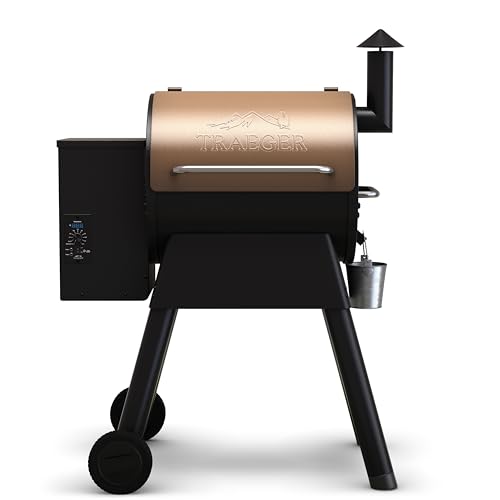
- Traeger Pro 22 Wood Pellet Grill & Smoker (wood pellets — linked)
- Pit Boss 700 Carbon Series Wood Pellet Grill & Smoker (wood pellets — linked)
- Pit Boss 500 Carbon Series Wood Pellet Grill & Smoker (wood pellets — linked)
- Pit Boss 850 Navigator Series Wood Pellet Grill & Smoker (wood pellets — linked)
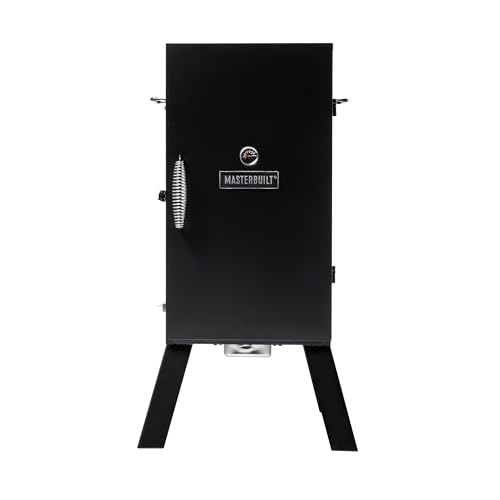
- Masterbuilt 30-Inch Digital Electric Smoker with Leg Kit MB20070421 (prose-only context pick — electric, not pellet)
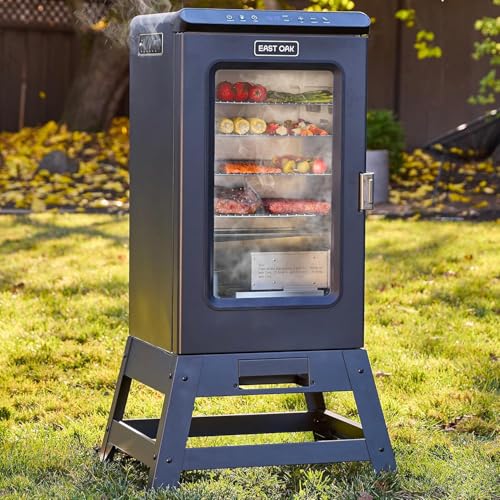
- EAST OAK 30-Inch Electric Smoker, Matte Black (prose-only context pick — electric, not pellet)
Read the full guide ↓ for how the four pellet grills differ in size, hopper, control and temperament — and why the two cabinets, good machines in their own class, do not belong in a pellet ranking.
The best woog pellet smokers — wood pellet smokers, to give the category its proper name — share one defining mechanism: hardwood sawdust, compressed into pellets, fed by an auger from a hopper into a fire pot, where the pellets burn and produce both the heat and the smoke. A controller meters the feed, a fan feeds the fire air, and the cook’s job shrinks to choosing a temperature, keeping the hopper filled, and deciding what “done” means for the cut in front of them. It is the closest thing barbecue has to an oven that smokes, and it is why the category has grown from a niche into the default recommendation for people who want real wood flavour without learning to tend a stick fire.
The four linked grills in this guide map the category’s realistic range. At one end sits the Pit Boss 500 Carbon Series, a compact barrel with 543 square inches that fits small patios and small households. In the middle stand the Pit Boss 700 Carbon Series, with 718 square inches for family-scale cooking, and the Traeger Pro 22, the established design whose 572 square inches and six-in-one versatility made it the category’s reference point for years. At the far end, the Pit Boss 850 Navigator stretches to 932 square inches with connected control and a hopper built for cooks that run past half a day. Every one of them burns the same fuel in the same way; what changes is scale, endurance and how much of the monitoring you can do from the sofa.
The two electric cabinets are in this guide for one honest reason: search results mix them into pellet queries constantly, because they smoke food with wood and their titles are full of the same words. They are good at what they do — steady, quiet, low-and-slow smoking with hardwood chips — but what they do is not pellet cooking, and a guide that linked them under a pellet keyword would be trading on the confusion. So they are reviewed completely and labelled plainly, and the buying advice that follows keeps the two technologies separate from the first paragraph to the last.
Key Takeaways
- “Woog” is a typo for wood: this guide covers wood pellet smokers, the category the search intends.
- Four picks are true pellet grills and are linked — Traeger Pro 22, Pit Boss 700 and 500 Carbon Series, and Pit Boss 850 Navigator.
- Two electric cabinets in the pool are not pellet smokers; they are prose-only context picks with no links and no images.
- Cooking space across the pellet four runs 543 to 932 square inches; hoppers run 13.5 to 30 lb, which decides how long a cook can run untended.
- All four pellet picks include a meat probe and digital control; the Navigator adds WiFi and Bluetooth and a flame broiler.
- Pellet flavour is wood-species flavour: the blend in the hopper matters as much as the grill around it.
- Maintenance is a rhythm, not a project: vacuum the fire pot little and often, keep the temperature probe clean, store pellets sealed and dry, and any of the four linked grills will hold its temperatures and its smoke quality for years of regular cooking.
- Size your purchase by your largest regular cook and your longest regular cook — square inches answer the first, hopper pounds answer the second, and together they predict your satisfaction better than any feature list.
- Budget for the second season, not just the first cook: a cover, a spare probe, an igniter in the drawer and pellets stored properly will cost less than one neglected winter, and they are the difference between a grill that ages gracefully and one that ages expensively.
In this guide
Quick Picks — the Best Woog Pellet Smokers (Wood Pellet Smokers), Ranked by Fit
| Pick | Badge | Cooking space | Hopper | Link |
|---|---|---|---|---|
| Traeger Pro 22 Wood Pellet Grill & Smoker | Best Established Design | 572 sq in | 18 lb | Check on Amazon |
| Pit Boss 700 Carbon Series Wood Pellet Grill & Smoker | Best Family-Size Pick | 718 sq in | 13.5 lb | Check on Amazon |
| Pit Boss 500 Carbon Series Wood Pellet Grill & Smoker | Best Compact Pick | 543 sq in | 13.5 lb | Check on Amazon |
| Pit Boss 850 Navigator Series Wood Pellet Grill & Smoker | Best for Big Cooks | 932 sq in | 30 lb | Check on Amazon |
| Masterbuilt 30-Inch Digital Electric Smoker with Leg Kit MB20070421 | Best Raised Cabinet (Context) | 710 sq in | Chip loader | Prose-only — no link |
| EAST OAK 30-Inch Electric Smoker, Matte Black | Best Long-Load Cabinet (Context) | 725 sq in | Long-load chip loader | Prose-only — no link |
Shoppers working to a firm ceiling should cross-check this ranking against Best Smokers Under $40000, which frames the wider smoker field by budget rather than by fuel.
How These Picks Were Chosen
This guide is research-led and built from the verified pick pool assigned to this keyword. Each product was cross-checked against its listing data, and only confirmed specifications appear in the reviews — cooking areas, hopper capacities, temperature ranges and named features such as probes and broilers. Where the pool data did not confirm a detail, we omitted it. No prices are printed and no ratings are quoted, because both move constantly; readers should check the latest price on Amazon. No hands-on testing is claimed anywhere in this guide.
The classification rule for a pellet keyword is strict, because pellet is a fuel and a mechanism, not a flavour. A pick is a pellet smoker only if an auger feeds hardwood pellets to a fire pot. All four linked grills meet that test. The Masterbuilt and EAST OAK cabinets heat with electricity and flavour with chips, so they fail it — not as products, which are respectable, but as answers to this keyword. They remain in the guide as context because searchers will meet them in the results anyway, and meeting them here, labelled, is better than meeting them there, blurred.
Within the pellet four, we compared the variables that actually separate pellet grills in use: cooking area and its shape, hopper capacity as the practical limit on untended cooking, temperature range as the boundary between a smoker and a grill, control generation from straightforward digital to connected, and included measurement, since every one of these grills is only as good as the cook’s knowledge of internal temperature. Badges were assigned to fits — compact, family, established, big-cook — rather than to a single ladder, because pellet buyers are really choosing a size and an endurance, not a winner.
The 6 Best Woog Pellet Smokers, Reviewed

Traeger Pro 22 Wood Pellet Grill & Smoker
Badge: Best Established Design
Strengths
- The category’s reference design: 572 square inches, an 18 lb hopper and a meat probe included.
- Six-in-one versatility — grill, smoke, bake, roast, braise and barbecue — in one barrel.
- Years of ownership history behind it, so its habits and quirks are thoroughly documented.
Trade-offs
- A 450°F ceiling, below the 500°F the Pit Boss models offer.
- An earlier control generation — no connected monitoring in this design.
- Mid-size capacity that entertainers will outgrow.
Spec box: Cooking space 572 sq in · Maximum temperature 450°F · Hopper 18 lb · Meat probe included · 6-in-1 versatility · Fuel: hardwood pellets.
There is a reason so many pellet conversations start with this grill: for years, the Pro 22 simply was the category in most buyers’ minds, and its specification still reads like the template the others annotate. The size is the family size — big enough for a brisket or a spread of ribs, small enough to heat quickly and live on an ordinary patio. The hopper sits between the compact Pit Boss models and the Navigator, which in practice means long cooks with at most one top-up. The six-in-one framing is marketing language for a true fact: a pellet barrel at these temperatures is a smoker, a grill and a wood-fired oven, and households that use all three modes get more from the machine than households that only smoke.
Choose it with its generation in mind. The controller is a set-and-hold digital unit without the connected monitoring the Navigator offers, and the top temperature stops short of the hardest sear. Neither matters to the cook whose menu is ribs, shoulders, chickens and weeknight grilling; both matter to the cook who wants to watch a brisket from work or finish steaks over maximum heat. As the established design, its deepest virtue is predictability — a buyer can know, before the box arrives, almost exactly how this grill behaves, and in a category full of new badges that knowledge is worth money.
Best for: buyers who want the proven, documented pellet experience / Not suited for: cooks who need connected control or the highest sear temperatures.

Pit Boss 700 Carbon Series Wood Pellet Grill & Smoker
Badge: Best Family-Size Pick
Strengths
- 718 square inches — the family-and-friends size — with an LCD digital controller.
- Full 180°F to 500°F range and a meat probe included.
- Pellet fuel throughout: real wood fire, real smoke, digital discipline.
Trade-offs
- The 13.5 lb hopper is the joint-smallest here and needs a top-up plan for overnight cooks.
- No connected control in this configuration.
- No flame broiler is listed for this model, unlike the Navigator.
Spec box: Cooking space 718 sq in · Temperature range 180°F to 500°F · Hopper 13.5 lb · LCD digital controller · Meat probe included · Fuel: hardwood pellets.
The 700 Carbon Series is the size most households actually need when they stop shopping for their biggest party and start shopping for their ordinary life — with headroom. Seven hundred and eighteen square inches holds a family brisket and a rack of ribs at once, or a party’s worth of chicken, without the barrel feeling cavernous on a two-person Tuesday. The controller and probe are the modern pellet basics done properly, and the 500°F ceiling keeps the grill half of the machine’s personality fully alive, from burgers to pizzas.
Its trade-off is endurance, and it is worth being precise about it: the fire does not care how big the hopper is, but the cook’s sleep does. A full hopper at low temperature runs a long way, yet an overnight brisket deserves a top-up before bed or a check in the small hours, and buyers for whom that sentence is unacceptable should be reading the Navigator review instead. Everyone else gets the guide’s best balance of area, range and simplicity — a family pellet grill with nothing essential missing.
Best for: families who smoke and grill weekly at household-plus scale / Not suited for: cooks who demand fully untended overnight runs.

Pit Boss 500 Carbon Series Wood Pellet Grill & Smoker
Badge: Best Compact Pick
Strengths
- The full pellet experience — auger, fire pot, digital control, probe — in the smallest barrel here.
- 543 square inches and a 180°F to 500°F range: a smoker that still grills properly.
- Heats fast and sips patio space, which suits couples and small households.
Trade-offs
- The 13.5 lb hopper limits untended cook length, as on its 700 sibling.
- Capacity is the ceiling: a couple of racks or one brisket is a full house.
- No connected control or flame broiler in this configuration.
Spec box: Cooking space 543 sq in · Temperature range 180°F to 500°F · Hopper 13.5 lb · LCD digital controller · Meat probe included · Fuel: hardwood pellets.
Compact pellet grills live or die on whether “compact” means “complete, but smaller” or “stripped down.” The 500 Carbon Series is the first kind. The mechanism is the whole mechanism — nothing about the fire, the controller or the measurement is a compromise — and the savings are taken purely in square inches and hopper volume. For a couple, a small family, or a first pellet buyer who wants to learn the craft on a machine that behaves exactly like its bigger siblings, that is the right set of savings.
Be honest about the ceiling, though. Five hundred and forty-three square inches is a real cooking space, and it is also a hard limit: the day you volunteer for the neighbourhood’s rib cook, you will borrow space or cook in shifts. Buyers who regularly feed more than a household should skip a size, not squeeze. Everyone else gets the pellet category’s cleanest entry point — and an upgrade path, if it ever comes to that, that starts from experience rather than from a listing page.
Best for: couples, small households and first-time pellet buyers / Not suited for: regular entertainers or bulk cooks.

Pit Boss 850 Navigator Series Wood Pellet Grill & Smoker
Badge: Best for Big Cooks
Strengths
- 932 square inches and a 30 lb hopper: the endurance and capacity leader of this guide.
- WiFi and Bluetooth control with an LCD controller and meat probe.
- A flame broiler adds genuine direct-flame finishing to the pellet repertoire.
Trade-offs
- The largest footprint and heaviest hardware commitment here.
- More systems to clean and maintain than any other pick.
- Oversized for households that cook for two or three.
Spec box: Cooking space 932 sq in · Temperature range 180°F to 500°F · Hopper 30 lb · WiFi and Bluetooth · Flame broiler · Meat probe included · Fuel: hardwood pellets.
The Navigator is what the pellet idea looks like with the limits pushed out. Capacity stops being a planning problem — multiple briskets, a wall of ribs, a mixed grill for a crowd — and endurance stops being one too, because a 30 lb hopper at smoking temperatures is measured in long cooks, not hours of anxiety. Connected control completes the big-cook logic: when a cook runs half a day, the ability to watch chamber and probe temperatures from wherever you are is not a luxury feature, it is the feature that makes the scale usable by a person with a life.
The flame broiler deserves its own sentence, because it answers the pellet category’s standing criticism — that pellet grills smoke beautifully and sear politely — with actual direct flame. Steaks and burgers can finish over the fire the pellets built. The costs are the obvious ones: space, weight, cleaning, and a specification small households will pay for and never use. The Navigator is the best big pellet grill in this pool by a distance; the only real question it asks is whether your cooking is big, and it is a question worth answering honestly before the barrel arrives.
Best for: hosts, bulk cooks and long-cook specialists / Not suited for: small patios or small households.
Masterbuilt 30-Inch Digital Electric Smoker with Leg Kit MB20070421
Badge: Best Raised Cabinet (Context)
Strengths
- Leg kit raises the cabinet to working height; digital control holds temperature steadily.
- Side wood chip loader feeds smoke without opening the door.
- 710 square inches of vertical rack space.
Trade-offs
- Not a pellet smoker — electric heat with wood chips; prose-only context pick.
- No auger, no pellets, no grilling range.
- Chip smoke arrives in cycles rather than a pellet fire’s steady feed.
Spec box: Cooking space 710 sq in · Leg kit included · Side wood chip loader · Digital control · Vertical cabinet · Fuel: electricity, hardwood chips for smoke.
Included here because pellet searches surface it constantly, this Masterbuilt cabinet is a good electric smoker and not a pellet smoker at all. There is no hopper, no auger and no fire pot; an element heats the chamber and a tray of hardwood chips smoulders for smoke. Cooks who want exactly that — quiet, steady, low-effort smoking at standing height, with the door kept shut by a side loader — will be well served by it in its own category.
Under this keyword, though, it is context, and it is unlinked for that reason. A reader who came for pellets and bought this would discover the difference on the first cook, and guides exist to prevent exactly that discovery. Read it as the alternative technology, priced in attention rather than pellets, and if its description suits your cooking better than the four grills above, shop for it deliberately in the electric category — with clear eyes about what burns and what does not.
Best for: cooks who actually want an electric cabinet at standing height / Not suited for: anyone shopping for a pellet grill.
EAST OAK 30-Inch Electric Smoker, Matte Black
Badge: Best Long-Load Cabinet (Context)
Strengths
- Side chip loader designed for up to six times longer smoke per load.
- Digital 12-hour timer and easy-rolling wheels on a 725-square-inch cabinet.
- Steady, quiet electric operation for long, low cooks.
Trade-offs
- Not a pellet smoker — electric heat with wood chips; prose-only context pick.
- No built-in meat probe is listed for this configuration.
- No grilling or searing capability.
Spec box: Cooking area 725 sq in · Side chip loader · Digital 12-hour timer · Easy-rolling wheels · Vertical cabinet · Fuel: electricity, hardwood chips for smoke.
The second context pick makes the same point from a different angle: this EAST OAK is engineered to minimise interventions in an electric cook — long chip loads, a long timer, wheels for easy positioning — and as an electric smoker that is a coherent, attractive design. Its smoke is real hardwood smoke, its temperatures are steady, and its running costs are a bag of chips and a trickle of electricity.
None of that makes it a pellet smoker, and under a pellet keyword it stays unlinked. The comparison is still useful, because it clarifies what pellet buyers are paying for: not smoke flavour alone, which this cabinet also delivers, but the pellet mechanism itself — continuous wood combustion, grill-range temperatures, and the particular depth that a real, self-feeding wood fire puts on food. If that mechanism is not what you want, this cabinet is a fine machine. If it is, the four grills above are your list.
Best for: long, quiet electric cabinet cooks / Not suited for: pellet shoppers, grillers, or anyone who wants a fire.
Comparison Table
| Pick | Type | Space | Hopper / Loader | Top temp | Link |
|---|---|---|---|---|---|
| Traeger Pro 22 | Pellet grill | 572 sq in | 18 lb | 450°F | Check on Amazon |
| Pit Boss 700 Carbon Series | Pellet grill | 718 sq in | 13.5 lb | 500°F | Check on Amazon |
| Pit Boss 500 Carbon Series | Pellet grill | 543 sq in | 13.5 lb | 500°F | Check on Amazon |
| Pit Boss 850 Navigator | Pellet grill | 932 sq in | 30 lb | 500°F | Check on Amazon |
| Masterbuilt with Leg Kit MB20070421 | Electric cabinet | 710 sq in | Chip loader | Smoker range | Prose-only |
| EAST OAK Matte Black | Electric cabinet | 725 sq in | Long-load chip loader | Smoker range | Prose-only |
Measurement is the pellet cook’s quiet obsession, and it deserves good tools: our notes on Best Meat Probes For Smokers cover what separates a reliable probe from a decorative one, whichever grill you choose.
How to Choose a Wood Pellet Smoker
Choose size by your largest regular cook, not your largest imaginable one. The four grills here describe a clean ladder: 543 square inches for households, 572 for households that entertain sometimes, 718 for households that entertain often, and 932 for people whose cooking is an event. Every step up costs patio, pellets per cook and cleaning time, and returns space you may use four times a year. Most buyers are happiest one size below their first instinct — with the single exception of committed hosts, who should buy the Navigator and stop apologising.
Choose endurance by your longest cook. Hopper capacity is really a sleep specification: at smoking temperatures, pellets are consumed steadily and predictably, and the question is simply whether the hopper outlasts your night. Thirteen and a half pounds asks for a top-up ritual on overnight briskets; eighteen pounds relaxes it; thirty pounds largely deletes it. Match the hopper to your ambition honestly, because no other specification in this guide will wake you at 3 a.m. — only an empty fire pot can do that.
Choose control by temperament. Straightforward digital control — set it, trust it, check the probe — suits cooks who want the machine invisible. Connected control suits cooks who run long cooks alongside busy days and want the chamber’s story on their phone. Neither changes the food; both change the cook’s day. Finally, choose by measurement: every linked pick here includes a meat probe, and that is not a coincidence. Pellet cooking’s promise is precision, and precision you cannot measure is a rumour. If you extend one part of your setup later, make it measurement — the guidance in Best Meat Probes For Smokers is the natural next read.
How to Cook on a Pellet Smoker: Pellets, Temperatures and Timing
- Start clean. Vacuum the fire pot, check the hopper, and fill it with dry pellets of the species you intend — the fire you are about to light is only as good as its fuel.
- Preheat with the lid closed and let the controller settle at your target before food goes on; a stabilised chamber cooks evenly for hours.
- Smoke low first. Pellet grills make their most generous smoke at lower settings, so briskets, shoulders and ribs earn their flavour early in the cook.
- Cook to temperature, not time. Probe the thickest part, avoid the bone, and treat every published timing as an estimate your probe outranks.
- Rest everything. Ribs briefly, chickens a little longer, briskets and shoulders longest of all — resting is where juices redistribute and slices stay moist.
- Shut down properly. Let the grill run its cool-down cycle so the fire pot burns clear; tomorrow’s cook starts better for it.
Pellet species is the flavour dial. Hickory is assertive and traditional with beef and pork; oak is the steady long-cook choice; apple and cherry are gentler and flatter poultry and fish; blended pellets trade character for consistency. Troubleshooting follows the mechanism. Problem: temperature overshoots after opening the lid → the controller is compensating for lost heat; keep the lid closed and let it settle rather than chasing the dial. Problem: thin smoke at high settings → normal physics, since a hotter fire burns cleaner; do your smoking at low settings and your searing at high ones, in that order. Problem: the auger groans or the fire dies → pellets have bridged or run out, usually from damp storage; clear the hopper, refill with dry pellets, and store the bag indoors from now on.
Pellet Versus Electric: Why This Guide Keeps Them Apart
Because the two context cabinets in this guide are genuinely good machines, it is worth stating the pellet case in its strongest form, so the separation reads as information rather than snobbery. A pellet grill burns wood continuously and completely. That gives it three things an electric cabinet cannot offer: a fire’s smoke character, built steadily across the whole cook rather than in chip-load cycles; grill-range temperatures up to 500°F in three of the four picks here, with searing and roasting in the same machine; and a fuel whose species is a flavouring decision, swapped by the bag. What the cabinet returns is equally real: near-silence, minimal parts, cheaper fuel, and a set-and-forget steadiness that suits fish, cheese, sausage and patient pork. The technologies are not better and worse. They are different answers, and a pellet keyword deserves the pellet answer — with the alternative shown, labelled, for the readers who discover it is theirs.
A Pellet Cook’s Calendar: What These Grills Cook Across a Year
Spring belongs to ribs and chickens. The weather forgives long cooks, the light forgives late dinners, and a new pellet grill earns its owner’s trust with the two most repeatable dishes in barbecue. This is also the season to learn your grill’s low end: fish, sausages and vegetables at gentle temperatures teach you more about smoke control than any brisket, because delicate food reports every excess. Owners of the compact Pit Boss 500 will find spring cooking sits exactly in its design centre; Navigator owners will spend the season being asked to host.
Summer is the grill’s second personality. Three of the four linked picks reach 500°F, and the season’s cooking — burgers, steaks, pizzas, charred corn and stone fruit — uses the top of the range as much as the bottom. The pellet habit that matters in summer is sequencing: smoke low first, while the fire is generous with flavour, then finish hot. It is also the season of volume, when the difference between 543 and 932 square inches stops being a specification and becomes a guest list. Autumn returns the long cooks: briskets and shoulders for games and gatherings, turkeys rehearsed before they matter, and the deep satisfaction of a hopper checked at breakfast and a dinner that announces itself from the street. The hopper ladder in this guide — 13.5, 18, 30 lb — is really an autumn specification, because autumn is when cooks get long enough for endurance to matter.
Winter separates the committed from the curious, and pellet grills serve the committed well: the fire is enclosed, the controller does the shivering, and the cook’s exposure is measured in lid-lifts. Cold weather does raise pellet consumption and reward a sheltered placement, and it punishes damp fuel storage exactly as the troubleshooting section warned. The year’s lesson, taken whole, is that a pellet grill is not a seasonal toy but a cooking system with four registers — and the buyers who get the most from the picks in this guide are the ones who cook in all four.
Accessories That Earn Their Place Beside a Pellet Grill
The honest accessory list for any pick here is short. A fitted cover comes first, because weather is the leading cause of death among pellet grills and the cheapest to prevent. A second probe or a reliable instant-read thermometer comes second, because big cooks involve more than one cut and the included probe can only be in one of them; the fuller discussion in Best Meat Probes For Smokers will help you choose without overspending. Third, a small wet-and-dry vacuum dedicated to the fire pot turns the grill’s one regular chore into a two-minute habit, and habits are what maintenance actually runs on. Fourth, pellet storage that seals — a lidded bin kept indoors — protects the fuel that every other part of the system depends on.
After those four, accessory buying should stop until experience resumes it. Grill mats, extra racks, sear kits, smoke tubes and the rest of the catalogue all solve problems that some cooks have and most cooks do not, and the pellet grill’s own range — smoke, roast, bake, braise, grill — already covers the techniques they promise. The discipline is the same one this guide applied to the grills themselves: buy answers to problems you actually have, in the order you actually meet them, and let a season of cooking write the shopping list.
How Pellet Grills Age: Maintenance Across Years, Not Weekends
A pellet grill is a small system of moving and wearing parts wrapped around a fire, and its long-term happiness is a story of four components. The igniter works hardest at every start and is the part most owners eventually replace; the good news is that it is designed to be replaceable, and a grill whose igniter has been swapped once is not a lemon but a maintained machine. The auger motor and feed tube ask only for dry pellets and an occasional clearing, and they complain audibly long before they fail, which is the kindest failure mode in appliances. The fire pot lives in the flame and slowly thins over years of cooks; ash discipline — little and often — is what slows that clock. And the controller and its temperature probe are the grill’s senses: keep the probe clean of creosote and the controller’s vents clear, and the temperatures the grill reports will stay the temperatures it holds.
Set against that list, the electric cabinets’ ageing story is shorter — an element, a tray, a door seal — which is their genuine long-term virtue and the reason they appear in this guide as respected context rather than as villains. The pellet buyer’s answer is not denial but rhythm: a few minutes after cooks, a short session monthly, a look inside seasonally. Owners who keep that rhythm routinely report the same experience across every brand in this pool, which is that the grill becomes more predictable with age, not less, because its owner has learned it. Machines do not really break in; cooks do, and the pellet grill rewards the broken-in cook for a decade.
A Final Word on the Category
Wood pellet smoking earned its place by removing the two barriers that kept most households out of real barbecue: the all-day fire watch and the fear of ruining an expensive cut. The four linked grills in this guide remove those barriers at four sizes, and the cook who chooses among them by household, hopper and temperament will be cooking confidently within a weekend. That, more than any specification in the tables above, is what the search behind the typo was looking for.
Common Buying Mistakes
- Buying an electric cabinet from a pellet search. If there is no hopper and no auger, it is not a pellet smoker, whatever the title implies.
- Undersizing the hopper for overnight cooking. Capacity in square inches gets the attention; capacity in pounds decides your sleep.
- Oversizing the barrel. A big chamber heated for two people wastes pellets on every cook.
- Storing pellets in a damp garage. Swollen, crumbling pellets are the leading cause of “unreliable” pellet grills.
- Cooking by the clock. The probe is included for a reason; internal temperature is the only doneness that matters.
- Chasing smoke volume. Thin, steady smoke flavours food; thick white billows signal a dirty fire and a bitter result.
Final Recommendation
The best woog pellet smokers — wood pellet smokers — sort themselves by household more cleanly than most categories. For the proven, documented middle of the category, the Traeger Pro 22 remains the reference buy. For the best balance of family area and full temperature range, the Pit Boss 700 Carbon Series is this guide’s first choice for most readers. Small households should take the Pit Boss 500 Carbon Series and enjoy the same mechanism in a patio-friendly size, and hosts should go straight to the Pit Boss 850 Navigator, whose hopper, space and connected control are built for the way they cook.
And if the cabinet reviews read more like your life than the grill reviews do, that is useful information too — just shop for the cabinet in its own category, knowing it is an electric smoker that flavours with wood chips, not a pellet machine. The typo in the search box is forgiven by everyone; buying the wrong technology is the only mistake in this category that follows you home.
Frequently Asked Questions
What does “woog” mean in this keyword?
It is a common typo for “wood.” Searches for the best woog pellet smokers mean wood pellet smokers — grills and smokers that burn compressed hardwood pellets — and that is the category this guide covers, with the exact search phrase kept in the headings so the page matches the query.
How is a pellet smoker different from an electric smoker?
A pellet smoker burns hardwood pellets in a fire pot, fed by an auger, so wood combustion provides both heat and smoke. An electric smoker heats with an element and uses wood chips only for smoke flavour. The two cabinets in this guide are electric, which is why they are unlinked context picks in a pellet guide.
What size pellet grill do most households need?
Somewhere between 543 and 718 square inches covers the great majority of home cooking — a brisket, several racks of ribs, or a family grill night. The 932-square-inch Navigator is for regular entertainers; smaller households are better served by the compact or mid-size picks.
How long will a hopper of pellets last?
It depends on temperature and weather, but the practical ladder in this guide is simple: 13.5 lb hoppers suit day cooks and need a top-up for overnight runs, 18 lb relaxes that, and the Navigator’s 30 lb hopper is built to outlast long cooks entirely.
Can a pellet grill really replace a regular grill?
Three of the four linked picks reach 500°F, which covers everyday grilling and a respectable sear, and the Navigator’s flame broiler adds direct flame on top of that. The Traeger Pro 22’s 450°F ceiling still handles most grilling, with the hardest sears as its one compromise.
How much patio space does a pellet grill really need?
More than the barrel’s footprint, and less than most people fear. Plan for the grill itself, a working margin on the side where you load the hopper and handle food, clearance above and behind for the lid and the heat the chimney vents, and a surface that tolerates ash and the occasional pellet spill. The compact Pit Boss 500 fits genuinely small patios on those terms; the Navigator wants a corner it can own. Measure with the lid open and the cook standing in place — the two positions listings never photograph — and the space question answers itself honestly.
Do pellet grills work in cold and wet weather?
Yes, with two adjustments of expectation. In cold weather the grill burns more pellets to hold the same temperature, because the barrel sheds heat faster into winter air, and cooks run a little longer for the same reason; sheltered placement and a full hopper are the whole strategy. In wet weather the fire itself is enclosed and untroubled, but the pellets are not — a hopper lid left open in rain, or a bag stored on a damp floor, will cause more failures than any storm. Owners who cook year-round, as the calendar section of this guide encourages, learn to treat fuel storage as part of the grill: sealed, dry and indoors, in every season.
Which pellet species should a beginner start with?
An oak or blended pellet is the forgiving start: steady, moderate smoke that suits almost everything while you learn your grill. Move to hickory for bolder beef and pork flavour, and fruit woods when you start smoking poultry and fish regularly.