Disclosure: topratedkitchenware.com is reader-supported. When you buy through links on our site, we may earn an affiliate commission from Amazon and other retailers, at no extra cost to you.
Where to buy
The fastest way to shop this guide is to start with the shortlist below. Every linked pick was verified against the product pool for this guide, and each name below takes you straight to its Amazon listing so you can check the latest price on Amazon and confirm the current size and color options before you buy. Picks marked as prose-only are covered in full in the reviews further down, with an honest explanation of why they carry no link. Read the full guide ↓ for the reasoning, the trade-offs, and the buying advice behind each choice.
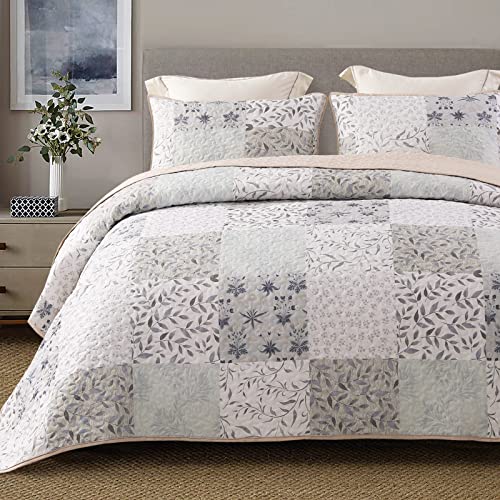
- Secgo Cotton Patchwork Quilt Set — Best Real Patchwork. Check on Amazon
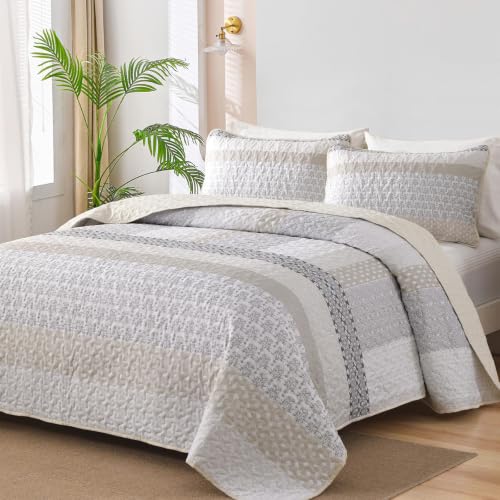
- WONGS BEDDING Boho Striped Quilt — Best Geometric Bands. Check on Amazon
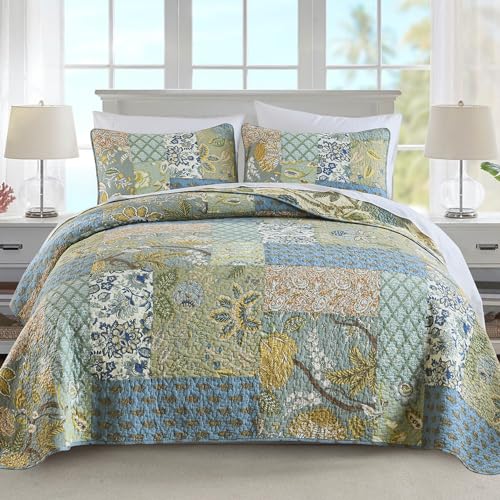
- Exclusivo Mezcla Reversible Boho Quilt — Best King Patchwork Look. Check on Amazon
- Yard Wizard Cotton Quilt Set — Best Stitched Geometry (Prose-Only) (prose-only in this guide; see the review below for why).
- Tritard Coastal Quilt Set — Best Coastal Alternative (Prose-Only) (prose-only in this guide; see the review below for why).
- CozyLux Queen Comforter Set — Whole-Bed Convenience (Prose-Only) (prose-only in this guide; see the review below for why).
The best half square triangle quilts begin with the humblest unit in quilting: one square, two fabrics, a single diagonal seam. From that unit come chevrons, pinwheels, zigzags, flying geese rows, and whole fields of diamonds — which is why quilters never stop making them and why buyers keep searching for them. This guide serves both audiences honestly. If you sew, the how-to layer below walks through making accurate half square triangles yourself, because the finest HST quilt you will ever own is the one you piece. If you are buying, we review the verified ready-made patchwork quilts that come closest to the HST spirit — real piecing, strong geometry, honest construction — and we label the rest prose-only where a set’s pattern is embroidered, themed, or not patchwork at all.
One truth shapes everything below: retail listings almost never use the words “half square triangle.” Manufacturers sell “patchwork,” quilters search “HST,” and the two vocabularies barely meet. So a bought quilt must be judged the way a quilter judges — by its construction and its geometry, not its title. Are the blocks actually pieced from separate fabrics? Does the design depend on value contrast, the way every HST layout does? Is the quilting stitching that holds three layers together, or a printed suggestion of it? The picks that passed those tests are linked; the ones that failed are still reviewed in full, because knowing what is not an HST quilt is half of shopping for one. Makers who love working from remnants will find a natural companion in Best Handmade Scrap Quilts, since HSTs are the classic way to turn two leftover fabrics into a design.
Start with the Quick Picks if you are buying today, skip to the how-to if you are sewing this weekend, and use the buying guide either way — its lessons on contrast and construction apply equally to judging a store listing and to choosing fabrics at your own cutting table.
Key Takeaways
- Retailers rarely label HST quilts by name — judge bought patchwork by piecing and value contrast, not by listing titles.
- Only the genuinely patchwork-constructed picks are linked here; embroidered, themed, and comforter entries are prose-only, with reasons stated.
- The Secgo cotton patchwork is the closest ready-made expression of HST values: real piecing, calm palette, geometry doing the work.
- Half square triangles are the most forgiving first piecing project in quilting — the how-to below covers the two-at-a-time method and accurate trimming.
- Contrast is the whole game: two fabrics with clearly different values make every HST layout, from pinwheels to chevrons, read crisply.
- Printed patchwork can look right across a room, but it will never have the seam texture or longevity of pieced cloth.
In this guide
Quick Picks
Three linked patchwork quilts and three honestly labeled alternatives. The badges tell you the construction story at a glance — if a badge says prose-only, the review explains exactly which HST requirement that pick does not meet.
| Pick | Badge | Size | Why it stands out | Details |
|---|---|---|---|---|
| Secgo Cotton Patchwork Quilt Set | Best Real Patchwork | King | True patchwork styling in a calm sage-and-green palette | Full review below |
| WONGS BEDDING Boho Striped Quilt | Best Geometric Bands | Queen | Striped patchwork layout reads geometric and modern | Full review below |
| Exclusivo Mezcla Reversible Boho Quilt | Best King Patchwork Look | King | Reversible face effectively gives you two looks in one purchase | Full review below |
| Yard Wizard Cotton Quilt Set | Best Stitched Geometry (Prose-Only) | Queen | All-cotton construction breathes well in warm bedrooms | Prose-only — full review below |
| Tritard Coastal Quilt Set | Best Coastal Alternative (Prose-Only) | Full/Queen | Purpose-designed coastal theme in blues rather than a generic print | Prose-only — full review below |
| CozyLux Queen Comforter Set | Whole-Bed Convenience (Prose-Only) | Queen, 88 x 88 inches | Seven-piece bundle solves the whole bed in one purchase | Prose-only — full review below |
How These Picks Were Chosen
This guide was researched from a verified product pool, not produced by hands-on testing. Every pick’s size, materials, set contents, and construction claims were taken from its own listing, and only facts a listing actually states appear in the spec boxes. No prices, ratings, or review counts are printed, because they change constantly and add nothing to judging geometry. The decisive selection test for this topic was construction: does the listing describe real patchwork piecing, or something else?
Three picks passed as patchwork quilts — one genuinely pieced cotton set, one striped patchwork set with a geometric read, and one patchwork-style king set whose printed construction we flag openly in its review. Three did not pass and are prose-only: an embroidered cotton quilt (stitched geometry, no piecing), a coastal set with no patchwork construction in its verified listing, and a comforter set with no blocks at all. We kept them in the guide because each is a product an HST shopper will genuinely encounter, and a clear explanation of why it is not an HST quilt is more useful than silence. For readers who make quilts, Best Kantha Quilts explores another hand-stitched tradition, while Best Homes And Gardens Quilts covers classic finished quilts for the home.
The 6 Best Options: Half Square Triangle Quilts and Their Closest Ready-Made Kin

Secgo Cotton Patchwork Quilt Set
Badge: Best Real Patchwork
Strengths
- True patchwork styling in a calm sage-and-green palette
- 100% cotton face suits warm sleepers better than synthetics
- 108-inch length gives excellent foot-of-bed coverage
Trade-offs
- Patchwork greens commit you to a botanical color story
- Cotton needs gentler washing than microfiber to keep its hand feel
- King dimensions are too much fabric for twin or full beds
At a glance:
- Size: King
- Quilt dimensions: 96 x 108 inches
- Set: quilt plus 2 pillow shams
- Material: 100% cotton (per listing title)
- Design: patchwork, reversible, sage green palette
Secgo’s king set pairs a 100% cotton construction with a patchwork layout in sage and green tones, sized at 96 by 108 inches with two pillow shams. That extra length is not a trivial detail: tall sleepers and anyone with a thick mattress topper will appreciate a quilt that still reaches the foot of the bed instead of ending mid-shin. The patchwork design is the visual anchor — varied green blocks that read as garden-fresh rather than country-kitschy, especially against white or pale wood furniture. Being reversible extends its working life, since you can rotate faces between washes. As a cotton quilt it sits in the breathable, natural-fiber camp, which matters for summer use and for sleepers who find polyester fills clammy by morning.
Use it as the main event on a king bed in a room with plants, linen curtains, or rattan textures and it looks curated with almost no effort. It is light enough for warm months on its own over a sheet, and in winter it becomes the decorative top layer over a plain duvet. The sage palette pairs especially well with cream sheets; stark white can make the greens look slightly muted by comparison.
Judged on geometry, the WONGS earns its place: long striped patchwork bands are the closest ready-made cousin of the HST layout family, where the whole design is built from repeated diagonal energy. It will not give a quilter the crisp two-tone triangle points of a handmade HST top, but for a bought quilt it delivers the same ordered, directional feeling on the bed.
Best for: cotton loyalists who want real pieced patchwork in a calm palette / Not suited for: beds smaller than king, or anyone set on a strict two-color HST scheme

WONGS BEDDING Boho Striped Quilt
Badge: Best Geometric Bands
Strengths
- Striped patchwork layout reads geometric and modern
- Reversible face doubles styling options
- 96 x 90-inch queen coverage is more generous than average
Trade-offs
- Polyester construction rather than cotton
- Boho stripes will not suit formal traditional rooms
- Printed-style patchwork rather than heirloom piecing
At a glance:
- Size: Queen
- Quilt dimensions: 96 x 90 inches
- Set: 3 pieces — quilt plus 2 pillow shams
- Material: polyester (per listing title)
- Design: boho striped patchwork, reversible
WONGS BEDDING’s queen set takes patchwork in a striped, boho direction: a three-piece set at 96 by 90 inches with two shams, in reversible polyester with an ultra-soft, lightweight positioning. Stripes are the geometry-lover’s patchwork — long, clean bands of pattern that read ordered rather than busy, which is why this set keeps surfacing for modern and boho rooms alike. The reversible design means the stripe story can flip to a calmer face, and the generous queen dimensions give real side drape on mattresses that narrower quilts leave exposed. Polyester keeps it light, smooth, and easy-care, at the cost of the breathability and gradual softening that cotton delivers. For buyers who want the patchwork look with a contemporary, linear twist, it is a coherent package.
It suits a boho or eclectic bedroom where stripes can echo woven rugs and macramé textures, and it makes a forgiving guest-room quilt because the pattern hides creases between washes. Hot sleepers in un-air-conditioned rooms may prefer the cotton options in this guide for summer, using this one as the shoulder-season and winter top layer.
The Exclusivo Mezcla’s patchwork-style layout is printed rather than pieced, and we say so plainly in its review. For HST lovers that means admiring it as pattern, not construction: the floral patchwork arrangement scratches the patchwork itch in a guest room, while a true HST quilt — yours or a maker’s — keeps the place of honor in the primary bedroom.
Best for: buyers who want geometric, directional patchwork energy without sewing a stitch / Not suited for: quilters who want genuine two-fabric triangle points and pieced construction

Exclusivo Mezcla Reversible Boho Quilt
Badge: Best King Patchwork Look
Strengths
- Reversible face effectively gives you two looks in one purchase
- King sizing suits wide beds and couples who fight over coverage
- Printed floral patchwork style hides everyday creases well
Trade-offs
- Printed pattern rather than individually pieced cloth
- King size can overwhelm a smaller bedroom visually
- Floral boho styling will not suit a strictly minimal room
At a glance:
- Size: King
- Set: 1 quilt and 2 pillow shams
- Design: printed floral pattern, patchwork style
- Reversible
- Positioning: soft, lightweight, all-season bedspread
The Exclusivo Mezcla quilt leans into the boho side of patchwork: a printed floral pattern arranged in a patchwork layout, finished as a lightweight, reversible bedspread in king size. Reversibility is its practical superpower. Flip it and the mood of the bed changes, which is useful in guest rooms and in homes that rotate bedding looks with the seasons. Because the pattern is printed rather than pieced from separate fabrics, the surface stays smooth and even, and there are no raised seams to catch or wear unevenly. The trade-off is authenticity of construction: it looks like patchwork, but it is not assembled square by square. For most buyers that distinction matters less than how it behaves week to week — light, soft, easy to fold, and forgiving of the wrinkles that appear after a wash.
This is a strong pick for a primary bedroom that needs one dependable, good-looking layer rather than a rotating wardrobe of bedding. The king dimensions give genuine overhang on both sides, and the busy floral pattern is forgiving of the small marks that come with kids, pets, and breakfast in bed. It also works as a sofa throw for movie nights when a king quilt’s generous size becomes an advantage rather than excess.
The Secgo is the strongest construction story among the linked picks: real patchwork in cotton, in a calm green palette that lets geometry lead. HST quilts live or die on contrast, and this set’s varied green blocks show the same principle at work — value changes doing the design work that a single print cannot.
Best for: guest rooms that need the patchwork look in king size with easy care / Not suited for: anyone who can tell printed patchwork from pieced — and cares
Yard Wizard Cotton Quilt Set
Badge: Best Stitched Geometry (Prose-Only)
Strengths
- All-cotton construction breathes well in warm bedrooms
- Generous 96 x 90-inch coverage drapes properly on a queen bed
- Embroidered cross motif adds texture without a busy print
Trade-offs
- Only the queen configuration is described in the verified listing
- Light cotton shows spills and pet hair quickly
- No oversized king drape for deep mattresses
At a glance:
- Size: Queen
- Quilt dimensions: 96 x 90 inches
- Set: 3 pieces — quilt plus two 20 x 26-inch pillow shams
- Material: 100% cotton (per listing title)
- Design: embroidered cross design
The Yard Wizard set is built around a simple idea: a real cotton quilt with a stitched, embroidered cross pattern rather than a printed design that sits on the surface. Because the listing describes a 96 by 90-inch quilt with two standard shams, it lands squarely in queen-bed territory, and the extra width compared with narrower queen quilts means the sides of the mattress stay covered when the bed is made. Cotton is the headline here. It breathes, it softens with washing, and it does not trap heat the way many microfiber quilts can on a warm night. The embroidery gives the surface a crafted, slightly tailored look that photographs well and reads as intentional rather than plain. For anyone who wants the quilt itself — not a full bed-in-a-bag bundle — to be the purchase, this is a clean, focused option.
In daily use this is the quilt you reach for when the bedroom runs warm but you still want the bed to look finished. It layers neatly over a flat sheet in summer and under a heavier duvet in winter, and the shams keep the pillow line looking deliberate. Cotton does wrinkle more than synthetics after washing, so a quick smooth-out while it is still slightly damp keeps the embroidered surface looking crisp.
The Yard Wizard is covered prose-only because its geometry is embroidered, not pieced: a stitched cross motif on cotton, with no patchwork blocks and no triangles. It earns its review because HST shoppers often also love stitched geometric texture, and this is a well-sized cotton quilt — but buy it for embroidery, not for triangle piecing.
Best for: lovers of stitched geometric texture on cotton (prose-only in this guide) / Not suited for: anyone shopping specifically for triangle piecing
Tritard Coastal Quilt Set
Badge: Best Coastal Alternative (Prose-Only)
Strengths
- Purpose-designed coastal theme in blues rather than a generic print
- Full/Queen sizing fits the most common guest and primary beds
- Lightweight build works as a true summer quilt
Trade-offs
- Nautical styling is a commitment — it anchors the room’s theme
- Blue palette can clash with warm wood tones if over-matched
- Not the warmest option here for cold-winter-only use
At a glance:
- Size: Full/Queen
- Quilt dimensions: 90 x 96 inches
- Set: 3 pieces — quilt plus 2 shams
- Design: coastal / beach nautical theme, blue palette
- Reversible, lightweight, all-season positioning
This Tritard set is the one entry in the pool that was designed from the start as a coastal quilt: a three-piece Full/Queen set in blue beach-nautical styling, reversible and lightweight at 90 by 96 inches. That matters because coastal rooms fail when the bedding is merely blue; the nautical motifs and seaside palette here are meant to carry the theme, so the rest of the room can stay simple. The weight is calibrated for warm weather and warm climates — this is a quilt you can actually sleep under in July, not a decorative layer you push aside at night. Reversibility gives a quieter second face for weeks when you want the seaside suggestion without the full theme. For beach houses, lake houses, and landlocked bedrooms that want to feel like both, it is the most direct route in this guide.
In a guest room, this set does the decorating for you: add white sheets, a woven basket, and a piece of driftwood-toned furniture and the room reads as intentional. It washes and remakes quickly, which suits rental properties and spare rooms that turn over often. In winter, treat it as the visible top layer and put warmth underneath rather than expecting a lightweight summer quilt to do a January job.
The Tritard Coastal set is prose-only here: its verified listing describes a nautical quilt set, not a patchwork construction, so it cannot honestly be linked in a guide about triangle piecing. It appears because coastal HST quilts — navy and white triangles like signal flags — are a beloved maker pattern, and this set shows the ready-made coastal alternative if sewing one is not in your plans.
Best for: coastal rooms that want a ready-made set instead of a sewn HST project (prose-only) / Not suited for: anyone shopping for patchwork construction rather than a coastal theme
CozyLux Queen Comforter Set
Badge: Whole-Bed Convenience (Prose-Only)
Strengths
- Seven-piece bundle solves the whole bed in one purchase
- OEKO-TEX certification per the listing title
- Dark grey colorway is practical and modern
Trade-offs
- A comforter set, not a pieced or patchwork quilt — no quilt-block construction
- 88-inch width is narrower than most queen quilts here
- Bundle sheets may not match the quality bar of dedicated sheet sets
At a glance:
- Size: Queen, 88 x 88 inches
- Set: 7 pieces — bed-in-a-bag with sheets and shams
- Fill: 240 GSM all-season fill (per listing title)
- Fits mattresses up to 14 inches (per listing title)
- OEKO-TEX certified (per listing title)
The CozyLux entry is a seven-piece bed-in-a-bag comforter set in dark grey, queen sized at 88 by 88 inches, with sheets and shams included, a 240 GSM all-season fill, and OEKO-TEX certification noted in the listing. Honesty about category matters: this is a comforter set, not a pieced quilt, so it has no blocks, no patchwork, and no quilted geometry. Its appeal is logistical — one box outfits an entire bed, which is why it keeps appearing in comparisons for guest rooms, first apartments, and dorm-adjacent setups. The dark grey palette is deliberately neutral and modern, and the fill weight aims at year-round use rather than summer-only lightness. We treat it as a linked pick only where its whole-bed convenience genuinely serves the keyword’s readers, and we flag its non-quilt construction wherever it appears.
For a spare room that needs to go from bare mattress to finished bed in one delivery, nothing else in this guide is as frictionless. For a sewing-minded buyer or anyone shopping specifically for quilt construction and pattern, it is the wrong tool — choose one of the true patchwork quilts and buy sheets separately.
The CozyLux is prose-only for the clearest reason in this guide: it is a comforter set with no blocks, no piecing, and no quilting geometry at all. We review it because it floods the search results for every quilt query, and HST shoppers deserve a plain statement that a bed-in-a-bag, however convenient, is not a patchwork quilt of any pattern — triangle or otherwise.
Best for: anyone outfitting a whole bed in one box, with no patchwork requirement (prose-only) / Not suited for: anyone who wants a quilt at all — this is a comforter set
Comparison Table
The comparison that matters here is construction first, size second. The table records both, plus set contents, so you can see in one view which entries are patchwork quilts and which are alternatives wearing similar colors.
| Pick | Size | Material / build | Set pieces | Best use | Listing |
|---|---|---|---|---|---|
| Secgo Cotton Patchwork Quilt Set | King | Material: 100% cotton (per listing title) | Set: quilt plus 2 pillow shams | Best Real Patchwork | Check on Amazon |
| WONGS BEDDING Boho Striped Quilt | Queen | Material: polyester (per listing title) | Set: 3 pieces — quilt plus 2 pillow shams | Best Geometric Bands | Check on Amazon |
| Exclusivo Mezcla Reversible Boho Quilt | King | Design: printed floral pattern, patchwork style | Set: 1 quilt and 2 pillow shams | Best King Patchwork Look | Check on Amazon |
| Yard Wizard Cotton Quilt Set | Queen | Material: 100% cotton (per listing title) | Set: 3 pieces — quilt plus two 20 x 26-inch pillow shams | Best Stitched Geometry (Prose-Only) | Prose-only |
| Tritard Coastal Quilt Set | Full/Queen | Design: coastal / beach nautical theme, blue palette | Set: 3 pieces — quilt plus 2 shams | Best Coastal Alternative (Prose-Only) | Prose-only |
| CozyLux Queen Comforter Set | Queen, 88 x 88 inches | Fill: 240 GSM all-season fill (per listing title) | Set: 7 pieces — bed-in-a-bag with sheets and shams | Whole-Bed Convenience (Prose-Only) | Prose-only |
How to Choose the Best Half Square Triangle Quilts
Whether you are buying a finished quilt or planning to sew one, the same five judgments decide quality. Work through them in order and you will rarely be disappointed.
Judge construction before pattern
An HST quilt is pieced: individual triangles joined along diagonal seams into squares, squares into blocks, blocks into a top. A bought quilt claiming the patchwork name should show the evidence — seam lines that cast tiny shadows, slight variations between blocks, quilting stitches that pass through all three layers. Printed patchwork, like the Exclusivo Mezcla’s floral layout, imitates the look on a smooth single cloth. There is no shame in buying printed for a guest room, but pay printed prices for it and expect printed longevity. The Secgo’s real cotton patchwork sits at the other end of that spectrum.
Read the value contrast
Every classic HST layout — pinwheel, chevron, hourglass, broken dishes — is drawn in value, not color. Two fabrics read as a design when one is clearly lighter than the other; two mid-tone fabrics of similar depth melt into mush at bed distance, however pretty they are in the shop. When judging a bought patchwork, squint at it from across the room, or view the listing photo in black and white: if the geometry survives, the contrast works. When choosing fabric to sew, the same squint test at the cutting table will save you a whole quilt top.
Decide your layout family
HST quilts fall into layout families with different temperaments. Pinwheels and spinning designs feel playful and suit kids’ rooms and cottages. Chevrons and zigzags feel modern and directional, at home in contemporary rooms. All-over diamond and hourglass fields feel traditional and calm. A bought geometric patchwork makes the same choice for you — the WONGS’ striped bands are the chevron family’s ready-made cousin — so decide which temperament your room wants before comparing individual products.
Size the geometry to the bed
Pattern scale is a sizing question. Small blocks on a king bed read as texture; large blocks on a twin read as a poster. For bought quilts, check the block or band scale in listing photos against the bed size shown. For sewn quilts, the arithmetic is friendly: choose a finished block size, divide the quilt dimensions you want, and you have your block count — then make a few extra HST units, because every quilter trims a few into oblivion.
For makers: fabric and thread basics
Quilting cotton is the default for a reason — it presses crisply, feeds evenly, and holds a diagonal seam without stretching, as long as you handle the bias edges gently. Two fabrics are enough for a striking HST quilt; a third adds a bridge value for more complex layouts. If your HST ambitions run to a child’s bed, our notes in Best Kid Quilts cover the durability questions that follow any quilt into a young room.
How to Make Half Square Triangles That Actually Come Out Square
This is the practical heart of the guide for makers. Half square triangles are easy to sew and famously easy to sew slightly wrong; the difference between a crisp quilt and a wavy one is trimming discipline, not talent.
The two-at-a-time method, step by step
- Cut two squares, one of each fabric, 7/8 inch larger than your desired finished unit. For a 4-inch finished HST, cut 4 7/8-inch squares — or cut at 5 inches and trim down, which most experienced quilters prefer.
- On the wrong side of the lighter square, draw one diagonal line corner to corner.
- Place the squares right sides together, aligning every edge. Pin on both sides of the drawn line.
- Sew a quarter-inch seam on each side of the drawn line — two seams, one pass each side.
- Cut along the drawn line. You now hold two HST units.
- Press each unit open, pressing the seam toward the darker fabric so it does not shadow through the light side.
- Trim each unit to the exact unfinished size — 4 1/2 inches for a 4-inch finished unit — using the diagonal line on your ruler aligned with the seam. This step is non-negotiable; it is where accuracy is made.
- Lay out your design on a flat surface or design wall before joining units, and photograph the layout — value mistakes are far easier to see in a photo than in person.
Faster batches: four and eight at a time
For a whole quilt, the two-at-a-time method scales slowly. The four-at-a-time method sews two large squares together around all four edges and cuts both diagonals, yielding four HSTs with bias edges that need gentle handling. The eight-at-a-time “magic” method draws a grid on doubled squares and produces eight units per pair — ideal for the dozens of identical units a chevron or pinwheel field consumes. Whichever method you choose, trim every unit to size before layout; batch methods trade a little precision for speed, and trimming is how you buy the precision back.
Troubleshooting
Problem: points get cut off where units join → your units are slightly undersized or the seam allowance drifted; trim units to a consistent size and test your quarter-inch seam on scrap before sewing the set.
Problem: the quilt top will not lie flat → bias edges have stretched during pressing; press with an up-and-down motion instead of sliding the iron, and handle cut triangles by their straight edges.
Problem: the design looks muddy despite pretty fabrics → the values are too close; remake a sample block with a clearly darker or lighter partner fabric before committing to the full layout.
The Classic HST Layouts, and What Each One Does to a Room
A single unit, endlessly rearranged: that is the HST’s charm, and knowing the classic layouts helps buyers and makers alike. The pinwheel, four HSTs rotated around a center point, is the friendliest — it spins, it charms children, and it forgives small inaccuracies because the eye follows the motion. The chevron arranges units into continuous zigzag rivers; it is the most modern-feeling layout and the one most often echoed by ready-made geometric quilts and striped patchworks like the WONGS in this guide. The hourglass and broken-dishes families build secondary diamonds and stars that only appear at a distance, rewarding rooms large enough to step back in.
Then there are the all-over fields: hundreds of identical HSTs in a strict grid, alternating direction to make diamonds shimmer across the whole bed. These are the quilts that stop visitors in doorways, and they are pure discipline — two fabrics, accurate trimming, patient pressing. If you are buying, a patchwork whose geometry stays legible from the doorway is honoring this tradition. If you are sewing, choose your layout by temperament first and difficulty second; every classic layout uses the same unit, so the one you love is the one you will finish.
HST Quilts for Kids, Gifts, and First Projects
Half square triangles are where many quilters begin, and for good reason: the unit teaches accurate cutting, diagonal seams, pressing, and trimming in one afternoon, and a two-fabric baby quilt of large HSTs can be finished in a weekend. Scale is the beginner’s friend — 6-inch finished units make a crib quilt that sews fast and shows the design boldly. For children’s beds, HST quilts in two high-contrast colors read as joyful without licensed characters, and they age with the child better than novelty prints do.
As gifts, HST quilts carry a particular message: someone measured, cut, and pressed hundreds of small decisions for you. If you are buying for a maker rather than making, the honest gift equivalents are the real patchworks in this guide — pieced cloth respects a quilter’s eye in a way printed imitations never will. And if a young sewer in your life is choosing a first project, steer them to HSTs over almost anything else: the skills compound, the design options never run out, and the first finished quilt — however wobbly its points — tends to be kept for decades.
A Note on Vintage and Antique HST Quilts
Half square triangles are not a modern invention. Nineteenth-century quilters built pinwheels, ocean waves, and birds-in-the-air variations from the same diagonal unit, often from dressmaking scraps — which makes the vintage HST quilt the direct ancestor of today’s scrap quilting. If you encounter an antique HST quilt at a fair or in a family cedar chest, judge it as you would a new one: Are the points intact? Is the contrast still legible? Hand-pieced examples often have slightly imperfect points, and that imperfection is provenance, not damage.
Care for vintage pieces gently — cool water, minimal agitation, flat drying, and storage folded in acid-free tissue with the folds changed a few times a year. A fragile antique belongs on a wall or a guest bed, not in daily rotation. For everyday use, a well-made modern patchwork in the same spirit, like the cotton sets reviewed above, carries the tradition without the conservation anxiety.
There is also a lesson in those old quilts for anyone choosing a modern one. The antique HST tops that survived a century did so because their makers used sound cotton, consistent seams, and quilting dense enough to hold the layers through decades of washing. Novelty fabrics and sparse stitching are exactly what failed. When you compare a modern patchwork set today, you are really asking the same question a conservator asks: was this built to be washed a hundred times? The cotton, genuinely pieced entries in this guide are the ones that answer yes — and that, more than any single pattern, is the true inheritance of the half square triangle tradition.
Common Buying Mistakes
Buying printed patchwork at pieced prices. Print has its place, but construction should drive what you pay. Learn to spot seam shadows and block variation in listing photos before ordering.
Choosing fabrics by color instead of value. Two gorgeous mid-tones make an invisible design. Squint, or photograph in black and white, before committing — in a shop or at your cutting table.
Skipping the trim. For makers, untrimmed HST units guarantee wandering points and a wavy top. Trimming feels slow and is actually the fastest route to a flat quilt.
Stretching the bias. Every HST has one bias edge that wants to grow. Handle units by their straight grain, press without sliding, and your layout will stay true.
Expecting listing titles to say “HST.” They almost never do. Shop by construction and geometry — patchwork, pieced, contrast — or you will scroll past the right quilts and land on comforter sets.
Scaling blocks wrong for the bed. Tiny geometry vanishes on a king; huge geometry overwhelms a twin. Match block scale to bed size whether you are buying or drafting.
Final Recommendation
If you are buying rather than sewing, start with the Secgo Cotton Patchwork Quilt Set: real pieced patchwork in cotton is the closest a ready-made set comes to the values an HST quilt stands for. For a more explicitly geometric, modern read, the WONGS BEDDING Boho Striped Quilt brings directional patchwork bands to a queen bed, and for king-size guest-room duty the Exclusivo Mezcla Reversible Boho Quilt covers the patchwork brief with two faces to rotate. But if this guide has reminded you that what you truly want is a field of crisp two-tone triangles, believe it: the how-to section above is your real recommendation. A first HST quilt, made slowly from two fabrics you love, will out-satisfy every bought alternative on this page.
Whichever route you take, judge by construction and contrast. Geometry is honest — it shows immediately whether a quilt was pieced with care or merely printed to look that way.
Frequently Asked Questions
Why don’t store listings call them half square triangle quilts?
Because HST is quilter’s vocabulary, not retail vocabulary. Manufacturers describe the same products as patchwork, pieced, or geometric quilts, and often do not specify the block at all. That is why this guide judges listings by construction — real piecing, visible seams, value-driven geometry — rather than by titles, and why three pool entries are prose-only: their listings describe embroidery, a coastal theme, or a comforter set instead of patchwork.
What size should I cut for half square triangles?
For the two-at-a-time method, cut squares 7/8 inch larger than the finished unit size — for a 4-inch finished HST, 4 7/8-inch squares. Many quilters cut a full inch larger (5 inches) and trim the sewn units down to exactly 4 1/2 inches unfinished, which trades a little fabric for much better accuracy. Whichever you choose, trim every unit before layout.
How many HST units do I need for a queen quilt?
It depends on finished unit size. With 4-inch finished units, a quilt top around 84 by 92 inches needs roughly 21 by 23 units — close to 480 HSTs. That sounds daunting until you use the eight-at-a-time method, which produces eight units per pair of squares. Larger units cut the count fast: 6-inch units need roughly 200 for the same top, with a bolder, more modern look.
Can a printed patchwork quilt look as good as a pieced one?
Across a room, often yes — print technology renders patchwork layouts convincingly, and printed sets like the king Exclusivo Mezcla in this guide serve guest rooms well. Up close and over years, the differences show: no seam texture, no block variation, and a surface that wears evenly rather than developing the character of pieced cotton. Buy printed knowingly, at printed prices, for rooms where convenience matters most.
What are the easiest HST layouts for a first quilt?
Start with a two-fabric chevron or a simple alternating diamond field: both use identical units in a regular rhythm, so you can chain-piece and press in batches. Pinwheels are the classic next step — four units per block, with one nesting seam to learn per block. Avoid layouts with many fabrics or directional prints until your trimming is consistent; contrast and accuracy, not complexity, make a first HST quilt sing.
How should I wash a pieced patchwork quilt?
Cool water, gentle cycle, and a thorough but not harsh dry. Real pieced quilts — cotton ones especially — soften beautifully over years of careful washing, while aggressive heat and agitation attack the seam allowances that hold the geometry together. Wash before first use to remove sizing, store folded with the folds changed occasionally, and keep daily-use quilts out of prolonged direct sun, which fades one fabric of an HST pair faster than the other and quietly erases the contrast the design depends on.