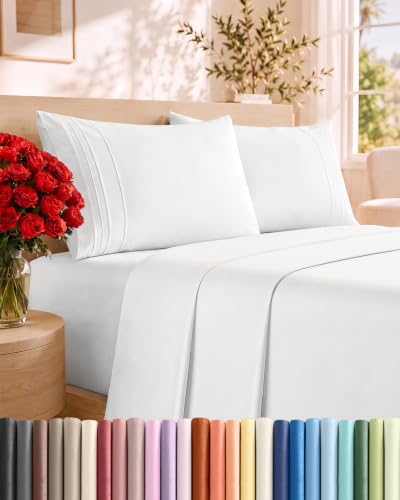
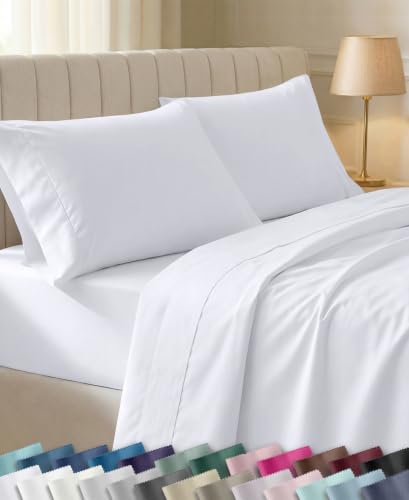
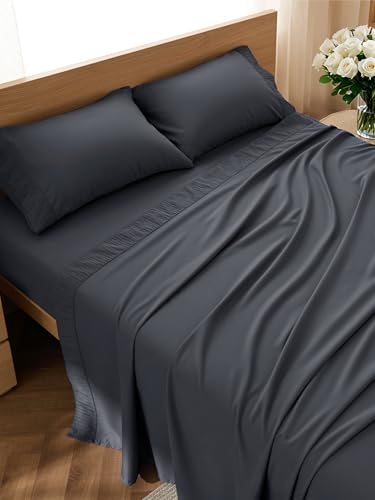
Disclosure: topratedkitchenware.com is reader-supported. When you buy through links on our site, we may earn an affiliate commission from Amazon and other retailers, at no extra cost to you.
Where to buy
The six sets below are the verified examples used in this guide to the best type of sheet sets. Each name links to its Amazon listing, where you can check the latest price on Amazon, confirm the size and colour before ordering, and read current owner feedback alongside the type distinctions explained here.
- LANE LINEN Organic Cotton Percale Sheet Set
- California Design Den Cotton Sateen Sheet Set
- Shilucheng Egyptian Cotton Sateen Sheet Set
- TEXAS LINEN CO. Organic Cotton Percale Sheet Set
- RUVANTI Cotton Percale Sheet Set — Blue Floral Sweet Pea
- CGK Unlimited Sheet Set — Dark Grey
Read the full guide ↓ for what actually separates one sheet type from another, which type suits which sleeper, and the mistakes that make people buy the same sheet twice under two different names.
Ask ten shoppers to name the best type of sheet sets and you will hear thread counts, brand loyalties and at least one argument about Egyptian cotton — but the honest answer starts somewhere simpler. Sheet type is really three decisions stacked together: the fibre the yarn is spun from, the weave that turns yarn into cloth, and the finish that decides how much upkeep the set demands. Once you separate those three layers, the whole category becomes legible. Percale and sateen are weaves, not fibres. Egyptian and organic describe cotton, not a feel by themselves. Easy-care sets are a care philosophy as much as a material. This guide uses six verified queen sets as working examples of each branch, so every claim about a type is tied to a real set you can inspect.
That structure matters because most disappointing sheet purchases are type mistakes, not quality mistakes. A well-made sateen set will still disappoint a sleeper who wanted crisp percale. A beautiful white cotton set will still frustrate a household that needed bedding they could pull straight from the dryer. A premium fibre will still sleep warm if the weave traps air. So read the types first and the individual picks second. If you are also comparing finished shortlists rather than types, our overview of Best Bed Sheet Sets looks at complete sets head to head, while this page stays focused on the underlying question of which kind of sheet belongs on your bed in the first place.
The six examples below were chosen to span the real branches a shopper meets: crisp cotton percale, smooth cotton sateen, Egyptian cotton as the premium fibre upgrade, organic cotton in the same percale weave, a patterned combed-cotton option, and an easy-care set for households that value low upkeep over natural fibre. Every set is a queen four-piece configuration unless its listing says otherwise, which keeps the comparison honest — you are comparing types, not sizes. By the end you should be able to walk past the marketing vocabulary, name the fibre, name the weave, predict how the sheet will feel on a warm night and after twenty washes, and know which of the six examples fits that prediction.
Key Takeaways
- Weave decides feel first: percale is crisp, cool and matte; sateen is smooth, draping and slightly warmer.
- Cotton is a fibre, not a type by itself — always ask which weave the cotton has been woven into before you buy.
- Egyptian and organic describe how the cotton was grown and selected; they refine a type rather than replacing it.
- Easy-care sets trade some breathability for wrinkle resistance and simple laundry, which is the right trade for rentals, teens and spare beds.
- Pocket depth is a type-independent check: measure your mattress plus topper and match it to the stated pocket before anything else.
- Pattern is a practical feature, not decoration alone — a print hides creases and everyday marks that plain white exposes.
In this guide
Quick Picks
| Pick | Badge | Why it earns its place | Listing |
|---|---|---|---|
| LANE LINEN Organic Cotton Percale Sheet Set | Best Overall | A crisp, breathable cotton percale that shows exactly why weave matters more than thread-count marketing. | Check on Amazon |
| California Design Den Cotton Sateen Sheet Set | Best Smooth Sateen Pick | A smooth cotton sateen with a stated thread count, deep pocket and OEKO-TEX certification. | Check on Amazon |
| Shilucheng Egyptian Cotton Sateen Sheet Set | Best Luxury Cotton Pick | Egyptian cotton in a sateen weave, positioned as a hotel-style set with a deep pocket. | Check on Amazon |
| TEXAS LINEN CO. Organic Cotton Percale Sheet Set | Best Crisp Hotel-Style Percale | Another organic percale, useful as the direct comparison point for weave, pocket depth and hotel-style positioning. | Check on Amazon |
| RUVANTI Cotton Percale Sheet Set — Blue Floral Sweet Pea | Best Patterned Cotton Pick | Combed-cotton percale in a blue floral print, showing that type and pattern are separate decisions. | Check on Amazon |
| CGK Unlimited Sheet Set — Dark Grey | Best Easy-Care Pick | The easy-care, wrinkle-resistant branch of the family, in a forgiving dark grey and an OEKO-TEX listing. | Check on Amazon |
How These Picks Were Chosen
These picks were chosen as type specimens first and products second. The research started from the verified pool for this sheet cluster and asked a simple question of every set: which branch of the sheet family does this set honestly represent, and does its listing state the facts that prove it — fibre, weave, size, piece count, pocket depth and any certification? Sets whose titles named a weave were used to anchor the percale and sateen sections. Sets that named a fibre distinction, such as Egyptian or organic cotton, were used to explain what a fibre upgrade does and does not change. The easy-care set was kept deliberately, because a type guide that only praises natural cotton would mislead the many households whose real priority is laundry.
This is research-led guidance, not a claim of laboratory testing. No sheet in this guide was slept on by the writer for a controlled trial, and no thread count, softness score or durability figure has been invented to fill a table. Where a listing states a fact — a 400 thread count, a 16-inch pocket, a GOTS or OEKO-TEX certification — that fact is reported as stated and attributed to the listing. Where a listing is silent, the guide says so rather than guessing, which is why the easy-care pick is described by its care positioning instead of an assumed fibre blend. Readers comparing complete shortlists as well as types may also find Best Quality Sheet Sets useful, since quality signals and type signals overlap without being the same thing.
Three filters removed noise from the comparison. First, size was held constant at queen so that feel and care differences were not confused with fit differences. Second, any claim that could not be traced to a verified listing title was left out of the spec boxes. Third, each type was required to have a genuine downside worth naming; a branch with no trade-off is marketing, not information. The result is a shortlist where switching from one pick to another changes something real — airflow, surface feel, upkeep, appearance or fibre — rather than simply changing a logo on the packaging.
The 6 Best Type of Sheet Sets, Explained Through Real Sets
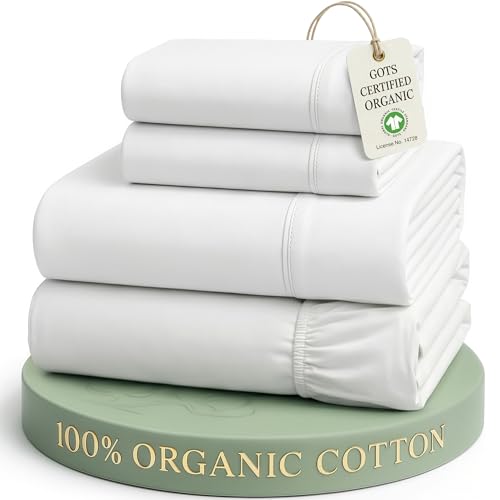
LANE LINEN Organic Cotton Percale Sheet Set
Badge: Best Overall
Strengths
- Genuine cotton percale weave with the crisp, matte hand feel percale buyers are actually looking for
- GOTS-certified organic cotton, stated plainly in the verified listing title
- Described as cool and breathable for hot sleepers, which matches how percale behaves in warm rooms
Trade-offs
- Percale feels crisp rather than silky, so shoppers who want a smooth, draping sheet may prefer sateen
- White is the verified colour here, which shows marks sooner than darker bedding
- Cotton wrinkles more readily than easy-care synthetic sets and looks best with a quick smooth-out after washing
At a glance
- Size: Queen
- Pieces: 4-piece set
- Material: 100% organic cotton
- Weave: Percale
- Certification: GOTS-certified organic cotton
Percale is the easiest sheet type to recognise by touch. The one-over, one-under weave produces a flat, matte surface that feels cool when you first climb in and stays comparatively airy through the night. This LANE LINEN set is the clearest example in the group: organic cotton, a named percale weave, and no attempt to sell the sheet on an inflated thread count. If your main complaint about your current bedding is that it sleeps warm or feels clammy, this is the type — and the set — to start with.
In everyday use, percale rewards people who like a bed that feels freshly made. It holds a fold, sits neatly over the mattress, and pairs well with a light duvet in summer. The honest limitation is texture preference: percale can feel almost papery to someone raised on sateen or brushed microfiber. Give it a few washes before judging it, because cotton percale softens gradually, but do not buy it expecting a silky glide. It is a cool, crisp sheet, and it is best judged on those terms.
Best for: hot sleepers and anyone who wants the classic crisp cotton feel. / Not suited for: shoppers who want a silky, wrinkle-resistant surface.

California Design Den Cotton Sateen Sheet Set
Badge: Best Smooth Sateen Pick
Strengths
- Sateen weave gives the smoother, more lustrous surface that distinguishes it clearly from percale
- Stated 400 thread count in the verified title, so the claim can be compared like for like
- 16-inch deep pocket and OEKO-TEX certification are both named in the listing
Trade-offs
- Sateen sleeps a touch warmer than percale because the weave exposes more yarn surface
- The smooth finish shows its quality best when washed gently; harsh cycles dull sateen faster
- White bedding needs a realistic laundry routine if it is used every night
At a glance
- Size: Queen
- Pieces: Bed sheet set (pillowcases and sheets as listed)
- Material: 100% cotton
- Weave: Sateen
- Thread count: 400 TC as stated in the listing title
- Pocket: 16-inch deep pocket
- Certification: OEKO-TEX certified
Sateen is percale’s opposite in character. More warp threads sit on the surface, which creates the soft sheen and the smoother slide that many people associate with hotel bedding. This California Design Den set makes the type easy to understand: it names the weave, states a thread count, gives a pocket depth, and carries OEKO-TEX certification. For a shopper comparing types rather than brands, those specifics matter more than adjectives.
Choose sateen if you run cold, like a sheet that drapes closely, or simply dislike the crisp rustle of percale. The trade-off is warmth and delicacy. Sateen is not fragile, but its surface rewards gentler washing and prompt removal from the dryer. Its honest limitation for hot sleepers is real: on a humid night a percale set will usually feel cooler. If your bedroom is air-conditioned and you value smoothness over maximum airflow, this is the more comfortable type.
Best for: sleepers who want smooth, draping cotton and a polished bed look. / Not suited for: very hot sleepers who need the airiest possible weave.

Shilucheng Egyptian Cotton Sateen Sheet Set
Badge: Best Luxury Cotton Pick
Strengths
- Egyptian cotton is the fibre upgrade within the sateen type, valued for longer staple fibres
- Sateen weave in white gives the formal, hotel-style appearance many buyers want
- 16-inch deep pocket suits thicker modern mattresses and toppers
Trade-offs
- A luxury fibre only pays off if the laundry routine is gentle enough to protect it
- White sateen shows body oils and makeup sooner than patterned or darker sets
- Shoppers who prefer a matte, crisp bed will still be happier with percale
At a glance
- Size: Queen
- Pieces: 4-piece set
- Material: Egyptian cotton as stated in the listing title
- Weave: Sateen
- Pocket: 16-inch deep pocket
- Colour: White
Egyptian cotton is a fibre distinction, not a weave. The longer staple fibres can be spun into smoother, stronger yarns, and when those yarns are woven as sateen the result is the plush, polished sheet many hotels imitate. This Shilucheng set represents that premium branch of the family tree: Egyptian cotton, sateen weave, white colour, and a deep pocket for a thick queen mattress.
It earns its place as a type example rather than as a bargain. Buy this branch when the bed is a deliberate upgrade — a primary bedroom, a guest room you want to feel considered, or a replacement for a set that has gone thin. Its limitation is upkeep. Premium cotton that is washed hot, overdosed with detergent, and tumble-dried hard will not stay premium for long. Treat it as the good set, wash it like the good set, and the fibre difference stays noticeable.
Best for: a primary-bed upgrade and anyone who wants the smoothest cotton type. / Not suited for: rough-and-ready laundry routines or buyers who prefer crisp percale.

TEXAS LINEN CO. Organic Cotton Percale Sheet Set
Badge: Best Crisp Hotel-Style Percale
Strengths
- Organic cotton percale with the same cool, crisp logic as the top pick, giving buyers a real alternative
- 16-inch deep pocket is stated clearly for thicker mattresses
- Positioned as a hotel-quality set in white, which suits a clean, layered bed
Trade-offs
- Two percale sets in one shortlist means the choice comes down to details, not a different feel
- Crisp percale is louder and stiffer at first than sateen or microfiber
- White requires prompt stain treatment to stay bright
At a glance
- Size: Queen
- Pieces: 4-piece set
- Material: 100% organic cotton
- Weave: Percale
- Pocket: 16-inch deep pocket
- Colour: White
Having two organic percale sets in the same guide is deliberate. Type shopping is not only about percale versus sateen; it is also about learning which details separate two sets of the same type. Here the stated deep pocket is the headline difference to check against your mattress, alongside the hotel-quality positioning and the four-piece configuration. If your mattress plus topper is deep, that pocket figure can matter more than any fibre claim.
Expect the same virtues and limits as any good percale: a cool first touch, a matte finish, good airflow, and more visible wrinkling than a synthetic set. Its honest limitation is that it will not convert a sateen lover. What it offers instead is a second, well-specified route into the crisp-cotton type, which is useful when the first pick is unavailable in the configuration you want or when pocket depth is your deciding factor.
Best for: deep mattresses and crisp-sheet fans who want organic cotton. / Not suited for: anyone shopping specifically for a silky sateen surface.

RUVANTI Cotton Percale Sheet Set — Blue Floral Sweet Pea
Badge: Best Patterned Cotton Pick
Strengths
- Combed cotton percale, so the pattern does not come at the cost of the weave you wanted
- A print hides everyday marks and creasing better than plain white bedding
- 16-inch deep pocket is stated in the verified title
Trade-offs
- A floral print is a style commitment that will not suit a minimalist room
- Patterned bedding is harder to mix with an existing patterned duvet or quilt
- Percale still wrinkles more than easy-care synthetic alternatives
At a glance
- Size: Queen
- Pieces: 4-piece set
- Material: 100% cotton, combed cotton percale as stated
- Weave: Percale
- Pocket: 16-inch deep pocket
- Pattern: Blue Floral Sweet Pea
Pattern is the most underrated sheet decision. The weave decides how a sheet feels; the print decides how the bed looks on day three, not just on the day you make it. This RUVANTI set keeps the sensible foundation — combed cotton percale with a deep pocket — and adds a blue floral pattern that forgives a crease, a faint mark, and a less-than-perfect hospital corner far better than plain white ever will.
It suits a bedroom that already leans traditional, cottage, or guest-room pretty, and it is a practical choice for a bed that is used daily but not remade to showroom standard. The limitation is coordination. A floral sheet under a floral duvet becomes visual noise, so pair it with plain layers above it. Judged as a type, it proves an important point: you do not have to give up breathable cotton percale to get bedding with some personality.
Best for: patterned-bed lovers who still want breathable cotton percale. / Not suited for: minimalist rooms or beds already layered with bold prints.

CGK Unlimited Sheet Set — Dark Grey
Badge: Best Easy-Care Pick
Strengths
- Positioned for easy care and wrinkle resistance, the main reasons shoppers choose this branch of sheet types
- Dark grey is practical for everyday use and hides minor marks between washes
- OEKO-TEX appears in the verified listing title, and deep pockets are stated
Trade-offs
- Easy-care synthetic-style bedding does not breathe like cotton percale on a hot night
- The listing does not name a cotton weave, so it should not be bought as a cotton sheet
- A smooth easy-care surface feels different from natural cotton and some sleepers notice it immediately
At a glance
- Size: Queen
- Pieces: 4-piece set
- Colour: Dark Grey
- Fit: Deep pockets as stated in the listing title
- Certification: Oeko-Tex as stated in the listing title
- Care positioning: Extra soft and wrinkle free as described in the listing
Every type guide needs the easy-care branch, because for many households it is the right answer. This CGK Unlimited set is sold on softness, deep pockets, wrinkle resistance, and simple upkeep rather than on a named natural fibre or weave. In a rental, a teen’s room, a spare bed that is changed often, or a home where bedding goes straight from dryer to bed, those qualities can outweigh the romance of cotton.
Be clear about what you are trading. Easy-care sets tend to feel uniformly smooth rather than crisp or silky, and they do not move air the way a cotton percale does. Hot sleepers should treat that as the deciding factor, not a footnote. Its honest strength is consistency: it looks presentable with very little effort, wash after wash. If your priority is a bed that is simple to run rather than a particular natural-fibre feel, this is the type to choose.
Best for: busy households, rentals and anyone who values wrinkle-free upkeep. / Not suited for: hot sleepers who specifically want breathable natural cotton.
Comparison Table
| Pick | Type lesson | Feel | Best use | Listing |
|---|---|---|---|---|
| LANE LINEN Organic Cotton Percale | Organic cotton, percale weave | Crisp, cool, matte | Hot sleepers | Check on Amazon |
| California Design Den Cotton Sateen | Cotton, sateen weave | Smooth, draping, slight sheen | Cold sleepers and polished beds | Check on Amazon |
| Shilucheng Egyptian Cotton Sateen | Premium fibre, sateen weave | Smooth and plush | Primary-bed upgrade | Check on Amazon |
| TEXAS LINEN CO. Organic Cotton Percale | Organic cotton, percale weave, deep pocket | Crisp and airy | Thick mattresses | Check on Amazon |
| RUVANTI Cotton Percale Floral | Combed cotton percale, printed | Crisp with a forgiving pattern | Guest rooms and daily beds | Check on Amazon |
| CGK Unlimited Dark Grey | Easy-care branch | Uniformly smooth, low upkeep | Rentals, teens, spare beds | Check on Amazon |
How to Choose the Best Type of Sheet Sets for Your Bed
Start with weave, because weave is temperature
Put your hand on the decision that affects you every night. Percale’s plain weave leaves tiny spaces in the cloth, which is why it feels cool and why it dries quickly. Sateen packs more yarn onto the surface, which feels smoother and holds a little more warmth. Neither is better in the abstract. A sleeper who kicks off a duvet in July should start at percale and only move if the crisp texture bothers them. A sleeper who feels cold under an air conditioner should start at sateen. Most type regret comes from ignoring this one paragraph and buying on fibre prestige instead.
Then choose the fibre inside that weave
Once the weave is fixed, fibre refines it. Standard cotton is the baseline: breathable, familiar, and easy to wash. Organic cotton adds a growing and certification story — GOTS certification is the claim to look for, stated in full rather than implied. Egyptian cotton adds longer staple fibres, which can produce smoother yarn and a more durable cloth when the claim is genuine. Easy-care fibres and blends add wrinkle resistance and reduce ironing, at the cost of some natural airflow. Notice the order: fibre upgrades polish a weave decision, they do not overturn it. Egyptian cotton sateen will never feel like percale, no matter how premium the fibre.
Treat thread count as a supporting detail
Thread count became famous because it is a single number, and single numbers are easy to print on packaging. Within one fibre and one weave it can hint at density, but across types it misleads: a moderate-count percale can feel cooler and last longer than a very dense sateen, and multi-ply yarns can inflate a count without improving the cloth. In this guide only one pick states a thread count in its verified title, and it is reported exactly as stated. Use thread count to compare two sets of the same type, never to rank a percale against a sateen or an easy-care set.
Measure the mattress before you fall for a type
Fit is not a type, but a failed fit ruins any type. Measure from the bottom of the mattress to the top, then add the height of any topper you actually sleep on. Compare that figure with the stated pocket depth — several picks here state 16 inches, one states deep pockets without a figure, and that difference should be resolved on the listing before ordering. A fitted sheet that pops off a corner at 3 a.m. will be remembered as a bad sheet even if its weave was perfect. Shoppers whose main problem is fit rather than feel should look at Best Deep Sheet Sets alongside this type guide.
Match the type to the laundry you will really do
Be honest about the household. Cotton percale and sateen reward warm-but-not-hot washes, measured detergent and prompt drying. Easy-care sets forgive a hotter, faster routine. White bedding of any type needs stains treated before they are baked in by a dryer. If bedding is washed by different people, in a shared laundry room, or on a rental turnover schedule, choose the type that survives that routine rather than the type that wins a showroom comparison. Durability is mostly a laundry outcome wearing a product costume.
Decide how the bed should look on an ordinary day
A showroom bed and a Tuesday bed are different objects. Plain white looks sharpest when it is freshly washed and carefully made, and it shows every crease, hair and faint mark in between. A print such as the RUVANTI floral hides the evidence of ordinary life. Dark grey easy-care bedding hides more still. If you enjoy making a bed properly, white cotton in either weave is deeply satisfying. If you do not, choose the type and colour that look acceptable with the effort you will actually give them — that is a legitimate buying criterion, not a failure of taste.
How to Wash, Fit and Care for Each Sheet Type
Wash a new set before the first night
Unfold the set, check every seam and corner, and wash it once before use. A first wash removes finishing treatments that can make cotton feel stiffer or smoother than it really is, and it reveals whether the fitted sheet’s elastic grips properly after a cycle. Use a moderate amount of detergent — excess detergent left in the fibres is a common cause of cotton that feels rough or holds odours. Keep the new set separate from towels in its first wash, because towel lint will cling to a smooth sateen surface.
Make the bed in the right order
Start with the fitted sheet’s deepest corners first, working diagonally so the elastic seats evenly. Smooth the fitted sheet from the centre outward rather than pulling one side tight and fighting the other. Add the flat sheet with its finished face placed according to whether you fold the top down over a duvet or blanket, then tuck only as much as your household actually likes. Percale rewards a firm smooth-out with the flat of your hand; sateen rewards a gentle shake and settle, because over-pulling a draping weave just moves the wrinkles around.
Wash by type, not by habit
Group cotton sets together and wash them on a warm, gentle-to-normal cycle with the sheets untangled and turned so pillowcases do not trap smaller items. Easy-care sets tolerate a simpler routine, which is their point. Avoid overloading the drum: sheets need room to rinse clean, and a packed load is the fastest route to detergent residue, musty smells and twisted fitted corners. Dry until just done. Over-drying cotton makes percale harsher and shortens the life of elastic, while under-drying any type invites mildew in a folded linen cupboard.
Store and rotate so the type can last
Keep at least two sets per bed and rotate them weekly if you can. Rotation rests the elastic, spreads the washing wear, and means a stain disaster never leaves you without bedding. Fold sets into the matching pillowcase so a complete set comes out of the cupboard in one handful. Store bedding somewhere dry and out of direct sunlight; white cotton stored against a hot, sunlit shelf will yellow unevenly, and no weave choice protects against bad storage.
Troubleshooting: three common problems
Problem: the fitted sheet keeps slipping off one corner → check the real mattress-plus-topper depth against the stated pocket, and try seating that corner first and deepest; if the depth is short, no weave will fix a fit problem. Problem: cotton sheets feel rougher after a few months → suspect detergent build-up before blaming the sheet; run a rinse-heavy wash with less detergent and avoid coating the fibres with heavy softeners. Problem: white sheets are greying or yellowing → separate whites strictly, treat body-oil areas on pillowcases before washing, and dry promptly rather than leaving whites damp in the machine.
Percale vs Sateen: The One Comparison That Decides Most Purchases
If you remember one section, make it this one, because most type shopping collapses into percale versus sateen. Both are cotton in this guide, both can be excellent, and they feel different enough that choosing the wrong one guarantees disappointment. Percale is the plain weave: matte, crisp, cool, a little rustly, and forgiving of warm rooms. Sateen is the satin-family weave used for sheets: smooth, quietly shiny, closer-draping, and a little warmer. Say your preference out loud before you shop. People who describe their ideal bed as cool, fresh or like a good hotel’s crisp white sheet usually mean percale. People who describe it as soft, smooth or luxurious usually mean sateen, even if they use the word cotton as though it settled the question. Shoppers still torn between finished sets in either weave can compare complete options in Best White Queen Sheet Sets, where the same weave logic appears in a single colour.
What Organic and Egyptian Actually Add — and What They Do Not
Certification and fibre-origin claims are worth paying attention to, provided you expect the right thing from them. GOTS-certified organic cotton, as stated for the LANE LINEN pick, is a claim about how the cotton was grown and processed through a certified chain; it does not change percale into a different-feeling weave. Egyptian cotton is a claim about fibre length and quality; woven as sateen, as in the Shilucheng pick, it can feel smoother and wear well, but it still sleeps like sateen. Buy these upgrades when you value the sourcing story or the finer yarn, not as a shortcut past the weave decision. And be sceptical of any listing that shouts a fibre claim while staying silent about weave, size and pocket depth — the boring specifications are the ones that decide whether a set works on your bed.
When the Easy-Care Type Is Genuinely the Best Type
Bedding advice often treats easy-care sets as a compromise, but for the right bed they are simply correct. A spare room that hosts grandchildren, a rental that turns over weekly, a teenager’s bed that is washed after every illness and sports season, a first apartment with a shared laundry room — in all of these, a set that comes out of the dryer smooth, forgives an imperfect wash and hides marks in a dark colour will be used happily for years, while a precious white cotton set becomes a source of low-level resentment. The CGK Unlimited pick represents that branch honestly. Choose it with your eyes open about breathability, especially for a hot sleeper, and it stops being a compromise and becomes the sensible type. Households furnishing a bed on a tight budget will find the same logic explored in Best Inexpensive Sheet Sets.
Matching a Sheet Type to the Sleeper, Not the Season Alone
Seasonal advice — percale for summer, warmer weaves for winter — is a useful starting point, but sleepers are more consistent than seasons. A person who runs hot in January under a heavy duvet will still run hot in July, and a person who feels cold in an air-conditioned bedroom in August is unlikely to love a crisp, airy sheet in any month. Start from your own temperature pattern across the whole year, then adjust the layers above the sheet for the season. Changing a duvet or blanket is cheaper and easier than replacing the sheet type every few months, and it keeps the surface your skin actually touches consistent, which many sleepers find helps them settle faster.
Household composition matters just as much. A bed shared by two people with different temperature preferences is a negotiation, and sheet type is the shared layer neither person can escape. Percale is often the compromise in that negotiation because the cooler partner can add a layer on their own side, while a hot sleeper cannot easily subtract a warm sheet from underneath them. A bed used by children, meanwhile, should be judged on wash frequency and stain tolerance before texture: the best type for a child’s bed is the one that survives repeated washing without becoming a chore anyone dreads, which is why easy-care and patterned cotton sets earn their place in family homes even when the adults’ own bed uses plain white cotton.
Guest beds deserve their own logic. A guest cannot tell you that your spare-room sheet sleeps warm or feels rough until after the visit, if they mention it at all. For a guest bed, choose the middle of every road: a cotton type in a weave most people find comfortable, a colour or pattern that looks cared-for even when the bed was made quickly, and a fitted sheet deep enough for the mattress actually in that room, which is often an older, thinner one than the primary bed. The RUVANTI patterned percale and the easy-care CGK set both make sense in that role, for different reasons — one looks welcoming with little effort, the other washes and resets quickly between visitors.
Finally, think about replacement rhythm. Some households buy one excellent set and wash it constantly; others keep three ordinary sets in rotation for years. Rotation is almost always the better strategy for any type, because elastic rests, fibres dry fully between uses, and no single set absorbs every wash. If your budget allows either one premium set or two sound sets of the same type, choose the two. The type decision and the rotation decision together decide how your bed feels a year from now far more than any single headline specification on a box.
Common Buying Mistakes
- Buying a fibre name instead of a weave — Egyptian, organic and premium cotton all still need a percale-or-sateen decision underneath them.
- Comparing thread counts across different types, where the number means different things and often means very little at all.
- Guessing pocket depth from the word deep instead of measuring the mattress and topper and matching a stated figure.
- Washing white cotton, dark easy-care bedding and towels in one overloaded drum, then blaming the sheet type for greying and roughness.
- Judging percale on its first stiff night or sateen on its first slippery night, before a few washes settle either weave into its real character.
- Choosing plain white for a bed that is never carefully made, when a print or a darker colour would look better with the effort actually available.
One more mistake deserves a sentence of its own: buying a second set of the wrong type because the first one was on sale. If a sheet disappointed you, name what disappointed you — warmth, texture, upkeep or fit — and change that variable. A household that works through types methodically ends up with a linen cupboard of sets that all get used, which is the real definition of value in bedding. Complete layered options, including sets sold with a comforter, are covered separately in Best Comforter Sheet Sets for readers furnishing a whole bed at once.
Final Recommendation
Start with the LANE LINEN Organic Cotton Percale Sheet Set if you want one recommendation: it is the clearest expression of the most versatile type, a breathable organic cotton percale that suits warm sleepers, looks clean in white, and teaches you immediately whether crisp cotton is your preference. If it is not — if you read the percale description and thought you would rather have smooth than crisp — go directly to the California Design Den Cotton Sateen Sheet Set and do not apologise for it; texture preference is the whole point of type shopping. For a deliberate upgrade, the Shilucheng Egyptian Cotton Sateen Sheet Set is the premium branch done properly.
Choose the TEXAS LINEN CO. percale instead when pocket depth on a thick mattress is your deciding detail, the RUVANTI floral when a forgiving pattern matters more than a plain bed, and the CGK Unlimited set when easy care is the honest priority for that particular bed. None of those is a consolation prize; each is the best type for a specific household reality. Name your reality first — temperature, texture, laundry and looks, in that order — and the right pick from this list usually names itself.
Frequently Asked Questions
What is the best type of sheet set for hot sleepers?
Cotton percale is the usual answer, because its plain weave feels cool on first contact and moves air better than a denser sateen. Two picks in this guide — the LANE LINEN and TEXAS LINEN CO. sets — are organic cotton percale. Pair the weave with a light top layer and the effect is stronger than any single cooling claim printed on packaging.
Is sateen or percale more durable?
Both can last well when the cotton and construction are sound; durability is driven more by fibre quality, careful washing and rotation between sets than by weave alone. Percale tolerates a slightly more vigorous routine. Sateen’s smoother surface rewards gentler handling, because the exposed yarns that create its sheen are also the first to dull under harsh cycles.
Does a higher thread count always mean a better sheet?
No. Thread count is only a useful comparison inside the same fibre and weave, and even then it is a supporting detail. A well-made moderate-count percale can feel better and last longer than a dense, heavy sheet of another type. Buy the weave and fibre first, then glance at the count if two otherwise identical sets need separating.
Are organic cotton sheets softer than regular cotton sheets?
Not automatically. Organic describes how the cotton was grown and certified, not a different texture. An organic percale still feels crisp and an organic sateen would still feel smooth. Expect the same weave character, with the value lying in the sourcing and certification — GOTS is the certification named on the LANE LINEN pick in this guide.
What type of sheet set is easiest to look after?
The easy-care branch, represented here by the CGK Unlimited set, is designed to come out of normal laundry smooth and presentable with the least ironing and fuss. The trade is breathability: for a hot sleeper in a warm room, cotton percale is usually the more comfortable easy life, even if it asks a little more from the laundry routine.
How deep should the fitted sheet pocket be?
Deeper than your mattress plus any topper, with a little room to tuck the elastic fully underneath. Measure the total depth rather than guessing from the mattress name. Several picks here state a 16-inch pocket, which suits many modern thick mattresses, but a tall topper can push a bed past that, and a too-shallow fitted sheet will slip regardless of its type.
Can I mix sheet types on the same bed?
Yes, and many people do without realising it — a percale fitted sheet for cool contact, for example, under a favourite sateen flat sheet. Just wash the pieces according to the more delicate type in the load, and expect the two weaves to age at slightly different rates in colour and surface feel.