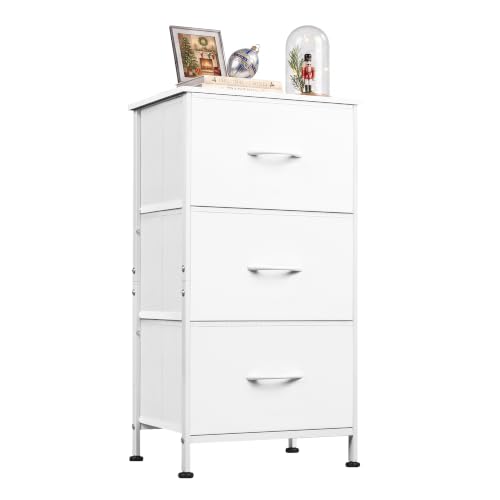
Where to buy
Check the latest price, availability and delivery on Amazon. Orders are placed on Amazon. We may earn a commission from qualifying purchases.
- Best overall: Hasuit 6 Drawers Double Dresser, White — Check on Amazon
- Prepac Sonoma 6-Drawer Double Dresser, Espresso — Check on Amazon
- Prepac Rustic Ridge Farmhouse 6-Drawer Double Dresser — Check on Amazon
- Hasuit 6 Drawer Dresser with LED Lights and Charging Station — Check on Amazon
See 2 more Amazon options
- LEYAOYAO Fluted 5-Drawer Dresser, 41-Inch Tall — Check on Amazon
- Tvilum 6 Drawer Double Dresser, Black Woodgrain — Check on Amazon
Read the full guide ↓
Disclosure: As an Amazon Associate, topratedkitchenware.com earns from qualifying purchases. Links to Amazon on this page are affiliate links; they cost you nothing extra. Listing details such as price and availability change often, so check the current Amazon listing before you buy.
A dresser in an apartment lives a harder life than a dresser in a house. It has to come up stairs or through a 30-inch door, get built in the room it will stand in because there is no garage to build it in, fit a bedroom that is also an office and a living room, anchor to a wall you do not own, and — when the lease ends — survive being carried back down those same stairs by people who are not professional movers. Under $200 on Amazon you can buy a real dresser for that life: a proper case with five or six real drawer boxes, built from particleboard or MDF panels with a laminate finish, from the big flat-pack brands that have sold this exact formula for decades. What you cannot buy at $200 is solid wood — a genuinely solid-wood six-drawer dresser starts well above this budget — and this guide will not pretend otherwise. What it will do is judge every pick by apartment rules: footprint, delivery path, build-in-place practicality, weight at move-out, and whether it can be anchored without a fight with your landlord.
For most renters we would start with the Hasuit 6 Drawers Double Dresser, a 47-inch-wide six-drawer case on a steel frame that sits toward the lower end of this budget — check price on Amazon — the lightest full-size pick here at 73 pounds, quick to build, and positioned to leave budget for the anchor kit and the deposit-patch putty. If your apartment has a genuinely wide bedroom wall and a long lease ahead of it, the Prepac Sonoma spreads six drawers across 59 inches, though you should check the current price on Amazon to confirm it still fits this budget, and we say so plainly in its review. Below you will find a quick picks table, detailed notes on each pick, a comparison table, a renter buying checklist, and sections on doors, anchoring, common mistakes and FAQs.
In this guide
Quick Picks
Short on time, or comparing several options at once? Each row below names a renter situation and the product that suits it, with a link to the listing.
| Buyer type | Pick | Why it stands out | Link |
|---|---|---|---|
| Best overall for renters | Hasuit 6 Drawers Double Dresser, White | Lightest full-size pick at 73 lb — check price on Amazon | Check on Amazon |
| Best for a wide wall and a long lease | Prepac Sonoma 6-Drawer Double Dresser, Espresso | 59 in wide from the flat-pack specialist, five-year parts warranty | Check on Amazon |
| Best farmhouse look | Prepac Rustic Ridge Farmhouse 6-Drawer Double Dresser | 53 in of rustic styling — check price on Amazon | Check on Amazon |
| Best for charging and a TV | Hasuit 6 Drawer Dresser with LED Lights and Charging Station | Built-in outlets, USB and LED cubbies, anchor kit included | Check on Amazon |
| Best tall chest for narrow walls | LEYAOYAO Fluted 5-Drawer Dresser, 41-Inch Tall | Five fluted drawers stacked tall instead of wide | Check on Amazon |
| Best European flat-pack | Tvilum 6 Drawer Double Dresser, Black Woodgrain | Danish-made panels; check price on Amazon and buy when it fits this budget | Check on Amazon |
How These Picks Were Chosen
The first filter was the budget, applied honestly. Every product below is a real Amazon listing with a verified ASIN. Prices change often, so this guide does not print a fixed price for any pick — check price on Amazon for the current figure. Some picks sit near the top of this budget, and their reviews say exactly that. If the current price of any pick is over $200 when you shop, it is out of this guide’s budget, full stop.
The second filter was the apartment test, and it eliminated more furniture than the budget did. A pick had to arrive flat-packed, be buildable by one or two people in a bedroom with the bed already in it, and weigh something two people can carry down stairs at move-out without heroics. Construction still mattered: this guide is about case goods — a framed box with drawer boxes that slide in it — not the fabric towers on tube frames that fill the lower-budget guides. Fabric has its place in apartment life, and the last topical section below says exactly when a fabric tower is the smarter buy; but an under-$200 search is asking for furniture, so the picks are particleboard and MDF dressers from flat-pack specialists like Prepac and Tvilum, and newer Amazon-native brands like Hasuit and LEYAOYAO.
We did not use these products ourselves. We read the maker listings, manuals and specification pages, compared dimensions, drawer counts, weights and hardware against maker listings and manuals. Two things got extra scrutiny. The first is safety: clothing storage units are a regulated category in the US since the STURDY Act, dressers in this exact price band have been recalled for tip-over hazards as recently as October 2026, and in a rental the anchoring question has a landlord attached to it — the safety section below deals with both halves of that problem. The second is move-out reality: panel furniture has a finite number of build-teardown cycles in it, and each review is honest about what a second or third apartment will do to it.
The 6 Best Dressers for Apartments Under $200
Hasuit 6 Drawers Double Dresser, White
Who it suits: Most renters — anyone who wants a proper six-drawer dresser that is light enough to move at lease end and cheap enough to leave deposit money untouched.
This is the apartment pick of the guide, and the reasons are renter reasons. The Hasuit double dresser (model DSI) measures 47.3 inches wide, 15.8 inches deep and 31.3 inches tall — a standard double-dresser footprint that fits the wall most apartment bedrooms actually have — and instead of an all-panel case, its six wood drawers ride in a heavy steel frame. That frame is how the dresser comes in at 73 pounds, the lightest full-size pick here by a wide margin. In apartment terms, 73 pounds means two people can carry it down a stairwell without a furniture dolly, one strong person can shift it across a room alone, and it is the pick least likely to be abandoned in a hallway on moving day with a “free, please take” note taped to it. It sits toward the lower end of this budget among the full-size picks here — check price on Amazon.
The build suits apartment logistics too. Roundup reviewers who have handled it describe the same picture: sturdy once built, genuinely quick to assemble by flat-pack standards — under an hour is the commonly reported figure — which matters when the build happens on a bedroom floor with the mattress leaned against the wall. The limitation hiding in that praise is extension: the drawers do not pull out to their full depth, so the back few inches of each drawer are reach-in territory. For folded clothes, which is what dresser drawers hold, that is a minor tax. The 15.8-inch depth is also on the shallower side of standard, which in an apartment is a feature wearing a limitation’s clothes: a shallower case leaves more walkway in a small bedroom and fits more door swings.
One more apartment virtue: positioned toward the lower end of this budget, this is the pick you can buy without turning it into a long-term commitment. It earns its place within a single lease by ending storage-basket and laundromat-basket chaos. If it survives two apartments — and a steel frame with wood drawers is the construction most likely to — that is a bonus, not a requirement.
- Six wood drawers on a steel frame — the anti-wobble formula at this tier.
- 73 lb: the lightest full-size pick here, and the easiest move-out carry.
- Positioned toward the lower end of this budget — check price on Amazon.
Honest limitation: The drawers are not full-extension — the back of each drawer takes a reach. Check the current price on Amazon and confirm that the listing in your cart is the 47.3-inch double dresser, not Hasuit’s taller tower variant.
Choose it if you want the most dresser for its move-out weight, and your clothes are folded, not filed. Skip it if you need full-extension drawers, or you expect to disassemble and rebuild it at every move — no flat-pack loves that, and the guides below explain the alternative.
Prepac Sonoma 6-Drawer Double Dresser, Espresso
Who it suits: Renters with a wide bedroom wall and a lease measured in years — the apartment is small, but the stay is long.
Prepac has sold the Sonoma line for well over a decade, and the six-drawer double dresser (model DC-6330-V) is its archetype: 59 inches wide, 17.5 inches deep, 29 inches tall — the full traditional footprint, with the deepest case in this guide. That depth is the Sonoma’s quiet advantage. Folded sweaters and jeans sit in single, visible stacks instead of being double-layered, and the top surface takes a mirror, a tray and a lamp without crowding. The drawers run on metal glides with built-in safety stops, the finish is a laminated espresso over composite wood, and Prepac’s standard five-year limited warranty on parts is the strongest paper backing in this guide — over a long lease, a stripped cam lock or a cracked panel is a parts request, not a new purchase.
Now the budget, stated as plainly as we can state it: this dresser sits near the top of this tier, so check the current price on Amazon before you rely on it for this budget. We include it because it is the benchmark the rest of the category is measured against — but if the current price in your cart reads above $200, treat it as out of budget and take the hero above instead. Do not let a color swap do the deciding for you, either: the espresso, black and white versions are separate listings, so check price on Amazon for the finish you want.
The apartment cautions are size and build. Fifty-nine inches is a lot of dresser: measure the wall, and then measure the path — the flat-pack box is long, and while the unbuilt panels will go around any stairwell corner, the assembled case will not be leaving through a narrow door if you build it in the wrong room. Build it where it will stand. The build itself is the full flat-pack experience: a big, heavy box of laminated panels, six drawer boxes, and a realistic two-person afternoon. Built and anchored, it is the most conventional object in this guide — and the one you will most want movers for at lease end.
- Widest and deepest case here: 59″W x 17.5″D x 29″H, six drawers.
- Metal drawer glides with safety stops; five-year limited parts warranty.
- A decade-plus sales history from a flat-pack specialist brand.
Honest limitation: It sits near the top of this tier, so check the current price on Amazon to confirm it fits the budget. It is also the heaviest, longest build in the guide, and at 59 inches wide it is the pick most likely to fail the measure-the-wall test in a small bedroom.
Choose it if your wall is wide, your lease is long, check price on Amazon confirms it fits this budget, and you value the brand and warranty. Skip it if the current price on Amazon is outside this budget, or you are assembling alone on a deadline.
Prepac Rustic Ridge Farmhouse 6-Drawer Double Dresser
Who it suits: Renters furnishing in a farmhouse or rustic direction, who want the look to survive contact with a $200 budget and a small room.
Most “farmhouse” dressers under $200 are fabric towers wearing a wood-grain print. The Rustic Ridge is the genuine article within this budget’s limits: a six-drawer double dresser from Prepac, 53.25 inches wide, in a weathered rustic finish with the framed drawer fronts and hardware the style calls for. It is a well-trodden listing, not an experiment. It sits near the top of this budget, and what that positioning buys is appearance: the case dimensions and drawer count match the plainer Sonoma formula above, so what the premium buys is the finish and the fronts. In an apartment, where the bedroom is often also the backdrop for video calls, a dresser that carries the room’s style is doing double duty — that is the honest case for this pick.
That case should still be bought knowingly. Under the rustic laminate this is the same species of furniture as everything else here — composite panels, cam-lock assembly, drawer boxes sized for folded clothes. Big flat-pack dressers collect their share of shipping-damage and assembly-frustration feedback, and a finish this distinctive shows edge wear more honestly than plain white does — a real consideration when the piece will be carried down stairs at move-out, because stairwell corners find dresser edges. Order it with time to spare before it is needed, inspect the panels before you start building, and Prepac’s parts support — the practical advantage of a brand with US distribution — is there if a corner arrives crushed.
One verification note belongs in the open rather than in a footnote: in earlier checks of this listing, Amazon’s featured offer was absent even while the dresser was selling briskly. Featured offers rotate on high-volume furniture listings, and the publisher of this guide re-checks before publication — but you should do the same in your cart. If the only offers are third-party and outside this budget, the correct move is to wait or take the Sonoma.
- Real farmhouse styling on a proper six-drawer case, 53.25 in wide.
- Positioned near the top of this budget — check price on Amazon.
- Backed by Prepac’s parts support and standard limited warranty.
Honest limitation: It sits near the top of this budget, so check the current price on Amazon to confirm it still fits. The rustic finish is a laminate over composite panels — it photographs beautifully and must be cared for like laminate, because it is.
Choose it if the farmhouse look is the point of the purchase and check price on Amazon confirms it fits this budget. Skip it if you are paying the style premium by accident — the plainer picks give you the same drawers at a lower position in this tier, and they hide moving-day scuffs better.
Hasuit 6 Drawer Dresser with LED Lights and Charging Station
Who it suits: Renters whose dresser is also the TV stand and the room’s only spare outlet — studio and one-bedroom layouts especially.
Apartments are outlet-poor, and that is the problem this pick is actually solving. The DSFH01 measures 47.2 inches wide, 15.7 inches deep and 33.9 inches tall, in black engineered wood, and around its six drawers Hasuit wraps two barn-style sliding doors, open cubbies lit by an app-controlled LED strip, and a charging station set into the top: three AC outlets and two USB ports on a roughly five-foot cord. For a renter running a power strip across the floor to charge a phone, that built-in station is not a gimmick — it is the difference between a dresser and a dresser plus a cable problem solved. At 99.2 pounds it is one of the heavier builds here, and the maker rates the top surface at 90 pounds — a maker figure, printed as such, and a sensible ceiling for a TV-and-soundbar plan rather than a promise. It sits near the top of this budget, with its electronics and charging features accounting for that positioning — check price on Amazon.
Two details raise it above the gadget-dresser crowd, and one of them matters more in a rental than anywhere else. Its manual states in plain language that an anti-tipping kit is included, and instructs you to install it — “crucially,” its word — into a wall stud. That is the correct posture for the whole category, and this is the one pick that ships the hardware to do it, which saves the renter the separate kit purchase and the guesswork about which strap fits. The second detail is the storage plan: drawers for clothes, cubbies for the consoles and books that otherwise colonize a dresser top, and doors that hide the rest — in a studio, where the dresser is visible from the couch, the kitchen and the door, doors that close are a feature.
The honest costs are complexity, weight and taste. This is the most involved assembly in the guide — frame, six drawers, sliding doors to align, an LED strip to seat, a charging unit to fit — and the manual recommends two people. At 99.2 pounds it is also the pick you will feel most on the stairs at move-out. And the LED-and-barn-door look is a strong flavor that will date faster than the plain cases above it, while every electronic extra is a component that can fail in a piece of furniture you otherwise expect to keep for years. Buy it for the charging and the storage plan, not for the light show.
- Built-in charging: 3 AC outlets and 2 USB ports in the top — no power strip.
- Six drawers plus barn-door cabinets and LED-lit open cubbies.
- Anti-tipping kit included, with stud-mount instructions in the manual.
Honest limitation: The most complex build here, and the top’s 90 lb rating is a maker figure from the product imagery, not a tested standard. Check the current price on Amazon to confirm it fits this budget.
Choose it if your dresser is also your TV stand and charging station, and your lease has enough runway to justify the build. Skip it if you move every year — this is the heaviest, most complex pick to relocate — or check price on Amazon shows it outside this budget.
LEYAOYAO Fluted 5-Drawer Dresser, 41-Inch Tall
Who it suits: Small apartments and narrow walls — anyone whose floor space runs vertical, which in rental bedrooms is nearly everyone.
Every other pick in this guide spreads its drawers across two columns. The LEYAOYAO stacks five drawers into a tall chest about 41 inches high, trading width for height: the right geometry for the short wall between a door and a closet, the strip of wall beside a window, or the corner of a studio where a 47-inch double dresser simply does not fit. The drawer fronts are fluted — vertical grooves that catch light and shadow — with metal handles, the same profile seen in boutique catalogs. It sits at the top end of this budget — check the current price on Amazon to confirm it still fits before you buy.
Five drawers instead of six is the obvious trade, and for a single person’s folded wardrobe it is usually the right one — what matters more in a small apartment is what the shape gives back. The top surface sits at counter height, usable as a vanity or a folding station in a way a 29-inch dresser top is not, and the floor footprint it returns to a small room is real, usable floor. What tall giveth, tall also threateneth: a 41-inch chest with its top drawers loaded is the most tip-sensitive shape in this guide, and the anchoring section below applies to this pick with double underlining. In a rental that means a conversation with the landlord before it means anything else — if anchoring is genuinely impossible in your room, do not buy this pick; take the low, wide hero instead. That is not boilerplate, it is the review.
Expectations for the brand should be set plainly: LEYAOYAO is an Amazon-native label, not a Prepac or a Tvilum, so the after-sale parts pipeline and the manual’s polish are a step behind the legacy brands, and the fluted fronts are molded panels whose grooves collect dust that a flat front would shrug off. For a renter there is one more consideration: a tall, narrow chest is the easiest shape here to move — it fits through doors upright, rides in a hatchback, and one person with a hand truck can manage it — which partly redeems the five-drawer trade for anyone who moves often.
- Tall five-drawer chest, about 41 in high — storage that climbs instead of spreading.
- Fluted drawer fronts and metal handles; the current look at a flat-pack tier.
- Positioned at the top end of this budget — check price on Amazon.
Honest limitation: Five drawers, not six, and it sits at the top end of this budget, so check the current price on Amazon to confirm it still fits. As the tallest, narrowest pick, it is also the one for which wall anchoring is least optional — a hard constraint in some rentals.
Choose it if your constraint is wall width, your landlord allows an anchor, and you will anchor it the day it is built. Skip it if you need six drawers, or anchoring is impossible in your room — take a low, wide pick instead.
Tvilum 6 Drawer Double Dresser, Black Woodgrain
Who it suits: Renters on a long lease who know flat-pack, want the European original of the genre, and can buy on the dip rather than on the day.
Tvilum is the Danish manufacturer whose panel furniture defined the flat-pack dresser long before Amazon-native brands existed, and its six-drawer double dresser (model 7029661) is the genre in its purest form: a wide, low, six-drawer case in black woodgrain laminate, made in Denmark, weighing about 120 pounds — the heaviest pick here, which in panel furniture is usually a proxy for panel density. Owners of Tvilum pieces tend to keep them; the fittings are standard European hardware, the panels are cut true, and a square-built Tvilum case stays square. For a renter signing a multi-year lease, this is the pick that treats the apartment as a home rather than a stopover.
And now the caveat that defines this pick, in the open where it belongs: availability and seller vary on this listing, and Amazon’s own offer comes and goes. This guide frames it as a buy-it-when-it-fits-the-budget pick. It is an under-$200 dresser when Amazon’s own offer is available and fits this budget, and it is not one when only third-party sellers outside this budget remain — check price on Amazon and confirm the seller before ordering.
Treat it as a watch-list pick: check price on Amazon, buy it when the Amazon offer fits this budget, and in the meantime let the Hasuit at the top of this guide do the job if you need a dresser now. What you should not do is pay a third-party premium for it — outside this budget it competes with a different class of furniture and loses. One apartment-specific warning on the weight: at about 120 pounds, this is the pick where “we’ll just carry it down ourselves” goes wrong on a third-floor walk-up. Budget for a dolly, a stair-climbing hand truck, or the movers — the panel quality that makes it worth keeping makes it worth moving properly.
- Made in Denmark by the flat-pack specialist Tvilum; about 120 lb of panel.
- Historically positioned inside this budget when Amazon’s own offer is available — check price on Amazon.
- Standard European fittings and panels cut true; built to be rebuilt.
Honest limitation: Amazon’s own offer is not always available on this listing. This pick only qualifies when that offer fits this budget; confirm the seller and check the current price on Amazon before ordering, and never pay the third-party premium.
Choose it if your lease is long, you can wait for the dip, and you value panel quality over features. Skip it if you need a dresser this week, you live in a walk-up without a moving plan, or the only live offers are third-party and above the line.
Comparison Table
| Product | Form | Size | Best use | Link |
|---|---|---|---|---|
| Hasuit 6 Drawers Double Dresser | Steel frame, wood drawers | 47.3″W x 15.8″D x 31.3″H, 73 lb | Best value and easiest move-out | Check on Amazon |
| Prepac Sonoma 6-Drawer Double Dresser | Panel case, metal glides | 59″W x 17.5″D x 29″H | Widest case, long leases, warranty | Check on Amazon |
| Prepac Rustic Ridge 6-Drawer Dresser | Panel case, rustic finish | 53.25″W | Farmhouse rooms | Check on Amazon |
| Hasuit DSFH01 LED and Charging Dresser | Panel case, powered top | 47.2″W x 15.7″D x 33.9″H, 99.2 lb | TV stand plus charging hub | Check on Amazon |
| LEYAOYAO Fluted 5-Drawer Dresser | Tall panel chest | About 41″H | Narrow walls, small rooms | Check on Amazon |
| Tvilum 6 Drawer Double Dresser | Danish panel case | Wide double dresser, about 120 lb | Buy-on-the-dip quality pick | Check on Amazon |
How to Choose a Dresser for an Apartment Under $200
Measure the path before the wall. In a house, a dresser needs to fit the wall. In an apartment it first needs to fit the journey: building door, elevator or stairwell turn, apartment door, hallway, bedroom door. The good news is that every pick here arrives flat-packed, so the box — not the furniture — is what travels, and flat-pack boxes go around corners that assembled furniture cannot. The discipline is the reverse of a house move: never build a wide case in the living room and expect to walk it into the bedroom. Measure the wall it will stand against, then build it in that room, in roughly its final position.
Measure the wall, then the walkway. Dressers are sold by width — 47, 53, 59 inches in this guide — but they are lived with by depth and clearance. You need the case depth (15.7 to 17.5 inches here) plus a fully opened drawer (another 12 to 14 inches) plus room for your knees. In a small bedroom that arithmetic decides whether you can open the bottom drawer while standing in front of it. If it fails, the tall LEYAOYAO chest, which trades width for height, is the pick designed for your problem.
Weigh the move-out, not just the move-in. Every pound in the comparison table is a pound you or your movers carry back down at lease end. The 73-pound hero and the roughly 120-pound Tvilum hold the same six drawers of clothes; the difference is entirely in the carrying. If your lease is twelve months and your building is a walk-up, weight is not a footnote — it is the spec. If your lease is long and your building has an elevator, density buys you panel quality and a dresser that stays square for years.
Count drawers by wardrobe, not by headline. Six standard drawers hold roughly two adults’ folded basics, or one adult’s full folded wardrobe with room for linens. Five drawers in a tall chest hold about the same volume in a different shape. What does not work is buying drawers for hanging clothes: anything that wrinkles on a hanger will not be saved by a drawer, however wide — in an apartment with one small closet, that mistake is expensive, because the closet is already spoken for.
Read construction before finish. At this tier every case is particleboard or MDF under a laminate — the differences that matter are drawer construction (a drawer box with a grooved bottom outlasts one with a stapled bottom), glide type (metal glides with safety stops beat plastic wheels), and frame design (the hero’s steel frame is a genuine structural idea, not a styling one). A finish you love on a weak drawer box is a bad trade; the reverse is a dresser you keep through the next lease too.
Treat every load figure as a maker claim. Where a listing publishes a number — the DSFH01’s 90 lb top, for instance — it is the maker’s figure, printed here as such. Panel dressers in this class carry clothes, a mirror, a lamp and a modest TV without complaint; none of them is a bookcase, an aquarium stand or a seat, and loading them as if they were is how cam locks tear out.
Decide the anchor before you decide the dresser. Every pick in this guide must be anchored to a wall stud — the next-but-one section explains how to do that in a rental without a deposit fight. If your room genuinely cannot take an anchor, choose the lowest, widest pick, keep heavy items in the bottom drawers, and understand you are accepting a risk the category’s regulators have explicitly warned about. Better: get the permission. It is one small hole, patched in minutes at move-out.
Getting It In: Doors, Stairwells and Building Rules
The flat-pack box is the apartment shopper’s best friend. An assembled six-drawer dresser is a rigid box roughly 47 to 59 inches wide that will not turn a switchback stair at all. The same dresser unbuilt is a flat carton a few inches thick that one person can carry up four flights and slide through a 30-inch door at an angle. Every pick in this guide ships that way. When you order, check the building’s delivery rules before the box ships, not after: some buildings require elevator reservations for large parcels, some have package rooms with size limits, and a 60-inch carton left in a leasing-office doorway has a short life expectancy.
The build location deserves the same forethought. A six-drawer build spreads panels across most of a small bedroom’s floor, so the realistic sequence is: clear the floor, lean the mattress against the wall, build the case where it will stand, anchor it, then put the room back. Building in the living room and carrying the finished case through a doorway is the classic apartment error — a 47-inch case does not pass a 30-inch door sideways, and tilting a fresh cam-lock build to squeeze it through racks the case before its first drawer is loaded. Two smaller disciplines pay off later: keep the box until the dresser has survived its first week, and photograph the hardware layout before you start, because a later spare-parts request goes faster with evidence.
Finally, plan the exit on the day of entry. Keep the assembly instructions — tape them to the back panel, where they will live until move-out. Keep any spare cams and dowels in a labeled bag in the bottom drawer. Know the truth about disassembly: each rebuild cycle loosens cam-lock and screw holes in particleboard, so a twice-rebuilt case is measurably less rigid than one carried out whole. Wherever the path allows it, moving the dresser assembled, drawers removed and doors taped, is the gentler option.
Anchoring in a Rental: Safety vs. the Security Deposit
Dressers tip. That sentence is usually buried in a manual; in this category it belongs in the buying guide, because the hazard is real, current and present in this exact tier. Under the US STURDY Act, clothing storage units sold today must meet the ASTM F2057 stability standard — and units in this price band still fail it in the market. In October 2026, the Consumer Product Safety Commission announced the recall of about 32,791 Jocoevol six-drawer dressers sold on Amazon — a dresser that would otherwise have been a candidate for this very guide — because the units are unstable when not anchored to the wall, posing tip-over and entrapment hazards that can cause serious injury or death to children. We excluded that brand from the picks entirely, and we name the recall here because it is the clearest possible evidence that this is not a theoretical risk. The physics are simple: a child opens drawers to climb, open drawers move the center of gravity forward, and a tall or top-loaded case goes over. The defense is equally simple — a steel strap or bracket screwed into a wall stud — installed the day the dresser is built.
In a rental, that strap comes with a landlord attached, so here is the honest version of the conversation. An anchor screw into a stud leaves one small hole, roughly the size of the nail holes most leases already tolerate for picture hanging, and it patches with filler and a dab of paint in minutes at move-out. The deposit balance runs entirely in anchoring’s favor: patching takes a small amount of filler; the cost of an unanchored dresser going over is not measured in deposits. If your lease forbids holes outright, ask anyway, in writing, naming the safety reason — property managers grant this exception routinely, because the liability conversation cuts their way too. If permission is genuinely refused, the fallback hierarchy is: choose the lowest, widest pick in this guide (the 29-inch Sonoma profile, not the 41-inch chest), keep the heaviest contents in the bottom drawers, keep TVs off the top, and treat furniture-arranging straps that use adhesive as the last resort they are, not an equivalent.
Practically: one pick here, the Hasuit DSFH01, includes an anti-tipping kit with stud-mount instructions in its manual; for the others, anchor kits are widely available and use the same hardware logic. Anchor into a stud, not a drywall anchor alone; keep the heaviest drawer contents at the bottom; teach children that drawers are not steps; and never place a TV on a dresser in a child’s room unless both are anchored. This is the least skippable section in the guide, and the only one where “my landlord said no” should start a conversation rather than end one.
Lease-End Math: When a Fabric Tower Beats a Rigid Dresser
This guide’s picks are rigid dressers, because a $200 search asks for furniture. But apartment life contains one situation where the rigid dresser is the wrong answer, and honesty requires naming it: the short lease. If you are in a short furnished sublet, a first job with a relocation clause, or a building you already know you are leaving, the fabric-drawer towers covered in the lower-budget guides — steel tube frames with fabric bins, typically positioned well below this budget — beat every pick here on exit cost. A fabric tower folds flat, weighs under 20 pounds, sells in an afternoon on a local marketplace or donates in one trip, and asks for no anchor conversation, no two-person build and no stairwell carry. Its drawers sag, its look is dorm-adjacent, and none of that matters if it only has to work until June.
The crossover point is roughly the second lease. A rigid dresser bought for a one-year lease and moved once has to earn its place in that single stay; the same dresser carried into a second apartment has more time to prove useful and starts beating the tower, which by then is sagging at the drawer fronts. The picks here were chosen with that horizon visible: the hero’s steel frame and light weight are the construction most likely to survive the moves that make it pay off, and the Tvilum’s dense panels are the bet for the longest horizon of all. What does not survive the math is buying the heaviest, most complex pick — the 99-pound DSFH01 — for a lease you expect to be your last in the building. Match the dresser to the lease you have actually signed, not the one you hope to sign next.
One more exit consideration, because apartments generate it constantly: resale and hand-off. Flat-pack dressers from known brands — the two Prepacs and the Tvilum here — resell locally more readily because the next renter can find the manual and the parts; Amazon-native labels resell on condition alone. If there is a real chance you will sell rather than move your dresser, that is a quiet argument for the brand-name picks.
Common Buying Mistakes
Building it in the wrong room. A 47-inch assembled case does not pass a 30-inch bedroom door. Build where it will stand — the single most common apartment-specific failure in this category, and the only one that can end with a dresser living in the living room.
Buying the fabric tower at a furniture price. Fabric drawers on a tube frame are a fine lower-tier product. Some listings dress the same construction in wood-grain print at case-goods positioning — check the materials field for “fabric drawers” before you pay case-goods money for them.
Skipping the current-price check. Some picks in this guide sit near the top of this budget. The price that matters is the one shown for your finish when you shop — check price on Amazon. A dresser outside the under-$200 budget does not fit this brief.
Skipping the anchor because the dresser “feels heavy.” Weight is not stability: the recalled dresser in the safety section weighed 97 pounds. Anchoring is a ten-minute task with a stud finder and the included or a separate kit, and in a rental it is one patchable hole. There is no version of this purchase where it is optional around children.
Ignoring the building until delivery day. Elevator reservations, package-room size limits and leasing-office hours are part of the purchase. A 60-inch flat-pack carton with nowhere to land is a problem you can only solve in advance.
Measuring width and forgetting depth plus drawer travel. A 17.5-inch-deep dresser with a drawer open is a 31-inch obstacle. In a small bedroom that can erase the walkway between bed and door. Measure the open-drawer footprint, not just the case.
Loading the top drawers first. Heavy items — books, denim stacks, the stoneware you are “storing for now” — belong in the bottom drawers. Top-heavy loading is what turns a stable case into a tip risk and bows the top drawers’ glides first.
Throwing away the instructions and spare hardware. In apartment life, the manual is a moving document: it is how the dresser comes apart, goes back together, or gets its replacement part in year two. Tape it to the back panel on build day.
Final Recommendation
- Most renters: Hasuit 6 Drawers Double Dresser, White.
- Wide wall, long lease: Prepac Sonoma 6-Drawer Double Dresser.
- Farmhouse rooms: Prepac Rustic Ridge 6-Drawer Dresser.
- TV stand plus charging hub: Hasuit DSFH01 with LED Lights and Charging Station.
- Narrow walls: LEYAOYAO Fluted 5-Drawer Dresser.
- Patient quality hunters: Tvilum 6 Drawer Double Dresser, on the dip.
Our top two are the Hasuit double dresser and the Prepac Sonoma, because between them they answer the two searches that bring most renters here: the best balance of storage and move-out weight, and the established wide case for the apartment you are staying in. Take the Hasuit if your lease is a year, your building is a walk-up, or your budget is firm; take the Sonoma if your wall is wide, check price on Amazon confirms it fits this budget, and the warranty has years to run. And if your lease is measured in months rather than years, reread the lease-end section before you buy either — the honest answer for a short stay is a fabric tower. Whichever you choose, the last step of the purchase is the same and it is not in the box photos: anchor it to a stud, patch the hole when you leave, and get your deposit back.
Frequently Asked Questions
Can you buy a solid wood dresser for under $200?
Not a six-drawer one, new, on Amazon — and this guide will not pretend otherwise. At $200 the honest market is particleboard and MDF cases with laminate finishes, which is what all six picks are. Solid-wood dressers start well above this budget; a listing at this price using “solid wood” language is describing a component, a veneer or a hope. If solid wood is non-negotiable, the real routes are the used market or a higher budget.
Will a dresser fit through my apartment door?
The furniture will — because it does not travel assembled. Every pick here arrives as a flat carton a few inches thick, which passes standard 30- to 32-inch doors and turns stairwell corners that defeat assembled furniture. The trap is the reverse journey: once built, a 47- to 59-inch case will not leave the room sideways. Build the dresser in the room where it will stand, in roughly its final position.
Can I anchor a dresser in a rental without losing my deposit?
Almost always, yes. An anti-tip strap screws into a wall stud and leaves one small hole that patches with filler and touch-up paint in minutes at move-out — the same class of mark as picture-hanging holes, and invisible once patched. Ask your landlord in writing if your lease is strict about holes; the safety reason is stated in the guide’s anchoring section, and property managers grant this routinely. One pick here, the Hasuit DSFH01, includes the anchor kit in the box.
Do I really need to anchor a dresser to the wall?
Yes. US regulators require clothing storage units to meet the ASTM F2057 stability standard under the STURDY Act, and in October 2026 the CPSC recalled about 32,791 Jocoevol six-drawer dressers sold on Amazon specifically because they are unstable unanchored, with tip-over and entrapment hazards to children. Anchor into a wall stud the day you build the dresser; if anchoring is impossible in your room, choose the lowest, widest pick and keep heavy contents in the bottom drawers.
How long does assembly actually take?
Plan on about an hour for the steel-frame Hasuit double dresser, two to three hours for the wide panel cases (Sonoma, Rustic Ridge, Tvilum), and a two-person afternoon for the Hasuit DSFH01 with its doors, LED strip and charging unit. In an apartment, add the room-clearing time: the build needs most of a small bedroom’s floor, so schedule it before the rest of the furniture is arranged, not after.
What size dresser fits a small bedroom?
Work backwards from clearance: case depth plus a fully open drawer plus your knees. A 47-inch double dresser at about 16 inches deep (the hero pick) fits most rooms; where wall width is the constraint, the tall LEYAOYAO chest stores upward at about 41 inches high instead of spreading. In every case, anchor first and keep heavy contents low — small rooms are where tall, top-loaded furniture is most tempting and least forgiving.
Will a flat-pack dresser survive moving to my next apartment?
Usually once, carefully — and the odds depend on how you move it. Carried out assembled, with drawers removed, it keeps the rigidity it was built with. Disassembled and rebuilt, each cycle loosens cam-lock and screw holes in particleboard, and a twice-rebuilt case is measurably less square. The lighter, simpler constructions here — the steel-frame hero above all — tolerate the apartment cycle best; budget a dolly or movers for the 120-pound Tvilum rather than testing friendships on the stairs.
Are the drawers full-extension?
Usually not at this tier. The hero pick’s drawers, for example, stop short of full extension, so the back of the drawer is reach-in space — fine for folded clothes, limiting for anything you need to see all at once. Metal glides with safety stops, like the Sonoma’s, are the realistic hardware standard under $200; full-extension ball-bearing slides are a higher-budget feature.
How much weight can these dressers hold?
Only maker figures exist, and we print them as maker figures: the Hasuit DSFH01, for instance, rates its top at 90 lb in its product imagery. In practice, every pick here carries folded clothes, a mirror, a lamp and a modest TV. None is a bookcase, a seat or an aquarium stand, and the load that matters most is distribution — heavy items in the bottom drawers, always.