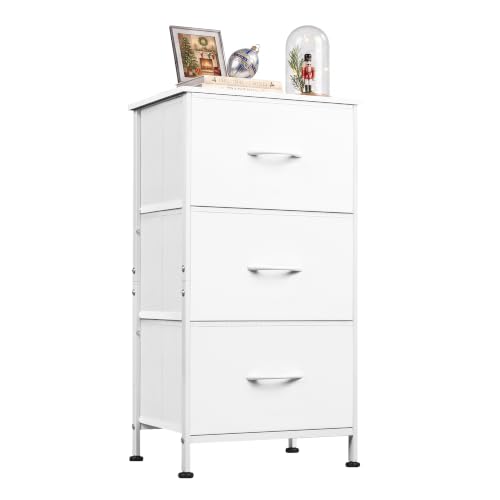
Where to buy
Check the latest price, availability and delivery on Amazon. Orders are placed on Amazon. We may earn a commission from qualifying purchases.
- Best overall for small bedrooms: Hasuit 6 Drawers Double Dresser, White — Check on Amazon
- Prepac Sonoma 6-Drawer Double Dresser, Espresso — Check on Amazon
- Prepac Rustic Ridge Farmhouse 6-Drawer Double Dresser — Check on Amazon
- Hasuit 6 Drawer Dresser with LED Lights and Charging Station — Check on Amazon
See 2 more Amazon options
- LEYAOYAO Fluted 5-Drawer Dresser, 41-Inch Tall — Check on Amazon
- Tvilum 6 Drawer Double Dresser, Black Woodgrain — Check on Amazon
Read the full guide ↓
Disclosure: As an Amazon Associate, topratedkitchenware.com earns from qualifying purchases. Links to Amazon on this page are affiliate links; they cost you nothing extra. Listing details such as price and availability change often, so check the current Amazon listing before you buy.
In a small bedroom, the budget question and the space question are the same question. Two hundred dollars is the first budget at which a dresser stops being a fabric tower and starts being furniture — a real case with real drawer boxes, built from particleboard or MDF panels under a laminate finish. But in a 10-by-10 room, every inch of case depth is rent you pay every day in walkway, and a dresser that fits on paper can still fail in the room: the drawer opens into your knees, the door swings into the case, the tall chest becomes the thing you sidle past. So this guide judges the six best dressers under $200 the way a small room judges them — on footprint, depth and open-drawer clearance first, and on finish last.
For most small bedrooms we would start with the Hasuit 6 Drawers Double Dresser: at 47.3 inches wide and just 15.8 inches deep it is the shallowest standard double dresser we could verify in this budget band — check the current price on Amazon — and it sits toward the lower end of this budget band, leaving headroom in the budget for the wall anchor it must have. If your room’s spare dimension is height rather than width, the tall LEYAOYAO chest stores upward instead. And if your small room happens to have one long, uninterrupted wall, the wide Prepac Sonoma earns its footprint honestly — though its price straddles the $200 line, and we say so plainly in its review. Below: a quick picks table, detailed reviews with real dimensions, a comparison table, a measuring routine, the wide-versus-tall trade-off, a tip-over safety section, common mistakes, and FAQs.
In this guide
Quick Picks
Short on time, or comparing several options at once? Each row below names a small-room situation and the dresser that suits it, with a link to the listing.
| Buyer type | Pick | Why it stands out | Link |
|---|---|---|---|
| Best overall for small bedrooms | Hasuit 6 Drawers Double Dresser, White | Shallowest standard double here: 47.3″W x 15.8″D — check price on Amazon | Check on Amazon |
| Best for one long wall | Prepac Sonoma 6-Drawer Double Dresser, Espresso | 59 in wide and low — the top doubles as room surface | Check on Amazon |
| Best mid-width style pick | Prepac Rustic Ridge Farmhouse 6-Drawer Double Dresser | 53 in of rustic styling, near the top of the budget band | Check on Amazon |
| Best two-jobs-one-footprint | Hasuit 6 Drawer Dresser with LED Lights and Charging Station | Dresser plus charging hub — absorbs the nightstand’s job | Check on Amazon |
| Best for narrow walls | LEYAOYAO Fluted 5-Drawer Dresser, 41-Inch Tall | Five fluted drawers stacked tall instead of wide | Check on Amazon |
| Best buy-on-the-dip | Tvilum 6 Drawer Double Dresser, Black Woodgrain | Danish-made panels; buy when Amazon’s own offer dips under $200 | Check on Amazon |
How These Picks Were Chosen
The first filter was the budget, applied honestly. Every product below is a real Amazon listing with a verified ASIN. Prices at this tier move often, so this guide prints no static product prices — check the current price on Amazon for each pick before you buy. The picks were chosen to sit within the $200 budget, but where a dresser can straddle the line — sitting under $200 at some times and over it at others — its review says so plainly rather than quietly rounding down. Two of the six picks sit close to the ceiling, and their reviews say exactly that. If the live price of any pick is over $200 when you shop, it is out of this guide’s budget, full stop.
The second filter was construction. This guide is about case goods: a framed box with drawer boxes that slide in it. Fabric drawers on a tube frame are a legitimate product at $75 — they are covered in the lower-budget guides — but they are not what a $200 search is asking for, so the fabric towers were excluded as a class, however highly they rate. What remained was the honest $200 story: particleboard and MDF dressers from flat-pack specialists like Prepac and Tvilum, and the newer Amazon-native brands like Hasuit and LEYAOYAO that build wood drawers into steel or panel frames. Nothing under $200 is solid wood, and any listing whispering otherwise is describing a veneer, a frame part, or a hope.
The third filter was the room itself, and it is the one that makes this guide different from a general under-$200 list. For every pick we recorded the dimensions that decide whether a dresser works in a small bedroom: case width against your longest free wall, case depth against your walkway, height against the room’s proportions, and the open footprint — the case depth plus a fully pulled drawer plus your knees — because that is the space a dresser actually occupies twice a day. Picks that could not state their dimensions, or whose shape only makes sense in a big room, did not survive. Where a pick’s full dimension set could not be captured, we print only the figures we verified and tell you to confirm the rest on the live listing.
We did not use these products ourselves. We read the maker listings, manuals and specification pages, compared dimensions, drawer counts, weights and hardware. Two things got extra scrutiny. The first is safety: clothing storage units are a regulated category in the US since the STURDY Act, dressers in this exact price band have been recalled for tip-over hazards as recently as October 2026, and in a small room — where a tall chest stands close to the bed and every wall is already spoken for — anchoring takes planning rather than a shrug. The second is assembly honesty: a six-drawer flat-pack is a real build, and in a small room it is a build you may have to do in the room itself, because the finished case will not always travel. Each review states plainly what that involves.
The 6 Best Dressers for Small Bedrooms Under $200
Hasuit 6 Drawers Double Dresser, White
Who it suits: Most small-bedroom buyers — anyone who wants a proper six-drawer dresser whose depth does not eat the walkway.
Start with the two numbers that matter most in a small room: 47.3 inches wide, 15.8 inches deep. The depth is the headline. The Hasuit double dresser (model DSI) is the shallowest standard six-drawer case we could verify under $200 — roughly an inch and a half shallower than the traditional flat-pack footprint — and in a small bedroom that difference is not a statistic, it is the walkway between the bed and the door. Add a fully opened drawer to the case and the Hasuit occupies about 29 inches of floor from the wall; the deeper cases in this guide take 31 or more. Its construction is the other interesting part: instead of an all-panel case, the six wood drawers ride in a heavy steel frame, which is how a 73-pound dresser at this price avoids the wobble that plagues the cheapest panel builds. Check the current price on Amazon — among the full-size picks here it sits toward the lower end of the budget band, leaving headroom in the budget for a wall-anchor kit and drawer dividers.
At 31.3 inches tall it also sits in the proportion band a small room wants: low enough for a mirror above it or a TV on top, wide enough for two people’s folded basics across its two columns, and not so tall that it looms over a low bed. Roundup reviewers who have handled it describe the same ownership picture: sturdy once built, and genuinely quick to assemble by flat-pack standards — under an hour is the commonly reported figure. The limitation hiding in that praise is extension: the drawers do not pull out to their full depth, so the back few inches of each drawer are reach-in territory. For folded clothes that is a minor tax; for anything you need to see all at once, know it before the box arrives.
- Shallowest standard double here: 47.3″W x 15.8″D x 31.3″H, 73 lb.
- Six wood drawers on a steel frame — the anti-wobble formula at this price.
- Sits toward the lower end of the budget band — check price on Amazon.
Honest limitation: The drawers are not full-extension — the back of each drawer takes a reach. Confirm the current price on Amazon and that the listing in your cart is the 47.3-inch double dresser, not Hasuit’s taller tower variant.
Choose it if your room is small in every direction and your clothes are folded, not filed. Skip it if you need full-extension drawers, or you want a named brand’s warranty behind the purchase.
Prepac Sonoma 6-Drawer Double Dresser, Espresso
Who it suits: Small rooms with one long, uninterrupted wall — and buyers who will let a low, wide dresser double as the room’s main surface.
The Sonoma is the contrarian pick of this guide: the widest and deepest case here, recommended for a small bedroom only under a specific condition. Prepac’s six-drawer double dresser (model DC-6330-V) measures 59 inches wide, 17.5 inches deep and 29 inches tall — the full traditional footprint. In the wrong room that is a non-starter: case plus open drawer is about 31 inches of floor, the most any pick here demands. But small rooms fail in two different ways — some lack width, others lack surface — and if yours has one long wall (the wall opposite the bed is the usual candidate) and nowhere to put a mirror, a lamp or a tray, the Sonoma’s low, broad top becomes part of the room’s infrastructure rather than wasted air. One wide case on one wall can leave the other three walls bare, which is its own kind of spaciousness. The drawers run on metal glides with built-in safety stops, the finish is a laminated espresso over composite wood, and Prepac’s standard five-year limited warranty on parts is the strongest paper backing in this guide.
Now the price, stated as plainly as we can state it: this dresser can straddle the budget. At times it sits under $200, and at other times it can sit just over the line. In other words, the Sonoma is an under-$200 dresser in the weeks when it is on its sale cycle and a just-over-$200 dresser when it is not. We include it because it is the benchmark the rest of the category is measured against, and because its dips below the line are regular — but check the current price on Amazon, and if the live price in your cart reads above $200, treat it as out of budget and take the hero above instead. Do not let a color swap do the deciding for you, either: the espresso, black and white versions are separate listings with separate prices.
Two small-room warnings belong to this pick specifically. First, the build: a big, heavy box of laminated panels and six drawer boxes, and a realistic two-person afternoon — and a 59-inch case that, once built, will not turn corners or pass narrow doorways gracefully, so plan to assemble it in the room, on a blanket, with the wall it will anchor to already chosen. Second, the 29-inch height that makes its top so useful also makes it the weakest TV stand of the six. Built, leveled and anchored, though, it is the most conventional, most furniture-like object in this guide.
- Widest and deepest case here: 59″W x 17.5″D x 29″H, six drawers.
- Metal drawer glides with safety stops; five-year limited parts warranty.
- A decade-plus sales history from a flat-pack specialist brand.
Honest limitation: The price can straddle the line, so it qualifies only when the current price on Amazon sits within budget. It also claims the largest open footprint in the guide, and once assembled it is effectively built for the room it stands in — measure the wall and the doorway before it goes together, not after.
Choose it if your room has one long wall, its live price is under $200, and you value the brand, the warranty and the surface. Skip it if your walkway is already tight, the live price is over the line, or you are assembling alone on a deadline.
Prepac Rustic Ridge Farmhouse 6-Drawer Double Dresser
Who it suits: Small rooms with a mid-length wall to spare, furnished in a farmhouse or rustic direction.
Most “farmhouse” dressers under $200 are fabric towers wearing a wood-grain print. The Rustic Ridge is the genuine article within this budget’s limits: a six-drawer double dresser from Prepac, 53.25 inches wide, in a weathered rustic finish with the framed drawer fronts and hardware the style calls for. For a small bedroom, that width is the interesting number: it splits the difference between the hero’s 47 inches and the Sonoma’s 59, which makes it the pick for the common small-room case where the hero leaves a awkward gap and the Sonoma simply does not fit. Check the current price on Amazon — it sits near the top of this budget band, as the premium end among the picks here, on a well-trodden listing rather than an experiment. That premium is spent on appearance: the case and drawer count match the plainer Prepac formula, so what the premium buys is the finish and the fronts.
That is a legitimate thing to buy, as long as it is bought knowingly — and in a small room there is one more knowing to add: a finish this distinctive is the room’s visual anchor whether you planned it that way or not, and it shows edge wear more honestly than plain white does. Under the rustic laminate this is the same species of furniture as everything else here — composite panels, cam-lock assembly, drawer boxes sized for folded clothes. Big flat-pack dressers also collect their share of shipping-damage and assembly-frustration reviews. Order it with time to spare, inspect the panels before you start building, and Prepac’s parts support — the practical advantage of a brand with US distribution — is there if a corner arrives crushed.
One verification note belongs in the open rather than in a footnote: in earlier checks of this listing, Amazon’s featured offer was absent even while the dresser was selling briskly. Featured offers rotate on high-volume furniture listings — but you should check in your cart. If the only offers are third-party at well above $200, the correct move is to wait or take the Sonoma, whose sale cycle visits the same territory.
- Real farmhouse styling on a proper six-drawer case, 53.25 in wide.
- Sits near the top of the budget band — check price on Amazon.
- Backed by Prepac’s parts support and standard limited warranty.
Honest limitation: It sits near the top of the budget band, so any price drift can put it out of budget. The rustic finish is a laminate over composite panels — it photographs beautifully and must be cared for like laminate, because it is.
Choose it if your free wall measures in the low fifties and the farmhouse look is the point of the purchase. Skip it if you are paying the style premium by accident — the plainer picks give you the same drawers for less.
Hasuit 6 Drawer Dresser with LED Lights and Charging Station
Who it suits: Small bedrooms where the dresser must also be the nightstand, the charging hub and the media stand — because there is no floor left for separate pieces.
The DSFH01 makes the most small-room argument of any pick here: it merges jobs. The case measures 47.2 inches wide, 15.7 inches deep and 33.9 inches tall — the shallowest case in this guide by a hair, on the same footprint class as the hero — and around its six drawers Hasuit wraps two barn-style sliding doors, open cubbies lit by an app-controlled LED strip, and a charging station set into the top: three AC outlets and two USB ports on a roughly five-foot cord. In a room where the bedside table was sacrificed to make the bed fit, that charging top is not a gadget; it is the nightstand’s whole job absorbed into a footprint you were already spending. The cubbies do the same for the consoles, books and remotes that otherwise colonize a dresser top. At 99.2 pounds it is one of the heavier builds here, and the maker rates the top surface at 90 pounds — a maker figure, printed as such, and a sensible ceiling for a TV-and-soundbar plan rather than a promise. Check the current price on Amazon: it sits near the top of the budget band, charging rent for its electronics, and its usual positioning can sit above the line.
Two details raise it above the gadget-dresser crowd, and both matter more in a small room. The first is in its manual, in plain language: an anti-tipping kit is included, and the manual instructs you to install it — “crucially,” its word — into a wall stud. A pick that ships its own anchor hardware saves a separate purchase and a second decision. The second is that at 33.9 inches tall it is the highest of the wide picks, which cuts both ways: the top sits closer to bedside-lamp height for a bed without a nightstand, and the case claims more visual wall than the low Sonoma does.
The honest costs are complexity and taste. This is the most involved assembly in the guide — frame, six drawers, sliding doors to align, an LED strip to seat, a charging unit to fit — and the manual recommends two people, in a room that may barely fit one builder and the parts. The LED-and-barn-door look is also a strong flavor that will date faster than the plain cases above it, and every electronic extra is a component that can fail in furniture you otherwise expect to keep for a decade. Buy it for the charging and the storage plan, not for the light show.
- Built-in charging: 3 AC outlets and 2 USB ports in the top — the nightstand, absorbed.
- Six drawers plus barn-door cabinets and LED-lit open cubbies, at 15.7 in deep.
- Anti-tipping kit included, with stud-mount instructions in the manual.
Honest limitation: The most complex build here, and the top’s 90 lb rating is a maker figure from the product imagery, not a tested standard. Confirm the current price on Amazon is at or under $200, because this model’s usual positioning can sit above the line.
Choose it if your dresser is also your TV stand, charging station and nightstand. Skip it if you want furniture that asks nothing of you after assembly day, or the live price has drifted over $200.
LEYAOYAO Fluted 5-Drawer Dresser, 41-Inch Tall
Who it suits: Narrow walls and small bedrooms — anyone whose floor space runs vertical, and who wants the fluted look that currently defines the style pages.
Every other pick in this guide spreads its drawers across two columns. The LEYAOYAO stacks five drawers into a tall chest about 41 inches high, trading width for height: the right geometry for the short wall between a door and a closet, the strip beside a window, or the corner where a 47-inch double dresser simply does not fit. It is the only pick here that can claim a wall the others cannot use at all, and in the smallest rooms that is the whole ballgame — a dresser that fits beats a better dresser that doesn’t. The drawer fronts are fluted — vertical grooves that catch light and shadow — with metal handles, the same profile that sells for several times this price in the boutique catalogs. It sits near the top of this guide’s budget band, close to the ceiling: a pick to buy with the current price on Amazon on screen, not from memory.
Five drawers instead of six is the obvious trade, and for a single person’s folded wardrobe it is usually the right one — what matters more is that a tall chest changes how a room works. The top surface sits at counter height, usable as a vanity or a folding station in a way a 29-inch dresser top is not, and the floor it returns is real, walkable floor. What tall giveth, tall also threateneth: a 41-inch chest with its top drawers loaded is the most tip-sensitive shape in this guide, and the anchoring advice below applies to this pick with double underlining. In a small room the temptation is to wedge a tall chest into a gap and call the friction a mounting system. It is not. If it is not anchored, do not buy it — that is not boilerplate, it is the review.
Expectations for the brand should be set plainly: LEYAOYAO is an Amazon-native label, not a Prepac or a Tvilum, so the after-sale parts pipeline and the manual’s polish are a step behind the legacy brands, and the fluted fronts are molded panels whose grooves collect dust that a flat front would shrug off. None of that disqualifies it — it is the only pick here that solves the narrow-wall problem with style — but it is a purchase to make with eyes open.
- Tall five-drawer chest, about 41 in high — storage that climbs instead of spreading.
- Fluted drawer fronts and metal handles; the current look at a flat-pack price.
- Sits near the top of the budget band, close to the ceiling — check price on Amazon.
Honest limitation: Five drawers, not six, and its positioning near the ceiling means it can straddle the line whenever its price moves. As the tallest, narrowest pick, it is also the one for which wall anchoring is least optional — and the top drawers sit high enough that shorter sleepers should test the reach before committing.
Choose it if your constraint is wall width and you will anchor it the day it is built. Skip it if you need six drawers, or anchoring is impossible in your room — take a low, wide pick instead.
Tvilum 6 Drawer Double Dresser, Black Woodgrain
Who it suits: Patient buyers furnishing a small room on no deadline, who want the European original of the flat-pack genre and will buy on the dip rather than on the day.
Tvilum is the Danish manufacturer whose panel furniture defined the flat-pack dresser long before Amazon-native brands existed, and its six-drawer double dresser (model 7029661) is the genre in its purest form: a wide, low, six-drawer case in black woodgrain laminate, made in Denmark, weighing about 120 pounds — the heaviest pick here, which in panel furniture is usually a proxy for panel density. Owners of Tvilum pieces tend to keep them; the fittings are standard European hardware, the panels are cut true, and a square-built Tvilum case stays square. For a small bedroom that has a specific value: a case you assemble once, correctly, in a room where re-doing a build is a genuine ordeal, and then never think about again. One honest gap to flag in a guide built on measurements: the listing records we could verify did not capture this model’s full dimension set, so before you buy on the dip, read the live listing’s width and depth against your wall and walkway — the measuring routine below applies to this pick most of all.
And now the caveat that defines this pick, in the open where it belongs: no current Amazon-sold price for this listing could be verified. Across its history, Amazon’s own offer has usually lived comfortably inside this budget — but third-party offers can sit above the line, and Amazon’s own offer comes and goes on this listing. So check the current price on Amazon and who the seller is before you buy. It is an under-$200 dresser when Amazon’s own offer is live and within budget, which history says is its normal state, and it is not one when only third-party sellers remain.
Treat it as a watch-list pick: set a price alert around the $200 budget line, buy it when the Amazon offer returns under the line, and in the meantime let the Hasuit at the top of this guide do the job if you need a dresser now. What you should not do is pay a third-party premium for it — above budget it competes with a different class of furniture and loses. Bought right, though, it is arguably the best-made object in this guide, and the one most likely to survive being moved out of the small room and into the next one.
- Made in Denmark by the flat-pack specialist Tvilum; about 120 lb of panel.
- Historically, Amazon’s own offer has usually sat well inside this budget — check price on Amazon.
- Standard European fittings and panels cut true; built to be rebuilt.
Honest limitation: No current Amazon-sold price could be verified, and third-party offers can sit over budget. This pick only qualifies when Amazon’s own offer is live at or under $200; confirm the seller, the current price on Amazon and the live listing’s dimensions before ordering, and never pay the third-party premium.
Choose it if you can wait for the dip and value panel quality over features. Skip it if you need a dresser this week, or the only live offers are third-party and above the line.
Comparison Table
| Product | Form | Footprint | Best small-room use | Link |
|---|---|---|---|---|
| Hasuit 6 Drawers Double Dresser | Steel frame, wood drawers | 47.3″W x 15.8″D x 31.3″H | Shallowest standard double; fits most small rooms | Check on Amazon |
| Prepac Sonoma 6-Drawer Double Dresser | Panel case, metal glides | 59″W x 17.5″D x 29″H | One long wall; top doubles as room surface | Check on Amazon |
| Prepac Rustic Ridge 6-Drawer Dresser | Panel case, rustic finish | 53.25″W | Mid-width wall with a farmhouse brief | Check on Amazon |
| Hasuit DSFH01 LED and Charging Dresser | Panel case, powered top | 47.2″W x 15.7″D x 33.9″H | Dresser plus nightstand plus charging hub | Check on Amazon |
| LEYAOYAO Fluted 5-Drawer Dresser | Tall panel chest | About 41″H | Narrow walls; storage that climbs | Check on Amazon |
| Tvilum 6 Drawer Double Dresser | Danish panel case | Wide double dresser; about 120 lb | Buy-on-the-dip quality pick | Check on Amazon |
How to Choose a Dresser for a Small Bedroom Under $200
Measure the wall, then the walkway. Dressers are sold by width — 47, 53, 59 inches in this guide — but they are lived with by depth and clearance. You need the case depth (15.7 to 17.5 inches here) plus a fully opened drawer (another 12 to 14 inches) plus room for your knees. If that arithmetic fails on every wall, the tall LEYAOYAO chest, which trades width for height, is the pick designed for your problem.
Compute the open footprint, not the case footprint. A dresser is two sizes: the one in the listing and the one with a drawer pulled out while you stand in front of it. The picks here range from about 28 to about 31 inches of floor in working position. In a small bedroom that three-inch spread is the difference between a walkway and an obstacle course, and it is decided by case depth — which is why the two shallowest cases in this guide are also its first and fourth picks.
Pick the shape by the room’s spare dimension. Every small room is long in one direction: it has either a wall that can take width or a corner that can take height. Wide and low buys you surface and stability; tall and narrow buys you floor. Buying against your room’s spare dimension — a 59-inch case in a room whose only free wall is 50 inches — is the most common way this purchase goes wrong.
Count drawers by wardrobe, not by headline. Six standard drawers hold roughly two adults’ folded basics, or one adult’s full folded wardrobe with room for linens. Five drawers in a tall chest hold about the same volume in a different shape. What does not work is buying drawers for hanging clothes: anything that wrinkles on a hanger will not be saved by a drawer.
Read construction before finish. At this price every case is particleboard or MDF under a laminate — the differences that matter are drawer construction (a drawer box with a grooved bottom outlasts one with a stapled bottom), glide type (metal glides with safety stops beat plastic wheels), and frame design (the hero’s steel frame is a genuine structural idea, not a styling one). A finish you love on a weak drawer box is a bad trade.
Treat every load figure as a maker claim. Where a listing publishes a number — the DSFH01’s 90 lb top, for instance — it is the maker’s figure, printed here as such. Panel dressers in this class carry clothes, a mirror, a lamp and a modest TV; none of them is a bookcase, an aquarium stand or a seat, and loading them as if they were is how cam locks tear out.
Decide the anchor before you decide the dresser. Every pick in this guide must be anchored to a wall stud — see the safety section below — and in a small room the stud locations may dictate which wall the dresser can stand on at all. Find your studs first; a dresser placed where no stud exists behind it cannot be made safe. If your room genuinely cannot take an anchor (a glass wall, a landlord who forbids even a pin hole), choose the lowest, widest pick, keep heavy items in the bottom drawers, and understand you are accepting a risk the category’s regulators have explicitly warned about. Better: get the permission. It is one small hole, patched in minutes at move-out.
Measure First: Footprint, Depth and Swing Space
Small-room dresser shopping fails at the tape measure far more often than it fails at the checkout, so here is the routine this guide’s picks were filtered by. Start with the wall: measure the full run you are willing to give the dresser, then subtract the baseboards, the door casing and the swing of any door that opens toward it. A 47-inch dresser on a 50-inch wall is not a fit if the door sweeps the last six inches. Then measure out from the wall: the case depth, plus 12 to 14 inches for a fully opened drawer, plus roughly a foot for the person standing in front of it. As a working rule, you want about 24 inches of clear floor in front of the case beyond the drawer itself — less than that and you will dress sideways, out of half-open drawers.
Two checks get skipped constantly. The first is swing space: closet and bedroom doors all sweep arcs, and a dresser placed inside an arc will be dented by it weekly — or will block a closet door from opening fully, which quietly halves your closet. Open everything that opens, and mark the arcs on the floor with painter’s tape before you measure anything. The second is the delivery path: a six-drawer flat-pack arrives as panels, and the longest panel is roughly the dresser’s width — 59 inches for the Sonoma. Measure your doorway, stairwell turn and any tight hallway corner against that number. Panels can usually be tilted through on the diagonal, but “usually” is a word to verify with a tape, not with a delivery driver waiting. And because a wide case, once built, will not repeat the journey, the practical conclusion is the one given in the reviews: assemble in the room, on a blanket, in front of the wall it will anchor to.
Finish by taping the footprint itself. Painter’s tape on the floor, at the case’s exact width and depth, left down for a day, will tell you more than any visualization: whether the walkway still works and whether the bed still makes. It costs ten minutes and it is the cheapest returns process in furniture.
Wide and Low or Tall and Narrow: The Small-Room Trade-Off
Every dresser in this guide is one of two shapes, and the choice between them is the real purchase. The wide double dresser — two columns of drawers under one broad top — stores horizontally. Its virtues are easy to underrate: the low top is a second surface the room gets for free (a mirror, a lamp, the tray that keeps small things from colonizing the bed), the case is inherently the most stable shape furniture makes, and two columns let two people, or two categories of clothing, stay out of each other’s drawers. Its cost is the wall: 47 to 59 inches of it, plus the deepest open footprint in the room.
The tall chest stores vertically. It returns walkable floor, fits walls no double dresser can use, and puts its top at counter height, where it works as a vanity or folding station. Its costs are the mirror image of the wide case’s virtues: little surface beyond that counter top, top drawers that test shorter sleepers’ reach, and the least forgiving tip-over geometry in the category — height, narrowness and top-loaded weight are the ingredients of every tip-over report ever written. Vertical storage is a genuine solution, but it is one that must be anchored, full stop.
The question shoppers actually ask — one wide dresser or two narrow towers? — resolves on arithmetic. One wide case is one delivery, one build, one anchor point and one visual object; its drawers are wide enough for folded stacks laid side by side, which is how clothes are actually stored. Two towers can colonize two short walls a single case cannot use, and that is their one real advantage; against it, they cost two builds and two anchors, with narrower drawers that force folded clothes into single, deeper stacks. In most small bedrooms the single wide case wins wherever a wall can take it, and the tall single chest wins where none can. Two towers are the answer only for the genuinely split room — and if that is yours, buy the LEYAOYAO’s shape twice rather than improvising with one of each.
Tip-Over: Anchoring When Every Wall Is Spoken For
Dressers tip. That sentence is usually buried in a manual; in this category it belongs in the buying guide, because the hazard is real and current. Under the US STURDY Act, clothing storage units sold today must meet the ASTM F2057 stability standard — and units in this price band still fail it in the market. In October 2026, the Consumer Product Safety Commission announced the recall of about 32,791 Jocoevol six-drawer dressers sold on Amazon — a dresser that would otherwise have been a candidate for this guide — because the units are unstable when not anchored, posing tip-over and entrapment hazards that can cause serious injury or death to children. We excluded that brand from the picks entirely, and we name the recall here because it is the clearest evidence that this is not a theoretical risk.
Small rooms concentrate the physics. The tall chest goes in the tight corner because that is where it fits; the bed is two feet away; the drawers get loaded from the top down because the top drawers are at eye level. A child opens drawers to climb; open drawers move the center of gravity forward; a tall, narrow, top-loaded chest goes over. The defense is a steel strap or bracket, screwed into a wall stud at one end and the dresser’s frame at the other, installed the day the dresser is built — and in a small room, find the studs before you place the furniture, because the room may offer exactly one wall where case, stud and doorway all agree. One pick here, the Hasuit DSFH01, includes an anti-tipping kit with stud-mount instructions in its manual; for the others, anchor kits use the same hardware logic. Anchor into a stud, not a drywall anchor alone; keep the heaviest contents at the bottom; teach children that drawers are not steps; and never place a TV on a dresser in a child’s room unless both are anchored. This is the least skippable paragraph in the guide.
Common Buying Mistakes
Measuring width and forgetting depth plus drawer travel. A 17.5-inch-deep dresser with a drawer open is a 31-inch obstacle that can erase the walkway between bed and door. Measure the open-drawer footprint, not just the case — and tape it on the floor before you order.
Placing the dresser inside a door’s swing. Doors sweep arcs, and a case inside the arc gets dented weekly or blocks the closet from opening at all. Open everything that opens before you choose the wall.
Buying tall to save floor and skipping the anchor. Height is exactly what makes anchoring non-negotiable, and “wedged tightly in the corner” is not a mounting system. Weight is not stability either: the recalled dresser in the safety section weighed 97 pounds. Anchoring is a ten-minute task with a stud finder and the included or a few-dollar kit.
Loading the top drawers first. Heavy items — books, denim stacks, the stoneware you are “storing for now” — belong in the bottom drawers. Top-heavy loading turns a stable case into a tip risk and bows the top drawers’ glides first. In a tall chest it is the most dangerous habit there is.
Trusting the headline price of a straddle pick. Two picks in this guide — the Sonoma and the LEYAOYAO — sit close to the ceiling and can cross it. The price that matters is the current one in your cart for your color, today. A dresser bought over budget for an under-$200 brief is a budget broken quietly.
Buying the fabric tower at a furniture price. Fabric drawers on a tube frame are a fine $75 product. Listings in this budget band exist that dress the same construction in wood-grain print — check the materials field for “fabric drawers” before you pay case-goods money for them.
Assembling in the hallway and discovering the case won’t travel. A built 59-inch dresser does not turn stairwell corners or pass narrow doorways gracefully. Build in the room, on a blanket, in front of the anchor wall — and measure the delivery path before the box arrives.
Forgetting the room around the dresser. A tall chest beside the bed puts its top drawers above a shorter sleeper’s comfortable reach; a low wide top under a window can block the sill; a charging dresser needs its cord to actually reach an outlet. Walk the room’s daily routine past the taped footprint before the tape comes up.
Final Recommendation
- Most small bedrooms: Hasuit 6 Drawers Double Dresser, White.
- One long wall and a real warranty: Prepac Sonoma 6-Drawer Double Dresser.
- Mid-width farmhouse rooms: Prepac Rustic Ridge 6-Drawer Dresser.
- Dresser, nightstand and charging hub in one footprint: Hasuit DSFH01 with LED Lights and Charging Station.
- Narrow walls: LEYAOYAO Fluted 5-Drawer Dresser.
- Patient quality hunters: Tvilum 6 Drawer Double Dresser, on the dip.
Our top two are the Hasuit double dresser and the Prepac Sonoma: the shallowest honest six-drawer case, and the wide low case that doubles as the room’s surface when one long wall is what the room has. Take the Hasuit if your room is tight in every direction; take the Sonoma if its live price is under the line and your wall can take it. If neither shape fits, the LEYAOYAO’s vertical answer is the right one — anchored, always. Whichever you choose, the last step is the same: measure twice, tape the footprint once, and anchor it to a stud. A $200 dresser that fits the room, clears its drawers and is strapped to the wall will quietly outlast trends in fluting, farmhouse and LED light shows.
Frequently Asked Questions
What size dresser fits a small bedroom?
Work backwards from clearance: case depth plus a fully open drawer plus your knees. The hero pick — 47 inches wide at about 16 inches deep — fits most small rooms and leaves roughly 29 inches of open footprint from the wall. Where wall width is the constraint instead, the tall LEYAOYAO chest stores upward at about 41 inches high. Tape the footprint on the floor and live with it for a day before you order.
Is a tall dresser or a wide dresser better for a small room?
It depends on which dimension your room can spare. A wide, low dresser gives you a usable top surface and the most stable shape, at the cost of 47 to 59 inches of wall. A tall chest returns walkable floor and fits narrow walls, at the cost of reach, surface and tip-over margin. One wide case usually beats two narrow towers — one build, one anchor, wider drawers — unless your room splits its free space across two short walls.
How much clearance do I need in front of a dresser?
Plan for the case depth plus 12 to 14 inches of drawer travel plus about a foot for the person dressing. In practice, roughly 24 inches of clear floor beyond the case front keeps dressing comfortable; much less and you will work out of half-open drawers sideways. The shallow cases in this guide (15.7 to 15.8 inches deep) exist precisely because that arithmetic is tight in small rooms.
Do I really need to anchor a dresser in a small room?
Yes — small rooms raise the stakes rather than lowering them, because tall furniture stands close to beds and gets loaded where it is reached. US regulators require clothing storage units to meet the ASTM F2057 stability standard under the STURDY Act, and in October 2026 the CPSC recalled about 32,791 Jocoevol six-drawer dressers sold on Amazon specifically because they are unstable unanchored. Anchor into a wall stud the day you build the dresser; one pick here (the Hasuit DSFH01) includes the kit, and standalone kits cost a few dollars.
Will a wide dresser fit through my doorway or up my stairs?
The flat-pack will, almost always — the longest panel is roughly the dresser’s width, and panels tilt through doorways on the diagonal. The built dresser is another matter: a 59-inch case will not repeat the journey around a stairwell turn. Measure the delivery path before ordering, and assemble wide picks in the room they will live in.
Can a dresser replace a nightstand in a small room?
Partially, and one pick here is designed for exactly that trade. The Hasuit DSFH01 puts three AC outlets and two USB ports in its top, which covers the nightstand’s charging job, and its cubbies take the books and remotes. What no dresser top replaces is the nightstand’s at-the-pillow height for a glass of water — if that matters, keep a small stool or wall shelf for it.
Are the drawers full-extension?
Usually not at this price. The hero pick’s drawers, for example, stop short of full extension, so the back of the drawer is reach-in space — fine for folded clothes, limiting for anything you need to see all at once. Metal glides with safety stops, like the Sonoma’s, are the realistic hardware standard under $200; full-extension ball-bearing slides are a higher-budget feature.
What if no dresser in this guide fits my room?
Then the room is telling you the storage has to move, not shrink. The usual ladder: a slim organizer inside the closet, where the door already accounts for the swing; under-bed boxes for the seasonal half of the wardrobe; and a wall-mounted shelf where a dresser top would have been. A dresser that blocks a doorway is worse than no dresser — take the hint early, while the tape is still on the floor.