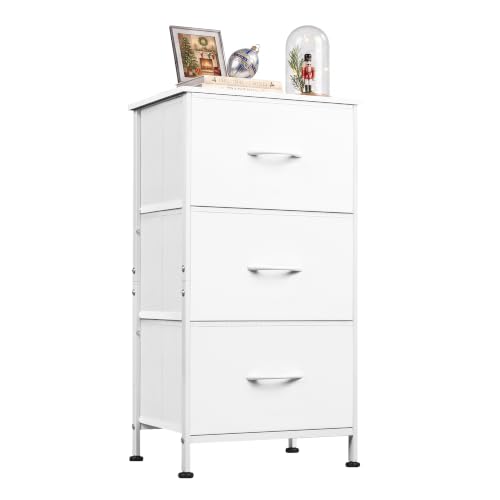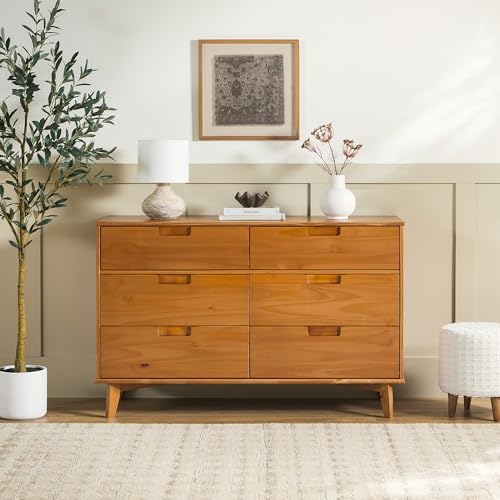
Where to buy
Check the latest price, availability and delivery on Amazon. Orders are placed on Amazon. We may earn a commission from qualifying purchases.
- Best overall: Walker Edison Sloane 6-Drawer Solid Wood Dresser, 52 Inch, Caramel — Check on Amazon
- Sauder Cannery Bridge 6-Drawer Dresser, Sindoori Mango — Check on Amazon
- LEYAOYAO Fluted 6-Drawer Dresser, 48 Inch, Light Grey — Check on Amazon
- Delta Children Brooks 6-Drawer Dresser with Interlocking Drawers, Soft Beige — Check on Amazon
See 2 more Amazon options
- Storkcraft Brookside 6-Drawer Dresser, White — Check on Amazon
- Prepac Sonoma 6-Drawer Double Dresser, Espresso — Check on Amazon
Read the full guide ↓
Disclosure: As an Amazon Associate, topratedkitchenware.com earns from qualifying purchases. Links to Amazon on this page are affiliate links; they cost you nothing extra. Listing details such as price and availability change often, so check the current Amazon listing before you buy.
In a small bedroom, the dresser is the second-biggest decision in the room after the bed — and the one most often got wrong, because dressers are sold by width and judged in photographs, while small rooms are lost by depth and by inches. A six-drawer dresser that looks modest on a product page can eat seven square feet of floor, project nineteen inches into a room that only has thirty to spare, and leave you dressing sideways between its open drawers and the bed. Four hundred dollars is the most interesting budget in the dresser market — it buys the best flat-pack and the first genuine solid wood — but in a small bedroom the money is only half the question. The other half is geometry: which of these well-built dressers actually fits the wall, the walkway and the doorway you have.
So this guide takes the strongest dressers Amazon sells under $400 and re-judges every one of them by small-room rules. Depth counts more than width, because depth is what steals the walkway. Floor footprint is printed in square feet, worked out from the listed dimensions, because “52 inches wide” tells you nothing about the floor a dresser actually occupies. Drawer travel counts: an open drawer roughly doubles the space a case demands, and in a small room that space comes out of the path between the bed and the door. And weight counts twice — once on the stairs and through the doorway, and once because a heavy dresser in a small room gets assembled exactly where it will live and then never moves again. What $400 still does not buy, here or anywhere, is a hardwood dresser with dovetailed drawers and soft-close slides; those sit in the premium tier. Below you will find a quick picks table, detailed notes on each dresser with its real footprint, a comparison table, a buying checklist, a measuring routine, a frank section on tip-over safety in tight rooms, the mistakes small-room shoppers make most, and answers to the questions that come up again and again.
In this guide
Quick Picks
Short on time, or comparing several options at once? Each row below names a small-room situation and the dresser that suits it, with a link to the listing.
| Buyer type | Pick | Why it stands out | Link |
|---|---|---|---|
| Best overall | Walker Edison Sloane 6-Drawer Dresser, 52 Inch, Caramel | Solid pine at a flat-pack price — if its 19-inch depth fits | Check on Amazon |
| Best for one long wall | Sauder Cannery Bridge 6-Drawer Dresser, Sindoori Mango | 142 lb of engineered wood; shallower than the Sloane | Check on Amazon |
| Smallest footprint | LEYAOYAO Fluted 6-Drawer Dresser, 48 Inch, Light Grey | 15.4 inches deep: about 5.1 sq ft of floor | Check on Amazon |
| Best vertical storage | Delta Children Brooks 6-Drawer Dresser, Soft Beige | Goes up instead of out: 43.3 inches tall on a 46.3-inch width | Check on Amazon |
| Easiest build in a tight room | Storkcraft Brookside 6-Drawer Dresser, White | Drawer tracks come pre-installed; GREENGUARD Gold certified | Check on Amazon |
| Widest — only if the wall allows | Prepac Sonoma 6-Drawer Double Dresser, Espresso | 59 inches wide — check price on Amazon | Check on Amazon |
How These Picks Were Chosen
The first filter was the budget, applied honestly. Every dresser below is a real Amazon listing with a verified ASIN in this budget tier. Where a dresser normally sits comfortably under the line but has a history of rising above it, we say so in its review rather than quietly rounding it down. Anything that sits above this budget — however good it might be — was left out of the linked picks, and the strongest of those are named, unlinked, in the section on what this budget cannot buy.
The second filter was the room. We did not assemble these dressers ourselves; we read the maker listings and specification pages, compared footprints, depths, drawer counts, materials and hardware, and cross-checked the listings — then did the small-room arithmetic the listings leave to you. Floor footprints in this guide are computed from the listed width and depth, and they reorder the field: the widest dresser here is not the greediest, and the narrowest is not the kindest. We favored shallower cases where the storage allowed it, vertical formats that store upward instead of outward, and assembly designs that can be built in a room with no spare floor to lay panels on. Dimensions and drawer counts are stated as the listings state them; load and stability figures, where a maker publishes them, are maker claims and are printed as such.
One thing we looked at closely was safety hardware, because in a small room the dresser stands closer to the bed, the doorway and any child in the room — there is no “far side of the room” to keep it on. Two of the six picks are nursery dressers, and that is deliberate: the nursery brands are required to think about interlocking drawers and tip resistance in ways the adult flat-pack brands are not, and at this budget their hardware is often the best in the room. One strong seller, the T4TREAM farmhouse 6-drawer dresser, is not linked: it sells briskly as a mid-range option, but we could not tie it to a verified Amazon listing for the dresser itself, so it is named here rather than linked blind.
The 6 Best Dressers for Small Bedrooms Under $400
Walker Edison Sloane 6-Drawer Dresser, 52 Inch, Caramel
Who it suits: Small-room buyers whose one good wall can take a 52-inch case, and who want real wood badly enough to spend nearly the whole budget and 19 inches of depth on it.
This is the only dresser in the guide built from solid wood — solid pine, per Walker Edison — and it is the reason the $400 tier is worth shopping at all. The case measures 52 inches wide, 19 inches deep and about 33 inches high: a floor footprint of roughly 6.9 square feet, worked out from those listed dimensions. Six drawers sit behind groove-handle fronts — no protruding knobs or pulls, just a routed channel you hook your fingers into — and in a small room that detail earns its keep twice over, because there is no hardware to catch a hip on in a tight walkway or snag the bedding when you squeeze past. Tapered solid-wood legs lift it off the floor, and the Caramel finish shows actual grain, because there is actual wood underneath it. Check price on Amazon before you buy — it lives at the top of this budget tier and occasionally leans on the ceiling.
The small-room charge against it is depth. Nineteen inches is the deepest case in this guide, tied with the tall Brooks, and depth is the dimension a small room can least afford: on a wall opposite the bed, those 19 inches come straight out of the gap you walk through, and an open drawer takes roughly another case-depth beyond it. Measure that wall honestly before falling for the wood. Pine itself is the other honest compromise: genuinely solid, repairable and far more forgiving of a knocked corner than a laminate panel, but a softwood that dents more easily than oak or acacia and will record keys and belt buckles if you let it. As with nearly every “solid wood” dresser in this tier, expect the drawer bottoms and back panel to be thin engineered panels rather than pine boards — check the listing’s material breakdown if that matters to you. Assembly is a real project, heavy enough to be a two-person build measured in hours, and in a small room it happens in place: there is no hallway to build it in and then carry it through. Anchor it to the wall when you are done, as you should with every dresser in this guide.
- The only solid-wood double dresser verifiably under $400 on Amazon.
- Groove handles: nothing protruding to catch on in a tight walkway.
- Full 19-inch depth, so drawers hold folded clothes properly — if the room can spare it.
Honest limitation: The 19-inch depth is the most expensive dimension in this guide for a small room, and pine marks with use — check price on Amazon to confirm it still sits within this budget, because if it has crossed the line, the Sauder below becomes the sensible buy.
Choose it if your longest wall fits 52 inches and the walkway survives 19 inches of depth plus an open drawer. Skip it if the dresser must face the bed across a narrow gap — the LEYAOYAO below gives back nearly four inches of depth.
Sauder Cannery Bridge 6-Drawer Dresser, Sindoori Mango
Who it suits: Small-room buyers with one long wall and a permanent plan — the safest flat-pack purchase in the guide, bought once and left exactly where it is built.
If the Sloane is the material pick, the Cannery Bridge is the engineering pick. Sauder has been building flat-pack furniture in Ohio for decades, and this dresser shows what that experience buys: a case 56.22 inches wide, 17.56 inches deep and 31.88 inches high — about 6.9 square feet of floor, the same footprint as the Sloane but distributed differently: four inches wider, an inch and a half shallower. In small rooms that trade is often the right one, because width along a wall is usually cheaper than depth into the walkway. The case weighs 142.5 pounds assembled — the heaviest dresser in this guide — and weight in a flat-pack case means panel thickness, which means a dresser that does not sway when you open a loaded drawer. The six drawers run on metal runners with safety stops, per Sauder’s specification for the model, and the Sindoori Mango finish is a warm wood tone that hides dust and minor marks better than white or grey. On price, it sits in the mid-range of this budget tier — check price on Amazon and check the live listing before you commit.
The trade-offs are the standard flat-pack ones, sharpened by the small room. The case is engineered wood under a laminate finish: it will not develop the patina of real wood, a deep scratch shows pale board underneath, and water left standing on the top will eventually swell an edge. Assembly is Sauder’s cam-and-dowel system across a lot of panels — clear instructions, a spare-parts service that actually exists, and still a two-person afternoon of work at this weight, staged panel by panel in a room that may have no floor to spare for staging. And at 142 lb, the decision of where it stands is final in practice: you will assemble it in the room it will live in, against the wall it will live on, because moving it afterwards is a two-person job through a doorway it barely fits. What you get for that commitment is the dresser in this guide we would least worry about in five years: parts support, a real manual, and drawers on metal hardware instead of grooves worn into particleboard.
- 142.5 lb assembled weight: the most substantial flat-pack case here.
- Shallower than the Sloane at 17.56 inches deep, for rooms where depth is the constraint.
- Metal drawer runners with safety stops, per Sauder’s spec, from a brand with real parts support.
Honest limitation: It is laminate over engineered wood, and at 56 inches wide and 142 lb it is a one-wall, one-time decision — measure twice, because rearranging is not really on the menu.
Choose it if you have one long wall, a settled layout, and want the lowest-risk purchase in the guide. Skip it if your room is narrow rather than short on wall, or you rearrange furniture seasonally.
LEYAOYAO Fluted 6-Drawer Dresser, 48 Inch, Light Grey
Who it suits: Small-room buyers whose binding constraint is depth — a dresser that must face the bed, fit a shallow alcove, or share a wall with a door swing.
Fluting — the vertical reeding across the drawer fronts — is the defining furniture detail of the moment, and this is the dresser that delivers it in this budget tier — check price on Amazon. But in a small bedroom its real headline is a number, not a look: the case is 48 inches wide, 15.4 inches deep and 29.6 inches high, which works out to roughly 5.1 square feet of floor — the smallest footprint in this guide by a wide margin, nearly two square feet less than the Prepac. Fifteen-point-four inches of depth is three and a half inches shallower than the Sloane, and in a room where the dresser faces the bed, those inches are the difference between walking past an open drawer and turning sideways for it. Six drawers, metal handles and a curved profile that softens the corners — another small-room kindness, since the corners of a dresser in a tight room are exactly at hip height on the path to the bathroom at night. The Blue, Natural and Walnut colorways of the same dresser are also available, which makes it one of the easier picks in the guide to shop around. The listing includes an anti-tip device; fit it, as with every dresser here.
Now the plain truths, because the shallow case cuts both ways. Drawer depth is where dressers earn their keep, and at 15.4 inches deep these are the smallest drawers in the guide: folded sweaters and jeans fit, bulky hoodies and spare bedding mostly do not. In a small bedroom that may be an acceptable trade — the room was never going to store the winter duvet anyway — but go in knowing this is a clothes dresser, not a linen store. The construction is engineered wood, the fluted fronts are a moulded surface rather than carved timber, and LEYAOYAO is a young Amazon-native brand — the listing support and parts pipeline behind it are not Sauder’s. Buy it for the footprint first and the look second, keep the drawers for clothes rather than books, and it does its job handsomely.
- The smallest footprint in the guide: about 5.1 sq ft, from a 15.4-inch depth.
- The fluted, curved look — check price on Amazon.
- Anti-tip device included in the listing; several colorways available.
Honest limitation: The 15.4-inch depth makes these the smallest drawers in the guide, and a young brand cannot promise the decade of parts support the established names can.
Choose it if depth is your constraint and your storage is clothes, not bedding. Skip it if you need deep drawers — no shallow dresser will give them to you, and the Sloane’s 19-inch case is the honest alternative.
Delta Children Brooks 6-Drawer Dresser with Interlocking Drawers, Soft Beige
Who it suits: Small-room buyers who are short on width but have ceiling to spare — and parents, who get the best anti-tip hardware in this guide as part of the bargain.
The Brooks solves the small-room problem by changing direction: instead of going wide, it goes up. The case is listed at 46.3 inches wide, 19.3 inches deep and 43.3 inches high — the narrowest footprint among the full-depth dressers here, at roughly 6.2 square feet, with the storage stacked vertically where a small room usually has unused air. It is built around one idea adult dressers should steal: interlocking drawers. Only one drawer can be open at a time, which sounds like a small thing until you understand tip-over mechanics — a dresser falls when weight shifts forward, and several open, loaded drawers are exactly how that happens, especially with a child climbing them. Lock the other five shut and the most common accident sequence cannot start. At 123.5 pounds it is a substantial case, the top works at changing-table height in nursery years, and Delta Children includes three sets of knobs in the box, so the look can change as the room does. Check price on Amazon to confirm the current listing before you buy.
The limitations are about fit rather than quality, and in a small room they cut in an interesting direction. The 19.3-inch depth is the joint-deepest in the guide, so this is vertical storage for a room that has an end wall or an alcove to absorb the depth — not for the narrow gap opposite a bed. The 43-inch height gives up the long, low top surface most adults use for a mirror, a tray and the morning routine; in a small bedroom that top is often precious, so count what you currently keep on your dresser before trading it away. The Soft Beige palette is a nursery palette, and assembly is required on a heavy case. None of that matters if a child will ever climb, pull or yank in the room it stands in — in that room, this is the pick, and the wall anchor goes in the same day it is built.
- Interlocking drawers: only one opens at a time, by design.
- Vertical format: six drawers on a 46.3-inch width, storing into the room’s unused height.
- Three sets of knobs included, so the look can change with the room.
Honest limitation: The deep, tall nursery proportions need an end wall — this is not the dresser for a shallow gap facing the bed.
Choose it if width is your constraint, height is free, or a child will use or climb near this dresser, ever. Skip it if you need a long low dresser top for a mirror and daily dressing, or your only spot is a shallow one.
Storkcraft Brookside 6-Drawer Dresser, White
Who it suits: Small-room and nursery buyers who dread assembly — in a room with no spare floor, the Brookside’s pre-installed drawer tracks are worth more than any styling.
Storkcraft’s Brookside takes the route to an easier build that matters most where space is tight: the drawer tracks are fitted at the factory, which removes the fiddliest, most error-prone stage of a flat-pack dresser — the stage where a runner mounted one hole off makes a drawer bind for the life of the furniture, and the stage that normally wants every panel laid out around you at once. In a small bedroom, where the build happens on the bed and the floor space between the bed and the wall, a dresser that asks less of the room while it goes together is a genuine feature. The footprint is a standard double-dresser size, about 48 inches wide with a 16.7-inch depth per the listing — roughly 5.6 square feet, the second-smallest footprint in the guide — and it carries the same interlocking-drawer safety system as the Brooks above, plus GREENGUARD Gold Certification, the low-emissions certification that matters most in a room where a baby sleeps and matters plenty in any small, closed-up bedroom. On price, it is a budget-tier pick — check price on Amazon — with one sharp caveat below.
That caveat is volatility. This dresser has a history of rising above this guide’s entire budget at times, and Amazon listing crawls have at times shown no featured offer for it at all. Neither fact disqualifies it; both mean you buy it on a calm reading, not a spike. Check price on Amazon: when it sits within this budget it is one of the best-value safety-certified dressers on Amazon, and the easiest build in this guide; when it sits above the budget, the Brooks above is the buy instead. Beyond price, the limitations are the nursery ones it shares with the Brooks — a look and scale aimed at children’s rooms first, in a White finish that will show every scuff a tight walkway delivers.
- Pre-installed drawer tracks remove the worst stage of assembly — decisive in a room with no build space.
- GREENGUARD Gold Certified, with interlocking safety drawers.
- Second-smallest footprint here at roughly 5.6 sq ft — check price on Amazon.
Honest limitation: The price is volatile and the featured offer comes and goes, so check price on Amazon and buy only when it sits within this budget.
Choose it if check price on Amazon confirms it sits within this budget and you want the easiest build in the guide. Skip it if the live price has spiked, or you want an adult-proportioned dresser in a finish that hides scuffs.
Prepac Sonoma 6-Drawer Double Dresser, Espresso
Who it suits: The minority of small-room buyers whose room is short but genuinely wide — one long, uninterrupted wall, no door swing across it — and who want maximum drawer width for minimum money.
The Sonoma is the elder of this guide — a Canadian-made Prepac design that has been selling in this form for years — and its argument is simple geometry: at 59 inches wide, 17.5 inches deep and 29 inches high, it is the widest dresser here, with six genuinely broad drawers, and a budget-tier pick in this guide — check price on Amazon. It offers the most storage frontage in the guide. But small-room honesty requires the other number too: 59 by 17.5 inches is roughly 7.2 square feet of floor, the largest footprint in this guide, and 59 unbroken inches of wall is exactly what most small bedrooms do not have — the wall is interrupted by the door, the closet, a window or the bed itself. If your room is the exception, with one true furniture wall and everything else fitted around it, the Sonoma’s arithmetic is hard to argue with: one wide, low case can replace a narrower dresser plus the overflow baskets colonizing the floor, and a room with one big piece often feels calmer than a room with three small ones.
The age shows in the hardware. Per Prepac’s specification the drawers run on wooden glides rather than metal runners: they work, they are quiet, and they will never feel as smooth as the Sauder’s metal runners, especially under a heavy drawer in year three — and in a small room you will feel it daily, because there is no second dresser to spread the use across. The finish is a laminate, the styling is plain to the point of invisibility, and listing crawls suggest the featured offer on this ASIN comes and goes — if it is absent when you shop, the dresser is usually still orderable through the listing’s other offers, but check who is selling and shipping it. Prepac includes a tipping restraint with its dressers; on a case this wide, anchor it anyway. What you are buying is honest, capacious, unfashionable storage — and in this tier, in the right-shaped room, that is a respectable thing to be.
- Widest case in the guide at 59 inches — check price on Amazon.
- Six broad drawers; a proven, long-running design from a Canadian maker.
- One wide case can replace a dresser plus floor clutter — if the wall truly fits it.
Honest limitation: The largest footprint in the guide at roughly 7.2 sq ft, wooden drawer glides instead of metal runners, and a featured offer that flickers in and out on the listing.
Choose it if you have measured one uninterrupted 59-inch wall and storage per dollar is the whole decision. Skip it if the wall is broken by a door or window — for most small rooms, the LEYAOYAO or Brookside fits the life actually lived there.
Comparison Table
| Product | Footprint (W × D × H) | Floor space | Drawers | Best use | Link |
|---|---|---|---|---|---|
| Walker Edison Sloane 6-Drawer, Caramel | 52 × 19 × 32.9 in | ~6.9 sq ft | 6 | Solid pine; the material pick | Check on Amazon |
| Sauder Cannery Bridge 6-Drawer, Sindoori Mango | 56.22 × 17.56 × 31.88 in | ~6.9 sq ft | 6 | Heaviest, best-supported flat-pack | Check on Amazon |
| LEYAOYAO Fluted 6-Drawer, Light Grey | 48 × 15.4 × 29.6 in | ~5.1 sq ft | 6 | Smallest footprint; the depth saver | Check on Amazon |
| Delta Children Brooks 6-Drawer, Soft Beige | 46.3 × 19.3 × 43.3 in | ~6.2 sq ft | 6 | Vertical storage; nursery safety | Check on Amazon |
| Storkcraft Brookside 6-Drawer, White | ~48 × 16.7 × ~34 in | ~5.6 sq ft | 6 | Easiest assembly in a tight room | Check on Amazon |
| Prepac Sonoma 6-Drawer, Espresso | 59 × 17.5 × 29 in | ~7.2 sq ft | 6 | Most width in the guide, if it fits | Check on Amazon |
How to Choose a Dresser for a Small Bedroom Under $400
- Measure depth before width. Width runs along a wall and mostly costs wall; depth projects into the room and costs walkway, every day, at hip height. In this guide the spread is 15.4 to 19.3 inches — nearly four inches of room you either keep or give away.
- Do the open-drawer test. Tape the dresser’s footprint on the floor, then tape a second rectangle the same depth again in front of it: that is the room an open drawer takes. Stand in what is left between the tape and the bed. If you cannot stand there and turn, the dresser is too deep for that wall, whatever its width.
- Count floor space, not just inches. Worked out from the listed dimensions, these six dressers occupy between about 5.1 and 7.2 square feet. In a 100-square-foot bedroom that already holds a bed, two square feet is a nightstand’s worth of floor.
- Go vertical when width runs out. A tall format like the Brooks stores into the air a small room is not using. The price is the long low top surface — count what lives on your current dresser top before giving it up.
- Decide what the extra money is for. At this tier you are choosing between material (the Sloane’s solid pine), engineering and support (the Sauder), footprint (the LEYAOYAO) or safety hardware (the two nursery dressers). A dresser that tries to be all four at $400 is usually none of them.
- Ask what the drawers run on. Metal runners with safety stops are the standard to expect in this tier. Wooden glides work but feel rougher under load; drawers that slide in bare grooves are a budget mechanism in a dresser from this tier.
- Plan the build for the room you have. Every dresser here arrives flat. In a small room there is no spare floor for a panel safari: sort parts on the bed, build against the final wall, and favor designs like the Brookside that remove whole stages of assembly.
- Anchor it the day you build it. Every pick here includes or expects a wall tipping restraint, and a small room puts the dresser closer to the bed and to climbing children, not further. Fitting the anchor is part of the assembly, not an optional finishing touch — the safety section below explains why.
- Check price on Amazon. Dresser prices on Amazon swing between weeks, and one pick in this guide has risen above this budget in the past. Check the live listing, and be willing to wait a week rather than buy on a spike.
When a 52-Inch Dresser Fits a Small Room — and When It Swallows It
A 52-inch double dresser like the Sloane is the size small-room shoppers instinctively avoid, and the instinct is only half right. A dresser that size fits a small room surprisingly often, because small bedrooms usually have exactly one wall long enough for furniture — the wall the bed does not occupy — and a single wide, low case on that wall can hold the clothes of two people, provide the room’s only real surface, and end the creep of baskets, bags and chair-clothes that makes a small room feel smaller than it is. One substantial piece reads as calm; three undersized ones read as clutter. If the wall is there, the walkway survives the depth plus an open drawer, and the door does not swing across the case, a 52-inch dresser is not a compromise in a small room. It is the furniture plan.
It swallows the room when any of those three conditions fails. If the only wall is broken by the closet door or a window, 52 inches becomes 30 inches of dresser hanging past an interruption, and the room’s geometry fights you every day. If the dresser must face the bed across the room’s narrow axis, the arithmetic is brutal: a queen bed is 60 inches wide, the case takes 19, an open drawer takes roughly 19 more, and in a 10-foot room there is nothing left to stand in. And if the dresser crowds the door swing, every entry becomes a negotiation. In those rooms the honest answers are the shallow LEYAOYAO, the vertical Brooks, or splitting storage — a smaller dresser plus the closet doing real work — rather than one wide case bought on hope. Measure the wall, the depth and the swing; the dresser that fits all three is the right size, whatever the number on it.
Weight, Stairs and Doorways: The Logistics Nobody Mentions
Small bedrooms are disproportionately upstairs bedrooms, attic bedrooms and apartment bedrooms, and the dressers in this guide are heavy: 142.5 lb for the Sauder, 123.5 lb for the Brooks, and a solid-pine six-drawer case that is a two-person lift by any measure. The saving grace is that every one of them arrives flat. A flat box goes up a narrow stair and around a tight landing in a way no assembled dresser ever will, and panels can be carried two at a time. What does not work is the reverse journey: once built, a wide case may not come back through the doorway it was assembled inside, which is why the standing advice in this guide is to build in the room, against the final wall, and to treat placement as a decision rather than a default.
Build logistics in a small room deserve their own minute of planning. There is no floor to spread a panel safari across, so sort the hardware into a muffin tin or a row of mugs, keep the panels stacked on the bed in build order, and protect the floor you do have with the packaging cardboard. A power screwdriver on a low clutch setting halves the effort and saves the cam locks; a cam lock forced with full torque splits the panel it was meant to hold. Leave the anchor for last but do not leave it for later: the strap goes on while the dresser is still empty and can be pulled forward, because once it is loaded against the wall in a small room, getting behind it again is a project of its own.
Tip-Over Safety in a Small Room: Anchoring With No Spare Wall
Dressers tip. It is the most serious fact in this guide, and a small room does not dilute it — it concentrates it. US safety regulators have tracked hundreds of tip-over deaths over the past two decades, most of them children, and dressers are the furniture category most often involved. A dresser falls when its center of gravity moves past its front edge, which is exactly what open drawers do, one after another, and exactly what a climbing toddler adds weight to. In a small room the dresser stands closer to the bed children bounce on and the doorway they run through, and there is no far corner to banish it to. Federal rules now require new dressers sold in the US to pass stability testing, and the better makers design for it, but no test makes an unanchored dresser safe in every real room, on every carpet, against every determined three-year-old.
So the rules are simple and absolute. Anchor every dresser to the wall with the restraint provided, into a stud where you can, on the day you build it — not after the room is finished, not when a baby arrives. In a small room this has one extra wrinkle: the anchor fixes the dresser’s position for good, so choose the wall before the build, not during it. Put the heaviest items in the lowest drawers. Never open more than one drawer at a time, and teach children that drawers are not steps, ladders or hiding places. This is also why two nursery dressers earned places in a general guide: the Brooks and the Brookside mechanically prevent the multi-drawer opening that starts most tip-overs, with interlocking systems that let only one drawer open at once. If a child will ever be in the room unsupervised — yours, a grandchild, a visitor — that hardware is worth more than solid pine, and in a small room it is worth more still.
What $400 Actually Buys (and What It Does Not)
It helps to know where the money goes. A dresser’s price is mostly panels, hardware and freight. In the budget tier, panels are thin particleboard, hardware is wooden glides or plastic, and the case is light because light ships cheap. In this tier, the panels get thicker, the runners become metal, the case gets heavy — 120 to 140 pounds in this guide — and the finish gets more convincing. At the very top of the budget, the panel material itself changes: the Sloane’s solid pine is a real threshold, the point where a dresser stops being a printed photograph of wood and becomes wood. None of that changes in a small room; what changes is that the same money must also buy the right dimensions, which is why this guide spends as much of its length on inches as on dollars.
Above this budget, the next thresholds are far away. Sauder’s own Harvey Park 6-drawer dresser sits just over the line as a premium-over-budget option, for a dresser that is still laminate flat-pack. Walker Edison’s solid-wood line tops out with pieces like its 9-drawer Blythe, which also sits above this budget. And a genuinely premium six-drawer dresser — solid acacia, dovetailed drawers, soft-close ball-bearing slides — is a premium-tier object at design retailers. Above this budget, you are mostly paying for bigger dimensions, more drawers and better finishes, not a different category of construction — and bigger dimensions are the one thing a small room cannot use. This tier is, honestly, the value peak of the whole market, and for a small bedroom it may be more than the peak: stepping down a tier buys noticeably thinner cases and rougher hardware, but stepping up buys mostly size. Spend within this budget for build quality, then stop, and let the room’s measurements — not the budget — choose among the six.
Common Buying Mistakes
- Shopping by width alone and discovering on delivery day that 19 inches of depth has eaten the walkway.
- Skipping the open-drawer test: the case fits the wall beautifully, and then no drawer can open fully with the bed made.
- Buying the widest dresser the wall can hold and leaving no room for the door swing, the closet door, or a laundry basket.
- Skipping the wall anchor because the dresser “feels solid” — the accident sequence starts precisely when a solid dresser is loaded and climbed.
- Assembling in the hallway or living room, then trying to move a 140 lb case up the stairs and through a doorway it no longer fits.
- Buying a price spike: dresser prices in this guide can swing sharply between readings, and the patient buyer waits for an ordinary reading, not a peak.
- Judging a dresser by its finish name. “Mango wood” on a flat-pack listing is a printed finish, not the timber; read the materials line, not the color name.
- Loading the top drawers with the heaviest items, raising the center of gravity on day one — worse in a tall, vertical dresser than anywhere else.
Final Recommendation
- Most small rooms with one good wall: Walker Edison Sloane 6-Drawer Dresser — real wood, if the 19-inch depth passes the open-drawer test.
- One long wall, settled layout: Sauder Cannery Bridge 6-Drawer Dresser — the lowest-risk purchase in the guide.
- Depth is the constraint: LEYAOYAO Fluted 6-Drawer Dresser — the smallest footprint here.
- Width is the constraint: Delta Children Brooks 6-Drawer Dresser — storage that goes up, with interlocking drawers.
- Easiest build in a tight room: Storkcraft Brookside 6-Drawer Dresser, bought when check price on Amazon confirms it sits within this budget.
- Maximum storage per dollar, wall permitting: Prepac Sonoma 6-Drawer Double Dresser.
Our top two are the Walker Edison Sloane for the small room that can take its depth — the only solid-wood dresser in this tier, with handles that catch on nothing in a tight walkway — and the Sauder Cannery Bridge for the room with one long wall and no plans to rearrange, because between them they cover the two honest reasons to spend at this tier on a dresser at all. But hold this guide’s real rule above both: in a small bedroom the tape measure outranks the budget. If the Sloane’s depth fails the open-drawer test, the LEYAOYAO is not a consolation prize — it is the correct dresser. Measure the wall, the depth and the door swing, check price on Amazon, and treat the anchor strap as part of the furniture, not packaging.
Frequently Asked Questions
What size dresser fits a small bedroom?
Start from the room, not the catalogue. Measure the wall the dresser will stand on, subtract anything that interrupts it — door swings, closet doors, windows — and then check the depth: the case depth plus roughly the same again for an open drawer must leave you standing room in front of it. For most small bedrooms that lands on a 46- to 52-inch-wide case; the shallowest full dresser in this guide is 15.4 inches deep, and its roughly 5.1-square-foot footprint is the kindest here.
Is a 52-inch dresser too big for a small bedroom?
Not automatically. A 52-inch dresser on the room’s one good wall, with the walkway surviving its depth and an open drawer, can replace a smaller dresser plus the floor clutter around it and make the room feel calmer. It is too big when the wall is interrupted, when it faces the bed across the room’s narrow axis, or when it blocks a door swing. The test is tape on the floor, not the number on the listing.
How much clearance do dresser drawers need?
Plan on the case depth twice: once for the case, once for the fully open drawer in front of it, plus enough room for you to stand in — most people want around 30 inches or more of clear space in front of a dresser they use daily. In this guide that means a 19-inch-deep dresser wants roughly 40 inches from the wall before the bed or the opposite wall starts to crowd it.
Can you really get a solid wood dresser for under $400?
Yes — in pine. The Walker Edison Sloane in this guide is a solid-pine six-drawer dresser in this budget tier — check price on Amazon. What you cannot get in this tier is hardwood: oak, acacia and walnut dressers with furniture-grade joinery sit in the premium tier. Pine is softer and dents more easily, but it is genuinely solid, repairable and a clear step above any laminate panel.
How do I get a heavy dresser into an upstairs small bedroom?
Use the flat pack. Every dresser in this guide arrives as panels, which climb narrow stairs and turn tight landings that no assembled case could. Carry the box up in trips if needed, sort the parts on the bed, and assemble in the room against the final wall — a 140 lb dresser may not fit back through the doorway once built, so placement is a decision to make before step one, not after.
Do I really need to anchor a dresser to the wall?
Yes — every dresser, in every home, child or no child, and small rooms argue for it rather than against: the dresser stands closer to beds and children, and there is no spare wall to keep it away from either. Tip-overs happen when drawers are opened together or weight shifts forward, and a wall restraint fitted into a stud is the only control that works in every scenario. Every pick in this guide includes or expects a restraint kit. It takes ten minutes during assembly and it is the most important ten minutes of the build.
Why do prices on the same dresser swing so much?
Furniture is freight-heavy, so Amazon dresser prices move with promotions, stock levels and which seller holds the featured offer. The Brookside in particular is known for volatile pricing. The defense is simple: check price on Amazon, buy on an ordinary reading within this budget, and never chase a listing during a spike.