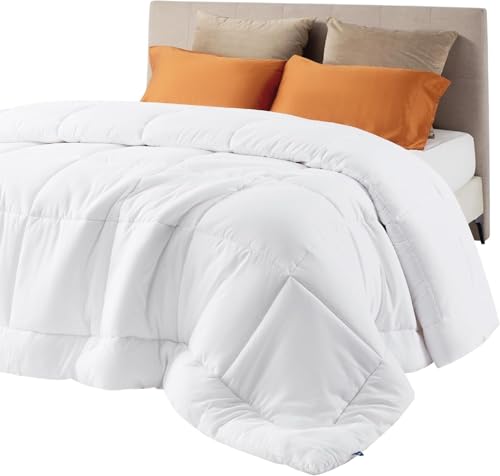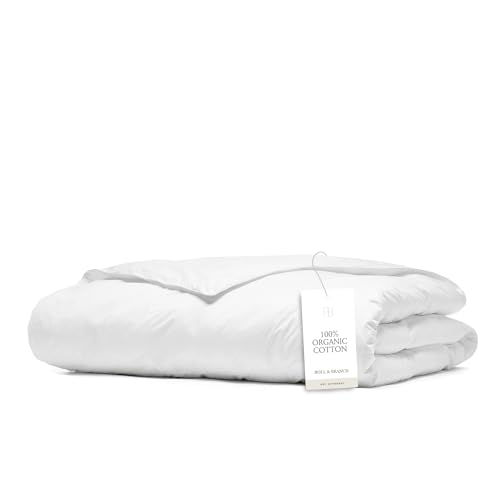
Where to buy
Check the latest price, availability and delivery on Amazon. Orders are placed on Amazon. We may earn a commission from qualifying purchases.
- Best overall: Boll & Branch Down Duvet Insert, Full/Queen, All Season — Check on Amazon
- puredown Goose Down Duvet Insert, Full/Queen Oversized 98×90 — Check on Amazon
- Continental Bedding Siberian Goose Down Duvet Insert, Queen — Check on Amazon
- Globon Winter White Goose Down Duvet Insert, Queen 90×90 — Check on Amazon
See 2 more Amazon options
- CUDDLE DREAMS Classic Wool Duvet Insert, Queen, Midweight — Check on Amazon
- Brooklinen All Season Down Alternative Duvet Insert, Full/Queen 90×90 — Check on Amazon
Read the full guide ↓
Disclosure: As an Amazon Associate, topratedkitchenware.com earns from qualifying purchases. Links to Amazon on this page are affiliate links; they cost you nothing extra. Listing details such as price and availability change often, so check the current Amazon listing before you buy.
Start with the fact the whole guide stands on: no duvet insert on Amazon verifiably costs $2,000, or anywhere near it. The most expensive single queen insert we could verify on Amazon is the Boll & Branch flagship below — check the current price on Amazon. Genuine $2,000-class inserts exist — Lincove sells its Batiste queen on its own site, and Sferra, Matouk and the eiderdown houses sit in that direct-only tier as well — but they are sold direct, not on Amazon, and this guide names them unlinked rather than pretending otherwise. So a $2,000 budget on Amazon is not a single purchase. It is a wardrobe: a flagship insert, a winter-weight second insert, a wool rotation piece, the covers that make inserts usable at all, and pillows to finish the bed — with part of the budget deliberately left unspent, because even a full wardrobe sits well below this budget.
A small bedroom changes how that wardrobe should be assembled, and this guide re-judges every pick through that lens. A small room has less air to heat, so it warms faster under a sleeper and a heavyweight insert, and it usually lacks the two things a premium bedding system quietly assumes: closet volume for the off-season insert, and a laundry room of your own. The bed is often a full or a twin rather than a queen, pushed against a wall you cannot walk around — which makes oversizing harder to hide, insert migration harder to fix, and storage the second budget. Every pick below was checked in the queen / full-queen size specifically; the same listings sell smaller sizes, so check the size selector and the current price on Amazon rather than assuming a smaller bed means a proportionally smaller bill. Every warmth, loft and fill-power figure is a maker claim, flagged as such.
In this guide
Quick Picks
Short on time, or comparing several options at once? Each row below names a small-bedroom situation and the insert that suits it, with a link to the listing. Check the current price on Amazon for the queen / full-queen size.
| Small-bedroom situation | Pick | Why it stands out | Link |
|---|---|---|---|
| Best overall | Boll & Branch Down Duvet Insert, Full/Queen, All Season | Certified sourcing, organic cotton shell, baffle box, corner loops — and down compresses small when it is off the bed | Check on Amazon |
| Best for a cold small room | puredown Goose Down Duvet Insert, Full/Queen 98×90 | 93% down clusters, maker-rated 800 fill power, corner tabs — but oversized, which a small room feels | Check on Amazon |
| Alternative flagship (buy on a dip) | Continental Bedding Siberian Goose Down Duvet Insert, Queen | Maker-rated 800 fill power; pricing moves widely over time, so check the current price on Amazon — an alternative to the flagship, not an addition to it | Check on Amazon |
| Warmth itself, cheaply | Globon Winter White Goose Down Duvet Insert, Queen 90×90 | Cluster down in a baffle box at the value end of this guide, in a true standard size — check price on Amazon | Check on Amazon |
| Best anchoring / rotation | CUDDLE DREAMS Classic Wool Duvet Insert, Queen, Midweight | Australian wool, eight duvet ties, inspection zipper — the insert that stays put on a wall-side bed | Check on Amazon |
| No animal fill / easiest care | Brooklinen All Season Down Alternative Duvet Insert, Full/Queen | Recycled fill, cotton sateen, corner loops — the pick a shared-laundry life can handle | Check on Amazon |
How These Picks Were Chosen
The first filter was verifiability, applied to the queen or full/queen size specifically, because insert listings headline whichever size is cheapest. Every product below is a real Amazon listing genuinely sold as a duvet insert in that size. For current pricing, check price on Amazon on the live listing — prices change often, so this guide describes each pick by its position in its tier rather than printing a figure that would go stale. Nothing in this guide was invented, and the products that would make a tidier “$2,000 story” — the direct-only luxury houses — are named unlinked in the ceiling discussion instead.
The second filter was insert fitness, because an insert lives inside a cover. We graded corner loops and tabs that keep the insert anchored, baffle walls that stop down migrating to the foot of the bed, and finished dimensions against the covers people actually own. Fill-power, warmth and loft figures are maker claims throughout — no independent lab verified them in the sources we checked — and where a maker does not publish a figure at all, as with the flagship’s fill power, we say so and name the outside source the circulating number comes from. We also hold the fill line to account: down clusters, down fiber and feather fiber are three different materials, and nothing made of fiber is called a down insert anywhere in this guide.
The third filter is the one this guide exists for: the small-room test. A small bedroom punishes four things a large one forgives. It runs hot — less air volume means two sleepers and a shut door overwhelm a winter-weight insert by 3 a.m. It has nowhere to put things — an off-season insert that will not compress is an insert that lives on your only chair. Its laundry is often shared or down the street, which turns a dry-clean-only care label from a footnote into a recurring errand. And its bed is frequently smaller than a queen and pushed against a wall, which makes an oversized insert pool on the floor side, makes migration impossible to fix by walking around, and makes every extra inch of loft a visible fraction of the room. Every pick below was re-judged on those four pressures, and the allocation further down is scaled to one small bed rather than a house.
One overlap deserves stating openly: duvet inserts and comforters are largely the same products under two names on Amazon, and several picks here also appear in our comforter guides. That reuse is deliberate — each product below is genuinely titled or sold as a duvet insert, re-judged here on insert and small-room criteria. The $2,000 framing also changes the question: not “which single insert” but “which set of inserts, covers and pillows should this budget become in a room with one bed and one small closet” — and the allocation section answers it line by line.
The 6 Best Duvet Inserts for Small Bedrooms Under $2000
Boll & Branch Down Duvet Insert, Full/Queen, All Season
Who it suits: The small-bedroom buyer spending this budget on provenance — certified sourcing, an organic shell, a brand that answers for its supply chain — who wants one flagship insert the rest of the wardrobe rotates around.
This is the most expensive single duvet insert we could verify on Amazon — check the current price on Amazon for the full/queen all-season. The weight you choose (lightweight, midweight — sold as “all season” — and ultraweight) sits at a different point in the flagship tier, so confirm you are looking at the all-season full/queen before you compare. The specification is the premium checklist done properly: responsibly sourced, triple-washed white down in true baffle-box chambers; a certified organic long-staple cotton shell; Fair Trade Certification on the finished product, with IDS sourcing certification and OEKO-TEX Standard 100 reported in coverage; and four corner loops, confirmed across independent reviews, for tying into a cover. The brand rates it machine washable with a long, careful dry — plan on multiple low-heat cycles — which matters more in a small home than anywhere: a shared laundry room’s commercial machines are exactly the large-capacity drums a queen insert needs, so the flagship is the one premium down pick whose care plan fits apartment life.
Two small-room virtues follow from the fill itself. Down compresses further than any other fill here and recovers its loft, so the flagship can spend the off-season rolled tight under the bed rather than occupying closet volume you do not have. And the all-season midweight is the right default warmth for a small room, which heats up faster than a large one: warm enough for a drafty January night, not so heavy that it becomes a liability by spring. The corner loops earn their keep too — on a wall-side bed made from one side, an insert tied to the corners stays made; an untied one migrates to the accessible side by midweek.
- The verifiable top of Amazon’s insert market, in the full/queen all-season — check price on Amazon.
- Baffle-box construction, four corner loops, organic cotton shell, Fair Trade and OEKO-TEX credentials.
- Down compresses to the smallest off-season bundle of any fill here, and the brand rates it machine washable (with a long dry).
Honest limitation: The maker publishes no fill power — the 650 figure in circulation is a reviewer’s (Sleep Foundation’s), not Boll & Branch’s — and the weight you choose moves the pick within the flagship tier a great deal; confirm the all-season full/queen is the variant you are pricing. Two terms notes, printed plainly: the brand’s 30-night trial is a brand-channel term, its published warranty covers mattresses and foundations rather than bedding, and an Amazon purchase follows Amazon’s return policies in any case.
Choose it if certified sourcing and an organic shell are what your $2,000 is for, and you want the flagship to store small. Skip it if you want a published fill-power figure on the listing itself — that is the puredown.
puredown Goose Down Duvet Insert, Full/Queen Oversized 98×90 (800 Fill Power)
Who it suits: Buyers whose small room is the cold one — exterior wall, old windows — and who want the published-numbers flagship as the winter-weight half of a two-insert wardrobe, with covers bought to match it.
Where the Boll & Branch sells provenance, the puredown sells a specification sheet: 93% white goose down — clusters, not fiber — at a maker-rated 800 fill power, 40 oz of fill in the full/queen, inside a 100% cotton shell at a stated 700 thread count, with RDS and OEKO-TEX Standard 100 certifications per the listing. The construction is a 3D baffle box under a pinch-pleat face, and the listing confirms corner tabs for anchoring a duvet cover. Check the current price on Amazon for the full/queen on the live listing. High fill power is also a storage argument: 800-fill down packs into the smallest bundle per unit of warmth in this guide — exactly what a winter insert owes a room with no spare closet.
Then the catch, and in a small bedroom it is the sharpest one in this guide: the cut is oversized — 98×90 inches against the 90×90 of a standard queen insert. That fills a generously cut cover beautifully and bunches inside a true-to-size one; the linen cover listed in the allocation below is 90×90, and this guide prints that mismatch rather than hiding it: pair this insert with an oversized cover. On a full bed the extra width drapes long on both sides; on a twin it overwhelms the bed, pooling toward the floor and the wall, and in a room where the bed is the visual center that surplus reads as clutter, not luxury. Buy it for a queen or a full with an oversized cover, in the room that runs cold — not as a default.
- 93% goose down clusters — the highest genuine down content in this guide — at a maker-rated 800 fill power.
- Corner tabs, baffle-box construction, RDS and OEKO-TEX certified fill per the listing.
- Sits just below the flagship in this guide’s top tier — check price on Amazon; high-fill-power down stores smallest per unit of warmth.
Honest limitation: The oversized 98×90 cut can bunch in a standard 90×90 cover and swamps a twin or narrow full bed; care is dry clean only per roundup coverage, which in a small home means a recurring professional-laundering errand; and its position close to the top tier makes the live figure worth checking before ordering — check the current price on Amazon.
Choose it if you want stated numbers — down percentage, fill power, fill weight — your room runs cold, and your cover is oversized. Skip it if your bed is a twin, your covers are all exactly 90×90 and closely fitted, or dry-clean-only care is a deal-breaker.
Continental Bedding Siberian Goose Down Duvet Insert, Queen
Who it suits: The patient bargain-hunter with a small room: a buyer who wants a second flagship-class insert and is willing to let a price tracker, not a shopping day, decide when to buy it.
Continental Bedding’s Siberian queen (model CB-Siberian-800FP-Duvet-Q) is the guide’s alternative flagship, and it is framed that way deliberately — it is not in the allocation total, because buying it instead of the Boll & Branch is the play, not buying both. In a small bedroom that discipline is not optional: two flagship inserts means one of them is always in storage, and storage is the resource this room does not have. The maker rates it at 800 fill power in Siberian white goose down; the brand builds this line with true baffle-box chambers and corner loops for the cover, per its retail listings. What makes it a discipline test is how widely its pricing moves over time: it has at times undercut the flagship and at other times sat clearly above it. Which of those is true on the day you shop is exactly why the live price — check the current price on Amazon — not this guide, has to make the decision.
Corroboration for the brand’s tier exists: Continental’s Serenity line (700 fill power Hungarian white goose down, minimum 90% down per the brand’s retail listings, 400 thread count cotton shell, baffle box, corner loops) sits in a premium tier at other retailers as well, so the Siberian’s premium positioning is not an artifact. Buy it when its current price sits at or below the flagship’s tier and it is arguably the strongest insert in this guide. Buy it at the top of its swing because a deadline loomed, and you have paid direct-channel luxury money for an Amazon purchase — for an insert that duplicates the one already on the bed.
- Maker-rated 800 fill power Siberian goose down; baffle-box construction and corner loops per the brand’s line.
- Pricing swings widely over time — check the current price on Amazon before judging it.
- The documented alternative flagship — at a dip it can undercut the hero.
Honest limitation: No other pick in this guide demands this much price discipline: the same listing’s pricing swings widely over time, so never buy it against a stale figure — check the current price on Amazon on the day.
Choose it if you can wait for a dip, will verify the live price on the day, and want it instead of the flagship. Skip it if you need the insert this week at a known price — that is the Boll & Branch or the puredown.
Globon Winter White Goose Down Duvet Insert, Queen 90×90
Who it suits: The skeptic in this guide’s audience — the buyer who suspects, correctly, that warmth itself stopped getting more expensive a long way below $2,000, and wants proof in the picks.
Globon’s winter queen pairs a maker-claimed 800+ fill power with roughly 37 oz of goose down fill (per detailed comparison coverage of the line) in a 3D baffle-box build, with corner tabs listed for cover attachment — the same construction class as the two flagships above. Check price on Amazon for the queen: genuine cluster down, baffle boxes and tabs at the value end of this guide, well below the flagship tier. The brand reports RDS and OEKO-TEX certifications and a Texcote-Nano moisture treatment, the last printed here as what it is — a maker claim, not a measured property. For a small bedroom there is a second, quieter virtue: the Globon is a true standard 90×90, the size existing covers are cut for, so it drops into an existing cover system without the oversized-cover purchase the puredown demands. In the allocation below, it is the named value substitute for the winter slot.
The trade sits in the shell. Where the flagships wrap their down in pure cotton, Globon’s shell is a 68% cotton / 32% polyester blend at a stated 420 thread count. Inside a cover that matters less than it would for a bare comforter — your skin meets the cover, not the shell — but the blend is less breathable than pure cotton, worth weighing in a small room that already runs warm. The fill-power figure also keeps its flag: 800+ is the maker’s number, not independently lab-verified in the sources we checked, and Globon sells several near-identical variants, so confirm the live listing still resolves to the winter queen 90×90.
- Genuine goose down clusters with a maker-claimed 800+ fill power and ~37 oz fill weight.
- 3D baffle-box construction and corner tabs for the cover, in a standard 90×90 cut.
- Value end of this guide — where warmth itself tops out; check price on Amazon.
Honest limitation: The shell is a cotton-polyester blend rather than pure cotton — less breathable in a warm small room — and the 800+ fill-power figure is a maker claim no source we checked verified independently.
Choose it if you want cluster-down warmth in a standard size without paying for provenance. Skip it if a pure cotton shell is a hard requirement, or your room runs hot enough that shell breathability is a deciding factor.
CUDDLE DREAMS Classic Wool Duvet Insert, Queen, Midweight
Who it suits: Buyers building a rotation rather than a monument — a second insert that is not down at all, for the sleeper who runs hot in a small room, the household managing down sensitivity, or the bed that wants a different feel in summer.
Every premium wardrobe eventually admits that one fill cannot do every job, and wool is the classic second fill: it buffers temperature swings instead of simply trapping heat — genuinely useful in a small room, whose temperature swings faster than a large one’s — it does not rely on loft that can be crushed flat, and it asks nothing of anyone avoiding down. CUDDLE DREAMS’ midweight queen carries 240 GSM of Australian wool (the middle of a three-weight line) in a jacquard cotton shell, OEKO-TEX Standard 100 certified, double-stitched at the edges — and, the detail that earns it this slot in a small bedroom above all, eight duvet ties, double the flagship’s anchor points, plus an inspection zipper so you can see the fill you paid for. Eight anchor points are the best hardware here for a wall-side bed: the insert stays spread to the far corners you cannot reach. Check the current price on Amazon for the midweight queen.
The honest notes: coverage of the line describes dry-clean-style care, so treat the cover as mandatory here too, and owners report a mild natural wool scent on opening that airs out — normal for the material, worth knowing before a gift purchase. The 88×88 queen cut runs slightly small against 90×90 covers, so it sits calmly inside them rather than bunching — and on a full bed it is closer to a true fit than the oversized picks. The small-room cost is storage: wool does not compress the way down clusters do, so the rotation piece takes more closet or under-bed volume than a down insert of similar warmth. Wool’s warmth also feels different from down’s — denser, flatter, less cloud-like — which is precisely why it belongs in a rotation rather than as a flagship substitute.
- 240 GSM Australian wool in a jacquard cotton shell; OEKO-TEX Standard 100.
- Eight duvet ties — the most attachment points in this guide — plus an inspection zipper.
- Sits in the lower tier of this guide — check price on Amazon.
Honest limitation: Care is dry-clean-style per coverage of the line, a mild wool scent on opening is reported by owners, the 88×88 cut runs slightly small in a 90×90 cover, and wool stores bulkier than down.
Choose it if you want a non-down rotation insert with the best anchor hardware here, for a bed you make from one side. Skip it if high, cloud-like loft is the whole point of the purchase, or your storage cannot spare a bulky off-season resident.
Brooklinen All Season Down Alternative Duvet Insert, Full/Queen 90×90
Who it suits: Buyers who want a premium insert with no animal fill at all — for preference, household rules or easier care — from a brand with a real track record, in a home where the laundry is shared.
Brooklinen’s down alternative is the synthetic pick that earns its place on construction rather than apology. The fill is recycled polyester formed to mimic down clusters, the shell is 100% cotton sateen, the construction is baffle box, and — the insert-specific detail — it carries corner loops for tying into a duvet cover, confirmed in independent review coverage of the model. For pricing, check the current price on Amazon for the all-season full/queen on the live listing. In a small bedroom it plays the flexibility role: the insert that can move to a sofa bed when guests take the room, or carry the bed through wash weeks.
Synthetic fill tolerates machine washing in a way the cluster-down picks do not — follow the listing’s care label, but this is the pick for households that wash the insert itself regularly rather than relying on the cover, the natural system when your laundry is a shared room with commercial machines. The small-room cost is, again, storage: recycled fiber does not compress like down, so this is the bulkiest off-season resident in the guide. Two record-keeping notes: the Amazon record for this listing is thin, because most of this model’s sales and feedback live on the brand’s own site; and Brooklinen’s brand-store trial and warranty apply to brand-store purchases, while an Amazon purchase follows Amazon’s return policies. We recommend it on the product, not the perks.
- No animal fill: recycled polyester fill in a 100% cotton sateen shell.
- Baffle-box construction with corner loops for the duvet cover, in a standard 90×90 cut.
- The most wash-friendly pick in this guide — check price on Amazon for the full/queen.
Honest limitation: Pricing needs a live check on Amazon rather than assuming the brand-store tier carries over, the Amazon record is thin because most sales happen direct, and the fiber fill stores bulkier than any down pick here.
Choose it if you want premium construction without down, an insert you can machine wash, and you have the storage volume it asks for. Skip it if genuine down loft is the point of spending at this level, or storage space is your scarcest resource.
Comparison Table
| Product | Fill (queen) | Construction & attachment | Link |
|---|---|---|---|
| Boll & Branch Down Duvet Insert, Full/Queen | Triple-washed white down; maker publishes no fill power | Baffle box, 4 corner loops, organic cotton shell | Check on Amazon |
| puredown Goose Down Duvet Insert, 98×90 | 93% down clusters, 40 oz, maker-rated 800 FP | 3D baffle box, pinch pleat, corner tabs — oversized cut | Check on Amazon |
| Continental Bedding Siberian Duvet Insert, Queen | Siberian goose down, maker-rated 800 FP | Baffle box, corner loops (brand line) | Check on Amazon |
| Globon Winter Duvet Insert, 90×90 | Goose down clusters, ~37 oz, maker-claimed 800+ FP | 3D baffle box, corner tabs, standard cut | Check on Amazon |
| CUDDLE DREAMS Wool Duvet Insert, 88×88 | Australian wool, 240 GSM | Jacquard cotton shell, 8 duvet ties, inspection zipper | Check on Amazon |
| Brooklinen Down Alternative Duvet Insert, 90×90 | Recycled polyester, no animal fill | Baffle box, corner loops, cotton sateen shell | Check on Amazon |
How to Choose a Duvet Insert for a Small Bedroom When the Budget Is $2000
- Spend on a wardrobe, not a trophy — but size the wardrobe to one bed. No verified Amazon insert justifies four figures. Two seasonal down inserts, a wool rotation piece and good covers will outperform any single purchase this budget could pretend to make — and in a small room, the guest-bed line only belongs if guests actually sleep in this room.
- Price the storage before the insert. Every additional insert is a stored object for half the year. Down compresses smallest, high-fill-power down smallest per unit of warmth; wool stores bulkier; recycled fiber bulkiest of all. If you cannot name where the off-season insert will live, you do not have room for the rotation — buy one flagship instead.
- Read the fill line before the headline. “Down” in a title can mean clusters, down fiber or a blend. Clusters loft most per ounce and last longest; fiber is warmer per dollar but compresses sooner. Every pick in this guide is cluster down, wool or an honestly labeled synthetic — check any substitute the same way.
- Know the 75% rule. Under US labeling practice a fill sold simply as “down” must be at least 75% down clusters. The puredown’s stated 93% clears it easily; anything labeled “down fiber” is a different material by definition.
- Treat fill power as a maker claim — and notice when it’s missing. Fill power is the best single proxy for loft quality, but no figure here was independently lab-verified, and the flagship’s maker doesn’t publish one at all. Decide whether provenance or printed numbers matter more, then buy accordingly.
- Match dimensions to your covers and your bed, not the listing’s headline. A standard queen cover is usually cut near 90×90. The puredown’s 98×90 oversized cut fills a generous cover and bunches in a tight one, and pools on a twin or narrow full bed; the wool insert’s 88×88 sits calmly in a standard cover.
- Count the anchor points — especially on a wall-side bed. Four corner loops or tabs are the premium minimum; eight ties, as on the wool pick, hold the side edges too, which is what keeps an insert spread to the corners you cannot reach. Hardware only works in matched pairs — your cover’s ties and the insert’s loops must exist in the same places.
- Prefer baffle box at any point in this budget. Sewn-through stitching pinches fill at every seam and caps loft; baffle walls let clusters expand fully and stop migration. Every pick here is baffle box.
- Decide the care question early — honestly, for a shared laundry. High-cluster down here is dry clean only in practice (the flagship is the washable exception, with a long dry), which makes covers mandatory equipment, not accessories. If the insert itself must go through the laundry room’s machines, the Brooklinen is built for that life.
- Never buy the Continental against a stale figure. Its listing’s pricing swings widely over time. Check the current price on Amazon on the day, and apply the guide’s rule: at or below the flagship’s tier, or walk away.
- Let the remainder stay unspent. The wardrobe below sits well below this budget in its full form, and lower still cut to one small bed. The rest is not a problem to solve; it is the honest difference between this budget and Amazon’s real ceiling.
The $2,000 Allocation, Scaled to a Small Room
Since no single insert can honestly absorb this budget, here is what it should become — every line a pick or supporting piece from this guide’s research, described by role rather than by a price that would go stale. The flagship and winter inserts cover the main bed across seasons; the wool insert rotates in for warm months and down-free sleepers; a guest-bed insert (the APSMILE all-season queen, a supporting piece from our sibling guides’ research and deliberately not a seventh pick here — it sits in the value tier as a guest line, its fill is down and feather fiber, and it is never called a down insert) keeps visitors out of the good down; two linen cover sets protect the two main inserts; and two pairs of pillows finish the bed.
| Line | Item | Position in this budget |
|---|---|---|
| Flagship insert | Boll & Branch Down Duvet Insert, Full/Queen All Season | Flagship tier — check the current price on Amazon |
| Winter insert | puredown Goose Down Duvet Insert, Full/Queen 98×90 | Top tier, just below the flagship — check the current price on Amazon |
| Rotation insert | CUDDLE DREAMS Classic Wool Duvet Insert, Queen Midweight | Lower tier of this guide |
| Guest-bed insert | APSMILE All Season Down Comforter, Queen (allocation line, not a pick) | Value-tier guest line |
| Covers ×2 | DAPU 100% Linen Duvet Cover Set, Queen | Two sets in the full allocation; one set in the small-room cut |
| Pillows ×2 pairs | puredown Goose Feathers and Down Pillows, Queen, 2-Pack | Two pairs |
| Total | Well below the $2,000 budget | |
| Deliberately unspent | A substantial remainder, deliberately unspent |
Now scale it to the room this guide is for. A small bedroom usually means one bed doing every job — sleeping, guests on a sofa bed or air mattress in the same room, laundry in a shared room downstairs. If guests do not sleep in this room, the guest-bed line comes out. If storage is the binding constraint — and in a small room it usually is — one linen cover set serves the flagship while the winter insert wears the cover already on the bed’s rotation, and the second set waits. Built that way, the one-bed wardrobe is the flagship + the winter insert + the wool rotation + one linen set + the pillows — well below the $2,000 budget, leaving a larger remainder unspent. That is not a lesser wardrobe; it is the same system minus the two lines a small room cannot house.
Three notes the table cannot hold. First, the cover caution, unsoftened: the DAPU linen set’s queen cover measures 90×90, and the oversized puredown insert (98×90) will bunch in it — pair the puredown with an oversized cover and give the linen set to the flagship or the wool insert, or swap the linen set for an oversized cover in a similar tier. Second, the pillows: the puredown pillow listing gives no percentage split, and roundup checks of the line put it at roughly 90% goose feathers to 10% goose down — feather-rich pillows, not down pillows — in the value tier of this guide; check the current price on the live listing before you buy. Third, the substitutions: swapping the Globon into the winter slot lowers the wardrobe’s cost noticeably without changing its shape, and swapping the Continental in for the flagship can lower or raise the total depending on where its current price sits — check the current price on Amazon for each piece on the day you buy.
Storage Is the Second Budget: Where a Wardrobe Lives in a Small Room
Every allocation above is counted in pieces, but a small bedroom pays for a bedding wardrobe in a second currency: volume. A two-insert rotation means one insert is always off the bed; a three-insert wardrobe means two are. In a house, that is a linen closet shelf. In a small bedroom, it is the top of the wardrobe, the under-bed void, or the chair — and an insert that will not compress simply annexes that space, permanently, within sight of the bed it serves.
The fills here store very differently, and the ranking is not the tier ranking. Down clusters compress furthest and recover their loft, and high-fill-power down — the puredown’s 800 — compresses smallest per unit of warmth, which is why the winter insert in a no-closet room should be a down one. Wool stores denser and flatter but compresses less willingly, taking a fixed chunk of under-bed space. Recycled fiber, the Brooklinen’s fill, is the bulkiest stored resident of all: it neither compresses like down nor packs flat like wool. None of this disqualifies any pick — it sequences them. Buy the flagship first, live with its stored size through one season change, and let that measurement, not the catalogue, decide whether the room can house a rotation.
Two practical rules follow. Store inserts loose in breathable bags rather than vacuum-sealed for months — long compression is unkind to any fill, and down especially wants air around it between seasons; a breathable under-bed bag protects without crushing. And count the covers in the storage budget too: a second linen set is a small, flat, forgiving object, one more reason the allocation spends on covers before a fourth insert.
Loft, Overhang and the Wall-Side Bed: Sizing Premium Inserts Down
Premium inserts are cut and lofted for the beds in the photographs — queens and kings, centered in rooms with walkways on three sides. A small bedroom’s bed is often a full or a twin, against a wall, and the mismatch shows up in three places. The first is overhang: a queen insert is roughly 90 inches wide, a full bed about 54, a twin about 38. The full/queen picks in this guide are genuinely sized for a full as well as a queen — that is what the size name means — but a queen insert on a twin is not a cozy oversize, it is a spill: the surplus pools on the floor side, drags in dust, and makes a small bed look swamped. If your bed is a twin, buy the twin size of the same model — the listings sell it — while noting that every pick here was checked in the queen / full-queen size, so check the current price on Amazon on the selector for the twin.
The second is loft. High-loft down is the visual signature of premium bedding, and on a low-profile bed in a small room it can dominate: the bed becomes a white mountain that fills the frame of the doorway. That is not an argument against loft — loft is warmth per ounce, and it compresses away in storage — but it is an argument for the all-season midweight over the ultraweight as the default, and for judging the bed made, in the room, rather than by the listing photograph. The third is migration. An insert drifts toward the side the bed is made from, and a wall-side bed can only be made from one side — so anchor hardware becomes the feature that decides whether the bed stays made. Four corner anchors are the workable minimum; the wool pick’s eight ties are the best answer here to a bed you cannot walk around.
Put together, the small-room sizing rule is simple: buy the insert for the bed you have, in the weight your room’s temperature asks for, with the anchor hardware your one-sided bed-making needs — and let the budget’s remainder absorb the difference.
Common Buying Mistakes
- Searching for a single “$2,000 insert” on Amazon and concluding the market failed, when the honest answer is a wardrobe that sits well below the budget — and lower still cut to one small bed — with the remainder unspent.
- Building a three-insert rotation for a room with nowhere to store two of them, then living with a premium insert draped over the only chair.
- Reading “down” in a title and never checking the materials line — then paying cluster expectations for down fiber.
- Attributing a reviewer’s fill-power figure to the maker — the flagship’s circulating 650 comes from Sleep Foundation’s coverage, and Boll & Branch itself publishes none.
- Buying the Continental Siberian against a remembered or roundup price; its listing’s pricing swings widely, and only the live figure counts — check the current price on Amazon.
- Pairing an oversized 98×90 insert with a standard 90×90 cover and blaming the insert for bunching the cover’s cut caused — or draping that queen insert over a twin bed and blaming it for pooling.
- Skipping covers on dry-clean-only down inserts to “save” money, then paying the savings back in cleaning bills and stained shells.
- Counting only corner anchors when your cover has eight ties, or buying eight ties for a cover with four — hardware works only in matched pairs.
- Vacuum-sealing inserts flat for a whole season, then wondering why the loft never fully comes back.
- Judging loft in the first hour — vacuum-packed down needs a day of airing and fluffing first.
- Treating a brand-store trial or warranty as if it covered an Amazon purchase; Amazon purchases follow Amazon’s return terms — and the flagship brand’s published warranty does not cover bedding at all.
- Comparing prices across sizes — insert listings headline the smallest size, and the queen is routinely priced higher. Every pick in this guide was checked in the queen or full/queen size — check the current price on Amazon for your size.
Final Recommendation
- Flagship: Boll & Branch Down Duvet Insert, Full/Queen, All Season.
- Winter weight: puredown Goose Down Duvet Insert, Full/Queen 98×90.
- Alternative flagship: Continental Bedding Siberian Duvet Insert — only on a verified dip, and instead of the flagship, not alongside it.
- Warmth per dollar: Globon Winter White Goose Down Duvet Insert.
- Rotation: CUDDLE DREAMS Classic Wool Duvet Insert, Queen Midweight.
- No animal fill: Brooklinen All Season Down Alternative Duvet Insert.
Our top two are the Boll & Branch as the flagship — certified sourcing, an organic shell, baffle boxes, corner loops, machine washing, and down that stores small — and the puredown as its winter partner, the pick for buyers who want the numbers printed: 93% clusters, a maker-rated 800 fill power, 40 oz of fill. Together they are the headline of this guide: the two best inserts Amazon verifiably sells still leave most of a $2,000 budget untouched. Add the wool rotation, the covers and the pillows, and the full wardrobe still sits well below the budget — and lower still cut to one small bed. The larger remainder in a small room is not an incomplete wardrobe; it is the honest distance between this budget and Amazon’s actual ceiling, in a room that could not store the difference anyway. Spend the remainder on good covers, or keep it — both beat forcing it into a single purchase that does not exist.
Frequently Asked Questions
Can you actually buy a $2,000 duvet insert on Amazon?
No — not a single one, at any rate. The most expensive verifiable single queen insert on Amazon is the Boll & Branch flagship — check the current price on Amazon — and the Continental Siberian sits in that same top tier on a listing whose pricing swings widely. Genuine $2,000-class inserts exist — Lincove’s Batiste queen is the example — but they are sold on makers’ own sites, not Amazon. On Amazon, $2,000 is a wardrobe budget, and this guide spends it that way, leaving a substantial remainder deliberately unspent in the full allocation and more in the small-room cut.
How many inserts does a small bedroom actually need?
Two is the honest maximum for most: a flagship-weight insert for most of the year and one rotation piece — winter down if your room runs cold, wool if it swings — with the off-season one stored under the bed. A third insert only earns its storage if it does a job the other two cannot, such as hosting guests in the same room.
What does the extra money buy above a mid-priced insert?
Mostly not warmth. Warmth itself tops out at the value end of this guide, where maker-claimed 800+ fill power cluster down already sits in a baffle box. Spending up to the flagship tier buys certified and traceable sourcing, an organic high-thread-count shell, Fair Trade manufacture, a washable flagship, and the second and third pieces that turn one good insert into a year-round rotation. It is provenance, polish and depth of wardrobe — real things, honestly named, but not a warmer bed in any simple sense.
Is the Boll & Branch’s fill power really unpublished?
Yes. Boll & Branch does not state a fill power for this insert on its own product materials; the 650 figure attached to it across the internet comes from Sleep Foundation’s testing roundup. That does not make the insert poor — its down is triple-washed, certified and well reviewed — but at the flagship tier you are buying sourcing and construction on trust rather than a printed specification, and buyers who want the number on the listing should choose the puredown, which prints 800.
Will these inserts fit my bed and my queen duvet cover?
Check your cover’s inside dimensions against the insert, not the bed size. A standard queen cover is usually cut near 90×90 inches, which matches the Globon and Brooklinen. The puredown is oversized at 98×90 and needs a generously cut or oversized cover; the wool insert runs 88×88 and sits calmly in a standard cover. The allocation’s linen cover set measures 90×90 — pair it with the flagship or the wool insert, and give the puredown a cover cut for it. On the bed itself: the full/queen picks suit a full or a queen; a queen insert on a twin bed pools and drags, so twin sleepers should buy the twin size of the same model and check the current price on Amazon on the selector, since only the queen sizes here were checked.
How many corner loops or ties does an insert need?
Four corner anchors is the workable premium minimum, and four of this guide’s picks anchor there. Eight anchor points — corners plus sides, as on the wool pick — hold noticeably better for restless sleepers, large covers and beds pushed against a wall, where you cannot walk around to redistribute a migrated insert. What matters most is matching: your cover’s internal ties and the insert’s loops must exist in the same places, or the extra hardware does nothing.
Can I machine wash a premium down insert?
The flagship is the exception: Boll & Branch rates its insert machine washable, with a long, careful dry across multiple low-heat cycles — a job the large drums in a shared laundry room handle well. The puredown should be treated as dry clean only per roundup coverage of the model, which is why its cover is mandatory equipment. The Brooklinen down alternative is the pick designed for regular machine washing. Whatever you buy, let a vacuum-packed insert air and reach full loft for a day before judging or washing it.
Does a premium insert help with allergies?
An insert is a comfort product, not a medical one, and this guide makes no health claims for any pick. Where a maker labels a product “hypoallergenic,” we report it only as the maker’s label. The practical hygiene layer at any budget is a washable duvet cover; the wool and synthetic picks remove down from the equation entirely; and if allergies are a medical concern, a clinician’s advice comes before any bedding purchase.
Why does this guide leave money unspent?
Because the verified products end there. The full wardrobe — two down inserts, a wool rotation, a guest insert, two linen cover sets and two pairs of pillows — still sits well below the budget, and the version cut to one small bed sits lower still. Inventing a more expensive single purchase to absorb the rest would require pretending a product exists at a tier Amazon does not verifiably reach, which this guide does not do. In a small bedroom the remainder has a second justification: everything it could buy would also have to be stored.