Disclosure: As an Amazon Associate, topratedkitchenware.com earns from qualifying purchases. Prices and availability change; check Amazon for the latest.
Where to buy
Check the latest price, availability and delivery on Amazon. Orders are placed on Amazon. We may earn a commission from qualifying purchases.
- Best overall for apartments: Novilla 10 Inch Hybrid Mattress, Queen — Check on Amazon
- FDW 8 Inch Gel Memory Foam Mattress, Queen — Check on Amazon
- Zinus 6 Inch Green Tea Memory Foam Mattress, Queen — Check on Amazon
- Novilla 8 Inch Hybrid Mattress, Queen — Check on Amazon
See 2 more Amazon options
- Best Price Mattress 6 Inch Green Tea Memory Foam Mattress, Queen — Check on Amazon
- FP FLEXPEDIC 10 Inch Firm Hybrid Mattress, Queen — Check on Amazon
Read the full guide ↓
Disclosure: As an Amazon Associate, topratedkitchenware.com earns from qualifying purchases. Links to Amazon on this page are affiliate links; they cost you nothing extra. Listing details such as price and availability change often, so check the current Amazon listing before you buy.
The best mattresses for apartments under $200 have to pass two tests, not one. The first is the same test every budget mattress faces: every pick below is for a queen, and at this budget a queen is almost always a thin queen. Most of the verified options here are 6 to 8 inches deep. The one 10-inch hybrid that fits this level sits at the top end of the budget tier, and the one firm hybrid with a proper sleep trial is likewise positioned near the top of the tier — check the current price on Amazon to confirm either still fits the budget when you order. Anything thicker from the famous names — the 10- and 12-inch Zinus and Novilla foam queens, the Linenspa hybrid — currently sells above the $200 budget, and we say so rather than quietly rounding it down into a “$200” guide.
The second test is the building. An apartment mattress has to arrive in a box one or two people can get up the stairs and through a 30-inch door, expand in the room it will live in (an expanded queen does not go around a stairwell corner), sleep quietly enough for thin walls, and — the part nobody thinks about at checkout — leave again at the end of the lease without a disposal fee or a fight with the building’s bulky-item rules. Every pick below was judged on both tests. For most apartment dwellers we would start with the Novilla 10-inch hybrid, the thickest and most complete mattress that verifiably fits the budget; on the tightest budget, the FDW 8-inch foam queen sits at the most accessible end of this tier. Below: a quick picks table, detailed notes on each mattress, a comparison table, an apartment-specific buying checklist, a plain-language section on the fiberglass question this price class has earned, the mistakes apartment shoppers make most, and the questions that come up again and again.
In this guide
Quick Picks
Short on time, or comparing several options at once? Each row below names an apartment situation and the mattress that suits it, with a link to the listing. Every pick is the queen size — check price on Amazon for the current listing price.
| Apartment situation | Pick | Why it stands out | Link |
|---|---|---|---|
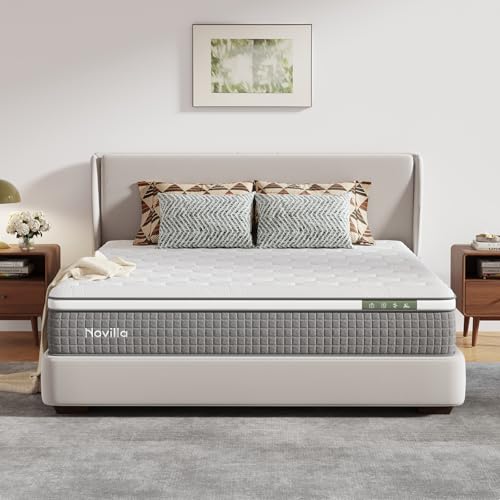
| Best overall for apartments | Novilla 10 Inch Hybrid Mattress, Queen | The only 10-inch pocket-coil queen that verifiably sells at this budget — a real everyday bed | Check on Amazon |
| Best value / easiest move-in | FDW 8 Inch Gel Memory Foam Mattress, Queen | Positioned at the accessible end of this tier, with a washable cover and an easy one-person carry | Check on Amazon |
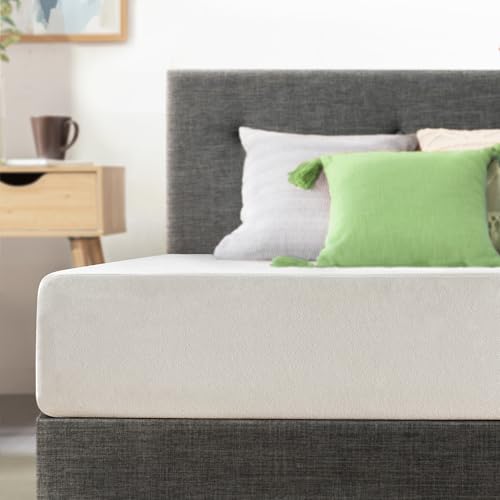
| Best for studio guest corners and daybeds | Zinus 6 Inch Green Tea Memory Foam Mattress, Queen | Thin and light; suits daybeds, trundles and guest corners that convert back by day | Check on Amazon |
| Best budget hybrid | Novilla 8 Inch Hybrid Mattress, Queen | Real pocket coils in a firmer, lower-profile build suited to tight rooms | Check on Amazon |
| Best for a kids’ room in a family apartment | Best Price Mattress 6 Inch Green Tea Memory Foam Mattress, Queen | Simple, soft-topped foam from a specialist budget brand, light enough to move between rooms | Check on Amazon |
| Best firm option — and the easiest exit if it’s wrong | FP FLEXPEDIC 10 Inch Firm Hybrid Mattress, Queen | Firm feel plus a 365-night trial stated in the listing — check price on Amazon to confirm it fits the budget | Check on Amazon |
How These Picks Were Chosen
The first filter was the budget, applied to the queen size and applied honestly. Every mattress below is a real Amazon listing positioned at or under the $200 budget tier for the queen size — check the current price on Amazon for each pick, because listing prices change and the queen is the size that has to fit the budget when you order. Two picks live close to the top of the tier — the Novilla 10-inch hybrid and the FLEXPEDIC firm hybrid — and both are flagged in their reviews as top-of-tier choices to confirm at checkout rather than smuggled in as bargain picks. Well-known mattresses whose queens currently sell above $200, including the Linenspa 8-inch hybrid and the thicker Zinus Green Tea queens, are named in this guide as over-budget, not linked as picks.
The second filter was the apartment itself. We favored mattresses that arrive compressed in a box a person can plausibly get up a walk-up stairwell, that expand to a thickness the room can actually use — 6 inches leaves a daybed safe and a studio un-cramped, while a 10-inch hybrid earns its height only as an every-night bed — and that behave well in close quarters: foam’s motion isolation for couples in studios, pocket coils’ quiet (individually wrapped coils do not squeak the way a connected innerspring can) for thin walls. We also weighed the exit: a foam queen cannot be re-rolled into its box, so a genuine trial, a washable cover that keeps a mattress donatable, or a position at the accessible end of the tier that makes replacement at the next move painless all earned credit here.
We did not sleep on these mattresses ourselves. We read the maker listings and specification pages, compared construction, thickness, coil type, foam certifications and stated firmness, and cross-checked specifications against independent sources. A mattress had to be CertiPUR-US certified (or carry an equivalent certification we could verify) to be linked. Firmness words are the makers’ own descriptions, reported as such — firmness is subjective, no two brands calibrate “medium” the same way, and a thin mattress almost always feels firmer than the same foam in a thicker build, because you reach the hard base layer sooner. Two warnings run through the whole guide. First, the fire barrier: some budget mattresses — including older models from famous names — use a fiberglass sock under the cover, and there is a full section on this below; never remove a mattress’s outer cover, in a rental above all, where a contamination cleanup lands on your deposit. Second, the trial: the long sleep trials in mattress advertising usually belong to the brand’s own website, not to Amazon — an Amazon purchase normally carries Amazon’s return window, not the brand’s 100 nights. The one exception in this guide is flagged in its review.
The 6 Best Mattresses for Apartments Under $200
Novilla 10 Inch Hybrid Mattress, Queen (Gel Memory Foam and Pocket Coils)
Who it suits: Apartment dwellers furnishing their one real bed — a one-bedroom or a studio where the mattress is slept on nightly, sat on daily, and has to justify its footprint for years.
This is the ceiling of the under-$200 class, and it earns the top spot on construction. Ten inches of mattress in a box: gel-infused memory foam and a soft comfort foam layer over hundreds of individually pocketed coils, with targeted support zones, a reinforced perimeter for edge sitting, and a cool-touch knit cover. The apartment case for it starts with that edge. In a small flat the bed is also the sofa, the desk chair’s overflow and the place guests perch; a reinforced perimeter you can sit on without sliding off is a daily feature, not a spec-sheet line. Pocket coils are the other detail that matters — they push back in a way a foam slab cannot, they let air move through the bed (welcome in a small bedroom that runs warm), and they absorb a partner’s movement locally instead of broadcasting it across the bed, which matters when the whole home is one or two rooms and there is no spare bed to escape to.
This pick sits at the top end of the under-$200 tier, so check the current price on Amazon before you buy and confirm the queen listing still fits the budget on the day you order. The honest apartment costs are weight and permanence: this is the heaviest box here, so plan on two people for a walk-up, and open the box in the bedroom, because once expanded it will not turn a tight stairwell corner or fit back through a narrow door flat. The feel is maker-described as medium, and the build supports that better than most: the gel foam top cushions shoulders and hips while the coil unit keeps a back or stomach sleeper from sinking into a hammock. Novilla sells it with a 10-year warranty; the brand’s 100-night trial is an offer of its own website, so Amazon buyers should judge the bed inside Amazon’s return window instead.
- A genuine 10-inch pocket-coil hybrid queen positioned at the top end of this budget tier — check price on Amazon.
- Reinforced edge for sitting — the bed-as-sofa reality of small apartments — plus zoned pocket coils and a gel foam comfort layer.
- Cool-touch knit cover and a 10-year brand warranty.
Honest limitation: It sits at the top of this budget tier, so check the current price on Amazon carefully — if the queen listing has moved above the budget when you shop, take the 8-inch hybrid below instead. It is also the heaviest, least move-friendly pick here.
Choose it if this is your every-night bed and the lease has a year or more to run. Skip it if you move often, face three flights of stairs alone, or strongly prefer the slow, sinking feel of all-foam.
FDW 8 Inch Gel Memory Foam Mattress, Queen
Who it suits: First-apartment renters and anyone furnishing a spare corner in a rental, who want a pick positioned at the accessible end of this tier and the easiest possible move-in day.
FDW is not a famous name, and that is part of why it sits at the accessible end of this tier. What the listing offers is straightforward and, for this tier, well judged: 8 inches total, built as 2 inches of ventilated gel memory foam over a 6-inch high-density base foam, wrapped in a removable, machine-washable cover — a feature several bigger brands in this guide do not match. Check price on Amazon for the current queen price. For apartment life the practical wins stack up: the box is a manageable one-person carry in most buildings, all-foam construction is silent (no coil noise through a thin wall, ever), motion dies in the foam instead of traveling to a partner, and the washable cover is the difference between a mattress that survives rental life — guests, kids, the odd spilled coffee — and one that leaves with the trash at move-out because it looks tired.
Set expectations by the construction and you will not be disappointed. The maker describes the feel as medium firm, and the two-layer build supports that: a modest comfort layer over a firm base reads as supportive rather than plush, especially for back and stomach sleepers. Two inches of memory foam is enough to take the edge off pressure points for a lighter or average-weight sleeper; it is not enough to keep a heavier side sleeper’s shoulder from reaching the firm base, and no 8-inch foam mattress changes that arithmetic. One caution that applies everywhere in this guide: a removable cover is for washing the cover, and the mattress itself should never be slept on with its cover off; if you ever see glassy fibers, stop and contact the maker rather than vacuuming them deeper into the room — in a rental, that cleanup argument is with your landlord.
- Positioned at the accessible end of this tier — check price on Amazon for the current queen price.
- 2 inches of gel memory foam over a 6-inch high-density base; CertiPUR-US certified foam.
- Removable, machine-washable cover — rare in this tier, and the pick most likely to leave the lease looking presentable.
Honest limitation: FDW’s warranty and support operation is thinner than the big brands’, and the 2-inch comfort layer is not enough for heavier side sleepers, who will feel the firm base through it.
Choose it if the budget is the whole point and the bed is for a first apartment, guests, kids or a lighter adult. Skip it if you are a heavier side sleeper, or you want a decade of nightly use from one purchase.
Zinus 6 Inch Green Tea Memory Foam Mattress, Queen
Who it suits: Studio dwellers building a guest corner that has to disappear by day — a daybed, a trundle, a low platform — and renters who move often enough that the mattress’s weight is a feature, not a footnote.
Zinus sells more budget mattresses than anyone, and its Green Tea line is the product most people picture in this tier. Be precise about which Green Tea queen fits this budget, though, because most of them do not: the 8-, 10- and 12-inch queens currently sell above this budget. The one that qualifies is the 6-inch — check price on Amazon to confirm the queen still fits the tier when you order. Six inches of green-tea- and charcoal-infused memory foam over a sturdy base foam, CertiPUR-US certified, maker-described as medium firm — and in a bed this thin, “medium firm” is honest, because there is barely any soft layer to sink through before the base foam takes over. The apartment virtues are all about thinness. The queen is light enough for one person to carry upstairs and to stand on end in a closet between guests. Six inches keeps a daybed looking like a sofa rather than a cake, keeps a trundle safely below its guard rail, fits the thickness limits of most Murphy-bed and sofa-bed mechanisms, and leaves headroom in a lofted studio layout that a 12-inch mattress would eat.
Zinus is also the brand that forces the fiberglass conversation, and this guide has a full section on it below; the short version belongs here too. Older Zinus mattresses became the best-known fiberglass story in this industry — earlier models’ flame barriers contained fiberglass, and owners who unzipped covers they were never meant to remove released fibers into their homes, an episode that produced lawsuits and changed how the brand builds its beds. Current Zinus listings describe mattresses made without fiberglass, and the brand states its present line is fiberglass-free. Treat the outer cover as permanent, never unzip or remove it, and check the live listing’s materials answers before you buy — in a rental, fibers in a carpet you do not own become a deposit dispute as well as a cleanup.
- The Zinus Green Tea queen positioned within this budget tier — check price on Amazon.
- Green tea and charcoal infused foam, CertiPUR-US certified, 10-year limited warranty.
- The thinnest, lightest pick — daybeds, trundles, sofa beds, Murphy beds and guest corners that convert back.
Honest limitation: Six inches is a guest-bed thickness. Heavier adults and committed side sleepers will bottom out onto the base foam, and nobody should buy this as a long-term primary bed for a full-grown couple.
Choose it if the bed is occasional, convertible or frequently moved. Skip it if it will be an everyday bed for adults over about 200 lb — step up to the Novilla hybrid instead.
Novilla 8 Inch Hybrid Mattress, Queen
Who it suits: Back and stomach sleepers in small bedrooms, and anyone who wants real coils in a low profile that suits bunks, low platforms and tight rooms — without the hero pick’s top-of-tier positioning.
If the hero pick is the most mattress under $200, this is the most complete coil build in a lower profile, and the calmest purchase in the guide. The 8-inch Novilla hybrid puts an individually wrapped pocket-coil unit under gel-infused memory foam and comfort foam, in an OEKO-TEX certified knitted cover — and unlike its bigger sibling, it is positioned comfortably inside this budget tier rather than at its very top. Check the current price on Amazon when you order. That steadier, mid-tier positioning is a genuine buying advantage when you are timing a purchase to a fixed move-in date and cannot shop around a sale calendar.
Eight inches with a coil core feels different from eight inches of foam, and most back and stomach sleepers will prefer it: the coils give the bed a responsive, slightly lifted feel, the edges hold up better when you sit to put shoes on (a small-bedroom ritual — there is often no chair), and air moving through the coil unit makes for a less stuffy night than an all-foam build of the same thickness, which counts in a small room with one window. The trade is pressure relief — there is less soft foam over the coils, so a lightweight side sleeper may find it firm — and the low profile makes it a natural fit for kids’ rooms in family apartments, bunk setups with coil-safe rails, and guest beds rather than a luxury primary bed. Like its sibling, it carries Novilla’s 10-year warranty, and the brand’s 100-night trial remains a brand-website offer rather than an Amazon one.
- Pocket coils and gel foam in a queen positioned comfortably within this budget tier — check price on Amazon.
- Firmer, more responsive feel than the foam picks — suits back and stomach sleepers; quiet pocketed coils for thin walls.
- OEKO-TEX certified cover fabric; 10-year brand warranty.
Honest limitation: The comfort layer is thin, so side sleepers — especially lighter ones who do not compress the coils much — may find it unyieldingly firm; there is no plush version of this mattress in this tier.
Choose it if you want coil support, airflow and a steadier tier position in a low-profile queen. Skip it if you are a side sleeper who knows they need a soft, deep comfort layer.
Best Price Mattress 6 Inch Green Tea Memory Foam Mattress, Queen
Who it suits: Parents furnishing a child’s or teenager’s room in a family apartment, and anyone who wants the simplest possible foam queen from a brand that only makes budget mattresses.
Best Price Mattress is exactly what the name says: a specialist in inexpensive foam beds, and its 6-inch green tea queen — positioned in the lower part of this tier, so check price on Amazon for the current queen price — is the straightforward version of the idea. Memory foam with a green tea infusion over support and high-density base foams, CertiPUR-US certified, in a cream cover, with the brand’s 10-year warranty behind it. There is no coil unit, no cooling technology story and no zoned anything, and the review can therefore be short and honest: this is a firm-leaning, low-profile foam mattress that does its best work under lighter bodies. In an apartment it earns its place on logistics: it is light enough to carry between rooms as family needs change — nursery to kids’ room to guest duty — and positioned low enough in the tier that leaving it behind or replacing it at the next move is a shrug rather than a financial event.
For a child’s first big bed, a teenager’s room, or a spare bed that hosts grandparents twice a month, that is a perfectly rational specification — kids are light, they do not bottom out 6-inch foam, and a mattress a child will outgrow does not need a 15-year durability story. The green tea infusion is a freshness treatment, not a comfort feature; expect the usual new-foam smell on opening anyway, and air it a day or two near an open window before the first night, as with every pick here. Adults buying for themselves should read the thickness honestly: at 6 inches this is a guest-and-kids mattress, and an average adult sleeping on it nightly will feel the base foam doing most of the work within the first year.
- A simple CertiPUR-US foam queen from a specialist budget brand, positioned in the lower part of this tier — check price on Amazon.
- Green tea infusion and a 10-year brand warranty.
- Low profile and light weight suit kids’ rooms, daybeds and occasional guest use in family apartments.
Honest limitation: The thinnest and simplest build in this guide — fine for light sleepers and occasional use, underspecified for an adult’s every-night bed.
Choose it if the sleeper is a child, teenager or occasional guest. Skip it if you are an adult buying your own primary mattress — the FDW gives you two more inches of foam and a thicker build.
FP FLEXPEDIC 10 Inch Firm Hybrid Mattress, Queen
Who it suits: Firm-bed loyalists — stomach sleepers, back sleepers and heavier bodies — renting without a car, for whom returning a queen mattress would be a logistical nightmare and a long trial is worth more than a bargain headline.
This pick sits near the top of this guide’s budget tier, so check the current price on Amazon and confirm the queen listing fits the under-$200 budget before you rely on it. What it offers, when it fits the budget, is the one thing no other pick here offers: a 365-night trial stated in the listing itself, alongside a 10-year warranty, CertiPUR-US certified foam and an explicitly fiberglass-free build. For an apartment dweller that trial is not a luxury; it is the exit problem solved in advance. A queen cannot be re-rolled, most buildings will not let you abandon one in the hallway, and a return you must arrange freight for is a return that never happens. A year-long in-listing trial changes the risk maths of buying a mattress you cannot lie on first, and it is almost unheard of in this tier.
The mattress itself is a 10-inch hybrid built firm on purpose: cooling gel memory foam over a 7-zone individually pocketed spring unit, aimed at sleepers who find “medium” beds mushy. Firm is a preference, not a virtue — side sleepers will likely hate it, and the listing’s own firmness language should be believed over any reviewer’s. The pocketed coils keep it quiet for thin walls and let air move, as with the Novilla hybrids. If the listing sits above the budget when you check the current price on Amazon, the honest move is to treat this pick as over budget for now and take the Novilla 8-inch hybrid, the firmest of the other under-$200 picks, instead.
- The only pick with a true long trial: 365 nights, stated in the listing, plus a 10-year warranty — the return-logistics problem solved.
- Explicitly fiberglass-free, CertiPUR-US certified, 7-zone pocket springs.
- A genuinely firm feel for back and stomach sleepers who find medium beds too soft.
Honest limitation: It sits near the top of this tier, so confirm on Amazon that the queen listing still fits the budget when you shop; its firmness will also be wrong for most side sleepers regardless.
Choose it if you sleep on your front or back, prefer firm, and it fits the budget when you check the current price on Amazon. Skip it if it sits above the budget when you check, or you sleep on your side.
Comparison Table
| Product | Type | Thickness | Firmness (maker) | Price | Link |
|---|---|---|---|---|---|
| Novilla 10 Inch Hybrid, Queen | Pocket-coil hybrid | 10 in | Medium | Check price on Amazon | Check on Amazon |
| FDW 8 Inch Gel Memory Foam, Queen | All-foam | 8 in | Medium firm | Check price on Amazon | Check on Amazon |
| Zinus 6 Inch Green Tea, Queen | All-foam | 6 in | Medium firm | Check price on Amazon | Check on Amazon |
| Novilla 8 Inch Hybrid, Queen | Pocket-coil hybrid | 8 in | Medium firm | Check price on Amazon | Check on Amazon |
| Best Price Mattress 6 Inch Green Tea, Queen | All-foam | 6 in | Medium firm | Check price on Amazon | Check on Amazon |
| FP FLEXPEDIC 10 Inch Firm Hybrid, Queen | Pocket-coil hybrid | 10 in | Firm | Check price on Amazon | Check on Amazon |
How to Choose a Mattress for an Apartment Under $200
- Measure the route, not just the room. The box fits almost anywhere; the expanded mattress does not. Measure your narrowest door and the stairwell turn before choosing a thickness, and open the box in the room where the mattress will live — a 10-inch queen expanded in the hallway is a problem with no good solution.
- Fix the size before the price. Every pick in this guide is a queen. Twin and full versions sit lower in the range, king versions higher — a low headline price in an advertisement is usually the twin, so confirm the size selector on the listing before comparing anything, and check the current price on Amazon for the queen you actually need.
- Match thickness to the sleeper and the room’s job. Six inches is a kids’-, guests’- and daybed thickness. Average adults sleeping nightly should start at 8 inches; heavier sleepers (over roughly 230 lb) should treat the 10-inch hybrids as this guide’s floor. In a studio, a lower profile also keeps the room feeling like a room.
- Choose foam or hybrid by your walls and your partner. All-foam beds isolate motion best and are completely silent — the thin-wall, studio-couple choice. Hybrids feel more lifted, sleep less stuffy in a small warm room, and hold an edge better for sitting; pocketed coils are quiet, but foam is quieter. In this tier you cannot have both in one bed.
- Read firmness as the maker’s opinion. There is no industry standard behind “medium firm.” A 6-inch mattress feels firmer than its label because you reach the base foam quickly. Use the trial or return window, not the adjective, as your safety net.
- Never remove the outer cover. Some budget fire barriers have historically contained fiberglass, and fibers only become a problem when a cover is unzipped, torn or removed — in a rental, they become a deposit problem too. If washability matters, buy a protector that goes over the whole bed, or pick the FDW, whose cover is made to be removed and washed.
- Check what the trial actually covers — and how a return would physically happen. Brand-website trials usually do not apply to Amazon purchases; on Amazon your protection is Amazon’s return policy plus the maker’s warranty, and the practical question is who collects a used queen and how it leaves the building. Read both on the listing, and photograph the law label on delivery day in case you need the warranty.
- Give the foundation its share of blame. A thin budget mattress on wide-spaced slats sags between them and feels broken within months; slats should be no more than about 3 inches apart. Putting the mattress directly on the floor — a common small-apartment layout — works, but lift it weekly to air the underside: foam on a cold floor traps moisture and can mildew.
- Allow the full expansion time, and air the room. These mattresses need 24 to 72 hours to reach full height, longer in a cold room. Judge firmness after that window, and expect a new-foam smell for a day or two — in a studio you will smell it from the kitchen, so open windows and run a fan; it fades.
- Think about the exit before you buy. A foam queen cannot be re-rolled into its box. Learn your building’s bulky-item and mattress-disposal rules now, not on moving day — many require mattresses bagged for collection and charge for unbooked bulky waste. If a return is possible, keep the packaging until the window closes; flat-packed under the bed is the usual apartment answer.
Up the Stairs and Through the Door: The Apartment Delivery Problem
Every mattress in this guide arrives the same way — vacuum-sealed, rolled and boxed — and that format is the only reason a queen bed is an apartment product at all. But “bed in a box” is not one size of problem. The 6-inch foam picks arrive in boxes one adult can carry up two flights without heroics. The 10-inch hybrids arrive in boxes that are genuinely a two-person job on stairs: long, heavy, and awkward on a half-landing turn, which is where solo attempts go wrong. If you live above the second floor without an elevator, that difference is a real selection criterion, and one reason the FDW and the Zinus 6-inch score so well here despite being thinner beds.
The second half of the problem happens after the box is inside. A compressed mattress expands where you open it and does not fold afterward. Open a queen in a studio’s only open floor space and you will spend the next 24 to 72 hours climbing over your own bed while it finishes expanding — plan the spot first: on the frame, in its final position, furniture already arranged. Keep the box and plastic until the return window closes if you can; flattened under the bed is the standard apartment compromise. And time delivery to the lease: a mattress that arrives before you can enter the building is a hallway argument with a courier, and most package rooms will not hold a queen box for a week.
Thin Walls and Small Rooms: Noise, Motion and Air
Apartment sleep has three enemies a house absorbs: a partner’s movement with nowhere for it to go, noise through a wall shared with a neighbor’s headboard, and a small room that holds the day’s heat. The picks divide cleanly on all three. All-foam mattresses — the FDW, the Zinus and the Best Price Mattress — are the motion and noise champions: movement dies in the foam instead of traveling, and there is nothing in the bed that can squeak at 3 a.m. The hybrids’ individually pocketed coils are nearly as quiet (each coil sits in its own fabric pocket, so there is no connected spring frame to sing) and isolate motion well, though not quite to foam’s standard — a light sleeper with a restless partner in a studio should still lean foam. Where hybrids win back the point is air: a coil unit lets air move through the bed, and in a small bedroom that runs warm, most sleepers experience a hybrid as a less clammy surface than an all-foam build of the same thickness. Gel infusions in foam help at first contact; they absorb heat rather than removing it, and the effect fades as the foam warms through the night.
One more small-room reality: height is visual. A 10-inch mattress on a standard frame in a low-ceilinged room makes the bed the room; a 6- or 8-inch profile on a low platform keeps a studio feeling like living space that happens to contain a bed. If the room doubles as your living room, weigh the low-profile picks more heavily than their thickness alone suggests — unless the bed must serve as guest seating, where the hybrid’s edge support beats foam’s soft sit.
Fiberglass in a Rental: The Warning This Price Class Has Earned
No honest guide to mattresses under $200 can skip this section, because the cheapest way to pass the federal flammability standard is a sock of fiberglass yarn knitted around the foam, and for years that is what many budget mattresses — including models from the biggest names in this guide’s category — quietly used. Fiberglass inside an intact mattress is not a hazard in normal use. The problem arrives when the outer cover is unzipped or torn: the fibers escape, spread through bedding, carpets and washing machines, irritate skin and lungs, and are notoriously difficult and expensive to clean up. Owners learned this the hard way, most publicly with older Zinus mattresses, where covers that looked removable released fibers into homes and the dispute ended in litigation and settlements.
The industry has moved. Current listings from the major budget brands increasingly state “fiberglass free” in so many words — the FLEXPEDIC in this guide carries it in its very title, and current Zinus listings describe mattresses made without fiberglass — and rayon and silica-blend barriers have replaced glass in most current models. Treat those statements as what they are: the brands’ and listings’ own claims, not laboratory findings this guide can assert for a specific mattress. In a rental, add one more layer of caution, because the cleanup is not happening in a home you own: fibers in a landlord’s carpet and a building’s shared laundry are a deposit dispute and possibly a damages claim, on top of the irritation. Three habits protect you completely. First, before buying, search the listing’s questions and answers for “fiberglass”; a clear answer is a good sign, and an evasive one is a reason to choose another pick. Second, never unzip or remove the outer cover of any mattress in this class, for any reason — wash a removable protector over it instead (the FDW’s designed-to-remove washable cover is the exception that proves the rule), and treat a torn cover as a warranty claim, not a sewing project. Third, be most careful with second-hand and returned-stock mattresses, where you cannot know what a previous owner did to the cover.
Moving Out: The Exit Problem Every Apartment Mattress Has
Here is the fact that should shape the whole purchase: a bed-in-a-box is a one-way product. It arrives rolled to the size of a large suitcase and it leaves at 60 by 80 inches, forever. Every apartment mattress decision is therefore also a disposal decision, and the six picks frame that decision very differently. A lower-tier foam pick such as the FDW or the Best Price Mattress can be donated, listed free for collection, or — worst case — paid away in a building’s bulky-item fee without real pain at the end of a lease. A top-of-tier hybrid you bought three months before an unexpected move is a different conversation, and it is the strongest practical argument for the FLEXPEDIC’s 365-night trial and for timing a hero-pick purchase to a lease with time left on it.
Before moving day, learn your building’s rules, because they vary more than any other part of this purchase. Many buildings and cities require mattresses sealed in a disposal bag for collection — a few dollars, bought in advance — and some charge per bulky item or restrict collections to booked days. Dragging an unbagged queen down shared stairs can cost deposit money for scuffed walls; two people, a bag, and the service elevator booked ahead are the cheap version of the same job. Leases rarely restrict what mattress you may own, but they say plenty about what you may leave behind: a mattress abandoned in a unit or hallway is the most common “cleaning fee” argument in rental life. Buy the mattress whose exit you can already picture.
Common Buying Mistakes
- Opening the box in the hallway or living room, then trying to move an expanded queen through a 30-inch door and around a stairwell corner it no longer fits.
- Carrying a 10-inch hybrid box up three flights alone because “bed in a box” sounded light — check the boxed weight on the listing and recruit a second person.
- Comparing a twin price from an advertisement with a queen price on the listing, and feeling cheated by arithmetic that was never hidden.
- Buying a 6-inch mattress as an everyday bed for two adults, then blaming the brand when it feels thin — thickness is a specification, not a defect.
- Unzipping the outer cover to wash it or “check the foam” — in a rental, the single action that turns the fiberglass question from theory into a cleanup bill and a deposit dispute.
- Assuming the brand’s 100-night trial applies to an Amazon purchase, and discovering on day 40 that Amazon’s return window was the real trial — and that you have no plan for collecting a used queen.
- Putting the mattress straight on the floor of a cold room and never airing the underside, then reviewing the mattress for the mildew the layout caused.
- Judging a bed-in-a-box in its first hour, before it has expanded — or sleeping on it the first night in a small studio without airing the room, and blaming the mattress for the new-foam smell.
- Forgetting the exit entirely: no disposal bag, no bulky-item booking, and a queen mattress in the hallway on the last day of the lease.
Final Recommendation
- Most apartment buyers: Novilla 10 Inch Hybrid Mattress, Queen.
- Tightest budget / easiest move-in: FDW 8 Inch Gel Memory Foam Mattress, Queen.
- Studio guest corners, daybeds and frequent movers: Zinus 6 Inch Green Tea Memory Foam Mattress, Queen.
- Coils in a comfortable tier position: Novilla 8 Inch Hybrid Mattress, Queen.
- Kids’ rooms in family apartments: Best Price Mattress 6 Inch Green Tea Memory Foam Mattress, Queen.
- Firm sleepers who find it within budget — and anyone who dreads a return: FP FLEXPEDIC 10 Inch Firm Hybrid Mattress, Queen.
Our top two are the Novilla 10-inch hybrid for anyone furnishing a real everyday queen bed in an apartment with a lease long enough to enjoy it — the only pick that combines 10 inches, pocket coils, an edge you can sit on and positioning inside the under-$200 tier — and the FDW 8-inch for everyone else, because positioned at the accessible end of the tier it delivers a certified, washable-covered, one-person-carry foam queen, and its exit hurts least when the lease ends. Whichever you choose, confirm the queen is the size selected, check the featured offer rather than a marketplace price, open the box in the room the mattress will live in, keep the cover zipped forever, and judge the bed after it has fully expanded — a $200 mattress bought with open eyes and a pictured exit is a bargain; the same mattress bought on a headline is how this category earns its bad reviews.
Frequently Asked Questions
Can you really buy a good queen mattress for under $200?
You can buy a good one for the jobs this guide assigns it: guests, kids, first apartments, lighter adults, and — in the 10-inch hybrid — an everyday bed for an average couple. What you cannot buy in this tier is a thick, premium, 15-year mattress. Judge the picks against the right job and they are genuinely good value; judge them against a premium bed and everything looks like a compromise.
Will a queen mattress fit through my apartment door and up the stairs?
The box will: every pick here ships rolled and boxed, and the box is the only form in which a queen reliably turns stairwell corners and passes narrow doors. The expanded mattress is another matter — a queen at full size bends a little but does not fold, and a 10-inch hybrid barely bends at all. That is why this guide repeats the rule: carry the box to the room, then open it there. If your stairs defeat even a two-person box carry, take one of the 6-inch foam picks, whose boxes are a realistic solo job.
How thick should an apartment mattress under $200 be?
Match thickness to the sleeper and the room. Six inches suits children, teenagers, occasional guests and convertible furniture — daybeds, trundles, sofa beds and Murphy beds with thickness limits. Eight inches is the minimum we would give an adult for nightly use, and heavier sleepers should look at the 10-inch hybrids. Remember that a thin mattress also feels firmer than the same foam in a thicker build, because your body reaches the hard base layer sooner — and that in a small room, a lower profile keeps the space feeling like a living space.
Which is quieter for thin walls — foam or hybrid?
Foam, by a nose. An all-foam mattress has no moving parts and isolates a partner’s motion best, which is why the foam picks lead for studio couples. A pocket-coil hybrid is nearly as quiet — the coils are individually wrapped, so there is no connected spring frame to squeak — and it returns the favor with better airflow in a small warm room and an edge you can sit on. What to avoid in an apartment is an old connected innerspring, which is neither quiet nor isolating; none is recommended here.
Do these mattresses contain fiberglass?
It depends on the model and the year it was made, which is why this guide treats the question listing by listing. Current models from the major budget brands are increasingly sold as fiberglass-free — one pick states it in its title, and current Zinus listings describe mattresses made without fiberglass — but those are the brands’ own statements, legacy stock exists, and the safe move is to search the listing’s Q&A for the word before buying. Whatever you buy, never remove the outer cover: fibers only become a household problem when a barrier is exposed, and in a rental they become a deposit problem too.
Will a mattress under $200 help with back pain?
A mattress is furniture, not a medical treatment, and no bed in this guide treats back pain or any other condition. What a mattress can do is stop making things worse: a supportive, not-sagging surface in a firmness that suits your sleeping position is more comfortable for most backs than a worn-out bed. If pain is persistent, worsening, or comes with numbness or weakness, see a clinician rather than shopping for a cure.
Does the sleep trial apply if I buy on Amazon?
Usually not. The long trials in mattress marketing — 100 nights and similar — are typically offers of the brand’s own website; Novilla’s and Zinus’s trials work that way. An Amazon purchase is covered by Amazon’s return policy plus the maker’s warranty, which is why this guide flags the one pick, the FLEXPEDIC, whose listing itself states a 365-night trial. Read the listing’s own terms before you buy, keep the packaging until the return window closes, and think through how a return would physically leave your building before you need one.
Can I put one of these mattresses directly on the floor?
Plenty of apartment sleepers do, and the thinner picks make it look deliberate. Two cautions. Foam on a cold floor traps condensation underneath and can mildew, so lift and air the underside weekly, or use a low slatted base or a breathable mat beneath it. And a floor bed is firmer than the same mattress on a frame, because nothing flexes under it — if you are between firmness camps, that pushes you one step softer in your choice.
What do I do with the mattress when I move out?
Plan it before the last week of the lease. In order of preference: donate it (a washable cover and a clean law label make this realistic), list it for free collection, sell it cheaply to the incoming tenant with the landlord’s agreement, or book your building’s or city’s bulky-item collection — usually sealed in a mattress disposal bag, which costs a few dollars and is much cheaper than an unbooked-collection fine or a deposit deduction for a mattress left in the hallway. What never works is abandoning it and hoping; buildings bill for exactly that.
How long will a mattress under $200 last in an apartment?
Realistically, five to eight years for the hybrids under nightly adult use, and less for the 6-inch foam beds — which is why we assign those to kids, guests and convertible corners. Rotating the mattress head-to-foot every few months, using a supportive foundation with closely spaced slats, and keeping it dry and protected will get any of these picks to the top of its range — and for many renters, a mattress that comfortably outlasts two leases has done its whole job.