Disclosure: As an Amazon Associate, topratedkitchenware.com earns from qualifying purchases. Prices and availability change; check Amazon for the latest.
Where to buy
Check the latest price, availability and delivery on Amazon. Orders are placed on Amazon. We may earn a commission from qualifying purchases.
- Best overall: Siena 10 Inch Memory Foam Mattress, Queen — Check on Amazon
- Zinus 12 Inch Green Tea Memory Foam Mattress, Queen — Check on Amazon
- Linenspa 10 Inch Memory Foam and Spring Hybrid Mattress, Queen — Check on Amazon
- EGOHOME 12 Inch Gel Cooling Memory Foam Mattress, Queen — Check on Amazon
See 2 more Amazon options
- SweetNight CoolNest 12 Inch Mattress, Queen — Check on Amazon
- FP FLEXPEDIC 10 Inch Firm Hybrid Mattress, Queen — Check on Amazon
Read the full guide ↓
Disclosure: As an Amazon Associate, topratedkitchenware.com earns from qualifying purchases. Links to Amazon on this page are affiliate links; they cost you nothing extra. Listing details such as price and availability change often, so check the current Amazon listing before you buy.
The best mattresses under $400 are where the budget market stops apologizing for thickness. Every pick in this guide is for a queen, because queen is the size most shoppers are furnishing, and at this budget a queen can finally be a full-size adult mattress: five of the six picks are 10 to 12 inches deep, four carry a genuine sleep trial or a decade of warranty from a brand with a track record, and two are hybrids with real coil units. What $400 does not buy is the famous-name tier — the Nectar Classic queen sits well above this budget even on sale, and Casper and Tuft & Needle queens sit higher still — so this guide is honestly a contest among the best of the Amazon-native and value brands, and it says so rather than dressing one of them up as a luxury bed.
For most people we would start with the Siena 10-inch memory foam queen: it is the only pick here with a 180-night trial written into its Amazon listing, it comes from the same parent company as Nectar and DreamCloud, and independent testers rate it the best cheap mattress they have tried — with the firmness warning that it sleeps much firmer than its “medium firm” label suggests. If you are a side sleeper who wants the classic memory-foam hug, the Zinus 12-inch Green Tea is the safer feel. If you want coils, the Linenspa hybrid is the value pick and the FLEXPEDIC is the firm one with a 365-night trial. Below you will find a quick picks table, detailed notes on each of the six mattresses, a comparison table, a buying checklist, a plain-language section on the fiberglass question this price class has earned, the mistakes shoppers make most at this level, and answers to the questions that come up again and again.
In this guide
Quick Picks
Short on time, or comparing several options at once? Each row below names a buyer type and the mattress that suits it, with a link to the listing. Every pick is the queen size — check price on Amazon for the current listing.
| Buyer type | Pick | Why it stands out | Link |
|---|---|---|---|
| Best overall | Siena 10 Inch Memory Foam Mattress, Queen | A 180-night trial in the listing and the strongest test results in this budget tier | Check on Amazon |
| Best for side sleepers | Zinus 12 Inch Green Tea Memory Foam Mattress, Queen | Deep, body-hugging foam from Amazon’s best-selling mattress line | Check on Amazon |
| Best value hybrid | Linenspa 10 Inch Memory Foam and Spring Hybrid Mattress, Queen | Real coils and a medium feel, positioned at the value end of this guide | Check on Amazon |
| Best for pressure relief | EGOHOME 12 Inch Gel Cooling Memory Foam Mattress, Queen | The plushest, most contouring foam feel in this guide | Check on Amazon |
| Best for hot sleepers | SweetNight CoolNest 12 Inch Mattress, Queen | Gel and phase-change cooling layers, positioned at the top end of this budget tier | Check on Amazon |
| Best firm option | FP FLEXPEDIC 10 Inch Firm Hybrid Mattress, Queen | Deliberately firm, fiberglass-free, with a 365-night trial | Check on Amazon |
How These Picks Were Chosen
The first filter was the budget, applied to the queen size and applied honestly. Every mattress below is a real Amazon listing whose queen is positioned at or under the $400 budget line for this guide — check the current price on Amazon before you buy, because listings change often and no printed figure stays current for long. Two picks live close to the line — the Siena and the CoolNest — and both are flagged in their reviews rather than smuggled in. Well-known mattresses whose queens sit well above $400, including the Nectar Classic and the DreamCloud hybrid, are named in this guide’s notes as over-budget, not linked as picks.
We did not sleep on these mattresses ourselves. We read the maker listings and specification pages, compared construction, thickness, coil type, foam certifications and stated firmness, and cross-checked construction and terms against independent coverage and published test results. A mattress had to be CertiPUR-US certified (or carry an equivalent certification we could verify) to be linked, and we favored constructions that make sense at this budget level: pocket or steel coils where a hybrid claims support, a high-density base layer where a foam mattress claims durability. Firmness words in this guide are the makers’ own descriptions, reported as such, with tester disagreements flagged where they exist — firmness is subjective, no two brands calibrate “medium” the same way, and the Siena below is the standing example: labeled medium firm, rated about 9 out of 10 for firmness by the testers who slept on it.
Two checks matter more at this budget level than at any other. The first is the fire barrier. Some budget mattresses — including older models from famous names — use a fiberglass sock under the cover as their flame barrier, and fiberglass that escapes a damaged or unzipped cover is a genuine household contamination problem; we looked for fiberglass-free statements and flag every pick whose listing does not make one, and there is a full section on this below. The second is the trial. The long sleep trials in mattress advertising usually belong to the brand’s own website, not to Amazon: an Amazon purchase normally carries Amazon’s return window, not the brand’s 100 nights. Where a pick’s trial genuinely applies to the Amazon listing, we say so; where it does not, we say that too.
The 6 Best Mattresses Under $400
Siena 10 Inch Memory Foam Mattress, Queen
Who it suits: Back and stomach sleepers, and anyone who wants a real trial period and a tested brand behind a budget purchase.
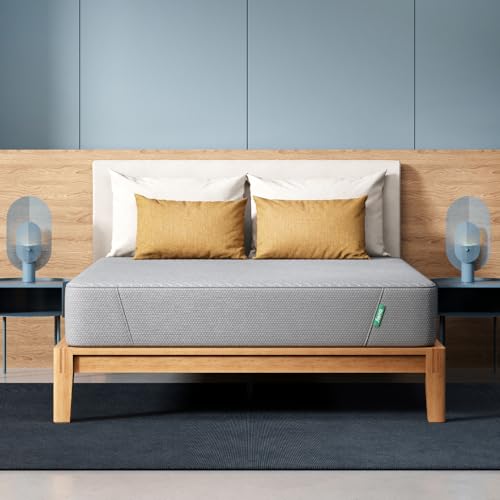
Siena is the value line of Resident Home, the company behind Nectar and DreamCloud, and the 10-inch Signature is the most decorated budget mattress in this guide: Tom’s Guide rates it the best cheap mattress it has tested, full stop, on the strength of edge support, motion isolation and temperature regulation that cheap foam beds rarely manage together. The Amazon listing itself carries the two terms that matter most — a 180-night trial and a 10-year warranty, both printed in the listing title — alongside CertiPUR-US certified foams. For pricing, check the current price on Amazon — the queen is positioned within this guide’s budget tier, and it can be especially appealing when the sale calendar turns, so confirm the live listing before you buy.
The feel needs honest handling, because the label and the bed disagree. Siena calls it medium firm; the testers who slept on it call it about 9 out of 10 for firmness, with full-body support, very little of the sinking “hug” of classic memory foam, and pressure relief that is decent rather than plush. For back and stomach sleepers that is close to ideal — hips stay level instead of dipping — and it is why this mattress takes the top spot despite being the thinnest-feeling pick here. Side sleepers, especially lighter ones, should read the warning in the tester coverage and look at the Zinus or EGOHOME below instead. One more practical note: Siena also sells a 12-inch version for a queen, but the 10-inch is the model with the deep test record, and it is the one linked here.
- A 180-night trial and 10-year warranty printed in the Amazon listing itself — almost unheard of at this budget level.
- Best-in-class test results for edge support and motion isolation from a Nectar/DreamCloud sister brand.
- Queen positioned within this budget tier — check price on Amazon for the current listing.
Honest limitation: It sleeps far firmer than “medium firm” suggests — testers rate it around 9/10 — so side sleepers and anyone shopping for a plush, sinking feel should pass it by.
Choose it if you sleep on your back or stomach and want the lowest-risk budget purchase in this guide. Skip it if you are a side sleeper who needs deep pressure relief at the shoulder.
Zinus 12 Inch Green Tea Memory Foam Mattress, Queen
Who it suits: Side sleepers and couples who want the classic memory-foam hug from the best-selling budget mattress line on Amazon.
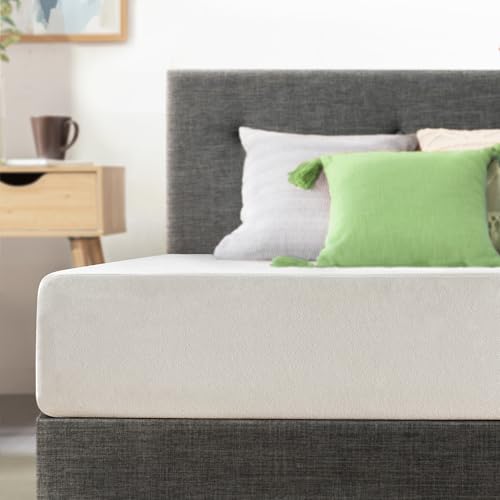
The Green Tea is the mattress most people picture when they picture a cheap bed in a box: 12 inches built as 3 inches of conforming memory foam over 2 inches of comfort foam over two high-density airflow and base foam layers (3.5 inches each), infused with green tea and charcoal for freshness, CertiPUR-US certified, and backed by Zinus’s 10-year limited warranty. For pricing, check the current price on Amazon — the queen is positioned comfortably inside this budget, and that is a useful reminder that at the $200 level only the 6-inch version of this mattress qualified, while $400 buys the full 12-inch build.
The feel is the mirror image of the Siena: a medium, body-hugging sink that testers recommend specifically for side sleepers, because the thick comfort layers cushion shoulders and hips instead of pushing back. Motion isolation is excellent, as it usually is with deep foam. The debits are the familiar foam ones — edges that give way when you sit on them, a warmer sleep than any hybrid here, and durability that owners should expect to measure in years of good service rather than a decade. Zinus is also the brand that forces the fiberglass conversation, so let us have it in the open: older Zinus mattresses became the best-known fiberglass story in this industry, when the flame barrier in earlier models contained fiberglass and owners who unzipped covers released fibers into their homes. The current Green Tea listing states “Fiberglass Free” in its title, and the brand states its present line is built without it. Treat the outer cover as permanent on any mattress, and check the live listing’s materials answers before you buy.
- The full 12-inch Green Tea queen, positioned in the middle of this budget tier — check price on Amazon.
- Deep, contouring comfort layers that suit side sleepers better than anything else here.
- Current listing states fiberglass-free; CertiPUR-US certified; 10-year limited warranty.
Honest limitation: It sleeps warm and the edges are weak, and the brand’s older fiberglass history means the materials check in the buying checklist below is not optional homework for this pick.
Choose it if you sleep on your side and want maximum foam depth and pressure relief under $400. Skip it if you sleep hot, sit on the edge of the bed every morning, or want a bed that feels lifted rather than hugged.
Linenspa 10 Inch Memory Foam and Spring Hybrid Mattress, Queen
Who it suits: Shoppers who dislike the sinking feel of all-foam beds and want real springs, bounce and airflow at the value end of this guide.
Linenspa’s hybrid is the budget hybrid benchmark: a memory foam comfort layer over a steel innerspring unit, 10 inches in total, maker-described as a medium feel, with a 10-year manufacturer’s warranty. For pricing, check the current price on Amazon — it is positioned at the value end of this guide by a clear margin, which is exactly the Linenspa proposition. Testers who slept on the range found the spring-heavy build bouncier and cooler than the foam picks, with the deeper profiles (10 and 12 inches) the ones adults should choose; the 12-inch queen also typically sits within this budget tier if you want more cushion over the same idea.
The compromises are the honest trade-off of the design. An innerspring unit at this budget level is a traditional connected coil, not the individually pocketed coils of pricier hybrids, so motion travels across the bed more than it does in the foam picks, and edge support and pressure relief are both modest — “light pressure relief” is the tester phrase, and side sleepers with sore shoulders should believe it. The second caveat is availability: Tom’s Guide notes that stock of this mattress at Amazon has been limited lately, with many sizes and depths unavailable at times. If the queen is in stock, check the current price on Amazon — it is the value hybrid of this guide; if it is not, the FLEXPEDIC below is the hybrid to take instead.
- Positioned at the value end of this guide for a queen — check price on Amazon.
- Steel coils give bounce, airflow and an easier time changing position than any foam pick.
- A 10-year manufacturer’s warranty from an established bedding brand.
Honest limitation: Amazon stock is intermittent — sizes and depths sell out — and the connected-coil build isolates motion poorly and relieves pressure lightly.
Choose it if you want a traditional spring feel and value positioning, and your size is in stock. Skip it if you share the bed with a restless partner or need real pressure relief at the shoulder.
EGOHOME 12 Inch Gel Cooling Memory Foam Mattress, Queen
Who it suits: Side sleepers and pressure-point sufferers who want the softest, most contouring foam feel in this guide.
EGOHOME is MLILY’s Amazon-native brand, and this 12-inch gel cooling model is the plush counterweight to the Siena’s firmness. For pricing, check the current price on Amazon — the queen is positioned in the middle of this guide’s budget tier for a full 12 inches of foam. The listing states the two things this guide checks first: fiberglass free, and CertiPUR-US certified foam. Testers who slept on EGOHOME’s 12-inch foam found a body-hugging, almost marshmallow contour that kept a lightweight side sleeper’s shoulders comfortable all night, with the strong motion isolation that slow, deep foam always delivers.
That same softness is the limitation, and it is a real one: a mattress you sink deeply into is a mattress that is harder to roll over and get out of, and back and stomach sleepers can find their midsections dipping lower than their shoulders, which is the posture that makes people wake up stiff. It can also sleep warm despite the gel infusion — gel foam moderates the first hour more than the whole night. The second caveat is about terms rather than feel: EGOHOME’s trial and warranty perks are at their best on the brand’s own site, and tester coverage of the brand warns that buying through Amazon can leave the trial and warranty picture fuzzier. Read the listing’s stated terms before you order, and judge the bed inside Amazon’s return window rather than assuming a 100-night trial has followed you there.
- Full 12-inch foam build, positioned in the middle of this budget tier — check price on Amazon.
- The deepest pressure relief here — testers single it out for side sleepers with sore shoulders.
- Listing states fiberglass-free and CertiPUR-US certified.
Honest limitation: The plush sink traps heat and makes moving around harder work, and the brand’s trial and warranty are clearest when buying direct rather than through Amazon.
Choose it if pressure relief is your first priority and you love the feeling of being cradled. Skip it if you sleep on your stomach, run hot, or struggle to get out of a soft bed.
SweetNight CoolNest 12 Inch Mattress, Queen
Who it suits: Hot sleepers who want a foam bed engineered around cooling, and who are buying when the live listing sits within this guide’s budget.
This pick comes with its condition printed on its forehead: the CoolNest 12-inch queen is positioned at the top end of this guide’s budget tier — at its ceiling, not comfortably under it — check the current price on Amazon before you buy, and note that its thicker 14-inch sibling sits above this tier, which tells you how mobile this family’s positioning can be. What the money buys is the most deliberate cooling build in this guide: gel-infused memory foam layered with phase-change material (PCM) foam that absorbs heat at the surface, a breathable 3D-woven cover, and a 5-zone support core, in a CertiPUR-US certified, fiberglass-free package with a 10-year warranty. The cooling reputation is not only the maker’s: a Tom’s Guide tester who slept on the 14-inch version through summer heatwaves called it the most cooling bed she had tested, which is a reviewer’s judgment rather than a lab measurement, but it is a judgment from a lab that tests mattresses for a living.
The honesty notes are about physics and terms. No passive foam mattress actively refrigerates: PCM and gel moderate surface temperature early in the night and then reach equilibrium, so a CoolNest in a hot, un-air-conditioned room will still feel like a foam bed by 4 a.m. — cooler than the Zinus, not cold. On terms, the brand’s 100-night trial belongs to direct purchases; Tom’s Guide reports that Amazon buyers get the 10-year warranty and a 90-day return window that applies while the mattress remains in its box, which is a materially weaker offer than the Siena’s in-listing 180 nights. Buy it for the cooling build and the feel when the live listing sits within this budget, and treat any time it sits above $400 as a time it belongs to the next guide up.
- The only pick engineered around cooling: PCM foam, gel infusion and a breathable woven cover.
- CertiPUR-US certified and fiberglass-free, with a 10-year warranty.
- Positioned at the top end of this budget tier for the queen — check price on Amazon.
Honest limitation: It sits on the budget line rather than under it, its positioning can swing noticeably between sale events, and Amazon terms (90-day in-box returns) are much weaker than the brand’s direct trial.
Choose it if sleeping hot is your main complaint and, when you check price on Amazon, the live listing sits within this budget. Skip it if the listing has drifted above $400, or a long home trial matters more to you than cooling.
FP FLEXPEDIC 10 Inch Firm Hybrid Mattress, Queen
Who it suits: Firm-bed loyalists — stomach sleepers, back sleepers and heavier bodies — who want the longest trial in this guide.
Readers of our under-$200 guide will recognize this mattress, and its promotion tells the story of this tier: at the $200 level it only qualified in certain conditions, while at the $400 level it sits comfortably within budget. Check the current price on Amazon — it is positioned toward the value end of this guide while wearing this guide’s longest trial, 365 nights, stated in the listing itself. The build is a 10-inch hybrid made firm on purpose: cooling gel memory foam over a 7-zone individually pocketed spring unit, CertiPUR-US certified foam, and an explicitly fiberglass-free construction. A year-long trial changes the risk maths of buying a mattress you cannot lie on first, and it is almost unheard of at this level.
Firm is a preference, not a virtue, and this review will not pretend otherwise. Side sleepers will likely find this bed unyielding at the shoulder, and the listing’s own firmness language should be believed over any reviewer’s. The zoned coils do give it the best edge support and the easiest movement of any pick here, and heavier sleepers — the readers most poorly served by thin foam — get a support core that does not bottom out. If you are choosing between this and the Linenspa as your hybrid, the honest split is: the Linenspa is softer, positioned lower when in stock, and worse at isolating a partner’s movement; the FLEXPEDIC is firmer, almost always in stock, and carries the trial. Pick by the sleeper, not the spreadsheet.
- The longest trial in this guide: 365 nights, stated in the listing, plus CertiPUR-US foam.
- Queen positioned comfortably within this budget tier — check price on Amazon.
- 7-zone pocket coils and an explicitly fiberglass-free build; the firmest feel here.
Honest limitation: The firmness is genuinely firm — most side sleepers will find it too hard at the shoulder — and FLEXPEDIC is a young brand whose decade-long warranty support is unproven.
Choose it if you sleep on your front or back, prefer firm, and want a year to decide. Skip it if you sleep on your side or know you like a plush, sinking surface.
Comparison Table
| Product | Type | Thickness | Firmness (maker) | Price | Link |
|---|---|---|---|---|---|
| Siena 10 Inch Memory Foam, Queen | All-foam | 10 in | Medium firm (testers: firm) | Check price on Amazon | Check on Amazon |
| Zinus 12 Inch Green Tea, Queen | All-foam | 12 in | Medium firm | Check price on Amazon | Check on Amazon |
| Linenspa 10 Inch Hybrid, Queen | Innerspring hybrid | 10 in | Medium | Check price on Amazon | Check on Amazon |
| EGOHOME 12 Inch Gel Cooling, Queen | All-foam | 12 in | Medium | Check price on Amazon | Check on Amazon |
| SweetNight CoolNest 12 Inch, Queen | All-foam, cooling | 12 in | Medium | Check price on Amazon | Check on Amazon |
| FP FLEXPEDIC 10 Inch Firm Hybrid, Queen | Pocket-coil hybrid | 10 in | Firm | Check price on Amazon | Check on Amazon |
How to Choose a Mattress Under $400
- Start with your sleep position, not the brand. Side sleepers need contour (Zinus, EGOHOME); back and stomach sleepers need support that keeps hips level (Siena, FLEXPEDIC). A mattress that is wrong for your position is wrong at any price.
- Read firmness labels as marketing, then look for tester evidence. The Siena is labeled medium firm and rated about 9/10 by testers; the EGOHOME is labeled medium and sleeps plush. Where a label and a test disagree, believe the test.
- Ten inches is the floor for an adult’s everyday bed. Every pick here is 10 to 12 inches. Thinner queens exist for far less money, and they belong in guest rooms and kids’ rooms, not under an adult every night.
- Check the fire barrier before anything else. Look for “fiberglass free” in the listing — five of these six picks state it or are covered in the fiberglass section below — and never unzip a mattress cover to check for yourself.
- Separate the trial from the return window. A brand’s 100- or 180-night trial usually applies to its own website. On Amazon, what protects you is the trial stated in the listing (Siena, FLEXPEDIC) or Amazon’s return terms — read which one your pick actually offers.
- Match the build to your temperature. All-foam beds sleep warmer; coils move air. If you run hot, the hybrids and the CoolNest are the realistic shortlist, and a cooling topper is a cheaper fix than replacing a bed you otherwise like.
- Heavier sleepers should buy support, not softness. Above roughly 230 lb, deep soft foam bottoms out sooner; the coil picks and the firm Siena will hold their feel longer.
- Check stock and seller, not just the listing. Budget mattress listings fluctuate in availability (the Linenspa especially). A listing for an out-of-stock size is not a deal; confirm your size is selectable and check the current price on Amazon before you commit.
- Budget for the base you already own to be judged. A bed-in-a-box needs a flat, supportive foundation — platform or closely spaced slats. A sagging box spring or wide-spaced slats will make a good mattress feel broken and can void warranty support.
- Give any new mattress two to three weeks. Foam feels firmer in week one than month two, and your body needs time to adjust. Judge inside the trial or return window, not on night one — and keep the packaging question in mind, because some Amazon returns require the box.
What $400 Buys — and What It Still Does Not
The cleanest way to understand this tier is to compare it with the one below it. At $200, a queen is a compromise you manage: 6 to 8 inches, guest-room duty, one conditional trial. At $400, the compromises change character. Thickness stops being the problem — 10 to 12 inches is a real adult mattress. Trials stop being fiction — two picks here carry trials of 180 and 365 nights in their Amazon listings. And the brands stop being anonymous: Siena is a Nectar sister brand, Zinus and Linenspa are the two biggest names in budget bedding, and EGOHOME is the consumer face of MLILY, a manufacturer that also makes mattresses for famous labels.
What $400 still does not buy is the next tier’s engineering. There is no pick here with a genuinely zoned, reinforced-edge coil unit of the kind the DreamCloud advertises, no natural latex, no organic certifications, and no white-glove delivery or old-mattress removal. Edge support, in particular, remains the budget market’s weak joint: even the Siena, the best of this group at it, is not a bed you can sit on the edge of like a chair. Durability expectations should also stay calibrated — a well-kept pick from this guide should give years of good service, but the 10-year warranties are limited warranties against defects, not promises that the feel will be unchanged in year nine. Buy $400 expecting the best of the budget market, honestly described, and you will get it; buy it expecting a $1,000 bed at a discount and you will be disappointed by arithmetic, not by any particular mattress.
The Fiberglass Question, Answered Plainly
Some mattresses use a sock of fiberglass woven around the foam core as their fire barrier, because it is cheap and effective. The problem is not the fiberglass while it stays inside; the problem is that it does not always stay inside. If the outer cover is unzipped — and many covers have zippers that invite exactly that — or torn, or worn through, fine glass fibers escape into the room, where they are extremely difficult and expensive to clean up and miserable to live with in the meantime. Budget mattresses earned this conversation honestly: older models from major budget brands, Zinus most famously, used fiberglass barriers, and the resulting owner stories and lawsuits changed how the industry builds and labels its beds.
The good news is that the market has moved. Five of the six picks in this guide state “fiberglass free” in their listings or are sold on fiberglass-free construction — the current Zinus Green Tea listing carries the words in its title, as do the EGOHOME, the CoolNest and the FLEXPEDIC — and CertiPUR-US certification, which every pick carries, covers the foams themselves. Two habits protect you regardless of brand. First, treat every mattress cover as permanent: never unzip or remove it, even to wash it; use a separate washable protector instead. Second, if a listing cannot tell you what its fire barrier is made of, treat the silence as an answer and buy one of the mattresses that can. If you already own an older budget mattress and are unsure about it, do not open it to find out — check the maker’s current materials page or ask their support line, and replace a damaged cover’s mattress rather than sleeping on exposed core material.
Foam or Hybrid at This Price?
At $400 the foam-versus-hybrid decision is a genuine choice rather than a budget accident, so it is worth making deliberately. All-foam picks — the Siena, Zinus and EGOHOME — isolate motion better, hug closer, and have no coils to feel through a thinning comfort layer in year five. They also sleep warmer, make changing position more work, and ask more of heavier sleepers. Hybrids — the Linenspa and the FLEXPEDIC — move air through the coil unit, respond faster when you roll over, hold an edge better, and generally keep their support feel longer under heavier bodies; in exchange they transmit more of a partner’s movement (the pocket-coil FLEXPEDIC much less than the connected-coil Linenspa) and their comfort layers are thinner for the money.
The CoolNest is the exception that tests the rule: an all-foam bed that spends its budget on cooling layers instead of coils, for hot sleepers who still want foam’s motion isolation. Our honest summary is that couples who disturb each other should start with foam, hot sleepers and heavier sleepers should start with coils, and anyone who has slept happily on one type for years should not let a comparison table talk them out of it — at this budget level, the difference between the best foam and the best hybrid is smaller than the difference between a mattress matched to its sleeper and one that is not.
Common Buying Mistakes
- Comparing across sizes — clicking a listing that advertises a low headline figure for a twin and assuming the queen is anywhere near it. Every pick in this guide is the queen; check yours.
- Believing the firmness label. “Medium firm” spans the Siena’s tester-rated 9/10 and beds half as firm; look for independent tester evidence before you buy on a word.
- Assuming the brand’s website trial applies to an Amazon order. Sometimes it does (it is in the Siena and FLEXPEDIC listings); often it does not (EGOHOME, SweetNight). The listing is the contract.
- Unzipping the cover to “check” the inside or wash it — the single most expensive mistake in this category, and the usual first step of every fiberglass story.
- Buying the thinnest mattress because the headline price is lowest, then blaming foam itself when a 6-inch bed feels hard under an adult.
- Ignoring stock reality: listings for sold-out sizes help nobody. If your size is unavailable, a slightly higher-positioned in-stock pick beats a bargain you cannot buy.
- Judging the mattress on night one, straight out of the box, before it has expanded for 24 to 72 hours and before your body has adjusted — then returning a bed that would have settled in by week two.
- Putting a new mattress on a dying foundation and concluding the mattress is at fault. Slats wider than about 3 inches apart and sagging box springs sabotage foam and hybrids alike.
- Expecting a mattress to fix pain. A better-fitting bed can remove a mattress-shaped problem; it cannot treat a back. Persistent pain, numbness or pain that wakes you nightly is a clinician conversation, not a shopping one.
Final Recommendation
- Most buyers: Siena 10 Inch Memory Foam Mattress, Queen.
- Side sleepers: Zinus 12 Inch Green Tea Memory Foam Mattress, Queen.
- Value pick with coils: Linenspa 10 Inch Memory Foam and Spring Hybrid Mattress, Queen.
- Pressure relief: EGOHOME 12 Inch Gel Cooling Memory Foam Mattress, Queen.
- Hot sleepers: SweetNight CoolNest 12 Inch Mattress, Queen.
- Firm support with a year-long trial: FP FLEXPEDIC 10 Inch Firm Hybrid Mattress, Queen.
Our top two are the Siena for anyone who sleeps on their back or stomach — its in-listing 180-night trial makes it the safest purchase in this guide — and the Zinus 12-inch Green Tea for side sleepers, whose shoulders will not forgive the Siena’s firmness. Between them they cover the two shoppers who send most people searching for a mattress under $400 in the first place. If neither sounds like you, the honest route is by complaint: hot at night, take the CoolNest while its live listing sits within this $400 budget; sore shoulders, take the EGOHOME; firm or nothing, take the FLEXPEDIC and its 365 nights; and if the budget shrinks mid-shop, the Linenspa, positioned at the value end of this guide, is the pick that gives up the least. Check the current price on Amazon and the fire-barrier wording on the listing, confirm your size is the one listed, and give whichever bed you choose a fortnight before you judge it.
Frequently Asked Questions
Is a mattress under $400 good enough for every night?
Yes, with the right pick. The mattresses in this guide are 10 to 12 inches thick, certified for their foams, and — in the Siena’s case — independently tested to a standard that embarrasses beds twice the price. What you give up versus a $700–$1,000 bed is mainly edge support, exotic materials and long-term firmness retention, not basic comfort or support.
Why are the famous brands not in this guide?
Positioning, stated plainly. The Nectar Classic queen, the DreamCloud hybrid, and Casper and Tuft & Needle queens all sit well above this budget tier. They may be excellent mattresses, but a guide that quietly treated a bed positioned well above the line as “under $400” would not be worth reading. The Siena is the closest relative of that tier — it shares a parent company with Nectar and DreamCloud — and it is here on its own merits.
Do these mattresses contain fiberglass?
The current listings for the Zinus Green Tea, EGOHOME, CoolNest and FLEXPEDIC all state fiberglass-free construction, and every pick is CertiPUR-US certified. Older budget mattresses — including earlier versions from famous names — did use fiberglass fire barriers, which is why the check matters. Whatever you buy, never unzip or remove the mattress cover; use a washable protector over it instead.
Does the sleep trial apply if I buy on Amazon?
Only where the listing says so. The Siena’s 180-night trial and the FLEXPEDIC’s 365-night trial are printed in their Amazon listings. For the EGOHOME and the SweetNight, the long trials belong to the brands’ own websites; Amazon purchases are covered by Amazon’s return terms (for the CoolNest, reported as 90 days while the mattress stays in its box). Read the listing’s terms before ordering, not after.
Which of these is best for a bad back?
No mattress treats back pain, and this guide will not claim otherwise. What shoppers with sore backs usually need is a bed that keeps the spine level in their sleep position — firmer support for back and stomach sleepers (Siena, FLEXPEDIC), contour without hammock-sag for side sleepers (Zinus, EGOHOME) — plus a trial long enough to find out. Pain that persists, radiates, or comes with numbness needs a clinician, not a mattress upgrade.
How long will a mattress under $400 last?
Realistically, years of good service rather than a guaranteed decade. The 10-year warranties here are limited warranties against manufacturing defects, not feel guarantees. Rotating the mattress, using a proper foundation and keeping the cover intact all extend its life; heavier sleepers and all-foam builds shorten it. Budget for replacement sooner than you would with a $1,000 bed and you will not be disappointed.
Can I use these mattresses on my existing bed frame?
Almost certainly, if the foundation is flat and supportive: a platform, or slats spaced no more than about 3 inches apart. Wide-spaced slats let foam sag between them and can void warranty cover, and a traditional box spring under a foam mattress gives uneven support. Adjustable bases suit the foam picks and the FLEXPEDIC; check the listing if you plan to bend a hybrid.
What if the price has moved when I check?
It can — listings in this category change around every sale event, which is why this guide points you to check the current price on Amazon rather than printing a static figure. If your pick has drifted above $400 (the CoolNest is the one that lives on the line), look at the other picks in this guide that are positioned lower in the tier, and consider waiting for the next sale event. If it sits within budget when you check, you do not need our permission.