Disclosure: As an Amazon Associate, topratedkitchenware.com earns from qualifying purchases. Prices and availability change; check Amazon for the latest.
Where to buy
Check the latest price, availability and delivery on Amazon. Orders are placed on Amazon. We may earn a commission from qualifying purchases.
- Best overall: Siena 10 Inch Memory Foam Mattress, Queen — Check on Amazon
- Zinus 12 Inch Green Tea Memory Foam Mattress, Queen — Check on Amazon
- Linenspa 10 Inch Memory Foam and Spring Hybrid Mattress, Queen — Check on Amazon
- EGOHOME 12 Inch Gel Cooling Memory Foam Mattress, Queen — Check on Amazon
See 2 more Amazon options
- SweetNight CoolNest 12 Inch Mattress, Queen — Check on Amazon
- FP FLEXPEDIC 10 Inch Firm Hybrid Mattress, Queen — Check on Amazon
Read the full guide ↓
Disclosure: As an Amazon Associate, topratedkitchenware.com earns from qualifying purchases. Links to Amazon on this page are affiliate links; they cost you nothing extra. Listing details such as price and availability change often, so check the current Amazon listing before you buy.
A guest room mattress lives a strange life. It is slept on perhaps twenty or thirty nights a year, by people whose sleep positions, weights and preferences you mostly have to guess, and it is judged in a single sentence over breakfast: “I slept really well, actually” — or a polite silence that means the opposite. Under $400 is the budget at which that judgment stops being a gamble. Every pick in this guide is considered in its queen size, because a guest queen is the classic spare-room purchase, and at this level a queen is a full 10 to 12 inch adult mattress from a brand with a track record — not the thin, apologetic pad that gets demoted to the spare room. Two of the six picks carry genuine sleep trials printed in their Amazon listings, which matter more in a guest room than anywhere else in the house, for a reason this guide will keep returning to: guest feedback arrives slowly, a few nights at a time, so a trial measured in months is the only honest way to find out whether you chose well.
What $400 does not buy is the famous-name tier. This is the ceiling of the budget market, not a discount on the premium one: the Nectar Classic queen sits in the famous-name tier well above this budget and the DreamCloud hybrid sits in that same higher tier, and no amount of coupon-clipping on those listings closes a gap that size. What the money does buy is the best of the value brands — and one of them, the Siena, is made by the same parent company as Nectar and DreamCloud. For most guest rooms we would start there: it is the most thoroughly tested mattress in this guide, its 180-night trial is written into its Amazon listing, and its motion isolation is exactly what a visiting couple wants. Its one real fault — it sleeps far firmer than its label claims — cuts both ways in a guest room, and this guide flags it wherever it matters rather than letting a side-sleeping guest find out on night four of a week’s stay. Below: a quick picks table, detailed notes on each pick, a comparison table, a buying checklist written for hosts, and answers to the questions guest-room shoppers actually ask.
In this guide
Quick Picks
Short on time, or comparing several options at once? Each row below names a guest situation and the mattress that suits it, with a link to the listing. Every pick is considered in its queen size — check price on Amazon for the current price.
| Guest situation | Pick | Why it stands out | Link |
|---|---|---|---|
| Best overall for guests | Siena 10 Inch Memory Foam Mattress, Queen | A 180-night trial in the listing — long enough for real guest feedback — and the strongest test results here | Check on Amazon |
| Best for side-sleeping guests | Zinus 12 Inch Green Tea Memory Foam Mattress, Queen | The classic body-hugging foam feel, from the best-reviewed budget line on Amazon | Check on Amazon |
| Best value hybrid | Linenspa 10 Inch Memory Foam and Spring Hybrid Mattress, Queen | Real springs and a familiar bouncy feel, positioned at the lower end of this budget tier | Check on Amazon |
| Best plush first impression | EGOHOME 12 Inch Gel Cooling Memory Foam Mattress, Queen | The softest, most contouring welcome in this guide — the “hotel-plush” feel | Check on Amazon |
| Best for a hot guest room | SweetNight CoolNest 12 Inch Mattress, Queen | Gel and phase-change cooling layers built for rooms that run hot | Check on Amazon |
| Best firm option, longest trial | FP FLEXPEDIC 10 Inch Firm Hybrid Mattress, Queen | Deliberately firm, fiberglass-free, with a 365-night trial — a full year of visits to judge it | Check on Amazon |
How These Picks Were Chosen
The first filter was the budget, applied to the queen size and applied honestly. Every mattress below is a real Amazon listing whose queen was verified at or under the $400 budget during research — check price on Amazon for the current price, since listing prices change often. Two picks live close to the line — the Siena and the CoolNest — and both are flagged in their reviews rather than smuggled in. Well-known mattresses whose queens sit above this budget, including the Nectar Classic and the DreamCloud hybrid, are named in this guide’s notes as over-budget, not linked as picks.
The second filter was the guest-room test, and it changes the ranking logic. A mattress you sleep on yourself can be chosen for one body and one preference; a guest mattress has to survive a rotation of bodies and preferences, most of them unknown. So we favored the middle of the firmness road, motion isolation a couple sharing an unfamiliar bed will appreciate, and thickness that reads as a real bed rather than a stopgap. We also weighted the trial question differently than we would for a main bedroom. The long sleep trials in mattress advertising usually belong to the brand’s own website, not to Amazon: an Amazon purchase normally carries Amazon’s return window, not the brand’s 100 nights. In a guest room that distinction is decisive, because you cannot evaluate the bed yourself in a fortnight — your evidence arrives one visit at a time. Where a pick’s trial genuinely applies to the Amazon listing, we say so; where it does not, we say that too, and the two picks whose trials are printed in their listings earn real credit for it here.
We did not sleep on these mattresses ourselves. We read the maker listings and specification pages, compared construction, thickness, coil type, foam certifications and stated firmness, and cross-checked the details against independent coverage and published test results. A mattress had to be CertiPUR-US certified (or carry an equivalent certification we could verify) to be linked. Firmness words in this guide are the makers’ own descriptions, reported as such, with tester disagreements flagged where they exist — firmness is subjective, no two brands calibrate “medium” the same way, and the Siena below is the standing example: labeled medium firm, rated about 9 out of 10 for firmness by the testers who slept on it. Finally, the fire-barrier check. Some budget mattresses — including older models from famous names — use a fiberglass sock under the cover as their flame barrier, and fiberglass that escapes a damaged or unzipped cover is a genuine household contamination problem. That risk is sharper in a guest room, where a well-meaning cleaner or a curious guest is exactly the person most likely to unzip a cover before a visit. We looked for fiberglass-free statements, flag every pick whose listing does not make one, and repeat the rule wherever it belongs: treat every mattress cover as permanent, and use a separate washable protector instead.
The 6 Best Mattresses for Guest Rooms Under $400
Siena 10 Inch Memory Foam Mattress, Queen
Who it suits: Hosts who want the lowest-risk guest bed in this guide — and whose guests mostly sleep on their backs or stomachs.
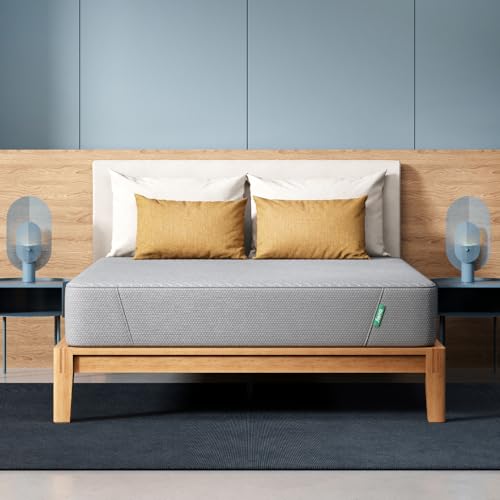
Siena is the value line of Resident Home, the company behind Nectar and DreamCloud, and the 10-inch Signature is the most decorated budget mattress in this guide: Tom’s Guide rates it the best cheap mattress it has tested, full stop, on the strength of edge support, motion isolation and temperature regulation that cheap foam beds rarely manage together. For a guest room, two of those three strengths are worth more than they would be in your own bedroom. Motion isolation is what lets one half of a visiting couple sleep through the other half’s 3 a.m. trip to the bathroom. And the Amazon listing itself carries the term that matters most for a host: a 180-night trial, printed in the listing title alongside a 10-year warranty and CertiPUR-US certified foams. Six months of trial is roughly two or three real visits for most households — the first trial in this guide long enough to be judged by actual guests rather than by you lying on it once and guessing. Check price on Amazon for the current queen price — during research it was verified under this guide’s line even outside sale events.
The feel needs honest handling, because the label and the bed disagree — and in a guest room, the disagreement cuts both ways. Siena calls it medium firm; the testers who slept on it call it about 9 out of 10 for firmness, with full-body support, very little of the sinking “hug” of classic memory foam, and pressure relief that is decent rather than plush. The case for that firmness in a spare room is real: most guests, for one to three nights, sleep perfectly well on a firm, supportive bed, and a bed that feels solid reads as a bed that was chosen rather than inherited. The case against it is just as real: a side-sleeping guest — a parent staying a week, say — has shoulders that will find this mattress unforgiving by night three, and no trial length fixes a feel that is simply wrong for the person in the bed. If your regular guests skew toward side sleepers, read the Zinus and EGOHOME reviews below before you default to the top pick. One more practical note: Siena also sells a 12-inch version, but the 10-inch is the model with the deep test record, and it is the one linked here.
- A 180-night trial and 10-year warranty printed in the Amazon listing itself — long enough to cover several real guest visits.
- Best-in-class test results for edge support and motion isolation from a Nectar/DreamCloud sister brand — the couple-friendly pick.
- Queen verified within this guide’s budget during research — check the current price on Amazon.
Honest limitation: It sleeps far firmer than “medium firm” suggests — testers rate it around 9/10 — so a side-sleeping guest on a longer stay is the one visitor this bed may genuinely fail.
Choose it if you want the safest, best-tested guest purchase in this guide and your guests are mostly back or stomach sleepers. Skip it if your guest room regularly hosts side sleepers for week-long stays.
Zinus 12 Inch Green Tea Memory Foam Mattress, Queen
Who it suits: Hosts whose guests are unknown quantities — the crowd-pleasing feel with the deepest owner record in the category.
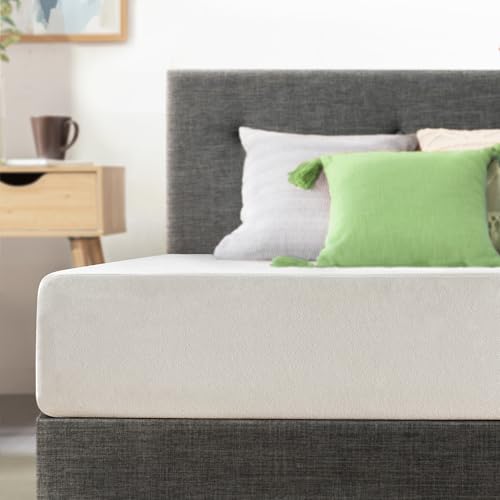
The Green Tea is the mattress most people picture when they picture a cheap bed in a box: 12 inches built as 3 inches of conforming memory foam over 2 inches of comfort foam over two high-density airflow and base foam layers (3.5 inches each), infused with green tea and charcoal for freshness, CertiPUR-US certified, and backed by Zinus’s 10-year limited warranty. Check the current price on Amazon for the queen — during research it sat comfortably inside this budget, and this tier buys the full 12-inch build, whereas the lower tier covered in the sibling guide only included a thinner version of this mattress. For a guest room, its long record with ordinary sleepers is itself a feature: this is the budget mattress the widest cross-section of sleepers has already lived with, which is the closest thing to polling your future guests that shopping allows.
The feel is the mirror image of the Siena: a medium, body-hugging sink that testers recommend specifically for side sleepers, because the thick comfort layers cushion shoulders and hips instead of pushing back. That makes it the natural hedge against the Siena’s firmness — between the two of them, most guest types are covered. Motion isolation is excellent, as it usually is with deep foam, which visiting couples appreciate. The debits matter less in a spare room than in a main bedroom, but they are still worth knowing: the edges give way when you sit on them, which guests perching to tie their shoes will notice; it sleeps warmer than any hybrid here, which matters in a stuffy spare room in August; and a foam bed that is slept on thirty nights a year will keep its feel for many years, which is the good news buried in the durability caveat. Zinus is also the brand that forces the fiberglass conversation, so let us have it in the open: older Zinus mattresses became the best-known fiberglass story in this industry, when the flame barrier in earlier models contained fiberglass and owners who unzipped covers released fibers into their homes. The current Green Tea listing states “Fiberglass Free” in its title, and the brand states its present line is built without it. In a guest room the practical rule doubles in importance — treat the outer cover as permanent, fit a washable protector over it, and make sure whoever cleans the room knows the cover does not come off.
- The full 12-inch Green Tea queen, verified within this budget during research — check price on Amazon.
- Deep, contouring comfort layers — the side-sleeper-friendly counterweight to the Siena’s firmness.
- Current listing states fiberglass-free; CertiPUR-US certified; 10-year limited warranty.
Honest limitation: It sleeps warm and the edges are weak, and the brand’s older fiberglass history means the materials check in the buying checklist below is not optional homework for this pick.
Choose it if you want the guest feel most likely to please the widest range of visitors. Skip it if your spare room runs hot or your guests are mostly back and stomach sleepers who dislike sinking in.
Linenspa 10 Inch Memory Foam and Spring Hybrid Mattress, Queen
Who it suits: Hosts who want a guest bed that feels like the spring beds most visitors grew up on — positioned at the lower end of this budget tier.
Linenspa’s hybrid is the budget hybrid benchmark: a memory foam comfort layer over a steel innerspring unit, 10 inches in total, maker-described as a medium feel, with a 10-year manufacturer’s warranty. Check price on Amazon for the current queen price — during research it sat at the lower end of this guide’s budget range. There is a guest-specific argument for it beyond its position in the tier: a traditional spring bed is the feel the broadest range of guests already knows how to sleep on. Nobody’s parent has ever lain down on a bouncy, responsive mattress and been confused by it, and the airflow through a coil unit makes it the coolest-sleeping construction here apart from the CoolNest — a genuine consideration for the spare room with one small window. Testers found the spring-heavy build bouncier and cooler than the foam picks, with the deeper profiles (10 and 12 inches) the ones adults should choose; a 12-inch version is also sold if you want more cushion over the same idea.
The compromises are the honest price of the design, and one of them is specifically a couples problem. An innerspring unit at this money is a traditional connected coil, not the individually pocketed coils of pricier hybrids, so motion travels across the bed more than it does in any other pick here — a restless guest’s turning will be shared with their partner in a way the foam picks prevent. Edge support and pressure relief are both modest; “light pressure relief” is the tester phrase, and a side-sleeping guest with sore shoulders should believe it. The second caveat is availability, and in a guest room it has a deadline attached: Tom’s Guide notes that stock of this mattress at Amazon has been limited lately, with many sizes and depths unavailable at times. A main-bedroom shopper can wait for a restock; a host with guests arriving in three weeks cannot. If the queen is in stock, order it then rather than closer to the visit; if it is not, the FLEXPEDIC below is the hybrid to take instead.
- Positioned at the lower end of this budget tier — check the current price on Amazon.
- Steel coils give bounce, airflow and the familiar feel most guests already know how to sleep on.
- A 10-year manufacturer’s warranty from an established bedding brand.
Honest limitation: Amazon stock is intermittent — sizes and depths sell out — and the connected-coil build shares a partner’s movement and relieves pressure lightly.
Choose it if you want a traditional spring feel at the lower end of this budget tier and your size is in stock with time to spare before the next visit. Skip it if your guest room mostly hosts couples, or you are buying against a deadline.
EGOHOME 12 Inch Gel Cooling Memory Foam Mattress, Queen
Who it suits: Hosts who want the guest room to make a plush first impression — the bed visitors describe as “surprisingly lovely.”
EGOHOME is MLILY’s Amazon-native brand, and this 12-inch gel cooling model is the plush counterweight to the Siena’s firmness. Check the current price on Amazon for the queen — during research it sat in the middle of this guide’s budget range for a full 12 inches of foam. The listing states the two things this guide checks first: fiberglass free, and CertiPUR-US certified foam. Testers who slept on EGOHOME’s 12-inch foam found a body-hugging, almost marshmallow contour that kept a lightweight side sleeper’s shoulders comfortable all night, with the strong motion isolation that slow, deep foam always delivers. For a guest room, that first-night softness is a legitimate strategy: a guest judges a bed in the first ten minutes of lying on it, and this is the pick most likely to win that judgment from anyone who likes a soft bed.
The limitations are the mirror of the virtues. A mattress you sink deeply into is harder to roll over and get out of, and older guests are the sleepers most likely to find a deep sink undignified at 7 a.m. Back and stomach sleepers can find their midsections dipping lower than their shoulders, which is the posture that makes people wake up stiff. It can also sleep warm despite the gel infusion, because gel foam moderates the first hour more than the whole night. The second caveat is about terms, and the guest room makes it worse rather than better: EGOHOME’s trial and warranty perks are at their best on the brand’s own site, and tester coverage of the brand warns that buying through Amazon can leave the trial and warranty picture fuzzier. In your own bedroom you would discover a mismatch within a fortnight and act inside Amazon’s return window; in a guest room, the first real evidence may arrive months after that window closes. Read the listing’s stated terms before you order, and if you buy it, sleep on it yourself for a few nights when it arrives — a host’s own test nights are the only fast feedback loop this pick offers.
- Full 12-inch foam build, positioned in the middle of this budget tier — check price on Amazon.
- The deepest pressure relief here — testers single it out for side sleepers with sore shoulders.
- Listing states fiberglass-free and CertiPUR-US certified.
Honest limitation: The plush sink traps heat and makes getting up harder work for older guests, and the brand’s trial and warranty are clearest when buying direct rather than through Amazon.
Choose it if your guests love a soft, cradling bed and first impressions matter. Skip it if your regular visitors are older, sleep on their stomachs, or struggle to get out of a soft bed.
SweetNight CoolNest 12 Inch Mattress, Queen
Who it suits: Hosts whose spare room runs hot — the attic conversion, the sun-facing box room — and who have a visit scheduled soon enough to judge it.
This pick comes with its condition printed on its forehead: the CoolNest 12-inch queen was verified right at this guide’s ceiling during research, not comfortably under it — check the current price on Amazon before you buy — and prices in this family move between sale events, so its thicker 14-inch sibling can sit in a higher tier. What the money buys is the most deliberate cooling build in this guide: gel-infused memory foam layered with phase-change material (PCM) foam that absorbs heat at the surface, a breathable 3D-woven cover, and a 5-zone support core, in a CertiPUR-US certified, fiberglass-free package with a 10-year warranty. Guest rooms are disproportionately the warmest rooms in the house — the converted attic, the room over the garage, the one with no cross-breeze — and they are the rooms whose occupants cannot fix the problem by opening a window at 2 a.m. The cooling reputation is not only the maker’s: a Tom’s Guide tester who slept on the 14-inch version through summer heatwaves called it the most cooling bed she had tested, which is a reviewer’s judgment rather than a lab measurement — but from a lab that tests mattresses for a living.
The honesty notes are about physics and, especially, terms. No passive foam mattress actively refrigerates: PCM and gel moderate surface temperature early in the night and then reach equilibrium, so a CoolNest in a hot, un-air-conditioned room will still feel like a foam bed by 4 a.m. — cooler than the Zinus, not cold. On terms, this is the pick where the guest-room clock bites hardest. The brand’s 100-night trial belongs to direct purchases; Tom’s Guide reports that Amazon buyers get the 10-year warranty and a 90-day return window that applies while the mattress remains in its box. The Amazon return protection expires, unopened, in 90 days — but a guest bed cannot be judged in its box, and your next guests may not arrive for five months. Of every pick in this guide, this is the one to buy against a scheduled visit: order it so that real guests sleep on it within weeks of its arrival, while some remedy still exists if the room hates it. Buy it for the cooling build and the feel while it sits within this budget, and treat any week it sits above the $400 budget as a week it belongs to the next guide up.
- The only pick engineered around cooling: PCM foam, gel infusion and a breathable woven cover.
- CertiPUR-US certified and fiberglass-free, with a 10-year warranty.
- Verified right at this guide’s ceiling during research — check the current price on Amazon.
Honest limitation: It sits on the budget line rather than under it, its price can swing noticeably between sale events, and its Amazon return terms (90 days, in the box) are the worst fit in this guide for a room judged a few nights a year.
Choose it if your guest room genuinely runs hot and a visit is coming soon enough to test it. Skip it if the price has drifted above $400, or your next guests are months away.
FP FLEXPEDIC 10 Inch Firm Hybrid Mattress, Queen
Who it suits: Hosts who want the longest possible time to find out whether they chose right — and whose guests include firm-bed loyalists and heavier visitors.
Readers of our under-$200 guide will recognize this mattress, and its presence here tells the story of this tier: in the lower tier it sat near that guide’s ceiling, while in this tier it sits comfortably within budget. Check the current price on Amazon for the queen — during research it was positioned at the lower end of this guide, while wearing this guide’s longest trial, 365 nights, stated in the listing itself. In a guest room, a year-long trial is not a marketing flourish; it is the only trial format that matches how the evidence actually arrives. A full calendar year of visits — the summer parents, the holiday siblings, the friend passing through in March — can sleep on this bed before you decide. The build is a 10-inch hybrid made firm on purpose: cooling gel memory foam over a 7-zone individually pocketed spring unit, CertiPUR-US certified foam, and an explicitly fiberglass-free construction. The pocket coils also isolate motion far better than the Linenspa’s connected unit, so couples are properly served here.
Firm is a preference, not a virtue, and this review will not pretend otherwise. Side sleepers will likely find this bed unyielding at the shoulder, and the listing’s own firmness language should be believed over any reviewer’s. What the firmness does buy a host is range at the other end: stomach and back sleepers get a level surface, and heavier guests — the visitors most poorly served by soft foam, and the ones too polite to say so — get a support core that does not bottom out under them. The zoned coils also give it the best edge support and the easiest movement of any pick here, which older guests rising in an unfamiliar dark room will quietly appreciate. If you are choosing between this and the Linenspa as your hybrid, the honest split is: the Linenspa is softer, and worse at isolating a partner’s movement; the FLEXPEDIC is firmer, almost always in stock, and carries the year-long trial. Pick by the guests, not the spreadsheet.
- The longest trial in this guide: 365 nights, stated in the listing — a full year of guest visits to judge by.
- Queen positioned at the lower end of this budget tier during research — check price on Amazon.
- 7-zone pocket coils and an explicitly fiberglass-free build; the firmest feel here, and the best support for heavier guests.
Honest limitation: The firmness is genuinely firm — most side-sleeping guests will find it too hard at the shoulder — and FLEXPEDIC is a young brand whose decade-long warranty support is unproven.
Choose it if you want a year of real visits to decide, and your guests lean firm. Skip it if your guest room mostly hosts side sleepers or anyone who equates softness with welcome.
Comparison Table
| Product | Type | Thickness | Firmness (maker) | Price | Link |
|---|---|---|---|---|---|
| Siena 10 Inch Memory Foam, Queen | All-foam | 10 in | Medium firm (testers: firm) | Check price on Amazon | Check on Amazon |
| Zinus 12 Inch Green Tea, Queen | All-foam | 12 in | Medium firm | Check price on Amazon | Check on Amazon |
| Linenspa 10 Inch Hybrid, Queen | Innerspring hybrid | 10 in | Medium | Check price on Amazon | Check on Amazon |
| EGOHOME 12 Inch Gel Cooling, Queen | All-foam | 12 in | Medium | Check price on Amazon | Check on Amazon |
| SweetNight CoolNest 12 Inch, Queen | All-foam, cooling | 12 in | Medium | Check price on Amazon | Check on Amazon |
| FP FLEXPEDIC 10 Inch Firm Hybrid, Queen | Pocket-coil hybrid | 10 in | Firm | Check price on Amazon | Check on Amazon |
How to Choose a Mattress for a Guest Room Under $400
- Start with the guests you actually get, not the guests in a hotel advert. Couples need a queen and motion isolation; a solo visitor twice a year needs neither as urgently. The rotation your room really hosts should pick the mattress.
- Medium-firm is the crowd setting — but read tester evidence, not labels. Hotels choose medium-firm because it offends the fewest sleepers. The Siena is labeled medium firm and rated about 9/10 by testers; the EGOHOME is labeled medium and sleeps plush. Where a label and a test disagree, believe the test, and remember your guests cannot return the bed — you are choosing on their behalf.
- Treat the trial as your feedback mechanism, and check whose it is. A brand’s 100- or 180-night trial usually applies to its own website. On Amazon, what protects you is the trial stated in the listing (Siena 180 nights, FLEXPEDIC 365) or Amazon’s return terms — and for a room judged a few nights a year, a longer in-listing trial is worth a great deal.
- Time the purchase to a visit. Order so that real guests sleep on the bed within the return or trial window’s early weeks. A mattress that sits in its box for four months waiting for Christmas guests has spent its easiest remedies unopened — one pick here (the CoolNest) only accepts Amazon returns while the box is still sealed.
- Ten inches is the floor for a guest bed you want praised. Every pick here is 10 to 12 inches. A thinner mattress may be fine, but it reads as a stopgap, sags sooner under heavier guests, and saves less than you think.
- Check the fire barrier before anything else. Look for “fiberglass free” in the listing — the current listings of four picks here state it outright — and never unzip a mattress cover, including to wash it before guests arrive. Fit a washable protector over the top instead; it is also the layer that keeps a rarely used bed fresh between visits.
- For couples, buy motion isolation. Deep foam (Siena, Zinus, EGOHOME) and pocket coils (FLEXPEDIC) keep one guest’s turning on their side of the bed. A connected-coil innerspring (Linenspa) shares every movement — fine for a solo visitor, noticeable for two.
- Judge the spare room’s foundation before the mattress arrives. Guest rooms inherit the house’s oldest frame: slats wider than about 3 inches apart, or a sagging box spring, will make a good mattress feel broken and can void warranty support. A flat platform or close slats are part of this purchase whether you planned them or not.
- Check stock against your deadline, not just price. Budget listings fluctuate in availability (the Linenspa especially). A listing you cannot actually order in your size helps nobody with guests arriving Friday; order the guest bed earlier than feels necessary.
- Sleep on it yourself for two or three nights when it arrives. You are the only fast feedback loop a guest bed has. Foam feels firmer in week one than month two, and your own nights will catch a wrong firmness while every remedy is still open — your guests’ politeness will not.
The Guest-Room Maths: A Mattress That Ages by the Visit
A main-bedroom mattress wears out by the night: roughly 2,500 nights in seven years. A guest mattress lives by a different arithmetic. At twenty to thirty nights a year, a decade of hosting is only about 300 nights of actual sleep — the equivalent of ten months in your own bed. That is why the thickness advice in this guide is not extravagance: a 10 to 12 inch mattress in a spare room is plausibly a ten-to-fifteen-year purchase, outlasting the frame it sits on and possibly the room’s paint. Spread over that life, the gap between picks inside this one tier matters far less than how well the bed suits the guests who actually use it — shoppers who agonize over a small gap in the same tier are optimizing the wrong number.
Slow aging is not no aging, and the exceptions are worth knowing. Foam oxidizes and softens slowly even unloaded, and a bed made up for months under bedding in a closed, sunlit room ages faster than the night-count suggests. Two habits keep a guest mattress young: rotate it head-to-foot two or three times a year, and leave it under a breathable protector rather than sealed in plastic, which traps the moisture that ages foam fastest. And because a guest bed changes so gradually, you will never notice the year it stops being good. The trial you choose at purchase — 180 nights, 365 nights — is the one moment the decision gets properly tested. After that, the honest check is to sleep in the spare room yourself once a year, which most hosts never do and every guest wishes they had.
Firmness for People You Cannot Poll
Every other mattress purchase is a preference you can interrogate; this one you have to estimate for a population. The hotel industry solved this decades ago, and its answer is the one this guide is built around: medium-firm, supportive, unremarkable. Most sleepers can sleep acceptably on a supportive medium-firm bed for a few nights, because what ruins a guest’s sleep is rarely a feel that is slightly wrong — it is a bed that sags, dips, rolls two people into the middle, or bounces one awake when the other moves. That is why the firm-leaning Siena tops this guide despite its label problem, and why the connected-coil Linenspa, for all its friendly bounce, carries a couples warning.
The two ends of the range deserve a host’s honesty in opposite directions. The Siena’s tester-rated firmness (about 9/10 against a “medium firm” label) is a genuine asset for back and stomach guests and a genuine risk for a side sleeper on a long stay. The EGOHOME’s plush sink is the reverse: it produces the best first-night compliments in this guide and the worst fit for stomach sleepers, heavier guests, and anyone who finds climbing out of a deep hug undignified. If your guest rotation genuinely spans both camps — and most families’ does — the pragmatic answer is the middle picks (Zinus’s medium hug, or the Linenspa’s medium springs) plus one adjustment knob: a mid-priced topper in the guest-room closet that softens a firm bed for the visitor who needs it. A topper cannot firm up a too-soft bed, which is the final argument for erring firm when you must err: firmness can be padded down for a night; softness cannot be padded up.
Trials, Returns and the Guest Room’s Slow Clock
In a main bedroom, a sleep trial is a convenience. In a guest room, it is the entire quality-control system, and the differences between these six listings are larger than the differences between their foams. Consider the evidence clock: you buy in October; a November guest calls it “fine, honestly”; a Christmas guest sleeps badly but blames the travel; by February you have three opinions, two of them unreliable. Against that clock, weigh the terms. The Siena’s 180-night trial, printed in its Amazon listing, covers roughly that whole evidence-gathering period. The FLEXPEDIC’s 365 nights covers it twice over, with seasons to spare — the only trial here that lets a full year of different guests vote. These two listings are, for a host, categorically safer purchases.
Now weigh the other end. The EGOHOME’s generous trial language lives mainly on the brand’s own site, and tester coverage warns that Amazon buyers can find the picture fuzzier — so its real protection is Amazon’s ordinary return window, measured in weeks, in a room measured in visits. The CoolNest is the extreme case: brand trial direct, and on Amazon a reported 90-day window that applies while the mattress remains in its box. None of this makes those two mattresses bad picks — the CoolNest’s cooling build is genuinely the best here for a hot room, and the EGOHOME’s feel wins compliments — but it changes how a careful host buys them: close to a scheduled visit, opened immediately, and slept on by somebody (you, if necessary) within days. The rule for this category is simple: in a guest room, the trial is not fine print. It is the product.
Common Buying Mistakes
- Buying the thinnest, cheapest mattress because “it’s only the guest room” — your guests will remember the bed long after you have forgotten the saving, and a 6-inch mattress under an adult is the single most common cause of the polite silence.
- Believing the firmness label. “Medium firm” spans the Siena’s tester-rated 9/10 and beds half as firm; in a guest room you are choosing for other bodies, so look for independent tester evidence before you buy on a word.
- Assuming the brand’s website trial applies to an Amazon order. Sometimes it does (it is in the Siena and FLEXPEDIC listings); often it does not (EGOHOME, SweetNight). The listing is the contract.
- Leaving the mattress boxed until the guests arrive — spending the entire return window, and in one case here the entire returns eligibility, on a sealed box in the hallway.
- Unzipping the cover to wash it before a visit — the single most expensive mistake in this category and the usual first step of every fiberglass story. A washable protector over the top does the job safely.
- Judging the bed by sleeping on it once, yourself, when your body is not the one that will use it — or worse, not testing it at all and letting a parent discover the wrong firmness on night one of seven.
- Putting a new mattress on the spare room’s dying frame and concluding the mattress is at fault. Wide-spaced slats and sagging box springs sabotage foam and hybrids alike.
- Buying for the couple and forgetting the motion: a connected-coil bed that is charming for one guest becomes a seesaw for two.
- Expecting a mattress to fix a guest’s pain. A better-fitting bed can remove a mattress-shaped problem; it cannot treat a back. Persistent pain, numbness or pain that wakes someone nightly is a clinician conversation, not a shopping one.
Final Recommendation
- Most guest rooms: Siena 10 Inch Memory Foam Mattress, Queen.
- Side-sleeping guests: Zinus 12 Inch Green Tea Memory Foam Mattress, Queen.
- Familiar spring feel at the lower end of this tier: Linenspa 10 Inch Memory Foam and Spring Hybrid Mattress, Queen.
- The plush welcome: EGOHOME 12 Inch Gel Cooling Memory Foam Mattress, Queen.
- Hot spare rooms: SweetNight CoolNest 12 Inch Mattress, Queen.
- Firm support with a year to decide: FP FLEXPEDIC 10 Inch Firm Hybrid Mattress, Queen.
Our top two are the Siena for any host whose guests lean toward back or stomach sleeping — its in-listing 180-night trial is the rare trial long enough for real guest feedback, and its tested motion isolation is what visiting couples actually notice — and the Zinus 12-inch Green Tea for hosts whose guests lean the other way, whose shoulders will not forgive the Siena’s firmness. Between them they cover the two guest populations that send most people searching for a guest room mattress under $400. If neither sounds like your household, the honest route is by situation: a hot spare room, take the CoolNest while it sits within this $400 budget and a visit is near; compliments on night one, take the EGOHOME and test it yourself the week it arrives; a year to decide and firm-bed guests, take the FLEXPEDIC; and if the budget shrinks mid-shop, the Linenspa is the pick that gives up the least. Check the current price on Amazon and the fire-barrier wording on the listing, confirm the queen is the size you are looking at, open the box when it comes, and sleep on your own guest bed before your guests do.
Frequently Asked Questions
Is $400 too much to spend on a guest room mattress?
Run the guest-room maths before deciding. A spare-room mattress slept on twenty to thirty nights a year ages by the visit, not the night, so a 10 to 12 inch pick from this guide is plausibly a ten-to-fifteen-year purchase — and spread over that whole life, the gap between picks inside this one tier matters less than the step up in build. What this tier buys over a much thinner, lower-tier mattress is thickness your guests can feel, brands with track records, and — in two cases — trials long enough to be judged by actual visitors. If your guest room hosts someone twice a decade, spend less with a clear conscience; if it hosts family monthly, this is the tier where the bed stops being the thing they politely don’t mention.
What firmness is best for guests?
Medium-firm and supportive is the setting that offends the fewest sleepers — it is the hotel answer, and it is why the firm-leaning Siena tops this guide. But labels lie in both directions: the Siena is labeled medium firm and rated about 9/10 by testers, while the EGOHOME is labeled medium and sleeps plush. If your regular guests are committed side sleepers, weight the Zinus or EGOHOME more heavily; if they are back or stomach sleepers, or heavier, the Siena and FLEXPEDIC serve them better. And keep a mid-priced topper in the guest-room closet: it lets you soften a firm bed for the one visitor who needs it.
How long will a guest room mattress last?
Far longer than the same mattress in your own room, because wear follows nights slept, and a guest bed may see only 300 nights in a decade. The warranties here (10 years on most picks) are limited warranties against manufacturing defects, not feel guarantees, and foam does soften slowly with age and heat even unloaded — rotate the mattress a few times a year and keep it under a breathable protector. The realistic risk is not wearing it out; it is not noticing when it stops being good — sleep in your own spare room once a year to catch it.
Does the sleep trial apply if I buy on Amazon?
Only where the listing says so — and in a guest room, that answer matters more than anywhere else in the house, because your feedback arrives a few nights at a time. The Siena’s 180-night trial and the FLEXPEDIC’s 365-night trial are printed in their Amazon listings, and the FLEXPEDIC’s year is long enough for a full calendar of visits to judge the bed. For the EGOHOME and the SweetNight, the long trials belong to the brands’ own websites; Amazon purchases are covered by Amazon’s return terms (for the CoolNest, reported as 90 days while the mattress stays in its box — protection that expires before a slow guest schedule can test anything). Read the listing’s terms before ordering, and time the purchase so real guests sleep on the bed early in whatever window you have.
Do these mattresses contain fiberglass?
The current listings for the Zinus Green Tea, EGOHOME, CoolNest and FLEXPEDIC all state fiberglass-free construction, and every pick is CertiPUR-US certified. Older budget mattresses — including earlier versions from famous names — did use fiberglass fire barriers, which is why the check matters. Guest rooms carry one extra risk worth naming: the person most likely to unzip a mattress cover is someone preparing the room for visitors. Whatever you buy, never unzip or remove the cover; put a washable protector over it, and let whoever cleans the room know the cover stays on.
Which of these is best for a guest with a bad back?
No mattress treats back pain, and this guide will not claim otherwise. What a host can do is remove the mattress-shaped problems: a bed that keeps the spine level in the guest’s sleep position — firmer support for back and stomach sleepers (Siena, FLEXPEDIC), contour without hammock-sag for side sleepers (Zinus, EGOHOME) — and a trial long enough to learn from more than one visit. Pain that persists, radiates, or comes with numbness needs a clinician, not a mattress upgrade, and a guest with a diagnosed condition is better served by being asked what they sleep on at home than by being surprised.
Should a guest room get a queen, or will a smaller size do?
Every pick in this guide is considered in its queen size, because a queen is the size that hosts a couple without negotiation, and couples are the guests a spare room is usually furnished for. If your guest room honestly only ever hosts one person — or the bed is a daybed or trundle — the same mattress lines sell in full and twin sizes, typically in lower price positions, and paying for a queen when the room only needs a smaller size is waste. Check the size selector on the listing rather than assuming: the headline price on most listings is for the smallest size, so confirm you are looking at the queen before you check price on Amazon.