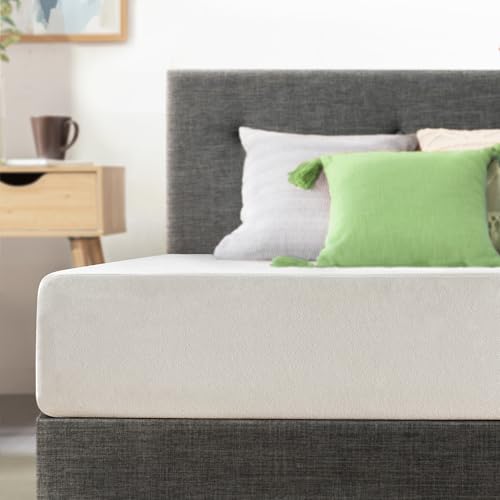
Disclosure: As an Amazon Associate, topratedkitchenware.com earns from qualifying purchases. Prices and availability change; check Amazon for the latest.
Where to buy
Check the latest price, availability and delivery on Amazon. Orders are placed on Amazon. We may earn a commission from qualifying purchases.
- Best overall for side sleepers: Vibe Quilted Hybrid 12 Inch Mattress, Queen — Check on Amazon
- Nectar Classic 12 Inch Memory Foam Mattress, Queen — Check on Amazon
- Novilla Bliss 12 Inch Gel Memory Foam Mattress, Queen — Check on Amazon
- Brooklyn Bedding CopperFlex 10 Inch Hybrid Mattress, Queen — Check on Amazon
See 2 more Amazon options
- DreamCloud Classic 12 Inch Hybrid Mattress, Queen — Check on Amazon
- DreamCloud Classic 12 Inch Memory Foam Mattress, Queen — Check on Amazon
Read the full guide ↓
Disclosure: As an Amazon Associate, topratedkitchenware.com earns from qualifying purchases. Links to Amazon on this page are affiliate links; they cost you nothing extra. Listing details such as price and availability change often, so check the current Amazon listing before you buy.
The best mattresses for side sleepers under $700 are not simply the best mattresses under $700 with a new label, and this guide re-ranks the tier accordingly. Side sleeping concentrates your weight on two narrow points — the shoulder and the hip — so the specification that matters is not a brand name or a coil count but whether the surface genuinely lets a shoulder sink in while the waist stays supported. A mattress that fails that test does not feel “a bit firm”; it feels like sleeping on the outside of your own arm, and you wake up rolling onto your back to escape it. Every pick here is a queen, and the tier’s framing needs stating plainly before any pick: this budget is where the famous direct-to-consumer names finally appear on Amazon, but only their entry models — the Nectar Classic foam and both DreamCloud Classics, all at the top of the budget. Everything one step up still sits above the line: the Nectar Classic Hybrid, the DreamCloud Premier Hybrid and the Casper The One. Those are named in this guide as over-budget orientation, never linked as picks.
Judged through the side-sleeper lens, the honest headline of this tier is uncomfortable for the famous names: the best shoulder relief here comes from the cheapest-feeling surface in the guide, the Vibe’s medium-plush pillow top, while the firmest famous name — the all-foam DreamCloud Classic, which the brand itself rates extra firm — is close to the worst purchase a strict side sleeper can make at any price, and this guide says so at full strength rather than softening it into a “firm option.” The Nectar Classic sits between them: a moderate, balanced contour with the tier’s best safety net, a 365-night trial printed in its Amazon listing. Firmness throughout this guide is maker-described and subjective — brands calibrate “medium” differently, testers disagree with labels often enough that we print the disagreements, and Nectar’s own “medium firm” label, which most testers land near 6.5 out of 10 while one listing read described a firm-feel variant at 7 to 8, is the standing example. One boundary before the picks: no mattress in this guide treats shoulder or hip pain, and none is claimed to. A better-fitting surface can remove a mattress-shaped pressure problem; pain that persists, radiates, or comes with numbness or tingling is a clinician conversation, not a shopping one, and this guide repeats that where it matters. Below: a quick picks table re-ranked for side sleepers, detailed notes on each mattress, a comparison table, a buying checklist, and sections on sink, pillow loft and common mistakes.
In this guide
Quick Picks
Short on time, or comparing several options at once? Each row below names a side-sleeper type and the mattress that suits it, with a link to the listing. Every pick is the queen size; check price on Amazon for the current figure.
| Buyer type | Pick | Why it stands out | Link |
|---|---|---|---|
| Best overall for side sleepers | Vibe Quilted Hybrid 12 Inch Mattress, Queen | The only honestly medium-plush surface here — a pillow top that actually lets a shoulder sink | Check on Amazon |
| Best with a long trial | Nectar Classic 12 Inch Memory Foam Mattress, Queen | Moderate contour with the 365-night trial printed in the listing | Check on Amazon |
| Best budget contour | Novilla Bliss 12 Inch Gel Memory Foam Mattress, Queen | A full 12 inches of medium foam — tolerable contour without the famous-name price | Check on Amazon |
| Best for heavier side sleepers | Brooklyn Bedding CopperFlex 10 Inch Hybrid Mattress, Queen | Zoned coils and a maker-rated 7/10 feel that holds up under weight | Check on Amazon |
| Best for combination sleepers | DreamCloud Classic 12 Inch Hybrid Mattress, Queen | Responsive coils and airflow for sleepers who only spend part of the night on their side | Check on Amazon |
| Only for stomach-dominant sleepers | DreamCloud Classic 12 Inch Memory Foam Mattress, Queen | Brand-rated extra firm — included so side sleepers can identify and avoid it | Check on Amazon |
How These Picks Were Chosen
The first filter was the budget, applied to the queen size and applied honestly. Every mattress below is a real Amazon listing whose queen was verified at or under the $700 budget when this guide was researched; check price on Amazon before you buy, because listing prices change. Three picks live at the top of the budget — the Nectar Classic and both DreamCloud Classics — and all three are flagged in their reviews rather than smuggled in; if any of them is sitting above the budget when you check, it has left this guide’s range. Well-known mattresses whose queens sit above the budget on Amazon — the Nectar Classic Hybrid, the DreamCloud Premier Hybrid and the Casper The One — are named as over-budget, not linked.
The second filter is the one this variant exists for: side-sleeper suitability, judged on sink, not on softness words. A surface can feel plush to a palm press and still fail a shoulder, because a hand spreads weight the way a shoulder joint does not. We therefore separated two things marketing blends together: surface softness (a quilted or pillow-top layer that feels cushioned on first contact) and true contouring (comfort layers that keep yielding until the shoulder and hip are cradled and the spine runs level). The Vibe offers both at this price; the Nectar offers genuine but moderate contouring; the DreamCloud Foam offers neither for a side sleeper, whatever its merits for stomach sleepers. Where a pick’s case rests on firmness, we report the maker’s own description and the tester evidence together, and where they disagree we print both — firmness is subjective, body weight changes it (a 130-pound sleeper compresses a comfort layer far less than a 230-pound sleeper on the same bed), and no single number survives contact with a different body.
We did not sleep on these mattresses ourselves. We read the maker listings and specification pages, compared construction, thickness, coil counts, foam certifications and stated firmness against published test results. A mattress had to be CertiPUR-US certified (or carry an equivalent certification we could verify) to be linked. Two further checks carry over at full strength. The trial check: the Nectar and DreamCloud Hybrid listings print “365-Night Trial” and “Forever Warranty” in their titles and are sold by Amazon.com — but a printed trial is still a claim to verify on the live listing, in-listing terms are not the same as terms borrowed from a brand’s website, and an Amazon purchase is not identical to a brand-store purchase: DreamCloud’s own store was including a free bedding bundle that the Amazon listing does not. The fire-barrier check: some mattresses use a fiberglass sock as their flame barrier, and fiberglass escaping a damaged or unzipped cover is a genuine contamination problem; we flag every pick whose listing makes no fiberglass-free statement, and the FAQ below summarizes the issue.
The 6 Best Mattresses for Side Sleepers Under $700
Vibe Quilted Hybrid 12 Inch Mattress, Queen
Who it suits: Strict side sleepers — the ones who fall asleep on a shoulder and wake up on the same shoulder — especially at light to average weights.
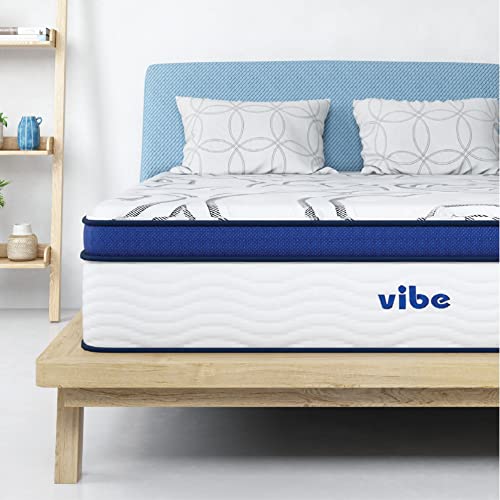
The Vibe is the base guide’s plush pick, and through the side-sleeper lens it becomes the hero, because it is the only mattress in this tier honestly described as medium-plush rather than some dialect of firm. Made by Classic Brands, it is a 12-inch hybrid built around a quilted euro pillow top — gel memory foam over individually wrapped coils. That construction matters for side sleepers in a specific way: the pillow top provides the first, easy yield that lets the shoulder start sinking, and the foam-and-coil stack beneath keeps yielding rather than presenting the hard stop that firm comfort layers do. The listing title carries the two checks this guide runs first, fiberglass free and CertiPUR-US certified, and it sits in the mid-range of this tier — check price on Amazon for the current figure. At about 89 pounds it is the heaviest pick here, so plan for two people on delivery day.
The honest caveats are about time and terms, not about the first month’s feel. A pillow top’s softness is real contouring while it is new, but pillow tops are the first part of any mattress to soften and compress with use, so the sink will deepen unevenly where your shoulder and hip land nightly; rotating the mattress is how you spread that wear. No long home trial could be verified on this listing, so judge the bed inside Amazon’s return window — a week of side sleeping, not one night. Stomach sleepers should read this as a warning in reverse: the plushness that cradles a shoulder lets a stomach sleeper’s midsection dip. For the strict side sleeper this guide is written for, though, the Vibe is the rare case of the cheapest-feeling answer also being the right one: it gives up brand fame and the year-long safety net, and in exchange it is the only bed here whose surface was designed to do the thing your shoulder needs.
- The softest surface in this guide: a medium-plush quilted pillow top over individually wrapped coils.
- A mid-range queen in this tier — check price on Amazon — well under the famous names at the top of the budget.
- Fiberglass-free and CertiPUR-US statements in the listing title.
Honest limitation: Pillow-top softness is the fastest-wearing comfort style in the category, and the trial terms are ordinary Amazon ones — this pick competes on feel and price, not on a year-long safety net.
Choose it if you sleep strictly on your side and shoulder pressure is the problem you are solving. Skip it if you sleep on your stomach, or a long home trial matters more to you than the surface feel.
Nectar Classic 12 Inch Memory Foam Mattress, Queen
Who it suits: Side sleepers of average weight who want real contouring with the tier’s best exit route if their body disagrees — and combination sleepers who split the night between side and back.
The Nectar Classic is the most-tested mattress in this guide: a 12-inch all-foam bed — cooling-fiber cover, gel memory foam, a transition layer and a dense support core, CertiPUR-US certified, about 74 pounds in a queen — sold and shipped by Amazon.com, with the brand’s 365-night trial and Forever Warranty carried in the Amazon listing title itself. The pricing needs the honest framing the base guide established: this is a premium pick at the top of this guide’s budget, and its headline figure is best understood as an everyday price rather than a fleeting sale — the crossed-out four-figure list figure beside it is set decoration. Check price on Amazon before you buy.
For side sleepers the feel question is the whole review, and the honest answer is “moderate.” Nectar calls the Classic medium firm; testers who slept on it generally land near 6.5 out of 10, and one read of the listing described a firm-feel variant firmer still, at 7 to 8 out of 10. Translated into shoulder terms: the memory foam does contour — this is true contouring, not a plush surface over a hard core — but the hug is balanced rather than deep. An average-weight side sleeper gets genuine pressure relief at the hip and acceptable relief at the shoulder; a lighter, sharper-shouldered sleeper may find the shoulder held up more than cradled, and that is exactly the uncertainty the 365-night trial exists to resolve, because you cannot settle it from a firmness number. Memory foam also isolates motion as well as anything sold, and hot sleepers should treat “cooling cover” and “gel” as a cooler first contact, not an actively cooled bed; gel foam reaches body temperature and stays there. What this budget does not buy is the step up: the Nectar Classic Hybrid sits above the line, at the brand’s store as well as on Amazon, named here unlinked so the boundary is visible. Bought as the moderate-contour option with a year to decide, the Classic is the lowest-risk side-sleeper purchase in this guide — not the softest, but the safest.
- Sold and shipped by Amazon.com, with the 365-night trial and Forever Warranty printed in the listing title itself.
- A premium queen at the top of the budget — check price on Amazon; the headline figure is an everyday price, not a fleeting sale.
- True memory-foam contouring with the deepest independent test record of any pick here.
Honest limitation: The contour is moderate, not deep — lighter side sleepers with sharp shoulder pressure may find it holds the shoulder up instead of cradling it, and only the trial will tell them.
Choose it if you want genuine contouring plus a year to change your mind. Skip it if you already know you need a plush, deep-sinking surface — that is the Vibe above.
Novilla Bliss 12 Inch Gel Memory Foam Mattress, Queen
Who it suits: Side sleepers on a tighter budget who still want a full 12-inch foam bed with a medium, tolerable contour.
An under-$700 guide that only recommended mattresses at the top of the budget would be a poor guide, and for side sleepers the budget pick matters more than usual, because contouring foam at an honest medium feel is one of the few things the budget market does well. The Novilla Bliss is a 12-inch gel memory foam mattress — a full adult profile, not the 6-to-8-inch compromise of the cheapest tiers — and it is this guide’s budget pick — check price on Amazon for the current figure. Novilla is a high-volume Amazon bedding brand rather than a famous name, and this guide will not dress it up as one; what the Bliss offers a side sleeper is depth and a medium foam feel that splits the difference — enough sink for the hip, moderate give at the shoulder — at a budget-tier price.
The compromises are the familiar budget-foam ones, stated plainly. The contour is shallower than the Nectar’s and much shallower than the Vibe’s: a light strict side sleeper will feel it at the shoulder within the first week, while an average-weight or combination sleeper may never miss it. Gel infusion moderates the first part of the night, then reaches body temperature; edges soften when you sit on them; motion isolation, as with all deep foam, is the compensating strength. Terms need the careful reading this guide keeps recommending: no long trial could be verified on this listing, so buy it on the strength of Amazon’s return window and judge it inside that window rather than assuming brand-website terms have followed the mattress to Amazon. One discipline note for this brand in particular: Novilla sells many near-identical 12-inch listings, foam and hybrid, at similar prices. The pick here is the Bliss gel memory foam listing linked throughout this guide — if you wander to a sibling listing, re-check its price and terms from scratch rather than assuming they match.
- A full 12-inch foam profile at a budget-tier price — check price on Amazon — with no thin-bed compromise.
- Gel memory foam over a full-depth support core, from a high-volume Amazon bedding brand.
- Deep-foam motion isolation that suits couples and light sleepers at a budget price.
Honest limitation: The contour is the shallowest of the three foam picks that suit side sleepers at all, and no long trial could be verified on this listing — light, strict side sleepers will feel the compromise first.
Choose it if your budget is tight and you sleep on your side at an average weight or heavier. Skip it if you are a light strict side sleeper with a known shoulder problem — save toward the Vibe instead.
Brooklyn Bedding CopperFlex 10 Inch Hybrid Mattress, Queen
Who it suits: Heavier side sleepers, and side sleepers who run hot or hate the held feeling of foam — the readers for whom the softer picks bottom out.
Side-sleeper advice usually stops at “go softer,” and that advice fails a real group of people: heavier bodies, for whom a plush surface is not a cradle but a hammock they sink straight through until the shoulder lands on the firm support core anyway. For that reader, the CopperFlex is this guide’s answer. Brooklyn Bedding makes its mattresses in its own Arizona factory rather than contracting them out, and this 10-inch hybrid stacks copper-infused CopperFlex memory foam and VariFlex IQ foam — with a zoned lumbar section — over encased coils, five layers in all, at a maker-stated 7 out of 10 for firmness, with CertiPUR-US certified foams. It sits in the mid-range of this tier — check price on Amazon for the current figure. One honest warning carries over from its history: this model’s pricing has moved around enough to sit above this guide’s line at times, so confirm it is still within budget when you check. The listing copy itself states a 120-night sleep trial and a 10-year warranty, terms printed on the Amazon listing rather than borrowed from the brand’s website.
Read the firmness honestly: a maker-rated 7 out of 10 is firmer than the Vibe and the Nectar, and a light side sleeper will find the shoulder relief modest — this is not a soft bed wearing a value label. What the heavier side sleeper gets is support that arrives before the bottom: the zoned core holds the midsection level while the comfort foam takes the first yield, and the coils move air in a way no all-foam pick here matches. Copper infusion is a material, not a cooling system; the temperature regulation here comes mostly from the coil unit. At 10 inches it is also the thinnest pick here, which is the counterweight to the paragraph above: above roughly 250 pounds per sleeper, the 12-inch builds will hold their feel longer, and a heavier sleeper choosing between this and the DreamCloud Hybrid is choosing zoned support against two extra inches. For the side sleeper who has already returned one too-soft bed, this is the pick that spends the budget on construction instead of softness.
- A mid-range queen in this tier — check price on Amazon before you buy.
- A 120-night trial and 10-year warranty stated in the Amazon listing copy itself.
- Zoned lumbar support and encased coils from a brand that manufactures in its own Arizona factory.
Honest limitation: At a maker-rated 7/10 it is too firm to cradle a light sleeper’s shoulder, and its pricing has moved above this guide’s line before — it qualifies at its current in-budget position, not by nature, so check price on Amazon.
Choose it if you are a heavier side sleeper, or softer beds have bottomed out on you before. Skip it if you are a light strict side sleeper — the Vibe and Nectar will treat your shoulder better.
DreamCloud Classic 12 Inch Hybrid Mattress, Queen
Who it suits: Combination sleepers who spend part of the night on their side and part on their back, and side sleepers who strongly prefer a responsive, cooler coil feel.
DreamCloud is Nectar’s sister brand under the same parent company, aimed at shoppers who find all-foam beds too still and too warm. The Classic Hybrid is a 12-inch, six-layer build: a CloudQuilt top with a cashmere-blend cover, memory foam and adaptive foam over 792 individually wrapped coils in a queen, with thicker perimeter coils for the edges, at about 79 pounds. Its Amazon listing carries the full checklist in its title — fiberglass free, CertiPUR-US certified, 365-night trial, Forever Warranty — and like the Nectar it is sold by Amazon.com. The pricing matches its sibling’s: it is a premium pick at the top of this guide’s budget on Amazon, in line with DreamCloud’s own store pricing, and its headline figure is best understood as an everyday price rather than a deep discount, the same way as the Nectar’s pricing. Check price on Amazon before you buy.
Through the side-sleeper lens, this is a conditional pick, and the condition is how much of the night you actually spend on your side. The feel runs to the firmer side of its medium-firm label — coils push back more than foam — and pushback is precisely what a strict side sleeper’s shoulder does not need: the shoulder is held up rather than cradled, and a light side sleeper may find the surface unyielding. A combination sleeper experiences the same bed differently: the responsiveness that resists a shoulder also makes rolling from side to back effortless, the edges hold, air moves through the coil unit so it sleeps cooler than the all-foam picks, and time spent on your back is well supported. One difference between the Amazon listing and the brand’s store deserves printing in the review rather than a footnote: in November 2026 the brand store included a free bedding bundle with the mattress, and the Amazon purchase does not include it. If the bundle matters to you, compare the two routes before ordering; if it does not, the Amazon listing’s headline trial and warranty are the same. The honest boundary above this pick is the next model up, the Premier Hybrid on Amazon — above this guide’s line, named here unlinked only so the step is visible.
- 792 individually wrapped coils with reinforced perimeter edges — the strongest support core in this guide.
- A premium queen at the top of the budget — check price on Amazon — in line with the brand store’s own pricing.
- Fiberglass-free and CertiPUR-US statements, plus the 365-night trial and Forever Warranty, all in the listing title.
Honest limitation: The feel runs firmer than “medium firm” suggests and strict side sleepers — especially lighter ones — will find it unyielding at the shoulder; the Amazon purchase also omits the free bedding bundle the brand’s own store includes.
Choose it if you are a combination sleeper who wants coils, cooler sleep and a year-long trial. Skip it if you sleep strictly on your side at a light weight — your shoulder is the exact case this bed handles worst.
DreamCloud Classic 12 Inch Memory Foam Mattress, Queen
Who it suits: Stomach sleepers and firm-bed loyalists. For side sleepers, this pick is in the guide so you can recognize it — the two DreamCloud Classics are the category’s easiest buying mistake — and avoid it.
DreamCloud sells the Classic in two builds at the same top-of-budget position, and this all-foam version is the one shoppers most often buy by accident. It is a 12-inch, five-layer foam mattress with an inch of pressure-relieving memory foam at the surface under the same CloudQuilt cooling-fiber top as its hybrid sibling, and the brand rates it extra firm — a clear step firmer than the hybrid, not a foam twin of it. Amazon has at times priced this queen below DreamCloud’s own store, so compare both routes on a current model — check price on Amazon. At roughly 69 pounds in a queen it is also the lightest of the three premium picks at the top of the budget. The brand’s 365-night trial and Forever Warranty are the stated terms for the model; because the firmness is the whole point of this pick, confirm the trial wording on the live listing before you rely on it — a bed this firm is exactly the kind you want a long exit window for.
Now the side-sleeper verdict, at full strength, because softening it would waste your money: extra firm is close to the worst specification a strict side sleeper can buy. A surface that barely yields puts the full pressure of your upper body onto the point of the shoulder and the outside of the hip, with no sink to distribute it; lighter bodies may not compress the comfort layer enough to feel any contour at all. Extra firm is for stomach sleepers, whose hips must not dip; back sleepers who dislike any sense of being held; and heavier sleepers, for whom softer foams bottom out. If you land on your side for an hour a night and your stomach otherwise, buy accordingly, and use the trial without mercy if you guess wrong. Motion isolation is the foam consolation, and the all-foam build sleeps warmer than the hybrid. Read this pick as the specialist of the guide and the cautionary tale of this variant in one: for the sleeper it suits, it is arguably the best value here; for the side sleeper this page is written for, it is the one most likely to be returned.
- Brand-rated extra firm — the firmest feel in this guide, stated as a warning for side sleepers rather than a feature.
- A premium queen at the top of the budget — check price on Amazon, and compare the brand store’s current price as well.
- All-foam motion isolation with the same CloudQuilt cooling-fiber top as the hybrid.
Honest limitation: For a side sleeper this is not a limitation so much as a disqualification — the surface barely yields at the shoulder or hip, and most side sleepers and lighter bodies will find this bed hard work from the first night.
Choose it if you sleep on your stomach or know from experience that you like a genuinely firm bed. Skip it if you sleep on your side — at this price the Vibe, Nectar and Novilla above all treat a shoulder better.
Comparison Table
| Product | Type | Thickness | Firmness (maker) | Side-sleeper read | Price | Link |
|---|---|---|---|---|---|---|
| Vibe Quilted Hybrid 12 Inch, Queen | Pocket-coil hybrid, pillow top | 12 in | Medium plush | Deepest shoulder sink here | Check price on Amazon | Check on Amazon |
| Nectar Classic 12 Inch Memory Foam, Queen | All-foam | 12 in | Medium firm (testers ~6.5/10) | Moderate contour, year-long trial | Check price on Amazon | Check on Amazon |
| Novilla Bliss 12 Inch Gel Memory Foam, Queen | All-foam | 12 in | Medium | Tolerable contour at a budget price | Check price on Amazon | Check on Amazon |
| Brooklyn Bedding CopperFlex 10 Inch Hybrid, Queen | Zoned-coil hybrid | 10 in | Medium firm (maker 7/10) | Support before bottoming out — heavier sleepers | Check price on Amazon | Check on Amazon |
| DreamCloud Classic 12 Inch Hybrid, Queen | Pocket-coil hybrid | 12 in | Medium firm (firmer side) | Combination sleepers; strict side sleepers beware | Check price on Amazon | Check on Amazon |
| DreamCloud Classic 12 Inch Memory Foam, Queen | All-foam | 12 in | Extra firm (brand rating) | Avoid for side sleeping | Check price on Amazon | Check on Amazon |
How to Choose a Mattress for Side Sleepers Under $700
- Start with how much of the night you spend on your side. Strict side sleepers need sink (Vibe, then Nectar); combination sleepers need a surface they can move on (DreamCloud Hybrid, CopperFlex); stomach-dominant sleepers are the only ones the DreamCloud Foam serves. A famous name in the wrong feel is a worse purchase than an unknown name in the right one.
- Separate surface softness from true contouring. Press with a palm and everything feels plush. Ask instead whether the comfort layers keep yielding under a point load — a shoulder — until the spine runs level. Pillow tops do both while new; thin quilted layers over firm foam do only the first.
- Match the bed to your weight before the label. Under roughly 130 lb, firm foams may never compress enough to contour at all — favor the Vibe or Nectar. Above roughly 230 lb, deep soft foam bottoms out sooner — favor the coil picks and treat “plush” as a warning, not a promise.
- Read firmness labels as marketing, then look for tester evidence. At this tier the same words span the DreamCloud Foam’s brand-rated extra firm and the Vibe’s medium plush, and Nectar’s “medium firm” is read by testers anywhere from 6.5 to 8 out of 10. Where a label and a test disagree, believe the test.
- Treat the famous names’ headline figures as everyday prices, not sales. The three famous-name picks sit at the top of the budget as their everyday position. Do not let a crossed-out list figure rush you; check price on Amazon when you are ready to buy.
- Verify the trial on the listing, not the brand’s homepage. The Nectar and DreamCloud Hybrid listings print their 365-night trial and Forever Warranty in their titles; the CopperFlex states its 120 nights in its listing copy. For every other pick, read the live listing’s stated terms and Amazon’s return window before ordering — and for a side sleeper, the trial is not a bonus, it is the test equipment.
- Compare the whole purchase, not just the mattress. In November 2026 DreamCloud’s own store included a free bedding bundle that Amazon did not. If extras matter to you, compare both routes; if they do not, Amazon’s checkout and the same headline terms are the simpler path.
- Check the fire barrier before anything else. Look for “fiberglass free” in the listing — the DreamCloud Hybrid and Vibe state it outright — and never unzip a mattress cover to check for yourself, on any brand.
- Budget for a pillow change. A mattress that lets your shoulder sink drops your head further than your old bed did; the pillow that was right before may now hold your neck too high. Keep some of the budget for a lower-loft pillow and read the pillow section below before blaming the mattress.
- Judge the base you already own. A bed-in-a-box needs a flat, supportive foundation — platform or closely spaced slats. A sagging box spring or wide-spaced slats will make a good mattress feel broken and can void warranty support.
- Give any new mattress two to three weeks. Foam feels firmer in week one than month two, and your body needs time to adjust. Judge inside the trial or return window, not on night one.
Sink Is Not Softness: What a Shoulder Actually Needs
Lie on your side and your body makes contact at the shoulder and the hip, with the waist suspended between them. For the spine to run level, the shoulder — the narrower, bonier point — has to sink deeper than the hip, while the waist gets enough support not to sag into the gap. That is a demanding specification, and it explains why side sleepers are the hardest sleepers to fit: a surface soft enough at the shoulder can let the hip drop too far, and a surface supportive enough at the hip can hold the shoulder up like a shelf. Every pick here answers that tension differently: the Vibe with depth, the Nectar with contour, the CopperFlex with zoning — a firmer lumbar section holding the middle while the ends give. The DreamCloud Foam declines to answer at all, a legitimate design for stomach sleepers and a disqualification here.
This is also why “medium firm,” the industry’s default recommendation for everyone, serves side sleepers worst as a blanket rule. Medium firm is calibrated for back sleeping, where weight spreads across the whole back. Under a shoulder, the same bed behaves a full step firmer, because the load per square inch is several times higher. In practice, a side sleeper should mentally shift every firmness label one step firmer, then look for tester reports from side sleepers specifically — position-specific reads are worth more than any aggregate score. And a boundary that belongs in this section rather than a footnote: none of this is treatment. A mattress that fits removes a pressure problem the mattress was causing. Shoulder or hip pain that persists on a well-fitting bed, pain that radiates down an arm or leg, and any numbness, tingling or weakness are reasons to see a clinician — no purchase in this guide is a substitute, and none is sold as one.
Your Pillow Is Half the Equation
The most common false verdict in side sleeping is a good mattress condemned by an old pillow. Your pillow has to fill the distance between the mattress surface and your head, holding your neck level. Change the mattress and you change that distance: move from a firm bed, where your shoulder rides high, to a contouring one, where the shoulder sinks in, and the gap shrinks. The high-loft pillow that was perfect before now props your head at an angle, and the neck ache gets blamed on the mattress that actually fits you. The reverse happens too, moving to a firmer bed with a thin pillow.
Treat the first fortnight as a two-variable experiment and change one variable at a time. Sleep the first nights with your current pillow and note where discomfort sits: pressure at the shoulder points at the mattress; a bent-neck feeling points at the pillow. If the pillow is the suspect, a lower-loft or adjustable-fill pillow is a far cheaper fix than a mattress return — and several picks in this guide leave exactly that money in your pocket, which is one more reason the budget-priced Novilla and the mid-range Vibe belong in this guide. Side sleepers with broad shoulders need more loft than narrow sleepers on the same mattress, so there is no universal pillow recommendation to print here; there is only the rule that the pillow gets re-judged every time the mattress changes.
What $700 Buys a Side Sleeper — and What It Still Does Not
Compared with the tier below it, this budget does not buy a side sleeper a different class of surface. The best shoulder relief in this guide comes from the mid-range Vibe, and it is not close: no premium pick here is softer or more contouring than the Vibe. What the extra money actually buys is risk removal and evidence. The Nectar’s premium position purchases a 365-night trial printed in the Amazon listing — a full year to learn whether its moderate contour suits your particular shoulder — plus a lifetime-style warranty from a brand with a decade of track record, and the deepest independent test coverage in the category. For a purchase whose success depends on one body’s pressure points, that safety net is a rational thing to buy; it is just not a softer bed, and it should not be mistaken for one.
What $700 still does not buy is the step up — from any brand, including the famous ones. The Nectar Classic Hybrid sits above the line on Amazon and at the brand’s store; the DreamCloud Premier Hybrid, Nectar’s Premier line and the Casper The One all sit above it too. There is no natural latex here, no organic certification, no flagship zoned coil unit, no white-glove delivery or old-mattress removal, and edge support remains a foam bed’s weak joint even at the top of this budget. The Forever Warranty is a limited warranty against defects, not a promise that the feel will be unchanged in year nine, and pillow-top surfaces soften fastest of all. Buy at this budget expecting either the plushest honest surface (with money left over for a pillow) or the famous brands’ entry models with their famous safety nets, and you will get exactly that; buy it expecting a flagship at a discount and you will be disappointed by arithmetic, not by any particular mattress.
Common Buying Mistakes
- Buying the wrong DreamCloud. The Classic comes in a hybrid and an all-foam build at the same top-of-budget position, and the foam one is rated extra firm — close to the worst specification a side sleeper can buy. They are different mattresses for different sleepers; check which listing you are on.
- Trusting a palm press. A hand spreads weight; a shoulder concentrates it. Surfaces that feel plush on first lie-down can still hold a shoulder up all night. Judge by sleep-position tester evidence and your own trial nights.
- Believing the firmness label. “Medium firm” spans beds testers rate at 6.5/10 and beds brands themselves rate extra firm. For side sleepers, shift every label one step firmer in your head before comparing.
- Believing the “sale.” The famous names’ headline figure is an everyday price wearing a discount costume. Buy when you need the bed, not when a countdown timer tells you to.
- Assuming the brand-store extras follow you to Amazon. The free bedding bundle in DreamCloud’s store was not part of the Amazon purchase in November 2026. Compare the whole offer, not the headline price.
- Assuming any brand’s website trial applies to an Amazon order. At this tier it sometimes genuinely does — it is printed in the Nectar and DreamCloud Hybrid listings — and sometimes does not. The listing is the contract.
- Judging the new mattress with the old pillow. A contouring bed drops your shoulder, and the pillow that fit the old bed now bends your neck. Re-judge the pillow before you return the mattress.
- Going softer to fix a heavy body. Above roughly 230 lb, a plush surface bottoms out and the shoulder lands on the support core anyway. Heavier side sleepers need zoned support (CopperFlex) or coils, not more plushness.
- Unzipping the cover to “check” the inside or wash it — the single most expensive mistake in this category, and the usual first step of every fiberglass story.
- Expecting cooling foam to cool. Gel and phase-change materials moderate the surface early in the night and then reach body temperature; a hot room stays a hot room. Coils and airflow do more for hot sleepers than any infused foam.
- Judging the mattress on night one, before it has expanded for 24 to 72 hours and before your body has adjusted — then returning a bed that would have settled in by week two.
- Expecting a mattress to fix pain. A better-fitting bed can remove a mattress-shaped problem; it cannot treat a shoulder or a hip. Persistent pain, radiating pain, or pain with numbness or tingling is a clinician conversation, not a shopping one.
Final Recommendation
- Strict side sleepers: Vibe Quilted Hybrid 12 Inch Mattress, Queen.
- Contour plus a year-long trial: Nectar Classic 12 Inch Memory Foam Mattress, Queen.
- Tightest budget: Novilla Bliss 12 Inch Gel Memory Foam Mattress, Queen.
- Heavier side sleepers: Brooklyn Bedding CopperFlex 10 Inch Hybrid Mattress, Queen.
- Combination sleepers: DreamCloud Classic 12 Inch Hybrid Mattress, Queen.
- Stomach sleepers only: DreamCloud Classic 12 Inch Memory Foam Mattress, Queen.
Our top two for the reader this guide is written for are the Vibe, for the strict side sleeper whose shoulder is the whole problem — it is the only surface here designed to let that shoulder sink, and it leaves room in the budget for the lower-loft pillow the new sink will probably require — and the Nectar Classic, for the side sleeper who wants genuine contouring with a 365-night trial to verify it against their own body. Between them they cover the two honest strategies at this tier: buy the softest fit, or buy the safest test. If neither sounds like you, the route is by body and habit: heavier and bottoming out, take the CopperFlex’s zoned coils; part-time side sleeper who runs hot, take the DreamCloud Hybrid and accept its firmer shoulder; budget shrinking mid-shop, take the Novilla Bliss and judge it inside Amazon’s return window. The one route not to take is the all-foam DreamCloud: at the same top-of-budget position, its brand-rated extra firmness is the opposite of what a shoulder needs, and its presence in this guide is a signpost, not a suggestion. Whichever you choose, re-read the trial wording and the fire-barrier line on the live listing, confirm the queen is the size priced, re-judge your pillow in the first fortnight, and give the bed two to three weeks before you judge it.
Frequently Asked Questions
What firmness is best for side sleepers in this price range?
For most side sleepers, the soft end of medium — which in this guide means the Vibe’s medium-plush pillow top or the Nectar’s moderate contour — because a shoulder has to sink for the spine to run level. Firmness labels are maker-described and inconsistent, so treat the label as a starting hint and tester evidence by sleep position as the real data. Heavier side sleepers are the exception: they often do better on a firmer, zoned build like the CopperFlex, because soft surfaces bottom out under them.
Is the DreamCloud Classic a good mattress for side sleepers?
It depends which one — and that is the trap. The Classic Hybrid is a conditional pick for combination sleepers: responsive and cool, but firmer at the shoulder than its medium-firm label suggests. The Classic Memory Foam is brand-rated extra firm and is a poor purchase for side sleeping at any price in this guide’s judgment; it is included so you can tell the two listings apart. Check the listing title carefully before ordering either.
Does the 365-night trial really apply if I buy on Amazon?
For the Nectar Classic and the DreamCloud Classic Hybrid, the trial and Forever Warranty are printed in the Amazon listing titles and both are sold by Amazon.com — stated here as listing terms, not brand promises. Confirm the wording on the live page before you order. For the Vibe and Novilla Bliss, no long trial could be verified, so plan around Amazon’s return window; the CopperFlex states its 120-night trial in its listing copy.
Why is the cheapest-feeling mattress ranked first for side sleepers?
Because this variant ranks by shoulder relief, not by brand or price. The Vibe’s medium-plush pillow top is the only surface in the tier designed to let a shoulder sink deeply, and that is the specification side sleeping turns on. The premium picks at the top of the budget earn their places differently — the Nectar with its trial and moderate contour — and the guide says plainly what the extra money buys: risk removal, not softness.
Will a softer mattress fix my shoulder or hip pain?
No mattress treats shoulder or hip pain, and this guide will not claim otherwise. What a better-fitting bed can do is remove a pressure problem the old mattress was causing — a surface that holds your shoulder up all night is a plausible cause of waking sore, and replacing it is a reasonable experiment, especially with a long trial. Pain that persists on a well-fitting bed, radiates, or comes with numbness, tingling or weakness needs a clinician, not a mattress upgrade.
Do these mattresses contain fiberglass?
The DreamCloud Classic Hybrid and Vibe listings state fiberglass-free construction outright, and every pick is CertiPUR-US certified for its foams. Where a listing makes no fiberglass statement, this guide does not make one for it — check the live listing’s materials answers. Older budget mattresses, including earlier versions from famous names, did use fiberglass fire barriers, which is why the check matters. Whatever you buy, never unzip or remove the mattress cover; use a washable protector over it instead.
Should I change my pillow when I change my mattress?
Probably. A contouring mattress lets your shoulder sink, which lowers your head and shrinks the gap a pillow must fill; the high-loft pillow that suited a firm old bed will bend your neck on a softer new one. Give the new bed several nights, decide whether any discomfort is at the shoulder (mattress) or the neck (pillow), and adjust the pillow first if it is the neck.
What if the price has moved when I check?
It may have — listing prices change often, so check price on Amazon before you buy. The three premium picks at the top of the budget have the most stable pricing in the category, since their headline figure is an everyday price. The CopperFlex is the mover: its pricing has sat above this guide’s budget before, so if it is above the line when you check, it has left this guide’s range; while it stays in budget, it remains the heavier side sleeper’s value pick.