Disclosure: As an Amazon Associate, topratedkitchenware.com earns from qualifying purchases. Prices and availability change; check Amazon for the latest.
Where to buy
Check the latest price, availability and delivery on Amazon. Orders are placed on Amazon. We may earn a commission from qualifying purchases. One warning before the list, and it is the warning this whole variant turns on: every pick below is a queen, and a queen is 60 by 80 inches wherever it sleeps. The priciest queen and the best-value queen occupy exactly the same floor — about 33 square feet — so the size decision is worth more than the model decision, and no premium buys back a single inch of it. For every linked pick, check price on Amazon before you buy.
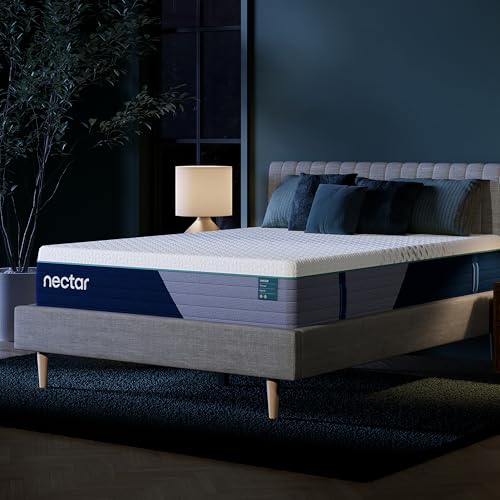
- Best overall: Nectar Premier Hybrid 13 Inch Mattress, Queen — Check on Amazon
- DreamCloud Premier Hybrid 13 Inch Mattress, Queen — Check on Amazon
- Purple Mattress, Queen — Check on Amazon
- Nectar Premier 13 Inch Memory Foam Mattress, Queen — Check on Amazon
See 2 more Amazon options
- Casper Original Hybrid Mattress, Queen — Check on Amazon
- Tuft & Needle Original Hybrid Mattress, Queen — Check on Amazon
Read the full guide ↓
Disclosure: As an Amazon Associate, topratedkitchenware.com earns from qualifying purchases. Links to Amazon on this page are affiliate links; they cost you nothing extra. Listing details such as price and availability change often, so check the current Amazon listing before you buy.
The best mattresses for a small bedroom under $1,500 start with an admission most guides never have to make: at this money, the mattress is not furniture in the room — it is most of the room. A queen takes about 33 square feet of floor before a frame, a rug or a single step around it. The good news is the tier itself: the under-$1,500 budget buys the Premier rung of the famous-name ladder — the Nectar Premier Hybrid, the DreamCloud Premier Hybrid and the Purple Mattress, the step-up models the under-$1,000 guide had to leave above its line. The honest limit is the rung above: every Luxe model stays out of reach at this budget.
The top of this guide’s own list is just as honest about its edges. Two picks live close to the budget line — one near the top of the tier, one that moves around the line itself — and both carry that position openly in their reviews. And one number should be said before any product name: the difference between the queen every pick here shares and the full size below it is about five square feet of floor and three inches of width per sleeper — in a small room, that can be the whole decision, which is why this guide argues the queen-versus-full question at full strength, in both directions, before it asks you to admire any particular bed.
In this guide
Quick Picks
Short on time? Each row below names a small-room situation and the mattress that suits it, with a link to the listing. Every pick is the queen size, and every queen below is the same 60 by 80 inches on the floor. Check price on Amazon for each pick — this guide does not print prices.
| Buyer type | Pick | Why it stands out | Link |
|---|---|---|---|
| Best overall, if the room passes the tape test | Nectar Premier Hybrid 13 Inch Mattress, Queen | The step-up hybrid of this tier, with coil edge support for a bed you also sit on, and the 365-night trial in the listing — check price on Amazon | Check on Amazon |
| Best firm surface for a bed that works days | DreamCloud Premier Hybrid 13 Inch Mattress, Queen | Testers measure 7.5–8/10 against a 6.5 label — a firmer surface for sitting and working; title states fiberglass free — check price on Amazon | Check on Amazon |
| Best low profile | Purple Mattress, Queen | At 9.25 inches it is the thinnest pick here by nearly four inches — the lowest silhouette — check price on Amazon | Check on Amazon |
| Best value — same footprint, money back for the room | Nectar Premier 13 Inch Memory Foam Mattress, Queen | The same footprint, depth and printed 365-night trial as the hero, sold by Amazon.com — the saving is storage money — check price on Amazon | Check on Amazon |
| Best zoned support, for patient buyers | Casper Original Hybrid Mattress, Queen | Zoned coils and a 100-night trial in the title — check the current price on Amazon; buy when it sits comfortably inside the budget | Check on Amazon |
| Best calm surface, for patient buyers | Tuft & Needle Original Hybrid Mattress, Queen | A calmer, less enveloping hybrid surface — buy only when the listing shows it inside the under-$1,500 budget; check price on Amazon | Check on Amazon |
How These Picks Were Chosen
The first filter was the budget, applied to the queen size and applied to Amazon itself — not to a brand’s own store. Every mattress below is a real Amazon listing whose queen we verified against independent records and published coverage, and each review describes where the pick sits within this tier instead of printing prices. The DreamCloud Luxe Hybrid’s reported queen prices conflict from outlet to outlet, so it is named and not linked. The Helix Midnight — the standard, non-Luxe model — is the opposite case: it sits within this tier’s range in the records we checked, but we could not verify the queen listing’s ASIN from any reliable source, and a link we cannot verify is a link we do not print. It is named below as this guide’s first swap-in.
The second filter was the featured-offer rule this site applies at every tier: a pick needs a live Amazon listing we could verify. Two picks sit close enough to the budget line that the rule needs stating in the open. The Casper Original Hybrid sits near the top of this tier — in budget, but at its upper edge — which is why its review tells you to check the current price on Amazon and judge its value against where the listing sits on the day you buy. The Tuft & Needle Original Hybrid moves around the line itself: it belongs in this guide only on days its live listing shows it inside the under-$1,500 budget, and it is included under that printed rule.
The third filter is this variant’s own, and it is a tape measure. Every pick was re-judged against three small-room tests. Footprint: the mattress’s claim on the floor, argued from the standard dimensions only — a queen is 60 by 80 inches, about 33 square feet; a full is 54 by 75, about 28; a twin is 39 by 75, about 20 — and since all six picks are queens, the footprint test is really whether your room should be buying a queen at all. The way in: every pick arrives compressed in a box — but a boxed queen still has to turn the corners your hallway has. Second jobs: the bed is also the sofa and the dressing bench, so each pick is judged on edge support, surface firmness, and profile height. Where a second job would need a twin — a daybed, a trundle — no queen pick is presented as fitting one.
We did not sleep on these mattresses ourselves. We read the maker listings and specification pages, and compared construction, thickness and stated firmness against published test results. A mattress had to be CertiPUR-US certified (or carry an equivalent certification we could verify) to be linked. Firmness words are the makers’ own descriptions, reported as such, with tester disagreements flagged where they exist. One disclosure belongs here rather than in a footnote: Nectar and DreamCloud are sister brands under one parent company, Resident, so three of these six picks — both Premier Hybrids and the foam Premier — share a corporate owner. Two checks matter more at this price than at any other. The first is the trial: the Nectar and DreamCloud listings print their 365-night trial in their titles, and the Casper title prints its 100-night trial — but a printed trial is still a claim to verify on the live listing before you order. The second is the fire barrier: some mattresses use a fiberglass sock under the cover, and we report each pick’s fiberglass position exactly as its listing states it — and where the listing does not state one, we say that too.
The 6 Best Mattresses for Small Bedrooms Under $1,500
Nectar Premier Hybrid 13 Inch Mattress, Queen
Who it suits: Small-room shoppers whose room passes the tape test — a queen fits — and who want the step-up hybrid the under-$1,000 guide kept pointing at.
Named, unlinked, in the under-$1,000 guide, this mattress is simply the hero at the under-$1,500 budget, positioned in the Premier rung — check price on Amazon. It is a 13-inch hybrid: the Premier foam stack — a thicker memory foam comfort layer than the Classic carries, over transition foam — on individually wrapped coils instead of a foam core, with a cooling-touch cover and CertiPUR-US certified foams. For a small room, two properties matter most: the coil unit’s edge support — an edge that holds a seated adult is a daily-use feature the all-foam sibling below verifiably gives up — and the trial. Returning a queen is a logistics event, so the 365-night trial printed in this listing matters most here: a full year to discover whether 33 square feet of queen was the right call. What the step up does not buy is a smaller bed, and its cooling cover is a first-contact effect, not active cooling.
- Positioned in the Premier rung of this tier — check price on Amazon.
- 13 inches, CertiPUR-US certified, with coil edge support for a bed that doubles as the room’s seat.
- The 365-night trial and Forever Warranty are printed in the Amazon listing.
Honest limitation: It is a deeper Classic, not a new class — the Luxe Hybrid sits a rung above it — it takes the full queen footprint, and its fiberglass position is not stated in the listing records we checked, so it is silence to verify.
Choose it if your room fits a queen with room to walk, you sit on the bed’s edge daily, and you want the most mattress Amazon verifiably sells at this tier. Skip it if the tape test fails — no feel justifies a queen the room cannot hold — or you do not need coils: its own foam sibling is the same ladder and the same footprint, positioned lower in the tier.
DreamCloud Premier Hybrid 13 Inch Mattress, Queen
Who it suits: Back and combination sleepers in small rooms whose bed works a day shift and who want the Premier rung measurably firmer than its label, plus the one listing in this guide whose title answers the fiberglass question outright.
The Premier Hybrid is DreamCloud’s step up from the Classic Hybrid that headlined the under-$700 guide: a 13-inch quilted hybrid with a Euro-style top, memory foam over individually wrapped coils, and — alone among the six picks here — a title that states “fiberglass free”, alongside the brand’s 365-night trial and Forever Warranty. It sits alongside its Nectar sibling in the Premier rung — check price on Amazon. Where its sibling spends the step-up money on depth, this one spends it on surface and support: the quilted top sleeps less like a foam bed and more like a traditional mattress. DreamCloud labels it medium-firm, around 6.5 out of 10; independent testers land at 7.5 to 8 — a genuinely firm-leaning bed wearing a medium-firm label. Warning for light side sleepers: a surface this firm can leave a strict side sleeper’s shoulders perched rather than cradled; the Nectar above is the safer sibling for them. But a small room’s bed is rarely only slept on — it is sat on to dress and used as the room’s second chair — and a firmer, quilted surface is better furniture for that than a soft foam hug. The standing rule, printed in the fiberglass section below, applies here as everywhere: never unzip any cover in this guide.
- Positioned in the Premier rung of this tier, alongside the hero — check price on Amazon.
- The only pick whose Amazon listing title states fiberglass free outright, with the 365-night trial and Forever Warranty.
- Testers measure 7.5–8/10 firmness against the brand’s 6.5 label — a firmer surface that works better as daytime furniture.
Honest limitation: The label understates the firmness by a full point or more on tester instruments, so light, strict side sleepers — the ones its marketing courts — are the sleepers it suits least; and it takes the full queen footprint, 13 inches tall.
Choose it if you are a back or combination sleeper whose bed doubles as the room’s seat and workspace, and you want the fiberglass question answered in the title. Skip it if you are a light side sleeper — take the Nectar above — or your room’s problem is height and airiness: the next pick’s low profile is the answer.
Purple Mattress, Queen
Who it suits: Small-room sleepers who have tried foam and coils and want neither — and who understand that in a small room, a mattress’s height is part of its footprint: this is the one genuinely different sleeping surface in the guide, and by nearly four inches the lowest.
The Purple Mattress is the odd one out in every guide in this series, and at this budget it is finally a pick instead of a named absence. Its comfort layer is not foam at all but the GelFlex Grid — a hyper-elastic polymer lattice that buckles under concentrated pressure and stays supportive elsewhere — over foam support layers, in a 9.25-inch profile. It sits in the upper part of this tier, sold by Purple Innovation — check price on Amazon. The feel is the argument: the grid gives a floating, responsive surface with open airflow through the lattice — passive airflow, since the grid moves air but does not refrigerate. Profile is the one spatial variable a buyer at this tier actually controls: the floor footprint is identical to every other pick — 60 by 80, about 33 square feet — but a bed that stands 9.25 inches tall instead of 13 leaves more visible wall above the bed and a room that reads larger because its biggest object sits lower. The caveats are structural: at 9.25 inches this is also the thinnest pick here, and heavier sleepers who bottom out thinner beds should weigh that; the surface feels strange for the first nights, and a meaningful minority of buyers never acclimate — so confirm the trial wording on the live Amazon listing before you rely on it, because the brand’s direct-store terms are a different contract, and this listing has gone without a buyable offer before. Its fiberglass position, like the hero’s, is not stated in the listing records we checked — silence to verify, not a claim.
- Positioned in the upper part of this tier, sold by Purple Innovation — check price on Amazon.
- 9.25-inch profile: the lowest silhouette in this guide — the same floor footprint as every pick, with visibly more room above it.
- GelFlex Grid comfort layer: the only non-foam, non-coil surface in this guide, with open airflow through the lattice.
Honest limitation: The thinnest pick here — and its Amazon listing has gone unbuyable before, so if it shows no featured offer when you check, it is a named mattress, not a pick, until it returns.
Choose it if your room needs its biggest object to sit low, foam’s sink and warmth are what you are escaping, and you want a different technology. Skip it if you are a heavier sleeper who needs profile depth, or you dislike an unfamiliar surface feel.
Nectar Premier 13 Inch Memory Foam Mattress, Queen
Who it suits: Small-room foam-bed shoppers who want this tier’s depth and terms without paying this tier’s top prices — because in a small room, what it hands back from the budget is the storage furniture the room is missing.
The Premier foam is a 13-inch, five-layer all-foam mattress — an inch taller than the Classic, with an extra inch of memory foam, a phase-change cooling cover and CertiPUR-US certified foams — rated 6.5 out of 10 by Nectar. Our checks found the queen sold and shipped by Amazon.com, with the 365-night trial and Forever Warranty in the listing itself. It is positioned at the value end of this guide — check price on Amazon.
For a small room the comparison against its hybrid sibling is exact. The footprint is identical: 60 by 80 inches, about 33 square feet. The depth is identical: 13 inches. The printed trial is identical: 365 nights, with the same Forever Warranty and the same parent company. What stepping up to the hybrid buys is coils — airflow, bounce, and above all edge support. In a small room that competes with a rival claim on the same budget: the room itself. What the foam pick leaves in the budget can become a wardrobe rail or under-bed drawers — money that changes your floor plan, against coils that change only the bed. The counterweight is honest: a daily edge-sitter in a chairless room may need the hybrid’s edge more than the drawers. Stated plainly, though: at equal footprint, equal depth and equal printed trial, the foam Premier is the default small-room buy, and the hybrid is the upgrade you choose for a named reason. Its caveats: the cooling cover is a phase-change first-contact effect, the all-foam build sleeps warmer than either hybrid above it, and the listing records checked carry no fiberglass-free statement — verify with the brand.
- Sold and shipped by Amazon.com, with the 365-night trial and Forever Warranty in the listing.
- Positioned at the value end of this guide — check price on Amazon.
- Identical footprint, depth and printed trial to the hero — what it leaves in the budget is the room’s storage budget.
Honest limitation: The step up from here is coils or a different technology, its all-foam edge is the weakest seat in this guide, and it sleeps warmer than either hybrid above it.
Choose it if your honest small-room budget was never really $1,500, or the room needs storage more than the bed needs coils. Skip it if you sit on the edge to dress daily, sleep hot, or share the bed with a restless partner — the hybrids above answer all three.
Casper Original Hybrid Mattress, Queen
Who it suits: Small-room shoppers who want zoned coil support from the other famous name of the original bed-in-a-box era — in a room this size, a buying mistake is the room.
The position first: the Casper Original Hybrid sits near the top of this tier, at the upper edge of the under-$1,500 budget — check the current price on Amazon, and judge its value against that position, not the guide’s headline. The mattress itself is the previous-generation Original line’s hybrid: 11 inches — a mid-height profile between the Purple’s low silhouette and the 13-inch Resident picks — zoned support coils under foam, sold and shipped by Amazon.com, with a 100-night trial and CertiPUR-US certification printed in the listing title and a 10-year limited warranty in the listing.
The generation point matters as much as the position. This is not Casper’s current line: the brand’s present entry model, The One, is not sold on Amazon at all, so Amazon’s Casper shelf is the older Original family. Its zoned build — firmer under the hips, softer at the shoulders — is a real design difference from the uniform Premier Hybrids above it. In a small room its top-of-tier position cuts both ways: when its listing sits comfortably inside the budget, this is arguably the value case of the entire guide — a zoned, mid-profile hybrid that leaves more of the budget for the room. At the very top edge, it is a previous-generation bed filling a third of your floor — and its printed trial, 100 nights, is the shortest here, which matters more where a return means manoeuvring a queen back down the stair it came up. Buy it when its position inside the budget is comfortable.
- Positioned near the top of this tier — check price on Amazon and buy when it sits comfortably inside the budget.
- 11-inch zoned hybrid, sold and shipped by Amazon.com, with the 100-night trial and CertiPUR-US printed in the title.
- The listing publishes no coil count and no firmness number; we print neither.
Honest limitation: A previous-generation model positioned at the top edge of this tier, and its 100-night in-listing trial is the shortest printed term here, in the room where a return is the biggest event.
Choose it if you want zoned support from a non-Resident brand, your room suits an 11-inch profile, and you are willing to wait until its listing sits comfortably inside the budget. Skip it if you need a mattress now, at the top edge of the tier — the Premier Hybrids above give you more mattress and a longer printed trial, positioned lower in the tier.
Tuft & Needle Original Hybrid Mattress, Queen
Who it suits: Small-room shoppers who want coil support under a calmer, less enveloping foam surface — and who will obey the rule printed in this review.
The rule first, at full strength: this mattress is positioned around the top edge of this tier, and its listing moves around the budget line. It belongs in this guide under one condition: buy it only when the live listing shows it inside the under-$1,500 budget — check price on Amazon; on any day it sits above the budget, it is not a pick in this guide, whatever this page’s headline says. The mattress under the argument is Tuft & Needle’s hybrid — the only Tuft & Needle left on Amazon, its all-foam sibling having left the platform entirely during 2026 — pairing the brand’s Adaptive Foam comfort layer — responsive, medium-feel, with less sink and heat retention than memory foam — over pocketed coils. It is the pick for sleepers who find the Nectar and DreamCloud contour clingy: the surface here is calmer, the response quicker, the hug shallower — and it behaves a little better as daytime furniture.
Two verification gaps are printed rather than papered over, and both bite harder in a small room. First, the trial: Tuft & Needle’s own store advertises a 100-night trial for its direct buyers, but no trial could be verified printed on this Amazon listing — so judge this purchase inside Amazon’s own return window, and do not let the brand’s website make a promise Amazon has not repeated. Second, fiberglass: the brand states at brand level that it uses no fiberglass, but that statement does not appear on the Amazon listing records we checked, so it is reported here as a brand claim. Neither gap is a reason to cross the mattress off; both are reasons it sits sixth rather than higher.
- Positioned around the top edge of this tier — check price on Amazon and buy only when the listing sits inside the under-$1,500 budget.
- Adaptive Foam over pocketed coils: the least enveloping surface among this guide’s hybrids, from a non-Resident brand.
- The only Tuft & Needle still sold on Amazon — the all-foam Original left the platform in 2026.
Honest limitation: No trial could be verified on its Amazon listing — the weakest exit terms here, in the room where an exit is hardest — and its no-fiberglass position is a brand statement the listing does not repeat.
Choose it if you want a calmer hybrid surface, you are buying on a day the listing shows it inside the under-$1,500 budget, and you are comfortable resting the return decision on Amazon’s window. Skip it if the listing shows it above the budget when you check — that day, it belongs to the under-$2,000 guide, not this one — or if a printed in-listing trial matters to you.
Comparison Table
| Product | Type | Small-room read | Link |
|---|---|---|---|
| Nectar Premier Hybrid, Queen | Memory foam hybrid, 13 in | The step-up rung, verified; coil edge for a bed you sit on — check price on Amazon | Check on Amazon |
| DreamCloud Premier Hybrid, Queen | Quilted hybrid, 13 in | Firmer than labeled — the best day-shift surface; fiberglass free in title — check price on Amazon | Check on Amazon |
| Purple Mattress, Queen | GelFlex Grid over foam, 9.25 in | The low profile — same floor, more room above it — check price on Amazon | Check on Amazon |
| Nectar Premier, Queen | Memory foam, 13 in | Same footprint and depth as the hero — the difference is the room’s storage budget — check price on Amazon | Check on Amazon |
| Casper Original Hybrid, Queen | Zoned hybrid, 11 in | Mid-height profile, near the top of this tier — buy when it sits comfortably inside the budget; check price on Amazon | Check on Amazon |
| Tuft & Needle Original Hybrid, Queen | Adaptive foam hybrid | Calm surface — buy only inside the under-$1,500 budget; note the unverified in-listing trial; check price on Amazon | Check on Amazon |
How to Choose a Mattress for a Small Bedroom Under $1,500
Measure the room before you shop the mattress. The tape test comes first, because it decides the size, and the size decides more than the model does. A queen needs its 60 by 80 inches plus a walkable margin — enough to get around at least two sides. If the tape says the queen leaves you sidling, the honest buy is a full. The footprint section below does the maths in full.
Fix the size before the brand. Mattress pricing is quoted per size and the headline number in an advertisement is routinely the twin. A headline deal that turns out to be a twin is not a deal; it is a different product. Before comparing listings, confirm both are the queen of the exact model named, and check the current price on Amazon for that size.
Remember that price never changes the footprint. The best-value pick and the top-of-tier pick here are the same 33 square feet on your floor. Premium money buys what is inside the footprint — construction, feel, terms — and nothing outside it. If your problem is space, spend on the size decision, not on a dearer queen.
Judge a pick by its position in the tier, not a printed number. Prices in this category move constantly, which is why this guide describes where each pick sits — value end, Premier rung, top edge — and sends you to the live listing for the number.
Treat the cap as a trigger, not a description. Two of this guide’s six picks live close to the line. The working rule: a mattress earns a place in an “under $1,500” decision only on days its queen actually shows inside the $1,500 budget. Above it, it has moved to the under-$2,000 guide’s territory, and your shortlist is the other five.
Read the trial where you will use it. The trial that governs an Amazon order is the one printed on the Amazon listing, not the one on the brand’s website. The Resident picks and the Casper print theirs in the listing (365 nights for the Resident hybrids and the foam Premier; 100 nights for the Casper). For the Purple and the Tuft & Needle, no in-listing trial could be verified, so confirm on the live listing and otherwise plan around Amazon’s return window.
Plan the way in before you order. Every pick arrives compressed in a box — but measure the route anyway: door widths, the stairwell’s turn, the corner where the hallway bends.
Never unzip the cover. Some mattresses use a fiberglass sock as their flame barrier; if it escapes an opened cover it is a serious contamination problem — and in a small room, everything you own is within a few feet of the bed. Never remove or unzip a cover that is not explicitly sold as removable and washable. The fiberglass section below has the full position.
Match the surface to the sleeper, not the label. Firmness labels at this tier are marketing addresses, not measurements — this guide contains a bed labeled 6.5 that testers measure at 7.5 to 8. Side sleepers generally need contour they can sink shoulders into; back and stomach sleepers need a surface that holds the hips up. When label and measurements disagree, believe the measurements.
Budget the base — and the room — honestly. A 13-inch hybrid on a weak or widely spaced slat frame will feel worse than a thinner mattress on a sound one. In a small room: if choosing the value-end pick funds the frame and storage the room lacks, that is not settling — that is the better room.
Queen or Full? The Footprint Maths
Start with the only numbers in this guide that never change. A queen is 60 by 80 inches: 4,800 square inches, about 33 square feet of floor. A full is 54 by 75: about 28 square feet. A twin is 39 by 75: about 20. The queen’s premium over the full is therefore about five square feet and six inches of width, which for two sleepers is three inches each: about 30 inches of bed per person in a queen, about 27 in a full. Set against rooms: in a 100-square-foot bedroom the queen alone takes about a third of the floor and the full a little over a quarter; in a 90-square-foot room, about 37 percent against about 31; in an 80-square-foot room, about 42 percent against about 35. The walking maths is the same subtraction done along one wall: against a ten-foot wall, a queen’s width leaves 60 inches of that wall beyond the bed, a full leaves 66, a twin 81 — and at the foot, a queen’s 80-inch length leaves 40 inches of a ten-foot wall, a full’s 75 leaves 45.
So when does the room argue for the full? When the tape test fails: when a queen leaves no side you can walk without turning sideways, when the door or the wardrobe cannot open against it, when the room must also hold a desk or a second job that five square feet genuinely decides. In that room, drop a size and spend the same money one size down — the Premier-class argument transfers. When does the room argue for the queen at full strength? When two adults sleep in it nightly and the tape test passes: three inches per sleeper is a real and compounding comfort difference. And when the room cannot walk around even a full, the twin at about 20 square feet is the honest answer for a solo sleeper. The verdict this variant will not soften: choose the size by the tape, then choose the mattress by the guide — never the other way round.
What the Premier Premium Buys a Small Room — and What It Does Not
What it buys is real, and it is all inside the footprint. It buys depth and pressure relief: the Premier Hybrids’ thicker comfort stack over coils, which side sleepers and lighter bodies feel most. It buys terms: 365-night trials printed in the listings of three picks, which matter more when the mattress is the largest object you own and returning it is an expedition. And it buys the end of the rationing the lower tiers imposed: at $1,500 the famous-name shelf sells its genuine second rung, verified. If your room fits a queen and your body wants this class of bed, the premium is honestly spent.
What it does not buy deserves equal plainness. It does not buy space: the Premier Hybrid and the foam Premier are the same 60 by 80 inches, the same 13 inches tall, from the same parent, with the same printed trial — the entire difference between them is feel, and feel is invisible on a floor plan. It does not buy the Luxe rung: Helix’s Midnight Luxe, Nectar’s Luxe Hybrid and the DreamCloud Luxe Hybrid all sit in the tier above this budget — none verifiable as an in-budget Amazon buy. It does not buy the traditional luxury channel: Saatva sells direct only, above this tier; Beautyrest Black sits in that same luxury channel; and Purple’s own step-ups, the Restore and PurplePlus lines, start above this line as well. The premium buys a better bed for the same floor — so the floor decision has to be right first.
The Way In: Stairs, Boxes and the Second-Bed Question
Every pick in this guide arrives compressed and boxed — the small room’s one structural advantage: no pick has to be manoeuvred through a doorway at full size. But a boxed queen is still a queen-sized object on a stair. Before ordering, walk the route with a tape: the door widths, the stairwell’s width at its narrowest, and above all the turn where a long box has to pivot. If the route fails for a queen box, it fails for every pick in this guide equally. Two people should plan to carry whichever pick you choose, and remember that the route runs both ways — the trial periods in this guide are only real options if the bed can physically leave.
The second-bed question needs the same discipline, because small rooms ask their beds to double up. As seating and daytime surface, the picks rank by their verified constructions: the DreamCloud’s firmer measured surface and quilted top behave most like furniture; the hero’s coil edge holds a seated adult best; the foam Premier’s all-foam edge is the weakest seat here. As an actual second bed, the answer is size discipline: daybeds and trundles are twin-sized — 39 by 75 inches — and no queen pick in this guide fits one, at any thickness. What thickness decides is the frame question: four of the six picks stand 11 to 13 inches tall and the Purple stands 9.25 — the sixth pick’s profile is not a figure this guide prints — and a tall mattress on a tall frame spends vertical space fast. Under-bed storage clearance, headboard height, and the frame maker’s stated maximum thickness all have to be checked against the pick’s verified profile, with the frame maker’s figure governing.
Fiberglass in a Small Room: One Title States It, Five Do Not
The fiberglass position of this guide can be stated in one sentence: of the six picks, exactly one listing — the DreamCloud Premier Hybrid’s — states “fiberglass free” in its title; the other five listings, in the records we checked, carry no fiberglass-free statement, and that silence is reported here as silence, never as an assertion that any of them contains fiberglass. One pick needs a finer distinction: Tuft & Needle states at brand level that it uses no fiberglass in any component, but that statement does not appear on the Amazon listing records we checked, so in this guide it is a brand claim, attributed to the brand.
The small room raises the stakes of the handling rule, and the rule itself does not change. In a small room, the bed shares its air with the desk, the wardrobe and everything you own, within a few feet. That is reason enough to treat the standing rule of this series as absolute here: never unzip or remove a mattress cover that is not explicitly sold as removable, treat a torn cover as a warranty conversation rather than a repair project, and if a fiberglass-free barrier is a hard requirement for your household, take the pick whose listing makes the claim in writing — or ask the brand directly about any other pick.
Common Buying Mistakes
Choosing the model before measuring the room. The defining small-room mistake. The size decision — queen, full or twin — is worth more than any model decision in this guide, and it is made with a tape measure, not a review.
Assuming $1,500 buys the Luxe rung. It buys the Premier rung, verified and complete. Every Luxe model here sits in the tier above this budget or is unverifiable as an in-budget Amazon buy.
Buying a top-edge pick at the top of its movement. Two picks in this guide live close to the budget line, and their listings move. Buying either while it sits at the very top of the tier — or, for the Tuft & Needle, above the budget altogether — because a guide listed it “under $1,500” converts a good mattress into a bad purchase. Check the current price on Amazon and be willing to wait or to refuse.
Reading a twin price as a queen price. The oldest trap in this category: headline prices attach to the smallest size. Confirm 60 by 80 inches and the queen variant selected before any advertised number means anything.
Confusing the two Premiers. Nectar sells a Premier foam mattress and a Premier Hybrid that differ in price and an entire support system. Check that the listing you order is the construction you chose.
Importing the brand store’s trial into an Amazon order. The 365 nights on a brand’s homepage, the free bedding bundle, the white-glove return — those are direct-channel terms. Your contract is the listing’s text and Amazon’s window. Screenshot them at purchase.
Counting brands instead of owners. Three of these six picks share one parent company. That is not a scandal — but a shopper who believes they have comparison-shopped six independent makers has shopped three.
Unzipping the cover to check. Curiosity about the flame barrier is how the flame barrier becomes a problem. If you need to know what is inside, ask the brand; if the cover tears, call the warranty line. Do not open it.
Ordering before measuring the route. A boxed queen still has to turn your stairwell’s corner. Buyers in small homes discover this on delivery day; the tape measure takes five minutes a week earlier.
Expecting a mattress to treat pain. No mattress in this guide treats back pain or any other condition, whatever a listing’s marketing implies. These are comfort purchases. Pain that persists, radiates into a limb, or arrives with numbness or weakness is a clinician’s question, not a shopping criterion.
Final Recommendation
First, the tape: if your room does not fit a queen with walking room to spare, stop here and buy the best full your budget reaches. If the room passes, then for most small-room shoppers, buy the Nectar Premier Hybrid: it is the mattress this budget exists for — the step up that the tier below could name but not link — with coil edge support for the bed you also sit on and a year-long trial printed in its listing; check price on Amazon. If your bed works a day shift, buy its sibling, the DreamCloud Premier Hybrid, for that same rung firmer, with the fiberglass question answered in the title. If the room’s problem is height and air rather than floor, the Purple’s 9.25-inch profile is the one spatial answer in this guide. The Casper and the Tuft & Needle are buys for the patient: both reward waiting until their listings sit comfortably inside the budget, and the Tuft & Needle is a pick only on days its listing shows it inside the under-$1,500 budget at all. And if the room is asking for storage louder than the bed is asking for coils, the foam Nectar Premier remains the same footprint, the same depth and the same printed trial at the value end of this tier — the correct answer for anyone whose honest budget was never really $1,500 at all.
Frequently Asked Questions
Does a queen mattress fit a small bedroom?
Sometimes — and the tape decides, not the guide. A queen is 60 by 80 inches, about 33 square feet: roughly a third of a 100-square-foot room and about 42 percent of an 80-square-foot one. If you can walk around at least two sides and open the room’s doors and drawers, the queen fits. If you are turning sideways to pass the foot of the bed, it does not.
Is a full the smarter buy than a queen at this money?
When the room argues for it, yes — and the room’s argument is arithmetic, not taste. A full is 54 by 75 inches, about 28 square feet, returning roughly five square feet and costing each of two sleepers about three inches of width (about 27 inches each, against about 30 in a queen).
What does the extra money actually buy in a small room?
Everything except space. The step from the foam Premier at the value end of this tier to the Premier Hybrids buys coils — edge support, airflow, bounce — and the step to the Purple buys a different surface and the lowest profile here. It does not buy a smaller bed or the Luxe rung: every pick here is the same 60 by 80 inches on the floor.
Will a boxed queen get up my stairs?
Every pick here arrives compressed in a box — but “boxed” is not “small,” and the turn on the landing is where queen deliveries fail. Measure the route before you order: door widths, the stair’s narrowest point, and the corner the box has to pivot around. Plan on two people for the carry.
Can any of these mattresses go on a daybed or a trundle?
No. Daybeds and trundles are twin-sized — 39 by 75 inches — and every pick in this guide is a queen, 60 by 80. No thickness argument changes a size mismatch. Thickness decides the frame: the verified profiles among the picks run 9.25 to 13 inches, and the frame maker’s stated maximum thickness governs the fit — check it before ordering.
Why is the Helix Midnight named but not linked?
In the records we checked it sits within this tier’s range, but its queen listing’s ASIN could not be verified from any reliable source, and this guide does not print links it cannot verify. It is the documented first swap-in: the day its ASIN verifies with a live in-budget offer, it belongs in this list.
Is the Tuft & Needle over budget?
Sometimes — its listing is positioned around the top edge of this tier and moves around the budget line: buy it only when the listing shows it inside the under-$1,500 budget; check the current price on Amazon. On any day it sits above the budget, it is not a pick in this guide — and no trial could be verified on its Amazon listing, so the exit rests on Amazon’s return window.
Is the 365-night trial the same on Amazon as on the brand’s site?
The number is the same where the listing prints it — the Nectar and DreamCloud listings carry the 365-night trial in their titles — but the purchase is not identical: an Amazon order is governed by the listing’s text and Amazon’s processes. Read the spec table as well as the bullets: a famous listing at this tier (the Helix Midnight Luxe’s) promises 365 nights in one and 120 in the other.
Do these mattresses contain fiberglass?
One pick’s listing answers in writing: the DreamCloud Premier Hybrid’s title states fiberglass free. The other five listings, in the records we checked, make no fiberglass-free statement; Tuft & Needle’s no-fiberglass position is a brand-level statement its Amazon listing does not repeat. Whatever you buy, never unzip a cover that is not sold as removable.
Will a $1,500 mattress fix my back pain?
No mattress in this guide treats back pain or any other condition, and you should be skeptical of any listing at any price that promises otherwise. A mattress can be a comfort decision: supportive enough not to bottom out, comfortable enough to sleep through the night. Pain that persists, radiates, or comes with numbness or weakness belongs in a clinician’s office, not in a shopping cart.
What if the price has moved above $1,500 when I check?
Then that mattress has left this guide’s budget until it returns, and the right move is patience or the value pick, not a stretched budget: the foam Premier — same footprint, same depth, same printed trial — is the standing answer while you wait.
Still deciding? Compare this tier with the neighbouring budgets and constructions: