Disclosure: As an Amazon Associate, topratedkitchenware.com earns from qualifying purchases. Prices and availability change; check Amazon for the latest.
Where to buy
Check the latest price, availability and delivery on Amazon. Orders are placed on Amazon. We may earn a commission from qualifying purchases.
- Best overall for guest rooms: Nectar Premier Hybrid 13 Inch Mattress, Queen — Check on Amazon
- Helix Midnight Luxe Mattress, Queen — Check on Amazon
- Casper Original Hybrid Mattress, Queen — Check on Amazon
- Purple Mattress, Queen — Check on Amazon
See 2 more Amazon options
- DreamCloud Premier Hybrid 13 Inch Mattress, Queen — Check on Amazon
- Tuft & Needle Original Hybrid Mattress, Queen — Check on Amazon
Read the full guide ↓
Disclosure: As an Amazon Associate, topratedkitchenware.com earns from qualifying purchases. Links to Amazon on this page are affiliate links; they cost you nothing extra. Listing details such as price and availability change often, so check the current Amazon listing before you buy.
A guest room is the strangest place in the house to spend $2,000 on a mattress, because it is the room where the most expensive bed may be the least slept in. The tier itself is real: as our base guide to mattresses under $2,000 established, this is the first budget where the genuine premium class verifiably sells on Amazon — Helix’s Luxe line, Purple’s grid mattress, and the step-up Premier Hybrids from Nectar and DreamCloud, all in queen, all from listings we could verify. The shelf still has hard edges. The most expensive verifiable queen sits just under the budget ceiling. The traditional luxury brands still do not sell here — Beautyrest Black queens sit above this tier, Stearns & Foster sells through dealers, Saatva remains direct-only — and the flagship lines above these picks (Helix’s Elite, PurplePlus and the Purple Restore line) sit over the line.
What changes in a guest room is the judging. You cannot poll your guests about firmness before they arrive. The bed ages by the visit, not by the night — twenty guest-nights a year is a busy guest room — so a trial printed in calendar nights converts into a handful of actual sleeps, and durability outranks trial length. And the per-night arithmetic has to be faced, not waved away: in a room slept in only a few dozen nights a year, a mattress priced at the top of this budget costs far more per actual sleep in its first year than the same bed would in a primary bedroom. This guide argues that maths both ways, re-ranks the six verified premium queens for unknown sleepers rather than known ones, and is honest about the other side too — a premium guest bed is also the host’s overflow bed, the sick-day bed, the bed that rotates into a primary room later. Every pick below is a queen; prices at this tier move often, so check the live price on Amazon before you buy.
In this guide
Quick Picks
Short on time, or comparing several options at once? Each row below names a hosting situation and the product that suits it, with a link to the listing.
| Hosting situation | Pick | Why it stands out | Link |
|---|---|---|---|
| Best overall for guest rooms | Nectar Premier Hybrid 13 Inch Mattress, Queen | Tester-agreed middle feel, 365-night trial printed in the title — check price on Amazon | Check on Amazon |
| Best when the guest room doubles as your own overflow | Helix Midnight Luxe Mattress, Queen | The most considered build here; priced at the top of the tier, trial wording contradicted on its own listing | Check on Amazon |
| Best value at its recurring dip | Casper Original Hybrid Mattress, Queen | Recurring price dips reward patient buyers; trial printed in the title — check price on Amazon | Check on Amazon |
| Best for warm rooms and known grid fans | Purple Mattress, Queen | The GelFlex Grid sleeps unlike any foam; premium tier — and divides guests sharply | Check on Amazon |
| Best hotel look for firmer-preference guests | DreamCloud Premier Hybrid 13 Inch Mattress, Queen | Lower-priced for this tier and the only fiberglass-free title — but testers measure it a full step firmer than its label | Check on Amazon |
| Calmest surface, weakest paperwork | Tuft & Needle Original Hybrid Mattress, Queen | Adaptive foam over coils; pricing that swings widely, and no in-listing trial could be verified | Check on Amazon |
How These Picks Were Chosen
The verification bar is the one from our base under-$2,000 guide, applied unchanged. Every pick is a queen mattress with an Amazon listing whose ASIN we could confirm from a listing crawl, a price-tracker record or a dated review’s specification table, and a queen listing priced at or under the $2,000 ceiling in the dated Amazon records from 2026 we checked. Prices at this tier move too much to print as fixed figures — the same queen can sit far apart within a single season — so check the live price on Amazon for any pick before you buy. Trials are never blended: a trial printed in the Amazon listing’s own title or bullets is an in-listing term, a trial from the brand’s own store is a brand-direct term, and where a listing’s own words conflict — the Helix below states its trial two different ways — we print the conflict. Fiberglass is reported exactly as each listing states it: one pick’s title states “fiberglass free” outright; the other five listings, in the records we checked, do not carry a fiberglass-free statement, and that silence is printed as silence, never as a claim about what is inside the mattress.
On top of that bar, this variant applies a guest-room filter with four tests. First, firmness a stranger can sleep on: guests cannot be polled, so we weighted tester measurements over maker labels, and a label that testers contradict by a full step is charged at full strength. Second, the trial counted in guest-nights rather than calendar nights: at a busy hosting cadence of about twenty guest-nights a year, a 365-night trial contains roughly twenty actual sleeps and a 120-night trial fewer than seven — the same printed number is a different product in a guest room. Third, durability over trial length: a guest bed’s sleep-age after five years is about a hundred nights, barely broken in, while its calendar age is five full years of foam oxidation and warranty clock, so construction and warranty terms outrank a long trial. Fourth, the whole-bed test: guests judge pillows, sheets and the duvet as one experience with the mattress, so a pick that leaves budget for those layers earns credit.
The filter also kept some famous names unlinked, for the reasons documented in the base guide. Helix’s core Midnight queen is genuinely sold on Amazon, but its queen ASIN could not be verified to the standard the six picks meet, so it is named, not linked, and it is the first swap-in if that changes. Leesa’s Original is buyable on Amazon again through its parent company’s storefront, but its ASIN likewise could not be verified, and its Amazon return window has been read as 90 days against the brand’s much longer direct trial. Brooklyn Bedding’s Aurora Luxe could only be verified on Amazon in its RV short queen (60 by 74 inches — a different size from a standard 60 by 80 queen), and a wrong-size listing does not become a pick by being close. Bear’s Elite lines appear in Amazon product tables without a verifiable ASIN. We did not sleep on these mattresses; comfort claims only, throughout, and no mattress in this guide treats back pain or any other condition, whatever a listing title says.
The 6 Best Mattresses for Guest Rooms Under $2,000
Nectar Premier Hybrid 13 Inch Mattress, Queen
Who it suits: Hosts who want the feel most unknown guests describe as “just right,” plus a full year of hosting to decide whether the bed earns its place.
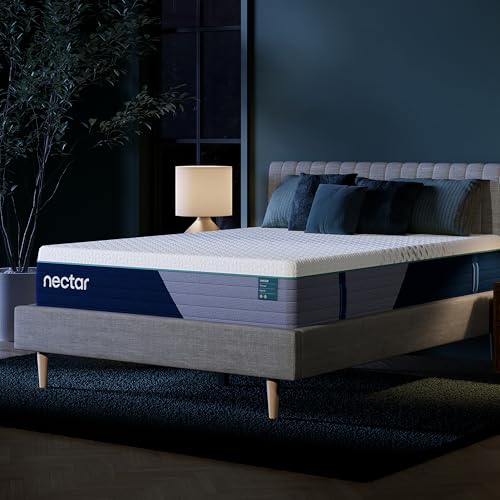
The Premier Hybrid puts Nectar’s 13-inch Premier memory-foam build on 792 pocketed coils in the queen, which buys back the three things all-foam beds give away: airflow, edge support and an easier surface to move on — all three of which matter more for guests, who sit on the edge to dress and sleep in an unfamiliar room. The listing calls the feel medium and testers land around 5 to 6 out of 10, the softest and most contouring read in this guide, and for once the label and the measurements agree. That agreement is exactly what a guest bed needs: the deep, even contour is the surface strangers most often call comfortable at breakfast, because it asks nothing of them. It is sold and shipped by Amazon.com, and its title carries the terms outright — 365-night trial and Forever Warranty. The queen sits in the middle of this tier’s pricing, in line with what Nectar’s own store charges — check price on Amazon.
The guest maths is the other half of its case. Priced in the middle of the tier rather than at its ceiling, its cost per guest-night in its first year at a busy twenty-night cadence works out far below the Helix’s figure, and it leaves a generous share of a $2,000 budget for the pillows, sheets and duvet your guests will actually judge. The 365 nights printed in its title convert to roughly twenty guest-nights of evidence across a full hosting year, each verdict arriving while the trial is still alive. The listing states an 800 lb limit, which covers two guests and the bed itself without arithmetic anxiety.
- Label and testers agree on a medium feel (5–6 of 10) — the safest unknown-body spec in this guide.
- 365-night trial and Forever Warranty printed in the listing title: a full year of hosting to judge by.
- Mid-tier pricing leaves a generous share of the budget for bedding and pillows — check price on Amazon.
Honest limitation: Memory foam is still memory foam: it will sleep warmer than the Helix or the Purple for a hot guest, the listing title’s “Back Pain Relief” language is marketing rather than a finding — this bed treats nothing — and the title carries no fiberglass-free statement, so that question has to be asked of the brand.
Choose it if your guests are a mixed, unpollable crowd and you want the trial to outlast a year of verdicts. Skip it if your regular guests run hot or prefer a firm, flat surface — the DreamCloud’s measured firmness, whatever its label says, is closer to their bed.
Helix Midnight Luxe Mattress, Queen
Who it suits: Hosts whose guest room quietly doubles as their own second bedroom — the overflow bed they sleep on themselves often enough that the build quality is for them, not just for visitors.
This is the premium version of Helix’s side-sleeper hybrid: 13.5 inches tall, pocketed coils zoned firmer under the lumbar region, three select foam layers above them, a quilted TENCEL Euro top, and four-sided edge reinforcement that a guest perched on the side of the bed will genuinely feel. Helix rates the feel 6 out of 10 and calls it medium; independent testers broadly agree, which makes it, on paper, the best unknown-body specification in this guide. On Amazon it is sold by 3Z Brands, the maker’s own storefront, and the queen sits at the very top of this tier, priced just under this guide’s ceiling in the reads we checked — check price on Amazon before you buy. A second version of the same queen with a GlacioTex cooling cover, under a separate listing, sits over budget: the variant trap to avoid at checkout.
Two guest-room charges have to be printed at full strength. The first is arithmetic: at the top of this budget and twenty guest-nights a year, the bed’s cost per guest-night in year one is steep, and a host who hosts six nights a year is paying hotel money per sleep for a bed in their own house. The second is paperwork. The listing’s bullet points promise a 365-night sleep trial; the specification table on the same page says 120 nights. In a primary bedroom that gap is an annoyance; in a guest room it is the difference between roughly twenty guest-nights of evidence and fewer than seven, and at a quiet hosting cadence the shorter figure is about two actual sleeps — effectively no trial at all. Helix’s own store advertises the longer trial for direct purchases, which describes the brand’s store, not necessarily your Amazon order. Plan around 120 until the seller confirms otherwise in writing.
- Zoned lumbar coils, a quilted Euro top and reinforced edges — the most considered build in this guide.
- Maker’s 6-of-10 medium is corroborated by testers: an honest middle for unknown sleepers.
- Sold on Amazon by the maker’s own storefront (3Z Brands), queen verified.
Honest limitation: The listing states its own trial two ways — 365 nights in the bullets, 120 in the spec table — which in a guest room can shrink the real trial to a handful of sleeps; and at the top of the tier it consumes nearly the entire budget, leaving little for the bedding guests judge alongside it.
Choose it if you will sleep on this bed yourself regularly, or your guest room hosts monthly and the per-night maths settles down. Skip it if the room hosts a few weekends a year — the Nectar above delivers the guest verdict at a much lower per-night cost.
Casper Original Hybrid Mattress, Queen
Who it suits: The patient host. Watched for its recurring dip, this is the rational premium guest purchase in the guide.
Casper’s current entry model, The One, is not sold on Amazon at all — but Amazon’s Casper shelf carries the previous generation’s Original line, and within it this 11-inch hybrid, which pairs Casper’s foam comfort layers with a zoned coil support core: firmer under the hips, softer at the shoulders, in the maker’s description. The listing is unusually plain about its paperwork — the title itself carries a 100-night trial and CertiPUR-US certification, the warranty is a 10-year limited one, and the bed is sold and shipped by Amazon.com, which simplifies any return a guest verdict triggers. Its pricing is the most cyclical in this guide: trackers following this exact listing show it swinging between a premium list level and recurring deep dips across the seasons. At those dips, the guest maths turns friendly — a zoned premium-name bed at a modest cost per guest-night in year one at a busy cadence. Check price on Amazon, and be patient if it is sitting at the top of its cycle.
The cautions are generational and documentary. This is a discontinued-generation product sold through Amazon while Casper’s own store sells its successor — not a defect, but the comparison that matters is against the other five beds here, not Casper’s current website. The listing publishes neither a coil count nor a firmness number — it says medium feel, and that is all you get — so the zoning story rests on the maker’s description rather than a specification sheet, and a host who wants a verified number should look at the Helix or the Nectar. And its 100-night in-listing trial, honest as it is, converts to only about five or six guest-nights at a busy hosting cadence: schedule the verdict visits early, because the calendar will not wait for your guests to form an opinion.
- A wide, well-documented price cycle — patience is rewarded at its recurring dips; check price on Amazon.
- 100-night trial printed in the listing title; sold and shipped by Amazon.com.
- Zoned support is the design idea Casper built its name on — a sensible shape for mixed guests.
Honest limitation: A previous-generation model whose listing publishes no coil count and no firmness figure to check the medium claim against, and whose 100-night trial is only a handful of guest-nights in practice.
Choose it if you can wait for one of its recurring dips and want premium zoning without premium arithmetic. Skip it if you need the trial to survive a full year of hosting — the two Resident picks below and above hold 365 nights in their titles.
Purple Mattress, Queen
Who it suits: Hosts whose regular guests are known quantities — the warm-sleeping parent, the friend who already loves the grid — rather than a rotation of strangers.
Purple’s mattress is the only pick built around something other than foam or springs: a 2-inch GelFlex Grid — a hyperelastic polymer lattice — over foam support layers, 9.25 inches in total. The grid flexes under shoulders and hips and stays firm where you are light, and its open lattice passes air in a way no foam slab can. Purple rates it 4 out of 5 on its own firmness scale, which reads as medium-firm; it is sold on Amazon by Purple Innovation, the maker itself, with the brand’s 100-night trial and 10-year warranty attached to the maker’s own listing. The queen sits in the premium half of this tier on Amazon, typically below the brand’s own list — check price on Amazon — leaving a useful share of a $2,000 budget unspent. The ladder above it is irrelevant to a guest room but worth stating: the PurplePlus and the Restore hybrids sit above this budget on every channel, so this is the whole of Purple that $2,000 buys.
The guest-room charge is adaptation. The grid feel is genuinely polarizing even with a full trial to adjust — many sleepers describe the best pressure relief they have found, and a minority simply cannot get used to the surface — and a guest does not get a trial. They get one or two nights, at whatever the grid gives them, and a guest who spends the visit adjusting to your mattress has not had the rest you bought it for. There is a second, quieter point: at 9.25 inches this is the thinnest pick here by several inches, and on a tall guest-room frame a thin mattress can read as skimpy before anyone lies down — first impressions are part of what a guest bed is for. Neither point applies to known grid fans, who will be delighted; both apply to the unpollable crowd.
- The GelFlex Grid is a genuinely different sleep surface, and its open lattice passes air like nothing else here.
- Sold by the maker (Purple Innovation) on Amazon; queen typically priced below the brand’s own list — check price on Amazon.
- Grid support does not rely on foam that softens with age — a calm long-term bet for a rarely used bed.
Honest limitation: The most polarizing feel in the guide, offered to the sleepers with the least time to adapt to it; at 9.25 inches it is also the thinnest pick, and its 100-night terms convert to only a few guest-nights like the Casper’s.
Choose it if your standing guests run warm or already know they like the grid. Skip it if your guest room hosts a changing cast — a surface some people never adjust to is the wrong gamble for one-night verdicts.
DreamCloud Premier Hybrid 13 Inch Mattress, Queen
Who it suits: Hosts furnishing the room to look like a boutique hotel, whose regular guests are known to prefer a firmer bed — parents who complain every mattress is too soft, heavier guests, committed back sleepers.
The Premier Hybrid stretches the Classic Hybrid formula to 13 inches and six layers: a quilted CloudQuilt Euro top with cooling fibers, 2 inches of pressure-relieving gel memory foam, adaptive transition foam and 792 individually wrapped coils in the queen — about 108 pounds of mattress, and a two-person job to get it into the room. The queen sits at the lower-priced end of this premium tier, sold by Amazon itself and in line with the brand store’s pricing for the model in the reads we checked — check price on Amazon. Its listing title is the most complete in this guide: 365-night trial, Forever Warranty, CertiPUR-US — and “Fiberglass Free,” the only explicit fiberglass statement among the six picks, which settles a question the other five leave to be asked. The 365 nights in the title convert to a full hosting year of guest-nights, like the Nectar’s.
The feel is where the honesty has to bite, and for guests it bites harder than in a primary bedroom. DreamCloud labels the Premier medium-firm, its own rating around 6.5 out of 10 — but testers who measured it put the experienced firmness at 7.5 to 8, a full step firmer. In your own bed you would learn that in a week and decide. A guest learns it in one night and says nothing: the classic outcome of a too-firm guest bed is not a complaint, it is a polite breakfast and a quiet decision to book a hotel next time. One channel difference also lands harder here than anywhere: DreamCloud’s own store has run promotions folding a free bedding bundle into the purchase, and the Amazon purchase does not include it — and a guest room, of all rooms, needs the bedding.
- Among the lower-priced picks in this premium tier — check price on Amazon — and sold by Amazon itself.
- The only pick whose title states “fiberglass free” outright, with the 365-night trial in the title too.
- 13 inches and a quilted Euro top: the hotel silhouette guests read as luxury on sight.
Honest limitation: Testers measure it a full step firmer than its medium-firm label — around 7.5–8 against a claim of about 6.5 — which is the wrong direction for lighter, unknown guests, and the brand store’s free bedding bundle does not come with the Amazon purchase.
Choose it if your regular guests are firmer-bed people and you want the question of fiberglass answered in the title. Skip it if your guests are a mixed, lighter crowd you cannot poll — the Nectar’s agreed medium is the safer welcome.
Tuft & Needle Original Hybrid Mattress, Queen
Who it suits: Hosts who dislike memory foam’s sink on principle and catch this bed at a low point in its price cycle — with eyes open about its paperwork, which is why it closes this list rather than leading it.
Tuft & Needle’s foam has always been its point of difference: a proprietary Adaptive Foam, a responsive polyfoam that cushions without the slow sink of memory foam, over a pocketed coil base in a listing that describes the feel simply as medium. As a guest surface that calm, non-enveloping feel is genuinely well judged — no guest has to learn to love or hate a hug that is not there. Its price is the most volatile in the guide, swinging widely between listing reads and tracker records across the year — check price on Amazon, and treat a high point in its cycle as a reason to wait rather than to pay.
The guest-room problem is the trial — or rather its absence from the record. Tuft & Needle’s own store sells its hybrid line far below these Amazon figures and advertises a 100-night direct trial, but that is a brand-store term: we could not verify an equivalent trial printed on the Amazon listing, so an Amazon purchase should be judged inside Amazon’s own return window. For a primary bed that window is a month of nightly evidence. For a guest bed it may contain no guests at all — if your first visitors arrive in month three, their verdict lands after every window has closed, and you own the bed whatever they thought of it. The brand states that its mattresses contain no fiberglass in any component; the Amazon listing records we checked did not carry that statement, so confirm it on the live listing if it decides your purchase. None of this makes the bed itself anything other than good — it makes the Amazon route to it the worst-documented purchase in this guide for a room that is judged a few nights a year.
- Responsive Adaptive Foam over coils — a calm surface no guest has to adapt to.
- Its wide price swings reward patient buyers who catch a low point in the cycle.
- The brand’s only remaining Amazon mattress, after the foam Original left the platform.
Honest limitation: No in-listing trial could be verified — the weakest paperwork in the guide for a bed whose verdicts arrive a few nights a year — and the guide’s most volatile price, while the brand’s own store sells the line for less.
Choose it if you catch it near its average, your first guests are imminent enough to judge it inside Amazon’s window, and you dislike memory foam. Skip it if the guest room will sit empty for months after delivery; a trial you cannot use is not a trial.
Comparison Table
| Product | Type | Guest-room read | Link |
|---|---|---|---|
| Nectar Premier Hybrid, Queen | Memory foam hybrid, 13 in | Agreed medium (testers 5–6 of 10), 365 nights in the title; check price on Amazon | Check on Amazon |
| Helix Midnight Luxe, Queen | Zoned hybrid, 13.5 in | Best build, worst arithmetic: priced at the top of the tier, trial stated as both 365 and 120 nights | Check on Amazon |
| Casper Original Hybrid, Queen | Zoned hybrid, 11 in | Previous-generation value; price cycles widely with recurring dips, 100 nights in the title | Check on Amazon |
| Purple Mattress, Queen | GelFlex Grid over foam, 9.25 in | Cool and different; premium tier — guests get no nights to adapt to it | Check on Amazon |
| DreamCloud Premier Hybrid, Queen | Quilted hybrid, 13 in | Hotel look, fiberglass-free title; lower-priced for the tier, measured 7.5–8 of 10 — firmer than labeled | Check on Amazon |
| Tuft & Needle Original Hybrid, Queen | Adaptive foam hybrid | Calm surface, no verifiable in-listing trial; widely swinging price | Check on Amazon |
How to Choose a Mattress for a Guest Room Under $2,000
- Count your guest-nights before you count your dollars. Twenty guest-nights a year is a busy guest room; six is a common one. Every judgement in this guide — per-night cost, trial value, how much bed is enough — runs off that number, so estimate last year’s honestly.
- Do the per-night maths both ways. At twenty guest-nights a year, a top-of-budget mattress carries a steep cost per actual sleep in year one, but spread across a ten-year hosting life — two hundred guest-nights — the same purchase thins out to a modest per-night figure, and a mid-tier pick cuts it sharply in both frames. Then weigh the other side: the bed is also your overflow, sick-day and future-rotation bed. If either side of the argument surprises you, believe the arithmetic.
- Spec the middle, and weight testers over labels. Guests cannot be polled, so the target is a medium feel that independent testers corroborate — the Helix’s agreed 6 of 10, the Nectar’s measured 5 to 6. The DreamCloud Premier’s label says medium-firm and its measurements say 7.5 to 8: for unknown guests, that gap is the review.
- Convert the trial into guest-nights. At a busy cadence, 365 printed nights hold roughly twenty sleeps, 120 nights fewer than seven, and 100 nights about five or six. At a quiet cadence, a 100- or 120-night trial may contain two sleeps or none. A trial your guests cannot reach is decoration.
- Spend on the whole bed, not the mattress. Guests judge the mattress, pillows, sheets and duvet as one experience, and they touch the top two inches most. The lower-priced premium picks leave a generous share of this budget for those layers; the top-of-tier pick leaves almost nothing. For most guest rooms the split budget wins.
- Confirm the trial on the listing, in writing. The Helix listing states 365 nights in its bullets and 120 in its spec table. Screenshot the terms before ordering, and where a listing is silent — as the Tuft & Needle’s is — assume only Amazon’s standard return window protects you, and time the first verdict visit inside it.
- Verify the exact variant on the listing page. The GlacioTex-cover version of the Helix queen sits over budget; Premier foam, Premier Hybrid and Luxe models sit one click apart at different prices. The queen in this guide is 60 by 80 inches; an RV short queen at 60 by 74 is a different mattress.
- Ask the fiberglass question explicitly. Only one title here states “fiberglass free.” For the other five, the listings we checked do not say — so ask the brand, and whatever you buy, never unzip or cut a mattress cover; if a cover is damaged, contact the maker rather than opening it.
- Plan the delivery like a host. These are 13-inch hybrids arriving in boxes that can run past 100 lb. Two people, a clear path to the guest room, and deep-pocket sheets bought before the first visitor — not during their stay.
- Do not buy a treatment. No mattress here — at any price — treats back pain, apnea or any other condition, and a guest’s bad back is not a purchasing brief. Buy for comfort you can judge across visits; take persistent pain, radiating pain or numbness to a clinician.
The Guest-Night Maths, Argued Both Ways
A guest room that hosts twenty nights a year — parents for a long weekend, friends passing through, family at the holidays — is a busy guest room, and even there a top-of-budget Helix Midnight Luxe carries a steep cost per guest-night across its first year. A quieter room hosting six nights a year makes that per-night figure several times worse. The mid-priced Premier Hybrids cut the busy-room figure roughly in half, and the Casper at one of its recurring dips lower still. But the honest first-year comparison for most hosts is simpler: you are spending premium money so that people you love sleep well in your house a dozen times.
Now the other side, argued at full strength. A mattress is not consumed in year one. Across a ten-year hosting life at twenty nights a year — two hundred guest-nights — the top-of-budget bed’s per-night cost falls to a modest figure and the mid-priced beds to roughly half of that, and those later years are not hypothetical: guest beds routinely serve a decade precisely because their sleep-age stays so low. The premium guest bed is also rarely only a guest bed. It is where you sleep when you are ill, where a snoring refugee decamps, and — the quiet ending of many guest mattresses — it rotates into a primary bedroom when the household’s main bed dies, at which point its build quality starts being used nightly. A flagship-priced mattress that ends its life as your own bed was never a per-night extravagance; it was a premium purchase with a guest-room first act.
If the room hosts monthly and the bed plausibly rotates into daily use within its life, the premium end of this guide defends itself. If the room hosts two weekends a year and will host two weekends a year forever, the maths does not bend: the rational premium guest purchase is the mid-priced shelf — or the Casper at its dip — with the difference spent on the bedding the guests will actually remember. The expensive mistake here is not overspending; it is spending flagship money on a quiet room.
Middle Firmness for People You Cannot Poll
Every other guide in this series can aim a firmness at a reader: side sleepers this way, back sleepers that. A guest room removes the target. Your guests will include the aunt who sleeps on a board at home and the friend whose own bed is a hammock of a thing, and they will arrive one or two at a time, stay a night or three, and deliver their verdict — if they deliver one at all — as a pleasantry over coffee. The only defensible specification for that population is the corroborated middle: a feel the maker calls medium and independent testers measure as medium, because the label alone is a claim and the agreement of strangers with instruments is evidence.
Judged that way, the six picks sort themselves cleanly. The Helix Midnight Luxe’s maker 6 of 10 is broadly agreed by testers — the strongest unknown-body paper in the guide. The Nectar Premier Hybrid’s listing medium reads 5 to 6 of 10 in testing, a shade softer, which for a mixed crowd is the forgiving direction: a slightly soft bed inconveniences a firm-bed lover mildly, while a too-firm bed gives a lighter guest a genuinely bad night. The Casper claims medium with no number published, so its middle is a description rather than a measurement. The Purple’s firmness is almost beside the point — its grid’s feel, not its firmness grade, is what guests will either love or fail to adjust to inside two nights. And the DreamCloud Premier is the cautionary case: labeled around 6.5 of 10, measured at 7.5 to 8 — a full step firmer than promised, which is the wrong direction for guests you cannot poll, who skew older, lighter and more varied than the person doing the buying.
Two practical corollaries. First, couples double the uncertainty: two unknown bodies, one surface, which is why the even contour of the foam hybrids and the Helix’s zoned support — designed to behave differently under shoulders and hips — outrank a uniformly firm slab for a guest queen. Second, a guest bed’s firmness can be trimmed at the margins with a topper far more cheaply than it can be corrected with a return: if your regular guests split between firm and soft camps, buy the corroborated middle and keep a modest topper in the closet for the firm-bed aunt. What you cannot do is ask them in advance — so stop shopping as if you had.
Trials and Aging, Measured in Visits
A guest bed lives two lives at once. Its sleep-age — the wear that actually accumulates — advances only when someone visits: twenty nights a year means that after five years the mattress has been slept on for a hundred nights, less use than a primary bed sees in four months. Its calendar age advances at full speed regardless: foams oxidize in a closed, quiet room, covers and foams age in storage conditions, and every warranty in this guide runs on calendar time — ten-year limited warranties on the Casper and the Purple, and the Forever Warranty printed in the Resident brands’ titles. This is why, in a guest room, durability outranks trial length. The failure you are insuring against is not a bed your third visitor dislikes; it is a bed that sags, splits or deadens in year seven of calendar time after a hundred nights of use, and the insurance that answers it is construction — the 792-coil cores in both Premier Hybrids, the Helix’s zoned coil unit and reinforced edges — plus a warranty whose calendar runs long.
The trial, meanwhile, shrinks when you convert it honestly. Trials in this guide are printed in calendar nights, but a guest bed can only be tested on guest-nights, so the exchange rate is your hosting cadence. At twenty guest-nights a year, the 365 nights in the Nectar and DreamCloud titles contain roughly twenty actual sleeps — a full year of verdicts, Thanksgiving to Thanksgiving, which is a real trial. The Casper’s 100 nights contain about five or six. And the Helix’s self-contradiction — 365 nights in its bullets, 120 in its spec table — stops being a paperwork quirk and becomes the whole question: 120 nights is fewer than seven guest-nights at a busy cadence, and at a quiet six-nights-a-year cadence it is about two. That is why this variant insists on the unglamorous remedy at full strength: read both numbers, screenshot the listing at purchase, and ask the seller to confirm the trial in a message before the box ships — and if your hosting is quiet, treat the Resident brands’ printed 365 as the only trial in this guide that certainly survives contact with your calendar.
The same conversion disciplines the Tuft & Needle’s gap. With no in-listing trial verifiable, its protection is Amazon’s standard return window — a window that, in a quiet guest room, can open and close between the delivery and the first guest. If you buy it, buy it when visitors are already booked, so the bed is judged while a remedy still exists. A guest room punishes paperwork optimism more than any other room in the house, because its evidence arrives so slowly. Buy the bed whose documents are written for the cadence you actually host at.
Common Buying Mistakes
- Skipping the per-night maths: a top-of-budget mattress spread across six guest-nights a year costs hotel money per sleep in year one, and no build quality changes that arithmetic — only cadence does.
- Choosing a firmness for your own back instead of the corroborated middle, forgetting that guests cannot be polled and will not complain — they will just sleep badly and book a hotel next time.
- Trusting the firmness label over the testers: the DreamCloud Premier measures a full step firmer than its medium-firm label, which is a fine bed for a known firm-bed guest and a return risk for a mixed crowd.
- Assuming the brand’s website trial applies to the Amazon order — the Helix listing cannot agree with itself (365 vs 120 nights), and Leesa’s Amazon window has been read at 90 days against a year-long direct trial.
- Reading a trial in calendar nights instead of guest-nights: 120 nights can be fewer than seven sleeps, and in a quiet guest room about two — effectively no trial at all.
- Spending the whole $2,000 on the mattress and nothing on pillows, sheets and a duvet, when guests judge the whole bed and touch the top two inches most.
- Buying the polarizing grid for unknown guests: the Purple’s feel divides even sleepers who get a hundred nights to adapt, and a guest gets two.
- Forgetting the channel extras: DreamCloud’s free bedding bundle runs through its own store, not its Amazon listing — and a guest room is the one room that definitely needs the bedding.
- Clicking the wrong variant — the GlacioTex version of the Helix queen sits over budget, and the Premier foam, Premier Hybrid and Luxe models sit one click apart at different prices.
- Treating a listing title’s “Back Pain Relief” as a promise to a guest with a bad back. It is marketing copy; no mattress treats pain or any condition.
Final Recommendation
- Most hosts: Nectar Premier Hybrid 13 Inch Mattress, Queen.
- Guest room that doubles as your own overflow: Helix Midnight Luxe Mattress, Queen — with the trial wording screenshotted first.
- Patient value hunters: Casper Original Hybrid Mattress, Queen — at one of its recurring dips, not its ceiling.
- Known warm sleepers and grid fans: Purple Mattress, Queen.
- Firmer-bed regulars and a hotel silhouette: DreamCloud Premier Hybrid 13 Inch Mattress, Queen.
- Anti-sink shoppers with guests already booked: Tuft & Needle Original Hybrid Mattress, Queen — bought at a low point in its price cycle, and judged inside Amazon’s window.
Our top two for a guest room are the Nectar Premier Hybrid — the corroborated middle feel, a 365-night trial printed in its title that converts into a full year of guest verdicts, and mid-tier pricing that leaves a generous share of the budget for the bedding guests actually judge — and the Helix Midnight Luxe for the host who will sleep on the bed themselves, bought with its trial contradiction read and screenshotted before ordering. If your room hosts a few weekends a year and always will, let the maths rule: the Casper at its dip, or either Premier Hybrid, plus excellent pillows will make more guests happier than a flagship-priced bed under tired bedding. What $2,000 will not do in a guest room is also clear: it will not bring the traditional luxury brands, the flagship Elite and Restore lines, or a direct-only Saatva into your Amazon cart, and it will not make a quiet room busy. Spend it where the visits are.
Frequently Asked Questions
Is a premium mattress wasted on a guest room?
It depends on cadence, and the arithmetic is in this guide rather than a matter of taste. At twenty guest-nights a year, a top-of-budget mattress carries a steep cost per guest-night in year one, which thins out to a modest figure spread across a ten-year hosting life; at six guest-nights a year the first-year per-night cost is several times worse. Add the bed’s second life — host overflow, sick days, an eventual rotation into a primary room — and a busy guest room can justify the premium shelf. A quiet one generally cannot, and the mid-priced picks plus better bedding will serve it better.
What firmness is best for guests I cannot ask?
The corroborated middle: a feel the maker calls medium and independent testers measure as medium. In this guide that is the Helix Midnight Luxe (maker 6 of 10, testers broadly agree) and the Nectar Premier Hybrid (listing medium, testers 5 to 6 of 10). Weight measurements over labels — the DreamCloud Premier is labeled around 6.5 of 10 and measured at 7.5 to 8, a full step firmer, which is the wrong direction for lighter, unknown sleepers.
Is the Helix Midnight Luxe’s trial 365 nights or 120 — and why does it matter more here?
Its Amazon listing says both: 365 nights in the bullet points, 120 nights in the specification table. In a primary bedroom the gap costs you testing time; in a guest room it costs you the trial itself, because the bed is only tested when guests visit. At twenty guest-nights a year, 365 nights holds roughly twenty sleeps and 120 nights fewer than seven; at six guest-nights a year, 120 nights is about two. Plan around the shorter figure until the seller confirms the longer one in writing.
How long will a guest-room mattress last?
Longer in use, shorter on paper, than a primary bed. At twenty guest-nights a year, five calendar years accumulate only about a hundred nights of sleep wear — barely broken in — but foams age with calendar time and warranties run on calendar time too: ten-year limited warranties on the Casper and Purple here, and the Forever Warranty printed in the Nectar and DreamCloud titles. Judge a guest bed by construction and warranty calendar, not by how worn it feels.
Should I buy the DreamCloud Premier Hybrid for guests if it is firmer than labeled?
For known guests, yes; for unknown ones, cautiously. Testers measure it at 7.5 to 8 of 10 against a medium-firm label of about 6.5. Regular guests who prefer a firm bed — many parents do — will be well served, and its title is the only one here that states “fiberglass free.” A mixed, lighter, unpollable crowd is better matched to the Nectar’s measured middle, because a guest who finds a bed too firm rarely says so; they just sleep badly.
Do these mattresses contain fiberglass?
One listing says it does not: the DreamCloud Premier Hybrid’s title states “fiberglass free.” The other five listings, in the records we checked, do not state a fiberglass position — which is not a claim that they contain it. Tuft & Needle states at brand level that its mattresses use no fiberglass in any component. For any pick, confirm on the live listing or with the brand, and never unzip a mattress cover.
Will a premium mattress help a guest who has back pain?
No mattress treats back pain or any other condition, whatever a listing title implies — one title in this guide carries “Back Pain Relief,” and it is marketing, not a finding. A comfortable, supportive bed is a legitimate thing to offer a guest, and that is the claim this guide makes. Pain that persists, radiates into a leg or arm, or comes with numbness or weakness needs a clinician, not a premium upgrade.
What if the price has moved above $2,000 when I check?
It happens at this tier — the Helix sits right at the ceiling and its GlacioTex-cover sibling sits over it. Use the tier positioning in each review as your anchor: if the live price has moved above where a pick normally sits for its tier, the patient move is to wait, and the percentage-off banner beside it is decoration either way. Check you have selected the standard queen, 60 by 80 inches, and not a cover variant or a short queen.