Disclosure: As an Amazon Associate, topratedkitchenware.com earns from qualifying purchases. Links on this page are affiliate links; they cost you nothing extra. Prices and availability change often, so check the current Amazon listing before you buy.
Learning how to choose an electric heating blanket is mostly learning what to ignore. Ignore maximum-heat boasting, ignore feature counts, and ignore any listing that is vague about washing or safety. Pay attention instead to size, sleeper count, the lowest heat setting, dual controls, fabric and wire feel, auto shut-off, and the clarity of the manual. This guide walks through those decisions step by step, adds worked examples for common buyers, and keeps the safety rules — flat while on, inspected often, off when unused, never for infants — in front of you the whole way.
Key Takeaways
- Decide size and sharing first; they narrow the field more than any feature.
- The lowest setting matters more than the highest for actual sleeping.
- Dual controls are the couples’ feature; a detachable controller is everyone’s washing feature.
- A maker that writes clear safety and care instructions is telling you something about the product.
In this guide
What You Need to Know Before Comparing
Placement changes the feel. Over your ordinary bedding, a heated blanket warms you directly and is easy to push aside if you overheat. Under a duvet, the same blanket feels gentler and more even, because the duvet holds the warmth in, but it is also easier to overheat and harder to adjust in the night. Lying directly on top of a heated blanket concentrates pressure on the wires, and many makers warn against it; check your manual before making that your routine.
A heated throw on the sofa is a different job from a heated blanket on the bed, and sizing honesty helps. A throw warms one person in a chair; it will not preheat a double bed, and a full-size bed blanket draped over a sofa arm will bunch, which is exactly what the no-folding rule forbids while it is on. If you want both jobs done, the honest answer is usually a bed blanket used flat in bed and a separate throw used flat across your lap.
Fabric decides how a heated blanket feels long before the heating element matters. Fleece and micro-plush faces feel soft straight out of the packet and warm up feeling cosy quickly, while flannel is lighter and drapes more like an ordinary blanket. Wool-blend and heavier woven faces feel more substantial and suit people who like weight, but they can be slower to feel warm and need more careful washing. None of these is best in the abstract; match the fabric to how you sleep.
Colour and size are practical choices, not just taste. Light colours show scorch marks, wear and staining early, which is a genuine safety advantage because damage is easier to spot during inspections. Dark, patterned fabrics hide everyday marks but also hide warning signs. On size, a throw is for the sofa, a single or twin covers one sleeper, and queen and king sizes are where dual controls become relevant, because two sleepers rarely want the same heat.
Safety Before Shortlists: Who Can Use One, and How
Folding is the rule new owners break most often, usually without thinking. A folded or bunched heated blanket traps heat in a small area, and the wires inside can be stressed at the crease. Spread the blanket flat over the bed, keep heavy objects and sharp folds off it, and never run it tucked tightly under a mattress or pinned beneath a sleeping person in a way the maker warns against. If the manual for your model says do not lie directly on the wired area while sleeping, follow the manual, not habit.
Who should not use one is just as important as how to use one. Heated blankets are not for infants, for children too young to operate the controls safely, or for anyone who cannot sense heat reliably or remove the blanket themselves. Pets that chew cords or knead with claws can damage wiring, so a heated blanket and an unsupervised pet are a poor mix. Guests should be told the rules too, especially the no-folding and switch-off rules, before their first night.
Safety is not a footnote with an electric heating blanket; it is the product. The blanket contains live heating wires, a controller and a cord, and it is used in bed, often by someone who is half asleep. Every habit in this article returns to a few manufacturer rules: never fold, bunch or tuck the blanket in while it is switched on, never use it on an infant or on anyone who cannot adjust or remove it themselves, and switch it off when it is not in use.
Age and condition matter as much as behaviour. Before each season, and ideally before each use, run your hands slowly over the blanket feeling for stiff, kinked or exposed wiring, look for scorch marks, frayed fabric or a damaged cord and plug, and check the controller for cracks or heat discolouration. A blanket that is old, damaged, or of unknown history should be retired, not tested in bed. When in doubt, the manufacturer’s guidance and a replacement blanket are both cheaper than a fire.
Auto shut-off is a backstop, not permission to be careless. Many models switch themselves off after a manufacturer-set period, which is genuinely useful if you fall asleep, but the feature varies by model and it is not a substitute for switching the blanket off yourself when you get up. Never run two heating appliances from one crowded outlet or extension lead, never use a heated blanket together with another heating device in the same bed unless the maker allows it, and keep cords clear of bed frames and moving parts.
How to Choose an Electric Heating Blanket in Seven Steps
Step 1: Fix the Bed Size and Coverage
Certification and the maker’s name are worth more than a long feature list. Heated bedding is a safety product, so buy from established makers with clear manuals, stated auto shut-off behaviour, warranty terms you can actually read, and a controller that detaches for washing. A suspiciously cheap no-name blanket with vague instructions is the wrong place to save money. Keep the receipt and register the product if the maker offers it, so any safety notice reaches you.
Start any shortlist with size and sleeper count, because those two facts delete most of the catalogue. One cold sleeper in a single bed needs a single or twin blanket with one controller. Two sleepers with different preferences need a queen or king with dual controls, or the honesty to admit one of you will compromise every night. Measure your mattress, check the blanket’s stated coverage, and remember a blanket that is too small leaves cold edges exactly where feet go looking for warmth.
Step 2: Decide Single or Dual Controls
Dual controls are the single feature couples argue about most, and on queen and king sizes they are worth it. Each side of the blanket heats independently, so a cold sleeper can run warm while a hot sleeper leaves their side off entirely. Dual controls also mean two cords and two controllers to route safely, keep untangled and inspect, so the convenience comes with a little extra housekeeping. On single sizes, one simple controller is usually the better design.
Controllers look simple and differ more than you expect. Basic dials are easy to use half asleep and hard to set precisely; digital controllers show a number, which helps you repeat last night’s setting exactly. Detachable controllers matter for washing, because the controller and cord must come off before the blanket goes near water. Whatever the style, the controller should sit where it cannot fall between the mattress and the frame, get sat on, or be buried under pillows while switched on.
Step 3: Judge the Lowest Setting, Not the Highest
Controllers look simple and differ more than you expect. Basic dials are easy to use half asleep and hard to set precisely; digital controllers show a number, which helps you repeat last night’s setting exactly. Detachable controllers matter for washing, because the controller and cord must come off before the blanket goes near water. Whatever the style, the controller should sit where it cannot fall between the mattress and the frame, get sat on, or be buried under pillows while switched on.
Heat settings are a range, not a score. More settings give finer adjustment, which matters most at the low end: the difference between the lowest setting and the next one up is the difference between taking the chill off the sheets and feeling actively hot at three in the morning. A preheat function, where fitted, warms the bed before you get in, after which most people turn the blanket down or off. Treat the highest setting as a short preheat tool, not a sleeping setting, unless the maker says otherwise.
Step 4: Choose the Fabric Your Skin Meets
Colour and size are practical choices, not just taste. Light colours show scorch marks, wear and staining early, which is a genuine safety advantage because damage is easier to spot during inspections. Dark, patterned fabrics hide everyday marks but also hide warning signs. On size, a throw is for the sofa, a single or twin covers one sleeper, and queen and king sizes are where dual controls become relevant, because two sleepers rarely want the same heat.
The reverse side deserves a look too. Many blankets pair a plush face with a smoother reverse, which lets you flip the blanket as the season changes. Check whether the wires are easy to feel through the fabric: on thinner blankets some sleepers notice the wiring grid, especially lying on top of the blanket rather than under it. If you are a light sleeper, a plusher face that masks the wires is usually worth prioritising over extra controller features.
Step 5: Confirm Auto Shut-Off and Controller Design
Auto shut-off is a backstop, not permission to be careless. Many models switch themselves off after a manufacturer-set period, which is genuinely useful if you fall asleep, but the feature varies by model and it is not a substitute for switching the blanket off yourself when you get up. Never run two heating appliances from one crowded outlet or extension lead, never use a heated blanket together with another heating device in the same bed unless the maker allows it, and keep cords clear of bed frames and moving parts.
Who should not use one is just as important as how to use one. Heated blankets are not for infants, for children too young to operate the controls safely, or for anyone who cannot sense heat reliably or remove the blanket themselves. Pets that chew cords or knead with claws can damage wiring, so a heated blanket and an unsupervised pet are a poor mix. Guests should be told the rules too, especially the no-folding and switch-off rules, before their first night.
Step 6: Read the Washing Label Before the Feature List
Washing is where heated blankets go to die, usually through kindness. Follow the maker’s label exactly: detach the controller first, use the gentle cycle and mild detergent if machine washing is allowed, and never wring, twist or iron the blanket, because all three can damage the internal wiring. Some models are hand-wash only and some should not be dry cleaned, because solvents can affect the wire insulation. If the label and an internet tip disagree, the label wins.
Storage between seasons is simple and often done badly. Once the blanket is clean, fully dry and inspected, store it loosely rolled or loosely folded in large, soft folds, in a dry place, with nothing heavy stacked on top. Tight creases and weight can stress the wiring over months. Keep the controller and cord with the blanket, loosely coiled rather than knotted, and keep the manual with them, because next winter’s first job is re-reading the safety section before the first use.
Step 7: Check Warranty, Returns and the Maker’s Name
Returns and warranty matter because faults in heated bedding are not always obvious on night one. A controller that clicks, a zone that heats unevenly, or wires you can feel through the fabric may only become clear after a week of use. Buy from a listing whose return terms you have read, keep the packaging until you have washed the blanket once and inspected it again, and test every setting on the first evening while you are awake to watch how it behaves.
Certification and the maker’s name are worth more than a long feature list. Heated bedding is a safety product, so buy from established makers with clear manuals, stated auto shut-off behaviour, warranty terms you can actually read, and a controller that detaches for washing. A suspiciously cheap no-name blanket with vague instructions is the wrong place to save money. Keep the receipt and register the product if the maker offers it, so any safety notice reaches you.
Gear for This Guide
Four families cover most choosers, presented as prose-only picks in this draft: an entry-to-mid all-rounder, a dual-control specialist, a soft bedding-first option, and a premium-fabric option. Match them to the step decisions you just made rather than to any ranking.
Sunbeam Heated Blanket
The Sunbeam Heated Blanket is a long-established name in heated bedding, typically positioned in the entry-to-mid tier, with straightforward dial or push-button controllers and a wide spread of sizes and colours. Treat it as a prose-only pick in this draft: compare its fabric, size range and controller style against the checklist in this article, read the current listing’s stated auto shut-off and washing instructions carefully, and confirm the exact model’s manual before buying. Positioned by tier rather than by any fixed figure, it suits buyers whose priorities match the description above.
Best for: buyers who want a familiar name and simple controls for a first heated blanket. Not suited for: anyone who cannot follow the safety rules in this article — keep the blanket flat and unfolded while it is on, never use it for an infant or anyone who cannot adjust it themselves, inspect the cord before use, and switch it off when it is not in use.
Biddeford Heated Blanket
The Biddeford Heated Blanket is a specialist heated-bedding maker positioned in the mid tier, known for digital controllers and dual-control options on larger sizes. Treat it as a prose-only pick in this draft: compare its fabric, size range and controller style against the checklist in this article, read the current listing’s stated auto shut-off and washing instructions carefully, and confirm the exact model’s manual before buying. Positioned by tier rather than by any fixed figure, it suits buyers whose priorities match the description above.
Best for: buyers who want a specialist maker’s controller and dual-control options on bigger beds. Not suited for: anyone who cannot follow the safety rules in this article — keep the blanket flat and unfolded while it is on, never use it for an infant or anyone who cannot adjust it themselves, inspect the cord before use, and switch it off when it is not in use.

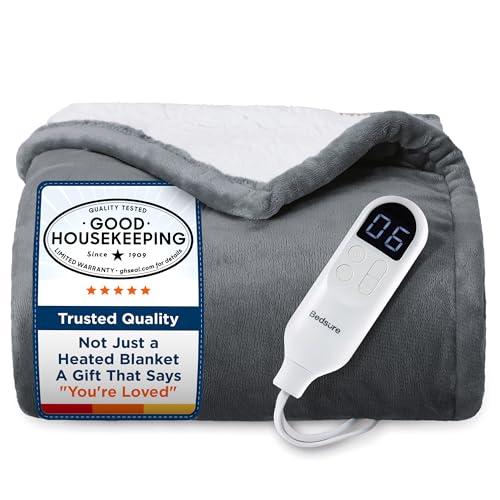
Bedsure Heated Blanket
The Bedsure Heated Blanket is a bedding-focused brand positioned in the entry-to-mid tier, usually emphasising soft fleece and flannel fabrics and simple, readable controls. Treat it as a prose-only pick in this draft: compare its fabric, size range and controller style against the checklist in this article, read the current listing’s stated auto shut-off and washing instructions carefully, and confirm the exact model’s manual before buying. Positioned by tier rather than by any fixed figure, it suits buyers whose priorities match the description above.
Best for: buyers who want a soft, bedding-first feel at an accessible tier. Not suited for: anyone who cannot follow the safety rules in this article — keep the blanket flat and unfolded while it is on, never use it for an infant or anyone who cannot adjust it themselves, inspect the cord before use, and switch it off when it is not in use.
Serta Heated Blanket
The Serta Heated Blanket is a mattress and bedding name positioned in the mid-to-premium tier, typically pairing plush fabrics with programmable controller features. Treat it as a prose-only pick in this draft: compare its fabric, size range and controller style against the checklist in this article, read the current listing’s stated auto shut-off and washing instructions carefully, and confirm the exact model’s manual before buying. Positioned by tier rather than by any fixed figure, it suits buyers whose priorities match the description above.
Best for: buyers who want a plush, premium-leaning finish from a bedding brand. Not suited for: anyone who cannot follow the safety rules in this article — keep the blanket flat and unfolded while it is on, never use it for an infant or anyone who cannot adjust it themselves, inspect the cord before use, and switch it off when it is not in use.

Degrees of Comfort Heated Blanket
The Degrees of Comfort Heated Blanket is a heated-bedding specialist positioned in the mid tier, typically offering dual controls and a range of fabric finishes. Treat it as a prose-only pick in this draft: compare its fabric, size range and controller style against the checklist in this article, read the current listing’s stated auto shut-off and washing instructions carefully, and confirm the exact model’s manual before buying. Positioned by tier rather than by any fixed figure, it suits buyers whose priorities match the description above.
Best for: buyers who want a heated-bedding specialist with dual-control flexibility. Not suited for: anyone who cannot follow the safety rules in this article — keep the blanket flat and unfolded while it is on, never use it for an infant or anyone who cannot adjust it themselves, inspect the cord before use, and switch it off when it is not in use.

Woolrich Heated Blanket
The Woolrich Heated Blanket is an outdoor-heritage brand positioned in the mid-to-premium tier, typically using wool-blend and cabin-style fabrics with a heavier, rustic feel. Treat it as a prose-only pick in this draft: compare its fabric, size range and controller style against the checklist in this article, read the current listing’s stated auto shut-off and washing instructions carefully, and confirm the exact model’s manual before buying. Positioned by tier rather than by any fixed figure, it suits buyers whose priorities match the description above.
Best for: buyers who want a heavier, heritage-style fabric and a substantial feel. Not suited for: anyone who cannot follow the safety rules in this article — keep the blanket flat and unfolded while it is on, never use it for an infant or anyone who cannot adjust it themselves, inspect the cord before use, and switch it off when it is not in use.
Common Mistakes
Smell is a stop signal. A faint new-product smell on first use is common and fades, but a hot, electrical or scorching smell at any point means switch off, unplug, let it cool, and inspect the whole surface for marks before deciding anything. If you find scorch marks, melted-feeling patches or exposed wire, the decision is already made: do not use it again. No night’s sleep is worth negotiating with a damaged heating appliance.
A controller that will not light, flashes, or shows an error usually wants the boring fixes first: unplug everything, check the blanket-to-controller connection is fully seated, check the outlet with a lamp, then reconnect exactly as the manual describes. Never open a controller, never bypass a fault by swapping controllers between different blankets, and never keep resetting a blanket that keeps faulting. Repeated faults are information: the blanket is telling you it has reached the end of its safe life.
- Buying for the coldest imaginable night instead of your ordinary one, then living on the lowest setting of an oversized spec.
- Forgetting the partner: a single-control queen blanket is a nightly negotiation, not a saving.
- Assuming all heated blankets wash the same way. They do not; the label is the law.
Pro Tips
Comfort framing matters here, because a heated blanket is a warmth and comfort product, nothing more. It makes a cold bed feel welcoming, takes the edge off a chilly room, and helps many people relax into sleep in winter. It does not treat, cure or prevent any medical condition, and this article makes no such claim for it. If you have a health condition, reduced sensation, or any doubt about whether heated bedding is appropriate for you, the right move is to ask a clinician and read the maker’s warnings, not a buying guide.
Warmth preferences are personal in a way mattress firmness only hints at. Some sleepers want the bed preheated and the blanket off by midnight; others keep a low setting running and wake up if it stops. Neither is wrong, and a good blanket serves both, which is why a genuinely low lowest setting and a reliable auto shut-off matter more than a scorching maximum. When you read any review, including this one, translate every warmth claim into your own pattern before believing it.
Worked Examples
The Solo Cold Sleeper
A single sleeper in a twin bed who feels the cold at their feet needs a twin blanket, one simple controller, the lowest setting that still registers, and a plush face that hides the wires. Dual controls would be wasted money; a throw would be the wrong tool. Preheat before bed, run low or off overnight, inspect weekly.
The Couple Who Disagree
Two sleepers, one cold and one warm, in a queen bed need dual controls or nothing. Each side is set independently; the warm sleeper may never switch their side on at all. Two controllers mean two cords to route and inspect, which this household accepts as the price of peace. Size up the blanket’s stated coverage so neither sleeper gets a cold edge.
The Guest-Room Buyer
A blanket for a spare room must survive other people’s habits, so choose simple controls, a mid-tier fabric that washes without drama, and a maker with a plainly written manual you can leave in the room. Tell guests the three rules — flat, no folding while on, switch off in the morning — in person, not just in print. Inspect the blanket yourself after every stay.
Deeper Detail: Ownership, Season by Season
The habits that stretch safe service life. The points below are the ones that rarely make it into listings, yet they decide how safe, comfortable and long-lived a heated blanket turns out to be in a real household.
Travel and caravans tempt people to pack the home blanket, and the honest advice is caution. A heated blanket belongs on the bed and the outlet it was set up for, used flat, with its own controller. Improvised settings — bunched on a camp bed, run from an overloaded socket in a van, folded under a sleeping bag — break exactly the rules that make the product safe at home. If you travel in winter, pack warmer ordinary layers and leave the heated blanket doing its one job properly.
Keeping the manual is a feature you give yourself. Store it with the blanket, note the purchase date on it, and keep the receipt or order confirmation with it as well. If a fault appears, if the maker issues a safety notice, or if you simply forget whether your model may be tumble dried, the answer is in those pages. Households that keep the paperwork get more safe years from the same blanket than households that improvise from memory.
Never buy a second-hand heated blanket, and never accept a hand-me-down one whose history you do not know. You cannot tell by looking whether the wiring inside has been folded hard, washed wrongly, sat on for years or damaged and repaired invisibly. Heated bedding is one of the few household categories where new-from-a-known-maker is a safety decision rather than a preference, and where a bargain of unknown origin is not a bargain at all.
Finally, keep perspective on what this product is. It is one of the simplest comfort appliances in the home: a fabric, a wire, a controller, a set of habits. It does not need an app, a subscription or a learning curve, and its entire risk profile is managed by behaviour you control. Households that respect the short rule list get years of unremarkable, reliable warmth from it — and unremarkable is exactly what you want from anything that plugs in beside your bed.
Checking and Care Details
The smell test, the hand test and the eye test together take under two minutes and form a complete inspection habit. Smell for anything hot, sharp or scorching when the blanket runs. Run your palms slowly over the whole surface feeling for kinks, stiffness, lumps or exposed-feeling wire. Look for scorch marks, thinning, fraying and damage to the cord, plug and controller. Two minutes, three senses, every time the blanket goes back on the bed after washing or storage.
A heated blanket and a memory-foam mattress, a waterproof protector or a thick topper can interact in ways the blanket’s manual may address directly, because layers under the blanket change how heat builds and how the wires are pressed. This is another case where the manual outranks general advice: check what your blanket’s maker says about what may go under or over it, and check the bedding maker’s guidance too. When two manuals disagree, follow the stricter one.
One blanket, one bed, one routine is the pattern that works. Problems creep in when a blanket migrates — sofa one week, spare room the next, folded in a drawer between uses, lent to a neighbour for a cold snap. Every move is handling, every new setting is a new cord route and a new set of habits, and the borrower never gets the briefing. If two rooms need heated bedding, the safer and ultimately cheaper answer is a blanket that lives in each room.
Electric blankets are sometimes blamed for a dry, overheated feeling that is really a settings problem. Running a high setting under a heavy duvet in a heated room will feel stuffy with any brand. The fix is boring and effective: lower the setting, lighten the layer above, or preheat and switch off. Judge any blanket over a week of adjusted nights before concluding it runs too hot or too cool; the first night is a calibration exercise, not a verdict.
Children change the calculation by age, not by good intentions. A heated blanket is never for an infant, and never for a child too young to understand and follow the rules and work the controller reliably. For older children, the maker’s own age guidance and warnings govern, and the adult’s judgement governs after that. If there is any doubt in your household, the doubt is the answer: keep heated bedding in the adults’ room and give children warmer ordinary bedding instead.
Layering is the quiet skill of heated-blanket ownership. The blanket itself provides the heat; what goes over it decides how that heat feels. A light duvet over the top holds warmth in and lets you run a lower setting, while a heavy throw stacked on top adds pressure and can trap more heat than you intended. Keep layers light, keep them loose, and never pile heavy objects, books or laundry on a blanket that is switched on.
If your household includes someone who gets up in the night, plan the cord and controller for that reality. A controller placed on the far side, a cord crossing the exit path, or a blanket edge hanging where feet land are small hazards that design can remove in advance. Route everything on the side away from the night-time exit, keep the floor path clear, and make switching off reachable without fully waking. Comfort products should survive contact with real, sleepy human behaviour.
Season changes are the natural audit points for heated bedding. When the blanket comes out in autumn, inspect it fully, test it while awake, and re-read the manual’s warnings before the first real night. When it goes away in spring, wash it if the maker allows, dry it completely, inspect it again, and store it loose and dry. Two honest inspections a year catch most of the wear that matters, long before that wear becomes a hazard.
Buying for someone else — a parent, a student leaving home, a friend in a cold flat — carries an extra duty: hand over the rules with the gift. A heated blanket given without its safety briefing is only half a present. Include the manual, mention flat use, inspection and switching off, and make sure the recipient can adjust and remove the blanket themselves and understands it is not for infants in the bed. The kindest version of this gift is the one that arrives with instructions attached.
Checking and Care Details
Disposal is part of ownership. A heated blanket that is damaged, faulting, scorched, very old or simply no longer trusted should be retired promptly rather than demoted to the dog’s bed, the garage or a donation pile, where someone else will use it without its manual or its history. Cut the cord if your local guidance recommends rendering it unusable, and follow local electrical-waste rules for disposal. Retiring a blanket early is a success of the safety routine, not a failure of the purchase.
Warmth perception changes across the night, which is why the setting you choose at bedtime is rarely the setting you would choose at three in the morning. Bodies cool, rooms cool, and a blanket that felt gentle at eleven can feel strong at two. This is the practical case for preheating and turning down, and for timers or auto shut-off where the maker provides them: the blanket’s job is to start the night well, not to hold one temperature against your changing body until dawn.
The first evening with a new blanket should be a supervised test, not a leap of faith. Spread it flat in daylight, connect everything exactly as the manual shows, and run it while you are awake and in the room. Feel across the whole surface for cold patches or spots that run noticeably hotter than their neighbours, listen and look at the controller, and read the safety section of the manual while the bed warms. Anything odd is a returns conversation now, not a discovery at midnight.
Reading a listing like an inspector saves money and worry. Look for the size in plain language, whether the controller detaches, what the maker states about auto shut-off, and whether the washing instructions are described clearly before you buy rather than discovered afterwards. Vague listings that boast about heat and say nothing about care are telling you how the maker thinks. Established makers publish manuals; being able to read yours before the blanket arrives is a genuine buying advantage.
Noise and light are the two small complaints that decide whether a controller is liked. Some controllers click when they cycle; some have indicator lights bright enough to notice in a dark room. Neither matters in a showroom and both matter at midnight. If you are a light sleeper, favour simple controllers you can operate by touch, position the controller where its light does not face the pillows, and never cover a controller with bedding to hide it, because it needs air and access.
Fabric care and fabric feel are the same decision seen from two ends. The plushest face in the shop is the one you will touch every night, and it is also the one that must survive gentle washing and patient drying without matting or hiding wire damage. Slightly plainer fabrics often inspect more easily, because marks and wear show up honestly. There is no wrong answer, but choose knowing that you are buying both the nightly feel and the maintenance routine in a single fabric.
Cord routing is a small job that prevents several problems at once. The cord should run clear of the bed frame’s moving parts, never trapped between mattress and base, never pinched in a recliner mechanism or a drawer, and never stretched tight across a walkway where feet will find it in the dark. The controller belongs somewhere it can be reached without a search, cannot be sat on or buried, and will not fall and hang by its cord.
Guests deserve a thirty-second briefing, delivered kindly and clearly. Show them the controller, tell them the blanket must stay flat and unfolded while it is on, ask them to switch it off in the morning, and make sure they know it is not to be used for a baby in the bed or by anyone who cannot work the controls. Most guests are relieved to be told; the rules are simple, and nobody wants to be the person who folded a live heated blanket.
Expect a heated blanket to have a service life, not an eternal one, even with perfect care. Wiring flexes a little with every use, fabrics thin, controllers age, and makers’ guidance on age and replacement exists for a reason. Build the replacement into your thinking from the first winter: this is an appliance with a lifespan, inspected like one and retired like one. A household that expects to replace it calmly will never be tempted to stretch a tired blanket one season too far.
Checking and Care Details
Bed-making changes with a heated blanket in the stack. In the morning, switch the blanket off, let it lie flat while the bed airs, and resist the urge to fold it back tightly with the rest of the bedding or tuck it hard under the mattress. A blanket that spends its days loosely flat and its nights loosely flat keeps its wiring in the shape the maker intended, and it is far easier to inspect when nothing about its routine involves creases.
Feet deserve a mention because they start most heated-blanket purchases. Cold feet are the commonest reason a sleeper feels the whole bed is cold, and a blanket that covers the full length of the bed solves it in a way a small heated pad at one spot does not. When you size a blanket, check that its heated area actually reaches the foot of your bed with your pillows in place; coverage maps in the manual are worth thirty seconds before ordering.
A Few Last Practical Notes
When you compare two otherwise similar blankets, let the controller break the tie. You will touch the controller twice a day for years; you will read the feature list once. Prefer the one you can operate by feel in the dark, with markings you can read without glasses and a connection that seats with a definite click. Small daily frictions are what turn a good appliance into an abandoned one, and they are entirely visible before you buy if you look for them.
Warranty paperwork deserves one calm read before the first wash, not a panicked read after a fault. Note how long the cover runs, what it excludes, and whether washing contrary to the label voids it, because with heated bedding the care instructions and the warranty are effectively the same document. Photograph the label and the controller’s markings while they are new and legible; labels fade, and the information on them is the information you will need in year three.
If two people will use the blanket and only one of you reads manuals, the reader’s job is teaching, not policing. Walk the other person through the controller once, agree together where it lives and how the cord runs, and agree the morning switch-off as a shared habit rather than one person’s chore. Heated bedding stays safe in households where the routine belongs to everyone who sleeps in the bed, including the person who swears they never touch the settings.
A spare ordinary blanket kept in the same room is a surprisingly useful companion purchase. It covers the nights when the heated blanket is being washed and dried properly instead of hurried back onto the bed damp, the nights a fault means the blanket stays off while you contact the maker, and the shoulder-season nights when a little extra layer is enough. Owning a fallback removes the pressure to misuse the heated blanket, and pressure is where most misuse begins.
Judge the first week, not the first night. Night one is calibration: finding the setting that preheats well, learning how far to turn it down, noticing whether you can feel the wires and whether the controller’s light or click bothers you. By night seven the routine should feel automatic — inspect, flatten, preheat, settle, switch off — and the blanket should have disappeared into the background of the evening. If it has not, that is useful information while returns are still simple.
Keep expectations proportionate and the product will meet them. A heated blanket will not fix a draughty room, a worn-out mattress or a duvet that has lost its loft, and it should not be asked to. What it does — reliably, cheaply in effort, and night after night — is remove the cold-bed moment and hold a gentle, adjustable warmth around the person who wants it. Bought for that job, sized for that bed and handled by the rules, it is rarely a purchase anyone regrets.
Frequently Asked Questions
Is it safe to fold an electric heating blanket?
Not while it is switched on. Folding, bunching or tucking a live heated blanket traps heat and stresses the internal wires, which is why every maker’s manual forbids it. Spread the blanket flat whenever it is on. For storage, wait until it is off, cool, clean and dry, then roll it loosely or use large, soft folds with nothing heavy on top, so the wiring is not creased or crushed over the summer months.
How do you wash an electric heating blanket?
Detach the controller and cord first, then follow the label on your exact model, because permissions differ. Where machine washing is allowed, that usually means a gentle cycle with mild detergent; never wring, twist or iron the blanket, and follow the maker’s drying instructions exactly. Never switch it on to dry it, never use it while damp, and inspect the full surface for wire damage after washing before you reconnect the controller and use it again.
Who should not use an electric heating blanket?
Heated blankets are not for infants, for young children who cannot operate the controls safely, or for anyone who cannot sense heat reliably or remove the blanket themselves. Pets that chew or knead can damage wiring, so unsupervised pets and heated blankets do not mix. Anyone with a health condition or reduced sensation should ask a clinician and read the maker’s warnings first. This is a comfort product; it is not a medical device and makes no treatment claims.
What does auto shut-off actually do?
Auto shut-off switches the blanket off after a period set by the manufacturer, which varies by model. It is a useful backstop if you fall asleep with the blanket on, and worth confirming on any listing before you buy. It is not a substitute for your own habits: switch the blanket off when you get up, keep it flat and unfolded while it runs, and never treat the timer as permission to leave a heated blanket running unattended for hours.
Can you use an electric heating blanket with other heating devices?
Do not combine heating devices in the same bed, and do not run a heated blanket alongside other heaters from one crowded outlet or extension lead, unless the manufacturer explicitly allows it. Overloaded outlets and layered heat sources are both avoidable risks. One heated blanket, plugged directly into a sound outlet, used flat, inspected regularly and switched off when not in use, is the pattern every maker’s safety section points towards.
Related Reading
Keep exploring with these guides from the same site: the buying guide, how to use one, pros and cons, best electric blankets, best heated blankets, best electric throw blankets.