Disclosure: As an Amazon Associate, topratedkitchenware.com earns from qualifying purchases. Links on this page are affiliate links; they cost you nothing extra. Prices and availability change often, so check the current Amazon listing before you buy.
If you are asking about is a mixing bowl set worth it, the short answer is to judge a set by the cooking you repeat every week, not by piece count or a tidy shelf photograph. A good set gives you a small, a medium, and a large bowl that nest neatly, feel steady under a whisk, and suit the way you handle heat, storage, and washing up.
Key Takeaways
Best for: cooks who prep several stages at once, bake regularly, or share a kitchen and need bowls that nest away. Not suited for: anyone with very limited cupboard space who truly uses one bowl, or anyone who needs a vessel for direct oven heat as their main priority. Size range, material, lids, and base grip matter more than the number of pieces printed on the box, and glass sets need calm handling around sudden temperature changes.
Consider whisking eggs for a family omelette as a measuring stick. If the bowl is too shallow, folding becomes stirring and stirring becomes splashing; too deep and narrow, and a spatula cannot sweep the base cleanly. That is why a medium bowl, the everyday size for salads for two, pancake batter, and marinades that need room to turn deserves attention before brand names enter the conversation. Material comes next. Plastic is the lightest choice, is forgiving when dropped, and often brings grippy bases and pouring lips. It can hold onto strong colours and smells after repeated use, it is not the material to choose for very hot mixtures, and surface scratches build up over time. Finally, borrow a habit from organised cooks: rinse the bowl straight after use and dry it before nesting, so moisture does not sit between stacked bowls. Together, size, material, and habit explain almost everything about how a set will behave once the newness wears off and it is simply part of dinner.
In this guide
What You Actually Get From a Mixing Bowl Set
Consider holding chopped onions while other prep continues as a measuring stick. If the bowl is too shallow, folding becomes stirring and stirring becomes splashing; too deep and narrow, and a spatula cannot sweep the base cleanly. That is why the full nested stack, which matters less as separate bowls and more as a footprint that either fits your cupboard or quietly takes it over deserves attention before brand names enter the conversation. Material comes next. Glass feels steady on the counter, shows the contents from the side, and moves from prep to serving without looking out of place. It is heavier than the other options, resists staining and lingering odours, and asks for calmer handling around hard floors and stone sinks. Finally, borrow a habit from organised cooks: wash lids separately and let them dry fully before clicking them back on. Together, size, material, and habit explain almost everything about how a set will behave once the newness wears off and it is simply part of dinner.
A useful test for a mixing bowl set is to picture preparing overnight oats for several mornings on a busy evening, not on a quiet morning with unlimited counter space. Bowls get moved, stacked, filled, and set down hard when a meal is running late. In that setting, a medium bowl, the everyday size for salads for two, pancake batter, and marinades that need room to turn tends to be the size that earns its keep. The material story is just as practical. A lidded glass set doubles as short-term fridge storage, which cuts down on transfers and washing. The lids themselves need a home, they should be checked for a snug fit rather than assumed airtight, and stacked lids can warp if stored under heavy pans. One habit keeps any set working well for longer: wash lids separately and let them dry fully before clicking them back on. Judge a set by those ordinary evenings and you will judge it far more accurately than by a tidy product photograph.
A useful test for a mixing bowl set is to picture beating a hand mixer batter without splatter on a busy evening, not on a quiet morning with unlimited counter space. Bowls get moved, stacked, filled, and set down hard when a meal is running late. In that setting, a medium bowl, the everyday size for salads for two, pancake batter, and marinades that need room to turn tends to be the size that earns its keep. The material story is just as practical. A lidded glass set doubles as short-term fridge storage, which cuts down on transfers and washing. The lids themselves need a home, they should be checked for a snug fit rather than assumed airtight, and stacked lids can warp if stored under heavy pans. One habit keeps any set working well for longer: place a damp cloth under the bowl before whisking, which stops the base travelling across the counter. Judge a set by those ordinary evenings and you will judge it far more accurately than by a tidy product photograph.
The Real Costs Beyond Money
A useful test for a mixing bowl set is to picture preparing overnight oats for several mornings on a busy evening, not on a quiet morning with unlimited counter space. Bowls get moved, stacked, filled, and set down hard when a meal is running late. In that setting, a large bowl, the one that earns its place when dough rises, when salad needs tossing space, or when a double batch is on the plan tends to be the size that earns its keep. The material story is just as practical. A lidded glass set doubles as short-term fridge storage, which cuts down on transfers and washing. The lids themselves need a home, they should be checked for a snug fit rather than assumed airtight, and stacked lids can warp if stored under heavy pans. One habit keeps any set working well for longer: store the set where you prep, not where you serve, because most mixing happens at the counter. Judge a set by those ordinary evenings and you will judge it far more accurately than by a tidy product photograph.
Think about mixing a marinade for tofu. That single job explains a lot about a mixing bowl set, because the bowl has to give the spoon or whisk room to move without sending ingredients over the rim. With a medium bowl, the everyday size for salads for two, pancake batter, and marinades that need room to turn, the work feels calm rather than crowded. Material matters here too. Plastic is the lightest choice, is forgiving when dropped, and often brings grippy bases and pouring lips. It can hold onto strong colours and smells after repeated use, it is not the material to choose for very hot mixtures, and surface scratches build up over time. A practical habit helps: store the set where you prep, not where you serve, because most mixing happens at the counter. None of this is complicated, but it is the difference between a set you reach for daily and a set that lives at the back of a cupboard, brought out only when every other bowl is already in the sink.
Consider mixing a marinade for tofu as a measuring stick. If the bowl is too shallow, folding becomes stirring and stirring becomes splashing; too deep and narrow, and a spatula cannot sweep the base cleanly. That is why the full nested stack, which matters less as separate bowls and more as a footprint that either fits your cupboard or quietly takes it over deserves attention before brand names enter the conversation. Material comes next. A lidded glass set doubles as short-term fridge storage, which cuts down on transfers and washing. The lids themselves need a home, they should be checked for a snug fit rather than assumed airtight, and stacked lids can warp if stored under heavy pans. Finally, borrow a habit from organised cooks: wash lids separately and let them dry fully before clicking them back on. Together, size, material, and habit explain almost everything about how a set will behave once the newness wears off and it is simply part of dinner.
Related reading on this site may help you compare the next decision: mixing bowl set pros and cons
Who a Mixing Bowl Set Pays Off For
Consider combining dry ingredients for pancakes as a measuring stick. If the bowl is too shallow, folding becomes stirring and stirring becomes splashing; too deep and narrow, and a spatula cannot sweep the base cleanly. That is why the smallest bowl in the set, the one that suits whisking a dressing, melting a small amount of butter in a separate pan transfer, or holding a beaten egg deserves attention before brand names enter the conversation. Material comes next. A lidded glass set doubles as short-term fridge storage, which cuts down on transfers and washing. The lids themselves need a home, they should be checked for a snug fit rather than assumed airtight, and stacked lids can warp if stored under heavy pans. Finally, borrow a habit from organised cooks: rinse the bowl straight after use and dry it before nesting, so moisture does not sit between stacked bowls. Together, size, material, and habit explain almost everything about how a set will behave once the newness wears off and it is simply part of dinner.
Think about proofing a small batch of dough in a warm corner. That single job explains a lot about a mixing bowl set, because the bowl has to give the spoon or whisk room to move without sending ingredients over the rim. With a small-to-medium bowl, useful for chopped herbs, spice blends, and the wet ingredients of a muffin batch before they meet the dry, the work feels calm rather than crowded. Material matters here too. A lidded glass set doubles as short-term fridge storage, which cuts down on transfers and washing. The lids themselves need a home, they should be checked for a snug fit rather than assumed airtight, and stacked lids can warp if stored under heavy pans. A practical habit helps: keep the largest bowl for the messiest job and reserve a smaller one for clean, dry ingredients. None of this is complicated, but it is the difference between a set you reach for daily and a set that lives at the back of a cupboard, brought out only when every other bowl is already in the sink.
A useful test for a mixing bowl set is to picture washing berries without crushing them on a busy evening, not on a quiet morning with unlimited counter space. Bowls get moved, stacked, filled, and set down hard when a meal is running late. In that setting, a small-to-medium bowl, useful for chopped herbs, spice blends, and the wet ingredients of a muffin batch before they meet the dry tends to be the size that earns its keep. The material story is just as practical. A lidded glass set doubles as short-term fridge storage, which cuts down on transfers and washing. The lids themselves need a home, they should be checked for a snug fit rather than assumed airtight, and stacked lids can warp if stored under heavy pans. One habit keeps any set working well for longer: wash lids separately and let them dry fully before clicking them back on. Judge a set by those ordinary evenings and you will judge it far more accurately than by a tidy product photograph.
Who Should Skip a Mixing Bowl Set
Consider beating a hand mixer batter without splatter as a measuring stick. If the bowl is too shallow, folding becomes stirring and stirring becomes splashing; too deep and narrow, and a spatula cannot sweep the base cleanly. That is why a small-to-medium bowl, useful for chopped herbs, spice blends, and the wet ingredients of a muffin batch before they meet the dry deserves attention before brand names enter the conversation. Material comes next. Glass feels steady on the counter, shows the contents from the side, and moves from prep to serving without looking out of place. It is heavier than the other options, resists staining and lingering odours, and asks for calmer handling around hard floors and stone sinks. Finally, borrow a habit from organised cooks: keep the largest bowl for the messiest job and reserve a smaller one for clean, dry ingredients. Together, size, material, and habit explain almost everything about how a set will behave once the newness wears off and it is simply part of dinner.
Think about chilling cookie dough before portioning. That single job explains a lot about a mixing bowl set, because the bowl has to give the spoon or whisk room to move without sending ingredients over the rim. With the full nested stack, which matters less as separate bowls and more as a footprint that either fits your cupboard or quietly takes it over, the work feels calm rather than crowded. Material matters here too. Plastic is the lightest choice, is forgiving when dropped, and often brings grippy bases and pouring lips. It can hold onto strong colours and smells after repeated use, it is not the material to choose for very hot mixtures, and surface scratches build up over time. A practical habit helps: store the set where you prep, not where you serve, because most mixing happens at the counter. None of this is complicated, but it is the difference between a set you reach for daily and a set that lives at the back of a cupboard, brought out only when every other bowl is already in the sink.
Think about mixing a marinade for tofu. That single job explains a lot about a mixing bowl set, because the bowl has to give the spoon or whisk room to move without sending ingredients over the rim. With a medium bowl, the everyday size for salads for two, pancake batter, and marinades that need room to turn, the work feels calm rather than crowded. Material matters here too. A lidded glass set doubles as short-term fridge storage, which cuts down on transfers and washing. The lids themselves need a home, they should be checked for a snug fit rather than assumed airtight, and stacked lids can warp if stored under heavy pans. A practical habit helps: wash lids separately and let them dry fully before clicking them back on. None of this is complicated, but it is the difference between a set you reach for daily and a set that lives at the back of a cupboard, brought out only when every other bowl is already in the sink.
Related reading on this site may help you compare the next decision: mixing bowl set review
Alternatives to Consider
Consider preparing a grain bowl for weekday lunches as a measuring stick. If the bowl is too shallow, folding becomes stirring and stirring becomes splashing; too deep and narrow, and a spatula cannot sweep the base cleanly. That is why the smallest bowl in the set, the one that suits whisking a dressing, melting a small amount of butter in a separate pan transfer, or holding a beaten egg deserves attention before brand names enter the conversation. Material comes next. Plastic is the lightest choice, is forgiving when dropped, and often brings grippy bases and pouring lips. It can hold onto strong colours and smells after repeated use, it is not the material to choose for very hot mixtures, and surface scratches build up over time. Finally, borrow a habit from organised cooks: choose the bowl before you start chopping, not after your hands are already covered in flour. Together, size, material, and habit explain almost everything about how a set will behave once the newness wears off and it is simply part of dinner.
A useful test for a mixing bowl set is to picture serving popcorn on a film night on a busy evening, not on a quiet morning with unlimited counter space. Bowls get moved, stacked, filled, and set down hard when a meal is running late. In that setting, the smallest bowl in the set, the one that suits whisking a dressing, melting a small amount of butter in a separate pan transfer, or holding a beaten egg tends to be the size that earns its keep. The material story is just as practical. Glass feels steady on the counter, shows the contents from the side, and moves from prep to serving without looking out of place. It is heavier than the other options, resists staining and lingering odours, and asks for calmer handling around hard floors and stone sinks. One habit keeps any set working well for longer: choose the bowl before you start chopping, not after your hands are already covered in flour. Judge a set by those ordinary evenings and you will judge it far more accurately than by a tidy product photograph.
Consider folding whipped cream into a chilled base as a measuring stick. If the bowl is too shallow, folding becomes stirring and stirring becomes splashing; too deep and narrow, and a spatula cannot sweep the base cleanly. That is why the smallest bowl in the set, the one that suits whisking a dressing, melting a small amount of butter in a separate pan transfer, or holding a beaten egg deserves attention before brand names enter the conversation. Material comes next. Glass feels steady on the counter, shows the contents from the side, and moves from prep to serving without looking out of place. It is heavier than the other options, resists staining and lingering odours, and asks for calmer handling around hard floors and stone sinks. Finally, borrow a habit from organised cooks: wash lids separately and let them dry fully before clicking them back on. Together, size, material, and habit explain almost everything about how a set will behave once the newness wears off and it is simply part of dinner.
How to Get the Most Value If You Buy
A useful test for a mixing bowl set is to picture preparing a grain bowl for weekday lunches on a busy evening, not on a quiet morning with unlimited counter space. Bowls get moved, stacked, filled, and set down hard when a meal is running late. In that setting, a large bowl, the one that earns its place when dough rises, when salad needs tossing space, or when a double batch is on the plan tends to be the size that earns its keep. The material story is just as practical. Plastic is the lightest choice, is forgiving when dropped, and often brings grippy bases and pouring lips. It can hold onto strong colours and smells after repeated use, it is not the material to choose for very hot mixtures, and surface scratches build up over time. One habit keeps any set working well for longer: place a damp cloth under the bowl before whisking, which stops the base travelling across the counter. Judge a set by those ordinary evenings and you will judge it far more accurately than by a tidy product photograph.
Start with washing berries without crushing them and work backwards to the bowl. How much headroom does the mixture need, how heavy will the filled bowl feel, and where will it sit while it rests? For many home cooks the honest answer points to a medium bowl, the everyday size for salads for two, pancake batter, and marinades that need room to turn. Then weigh the material honestly. Plastic is the lightest choice, is forgiving when dropped, and often brings grippy bases and pouring lips. It can hold onto strong colours and smells after repeated use, it is not the material to choose for very hot mixtures, and surface scratches build up over time. Build in one small routine: store the set where you prep, not where you serve, because most mixing happens at the counter. When those pieces line up, a mixing bowl set stops being an abstract shopping question and becomes a simple match between the food you actually cook and the bowls already in your kitchen.
A useful test for a mixing bowl set is to picture mixing meatball seasoning evenly through ground meat on a busy evening, not on a quiet morning with unlimited counter space. Bowls get moved, stacked, filled, and set down hard when a meal is running late. In that setting, the smallest bowl in the set, the one that suits whisking a dressing, melting a small amount of butter in a separate pan transfer, or holding a beaten egg tends to be the size that earns its keep. The material story is just as practical. Steel is light for its size, shrugs off dents better than most materials, and suits fast, frequent mixing. It cannot go in a microwave, it can feel noisy against a metal whisk, and a thin base may flex when you press a stiff dough against the side. One habit keeps any set working well for longer: rinse the bowl straight after use and dry it before nesting, so moisture does not sit between stacked bowls. Judge a set by those ordinary evenings and you will judge it far more accurately than by a tidy product photograph.
The Decision Checklist for Is a Mixing Bowl Set Worth It
Start with stirring a thick brownie batter and work backwards to the bowl. How much headroom does the mixture need, how heavy will the filled bowl feel, and where will it sit while it rests? For many home cooks the honest answer points to the full nested stack, which matters less as separate bowls and more as a footprint that either fits your cupboard or quietly takes it over. Then weigh the material honestly. Glass feels steady on the counter, shows the contents from the side, and moves from prep to serving without looking out of place. It is heavier than the other options, resists staining and lingering odours, and asks for calmer handling around hard floors and stone sinks. Build in one small routine: keep the largest bowl for the messiest job and reserve a smaller one for clean, dry ingredients. When those pieces line up, a mixing bowl set stops being an abstract shopping question and becomes a simple match between the food you actually cook and the bowls already in your kitchen.
A useful test for a mixing bowl set is to picture holding chopped onions while other prep continues on a busy evening, not on a quiet morning with unlimited counter space. Bowls get moved, stacked, filled, and set down hard when a meal is running late. In that setting, the smallest bowl in the set, the one that suits whisking a dressing, melting a small amount of butter in a separate pan transfer, or holding a beaten egg tends to be the size that earns its keep. The material story is just as practical. Glass feels steady on the counter, shows the contents from the side, and moves from prep to serving without looking out of place. It is heavier than the other options, resists staining and lingering odours, and asks for calmer handling around hard floors and stone sinks. One habit keeps any set working well for longer: rinse the bowl straight after use and dry it before nesting, so moisture does not sit between stacked bowls. Judge a set by those ordinary evenings and you will judge it far more accurately than by a tidy product photograph.
Start with stirring a thick brownie batter and work backwards to the bowl. How much headroom does the mixture need, how heavy will the filled bowl feel, and where will it sit while it rests? For many home cooks the honest answer points to the smallest bowl in the set, the one that suits whisking a dressing, melting a small amount of butter in a separate pan transfer, or holding a beaten egg. Then weigh the material honestly. A lidded glass set doubles as short-term fridge storage, which cuts down on transfers and washing. The lids themselves need a home, they should be checked for a snug fit rather than assumed airtight, and stacked lids can warp if stored under heavy pans. Build in one small routine: rinse the bowl straight after use and dry it before nesting, so moisture does not sit between stacked bowls. When those pieces line up, a mixing bowl set stops being an abstract shopping question and becomes a simple match between the food you actually cook and the bowls already in your kitchen.
Strengths and Trade-Offs at a Glance
Strengths:
- Graduated sizes cover prep, mixing, resting, and serving in one nested stack.
- Material choice lets you prioritise steadiness, light weight, or drop tolerance.
- Lidded sets reduce transfers when dough rests or ingredients wait in the fridge.
Trade-offs:
- Glass is heavy and needs protection from sudden temperature change and hard impacts.
- Very large sets can waste space on near-duplicate bowls.
- No single material suits microwaving, heavy dough, serving, and rough handling equally well.
Consider whisking eggs for a family omelette as a measuring stick. If the bowl is too shallow, folding becomes stirring and stirring becomes splashing; too deep and narrow, and a spatula cannot sweep the base cleanly. That is why a large bowl, the one that earns its place when dough rises, when salad needs tossing space, or when a double batch is on the plan deserves attention before brand names enter the conversation. Material comes next. Plastic is the lightest choice, is forgiving when dropped, and often brings grippy bases and pouring lips. It can hold onto strong colours and smells after repeated use, it is not the material to choose for very hot mixtures, and surface scratches build up over time. Finally, borrow a habit from organised cooks: keep the largest bowl for the messiest job and reserve a smaller one for clean, dry ingredients. Together, size, material, and habit explain almost everything about how a set will behave once the newness wears off and it is simply part of dinner.
For a neighbouring topic, see mixing bowl set reviews
For a neighbouring topic, see best nesting bowl set for kitchen
For a neighbouring topic, see best mixing bowl sets
For a neighbouring topic, see best glass food storage containers
For a neighbouring topic, see best mixing bowls for hand mixers
Sets Mentioned in This Guide

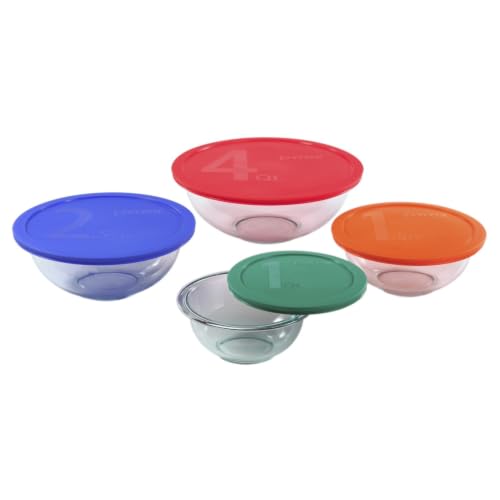
Pyrex Smart Essentials Mixing Bowl Set
This premium-leaning glass set is included here in prose only, so you can judge the style of set rather than a single listing. As a glass option it suits cooks who value that material’s everyday behaviour: steady, honest mixing, sensible nesting, and a shape that works for batter, salads, and prep. Best for: readers whose cooking matches the glass strengths described in this guide. Not suited for: anyone whose main jobs demand the opposite material, or who needs a bowl intended for direct, intense heat. Check the current listing for the exact contents of the set before you buy, because set compositions change.
A useful test for a mixing bowl set is to picture preparing a grain bowl for weekday lunches on a busy evening, not on a quiet morning with unlimited counter space. Bowls get moved, stacked, filled, and set down hard when a meal is running late. In that setting, the full nested stack, which matters less as separate bowls and more as a footprint that either fits your cupboard or quietly takes it over tends to be the size that earns its keep. The material story is just as practical. Plastic is the lightest choice, is forgiving when dropped, and often brings grippy bases and pouring lips. It can hold onto strong colours and smells after repeated use, it is not the material to choose for very hot mixtures, and surface scratches build up over time. One habit keeps any set working well for longer: place a damp cloth under the bowl before whisking, which stops the base travelling across the counter. Judge a set by those ordinary evenings and you will judge it far more accurately than by a tidy product photograph.

OXO Good Grips Mixing Bowl Set
This mid-tier plastic set is included here in prose only, so you can judge the style of set rather than a single listing. As a plastic option it suits cooks who value that material’s everyday behaviour: steady, honest mixing, sensible nesting, and a shape that works for batter, salads, and prep. Best for: readers whose cooking matches the plastic strengths described in this guide. Not suited for: anyone whose main jobs demand the opposite material, or who needs a bowl intended for direct, intense heat. Check the current listing for the exact contents of the set before you buy, because set compositions change.
Consider washing berries without crushing them as a measuring stick. If the bowl is too shallow, folding becomes stirring and stirring becomes splashing; too deep and narrow, and a spatula cannot sweep the base cleanly. That is why the smallest bowl in the set, the one that suits whisking a dressing, melting a small amount of butter in a separate pan transfer, or holding a beaten egg deserves attention before brand names enter the conversation. Material comes next. Plastic is the lightest choice, is forgiving when dropped, and often brings grippy bases and pouring lips. It can hold onto strong colours and smells after repeated use, it is not the material to choose for very hot mixtures, and surface scratches build up over time. Finally, borrow a habit from organised cooks: wash lids separately and let them dry fully before clicking them back on. Together, size, material, and habit explain almost everything about how a set will behave once the newness wears off and it is simply part of dinner.

Cuisinart Mixing Bowls with Lids
This mid-tier steel set is included here in prose only, so you can judge the style of set rather than a single listing. As a stainless steel option it suits cooks who value that material’s everyday behaviour: steady, honest mixing, sensible nesting, and a shape that works for batter, salads, and prep. Best for: readers whose cooking matches the stainless steel strengths described in this guide. Not suited for: anyone whose main jobs demand the opposite material, or who needs a bowl intended for direct, intense heat. Check the current listing for the exact contents of the set before you buy, because set compositions change.
Start with mixing a stiff bread dough by hand and work backwards to the bowl. How much headroom does the mixture need, how heavy will the filled bowl feel, and where will it sit while it rests? For many home cooks the honest answer points to the smallest bowl in the set, the one that suits whisking a dressing, melting a small amount of butter in a separate pan transfer, or holding a beaten egg. Then weigh the material honestly. Steel is light for its size, shrugs off dents better than most materials, and suits fast, frequent mixing. It cannot go in a microwave, it can feel noisy against a metal whisk, and a thin base may flex when you press a stiff dough against the side. Build in one small routine: wash lids separately and let them dry fully before clicking them back on. When those pieces line up, a mixing bowl set stops being an abstract shopping question and becomes a simple match between the food you actually cook and the bowls already in your kitchen.
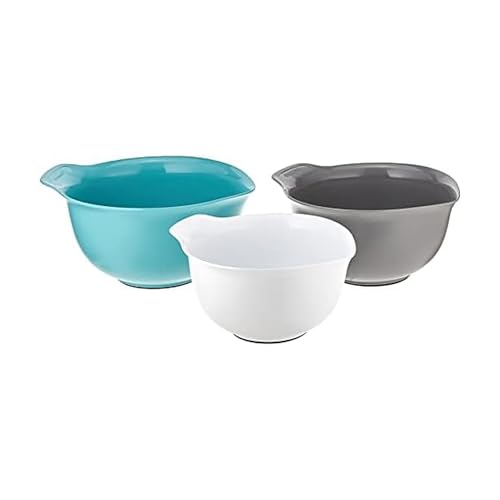
KitchenAid Mixing Bowl Set
This mid-tier plastic set is included here in prose only, so you can judge the style of set rather than a single listing. As a plastic option it suits cooks who value that material’s everyday behaviour: steady, honest mixing, sensible nesting, and a shape that works for batter, salads, and prep. Best for: readers whose cooking matches the plastic strengths described in this guide. Not suited for: anyone whose main jobs demand the opposite material, or who needs a bowl intended for direct, intense heat. Check the current listing for the exact contents of the set before you buy, because set compositions change.
Start with mixing a marinade for tofu and work backwards to the bowl. How much headroom does the mixture need, how heavy will the filled bowl feel, and where will it sit while it rests? For many home cooks the honest answer points to a medium bowl, the everyday size for salads for two, pancake batter, and marinades that need room to turn. Then weigh the material honestly. Plastic is the lightest choice, is forgiving when dropped, and often brings grippy bases and pouring lips. It can hold onto strong colours and smells after repeated use, it is not the material to choose for very hot mixtures, and surface scratches build up over time. Build in one small routine: place a damp cloth under the bowl before whisking, which stops the base travelling across the counter. When those pieces line up, a mixing bowl set stops being an abstract shopping question and becomes a simple match between the food you actually cook and the bowls already in your kitchen.
Think about mixing a crumble topping with fingertips. That single job explains a lot about a mixing bowl set, because the bowl has to give the spoon or whisk room to move without sending ingredients over the rim. With the smallest bowl in the set, the one that suits whisking a dressing, melting a small amount of butter in a separate pan transfer, or holding a beaten egg, the work feels calm rather than crowded. Material matters here too. Plastic is the lightest choice, is forgiving when dropped, and often brings grippy bases and pouring lips. It can hold onto strong colours and smells after repeated use, it is not the material to choose for very hot mixtures, and surface scratches build up over time. A practical habit helps: store the set where you prep, not where you serve, because most mixing happens at the counter. None of this is complicated, but it is the difference between a set you reach for daily and a set that lives at the back of a cupboard, brought out only when every other bowl is already in the sink.
Mixing Bowl Set: The Break-Even Test: When the Purchase Pays Off
Start with how often a {p} must actually be used before it earns its counter or cupboard space. Most coverage of a mixing bowl set concentrates on the first week of ownership, yet the decisions that matter most tend to surface later, once the mixing bowl set has to earn its place in an ordinary weekday routine rather than a carefully staged first attempt. Write down the three jobs you expect it to do most often, in the order you actually do them, and judge every claim you read against that short personal list instead of against a generic ideal.
Use a short decision checklist to finish. One, does it fit the space and the storage you really have. Two, does it handle your three most common jobs without a workaround. Three, do the edge cases you listed stay manageable. Four, can every wear part be cleaned or replaced without drama. Five, would you still choose it if a friend described the same drawbacks in their own kitchen. A mixing bowl set that passes all five is a sound buy; one that fails two or more is a compromise you are choosing with open eyes, which is a very different thing from being surprised later.
Measure before you commit. Note the footprint, the clearance above and behind the spot where the mixing bowl set will live, and the route you will carry it by when it is hot, full or awkward. A mixing bowl set that technically fits but blocks a cupboard door, crowds a neighbouring appliance or has to be dragged across a worktop every time will quietly fall out of use, whatever its merits on paper. In the Kitchen Cookware category especially, a few centimetres of clearance and a sensible storage plan separate a daily tool from a bulky regret.
Finally, plan the first fortnight deliberately. Use the mixing bowl set for one familiar job first, so you have a baseline you trust, then introduce the harder cases one at a time and note what changes. Small adjustments to arrangement, timing, quantity or preparation usually close most of the gap between disappointing first results and the performance the design is capable of. That short learning period is also the fairest test of the break-even calculation: if the routine has not settled by the end of it, the mismatch is real, and it is better to know while returning or exchanging is still straightforward.
Work through a realistic scenario, not a best case. Picture the busiest version of the job: more people to serve, less time than planned, ingredients or materials that are slightly out of the ordinary, and a clean-up waiting at the end. Ask how the mixing bowl set behaves at that upper edge, because a model that only shines on a small, simple load will disappoint precisely when you need it most. If the honest answer is that you would split the job into batches or fall back on an older method, factor that into the decision now rather than discovering it later.
Maintenance decides how long the good results last. Set a simple rhythm: a quick wipe or rinse after each use, a deeper clean on a fixed day, and a periodic check of the parts that move, seal or bear weight. A mixing bowl set that needs fiddly disassembly for basic care will be cleaned less often, and performance drifts long before anything actually breaks. Prefer designs where the parts that get dirtiest are the parts that are easiest to reach, and be honest with yourself about which cleaning steps you will genuinely keep up.
Frequently Asked Questions
How many bowls does a home cook actually need?
Most home cooks use three sizes constantly: a small bowl for dressings and beaten eggs, a medium bowl for everyday batter and salads, and a large bowl for dough, tossing, and double batches. Extra bowls in a set help when several stages run at once, such as dry ingredients, wet ingredients, and a resting dough. Count the stages in your busiest regular recipe rather than chasing the largest piece count, because duplicate mid-size bowls add cupboard bulk without adding much capability.
Is glass or stainless steel better for mixing bowls?
Neither is better for everyone. Glass is heavier and steadier, shows contents clearly, resists stains and odours, and can move to the table for serving. Steel is lighter, tougher against drops, and easier to carry when full, but it cannot be used in a microwave and can be noisy with a metal whisk. Plastic is lightest and most forgiving of drops, though it can retain strong colours and smells. Match the material to your heaviest, hottest, and most frequent jobs.
Can a glass mixing bowl go from the fridge into a hot oven?
Avoid sudden temperature changes with glass bowls. A cold bowl moved straight into strong heat, or a hot bowl set onto a cold wet surface, is stressed by thermal shock and can crack. Let a chilled bowl stand at room temperature for a while, keep hot mixtures and cold bowls apart, and always check the maker guidance for the specific set you own. When in doubt, transfer the mixture to a vessel that is clearly intended for that heat instead of testing the limits of a mixing bowl.
What should I do if a glass bowl breaks?
Stop, keep people and pets out of the area, and pick up large pieces carefully with thick gloves or folded paper rather than bare hands. Sweep the surrounding floor, then wipe with a damp paper towel to catch fine fragments, and check shoe soles and nearby surfaces. Bag the pieces securely before putting them in household waste, following local guidance. Do not use a vacuum on the first pass if fragments may be spread further, and keep food that was nearby out of the meal if there is any doubt about contamination.
Do lids on a mixing bowl set actually matter?
Lids matter if you rest dough, chill batter, or store prepped ingredients in the same bowl, because they remove a transfer and a second washing-up job. They matter much less if you mostly mix and cook straight away. Check that lids sit snugly without forcing, store them dry, and do not assume a mixing bowl lid gives the same seal as a dedicated storage container. For longer storage, a purpose-made container is usually the calmer choice.
How do I stop a mixing bowl sliding while I whisk?
Set the bowl on a damp cloth or a non-slip mat, choose a bowl with a grippy or weighted base if sliding is a recurring problem, and hold the rim rather than chasing the bowl around the counter. A bowl with enough weight for its size also helps. If you whisk one-handed while pouring with the other, a handle and a pouring lip make the job noticeably calmer, especially with thinner batters.
Related Guides
Use the internal links throughout this article to move between the choosing, value, buying, and review angles on the same set of bowls, and to compare neighbouring prep tools that share counter and cupboard space with them.