Disclosure: As an Amazon Associate, topratedkitchenware.com earns from qualifying purchases. Links on this page are affiliate links; they cost you nothing extra. Prices and availability change often, so check the current Amazon listing before you buy.
If you are asking about mixing bowl set reviews, the short answer is to judge a set by the cooking you repeat every week, not by piece count or a tidy shelf photograph. A good set gives you a small, a medium, and a large bowl that nest neatly, feel steady under a whisk, and suit the way you handle heat, storage, and washing up.
Key Takeaways
Best for: cooks who prep several stages at once, bake regularly, or share a kitchen and need bowls that nest away. Not suited for: anyone with very limited cupboard space who truly uses one bowl, or anyone who needs a vessel for direct oven heat as their main priority. Size range, material, lids, and base grip matter more than the number of pieces printed on the box, and glass sets need calm handling around sudden temperature changes.
Start with mixing a stiff bread dough by hand and work backwards to the bowl. How much headroom does the mixture need, how heavy will the filled bowl feel, and where will it sit while it rests? For many home cooks the honest answer points to a medium bowl, the everyday size for salads for two, pancake batter, and marinades that need room to turn. Then weigh the material honestly. Steel is light for its size, shrugs off dents better than most materials, and suits fast, frequent mixing. It cannot go in a microwave, it can feel noisy against a metal whisk, and a thin base may flex when you press a stiff dough against the side. Build in one small routine: place a damp cloth under the bowl before whisking, which stops the base travelling across the counter. When those pieces line up, a mixing bowl set stops being an abstract shopping question and becomes a simple match between the food you actually cook and the bowls already in your kitchen.
In this guide
How These Mixing Bowl Set Reviews Were Put Together
Start with mixing a crumble topping with fingertips and work backwards to the bowl. How much headroom does the mixture need, how heavy will the filled bowl feel, and where will it sit while it rests? For many home cooks the honest answer points to the full nested stack, which matters less as separate bowls and more as a footprint that either fits your cupboard or quietly takes it over. Then weigh the material honestly. A lidded glass set doubles as short-term fridge storage, which cuts down on transfers and washing. The lids themselves need a home, they should be checked for a snug fit rather than assumed airtight, and stacked lids can warp if stored under heavy pans. Build in one small routine: keep the largest bowl for the messiest job and reserve a smaller one for clean, dry ingredients. When those pieces line up, a mixing bowl set stops being an abstract shopping question and becomes a simple match between the food you actually cook and the bowls already in your kitchen.
A useful test for a mixing bowl set is to picture holding chopped onions while other prep continues on a busy evening, not on a quiet morning with unlimited counter space. Bowls get moved, stacked, filled, and set down hard when a meal is running late. In that setting, a large bowl, the one that earns its place when dough rises, when salad needs tossing space, or when a double batch is on the plan tends to be the size that earns its keep. The material story is just as practical. A lidded glass set doubles as short-term fridge storage, which cuts down on transfers and washing. The lids themselves need a home, they should be checked for a snug fit rather than assumed airtight, and stacked lids can warp if stored under heavy pans. One habit keeps any set working well for longer: store the set where you prep, not where you serve, because most mixing happens at the counter. Judge a set by those ordinary evenings and you will judge it far more accurately than by a tidy product photograph.
Consider beating a hand mixer batter without splatter as a measuring stick. If the bowl is too shallow, folding becomes stirring and stirring becomes splashing; too deep and narrow, and a spatula cannot sweep the base cleanly. That is why the full nested stack, which matters less as separate bowls and more as a footprint that either fits your cupboard or quietly takes it over deserves attention before brand names enter the conversation. Material comes next. Steel is light for its size, shrugs off dents better than most materials, and suits fast, frequent mixing. It cannot go in a microwave, it can feel noisy against a metal whisk, and a thin base may flex when you press a stiff dough against the side. Finally, borrow a habit from organised cooks: rinse the bowl straight after use and dry it before nesting, so moisture does not sit between stacked bowls. Together, size, material, and habit explain almost everything about how a set will behave once the newness wears off and it is simply part of dinner.
Design and Build Across the Sets Reviewed
Consider tossing pasta with sauce at the table as a measuring stick. If the bowl is too shallow, folding becomes stirring and stirring becomes splashing; too deep and narrow, and a spatula cannot sweep the base cleanly. That is why the smallest bowl in the set, the one that suits whisking a dressing, melting a small amount of butter in a separate pan transfer, or holding a beaten egg deserves attention before brand names enter the conversation. Material comes next. Glass feels steady on the counter, shows the contents from the side, and moves from prep to serving without looking out of place. It is heavier than the other options, resists staining and lingering odours, and asks for calmer handling around hard floors and stone sinks. Finally, borrow a habit from organised cooks: place a damp cloth under the bowl before whisking, which stops the base travelling across the counter. Together, size, material, and habit explain almost everything about how a set will behave once the newness wears off and it is simply part of dinner.
Consider proofing a small batch of dough in a warm corner as a measuring stick. If the bowl is too shallow, folding becomes stirring and stirring becomes splashing; too deep and narrow, and a spatula cannot sweep the base cleanly. That is why a medium bowl, the everyday size for salads for two, pancake batter, and marinades that need room to turn deserves attention before brand names enter the conversation. Material comes next. Plastic is the lightest choice, is forgiving when dropped, and often brings grippy bases and pouring lips. It can hold onto strong colours and smells after repeated use, it is not the material to choose for very hot mixtures, and surface scratches build up over time. Finally, borrow a habit from organised cooks: keep the largest bowl for the messiest job and reserve a smaller one for clean, dry ingredients. Together, size, material, and habit explain almost everything about how a set will behave once the newness wears off and it is simply part of dinner.
Think about stirring a thick brownie batter. That single job explains a lot about a mixing bowl set, because the bowl has to give the spoon or whisk room to move without sending ingredients over the rim. With a medium bowl, the everyday size for salads for two, pancake batter, and marinades that need room to turn, the work feels calm rather than crowded. Material matters here too. Glass feels steady on the counter, shows the contents from the side, and moves from prep to serving without looking out of place. It is heavier than the other options, resists staining and lingering odours, and asks for calmer handling around hard floors and stone sinks. A practical habit helps: choose the bowl before you start chopping, not after your hands are already covered in flour. None of this is complicated, but it is the difference between a set you reach for daily and a set that lives at the back of a cupboard, brought out only when every other bowl is already in the sink.
Related reading on this site may help you compare the next decision: is a mixing bowl set worth it
Performance in Real Kitchens
Batters and folding
A useful test for a mixing bowl set is to picture beating a hand mixer batter without splatter on a busy evening, not on a quiet morning with unlimited counter space. Bowls get moved, stacked, filled, and set down hard when a meal is running late. In that setting, a small-to-medium bowl, useful for chopped herbs, spice blends, and the wet ingredients of a muffin batch before they meet the dry tends to be the size that earns its keep. The material story is just as practical. Glass feels steady on the counter, shows the contents from the side, and moves from prep to serving without looking out of place. It is heavier than the other options, resists staining and lingering odours, and asks for calmer handling around hard floors and stone sinks. One habit keeps any set working well for longer: wash lids separately and let them dry fully before clicking them back on. Judge a set by those ordinary evenings and you will judge it far more accurately than by a tidy product photograph.
Dough and heavy mixtures
A useful test for a mixing bowl set is to picture proofing a small batch of dough in a warm corner on a busy evening, not on a quiet morning with unlimited counter space. Bowls get moved, stacked, filled, and set down hard when a meal is running late. In that setting, a large bowl, the one that earns its place when dough rises, when salad needs tossing space, or when a double batch is on the plan tends to be the size that earns its keep. The material story is just as practical. Plastic is the lightest choice, is forgiving when dropped, and often brings grippy bases and pouring lips. It can hold onto strong colours and smells after repeated use, it is not the material to choose for very hot mixtures, and surface scratches build up over time. One habit keeps any set working well for longer: rinse the bowl straight after use and dry it before nesting, so moisture does not sit between stacked bowls. Judge a set by those ordinary evenings and you will judge it far more accurately than by a tidy product photograph.
Salads, marinades and serving
Start with combining dry ingredients for pancakes and work backwards to the bowl. How much headroom does the mixture need, how heavy will the filled bowl feel, and where will it sit while it rests? For many home cooks the honest answer points to a medium bowl, the everyday size for salads for two, pancake batter, and marinades that need room to turn. Then weigh the material honestly. A lidded glass set doubles as short-term fridge storage, which cuts down on transfers and washing. The lids themselves need a home, they should be checked for a snug fit rather than assumed airtight, and stacked lids can warp if stored under heavy pans. Build in one small routine: wash lids separately and let them dry fully before clicking them back on. When those pieces line up, a mixing bowl set stops being an abstract shopping question and becomes a simple match between the food you actually cook and the bowls already in your kitchen.
Prep, chilling and leftovers
Think about mixing a marinade for tofu. That single job explains a lot about a mixing bowl set, because the bowl has to give the spoon or whisk room to move without sending ingredients over the rim. With a medium bowl, the everyday size for salads for two, pancake batter, and marinades that need room to turn, the work feels calm rather than crowded. Material matters here too. Plastic is the lightest choice, is forgiving when dropped, and often brings grippy bases and pouring lips. It can hold onto strong colours and smells after repeated use, it is not the material to choose for very hot mixtures, and surface scratches build up over time. A practical habit helps: rinse the bowl straight after use and dry it before nesting, so moisture does not sit between stacked bowls. None of this is complicated, but it is the difference between a set you reach for daily and a set that lives at the back of a cupboard, brought out only when every other bowl is already in the sink.
Strengths and Trade-Offs Across the Sets
Start with preparing overnight oats for several mornings and work backwards to the bowl. How much headroom does the mixture need, how heavy will the filled bowl feel, and where will it sit while it rests? For many home cooks the honest answer points to the full nested stack, which matters less as separate bowls and more as a footprint that either fits your cupboard or quietly takes it over. Then weigh the material honestly. A lidded glass set doubles as short-term fridge storage, which cuts down on transfers and washing. The lids themselves need a home, they should be checked for a snug fit rather than assumed airtight, and stacked lids can warp if stored under heavy pans. Build in one small routine: keep the largest bowl for the messiest job and reserve a smaller one for clean, dry ingredients. When those pieces line up, a mixing bowl set stops being an abstract shopping question and becomes a simple match between the food you actually cook and the bowls already in your kitchen.
Think about tossing pasta with sauce at the table. That single job explains a lot about a mixing bowl set, because the bowl has to give the spoon or whisk room to move without sending ingredients over the rim. With the smallest bowl in the set, the one that suits whisking a dressing, melting a small amount of butter in a separate pan transfer, or holding a beaten egg, the work feels calm rather than crowded. Material matters here too. A lidded glass set doubles as short-term fridge storage, which cuts down on transfers and washing. The lids themselves need a home, they should be checked for a snug fit rather than assumed airtight, and stacked lids can warp if stored under heavy pans. A practical habit helps: store the set where you prep, not where you serve, because most mixing happens at the counter. None of this is complicated, but it is the difference between a set you reach for daily and a set that lives at the back of a cupboard, brought out only when every other bowl is already in the sink.
Start with serving popcorn on a film night and work backwards to the bowl. How much headroom does the mixture need, how heavy will the filled bowl feel, and where will it sit while it rests? For many home cooks the honest answer points to a medium bowl, the everyday size for salads for two, pancake batter, and marinades that need room to turn. Then weigh the material honestly. Glass feels steady on the counter, shows the contents from the side, and moves from prep to serving without looking out of place. It is heavier than the other options, resists staining and lingering odours, and asks for calmer handling around hard floors and stone sinks. Build in one small routine: keep the largest bowl for the messiest job and reserve a smaller one for clean, dry ingredients. When those pieces line up, a mixing bowl set stops being an abstract shopping question and becomes a simple match between the food you actually cook and the bowls already in your kitchen.
Related reading on this site may help you compare the next decision: mixing bowl set pros and cons
How the Sets Compare With Each Other

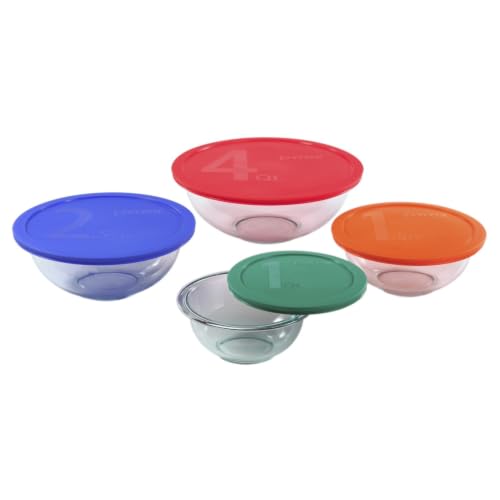
Pyrex Smart Essentials Mixing Bowl Set
This premium-leaning glass set is included here in prose only, so you can judge the style of set rather than a single listing. As a glass option it suits cooks who value that material’s everyday behaviour: steady, honest mixing, sensible nesting, and a shape that works for batter, salads, and prep. Best for: readers whose cooking matches the glass strengths described in this guide. Not suited for: anyone whose main jobs demand the opposite material, or who needs a bowl intended for direct, intense heat. Check the current listing for the exact contents of the set before you buy, because set compositions change.
A useful test for a mixing bowl set is to picture tossing a large leafy salad without bruising the leaves on a busy evening, not on a quiet morning with unlimited counter space. Bowls get moved, stacked, filled, and set down hard when a meal is running late. In that setting, a small-to-medium bowl, useful for chopped herbs, spice blends, and the wet ingredients of a muffin batch before they meet the dry tends to be the size that earns its keep. The material story is just as practical. A lidded glass set doubles as short-term fridge storage, which cuts down on transfers and washing. The lids themselves need a home, they should be checked for a snug fit rather than assumed airtight, and stacked lids can warp if stored under heavy pans. One habit keeps any set working well for longer: keep the largest bowl for the messiest job and reserve a smaller one for clean, dry ingredients. Judge a set by those ordinary evenings and you will judge it far more accurately than by a tidy product photograph.

OXO Good Grips Mixing Bowl Set
This mid-tier plastic set is included here in prose only, so you can judge the style of set rather than a single listing. As a plastic option it suits cooks who value that material’s everyday behaviour: steady, honest mixing, sensible nesting, and a shape that works for batter, salads, and prep. Best for: readers whose cooking matches the plastic strengths described in this guide. Not suited for: anyone whose main jobs demand the opposite material, or who needs a bowl intended for direct, intense heat. Check the current listing for the exact contents of the set before you buy, because set compositions change.
Start with mixing a marinade for tofu and work backwards to the bowl. How much headroom does the mixture need, how heavy will the filled bowl feel, and where will it sit while it rests? For many home cooks the honest answer points to a medium bowl, the everyday size for salads for two, pancake batter, and marinades that need room to turn. Then weigh the material honestly. Steel is light for its size, shrugs off dents better than most materials, and suits fast, frequent mixing. It cannot go in a microwave, it can feel noisy against a metal whisk, and a thin base may flex when you press a stiff dough against the side. Build in one small routine: store the set where you prep, not where you serve, because most mixing happens at the counter. When those pieces line up, a mixing bowl set stops being an abstract shopping question and becomes a simple match between the food you actually cook and the bowls already in your kitchen.

Cuisinart Mixing Bowls with Lids
This mid-tier steel set is included here in prose only, so you can judge the style of set rather than a single listing. As a stainless steel option it suits cooks who value that material’s everyday behaviour: steady, honest mixing, sensible nesting, and a shape that works for batter, salads, and prep. Best for: readers whose cooking matches the stainless steel strengths described in this guide. Not suited for: anyone whose main jobs demand the opposite material, or who needs a bowl intended for direct, intense heat. Check the current listing for the exact contents of the set before you buy, because set compositions change.
A useful test for a mixing bowl set is to picture preparing a grain bowl for weekday lunches on a busy evening, not on a quiet morning with unlimited counter space. Bowls get moved, stacked, filled, and set down hard when a meal is running late. In that setting, a large bowl, the one that earns its place when dough rises, when salad needs tossing space, or when a double batch is on the plan tends to be the size that earns its keep. The material story is just as practical. Plastic is the lightest choice, is forgiving when dropped, and often brings grippy bases and pouring lips. It can hold onto strong colours and smells after repeated use, it is not the material to choose for very hot mixtures, and surface scratches build up over time. One habit keeps any set working well for longer: store the set where you prep, not where you serve, because most mixing happens at the counter. Judge a set by those ordinary evenings and you will judge it far more accurately than by a tidy product photograph.
KitchenAid Mixing Bowl Set
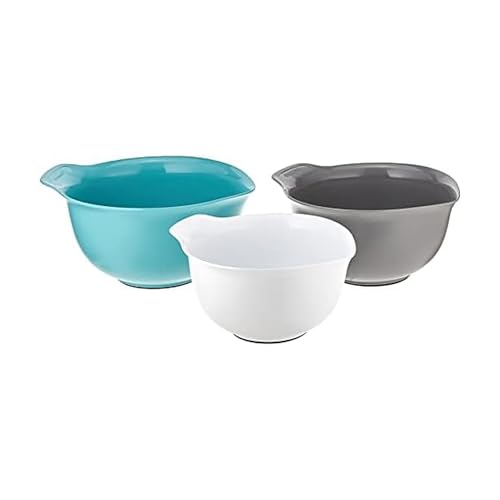
This mid-tier plastic set is included here in prose only, so you can judge the style of set rather than a single listing. As a plastic option it suits cooks who value that material’s everyday behaviour: steady, honest mixing, sensible nesting, and a shape that works for batter, salads, and prep. Best for: readers whose cooking matches the plastic strengths described in this guide. Not suited for: anyone whose main jobs demand the opposite material, or who needs a bowl intended for direct, intense heat. Check the current listing for the exact contents of the set before you buy, because set compositions change.
Think about proofing a small batch of dough in a warm corner. That single job explains a lot about a mixing bowl set, because the bowl has to give the spoon or whisk room to move without sending ingredients over the rim. With the smallest bowl in the set, the one that suits whisking a dressing, melting a small amount of butter in a separate pan transfer, or holding a beaten egg, the work feels calm rather than crowded. Material matters here too. Glass feels steady on the counter, shows the contents from the side, and moves from prep to serving without looking out of place. It is heavier than the other options, resists staining and lingering odours, and asks for calmer handling around hard floors and stone sinks. A practical habit helps: wash lids separately and let them dry fully before clicking them back on. None of this is complicated, but it is the difference between a set you reach for daily and a set that lives at the back of a cupboard, brought out only when every other bowl is already in the sink.
Who Each Kind of Set Suits
Consider washing berries without crushing them as a measuring stick. If the bowl is too shallow, folding becomes stirring and stirring becomes splashing; too deep and narrow, and a spatula cannot sweep the base cleanly. That is why the full nested stack, which matters less as separate bowls and more as a footprint that either fits your cupboard or quietly takes it over deserves attention before brand names enter the conversation. Material comes next. A lidded glass set doubles as short-term fridge storage, which cuts down on transfers and washing. The lids themselves need a home, they should be checked for a snug fit rather than assumed airtight, and stacked lids can warp if stored under heavy pans. Finally, borrow a habit from organised cooks: rinse the bowl straight after use and dry it before nesting, so moisture does not sit between stacked bowls. Together, size, material, and habit explain almost everything about how a set will behave once the newness wears off and it is simply part of dinner.
Start with beating a hand mixer batter without splatter and work backwards to the bowl. How much headroom does the mixture need, how heavy will the filled bowl feel, and where will it sit while it rests? For many home cooks the honest answer points to a medium bowl, the everyday size for salads for two, pancake batter, and marinades that need room to turn. Then weigh the material honestly. A lidded glass set doubles as short-term fridge storage, which cuts down on transfers and washing. The lids themselves need a home, they should be checked for a snug fit rather than assumed airtight, and stacked lids can warp if stored under heavy pans. Build in one small routine: wash lids separately and let them dry fully before clicking them back on. When those pieces line up, a mixing bowl set stops being an abstract shopping question and becomes a simple match between the food you actually cook and the bowls already in your kitchen.
Start with washing berries without crushing them and work backwards to the bowl. How much headroom does the mixture need, how heavy will the filled bowl feel, and where will it sit while it rests? For many home cooks the honest answer points to a large bowl, the one that earns its place when dough rises, when salad needs tossing space, or when a double batch is on the plan. Then weigh the material honestly. Glass feels steady on the counter, shows the contents from the side, and moves from prep to serving without looking out of place. It is heavier than the other options, resists staining and lingering odours, and asks for calmer handling around hard floors and stone sinks. Build in one small routine: store the set where you prep, not where you serve, because most mixing happens at the counter. When those pieces line up, a mixing bowl set stops being an abstract shopping question and becomes a simple match between the food you actually cook and the bowls already in your kitchen.
Care, Heat Safety and Long-Term Ownership
Start with whisking eggs for a family omelette and work backwards to the bowl. How much headroom does the mixture need, how heavy will the filled bowl feel, and where will it sit while it rests? For many home cooks the honest answer points to a large bowl, the one that earns its place when dough rises, when salad needs tossing space, or when a double batch is on the plan. Then weigh the material honestly. Steel is light for its size, shrugs off dents better than most materials, and suits fast, frequent mixing. It cannot go in a microwave, it can feel noisy against a metal whisk, and a thin base may flex when you press a stiff dough against the side. Build in one small routine: keep the largest bowl for the messiest job and reserve a smaller one for clean, dry ingredients. When those pieces line up, a mixing bowl set stops being an abstract shopping question and becomes a simple match between the food you actually cook and the bowls already in your kitchen.
Start with marinating vegetables before roasting and work backwards to the bowl. How much headroom does the mixture need, how heavy will the filled bowl feel, and where will it sit while it rests? For many home cooks the honest answer points to a medium bowl, the everyday size for salads for two, pancake batter, and marinades that need room to turn. Then weigh the material honestly. Steel is light for its size, shrugs off dents better than most materials, and suits fast, frequent mixing. It cannot go in a microwave, it can feel noisy against a metal whisk, and a thin base may flex when you press a stiff dough against the side. Build in one small routine: store the set where you prep, not where you serve, because most mixing happens at the counter. When those pieces line up, a mixing bowl set stops being an abstract shopping question and becomes a simple match between the food you actually cook and the bowls already in your kitchen.
Think about combining dry ingredients for pancakes. That single job explains a lot about a mixing bowl set, because the bowl has to give the spoon or whisk room to move without sending ingredients over the rim. With the full nested stack, which matters less as separate bowls and more as a footprint that either fits your cupboard or quietly takes it over, the work feels calm rather than crowded. Material matters here too. Glass feels steady on the counter, shows the contents from the side, and moves from prep to serving without looking out of place. It is heavier than the other options, resists staining and lingering odours, and asks for calmer handling around hard floors and stone sinks. A practical habit helps: place a damp cloth under the bowl before whisking, which stops the base travelling across the counter. None of this is complicated, but it is the difference between a set you reach for daily and a set that lives at the back of a cupboard, brought out only when every other bowl is already in the sink.
Final Verdict From These Mixing Bowl Set Reviews
Think about washing berries without crushing them. That single job explains a lot about a mixing bowl set, because the bowl has to give the spoon or whisk room to move without sending ingredients over the rim. With the smallest bowl in the set, the one that suits whisking a dressing, melting a small amount of butter in a separate pan transfer, or holding a beaten egg, the work feels calm rather than crowded. Material matters here too. Steel is light for its size, shrugs off dents better than most materials, and suits fast, frequent mixing. It cannot go in a microwave, it can feel noisy against a metal whisk, and a thin base may flex when you press a stiff dough against the side. A practical habit helps: choose the bowl before you start chopping, not after your hands are already covered in flour. None of this is complicated, but it is the difference between a set you reach for daily and a set that lives at the back of a cupboard, brought out only when every other bowl is already in the sink.
Start with portioning muffin batter into a tin and work backwards to the bowl. How much headroom does the mixture need, how heavy will the filled bowl feel, and where will it sit while it rests? For many home cooks the honest answer points to the full nested stack, which matters less as separate bowls and more as a footprint that either fits your cupboard or quietly takes it over. Then weigh the material honestly. Steel is light for its size, shrugs off dents better than most materials, and suits fast, frequent mixing. It cannot go in a microwave, it can feel noisy against a metal whisk, and a thin base may flex when you press a stiff dough against the side. Build in one small routine: wash lids separately and let them dry fully before clicking them back on. When those pieces line up, a mixing bowl set stops being an abstract shopping question and becomes a simple match between the food you actually cook and the bowls already in your kitchen.
Start with holding chopped onions while other prep continues and work backwards to the bowl. How much headroom does the mixture need, how heavy will the filled bowl feel, and where will it sit while it rests? For many home cooks the honest answer points to the full nested stack, which matters less as separate bowls and more as a footprint that either fits your cupboard or quietly takes it over. Then weigh the material honestly. Glass feels steady on the counter, shows the contents from the side, and moves from prep to serving without looking out of place. It is heavier than the other options, resists staining and lingering odours, and asks for calmer handling around hard floors and stone sinks. Build in one small routine: rinse the bowl straight after use and dry it before nesting, so moisture does not sit between stacked bowls. When those pieces line up, a mixing bowl set stops being an abstract shopping question and becomes a simple match between the food you actually cook and the bowls already in your kitchen.
Strengths and Trade-Offs at a Glance
Strengths:
- Graduated sizes cover prep, mixing, resting, and serving in one nested stack.
- Material choice lets you prioritise steadiness, light weight, or drop tolerance.
- Lidded sets reduce transfers when dough rests or ingredients wait in the fridge.
Trade-offs:
- Glass is heavy and needs protection from sudden temperature change and hard impacts.
- Very large sets can waste space on near-duplicate bowls.
- No single material suits microwaving, heavy dough, serving, and rough handling equally well.
Start with preparing a grain bowl for weekday lunches and work backwards to the bowl. How much headroom does the mixture need, how heavy will the filled bowl feel, and where will it sit while it rests? For many home cooks the honest answer points to a small-to-medium bowl, useful for chopped herbs, spice blends, and the wet ingredients of a muffin batch before they meet the dry. Then weigh the material honestly. Steel is light for its size, shrugs off dents better than most materials, and suits fast, frequent mixing. It cannot go in a microwave, it can feel noisy against a metal whisk, and a thin base may flex when you press a stiff dough against the side. Build in one small routine: keep the largest bowl for the messiest job and reserve a smaller one for clean, dry ingredients. When those pieces line up, a mixing bowl set stops being an abstract shopping question and becomes a simple match between the food you actually cook and the bowls already in your kitchen.
For a neighbouring topic, see mixing bowl set buying guide
For a neighbouring topic, see best mixing bowls
For a neighbouring topic, see best nesting bowl set for kitchen
For a neighbouring topic, see best glass food storage containers
For a neighbouring topic, see best kitchen scales for baking
Mixing Bowl Set: What Long-Term Use Reveals That a First Test Misses
Start with how a {p} holds up once the novelty wears off and routines settle in. Most coverage of a mixing bowl set concentrates on the first week of ownership, yet the decisions that matter most tend to surface later, once the mixing bowl set has to earn its place in an ordinary weekday routine rather than a carefully staged first attempt. Write down the three jobs you expect it to do most often, in the order you actually do them, and judge every claim you read against that short personal list instead of against a generic ideal.
Troubleshooting is easier when you expect the usual failure points. With any mixing bowl set, the recurring problems tend to cluster in the same places: uneven results from overloading or poor arrangement, wear showing first on the parts handled most often, and small annoyances with lids, seals, handles, controls or fittings that only appear after repeated use. Before buying, look for whether those wear parts can be cleaned properly, replaced or worked around, and whether the instructions address them directly rather than pretending they never happen.
Work through a realistic scenario, not a best case. Picture the busiest version of the job: more people to serve, less time than planned, ingredients or materials that are slightly out of the ordinary, and a clean-up waiting at the end. Ask how the mixing bowl set behaves at that upper edge, because a model that only shines on a small, simple load will disappoint precisely when you need it most. If the honest answer is that you would split the job into batches or fall back on an older method, factor that into the decision now rather than discovering it later.
Finally, plan the first fortnight deliberately. Use the mixing bowl set for one familiar job first, so you have a baseline you trust, then introduce the harder cases one at a time and note what changes. Small adjustments to arrangement, timing, quantity or preparation usually close most of the gap between disappointing first results and the performance the design is capable of. That short learning period is also the fairest test of long-term ownership: if the routine has not settled by the end of it, the mismatch is real, and it is better to know while returning or exchanging is still straightforward.
Edge cases deserve a deliberate pass. Think about the odd shapes, the thicker or thinner than usual loads, the leftovers, the second helping and the guest with different preferences. A well-chosen mixing bowl set handles the exceptions gracefully, or at least predictably, while a poor match turns every exception into a workaround. List your two or three most common exceptions in advance and check, from the manual or the listing details, that nothing about them is ruled out by size, shape, material or care requirements.
When you check listings such as Pyrex Smart Essentials Mixing Bowl Set, OXO Good Grips Mixing Bowl Set and Cuisinart Mixing Bowls with Lids, use them as worked examples: run through the same checks below on each one in turn, so the comparison stays honest and like for like rather than based on whichever listing happens to shout loudest.
Measure before you commit. Note the footprint, the clearance above and behind the spot where the mixing bowl set will live, and the route you will carry it by when it is hot, full or awkward. A mixing bowl set that technically fits but blocks a cupboard door, crowds a neighbouring appliance or has to be dragged across a worktop every time will quietly fall out of use, whatever its merits on paper. In the Kitchen Cookware category especially, a few centimetres of clearance and a sensible storage plan separate a daily tool from a bulky regret.
Frequently Asked Questions
How many bowls does a home cook actually need?
Most home cooks use three sizes constantly: a small bowl for dressings and beaten eggs, a medium bowl for everyday batter and salads, and a large bowl for dough, tossing, and double batches. Extra bowls in a set help when several stages run at once, such as dry ingredients, wet ingredients, and a resting dough. Count the stages in your busiest regular recipe rather than chasing the largest piece count, because duplicate mid-size bowls add cupboard bulk without adding much capability.
Is glass or stainless steel better for mixing bowls?
Neither is better for everyone. Glass is heavier and steadier, shows contents clearly, resists stains and odours, and can move to the table for serving. Steel is lighter, tougher against drops, and easier to carry when full, but it cannot be used in a microwave and can be noisy with a metal whisk. Plastic is lightest and most forgiving of drops, though it can retain strong colours and smells. Match the material to your heaviest, hottest, and most frequent jobs.
Can a glass mixing bowl go from the fridge into a hot oven?
Avoid sudden temperature changes with glass bowls. A cold bowl moved straight into strong heat, or a hot bowl set onto a cold wet surface, is stressed by thermal shock and can crack. Let a chilled bowl stand at room temperature for a while, keep hot mixtures and cold bowls apart, and always check the maker guidance for the specific set you own. When in doubt, transfer the mixture to a vessel that is clearly intended for that heat instead of testing the limits of a mixing bowl.
What should I do if a glass bowl breaks?
Stop, keep people and pets out of the area, and pick up large pieces carefully with thick gloves or folded paper rather than bare hands. Sweep the surrounding floor, then wipe with a damp paper towel to catch fine fragments, and check shoe soles and nearby surfaces. Bag the pieces securely before putting them in household waste, following local guidance. Do not use a vacuum on the first pass if fragments may be spread further, and keep food that was nearby out of the meal if there is any doubt about contamination.
Do lids on a mixing bowl set actually matter?
Lids matter if you rest dough, chill batter, or store prepped ingredients in the same bowl, because they remove a transfer and a second washing-up job. They matter much less if you mostly mix and cook straight away. Check that lids sit snugly without forcing, store them dry, and do not assume a mixing bowl lid gives the same seal as a dedicated storage container. For longer storage, a purpose-made container is usually the calmer choice.
How do I stop a mixing bowl sliding while I whisk?
Set the bowl on a damp cloth or a non-slip mat, choose a bowl with a grippy or weighted base if sliding is a recurring problem, and hold the rim rather than chasing the bowl around the counter. A bowl with enough weight for its size also helps. If you whisk one-handed while pouring with the other, a handle and a pouring lip make the job noticeably calmer, especially with thinner batters.
Related Guides
Use the internal links throughout this article to move between the choosing, value, buying, and review angles on the same set of bowls, and to compare neighbouring prep tools that share counter and cupboard space with them.