Disclosure: As an Amazon Associate, topratedkitchenware.com earns from qualifying purchases. Links on this page are affiliate links; they cost you nothing extra. Prices and availability change often, so check the current Amazon listing before you buy.
Quick Verdict: Sheet Pan Pros and Cons
Weighing sheet pan pros and cons honestly, the sheet pan pros and cons balance out in favour of most home cooks: the pros are versatility, durability and simplicity, while the cons are storage, hot-pan handling and the limits of a shallow design. It suits roasters, bakers and batch cooks. It does not suit cooks who rarely use the oven or who need deep, saucy, covered cooking. Keep our sheet pan guide on how to choose a sheet pan open as the companion buying view while you read both sides below.
In this guide
The Pros
Pro: One Pan, Many Jobs
A sheet pan is also the kitchen’s best landing strip. It catches drips under a cooling pie, carries a dozen prepped bowls from counter to stove, holds breaded cutlets while the oil heats, and goes under a roast chicken in the fridge overnight. Cooks who keep one pan permanently on the counter during prep find their whole workflow tidier, because every messy intermediate step happens on a surface that can go straight into hot soapy water afterwards.
Roasting vegetables is the job that converts sheet pan sceptics. Cut everything to a similar size, toss it in oil and seasoning in a bowl rather than on the pan, then spread it in a single layer with breathing room between the pieces. Crowding is the enemy: packed vegetables steam, soften and refuse to caramelise. Two half-empty pans will always beat one overloaded pan, and rotating the pans halfway through gives you even colour without any extra effort or skill.
Pro: Even Browning, Honest Cooking
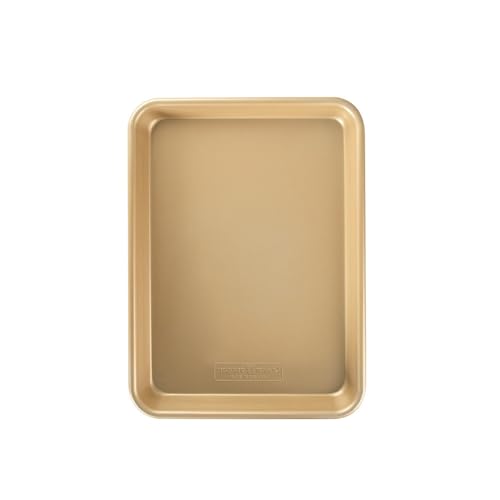
A sheet pan is the flattest, most honest tool in the kitchen: a shallow rectangle of metal with a low rolled rim on all four sides. That rim is the whole design. It keeps roasted vegetables, dripping chicken thighs and runaway cookie dough on the pan instead of on the oven floor, while staying low enough that hot air can sweep across the food and brown it properly. Unlike a deep roasting tin, a sheet pan exposes almost everything to direct heat, which is why food crisps instead of steaming in its own juices.
Most sheet pans are aluminum, and for good reason. Aluminum heats quickly and evenly, it is light enough to lift one-handed with oven gloves on, and it does not cost much to replace after years of hard service. Bare aluminum also browns predictably and never has a coating to wear out. Coated and aluminized steel pans trade a little of that simplicity for easier release and easier washing, which some home cooks gladly accept, especially for sticky glazes and cheesy sheet pan dinners.
Pro: Nothing to Break
The honest counterweight is that a sheet pan does nothing you cannot approximate another way. A roasting tin, a cast iron skillet and a casserole dish between them cover much of the same ground, and if your oven is tiny or your cooking rarely involves roasting, a pan may sit unused. Value appears only when the pan matches your habits: households that roast, bake and batch-cook weekly will use it constantly, while households that mostly simmer and saute may reasonably skip it.
The value case for a sheet pan rests on frequency, not novelty. Few tools get used as often, across as many meals, for as many years. A pan that roasts dinner on Monday, bakes cookies on Wednesday and reheats leftovers on Friday is quietly paying for itself in saved washing up, saved energy and saved takeaways. Because the design never changes and there is nothing to break, wear out electronically or go out of fashion, a decent pan is one of the safest small purchases in the kitchen.
Pro: Easy to Store and Clean
Washing a sheet pan well is mostly about timing. Soak a cooled pan in warm soapy water and most roasted-on residue loosens on its own; a non-scratch sponge and patience finish the job. Bare aluminum will darken and develop a seasoned patina over the years, and that discolouration is cosmetic, not a failure. In fact many bakers swear their oldest, darkest pans brown the most evenly, because the surface has settled into the work.
Avoid harsh habits that shorten a pan’s life. Cutting food directly on the pan scores the surface and, on coated pans, breaks the finish. Metal spatulas are fine on bare aluminum but should stay away from coatings. Dishwashers are convenient, yet strong detergents can dull bare aluminum and age coatings faster, so hand washing is the kinder default for a pan you want to keep for a decade. Dry the pan fully before stacking it away to keep the rim and corners clean.
Pro: Beginner-Friendly, Expert-Useful
Lining is a tool, not a crutch, and each liner behaves differently. Baking parchment is the all-rounder for cookies, roasting and sticky glazes, and it makes cleanup almost trivial. Foil handles very high heat and parcel-style cooking but can stick to sugary foods. A reusable silicone mat excels for baking and delicate items, though keen roast cooks find it softens browning a little. Choosing the liner per job, rather than by habit, is one of the easiest upgrades in sheet pan cooking.
For cookies, a pale, uncoated pan is the traditional choice because it browns bottoms gently and evenly. Dark pans absorb more heat and can push edges towards over-browning before centres are set, so if you bake on a dark pan, watch the first batch closely and adjust your timing by feel rather than by the recipe alone. Lining with baking parchment gives you consistent release, faster cleanup and a buffer against hot spots, and the sheet lifts straight off the pan for cooling.
Pro: Batch Cooking Without Fuss
Sheet pan dinners follow a simple logic: ingredients that take longest go on first, delicate ingredients join later. Root vegetables and chicken pieces start the clock, quicker items such as peppers, green beans or fish fillets arrive partway through, and anything leafy or cheesy goes on for the final minutes. Because the pan is shallow and open, you can see and smell exactly what is happening, which makes this style of cooking unusually forgiving for beginners and unusually efficient for experienced cooks.
Roasting vegetables is the job that converts sheet pan sceptics. Cut everything to a similar size, toss it in oil and seasoning in a bowl rather than on the pan, then spread it in a single layer with breathing room between the pieces. Crowding is the enemy: packed vegetables steam, soften and refuse to caramelise. Two half-empty pans will always beat one overloaded pan, and rotating the pans halfway through gives you even colour without any extra effort or skill.
The Cons
Con: Hot and Awkward When Loaded
Check the edges of any bargain pan before you trust it. On the cheapest pans the rim can be thin and surprisingly sharp, enough to nick a finger while washing up or to cut through a washing-up sponge. Run a fingertip carefully along the underside of the rim when the pan is new and cold. If it feels rough or razor-like, that pan belongs in the recycling, not in daily service, because you will handle those edges hundreds of times, often with wet, soapy hands.
Thin, inexpensive pans can flex or twist suddenly when they meet a sharp change in temperature, sometimes with a loud bang that startles the cook into jerking the pan. Reduce the risk by avoiding extreme shocks: do not run cold water over a ripping-hot pan, do not place a hot pan on a cold wet surface, and let very hot pans cool a little before washing. A gentle twist in a budget pan is common and usually harmless, but it is a clear sign to handle that pan with extra care.
Con: Thin Pans Can Warp
Think in pairs and systems rather than single pans. Two matching half sheets let you rotate batches of cookies without waiting, stage a full sheet pan dinner across both pans, and keep one pan working while the other soaks. Adding a quarter sheet and a simple wire rack that fits inside the half sheet multiplies what the set can do: cooling, resting meat, crisping under the grill, and holding small jobs that would waste a big pan’s space and heat.
Judge a sheet pan first by how it feels in your hands. It should feel planted and confident, not tinny, and it should not oil-can or flex dramatically when you press the centre or lift one corner. A rolled or reinforced rim adds real strength, helps the pan resist twisting in a hot oven, and gives your gloved hands something secure to grip. Weight alone is not quality, but a pan that feels flimsy on the shelf will not feel better at full temperature.
Con: Shallow by Design
A sheet pan is not a jelly roll pan, a cookie sheet or a roasting tin, even though shops blur the names. A true sheet pan has a rim on all four sides; a cookie sheet may have one raised edge or none, which is handy for sliding cookies off but useless for juicy roasts. A jelly roll pan is a touch smaller and deeper in feel. If a recipe says sheet pan, the four-sided rimmed half sheet is what the writer almost certainly had in the oven.
Bare aluminum, coated aluminum and aluminized steel each suit a different cook. Bare aluminum is the purist’s pan: even heat, no surface to damage, a patina that improves with age. Coated pans release food beautifully and wash in moments, but ask for gentler tools and eventual replacement. Heavier commercial-style pans feel the most secure in a hot oven and resist flexing best, at the cost of a little more weight to lift and a little more cupboard presence.
Con: Coatings Wear Out
A sheet pan is not a jelly roll pan, a cookie sheet or a roasting tin, even though shops blur the names. A true sheet pan has a rim on all four sides; a cookie sheet may have one raised edge or none, which is handy for sliding cookies off but useless for juicy roasts. A jelly roll pan is a touch smaller and deeper in feel. If a recipe says sheet pan, the four-sided rimmed half sheet is what the writer almost certainly had in the oven.
Avoid harsh habits that shorten a pan’s life. Cutting food directly on the pan scores the surface and, on coated pans, breaks the finish. Metal spatulas are fine on bare aluminum but should stay away from coatings. Dishwashers are convenient, yet strong detergents can dull bare aluminum and age coatings faster, so hand washing is the kinder default for a pan you want to keep for a decade. Dry the pan fully before stacking it away to keep the rim and corners clean.
Con: Cheap Edges Can Be Sharp
Thin, inexpensive pans can flex or twist suddenly when they meet a sharp change in temperature, sometimes with a loud bang that startles the cook into jerking the pan. Reduce the risk by avoiding extreme shocks: do not run cold water over a ripping-hot pan, do not place a hot pan on a cold wet surface, and let very hot pans cool a little before washing. A gentle twist in a budget pan is common and usually harmless, but it is a clear sign to handle that pan with extra care.
Treat every sheet pan as a burn risk from the moment it enters the oven until long after it leaves. Always use dry oven gloves on both hands, because a loaded pan is heavier and less balanced than it looks, and a wet cloth conducts heat almost instantly. Set the hot pan down only on a trivet, a wooden board or a cold hob grate, never directly on a worktop you care about, and announce it out loud if other people are moving around the kitchen.
Con: Darkening and Patina Divide Opinion
Washing a sheet pan well is mostly about timing. Soak a cooled pan in warm soapy water and most roasted-on residue loosens on its own; a non-scratch sponge and patience finish the job. Bare aluminum will darken and develop a seasoned patina over the years, and that discolouration is cosmetic, not a failure. In fact many bakers swear their oldest, darkest pans brown the most evenly, because the surface has settled into the work.
Avoid harsh habits that shorten a pan’s life. Cutting food directly on the pan scores the surface and, on coated pans, breaks the finish. Metal spatulas are fine on bare aluminum but should stay away from coatings. Dishwashers are convenient, yet strong detergents can dull bare aluminum and age coatings faster, so hand washing is the kinder default for a pan you want to keep for a decade. Dry the pan fully before stacking it away to keep the rim and corners clean.
What the Trade-Offs Mean for You
The value case for a sheet pan rests on frequency, not novelty. Few tools get used as often, across as many meals, for as many years. A pan that roasts dinner on Monday, bakes cookies on Wednesday and reheats leftovers on Friday is quietly paying for itself in saved washing up, saved energy and saved takeaways. Because the design never changes and there is nothing to break, wear out electronically or go out of fashion, a decent pan is one of the safest small purchases in the kitchen.
A sheet pan is also the kitchen’s best landing strip. It catches drips under a cooling pie, carries a dozen prepped bowls from counter to stove, holds breaded cutlets while the oil heats, and goes under a roast chicken in the fridge overnight. Cooks who keep one pan permanently on the counter during prep find their whole workflow tidier, because every messy intermediate step happens on a surface that can go straight into hot soapy water afterwards.
The honest counterweight is that a sheet pan does nothing you cannot approximate another way. A roasting tin, a cast iron skillet and a casserole dish between them cover much of the same ground, and if your oven is tiny or your cooking rarely involves roasting, a pan may sit unused. Value appears only when the pan matches your habits: households that roast, bake and batch-cook weekly will use it constantly, while households that mostly simmer and saute may reasonably skip it.
For cookies, a pale, uncoated pan is the traditional choice because it browns bottoms gently and evenly. Dark pans absorb more heat and can push edges towards over-browning before centres are set, so if you bake on a dark pan, watch the first batch closely and adjust your timing by feel rather than by the recipe alone. Lining with baking parchment gives you consistent release, faster cleanup and a buffer against hot spots, and the sheet lifts straight off the pan for cooling.
Sheet pan dinners follow a simple logic: ingredients that take longest go on first, delicate ingredients join later. Root vegetables and chicken pieces start the clock, quicker items such as peppers, green beans or fish fillets arrive partway through, and anything leafy or cheesy goes on for the final minutes. Because the pan is shallow and open, you can see and smell exactly what is happening, which makes this style of cooking unusually forgiving for beginners and unusually efficient for experienced cooks.
Roasting vegetables is the job that converts sheet pan sceptics. Cut everything to a similar size, toss it in oil and seasoning in a bowl rather than on the pan, then spread it in a single layer with breathing room between the pieces. Crowding is the enemy: packed vegetables steam, soften and refuse to caramelise. Two half-empty pans will always beat one overloaded pan, and rotating the pans halfway through gives you even colour without any extra effort or skill.
The value case for a sheet pan rests on frequency, not novelty. Few tools get used as often, across as many meals, for as many years. A pan that roasts dinner on Monday, bakes cookies on Wednesday and reheats leftovers on Friday is quietly paying for itself in saved washing up, saved energy and saved takeaways. Because the design never changes and there is nothing to break, wear out electronically or go out of fashion, a decent pan is one of the safest small purchases in the kitchen.
Sheet Pan Picks Worth a Closer Look
Every pan below is presented prose-only for now, with its tier described in words rather than numbers. Treat each short profile as a starting point for your own shortlist, and always use dry oven gloves when any pan is hot.

Nordic Ware Natural Aluminum Baker’s Half Sheet — Best for everyday roasting and baking
This is a plain, uncoated aluminum workhorse in the classic commercial style, positioned as a dependable mid-tier everyday choice. It suits cooks whose habits match that description, and it follows the same rules as every pan in this guide: spread food in a single layer, respect the heat, and let the pan cool before washing. Best for: readers who recognise their own cooking in the badge above. Not suited for: anyone whose oven, storage or habits point to a different size or surface.

USA Pan Bakeware Half Sheet Pan — Best for easy release and tidy cleanup
This is a coated pan aimed at home bakers who hate scrubbing, positioned as an easy-care mid-tier choice for bakers. It suits cooks whose habits match that description, and it follows the same rules as every pan in this guide: spread food in a single layer, respect the heat, and let the pan cool before washing. Best for: readers who recognise their own cooking in the badge above. Not suited for: anyone whose oven, storage or habits point to a different size or surface.

Vollrath Wear-Ever Half Sheet Pan — Best for heavy, frequent use
This is a commercial-kitchen staple built for repetition and volume, positioned as a premium-leaning commercial-style choice. It suits cooks whose habits match that description, and it follows the same rules as every pan in this guide: spread food in a single layer, respect the heat, and let the pan cool before washing. Best for: readers who recognise their own cooking in the badge above. Not suited for: anyone whose oven, storage or habits point to a different size or surface.

Chicago Metallic Commercial II Half Sheet Pan — Best for bakers who want a darker, sturdier feel
This is a heavier-feeling pan from a long-running commercial bakeware line, positioned as a sturdy mid-to-premium choice. It suits cooks whose habits match that description, and it follows the same rules as every pan in this guide: spread food in a single layer, respect the heat, and let the pan cool before washing. Best for: readers who recognise their own cooking in the badge above. Not suited for: anyone whose oven, storage or habits point to a different size or surface.
How to Buy Smart
Judge a sheet pan first by how it feels in your hands. It should feel planted and confident, not tinny, and it should not oil-can or flex dramatically when you press the centre or lift one corner. A rolled or reinforced rim adds real strength, helps the pan resist twisting in a hot oven, and gives your gloved hands something secure to grip. Weight alone is not quality, but a pan that feels flimsy on the shelf will not feel better at full temperature.
Count your oven before you count pans. Measure the usable interior, remember that the half sheet is the assumed standard for most recipes, and check that two pans can sit side by side or on separate shelves with air space between them if you cook for a crowd. Storage matters too: sheet pans stack neatly, slide into narrow gaps beside the oven, or stand upright in a deep drawer, but only if you buy sizes that actually fit the space you have.
Decide about coatings with your actual cooking in mind. If you roast vegetables, potatoes and proteins most nights, bare aluminum is simple, durable and easy to maintain with parchment for sticky jobs. If you bake often and dread washing up, a good coated pan saves real effort, provided you treat it gently and accept that coatings are a consumable surface with a lifespan. Neither answer is wrong; the wrong answer is buying against your own habits and then blaming the pan.
Think in pairs and systems rather than single pans. Two matching half sheets let you rotate batches of cookies without waiting, stage a full sheet pan dinner across both pans, and keep one pan working while the other soaks. Adding a quarter sheet and a simple wire rack that fits inside the half sheet multiplies what the set can do: cooling, resting meat, crisping under the grill, and holding small jobs that would waste a big pan’s space and heat.
Judge a sheet pan first by how it feels in your hands. It should feel planted and confident, not tinny, and it should not oil-can or flex dramatically when you press the centre or lift one corner. A rolled or reinforced rim adds real strength, helps the pan resist twisting in a hot oven, and gives your gloved hands something secure to grip. Weight alone is not quality, but a pan that feels flimsy on the shelf will not feel better at full temperature.
Setup and Care That Reduce the Cons
Check the edges of any bargain pan before you trust it. On the cheapest pans the rim can be thin and surprisingly sharp, enough to nick a finger while washing up or to cut through a washing-up sponge. Run a fingertip carefully along the underside of the rim when the pan is new and cold. If it feels rough or razor-like, that pan belongs in the recycling, not in daily service, because you will handle those edges hundreds of times, often with wet, soapy hands.
Thin, inexpensive pans can flex or twist suddenly when they meet a sharp change in temperature, sometimes with a loud bang that startles the cook into jerking the pan. Reduce the risk by avoiding extreme shocks: do not run cold water over a ripping-hot pan, do not place a hot pan on a cold wet surface, and let very hot pans cool a little before washing. A gentle twist in a budget pan is common and usually harmless, but it is a clear sign to handle that pan with extra care.
Washing a sheet pan well is mostly about timing. Soak a cooled pan in warm soapy water and most roasted-on residue loosens on its own; a non-scratch sponge and patience finish the job. Bare aluminum will darken and develop a seasoned patina over the years, and that discolouration is cosmetic, not a failure. In fact many bakers swear their oldest, darkest pans brown the most evenly, because the surface has settled into the work.
Season your routine, not the pan. Bare aluminum needs no seasoning ritual; simply wash a new pan, dry it well, and cook. The routine that matters is preheating awareness: a pan that goes into a fully heated oven with evenly spread food browns predictably, while food loaded onto a cold pan in a cold oven steams before it roasts. For the crispiest results, some cooks preheat the empty pan for sturdy vegetables and potatoes, sliding the oiled food onto hot metal with oven gloves and great care.
Treat every sheet pan as a burn risk from the moment it enters the oven until long after it leaves. Always use dry oven gloves on both hands, because a loaded pan is heavier and less balanced than it looks, and a wet cloth conducts heat almost instantly. Set the hot pan down only on a trivet, a wooden board or a cold hob grate, never directly on a worktop you care about, and announce it out loud if other people are moving around the kitchen.
Bottom Line
The value case for a sheet pan rests on frequency, not novelty. Few tools get used as often, across as many meals, for as many years. A pan that roasts dinner on Monday, bakes cookies on Wednesday and reheats leftovers on Friday is quietly paying for itself in saved washing up, saved energy and saved takeaways. Because the design never changes and there is nothing to break, wear out electronically or go out of fashion, a decent pan is one of the safest small purchases in the kitchen.
The honest counterweight is that a sheet pan does nothing you cannot approximate another way. A roasting tin, a cast iron skillet and a casserole dish between them cover much of the same ground, and if your oven is tiny or your cooking rarely involves roasting, a pan may sit unused. Value appears only when the pan matches your habits: households that roast, bake and batch-cook weekly will use it constantly, while households that mostly simmer and saute may reasonably skip it.
The value case for a sheet pan rests on frequency, not novelty. Few tools get used as often, across as many meals, for as many years. A pan that roasts dinner on Monday, bakes cookies on Wednesday and reheats leftovers on Friday is quietly paying for itself in saved washing up, saved energy and saved takeaways. Because the design never changes and there is nothing to break, wear out electronically or go out of fashion, a decent pan is one of the safest small purchases in the kitchen.
More Practical Notes
Washing a sheet pan well is mostly about timing. Soak a cooled pan in warm soapy water and most roasted-on residue loosens on its own; a non-scratch sponge and patience finish the job. Bare aluminum will darken and develop a seasoned patina over the years, and that discolouration is cosmetic, not a failure. In fact many bakers swear their oldest, darkest pans brown the most evenly, because the surface has settled into the work.
Avoid harsh habits that shorten a pan’s life. Cutting food directly on the pan scores the surface and, on coated pans, breaks the finish. Metal spatulas are fine on bare aluminum but should stay away from coatings. Dishwashers are convenient, yet strong detergents can dull bare aluminum and age coatings faster, so hand washing is the kinder default for a pan you want to keep for a decade. Dry the pan fully before stacking it away to keep the rim and corners clean.
Lining is a tool, not a crutch, and each liner behaves differently. Baking parchment is the all-rounder for cookies, roasting and sticky glazes, and it makes cleanup almost trivial. Foil handles very high heat and parcel-style cooking but can stick to sugary foods. A reusable silicone mat excels for baking and delicate items, though keen roast cooks find it softens browning a little. Choosing the liner per job, rather than by habit, is one of the easiest upgrades in sheet pan cooking.
The honest counterweight is that a sheet pan does nothing you cannot approximate another way. A roasting tin, a cast iron skillet and a casserole dish between them cover much of the same ground, and if your oven is tiny or your cooking rarely involves roasting, a pan may sit unused. Value appears only when the pan matches your habits: households that roast, bake and batch-cook weekly will use it constantly, while households that mostly simmer and saute may reasonably skip it.
Roasting vegetables is the job that converts sheet pan sceptics. Cut everything to a similar size, toss it in oil and seasoning in a bowl rather than on the pan, then spread it in a single layer with breathing room between the pieces. Crowding is the enemy: packed vegetables steam, soften and refuse to caramelise. Two half-empty pans will always beat one overloaded pan, and rotating the pans halfway through gives you even colour without any extra effort or skill.
Count your oven before you count pans. Measure the usable interior, remember that the half sheet is the assumed standard for most recipes, and check that two pans can sit side by side or on separate shelves with air space between them if you cook for a crowd. Storage matters too: sheet pans stack neatly, slide into narrow gaps beside the oven, or stand upright in a deep drawer, but only if you buy sizes that actually fit the space you have.
Decide about coatings with your actual cooking in mind. If you roast vegetables, potatoes and proteins most nights, bare aluminum is simple, durable and easy to maintain with parchment for sticky jobs. If you bake often and dread washing up, a good coated pan saves real effort, provided you treat it gently and accept that coatings are a consumable surface with a lifespan. Neither answer is wrong; the wrong answer is buying against your own habits and then blaming the pan.
A sheet pan is also the kitchen’s best landing strip. It catches drips under a cooling pie, carries a dozen prepped bowls from counter to stove, holds breaded cutlets while the oil heats, and goes under a roast chicken in the fridge overnight. Cooks who keep one pan permanently on the counter during prep find their whole workflow tidier, because every messy intermediate step happens on a surface that can go straight into hot soapy water afterwards.
Think in pairs and systems rather than single pans. Two matching half sheets let you rotate batches of cookies without waiting, stage a full sheet pan dinner across both pans, and keep one pan working while the other soaks. Adding a quarter sheet and a simple wire rack that fits inside the half sheet multiplies what the set can do: cooling, resting meat, crisping under the grill, and holding small jobs that would waste a big pan’s space and heat.
The value case for a sheet pan rests on frequency, not novelty. Few tools get used as often, across as many meals, for as many years. A pan that roasts dinner on Monday, bakes cookies on Wednesday and reheats leftovers on Friday is quietly paying for itself in saved washing up, saved energy and saved takeaways. Because the design never changes and there is nothing to break, wear out electronically or go out of fashion, a decent pan is one of the safest small purchases in the kitchen.
Season your routine, not the pan. Bare aluminum needs no seasoning ritual; simply wash a new pan, dry it well, and cook. The routine that matters is preheating awareness: a pan that goes into a fully heated oven with evenly spread food browns predictably, while food loaded onto a cold pan in a cold oven steams before it roasts. For the crispiest results, some cooks preheat the empty pan for sturdy vegetables and potatoes, sliding the oiled food onto hot metal with oven gloves and great care.
Sheet pan dinners follow a simple logic: ingredients that take longest go on first, delicate ingredients join later. Root vegetables and chicken pieces start the clock, quicker items such as peppers, green beans or fish fillets arrive partway through, and anything leafy or cheesy goes on for the final minutes. Because the pan is shallow and open, you can see and smell exactly what is happening, which makes this style of cooking unusually forgiving for beginners and unusually efficient for experienced cooks.
For cookies, a pale, uncoated pan is the traditional choice because it browns bottoms gently and evenly. Dark pans absorb more heat and can push edges towards over-browning before centres are set, so if you bake on a dark pan, watch the first batch closely and adjust your timing by feel rather than by the recipe alone. Lining with baking parchment gives you consistent release, faster cleanup and a buffer against hot spots, and the sheet lifts straight off the pan for cooling.
Judge a sheet pan first by how it feels in your hands. It should feel planted and confident, not tinny, and it should not oil-can or flex dramatically when you press the centre or lift one corner. A rolled or reinforced rim adds real strength, helps the pan resist twisting in a hot oven, and gives your gloved hands something secure to grip. Weight alone is not quality, but a pan that feels flimsy on the shelf will not feel better at full temperature.
Washing a sheet pan well is mostly about timing. Soak a cooled pan in warm soapy water and most roasted-on residue loosens on its own; a non-scratch sponge and patience finish the job. Bare aluminum will darken and develop a seasoned patina over the years, and that discolouration is cosmetic, not a failure. In fact many bakers swear their oldest, darkest pans brown the most evenly, because the surface has settled into the work.
Avoid harsh habits that shorten a pan’s life. Cutting food directly on the pan scores the surface and, on coated pans, breaks the finish. Metal spatulas are fine on bare aluminum but should stay away from coatings. Dishwashers are convenient, yet strong detergents can dull bare aluminum and age coatings faster, so hand washing is the kinder default for a pan you want to keep for a decade. Dry the pan fully before stacking it away to keep the rim and corners clean.
Lining is a tool, not a crutch, and each liner behaves differently. Baking parchment is the all-rounder for cookies, roasting and sticky glazes, and it makes cleanup almost trivial. Foil handles very high heat and parcel-style cooking but can stick to sugary foods. A reusable silicone mat excels for baking and delicate items, though keen roast cooks find it softens browning a little. Choosing the liner per job, rather than by habit, is one of the easiest upgrades in sheet pan cooking.
Sheet Pan: Weighing the Trade-Offs in Daily Use
Start with how the strengths and frustrations of a {p} balance out in a real kitchen. Most coverage of a sheet pan concentrates on the first week of ownership, yet the decisions that matter most tend to surface later, once the sheet pan has to earn its place in an ordinary weekday routine rather than a carefully staged first attempt. Write down the three jobs you expect it to do most often, in the order you actually do them, and judge every claim you read against that short personal list instead of against a generic ideal.
Finally, plan the first fortnight deliberately. Use the sheet pan for one familiar job first, so you have a baseline you trust, then introduce the harder cases one at a time and note what changes. Small adjustments to arrangement, timing, quantity or preparation usually close most of the gap between disappointing first results and the performance the design is capable of. That short learning period is also the fairest test of the trade-offs that only show up after weeks of use: if the routine has not settled by the end of it, the mismatch is real, and it is better to know while returning or exchanging is still straightforward.
When you check listings such as Nordic Ware Natural Aluminum Baker’s Half Sheet, USA Pan Bakeware Half Sheet Pan and Vollrath Wear-Ever Half Sheet Pan, use them as worked examples: run through the same checks below on each one in turn, so the comparison stays honest and like for like rather than based on whichever listing happens to shout loudest.
Work through a realistic scenario, not a best case. Picture the busiest version of the job: more people to serve, less time than planned, ingredients or materials that are slightly out of the ordinary, and a clean-up waiting at the end. Ask how the sheet pan behaves at that upper edge, because a model that only shines on a small, simple load will disappoint precisely when you need it most. If the honest answer is that you would split the job into batches or fall back on an older method, factor that into the decision now rather than discovering it later.
Troubleshooting is easier when you expect the usual failure points. With any sheet pan, the recurring problems tend to cluster in the same places: uneven results from overloading or poor arrangement, wear showing first on the parts handled most often, and small annoyances with lids, seals, handles, controls or fittings that only appear after repeated use. Before buying, look for whether those wear parts can be cleaned properly, replaced or worked around, and whether the instructions address them directly rather than pretending they never happen.
Maintenance decides how long the good results last. Set a simple rhythm: a quick wipe or rinse after each use, a deeper clean on a fixed day, and a periodic check of the parts that move, seal or bear weight. A sheet pan that needs fiddly disassembly for basic care will be cleaned less often, and performance drifts long before anything actually breaks. Prefer designs where the parts that get dirtiest are the parts that are easiest to reach, and be honest with yourself about which cleaning steps you will genuinely keep up.
Measure before you commit. Note the footprint, the clearance above and behind the spot where the sheet pan will live, and the route you will carry it by when it is hot, full or awkward. A sheet pan that technically fits but blocks a cupboard door, crowds a neighbouring appliance or has to be dragged across a worktop every time will quietly fall out of use, whatever its merits on paper. In the Kitchen Cookware category especially, a few centimetres of clearance and a sensible storage plan separate a daily tool from a bulky regret.
Frequently Asked Questions
What size sheet pan do most home cooks need?
The half sheet is the default for most households because published recipes assume it and it fits a typical home oven with room for air to circulate. Add a quarter sheet later for small jobs, reheating and prep work. Measure your oven’s usable interior before ordering anything unusual, and remember that a pan you can store easily is a pan you will actually reach for on busy weeknights.
Should I choose bare aluminum or a coated sheet pan?
Choose bare aluminum if you roast often, value durability and are happy using parchment for sticky foods. Choose a coated pan if easy release and fast washing matter more and you are willing to use gentle tools and replace the pan when the surface eventually tires. Both are legitimate; the better pan is the one that matches the way you already cook, not the way you imagine cooking.
Why did my sheet pan warp in the oven?
Thin pans can flex when hot metal meets a sudden temperature change, and the effect is louder and more dramatic than it is dangerous in most cases. Reduce the risk by avoiding cold water on a hot pan, spreading food evenly so heat distributes across the surface, and choosing a pan with a reinforced rim for very high-heat roasting. Always handle a hot pan with dry oven gloves on both hands.
Can I put a sheet pan under the grill or broiler?
Only if the pan and any coating are clearly suited to that intense, direct heat, and only with close attention, because grilling temperatures are far less forgiving than roasting temperatures. Bare, sturdy pans cope best. Keep food a sensible distance from the element, never leave the oven unattended, and remember that sugary glazes can move from golden to burnt in moments under direct heat.
How do I stop food sticking to a sheet pan?
Preheat the oven properly, coat food lightly and evenly with oil, and give the pan a liner when the food is sugary, cheesy or delicate. Baking parchment solves most sticking before it starts. Let roasted food rest for a minute or two before moving it; items that seem stuck often release cleanly once the surface relaxes slightly. Avoid cutting food on the pan, which damages both bare and coated surfaces over time.
How long should a good sheet pan last?
A sturdy bare aluminum pan can serve for many years, darkening gradually and often browning better as it ages. Coated pans have a shorter working life because the surface itself wears, even with careful use. Longevity depends less on the calendar than on habits: gentle washing, no thermal shock, no cutting on the surface, and full drying before storage will keep almost any decent pan useful for a very long time.
Related Guides
Keep exploring: the best Nordic Ware bakeware options · our guide to the best USA Pan bakeware · the best baking pans for home kitchens · the best nonstick bakeware sets
More from the kitchen: the best oven towels for handling hot pans safely · the best kitchen scales for baking · our sheet pan guide on how to choose a sheet pan · our sheet pan guide on is a sheet pan worth it · our sheet pan guide on sheet pan buying guide · our sheet pan guide on sheet pan review · our sheet pan guide on sheet pan reviews