Disclosure: As an Amazon Associate, topratedkitchenware.com earns from qualifying purchases. Links on this page are affiliate links; they cost you nothing extra. Prices and availability change often, so check the current Amazon listing before you buy.
Is a countertop oven worth it? The short answer: worth it if your household cooks or reheats in small-to-medium quantities most days, resents heating a full oven for a single tray, and has a stretch of counter — with proper ventilation clearance — that it can honestly spare. Not worth it if your cooking is mostly stovetop and microwave, your counter is already a battleground, or you regularly cook at a scale this format cannot touch. Between those poles sits the honest middle where most households live, and this page exists for them. It sets out what you actually get when you buy a countertop oven, what it really costs beyond the money — space, upkeep, learning curve, the small print of ownership — who it pays off for and who it quietly fails, the alternatives worth weighing before you commit, and how to extract full value if you do buy. No prices are quoted, because worth is not a number on a listing; it is the match between an appliance and a life, and listings change while lives change more slowly. Check the current Amazon listing when you buy — but decide worth here, with your own cooking in front of you.
Key Takeaways
- Worth is frequency: a countertop oven used daily is a bargain at almost any tier; used monthly, it is furniture.
- What you get is a second, faster, right-sized oven — plus reheating that rescues leftovers and air frying without another gadget.
- The real costs are counter space with clearance, a permanent cleaning rhythm, and a capacity ceiling — not the purchase price.
- It pays off for daily cooks, small households, reheaters and second-oven seekers; it fails crowd cooks and the counter-poor.
- The alternatives each win somewhere: basket fryer for crisping, microwave for speed, basic toaster oven for simplicity.
- The decision checklist at the end settles it in five minutes — answer honestly and trust the result.
Is a Countertop Oven Worth It? What You Actually Get
Strip away the marketing and a countertop oven buys you four concrete things. The first is a right-sized oven: a chamber matched to the quantities households actually cook on weeknights, which preheats in a fraction of the full oven’s time and stops making a production out of a tray of vegetables. The second is better reheating than any other appliance you own: dry heat that returns pizza, roast potatoes, fried food and bakes to something close to their first-day selves, instead of the microwave’s steamed compromise — a benefit owners consistently rank higher after purchase than they expected before it. The third is consolidation: toast, bake, roast, broil, reheat and, in the modern air fryer oven form, convincing crisping, all in one always-ready box, retiring or demoting a parade of single-purpose gadgets. The fourth is comfort: less heat dumped into the kitchen in summer, cooking at counter height instead of at a bending crouch, and a window to watch food through instead of a drawer to guess into.
What you get, in other words, is not a new capability — your kitchen could already cook all of this — but a new ease applied to the cooking you already do. That framing matters for the worth question, because ease is worth exactly as much as the frequency with which you collect it. A household collecting it three times a day is buying something close to a transformation of its kitchen life. A household collecting it twice a month is buying an expensive way to feel organised. Neither the appliance nor its price changes between those two households; only the use does, which is why this page will keep returning to your calendar rather than to any specification sheet. The category’s cooking, reviewed on its merits, is in the countertop oven review, and its full ledger is in countertop oven pros and cons.
There is one more item in the “what you get” column that brochures never mention and owners always do: a change in what the household cooks at all. When roasting vegetables takes no planning, vegetables get roasted. When a small batch of baking does not require heating a cavern and waiting, baking happens on weeknights. When leftovers are a pleasure rather than a chore, cooking a double portion on Sunday becomes a strategy instead of a gamble. Dieticians call this the availability effect; cooks call it Tuesday. A countertop oven’s deepest value is that it lowers the threshold for real cooking in a home, and households deciding worth should count not only the meals they already make, made easier, but the meals they currently skip, made plausible. If your honest audit includes a list of things you would cook if cooking were less of a production, that list belongs on the asset side of this page’s ledger.
In this guide
The Real Costs Beyond Money
The purchase price, whatever tier you choose, is the smallest cost of owning a countertop oven, and the only one that ends. The continuing costs are these. Space: the oven plus the ventilation clearance its manufacturer specifies — at the sides, behind and above — is a permanent annexation of your counter, defended for years against the drift of kitchen life, on a heat-resistant surface, with nothing stored on top and nothing flammable allowed to settle beside it. Households feel this cost in proportion to how scarce their counter is, and no tier of oven reduces it; a premium model claims as much room as a basic one. Upkeep: a crumb tray emptied on rhythm, an interior wiped, racks washed — small in any given week, eternal across the appliance’s life, and non-negotiable, because a neglected countertop oven smokes, smells and becomes a hazard rather than merely a dirty box. The full routine is in how to clean a countertop oven, and it should be read as part of the price.
Then there is the learning curve, modest but real: a week or two of calibrating your machine’s temperature personality, its rack positions, its toast shade — the ordinary apprenticeship of any new oven, paid once. And there is the capacity ceiling, a cost paid in the negative: the meals this oven will never cook — the biggest birds and pans, the holiday volume, the multi-rack bake — remain the full oven’s work forever, so the countertop oven supplements a kitchen rather than completing one, and households without a serviceable main oven should price that in. Finally, accessories and replacements — a pan that fits, a spare tray, eventually a rack — are minor, but they are not nothing, and they belong in an honest accounting. None of these costs is a reason to refuse the appliance. All of them together are the actual invoice, and worth can only be judged against the whole of it.
One cost deserves its own paragraph because it is the one buyers feel most and name least: the attention cost of a hot appliance at counter height. A full oven hides its heat behind a door at shin level and a kitchen’s habits grow around it unconsciously. A countertop oven sits in the middle of the workspace, hot on top, venting warm air, exactly where hands, sleeves, children and clutter also live. Respecting it — keeping the zone clear, never treating the top as a shelf, watching fatty foods at high heat — is not difficult, but it is a permanent low-level attentiveness that the household signs up for. Kitchens that run calmly absorb it without noticing. Chaotic kitchens, with many cooks and much traffic, should count it honestly, because it is the cost most likely to be resented daily and the one most connected to safety. Worth, like everything else on this page, is personal — and this is its most personal line item.
Who It Pays Off For
The first profile is the daily-cooking household of two to five people, whose week is trays, casseroles, pizzas and reheats. For them the oven becomes infrastructure within a month — the appliance the hand reaches for without consulting the brain — and every cost on the invoice is amortised across hundreds of uses a year. This is the profile the category was designed for, and its members report the highest satisfaction in the entire market. The second profile is the small household in the small kitchen — one or two people, portions rather than platters — provided the counter audit passes: for them the countertop oven is often the main oven, faster and cheaper to run than the range for everything they cook, and the compact and mid bands fit their lives precisely. The third profile is the reheating household: batch cookers, meal preppers, families with teenagers grazing at staggered hours, anyone whose fridge holds good food that deserves a second life. For them the reheating quality alone justifies the counter, and everything else the oven does is a dividend.
Notice, too, what these profiles share about the main oven they already own: in each of them, the range is either oversized for the household’s real life, monopolised at the wrong moments, or simply slow enough to discourage the cooking the household wants to do. The countertop oven pays off precisely where an existing appliance’s mismatch with daily life creates friction — which suggests the sharpest version of the worth question you can ask: not “is this oven good?” but “where does my current kitchen make cooking harder than it should be, and is that hardness this oven’s shape?” Where the answer names preheating, reheating, small quantities or a second simultaneous dish, the profiles above have already answered for you.
Two further profiles deserve naming. The second-oven household — entertainers, keen cooks, families whose main oven is monopolised at exactly the moments a side dish needs heat — buys the countertop oven as a deputy and rates it by a deputy’s standard: does it free the main oven at the pinch points? It does, reliably, and this profile’s satisfaction is high precisely because its expectations are correctly shaped. And the warm-climate or small-flat household, for whom a full oven in summer is a genuine punishment, buys comfort as much as cooking: the countertop oven’s small chamber heats the food without heating the home, and owners in this profile describe the purchase in the language of relief. If you recognise your household in any of these five, the worth question is close to settled already; the checklist at the end will confirm it.
What unites the five profiles is worth stating plainly, because it is the closest thing this page has to a law: in every one of them, the oven’s work is weekly-or-better, and the meals it cooks are the household’s real meals rather than its ceremonial ones. Frequency and ordinariness — that is the entire secret. A household does not need to be large, skilled or enthusiastic to qualify; it needs to cook ordinary food often, in quantities a countertop chamber holds. If that sentence describes your kitchen, the profiles above are not really five separate cases. They are one case — yours — wearing five different sets of circumstances, and the worth-it answer travels with it.
Who Should Skip It
The first profile to skip is the crowd cook: households regularly feeding six, eight, ten people, for whom the countertop oven’s capacity ceiling is not a footnote but a daily frustration. They will use it as a reheating deputy at best, and the money and counter belong in their main oven’s capacity instead. The second is the counter-poor kitchen, where the honest measurement — oven plus clearance, on a heat-resistant surface, with room still to cook — simply fails. No feature compensates for a workspace destroyed, and an oven wedged into clutter is a safety problem wearing a purchase’s clothes; these households should solve the kitchen first or choose a smaller format entirely. The third is the low-oven household: stovetop-and-microwave cooks whose entire oven life is toast twice a week. For them the countertop oven’s repertoire is a library they will never read, and a simple toaster oven — or a toaster — covers their actual life at a fraction of the space.
A fourth profile should at least pause: the household that knows, honestly, that it will not keep a cleaning rhythm. This is not a moral failing; it is a fact about some kitchens, and the countertop oven is unusually frank about punishing it. A microwave forgives neglect; this format does not. Such households should either commit to the simplest, most wipeable model and a modest size, or let the category pass and spend the counter on something that asks nothing of them. Skipping, for all four profiles, is a successful outcome of this page: worth-it questions exist to be answered no as usefully as yes.
There is also a fifth, quieter skip case: the household in transition. Kitchens get renovated, households merge and split, students graduate, postings end. A countertop oven is a years-long commitment of counter space, and buying one months before a kitchen redesign — whose counter layout is unknown — or before a move to a home whose kitchen nobody has measured, is buying the answer before the question exists. The appliance will still be on sale afterwards, in a version at least as good. Worth-it includes when, and for households mid-transition the honest answer is often: worth it, later, once the kitchen it must live in actually exists.
The Strengths and Trade-Offs of Owning One
Strengths
- Daily usefulness: it cooks, reheats and crisps the food households actually eat, at the speed their evenings actually allow — the rare appliance whose use grows after the novelty fades.
- Quality where it counts: browning, crisping and reheating that the microwave cannot approach, in quantities the basket fryer cannot match.
- Economy of scale, inverted: a small chamber heated for small meals wastes less energy and less kitchen comfort than a large one pressed into daily service.
Trade-Offs
- Permanent counter claim: oven plus clearance, for years, in the most contested space in the house.
- A ceiling and a routine: the largest cooking stays elsewhere, and the crumb tray’s rhythm is yours forever.
- Duplication: it overlaps appliances you already own, so its value is improvement, not novelty — priced accordingly by honest households.
Worth It, Tier by Tier
Because this page prices nothing, it owes you the worth judgement in tier terms, and the tiers do not share one answer. At the entry tier, worth is easiest to achieve: the cost in money and counter is smallest, the core benefits — toast, reheats, simple bakes — arrive intact, and a household needs only modest frequency to come out ahead. Entry is the right tier for testing the category against your life, with the honest caveat that its cooking refinement is the class’s floor. At the value tier, worth concentrates for cooking households: convection joins the repertoire, and the oven becomes a genuine cooking tool rather than a warming one, for a still-modest commitment. At the mid tier — the market’s centre — worth is the default outcome for the five profiles above, because this is where versatility, repeatability and family capacity meet without paying for refinement a weekly cook will not feel. At the premium tier, worth becomes a bet on frequency and discernment: the evenness, steadiness, finish and quiet are real, collected daily, and invisible to a household that cooks twice a week. Premium is worth it to the daily cook and the baker in a way it simply cannot be to the occasional user, and no review can move a household from one of those groups to the other.
Read the tiers against the costs section and a pattern completes itself: the money cost rises steeply across the tiers while the space, upkeep and attention costs stay almost flat. That is why the tier decision matters less than the format decision. A household that has accepted the counter, the clearance and the crumb rhythm has already paid most of the true price of any countertop oven; the remaining question — how much refinement to buy — is a matter of taste and frequency, and it is the one question on this page where following your preference is not a mistake but the method.
Alternatives to Consider
Before committing, run the three honest alternatives past your audit, because each of them beats the countertop oven somewhere that might be where you live. The basket air fryer wins on pure crisping intensity for small batches and takes less counter; if your cooking is mostly small quantities of crisp food, it is the better tool, and the field is covered in our best air fryers guide. The basic toaster oven wins on simplicity, footprint and tier; if your audit is toast and reheats for one or two, it delivers the relevant ninety percent of the countertop oven’s value at the smallest cost in space, as the best toaster ovens roundup shows across the classic format. The microwave, which you already own, wins on speed forever; if your reheating standard is hot rather than good, no oven of any kind will repay you. And the crossover machines — basket fryers that toast, ovens that fry — blur the lines usefully for households between profiles, as the best air fryers that toast explores.
The fourth alternative is the one nobody lists: doing nothing. Your current kitchen cooks everything the countertop oven cooks, after its fashion, and the option of keeping your counter, your money and your habits exactly as they are deserves to be weighed rather than assumed away. Doing nothing is the right answer whenever the checklist’s yeses are lukewarm — when the oven would be a mild improvement to a kitchen that is not actually complaining. Households are sometimes surprised to discover, mid-deliberation, that their real problem was never the oven at all: it was a dull knife slowing prep, a broken extractor making roasting unpleasant, a fridge whose leftovers nobody can find. A countertop oven will not fix those, and the worth-it discipline this page teaches — name the actual friction before buying the appliance — applies far beyond this category.
If, having weighed them, the countertop oven still stands — as it does for the five profiles above — the models worth considering are the ones this cluster has used as references throughout, each described in prose and by tier. Choose by the profile you matched, not by the longest function list.
Breville Smart Oven Air Fryer Pro
Worth its premium tier if you cook daily and bake seriously: the class’s most even cooking and easiest ownership, bought with a large footprint. Best for: the daily-cooking and baking profiles. Not suited for: the counter-poor.
Its worth case is the purest frequency bet in the category: nothing it offers is unavailable cheaper except the quality of its execution, so its value is exactly the number of times a year you will notice that execution. Daily cooks answer that question in the hundreds, and for them this is the rational buy, not the indulgent one.

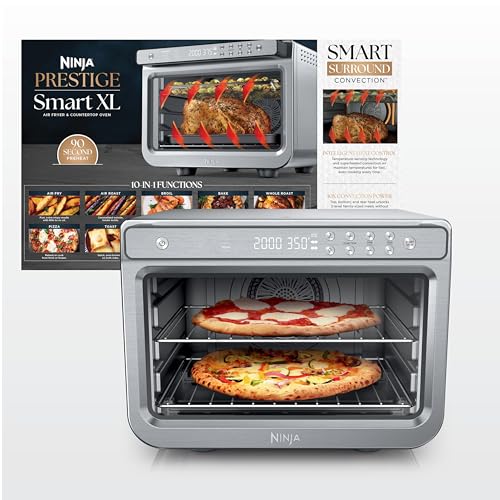
Ninja Foodi XL Prestige Countertop Oven
Worth it for the family-throughput profile: tray meals at speed, in one layer, with presets the whole household can run. Best for: families of four and more. Not suited for: small households, short counters.
Its worth is measured in evenings: every school night it converts a relay of batches into a single tray is a repayment, and families feel that conversion in time and temper as much as in food. If your household’s pinch point is the five-o’clock hour rather than the baking shelf, this is where the category’s value concentrates for you.

Cuisinart TOA-65
The mainstream worth-it answer: full versatility and digital repeatability at the market’s centre, in a footprint most counters can host. Best for: the broad middle of households. Not suited for: crowd cooks.
Most households running this page’s checklist land within sight of this pick, and that is not a failure of ambition. The mid tier is where the category’s engineering and its pricing agree most honestly, and a household that buys it has usually bought exactly the oven its audit described — which is the definition of worth this entire page has been using.
Hamilton Beach Countertop Oven
The low-risk way to test the category’s worth in your own kitchen: the core benefits at a value tier, simply delivered. Best for: the undecided, second ovens, rentals. Not suited for: precision bakers. The step-by-step choosing method that leads to any of these is in how to choose a countertop oven, and their head-to-head judgements are in countertop oven reviews.
There is a strategic case for this pick that transcends its tier: a household genuinely unsure of its frequency can buy the category’s hypothesis cheaply, live with it for a year, and let evidence — not a reviewer — settle whether a richer model would ever be worth it. Experiments should be priced like experiments, and this is the correctly priced one.
What Owners Report After a Year
Worth-it verdicts written at purchase are guesses; verdicts written at a year are evidence, so it is worth summarising what the year’s evidence tends to show across this category. The first finding is that usage concentrates: owners use four or five functions for ninety percent of their cooking, whatever the brochure promised, and the functions are the unglamorous ones — toast, bake, roast, reheat, air fry. Purchases justified by exotic modes disappoint in proportion to the exoticism; purchases justified by the core five almost never do. The second finding is that the reheating function climbs the rankings relentlessly, from an afterthought at purchase to, in many households, the single most valued thing the oven does — because it operates on food that was already cooked, already paid for and already in the fridge, and it operates daily. The third finding is that regret, where it exists, is almost never about cooking quality. It is about fit: the counter that turned out to matter, the chamber that rejected the household’s favourite dish, the size bought for guests who come twice a year. A year’s evidence, in short, keeps pointing at the same three variables this page has weighted throughout — frequency, fit and the honesty of the original audit.
The fourth finding is the one that should encourage the households still deciding: owners who matched the appliance to their real cooking describe it, unprompted, in the language of infrastructure — the thing the kitchen runs on — rather than the language of gadgets. Appliances that achieve infrastructure status are the ones whose worth stops being questioned, because questioning them feels like questioning the kettle. No reviewer can promise your household that outcome. But the path to it is visible and short: buy for the cooking you do, in the size your pans dictate, on the counter your tape measure approved, and keep the crumb tray’s small rhythm. Households that walk that path overwhelmingly report, at a year, that the question this page asks has answered itself.
The Counter-Space Question, Answered Properly
Every worth-it discussion of this category eventually arrives at the counter, so let us give the counter its own hearing. The objection runs: my counter is precious, and this appliance is large. The objection is correct, and incomplete, in a specific way — it prices the counter by the day, when the honest unit is the use. A stretch of counter surrendered to an appliance used three times a day is among the hardest-working real estate in the home; the same stretch surrendered to an appliance used twice a month is a scandal. This is why the space cost cannot be judged in the abstract, only against the frequency the rest of this page keeps measuring. It is also why the comparison set matters: the counter a countertop oven claims should be compared not with empty counter — a fantasy state in most working kitchens — but with what actually lives there now. If the oven displaces a bread bin, a rarely used mixer and a drift of post, its true space cost may be close to nothing. If it displaces the only chopping area in the kitchen, its cost is the kitchen’s workability itself. Audit the actual incumbents before mourning the space; households are often surprised by what their counters were really doing.
And a word for the defence of empty counter, because it deserves one: some households keep counters clear as a discipline and a pleasure, and for them any permanent appliance is a tax on calm, paid daily regardless of use. That is a legitimate value, not a failure of imagination, and this page’s checklist will catch it — the workspace question and the clearance question both fail honestly in such kitchens unless the oven earns an exception. Worth-it judgements that cannot respect a household’s aesthetic and working values are not judgements at all, merely salesmanship with better grammar.
How to Get the Most Value If You Buy
Value, once bought, is extracted by habit. Place the oven correctly from day one — heat-resistant surface, the manufacturer’s clearance at sides, back and above, nothing flammable nearby, nothing on top — because a well-placed oven gets used without friction and a badly placed one gets used with resentment. Cook familiar food in the first week to calibrate it, then deliberately move one full oven job a week into it until its repertoire is yours; owners who explore gradually build the reach-for-it instinct that is the whole return on the purchase. Use the reheating function as the gateway it is: households that discover what it does to leftovers tend to reorganise their cooking around cooking once and eating twice, which is where the appliance quietly pays for its counter in money and time. Keep the crumb tray rhythm from the first week, while it is still a novelty rather than a debt. And defend the clearance zone like the household law it is — the fruit bowl and the post will test it monthly, and every successful defence is the appliance staying safe, efficient and welcome. The complete buying method, if you are still between models, is in the countertop oven buying guide.
Two value habits deserve separate mention because they are where owners most often leave money on the table. The first is batch thinking: the oven’s efficiency and convenience peak when it cooks tonight’s dinner and tomorrow’s lunch in the same session, and households that plan that overlap — the extra tray of vegetables, the second portion of the bake — collect the reheating dividend this page keeps praising instead of merely reading about it. The second is teaching the household: an oven only one person can operate is worth a fraction of an oven everyone can run, so spend ten minutes bringing partners, teenagers and grandparents to fluency with its controls and its safety terms. Worth multiplies across users exactly as it multiplies across uses, and the households that report the highest value are, without exception, the ones where the appliance belongs to the whole kitchen rather than to its purchaser.
The Decision Checklist
Answer these honestly, in order, and apply the rule that follows. One: does my household cook or reheat with an oven at least four times in an ordinary week? Two: do my three most common oven jobs fit, in my own pans, in a countertop chamber? Three: does my counter offer the oven plus its specified clearance, on a heat-resistant surface, without costing me the workspace I prep on? Four: is there anything flammable — curtains, towels, paper, stored clutter — that would live within the hot zone, and can it honestly be moved for good? Five: will someone in this house empty a crumb tray weekly and wipe an interior monthly without resentment? Six: am I buying this for the cooking I do, rather than the cooking I fantasise about? Seven: if the full oven broke tomorrow, would this appliance carry my household’s ordinary week — or am I content that it would not?
The rule: six or seven yeses, buy with confidence at the tier your frequency justifies. Four or five, buy the simpler or smaller end of the category, or the value tier as a trial, and let a year of use argue for more. Three or fewer, skip it — your kitchen is telling you something true about itself, and the counter, the money and the attention all have better homes. Notice that the checklist contains no question about brands, functions or features. That is the final lesson of the worth-it question: appliances are worth it at the level of lives and kitchens, and only afterwards at the level of models. Answer it at that level, and you will not need to ask it twice.
If your answers straddle the boundary — and honest answers often do — weight the questions unequally, the way this page has. The frequency question and the counter question are the load-bearing two: a no on either is close to decisive on its own, because no enthusiasm elsewhere compensates for an oven unused or a kitchen unworkable. The remaining five fine-tune the tier and the size. And if the checklist says yes while a doubt lingers, let the doubt choose the tier rather than veto the purchase: buy the value or mid model, run the year, and let your own evidence finish the argument. That is how the households in the five profiles mostly arrived — not by certainty, but by a fair test honestly scored.
Countertop Oven: The Break-Even Test: When the Purchase Pays Off
Start with how often a {p} must actually be used before it earns its counter or cupboard space. Most coverage of a countertop oven concentrates on the first week of ownership, yet the decisions that matter most tend to surface later, once the countertop oven has to earn its place in an ordinary weekday routine rather than a carefully staged first attempt. Write down the three jobs you expect it to do most often, in the order you actually do them, and judge every claim you read against that short personal list instead of against a generic ideal.
Edge cases deserve a deliberate pass. Think about the odd shapes, the thicker or thinner than usual loads, the leftovers, the second helping and the guest with different preferences. A well-chosen countertop oven handles the exceptions gracefully, or at least predictably, while a poor match turns every exception into a workaround. List your two or three most common exceptions in advance and check, from the manual or the listing details, that nothing about them is ruled out by size, shape, material or care requirements.
Maintenance decides how long the good results last. Set a simple rhythm: a quick wipe or rinse after each use, a deeper clean on a fixed day, and a periodic check of the parts that move, seal or bear weight. A countertop oven that needs fiddly disassembly for basic care will be cleaned less often, and performance drifts long before anything actually breaks. Prefer designs where the parts that get dirtiest are the parts that are easiest to reach, and be honest with yourself about which cleaning steps you will genuinely keep up.
Troubleshooting is easier when you expect the usual failure points. With any countertop oven, the recurring problems tend to cluster in the same places: uneven results from overloading or poor arrangement, wear showing first on the parts handled most often, and small annoyances with lids, seals, handles, controls or fittings that only appear after repeated use. Before buying, look for whether those wear parts can be cleaned properly, replaced or worked around, and whether the instructions address them directly rather than pretending they never happen.
Finally, plan the first fortnight deliberately. Use the countertop oven for one familiar job first, so you have a baseline you trust, then introduce the harder cases one at a time and note what changes. Small adjustments to arrangement, timing, quantity or preparation usually close most of the gap between disappointing first results and the performance the design is capable of. That short learning period is also the fairest test of the break-even calculation: if the routine has not settled by the end of it, the mismatch is real, and it is better to know while returning or exchanging is still straightforward.
Work through a realistic scenario, not a best case. Picture the busiest version of the job: more people to serve, less time than planned, ingredients or materials that are slightly out of the ordinary, and a clean-up waiting at the end. Ask how the countertop oven behaves at that upper edge, because a model that only shines on a small, simple load will disappoint precisely when you need it most. If the honest answer is that you would split the job into batches or fall back on an older method, factor that into the decision now rather than discovering it later.
Measure before you commit. Note the footprint, the clearance above and behind the spot where the countertop oven will live, and the route you will carry it by when it is hot, full or awkward. A countertop oven that technically fits but blocks a cupboard door, crowds a neighbouring appliance or has to be dragged across a worktop every time will quietly fall out of use, whatever its merits on paper. In the Kitchen Appliances category especially, a few centimetres of clearance and a sensible storage plan separate a daily tool from a bulky regret.
Use a short decision checklist to finish. One, does it fit the space and the storage you really have. Two, does it handle your three most common jobs without a workaround. Three, do the edge cases you listed stay manageable. Four, can every wear part be cleaned or replaced without drama. Five, would you still choose it if a friend described the same drawbacks in their own kitchen. A countertop oven that passes all five is a sound buy; one that fails two or more is a compromise you are choosing with open eyes, which is a very different thing from being surprised later.
When you check listings such as Breville Smart Oven Air Fryer Pro, Ninja Foodi XL Prestige Countertop Oven and Cuisinart TOA-65 Digital AirFryer Toaster Oven, use them as worked examples: run through the same checks below on each one in turn, so the comparison stays honest and like for like rather than based on whichever listing happens to shout loudest.
One more check worth doing with any countertop oven is to read the care and safety instructions in full before the first use, not after the first problem. The manual for a countertop oven usually states plainly which materials, loads and cleaning methods are off limits, and most early disappointments trace back to a line in those pages that was skimmed. Five minutes with the instructions is the cheapest performance upgrade available in the whole Kitchen Appliances category.
Frequently Asked Questions
Is a countertop oven worth it for a small kitchen?
It depends entirely on the measurement, not the adjective. A small kitchen with one clear, heat-resistant stretch of counter that can host a compact or mid-size oven plus its specified clearance is an excellent home for the category — often a better one than a large kitchen, because small households cook in exactly the quantities the format serves. A small kitchen where that stretch does not exist, or exists only by sacrificing the only prep space, should skip it or take the smallest toaster oven format. Worth, in a small kitchen, is decided by a tape measure and by how much of your cooking is oven cooking — answer those two and the question answers itself. One more consideration is unique to small kitchens and worth stating: the countertop oven can return space elsewhere. Households that let it absorb the toaster, the reheating and part of the hob’s work sometimes retire a gadget or two in the reshuffle, and the net counter cost of the oven is the gross footprint minus whatever it honestly displaces. Count the displacement, by all means — but count only the displacements that actually happen, not the ones promised in the first enthusiastic week.
Will a countertop oven save me money?
It can save in three places, none of them guaranteed. Energy: a small chamber heated for small meals uses less than a full oven doing the same work, and the saving compounds across hundreds of uses — though it vanishes on loads big enough to need batches. Food: reheating that makes leftovers genuinely appealing reduces waste and supports cook-once-eat-twice habits, which most households feel in the shopping within a month. Takeaway displacement: an oven that makes home cooking faster and easier displaces some bought meals, and owners consistently report this as the largest saving of all. Against those stand the purchase, the accessories and the counter’s opportunity cost. Households that use it daily come out ahead; households that do not, do not — the arithmetic is the frequency, as it is throughout this page. One honest caution about the energy saving in particular: it is real but modest per meal, and a household buying solely to cut its energy bill will wait a long time for the oven to clear its own cost. Buy it for the cooking, the comfort and the leftovers, and let the energy saving be what it honestly is — a pleasant tailwind, not the engine.
Is a countertop oven worth it if I already have an air fryer?
Often yes, because the two overlap less than their marketing suggests. The basket fryer crisps small batches superbly and does little else; the countertop oven bakes, roasts, toasts, reheats and air fries in family-sized layers. If your basket fryer is constantly batching for a family, or your cooking wants an oven’s repertoire alongside the crisping, the countertop oven earns its place and the basket can be retired, gifted or kept as a second crisping station for big occasions. If your air frying is small-batch and your other oven needs are met by the range, the honest answer is that you already own the part of the countertop oven you would use — skip it, and spend the counter on nothing at all.
How long before a countertop oven pays for itself?
This page will not invent a figure, because the honest answer is a rate, not a date: it pays in proportion to use. Every weeknight it replaces the full oven, every leftover it rescues from the bin, every takeaway it quietly displaces is a small repayment, and daily users accumulate them fast enough to feel the purchase justified within a season of cooking. Monthly users may never feel it, which is not the oven’s failure but the match’s. If a payback deadline matters to you, estimate it from your own audit — count the weekly uses honestly, and be suspicious of any estimate, including your own, that assumes habits you do not currently have.
Is a premium countertop oven worth the extra?
Worth it under the same law as everything else here: frequency and sensitivity. The premium tier buys evenness, steadiness, easier cleaning, a quieter and better-insulated machine — qualities collected on every single use. A household cooking daily, and especially a household that bakes, collects them often enough that the tier justifies itself in experience rather than in arithmetic. A household cooking weekly collects them too rarely to feel the difference from the solid mid tier, and should let the mid tier’s balance carry the purchase. Premium is not a verdict on the buyer; it is a bet on the calendar, and your calendar is the only form you need to consult.
What if I buy one and barely use it?
Then the checklist’s honesty failed somewhere — most often at the frequency question or the fantasy-cooking question — and the useful response is diagnostic rather than regretful. Give it the structured chance first: a month of deliberate use, one full-oven job a week moved into it, reheats assigned to it by default, the crumb rhythm kept. Many slow starts are placement problems — an oven that is awkward to reach or hemmed in by clutter gets skipped by hands in a hurry — so re-audit its position before judging it. If a fair month still leaves it idle, believe the evidence: your kitchen’s life does not include this appliance, and selling or gifting it to a household in the five profiles above converts a mistake into someone else’s bargain. The worth-it question is empirical in the end, and there is no shame in having run the experiment.
Related Guides
Decide with the countertop oven buying guide, countertop oven pros and cons and the countertop oven review, and browse the live category guides: the best convection ovens, the best smart ovens and the best air fryers.