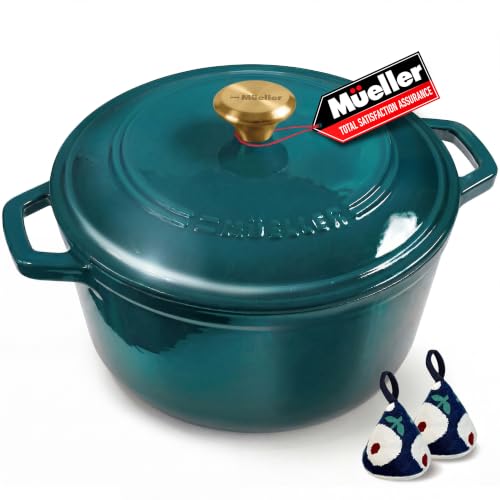
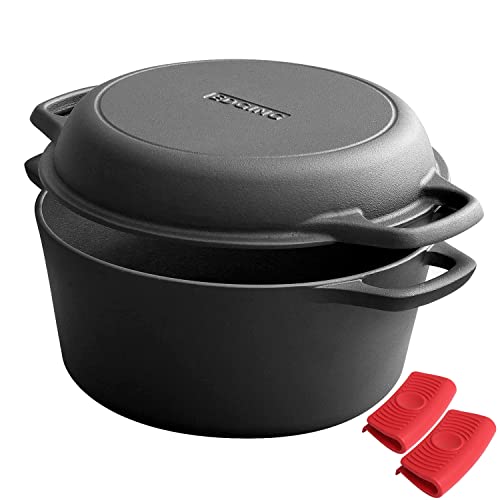
There is a particular kind of sticker shock that comes with enameled cast iron. You fall for the idea of one heavy pot that braises, bakes, simmers, and goes straight to the table, and then you see what the famous French brands charge for the privilege. The good news is that the gap between a budget Dutch oven and a premium one is much narrower than the gap in price. This guide may earn an affiliate commission when you buy through links on this page, and that support never changes which pots make the list or what we say about their flaws.
Every pot below is an enameled cast iron Dutch oven that costs a fraction of a Le Creuset or Staub of the same size, and each one earned its place for a different reason. One has the tightest lid in the group. One is the lightest to lift when it is full of stew. One is so inexpensive that buying two in different sizes still undercuts a single premium pot. None of them is perfect, and the trade-offs section under each pick is where the honest differences live: enamel that chips more easily, knobs that cannot take broiler heat, handles that get awkward with thick oven mitts.
What you will not find here is a claim that a budget pot is identical to a French one. The enamel on a premium pot is applied in more layers, the casting tends to be smoother, and the warranty service is a different experience entirely. What you will find is a clear-eyed look at how much of that difference actually shows up in a Tuesday night pot of beans. For most home cooks, the answer is: less than you would expect, as long as you pick the right budget pot for the way you cook.
A word about how this list was assembled, because the budget tier is crowded with near-identical pots sold under a dozen labels. We narrowed the field to brands with a real track record, replacement parts you can actually obtain, and enough owner history to reveal long-term patterns instead of first-week impressions. Plenty of cheaper pots exist, including unbranded ones that look identical in photographs; they were left out not because they cannot cook a stew, but because their enamel, quality control, and after-sale support are lottery tickets. The six survivors span the sensible range of the category — from the lowest price we can recommend with a straight face to the design-led pot that brushes against premium territory — so that whatever your budget line is, there is an honest option sitting on it.
In this guide
Quick picks: best affordable dutch ovens kitchn
| # | Product | Where to buy |
|---|---|---|
| 1 | Lodge enameled Dutch oven | Check on Amazon |
| 2 | Tramontina enameled Dutch oven | Check on Amazon |
| 3 | Crock-Pot Artisan Dutch oven | Check on Amazon |
| 4 | Amazon Basics enameled Dutch oven | Check on Amazon |
| 5 | Overmont enameled Dutch oven | Check on Amazon |
| 6 | Milo Classic Dutch oven | Check on Amazon |
What to look for in an affordable Dutch oven
The lid seal matters more than the brand name
A Dutch oven does its best work when moisture stays inside. Steam that escapes around a loose lid means braises that dry out, rice that scorches on the bottom, and bread with a paler crust. Premium brands machine their rims and lids to very close tolerances, which is a big part of what you pay for. Among budget pots, lid fit varies from genuinely excellent to noticeably sloppy, sometimes even between two pots of the same model on the same shelf. If you can, check that the lid sits flat with no rocking and no visible gap when you hold it up to the light. A lid that seals well also tends to rattle less when a stew reaches a rolling simmer, which is a small mercy on a quiet evening.
Some lids help in other ways. Self-basting lids carry small bumps or rings on the underside that catch condensed steam and rain it back over the food, which keeps the top of a braise from drying out during a long cook. Flat lids are easier to scrub and stack. Neither design rescues a poor seal, so treat the fit as the first thing to judge and the underside pattern as a bonus.
Enamel quality and what “chip-resistant” really means
The enamel is a layer of glass fused to the iron, and on budget pots it is usually thinner than on premium ones. That does not make it fragile in daily use, but it does mean the rim and the outer edges deserve respect. Most chipping on inexpensive pots happens at the uncoated or lightly coated rim, where metal utensils and stacked lids make contact. Look for a pot whose rim enamel wraps smoothly with no rough patches, and plan to store the lid with a cloth or a paper towel between it and the pot body. Thermal shock is the other enemy: a screaming-hot pot plunged into cold water can craze or crack any enamel, cheap or expensive, so let the pot cool before it meets the sink.
Interior color is worth a thought too. A light sand or cream interior makes it easy to watch fond develop and to judge whether onions are browning or burning, which is why most of the pots in this guide have pale interiors. Dark interiors hide stains and are more forgiving about the grey shadows that tomato sauces leave behind, but they make browning a guessing game. There is no wrong answer, only a preference worth deciding before you buy.
Handles you can actually grip with mitts on
A full six-quart Dutch oven of stew can weigh as much as a small Thanksgiving turkey, and you will be moving it from stovetop to oven and back with padded hands. Wide loop handles that sit away from the body are far easier to grip than small tabs hugging the pot. This sounds like a minor detail until you are tilting a heavy pot to pour off the last of a sauce with your forearms wrapped in mitts. Several budget pots have improved their handle shapes in recent years, and the picks below call out grip honestly, because a pot that is awkward to move is a pot you will reach for less.
Knobs, lids, and oven temperature limits
The knob is the cheapest part on many budget pots and the first place corners get cut. Phenolic knobs are comfortable and stay cooler, but they often carry a lower oven temperature limit than the pot itself, which matters if you bake bread at high heat or finish a dish under the broiler. Metal knobs handle any temperature your oven can produce. If a pot you love ships with a plastic knob, a replacement metal knob is an inexpensive upgrade that removes the limit entirely. Check the stated limit for the whole pot too, including whether the lid is covered by the same limit, because a pot body cleared for high heat with a lid cleared for less is a common budget-line footnote.
Size, weight, and your actual cooking
The five-to-six-quart range is the workhorse size for most households: big enough for a whole chicken, a double batch of soup, or a loaf of no-knead bread, small enough to fit a standard oven and sink. Going bigger buys batch capacity at the cost of a pot that is heavy even when empty. Going smaller makes a lovely side-dish pot that will frustrate you the first time you try to brown meat in batches. Weight differences of a couple of pounds between brands sound trivial on paper and feel significant at the end of a long cook, especially if anyone in the house has wrist or grip issues. The comparison table further down lists relative heft in plain language so you can weigh that trade-off before the pot arrives.
Stovetop compatibility and care
Cast iron works on gas, electric, and induction, but the flatness of the base decides how evenly it sits on a glass cooktop and how well an induction hob senses it. Budget castings occasionally have a slight ridge or wobble on the base, so give any new pot a spin test on a flat counter before the return window closes. For care, warm soapy water and a non-abrasive sponge handle almost everything; a paste of baking soda lifts stubborn stains from light interiors. None of these pots needs seasoning, none should go through repeated harsh dishwasher cycles if you want the enamel to stay glossy, and all of them will outlast their price tags if you avoid metal-on-enamel scraping and sudden cold shocks.
Round or oval, and why it matters less than you think
Most of the pots in this guide are round, and for good reason: a round pot matches round burners, heats evenly on any stovetop, and fits the standard parchment slings used for bread. Oval pots earn their keep with whole chickens, long roasts, and anything that arrives with a spine, but they overhang round burners and can heat unevenly on smaller electric elements. If you are buying one pot only, buy round. If you already own a round one and want a second shape for roasts and poultry, an oval budget pot is a sensible, inexpensive way to get it. Shape is one area where the budget brands match the premium ones option for option, so let your cooking, not the catalog, decide.
Where budget pots actually cut corners
Understanding where the money comes out of a cheap Dutch oven helps you shop with open eyes. The savings usually come from four places: thinner enamel with fewer coats, slightly rougher casting that needs less hand-finishing, simpler packaging and retail distribution, and knobs and hardware bought at commodity prices. What rarely gets cut is the iron itself, because cast iron is cast iron — the raw material cost difference between a budget pot and a premium one is small, which is exactly why budget pots cook so well. The practical consequences are cosmetic and long-term rather than immediate: expect a bit more texture in the finish, a bit less perfection at the rim, and enamel that asks for gentler handling over the years. None of those change how tonight’s stew tastes.
The other place budgets differ is quality control spread. A premium brand rejects pots that a budget brand ships, which is why the same model can draw both glowing and disappointed reviews. The defense is simple and costs nothing: unbox your pot promptly, check the lid for rocking, run a fingertip around the rim for rough spots, look for enamel pinholes or bare patches inside, and confirm the base sits flat. Any of those is a legitimate reason to exchange the pot while the return window is wide open, and starting with a good example matters more than which of these six badges is on the lid.
Matching the pot to your stove, oven, and sink
Three measurements are worth taking before any of these pots ships. First, your oven’s interior width and the height between racks: a 6.5-quart pot with its lid on needs real vertical room, and a crowded oven with the rack in the wrong slot is how lids get knocked askew. Second, your largest burner: a wide pot on a small burner heats unevenly at the edges, which matters for searing and matters hardly at all for braising, so know which job you are buying for. Third, your sink: a heavy pot that does not fit under the faucet is a pot that gets washed resentfully, and resentment is a genuine predictor of chipped enamel. All six picks fit standard ovens, but the Tramontina’s footprint and the Lodge’s weight are the two worth double-checking against a small kitchen’s geometry.
Storage deserves the same realism. These pots are too heavy for high shelves and too handsome, in most cases, to banish to a garage. The stovetop is the natural home for the one you use daily, which is another quiet argument for choosing a color you enjoy looking at. If two pots will stack in a cabinet, put a felt pad or a folded towel between them every time, without exception; rim-to-rim contact in a stack is the single most common source of the chips owners blame on the enamel itself.
How the cooking actually compares
Braising and slow cooking
This is the Dutch oven’s home turf, and it is where the budget tier embarrasses the price gap most. Once any of these pots reaches temperature, the combination of heavy walls and a closed lid produces the same gentle, enveloping heat that makes short ribs collapse and beans turn creamy. In long braises, the differences between the six picks narrow to lid seal alone: the Milo and Tramontina hold moisture a touch better, the Amazon Basics loses a little more steam over three hours, and all of them produce a finished dish no one at the table could sort by price. If braising is your main mission, buy the best-sealing lid in your budget and cook with total confidence.
Bread baking
No-knead bread is the test that sells Dutch ovens, and it is also the test with the sharpest equipment requirement: sustained high heat with the lid on. Every pot here has the iron for it, but as noted above, knobs set the ceiling on three of the six. With a metal knob fitted, any of these pots produces a loaf with a shattering crust and an open crumb, because the physics — a steamy, enclosed, evenly heated chamber — does not care what the pot cost. The round shape matters more than the brand; all six picks are round, and all of them fit a standard boule. If bread is your primary reason for buying, weigh knob and lid fit heavily and treat the rest as preference.
Searing and stovetop work
On the stovetop, the heavier pots hold a small edge. A Lodge or Tramontina absorbs the temperature crash of cold meat hitting the pan with less drama, so you get a deeper, more even crust with less steaming. The lighter pots recover quickly too — cast iron is forgiving — but you may work in slightly smaller batches to keep the sear honest. Enamel’s non-reactive surface is the real stovetop virtue shared by all six: you can brown meat, then deglaze with wine and simmer a tomato sauce for hours in the same pot, something bare cast iron and its seasoning would rather you did not do. That one-pot freedom is the strongest argument for enameled iron at any price.
Color, finish, and living with the pot you picked
Budget lines offer fewer colors than the French catalogs, but the choice still matters more than it first appears. Dark exteriors hide the scorch marks and burner grime that accumulate around the base of any hard-working pot, while pale and bright colors show every splash — and also show off the pot at the table, which is half the reason people buy enameled iron in the first place. Gloss finishes wipe cleaner than matte ones and resist staining on the outside; matte finishes disguise fingerprints and minor scuffs. None of this affects a single meal. All of it affects how you feel about the pot in year three, so choose the finish for the kitchen you actually keep, not the one in the catalog photograph.
Buying well: sales cycles and the unboxing check
Affordable Dutch ovens are among the most reliably discounted items in the kitchen aisle. The big sales events of the year, the change of seasons when colors rotate, and the arrival of a refreshed model all push prices down on pots that were already inexpensive, which is why every pick in this guide ends with the same advice to verify the current figure rather than trusting any number printed anywhere, including here. When your pot arrives, spend five minutes on the unboxing check described earlier — lid rock, rim smoothness, base flatness, interior pinholes — while returning it is still effortless. A good example of any of these six models will cook beautifully for years; the check simply makes sure you start with the good example your money was supposed to buy.
The six picks, in detail
Each pot below was chosen to represent a distinct strength rather than six near-identical versions of the same idea. They are ordered by how often we would steer a first-time buyer toward them, but the “who it suits” note under each one matters more than the order. Prices in this category move constantly, so every pick ends with the same advice in different words: confirm the current figure on Amazon before you decide, because the value ranking reshuffles itself every time one of these goes on sale.

Lodge 6-Quart Enameled Cast Iron Dutch Oven
Lodge has been casting iron in Tennessee for over a century, and its enameled line is where most budget buyers start for good reason. The 6-quart pot is the reference point of this whole category: a thick-walled, porcelain-enameled workhorse with a cream interior, a domed lid, and the kind of heft that tells you immediately there is a lot of iron in the walls. It braises short ribs to spoon-tenderness, holds a steady bare simmer on the lowest burner, and turns out crackling no-knead bread with the deep, even browning that only heavy iron delivers. If you want one pot that does the classic Dutch oven jobs without drama, this is the safest pair of hands on the list.
Strengths: The heat retention is superb, so once the pot is hot it stays hot, and stews coast at a gentle bubble with the burner barely on. The lid seals well on most examples, with the small stainless knob rated for high oven temperatures, which makes it a confident choice for bread baking. The loop handles are roomy enough for mitt-clad hands, and the interior enamel resists staining better than most at this price, wiping clean after tomato-heavy sauces with little soaking. Lodge also has a real customer service operation behind it, which matters more with a decades-long purchase than with a gadget.
Trade-offs: It is one of the heavier pots here, and the weight is noticeable when the pot is full and you are carrying it one-handed to the table. The enamel on the rim can chip if the lid is dropped or stored carelessly, a known pattern across the whole budget tier but worth stating plainly. The color range leans traditional, and the exterior finish is slightly less glassy than premium brands, with minor orange-peel texture on some units.
One more Lodge virtue is the ecosystem around it. Because the pot has been sold in huge numbers for years, replacement knobs, lid lifters, trivets, and fitted storage racks are easy to find, and any question you could possibly have about cooking in it has been asked and answered by an army of owners. Buying the popular pot is rarely the exciting choice, but with cast iron, popularity compounds: advice, accessories, and resale value all follow the installed base.
In the kitchen, the Lodge’s personality is steadiness. It comes to temperature at its own pace and then refuses to be hurried, which makes it forgiving for cooks who wander off between steps. Chili that would catch in a thin pot simmers here without scorching, and the wide base browns a full batch of beef cubes in one layer. It also holds heat at the table better than most, so second helpings stay properly hot through a long meal.
Who it suits: First-time Dutch oven buyers who want the most proven budget option, bread bakers who need a knob and lid that tolerate high heat, and anyone who cooks big braises weekly. If you want the closest thing to a buy-it-for-life pot without the French price, compare the current color options for the Lodge 6-quart when you check price on Amazon.
Check price on Amazon: Lodge enameled Dutch oven
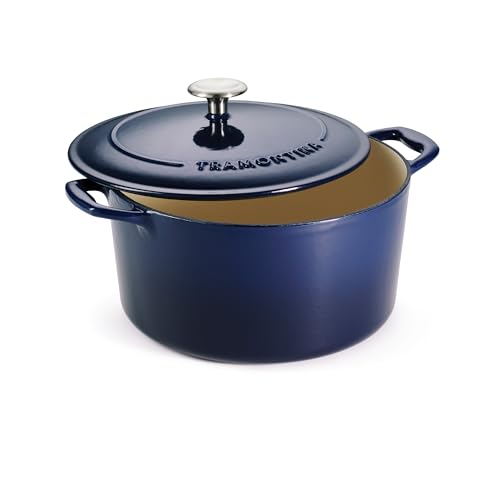
Tramontina 6.5-Quart Enameled Cast Iron Dutch Oven
Tramontina’s 80131 series has spent years as the quiet recommendation of test kitchens, and the 6.5-quart size gives you a little extra headroom over the Lodge for stock, double batches of chili, or a chicken with vegetables crowded around it. The Brazilian company’s enamel work is a step above the generic end of the market: the exterior gradient colors are rich, the interior is a smooth pale sand, and the lid carries condensation ridges on its underside that drip moisture back across the surface of a braise. It feels like a pot designed by people who studied exactly why the expensive ones are loved, then trimmed cost in the places you notice least.
Strengths: The self-basting lid design genuinely helps during long, slow cooks, keeping the top of a pot roast moist without you lifting the lid and losing heat. The extra half-quart of capacity is more useful than it sounds when a recipe threatens to bubble over. The stainless steel knob is oven-safe to high temperatures, the handles are broad and confident, and the enamel has a track record of holding up well to metal-free utensils and gentle washing. For cooks who entertain, the larger footprint also makes a handsome serving vessel that keeps food warm through a long table session.
Trade-offs: That extra capacity comes with extra pounds; this is among the heaviest pots in the guide when full, and smaller cooks may find it a two-handed commitment every time. The lid fit on individual units can vary a touch more than the Lodge, so the flat-seat check matters when yours arrives. The rim enamel, as with its peers, wants a layer of protection during storage.
The Tramontina also handles the stovetop-to-table transition with unusual grace for its size. The gradient exterior colors are the richest-looking in this group, and the pot’s proportions read as generous rather than bulky, which is a small aesthetic miracle at six and a half quarts. Guests assume it cost far more than it did, and while that should never be the reason to buy cookware, it is a pleasant dividend on a pot bought for capacity and lid design.
That self-basting lid earns its keep in the specific case of leaner cuts. A pork shoulder or a turkey breast, which can dry at the surface during hour three of a braise, comes out noticeably juicier when the lid keeps raining its own juices back down. The Tramontina also doubles gracefully as a stockpot for a small turkey carcass after the holidays, a job the smaller pots here simply cannot take on, and its broad base handles two pounds of onions caramelizing without crowding them into steaming.
Who it suits: Cooks who regularly feed a crowd, anyone whose braises have outgrown a 5-quart pot, and buyers who like the self-basting lid idea from premium brands at a friendlier cost. It is a lot of pot for the money, so before settling on a smaller option you might outgrow, give the Tramontina 6.5-quart a moment and check price on Amazon.
Check price on Amazon: Tramontina enameled Dutch oven

Crock-Pot Artisan 5-Quart Enameled Cast Iron Dutch Oven
The Crock-Pot Artisan takes a slightly different design path: instead of the usual round pot, several sizes in the line use a rounded, almost oval-shouldered profile with a matte-leaning enamel finish that looks more like studio pottery than factory cookware. The 5-quart round version is the sweet spot for smaller households, and its slightly lighter build makes it the pot people reach for on weeknights when the big six-quart feels like overkill. It handles soups, small roasts, baked beans, and stovetop-to-oven casseroles with the same even heat as its heavier rivals, just in a friendlier package for everyday lifting.
Strengths: The lower weight relative to capacity is the headline: your wrists will notice the difference every time you drain, pour, or wash it. The matte-style exterior hides fingerprints and minor scuffs gracefully, and the pot presents beautifully at the table, which is not a trivial virtue in a vessel designed to go from oven to trivet. Browning performance is strong, the interior cleans up easily after eggs, grains, and cheese-topped bakes, and the price usually sits at the gentle end of this list, making it a low-risk first enameled pot.
Trade-offs: The knob and lid carry a lower heat ceiling than the metal-knobbed pots here, so high-heat bread baking means checking the stated limit or swapping the knob. The lighter walls hold slightly less residual heat than the Lodge or Tramontina, which you may notice in a marginally less thunderous sear. Handle openings are a bit tighter, and thick mitts make the grip less secure than on the roomiest designs.
The Artisan line also tends to appear in seasonal colors that rotate through the year, which cuts both ways: you may find a shade you love at a gentle price, or fall for one that vanishes before you decide. If color matters to you, this is the pick where patience and timing pay off most. Functionally the pot is identical across its palette, so there is no penalty for choosing with your eyes once the size and knob questions are settled.
There is a real argument that the best Dutch oven is the one that never gets put away, and the Artisan makes that case well. It lives happily on the stovetop, reheats soup without ceremony, and goes into the oven for a small gratin or a half-batch of baked pasta on nights when the big pot would feel like bringing a truck to run an errand. Its size is also right for the way many people actually cook grains: rice, farro, and steel-cut oats for the week, all in a pot that rinses clean in seconds.
Who it suits: Smaller households, cooks who value a pot they can lift comfortably every day, and anyone furnishing a first kitchen who wants enameled cast iron without the heaviest lift or the highest spend. For weeknight cooking in a handsome package, note the knob’s temperature limit on the Crock-Pot Artisan 5-quart as you check price on Amazon.
Check price on Amazon: Crock-Pot Artisan Dutch oven


Amazon Basics 6-Quart Enameled Cast Iron Dutch Oven
Every category has a floor, and the Amazon Basics Dutch oven is useful precisely because it shows how low the floor can go while still being a real enameled cast iron pot. This is a no-frills 6-quart with a cream interior, a simple loop-handle design, and a lid with a basic knob, sold in a handful of cheerful colors. It does not pretend to be a premium pot. It does braise, bake, and simmer entirely credibly, and for a rental kitchen, a cabin, a college graduate’s first apartment, or a second pot for holiday overflow, its value is hard to argue with. Think of it as the pot that lets you learn whether you love Dutch oven cooking before you commit serious money to the hobby.
Strengths: The fundamentals are sound: heavy iron walls, even heating, a lid that seals adequately for braises and bread, and an interior that releases food well. It is induction compatible, oven safe to a sensible ceiling with its standard knob, and easy to clean with a soak and a soft sponge. Because the investment is small, it is also the pot you will not hesitate to take camping over a fire grate, lend to a neighbor, or press into service as an ice bucket for drinks at a party, all of which are legitimate Dutch oven side careers.
Trade-offs: Finish consistency is where the savings show. Expect a greater chance of minor enamel imperfections, a lid fit that is good rather than excellent, and edges that will chip sooner than the pricier picks if handled roughly. The knob is a basic one with a moderate heat limit, and the handles, while functional, are less sculpted for gloved hands than the best here. Long-term, heavy daily use will show wear sooner than on a Lodge or Tramontina.
For a second-pot strategy, it pairs intelligently with a smaller premium piece: many cooks keep a compact, beautiful three-or-four-quart pot for daily use and let this big, inexpensive one absorb the holiday overflow, the double batch, and the stock-making weekends. That division of labor plays to this pot’s strengths — capacity and indifference to hard work — while keeping its finish compromises out of the daily spotlight.
It also deserves credit for honesty of purpose. Nothing about the Amazon Basics pot is dressed up to imitate a French brand beyond the shared silhouette; the colors are simple, the finish is workmanlike, and the whole thing reads as equipment rather than decor. Cooks who are hard on gear — who stack, clang, and cook over imperfect burners in rentals and shared houses — often get more real use out of a pot they never worry about than out of a precious one, and this is the worry-free option in the group.
Who it suits: The curious, the budget-stretched, and anyone who needs a second or occasional-use pot and would rather spend the savings on ingredients. It is also a thoughtful, genuinely useful gift. Given how often its price dips, it is especially worth your time to look at the Amazon Basics 6-quart before paying more elsewhere for a starter pot, so check price on Amazon.
Check price on Amazon: Amazon Basics enameled Dutch oven

Overmont 5-Quart Enameled Cast Iron Dutch Oven
Overmont built its name on camping cast iron, and its enameled Dutch oven carries some of that outdoors DNA into the kitchen: a sturdy build, a lid that doubles as a skillet on some configurations in the line, and a price that frequently undercuts even the Amazon Basics pot during promotions. The 5-quart size is a versatile middle ground, and the pot has a devoted following among cooks who want one vessel that can move between the stovetop, the oven, and occasionally a grill or campfire ring. The enamel finish is a little more rustic than the big brands, which suits its personality; this is a tool first and a showpiece second.
Strengths: Versatility is the pitch. The heavy lid fits snugly, the pot sears deeply thanks to its thick base, and the whole thing shrugs off the kind of enthusiastic use that would make a prettier pot’s owner nervous. Heat distribution is even, the interior releases braises and baked dishes cleanly, and the handles are solid, simple loops that work fine with mitts. For cooks who split time between kitchen and campsite, having one pot cleared for both jobs simplifies the gear shelf considerably, and the value at its typical selling figure is genuinely hard to beat.
Trade-offs: The enamel is the most utilitarian here: expect a slightly rougher texture, less refined rim finishing, and a greater appetite for staining on the light interior than the Lodge or Milo. Quality control varies more between units, so inspect the lid fit and enamel on arrival. The aesthetic is plain, the color palette limited, and if your kitchen style leans polished and coordinated, this pot will look like the work boot among dress shoes.
Overmont’s sizing is worth a second look if you cook for two or three. At five quarts it sits in the gap between the compact Artisan and the family-size six-quart pots, and that in-between size is the one many smaller households end up wishing they had bought first: big enough for a proper stew with leftovers, small enough to live on the stove without dominating it. If the Artisan feels a touch small and the Lodge a touch much, this is the middle path.
One more practical note: because Overmont’s background is outdoor cooking, its pots tend to be specified with generous temperature tolerance and a build that tolerates direct flame and grill grates without complaint. Indoor cooks may never use that headroom, but it makes the pot a stress-free choice for finishing dishes on a barbecue or taking to a vacation rental with an unknown stove. It is the pot in this guide least likely to be babied, and for many households that is a feature, not a compromise.
Who it suits: Campers, grillers, and pragmatic cooks who prize toughness and versatility over refinement, plus anyone who wants a pot they can use hard without flinching. When it appears at one of its frequent low points, few pots anywhere deliver more iron per dollar, so if the Overmont 5-quart sounds like your kind of rugged all-rounder, check price on Amazon.
Check price on Amazon: Overmont enameled Dutch oven

Milo Classic 5.5-Quart Enameled Cast Iron Dutch Oven
Milo is the design-conscious outlier in this group: a direct-to-consumer brand that set out to make the budget Dutch oven you would not hide in a cupboard. The Classic pairs a recycled cast iron body with a glossy, tightly finished enamel in a small set of considered colors, and the details feel edited rather than accumulated — a smooth, well-fitting lid, a clean stainless knob, handles shaped to look as deliberate as they grip. At 5.5 quarts it lands in the size sweet spot, and its cooking performance is the pleasant surprise: this is not a style-over-substance pot. It braises evenly, bakes a handsome loaf, and holds a simmer with the calm of a pot twice its price.
Strengths: Fit and finish are the best in this guide; the lid seats with a precision that feels borrowed from the premium tier, and the enamel’s gloss makes it the easiest exterior here to wipe clean. The slightly lighter casting, achieved without thinning the cooking surfaces, makes it friendlier to lift than the Lodge and Tramontina. The company’s sustainability angle — recycled iron and a repair-minded ethos — is a genuine differentiator if that weighs in your decisions, and the restrained color options photograph as well as they cook.
Trade-offs: It typically costs the most of these six picks, sitting in the space between the true budget tier and the French brands, so the value case depends on how much you care about finish and design. Availability can be patchier than the big-retailer brands, colors sell through, and the knob, while metal and handsome, is smaller than some mitt-wearers prefer. The lighter body also means marginally less thermal mass for the most aggressive searing sessions.
There is also a quieter detail in Milo’s favor: the interior enamel is notably smooth, and smooth enamel is easier enamel. Sauces rinse out with less soaking, baked-on cheese from a gratin releases with a sponge rather than a project, and the surface resists the gradual dulling that makes older budget pots look tired. Over a decade of weekly use, those small daily frictions — or their absence — are what you actually remember about a pot.
The Milo also rewards cooks who plate at the stove and serve from the pot. Its proportions are handsome enough that it moves to the table without apology, the glossy enamel wipes clean between courses, and the slightly narrower profile fits smaller ovens and crowded stovetops better than the widest pots here. If your kitchen doubles as your dining room, as so many now do, a pot that looks intentional in both roles quietly earns its place every single day.
Who it suits: Cooks who want one beautiful, lasting pot and are willing to pay a modest premium over the bargain tier to get premium-tier finish without the premium-tier bill. It is the pick for smaller kitchens where the pot lives on the stove and earns its counter space visually as well as functionally. If that balance appeals, see which colors of the Milo Classic 5.5-quart are currently in stock when you check price on Amazon.
Check price on Amazon: Milo Classic Dutch oven
Side-by-side: how the six compare
Numbers only tell part of this story, so the table below sticks to plain-language comparisons: relative capacity, how heavy each pot feels in use, the lid and knob situation, and the job each one does best. Use it to narrow the field to two, then read those two sections again in full before deciding.
| Pot | Size feel | Weight in hand | Lid and knob | Best at |
|---|---|---|---|---|
| Lodge 6-Quart | True family size | Heavy | Good seal, metal knob, high-heat ready | All-round braising and bread |
| Tramontina 6.5-Quart | Largest here | Heaviest | Self-basting lid, metal knob | Big batches and entertaining |
| Crock-Pot Artisan 5-Quart | Compact family size | Moderate | Lower knob heat limit | Everyday weeknight cooking |
| Amazon Basics 6-Quart | True family size | Heavy | Adequate seal, basic knob | Starter and second-pot duty |
| Overmont 5-Quart | Mid size | Moderate to heavy | Snug lid, rustic finish | Kitchen-to-camp versatility |
| Milo Classic 5.5-Quart | Sweet-spot size | Moderate | Most precise fit, metal knob | Finish, design, daily cooking |
If the table leaves you torn between two finalists, decide on the tiebreaker that matches your life. Lifting strength and wrist comfort argue for the lighter pot every time, because you will move it thousands of times. Entertaining argues for capacity and looks. Bread argues for the metal knob and the tightest lid. And a tight budget argues, honestly, for whichever finalist is discounted the week you buy, because the cooking difference between any two pots on this list is smaller than the difference a good sale makes to your wallet. Let the tiebreaker be practical, and you will not regret the choice.
Two patterns stand out. First, the pots with metal knobs and the best lid seals — Lodge, Tramontina, and Milo — are the ones we would hand to a bread baker without a second thought. Second, the lightest-feeling pots, the Crock-Pot Artisan and the Milo, are the ones daily cooks will reach for most, and a pot you reach for is worth more than a theoretically better pot gathering dust. Match the table to your habits, not to an abstract ranking.
Owning a budget Dutch oven for the long haul
The economics of this category only work if the pot lasts, and longevity with enameled cast iron is mostly a handling story. The iron itself is effectively immortal; it is the glass coating that accumulates the damage. Cooks who get a decade from a budget pot share a few habits that take no effort once they are routine. They preheat the pot gradually rather than blasting it empty over high flame, which stresses both the enamel and the bond between enamel and iron. They add oil to a warming pot rather than a cold one for searing, reducing the chance of food welding itself to the surface. And they never use the pot as a storage container in the fridge with the lid clamped down for days, because trapped moisture and acidic food sitting against the rim are unkind to any finish over time.
Stains deserve a calm word, because light interiors will shadow. Turmeric, tomato, and red wine leave their marks, and a pale pot that has cooked a hundred meals will look like it has cooked a hundred meals. That patina is cosmetic only; it does not affect release, flavor, or safety. A baking soda paste, a gentle simmer with a spoonful of soda in water, or an overnight soak lifts most of it when appearance matters. What you should not do is reach for steel wool, oven cleaner, or a scouring powder, all of which dull the gloss and shorten the enamel’s life far more surely than any stain.
Storage, once more, because it is where good intentions go to die: if your pot must live in a crowded cabinet, fit the inexpensive silicone or felt rim protectors sold for exactly this purpose, or keep the cardboard tabs the pot shipped with and reuse them. Ten seconds of padding each time you put the pot away is the cheapest insurance in this entire guide.
Finally, think about the warranty and the exit plan. Budget brands vary widely here, from limited warranties with real humans behind them to effectively none. Register the pot, keep the receipt, and photograph any flaw you find on arrival. And if a budget pot eventually does chip beyond cosmetic wear — a flake on the cooking surface is the line — retire it to bread duty with a parchment liner, where it can serve honorably for years more. A pot with a plan like that is not a compromise purchase; it is a sensible one.
Frequently asked questions
Is a cheap Dutch oven really that different from a Le Creuset?
In daily cooking, less than the price gap suggests. Both are enameled cast iron, both hold heat and braise beautifully, and in blind side-by-side cooking the results are extremely close. The premium difference shows in the finer print: smoother and often thicker enamel that resists chipping longer, tighter manufacturing tolerances, a wider color range, and a warranty experience built over decades. If you cook with care — wooden or silicone utensils, no thermal shock, a cloth between lid and pot in storage — a good budget pot can serve for many years, and the six above were chosen because they are the budget pots most likely to do exactly that.
What size should a first-time buyer choose?
For most households, 5.5 to 6 quarts is the answer. It fits a whole chicken, a standard no-knead bread recipe, four to six servings of stew, and a double batch of soup without crowding. Drop to 5 quarts if you usually cook for two and value a lighter lift, as with the Crock-Pot Artisan or Overmont picks. Go to 6.5 quarts, like the Tramontina, only if you regularly cook for a crowd or batch-cook for the freezer, and accept the extra weight that comes with it every single time you move the pot.
Can these pots go under the broiler or bake high-heat bread?
The pot bodies can; the knobs decide the real limit. Bread recipes often run at temperatures beyond the safe limit of basic phenolic knobs, and broiling is harder still. The Lodge, Tramontina, and Milo ship with metal knobs suited to high heat. For the others, either respect the stated ceiling or replace the knob with an inexpensive stainless one, which removes the bottleneck in about a minute with a screwdriver. Always confirm the limit printed for the specific pot you buy, since limits vary even within a brand’s line.
How do I stop the enamel from chipping?
Most chips are born at the rim, from lid contact, metal utensils, and stacking. Store the lid upside down on a cloth or with a towel folded between lid and pot, keep metal spoons out of the interior, and let a hot pot cool before cold water touches it, because sudden temperature change can craze enamel on any pot at any price. Avoid sliding the pot across a glass cooktop, lift instead, and hand-wash when you can. None of this is fussy once it is habit, and it is the whole difference between a budget pot that looks tired in two years and one that still looks sharp in ten.
Do I need to season an enameled Dutch oven?
No. Seasoning is for bare cast iron; the enamel is a glass coating that needs no building up and should not be oiled and baked. If the rim of your pot has an exposed matte edge of iron, as some designs do, a whisper of oil on that edge after washing keeps it protected, but the cooking surface itself wants nothing more than soap, water, and a soft sponge. Stains on light interiors respond to a baking soda paste or a brief simmer of water with a spoonful of baking soda, which lifts most discoloration without abrasives.
Whichever of these six lands on your stove, the first pot of beans will tell you what the French brands never wanted you to know: great braises were never really about the badge on the lid.