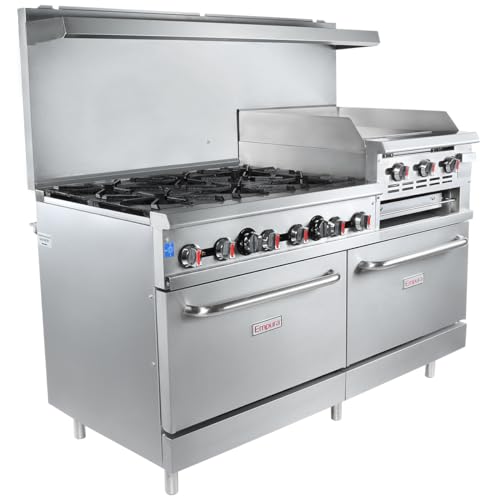
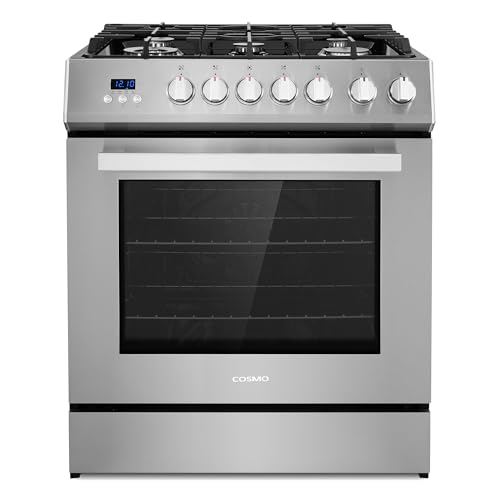
The best 24-inch propane ranges solve a specific problem: a full cooking range in a space that is too small for a 30-inch model and too far from a natural gas line for a standard hookup. A 24-inch propane range fits a small kitchen, an apartment, an RV, or a cabin, and it runs on propane, which is available in tanks almost anywhere. This guide explains what makes a propane range different from a natural gas range, what to check before buying, and recommends six real 24-inch ranges: two RecPro RV models that are explicitly fueled by propane, two commercial NG/LPG convertible units, and two compact gas ranges that suit small spaces. Every linked pick states propane, LPG, or NG/LPG in its listing title, so the fuel match is verifiable rather than assumed.
In this guide
Quick picks: best 24 inch propane ranges
| # | Product | Where to buy |
|---|---|---|
| 1 | RecPro RV 24-Inch Gas Range | Check on Amazon |
| 2 | RecPro RV 24-Inch Gas Range | Check on Amazon |
| 3 | Commercial 24-Inch Gas Range | Check on Amazon |
| 4 | ATOSA 24-Inch Gas Range | Check on Amazon |
Best 24 Inch Propane Ranges: Why Size and Fuel Both Matter
A 24-inch range is a compact range, and propane is a portable fuel. Together they suit kitchens where space and fuel supply are both constrained. A 24-inch width fits a small kitchen, a galley kitchen, or an RV, and it still offers four burners and a usable oven, usually between 1.9 and 3.7 cubic feet. Propane matters because many small kitchens, cabins, and RVs have no natural gas line, and a propane tank is the practical alternative. The key detail is conversion: many gas ranges ship set up for natural gas and need an LP conversion kit to run on propane, while some RV and commercial models are built for propane from the start. That distinction is the most important thing to check before ordering. A range that needs a conversion kit is still a good propane range once converted, but you must confirm the kit is included or available, and the conversion should be done by a qualified installer. If you want a broader view of propane cooking, our roundup of the best liquid propane ranges covers propane ranges of all sizes, and our guide to the best small gas ranges covers compact gas cooking more broadly.
Before you buy, confirm four things. First, width: measure the opening and confirm it is 24 inches, not 20 or 30, and check the depth and height as well, because compact ranges vary. Second, fuel: confirm whether the range is built for propane, ships with an LP conversion kit, or needs a kit ordered separately. Third, ventilation: a gas range needs proper ventilation, and an RV or cabin installation needs a vented range hood or an open window policy that meets local code. Fourth, oven size: a 24-inch range has a smaller oven than a 30-inch model, so check that your largest baking sheet and roasting pan fit. If any of these four is wrong, the range will disappoint no matter how good the burners are.
How the Picks Were Chosen
Each linked pick below is a 24-inch range whose listing title states propane fuel, LPG, or NG/LPG convertibility. The two RecPro RV models state explicitly that they are fueled by propane, which makes them the clearest propane picks. The commercial 24-inch gas range and the ATOSA range state NG/LPG, which means they are convertible to propane with the right kit and setup. The two unlinked sections below describe compact 24-inch gas ranges from Avanti and Cosmo. They are included without links because their listings describe them as gas ranges without stating propane or LPG in the title, so the fuel match cannot be verified from the listing alone. They are real options for a buyer who confirms LP conversion with the maker, but they are not presented as verified propane ranges. Every linked pick was checked against the site product feed, and only ranges whose titles match the 24-inch size and the propane or LPG fuel appear with a link. Cooktops, range hoods, and electric ranges were excluded, even when they appeared in the same search results.
The Six Ranges
RecPro RV 24-Inch Gas Range, Stainless Steel

The RecPro RV 24-inch stainless steel range is the clearest propane pick on this list, because its title states that it is fueled by propane. It is a freestanding gas range with four burners, 12,000 BTU, and four leveling legs, built for RV use. The stainless steel finish suits an RV kitchen, where durability and easy cleaning matter, and the leveling legs matter on uneven ground or in a vehicle that is not perfectly level. Four burners is the standard for a 24-inch range, and 12,000 BTU is enough for everyday cooking, from boiling water to frying. This is the range to buy if you are outfitting an RV or a cabin with a propane supply and you want a model that is built for propane from the start, without a conversion kit or a question about fuel. Confirm the propane regulator and hose are compatible with your tank setup, and confirm the oven size fits your baking needs before ordering.
Key specs: RecPro RV 24 in. Stainless Steel Freestanding Gas Range | 12000 BTU, 4 Burners, 4 Leveling Legs, Fueled By Propane
Strengths:
- Explicitly fueled by propane, no conversion question
- Four burners and 12,000 BTU in a 24-inch body
- Leveling legs and stainless steel finish suit RV use
Trade-offs:
- RV-focused design may lack features of a home range
- Oven size is smaller than a 30-inch range
- Needs a propane supply and proper ventilation
Best for: RVs and cabins with a propane supply / Not suited for: homes with a natural gas line only
RecPro RV 24-Inch Gas Range, Black
Check price on Amazon: RecPro RV 24-Inch Gas Range

The RecPro RV 24-inch black range is the same propane range as the stainless steel model above, in a black finish. It shares the same specification: four burners, 12,000 BTU, four leveling legs, and explicit propane fuel. The black finish suits an RV or cabin interior where black appliances match the decor, and it shows less glare than stainless steel in a small space. Functionally, the two RecPro models are the same machine in different finishes, so the choice between them is a matter of looks and availability, not performance. If the stainless steel version is out of stock during a sale, the black version is the same range. If you are outfitting a fleet of RVs or a rental cabin, buying the same model in the finish that matches each interior keeps maintenance and parts simple. Confirm the propane regulator, the ventilation, and the oven size, just as with the stainless steel version, and the range will serve well.
Key specs: RecPro RV 24 in. Black Freestanding Gas Range | 12000 BTU, 4 Burners, 4 Leveling Legs, Fueled By Propane
Strengths:
- Same propane specification as the stainless steel model
- Black finish suits darker RV and cabin interiors
- Four burners and leveling legs for RV use
Trade-offs:
- Same RV-focused limitations as the stainless model
- Black finish shows dust and fingerprints
- Oven smaller than a full-size home range
Best for: RVs and cabins where a black finish matches the interior / Not suited for: buyers who want a stainless steel look
Commercial 24-Inch Gas Range, NG/LPG Convertible
Check price on Amazon: RecPro RV 24-Inch Gas Range
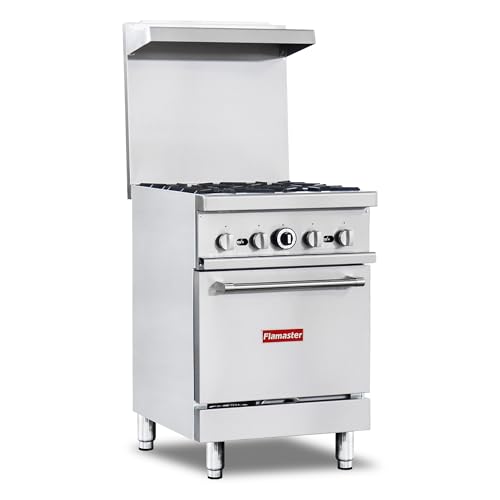
This commercial 24-inch gas range is the most powerful machine on this list, and it is the pick for a small commercial kitchen or a serious home cook who wants commercial output in a 24-inch width. It has four open burners, a full-size oven underneath, and a stated 120,000 BTU total with a 33,000 BTU static oven, and it is NG/LPG convertible, which means it can run on propane with the right setup. Open burners give a cook direct flame control that sealed burners do not, and the high BTU rating suits wok cooking, searing, and large pots. The trade-off is that a commercial range needs commercial ventilation, a qualified installer, and a proper gas supply, and it is heavier and hotter than a residential range. If you run a small restaurant, a food truck commissary, or a cabin kitchen that cooks for groups, this is the range that will keep up. Confirm the LP conversion kit, the ventilation, and the gas supply with a qualified installer before ordering.
Key specs: Commercial 24 in. Gas Range with Oven, 4 Open Burners and Under Full Size Oven 120000 BTU & 33000 Static Oven, NG/LPG Convertible
Strengths:
- 120,000 BTU total with four open burners
- NG/LPG convertible for propane use
- Full-size oven under a 24-inch cooktop
Trade-offs:
- Needs commercial ventilation and a qualified installer
- Open burners need more cleaning than sealed burners
- Heavier and hotter than a residential range
Best for: small commercial kitchens and serious cooks / Not suited for: apartments without commercial ventilation
ATOSA 24-Inch Gas Range, NG/LP
Check price on Amazon: Commercial 24-Inch Gas Range

The ATOSA 24-inch gas range is the griddle pick on this list, because it pairs a 24-inch griddle with a 20-inch oven in a single 24-inch unit, and it is rated NG/LP, which covers propane use. A griddle top suits breakfast service, flatbreads, and large batches of food cooked on a flat surface, and it is the feature that sets this range apart from the four-burner models above. ATOSA is a known name in commercial food service, which helps when you need parts or service years after purchase. The 20-inch oven is smaller than the ovens on the four-burner models, so check that your baking sheets fit before ordering. This range suits a cafe, a diner, or a food truck commissary that cooks breakfast on a griddle and needs a compact commercial unit. Confirm the NG/LP setup, the ventilation, and the gas supply with a qualified installer, and confirm the griddle size matches your cooking volume.
Key specs: ATOSA Range: 24-in Gas Range 24 in. Griddle and 20 in. Oven – NG/LP
Strengths:
- 24-inch griddle top for breakfast and flatbreads
- NG/LP rating covers propane use
- ATOSA commercial brand with service support
Trade-offs:
- 20-inch oven is smaller than four-burner models
- Griddle top needs regular seasoning and cleaning
- Commercial installation and ventilation required
Best for: cafes and diners that cook on a griddle / Not suited for: households that need four burners and a large oven
Avanti 24-Inch Compact Gas Range Oven
The Avanti 24-inch compact gas range oven is a 24-inch gas range with four sealed burners, automatic electronic ignition, and a 2.6 cubic foot oven with storage. It is included here without a link because its listing describes it as a gas range without stating propane or LPG in the title, so the propane match cannot be verified from the listing alone. Avanti gas ranges are commonly used in apartments and small kitchens, and many are convertible to propane with a kit, but that must be confirmed with the maker before ordering for a propane supply. The four sealed burners are easier to clean than open burners, and the electronic ignition removes the need for matches or a lighter. The 2.6 cubic foot oven is a practical size for a compact range, and the storage drawer below is useful in a small kitchen. If you are considering this range for propane use, ask the seller or the maker whether an LP conversion kit is included or available, and have the conversion done by a qualified installer.
Strengths:
- Four sealed burners with electronic ignition
- 2.6 cubic foot oven with storage in a compact body
- Well suited to apartments and small kitchens
Trade-offs:
- Propane compatibility not stated in the listing title, confirm before ordering
- Sealed burners offer less direct flame control than open burners
- Compact oven fits smaller baking sheets
Best for: apartments and small kitchens where LP conversion is confirmed / Not suited for: buyers who need a verified propane range without extra checks
Check price on Amazon: ATOSA 24-Inch Gas Range
Cosmo COS-244AGC 24-Inch Gas Range
The Cosmo COS-244AGC is a 24-inch gas range with a 2.7 cubic foot convection oven, four burners, cast iron grates, and a stainless steel finish. It is included here without a link because its listing describes it as a gas range without stating propane or LPG in the title, so the propane match cannot be verified from the listing alone. The convection oven is the feature that sets it apart: a fan circulates hot air for more even baking, which matters in a small oven where hot spots are common. The cast iron grates are durable and stable for heavy pots, and the stainless steel finish suits a modern small kitchen. If you are considering this range for propane use, confirm LP conversion with the maker before ordering, and have the conversion done by a qualified installer. The convection feature and the cast iron grates make it worth the check for a buyer who bakes often in a small kitchen.
Strengths:
- Convection oven for more even baking in a small cavity
- Cast iron grates for stability with heavy pots
- Stainless steel finish in a 24-inch width
Trade-offs:
- Propane compatibility not stated in the listing title, confirm before ordering
- Convection fan adds a part that needs maintenance
- Compact oven fits smaller baking sheets
Best for: small kitchens where even baking matters and LP conversion is confirmed / Not suited for: buyers who need a verified propane range without extra checks
Comparison Table
Use this table to compare the picks at a glance before reading the detail in each section below.
| Pick | Key Specs |
|---|---|
| RecPro RV 24 in., stainless steel | 24 in., 4 burners, 12,000 BTU, fueled by propane |
| RecPro RV 24 in., black | 24 in., 4 burners, 12,000 BTU, fueled by propane |
| Commercial 24 in. gas range | 24 in., 4 open burners, 120,000 BTU, NG/LPG convertible |
| ATOSA 24 in. gas range | 24 in. griddle, 20 in. oven, NG/LP |
| Avanti 24 in. compact gas range | 24 in., 4 sealed burners, 2.6 cu. ft. oven (no link) |
| Cosmo COS-244AGC | 24 in., 2.7 cu. ft. convection oven, cast iron grates (no link) |
Buying Guide: How to Choose a 24-Inch Propane Range
Start with fuel, then size, then cooking style. Confirm whether the range is built for propane, ships with an LP conversion kit, or needs a kit ordered separately, and confirm that a qualified installer will do the conversion if one is needed. A range that is not converted correctly will burn poorly and can be unsafe, so this is not a step to skip. Next, measure the opening: 24 inches wide, plus the depth and height, and check that the oven fits your largest baking sheet. Then decide on burners versus griddle. Four burners suit general cooking, while a griddle top suits breakfast and flatbreads. Check the BTU rating honestly: a higher total means faster boiling and better searing, but it also means more heat in a small kitchen and a greater need for ventilation. Check the oven size and whether it has convection, because a small oven with a fan bakes more evenly than a small oven without one. Finally, check ventilation and local code. A gas range in an RV or cabin needs a vented hood or a ventilation plan that meets code, and a commercial range needs commercial ventilation. For sizing comparisons, our guide to the best 36 inch gas ranges shows what a full-size range offers, and our roundup of the best freestanding gas ranges covers freestanding options more broadly.
How to Use and Care for a Propane Range
Have the range installed and the gas connections checked by a qualified installer, and check for leaks with soapy water at every joint before first use. Keep the propane tank outdoors or in the ventilated compartment designed for it, never inside the living space. Clean the burners and grates regularly, because food debris blocks gas ports and causes uneven flames. Clean a griddle top after each use and season it as the manual directs, to prevent rust and sticking. Wipe the oven interior after spills, and do not line the oven floor with foil, which can block airflow and damage the finish. Check the oven temperature with a thermometer when you first use it, because compact ovens can run hot or cool, and knowing the offset improves baking. Keep a carbon monoxide detector in the room, as you should with any gas appliance, and never use the range as a room heater. A propane range that is installed properly, ventilated properly, and cleaned regularly will cook well for years.
Common Mistakes When Buying a Propane Range
The most common mistake is assuming any gas range runs on propane. Many gas ranges ship set up for natural gas and need an LP conversion kit, and running one on propane without conversion is unsafe. The second is buying the wrong width: a 24-inch opening will not take a 30-inch range, and a 24-inch range in a 30-inch opening wastes space. The third is ignoring ventilation. A gas range without proper ventilation is a safety risk, especially in an RV or a small cabin. The fourth is ignoring oven size. A compact oven will not fit a full-size roasting pan or a large baking sheet, and discovering that after installation is frustrating. The fifth is forgetting the total cost: the range, the conversion kit, the propane tank and regulator, the ventilation, and the installation all add up. Confirm fuel, measure twice, check ventilation, and budget the full installed cost before ordering.
Propane vs Natural Gas: What Actually Changes
Propane and natural gas are both gas fuels, but they are not interchangeable without changes to the range. Propane is supplied as a liquid in a tank and burns hotter per unit of volume than natural gas, which is supplied as a gas through a pipeline. Because of that difference, the burner orifices, the regulator, and the air shutter settings differ between the two fuels. A range set up for natural gas and run on propane without conversion will burn with a large, sooty flame, waste fuel, and produce excess carbon monoxide, which is unsafe. A range set up for propane and run on natural gas will burn weakly and may not light properly. The conversion is a kit of orifices and a regulator adjustment, and it must be the kit specified for that exact model, installed by a qualified installer. Propane also differs in supply: a tank runs out, so you must monitor the level and arrange refills, while a pipeline supply is continuous. In an RV or cabin, that means keeping a spare tank or a gauge, and planning refills before a long stay. Propane is heavier than air, so a leak pools low, which is why a propane installation needs a detector mounted low and a tank stored outdoors or in a ventilated compartment. None of this is a reason to avoid propane. It is a reason to treat the fuel setup as part of the purchase, to confirm the conversion kit before ordering, and to have the work done by someone qualified. A range that is converted correctly burns cleanly and cooks exactly as its natural gas twin does.
RV and Cabin Installation Checklist
Installing a propane range in an RV or a cabin needs a checklist, because the space is small and the consequences of a mistake are larger. Measure the opening for width, height, and depth, and confirm the range fits with clearance on all sides for heat. Confirm the floor is level and strong enough for the range, and use the leveling legs to set it flat, because an unlevel range cooks unevenly and can spill. Confirm the propane supply: the tank size, the regulator, the hose, and the shutoff valve, and confirm that the tank is stored outdoors or in the ventilated compartment designed for it. Confirm ventilation: a vented range hood that exhausts outside, or a ventilation plan that meets local code, and a carbon monoxide detector mounted in the room. Confirm the electrical supply if the range needs power for ignition or a convection fan, and confirm that the circuit has capacity. Confirm the oven size against your largest baking sheet and roasting pan. Have a qualified installer connect the gas, check every joint with soapy water, and test the burners and the oven before the installer leaves. Keep the manual, the conversion kit paperwork, and the installer contact in the RV or cabin, so a future service visit starts with the facts. Walk through this checklist before ordering, and the installation will be a single visit rather than a series of corrections.
Oven Size, Burners, and Griddle: Cooking on a 24-Inch Range
Cooking on a 24-inch range is different from cooking on a 30-inch range, and the differences are worth understanding before you buy. The oven is the biggest change: a 24-inch range has an oven of roughly 1.9 to 3.7 cubic feet, which fits a standard baking sheet turned sideways in most cases, but not a full-size roasting pan and a baking sheet at the same time. If you bake often, measure your largest sheet and your roasting pan against the oven dimensions in the listing, and check whether the oven has convection, because a fan makes a small oven bake more evenly. The cooktop is the second change: four burners in 24 inches means the burners are closer together, so two large pots may not fit side by side. Plan your cooking around that: use one large pot and one small pan, or cook in sequence rather than in parallel. A griddle top changes the equation again, because it replaces burners with a flat surface that suits breakfast and flatbreads but not pots. If you cook breakfast for a group, a griddle is worth it. If you cook soups and stews, four burners are better. The BTU rating tells you how fast the burners heat: a higher rating boils water faster and sears better, but it also puts more heat into a small kitchen, so ventilation matters more. Cast iron grates hold heavy pots steady and retain heat, while lighter grates are easier to clean. A 24-inch range is not a smaller version of a 30-inch range. It is a different tool for a smaller space, and it cooks well when you plan around its size.
Propane Tank Sizing and Refills
A propane range is only as useful as its tank, and tank sizing is worth planning before you buy. A small tank suits a weekend cabin or an RV that cooks lightly, while a larger tank suits a household that cooks daily or a commercial kitchen that runs the range all day. The right size depends on how much you cook, how many burners you run, and how often you want to refill. A tank that is too small will run out at the worst moment, and a tank that is too large is heavy and hard to move. Keep a gauge on the tank so you can see the level, and keep a spare tank if the range is your only cooking appliance, so a refill never leaves you without a stove. Refills are available at propane dealers, hardware stores, and many gas stations, but hours and availability vary, especially in rural areas and in winter, so plan refills before a long stay rather than during one. Store tanks outdoors or in the ventilated compartment designed for them, never inside the living space, and keep them upright and secured so they cannot fall. Check the regulator and hose for wear each season, and replace a cracked hose before it leaks. A propane range with a sized tank, a gauge, and a spare is a reliable cooking setup. A propane range with an empty tank and no plan is a cold kitchen, and the difference is a little planning.
Measuring for a 24-Inch Range
Measure three dimensions before ordering a 24-inch range: width, depth, and height, and measure the opening, not the old range. Width is the easy one, but the opening may not be exactly 24 inches, and a range that is a fraction too wide will not fit. Depth matters because a range that sticks out past the counter looks wrong and blocks a walkway, while a range that is too shallow leaves a gap that collects crumbs. Height matters because the cooktop should sit level with the counter, and an adjustable leg can only correct so much. Measure the door swing as well: the oven door needs room to open fully without hitting a wall or an island. In an RV, measure the doorway the range must pass through, because a 24-inch range will not fit through a narrow RV door without removing the door or a panel. Write the three numbers down, compare them with the listing dimensions, and keep a small clearance on each side for heat and ventilation. A tape measure costs little and saves the cost of returning an installed appliance.
Final Recommendation
For an RV or cabin with a propane supply, buy the RecPro RV 24-inch range in stainless steel or black, because it is built for propane from the start. For a small commercial kitchen that needs power, buy the commercial 24-inch NG/LPG convertible range with four open burners. For a cafe that cooks breakfast on a griddle, buy the ATOSA 24-inch NG/LP range with its griddle top. If you are considering the Avanti or Cosmo compact gas ranges, confirm LP conversion with the maker before ordering. Whatever you buy, confirm the fuel setup with a qualified installer, measure the opening, check ventilation, and budget the full installed cost. A 24-inch propane range is a practical answer for a small space with no gas line, and the right one will cook well for years.
Frequently Asked Questions
Can any gas range run on propane?
No. Many gas ranges ship set up for natural gas and need an LP conversion kit to run on propane. The conversion must be done by a qualified installer, and the kit must be the one specified for that model.
What size oven does a 24-inch range have?
Most 24-inch ranges have ovens between about 1.9 and 3.7 cubic feet, which is smaller than a 30-inch range. Check that your largest baking sheet and roasting pan fit before ordering.
Do I need ventilation for a propane range in an RV?
Yes. A gas range needs proper ventilation, and an RV installation should have a vented range hood or a ventilation plan that meets local code. Never use a range as a room heater.
Are open burners better than sealed burners?
Open burners give more direct flame control and higher output, which suits wok cooking and searing. Sealed burners are easier to clean and suit everyday cooking. The choice depends on how you cook.
Is a griddle top worth it on a 24-inch range?
For breakfast service, flatbreads, and large batches cooked on a flat surface, yes. A griddle top replaces one or more burners, so it suits kitchens that cook that way often and is less useful for general cooking.