A 30-inch wall oven is the size most American kitchens are actually framed for, which is both the good news and the trap. The good news is that every major maker builds its best cooking technology into this width. The trap is that “30 inch” describes the cabinet face, not the hole in your cabinetry, and two ovens with identical badges on the front can differ by more than an inch in the cutout they demand. Get the fit wrong and you are paying a cabinet maker to fix a problem a tape measure would have prevented. Get it right and a wall oven changes how a kitchen works: the bird comes out at counter height instead of floor level, the second dish cooks at its own temperature, and nobody has to kneel on a hot door to baste anything.
This guide covers six 30-inch wall ovens worth your money, three single and three double, from brands with real service networks. Some links in this article are affiliate links, which means we may earn an affiliate commission if you buy through them, at no extra cost to you. That commission never decides the ranking here. What decides it is cutout honesty, convection performance, cleaning method, rack hardware, and how the oven behaves on an ordinary Tuesday, not just on Thanksgiving.
Every pick below is a current, real model you can actually order. Because wall ovens are built-in appliances that ride freight trucks and change configurations by finish and handle style, we do not print fixed prices here. Prices move with promotions and with the options you choose, so each pick ends with a pointer to check the current figure where you shop. Treat any roundup that quotes you a tidy static price for a built-in oven with suspicion.
In this guide
Quick picks: best 30 wall ovens
| # | Product | Where to buy |
|---|---|---|
| 1 | Bosch 800 Series double wall oven | Check on Amazon |
| 2 | GE Profile PTS7000SNSS | Check on Amazon |
| 3 | LG WDEP9423F double wall oven | Check on Amazon |
| 4 | Frigidaire Gallery 30 double wall oven | Check on Amazon |
| 5 | Samsung Bespoke NV51K7770DG | Check on Amazon |
The six picks at a glance
If you read nothing else, read this. The Bosch 800 Series double oven is the quiet achiever: True Convection in both cavities, and the most forgiving cutout in this group. The KitchenAid single is the traditionalist’s choice, with a fit guarantee program that takes some fear out of replacing an older unit. The GE Profile PTS7000SNSS single brings air fry into the wall oven, so the crisping happens in the cavity rather than on the counter. Among the doubles, the LG WDEP9423F is the balanced all-rounder, the Frigidaire Gallery is the value play with air fry in both cavities, and the Samsung double is the flexible one, with an upper cavity that can split into two cooking zones. None of these is a bad oven. They differ in cleaning method, control style, and how much cabinet surgery they ask for.
One honest note before the details: a wall oven is a ten-to-fifteen-year decision installed by a licensed electrician and, in many kitchens, a carpenter. The differences that matter most are boring ones. Does the cutout match? Does the junction box land where the conduit reaches? Is there a service technician within fifty miles who stocks the control board? We weight those questions heavily below, because an oven with a marginally better air fry mode and no local service is not the better oven.
How we chose these six
We began with every 30-inch wall oven sold through major US channels and cut the list by rules, not by brand affection. A model had to be a current production unit with a published installation manual, a stated cutout, and a parts network in North America. It had to offer genuine convection rather than a fan-only imitation at this price tier, and its self-clean system had to be one we would trust a reader to run unattended. Models with recurring control-board complaints in owner reports, doors with known seal problems, or cutouts so unusual that a replacement would trap the buyer with one brand forever were set aside.
What survived was scored on the things that decide daily satisfaction. Cooking performance came first: evenness across racks, preheat honesty, and how the convection system behaves at low temperatures as well as high. Hardware came second, because racks, hinges, and door seals are what you touch for fifteen years. Third came installation friendliness: cutout tolerance, conduit placement, and weight. Last came connected features, which we treat as seasoning rather than the meal. The six ovens above are the ones we would defend to a friend spending their own money, and the differences among them are differences of priority, not of basic competence.
What to look for in a 30-inch wall oven
The cutout is the real specification
Ignore the “30 inch” on the badge until you have read the installation manual for the exact model you want. A typical 30-inch wall oven needs a cutout roughly 28.5 inches wide, but the required height swings enormously: around 27 to 28 inches for many single ovens, and 49 to 51 inches for doubles. Depth matters too. Most models want a cabinet at least 23.5 to 24 inches deep, and the electrical junction box has to sit in a specific zone, usually the upper right or lower rear of the cutout, because the oven’s conduit is only so long. If your existing opening is taller than the new oven needs, makers sell trim kits, but a trim kit covers a gap; it does not shrink a hole. Measure your current cutout at three heights and two widths, because old cabinetry is rarely square, and write the numbers down before you fall in love with any model in this guide.
Also check what is behind the oven. Older installations sometimes hide a gas line, a water line, or a junction box for a cooktop inside the same cavity. A double oven is heavy, commonly 250 to 300 pounds crated, and it slides in once; you do not want surprises at that moment. Finally, confirm the floor of the cabinet opening is level and rated for the weight. Many makers require the platform to support well over 200 pounds for a double, distributed across the runners, and a sagging shelf will make the door alignment drift over time.
Measuring your cutout, step by step
Do this with the power off and the old oven cool. Open the door and find the screws or trim that hold the unit in the cabinet; on most installations, removing the door and the trim strips reveals the gap between oven body and cabinet. Measure the opening’s width at the top, middle, and bottom, and use the smallest figure. Measure height the same way, in three places. Push a tape to the back of the cavity for depth, and note anything living inside: the junction box position, a gas stub, a water line. Photograph all of it. Then compare your numbers against the candidate oven’s installation manual, not its marketing page, and check the required clearance to combustible surfaces above and below.
If your opening is slightly too tall, a manufacturer trim kit or a filler strip from your cabinet maker solves it neatly. If it is slightly too narrow, a carpenter can sometimes plane a framed opening wider, but particleboard cabinets with applied finishes forgive nothing. If the opening is too short for the oven you want, stop and reconsider the model, because cutting height usually means cutting structure. This half hour with a tape measure is the cheapest insurance in the entire purchase, and it is the step most often skipped by buyers who later write angry reviews about an oven that never stood a chance of fitting.
Finishes and how the oven meets your kitchen
Most of these models come in stainless steel, with black stainless, matte black, or white offered on selected lines. Stainless remains the safest choice for resale and the easiest to match across brands, which matters because your refrigerator and dishwasher may not share the oven’s maker. Black stainless shows fewer fingerprints but can differ in tone between brands and is harder to touch up if scratched. Handle style deserves a decision too: pro-style bar handles look substantial and give a towel a home, while integrated pocket handles keep the face flush in narrow kitchens where hips and handles collide. Buy the finish for the kitchen you have, not the one in the brochure, and order any matching trim kit in the same transaction so dye lots and production runs align.
True convection versus standard convection
Convection marketing is slippery, so here is the distinction that matters. A standard convection oven adds a fan that circulates hot air from the bake and broil elements. A true convection oven, sometimes called European convection, adds a third heating element around the fan itself, so the air being blown is already at temperature. The practical result is more even browning across three racks and less need to rotate pans. If you bake cookies in full batches, roast vegetables on two sheets at once, or cook a whole meal at one temperature, true convection earns its keep. If you mostly cook one dish at a time in the middle of the oven, the difference shrinks and you can spend the money elsewhere.
Some ovens go further with twin fans or steam injection. Twin-fan systems move more air and can help in very large cavities. Steam-assist baking is lovely for bread crusts but appears mostly in premium European lines. For most households, a single fan with a surrounding element, honest temperature calibration, and racks that slide smoothly will cover ninety percent of cooking better than exotic systems with mediocre execution.
Air fry modes: useful, not magic
Nearly every oven here offers an air fry mode, and it works by combining high heat with fast fan circulation to crisp food on a perforated tray. It is genuinely handy for wings, fries, and reheating pizza, and it frees counter space if you retire a basket fryer. But set expectations: an oven air fryer handles big batches better than a countertop unit and small batches a little worse, because heating five cubic feet of air for six wings is inherently slower. Also know that air fry mode splatters. If you use it weekly, prefer an oven whose self-clean cycle you trust, and budget for the brand’s air fry tray if one is not in the box, since a flat sheet pan undermines the airflow the mode depends on.
Self-cleaning: steam versus pyrolytic
There are two real cleaning philosophies. Pyrolytic cleaning heats the cavity to extreme temperatures and reduces spills to ash you wipe out. It is thorough and it is the method serious roasters should insist on, but it heats the kitchen, takes two to five hours, produces a smell the first few times, and demands that you remove racks in many models unless the racks are rated for it. Steam cleaning is the gentle cousin: you add water, run a short low-heat cycle, and wipe softened grime. It is fast and easy on the door gasket, but it will not touch carbonized cheese from March. Several ovens in this guide offer both, which is the correct answer. Use steam monthly so the pyrolytic cycle, when you finally run it, has less work and less smoke.
One safety habit applies to every pyrolytic oven: run the cycle with the room ventilated, pets in another room, and nothing stored in the drawer or cabinet directly below if your installation runs hot. And never line any wall oven floor with foil; it interferes with the temperature sensor and can fuse to the enamel.
Power, wiring, and installation reality
Every 30-inch wall oven in this class runs on 240V electricity. Singles typically need a 20 to 30 amp circuit; doubles commonly need 40 amps, and some specify a 50 amp breaker depending on the model. Your existing circuit was sized for your existing oven, so a move from single to double often means new wire, not just a new appliance. The oven connects by hardwired conduit into a junction box, not a plug, and the conduit length on the appliance limits where that box can live. This is licensed-electrician work in most jurisdictions, and delivery crews generally will not hardwire an oven for you.
Plan the install day like a small construction project. The old oven has to come out and go somewhere; freight delivery is curbside or threshold unless you pay for room-of-choice. Confirm the path from the door to the kitchen clears the crated width. Keep the old oven until the new one is in and heating, because a damaged-on-arrival unit with your old oven already hauled away turns dinner into a negotiation. Finally, register the warranty and photograph the model tag inside the door frame before the oven slides in; you will want that number the first time you call for service.
Capacity, racks, and the hardware you touch daily
Cavity sizes in this class run from about 4.5 to 5.0 cubic feet per oven. Raw volume matters less than usable shape: the distance between racks, the width between the side walls at rack level, and whether a half-sheet pan fits with the door closed. Look for at least one gliding or telescopic rack in the main cavity. A full-extension rack that carries a 25-pound turkey out to you, instead of you reaching into a 450-degree box, is the single best safety feature in modern ovens. Check how racks clean: chrome racks usually must come out for pyrolytic cycles, while porcelain-coated or specially finished racks can stay in. Meat probes are now common and genuinely useful, provided the probe jack is placed where the cable does not cross a rack edge.
Controls: touch panels, knobs, and displays
Wall ovens have largely moved to glass touch panels, and the quality spread is wide. A good panel responds through a fingertip’s light press, shows the set temperature and the actual temperature separately, and keeps the two or three functions you use daily on the first screen. A poor one buries the timer behind menus and beeps at every touch with no way to silence it. Knobs survive on a few traditional and professional-styled models and remain the fastest interface for cooks who adjust by feel, but knob-equipped 30-inch ovens are a shrinking minority and usually sit in premium lines. Whatever the interface, look for a control lock, a display you can read from six feet away, and a clock you can dim or extinguish at night; a bright oven clock in a dark kitchen is a small annoyance repeated ten thousand times.
Noise, heat, and the cooling fan nobody mentions
Every wall oven runs a cooling fan that protects the electronics and the surrounding cabinetry, and it keeps running after the cooking stops. In an open-plan kitchen that fan is part of your evening soundscape. Owner reports consistently place European models and the LG among the quieter performers, while value models tend to run louder fans at higher pitch. The oven will also shed heat into the room during long roasts and especially during pyrolytic cleaning. If your kitchen already runs hot in summer, favor models with strong door insulation and triple-pane glass, and check the vent location: most ovens exhaust below the door, which is fine for bare feet in winter and less charming in August.
The best 30-inch wall ovens, reviewed

Bosch 800 Series 30-inch double wall oven — the quiet achiever, twice over
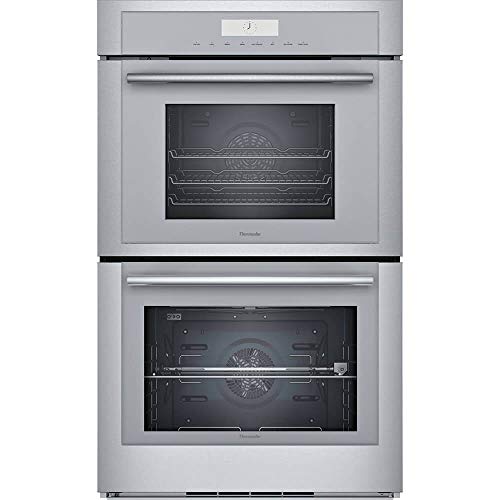
Bosch builds wall ovens the way German firms build most things: conservatively on the outside, thoughtfully on the inside. The 800 Series double oven is the one we would hand to a serious home baker who asked for no drama, now with two cavities instead of one. Its True Convection system, with the heating element wrapped around the fan, keeps racks of shortbread within a shade of each other in both cavities, and the ovens are noticeably quieter than most rivals at full fan. The touch controls sit behind glass with no knobs to trap grease, the doors close with a damped soft motion, and the whole front presents a flat, calm face that suits modern cabinetry. Two ovens in a 30-inch body means the roast and the baking run at different temperatures at the same time, which is the entire promise of the double format.
The double layout changes how a household cooks on the days that matter. The upper cavity handles the weeknight supper and preheats quickly for a single dish, while the lower cavity takes the slow roast or the second course at its own temperature — and on holidays both run at once, which is the difference between cooking dinner in one go and cooking it in shifts. Bosch’s parts pipeline in North America has improved steadily, and the 800 Series shares boards and fans with the brand’s wider built-in line, which keeps repair costs saner than orphan models. Before ordering, measure the cutout against Bosch’s published installation dimensions and confirm the electrical requirements with the installer — a double oven is taller and heavier than a single, and the opening must match.
Strengths:
- True Convection with even multi-rack baking in both cavities
- Two ovens at different temperatures in a 30-inch body
- Quiet operation and damped soft-close doors
- Touch controls behind glass, with no knobs to trap grease
Trade-offs:
- A double oven is taller and heavier than a single — measure the cutout and the delivery route first.
- Touch-only controls take a week of adjustment for knob loyalists.
- Premium pricing within the double-oven class.
Who it suits: Bakers, roast-every-Sunday cooks, and households that cook two temperatures at once every week, not just on holidays. If even browning in two cavities sounds like your kind of luxury, the Bosch 800 double is the one to beat, so check price on Amazon.
Check price on Amazon: Bosch 800 Series double wall oven
KitchenAid KOSE500ESS single wall oven
KitchenAid’s single wall oven is the pick for people who cook American food at American scale. The cavity is a generous 5.0 cubic feet, the Even-Heat true convection system uses a bow-tie shaped element and fan arrangement designed to keep the far corners honest, and the glass touch display is large, bright, and readable from across the room. The signature touch is the FIT system: KitchenAid designs the oven with adjustable elements and offers a guarantee that it will fit specific existing cutouts, which removes a layer of anxiety from a replacement purchase. The satin gliding rack rolls smoothly, the temperature probe is included, and the interior is a handsome deep blue porcelain that hides splatter better than black.
In daily use, the KitchenAid feels unhurried and solid. Preheat times are competitive, the convection conversion feature adjusts temperatures for standard recipes automatically, and the bread proofing mode holds the low, steady warmth that dough wants. The self-clean is pyrolytic with an adjustable duration, and the steam tray accessory system (sold for some configurations) hints at the brand’s range heritage. Where the Bosch is a precision instrument, the KitchenAid is a well-built family tool: fewer connected features to configure, more emphasis on capacity and fit.
Longevity prospects are a KitchenAid strong suit. This platform has been in production for years with incremental updates rather than reinventions, which means technicians know it, boards are stocked, and the failure modes are documented and boring. The door hinges are rated for heavy use, the rack supports are welded rather than screwed, and the cavity’s porcelain finish resists the staining that makes older ovens look tired. For a buyer planning to keep an oven fifteen years, that maturity is worth more than a longer feature list.
Strengths:
- Large 5.0 cubic foot cavity with true convection
- FIT system fit guarantee for common replacement cutouts
- Gliding rack and temperature probe included
- Clear, easy-reading glass display
Trade-offs:
- No air fry mode on this long-running configuration
- Smart features are minimal compared with app-first rivals
- Door and handle styling skews traditional
Who it suits: Replacement buyers who want fit confidence, big-batch cooks, and households that value capacity and clarity over connected extras.
For a big, honest single oven that promises to fit the hole your old one leaves, the KitchenAid earns its place, so check price on Amazon.

GE Profile PTS7000SNSS single wall oven — the air-fry single
The GE Profile PTS7000SNSS is the single wall oven for households that want the air fryer built into the wall rather than parked on the counter. It is a 30-inch built-in convection wall oven in stainless steel, with air fry in the feature list alongside true convection — so the same cavity that roasts and bakes also crisps fries and wings without a second appliance. The single-cavity layout keeps the cutout simpler than a double and the installation friendlier, while the convection system handles the everyday jobs — reheating, roasting, baking — with the consistency GE’s Profile line is known for.
Air fry is the feature that earns this pick its place. A strong convection fan moves hot air briskly around the food, so the air-fry mode produces real crunch on fries, wings, and breaded fish rather than the pale imitation a weak fan delivers — and because the mode runs in the wall oven, there is no countertop appliance to store or clean. The stainless finish suits the wider GE kitchen range, and the 30-inch body fits the standard single-oven opening this guide is built around. Before ordering, measure the cutout against GE’s published installation dimensions and confirm the electrical requirements with the installer.
Strengths:
- Air fry built into the wall oven — no countertop fryer to store.
- True convection for even roasting and baking.
- Single-cavity layout keeps the cutout and installation simpler than a double.
- Stainless finish that coordinates with the wider GE kitchen range.
Trade-offs:
- One cavity means one temperature at a time — no simultaneous roast and bake.
- Verify the exact air-fry and convection configuration on the listing before ordering.
- GE’s service network is wide, but confirm a local servicer first.
Who it suits: households that air-fry weekly and want the function in the wall, in a standard 30-inch single opening. If the air fryer belongs in the oven rather than on the counter, check price on Amazon.
Check price on Amazon: GE Profile PTS7000SNSS
LG WDEP9423F 30-inch double wall oven — the balanced all-rounder
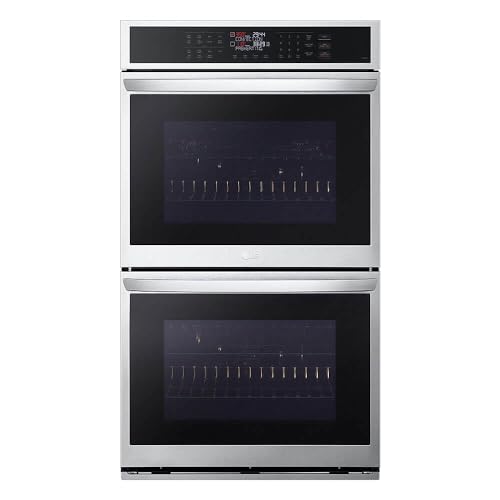
The LG WDEP9423F double is the balanced choice for households that cook two temperatures at once every week, not just on holidays. Both cavities carry convection in a 30-inch stainless body, and the smart platform covers remote preheat and diagnostics for households that want them. In practice that means the lower oven is not the neglected sibling it is in many doubles; it roasts and bakes with the same confidence as the upper. The two cavities share a similar control logic, so once you learn one you know both — a consistency that prevents the mode errors that plague doubles with mismatched interfaces.
Controls are a clean touch panel shared by both ovens, and the smart connectivity covers the essentials: remote preheat, timer alerts, and diagnostics that can genuinely shorten a service call. The cavities accept standard half-sheet pans without argument, and the stainless finish sits comfortably in transitional kitchens. If we had to name the double oven that offends nobody and delights most people, this is it.
Strengths:
- Convection in both cavities in a 30-inch double body
- Two full-size cavities of equal ability
- Smart diagnostics and remote preheat
- Consistent controls across both ovens
Trade-offs:
- A double oven is taller and heavier than a single — measure the cutout first.
- Verify the exact cleaning and convection configuration on the listing before ordering.
- Smart features need a network connection to earn their keep.
Who it suits: households that cook two temperatures at once weekly and want a balanced double with smart features in stainless. If the double is the decision and balance is the priority, check price on Amazon.
Check price on Amazon: LG WDEP9423F double wall oven

Frigidaire Gallery 30-inch double wall oven — the value play with Total Convection
Frigidaire’s Gallery double is the value argument in this guide, and it is a strong one. You get two electric convection cavities in a 30-inch double body, with the brand’s Total Convection system, in smudge-proof black stainless steel — the finish that hides fingerprints on a front touched a dozen times a day. The upper oven preheats quickly for weeknight duty, the lower handles the slow roast, and the two cavities together deliver the core double-oven experience (two temperatures, real convection, honest capacity) with the least financial pain in this guide. Frigidaire’s enormous installed base means parts and service are easy to find almost anywhere in the country.
What you give up for the friendlier price is refinement. The fan is more audible than the Bosch or LG at full convection, and fit-and-finish details like rack glide smoothness are good rather than luxurious. None of that affects how dinner comes out. For a rental-grade upgrade, a growing family, or a kitchen where the budget needs to stretch to countertops too, the Gallery double delivers the essentials. Before ordering, measure the cutout and confirm the electrical requirements — a double oven is a substantial appliance in every sense.
Strengths:
- Two convection cavities with Total Convection in a value-priced double
- Smudge-proof black stainless finish that hides fingerprints
- Both cavities for two temperatures at once
- Huge service and parts network
Trade-offs:
- The fan is more audible than the premium doubles at full convection.
- Fit and finish are good rather than luxurious.
- Verify the exact cleaning and feature configuration on the listing before ordering.
Who it suits: value-led buyers, growing families, and first serious kitchen renovations where the double-oven experience matters more than the premium badge. If two temperatures at once is the brief and the budget is real, check price on Amazon.
Check price on Amazon: Frigidaire Gallery 30 double wall oven
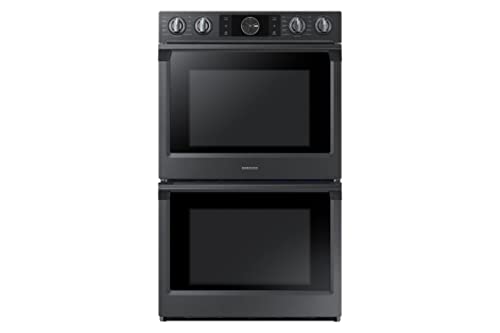
Samsung NV51K7770DG double wall oven with Flex Duo
Samsung’s double oven has a trick nobody else in this guide offers: a removable divider in the upper cavity that splits it into two independently controlled zones. That turns this nominally double oven into a triple oven. You can bake a small casserole up top at one temperature, hold a side dish in the zone beneath it at another, and run the full lower oven for the main event, or pull the divider and use the upper cavity whole. For households that entertain in waves, or that cook a small weeknight meal without heating a full cavity, the flexibility is real and used often.
Around that headline feature sits a competent modern oven: true convection, a gliding rack, steam and pyrolytic-hybrid cleaning options depending on configuration, Wi-Fi through SmartThings, and Bespoke styling with clean lines. Samsung’s kitchen appliances draw mixed long-term reliability opinions, and its service coverage is thinner in rural areas than GE’s or Frigidaire’s, so buy this one with the local service question answered first. Where support is good, the Flex Duo system is the most adaptable cooking space in this guide, and the divider stores neatly when the upper oven needs to swallow a turkey.
The energy logic deserves emphasis. Heating a full 5-cubic-foot cavity to bake two portions of lasagna wastes time and electricity; the Flex Duo’s smaller upper zone preheats faster and cooks a weeknight meal with a fraction of the volume. Households that cook small most nights and large on weekends get the closest thing to two appliance sizes in one cutout. Samsung’s gliding rack and bright cavity lighting are up to the standard set by rivals, and the Bespoke panel styling integrates cleanly with the brand’s refrigerators if you are building a matched kitchen.
Strengths:
- Flex Duo divider creates three cooking zones from two cavities
- Efficient small-meal cooking without heating a full oven
- True convection and gliding rack included
- SmartThings integration for Samsung households
Trade-offs:
- Service network thinner than legacy brands in some regions
- Divider is one more part to store and clean
- Feature depth can overwhelm cooks who want simple controls
Who it suits: Entertainers, Samsung smart-home households, and cooks whose meals vary wildly in size from night to night.
For the most flexible cooking space a 30-inch opening can hold, the Samsung Flex Duo double stands alone, so check price on Amazon.
Check price on Amazon: Samsung Bespoke NV51K7770DG
Side-by-side comparison
| Model | Configuration | Convection | Air fry | Cleaning | Standout trait |
|---|---|---|---|---|---|
| Bosch 800 Series double | Double | True Convection | — | Verify on listing | Two ovens, quiet fan |
| KitchenAid KOSE500ESS | Single | True, Even-Heat | No | Pyrolytic | FIT system fit guarantee |
| GE Profile PTS7000SNSS | Single | True | Yes | Verify on listing | Air fry in the wall oven |
| LG WDEP9423F | Double | Convection, both cavities | — | Verify on listing | Equal-strength cavities, smart |
| Frigidaire Gallery 30 double | Double | Total Convection, both cavities | — | Verify on listing | Value double, smudge-proof black stainless |
| Samsung NV51K7770DG | Double with Flex Duo | True | Configuration dependent | Steam and self-clean options | Three zones from two cavities |
Read the table as a map of priorities rather than a ranking. If cleaning ease drives you, note which models pair a fast steam cycle with a true pyrolytic burn; that combination, on the GE Profile, LG Studio, and Frigidaire Gallery, is the most forgiving setup for real life. If air fry matters, the GE Profile and Frigidaire carry it natively among these picks. And if fit anxiety dominates, the KitchenAid’s guarantee program and the Bosch’s modest cutout height are the two most reassuring lines in the chart.
Single or double: deciding with honest questions
The single-versus-double decision should be made by your calendar, not your aspirations. Count the times in the last three months you genuinely needed two temperatures at once. If the answer is weekly (a roast and a casserole, pizza for kids and salmon for adults, a bake sale batch beside dinner) a double oven will pay for its extra circuit work within a year of saved frustration. If the answer is twice, at holidays, a large single oven plus a capable countertop oven will serve you better and cost less to install, because the countertop unit handles the overflow and the wall oven stays a simpler, cheaper appliance to service.
Ergonomics cut the other way. In a double oven, the upper cavity sits at a comfortable height but the lower cavity is low, close to range-oven territory, which partly surrenders the wall oven’s ergonomic advantage. In a single oven installed at proper height, every dish lives between waist and shoulder. Households with mobility concerns often do best with the GE Profile PTS7000SNSS single or a single mounted slightly lower than standard, and should weigh that daily comfort above theoretical holiday capacity.
Running costs deserve a line in the decision too. A double oven does not cost twice as much to operate, because you rarely run both cavities, but its standby draw and larger door seals give it a slightly heavier footprint. The real energy story is cavity discipline: heating the smallest cavity that fits the meal is the single biggest saver, which is why the Samsung’s split upper cavity and the speed-oven pairing discussed below interest efficiency-minded buyers. Preheat only when the dish needs it; casseroles, braises, and roasts begun in a cold oven cook perfectly well and skip ten minutes of full-power draw.
Budget honestly across the whole project. The oven itself is often less than half the installed cost once you add electrical work, cabinet modification, delivery, installation labor, and haul-away. Doubles are heavier, need bigger circuits, and stress old cabinetry more. A mid-range double installed correctly will out-cook and out-last a premium single squeezed into a cutout it barely fits, so spend first on fit and wiring, then on features.
See also: best ovens for baking
Planning the remodel around the oven
If this oven is part of a larger renovation, sequence it early in the design rather than late. The cutout dimensions and circuit requirements should reach your cabinet maker and electrician before cabinetry is ordered, because a 30-inch oven column is often a custom or semi-custom cabinet whose interior dimensions are set at the factory. Decide the installed height at the same time: the traditional centerline puts the main rack near counter height, but taller households sometimes raise a single oven a few inches, and double-oven buyers should confirm that the upper cavity’s top rack can be reached safely by the shortest regular cook in the house. A step of reaching too far, repeated with a loaded roasting pan, is a burn waiting for its occasion.
Ventilation and neighboring appliances belong in the same conversation. A wall oven does not need a range hood the way a cooktop does, but pyrolytic cleaning releases heat and odor that a decent hood or an open window handles far better than a closed room. Keep the required clearances to the refrigerator and to tall pantry doors, and check that adjacent cabinet doors and drawers open fully without striking the oven handle. These are dull details, and they are exactly the details that separate a kitchen that photographs well from a kitchen that cooks well for fifteen years.
What about speed ovens and steam ovens as companions?
Many 30-inch installations pair the main oven with a second, smaller appliance above it, and readers ask whether a speed oven or steam oven changes the single-versus-double calculus. A speed oven combines microwave energy with convection heat, and in practice it becomes the household’s everyday oven: it reheats without rubberizing, roasts a small chicken properly, and handles the side dish while the main cavity does the centerpiece. Households that install this pairing often report that a single wall oven plus speed oven covers more real situations than a traditional double, because the small cavity is faster for the meals people actually cook on weeknights.
A steam oven is the specialist’s choice. It excels at vegetables, fish, reheating leftovers without drying them, and proofing and baking bread with a crust no dry oven can match. It is also the most demanding companion to own, with descaling routines and water management that reward engaged cooks and punish neglectful ones. Neither companion appears among our six picks because this guide is about the primary oven, but if your remodel includes a second slot, decide its role before choosing the main oven: a speed oven pairs best with a large single, while a steam oven pairs beautifully with a double for households that entertain seriously.
Buying mistakes that cost people real money
The most expensive mistake is ordering before measuring, and it happens constantly. Showroom staff will happily sell you a 30-inch oven for a kitchen whose cutout turns out to be a 27-inch or a European 60-centimeter cabinet wearing a trim panel. The second mistake is forgetting the electrical audit: discovering on install day that a double oven needs a 40 amp circuit your panel cannot supply turns a one-day job into a week of trades and drywall. The third is choosing by feature count. A steam-injection oven you use twice a year is a worse purchase than a simpler oven with a rack you love every day, because features you ignore still carry parts that can fail.
Two quieter mistakes deserve mention. Buyers often ignore the door swing and handle depth in a galley kitchen, then live for years with a door that blocks the dishwasher. And many people let the old oven be hauled away before the new one has heated to temperature and held it; freight damage and dead-on-arrival boards are rare but real, and an empty cutout plus a departed old oven leaves you with no leverage and no dinner. Keep the old appliance until the new one proves itself for at least one full cooking cycle.
Care habits that add years to a wall oven
Wall ovens fail from neglect more often than from defects. Wipe spills after the oven cools, not next month; sugary spillovers carbonize into enamel-damaging crusts and are the main reason cavities look ancient. Use the steam clean cycle, where fitted, as monthly maintenance and reserve pyrolytic burns for genuine need, because every extreme cycle ages the door gasket and the electronics a little. Leave racks out during pyrolytic cleaning unless the manual explicitly rates them for it, and lubricate gliding rack mechanisms only with the graphite product the maker specifies, never kitchen oil.
Calibrate once a year with an inexpensive oven thermometer: compare the displayed temperature against the reading at the center rack after a full preheat and a fifteen-minute settle, then apply the oven’s calibration offset if they disagree. Check the door seal by closing the door on a strip of paper at several points; if the paper slides out freely anywhere, heat is escaping there and the gasket deserves replacement before it begins cooking your cabinetry. Finally, keep the model number, purchase date, and installer details in one folder. The first service call of year nine goes twice as fast when you can hand the technician exact information.
Warranty and service: read the fine print before you need it
Most wall ovens in this class carry a one-year full warranty, with longer coverage sometimes applied to specific parts. That sounds thin for an appliance expected to last a decade, and it is why the extended plans offered at checkout tempt people. Judge those plans by the brand’s local service reality rather than the brochure: an extended contract is only as good as the technician network standing behind it. Legacy brands with factory service in your metro area make their plans meaningful; where service is subcontracted to whoever bids lowest, owners report longer waits regardless of the paper they hold.
Two practices protect you more than any plan. First, keep the purchase receipt and registration confirmation together, because warranty clocks run from delivery or install dates that are argued about later. Second, report any early fault, however small, inside the first year and get it documented; intermittent control problems that are logged under warranty have a way of being honored later, while undocumented ones become your expense. None of the six picks here is a warranty outlier, but the brands differ in how painless they make the process, and that difference is worth real money over fifteen years.
Frequently asked questions
Will a new 30-inch wall oven fit my existing cutout?
Often, but never assume. Measure your current cutout’s width, height, and depth and compare them with the installation manual of the exact model you want, including the junction box location and conduit reach. Singles vary by several inches in required height between brands, and doubles need roughly twice the opening. Trim kits can disguise a modest height surplus; they cannot fix an opening that is too small or a cabinet too shallow.
Can I replace a single wall oven with a double?
Sometimes. You need roughly 49 to 51 inches of cutout height, which usually means sacrificing a drawer or cabinet below, and most doubles need a 40 amp circuit where many singles ran on 30 amps or less. An electrician and a cabinet maker should both look at the opening before you order. If either answer is no, a large single plus a countertop oven is the practical alternative.
Is true convection worth paying for?
If you bake or roast on multiple racks at once, yes. The third element around the fan keeps temperatures even enough that three trays brown together without rotation, which changes how you cook for a crowd. If nearly everything you make cooks alone on the middle rack, standard convection or even a good conventional oven will satisfy you, and the savings can go toward a gliding rack or better installation.
How long should a wall oven last, and what fails first?
Plan on ten to fifteen years. The parts that fail are rarely the cavity; they are control boards, touch panels, igniters on gas (not applicable here), door hinges and latches, and convection fan motors. This is why local service coverage and parts availability appear throughout this guide. A brand with a stocked parts network in your region will usually serve you better than a marginally fancier oven that waits three weeks for a board.
Do I need Wi-Fi in a wall oven?
No, but it is more useful than it sounds. Remote preheat on the drive home, a phone alert when the probe hits temperature, and remote diagnostics that let a technician arrive with the right part all earn their keep. What you should refuse is an oven that requires the app for basic cooking. Every pick in this guide cooks fully from its own panel; the connection is a convenience layered on top, never a tollbooth.
The bottom line
One last piece of advice applies to all six: buy from a seller whose delivery and haul-away terms you have read in full, and schedule the electrician before the truck, not after it. The best oven in this guide installed a week late and a circuit short helps nobody, while a well-planned install turns the whole purchase into a single satisfying day.
Choose the Bosch 800 double if you bake seriously and want the calmest, most even double oven here. Choose the KitchenAid if fit certainty and raw capacity top your list. Choose the GE Profile PTS7000SNSS if you want air fry in the wall oven. Among the doubles, the LG WDEP9423F is the balanced default, the Frigidaire Gallery is the value champion, and the Samsung Flex Duo is the flexible entertainer. Whichever name ends up on your cabinet face, measure the cutout twice, confirm the circuit once, and the oven you choose will reward you every single day it hangs on your wall.