Disclosure: topratedkitchenware.com is reader-supported. When you buy through links on our site, we may earn an affiliate commission from Amazon and other retailers, at no extra cost to you.
Where to buy
This guide to the best air fryers wirecutter readers keep asking us to replicate starts with the clarification that honesty requires: this is not a Wirecutter article, none of these picks is presented as a Wirecutter recommendation, and no endorsement by Wirecutter or its staff is claimed or implied anywhere on this page. What this guide does is apply the kind of criteria-led, evidence-first method that Wirecutter-style reviewing made popular — stated criteria, verified specifications, honest limitations — to six verified countertop oven picks, each linked to its Amazon listing so you can check the latest price on Amazon and read the primary source for yourself.
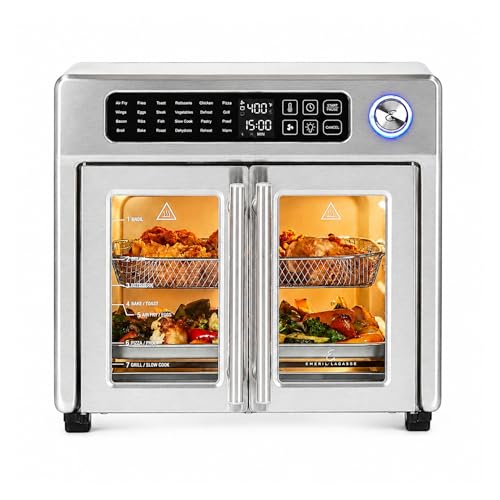
- Emeril Lagasse 26QT French Door Air Fryer Toaster Oven — Best Overall on Stated Criteria. For households wanting one wide oven for toast, pizza and family trays.
- Nuwave Bravo XL Pro Air Fryer Toaster Oven — Best for Feature Depth. For serious cooks who want a huge preset library, a probe and a wide temperature range.
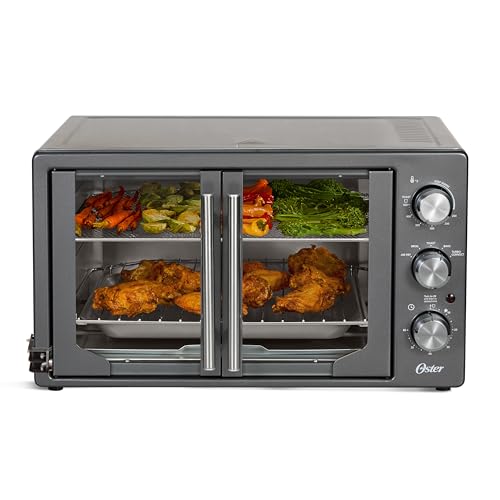
- Oster Extra-Large French Door Air Fryer Oven — Best for Simple Controls. For families who want six honest presets and a cavity that fits 15 x 12 inch pans.
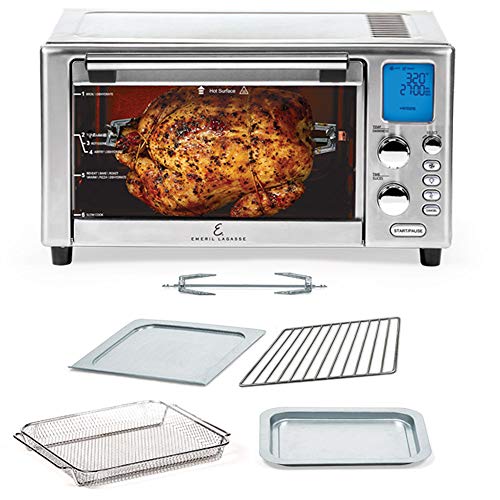
- Emeril Lagasse Everyday 360 Air Fryer Oven — Best Balanced Performer. For cooks who value rotisserie and even oven-style circulation in a 9-in-1 format.
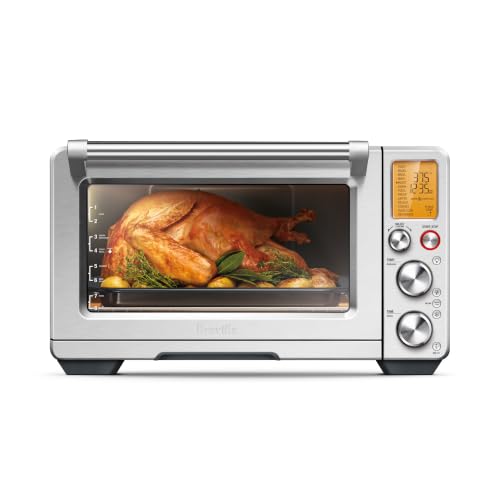
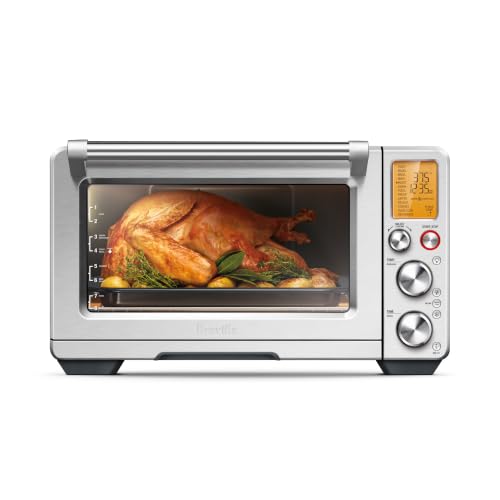
- Breville Smart Oven Air Fryer Pro — Best Premium Build. For cooks who will use a full thirteen-function oven, not just air frying.
- Chefman XL 14-Quart Multifunctional Air Fryer — Best Compact With a Window. For smaller households wanting a windowed door and rotisserie in a mid size.
Read the full guide ↓ for the criteria themselves, badges, honest trade-offs, a comparison table and an explanation of how methodology-led shortlists are built — so you can judge this one, and anyone else’s.
People searching for the best air fryers wirecutter has covered are usually not really searching for a brand of advice; they are searching for a standard of evidence. They want to know which criteria were used, whether the specifications were verified, where the reviewer is guessing and where they are not, and why one machine was chosen over another in terms a reader can argue with. That is a healthy demand, and this guide is written to meet it on its own behalf: our criteria are stated before our picks, our specifications come only from verified listings, our method’s limits are declared in the open, and our conclusions are framed so you can disagree with them productively.
The picks themselves are six oven-format machines, because the criteria below — toast evenness, tray and pizza capacity, multi-function usefulness, cleaning realism — are the criteria by which this category is most often judged, and oven format is what satisfies them. They range from the deliberately simple Oster, with six presets, to the deliberately exhaustive Nuwave, with 142, and the spread is the point: a criteria-led method does not produce one winner for everyone, it produces a defensible first choice per household type, with the reasoning visible.
One more time, plainly, because repetition is cheaper than confusion in a search result: Wirecutter did not write, test for, endorse or rank anything in this guide, and no sentence in it should be read as suggesting otherwise, in whole or in part. If you want Wirecutter’s own current picks, read Wirecutter. If you want a second, independent, criteria-led assessment of the same category — built from verified listings, with its method on the table — that is what follows. Readers who want the connected-features angle on the same category can continue to our Best Air Fryers With Bluetooth Capacity guide afterwards.
Key Takeaways
- This guide claims no Wirecutter endorsement; it applies a Wirecutter-style, criteria-first method independently, and says so openly.
- Criteria come before picks here: toast and tray performance, usable capacity, control clarity, cleaning design and verified specifications.
- The Emeril Lagasse 26QT French Door model leads on the stated criteria for most households, with 24 presets and an extra-large interior.
- The Oster wins the simplicity criterion outright; the Nuwave wins feature depth; the Breville wins premium build and breadth.
- Every specification quoted comes from the pick’s verified listing title — no invented measurements, no borrowed test results.
- Judge any methodology-led guide, including this one, by whether its criteria match your kitchen; the method section below shows you how.
In this guide
Quick Picks
Six picks, each leading on a different stated criterion. The badges below are used again in the detailed reviews, so you can track a favourite from this summary straight to its full assessment, its strengths and trade-offs, and its honest limitation.
| Pick | Badge | Criterion it leads |
|---|---|---|
| Emeril Lagasse 26QT French Door Air Fryer Toaster Oven | Best Overall on Stated Criteria | Balance of capacity, presets, accessories and access |
| Nuwave Bravo XL Pro Air Fryer Toaster Oven | Best for Feature Depth | Preset range, temperature span and probe cooking |
| Oster Extra-Large French Door Air Fryer Oven | Best for Simple Controls | Control clarity and pan fit |
| Emeril Lagasse Everyday 360 Air Fryer Oven | Best Balanced Performer | Even-cooking design in a mid-size 9-in-1 |
| Breville Smart Oven Air Fryer Pro | Best Premium Build | Function breadth and stainless construction |
| Chefman XL 14-Quart Multifunctional Air Fryer | Best Compact With a Window | Visibility and size for smaller households |
How These Picks Were Chosen
Method first, in the open. This is a research-led guide, not a laboratory report, and the difference matters: we did not cook identical test batches across dozens of machines, and we do not borrow the results of anyone who did. What we did is the part of methodology that transfers honestly to research: we defined criteria in advance, built the pool from verified Amazon listings, cross-checked every model name, capacity and function list against the listing title supplied by the Creators API, excluded picks whose identity we could not confirm exactly, and assessed each survivor against the same criteria in the same order.
The criteria, stated so you can weigh them yourself: one, format fitness — oven shape for toast, trays and pizza, the jobs this category is judged on. Two, usable capacity — pan and pizza fit and rack width over headline volume. Three, control clarity — whether a tired cook can run the machine without a manual. Four, functional honesty — functions and presets that map to real food rather than to a longer box list. Five, cleaning design — crumb management, washable parts, doors that wipe. Six, specification verifiability — whether the listing itself states the facts a buyer needs, which is a quality signal in its own right.
We print no prices, because they move too often to stay truthful, and no fixed ratings or review counts, for the same reason. Manufacturer claims inside listing titles are reported as manufacturer claims. Where our method cannot reach — long-term durability, unit-to-unit consistency, performance after a year of Sundays — we say so rather than filling the gap with confidence. That restraint is not a weakness of the guide; it is the guide’s claim to be believed where it does speak. Filtration, a criterion some households rank first, is covered in our Best Air Fryers With Filters guide.
The 6 Best Air Fryers Wirecutter-Style Criteria Produce, in Detail
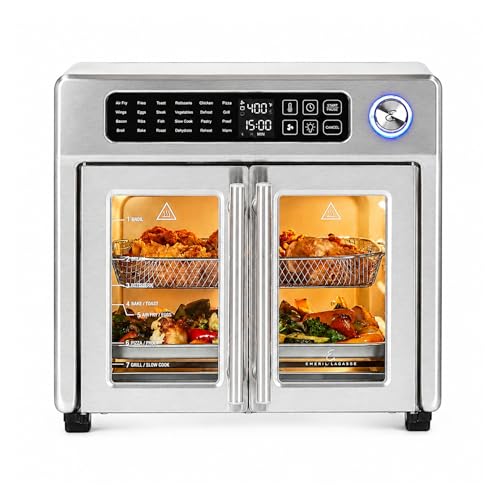
Emeril Lagasse 26QT French Door Air Fryer Toaster Oven
Badge: Best Overall on Stated Criteria
Strengths
- French doors score highest here on access: wide loading for trays, pizzas and racks of toast.
- 24 one-touch presets cover the daily rotation without menu digging.
- Six included accessories satisfy the completeness criterion — the oven works fully from day one.
Trade-offs
- A 26QT interior is the joint-largest footprint class in this guide.
- French doors need a clear swing zone, a real cost in small kitchens.
- Preset breadth still requires household calibration for bread and tastes.
Mini spec box
- Capacity: 26QT, extra-large interior
- Format: French door countertop convection oven
- Presets: 24 one-touch options
- Included: six cooking accessories
On the stated criteria, this is the most complete machine in the pool. Access: French doors and a wide flat cavity make toast rows, sheet pans and pizzas easy to load and easy to judge. Capacity: 26QT is family scale without reaching the Nuwave’s extremes. Controls: 24 presets cover the realistic week in one touch each. Completeness: six accessories included means the specification on paper is the capability in the kitchen, with no second purchase hiding behind the first. A criteria-led method rewards exactly this absence of asterisks.
Its weaknesses are equally legible in criteria terms. Footprint: depth, swing and heat clearance make it a deliberate furniture decision. And like every preset-driven machine, its results depend on the household spending its first week calibrating the presets to its own bread, portions and tastes — a step the how-to section treats as part of the method, because it is.
Verdict on criteria: the first machine a household should consider, and the one the others must beat on a specific criterion — simplicity, depth, build or size — to displace.
Best for: families wanting the most complete oven on stated criteria / Not suited for: very small kitchens or solo cooks
Check on Amazon — check the latest price on Amazon for the Emeril Lagasse 26QT French Door model.

Nuwave Bravo XL Pro Air Fryer Toaster Oven with Grill Combo
Badge: Best for Feature Depth
Strengths
- 142 presets and a 50-500F range lead the depth criterion by a wide margin.
- A temperature probe adds the doneness criterion most ovens ignore.
- Stated PFAS free, stainless steel construction satisfies the materials criterion explicitly.
Trade-offs
- Depth cuts against the control-clarity criterion for simple households.
- At 30QT it is the largest footprint in this guide.
- A grill combo adds parts to store, clean and keep track of.
Mini spec box
- Capacity: 30QT
- Presets: 142
- Temperature range: 50-500F
- Material notes from title: stainless steel, PFAS free
- Extras: temperature probe, grill combo
The Nuwave is the depth pick, and a criteria-led method should be able to say precisely what that means. Range: 50-500F spans proofing and dehydrating at one end and fierce browning at the other. Library: 142 presets is an enthusiast’s index of stored technique. Precision: the probe cooks roasts and thick proteins to temperature, the single most reliable doneness method a home cook has. Materials: the title states stainless steel and PFAS free, which is what specification verifiability looks like when a manufacturer does it well.
The counterweight is the clarity criterion. Depth is a cost to households that will use a tenth of it, paid in money, counter and learning curve. A methodology that only counted features would crown this machine overall; a methodology that also counts clarity and footprint places it exactly here — first for the cooks who will use it, wrong for the ones who will not. Grill-format comparisons continue in our Best Air Fryers With Grill guide.
Verdict on criteria: the maximum-capability pick, recommended without reservation to engaged cooks and without hesitation against itself for simple ones.
Best for: engaged home cooks who roast, grill and bake weekly / Not suited for: toast-and-reheat households or tight counters
Check on Amazon — check the latest price on Amazon for the Nuwave Bravo XL Pro.

Oster Extra-Large French Door Air Fryer Countertop Oven
Badge: Best for Simple Controls
Strengths
- Six presets maximise the control-clarity criterion: nothing to dig for, nothing to mis-set.
- Fits 15 x 12 inch pans — the pan-fit criterion stated in the most useful possible form.
- Auto-shutoff timer is a safety feature with daily, not theoretical, value.
Trade-offs
- Six presets score lowest here on guidance for unusual dishes.
- Extra-large French door format needs width as well as depth.
- Fewer included extras than the Emeril at a similar size.
Mini spec box
- Format: extra-large French door countertop oven
- Pan fit: 15 x 12 inch pans
- Presets: 6 cooking presets
- Safety: auto-shutoff timer
The Oster is the clarity pick, and its review is the method’s proof that fewer can be more. Six presets, French doors, a family cavity and an auto-shutoff timer: every element is legible at a glance, and the specification that matters most — the 15 x 12 inch pan fit — is stated as a measurement a buyer can check against their own cupboard in ten seconds. Testers of every school reward machines that respect the user’s existing equipment and existing habits, and this oven does both by design.
For family toast mornings its width is the operative fact: everyone’s slices in one row, one batch, no queue. The auto-shutoff timer earns its place in exactly the distracted conditions family mornings produce. The low-oil framing in its title reflects the manufacturer’s positioning for air frying, reported here as such.
Verdict on criteria: the pick for households that rank clarity and pan fit above guidance and depth — a ranking a good method should respect rather than correct.
Best for: families who cook on sheet pans and want simple, forgiving controls / Not suited for: preset collectors or probe cooks
Check on Amazon — check the latest price on Amazon for the Oster Extra-Large French Door oven.
Emeril Lagasse Everyday 360 Air Fryer Oven
Badge: Best Balanced Performer
Strengths
- 9-in-1 function set covers the everyday rotation without bloat — the balance criterion in one line.
- 360-degree convection positioning targets the evenness criterion directly.
- Rotisserie included, extending its range without changing its size class.
Trade-offs
- Leads on no single criterion — balance is its whole argument.
- Less capacity than the 26QT and 30QT ovens.
- Rotisserie parts need storage when not in use.
Mini spec box
- Functions: 9-in-1
- Heating style: 360-degree convection
- Included capability: rotisserie
- Format: countertop oven
The Everyday 360 is the balance pick: no criterion sacrificed, none maximised. Nine functions cover the week; the 360-degree convection framing aims at the evenness that toast, gratins and mixed trays depend on; rotisserie adds a capability the other mid-size ovens lack; and the whole package stays in a footprint a mainstream kitchen can house. A criteria table scored honestly across all six criteria, rather than cherry-picked to one, is kind to exactly this kind of machine.
Its review should also model the method’s honesty about framing: 360-degree convection is the manufacturer’s description of its airflow design, and evenness in any oven still depends on the user’s loading habits — a point the how-to section develops, because good methodology separates what a machine claims, what its design implies and what only use can prove.
Verdict on criteria: the safest recommendation in the guide for a household that cannot decide which single criterion it values most — because it has not sacrificed any of them.
Best for: mainstream households wanting one balanced oven with rotisserie / Not suited for: buyers chasing a single maximum — capacity, depth or premium build
Check on Amazon — check the latest price on Amazon for the Emeril Lagasse Everyday 360.
Breville Smart Oven Air Fryer Pro
Badge: Best Premium Build
Strengths
- Thirteen functions lead the breadth criterion among conventional ovens here.
- Brushed stainless steel construction leads the build criterion.
- Convection setting is positioned to reduce cooking time by up to 30 percent.
Trade-offs
- Premium tier positioning scores poorly on the value criterion for simple briefs.
- Function depth asks for a short learning period.
- Serious size and presence on the counter.
Mini spec box
- Model: BOV900BSS
- Functions: 13
- Finish: brushed stainless steel
- Convection: yes, positioned to cut cook time
The Breville is the build-and-breadth pick. Thirteen functions, a brushed stainless body and a control experience designed as carefully as the cooking chamber make it the machine most likely to absorb real baking, roasting and dehydrating from a main oven. On criteria, it leads for construction and for the breadth a keen cook will actually exercise; its convection time-saving figure is the manufacturer’s positioning, reported as such, as this method requires.
The value criterion is where it must be argued rather than assumed. Premium pricing — expressed here, as everywhere in this guide, as tier rather than figures — is justified by use breadth and build, and unjustified by toast alone. A methodology-led guide earns trust by saying that about its own premium pick, and this one does: buy it to cook broadly, or buy further up this page. Low-oil technique, which premium ovens reward, is covered in our Best Air Fryers With Least Oil guide.
Verdict on criteria: first on build and breadth, last on value-for-simple-briefs — and the right first choice for the household whose cooking matches its range.
Best for: keen cooks replacing main-oven work with a premium countertop oven / Not suited for: toast-only buyers or strict budgets
Check on Amazon — check the latest price on Amazon for the Breville Smart Oven Air Fryer Pro.

Chefman Air Fryer 6-in-1 XL 14-Quart Multifunctional Air Fryer
Badge: Best Compact With a Window
Strengths
- Windowed door leads the visibility criterion: browning judged by eye, without heat loss.
- Rotisserie and dehydrator functions in a mid-size 14-quart cabinet.
- Touchscreen controls score on the cleaning criterion — a front that wipes clean.
Trade-offs
- 14 quarts scores lowest here on family capacity.
- Six functions is the shortest list among these ovens.
- Windows need regular wiping to keep delivering their criterion.
Mini spec box
- Capacity: 14 quarts
- Functions: 6-in-1, including rotisserie and dehydrate
- Controls: touchscreen
- Door: windowed
The Chefman is the visibility-and-size pick. Its window answers the oldest measurement problem in oven cooking — is it brown yet? — with the cook’s own eyes, continuously, without opening the door and dumping the heat being measured. At 14 quarts it is the only pick here sized for one-to-three-person households, and its function list — air fry, bake, broil, reheat, rotisserie, dehydrate — is short in the way the Oster’s is short: complete for its brief.
On criteria it also makes the cleaning argument for touchscreens: a flat front that wipes in seconds is a month-six feature, not a showroom one. Its scores fall where its size dictates — family capacity and function breadth — and the method’s job is to present that trade cleanly rather than to average it away. Storage-format questions, including rack layouts, continue in our Best Air Fryers With Racks guide.
Verdict on criteria: the right first choice when the binding constraints are counter size and cooking by eye.
Best for: singles, couples and small kitchens wanting a watchable oven with rotisserie / Not suited for: large families or sheet-pan batch cooking
Check on Amazon — check the latest price on Amazon for the Chefman XL 14-Quart model.
Comparison Table
| Pick | Format | Headline capacity or fit | Functions or presets | Link |
|---|---|---|---|---|
| Emeril Lagasse 26QT French Door | French door oven | 26QT | 24 presets | Check on Amazon |
| Nuwave Bravo XL Pro | Oven with grill combo | 30QT | 142 presets, 50-500F | Check on Amazon |
| Oster Extra-Large French Door | French door oven | Fits 15 x 12 inch pans | 6 presets | Check on Amazon |
| Emeril Lagasse Everyday 360 | Countertop oven | Mid-size oven cavity | 9-in-1 with rotisserie | Check on Amazon |
| Breville Smart Oven Air Fryer Pro | Premium countertop oven | Full-size oven cavity | 13 functions | Check on Amazon |
| Chefman XL 14-Quart | Windowed oven cabinet | 14 quarts | 6-in-1 with rotisserie | Check on Amazon |
How to Choose: best air fryers wirecutter-style criteria would surface for your kitchen
Use the criteria, not the crowns. Begin by ranking the six criteria from the method section for your own household: a family that toasts daily ranks access and capacity first; a keen cook ranks range and precision; a small household ranks footprint and visibility; everyone should rank cleaning higher than instinct suggests, because it decides month six. Then read the detailed reviews as evidence against your ranking — each review is deliberately written criterion by criterion so your ranking, not ours, can produce your winner.
Notice what this method refuses to do. It refuses to collapse six criteria into one score, because your weights are not our weights. It refuses to treat a manufacturer’s framing — a percentage here, a technology name there — as a measured result. And it refuses to hide its own limits: research can verify specifications and compare designs, but it cannot certify a decade of durability or a year of your Sundays, and any guide that implies otherwise is asking for a trust it has not earned.
Practical translation, criterion by criterion: measure your pans before your counter, because pan fit is the capacity figure you will feel; count your busiest breakfast before your largest dinner, because frequency beats scale; choose door style by your kitchen’s traffic, not by photographs; and let the premium tier argue its case in breadth and build, as the Breville’s review does, rather than in adjectives. Households that work this way rarely need a second guide — which is, of course, the outcome a methodology-led publication should want for its readers.
One further habit separates criteria-led buyers from headline buyers: they read the trade-off lists first. Strengths are easy to write and pleasant to read, but the trade-offs are where a review proves it has actually thought about the machine — the footprint admitted, the learning curve priced in, the criterion on which this pick honestly loses. In this guide every pick carries three, stated in the same tone as its strengths, and the overall pick’s are printed as plainly as the compact pick’s. When you compare guides, compare their trade-offs: the page that hides them is telling you, in advance, how much of the truth it plans to share.
How to Cook Well in a Countertop Oven: The Calibration Method
Every serious testing methodology includes calibration, and your kitchen version of it is the first week. Treat it as an experiment with a notebook.
- Choose your five reference foods: your regular bread, your frozen staple, your pizza, your roast vegetable, your reheat.
- Cook each once with full attention, on the middle rack or the manufacturer’s suggested setting, and record time, temperature and result.
- Adjust one variable at a time on the second attempt — rack, then time, then temperature — so you know what changed the result.
- Write the household standard where everyone can find it; calibration that lives in one person’s memory is not calibration.
- Revisit the standards when the bread, the brand or the season changes; small cavities are honest but they are not static.
Troubleshooting
Problem: results differ from a review you read → check the variables a review cannot control: bread type, load size, starting temperature of the food, and whether the cavity was preheated; methodology travels, ingredients vary.
Problem: toast browns unevenly → preheat longer, use the middle rack, leave gaps, and record separate settings for first and second batches.
Problem: air fried food is crisp on top and soft beneath → the layer is too crowded; cook in a single layer on the mesh surface and turn once.
How to Read Any Review Guide — Including This One
Since this keyword is about a standard of reviewing, the guide owes you its own reading instructions. Check five things in any roundup. Are the criteria stated before the picks, or invented after them? Are specifications traceable to a source you can open, like the listings linked throughout this page? Are manufacturer claims labelled as claims? Are limitations — of the products and of the method — stated in the same tone as the praise? And are endorsements claimed only where they exist? This page’s answers are: yes, yes, yes, yes, and — in the case of the endorsement this keyword names — explicitly no, because none exists to claim.
Apply the same reading to star-shaped shortcuts wherever you meet them. Aggregated scores compress other people’s criteria, other people’s kitchens and other people’s months into a number that cannot tell you whether a machine fits your pans. The alternative is slower and better: criteria, evidence, and your own weights. It is the alternative this guide is built on, and it is available to any reader willing to spend ten minutes with a comparison table and a tape measure.
Long-Term Ownership: The Criterion Research Cannot Score for You
Every honest method has a frontier, and durability is this one’s. Research can note build materials, door engineering and parts logic; it cannot run your oven for three years. What it can do is hand you the ownership habits that dominate long-term outcomes in this category regardless of brand: keep the clearance the manual specifies, clean little and often so residue never becomes a project, treat doors and racks as machine parts rather than furniture, and keep the model number recorded for the day a tray or basket needs replacing.
Households that do those things routinely get long service from mid-market machines, and households that neglect them shorten the life of premium ones. That is why this guide’s final criterion is the one it assigns to you: the best-reviewed oven in the world is still a hot box that wants wiping, and the reviews above were written for the reader who would rather know that now than learn it from a smoking crumb tray in month nine.
The Criteria, Applied: Three Households, Three Different Winners
Abstractions persuade nobody, so run the method on three concrete households. The first cooks for five, toasts every morning, and measures success in single batches: its ranking puts access and capacity first, and its winner is the Emeril 26QT, with the Oster pressing it hard on pan fit and clarity — a household that already owns the sheet pans and hates menus could honestly land on the Oster, and the method would call that a correct result, not a deviation. The second household cooks for two, bakes seriously at weekends and roasts a chicken most Sundays: its ranking puts breadth, build and evenness first, and its winner is the Breville, with the Everyday 360 as the balanced alternative if the premium tier fails its value test. The third household is one person in a small apartment who cooks by eye and cleans in a small sink: footprint, visibility and cleaning lead its ranking, and its winner is the Chefman, outright, with no apology to the larger machines it beat.
Notice what the exercise proves. The same six machines, the same verified specifications and the same criteria produce three different first choices — each defensible, each traceable to stated weights. That is not a flaw in methodology-led reviewing; it is the entire point of it. The guides to distrust are the ones whose winner never moves no matter whose kitchen is described, because a winner that fits everyone is usually a winner chosen before the criteria were. This guide’s overall pick, the Emeril, is explicitly the median household’s answer, and the detailed reviews exist so non-median households can overrule it with evidence rather than with guesswork.
Run the exercise on your own household before you buy. Write the ranking down — six criteria, your order — and hold the reviews against it. Ten minutes of that arithmetic is worth more than any verdict, including this page’s, because it converts advice into a decision you can defend to yourself in month six, when the machine is either earning its counter or quietly failing to.
What Testing Can and Cannot Tell You — a Note on Evidence
Readers who follow methodology-led publications know their rhythm: a large pool, a set of standardised tests, a small number of survivors, and a long-term tail where winners are kept in service and revisited. That rhythm produces evidence of a kind research cannot — repeated, identical cooking across machines, observed by the same hands. This guide respects that evidence by never imitating its language. You will find no test results here, no batch timings presented as measurements, no claim that any machine in this pool out-cooked another in a trial we did not run.
What research of this kind can legitimately establish is different but real: that a model’s stated capacity, functions and materials are what its listing says they are; that its design implies certain strengths and limits a buyer can reason about; that its specification, read carefully, separates it from its siblings and its rivals; and that a set of criteria, applied consistently, produces a shortlist a household can trust as a starting point. Final confidence still comes from the reader’s own verification at the listing and, where possible, hands on the machine — the same closing advice every honest methodology gives, including the ones with laboratories.
There is a broader lesson for the keyword that brought you here. The value of a famous reviewing name was never the name; it was the discipline — criteria first, evidence labelled, limits admitted, conclusions argued. Any guide can adopt that discipline, and any reader can demand it. This page has tried to be an example of the demand being met, and to make its own meeting of it easy to check.
Common Buying Mistakes
Treating any guide’s winner as your winner
A winner is a set of criteria weights wearing a crown. If your weights differ — smaller kitchen, simpler cooking, bigger family — your winner differs, and the reviews here are built to let you re-derive it.
Believing an endorsement that was never made
Search results and roundup titles borrow famous reviewing names freely. If a page claims a publication’s endorsement, look for the publication’s own article; if a page like this one disclaims it, believe the disclaimer.
Confusing a manufacturer’s framing with a measured result
Percentages and technology names in listing titles are positioning until someone publishes a method behind them. This guide reports them as framing; you should read them that way everywhere.
Skipping the calibration week
Presets are starting points, not promises. Five reference foods and a notebook turn a good oven into a predictable one, and predictability is what households actually praise.
Final Recommendation
On the stated criteria, for the median household, the Emeril Lagasse 26QT French Door model is this guide’s first choice: the most complete balance of access, capacity, presets and included equipment. Re-weight the criteria and the answer moves as it should — to the Oster for clarity-first families, the Nuwave for depth-first cooks, the Breville for build-first buyers, the Everyday 360 for balance-first households and the Chefman for size-first small kitchens. That mobility is not indecision; it is what a criteria-led recommendation looks like when it respects its readers.
If you want a fast answer, start with one of these three and read its detailed review above: Emeril Lagasse 26QT French Door Air Fryer Toaster Oven, Nuwave Bravo XL Pro Air Fryer Toaster Oven, Oster Extra-Large French Door Air Fryer Oven. Each links to its listing so you can check the latest price on Amazon and verify every specification this guide relied on.
One last filter, in the spirit of the method: before buying, state your top two criteria out loud, and name the criterion on which your chosen pick honestly loses. If the pick in your hand leads on at least one of your top two, survives the other, and its known weakness is one your household can live with daily, you have chosen the way this guide — and the standard of evidence it admires and openly credits — would want you to: with the reasoning visible, the trade-offs admitted and the decision genuinely yours.
A closing word about what to do with two honest guides that disagree — this one and any other you respect. Do not average them, and do not pick the one whose winner you already liked. Compare their criteria instead: where they agree on what matters, trust the shared ground; where they differ, you have found the exact question your household must answer for itself. Disagreement between transparent methods is information, and it is the most useful kind a shopper can get, because it points at the real decision instead of burying it under a crown. That, in the end, is the standard this keyword asks for — and the standard this page has tried, openly and checkably, to meet.
Frequently Asked Questions
Is this a Wirecutter article, or are these Wirecutter’s picks?
Neither. This guide is an independent, research-led assessment that applies a criteria-first method of the kind Wirecutter-style reviewing popularised. It claims no Wirecutter endorsement, testing or ranking for any pick, and it says so at the top of the page as well as here. For Wirecutter’s own current recommendations, read Wirecutter directly.
Did this guide test these ovens hands-on?
No, and it does not pretend to. The method is declared in the open: criteria defined in advance, specifications verified against the listings supplied by the Creators API, manufacturer claims labelled as claims, and conclusions framed as research-based guidance. That is a real and useful method with real limits, which the guide states rather than hides.
Why are all six picks oven-format machines?
Because the criteria this category is judged on — toast evenness, tray and pizza capacity, baking and reheating range — are oven criteria. Basket fryers answer a different set of questions well, and a criteria-led guide should choose its pool by its criteria rather than mixing formats to look comprehensive.
How should I use the comparison table?
As evidence, not as a verdict. Find the two criteria you ranked highest, read those columns across all six picks, and let the table narrow you to two machines; then read those two detailed reviews in full, trade-offs included, before deciding.
Why are there no prices or star ratings in this guide?
Prices move too fast for a printed figure to stay truthful, and fixed ratings freeze a changing picture into a false precision — the two habits a methodology-led guide should avoid on principle. Check the latest price on Amazon at the listing, where the figure is current and belongs to the seller stating it, and judge machines by criteria and specifications rather than by a compressed score that hides whose kitchen, whose criteria and whose month produced it.
How do I weigh a premium pick against a mid-range one fairly?
By keeping the criteria separate instead of letting the premium machine win them all by atmosphere. Score the two machines on your own top criteria — say capacity, clarity, cleaning and build — and notice where the premium pick actually leads: usually build and breadth. Then ask the only question that settles it: will your weekly cooking exercise that lead? If yes, the premium is a rational buy, as the Breville’s review argues for keen cooks. If the lead sits in functions you will open twice a year, the mid-range machine is not a compromise; it is the correct answer, and a criteria-led method should leave you more confident in it, not less.
Should I wait for a publication’s next update before buying?
Only if your current setup genuinely serves you in the meantime. Review cycles revisit categories on their own schedules, models change slowly in this category’s core designs, and the criteria in this guide will still be the right questions whenever you ask them. The disciplined approach is to choose by criteria now, verify the exact model at its listing, and buy when the need is real — rather than letting an unknown future verdict postpone a decision your own kitchen has already given you the evidence to make.
What is the single most useful thing I can do after buying?
Run the calibration week: five reference foods, one variable changed at a time, settings written where the household can see them. It is the household version of what any good testing process does — turn a capable machine into a predictable one — and it pays back every single morning. Keep the note with the manual, revisit it when your bread or your frozen staples change brand, and treat the second batch of anything as its own data point rather than a repeat: small cavities run hotter once they are warm, and a household that records that once never has to rediscover it.