Disclosure: As an Amazon Associate, Reviews Took earns from qualifying purchases. Links to Amazon on this page are affiliate links; they cost you nothing extra.
Check board size and juice groove.
This guide is built from Amazon product listings and maker specs, not our own testing, so confirm size, contents and current price on each product page.
Prices change often, so check the current price on Amazon.
Last updated: November 2, 2026.
In this guide
Quick Picks
| Product | Type | Best for |
|---|---|---|
| Freshware Bamboo Cutting Boards for Kitchen Wooden Cutting Board | Bamboo cutting board | food prep |
| ROYAL CRAFT WOOD Wooden Cutting Boards for Kitchen Meal Prep | Bamboo cutting board | food prep |
| 3-Piece Set Deep-Carbonized Bamboo Cutting Board for Kitchen | Bamboo cutting board | food prep |
| ROYAL CRAFT WOOD Wooden Cutting Boards for Kitchen Meal Prep | Bamboo cutting board | food prep |
| Kikcoin 17”×11” Bamboo Cutting Boards for kitchen Reversible XL | Bamboo cutting board | food prep |
| ROYAL CRAFT WOOD Wooden Cutting Boards for Kitchen Appliances | Bamboo cutting board | food prep |
| Astercook Bamboo Cutting Boards for Kitchen | Bamboo cutting board | food prep |
Our Picks

Top pickBest for food prep
1. Freshware Bamboo Cutting Boards for Kitchen Wooden Cutting Board
A Freshware Bamboo Cutting Boards for Kitchen Wooden Cutting Board (bamboo cutting board), per the listing. Check price on Amazon.
Good for: food prep. Watch out: Hand wash and oil occasionally.

Best for food prep
2. ROYAL CRAFT WOOD Wooden Cutting Boards for Kitchen Meal Prep
A ROYAL CRAFT WOOD Wooden Cutting Boards for Kitchen Meal Prep (bamboo cutting board), per the listing. Check price on Amazon.
Good for: food prep. Watch out: Hand wash and oil occasionally.
Best for food prep
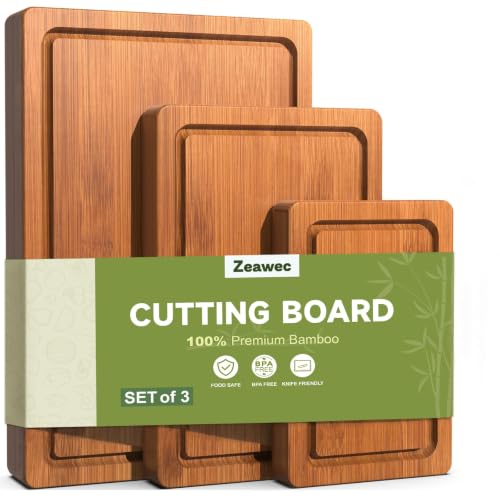
3. 3-Piece Set Deep-Carbonized Bamboo Cutting Board for Kitchen
A 3-Piece Set Deep-Carbonized Bamboo Cutting Board for Kitchen (bamboo cutting board), per the listing. Check price on Amazon.
Good for: food prep. Watch out: Hand wash and oil occasionally.
Best for food prep
4. ROYAL CRAFT WOOD Wooden Cutting Boards for Kitchen Meal Prep
A ROYAL CRAFT WOOD Wooden Cutting Boards for Kitchen Meal Prep (bamboo cutting board), per the listing. Check price on Amazon.
Good for: food prep. Watch out: Hand wash and oil occasionally.

Best for food prep
5. Kikcoin 17”×11” Bamboo Cutting Boards for kitchen Reversible XL
A Kikcoin 17”×11” Bamboo Cutting Boards for kitchen Reversible XL (bamboo cutting board), per the listing. Check price on Amazon.
Good for: food prep. Watch out: Hand wash and oil occasionally.

Best for food prep
6. ROYAL CRAFT WOOD Wooden Cutting Boards for Kitchen Appliances
A ROYAL CRAFT WOOD Wooden Cutting Boards for Kitchen Appliances (bamboo cutting board), per the listing. Check price on Amazon.
Good for: food prep. Watch out: Hand wash and oil occasionally.

Best for food prep
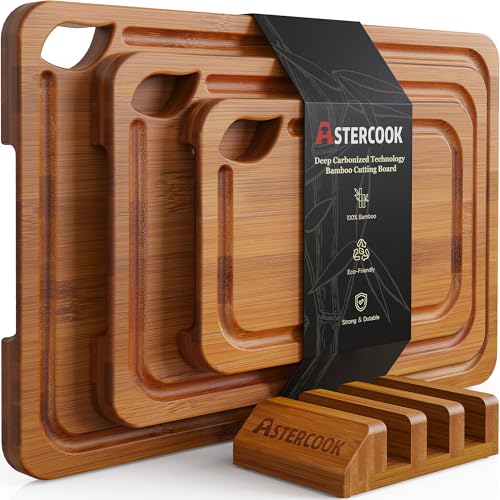
7. Astercook Bamboo Cutting Boards for Kitchen
An Astercook Bamboo Cutting Boards for Kitchen (bamboo cutting board), per the listing. Check price on Amazon.
Good for: food prep. Watch out: Hand wash and oil occasionally.
Best Picks by Category
These labels group the picks by use case and price tier. They summarize listing data and are not hands-on test results.
- Top rated: ROYAL CRAFT WOOD Wooden Cutting Boards for Kitchen Meal Prep — check price on Amazon.
- Most reviewed: ROYAL CRAFT WOOD Wooden Cutting Boards for Kitchen Meal Prep — check price on Amazon.
- Best value: ROYAL CRAFT WOOD Wooden Cutting Boards for Kitchen Meal Prep — a budget-tier pick; check price on Amazon.
- Lowest price: ROYAL CRAFT WOOD Wooden Cutting Boards for Kitchen Meal Prep — a budget-tier pick; check price on Amazon.
- Premium option: Astercook Bamboo Cutting Boards for Kitchen — a premium-tier pick; check price on Amazon.
Price, Rating and Review Comparison
The table groups the picks by price tier. Prices change often, so confirm the current price on Amazon.
| Product | Price | Rating | Ratings | Price tier |
|---|---|---|---|---|
| ROYAL CRAFT WOOD Wooden Cutting Boards for Kitchen Meal Prep | Check price on Amazon | — | — | Budget |
| Freshware Bamboo Cutting Boards for Kitchen Wooden Cutting Board | Check price on Amazon | — | — | Mid-range |
| Kikcoin 17”×11” Bamboo Cutting Boards for kitchen Reversible XL | Check price on Amazon | — | — | Mid-range |
| 3-Piece Set Deep-Carbonized Bamboo Cutting Board for Kitchen | Check price on Amazon | — | — | Mid-range |
| ROYAL CRAFT WOOD Wooden Cutting Boards for Kitchen Meal Prep | Check price on Amazon | — | — | Mid-range |
| ROYAL CRAFT WOOD Wooden Cutting Boards for Kitchen Appliances | Check price on Amazon | — | — | Premium |
| Astercook Bamboo Cutting Boards for Kitchen | Check price on Amazon | — | — | Premium |
How Much Feedback Backs Each Rating
A high average from a handful of ratings is weaker evidence than a slightly lower average from thousands. Here is how the sample size looks for each pick.
- Freshware Bamboo Cutting Boards for Kitchen Wooden Cutting Board: a large sample of ratings.
- ROYAL CRAFT WOOD Wooden Cutting Boards for Kitchen Meal Prep: a large sample of ratings.
- 3-Piece Set Deep-Carbonized Bamboo Cutting Board for Kitchen: a large sample of ratings.
- ROYAL CRAFT WOOD Wooden Cutting Boards for Kitchen Meal Prep: a large sample of ratings.
- Kikcoin 17”×11” Bamboo Cutting Boards for kitchen Reversible XL: a large sample of ratings.
- ROYAL CRAFT WOOD Wooden Cutting Boards for Kitchen Appliances: a large sample of ratings.
- Astercook Bamboo Cutting Boards for Kitchen: a large sample of ratings.
How to Choose
Size
Check the max pizza or capacity size.
Fuel and power
Match fuel or power to where you cook.
Cleaning
Removable parts make cleanup easier.
What a Bamboo Board Is Made Of and How It Behaves
Bamboo is a grass, not a tree, but a cutting board made from it looks and works much like a wooden one. Makers cut bamboo into strips and glue them together under pressure, either laid flat or standing on edge, to form a solid panel. The glue holds the strips together, so the quality of the adhesive and the construction matters as much as the material itself. Check the listing for what the board is bonded with and whether the maker mentions food-safe adhesive.
Bamboo is a fairly hard material. That gives it good resistance to deep scarring, but it also means it can be less gentle on knife edges than softer woods, so you may notice knives dulling sooner if you cut hard on it. Its surface is dense, and it absorbs less moisture than many woods at the start, though it is not waterproof. Boards left soaking or run through a dishwasher can swell, warp or split at the glue lines.
The finish and colour tell you something. Natural bamboo has a pale, blond look. Carbonized bamboo, sometimes called deep-carbonized or caramelized, is heated to darken it, which changes the colour and can slightly soften the material. The listings use the term “wooden”, and the products are bamboo, so read the description to know what you are buying. Boards with end-grain or edge-grain construction differ in how they look and how they treat knives, and the listing may state which one is used. The choice is partly about looks and partly about feel in use.
Choosing Board Size, Thickness and Practical Features
Start with the space you have. A board must fit on your counter and in your sink, or you will not use it. Measure the counter area where you chop, and check the dimensions of the board on the listing. A large board gives room for chopping vegetables and carving, but it is heavier and harder to store. A small board is handy for fruit, cheese, herbs and quick jobs.
Thickness affects stability and warping. A thin board is light and easy to store but can flex or warp, while a thicker board stays flat and feels solid. Think about whether you will lift it often, since a heavy board can be tiring to handle.
- A juice groove catches liquid from meat, fruit and roasts, which helps keep the counter clean. If you carve a lot, a deep groove is useful, and if you mostly chop vegetables, you may not need one.
- Handles or cut-out grips make a board easier to carry and hang.
- Non-slip feet or a rubber base keep the board from sliding. If the board has none, a damp cloth beneath it helps.
- A reversible design lets you use one side for strong-smelling foods and the other for neutral ones.
Sets, such as a three-piece set, let you assign boards to different foods, and a range of sizes gives you flexibility. Check that each board is the size you expect, since some sets include small boards that are better as serving trays than as work surfaces.
Using Boards Safely: Raw Meat, Produce and Cross-Contamination
A cutting board is a place where bacteria can move from one food to another. Wood and bamboo are porous to some extent, and knife cuts can hold moisture and residue. Safe practice is therefore about habits. Keep separate boards, or at least separate sides, for raw meat, poultry and fish and for foods that will not be cooked, such as fruit, salad and bread. A set of boards makes this easier.
After handling raw meat, wash the board thoroughly with hot, soapy water, then rinse and dry it completely before using it again. Wash your hands, knives and counter too. Do not rinse raw meat juices into other food, and do not place cooked food on a surface that has held raw meat unless it has been cleaned. Follow food safety guidance from your local health authority for details on cleaning and temperatures.
Some people prefer to dedicate bamboo or wood to produce, bread and cheese, and to use a different material for raw meat that can go in the dishwasher. This is a personal choice, and it depends on how willing you are to hand wash. The board listing may give care instructions, and you should follow them. If a board has deep cuts that hold food and are hard to clean, or if it smells even after washing, it is time to retire it or sand it. Staining is cosmetic, but a persistent odour means that something is trapped in the board.
Cleaning, Oiling and Restoring a Bamboo Board
Care is what separates a board that lasts years from one that cracks in months. Wash by hand with warm water and mild dish soap soon after use, and do not leave it soaking in the sink. Rinse, then wipe it dry and stand it on its edge so that air reaches both sides. Avoid the dishwasher, which exposes the board to heat and long wet cycles that can warp the board and weaken the glue.
Oil the board from time to time. A food-safe mineral oil is the usual choice, and some people use board conditioners or wax blends made for wood. Avoid cooking oils that can turn rancid, such as vegetable or olive oil. Apply a thin coat, let it soak in for a few hours or overnight, then wipe off any excess. New boards often benefit from several coats. How often you need to re-oil depends on use and climate. A board that looks dry, pale or rough is asking for oil.
- Remove odours by rubbing the surface with coarse salt and lemon, then rinsing and drying.
- Remove light stains with a paste of baking soda and water.
- Lightly sand a rough or fuzzy surface with fine sandpaper, then oil it.
- Keep the board away from heat sources and direct sunlight, which dry it out.
Replace the board if it has split along the glue lines, warped so it rocks, or developed deep grooves that you cannot sand out. A cracked board can trap bacteria and is not worth keeping.
Knives, Everyday Habits and Where to Store the Board
Because bamboo is hard, it pairs best with sharp knives and a light hand. A sharp edge cuts cleanly and needs less pressure, which is good for both you and the board. Dull knives slip and mark the surface. Keep your knives honed and sharpened, and avoid chopping through bones or frozen food on the board, which can dent or gouge it. If you enjoy heavy chopping, think about whether a softer surface suits your knives better.
Use the board for its intended job. Do not use it as a trivet for hot pans, which can scorch or crack it, and do not cut directly on a hot surface. Do not use it to hammer or tenderize meat. Wipe spills quickly, especially acidic ones like tomato or citrus, and strong dyes such as beetroot or turmeric, which can stain.
Storage matters. Store the board upright or on edge in a dry spot with good airflow, such as a rack or a slot. Do not stack it flat while damp, or leave it under the sink. If you have a set, store each board separately so that moisture can escape. Hanging boards by a handle hole is a convenient way to dry them and save space.
When buying, read the care instructions on the listing and look at customer feedback for recurring comments about warping, splitting or odour. A modest set that you care for properly will usually serve you better than an expensive board that you neglect.
Caring for a Bamboo Board Through the Year
Bamboo is a hard, dense grass that makes a durable cutting surface, but it still needs a little attention to stay in good shape. A few habits, repeated each week or month, keep a board smooth, clean and free of cracks. The routine below suits the Freshware, Royal Craft Wood, Kikcoin and Astercook boards alike, though a maker’s care card always comes first.
- Wash by hand. Use warm water, a little dish soap and a soft sponge soon after cutting, then rinse well.
- Dry upright. Wipe the board with a towel and stand it on its edge so air reaches both faces.
- Skip the dishwasher. Heat and long soaking can make bamboo warp or split along the glue lines.
- Refresh monthly. Rub a food-safe mineral oil or board conditioner into the surface, let it soak in, then wipe off the excess.
- Treat stains. Sprinkle coarse salt, rub with half a lemon, then rinse and dry.
- Check the surface. Deep grooves collect residue, so sand lightly with fine sandpaper if the maker allows it.
Never leave a wet board sitting flat on the counter overnight. Trapped moisture swells the fibers on one side and can lead to curling.
Sorting Your Boards by Kitchen Task
Most cooks end up with more than one board, and giving each a clear job keeps the kitchen tidy and the boards in better shape. Use this table as a first plan, adjusting for your own cooking habits.
| Task | Suggested board | Reason |
|---|---|---|
| Vegetables and fruit | Medium board with a juice groove | Catches liquid and keeps the counter dry |
| Bread and cheese serving | Attractive board with a handle | Doubles as a presentation tray |
| Raw meat and fish | A separate, clearly marked board | Avoids mixing with ready-to-eat foods |
| Quick herbs and garlic | Small board | Easy to wash and put away |
| Large roasts and carving | Extra-large reversible board | Gives space and a stable surface |
For food safety, follow official guidance from your local food authority on handling raw meat and cleaning boards after use. Keeping separate boards for raw and ready-to-eat foods is a widely shared recommendation.
Check thickness when choosing. A thicker board is heavier and steadier, but it takes up more room in the cupboard. Non-slip feet or a damp towel beneath the board keep it from sliding while you chop.
Finally, treat the board as a kitchen tool, not an anvil. Use a sharp knife, avoid chopping on the edge, and keep cleavers for a dedicated block. A sharp blade glides through food and reduces deep scoring that is hard to clean.
Store the boards upright in a rack or a slot so air can circulate, and keep them away from the stove and dishwasher steam.
Going Deeper: The Criteria That Decide Long-Term Satisfaction
The headline differences between the picks in this guide are easy to spot, but the factors that decide whether you are still happy with your bamboo or wooden cutting board in a year are usually quieter ones. They show up in the kitchen counter, on busy days, when the product is no longer new and nobody is treating it carefully. This section works through those slower, more honest criteria one by one, so you can weigh the reviews above against the way you actually live rather than the way a product page imagines you do.
Size against your counter and sink
A board must fit where you work and where you wash it. Oversized boards that cannot sit flat in the sink get washed badly and stored worse; measure both spaces before falling for the largest option. When you compare the picks above on this point, use the descriptions already given in each review rather than the headline claims at the top of a listing. Write down how this factor affects your own routine, because a weakness that never touches your habits is not a weakness worth paying to avoid, while a strength you will use daily is worth prioritising over almost everything else in the set.
Thickness, weight and stability
Thick boards stay put and resist warping but are heavy to move to the sink; thin boards store easily and flex. Rubber feet or a damp cloth underneath solve sliding, yet the boards own heft is the foundation. Judge this in the context of your own kitchen counter, not an ideal one. The honest test is whether the feature still helps on an ordinary tired day when nobody is concentrating, and whether any drawback shows up immediately or only after months of use. Shortlist the picks that handle this point well and let other criteria separate them later.
Grain orientation and knife friendliness
End-grain surfaces are kindest to edges, edge-grain is the durable middle ground, and hard bamboo can be tougher on fine edges than softer woods. Match the board to your knives and how often you sharpen. This is also a point where the most expensive option is not automatically the best. Mid-priced picks often balance it sensibly, while premium designs sometimes trade it away for a sleeker look or a longer feature list. If two picks seem equal overall, let the one that handles this everyday detail better take the lead in your decision.
Juice groove usefulness
A deep groove catches melon and roast juices and saves the counter; it also steals flat working area and complicates cleaning. Decide by what you cut most: roasts and fruit argue for it, bread and veg argue against. Think about who else will use the bamboo or wooden cutting board besides you. A choice that works for one careful adult can frustrate children, guests or a partner with different habits, and shared use multiplies small annoyances quickly. If the item will be shared, weight this factor more heavily than you would for a purely personal purchase.
One side or two working faces
Reversible boards let you keep a raw-meat side and a produce side, which is genuinely useful hygiene if you honour the system. Mark the sides in your routine, because a system nobody follows is just decoration. When you compare the picks above on this point, use the descriptions already given in each review rather than the headline claims at the top of a listing. Write down how this factor affects your own routine, because a weakness that never touches your habits is not a weakness worth paying to avoid, while a strength you will use daily is worth prioritising over almost everything else in the set.
Finish and food-safe upkeep
Boards arrive oiled or unfinished, and the upkeep differs. A board you will oil monthly can be almost any wood; a board you will neglect should be the most forgiving material and construction available. Judge this in the context of your own kitchen counter, not an ideal one. The honest test is whether the feature still helps on an ordinary tired day when nobody is concentrating, and whether any drawback shows up immediately or only after months of use. Shortlist the picks that handle this point well and let other criteria separate them later.
How It Plays Out in Real Life: Scenarios Worth Picturing
Specifications describe a product; scenarios describe a life. The situations below are the ones that most often separate a bamboo or wooden cutting board that merely tests well from one that earns its place, and each one highlights a different strength among the picks already reviewed above. Find the scenario that sounds most like your week and read the relevant reviews again with that picture in mind before you decide.
Daily vegetable prep station
A medium board living permanently by the hob, wiped and stood to dry between uses, becomes the kitchens workbench. This board should favour easy washing and a surface your everyday knife enjoys. The lesson from this scenario is that context beats specification. A pick that looks average on paper can be exactly right once the room, the timing and the people involved are real, and the reverse is just as true. Match the scenario closest to your own life first, then check that your shortlisted pick also copes with your second most common situation.
Carving roasts and juicy fruit
For Sunday roasts and summer melons, a large board with a real juice groove and room for the joint plus the knife earns its storage space. Stability matters most here, because carving forces are not gentle. Preparation decides how well this goes in practice. A few minutes spent arranging the bamboo or wooden cutting board, clearing the space around it and setting expectations with anyone sharing it will do more for the result than an upgrade to a pricier model. Build the small routine once and the scenario becomes repeatable without thought.
Serving and sharing boards
Boards that double as serving platters for cheese, bread and grilled food need a face kept free of raw-meat duty and garlic scars. Households often dedicate the prettiest board to the table and protect it fiercely. Notice, too, that this scenario exposes different weaknesses in different picks. One design handles it through sheer capacity, another through convenience, another through being quick to clean or put away afterwards. Decide which of those qualities your household values before comparing, because there is rarely a single winner for everyone.
Small kitchens and single cooks
In a compact kitchen one well-chosen board that fits the sink, the counter and the cupboard beats a collection. A board that doubles over the sink can create working space where none exists. If this is your main scenario, be strict: a pick that only copes with it when conditions are perfect will disappoint you weekly. Favour the option that forgives imperfect setup, tired users and interruptions, since real life supplies all three generously and without warning.
Setup and First Use, Done Properly
Wash and dry a new board, then oil it if the maker recommends, letting the oil soak in and wiping the excess before first use. Place it on a damp cloth or mat on your main work surface and test it with your largest everyday job — a pile of onions, a whole chicken portioning, a melon — to confirm the size works in practice. Decide its system now: which side for raw meat, where it stands to dry, and where it lives, because boards that have a home get cared for and boards that wander get soaked in sinks.
During the first week, resist the urge to judge the bamboo or wooden cutting board on a single use. Early impressions are distorted by novelty, by packaging stiffness or new-material smells, and by your own learning curve. Give it several ordinary days in the kitchen counter, adjust the small things — position, settings, accessories, routine — and only then decide whether a disappointment is the products fault or simply an unsettled setup. Many returns happen in week one for problems that a ten-minute adjustment would have solved permanently.
Care, Cleaning and Storage That Add Years
Wash promptly with hot water and a little detergent, scrub along the grain, rinse and dry standing on edge so air reaches both faces. Never soak the board or put it in a dishwasher. Oil it when the surface looks pale or feels dry, using a food-safe board oil, and refresh the routine after heavy carving sessions. Store it where air circulates, not flat under heavy pans, and keep it out of the puddle zone beside the sink.
Care works best as a rhythm rather than a rescue. Tie the small jobs to something you already do — a weekly clean, a monthly tidy of the kitchen counter, the change of a season — and they stop feeling like chores attached to the bamboo or wooden cutting board. Keep any tools, chargers, covers or spares the product needs in one labelled place, because maintenance skipped while hunting for a missing part tends to stay skipped. A product that is easy to care for is not one that needs nothing; it is one whose needs fit calmly into your existing routines.
Troubleshooting: When Your Bamboo or wooden cutting board Is Not Behaving
Most problems with a bamboo or wooden cutting board have ordinary causes and patient fixes. Before assuming a defect, work through the situations below, which cover the complaints owners raise most often once the newness wears off. Change one thing at a time, test honestly, and only escalate to the maker or a replacement when the simple explanations have been ruled out.
Board rocking or sliding
Rocking means warping or an uneven counter. A damp cloth or mat underneath steadies daily work, oiling may ease mild warp, and a board that rocks badly enough to shift under a knife should be retired from cutting duty. Work through the checks in order and change only one thing at a time, so you can tell what actually fixed it. If the problem survives every sensible adjustment, treat it as a sign the pick no longer suits your needs or has reached the end of its service, and use the warranty or the makers support while those options still exist.
Deep knife scars holding stains
Scars darken where juices sit in cuts. Scrub with salt and lemon or a paste as home routines suggest, dry thoroughly, and accept honest patina; a board used daily will never look new, and should not. Prevention is cheaper than cure here: most cases start small and grow through being ignored. Add a quick look at this point to your normal routine with the bamboo or wooden cutting board, and you will catch the early stage, when a wipe, a tightening or a small adjustment is still all that is required.
Cracking along the grain
Cracks follow soaking, dishwashers and drying against heat. Never soak a wooden board, dry it standing on edge, oil it when it looks pale and dry, and retire boards whose cracks reach through, since they harbour moisture. Avoid the tempting rough fixes — forcing parts, using harsh cleaners, or improvising repairs the maker never intended. They often convert a recoverable problem into permanent damage. Gentle, documented steps first, and if a component has genuinely failed, replace that component rather than the whole product where the design allows it.
Lingering onion and garlic smells
Odours live in the scarred surface layer. Rub with a cut lemon, wash promptly after strong foods, and keep a separate small board for alliums and raw meat if smells persist despite cleaning. Keep notes the first time this happens: what you changed, and what worked. The same issue tends to recur across the life of any bamboo or wooden cutting board, and future-you will solve it in minutes with a record instead of starting the detective work from the beginning again.
Mistakes Buyers Keep Making With This Purchase
The commonest errors are soaking a wooden board like a plate, buying a board too big for the sink, and using one scarred face for raw chicken and then salad. Others ignore warping until the board spins mid-cut, or never oil a thirsty board and blame the wood for cracking. Boards are maintained tools, not disposable surfaces; a little routine keeps one safe for years.
One more mistake deserves its own mention: deciding in a hurry and researching afterwards. The order matters. Read the reviews in this guide first, picture your own scenarios, check the measurements and compatibility points that apply to your kitchen counter, and only then look at todays offers. A bamboo or wooden cutting board bought calmly for the right reasons rarely needs replacing, while a bargain bought for the wrong ones becomes the most expensive option you own, because you pay for it twice — once at the till and once in frustration.
Comparing the Picks in This Guide Against Each Other
With no new products introduced, the fairest comparison is between the roles the existing picks already fill. At one end sit the simplest, most affordable-style options in the list: they cover the core job with the least fuss and suit buyers whose needs are occasional or narrowly defined. In the middle are the all-rounders, which balance features, build and convenience for the widest range of households, and which most readers should shortlist first. At the other end are the specialist or premium-leaning picks, whose extra capability only pays when your scenario genuinely demands it every week.
To choose between them, score each shortlisted pick against your own top three criteria from the deeper list above, using only what the reviews in this guide already state. Add a point for every criterion a pick clearly handles well, take one away for every drawback that touches your routine, and ignore features you will never use no matter how impressive they sound. The pick that wins on your personal scorecard — not the one with the longest feature list — is the one that will still feel right with your bamboo or wooden cutting board long after the comparison tables are forgotten.
More Questions Worth Settling Before You Buy
The main questions are answered in the frequently asked questions section of this guide. The points below cover the second round of questions that thoughtful buyers usually ask once a shortlist exists — the ones about fit with an existing kitchen counter, about other people in the household, and about what ownership feels like after the first month rather than the first day.
How do I know which of the picks above suits my household size?
Match the pick to the largest group that will use the bamboo or wooden cutting board regularly, not the average day. Occasional guests or rare big efforts can be handled with patience and workarounds, but a pick undersized for your everyday household will frustrate you constantly. Conversely, the biggest option often brings cost, storage and handling burdens that a smaller household never recovers. Let your busiest ordinary week, honestly described, make this decision.
What should I check about my existing space before ordering?
Measure the exact spot in your kitchen counter where the bamboo or wooden cutting board will live and be used, including the clearance around it for doors, drawers, people and cleaning. Check access too: the route from the front door to that spot defeats more purchases than any specification does. Photograph the space, keep the measurements on your phone, and compare them with the dimensions stated for each pick before you commit to any of them.
Is it worth paying more for the premium-leaning picks in this guide?
Only when the extra money buys something your routine touches weekly: stronger construction where loads are real, finer control where small differences matter, or convenience features that remove a daily irritation. Premium pricing spent on capacity, speed or features you use twice a year is decoration. Decide which weekly benefit you are buying, in one sentence, before paying for it; if the sentence will not come, the mid-range pick is probably your answer.
How long should a good bamboo or wooden cutting board realistically last?
Longevity depends less on the badge and more on the match between the product and its workload, plus the small care habits described above. A well-matched pick used within its limits and maintained on a simple rhythm should serve for years of ordinary use, while even the sturdiest option fades quickly when it is overloaded, stored badly or cleaned with the wrong products. Judge lifespan claims by construction details you can verify, not by optimism.
What if several people in the household disagree about which pick to choose?
Let the person who will use the bamboo or wooden cutting board most often hold the casting vote on comfort and handling, while the person who will clean and store it holds the casting vote on care and size. Features nobody will operate can be ignored entirely. Where tastes still clash, choose the pick with the fewest strong objections rather than the one with the loudest supporter; shared products succeed on the absence of daily friction.
Should I buy accessories or spares at the same time?
Buy only the accessories the reviews above identify as part of normal use, plus any consumable you know you will need within the first month. Everything else can wait until your routine reveals a genuine gap, because accessory drawers everywhere are full of attachments bought for imagined habits. When you do add pieces later, choose ones made for your exact model so fit and safety are never improvised.
How do I judge a pick when two reviews seem to contradict each other?
Look for the context behind each opinion: the household size, the space, the frequency of use and the expectations the reviewer brought to it. Contradictions usually dissolve once you see that one writer needed the bamboo or wooden cutting board daily in a busy kitchen counter and the other used it occasionally. Weight the experience closest to your own situation and treat the other as a warning about a scenario that may never apply to you.
Frequently Asked Questions
Is it easy to use?
Most are simple with a short learning curve.
What do I need extra?
A peel and a thermometer help.
Is it safe?
Follow the maker instructions.
Is a bamboo cutting board good for knives?
Bamboo is fairly hard, so it can dull knives faster than softer woods. Keep your knives sharp and use a light touch, and consider a softer board if you chop heavily.
Can I put a bamboo board in the dishwasher?
Usually not. Heat and long wet cycles can warp the board and weaken the glue, so hand wash and dry it right away unless the maker says otherwise.
What oil should I use on a bamboo board?
A food-safe mineral oil is a common choice, or a board conditioner made for wood. Avoid cooking oils that can go rancid.
How do I get rid of smells on a board?
Rub the surface with coarse salt and lemon, rinse, and dry well. If the smell persists, the board may have absorbed residue and may need sanding or replacement.
Is a juice groove necessary?
It helps when carving meat or cutting juicy fruit, because it catches liquid. If you mostly chop dry vegetables, you may not need one.
Can I use the same board for raw meat and vegetables?
It is safer to use separate boards or separate sides, and to wash thoroughly after raw meat. A set makes this easy.
How long does a bamboo board last?
That depends on use and care. A board that is hand washed, dried, oiled and kept away from heat can last for years, while one left wet or in the dishwasher may fail much sooner.
Bottom Line
Bamboo is hard on knives less than plastic but needs care.
More Kitchen Guides
- Best Knife Block Sets with Sharpener
- Best Glass and Plastic Meal Prep Containers
- Best Stainless Steel and Ceramic Mixing Bowls
- Best Chef Knives from Budget to Premium