Disclosure: topratedkitchenware.com is reader-supported. When you buy through links on our site, we may earn an affiliate commission from Amazon and other retailers, at no extra cost to you.
Where to buy
Shopping for the best batteries for 24 volt grid tie battery bank starts with one hard rule: the bank itself must be a true 24 volt bank. That means a battery whose title states 24V, wired and charged as a 24 volt system, matched to a 24 volt inverter-charger that can sell power back to the grid or hold the house through an outage. Two picks below state 24V in their titles and are linked. Four more are 12V or 12.8V deep-cycle units that many readers ask about for this job; they are covered in prose only, with no link and no image, because a 12 volt battery is not a 24 volt battery, and linking one as if it were would mislead you at exactly the step where a wiring mistake gets expensive.
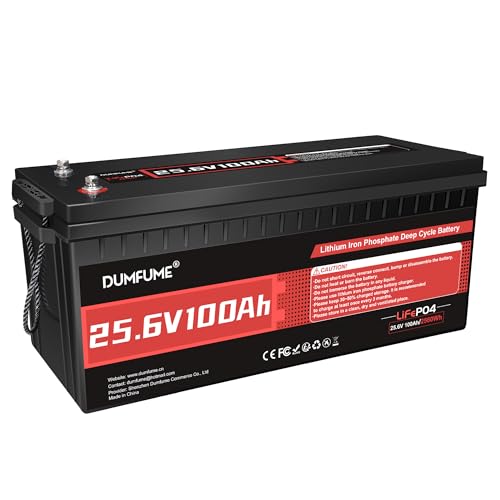
- dumfume 24V 100Ah LiFePO4 Battery — A native 24V LiFePO4 bank unit with 2560Wh stated in the title. Check on Amazon — check the latest price on Amazon
- Qwenoer 22.2V-24V 10Ah Lithium Battery Pack — A small 24V lithium-ion pack with its own charger and bare leads.
- SUPER EMPOWER 12.8V 100Ah LiFePO4 Battery, Group 31 — A 12.8V Group 31 LiFePO4 battery with stated expansion support. Covered in prose only below, with no purchase link, because it does not match this guide’s core requirement.
- yeagulch 12.8V 100Ah LiFePO4 Battery, Group 31 — A 12.8V Group 31 LiFePO4 battery whose title leads with a high cycle figure. Covered in prose only below, with no purchase link, because it does not match this guide’s core requirement.
- ABKPOWER 12V 20Ah LiFePO4 Battery — A compact 12V 20Ah LiFePO4 battery for small loads. Covered in prose only below, with no purchase link, because it does not match this guide’s core requirement.
- Nermak 2 Pack 12V 10Ah LiFePO4 Battery — A two-pack of small 12V 10Ah LiFePO4 batteries. Covered in prose only below, with no purchase link, because it does not match this guide’s core requirement.
Read the full guide ↓ for the research method, the detailed reviews, the sizing math, and the mistakes that waste the most money in this category.
If you are researching the best batteries for 24 volt grid tie battery bank, you are probably past the stage of buying a battery for a single gadget. A grid tie bank is infrastructure. It sits between your solar array, your inverter-charger, and the utility connection, and it works every single day: charging when the sun is strong or rates are low, discharging into your loads when rates peak or the grid drops. That daily cycling, plus the inspection and permitting culture that surrounds anything tied to the grid, makes this a very different purchase from a trolling motor battery or a weekend RV house battery, even when the boxes look similar on a shelf.
Three questions decide whether a bank succeeds. First, is it genuinely a 24 volt bank? A 24 volt inverter-charger expects a nominal 24 volt source, and the honest ways to feed it are a native 24V battery or a carefully matched series string, which this guide treats as a general wiring concept rather than a reason to link 12 volt products under a 24 volt keyword. Second, how much energy does the bank store, in watt-hours, against your evening and outage loads? Third, what protects the bank across thousands of daily cycles: the battery management system, its temperature cutoffs, and its stated cycle figure. Readers comparing vehicle-scale 24 volt systems will also find the related guide to Best Batteries For 24 Volt Humvee Cummins useful, because the voltage discipline is the same even though the duty is completely different.
This guide is research-led. The picks were checked against verified listing data, and every specification quoted here, from amp-hours to cycle counts, comes from the product title itself. Where a title is silent, the review says so. You will not find hands-on testing claims, because a grid tie bank proves itself over years of daily cycles, not over a weekend on a bench, and any review that pretends otherwise is selling you a story instead of a battery.
Key Takeaways
- Voltage is the eligibility line: only batteries whose titles state 24V are linked in this guide; 12V and 12.8V units are prose-only, however good they are at 12 volts.
- Size the bank in watt-hours, not amp-hours. A 24V 100Ah battery stores 2560Wh by its title; your nightly load in watt-hours decides how many units the bank needs.
- Daily grid-tie cycling punishes weak protection. A built-in BMS with low-temperature cutoff is not a luxury feature in a bank that charges unattended.
- Small 24V packs exist and are linked honestly below, but a 10Ah pack is a bench and backup-circuit tool, not a whole-home bank, and the review says so plainly.
- Series wiring two matched 12V batteries is a legitimate general technique for reaching 24 volts, but it doubles the balancing and monitoring burden, which is why native 24V units lead this guide.
- Permits, inverter compatibility, and your utility interconnection rules matter as much as the battery. Confirm all three before ordering anything.
In this guide
Quick Picks
Badges reflect the grid-tie job first: stored energy per unit, protection electronics, and whether the unit can anchor a bank that cycles every day. Only the two picks whose titles state 24V are linked; the four 12 volt units appear as prose-only entries so you can see exactly why they fall short of this specific keyword.
| Pick | Badge | Why it is here |
|---|---|---|
| dumfume 24V 100Ah LiFePO4 Battery | Best Overall | The only pick that combines native 24V, 100Ah capacity, a 100A BMS, and stated certifications in one title; the natural anchor unit for a small grid tie bank. |
| Qwenoer 22.2V-24V 10Ah Lithium Battery Pack | Best for Small Backup Circuits | A genuinely 24V pack, but at 10Ah it belongs on a bench, a CCTV circuit, or a pilot installation, not in a whole-home bank; included here so the size gap is impossible to miss. |
| SUPER EMPOWER 12.8V 100Ah LiFePO4 Battery, Group 31 (prose-only) | Prose-Only: Strong 12V Unit, Wrong Voltage | On paper the most bank-like of the 12 volt units, with 4P4S expansion stated in the title, but its title voltage is 12.8V, so it cannot be linked as a 24 volt battery. |
| yeagulch 12.8V 100Ah LiFePO4 Battery, Group 31 (prose-only) | Prose-Only: Long Cycle Claim, Wrong Voltage | The highest cycle figure among the prose-only picks and home energy storage named in its title, but the title voltage is 12.8V, not 24V. |
| ABKPOWER 12V 20Ah LiFePO4 Battery (prose-only) | Prose-Only: Small 12V Utility Battery | A tidy small-load battery that names home backup among its uses, but at 12V and 20Ah it is two mismatches away from a 24 volt bank. |
| Nermak 2 Pack 12V 10Ah LiFePO4 Battery (prose-only) | Prose-Only: Light-Duty 12V Pair | A light-duty pair for scooters, lighting, and fish finders; included to close the question readers ask about pressing small packs into bank service. |
How These Picks Were Chosen
The research for this guide started from the verified battery pool for this category and then applied the keyword as a filter, not as a decoration. A battery earned a link only if its verified title states 24V, because the keyword promises a 24 volt bank and the bank voltage is a core attribute, not a detail. That single rule linked two picks and pushed four well-known 12 volt deep-cycle batteries into prose-only coverage. They are still reviewed in full, because many readers arrive here owning one of them, and you deserve an honest explanation of what it can and cannot do in a grid tie context rather than silence.
Within the linked picks, the comparison weighed stated stored energy, the BMS rating in the title, the stated cycle figure, and any stated temperature protection, in that order. Grid tie duty is daily and unattended, so protection and cycle life outrank almost everything else. Chemistry was read from the titles as well: the leading pick is LiFePO4, the chemistry most banks in this class use for daily cycling, while the small second pick is a lithium-ion pack, and the review keeps that distinction visible rather than blurring it. For readers whose real system is a single 12 volt circuit rather than a bank, the guide to the Best Battery 12 Volt covers that simpler problem on its own terms.
One honesty note: this is a research-based guide built from verified listing data, manufacturer-stated title specifications, and established battery-bank practice. No bank was installed, permitted, and cycled for a season to produce this article, and you should treat any guide that claims season-long grid tie testing of six banks with suspicion. What research can do well is enforce the voltage rule, compare stated specifications without inventing new ones, and flag the mismatches, like a 10Ah pack in a bank conversation, before they cost you money.
Best Batteries for 24 Volt Grid Tie Battery Bank: The 6 Picks
Two linked picks state 24V in their titles and carry full purchase links and images. Four prose-only picks state 12V or 12.8V; they are reviewed with the same care, the same spec discipline, and no links, because the fastest way to ruin a bank project is to buy the wrong voltage confidently.

dumfume 24V 100Ah LiFePO4 Battery
Badge: Best Overall
Strengths
- Native 24V output, so no series pairing or cross-unit balancing is needed to reach bank voltage
- 2560Wh stated in the title, which makes bank sizing arithmetic honest and simple
- Built-in 100A BMS with low-temperature cutoff for unattended daily charging
Trade-offs
- A single 100Ah unit is a starter bank, not whole-home backup; most homes will plan multiple units
- The title states no expansion or parallel architecture, so growth plans need verification before purchase
- IP65 waterproofing is wasted in most indoor bank rooms, where you pay for sealing you may never use
| Voltage (title) | 24V |
| Capacity (title) | 100Ah |
| Stored energy (title) | 2560Wh |
| Chemistry (title) | LiFePO4 |
| BMS (title) | Built-in 100A |
| Cycle figure (title) | 15000 deep cycles |
| Protection (title) | Low-temp cutoff, IP65 waterproof |
| Certifications (title) | UN38.3, UL1973 |
This is the pick the keyword actually describes. The dumfume unit is a native 24 volt LiFePO4 battery, so a bank built from it starts at the correct voltage with no series strings to balance and no paired units aging at different rates. Its title states 2560Wh of stored energy, which is the number that matters for grid tie planning: a household that wants to shift four kilowatt-hours of evening load needs two of these, and a household planning a modest outage reserve of eight kilowatt-hours needs four, before depth-of-discharge margins. That kind of arithmetic is only possible because the title does the honest thing and states the watt-hours outright.
The protection package suits unattended daily duty. A built-in 100A BMS sets the continuous current ceiling, and the stated low-temperature cutoff protects the cells if the bank lives in an unheated garage or outbuilding where a cold morning charge can damage lithium cells. The title also states UN38.3 and UL1973 certifications. Certification language matters in grid tie work because inspectors and insurers ask about the bank in a way they never ask about a boat battery, and a title that names its certifications gives you a concrete starting point for that conversation, though you must still confirm acceptance with your installer and authority having jurisdiction.
The honest limitation is scale and stated expandability. The title does not describe a parallel or series expansion architecture, and 100Ah at 24 volts is a modest unit of energy. Treat this battery as a well-specified building block whose bank-level behavior, how many units your inverter-charger supports in parallel, what communication the BMS offers, must be confirmed from the full listing and your inverter documentation before you design around it. Within those limits, it is the clearest match to this keyword in the pool.
Best for: a home building a genuine 24V grid tie bank in 100Ah increments, with daily cycling and unattended charging. / Not suited for: buyers who need a documented multi-unit expansion system confirmed before purchase, or anyone whose system is actually 12 volts.
Check on Amazon — check the latest price on Amazon before you decide, because listings, included accessories, and availability change over time.

Qwenoer 22.2V-24V 10Ah Lithium Battery Pack
Badge: Best for Small Backup Circuits
Strengths
- Title states 24V, so it can demonstrate and test a 24 volt circuit honestly
- Ships with a matched 25.2V 2A charger, removing charger-matching guesswork for small jobs
- Bare leads and a cable connector suit DIY integration, alarms, and camera circuits
Trade-offs
- 10Ah is roughly a tenth of the anchor pick capacity; it cannot store a meaningful share of a home evening load
- Lithium-ion chemistry, not LiFePO4, so it should not be mixed into a LiFePO4 bank or compared on cycle expectations
- No BMS rating, cycle figure, or stored-energy figure is stated in the title
| Voltage (title) | 22.2V-24V |
| Capacity (title) | 10Ah |
| Stored energy (title) | Not stated in title |
| Chemistry (title) | Li-ion |
| BMS (title) | Not stated in title |
| Cycle figure (title) | Not stated in title |
| Included (title) | 25.2V 2A charger, bare leads wire, cable connector |
Honesty first: this pack is in the guide because its title states 24V and the voltage rule is the eligibility rule, but it is not a grid tie bank battery in any practical whole-home sense, and pretending otherwise would be the worst kind of buying-guide dishonesty. At 10Ah it stores about a tenth of the energy of the 100Ah anchor pick. A bank built from packs this size would need dozens of units, dozens of connections, and a wiring harness no inspector would smile at. If your project is a house, skip to the anchor pick and size from there.
Where this pack genuinely earns its place is at the edges of a 24 volt project. Installers and confident DIY builders use small packs like this to bench-test a 24 volt inverter-charger before the real bank arrives, to power a CCTV or alarm circuit that must ride through outages independently, or to run LED lighting circuits in an outbuilding. The included 25.2V 2A charger is matched to the pack, the bare leads integrate without proprietary connectors, and the title’s own application list, kids ride-on cars, DIY projects, solar panels, LED strips, CCTV cameras, tells you the scale the maker had in mind.
Two cautions deserve emphasis. The chemistry is lithium-ion, not LiFePO4, so never wire this pack into a LiFePO4 bank or charge it on a profile chosen for a different chemistry. And the title states no BMS rating and no cycle figure, so there is no verified basis for expecting bank-class longevity from it. Bought for bench and circuit-scale work, it is a handy, honest tool. Bought as a home bank, it would be a category error, and this guide would rather lose the sale than let that happen.
Best for: bench-testing a 24V setup, or powering a small standalone 24V circuit such as cameras or LED lighting. / Not suited for: storing household energy, mixing into a LiFePO4 bank, or any role where its 10Ah capacity would be the plan rather than a test.
Check on Amazon — check the latest price on Amazon before you decide, because listings, included accessories, and availability change over time.
SUPER EMPOWER 12.8V 100Ah LiFePO4 Battery, Group 31
Badge: Prose-Only: Strong 12V Unit, Wrong Voltage
Strengths
- 1280Wh and a 100A BMS stated in the title, a genuinely bank-grade specification at 12 volts
- Supports 4P4S expansion up to 20.48kWh per the title, the clearest growth story among the prose-only picks
- Low-temperature cutoff stated, which matters for unattended charging
Trade-offs
- It is a 12.8V battery; reaching 24 volts requires a matched series partner and doubles balancing concerns
- Group 31 RV and trolling framing means bank-room mounting and cabling are your design problem
- No certifications are stated in the title, which grid tie inspectors may ask about
| Voltage (title) | 12.8V |
| Capacity (title) | 100Ah |
| Stored energy (title) | 1280Wh |
| Chemistry (title) | LiFePO4 |
| BMS (title) | 100A |
| Cycle figure (title) | Not stated in title |
| Expansion (title) | 4P4S, up to 20.48kWh |
| Form factor (title) | Group 31 |
If this guide were about 12 volt energy storage, this battery would be near the top of it. The title states 1280Wh, a 100A BMS, low-temperature cutoff, and support for 4P4S expansion up to 20.48kWh, which is exactly the vocabulary of a scalable bank. Readers building a serious 12 volt system, for example around the loads discussed in the guide to the Best Battery For 12 Volt Fridge, will find this specification set genuinely relevant, and nothing in this prose-only treatment should be read as a quality judgment against the battery itself.
The problem is purely the keyword. This guide promises batteries for a 24 volt grid tie bank, and this unit is 12.8 volts. The general technique for reaching 24 volts from 12 volt units, wiring two identical, same-age batteries in series so their voltages add while capacity in amp-hours stays the same, is real and widely used, and the how-to section below explains it as background knowledge. But a series pair is a system you design and take responsibility for: matched units, matched cable lengths, a plan for monitoring the midpoint, and a charger profile that suits the string. A buying guide that simply linked a 12.8V battery under a 24 volt headline would hide all of that work from you.
So the honest summary is this. As a 12 volt building block, including as one half of a deliberately designed series pair you specify yourself, this is a strong, well-documented unit. As an answer to the question this article was asked, batteries for a 24 volt bank, it does not qualify for a link, and it is covered here so you can see the reasoning rather than wonder where it went.
Best for: a 12 volt system, or a carefully self-designed series pair built from matched units. / Not suited for: being bought singly as a 24 volt bank battery, because it is not one.
Prose-only pick: no Amazon link and no product image are shown for this unit, for the reason explained above.
yeagulch 12.8V 100Ah LiFePO4 Battery, Group 31
Badge: Prose-Only: Long Cycle Claim, Wrong Voltage
Strengths
- 15000+ deep cycles stated in the title, the strongest longevity claim in this prose-only group
- Home energy storage is named in the title, so the maker at least aims at stationary duty
- 100A BMS and 1280Wh stated, matching the anchor specification class at 12 volts
Trade-offs
- 12.8V output; the same series-pair caveats as every other 12 volt unit in this guide
- The title states low-temperature protection without the word cutoff, leaving the exact behavior to verify
- No expansion architecture is stated in the title
| Voltage (title) | 12.8V |
| Capacity (title) | 100Ah |
| Stored energy (title) | 1280Wh |
| Chemistry (title) | LiFePO4 |
| BMS (title) | 100A |
| Cycle figure (title) | 15000+ deep cycles |
| Form factor (title) | Group 31 (BIC) |
Daily cycling is where grid tie banks live or die, which is why this battery’s title deserves a careful read even in prose-only territory. It states 15000+ deep cycles, a 100A BMS, 1280Wh, and low-temperature protection, and it names home energy storage among its applications. At 12 volts, that is a specification set aimed squarely at stationary, cycle-heavy work rather than at a starter-battery job, and a reader building a 12 volt storage system could do far worse than start a shortlist here.
None of that changes the voltage in the title: 12.8V. The keyword for this guide is a 24 volt bank, and the same series discussion applies. Two of these in series would present 24 volts nominal to an inverter-charger, and the pair would carry the stated per-unit energy twice over, but the bank would then depend on both BMS units behaving as a team they were not necessarily designed to be, and on you monitoring for drift between them. Experienced builders do this successfully. A product link under a 24 volt headline, however, would imply the manufacturer had done that engineering for you, and the title makes no such claim.
Treat this entry as a signpost. If your project is genuinely 12 volts, or if you are an experienced builder deliberately specifying a series design, this battery merits full investigation on its own listing. If your project is the 24 volt grid tie bank this article is about, the linked anchor pick is the honest starting point, and this unit belongs in your notes only as an example of how strong a 12 volt specification can look while still being the wrong voltage.
Best for: 12 volt home storage or an expert-designed series build. / Not suited for: direct purchase as a 24 volt bank battery.
Prose-only pick: no Amazon link and no product image are shown for this unit, for the reason explained above.
ABKPOWER 12V 20Ah LiFePO4 Battery
Badge: Prose-Only: Small 12V Utility Battery
Strengths
- 256Wh and 6000+ cycles stated in the title, honest numbers for its class
- 20A BMS stated, appropriately scaled to the small loads it names
- Application list is realistic: fish finders, lighting, small solar, and light home backup
Trade-offs
- 12V output, so it fails this keyword on voltage before capacity is even discussed
- 20Ah is far below bank scale; a bank would need an impractical number of units
- Home backup in its title means circuit-scale backup, not household backup
| Voltage (title) | 12V |
| Capacity (title) | 20Ah |
| Stored energy (title) | 256Wh |
| Chemistry (title) | LiFePO4 |
| BMS (title) | 20A |
| Cycle figure (title) | 6000+ |
Small batteries invite a particular misunderstanding in bank conversations, because their titles often include the words home backup. This ABKPOWER unit states 256Wh, a 20A BMS, and 6000+ cycles, and its application list runs from fish finders and lighting to home backup. Read carefully, that list is honest: backing up a router, a few lights, or a small DC circuit through an outage is home backup at circuit scale, and a 256Wh battery does it well. What it cannot do, at 12 volts and 20 amp-hours, is participate meaningfully in a 24 volt household bank.
The voltage mismatch alone settles its status here. Even the general series technique discussed in this guide assumes matched pairs of substantial units; building 24 volts from small utility batteries multiplies connections, fusing points, and failure modes while delivering little energy. Nobody should design that system, and this guide will not link a product in a way that suggests otherwise. Its presence here is educational: it marks the boundary between portable DC convenience and stationary storage.
Judged in its own class, the specification is respectable and unusually complete for a small battery, with energy, BMS rating, and cycle figure all stated in the title. If your actual project is a 12 volt circuit that needs clean, cycle-tolerant power, this is the kind of unit to research further, in the same spirit as the small-load thinking in the Best Battery For 12 Volt Winch On Ebay guide’s discussion of matching battery scale to the job. For the 24 volt grid tie bank, it is prose-only, and clearly so.
Best for: small 12 volt circuits, lighting, and electronics backup. / Not suited for: any role in a 24 volt household bank.
Prose-only pick: no Amazon link and no product image are shown for this unit, for the reason explained above.
Nermak 2 Pack 12V 10Ah LiFePO4 Battery
Badge: Prose-Only: Light-Duty 12V Pair
Strengths
- 2000+ cycles stated in the title, a real figure for a light-duty pack
- Built-in 10A BMS stated, scaled to the small loads in its application list
- Two-pack format suits the small paired devices it was designed for
Trade-offs
- 12V and 10Ah: wrong voltage and roughly one twenty-fifth of the anchor pick capacity per unit
- Application list is mobility and light-duty: scooters, Power Wheels, fish finders, lighting
- No stored-energy figure is stated in the title
| Voltage (title) | 12V |
| Capacity (title) | 10Ah (per unit, 2 pack) |
| Stored energy (title) | Not stated in title |
| Chemistry (title) | LiFePO4 |
| BMS (title) | Built-in 10A |
| Cycle figure (title) | 2000+ cycles |
Every bank guide attracts the same hopeful question: can the small batteries already in the garage be pressed into service? This Nermak two-pack is a useful test case. Its title states 12V, 10Ah per unit, a built-in 10A BMS, and 2000+ cycles, and its applications are solar and wind novelties at small scale, scooters, lighting, Power Wheels, and fish finders. That is a coherent light-duty product. It is also, by voltage and by capacity, not a grid tie bank component, and no arrangement of enthusiasm changes the arithmetic.
Consider what bank service would demand of it. A modest 24 volt bank of five kilowatt-hours would require on the order of twenty of these units in series-parallel, each with its own small BMS, none of them designed to coordinate with the others, all of them needing fusing and monitoring. The result would cost more, fail more creatively, and store energy less safely than two proper 100Ah units. This is why the guide’s rule is structural rather than snobbish: small packs are prose-only here because the bank is the wrong job for them, full stop.
Within its intended world, the pack is easy to respect. A stated cycle figure, a stated BMS, and an application list that does not overreach are the marks of an honest small battery, and owners powering lighting or a fish finder, the kind of modest DC loads also discussed alongside the Best Battery For 12 Volt Winch guide’s smaller-duty asides, will find it appropriately matched. For this keyword, it closes the set as a clear prose-only boundary case.
Best for: scooters, lighting, fish finders, and small 12 volt projects. / Not suited for: grid tie storage in any configuration.
Prose-only pick: no Amazon link and no product image are shown for this unit, for the reason explained above.
Comparison Table
Every figure in this table comes from the product title returned by the verification check on 2026-11-20. Where a title does not state a figure, the cell says so instead of estimating it, because bank sizing built on guessed numbers is how systems end up undersized.
| Pick | Voltage (title) | Capacity (title) | Stored energy (title) | BMS (title) | Cycle figure (title) | Status | Link |
|---|---|---|---|---|---|---|---|
| dumfume 24V 100Ah LiFePO4 Battery | 24V | 100Ah | 2560Wh | 100A built-in | 15000 | Linked | Check on Amazon |
| Qwenoer 22.2V-24V 10Ah Lithium Battery Pack | 22.2V-24V | 10Ah | Not stated in title | Not stated in title | Not stated in title | Linked | Check on Amazon |
| SUPER EMPOWER 12.8V 100Ah LiFePO4 Battery, Group 31 | 12.8V | 100Ah | 1280Wh | 100A | Not stated in title | Prose-only | No link — see review |
| yeagulch 12.8V 100Ah LiFePO4 Battery, Group 31 | 12.8V | 100Ah | 1280Wh | 100A | 15000+ | Prose-only | No link — see review |
| ABKPOWER 12V 20Ah LiFePO4 Battery | 12V | 20Ah | 256Wh | 20A | 6000+ | Prose-only | No link — see review |
| Nermak 2 Pack 12V 10Ah LiFePO4 Battery | 12V | 10Ah x2 | Not stated in title | 10A built-in | 2000+ | Prose-only | No link — see review |
How to Choose Batteries for a 24 Volt Grid Tie Bank
Start with the load, not the battery. List what the bank must carry when the grid is down or expensive: refrigerator, lighting circuits, networking gear, a well pump, medical devices, and the evening entertainment load are typical. Add their running watts, multiply by the hours you expect them to run, and you have a watt-hour target. Divide that target by 2560Wh, the stated energy of the anchor pick, and round up: that is your unit count before margins. Then add margin, because a bank that must be emptied completely every night to meet its target is a bank that will age fast and fail you on the longest outage.
Voltage architecture comes next, and it is a system decision, not a battery decision. Your inverter-charger dictates the bank voltage; a 24 volt inverter needs a 24 volt bank. Native 24V batteries keep the design simple: one BMS per unit, no midpoint to monitor, no paired aging. Series strings of 12 volt units can work in expert hands, but they import balancing and monitoring duties that this guide deliberately does not hand you via a product link. Parallel growth, adding identical units to raise amp-hours at the same voltage, is the cleaner expansion path, which is why any unstated expansion architecture in a title should be verified before you design around a pick.
Protection and paperwork close the decision. Daily cycling means the BMS works as hard as the cells: confirm the continuous current rating in the title covers your inverter’s draw at bank voltage, and treat low-temperature cutoff as mandatory anywhere the bank can approach freezing. Then do the unglamorous part before ordering: confirm the battery and inverter pairing with both makers’ documentation, and confirm your local permitting and utility interconnection requirements, because a grid tie bank is regulated equipment in most jurisdictions. Readers whose loads are actually vehicle-scale rather than household-scale should compare the thinking in the Best Battery For Minn Kota 24 Volt Trolling Motor guide, where 24 volts also rules but the duty cycle is a day on the water, not a decade of evenings.
How to Plan, Wire, and Commission a 24 Volt Grid Tie Bank
Step 1: survey and design on paper. Record every load the bank will serve, its watts, and its daily hours. Convert to watt-hours, choose the bank voltage your inverter-charger requires, and sketch the layout: battery location, ventilation, cable runs, disconnects, and where an inspector will want to stand. Step 2: confirm permissions. Grid tie equipment usually needs permits and a utility interconnection agreement; start that process before hardware arrives, not after. Step 3: prepare the space. Banks belong on a stable, dry surface with working clearances, away from ignition sources, with room to add units later.
Step 4: install and wire. Mount the inverter-charger, land the bank with correctly sized cables and overcurrent protection, and torque every terminal to specification; loose terminals are the leading cause of hot spots in home banks. If your design uses a series string of matched 12 volt units as a general technique, use identical models of the same age, equal-length cables, and a midpoint monitoring plan, and understand that you, not a product listing, own that design. Step 5: configure and commission. Set the charger profile to the battery chemistry, set low-voltage disconnect and temperature limits, then commission in stages: charge fully, run a controlled discharge into a known load, and verify the inverter’s grid interaction behaves as permitted.
Troubleshooting. Problem: the bank reaches full charge by mid-morning and dumps solar potential → the bank is undersized for the array or the loads are mistimed; add units or shift flexible loads into the solar window. Problem: one unit in a parallel group runs warmer than its neighbors → check terminal torque and cable lengths first; unequal resistance makes one battery work harder than the rest. Problem: the system disconnects on cold mornings → low-temperature protection is doing its job; insulate the bank space or relocate the bank rather than defeating the cutoff, which exists because charging cold lithium cells damages them.
24 Volt vs 12 Volt Banks: Why This Guide Is Strict About Voltage
Bank voltage is not a preference like battery color. It sets the current for every watt the system moves: at 24 volts, a 2400 watt load draws about 100 amps, while the same load at 12 volts draws about 200 amps, demanding far heavier cable, larger protection, and generating more heat at every connection. That is why larger stationary systems migrate to 24 volts and beyond, and why the inverter, charger, and bank must all agree on the number. A guide that blurred 12 and 24 volt products under one keyword would be blurring the single most consequential specification in the system.
The strictness also protects a subtler point: state of charge behavior, charger profiles, and BMS coordination all assume a designed voltage. A native 24V battery presents one managed system to the charger. A series pair presents two. Both can be legitimate engineering, but only one of them is what the words on this page promise, and keeping that promise is the difference between a buying guide and a pile of links.
Grid Tie, Hybrid, and Off-Grid: Which One Are You Actually Building?
The phrase grid tie covers three systems that share hardware but not intent. A pure grid tie bank exists to shift energy in time: charge cheap or sunny, discharge expensive or dark, with the grid always present. A hybrid system adds outage backup, which raises the sizing stakes because the bank must also reserve energy for a grid failure that may come at the worst moment of the discharge cycle. A fully off-grid system, despite appearing in several battery titles in this guide, has no grid at all and is sized for autonomy days, a much harsher standard.
Decide which system you are building before choosing units, because the same 2560Wh battery is generous in one design and marginal in another. Most readers of this keyword are building the hybrid: daily shifting plus a protected reserve. If that is you, size the bank for the evening load first, then add the reserve on top, and configure the inverter to defend that reserve instead of spending it every night. The battery cannot fix a design that asks it to be in two states of charge at once.
Common Buying Mistakes
Mistake 1: buying amp-hours instead of watt-hours. A 100Ah figure means nothing until voltage multiplies it; compare banks in watt-hours or be misled by every 12 volt headline. Mistake 2: linking-voltage shopping. Ordering a 12.8V battery for a 24 volt bank because the review was enthusiastic is how returns and restocking fees happen; check the title voltage yourself. Mistake 3: ignoring the BMS current ceiling. A bank whose BMS caps at 100A cannot feed an inverter that wants more, no matter how many watt-hours sit behind it. Mistake 4: skipping permits and interconnection. Unpermitted grid tie equipment risks forced removal, insurance problems, and danger to line workers. Mistake 5: mixing chemistries or ages. LiFePO4 and lithium-ion packs, or new and tired units, do not share a bank gracefully. Mistake 6: no reserve discipline. Spending the whole bank nightly leaves nothing for the outage the system was bought for.
Final Recommendation
For most readers, the first choice is dumfume 24V 100Ah LiFePO4 Battery: it is the only pick that arrives as a native 24 volt bank unit with its energy, BMS, cycle figure, and certifications all stated in the title, and a grid tie bank should be built from exactly that kind of documented building block. Size it with the watt-hour method in the buying guide, confirm the parallel plan with your inverter documentation, and clear the permit path before the hardware ships.
Choose Qwenoer 22.2V-24V 10Ah Lithium Battery Pack only for the small jobs it honestly fits: bench-testing a 24 volt design, or giving a camera or lighting circuit its own ride-through power. If your real project turns out to be a 12 volt system wearing a 24 volt search query, the prose-only SUPER EMPOWER and yeagulch 100Ah units are strong places to restart the search at the correct voltage. What you should not do is assemble a household bank from small packs or single 12 volt units bought on hope; the bank is the most safety-critical purchase in a solar home, and it rewards the boring, documented choice every time.
Frequently Asked Questions
Can I build a 24 volt bank from two 12 volt batteries?
As a general technique, yes: two identical 12 volt batteries wired in series present 24 volts, with the amp-hour capacity of one unit and twice the stored energy. The conditions are strict, though: same model, same age, same state of health, equal cable lengths, and a monitoring plan for the midpoint, because the weaker unit limits the string and drifts first. This guide covers that technique as knowledge but links only native 24V batteries under this keyword, because a link would imply the pairing had been engineered for you when it has not.
How many 24V 100Ah batteries does a home bank need?
Divide your target watt-hours by 2560Wh, the stated energy of one unit, and round up, then add margin. A home shifting about five kilowatt-hours each evening needs two units before margin and three for comfort; a home that also wants a five kilowatt-hour outage reserve should plan around four. Your inverter documentation sets the maximum number of parallel units, so confirm that ceiling before treating any count as a shopping list.
What does the BMS rating mean for a grid tie bank?
The BMS, battery management system, is the battery’s internal guardian and its current gatekeeper. A 100A BMS on a 24 volt battery supports roughly 2400 watts of continuous draw before protection intervenes. If your inverter can pull more than that from a single unit, you either parallel units so they share the load or choose a battery with a higher stated BMS rating. The title figure is the one to plan around, because it is the figure the manufacturer was willing to publish.
Why does low-temperature cutoff matter indoors?
Many banks live in garages, basements, and outbuildings that track outdoor temperatures more than owners expect. Charging a lithium battery below freezing can permanently damage its cells, and the damage is silent until capacity fades. A stated low-temperature cutoff means the BMS refuses that charge automatically, including on the unattended morning after a cold night, which is precisely when a grid tie system would otherwise charge on schedule.
Do I need permission to install a grid tie battery bank?
In most jurisdictions, yes: an electrical permit, an inspection, and a utility interconnection agreement are the normal path, and some utilities also require approved equipment lists and a visible disconnect. The exact rules are local, which is why this guide insists you confirm them before ordering. Battery titles that state certifications such as UN38.3 and UL1973 give your installer and inspector something concrete to work with, but they do not replace the approval process.
Can I mix the small 24V pack with the 100Ah bank battery?
No. The small pack in this guide is lithium-ion at 10Ah; the anchor battery is LiFePO4 at 100Ah. Different chemistries charge on different profiles, and wildly different capacities in parallel make the small unit work disproportionately hard and age unpredictably. Keep chemistries and capacities uniform inside a bank, and give small packs their own separate, appropriate jobs instead.
How long will a LiFePO4 bank battery last on daily cycling?
The honest answer uses the title figure: the anchor pick states 15000 deep cycles, which on paper is decades of daily cycling, while real life adds calendar aging, temperature exposure, and depth-of-discharge habits that shorten any paper figure. Plan conservatively, treat the stated cycle count as an upper-bound comparison between products rather than a promise, and expect the electronics and connections around the cells to need attention long before the cells reach their stated cycle limit.