A bourbon decanter is a stoppered glass or crystal vessel that holds your whiskey on the bar cart or shelf. It looks better than a standard bottle, and a good stopper keeps the pour clean. Styles range from classic square-cut crystal to novelty globes and ship shapes, and some come as sets with matching glasses.
The six decanters below cover the main looks, from plain glass to cut crystal. We have not used these products ourselves, so confirm the size, stopper type and what is included on the current listing before you buy. Treat our notes as a starting point for your own checks.
As an Amazon Associate we earn from qualifying purchases. Links below are affiliate links, and they do not change the product information we give.
What to Look For
| Feature | Why it matters |
|---|---|
| Material | Crystal-style glass has more sparkle; plain glass is lighter and often easier to clean |
| Stopper | A tight stopper slows evaporation and keeps dust out |
| Capacity | Match the size to a standard bottle so you can pour one in whole |
| Base and shape | A wide, heavy base is harder to knock over |
| Set contents | Some listings include glasses; others sell the decanter alone |
In this guide
Specs at a Glance
| Decanter | Material | Style | Notes |
|---|---|---|---|
| Viski Admiral | Crystal-style glass | Angular, faceted | Stopper included |
| The Wine Savant Globe | Glass | World globe | Conversation piece |
| Kanars | Glass | Classic with stopper | Sold as a set with glasses; confirm contents |
| Godinger Dublin | Cut crystal-style glass | Patterned, traditional | Stopper included |
| Lenox Tuscany Classics | Crystal | Traditional | Check listing for capacity |
| Bezrat | Glass | Modern with stopper | Often sold as a gift set |
The 6 Best Bourbon Decanters

Top pickBest for a modern bar cart
1. Viski Admiral Liquor Decanter
A faceted, angular decanter from a bar-accessory brand that is well known for whiskey gear. It has a clean modern shape and a stopper, and it sits in the middle ground between plain and ornate.
Suits: a modern bar cart. Strengths: a sharp, easy-to-read design. Weaknesses: faceted sides take care to dry. Skip it if you want a rounded, classic form.


Best for gifts and talking points
2. The Wine Savant Globe Decanter
A glass decanter shaped like a world globe, usually sold with a stand and sometimes glasses. It is a novelty piece first and a practical pour second.
Suits: gifts and talking points. Strengths: a distinctive shape. Weaknesses: the narrow neck can be harder to clean. Skip it if you prefer a plain look.
View The Wine Savant Globe Decanter on Amazon

Best for first-time buyers and gift givers
3. Kanars Whiskey Decanter Set
A glass decanter with a stopper, commonly sold in a boxed set with whiskey glasses. It is a practical way to buy everything for the bar in one order.
Suits: first-time buyers and gift givers. Strengths: a set approach. Weaknesses: contents vary by listing option. Skip it if you already own glasses.
View Kanars Whiskey Decanter Set on Amazon

Best for a classic, old-fashioned look
4. Godinger Dublin Whiskey Decanter
A traditional decanter with a cut pattern across the body and a matching stopper. Godinger makes a long line of barware in this style.
Suits: a classic, old-fashioned look. Strengths: pattern catches the light. Weaknesses: deep cuts collect residue. Skip it if you want smooth sides for easy cleaning.


Best for formal settings
5. Lenox Tuscany Classics Decanter
A crystal decanter from a long-established tableware maker, with a formal, traditional profile and a stopper. It suits dining rooms and display shelves.
Suits: formal settings. Strengths: a recognized brand name. Weaknesses: crystal needs hand washing. Skip it if you want something dishwasher friendly.
View Lenox Tuscany Classics Decanter on Amazon
Best for gift buying
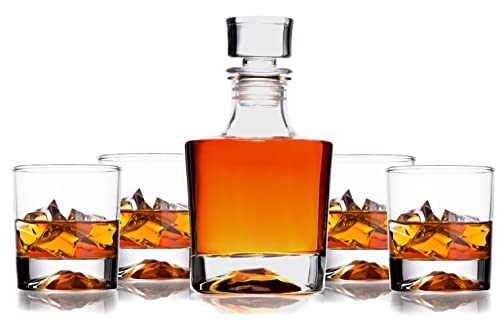
6. Bezrat Whiskey Decanter Set
A glass decanter with a stopper that is often bundled with glasses and presented as a gift box. The look is modern and clean.
Suits: gift buying. Strengths: a ready-to-give package. Weaknesses: set options differ. Skip it if you want a heavy crystal feel.
View Bezrat Whiskey Decanter Set on Amazon
Care and Setup
- Rinse with warm water soon after emptying, and avoid harsh detergents on crystal.
- Dry upside down on a soft towel or a decanter stand.
- Keep out of direct sun, which can warm the contents.
- Seat the stopper firmly after every pour.
Mistakes to Avoid
- Storing bourbon in a decanter for years instead of weeks or months.
- Putting crystal in the dishwasher.
- Choosing a decanter that is smaller than your usual bottle.
- Skipping the listing check for set contents.
Capacity and Bottle Matching
A decanter is only practical if it holds what you pour into it. The most common mistake is buying one that is smaller than your usual bottle, which leaves you with leftover spirit and a half-empty decanter. Standard bottles come in a few common sizes, so check the capacity in the listing and compare it with the bottle you plan to use. If a decanter holds a little less than your bottle, you can pour the remainder into a smaller container or enjoy it first.
Think about how fast you drink. A large decanter filled with bourbon will sit for longer if you pour only a glass now and then, and spirit left for long periods in a decanter is exposed to air. A smaller decanter that you refill more often keeps the contents fresher and the display tidier. If you entertain often, a larger capacity makes sense.
Look at the shape and neck. A wide neck makes pouring and filling easier, and a narrow neck can be fussy and prone to spills. The fill line matters too. Some decanters hold their stated capacity only to the brim, which leaves no room for the stopper. Check whether the capacity is measured to the base of the neck or to the top.
Finally, consider the weight when full. A heavy crystal decanter filled with spirit can be hard to handle, particularly with one hand. Choose a size and weight you can pour confidently.
Stoppers and Sealing
The stopper affects both looks and function. Glass stoppers are classic and match the decanter, but a ground-glass fit may not form an airtight seal. Stoppers with silicone or rubber rings seal better, and they help limit evaporation and keep dust out. Cork or wood stoppers are also seen, though they can absorb odors and need care.
Check how the stopper fits. It should sit firmly without wobbling and come out without excessive force. A stopper that is too tight can stick, and one that is too loose lets air in. Do not force a stuck stopper, since that can crack the neck. Some people use a gentle twist and, if necessary, warm water around the neck to release it, but follow the maker’s advice.
Consider the stopper’s design for pouring. A tall or irregular stopper can get in the way, while a flat top is easier to remove and replace. Some decanters include a pourer or collar, which helps control the flow.
If you plan to keep spirit in the decanter for more than a short time, look for a design that seals well. Even then, treat the decanter as a serving vessel rather than a permanent home for your bourbon. Keep the original bottle for long-term storage, and fill the decanter with the amount you expect to use.
Lead-Free Claims and Crystal Safety
Traditional lead crystal contains lead oxide, which can leach into liquids stored for long periods. This is why many people prefer to avoid storing spirits in older or unlabelled crystal. Many modern products are marketed as lead-free crystal or glass, using other materials to achieve clarity. Read the listing carefully and look for explicit statements about lead-free construction.
Be cautious about vague wording. Terms such as crystal clear or crystal style describe appearance, not composition. If the listing does not state whether the product is lead-free, ask the seller or choose a model that does. Vintage decanters are a particular concern, since their composition is often unknown.
Safe use also depends on how you use the decanter. Even a lead-free decanter is best used for serving and display rather than months of storage. Pour the amount you will drink in a reasonable period, and keep the rest in the original bottle. Rinse the decanter after use and avoid leaving spirit in it for extended periods.
Look for other safety details, such as smooth edges, no chips and no cracks. A chipped rim is a risk to lips, and a hairline crack can fail suddenly. Inspect your decanter regularly. If you are unsure about the material or condition, replace it with a product that states its composition clearly.
Cleaning Narrow and Faceted Designs
Style influences cleaning effort. A wide-mouthed decanter with smooth sides is easy to rinse and dry. A decanter with a narrow neck, a globe shape or deep cuts takes more effort, because residue collects in corners and the opening limits access. Think about how often you will clean it and how much effort you are willing to spend.
For routine cleaning, rinse with warm water soon after emptying, and swirl a little mild soap if needed. Use a soft brush made for decanters or cleaning beads designed for glass, following the instructions on the product. Avoid abrasive tools that can scratch the interior. Rinse thoroughly to remove soap, since residue can taint the next pour.
Drying matters. Moisture trapped inside can cause cloudiness or odors. Place the decanter upside down on a stand or a soft towel, with the stopper off, so air can circulate. A decanter drying rack helps if you have one. Avoid using heat to dry it.
Avoid sudden temperature changes. Do not pour hot water into a cold glass or place a warm decanter in the refrigerator. Handwashing is safest for crystal and cut glass. If you need to remove stubborn staining, ask the maker about suitable cleaners. Over time, mineral deposits can cloud the glass, so use soft water if you can.
Display, Placement and Everyday Pouring
A decanter is meant to be seen, but placement affects both safety and the spirit inside. Keep it out of direct sunlight, which can warm the contents and fade labels or stoppers. Avoid placing it near heat sources such as stoves, radiators or fireplaces. A shelf, bar cart or sideboard with a stable surface is ideal. Use a tray or coaster to protect furniture from drips.
Secure the decanter if you have children or pets, or if the surface is likely to be bumped. Glass can break, and a heavy decanter can cause damage if it falls. Choose a spot away from edges and busy walkways.
Pouring technique helps prevent spills. Hold the decanter by its body rather than the stopper, and use two hands if it is heavy. Tilt slowly, and keep your other hand ready to steady it. A steady pour avoids splashes, and a pourer or collar can improve control.
Plan refilling. Use a funnel for narrow necks, and keep a cloth nearby to wipe drips. Label the contents if you have more than one decanter, so you remember what is in each. Check the decanter for chips, cracks or loose stoppers before each use, and replace it if it shows damage. Choose a style that you enjoy looking at, since it will be on display every day.
Bourbon Decanter FAQ
Does a decanter improve bourbon?
Not in the way it does for wine. Bourbon is already aged, so a decanter is mostly about presentation and a neat pour.
Is crystal safe for whiskey?
Many people store spirits in decanters for short periods only. Check the listing for lead-free wording, and use the decanter for display and serving rather than long storage.
How do I clean a narrow-necked decanter?
Swirl warm water with a little mild soap, rinse well and let it dry upside down. Cleaning beads or a brush made for decanters can help.
Should I buy a set with glasses?
A set is convenient and makes a good gift. If you already own glasses you like, a decanter on its own may be the better use of money.
How long can bourbon sit in a decanter?
Bourbon is best stored in its original bottle, and a decanter works best for serving over a shorter period. Check the maker's advice for the specific decanter, and avoid leaving it for months.
Can I put other spirits in a bourbon decanter?
Yes, decanters suit many spirits. Wash it well between uses so flavors do not mix.
How do I remove a stuck stopper?
Do not force it. Try a gentle twist, and if that fails, follow the maker's guidance, since too much pressure can crack the neck.
Is a heavier decanter better?
Weight gives a premium feel and stability, but it can be hard to pour with one hand. Choose a weight you can handle comfortably.
Should I chill the decanter?
Most people keep spirit at room temperature. Avoid sudden temperature changes that could crack the glass.
How do I prevent cloudiness inside the decanter?
Rinse soon after use, dry upside down and avoid leaving water or spirit to dry inside. Mineral deposits from hard water can also cloud glass over time.
Do I need a tray?
A tray is not required, but it protects furniture from drips and keeps the decanter and glasses together.
What a Decanter Does for Bourbon and What It Does Not
Wine decanters exist partly to separate sediment and let a young wine breathe. Bourbon needs neither. It is distilled, filtered and bottled stable, so pouring it into a decanter will not transform the flavor in any dramatic way. The honest reasons to own one are display, serving and the pleasure of the ritual. Some people also feel that a short rest in an open vessel softens the sharp alcohol smell, but that effect is subtle at best.
Because bourbon is already stable, the main practical question is protection. Light, heat and air gradually dull flavor if a bottle is left half empty for a long time. A decanter is better for a bottle you plan to finish within a few months than for a rare pour you intend to keep for years. For a prized bottle, the original packaging is usually the safer storage choice.
Proof, Evaporation and How Long a Fill Lasts
Higher-proof bourbon is more aggressive on seals and surfaces, and it can evaporate faster through a loose stopper. A decanter with a poor fit will gradually lose volume and some aroma. Check that the stopper sits snug without wobbling, and if the seal is glass on glass, avoid forcing it in when the neck is wet, since that can make it stick.
- Fill to a level where the stopper does not push liquid out on insertion.
- Store away from windows, since sunlight warms the glass and fades labels or cards.
- Keep the decanter upright and out of reach of curious children and pets.
- Write the date and the bourbon name on a small tag if you refill often.
Refilling, Mixing and Keeping Track of What Is Inside
A common mistake is topping off a decanter with a different bottle each time. This blends batches, so the flavor drifts and you lose track of what you are drinking. It is cleaner to finish a fill, rinse the decanter and start fresh. If you like to try several bourbons, use a small tag or a stopper with a label holder to note what is inside.
Some decanter sets include a ring tag for exactly this reason. If yours does not, a simple paper tag on a string works. If you serve guests, a note about the proof and the distillery can start a conversation and keeps your records straight.
Pouring, Ice and Serving Habits
A decanter with a wide base and a heavy bottom pours steadily, but a narrow neck can glug and splash if you tip it too fast. Tilt slowly and let air enter the neck. If you add ice, use large cubes made with filtered water, since they melt slowly and dilute less. Pour over the cube in a glass, not in the decanter, since ice inside makes cleaning and storage awkward.
For guests, set out a small water pitcher and a few extra glasses so people can sip neat, add a splash or use ice as they like. A coaster or tray under the decanter protects furniture from drips.
Decanter or Original Bottle: A Practical Comparison
Keeping bourbon in its bottle is the simplest choice and, for most everyday use, a perfectly good one. A decanter earns its place when presentation matters, such as on a bar cart, at a dinner or as a gift. The table below summarizes the trade-offs.
| Factor | Original bottle | Decanter |
|---|---|---|
| Seal quality | Tight screw or cork closure made for the product | Varies; stoppers can be loose or decorative |
| Appearance | Label and branding | Display piece, often cut or engraved |
| Cleaning | None needed | Needs care, especially narrow necks |
| Long storage | Better | Best for short to medium periods |
| Serving | Fine for casual pouring | Suits guests and gifting |
Many people use both: the bottle stays sealed in a cabinet, and a smaller amount goes into the decanter for the current week. This keeps the rest of the bottle protected and the decanter looking good on display.
Telling Real Crystal From Pressed Glass
Crystal is usually heavier, rings with a clear tone when tapped lightly and throws more sparkle under light. Pressed glass is lighter and sounds duller. Neither is a flaw, but price should reflect which one you are getting, and a claim of crystal on a very cheap piece deserves a closer look at the description. Check whether the maker states that the piece is lead-free, and read how it should be washed.
Choosing a Spot for Display
Pick a stable surface away from the edge of a shelf, out of direct sun, and not directly above a heat source such as a stove or radiator. A tray keeps the decanter steady and catches drips.
Budget Versus Premium
Inexpensive decanters are often pressed glass with a simple stopper. Higher-priced pieces use thicker walls, more careful cutting and better-fitting stoppers. Pay more if the decanter is a gift or sits on display; pay less if it will mainly hold a weekly pour.
Related guides
- 6 Best Crystal Whiskey Decanters: Cut and Plain Styles
- 6 Best Crystal Wine Decanters: Riedel, Zalto and More
- 6 Best Lead-Free Whiskey Decanters: Crystal and Glass
- 6 Best Port Wine Decanters: Crystal and Glass Picks (2026)
Frequently Asked Questions
How long can I leave bourbon in a decanter before it goes bad?
Bourbon does not spoil, but flavor can fade over months if the decanter is poorly sealed or stored in warm, bright spots. A good stopper and a cool, dark place keep a fill tasting right for many months. For long-term storage, keep the bottle in its original packaging.
Should I mix different bourbons in one decanter?
It is better not to. Blending creates a new flavor that you cannot repeat and makes it harder to know what you are pouring. Finish one fill, rinse the decanter and start fresh. If you like blending, treat it as an experiment and keep notes.
Can I use a decanter with ice inside?
You can, but it is rarely a good idea. Ice dilutes the whole fill and is awkward to clean out of a narrow neck. Pour the bourbon into a glass over a large cube instead, so only the glass is diluted and the decanter stays clean.
Is a decanter useful for a bottle I only open occasionally?
Not usually. A decanter is better for bourbon you plan to finish within a few months. For a bottle you open rarely, the original bottle with its tight cap protects flavor better than a decorative stopper.
How a Decanter Changes Your Everyday Pouring Routine
People often buy a decanter for the way it looks and only later notice how much it changes the small habits around pouring a drink. With the original bottle, you unscrew a cap, pour, and put the bottle back. With a decanter, the ritual slows down a little: you lift a heavier vessel, remove a stopper, and pour from a wider lip. That slower routine is part of the appeal for many bourbon drinkers, because it turns an ordinary weeknight pour into something that feels deliberate. It also changes where the bourbon lives. A bottle usually goes back into a cupboard, while a decanter tends to stay out on a cart, a sideboard or a shelf, which means you see it, use it more often, and finish the fill sooner than you might expect.
That visibility cuts both ways. A fill that sits out where you can see it is a fill you will share more readily when friends visit, and it invites comparison pours and conversation in a way a cupboard bottle does not. At the same time, a decanter on display is exposed to light and to the warmth of the room, so it suits a bourbon you are actively drinking rather than one you are saving. A practical approach many households settle on is to keep one everyday bourbon in the decanter and leave special or slow-moving bottles sealed in their original packaging. That way the decanter does the job it is good at, which is serving, and the bottles do the job they are good at, which is storage.
The routine also affects how much you pour. A decanter has no measure marks and no narrow bottle neck to slow the flow, so it is easy to pour more than you intended, especially from a wide-lipped design. If you care about consistent pours, keep a small jigger near the decanter and use it, at least until you learn the vessel by feel. Over a few weeks most people develop a sense of how a given decanter pours, how it balances when full and when nearly empty, and how the stopper behaves. That familiarity is worth having before you serve guests, because a full decanter is at its heaviest and least forgiving on the first pour of the evening.
Choosing Between the Six Styles in This Guide
The six decanters in this guide fall into three broad families, and choosing by family first makes the final pick much easier. The first family is the clean, modern form, represented here by the Viski Admiral with its angular, faceted sides and by the smoother modern profile of the Bezrat set. These suit a contemporary bar cart, photograph well, and tend to be easier to match with modern glassware. The second family is the traditional cut style, represented by the Godinger Dublin with its patterned body and by the Lenox Tuscany Classics with its formal profile. These belong in dining rooms and classic home bars, and they reward being placed where light can move across the cuts. The third family is the conversation piece, represented by the Wine Savant globe, which is bought as much for display and gifting as for pouring.
Between the two modern options, the choice is mostly about whether you want the decanter alone or a coordinated set. The Kanars and Bezrat listings lean toward the set approach, with glasses included in many versions, which is convenient for a first bar but less useful if you already own whiskey glasses you like. Between the two traditional options, the Godinger pattern hides small marks and residue better than a smooth body does, while the Lenox name carries the expectations of a formal tableware brand, including more careful washing. The globe stands apart: it is the one to choose when the decanter will be a gift or a centerpiece, and the one to skip when easy cleaning and a steady pour matter most, because novelty shapes rarely pour or wash as simply as classic forms.
A useful tie-breaker is to think about the glasses you already own. A decanter and glasses that clash in style look like an accident, while a deliberate mismatch of plain glasses with an ornate decanter, or the reverse, looks like a choice. If your glasses are plain tumblers, a patterned decanter adds the visual interest. If your glasses are already cut or decorated, a plainer decanter keeps the tray calm. Sets solve this matching problem for you, which is why they remain popular for weddings and housewarmings, but buying separately gives you better control over each piece.
Setting Up a New Decanter for the First Time
Before the first fill, wash the decanter even if it looks spotless. New glassware can carry dust from packing, faint residue from manufacturing, and tiny fragments of packing material in the neck. Warm water and a small amount of mild washing liquid are enough for most pieces; rinse until the water runs completely clear and no scent of soap remains, because any trace of detergent will find its way into the first pour. For crystal and crystal-style pieces, follow the care guidance in the main sections above and keep very hot water away from cold glass, since sudden temperature change is a common cause of cracks in fine vessels.
Drying matters more than most people expect. A decanter left to air-dry upside down on a soft cloth will usually dry cleanly, but narrow-necked and faceted designs trap droplets that leave spots. A decanter drying rack, or simply resting the vessel at an angle so air can circulate, helps a great deal. Some owners use a lint-free cloth on a long, flexible handle made for the purpose. Avoid pushing a stiff brush or a folded towel hard into a narrow neck, since scratches inside the glass are almost impossible to remove and will catch light unpleasantly forever after.
When the vessel is clean and fully dry, pour in a small amount of bourbon first rather than the whole bottle. Swirl it gently, let it sit for a short while, and pour yourself a small taste. This first rinse fill confirms there is no leftover soap taste and lets you check the stopper fit with liquid inside. If all is well, add the rest of the bottle. Finally, make a note of what you filled it with and when. A small label on the underside, a note in your phone, or simply keeping the empty bottle nearby until the fill is finished all work. In a few months, when the decanter is half empty, you will be glad you wrote it down, because memory is unreliable and guests will ask what they are drinking.
Serving Bourbon From a Decanter Well
Serving well from a decanter is mostly about temperature, dilution and glass choice. Bourbon is usually served at room temperature, and a decanter stored in a normal living space will already be at about the right warmth. If your home runs warm, a slightly cooler room or a shelf away from heating vents keeps the spirit closer to its best. Adding water is a matter of taste: a few drops in the glass can open up the aroma of a strong bourbon, and it is always better done in the glass than in the decanter, where it would dilute the whole fill for everyone.
Ice deserves the same discipline. A large cube in the glass chills with slower dilution, while small cubes melt fast and water the drink down. Never put ice in the decanter itself. It is hard to remove, it can chip the inside of the neck as it moves, and it dilutes every future pour until the fill is gone. If a guest wants a chilled drink, chill the glass or use the cube in the glass and leave the decanter pure.
Glass choice completes the serving. A small tasting glass concentrates aroma for slow sipping, while a heavier tumbler suits a relaxed pour over ice. The decanter itself does not dictate the glass, so match the glass to the drinker rather than to the vessel. When serving several people, pour a modest amount for each guest first and offer more, rather than filling every glass generously at the start. Bourbon in a decanter invites lingering, and smaller first pours keep the fill tasting fresh through the evening instead of sitting warming in glasses.
Troubleshooting Common Decanter Problems
The stopper feels loose
A stopper that rocks or lifts too easily lets air move in and out and speeds up evaporation. First check that both the stopper and the neck are completely dry, since a film of liquid can make a well-fitting stopper slide. If the fit is still poor, the pairing may simply be imperfect, which happens with decorative stoppers. Use that decanter for a fill you plan to finish soon rather than for long keeping, and store any slow-moving bourbon in its bottle instead.
The stopper is stuck
Stoppers stick when sugary residue or dried spirit glues the ground glass surfaces together, or when the stopper was pushed in while the neck was warm and the glass later contracted. Never force it with tools and never twist hard against a thin neck. Run warm, not hot, water around the outside of the neck to expand it slightly, dry your hands for grip, and use a gentle rocking motion. A drop of water worked around the seam can help dissolve dried residue. Patience works better than strength here, every time.
The inside looks cloudy
Cloudiness is usually mineral film from hard water or dried residue rather than damage to the glass. A soak with warm water and a decanter-cleaning method suited to the material, followed by thorough rinsing and careful drying, clears most cases. Stubborn film in a narrow neck responds better to soaking time than to scrubbing force. If cloudiness returns quickly, dry the decanter fully after every wash and avoid leaving water sitting in it between uses.
The pour drips down the side
Drips usually come from pouring too slowly from a wide lip, which lets the liquid cling and run back. A slightly more confident pour, finished with a small twist of the wrist to cut the stream, keeps most drips off the side. Keep a bar towel under the decanter during service and wipe the lip after each pour. A decanter with a well-shaped lip drips less, which is one of the quiet differences between decorative pieces and decanters designed by people who pour often.
More Bourbon Decanter Questions Answered
Should I fill a new decanter to the top?
Leaving a little space below the stopper is sensible. A fill right to the brim is more likely to spill when you move the vessel or remove the stopper, and a small air gap makes pouring the first glass easier to control. As the level falls over time, that gap grows, which is one reason a decanter fill is best enjoyed over weeks and months rather than kept for years.
Can a decanter sit in a sunny window?
It can, but it should not. Sunlight warms the spirit and, over time, fades both the color and the finer flavors of bourbon. A shaded shelf or the inside of a cabinet with a glass door gives you the display without the damage. If a sunny spot is the only display option, use it for an empty decanter or for a fill you will finish quickly.
How do I move a full decanter safely?
Carry it with two hands, one under the base and one steadying the neck, and never lift it by the stopper, which can slip out and drop the vessel. Clear the path before you move it, and set it down on a dry, stable surface. For longer moves around the house, a tray with a raised edge gives you grip and catches any drip.
Is it worth owning two decanters?
It can be, if you regularly keep two different bourbons open and enjoy both. Two vessels let you offer guests a choice and compare styles side by side. The cost is more washing and more shelf space, and each fill still needs to be finished in reasonable time. Many households find one decanter plus the original bottles covers their needs perfectly well.
What should I do with a decanter between fills?
Wash it, dry it completely, and store it with the stopper resting loosely in place or beside it so air can move and no stale smell builds up. A dry, dust-free decanter is ready for the next fill without another deep clean, though a quick rinse before refilling is still a good habit.
Does the shape of the decanter change the taste?
The shape changes the experience around the taste more than the taste itself: how the vessel pours, how much air meets the surface of the spirit, and how the bourbon looks in the light. Those things shape how you perceive what you are drinking, which is a real part of enjoyment, even though the bourbon in the glass is the same one that came out of the bottle.
Giving a Decanter as a Gift, and Building a Bar Around One
A decanter is one of the most reliable gifts in the home bar category because it does not require knowing the recipient’s exact taste in bourbon. A bottle is a guess about flavor; a decanter is a tool they will use with whatever they already drink. Sets such as the Kanars and Bezrat options in this guide are popular for gifting because the box feels complete, with glasses included, while a single decanter from a tableware name such as Lenox suits a more formal occasion. If you are giving one, check what the listing actually includes before ordering, since contents vary between options of the same product, and confirm whether the packaging is presentable or whether you will want a gift box of your own.
Pairing the decanter with a modest bottle is a thoughtful touch, but only if you know the recipient drinks bourbon at all. Otherwise, keep the gift to the vessel itself and let them choose the fill. A short handwritten note suggesting a first fill and reminding them to wash the decanter before use is more useful than it sounds, because many new owners pour straight in without rinsing out the packing dust.
If the decanter is for your own bar, think about what sits around it. A decanter looks best with a little space to breathe rather than crowded between bottles, and a small tray underneath defines its place, catches drips and makes the whole arrangement easy to move for cleaning. Keep the glasses you use most within reach, a jigger for measured pours, and a soft cloth for the inevitable fingerprints on cut or faceted glass. Good lighting matters more than more accessories: a decanter in a dim corner is invisible, while one placed where daylight or a lamp crosses it becomes the feature of the room without any extra effort.
Finally, resist filling every decorative vessel you own at once. One active decanter that you pour from, enjoy and refill is a living part of the home. Three half-empty decanters of forgotten bourbon are a chore and a waste of good spirit. Buy the shape that suits how you actually drink, keep the fill moving, and let the decanter earn its place on the shelf week after week.
A note on matching the decanter to the bottle
One last practical check before you order: think about the bottle you pour most often and whether its full contents will sit comfortably in the decanter you are considering, with the small gap below the stopper described earlier. A decanter that swallows a whole bottle cleanly is satisfying to fill and easy to keep track of. One that leaves a remainder behind creates an awkward half-bottle in the cupboard and a fill you cannot quite account for. Check the capacity on the current listing against the bottle size you usually buy, and remember that stated capacities are measured to the brim, so the comfortable working fill is always a little less than the headline number suggests.
The Short Version
For a modern edge, the Viski Admiral. For a novelty, the Wine Savant Globe. For a decanter and glasses together, the Kanars. For a cut pattern, the Godinger Dublin. For formal crystal, the Lenox Tuscany Classics. For a gift box, the Bezrat.

