A burr grinder crushes beans between two burrs instead of chopping them with a spinning blade, which gives a more even particle size. That matters for brew methods from espresso to French press, and it is why many home coffee setups start here.
The six grinders below include four countertop electric models, a compact electric one and a hand-cranked travel grinder. Sizes, settings and capacities come from each product’s listing page. We have not used these grinders ourselves. Performance claims are the makers’ own.
As an Amazon Associate we earn from qualifying purchases. Links below are affiliate links, and they do not change the product information we give.
How We Chose These Picks
This guide is built from Amazon product listings, not our own testing, so confirm size and contents on each product page and check price on Amazon. For each product we looked at the Amazon listing title and specifications, then grouped products by type and tier. We did not buy or test these products.
This list covers 12 products across budget, mid-range and premium tiers — check price on Amazon for current pricing on each pick. Use the tables below to compare quickly, then read the individual notes before you buy.
In this guide
Quick Picks
| Product | Type | Price | Rating | Why it stands out |
|---|---|---|---|---|
| OXO Brew Conical Burr Electric Coffee Bean Grinder – 12 Oz Storm | Burr coffee grinder | Check price on Amazon | — | Premium tier pick |
| Burr Coffee Grinder Electric Conical Coffee Bean Grinder With 30 | Burr coffee grinder | Check price on Amazon | — | Fresh, even coffee grounds |
| Hamilton Beach Electric Burr Coffee Grinder with Large 16 oz. | Burr coffee grinder | Check price on Amazon | — | Budget tier pick |
| Manual Coffee Grinder with 7-Blade Titanium Coated Burr 3 | Burr coffee grinder | Check price on Amazon | — | Fresh, even coffee grounds |
| Electric Burr Coffee Grinder Professional Flat Burr Grinder | Burr coffee grinder | Check price on Amazon | — | Fresh, even coffee grounds |
| Conical Coffee Bean Grinder 60 Settings Anti-Static Black | Burr coffee grinder | Check price on Amazon | — | Fresh, even coffee grounds |
| Chefman Conical Burr Coffee Grinder 40 Grind Settings Anti-Static | Burr coffee grinder | Check price on Amazon | — | Fresh, even coffee grounds |
| Manual Coffee Grinder 72-Click Conical Burr Espresso Grinder | Burr coffee grinder | Check price on Amazon | — | Fresh, even coffee grounds |
| Electric Burr Coffee Grinder 18 Settings for 2-12 Cups with Brush | Burr coffee grinder | Check price on Amazon | — | Fresh, even coffee grounds |
| Coffee Grinder Electric Coffee Beans Grinder for Home Use with 30 | Burr coffee grinder | Check price on Amazon | — | Fresh, even coffee grounds |
| SHARDOR Electric Burr Coffee Grinder 2.0 Automatic Coffee Bean | Burr coffee grinder | Check price on Amazon | — | Budget tier pick |
| SHARDOR Burr Coffee Bean Grinder 32 Settings 40-Second Timer Black | Burr coffee grinder | Check price on Amazon | — | Budget tier pick |
Our Picks
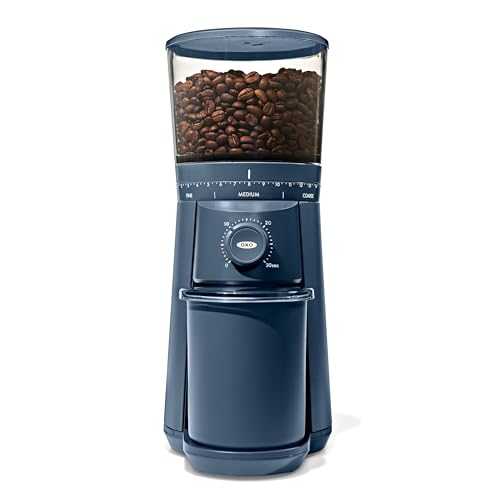
Top pickBest for larger or more demanding setups where extra capacity matters
1. OXO Brew Conical Burr Electric Coffee Bean Grinder – 12 Oz Storm
OXO Brew Conical Burr Electric Coffee Bean Grinder – 12 Oz Storm is listed as a burr coffee grinder. Listing details include: 12 Oz; Storm Blue. Check price on Amazon for current pricing (premium tier).
Good for: larger or more demanding setups where extra capacity matters. Watch out: Check grind range, hopper size and cleaning access.
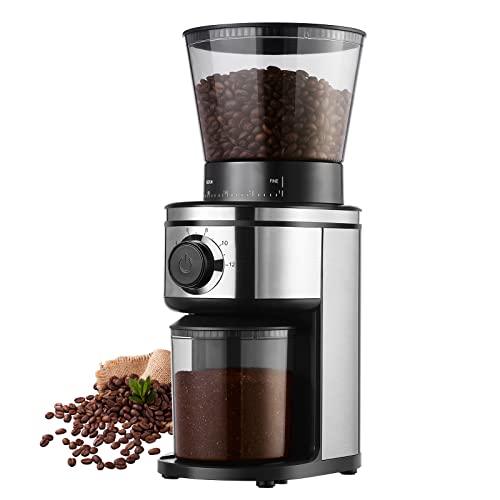
Best for fresh, even coffee grounds
2. Burr Coffee Grinder Electric Conical Coffee Bean Grinder With 30
Burr Coffee Grinder Electric Conical Coffee Bean Grinder With 30 is listed as a burr coffee grinder. Check price on Amazon for current pricing (mid-range tier).
Good for: fresh, even coffee grounds. Watch out: Check grind range, hopper size and cleaning access.
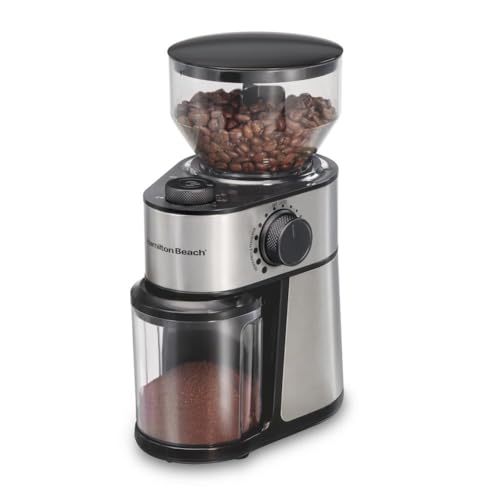
Best for keeping costs low while covering the basics
3. Hamilton Beach Electric Burr Coffee Grinder with Large 16 oz.
Hamilton Beach Electric Burr Coffee Grinder with Large 16 oz. is listed as a burr coffee grinder. Check price on Amazon for current pricing (budget tier).
Good for: keeping costs low while covering the basics. Watch out: Check grind range, hopper size and cleaning access.


Best for larger or more demanding setups where extra capacity matters
4. Manual Coffee Grinder with 7-Blade Titanium Coated Burr 3
Manual Coffee Grinder with 7-Blade Titanium Coated Burr 3 is listed as a burr coffee grinder. Listing details include: 3 Bearings Shaft for High Precision; 25g Capacity. Check price on Amazon for current pricing (premium tier).
Good for: larger or more demanding setups where extra capacity matters. Watch out: Check grind range, hopper size and cleaning access.
Best for fresh, even coffee grounds
5. Electric Burr Coffee Grinder Professional Flat Burr Grinder
Electric Burr Coffee Grinder Professional Flat Burr Grinder is listed as a burr coffee grinder. Check price on Amazon for current pricing (mid-range tier).
Good for: fresh, even coffee grounds. Watch out: Check grind range, hopper size and cleaning access.
Best for fresh, even coffee grounds
6. Conical Coffee Bean Grinder 60 Settings Anti-Static Black
Conical Coffee Bean Grinder 60 Settings Anti-Static Black is listed as a burr coffee grinder. Listing details include: 60 Settings; Anti-Static; Black. Check price on Amazon for current pricing (mid-range tier).
Good for: fresh, even coffee grounds. Watch out: Check grind range, hopper size and cleaning access.
Best for fresh, even coffee grounds
7. Chefman Conical Burr Coffee Grinder 40 Grind Settings Anti-Static
Chefman Conical Burr Coffee Grinder 40 Grind Settings Anti-Static is listed as a burr coffee grinder. Listing details include: 40 Grind Settings; Anti-Static; Black. Check price on Amazon for current pricing (mid-range tier).
Good for: fresh, even coffee grounds. Watch out: Check grind range, hopper size and cleaning access.

Best for fresh, even coffee grounds
8. Manual Coffee Grinder 72-Click Conical Burr Espresso Grinder
Manual Coffee Grinder 72-Click Conical Burr Espresso Grinder is listed as a burr coffee grinder. Listing details include: 72-Click Conical Burr Espresso Grinder. Check price on Amazon for current pricing (mid-range tier).
Good for: fresh, even coffee grounds. Watch out: Check grind range, hopper size and cleaning access.

Best for fresh, even coffee grounds
9. Electric Burr Coffee Grinder 18 Settings for 2-12 Cups with Brush
Electric Burr Coffee Grinder 18 Settings for 2-12 Cups with Brush is listed as a burr coffee grinder. Listing details include: 18 Settings for 2-12 Cups; with Brush. Check price on Amazon for current pricing (mid-range tier).
Good for: fresh, even coffee grounds. Watch out: Check grind range, hopper size and cleaning access.
Best for fresh, even coffee grounds
10. Coffee Grinder Electric Coffee Beans Grinder for Home Use with 30
Coffee Grinder Electric Coffee Beans Grinder for Home Use with 30 is listed as a burr coffee grinder. Listing details include: Coffee Beans Grinder for Home Use with 30 Grind Settings; 12 Cups Capacity for Espre. Check price on Amazon for current pricing (mid-range tier).
Good for: fresh, even coffee grounds. Watch out: Check grind range, hopper size and cleaning access.
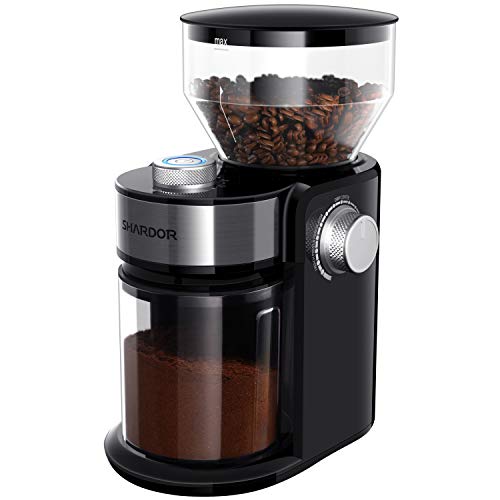
Best for keeping costs low while covering the basics
11. SHARDOR Electric Burr Coffee Grinder 2.0 Automatic Coffee Bean
SHARDOR Electric Burr Coffee Grinder 2.0 Automatic Coffee Bean is listed as a burr coffee grinder. Listing details include: Automatic Coffee Bean Grinder for Home Use; Adjustable Burr Mill wit. Check price on Amazon for current pricing (budget tier).
Good for: keeping costs low while covering the basics. Watch out: Check grind range, hopper size and cleaning access.

Best for keeping costs low while covering the basics
12. SHARDOR Burr Coffee Bean Grinder 32 Settings 40-Second Timer Black
SHARDOR Burr Coffee Bean Grinder 32 Settings 40-Second Timer Black is listed as a burr coffee grinder. Listing details include: 32 Settings; 40-Second Timer; Black. Check price on Amazon for current pricing (budget tier).
Good for: keeping costs low while covering the basics. Watch out: Check grind range, hopper size and cleaning access.

Price and Rating Comparison
The table below lists the same products by tier so you can compare them at a glance.
| Product | Price | Rating | Price tier |
|---|---|---|---|
| Hamilton Beach Electric Burr Coffee Grinder with Large 16 oz. | Check price on Amazon | — | Budget |
| SHARDOR Electric Burr Coffee Grinder 2.0 Automatic Coffee Bean | Check price on Amazon | — | Budget |
| SHARDOR Burr Coffee Bean Grinder 32 Settings 40-Second Timer Black | Check price on Amazon | — | Budget |
| Electric Burr Coffee Grinder Professional Flat Burr Grinder | Check price on Amazon | — | Mid-range |
| Electric Burr Coffee Grinder 18 Settings for 2-12 Cups with Brush | Check price on Amazon | — | Mid-range |
| Coffee Grinder Electric Coffee Beans Grinder for Home Use with 30 | Check price on Amazon | — | Mid-range |
| Chefman Conical Burr Coffee Grinder 40 Grind Settings Anti-Static | Check price on Amazon | — | Mid-range |
| Conical Coffee Bean Grinder 60 Settings Anti-Static Black | Check price on Amazon | — | Mid-range |
| Burr Coffee Grinder Electric Conical Coffee Bean Grinder With 30 | Check price on Amazon | — | Mid-range |
| Manual Coffee Grinder 72-Click Conical Burr Espresso Grinder | Check price on Amazon | — | Mid-range |
| Manual Coffee Grinder with 7-Blade Titanium Coated Burr 3 | Check price on Amazon | — | Premium |
| OXO Brew Conical Burr Electric Coffee Bean Grinder – 12 Oz Storm | Check price on Amazon | — | Premium |
What to Look For
| Feature | Why it matters |
|---|---|
| Burr type | Conical and flat burrs, in steel or other metal, differ in build |
| Grind settings | More steps help when you switch between brew methods |
| Hopper size | Sets how many beans you can load at once |
| Footprint | Counter space and cabinet height vary a lot |
| Cleaning | Removable burrs, brushes and washable parts save time |
Specs at a Glance
| Grinder | Type and burrs | Settings | Capacity |
|---|---|---|---|
| OXO Brew 12 Oz | Electric; 40mm stainless steel conical | 15 settings plus 43 micro-adjustments | 12 oz hopper |
| Cuisinart DBM-8P1 | Electric; stainless steel flat burrs; 500-watt motor | 18 positions; 4 to 18 cup selector | 8 oz hopper |
| SHARDOR CG836B | Electric; flat burr; 200-watt motor | 32 settings; timer | 6.5 x 5 x 9.7 in body |
| Hamilton Beach | Electric; burr type not stated | 18 settings; 2 to 14 cup selector | 16 oz hopper per title |
| OXO Brew Compact | Electric; stainless steel conical | 15 settings plus 29 micro-adjustments | 50 g hopper; 11 in tall |
| TIMEMORE C3S Pro | Manual; S2C stainless steel conical | Adjustable dial | 6.3 x 2 x 6.22 in; 430 g |
The 6 Best Burr Coffee Grinders

Top pickBest for a daily countertop grinder
1. OXO Brew Conical Burr Electric Coffee Bean Grinder, 12 Oz
An electric grinder with 40mm stainless steel conical burrs, a one-touch start that remembers your last setting, a 12 ounce hopper with a UV-blocking tint and a two-year warranty. The page lists 15 settings with 43 micro-adjustments in the bullets and 43 grind settings in the details.
Suits: a daily countertop grinder. Strengths: a large hopper and a remembered setting. Weaknesses: the listing gives two different setting counts. Skip it if you grind only a cup at a time.
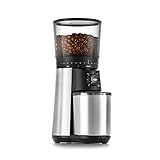
View OXO Brew Conical Burr Electric Coffee Bean Grinder – 12 Oz, Silver on Amazon

Best for drip and French press households
2. Cuisinart Supreme Grind Electric Burr Coffee Grinder
A stainless steel flat burr mill with a 500-watt motor, an 18-position grind selector, a 4 to 18 cup amount slider, an 8 ounce hopper and automatic shutoff. A cleaning brush, scoop and cord storage are included, with a limited 18-month warranty.
Suits: drip and French press households. Strengths: a cup selector and automatic shutoff. Weaknesses: a smaller hopper than some. Skip it if you want a micro-adjust dial.

View Cuisinart Supreme Grind Electric Burr Coffee Grinder, 18 Settings, DBM-8P1 on Amazon
Best for small counters and dorms
3. SHARDOR Burr Coffee Bean Grinder, 32 Settings
A compact plastic and stainless steel grinder measuring 6.5 by 5 by 9.7 inches with a flat burr, a 200-watt motor, 32 settings and a 40-second timer. It includes a brush, hopper and removable grounds container, with up to 120 seconds of continuous operation before cooldown.
Suits: small counters and dorms. Strengths: 32 settings and a timer. Weaknesses: plastic housing and a new listing with few customer comments. Skip it if you want an all-metal body.
View SHARDOR Burr Coffee Bean Grinder, 32 Settings, 40-Second Timer, Black on Amazon
Best for a big hopper and easy pouring
4. Hamilton Beach Electric Burr Coffee Grinder
An 18 setting electric grinder with a 2 to 14 cup selector, a large hopper with a lid, a snap-on lid on the grounds container and a top burr that removes for cleaning. The containers and lids are dishwasher safe, and a brush is included. The page does not state the burr material.
Suits: a big hopper and easy pouring. Strengths: a removable top burr and washable parts. Weaknesses: no burr details on the page. Skip it if you want to know the burr metal.
View Hamilton Beach Electric Burr Coffee Grinder with Large 16 oz. Hopper on Amazon

Best for small kitchens
5. OXO Brew Compact Conical Burr Electric Coffee Bean Grinder
A slim electric grinder, 11 inches tall and 4 inches wide, with stainless steel conical burrs, 15 settings with 29 micro-adjustments, a 50 gram hopper and a grounds container with a pouring spout. Its chuteless design keeps the grinder easy to reach for cleaning.
Suits: small kitchens. Strengths: a narrow body and a pour spout. Weaknesses: a 50 gram hopper holds little. Skip it if you brew large batches.

View OXO Brew Compact Conical Burr Electric Coffee Bean Grinder – 50g Capacity on Amazon

Best for cordless, portable grinding
6. TIMEMORE Chestnut C3S Pro Manual Coffee Grinder
A hand grinder with a full aluminum alloy body, an S2C stainless steel conical burr, a foldable handle and an adjustable grind setting. It measures 6.3 by 2 by 6.22 inches and weighs 430 grams, so it suits travel, camping or a desk.
Suits: cordless, portable grinding. Strengths: a metal body and no outlet needed. Weaknesses: you do the cranking. Skip it if you want one-touch grinding.

Care and Setup
- Brush out the burrs and chamber regularly with the included tool.
- Keep water away from electric bodies; wash only parts the listing calls washable.
- Start at a middle setting and adjust one step at a time.
- Load only the beans you plan to use soon.
Mistakes to Avoid
- Grinding oily or flavored beans without cleaning afterward.
- Skipping the cooldown time some models list.
- Choosing a large hopper for a one-cup routine.
- Assuming every setting count means the same range.
Flat and Conical Burrs Compared
Burr shape is one of the first technical choices. Conical burrs have a cone-shaped inner burr that turns inside a ring, and the beans are pulled down and crushed along an angled path. Flat burrs are two ring-shaped discs that face each other, with beans ground between them. Both can produce a far more uniform grind than a blade, and both are used in home and commercial grinders.
People often say conical burrs are more forgiving, run slower and tend to produce a wider range of particle sizes, while flat burrs are associated with a more uniform particle size and a clearer cup. These are general tendencies, not guarantees, and results depend on burr size, material, alignment, motor speed and how the grinder is built. A well-made grinder of either design will outperform a poorly made one of the other.
Burr size matters. Larger burrs have more cutting surface, which can mean faster grinding at lower speed and less heat. Material matters too: hardened steel burrs are common and stay sharp through a lot of use, while ceramic burrs are sometimes used in manual grinders and are described as resistant to rust but more brittle if dropped. Check the listing to see what the burr is made from and how large it is. If the listing does not state the burr type or material, that is a gap worth noting before you buy.
Matching Grind Range to Your Brew Method
Different brewing methods need different particle sizes. Espresso needs a very fine, precise grind, because small changes alter extraction and flow. Pour-over and drip sit in the medium range, French press and cold brew need coarse grounds. A grinder that offers many settings across that range gives you flexibility, but what counts is how the steps are spaced and where the range begins and ends.
The number of settings alone can mislead. A grinder with a large number of steps may spread them over a coarse range and offer little at the fine end. Micro-adjustments or stepless adjustment give finer control where you need it. If you plan to make espresso, check that the listing names espresso as a supported use and that the fine end of the range is described. Many entry-level electric grinders are better suited to drip, pour-over and press, and the listing wording will tell you.
Consistency from cup to cup depends on repeatable settings. Numbered dials let you note what works for a bean and return to it. Grind adjustment also changes as burrs wear, as beans differ by roast and as humidity changes, so expect to adjust. A practical approach is to start in the middle of the range for your method, taste, then move one step at a time. Keep notes on beans and settings so you can find the right grind faster next time.
Static, Retention and Mess
Every grinder leaves a little coffee behind, and how much matters if you switch beans or like fresh grounds. Retention is the amount of ground coffee that stays inside the grinder after you finish. A grinder with high retention can push old grounds into your next dose, which matters for flavor and for dose accuracy.
Static makes grounds cling to the container and spray over the counter. Plastic catch containers tend to be worse for static than metal or glass. Some people lightly mist the beans with a few drops of water before grinding to reduce it, a technique usually called the Ross droplet technique. If you try this, use very small amounts and follow the guidance for your grinder, as moisture inside a burr chamber is not good for every model. A bit of tapping and a small brush help clear what remains.
Look at the grounds path. A chuteless design lets grounds drop straight into the container and often reduces buildup, while a long chute can hold grounds. Check whether the catch container is sealed or open, how it pours, and whether you can remove it easily. A grinder that is easy to empty and brush out will be used more consistently. Consider where you will grind, too: static and fine dust are more noticeable in a dry room.
Cleaning and Burr Maintenance
Coffee oils turn rancid over time, and old grounds can add a stale taste to fresh beans. A routine matters more than an elaborate method. After each bag of beans, or more often if you grind oily or flavored beans, empty the hopper, run the grinder until the chamber is clear, and brush out the burrs and chute.
Many grinders let you remove the top burr for a deeper clean. Follow the manual, unplug the unit and note the burr position before removal, since the setting may need to be recalibrated afterward. Use the supplied brush or a soft dry brush. Avoid water on motorised parts and on burrs unless the manual says the part is washable, and dry thoroughly if any part has been washed. Some people use grinder-cleaning tablets, but only use them if the manufacturer says they are suitable for your grinder.
Burrs dull with use. Signs that the burrs are wearing include a need to move to finer settings to get the same extraction, uneven grounds, more fines, longer grind times and a louder or labored motor. Check whether replacement burrs are available for the model and whether you can fit them yourself. Keep the grinder away from heat and steam, and avoid grinding things the maker does not allow, such as spices or very hard items. Occasional foreign matter such as small stones in beans can damage burrs, so watch what goes in the hopper.
Electric or Manual: Who Each Type Suits
Electric grinders are fast and need no effort, which suits households that make several cups at a time or grind first thing in the morning. They take counter space, create noise and rely on a motor that may eventually wear. A hopper holds beans for repeated grinding, though beans left in the hopper for days lose freshness faster, so load what you will use soon.
Manual grinders are compact, quiet and portable, with no outlet needed. They suit travel, camping, small kitchens and people who make one or two cups. The trade-off is effort and time: finer settings take more turns, and grinding enough for a large batch can be tiring. Build quality varies, so look for a stable handle, a firm burr mounting and a clear adjustment mechanism. A hand grinder with a well-aligned burr can produce excellent results, but it is a deliberate ritual.
Capacity, speed and noise should match your habits. If you grind for several people, a manual model may get tedious. If you grind one cup before work in a shared home, a quiet manual grinder may be more considerate. Think also about repair and parts: a simple manual mechanism is easy to clean and to fix, while an electric model has a motor and switches that can fail. Warranty terms give a hint about what the maker expects. Choose the type you will actually use daily.
A Short Glossary for Grinder Shoppers
Grinder pages use a lot of jargon. Understanding a few terms makes it much easier to compare models without getting lost in marketing language.
- Burr: the pair of toothed surfaces that crush beans to a more uniform size than blades do.
- Conical and flat burrs: two shapes of burr set, each with its own fans and trade-offs in feel and cleanup.
- Grind setting: the numbered steps or stepless dial that control particle size.
- Retention: grounds that stay inside the machine after grinding, which can mix with the next dose.
- Dosing: measuring beans by weight or by timer before or during grinding.
- Static: the cling of fine grounds to the container, which can make a mess.
When a listing uses unfamiliar words, the maker manual or product page usually explains them.
Electric or Manual: Choosing for Your Routine
Electric grinders do the work for you and suit busy mornings or households that make several cups. Manual grinders are compact, quiet and good for travel, but they ask for some effort on every dose. If you brew one cup at a time and like a slow ritual, a hand grinder can be a pleasure. If you make a full pot or espresso for guests, an electric model saves time.
| Factor | Electric | Manual |
|---|---|---|
| Effort | Push a button | Turn a handle |
| Noise | Louder | Quieter |
| Counter space | Needs a permanent spot | Stores in a cupboard |
| Portability | Limited | Easy to pack |
Keeping a Grinder Clean and Consistent
Coffee oils and fine dust build up over time and can affect taste. Brush out the chamber regularly, wipe the hopper, and follow the manual before removing burrs. Avoid washing parts in water unless the manufacturer says it is safe. A tidy grinder gives more consistent results and tends to last longer.
Matching Grind Range to How You Brew
A grinder is only useful if it covers the grind sizes your brewing method needs. Espresso asks for fine and precise adjustments, pour-over sits in the middle, and French press and cold brew use coarse grounds. Some grinders handle the whole range, while others excel at one end. Check the product details for the type of adjustment, stepped or stepless, and whether the manufacturer describes which brewing methods it supports.
- Espresso: look for fine steps and a stable setting.
- Pour-over and drip: a mid-range with consistent particles.
- French press: a dependable coarse setting without too much fine dust.
- Several methods: a wide dial range and easy resetting.
It also helps to think about hopper size and how much coffee you grind at once. A small hopper is fine for one or two cups, while a larger one suits a family. Fresh beans, stored away from light and heat, make a bigger difference to flavor than most settings do.
Burr Coffee Grinder FAQ
Are manual grinders worth considering?
They need no outlet and take little space, so they suit travel. They take more effort per cup than the electric models here.
Can one grinder handle espresso and French press?
Makers list ranges from fine to coarse for most of these. Check each listing for the brew methods it names.
Is a burr grinder better than a blade grinder?
Burr grinders crush beans between two surfaces and generally give a more even particle size than a spinning blade. Blade grinders chop unevenly, and the results are harder to repeat.
How often should I clean my grinder?
Brush out the grounds regularly and do a deeper clean when you finish a bag, or more often with oily or flavored beans. Follow the manual for removing the burr and for what can be washed.
Can a burr grinder make espresso?
Some can, but only if the grind range reaches the fine end with enough precision. Check that the listing names espresso and look for micro-adjustments or stepless control.
Should I keep beans in the hopper?
It is better to load only what you will use in a short time. Beans stored in a clear hopper are exposed to air and light, and they stale faster than beans kept in an airtight container.
Why are my grounds uneven?
Uneven grounds can come from worn burrs, a misaligned burr, built-up residue, or a setting at the extreme end of the range. Clean the grinder, check the burr and adjust the setting.
Do I need to season a new burr grinder?
Some people grind a small amount of cheap beans first to clear manufacturing residue from the burrs. Check the manual to see if the maker recommends it.
How long do burrs last?
It depends on the material, the amount of coffee ground and the quality of the beans. Look for signs of wear such as needing a finer setting or a rougher grind, and check whether replacement burrs are sold.
Matching These Six Grinders to Real Households
The six grinders above divide naturally by how a household actually makes coffee, and reading them in groups is more useful than ranking them in a single line. The full-size OXO Brew and the Cuisinart Supreme Grind are countertop appliances for households that brew every day in quantity: both carry hoppers measured in ounces rather than grams, both aim to remember or repeat your routine, and they differ mainly in how you adjust them — the OXO around its dial of settings with micro-adjustments and a one-touch start that remembers the last setting, the Cuisinart around an 18-position selector paired with a cup-amount slider and automatic shutoff. A drip or French press household that values walking up, pressing a button and getting a familiar dose will be served by either; a household that likes to fine-tune between neighboring settings will lean toward the adjustment style that offers the finer steps.
The SHARDOR and the Hamilton Beach speak to a different set of priorities. The SHARDOR’s compact footprint and timer-based dosing suit small counters, dorms and single-person kitchens where the grinder must earn a tight space and where grinding for one or two cups is the norm. The Hamilton Beach, with its large hopper, cup selector and dishwasher-safe containers, suits a household that brews bigger amounts and values easy cleanup and easy pouring over detailed specification sheets — though, as the review above notes, its listing leaves the burr material unstated, which matters to shoppers who want to know exactly what is doing the grinding. The compact OXO narrows the full-size formula into a slim body for small kitchens, trading hopper capacity for a footprint that fits where the others cannot, and adding a pouring spout on the grounds container that suits careful, small-batch brewing. The TIMEMORE stands apart entirely: it is the only manual grinder here, the only one that travels, works at a desk or a campsite and never needs an outlet, and the only one whose speed is your own arm.
A useful way to choose is to count your household’s grinding occasions rather than its cups. A grinder used twice a day, every day, justifies countertop size, a remembered setting and a hopper you refill occasionally rather than daily. A grinder used a few times a week, or by one person, rewards compactness and simple dosing. A grinder that must serve two brew methods — say, a coarse press pot on weekends and a finer drip or pour-over on weekdays — rewards a wide, easily changed adjustment range and a design that does not punish switching back and forth. And a household adding a second grinder, for travel or for a partner’s different taste, often finds the manual option fills the gap better than a second electric appliance competing for counter space.
Dialing In: A Method That Works on Any of These
Whatever grinder you choose, the first week decides whether it feels like an upgrade. Start with one coffee, one brew method and the middle of the grinder’s range, and change only the grind setting between brews, tasting each result before moving again. Coffee that tastes sour and thin usually wants a finer grind or a longer brew; coffee that tastes bitter, dry and hollow usually wants coarser or shorter. Move in small steps — the micro-adjustments on the OXO models and the closely spaced settings on the SHARDOR exist for exactly this — and write the setting down once a brew tastes right, because a remembered setting is only useful if you know which setting is yours. This unglamorous routine is the real difference between owning a burr grinder and benefiting from one: the machine provides repeatable particles, but the calibration to your beans, water and method is yours to make.
Expect the calibration to move. Beans change as they age after roasting, a new bag from a different origin behaves differently at the same setting, and seasonal humidity quietly alters how grounds flow and extract. Experienced home brewers treat the dial as a living adjustment, nudged a step at a time, rather than a number set once and defended forever. Dose consistency helps isolate these changes: weighing beans before grinding, even occasionally, shows whether a disappointing cup came from the grind or from an accidental change in how much coffee you used. Single-dosing — weighing beans for each brew and grinding only those — also keeps the hopper question simple for households that switch coffees often, while hopper-fed routines suit households that work through one bag at a time and prize speed on weekday mornings.
What grind consistency actually changes in the cup
Burr grinders earn their place because uniform particles extract at similar rates. When grounds are a mixture of dust and chunks — the signature of a blade chopping beans — the dust over-extracts and turns bitter while the chunks under-extract and stay sour, and the cup carries both faults at once. Even a modest burr grinder narrows that spread dramatically, which is why the improvement is usually obvious in the first cup. Fines still exist in any grind, and a small amount is normal; what you are watching for is a grind that looks and feels even between your fingers, without a gritty layer of powder dominating the container. If your brews taste muddy despite careful dialing in, check the basics first — fresh beans, a clean grinder, water that tastes good on its own — before concluding the burrs are at fault, because grind quality is only one of several variables that meet in the cup.
Daily Workflow: Hoppers, Dosing and Mess
The difference between a grinder you love and one you tolerate is usually workflow, not grind quality. Hopper size sets your refilling rhythm: the ounce-scale hoppers on the full-size OXO, the Cuisinart and the Hamilton Beach hold days of beans for most households, while the compact OXO’s small hopper and the TIMEMORE’s hand-fed chamber suit per-brew measuring. Beans stored in a hopper are convenient but exposed to air and light each day; the full-size OXO’s UV-blocking tinted hopper acknowledges that trade-off directly. Households that prize freshness above speed often keep beans in a sealed container and measure per brew regardless of hopper size, accepting a slower morning for a livelier cup. Neither approach is wrong; the grinder should be chosen to make your preferred approach easy rather than to force the other one.
Static and retention shape the daily experience in smaller ways. Dry, light-roast beans in a dry kitchen can cling to a grounds container and scatter on the counter; a single drop of water stirred through the beans before grinding — a technique many home brewers use — calms most of it. Retention, the small amount of ground coffee that stays inside the grinder between uses, matters most when you switch settings or coffees, because the first grams out are partly yesterday’s grind. Designs that simplify cleaning access, like the Hamilton Beach’s removable top burr and the compact OXO’s chuteless layout, reduce the effort of clearing that residue. When comparing models, weigh these daily frictions honestly: a grinder that is slightly slower but clean and predictable tends to be used happily for years, while a theoretically superior one that sprays grounds across the counter quietly falls out of the morning routine.
Cleaning and Care, Model by Model in Spirit
All burr grinders accumulate the same enemies: fine coffee dust packed around the burrs and stale oils coating the grind path. The routine that defeats them is regular and gentle — empty the container, brush the burr area and chute with the brush most of these models include, and wipe accessible surfaces with a dry or barely damp cloth. The dishwasher-safe containers and lids on the Hamilton Beach make its washable parts the easiest to keep fresh, while designs with removable burrs let you reach the surfaces where oils concentrate. Avoid washing burrs themselves with water unless the maker directs it, since burrs that are not dried perfectly can rust or carry moisture into the next grind. A grinder that suddenly produces uneven grounds or a stale taste is usually asking for this cleaning, not for replacement.
Frequency depends on how oily your beans are and how much you grind. Dark, oily roasts coat surfaces quickly and benefit from more frequent attention; a household grinding daily should expect a brush-out weekly and a deeper clean on a regular rhythm, following the maker’s guidance for their model. Smell is a reliable guide: a grinder that smells of old coffee when empty is a grinder whose residue is flavoring every new batch. Keeping the grinder clean also protects the adjustment mechanism — packed fines around a dial or ring make settings drift and small adjustments feel vague, which undermines the very repeatability you bought a burr grinder to get. Treat cleaning as calibration, and the grinder’s tenth month will taste like its first.
When to suspect the burrs themselves
Burrs dull gradually, over a long span of ordinary use, so decline is easy to miss and easy to misattribute. The signs are a grind that grows less uniform at settings that once worked, brews that need ever-finer settings to taste balanced, and an increase in dust relative to distinct particles. Before concluding the burrs are worn, rule out the cheaper explanations: a thorough cleaning, a check that the burr assembly is seated and locked as the maker intends after cleaning, and a test with fresh beans. A grinder reassembled slightly askew after cleaning mimics worn burrs convincingly. If careful cleaning and correct assembly do not restore the grind, consult the maker’s guidance on burr replacement or service for your model rather than improvising with parts of uncertain fit.
Electric Convenience Versus Manual Control
The electric-versus-manual question in this lineup is embodied by five appliances against the TIMEMORE, and the honest answer is that they solve different problems. Electric grinders win on speed, volume and effortlessness: a household brewing a full pot for several people, or grinding while doing three other morning tasks, will not trade the one-touch routine for hand cranking. Manual grinding wins on silence, size, independence from outlets and a tactile control that many enthusiasts genuinely enjoy — the morning ritual of it is a feature, not a compromise, for its devotees. It also produces its results without motor heat or noise, which matters in small homes with sleeping children or thin walls. The foldable handle and metal body of the TIMEMORE in this list are aimed squarely at that portable, durable niche.
Households do not have to choose once for all. A common and satisfying arrangement is an electric grinder as the household’s workhorse and a manual grinder for travel, for the office, or for a second coffee kept separate from the house supply. What matters is matching the tool to the occasion rather than forcing one grinder to be everything: the camper who buys a countertop appliance and the commuter who hand-grinds for a crowd have both mismatched in opposite directions. Read the six reviews above with your occasions listed beside them — weekday pots, weekend methods, travel, desk — and the right assignment of grinders to occasions usually becomes obvious.
More Questions From Shoppers
Which of these suits a household that brews both drip and French press?
Both methods live in the medium-to-coarse territory where all five electric models here are comfortable, so the deciding factors become adjustment ease and dose repeatability. The Cuisinart was described above as suiting drip and French press households, with its cup selector supporting batch changes; the full-size OXO’s remembered setting suits a household that returns to the same drip routine daily and visits the press on weekends.
I have very little counter space. Which direction should I look?
Start with the models designed around footprint: the compact OXO, built slim for small kitchens, and the SHARDOR, described as compact and suited to small counters and dorms. Measure your intended spot, including the height clearance under cabinets and the room needed to lift a hopper lid, and compare those measurements with each model’s listed dimensions before ordering.
What should I check in the first week with a new grinder?
Check that the adjustment mechanism moves through its range smoothly, that the grind at a middle setting looks even, that dosing by the model’s timer, slider or remembered setting gives a consistent amount across several runs, and that you can open, brush out and reassemble the grind path without a struggle. A grinder that passes those four checks in week one is very likely to serve you well.
Is it worth keeping beans in the hopper?
It is worth it if your household drinks one coffee steadily and values a fast routine; the hopper exists for that convenience. If you rotate coffees, brew infrequently, or keep beans for a long time, storing beans sealed and measuring per brew protects flavor better. Many owners compromise: a few days’ worth in the hopper, the rest of the bag sealed away from light and air.
How to Read Grinder Listings Without Being Misled
Grinder listings reward a skeptical reader, and this very list contains the lesson: the full-size OXO’s page, as noted in its review, gives two different counts for its settings in different places. Setting counts are the most marketing-sensitive number on any grinder, because manufacturers count differently — some count only the marked steps, others include the micro-adjustments between them, and the two totals describe the same dial. What matters for your brewing is not the headline count but whether the steps are fine enough, in the range you actually use, to move a brew from almost-right to right. A drip and press household may never need very fine steps; a household that brews pour-over or moka, where small changes show clearly in the cup, benefits from micro-adjustment. Read counts as a rough map of the adjustment style, then look for the details that predict daily satisfaction: hopper and container design, how the burr comes out for cleaning, whether dosing is by time, by cup selector or by remembered setting, and what the maker promises in its warranty.
Power figures deserve the same calm reading. A motor’s wattage, where a listing states it, tells you something about the motor’s size but very little about grind quality, which lives in the burrs, their alignment and the consistency of the feed. A compact grinder with modest power that is used within its intended batch sizes will out-brew a powerful one asked to grind beyond its design. Duty guidance — such as the continuous-operation limit noted for the SHARDOR above — is the more practical number: it tells you how the maker expects the grinder to be used, in what batch rhythm, and respecting it protects both the motor and the grind. When a listing is silent on a detail you care about, as the Hamilton Beach page is on burr material, treat the silence itself as information and decide whether that detail is a preference or a requirement for you.
A first-month routine for any new grinder
In the first month, build three habits and the grinder will repay them for years. First, keep a small note of your working settings for each brew method and coffee, on paper near the grinder or in your phone; memory is unreliable across a change of beans. Second, brush the grind path on a fixed day each week, so cleaning is a rhythm rather than a response to stale flavor. Third, notice the sounds and smells of normal operation while the grinder is new — the even whir of beans feeding, the clean smell of fresh grounds — because changes in either are your earliest warning of packed fines, a foreign object among the beans, or a burr assembly that needs reseating. Owners who know what their grinder is like when healthy diagnose problems in seconds; owners who never noticed must guess. The first month is when that knowledge is free.
Grinding for guests and larger gatherings
Occasions that demand coffee for a crowd test a grinder differently from weekday mornings. Batch follows batch, the motor works in longer runs, and the temptation is to fill the container to its brim and rush. Grinding in the model’s intended rhythm — respecting any continuous-use guidance, letting the grounds container be emptied rather than packed — keeps the grind even from the first pot to the last. Grind as close to brewing as the gathering allows, in the order the pots will be made, and keep the setting unchanged through the event unless a cup tells you otherwise; consistency across a crowd is kinder than chasing perfection pot by pot. This is also where a manual grinder quietly leaves the conversation and the large-hopper electrics in this list earn their counters.
Whichever model you choose, remember what the purchase actually is: not a promise of perfect coffee, but a repeatable starting point for every cup. The grinder’s job is to remove randomness from one variable so that your attention can go to the others — the beans, the water, the brew itself. Choose the model whose size, dosing style and cleaning routine fit the kitchen and the mornings it will live in, dial it in patiently over the first week, keep it clean, and it will quietly do that job for a long time. That fit, far more than any single specification, is what separates the grinders people recommend from the ones they replace.
Noise, mornings and household peace
One specification rarely listed decides more morning happiness than most: noise. Electric burr grinders are brief but assertive, and in a small home at an early hour that burst of sound reaches every room. If your household keeps staggered hours, consider where the grinder will live — a counter away from bedroom walls, a surface that does not amplify vibration — and whether the manual option in this list might take the earliest shift while the house sleeps. Grinding the night before is the common compromise, and while freshly ground coffee is the ideal, a household that sleeps is worth more than the small difference in the cup. Choose with the whole household in mind and the grinder becomes part of the morning’s peace rather than its first argument.
Keeping a second coffee in the house
Many households keep two coffees — a daily blend and a decaf, or a house favorite and an occasional single origin — and the grinder arrangement decides whether that pleasure stays simple. Working through one hopper at a time suits households that finish a bag before opening the next. Single-dosing from sealed containers suits households that alternate cup by cup, at the cost of a slower routine. A manual grinder dedicated to the second coffee is the third path, and it is why the TIMEMORE in this list often makes sense even in a kitchen that already owns an electric model: it keeps the second coffee’s grind separate, travels when asked, and asks for no counter space of its own between uses. Decide which pattern matches your household’s actual drinking, and the equipment question answers itself.
The Short Version
For a large hopper, the OXO 12 Oz. For a cup selector, the Cuisinart. For 32 settings on a small footprint, the SHARDOR. For easy pouring, the Hamilton Beach. For a slim body, the OXO Compact. For travel, the TIMEMORE.
Related Guides
- 6 Best French Presses: Glass and Steel Coffee Presses (2026)
- 6 Best Drip Coffee Makers: Carafe Size and Brew Style (2026)
- 6 Best Dual Boiler Espresso Machines: Brew and Steam (2026)
- 6 Best Stovetop Tea Kettles: Whistling Steel Kettles (2026)