A centrifugal juicer shreds fruit and vegetables against a fast-spinning blade and flings the pulp outward to separate the juice. It is the quickest style of juicer and usually has a wide feed chute, so you can drop in whole apples with little cutting. It is often the first juicer people buy. The main trade-offs are speed against yield and noise against convenience, and most buyers accept those for a quick glass of juice on a busy morning.
The six juicers below suit a typical home kitchen, from simple budget-friendly machines to higher-end models with more control. We have not used these products ourselves, so confirm the power, chute size and what is included on the current listing before you buy. Centrifugal machines are loud and best for firm produce. They suit apples, carrots, cucumbers and citrus well, so think about which produce you reach for most.
As an Amazon Associate we earn from qualifying purchases. Links below are affiliate links, and they do not change the product information we give.
What to Look For
| Feature | Why it matters |
|---|---|
| Feed chute | A wide chute cuts prep time |
| Speed settings | Lower speeds suit soft fruit; higher speeds suit hard produce |
| Pulp container | A larger bin means fewer stops during a session |
| Parts | Fewer pieces make cleanup faster |
| Noise | Spinning blades are loud, so consider your home |
In this guide
Specs at a Glance
| Juicer | Type | Chute | Notes |
|---|---|---|---|
| Breville Juice Fountain Plus | Centrifugal | Wide | Stainless steel body |
| Hamilton Beach Big Mouth Pro | Centrifugal | Extra wide | Whole fruit feeding |
| Cuisinart CJE-1000 | Centrifugal | Wide | Variable speed dial |
| Oster Self-Cleaning Juice Extractor | Centrifugal | Wide | Self-cleaning feature |
| Mueller Austria Ultra Juicer | Centrifugal | Wide | Two speeds |
| Breville Juice Fountain Compact | Centrifugal | Smaller | Compact footprint |
The 6 Best Centrifugal Juicers for the Home Kitchen
Top pickBest for frequent juicers
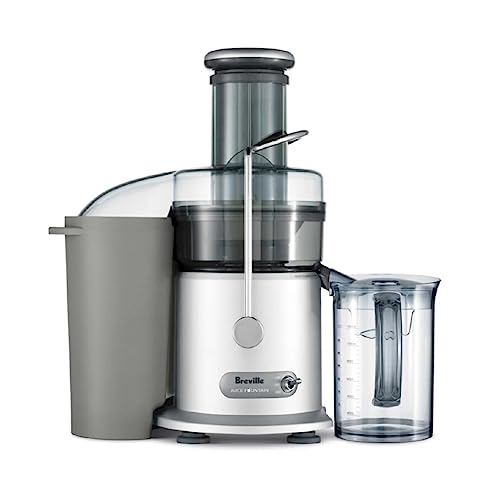
1. Breville Juice Fountain Plus
A stainless steel centrifugal juicer from a brand that specializes in kitchen appliances, with a wide chute and a large pulp bin.
Suits: frequent juicers. Strengths: a solid, well-known machine. Weaknesses: loud and large. Skip it if you have little counter space.
Best for quick prep
2. Hamilton Beach Big Mouth Pro Juice Extractor
A juicer with an extra-wide chute, designed to take whole fruits and vegetables with little or no chopping.
Suits: quick prep. Strengths: a big feed chute. Weaknesses: a plastic build. Skip it if you want premium materials.
View Hamilton Beach Big Mouth Pro on Amazon
Best for people who want control
3. Cuisinart CJE-1000 Die-Cast Juice Extractor
A juicer with a die-cast body and a speed dial that lets you adjust for soft or hard produce.
Suits: people who want control. Strengths: variable speed. Weaknesses: bulky. Skip it if you want a small unit.
View Cuisinart CJE-1000 Juice Extractor on Amazon
Best for busy mornings
4. Oster Self-Cleaning Juice Extractor
A centrifugal juicer with a built-in rinse feature that is meant to cut down on cleanup after a session.
Suits: busy mornings. Strengths: simpler cleaning. Weaknesses: you still wash the parts. Skip it if you prefer a metal build.
View Oster Self-Cleaning Juice Extractor on Amazon
Best for beginners
5. Mueller Austria Ultra Juicer
A budget-friendly centrifugal juicer with two speeds and a wide chute, popular for people trying juicing for the first time.
Suits: beginners. Strengths: an easy start. Weaknesses: a simpler build. Skip it if you want a long-running brand.
View Mueller Austria Ultra Juicer on Amazon
Best for small kitchens
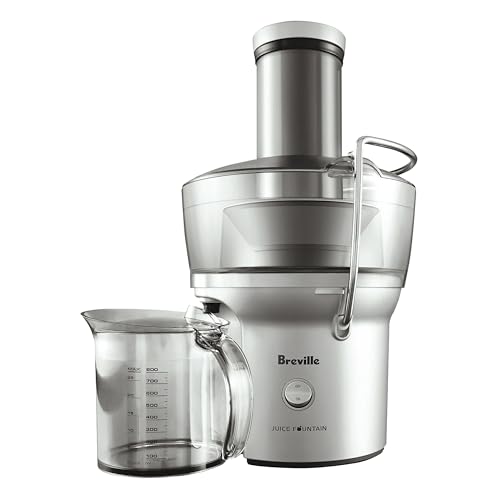
6. Breville Juice Fountain Compact
A smaller version of the Breville centrifugal line, made for kitchens with limited counter space.
Suits: small kitchens. Strengths: a smaller footprint. Weaknesses: a smaller pulp bin. Skip it if you juice for a family.
View Breville Juice Fountain Compact on Amazon
Care and Setup
- Rinse the parts straight after use before pulp dries.
- Cut very large items to fit the chute.
- Use a brush on the mesh filter basket.
- Empty the pulp bin often during long sessions.
- Wash and dry produce before juicing and cut out any bad spots.
- Drink the juice soon after making it for the best flavor.
Mistakes to Avoid
- Forcing produce down with too much pressure.
- Juicing leafy greens in a centrifugal machine and expecting a high yield.
- Letting pulp dry on the filter.
- Storing juice for too long before drinking.
- Juicing very soft fruit like ripe bananas, which clogs the filter.
- Running the machine without the pulp container fitted.
How Centrifugal Compares With Slow Juicers
Before you pick a model, it helps to be clear about what you are choosing between. A centrifugal machine works by speed: produce is shredded and spun so juice is thrown through a mesh. A slow, or masticating, juicer presses and squeezes at low speed. The practical differences are easy to describe without any lab figures. Centrifugal machines are faster, take larger pieces, cost less in most ranges and are quicker to set up. Slow juicers tend to be quieter, handle leafy greens and herbs better, and many people feel they leave drier pulp, though results depend on the machine and the produce.
That means the decision comes down to your habits. If you want a glass of apple, carrot or orange juice in a few minutes on a weekday and do not mind washing a few parts, centrifugal suits you. If you mostly want wheatgrass, kale or other leaves, or you plan to juice in bulk and store it, a slow machine may be the better fit.
- Choose centrifugal for speed, a wide chute and a lower entry cost.
- Choose slow if you juice mostly greens, want quieter operation and do not mind a narrow chute.
- Think about how often you will really juice, since a machine that is a hassle gets left in a cupboard.
Every juicer in this list is centrifugal, so the rest of the decision is about size, controls and cleanup.
Reading Chute Size, Motor Power and Speed Controls
A wide chute is the headline convenience on these machines, because it cuts prep. Whole apples and similar produce go in with little chopping, which saves time and encourages you to use the machine. A narrower chute is often paired with a smaller body and suits tight counters, but you will cut more. Read the listing for the opening size and compare it with the produce you buy, since a whole large apple or a thick carrot may or may not fit.
Motor wattage appears on most listings, but it is not a direct measure of juice quality. More power can help with hard produce and keep the blade from bogging down, yet design, blade, filter basket and how you feed the machine matter as well. Compare wattage only between machines of similar design, and check the manual for how long the motor can run continuously before it needs a rest.
Speed settings are useful if you juice a mix of soft and hard items. A lower speed suits soft fruit and leaves, and a higher one suits dense produce like carrots and apples, as the table in the post notes. A single-speed machine is simpler and perfectly fine if you only juice firm items. Other things to look for include a non-slip base, a locking arm that stops the machine running unless it is assembled correctly, and a spout that can be set to drip-free if you want that.
Preparing Produce for Better Results
What you put in decides what comes out, and a few habits improve results on any centrifugal machine. Start with firm, fresh produce. Crisp apples, carrots, cucumbers, celery and citrus segments tend to juice well. Very soft, mealy or overripe items yield less and can clog the filter. Wash everything and remove stems, pits and large seeds as the manual instructs. For citrus, peel off the thick outer rind unless the listing says the machine handles it, and leave some white pith if you do not like bitterness; it affects taste.
Alternate soft and hard items. Feeding a soft fruit followed by a carrot or apple helps push pulp through and keeps the basket from caking. If you are juicing leafy greens, wrap them around a firm item such as a carrot or bunch them into a tight ball so the blade can grab them. Expect lower yield, as the post already warns.
- Cut produce only as much as needed to fit the chute.
- Feed at a steady pace with the pusher, without forcing it.
- Empty the pulp bin and rinse the basket if you notice the flow slowing.
Some people run the pulp through a second time to extract a little more, which is optional and may reduce taste quality. Add foam to taste: a skimming spoon or a fine strainer can remove it if you dislike it.
Cleanup Routine and Long-Term Maintenance
Cleaning is the reason many juicers stop being used, so judge a machine by how it comes apart. Count the pieces that need washing, check whether they are dishwasher safe in the manual, and see whether a cleaning brush is included. Features like a self-cleaning rinse option, mentioned for one model in this list, can reduce effort, but you will still wash parts. Do the work soon after juicing, and use the brush on the mesh basket from the inside out so the pulp does not get pushed into the holes.
Over time, look after the parts that wear. Inspect the filter basket for bent or blocked holes, since a damaged basket can throw off balance and make the machine shake. Check the blade disc and the locking arm for cracks. Wipe the motor base with a damp cloth only, and keep it away from running water. Stains from carrots and beets can tint plastic parts, and a soak in warm water with a mild cleaner usually helps; check the manual before using stronger products.
Store the juicer with the lid off or loose so parts dry fully. Keep cords away from hot surfaces. Look at the warranty length and what it covers, and see whether replacement baskets and pusher parts are sold. If the machine vibrates strongly, smells of burning or struggles on soft produce, stop using it and consult the manual or support.
Questions to Ask Before You Buy
A few honest questions narrow the six options quickly. How often will you juice, and will you do it on rushed mornings or in longer weekend sessions? Machines that suit frequent use usually have larger pulp bins and sturdier bodies; those for occasional use can be simpler and smaller. How much counter and cabinet space can you spare? Check the dimensions on the listing, including height with the lid up, since some units will not fit under wall cabinets.
Who will use it? If several people juice, controls that are easy to understand and a lock that prevents accidents matter more than extra settings. Think about noise in your home, because the spinning basket is loud and early-morning use may bother others. Think about juice volume as well: a smaller bin and jug fill quickly if you are juicing for a family.
Budget tiers can be described in general terms. Lower-priced machines tend to be lighter, with more plastic and simpler controls. Mid-range and higher-priced ones often add metal bodies, speed dials and larger capacity, but you should still read recent feedback rather than assume. Finally, check what is included in the box, such as the jug, froth separator and brush, and how to contact the seller or maker if a part fails.
Centrifugal Juicer FAQ
Are centrifugal juicers good for greens?
They work better with firm produce. Leafy greens usually give more juice in a slow juicer.
Why are they so loud?
The blade spins at high speed. Noise is part of the design.
Is cleanup hard?
Most parts are removable. A rinse straight after use and a mesh brush keep it simple.
Do they heat the juice?
Some people worry about heat. The brief spin time is the reason these machines are fast.
Can I juice citrus in a centrifugal juicer?
Many people do, but check the manual, since some machines are meant for peeled citrus and others are not. Peel off the thick rind and bitter parts first. If you mainly juice oranges and lemons, a dedicated citrus juicer is often simpler.
Why is my juice foamy?
Fast spinning whips air into the juice, so foam is normal on centrifugal machines. Skim it off with a spoon or pour through a fine strainer if you prefer a smoother glass.
How long does juice keep after making it?
Fresh juice tastes best soon after it is made, and the post suggests drinking it quickly. If you store it, use a covered container in the fridge and treat it as perishable, discarding it if it smells or tastes off.
Can I put ice or frozen fruit through the machine?
Most manufacturers advise against it because it can strain the blade and motor. Check the manual, and use cold produce instead if you want a chilled drink.
Do I need to peel apples and carrots?
Usually not. Wash them well and trim any bad spots. Peel waxed or thick-skinned items if you prefer, and follow any guidance in the manual about which skins to remove.
What can I do with the leftover pulp?
Many people add it to soups, baking, compost or pet-safe uses where appropriate. Pulp spoils quickly, so use it the same day or refrigerate it, and avoid feeding pets anything that is not safe for them.
Why does my juicer shake or walk on the counter?
It may be unevenly loaded, the basket may be clogged or damaged, or the feet may be on a slick surface. Stop, empty it, check the basket and re-seat the parts. Use it on a flat, dry surface.
Which Produce Works Best in a Centrifugal Juicer
Centrifugal juicers shine with firm, watery produce. Apples, carrots, cucumbers, celery, pears and melon pieces tend to give a good yield, and the high speed handles them quickly. Soft fruit such as ripe peaches or bananas does not juice well and often clogs the screen or comes out as pulp. Leafy greens and herbs are harder, because the fast spinning does not squeeze them efficiently, though pairing them with a juicier item can help.
- Good candidates: apples, carrots, celery, cucumber, pineapple, watermelon, beets and pears.
- Tricky items: kale, spinach and herbs. Roll them up, alternate with firm produce, and expect a lower yield.
- Poor candidates: bananas, avocados and other soft fruits, which are better blended.
Choosing produce at peak ripeness improves flavor and yield, and fresh items generally juice better than limp ones. Rinse everything first, and cut pieces to fit the chute if it is narrow.
Understanding Yield, Foam and Pulp Dryness
Three results define how a juicer performs: how much juice you get from a given amount of produce, how foamy the juice is, and how dry the pulp comes out. Centrifugal machines usually produce more foam than slow juicers because the fast spinning incorporates air. Some models include a foam separator or a jug with a skimmer to help. If the pulp comes out wet, you may be leaving juice behind, and running the pulp through a second time can recover some of it.
Feeding speed matters too. Pushing produce down too quickly bogs down the motor and reduces yield. A steady, gentle push lets the basket extract more juice. Cutting hard items into smaller pieces can make the process smoother and reduce strain on the machine.
Noise, Counter Space and Kitchen Fit
Before you buy, think about where the machine will live. Centrifugal juicers are tall, often with a large feed chute, so check the height under your cabinets. The motor base takes up counter space, and the pulp container and jug need room, too. If you juice daily, keeping the machine on the counter makes you more likely to use it. If you plan to stow it, check its weight and whether the parts nest together.
Noise is a real consideration in shared homes or early mornings. These machines are loud when running, though usually only for a minute or two per batch. Placing a rubber mat or a folded towel under the base reduces vibration and some of the rattle.
Cost per Glass and Whether Juicing Saves Money
Juicing at home can be cheaper than buying bottled juice, but it depends on the produce. Fruit and vegetables bought in season, from a local market or in bulk, usually cost less per glass. A glass of juice also uses a surprising amount of produce, so expect to buy more than you would otherwise. Using the pulp in soups, muffins or compost reduces waste and improves value.
Factor in cleaning time and the lifespan of the machine. A juicer that is quick to clean is more likely to be used regularly, and that is where most of the value comes from.
Safety and Everyday Use Notes
Juicers are straightforward, but a few habits prevent accidents. Always use the pusher provided and never put fingers or utensils into the chute while the machine is running. Make sure the lid and safety lock are fully engaged before turning it on, since many models will not start otherwise. Unplug the machine before taking it apart or cleaning it.
Keep the base dry and away from the edge of the counter, and avoid overloading the basket with hard produce, which can cause the machine to shake. If it vibrates or sounds unusual, stop and check that the basket is seated correctly and that pulp has not built up unevenly. Alternating soft and firm produce spreads the load more evenly, and letting the motor spin to a stop before removing the lid is a good habit.
- Run the juicer for short batches rather than continuously if the manual recommends a duty cycle.
- Drink or refrigerate juice promptly, because it loses freshness quickly.
- Keep children away from the blade and the chute.
A Better Daily Juicing Session: Prep, Order and Pacing
Centrifugal juicers reward a prepared session and punish an improvised one, simply because everything happens quickly once the motor starts. Wash and cut all produce before switching the machine on, and arrange it in the order you will feed it through: softer items first, firmer items after, so the harder produce helps push the softer pulp through and the basket stays clearer for longer. Alternate a leafy or soft ingredient with a firm one when you are working through a mixed recipe. Feed the chute steadily rather than forcing the pusher down; pressing hard flexes produce around the blade instead of through it, which lowers yield and leaves wetter pulp. A calm, even pace takes seconds longer and produces a noticeably better glass.
Reading the Six Juicers in This Guide by Kitchen and Habit
The Breville Juice Fountain Plus is the balanced home choice, with a wide chute that reduces chopping and speeds that cover both soft fruit and hard vegetables for most households. The Hamilton Beach Big Mouth Pro is the value-minded wide-chute option for families who juice in volume and want straightforward assembly and cleaning. The Cuisinart CJE-1000 brings a heavier, die-cast feel and a large pitcher arrangement suited to batch juicing for several people at once. The Oster Self-Cleaning Juice Extractor speaks directly to the cleanup objection, rinsing its mesh during use and suiting drinkers who juice often but dislike scrubbing a basket. The Mueller Austria Ultra Juicer is the compact, budget-conscious route into centrifugal juicing for smaller kitchens and lighter use. The Breville Juice Fountain Compact keeps the wide-chute convenience in a smaller footprint, with an integrated pulp container that suits one or two glasses at a time. Choose by your true batch size: a large machine used for one small glass every day mostly adds washing, while a compact machine asked to juice for a family every morning will feel slow and cramped.
Foam, Yield and Freshness: Reading What Is in the Glass
Foam is normal in centrifugal juice because the process incorporates air, and it is not a defect. Let the glass settle briefly, skim if you prefer, and stir before drinking so the flavour is even from first sip to last. Yield questions deserve an honest comparison: weigh your produce for a week and note the juice you get, and you will learn which of your regular ingredients are generous and which are expensive flavouring rather than volume. Apples, carrots, cucumbers and oranges carry a recipe; ginger, lemon and leafy greens season it. Freshness fades fastest in the first hours, so juice close to drinking where you can, fill a storage container right to the top to limit air if you must keep juice, and refrigerate it promptly. If a batch tastes flat the next day, a squeeze of fresh lemon and a stir usually revive it enough to enjoy rather than waste.
Juicing for More Than One: Batching Without Losing Freshness
When juicing for a household rather than a single glass, sequence matters as much as produce. Juice the most robust flavours first and the most delicate last if you are making separate glasses, or build one shared base of apple, carrot and cucumber and adjust individual glasses with lemon or ginger at serving, which keeps everyone happy from a single session. Empty the pulp container before it is packed full, because an overfilled container reduces airflow and extraction for everything that follows. If glasses must wait, refrigerate them immediately rather than leaving them on the counter while the machine is cleaned, and clean the basket straight after serving instead; juice left ten minutes loses little, while pulp dried onto a fine mesh for an hour turns a two-minute wash into a scrubbing job nobody volunteers for twice.
Related guides
Frequently Asked Questions
Can I juice leafy greens in a centrifugal juicer?
You can, but yield is lower because the fast spinning does not squeeze leaves efficiently. Roll greens tightly and alternate them with firm, juicy produce such as apple or cucumber. For frequent greens, a slow juicer usually extracts more.
How do I reduce foam in my juice?
Some machines include a foam separator or skimmer. You can also pour the juice through a fine strainer, let it rest a minute, or skim the foam off with a spoon. Feeding produce steadily helps, and foam is normal with fast machines.
Which fruits should I not put in a juicer?
Soft, low-water fruits such as bananas and avocados do not juice well and can clog the screen. They are better blended into smoothies. Very ripe, mushy produce can also come out as pulp rather than juice.
Is juicing at home cheaper than buying juice?
It can be, especially with seasonal or bulk produce, but a glass of juice uses a lot of fruit and vegetables. Using the pulp in cooking or compost helps value. Savings depend on what you buy and how often you actually juice.
How a Centrifugal Juicer Works, and Why It Suits Firm Produce
A centrifugal juicer does its work with speed. Produce is pushed down the chute onto a rapidly spinning basket lined with a fine mesh and fitted with small cutting teeth. The teeth shred the fruit or vegetable, and the spin throws the juice outward through the mesh while the pulp is flung into a separate container. The whole process takes seconds per piece, which is why these machines, including every model in this guide, feel so different from slow juicers: you feed, you press gently, and juice is already running into the glass.
That speed explains the style’s strengths and its honest limits. Firm, watery produce such as apples, carrots, cucumbers, celery and citrus gives up its juice readily under this treatment, and a wide chute, as on the Breville Juice Fountain Plus and the Hamilton Beach Big Mouth Pro here, means those items go in whole or in large pieces with almost no knife work. Leafy greens and soft, low-water produce are less cooperative: leaves can pass through partly unworked, and soft fruits can turn to puree against the mesh rather than releasing clean juice. Experienced users bunch greens tightly and feed them between firm items, which helps considerably, but a household whose juicing centers on kale and wheatgrass should understand that centrifugal design is a sprinter being asked to run a different race.
Speed also brings air into the juice, which is why centrifugal juice carries a foam cap and is best drunk soon after making. That is not a flaw to apologize for; it is a characteristic to plan around. Juice in the morning, drink it in the morning, and the machine’s character and your routine will agree with each other perfectly.
Comparing the Six Juicers in This Guide
The Breville Juice Fountain Plus is the reference machine of the group, stainless-bodied, wide-chuted and built for people who juice often enough to value a solid feel and a large pulp bin. Its smaller sibling, the Juice Fountain Compact, trades capacity for a footprint that suits a small kitchen, keeping the same basic approach in a unit that is easier to store and to lift. Between the two, the choice is honest arithmetic: how much juice you make at once, and how much counter you can give the machine permanently, because a juicer that lives out gets used and a juicer that must be fetched gets used less.
The Hamilton Beach Big Mouth Pro competes on the chute itself, taking whole fruit with minimal cutting, in a lighter, more plastic build that suits buyers who want the convenience without the heft. The Cuisinart CJE-1000 adds a speed dial and a die-cast body for those who juice a wide range of produce and want to slow down for soft items and speed up for hard ones. The Oster Self-Cleaning model attacks the style’s biggest objection, cleanup, with a rinse feature meant to shorten the wash, though as this guide notes, you still wash the parts. The Mueller Austria Ultra is the simple two-speed option for households starting out, covering the essentials without ceremony.
Choose by imagining your actual Tuesday morning. If you juice a large batch for a family, pulp capacity and build solidity lead, pointing to the larger Breville or the Cuisinart. If you juice a single glass and counter space is precious, the Compact exists for you. If prep time is your enemy, the Hamilton Beach’s chute is the feature that matters. Every machine here will juice an apple in seconds; they differ in how gracefully they fit the life around that fact.
A Better Juicing Session, Step by Step
Wash produce before it goes near the machine, and cut away any damaged parts. Set the juicer on a stable, dry surface with the juice jug firmly in place, and have a lined pulp container or a bag ready if your model collects pulp internally, since a liner makes emptying far less messy. Feed produce steadily rather than forcing it: the pusher is a guide, not a ram, and jamming items down hard strains the motor, reduces yield and can throw the basket off balance, which is where alarming vibration usually comes from.
Alternate textures as you go. A handful of softer items followed by a hard carrot or apple helps clear the mesh and carries the softer juice through, improving both yield and flow. Watch the juice rather than the clock: when the stream thins to drips for a given item, that item has given what it has. If you are making a mixed juice, add citrus or ginger in the middle of the session rather than at the end, so their flavor distributes through the batch instead of sitting on top of it.
When you finish, switch off and let the basket stop fully before opening anything. Drink the juice promptly, ideally within the hour, while its flavor is at its brightest. Then clean immediately, which is the subject of the next section and the habit on which your whole relationship with the machine depends.
Cleaning: The Habit That Decides Everything
Every juicer in this guide can be cleaned in a few minutes when the cleaning happens at once, and becomes a stubborn chore when it waits, because pulp dries onto mesh like cement. Rinse parts under running water as soon as you have poured the juice, using the brush most makers supply to work pulp out of the mesh basket from the outside inward. The mesh is the heart of the machine and the part most easily damaged by rough treatment, so never attack it with abrasive pads. Check the maker’s guidance before putting any part in a dishwasher, and wash lids and pushers by hand if they show any sign of warping risk.
Two details separate a machine that stays pleasant from one that develops off flavors. The first is the underside and seals, where juice creeps and hides; wipe them deliberately rather than assuming the rinse reached. The second is drying: parts left wet in a closed cupboard can develop a stale smell that seasons the next juice, so let everything air-dry fully before reassembly. The Oster’s self-cleaning feature in this guide shortens the first rinse, which is genuinely useful on a busy morning, but it does not replace this fuller routine, and owners who treat it as an assistant rather than a substitute stay happiest.
If pulp has dried on despite your intentions, soak the parts in warm water and let time do the work before brushing. Forcing dried pulp damages mesh and seals, while soaking costs nothing but patience.
More Centrifugal Juicer Questions Answered
What produce should I avoid in a centrifugal juicer?
Very soft fruits such as bananas and avocado do not juice in any meaningful sense and will coat the mesh; blend those instead and stir them into juice afterward if you like. Very hard items and anything not intended as food, including large stones from fruit, should stay out as well. When in doubt, ask whether the item would shred and release liquid under speed; if not, it belongs in a blender or a different recipe.
Why is my juice foamy?
Foam is the signature of the centrifugal process, which whips air into the juice as it spins. It is harmless, settles if the juice stands briefly, and can be skimmed if you dislike it. Drinking the juice fresh, as this style intends, makes foam a cosmetic matter rather than a quality one.
How can I get more juice from leafy greens?
Wash and dry the leaves, roll or bunch them tightly into a compact parcel, and feed them slowly between firm items such as apple or carrot that help carry them through the basket. You will still get less from greens than a slow juicer would, but the technique closes much of the gap for the occasional green juice.
Why does the machine vibrate or walk on the counter?
Usually because pulp has built up unevenly in the basket, the parts are not seated exactly, or produce is being forced too hard. Stop, let the basket halt, reseat everything, clear excess pulp, and feed more gently. Persistent vibration with an empty, correctly assembled machine is a reason to have it checked rather than endured.
Can I juice once for the whole week?
You can store juice in a sealed container in the refrigerator, but centrifugal juice is at its best fresh, and flavor and color fade steadily in storage. Most households are happier juicing smaller amounts more often, which is precisely the rhythm this fast, easy-clean style was designed for.
What should I do with all the pulp?
Fruit and vegetable pulp can go into baking, soups, stocks and compost, depending on what produced it. Carrot and apple pulp are the most kitchen-friendly. If none of that appeals, pulp is simply the honest by-product of the process, and a lined container, as suggested above, makes dealing with it a few seconds’ work.
Noise, Placement and Living With a Fast Juicer
Centrifugal juicers are loud, as this guide states plainly, and the noise is worth planning around rather than discovering. A session lasts only a few minutes, which most households can schedule kindly: not while someone sleeps in the next room if it can be helped, and not during a phone call at the counter. Placing the machine on a solid, level surface reduces the roar considerably compared with a hollow or uneven one, and keeping it away from the wall stops the sound from being thrown back into the room. If early mornings are your juicing time and the house is quiet, prep the produce the night before and store it washed and ready, so the noisy part of the ritual is as short as the machine can make it.
Placement shapes use as much as noise does. A juicer needs counter room not just for its body but for the jug, the produce waiting to go in, and the pulp coming out, so claim a working stretch of counter rather than a tight corner. Keep the cord clear of the sink’s splash zone, and store the pusher and brush with the machine, since a missing brush is how mesh cleaning gets postponed. Households that arrange this small station once tend to juice for years; households that rebuild it from cupboards each time tend to juice for a month. The machines in this guide are all capable. The station is what turns capability into a habit.
Getting children and partners on board
A juicer becomes a household habit faster when other people can use it without a lecture. Show them the three things that matter: feed gently, alternate hard and soft items, and rinse everything immediately. Write your favorite combinations on a card kept with the machine, quantities included, so anyone can reproduce the juice that worked instead of improvising a disappointing one. When the routine is shared, the cleaning is shared too, and the machine stops being one person’s project and becomes part of how the kitchen runs, which is when it truly earns its counter space.
Buying produce with the juicer in mind
Once a juicer lives on your counter, shopping changes a little. Firmness matters: apples that are crisp rather than mealy, carrots that snap, cucumbers that feel heavy for their size all juice better and taste brighter than tired produce, and a juicer is unforgiving about the difference because there is nowhere for a dull ingredient to hide. Buy in the rhythm you juice, since produce stored too long loses the water that becomes your drink. Keep a short standing list of the combinations your household actually loves, and shop to it, rather than buying exotic items for juices you will make once. The most economical juicing is the kind that uses what is seasonal and plentiful, tastes of it, and wastes nothing, pulp included where the kitchen can use it.
Keep a note of yields as you learn: how many apples filled a glass, which carrots were sweetest, which combinations the household asked for again. A juicer rewards this small record-keeping quickly, because produce varies by season and shop, and your notes turn that variation from a surprise into a choice. Within a couple of months you will shop, feed and clean by instinct, and the machine will have become what it was meant to be: the fastest route in your kitchen from whole fruit to a glass in your hand.
If a session goes wrong, a cracked jug, a spill, a combination nobody liked, treat it as tuition rather than failure. Every regular juicer has a story about the beet juice and the white shirt, and the lesson in each is the same: slow down at the setup, and the machine will do the rest at its own remarkable speed.
Setup, in fact, is where good juicing is decided: produce washed, jug seated, pulp container ready, brush by the sink. Ninety seconds of arrangement buys a session with no interruptions, and interruptions are what turn a five-minute job into a twenty-minute one.
Keep the manual’s cleaning page bookmarked for the first month. After that, your hands will know the order of the parts better than the diagram does, and the routine will run itself.
That is the quiet promise of every machine in this guide: a small routine, easily learned, that returns fresh juice whenever the household asks for it.
Ask for it often, especially in the first weeks, while the habit is forming. Frequency, not intensity, is what turns a purchase into a practice.
And when the practice is established, experiment boldly at the edges: a new green, a different apple, a squeeze of citrus over the finished glass. The routine holds the center so the variations can be fun.
Write the winning variations on the card with the favorites, and let the card grow into the household’s own small juice book.
A book like that, stained and amended, is worth more than any recipe collection, because every line in it has already been tasted and approved at your own counter.
Keep it with the machine, and add to it whenever a guest asks how a particular glass was made.
That question, asked often, is the surest sign the juicer has found its place in the home.
Answer it with the recipe, and pour them a second glass while you talk.
Before you order any machine in this guide, stand at your own counter and rehearse the session in your mind one final time: where the produce waits, where the machine sits, where the jug stands, where the pulp goes, and where the parts will dry. If that mental rehearsal runs smoothly in the space you actually have, the juicer you choose will fit your kitchen as well as it fits your intentions. If it snags, on a short counter, a low cabinet or a sink too far away, solve the snag first, by rearranging, by choosing the compact model, or by claiming a different stretch of counter, because the best juicer in the world cannot overcome a workspace that fights it every single morning.
Solve it, and the first real session will feel less like learning a new appliance and more like using a tool that was always meant to stand exactly there, which is the feeling every lasting kitchen habit begins with.
The Short Version
For a well-known all-rounder, the Breville Juice Fountain Plus. For a wide chute, the Hamilton Beach Big Mouth Pro. For speed control, the Cuisinart CJE-1000. For easy cleanup, the Oster. For a first juicer, the Mueller Austria. For tight counters, the Breville Compact. All six spin fast, so choose on chute size, footprint and ease of cleaning.

