Disclosure: topratedkitchenware.com is reader-supported. When you buy through links on our site, we may earn an affiliate commission from Amazon and other retailers, at no extra cost to you.
Where to buy
Short on time? These are the six shortlisted best chairs for alignment and posture picks, each linked to its Amazon listing so you can check the latest price on Amazon and confirm the current configuration before you buy. The full reviews, sizing guidance and care notes follow below. Read the full guide ↓
- NEO CHAIR Office Desk Chair, High Back Mesh, Adjustable Lumbar — Best Overall. Check on Amazon for the current listing details.
- Staples Hyken Ergonomic Mesh Task Chair, Gray — Best Proven Task Chair. Check on Amazon for the current listing details.
- COMHOMA Big and Tall Office Chair with Foot Rest — Best Big and Tall Support. Check on Amazon for the current listing details.
- Daeorio High-Back Big and Tall Leather Chair with Footrest — Best Executive Support. Check on Amazon for the current listing details.
- FOKESUN Ergonomic Office Desk Chair with Footrest — Best Fine-Tuning. Check on Amazon for the current listing details.
- GTPLAYER PU Leather Office Chair with Memory Foam — Best Cushioned Support. Check on Amazon for the current listing details.
The best chairs for alignment and posture begin with a modest claim, and this guide will keep it: a chair cannot fix a back, cure pain or substitute for movement, and none of these picks is sold here on any such promise. What a well-chosen chair can do — legitimately, and worth every penny — is support the posture you intend: lumbar support where your lower back actually curves, a seat that fits your frame, arms that let your shoulders drop, and enough adjustability that the chair meets your body instead of averaging it. That is the standard applied throughout.
The six chairs cover the main routes to a supported sit. There is a breathable mesh chair with adjustable lumbar support, a long-proven mesh task chair that has standardised the upright workday for years, a big-and-tall chair whose width lets larger frames sit square instead of squeezed, an executive high-back with a footrest for the recline half of the posture cycle, a fine-tuning flagship with multi-way everything, and a cushioned rocking chair representing the softer school — support through a good seat and permission to move.
Each chair is reviewed below on fit, support quality and honest limits. The guide then covers how to choose for your frame, how to set a chair up so its support lands where your body needs it, and the mistakes that leave posture-conscious buyers uncomfortable in expensive chairs.
Readers who arrived here from a neighbouring search may also want our guide to Best Chairs For Aminators, which covers that seating problem in the same detail.
Key Takeaways
- Adjustable lumbar support is the headline feature: support placed where your back is beats support placed where a designer averaged it.
- Fit precedes features — a chair too big or small for your frame cannot align you, however long its specification list.
- Mesh encourages an upright, breathable sit; cushioned chairs forgive longer, softer sessions.
- Position variety still matters: the healthiest posture habit is the next posture, so recline and footrests serve alignment too.
- Treat chair guidance as comfort guidance — persistent pain belongs to clinicians, not furniture shopping.
In this guide
Quick Picks
| Pick | Badge | Standout trait | Listing |
|---|---|---|---|
| NEO CHAIR Office Desk Chair, High Back Mesh, Adjustable Lumbar | Best Overall | Adjustable lumbar support lets you place support where your back wants it | Check on Amazon |
| Staples Hyken Ergonomic Mesh Task Chair, Gray | Best Proven Task Chair | A widely used task-chair design with straightforward lumbar support | Check on Amazon |
| COMHOMA Big and Tall Office Chair with Foot Rest | Best Big and Tall Support | Wide, heavy-duty build gives larger frames room to sit aligned rather than squeezed | Check on Amazon |
| Daeorio High-Back Big and Tall Leather Chair with Footrest | Best Executive Support | High back supports the full spine line, shoulders included | Check on Amazon |
| FOKESUN Ergonomic Office Desk Chair with Footrest | Best Fine-Tuning | 2D lumbar, 3D arms and headrest let you build your aligned position piece by piece | Check on Amazon |
| GTPLAYER PU Leather Office Chair with Memory Foam | Best Cushioned Support | Memory foam seat spreads pressure for long upright sits | Check on Amazon |
How These Picks Were Chosen
Picks were selected from Creators-API-verified ergonomic office chair listings, filtered for the features that genuinely relate to supported sitting: lumbar support (adjustable where possible), seat and frame sizing stated honestly in the listing, arm adjustability, and back height appropriate to the sitter’s day. Marketing language in listings was treated as exactly that — the reviews rely on the mechanical facts: what adjusts, what supports, what the stated capacity and dimensions are.
The set deliberately includes different schools — mesh and cushioned, task and executive, standard and big-and-tall — because alignment is personal and the route to a supported sit differs by body. A note on framing that applies to every review: this is comfort-led, research-based guidance drawn from listings and established seating ergonomics. It is not medical advice, and nothing here claims to treat, relieve or prevent any condition.
The 6 best chairs for alignment and posture, reviewed in detail

NEO CHAIR Office Desk Chair, High Back Mesh, Adjustable Lumbar
Badge: Best Overall
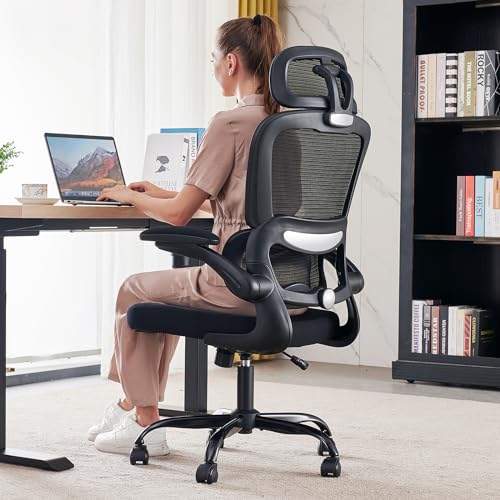
Posture-friendly seating starts with support you can position, and the NEO CHAIR’s adjustable lumbar is exactly that: move it to meet the small of your back, sit tall in the breathable mesh high back, and flip the arms away when you want to sit close and square to the desk. This is comfort-led guidance, not medical advice — a chair that helps you sit the way you intend to.
A posture-friendly chair does not impose a position; it makes the position you intend easy to find and easy to keep. NEO CHAIR Office Desk Chair, High Back Mesh, Adjustable Lumbar was judged on that standard — the quality of its support, the honesty of its adjustments, and how naturally a sitter ends up tall in it. This is comfort guidance, not medical advice, and the review keeps to what furniture can truthfully claim.
Strengths
- Adjustable lumbar support lets you place support where your back wants it
- Breathable mesh keeps long aligned sits from getting stuffy
- Flip-up arms clear the way for close, upright desk posture
Trade-offs
- Mesh support feels firmer than padded chairs
- Black is the only colourway listed
- Headrest is not part of this model’s listed features
At a glance
- Features: adjustable lumbar support, flip-up armrests
- Back: high back breathable mesh
- Colour: black
- Form: ergonomic high-back desk chair
One honest limitation: Users who want a headrest for lean-back breaks should compare the FOKESUN below.
Living with the NEO CHAIR Office Desk Chair, High Back Mesh, Adjustable Lumbar day to day is mostly a story of small conveniences adding up. Its defining specification — features: adjustable lumbar support, flip-up armrests — shapes every use, and the quality noted in the strengths list, that it breathable mesh keeps long aligned sits from getting stuffy, turns out to be the one owners mention most once the novelty wears off. In the context of supported sitting, that consistency matters: a chair that behaves the same way on the fiftieth use as on the first is a chair that stops being thought about, which is the highest compliment furniture in daily service can earn.
Set against the rest of the shortlist, the NEO CHAIR Office Desk Chair, High Back Mesh, Adjustable Lumbar is the pick for buyers who read its badge — Best Overall — and nod. If your priorities lean the other way, the neighbouring picks frame the choice: the Staples Hyken Ergonomic Mesh Task Chair, Gray answers with its own strength (a widely used task-chair design with straightforward lumbar support), while the GTPLAYER PU Leather Office Chair with Memory Foam counters with memory foam seat spreads pressure for long upright sits. None of the six is the best chair in the abstract; each is the best answer to a differently weighted version of the same question, and this one weights best overall above all.
Across a long session — the unit of time supported sitting is really measured in — the NEO CHAIR Office Desk Chair, High Back Mesh, Adjustable Lumbar holds its character. The seat and support do not change their minds halfway through, the structure stays quiet and settled, and the small ergonomic facts established in the first ten minutes are still true in the third hour. That steadiness is easy to underrate in a listing and impossible to overrate in ownership, because long sessions are where chairs are actually judged.
Best for: readers whose priority is best overall in the context of supported sitting / Not suited for: buyers whose needs run against that strength — read the trade-offs above before deciding.

Staples Hyken Ergonomic Mesh Task Chair, Gray
Badge: Best Proven Task Chair
The Hyken has been the default answer to ‘a chair that helps me sit properly at work’ for years, and its formula still holds: a mesh back that encourages an upright sit, lumbar support in the right zone, and no gimmicks between you and the work. For posture-conscious buyers who distrust novelty, that record counts.
Alignment is a relationship between a body and a chair, which is why adjustability matters more than any single cushion. Staples Hyken Ergonomic Mesh Task Chair, Gray is reviewed on how completely it lets different bodies build their own supported position.
Strengths
- A widely used task-chair design with straightforward lumbar support
- Mesh back suits upright, working posture all day
- Gray finish fits neutral offices
Trade-offs
- Adjustment set is simpler than newer rivals
- No footrest or deep recline
- Utilitarian styling
At a glance
- Features: lumbar support
- Back: ergonomic mesh task chair
- Brand line: Staples Hyken
- Colour: gray
One honest limitation: Anyone wanting headrest, footrest or multi-angle tilt should step up to the FOKESUN or Daeorio.
What ownership of the Staples Hyken Ergonomic Mesh Task Chair, Gray feels like across a season is worth spelling out, because the listing photographs cannot. The detail that defines it in practice is this: colour: gray. Around that, the everyday experience is shaped by how it mesh back suits upright, working posture all day — a quality that sounds minor in a specification list and becomes the reason the chair is reached for first. For supported sitting, reliability of that kind is worth more than any single headline feature.
The comparison that matters for the Staples Hyken Ergonomic Mesh Task Chair, Gray is not against a rival brand but against the other five answers in this guide. Choose it over the COMHOMA Big and Tall Office Chair with Foot Rest when gray finish fits neutral offices matters more to you than raw versatility; choose it over the NEO CHAIR Office Desk Chair, High Back Mesh, Adjustable Lumbar when its particular trade-off — adjustment set is simpler than newer rivals — is one you can accept happily. Framed that way, the decision is honest: you are not buying the most features, you are buying the features arranged in the order your own days will use them.
Session length is where this class of chair separates into the honest and the optimistic, and the Staples Hyken Ergonomic Mesh Task Chair, Gray is on the honest side of that line. Nothing about its comfort depends on a first impression: the support is mechanical, the surfaces are what they appear to be, and the experience at the end of a long stretch of supported sitting matches the experience at the start closely enough that you stop budgeting your comfort — which is, in the end, the entire point of buying well in this category.
Best for: readers whose priority is best proven task chair in the context of supported sitting / Not suited for: buyers whose needs run against that strength — read the trade-offs above before deciding.

COMHOMA Big and Tall Office Chair with Foot Rest
Badge: Best Big and Tall Support
Alignment advice is meaningless if the chair does not fit the body in it, and the COMHOMA big and tall chair starts with fit: a wide seat, structured pocket-spring back support, and adjustable arms that let larger users set up square and supported. The foot rest and deep recline cover the reset positions too.
Long hours expose every chair eventually. COMHOMA Big and Tall Office Chair with Foot Rest is assessed for the fourth hour as much as the first: whether the support stays where it was set, and whether the sitter still feels accompanied by it.
Strengths
- Wide, heavy-duty build gives larger frames room to sit aligned rather than squeezed
- Pocket spring back support and pillow add structured cushioning
- Foot rest and recline support genuine position variety
Trade-offs
- Large chair needs a large desk area
- Gaming-adjacent styling is bold for formal offices
- Recline range invites longer breaks than planned
At a glance
- Features: foot rest, 135-degree reclining, adjustable armrests
- Seat detail: pocket spring back support and pillow (per listing)
- Form: wide ergonomic gaming-style chair
- Upholstery: embossing designed leather (per listing)
One honest limitation: Smaller-framed users may find the wide seat leaves them without arm support where they expect it.
Day to day, the COMHOMA Big and Tall Office Chair with Foot Rest settles into a routine quickly, and routine is the real test of any pick in this guide. Its foot rest, 135-degree reclining, adjustable armrests gives it a clear identity among the six, and in practice the trait that earns its keep is that it pocket spring back support and pillow add structured cushioning. Owners of chairs in this class tend to judge them at the three-month mark, not the three-day mark, and this is a design whose virtues — steady, repeatable, uncomplaining — are precisely the three-month kind.
It also helps to place the COMHOMA Big and Tall Office Chair with Foot Rest on the shortlist’s map of compromises. Every pick here trades something: this one trades on the fact that gaming-adjacent styling is bold for formal offices, and in exchange delivers foot rest and recline support genuine position variety. Buyers who find that exchange attractive will be satisfied for years; buyers who bristle at it should walk one pick up or down this list, where the same budget of compromises is spent differently — toward the Daeorio High-Back Big and Tall Leather Chair with Footrest on one side or the Staples Hyken Ergonomic Mesh Task Chair, Gray on the other.
One more practical observation about the COMHOMA Big and Tall Office Chair with Foot Rest in extended use: it forgives interruption. Sessions in real homes and real studios are broken by doors, phones, kettles and colleagues, and a chair that is easy to leave and easy to return to — no readjustment ritual, no lost position — protects the thread of the work or the evening. Across weeks of such interrupted days, that forgiveness compounds into the feeling owners describe as the chair simply suiting their life.
Best for: readers whose priority is best big and tall support in the context of supported sitting / Not suited for: buyers whose needs run against that strength — read the trade-offs above before deciding.

Daeorio High-Back Big and Tall Leather Chair with Footrest
Badge: Best Executive Support
The Daeorio pairs a full-height back with lumbar support and a footrest, which covers the two postures of a long day: upright and aligned at the keyboard, then reclined with feet up while reading or thinking. For larger users especially, that full-length support is what makes the upright hours feel sustainable.
A posture-friendly chair does not impose a position; it makes the position you intend easy to find and easy to keep. Daeorio High-Back Big and Tall Leather Chair with Footrest was judged on that standard — the quality of its support, the honesty of its adjustments, and how naturally a sitter ends up tall in it. This is comfort guidance, not medical advice, and the review keeps to what furniture can truthfully claim.
Strengths
- High back supports the full spine line, shoulders included
- Lumbar support plus recline let you alternate upright and rested postures
- Leather executive build suits formal desks
Trade-offs
- Big footprint
- Leather warms up in hot rooms
- Executive look is desk-specific
At a glance
- Form: high-back big and tall chair with footrest
- Features: ergonomic reclining, lumbar support
- Material: leather upholstery
- Colour: black
One honest limitation: Mesh-chair fans will find leather less breathable across summer afternoons.
Living with the Daeorio High-Back Big and Tall Leather Chair with Footrest day to day is mostly a story of small conveniences adding up. Its defining specification — form: high-back big and tall chair with footrest — shapes every use, and the quality noted in the strengths list, that it lumbar support plus recline let you alternate upright and rested postures, turns out to be the one owners mention most once the novelty wears off. In the context of supported sitting, that consistency matters: a chair that behaves the same way on the fiftieth use as on the first is a chair that stops being thought about, which is the highest compliment furniture in daily service can earn.
Set against the rest of the shortlist, the Daeorio High-Back Big and Tall Leather Chair with Footrest is the pick for buyers who read its badge — Best Executive Support — and nod. If your priorities lean the other way, the neighbouring picks frame the choice: the FOKESUN Ergonomic Office Desk Chair with Footrest answers with its own strength (2d lumbar, 3d arms and headrest let you build your aligned position piece by piece), while the COMHOMA Big and Tall Office Chair with Foot Rest counters with wide, heavy-duty build gives larger frames room to sit aligned rather than squeezed. None of the six is the best chair in the abstract; each is the best answer to a differently weighted version of the same question, and this one weights best executive support above all.
Across a long session — the unit of time supported sitting is really measured in — the Daeorio High-Back Big and Tall Leather Chair with Footrest holds its character. The seat and support do not change their minds halfway through, the structure stays quiet and settled, and the small ergonomic facts established in the first ten minutes are still true in the third hour. That steadiness is easy to underrate in a listing and impossible to overrate in ownership, because long sessions are where chairs are actually judged.
Best for: readers whose priority is best executive support in the context of supported sitting / Not suited for: buyers whose needs run against that strength — read the trade-offs above before deciding.

FOKESUN Ergonomic Office Desk Chair with Footrest
Badge: Best Fine-Tuning
If posture is a project, the FOKESUN is the toolkit: adjustable lumbar depth and height, arms that move three ways, a headrest, and three tilt locks to hold the positions you choose. Nothing here treats or fixes a back — it simply gives a comfort-minded sitter unusually complete control over how the chair meets their body.
Alignment is a relationship between a body and a chair, which is why adjustability matters more than any single cushion. FOKESUN Ergonomic Office Desk Chair with Footrest is reviewed on how completely it lets different bodies build their own supported position.
Strengths
- 2D lumbar, 3D arms and headrest let you build your aligned position piece by piece
- Three tilt locks hold upright, mid and reclined postures deliberately
- Footrest supports circulation-friendly position changes
Trade-offs
- Setup session required to exploit the adjustments
- Feature density means more joints to check over time
- Executive scale needs space
At a glance
- Features: footrest, 2D lumbar support, 3D arms, headrest
- Capacity: 350 lb capacity
- Tilt: 3-position tilt lock
- Testing note: BIFMA-tested (per listing)
One honest limitation: Set-and-forget buyers will use a fraction of what they paid for; the Hyken serves them better.
What ownership of the FOKESUN Ergonomic Office Desk Chair with Footrest feels like across a season is worth spelling out, because the listing photographs cannot. The detail that defines it in practice is this: testing note: bifma-tested (per listing). Around that, the everyday experience is shaped by how it three tilt locks hold upright, mid and reclined postures deliberately — a quality that sounds minor in a specification list and becomes the reason the chair is reached for first. For supported sitting, reliability of that kind is worth more than any single headline feature.
The comparison that matters for the FOKESUN Ergonomic Office Desk Chair with Footrest is not against a rival brand but against the other five answers in this guide. Choose it over the GTPLAYER PU Leather Office Chair with Memory Foam when footrest supports circulation-friendly position changes matters more to you than raw versatility; choose it over the Daeorio High-Back Big and Tall Leather Chair with Footrest when its particular trade-off — setup session required to exploit the adjustments — is one you can accept happily. Framed that way, the decision is honest: you are not buying the most features, you are buying the features arranged in the order your own days will use them.
Session length is where this class of chair separates into the honest and the optimistic, and the FOKESUN Ergonomic Office Desk Chair with Footrest is on the honest side of that line. Nothing about its comfort depends on a first impression: the support is mechanical, the surfaces are what they appear to be, and the experience at the end of a long stretch of supported sitting matches the experience at the start closely enough that you stop budgeting your comfort — which is, in the end, the entire point of buying well in this category.
Best for: readers whose priority is best fine-tuning in the context of supported sitting / Not suited for: buyers whose needs run against that strength — read the trade-offs above before deciding.

GTPLAYER PU Leather Office Chair with Memory Foam
Badge: Best Cushioned Support
Not every posture-conscious sitter wants mesh and levers; some want a supportive cushion and permission to move. The GTPLAYER’s memory foam seat and gentle rocking deliver that softer school of alignment: sit upright, shift often, and let the mid-back support keep the working posture honest.
Long hours expose every chair eventually. GTPLAYER PU Leather Office Chair with Memory Foam is assessed for the fourth hour as much as the first: whether the support stays where it was set, and whether the sitter still feels accompanied by it.
Strengths
- Memory foam seat spreads pressure for long upright sits
- Gentle rocking keeps the body from locking into one rigid position
- Flip-up arms adapt between desk-close and open postures
Trade-offs
- Mid back gives no head or high-shoulder support
- Rocking motion is a preference, not for everyone
- PU leather care is more involved than mesh
At a glance
- Seat: memory foam cushioning
- Arms: 90-degree flip-up arms
- Features: flexible rocking, ergonomic mid back
- Material: PU leather
- Colour: black
One honest limitation: Tall users wanting head support should choose a high-back pick instead.
Day to day, the GTPLAYER PU Leather Office Chair with Memory Foam settles into a routine quickly, and routine is the real test of any pick in this guide. Its memory foam cushioning gives it a clear identity among the six, and in practice the trait that earns its keep is that it gentle rocking keeps the body from locking into one rigid position. Owners of chairs in this class tend to judge them at the three-month mark, not the three-day mark, and this is a design whose virtues — steady, repeatable, uncomplaining — are precisely the three-month kind.
It also helps to place the GTPLAYER PU Leather Office Chair with Memory Foam on the shortlist’s map of compromises. Every pick here trades something: this one trades on the fact that rocking motion is a preference, not for everyone, and in exchange delivers flip-up arms adapt between desk-close and open postures. Buyers who find that exchange attractive will be satisfied for years; buyers who bristle at it should walk one pick up or down this list, where the same budget of compromises is spent differently — toward the NEO CHAIR Office Desk Chair, High Back Mesh, Adjustable Lumbar on one side or the FOKESUN Ergonomic Office Desk Chair with Footrest on the other.
One more practical observation about the GTPLAYER PU Leather Office Chair with Memory Foam in extended use: it forgives interruption. Sessions in real homes and real studios are broken by doors, phones, kettles and colleagues, and a chair that is easy to leave and easy to return to — no readjustment ritual, no lost position — protects the thread of the work or the evening. Across weeks of such interrupted days, that forgiveness compounds into the feeling owners describe as the chair simply suiting their life.
Best for: readers whose priority is best cushioned support in the context of supported sitting / Not suited for: buyers whose needs run against that strength — read the trade-offs above before deciding.
Comparison Table
| Pick | Badge | Key specification from the listing | Best for | Listing |
|---|---|---|---|---|
| NEO CHAIR Office Desk Chair, High Back Mesh, Adjustable Lumbar | Best Overall | Features: adjustable lumbar support, flip-up armrests | Best Overall | Check on Amazon |
| Staples Hyken Ergonomic Mesh Task Chair, Gray | Best Proven Task Chair | Features: lumbar support | Best Proven Task Chair | Check on Amazon |
| COMHOMA Big and Tall Office Chair with Foot Rest | Best Big and Tall Support | Features: foot rest, 135-degree reclining, adjustable armrests | Best Big and Tall Support | Check on Amazon |
| Daeorio High-Back Big and Tall Leather Chair with Footrest | Best Executive Support | Form: high-back big and tall chair with footrest | Best Executive Support | Check on Amazon |
| FOKESUN Ergonomic Office Desk Chair with Footrest | Best Fine-Tuning | Features: footrest, 2D lumbar support, 3D arms, headrest | Best Fine-Tuning | Check on Amazon |
| GTPLAYER PU Leather Office Chair with Memory Foam | Best Cushioned Support | Seat: memory foam cushioning | Best Cushioned Support | Check on Amazon |
How to Choose a Chair for Alignment and Posture
Fit is the first filter, and it outranks every feature. A chair whose seat is too deep pushes you into a slump to reach the backrest; too wide, and the arms abandon your elbows; too narrow, and you sit defended rather than supported. Larger frames should start with the big-and-tall picks, whose width is a posture feature in itself. Smaller frames should beware flagship chairs whose generous seats leave them perching. The best-aligned sitter in this guide is simply the one whose chair is the right size.
Lumbar support is the second decision, and adjustability is its quality marker. Backs curve at different heights on different bodies, so support that moves — up, down, in depth — can be placed where your curve is; fixed support lands where an average said it should. When you test a chair, the question is precise: does the support meet the small of your back when you sit fully back, feet grounded? If it meets your mid-back or your belt line, it is decoration.
Arms and back height complete the supported position. Arms should meet your elbows with shoulders dropped, neither shrugging you up nor leaving your arms hanging — adjustable or flip-up arms make that achievable at a real desk. Back height is about your day: high backs with headrests serve lean-back reading and calls; mid backs serve upright task work and encourage the small movements that keep a long sit honest.
Finally, remember that alignment is a habit the chair supports, not a pose it enforces. The sitters who fare best across long days change position deliberately — upright for execution, reclined for reading, standing for breaks — and the chairs that serve them offer a footrest, a tilt lock or a gentle rock to make those changes real positions rather than slumps. Choose the chair that supports your intended posture and your intended variety, in that order, and treat persistent discomfort as a question for a professional rather than a shopping problem.
If your shortlist started with a related question, see Best Chairs For Apartment for the companion rundown.
Setting Up a Chair So Its Support Actually Lands
Setup is a five-minute procedure with a correct order. First, seat height: feet flat on the floor, thighs roughly level, no pressure behind the knees. Second, sit fully back until the backrest meets you — this is the position the lumbar support was designed around, and perching on the front edge defeats every ergonomic feature downstream. Third, place the lumbar support against the small of your back, adjusting height and depth until it feels like a hand resting there: present, not pushing.
Fourth, arms: raise or lower them until they meet your forearms with your shoulders completely dropped, then check them against the desk — arms that force a shrug at the keyboard are worse than arms flipped away. Fifth, headrest if fitted: it should meet the head only when you lean back, never push it forward while you work. Walk away, sit down again blind, and adjust whatever your body reports; two or three iterations across the first week is normal and worthwhile.
Then maintain the position’s ecosystem. The monitor at arm’s length and slightly below eye level, the keyboard where the elbows say, feet grounded or on a rest — the chair is one term in an equation the whole desk solves. Re-run the setup whenever anything changes: new desk, new shoes with different heel height, a cushion added or removed. Alignment is not a setting; it is a relationship you renew.
A close cousin of this search is covered in Best Chairs For Around Pool, where the same shortlist method is applied to that brief.
Troubleshooting
Problem: the lumbar support feels like a lump → it is placed too high or too deep; drop it toward the belt line’s curve and reduce depth until it reads as support rather than furniture in your back.
Problem: you keep sliding into a slouch by midday → check seat depth and height first; a seat slightly too high or too deep manufactures slouching in the most disciplined sitter.
Problem: shoulders ache despite a good chair → look at the arms and the desk, not the back: arms too high shrug the shoulders, arms too low hang them, and both bill the neck by evening.
Mesh Versus Cushion: Two Schools of Support
Mesh chairs support by tension: the back holds you the way a hammock holds, distributing pressure and breathing through long days, and they tend to encourage an upright sit because slumping in mesh feels immediately unstructured. Cushioned chairs support by shape and foam: a defined seat and a padded back, warmer, softer, and more forgiving of varied postures — at the cost of heat across summer afternoons.
Neither school aligns anyone by itself. Mesh suits hot rooms and upright workers; cushion suits long, varied sitters and cooler spaces. The honest test is your own fourth hour: whichever material you stop noticing by then is your school.
For the adjacent angle on this topic, Best Chairs For Arthritic Knees And Neckd works through its own set of picks and trade-offs.
The Posture Cycle: Upright, Reclined, Standing
Supported sitting is a cycle, not a statue. The pattern that serves most desk workers: upright and fully back for focused execution, a mid recline for reading and calls — where a headrest and footrest stop being luxuries — and standing or walking for the transitions. A chair with tilt locks and a footrest turns each phase into a real position with real support, instead of three flavours of slump.
Build the cycle into the day with anchors: calls are recline time, reviews are upright time, the hour’s end is standing time. The chair’s job in the system is to make each phase comfortable enough that the cycle actually happens.
You may also find Best Chairs For Baacks useful if your seating problem turns out to be that one instead.
What to Check When Your Chairs Arrive
The first ten minutes with a new chair decide whether small problems get solved free or lived with forever, so give every arrival a proper inspection before the packaging leaves the house. Work through it in order: all parts present against the listing, every fastener tightened in sequence, and the finished chair set down on a hard, level floor and loaded with your own weight in your normal position for supported sitting. Rock gently, shift, stand, sit again. Anything that creaks, wobbles or feels uneven at this stage is information — most of it is a fastener asking for a quarter-turn, and all of it is easier to address on day one than in month three.
Check the fit against the measurements you made when choosing, while returning is still simple. Seat height against the surface it serves, width against the space it must share, arms or edges against whatever they must clear. Photograph the chair in place; the photograph is both a sanity check for proportion — rooms reveal in pictures what eyes forgive in person — and a record if anything needs discussing with the seller. Keep the packaging until the first full week of use has passed, because the honest verdict on any chair in this category is a week of real days, not an afternoon of deliberate sitting.
Finally, register the details future-you will want: the assembly sequence that worked, which key fits the fasteners, and where the spare pads or glides live. A note in a phone is enough. Chairs in daily service loosen, settle and drift on a schedule measured in months, and the owners who stay happy with them are the ones whose first-week diligence turned later maintenance into a five-minute ritual rather than an archaeological expedition.
The First Month: How a Good Chair Becomes Your Chair
There is a settling-in month for every chair in this guide, and it runs in both directions: the chair settles — fasteners seat, cushions take their working shape, mechanisms smooth — and you settle, learning the chair’s positions and habits until using it well is unconscious. Expect to re-tighten once in the first fortnight and to revisit any adjustable settings at least twice; a setting chosen on day one was chosen by a stranger, and the month-one version, chosen by an experienced owner, is the one the chair will keep for years.
Use the month to test the chair against your real range of days, not your best day: the longest session, the busiest gathering, the messiest task, the tired evening. A pick that serves the whole range has earned its place permanently; a pick that only serves the showcase day is telling you something worth hearing while change is still possible. This is also the month to establish the care rhythm from the how-to section above — small, weekly, unremarkable — because rhythms established in month one are the ones still running in year three.
By the end of the month, a well-chosen chair disappears. That disappearance is the true product being bought in this entire category: not a specification list, not a badge, but the absence of a daily friction. If your chair has achieved it, the work of this guide is done and the chair’s work — years of unnoticed, reliable service in supported sitting — has begun.
Common Buying Mistakes
- Buying features before fit — a flagship chair in the wrong size aligns nobody.
- Sitting on the front edge and concluding the lumbar support does nothing.
- Setting the chair once and never revisiting it as desk, shoes and seasons change.
- Treating a chair purchase as a response to persistent pain instead of seeking professional advice.
- Arms set to shrug height, billing the neck for the chair’s comfort.
- Judging support in a two-minute sit; alignment is a fourth-hour quality.
And if the project widens, Best Chairs For Baby Nursery Net is the natural next read in this series.
Final Recommendation
For most posture-conscious buyers, the NEO CHAIR is the cleanest start: adjustable lumbar support, breathable high-back mesh, and arms that get out of the way. The Staples Hyken remains the proven task-chair answer for those who distrust novelty, and the FOKESUN is the fine-tuner’s flagship — build your position piece by piece and lock it in.
Larger frames should begin with the COMHOMA big and tall or the Daeorio executive, because fit precedes every other feature, and cushion-first sitters will find the GTPLAYER’s memory foam and gentle rock the most congenial school. Fit first, support placed, cycle built — that is the whole method.
Quick links to the three lead picks: NEO CHAIR Office Desk Chair, High Back Mesh, Adjustable Lumbar, Staples Hyken Ergonomic Mesh Task Chair, Gray, COMHOMA Big and Tall Office Chair with Foot Rest, each linking to its Amazon listing to check the latest price on Amazon.
Frequently Asked Questions
Can a chair improve my posture?
A chair can support the posture you intend — lumbar placement, seat fit and arm height make an upright, relaxed sit easier to find and keep. It cannot create the habit for you, and it does not treat pain or conditions; think of it as well-made equipment for a practice that remains yours.
What is the most important feature for alignment?
Adjustable lumbar support, in a chair that fits your frame. Support you can place where your back curves is worth more than any fixed contour, however expensive the chair around it.
Are mesh chairs better for posture than cushioned ones?
They encourage an upright sit and breathe well; cushioned chairs forgive longer, more varied sitting. The better school is the one whose fourth hour you stop noticing — fit and habits outrank material.
How do I know if a chair is the right size?
Feet flat with thighs level, back fully met by the backrest without reaching, arms meeting elbows with shoulders dropped, and a small gap behind the knees. If any of those fail, the size — not your discipline — is the problem.
Should a posture chair have a footrest?
For the reclined half of the day, a footrest turns leaning back into a supported position rather than a slide. It is a variety feature: valuable if your day includes reading and calls, optional for pure upright task work.
When should I stop shopping and see a professional?
When discomfort persists despite a well-fitted chair and sensible breaks, or whenever pain is sharp, radiating or new. Chairs are comfort equipment; persistent symptoms deserve a clinician’s assessment, not a bigger furniture budget.