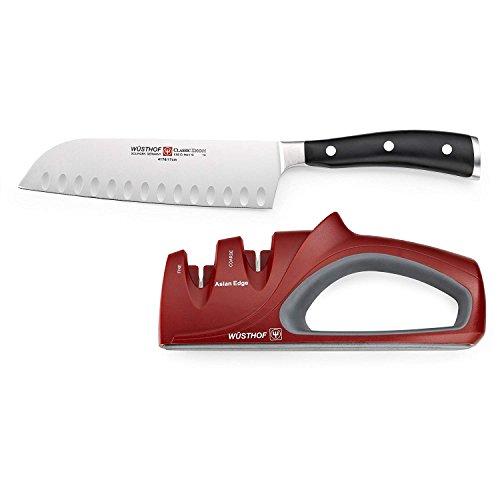
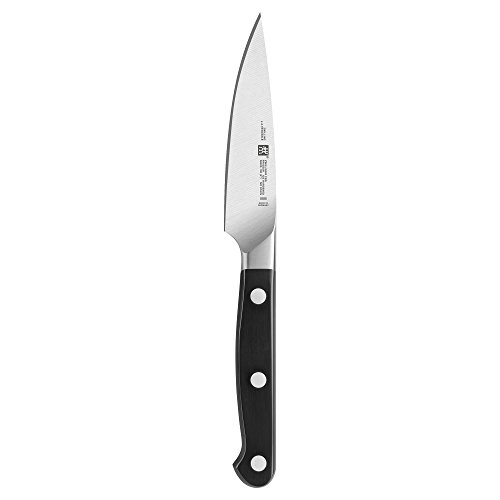
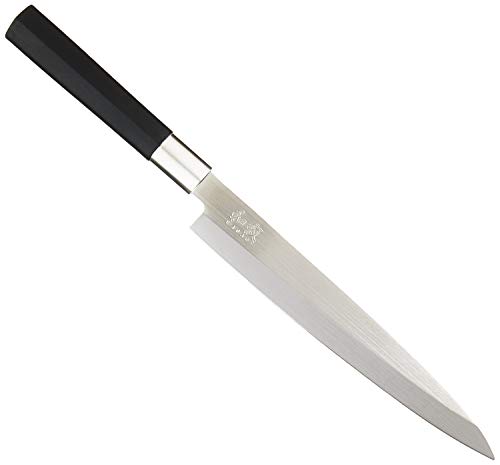
A chef’s knife does most of the work in a kitchen: chopping, slicing, dicing and mincing. The common size is 8 inches. The choices that matter are the steel, the handle, the weight and how the knife is made, and a good fit in your hand beats any spec.
The six knives below cover German, Japanese and value styles. Steels, handles and weights come from each product’s listing page. We have not used these knives ourselves, so treat the descriptions as the makers’ own.
As an Amazon Associate we earn from qualifying purchases. Links below are affiliate links, and they do not change the product information we give.
In this guide
Quick Picks
| Product | Type | Best for |
|---|---|---|
| HENCKELS Classic 8-Inch Chef Knife Razor-Sharp German Engineered | Chef knife | daily cooking |
| Shun Premier 8″ Chef’s Knife | Chef knife | daily cooking |
| Mercer Culinary M22608 Millennia Black Handle 8-Inch Chef’s Knife | Chef knife | daily cooking |
| PAUDIN Chef Knife 8 Inch High Carbon Stainless Steel Sharp | Chef knife | daily cooking |
| Japanese Chef Knife 8 Inch Handcrafted with Damascus VG10 Steel | Chef knife | daily cooking |
| imarku Japanese Chef Knife-Sharp Kitchen Knife 8 Inch Gift | Chef knife | daily cooking |
| Victorinox Fibrox Pro 8 Inch Chef’s Knife Dishwasher Safe Black | Chef knife | daily cooking |
Our Picks

Top pickBest for daily cooking
1. HENCKELS Classic 8-Inch Chef Knife Razor-Sharp German Engineered
A HENCKELS Classic 8-Inch Chef Knife Razor-Sharp German Engineered (chef knife), per the listing. Check price on Amazon.
Good for: daily cooking. Watch out: Hand wash to keep the edge.
Best for daily cooking
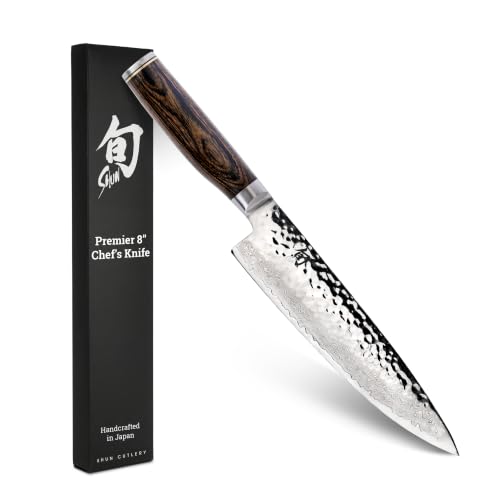
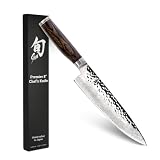
2. Shun Premier 8″ Chef’s Knife
A Shun Premier 8″ Chef’s Knife (chef knife), per the listing. Check price on Amazon.
Good for: daily cooking. Watch out: Hand wash to keep the edge.
Best for daily cooking
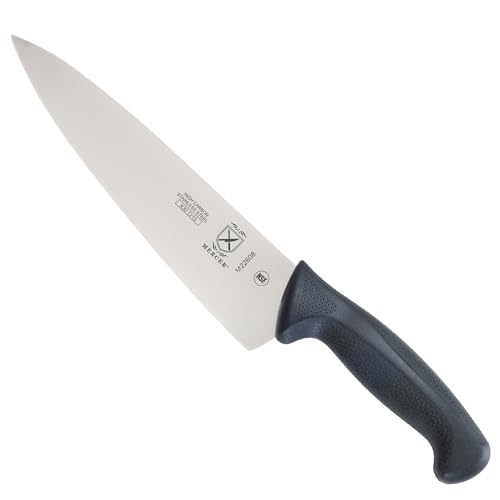
3. Mercer Culinary M22608 Millennia Black Handle 8-Inch Chef’s Knife
A Mercer Culinary M22608 Millennia Black Handle 8-Inch Chef’s Knife (chef knife), per the listing. Check price on Amazon.
Good for: daily cooking. Watch out: Hand wash to keep the edge.


Best for daily cooking
4. PAUDIN Chef Knife 8 Inch High Carbon Stainless Steel Sharp
A PAUDIN Chef Knife 8 Inch High Carbon Stainless Steel Sharp (chef knife), per the listing. Check price on Amazon.
Good for: daily cooking. Watch out: Hand wash to keep the edge.

Best for daily cooking
5. Japanese Chef Knife 8 Inch Handcrafted with Damascus VG10 Steel
A Japanese Chef Knife 8 Inch Handcrafted with Damascus VG10 Steel (chef knife), per the listing. Check price on Amazon.
Good for: daily cooking. Watch out: Hand wash to keep the edge.

Best for daily cooking
6. imarku Japanese Chef Knife-Sharp Kitchen Knife 8 Inch Gift
A imarku Japanese Chef Knife-Sharp Kitchen Knife 8 Inch Gift (chef knife), per the listing. Check price on Amazon.
Good for: daily cooking. Watch out: Hand wash to keep the edge.


Best for daily cooking
7. Victorinox Fibrox Pro 8 Inch Chef’s Knife Dishwasher Safe Black
A Victorinox Fibrox Pro 8 Inch Chef’s Knife Dishwasher Safe Black (chef knife), per the listing. Check price on Amazon.
Good for: daily cooking. Watch out: Hand wash to keep the edge.

Best Picks by Category
These labels summarize the listings and are not hands-on test results.
- Top rated: Victorinox Fibrox Pro 8 Inch Chef’s Knife Dishwasher Safe Black — check price on Amazon.
- Most reviewed: Victorinox Fibrox Pro 8 Inch Chef’s Knife Dishwasher Safe Black — check price on Amazon.
- Best value: Mercer Culinary M22608 Millennia Black Handle 8-Inch Chef’s Knife — a budget-tier pick; check price on Amazon.
- Lowest price: Mercer Culinary M22608 Millennia Black Handle 8-Inch Chef’s Knife — a budget-tier pick; check price on Amazon.
- Premium option: Shun Premier 8″ Chef’s Knife — a premium-tier pick; check price on Amazon.
Price, Rating and Review Comparison
The table lists the picks with their price tier. Prices change often, so confirm the current price on Amazon.
| Product | Price | Rating | Ratings | Price tier |
|---|---|---|---|---|
| Mercer Culinary M22608 Millennia Black Handle 8-Inch Chef’s Knife | Check price on Amazon | — | — | Budget |
| PAUDIN Chef Knife 8 Inch High Carbon Stainless Steel Sharp | Check price on Amazon | — | — | Budget |
| imarku Japanese Chef Knife-Sharp Kitchen Knife 8 Inch Gift | Check price on Amazon | — | — | Mid-range |
| Victorinox Fibrox Pro 8 Inch Chef’s Knife Dishwasher Safe Black | Check price on Amazon | — | — | Mid-range |
| Japanese Chef Knife 8 Inch Handcrafted with Damascus VG10 Steel | Check price on Amazon | — | — | Premium |
| HENCKELS Classic 8-Inch Chef Knife Razor-Sharp German Engineered | Check price on Amazon | — | — | Premium |
| Shun Premier 8″ Chef’s Knife | Check price on Amazon | — | — | Premium |
How Much Feedback Backs Each Rating
A high average from a handful of ratings is weaker evidence than a slightly lower average from thousands. Here is how the sample size looks for each pick.
- HENCKELS Classic 8-Inch Chef Knife Razor-Sharp German Engineered: Check price on Amazon.
- Shun Premier 8″ Chef’s Knife: Check price on Amazon.
- Mercer Culinary M22608 Millennia Black Handle 8-Inch Chef’s Knife: Check price on Amazon.
- PAUDIN Chef Knife 8 Inch High Carbon Stainless Steel Sharp: Check price on Amazon.
- Japanese Chef Knife 8 Inch Handcrafted with Damascus VG10 Steel: Check price on Amazon.
- imarku Japanese Chef Knife-Sharp Kitchen Knife 8 Inch Gift: Check price on Amazon.
- Victorinox Fibrox Pro 8 Inch Chef’s Knife Dishwasher Safe Black: Check price on Amazon.
Blade Steel and Edge Behaviour
The steel of a blade shapes how it behaves in the kitchen. Softer steels are generally easier to sharpen and more forgiving of knocks, but they may need honing more often. Harder steels tend to hold an edge longer but can be more brittle and may chip if misused. Stainless steels resist rust, while high-carbon steels may need more attention to avoid staining. Listings often use terms like high carbon or Damascus, so read what the maker actually states and treat marketing words with care.
Pick a blade that suits how you cook. If you want something easy to maintain, a tougher steel and a simple edge can be a good choice. If you enjoy precise slicing and are willing to look after the knife, a harder steel might appeal. Whatever you choose, the quality of the edge, how it was ground and how it is kept will matter as much as the steel name.
Western and Japanese Profiles
Western-style chef knives usually have a more curved belly, which suits a rocking motion on the board. Japanese-style knives often have a flatter profile and a thinner blade, which suits push cuts and precise slicing. Neither is better; they feel different in use. Think about how you cut: if you rock the knife, a curved profile feels natural, and if you slice straight down, a flatter profile may feel better.
Edge angle also varies. Thinner, more acute edges cut cleanly but need more careful use, while wider angles are tougher. Check the listing for the maker’s description of the edge, and consider whether the knife is single-bevelled or double-bevelled. Most home cooks will be fine with a double-bevelled chef knife, which is easier to sharpen and use.
Handle, Balance and Grip
A knife should feel comfortable when you hold it. Handles come in wood, plastic, composite and metal, with different shapes. A handle that is too small can cramp your hand, and one that is too large reduces control. Think about whether your hand is large or small, and whether you use a pinch grip, where you hold the blade near the bolster, or a handle grip.
Balance is the point where the knife feels evenly weighted. Some knives balance at the bolster, some towards the handle and some towards the blade. Heavier knives can do some of the work for you but tire the hand, while lighter ones feel quick but need more control. If you can hold a knife in a shop, do so. If you buy online, look at weight and length in the listing and check the return policy.
German or Japanese?
| Style | Good at | Watch out for |
|---|---|---|
| German (Wusthof, Zwilling) | Tough, heavier, forgiving of rough use | A thicker blade; needs honing |
| Japanese (Shun, MAC, Global) | Thinner, harder steel; precise slicing | More prone to chipping on bones and hard items |
| Value stamped (Victorinox) | Light, sharp, easy to replace | Plainer fit and finish |
Specs at a Glance
| Knife | Steel | Handle | Notes from the listing |
|---|---|---|---|
| Victorinox Fibrox Pro 8 in | Stainless | Fibrox thermoplastic elastomer | Dishwasher safe; ergonomic handle |
| Wusthof Classic 8 in | High carbon stainless | Triple-riveted | Full tang, full bolster; 8 in blade, 5 in handle; 8.5 oz |
| Zwilling Pro 8 in | High carbon stainless (SIGMAFORGE) | POM | Curved bolster; ice-hardened FRIODUR blade |
| MAC Professional Gyuto 220mm | Stainless | Resin with wood | Model MBK-85; listing text is minimal |
| Global G-2 8 in | Molybdenum/vanadium stainless | Stainless | Lightweight, precisely balanced; edge retention claim |
| Shun Classic 8 in | VG-MAX core, 68 layers Damascus | Pakkawood | Japanese chef knife; handcrafted look |
The 6 Best Chef Knives
Top pickBest for anyone who wants a light, practical knife
1. Victorinox Fibrox Pro 8 Inch
A stamped stainless chef’s knife with a textured Fibrox handle that the listing calls non-slip even when wet, and which is described as dishwasher safe. It has long been a pick for both home cooks and professionals.
Suits: anyone who wants a light, practical knife. Strengths: a simple build at a modest cost. Weaknesses: a plain fit and finish. Skip it if you want a heavier forged feel.
Best for cooks who want a robust all-rounder
2. WUSTHOF Classic 8 Inch
A forged German knife with a full tang, a full bolster and triple-riveted handle, an 8 inch blade and a 5 inch handle at about 8.5 ounces.
Suits: cooks who want a robust all-rounder. Strengths: a full tang and a trusted line. Weaknesses: a full bolster makes sharpening the heel harder. Skip it if you want a lighter knife.
View WUSTHOF Classic 8 Inch Chef's Knife on Amazon

Best for cooks who use a pinch grip
3. ZWILLING Pro 8 Inch
A knife forged from a single piece of high-carbon stainless steel with a curved bolster that acts as a pinch grip, a POM handle and an ice-hardened blade.
Suits: cooks who use a pinch grip. Strengths: a curved bolster and a comfortable handle. Weaknesses: premium cost. Skip it if you prefer a thin Japanese blade.

Best for cooks who like a thin, nimble blade
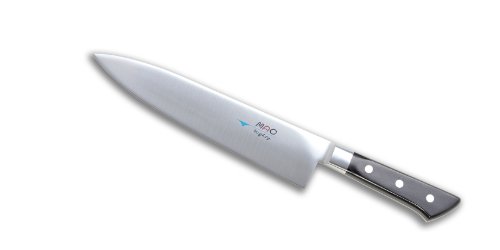
4. MAC Professional Gyuto, 220mm
A 220 millimeter Japanese-style gyuto (about 8.7 inches) in stainless steel with a resin and wood handle. The listing gives little text, so check the page for the steel and weight.
Suits: cooks who like a thin, nimble blade. Strengths: a slightly longer blade than 8 inches. Weaknesses: little detail in the listing. Skip it if you want a spec-heavy listing.


Best for cooks who like a light knife
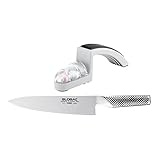
5. Global G-2 8 Inch
An all-stainless Japanese knife with a molybdenum and vanadium steel blade, described as lightweight, balanced and good at holding an edge.
Suits: cooks who like a light knife. Strengths: a seamless all-steel build. Weaknesses: a steel handle that can feel slippery wet. Skip it if you prefer a wood or polymer handle.

Best for cooks who want a handsome, sharp Japanese knife
6. Shun Classic 8 Inch
A Japanese chef’s knife with a VG-MAX steel core clad in 68 layers of Damascus-pattern steel and a Pakkawood handle.
Suits: cooks who want a handsome, sharp Japanese knife. Strengths: a hard core and a refined finish. Weaknesses: hard steel can chip if misused. Skip it if you cut through bones.

How to Choose
- Hold the knife if you can: grip and balance matter most.
- Choose 8 inches if unsure; 6 to 7 inches suits smaller hands.
- Match steel to habits: tough for rough use, hard for precision.
- Plan to hone it regularly and sharpen when needed.
Mistakes to Avoid
- Cutting on glass, stone or hard boards.
- Putting forged knives in the dishwasher.
- Using a hard Japanese knife to cut bones.
- Skipping honing and then blaming the knife.
Forged, Stamped and Handle Construction
Beyond German or Japanese, the way a chef knife is built affects how it feels in use. Forged knives are shaped from a heated bar of steel, and they often include a bolster, the thick collar between blade and handle, and a thicker spine. They usually feel heavier and more substantial. Stamped knives are cut from sheet steel, which tends to give a lighter and simpler knife. Modern stamped knives can be sharp, durable and good value, so do not treat stamped as a lesser category.
The tang, the part of the steel that extends into the handle, matters for strength and balance. A full tang runs the length of the handle and is often visible between the handle scales. Partial tangs are common on lighter knives. Neither is automatically better, but the join between handle and tang should be tight and smooth.
Check how the handle is attached. Triple rivets are a classic design, while other handles are molded or bonded without visible rivets. Seamless joins reduce places for food to collect. Ask which construction suits your needs: a heavier forged knife for power or a lighter stamped knife for agility. Read each listing for the maker’s description, since terms vary between brands.
Matching the Knife to What You Cook
The best chef knife depends on your menu. If you cook mostly vegetables, a thinner blade that slices cleanly and has a flat profile may be a pleasure. If you handle squash, root vegetables and poultry, a heavier, tougher blade may feel more reassuring. If you prepare a wide range of foods, a medium-weight, versatile knife is a good compromise.
Think about your cutting style. Cooks who rock the blade on the board benefit from a curved belly, while those who use a push cut or a chopping motion may like a flatter edge. If you often work with herbs, a knife with a long, gentle curve helps you mince quickly. If you cut a lot of fruit or soft foods, a thinner blade reduces sticking and tearing.
Also consider the space you cook in. A long blade needs a long board and clear counter, while a compact kitchen may suit a shorter knife. If you cook for large groups, a longer blade can save time. If you cook for one or two, a shorter knife may be easier to control. Think honestly about how you cook, not how you wish you cooked.
Testing Sharpness and Edge Retention at Home
You do not need special equipment to judge how a knife is performing. A simple test is to slice a ripe tomato: a sharp knife should cut through the skin with little pressure and no crushing. Another test is to slice a sheet of paper held at the top, with a clean, quiet cut. Cutting an onion shows how easily the blade passes through layers without tearing.
Edge retention describes how long the edge stays sharp. You can only judge it over time. Note how often you need to hone, and how quickly the knife begins to feel dull. Harder steels hold an edge longer but need more care. Softer steels may need more frequent honing but are tougher.
If a new knife is not as sharp as you expected, give it a light honing and test again. If it still performs poorly, contact the seller, since some knives arrive with an imperfect edge. Keep in mind that technique and board choice matter. A hard board, a twisting motion or poor grip can make a sharp knife feel dull. Test with proper technique before judging the knife.
Storing and Protecting Your Chef Knife
Storage protects the edge and keeps you safe. A knife block holds knives upright and protects the edges, though it takes counter space and needs to be dried before knives are put in. A magnetic strip keeps knives visible and saves space, but it must be mounted securely and used with care, placing the spine first to avoid dragging the edge. A drawer tray holds knives in a shallow drawer and keeps the counter clear. Individual sheaths or edge guards protect a single knife in a drawer or bag.
Whichever you choose, avoid tossing the knife loose in a drawer with other tools, since contact can chip the edge and risk cuts. Make sure the knife is dry before storing it.
Also think about safety at home. Keep knives out of reach of small children, and teach everyone in the household to handle them carefully. When you wash a knife, do it separately, rather than leaving it in a sink of soapy water where someone could reach in unseen. Dry it right away and put it back in its place. Good habits protect both the knife and the people who use it.
Common Buying Mistakes and How to Avoid Them
One common mistake is buying on brand or looks alone. A famous name or a striking pattern does not guarantee a knife will fit your hand. Another is choosing a very long blade without checking board and counter space, or a very heavy knife that tires your wrist. Check size and weight against your needs.
Some buyers pick a very hard knife and then use it on bones or frozen food, leading to chips. Match the steel to your habits. Others buy a large set when a single good knife would serve better. Spend on the knife you will use most, and add others as needed.
Finally, buyers often overlook care. A good knife needs honing, occasional sharpening and a safe place to live. Plan for a honing rod and a sharpening method. Read the listing carefully, since details such as blade length, steel and handle material can differ between variants sold under one name. If anything is unclear, ask the seller before you buy. A little checking now avoids disappointment later.
Which Knife Fits Which Cook
With six knives on the list, it helps to start from the cook rather than the blade. The notes here rely on what the listings in this guide say and on general knife knowledge, so confirm details on the product page.
- A beginner or a busy household: The Victorinox Fibrox Pro is light, has a textured handle and is listed as dishwasher safe. Many makers still advise hand washing for better edge life, so check the instructions.
- A cook who wants a robust all-rounder: The Wusthof Classic, a forged knife with a full tang, and the Zwilling Pro, with its curved bolster, suit people who like some weight behind the blade.
- A cook who prefers a thin, precise blade: The MAC gyuto, Global G-2 and Shun Classic follow the Japanese approach, which favors harder steel and a slimmer profile.
- Someone who dislikes stainless handles when wet: The Global has an all-steel handle, so a Victorinox, Wusthof, Zwilling, MAC or Shun handle may feel more secure.
- A pinch-grip cook: The Zwilling’s curved bolster is described as working with that grip, and the Wusthof’s full bolster also gives a clear place to rest the fingers.
If you can, hold a knife in a shop before ordering. Weight, balance and handle shape matter as much as steel, and two knives with similar specs can feel very different in your hand.
Features That Separate the Six Picks
These six knives share the same basic job, so the differences come down to a few features. Knowing what each one does helps you decide what to pay for.
Steel and hardness. Harder steel holds an edge longer and allows a thinner blade, but it can chip if twisted or used on bones. Tougher steel is more forgiving but may need more frequent honing. The Shun and the Global are positioned toward the harder end, while the German knives lean toward toughness.
Construction. The Victorinox is stamped, which keeps it light and simple. The Wusthof and Zwilling are forged, with bolsters and heavier spines. The Shun has a layered, Damascus-pattern cladding around its core, which affects looks and appearance more than everyday cutting ability.
Handle material. The listings describe a Fibrox elastomer, triple-riveted handle, POM, resin with wood, stainless steel and Pakkawood. Polymer handles tend to be grippy, wood composites feel warmer, and steel handles are seamless but can be slippery with oil or water.
Blade length. Most are 8 inches, while the MAC is 220 millimeters, about 8.7 inches. A slightly longer blade can help with larger vegetables but needs more board space.
Listing detail. The MAC listing is sparse, so read its page before buying.
Blade Profile, Edge Angle and Geometry
Two knives of the same length can behave differently because of their shape. The profile is the curve of the cutting edge when seen from the side. A strongly curved belly suits rocking cuts, where the tip stays on the board and the heel rises and falls. A flatter profile suits push cuts and chopping, where more of the edge touches the board at once.
Blade height, the distance from edge to spine, affects knuckle clearance. A taller blade gives your knuckles room above the board and lets you scoop chopped food off the board. A shorter blade may feel nimble but can leave less room for your hand.
Edge angle is the angle each side of the edge is ground to. Japanese knives are commonly sharpened to a narrower angle, which cuts very cleanly but is less tolerant of abuse. German knives are commonly sharpened to a slightly wider angle, which is more durable. The exact angle varies by maker and model, so check the manual or maker’s site rather than assuming.
Blade thickness behind the edge matters too. A thin blade glides through dense vegetables with less wedging, while a thicker blade can crack hard items such as squash more safely. If you cut a lot of firm produce, consider thickness along with sharpness.
Sharpening Methods and What They Suit
Honing and sharpening are different jobs. Honing realigns an edge that has bent slightly with use. Sharpening removes a small amount of metal to create a new edge. Most cooks need to hone often and sharpen only a few times a year, depending on use.
- Whetstones: They give excellent control and suit most steels, but they take practice and time. Soak or lubricate them according to the stone’s instructions.
- Pull-through sharpeners: They are quick and simple, though they remove more metal and may not match your knife’s edge angle. They are a convenience tool more than a precision one.
- Electric sharpeners: They are fast, but check that the model suits your knife’s steel and angle, and read the maker’s advice, especially for harder Japanese blades.
- Professional services: A good option if you do not want to learn, and useful for a knife that is badly chipped.
If you own a hard Japanese knife, check the maker’s guidance before using a coarse method. Harder steel can be more prone to chipping under aggressive sharpening. Whatever you use, go slowly, keep the angle consistent and test the edge on a tomato or paper afterward.
Handle Comfort, Grip and Hand Size
A knife is held for long stretches, so comfort decides how often you reach for it. Start with your grip. The pinch grip places the thumb and forefinger on the blade just ahead of the handle, which gives control for precise work. The handle grip holds only the handle, which is more relaxed but less precise.
Hand size changes what feels right. Larger hands often like a longer handle with room for all fingers. Smaller hands may prefer a shorter handle or a slimmer profile. The Wusthof listing gives a 5 inch handle, which is useful when comparing, but remember that shape matters as well as length.
Look for any sharp edges where the handle meets the spine or the bolster. Rounded, polished edges are more comfortable in long prep sessions. If a knife digs into your finger at the pinch point, it can cause blisters.
Check balance, too. Some knives balance at the bolster, some slightly toward the blade and some toward the handle. A blade-heavy knife can feel powerful for chopping, while a handle-heavy one can feel nimble. Neither is wrong, so choose what feels natural.
Finally, think about wet hands. Textured polymer handles tend to stay grippy, while smooth steel can slip. If you often cook with oily or wet hands, grip matters more than style.
What to Check on the Listing Before You Order
Knife listings can be crowded with marketing language, so focus on the details that affect use. Use this short list for any knife in this guide.
- Blade length and model number: Brands sell several lines with similar names. Confirm the line and length you want.
- Steel type: The listing may name the steel. If it does not, check the maker’s site, as with the sparse MAC listing.
- Handle material and construction: Check whether it is riveted, molded or all steel.
- Weight and balance: Not every listing gives weight. The Wusthof listing does.
- Care instructions: Dishwasher advice varies. Hand washing is the safer habit.
- Left or right hand: Many knives are ground symmetrically, but some are not, so check if you are left-handed.
- Warranty and returns: A clear return policy helps if the edge or handle fit is poor.
- Included items: Some listings include a sheath or box, while others do not.
If a listing seems to mix details from several variants, check the seller’s description or ask a question before ordering.
Knife Safety and Signs It Is Time to Replace
A sharp knife is generally safer than a dull one, because it needs less pressure and is less likely to slip. Still, a few habits reduce risk. Cut on a stable board, and place a damp cloth or a non-slip mat under it if it moves. Keep your guiding hand curled, with fingertips tucked behind the knuckles. Never try to catch a falling knife, and let it drop.
Carry a knife with the tip pointing down and the edge turned away from you. Hand it to someone handle first, or set it down so they can pick it up. Do not leave knives hidden under food or in a soapy sink.
Signs that it is time to repair or replace a knife include:
- A chip that does not sharpen out, or a crack near the edge or bolster.
- A loose handle, a gap between handle and tang or rivets that have lifted.
- A blade that has become noticeably bent or warped.
- Rust pitting that cannot be cleaned, or a heel worn down so far that it no longer reaches the board.
- An edge that dulls quickly even after proper honing and sharpening.
Small chips can sometimes be removed by a professional sharpener, and a loose handle may be covered by the maker’s warranty. Check the maker’s policy before discarding a knife.
Chef Knife FAQ
What size chef’s knife should I buy?
Eight inches suits most cooks.
Are expensive knives worth it?
They can hold an edge longer and feel better. A good low-cost knife also works well.
How do I keep it sharp?
Hone often, sharpen occasionally, and use a proper cutting board.
What is the difference between a bolster and a tang?
The bolster is the thick collar between blade and handle. The tang is the steel that extends into the handle and affects strength and balance.
Is a stamped knife lower quality?
Not necessarily. Stamped knives are lighter and simpler, and many perform very well. Judge by steel, fit and comfort rather than the label.
How can I test whether my knife is sharp?
Try slicing a ripe tomato or a sheet of paper. A sharp knife cuts cleanly with little pressure.
How often should I hone my chef knife?
Many cooks hone before each use or weekly, depending on how much they cook. Sharpen when honing no longer restores the edge.
Should I use a magnetic strip?
It saves space and keeps knives visible, but it must be mounted securely. Place the spine first and avoid dragging the edge.
Can I put a chef knife in the dishwasher?
Most makers advise against it. Heat, detergent and knocking can dull edges and damage handles.
What cutting board is best for a chef knife?
Wood and good plastic boards are gentle on the edge. Glass, stone and hard ceramic boards will dull it quickly.
What if my new knife arrives dull?
Hone it lightly and test again. If it still performs poorly, contact the seller, since some knives need a better edge from the start.
Is a longer chef knife better than an 8 inch one?
Not necessarily. A longer blade helps with large produce and bulk prep, but it needs more board space and can feel harder to control. An 8 inch knife suits most cooks, and the MAC at 220 millimeters sits slightly above that.
Does a heavier knife cut better?
Weight helps with tough items because the blade does some of the work, but it can tire the hand over long sessions. A lighter knife is easier to control for fine slicing. Choose the weight that feels comfortable for your usual tasks.
Are Damascus-pattern knives sharper?
The pattern comes from layered steel around a core and mainly affects appearance. Cutting performance depends on the core steel, blade geometry and edge. Read the listing for details about the core steel.
Should I choose a knife with a full bolster?
A full bolster adds weight and protects the hand, but it can make sharpening the heel of the blade harder. A curved or partial bolster gives more access to the whole edge. Choose based on your grip and how you plan to sharpen.
Can I use a chef knife on bones?
A chef knife is generally not meant for cutting through bones, and hard steel in particular can chip. Use a cleaver or a boning knife for that work, and check what the maker recommends.
How do I dry a knife safely after washing?
Hold the handle and wipe the blade with a towel from spine to edge, with the edge turned away from you. Dry it fully before storing, since moisture can cause spots on some steels. Do not leave it to air dry in a rack with other tools.
Is it worth buying a knife set instead of one chef knife?
A single good chef knife often covers most tasks, and you can add a paring knife and a bread knife later. A set can be useful if you need several knives at once, but check that you will use each piece. Quality of the main knife matters most.
The Short Version
For a light practical knife, the Victorinox Fibrox Pro. For a robust German classic, the Wusthof Classic or Zwilling Pro. For a Japanese feel, the Shun Classic, Global G-2 or MAC gyuto.
How to Live With Your Chef Knife: The First Month and Beyond
Whichever pick from the list above comes home with you, the first month decides whether it becomes your favourite tool or an expensive drawer resident. Start by giving the knife a proper home on day one: a block slot that fits without forcing, a magnetic strip mounted where the blade will not be knocked, or a sheath if it must live in a drawer. A chef knife stored loose among other utensils loses its edge to a thousand tiny collisions, and no steel, German, Japanese or value, can survive that treatment and stay sharp. Storage is not an accessory decision; it is part of the knife purchase.
During the first weeks, pay attention to how the knife changes your habits. A longer or heavier knife than you are used to asks for a slower, more deliberate board rhythm at first, and that is normal. Work through familiar tasks, onions, carrots, a chicken, a pile of herbs, and notice where the knife helps and where your technique needs to adjust. Most cooks find the pinch grip becomes automatic within a fortnight, the rocking chop steadies, and the knife starts to feel like an extension of the hand rather than an object being managed. If a particular task still feels awkward after a month of regular use, the issue is usually technique or board setup rather than the knife itself.
Build the maintenance rhythm early, while the knife is new and the stakes feel low. A few light passes on a honing steel before or after use, a hand wash and immediate dry, and a proper sharpening when honing stops bringing the edge back: that is the whole religion. The mistake to avoid is waiting until the knife is obviously dull and then attempting a heroic restoration. Edges maintained little and often are easy; edges neglected for a year are work. Japanese knives in the list reward the same rhythm with a slightly gentler hand on the steel, or a fine ceramic honing rod where the maker recommends one, while the German and value picks tolerate the classic steel happily.
Finally, let the knife teach you what your second knife should be. After a month with a good chef knife, the gaps in a kitchen become obvious: perhaps a small paring knife for in-hand work, a serrated knife for bread and tomatoes, or a flexible boning knife if you break down a lot of poultry. Buying in that order, driven by real use, builds a small set where every piece earns its place, instead of a large block of near-duplicates. The chef knife is the foundation, and foundations are judged by what gets built on them.
Comparing the Styles Head to Head on Everyday Tasks
Because the picks above span German, Japanese and value styles, it helps to picture them working through the same ordinary tasks. Take a pile of onions for a stew. The German-style knives bring weight and a pronounced curve to the belly, so a rocking chop feels natural and the blade weight does much of the work; the cook guides more than pushes. The Japanese-style knives are lighter and flatter in profile, favouring an up-and-down or push-cut motion, and they reward that motion with exceptionally clean cuts that leave onion pieces separate rather than crushed. The value picks sit between: lighter than the German knives, less refined than the Japanese, but entirely capable of the same pile of onions with a touch more effort at the handle.
Move to a hard winter squash and the personalities swap advantages. Weight, toughness and a forgiving edge matter here, and the German style comes into its own: it can be worked through dense flesh with controlled pressure and a clear conscience. A fine, hard Japanese edge can certainly do the job in skilled hands, but it asks for better technique, a stable board and no twisting whatsoever if the blade binds. The value knives manage smaller squash and pumpkins sensibly, provided the cook cuts a flat base first and works in sections rather than forcing one heroic cut. The lesson generalises: match the knife to the hardest task you do weekly, not the easiest.
Delicate work reverses the ranking again. Slicing garlic paper-thin, shaving herbs, trimming the silverskin from a tenderloin or portioning soft fruit all favour the thin, keen Japanese geometry, which passes through food with minimal wedging and leaves surfaces clean. German knives do this work well when sharp, but their thicker blades push soft foods aside a little more, and the value knives need a freshly honed edge to avoid tearing. None of this makes one style best in the abstract; it makes each style best at something, which is exactly why the list above is organised by cooking personality rather than by a single league table.
Protein work at the board tells the same story in miniature. Breaking down a chicken favours a nimble knife with a fine tip, portioning a large roast favours length and a smooth draw, and trimming fat favours control at low speed. A cook who mostly prepares vegetables will weight the comparison one way; a cook who roasts and grills constantly will weight it another. Read the per-knife notes above with your own week of cooking in mind, and the right pick usually identifies itself.
Sharpening and Honing: A Practical Routine for Each Style
Every knife in this guide will dull; the only question is how gracefully and how easily it comes back. Honing and sharpening are different jobs that home cooks constantly confuse. Honing with a steel realigns an edge that has folded microscopically in use; it removes almost no metal and can be done daily. Sharpening grinds a fresh edge and is needed only when honing no longer restores the bite. A knife that gets honed regularly may need true sharpening only a few times a year in a home kitchen, which is why the honing habit matters so much.
For the German-style picks, a standard grooved or fine-cut steel used at a steady, moderate angle suits their comparatively forgiving edges. Use light pressure and alternate sides evenly; the goal is alignment, not aggression. For the Japanese-style picks, whose edges are harder and finer, use a smoother steel or a ceramic rod, an even lighter touch, and never the coarse, aggressive strokes that suit a workshop tool. If in doubt, follow the maker guidance for that specific knife, because harder edges chip where softer edges would merely bend, and chips are a sharpening job, not a honing job.
When sharpening day arrives, home cooks have three honest routes. A whetstone gives the most control and the finest result, and suits owners of Japanese knives especially, since the stone is gentle and precise; it asks for an evening of learning and a consistent angle. A guided system or a quality pull-through sharpener trades some finesse for simplicity and repeatability, a fair trade for the value picks and for busy households. Professional sharpening, by post or at a local shop, costs money per visit but removes all doubt, and for a knife used daily it is a modest annual expense. What all three routes share is that they work best on knives that were honed and stored properly in between.
Test the edge the same way each time so you can judge your maintenance honestly. A sharp chef knife slices a ripe tomato under its own weight without crushing it, bites into an onion skin instead of skating, and cuts paper-thin shavings from a carrot without tearing. If your knife fails those tests after honing, it needs sharpening; if it passes, cook on. Keeping the test consistent turns maintenance from guesswork into a small, satisfying routine, and it is the routine, far more than the price of the knife, that decides how sharp your kitchen feels day to day.
Board Pairings and Kitchen Setup for Your New Knife
A chef knife performs on a board, and the board can protect or punish the edge. Wood and quality plastic boards are the kind surfaces: they give slightly under the edge, so the edge survives thousands of cuts. Glass, stone and metal boards look hygienic and wipe clean beautifully, but every cut on them lands the edge on an unforgiving surface, and knives dull on them at a startling rate. If your kitchen has a glass board you love for pastry or serving, keep it for those jobs and cut on wood or plastic. The picks above, especially the finer Japanese edges, will thank you with months of extra sharpness.
Board size and stability matter almost as much as material. A board large enough for the knife full stroke and the food being cut prevents the tip from running off the edge and the food from crowding your guide hand. A board that slides is a hazard with any knife; a damp cloth or a non-slip mat underneath fixes it in seconds. Weight helps too: a substantial wooden board stays where it is put and feels calm under a rocking chop, while a featherweight board wanders. Set the board at a comfortable height, roughly where your hands fall naturally with relaxed shoulders, and long prep sessions stop being a backache with a knife attached.
The rest of the setup is small but cumulative. Keep the honing steel where the knife lives, not in a distant drawer, so the habit survives busy evenings. Keep a clean, dry towel at the board for wiping the blade between wet and dry tasks, which improves grip and keeps flavours separate. Arrange lighting so you can see the edge and the food clearly; more kitchen cuts happen in shadowy corners of the counter than anyone admits. None of this costs much, and together it makes an ordinary knife feel professional and a professional knife feel effortless.
When the cooking is done, the wash-up routine closes the loop. Hand wash the knife, dry it immediately and completely, and put it straight back in its storage. Never leave a good knife soaking in a sink, where it is invisible, corrosive company for the edge and a nasty surprise for whoever reaches in. Never put it in a dishwasher, where heat, detergent and rattling neighbours conspire against both edge and handle. Thirty seconds of care per use is the entire price of keeping any knife in this guide performing as reviewed, for years.
The Grip Clinic: Pinch, Handle and the Guide Hand
Technique is the free upgrade that makes every knife in this list perform a class higher, and it starts with the pinch grip. Thumb on one side of the blade just ahead of the handle, forefinger curled around the other side, remaining fingers wrapped around the handle: that arrangement puts your hand in charge of the blade itself rather than steering it from behind. It feels strange for the first few sessions and inevitable thereafter. Cooks who switch usually report the same two discoveries: the knife stops wandering during cuts, and the wrist tires less, because control comes from position rather than squeezing. Keep the grip relaxed enough that your knuckles stay their normal colour; tension is effort wasted.
The guide hand matters just as much. Curl the fingertips of the hand holding the food so the knuckles face the blade and the fingertips point safely backwards, the arrangement cooks call the claw. The flat of the blade rests lightly against the knuckles, which act as a moving fence, setting slice thickness and keeping fingers out of the edge path. Advance the guide hand slowly and evenly, and thickness takes care of itself. This is the single most valuable habit in all of knife work: it is faster, safer and more consistent than watching the edge and hoping, and it works identically with a value stamped knife and a hand-finished Japanese one.
Match the stroke to the knife profile you chose. Curved German bellies reward a rocking motion, tip anchored, heel rising and falling. Flatter Japanese profiles reward a push cut or a clean up-and-down chop. Value knives with moderate curves accept either. What all strokes share is a full, confident travel of the edge through the food rather than a short, pressed sawing, which crushes cells, dulls edges and produces ragged cuts. Slow down to learn, because speed in knife work is a by-product of rhythm, and rhythm only arrives after accuracy. A month of deliberate practice will do more for your cooking than the difference between any two knives on this page, which is precisely why the best knife is the one you will practise with happily.
A Final Word on Choosing Between These Six
If you have read this far and two or three knives still look equally right, decide on the tie-breakers that listings cannot settle for you. Choose by the hardest weekly task the knife must survive, by the handle your hand prefers after a long session rather than a short hold, and by the maintenance routine you will genuinely keep, honing steel, stone or professional service. A knife that matches those three honest answers will feel like the obvious choice within a month, whichever badge it carries. The six picks above are all capable of years of daily service; the differences that matter most are the ones between the knife and the cook, and those are exactly the differences this guide has tried to put in your hands.
Left-Handed Cooks: One Extra Check
Most of the knives in this guide are ground for either hand, but comfort details can differ. Check that the handle shape feels as secure in your left hand as in your right, and if a listing describes an asymmetric edge or a handle shaped for one hand, confirm it suits yours before ordering. A knife that fits the hand you actually cook with is worth more than any specification on the page.
One Sentence to Remember
Buy the knife that fits your hand and your hardest weekly task, keep it honed, store it safely, and it will repay you at every single meal you cook.
Related Guides
- 6 Best Paring Knives: Forged, Stamped and Japanese (2026)
- Paring Knife vs Chef Knife: Choose the Task First
- Chef Knife Length: Compare Control and Board Space
- 6 Best Bread Knives: Serrated Styles and Lengths (2026)