Disclosure: topratedkitchenware.com is reader-supported. When you buy through links on our site, we may earn an affiliate commission from Amazon and other retailers, at no extra cost to you.
Where to buy
The best civil war quilts in the original sense are museum textiles from the 1860s, so this guide ranks ready-made sets by how faithfully they echo the era’s craft: true cotton patchwork first, embroidered cotton second, printed period-style patterns third. Five picks are linked quilts; the CozyLux entry is a modern comforter set with no period character, so it is reviewed in prose only, with no link and no image.
- HORIMOTE HOME Ruffled Quilt Set, King, Beige, Stone-Washed Microfiber — stone-washed ruffled king set in a homespun-plausible beige
- CozyLux Queen Comforter Set, Dark Grey, 7 Pieces — a seven-piece comforter set, not a quilt; prose only (covered in prose below; no link because it is not a true match for this search)
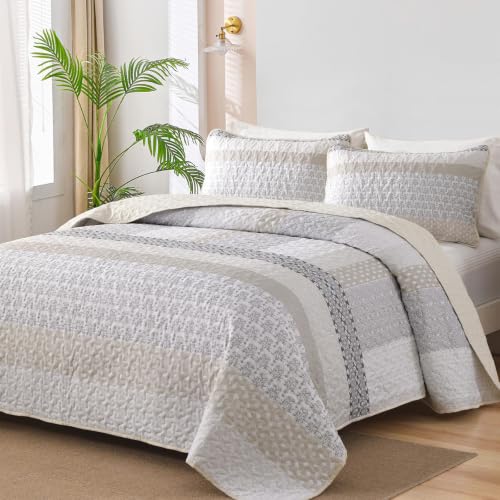
- WONGS BEDDING Beige Quilt Set, Queen, Boho Striped Patchwork — reversible patchwork-layout queen set with a generous drop
- Yard Wizard 100% Cotton Quilt Set, Queen, Embroidered Cross Design — all-cotton embroidered queen set with standard-size shams
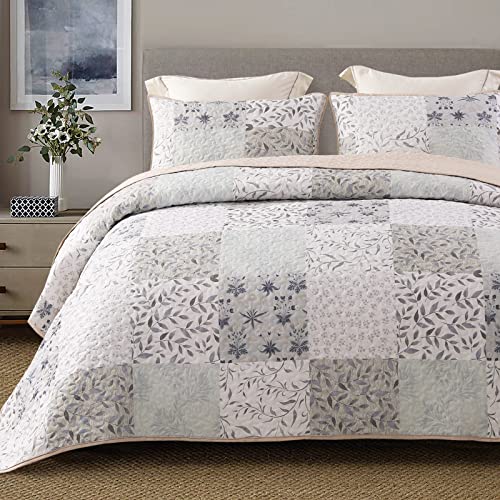
- Exclusivo Mezcla Reversible Boho Quilt Set, King, Grey Floral Patchwork — king-size reversible set carrying a printed floral patchwork design
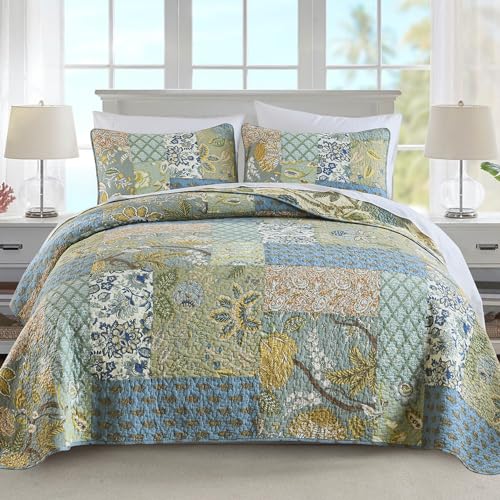
- Secgo 100% Cotton Quilt Set, King, Sage Green Patchwork — oversized cotton patchwork king quilt, reversible, with two shams
Read the full guide ↓
The best civil war quilts, in the strict sense, were sewn in the 1860s — by women keeping households together, by Sanitary Commission volunteers making bedding for soldiers, and by families piecing warmth out of worn dresses and uniforms. Survivors of that era belong to museums and serious collections, fragile and priceless in equal measure. What a modern shopper can actually buy is a reproduction in spirit: a ready-made quilt whose construction, fabrics and patterns honour the period’s way of working. This guide ranks six bedding sets by exactly that fidelity, and it is frank about the distance between a boxed set and an 1861 nine-patch.
Fidelity has a clear order. The era’s quilts were cotton, pieced by hand into blocks — nine-patch, log cabin, album and applique designs — in the saturated palette of the day: madder reds, indigo blues, chrome yellows and the soft browns of homespun-look cloth. So the best civil war quilts among modern sets are the true cotton patchwork ones, followed by embroidered cotton, followed by printed designs that borrow the period’s floral imagery. Modern microfiber ruffles and plain comforter sets sit furthest from the era, and this guide places them accordingly — one of them in prose only. Readers who simply love cotton bedding will find the wider cotton landscape in Best Cotton Quilts And Covers.
What follows is therefore two guides in one: a ranked set of reviews you can buy from today, and a short education in what made Civil War-era quilts what they were, so you can judge any reproduction — listed here or not — with a period eye. The history sections are not decoration; they are the measuring stick the rankings use.
Key Takeaways
- Authentic 1860s quilts are collectible textiles; every set here is a modern interpretation, ranked by fidelity to the era’s craft.
- True cotton patchwork (Secgo) and embroidered cotton (Yard Wizard) come closest to period construction and materials.
- The era’s palette ran to madder red, indigo, chrome yellow and earthy browns — soft sage and beige sets echo its quieter corners.
- Printed floral patchwork (Exclusivo Mezcla) reproduces the imagery of album quilts without their pieced construction.
- The CozyLux comforter set has no period character and is not a quilt; it appears in prose only, with no link and no image.
In this guide
Quick Picks
| Pick | Badge | Best for | Link |
|---|---|---|---|
| HORIMOTE HOME Ruffled Quilt Set, King, Beige, Stone-Washed Microfiber | Best Farmhouse Mood | period-inspired farmhouse bedrooms that want the era’s plain, rumpled softness rather than its patterns | Check on Amazon |
| CozyLux Queen Comforter Set, Dark Grey, 7 Pieces | Modern Alternative, Off-Theme | a spare room that simply needs a complete modern bed, with no period styling intended | Prose only — see review |
| WONGS BEDDING Beige Quilt Set, Queen, Boho Striped Patchwork | Best Lightweight Block Layout | readers who want the block-and-strip grammar of period quilts in a light, easy-care modern set | Check on Amazon |
| Yard Wizard 100% Cotton Quilt Set, Queen, Embroidered Cross Design | Best Needlework Fidelity | readers who value the era’s worked-thread decoration — embroidery and applique were the period’s showpiece skills | Check on Amazon |
| Exclusivo Mezcla Reversible Boho Quilt Set, King, Grey Floral Patchwork | Best Period Imagery at King Size | king beds that want the floral abundance of album-quilt imagery across a wide surface | Check on Amazon |
| Secgo 100% Cotton Quilt Set, King, Sage Green Patchwork | Best Overall | readers who want the era’s real construction — pieced patchwork in cotton — at a generous king scale | Check on Amazon |
The Secgo set earns Best Overall on construction: genuine patchwork in 100 percent cotton, oversized for a king, is the closest a ready-made set comes to how a period quilt was actually built — fabrics joined into a composed design, then quilted through. The Yard Wizard set follows on technique of a different kind: embroidery, the worked-thread decoration that shared the era’s sewing baskets with applique.
Below those two, the ranking becomes about imagery and mood. The WONGS BEDDING patchwork set keeps the block grammar in a light modern build; the Exclusivo Mezcla prints its florals, as many reproduction fabrics do; the HORIMOTE HOME ruffled set evokes the farmhouse bedroom rather than the quilt itself. The modern end of the spectrum, where period style is set aside entirely, is surveyed in Best Contemporary Charm Quilts for readers whose taste turns that way after all.
How These Picks Were Chosen
Each pool product was measured against the documented character of Civil War-era quilts: cotton as the period fibre, pieced patchwork or worked needlework as the period construction, and block-based floral or geometric designs in a period-plausible palette. Products were ranked by closeness on those three axes. The one product that matched none of them — a plain modern comforter set — was demoted to prose only rather than linked under a keyword it does not answer.
All product facts come from the verified listing titles: fibre where the title states it, dimensions where it gives them, construction words — patchwork, embroidered, printed — exactly as the listings use them. Historical statements in the topical sections are general knowledge about the era’s quilting, offered as context for judging reproductions; no historical claim is made about any individual product, and no product here is represented as antique, handmade or period-made.
No prices, ratings or review counts informed the ranking, and none are printed. A reproduction’s value lies in its fidelity and its service as bedding, neither of which a price can certify. This is a research-led guide rather than a hands-on examination: we did not handle these sets alongside museum pieces, and the comparisons are of construction and design, stated in those terms throughout.
Every linked pick also had to work as a modern bed’s main layer — a full quilt set with shams in a stated size — because a Civil War style quilt that cannot be slept under and washed has missed the most period-authentic quality of all: usefulness. The originals were made to be used hard, and their modern echoes should be too.
The 6 Best Civil War Quilts and Period-Style Reproductions
The reviews run from closest to furthest in period fidelity. Each one separates what the set genuinely shares with 1860s quilting from what is modern convenience, so you can choose your own balance between the era’s craft and today’s easy care.

HORIMOTE HOME Ruffled Quilt Set, King, Beige, Stone-Washed Microfiber
Badge: Best Farmhouse Mood
Strengths
- Undyed-look beige palette sits comfortably beside period colours
- Crinkled stone-washed finish mimics the soft irregularity of much-washed cloth
- Complete reversible king set that dresses a farmhouse bed in one purchase
Trade-offs
- Microfiber is a twentieth-century fibre — the furthest material here from the period
- Ruffled shabby chic styling postdates the Civil War by more than a century
- No block pattern or patchwork structure at all
| Type | Quilt / bedspread set, 3 pieces |
|---|---|
| Size | King |
| Material | Stone-washed microfiber |
| Design | Ruffled, crinkled, shabby chic |
| Character | Lightweight, reversible, all season |
This set’s claim on the keyword is atmospheric rather than technical, and the review will not pretend otherwise. A great many Civil War-era beds — farmhouse beds especially — were covered not by showpiece patchwork but by plain wholecloth quilts and worn, soft layers in undyed and earthy tones. A beige, crinkled, stone-washed set with a rumpled hand evokes that everyday end of the period’s bedding honestly: the look of cloth that has been washed into softness and used without ceremony.
As modern bedding it is complete and practical: a king three-piece set with shams, reversible, lightweight enough for all-season layering, in a neutral that will sit with wooden furniture, iron bedsteads and the other furniture of a period-styled room without arguing. If your project is a farmhouse bedroom that feels 1860s in mood — spare, textile-led, unshowy — this set furnishes the bed in that spirit at a modern convenience level.
Its distance from the era must be stated plainly. Microfiber is a synthetic fibre of the modern age, ruffles in the shabby chic manner are a recent decorative fashion, and there is no piecing, no block structure and no period pattern anywhere in the set. Buy it for mood and softness, as the plain layer of a period-styled room — not as a reproduction quilt, a role the cotton patchwork sets below fill far more faithfully.
Best for: period-inspired farmhouse bedrooms that want the era’s plain, rumpled softness rather than its patterns / Not suited for: history-focused buyers — microfiber ruffles are a modern shabby chic invention, not an 1860s technique
CozyLux Queen Comforter Set, Dark Grey, 7 Pieces
Badge: Modern Alternative, Off-Theme
Strengths
- Seven pieces including sheets for a fully coordinated bed
- OEKO-TEX certified materials, per the listing
- All-season fill for year-round guest-room duty
Trade-offs
- A comforter, not a quilt — no piecing, quilting pattern or block design
- Dark grey is outside any period palette
- Smallest top layer here at 88 x 88 inches
| Type | Comforter set, 7 pieces (not a quilt) |
|---|---|
| Size | Queen, 88 x 88 inches |
| Fit | Mattresses up to 14 inches deep |
| Certification | OEKO-TEX certified |
| Fill | 240 GSM all-season fill |
Every themed guide benefits from one entry that marks the boundary, and this is it. The CozyLux set is a competent modern product — seven coordinated pieces, sheets included, certified materials, an all-season fill — and it has nothing whatsoever to do with Civil War quilts. It is not a quilt, carries no patchwork or needlework, and its dark grey plainness belongs to a contemporary spare room, not to any corner of the 1860s.
It is therefore covered in prose only, with no purchase link and no product image, following the standing rule of this guide: a product that misses both the product type and the defining style of a keyword may be discussed for completeness but must not be sold under that keyword. If your search for period quilts began as a general bedding refresh, this set can close that errand — but close it knowingly, as a modern purchase, not as a themed one.
For the keyword itself, return to the linked sets: cotton patchwork and embroidered cotton above and below this entry carry the era’s actual techniques, and they are where a Civil War brief should spend its money.
Best for: a spare room that simply needs a complete modern bed, with no period styling intended / Not suited for: this keyword entirely — it is a plain modern comforter set with no quilt or period character

WONGS BEDDING Beige Quilt Set, Queen, Boho Striped Patchwork
Badge: Best Lightweight Block Layout
Strengths
- Patchwork block layout echoes the composed grid of period quilts
- Full 96 x 90 inch queen dimensions show the layout without cropping
- Reversible and lightweight for easy care and seasonal layering
Trade-offs
- Polyester construction departs from the era’s cotton standard
- Boho striping is a modern arrangement, not a period block pattern
- Muted beige palette captures only the quiet end of the period spectrum
| Type | Quilt / bedspread set, 3 pieces |
|---|---|
| Size | Queen, 96 x 90 inches |
| Material | Polyester |
| Pieces | Quilt plus 2 pillow shams |
| Use | All seasons, reversible |
Strip quilts — long bands of fabric joined into a bold, simple field — are a genuine period form, worked quickly from available cloth, and this WONGS BEDDING set’s striped patchwork layout speaks that language in a modern accent. The composition is the point: panels and blocks arranged across the bed in a deliberate grid, the same visual grammar a nine-patch or a strip quilt uses, even though the fabrics and fibre are contemporary. On a queen bed at 96 x 90 inches, the layout has room to read properly, with the drop carrying the pattern down the sides as a period quilt’s would.
The modern side of the bargain is polyester: light, colour-fast, quick to wash and dry, and forgiving of the weekly laundering a household quilt receives. Reversibility adds a plainer second face for rooms that want the texture of quilting without the full pattern every day. For a guest room in a period-styled house — where the bed should nod to the theme without demanding heirloom care — this balance of suggestion and practicality is well judged.
Its fidelity limits are fibre and pattern detail. The era’s quilts were cotton, and their blocks were specific, named designs with generations of tradition in their geometry; a boho stripe arrangement is a modern simplification of that idea. Treat this set as an evocation with the right structure, and it serves well; the two cotton sets that follow are the ones that pursue the substance.
Best for: readers who want the block-and-strip grammar of period quilts in a light, easy-care modern set / Not suited for: fibre traditionalists — the build is polyester, where the period demands cotton

Yard Wizard 100% Cotton Quilt Set, Queen, Embroidered Cross Design
Badge: Best Needlework Fidelity
Strengths
- Embroidery is genuine worked decoration, kin to the applique needlework of album quilts
- 100 percent cotton matches the period fibre exactly
- True queen dimensions with properly sized 20 x 26 inch shams
Trade-offs
- The cross motif is a simple stitched design, not a period floral composition
- Cotton and embroidery ask for gentler washing than synthetic sets
- A single colour story limits styling range
| Type | Quilt set, 3 pieces |
|---|---|
| Size | Queen quilt 96 x 90 inches |
| Material | 100% cotton |
| Shams | Two, 20 x 26 inches |
| Decoration | Embroidered cross design |
The showpiece quilts of the Civil War era were needlework before they were anything else: album blocks appliqued with baskets and wreaths, surfaces enriched with the stitching its makers had practised since childhood. This Yard Wizard set honours that half of the tradition. Its decoration is embroidered — thread worked into an all-cotton ground — so the design has the slight relief and hand-made character that printing cannot counterfeit, on the same fibre the period itself used.
As bedding it is well proportioned: a full 96 x 90 inch queen quilt with two standard 20 x 26 inch shams that take ordinary pillow inserts, in cotton that drapes softly, breathes in summer and layers in winter the way period quilts were expected to. In a room styled with dark wood, a iron or spindle bedstead and plain walls, an embroidered white-or-light cotton set is historically eloquent — the quiet, skilled end of 1860s taste, closer to a bride’s best quilt than to a utility cover.
Its motif is its limit: a cross design is a simple, repeated stitched pattern, not the floral compositions of an album quilt, and no one should buy it expecting pictorial needlework. What it offers instead is authenticity of method — real thread, real cotton — which historians of the form will tell you is the deeper fidelity. Paired with the patchwork set below, it covers the era’s two great decorative techniques between them, and readers building a full cotton bedding wardrobe can extend the theme with Best Cotton Quilts And Covers.
Best for: readers who value the era’s worked-thread decoration — embroidery and applique were the period’s showpiece skills / Not suited for: shoppers who want pieced patchwork blocks; this set’s craft is embroidery, not piecing

Exclusivo Mezcla Reversible Boho Quilt Set, King, Grey Floral Patchwork
Badge: Best Period Imagery at King Size
Strengths
- Floral patchwork imagery echoes the garden abundance of album quilts
- King size gives the pattern the wide field such designs need
- Lightweight and reversible for practical all-season use
Trade-offs
- Printed pattern — the imagery is reproduced, not constructed
- Grey ground softens the saturated contrast of period palettes
- Boho framing is a modern styling of historical material
| Type | Quilt / bedspread set |
|---|---|
| Size | King |
| Pieces | Quilt plus 2 pillow shams |
| Decoration | Printed floral patchwork pattern |
| Use | All season, reversible, lightweight |
Reproduction fabrics are a respectable tradition of their own: for decades, textile houses have reprinted period floral designs so that modern quilters and decorators can work in an 1860s visual language without hunting antique cloth. This Exclusivo Mezcla king set belongs to that tradition’s ready-made end — a floral patchwork pattern, printed rather than pieced, spread across a king-size reversible quilt with matching shams. The imagery is the era’s: massed florals in a composed patchwork field, the garden profusion that album quilts celebrated block by block.
Scale serves it well. Floral patchwork designs need a wide field to establish their rhythm, and a king bed provides it; the pattern reads as a complete composition rather than a cropped fragment, and the reversible build lets you rest the busy face and show the quieter reverse when the room needs calm. As a lightweight all-season layer it is easy to wash, easy to store and easy to live with — the modern conveniences that reproduction style is usually bought to obtain.
The listing’s own honesty sets the limit: the pattern is printed. There are no seams between blocks, no appliqued shapes, no stitched enrichment, and the grey ground mutes the saturated reds and indigos a strict reproduction would use. Judge it as a picture of the period style, well scaled and practical, and it earns its place — especially in rooms where the cotton patchwork sets would be too small, too plain or too precious for the household’s real life. Its brighter cousins in spirit appear in Best Colorful Quilts.
Best for: king beds that want the floral abundance of album-quilt imagery across a wide surface / Not suited for: construction purists — the listing states the floral pattern is printed, not pieced

Secgo 100% Cotton Quilt Set, King, Sage Green Patchwork
Badge: Best Overall
Strengths
- True patchwork construction — fabrics joined into a composed design, as period quilts were made
- 100 percent cotton, the period fibre, with a soft traditional drape
- Oversized 96 x 108 inch king cut shows complete block repeats with a long drop
Trade-offs
- Sage palette is muted beside the era’s saturated reds and indigos
- Pieced blocks are simpler imagery than appliqued album designs
- A cotton king quilt is heavy in the wash — check machine capacity
| Type | Quilt set with 2 pillow shams |
|---|---|
| Size | King, 96 x 108 inches |
| Material | 100% cotton |
| Construction | Patchwork, reversible |
| Weight character | Lightweight bedding |
This is the set a quilt historian would reach for first, because its virtues are structural. A Civil War-era quilt was, at its core, pieces of cloth joined into a designed whole and quilted through in layers — and that is what this Secgo set is: genuine patchwork, in 100 percent cotton, rather than a photograph of patchwork printed onto a single sheet. The seams are real, the blocks have individual presence, and the cotton gives the finished quilt the soft, slightly irregular drape that every genuine period piece has and no synthetic quite reproduces.
The scale amplifies the effect. At 96 x 108 inches the patchwork runs in complete repeats across a king bed and falls in a long drop on both sides, so the bed reads as one composed textile — the way a period quilt on a rope bed would have presented itself to the room. The sage green colouring sits in the era’s botanical register, the greens of leaves and dyed wools and cottons, and the reversible face offers a second arrangement when you want the pattern quieter. It layers in winter and stands alone in summer, as working quilts always have.
Two honest qualifications. The palette is the era’s soft corner, not its famous saturated heart of madder red and indigo; if those colours are your period, the printed floral set gives you more imagery, though less construction. And pieced patchwork, however genuine, is plainer imagery than appliqued album work — for that decorative richness, pair this set’s structure in your mind with the Yard Wizard’s needlework. As a single purchase that best embodies how Civil War quilts were actually made, this is our first recommendation, and the natural companion read is Best Comforter Quilts for readers comparing quilt construction with its modern rival.
Best for: readers who want the era’s real construction — pieced patchwork in cotton — at a generous king scale / Not suited for: fans of the era’s boldest palettes; sage green is its soft botanical corner, not its madder-red heart
Comparison Table
| Pick | Material | Size in listing | Character | Link |
|---|---|---|---|---|
| HORIMOTE HOME Ruffled Quilt Set, King, Beige, Stone-Washed Microfiber | Stone-washed microfiber | King | Ruffled farmhouse texture | Check on Amazon |
| CozyLux Queen Comforter Set, Dark Grey, 7 Pieces | Not stated in listing | Queen 88 x 88 in | Comforter set, prose only | Prose only |
| WONGS BEDDING Beige Quilt Set, Queen, Boho Striped Patchwork | Polyester | Queen 96 x 90 in | Lightweight striped patchwork | Check on Amazon |
| Yard Wizard 100% Cotton Quilt Set, Queen, Embroidered Cross Design | 100% cotton | Queen 96 x 90 in | Embroidered needlework | Check on Amazon |
| Exclusivo Mezcla Reversible Boho Quilt Set, King, Grey Floral Patchwork | Not stated in listing | King | Printed floral patchwork look | Check on Amazon |
| Secgo 100% Cotton Quilt Set, King, Sage Green Patchwork | 100% cotton | King 96 x 108 in | True patchwork, reversible | Check on Amazon |
The character column is the ranking in miniature: true patchwork and embroidery are period techniques, the printed floral is period imagery, the striped layout is period grammar in modern fibre, the ruffled set is period mood, and the prose-only comforter is none of these. If you remember nothing else from this guide, remember that ladder — it will sort any reproduction quilt you meet, on any site, in seconds.
Materials tell the same story. The two cotton sets carry the era’s fibre as well as its methods; polyester and microfiber buy easy care at the price of authenticity. Neither choice is foolish — a household that washes a king quilt weekly may rationally choose convenience — but it should be a choice, made with the ladder in view, rather than an accident of a pretty photograph.
How to Choose a Civil War Style Quilt
Learn the era’s three techniques before you shop
Civil War-era quilts were made three ways, and reproductions inherit their honesty from which way they follow. Piecing joins cut fabrics into blocks — nine-patch, log cabin, strip and album layouts — and is the era’s everyday grammar. Applique layers shaped fabric onto a ground cloth for pictorial blocks: baskets, wreaths, birds. Embroidery and quilting stitches enrich either. A modern set that genuinely pieces, genuinely stitches or genuinely embroiders shares the era’s substance; a set that prints those effects shares only its appearance.
Listings usually confess which they are, in words like patchwork, embroidered and printed — the three words this guide’s picks happen to span. Read for those words before you read anything else, and let them set your expectations and your budget: constructed decoration rightly costs more of your attention, and usually more of your money, than printed decoration.
The period palette, and how modern sets translate it
The 1860s palette came from the era’s dyes: madder and cochineal reds, indigo blues, chrome and mustard yellows, rich browns, and the soft greens of overdyeing blue with yellow. Album quilts set those saturated colours on white; everyday quilts mixed them with the browns and greys of worn clothing. A reproduction that uses deep reds, indigos and golds on a light ground is quoting the era directly; one in sage, beige or grey is translating it into a quieter modern dialect — pleasant, liveable, and a step removed.
Decide which you want by room, not by ideology. A saturated period-style set is a room’s centrepiece and demands plain companions; a muted set like the sage patchwork or the beige ruffled one harmonises with existing furniture and asks nothing. Both are legitimate ways to live with history — the era itself contained parlour showpieces and kitchen workhorses side by side.
Cotton is the period fibre — weigh it honestly
Everyday Civil War quilts were cotton because cotton was what the era had: cotton tops, cotton or wool batting, cotton backing. A modern cotton quilt therefore matches the original in drape, breathability, surface and ageing — it will soften and fade gradually, as period quilts did, acquiring the mellow look collectors prize. Polyester and microfiber reproductions keep their colour and shape longer and wash without thought, but they feel different in the hand and will never mellow; they stay new-looking, which is its own kind of unhistorical.
There is no verdict here, only a trade to make consciously. If the quilt is a styled centrepiece handled gently, cotton’s fidelity wins. If it is a working cover on a family bed, washed weekly and slept under nightly, a synthetic’s stamina may serve the household better — and the era’s own makers, practical women all, would have understood that choice perfectly.
Size and setting: dressing a period-inspired bed
Period beds were narrower and higher than modern ones, and their quilts were made to drape generously. On a modern king or queen, generosity still flatters block designs: choose dimensions that let complete pattern repeats show on top and fall well down the sides, as the oversized king patchwork here does. A too-small reproduction crops its blocks at the mattress edge and looks like a fragment — the one effect no period quilt ever had on its own bed.
Complete the setting with restraint. Plain sheets, a simple blanket layer, wooden or iron bedstead, few and solid-coloured accessories: the quilt carries the room’s pattern and story alone. The more modern visual noise you remove, the more convincingly even a printed reproduction reads as a period piece — staging is the cheapest fidelity upgrade there is.
How to Care for Cotton Patchwork and Reproduction Quilts
Washing without ageing it a century in a year
Wash cotton patchwork quilts on a gentle cycle in cool water, with room in the drum for the quilt to move; a packed load twists seams and stresses the quilting that holds a patchwork together. Use a mild, colour-safe detergent — period-style palettes, especially reds and indigos, deserve the courtesy you would give the originals. Wash a new cotton quilt separately for its first few launderings so any loose dye leaves harmlessly.
Dry on low heat or, better, on a line out of harsh midday sun. Line drying is not nostalgia here; it is genuinely gentler on cotton fibres and embroidery than tumbling, and it leaves a quilt smelling of air in a way no machine matches. Remove quilts slightly damp and smooth them flat on the bed to finish, and they will need no ironing — period quilts were never crisp, and yours should not pretend to be.
Displaying and rotating reproduction quilts
If you own more than one period-style set, rotate them with the seasons: the lighter embroidered or striped sets for summer, the fuller patchwork for winter layering. Rotation rests fibres, evens out fading, and lets a room change its historical emphasis — album florals in spring, deep patchwork in autumn — without a single new purchase. Fold stored quilts loosely, refold along different lines every few months, and keep them in breathable storage away from direct light.
For a quilt displayed folded at a bed’s foot or over a rail, change the fold lines regularly and keep the display out of a sunbeam’s daily path; light fades the exposed fold first, and a permanent pale stripe across a reproduction is the one souvenir of display you do not want.
Handling repairs the period way
A loose quilting stitch or a small seam opening is a five-minute repair with a needle and matching thread, and an hour’s neglect in the wash can turn it into a tear. Period quilts survived because their owners mended them as a matter of course; treat your reproductions the same way and they will repay the habit. Keep repairs small, early and honest — a visible mend is entirely in the spirit of quilts that were patched from dress scraps to begin with.
Troubleshooting common problems
Problem: red or indigo tones have faded unevenly → what to do: review the wash — hot water and harsh detergent are the usual culprits; move to cool, gentle cycles, dry out of direct sun, and rotate the quilt’s reverse face into service to even the visual balance.
Problem: patchwork seams feel strained after washing → what to do: the drum was likely overloaded; wash the quilt alone or with only light items, on the gentle cycle, and support its full weight when lifting it wet rather than dragging it by one corner.
Problem: the set looks too modern on the bed → what to do: restyle before replacing — plain undyed-look sheets, a folded plain blanket at the foot, accessories removed rather than added; staging, not the quilt, is usually what breaks the period spell.
Quilts in the Civil War: Soldiers, Sanitary Fairs and the Home Front
Quilting during the Civil War was not only domestic decoration; it was war work. Northern Sanitary Commission volunteers produced quilts and bedding in enormous quantities for hospitals and soldiers, favouring sturdy pieced designs that could be made quickly from donated cloth. Women on both sides sewed for their own regiments and families, and quilts were raffled at sanitary fairs to raise funds — some of them elaborate album quilts signed and inscribed by their makers, turning a bedcover into a community document.
In the South, blockade shortages made cloth precious, and quilts were pieced from whatever existed: worn dresses, uniform scraps, feed sacks and homespun. That necessity is written into the era’s aesthetic — mixed fabrics within one quilt, patterns adapted to the pieces available, mending as a visible virtue. When a modern patchwork set mixes prints freely or wears a slightly irregular air, it is echoing, knowingly or not, the conditions under which its ancestors were made.
Understanding this history changes what a reproduction is for. It is not fancy dress for a bed; it is a way of keeping a practical, communal craft visible in a modern room. The sets in this guide are ranked by how much of that craft they genuinely carry — piecing, stitching, cotton, usefulness — because those were the qualities the era itself valued.
Album Quilts, Nine-Patches and the Blocks to Know
A few block designs unlock the whole period vocabulary. The nine-patch — nine squares, alternating dark and light — is the era’s workhorse, simple enough for beginners and soldiers’ quilts, endlessly variable in fabric. The log cabin block, built in strips around a central square traditionally in red for the hearth, became a post-war favourite with roots in the period. Album blocks carried appliqued pictures and often signatures, each block a small composition by a different hand.
Modern sets rarely reproduce these blocks literally, but their layouts descend from them: the striped arrangement in the WONGS set is a cousin of the strip quilt, the composed grids in the patchwork sets follow the album’s logic of discrete designed units, and the embroidered set continues the worked-surface tradition that album applique crowned. Learning to see those relationships is the difference between buying a pattern and buying into a tradition — and it costs nothing but attention. For readers whose interest is the broader cotton craft, Best Cotton Quilts And Covers continues the story into modern cotton bedding generally.
Common Buying Mistakes
Believing a set is antique, handmade or period-made
No boxed bedding set sold today is a Civil War artifact, and honest listings do not claim otherwise. Buy reproductions proudly as reproductions — judged on fidelity of construction and design — and leave the word antique to the museum and auction world, where it means something specific and fragile.
Judging fidelity by the photograph’s styling
Listing photographs stage quilts with period furniture, lanterns and wooden walls, and the staging does half the persuading. Judge the product’s own facts — fibre, construction words, dimensions — and imagine it on your plain modern bed. The sets ranked highest here earn their place on construction that survives the change of scenery.
Washing cotton patchwork like modern synthetics
Hot water, a packed drum and high heat will fade a period palette unevenly and strain pieced seams — ageing a reproduction in the wrong way, fast rather than mellow. Gentle cycles, cool water and low or line drying are not fussiness; they are how cotton quilts reach the soft, settled look that makes them convincing.
Forcing saturated period colours into a quiet room
A madder-and-indigo reproduction is a centrepiece that demands plain surroundings; dropped into an already patterned room it reads as noise, and the quilt gets blamed for the room’s argument. Choose the palette your room can stage — muted sage and beige translations exist precisely for real houses — and let one textile tell the story at a time.
Final Recommendation
Buy the Secgo cotton patchwork king if you want the closest thing to the era’s real making: pieced construction, the period fibre, and dimensions that let the design present itself whole. Pair it in your consideration with the Yard Wizard embroidered cotton set, which carries the tradition’s other great technique — worked thread on cotton — in a quieter, more formal register.
Choose the WONGS BEDDING set for period grammar with modern easy care, the Exclusivo Mezcla for album-style floral imagery at king scale, and the HORIMOTE HOME for a farmhouse room’s plain, rumpled mood. Leave the CozyLux comforter set to a different errand entirely. Whichever you choose, you will own a modern quilt with an old soul — and now, the eye to judge the next one yourself.
Check the HORIMOTE HOME Ruffled Quilt on Amazon. Check the WONGS BEDDING Beige Quilt on Amazon. Check the Yard Wizard Cotton Quilt Set on Amazon.
Frequently Asked Questions
Did Civil War soldiers actually use quilts?
Yes. Quilts and comforters were produced in large numbers for soldiers and military hospitals, notably through Sanitary Commission efforts in the North, and families on both sides sent bedding from home. Designs for soldiers’ quilts favoured sturdy, quickly pieced patterns in durable cotton. Surviving examples are now historical artifacts; the sets in this guide are modern bedding that echoes the era’s construction and style for everyday use.
What patterns are most typical of Civil War-era quilts?
Pieced blocks such as the nine-patch and other simple geometric designs dominate everyday quilts of the period, while album quilts carried appliqued pictorial blocks — baskets, wreaths, flowers and birds — often with signatures. Strip quilts and wholecloth quilts were also common working bedding. Log cabin patterns rose to wide popularity in the years just after the war, building on period techniques.
What colours should a Civil War style quilt have?
The period palette came from its dyes: madder and cochineal reds, indigo blues, chrome and mustard yellows, rich browns and soft greens, frequently set against white or unbleached grounds in finer quilts. Modern sets translate that palette at different volumes — the sage and beige sets here are its quiet end, while printed floral sets carry more of its saturated imagery. Either can be period-appropriate depending on the room.
Are any of the quilts in this guide actually antique or handmade?
No. Every product here is a modern, ready-made bedding set, and the guide ranks them as reproductions — by how faithfully their construction, fibre and design echo Civil War-era quilting. Genuine 1860s quilts are fragile collectible textiles sold through specialist channels, and they are not suitable for everyday bedding use in any case.
Why does cotton matter so much for this style?
Because cotton is what the era used, and it behaves like the era’s quilts: it drapes softly, breathes, takes quilting stitches visibly, and ages by mellowing rather than by staying synthetically new. A cotton patchwork set therefore resembles a period quilt in hand and in ageing, not just in photographs. Synthetic sets trade that fidelity for easier care and longer colour fastness — a legitimate trade, made openly in the reviews above.
How should I style a bedroom around a Civil War style quilt?
Give the quilt a quiet stage: plain sheets and walls, wooden or iron bed furniture, solid-coloured accessories, and as little competing pattern as you can manage. Fold the quilt back to show a reverse face or a plain blanket layer, and let the textile carry the room’s story. Staging is the cheapest fidelity upgrade available — it costs nothing and routinely matters more than the difference between two similar sets.