A cocktail dispensing station is a setup that lets guests pour their own drinks. That can mean a glass dispenser with a spigot on a stand, or an automated machine that mixes cocktails from pods. Either way, it keeps the host out of the bartender role during a party.
The six options below include stand dispensers and an automated cocktail machine. We have not used these products ourselves, so confirm the capacity, spigot type and what is included on the current listing before you buy. Check the care guidance for glass parts and for any machine that touches spirits. A dispenser works best with a batched drink that you mix ahead of time, so the guests only need to pour.
As an Amazon Associate we earn from qualifying purchases. Links below are affiliate links, and they do not change the product information we give.
What to Look For
| Feature | Why it matters |
|---|---|
| Type | Gravity dispensers are simple; machines mix drinks for you |
| Capacity | Match the size to the size of your party |
| Spigot | A leak-free spigot is vital with sticky mixers |
| Stand | A stable stand keeps heavy glass safe |
| Cleaning | Sugar and juice leave residue, so removable parts help |
In this guide
Specs at a Glance
| Station | Type | Material | Notes |
|---|---|---|---|
| Bartesian Premium Cocktail Machine | Automated machine | Plastic and steel | Uses cocktail capsules |
| Estilo Glass Drink Dispenser with Stand | Gravity dispenser | Glass and metal | Spigot and stand |
| Circleware Yorkshire Beverage Dispenser | Gravity dispenser | Glass | Spigot included |
| Anchor Hocking Heritage Hill Dispenser | Gravity dispenser | Glass | Classic jar style |
| Libbey Glass Beverage Dispenser | Gravity dispenser | Glass | Check stand details |
| Godinger Dublin Liquor Dispenser | Decanter-style pour | Crystal-style glass | Smaller scale |
The 6 Best Cocktail Dispensing Stations

Top pickBest for hosts who want a push-button bar
1. Bartesian Premium Cocktail Machine
A countertop machine that mixes cocktails from capsules and your own spirits. It handles the measuring so each drink comes out the same.
Suits: hosts who want a push-button bar. Strengths: consistency. Weaknesses: it relies on capsules. Skip it if you prefer making drinks from scratch.
View Bartesian Premium Cocktail Machine on Amazon
Best for batched drinks
2. Estilo Glass Drink Dispenser with Stand
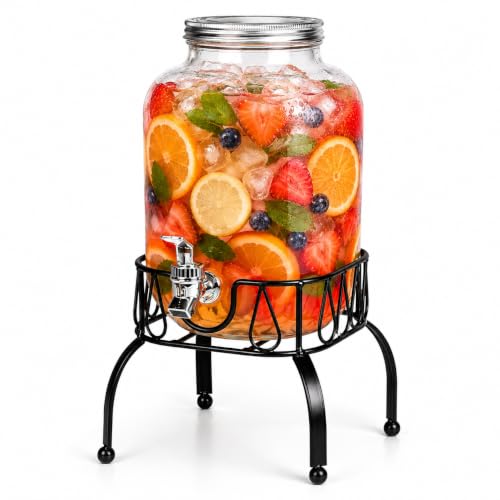
A glass jar dispenser with a spigot and a metal stand. It holds a batch of punch or a batched cocktail for a party table.
Suits: batched drinks. Strengths: an included stand. Weaknesses: heavy when full. Skip it if you have little table room.
Best for casual hosting
3. Circleware Yorkshire Beverage Dispenser
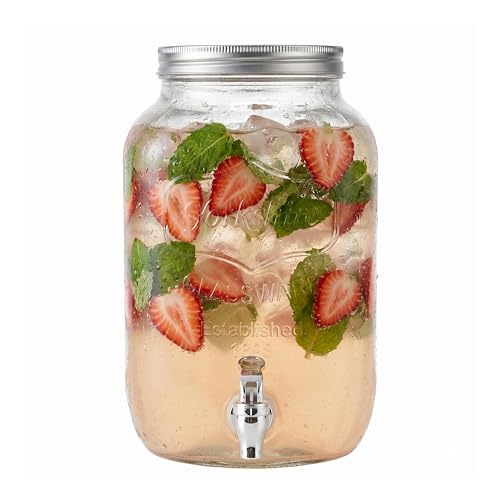
A glass dispenser with a spigot from a maker of party drinkware. The look is simple and works for cocktails and iced drinks.
Suits: casual hosting. Strengths: a clean look. Weaknesses: check the stand. Skip it if you need a lid with a tight seal.
View Circleware Yorkshire Beverage Dispenser on Amazon

Best for retro styling
4. Anchor Hocking Heritage Hill Drink Dispenser
A classic glass jar dispenser from an old American glassware brand, with a vintage look that suits a bar cart.
Suits: retro styling. Strengths: a recognized brand. Weaknesses: glass is heavy. Skip it if you prefer a modern shape.
View Anchor Hocking Heritage Hill Dispenser on Amazon
Best for party tables
5. Libbey Glass Beverage Dispenser
A glass dispenser from a large glassware maker, usually with a spigot and sometimes a wooden stand. Confirm the version on the listing.
Suits: party tables. Strengths: a trusted brand. Weaknesses: versions differ. Skip it if you need exact specs first.
View Libbey Glass Beverage Dispenser on Amazon

Best for small bars
6. Godinger Dublin Liquor Dispenser
A smaller, decorative dispenser for spirits, not a large punch bowl. It suits a mini bar or a bar cart rather than a crowd.
Suits: small bars. Strengths: a decorative look. Weaknesses: limited capacity. Skip it if you serve large groups.
View Godinger Dublin Liquor Dispenser on Amazon
Care and Setup
- Test the spigot with water before filling it with a cocktail.
- Place the dispenser on a level, steady surface.
- Rinse right after the party so sugar does not set.
- Keep ice in a separate bucket, not in the main jar.
- Wipe the spigot and nozzle with a damp cloth after each use.
- Set a tray under the spigot to catch drips.
Mistakes to Avoid
- Filling a glass dispenser beyond the recommended line.
- Using a spigot that drips onto the table.
- Leaving fruit to soften inside for hours.
- Skipping a drip tray or a coaster.
- Mixing a batch with perishable ingredients and leaving it out for hours.
- Using a very sweet mix that gums up the spigot.
Gravity Dispensers Versus Pod Machines
The two types of cocktail dispensing setups work in very different ways, and choosing between them is the first decision. A gravity dispenser is a container, often glass, with a spigot near the bottom, sometimes on a stand. You mix a batch of cocktail or punch ahead of time, fill the container and let guests pour. It is simple, has no electronics and works with whatever recipe you choose.
A pod-based machine mixes drinks from capsules or pods of ingredients and a spirit that you add. It makes one drink at a time, with measured portions, and can reduce guesswork for people who are not used to mixing drinks. The tradeoffs are the cost of pods, a smaller menu to choose from, the need for power and a more involved cleaning routine.
For a party of many guests drinking the same punch or batch cocktail, a gravity dispenser is usually more practical. For a smaller gathering where guests want different drinks, or a household that wants a consistent single serving at any time, a machine may suit better. Read the listing to see what ingredients the machine requires and whether it works with the spirits you want to use.
- Large group, one drink: gravity dispenser.
- Small group, varied drinks: pod machine.
- Check ongoing costs and what you need to supply.
Capacity and Party Planning
Capacity is the number that people forget to calculate. A dispenser listing will state its volume, but you need to translate that into servings. Decide how large each pour will be and how many drinks you expect each guest to have over the party. Multiply to estimate the total volume, then add a margin. Remember that ice and fruit take up space inside the dispenser, so usable volume is smaller than the stated capacity.
Plan for refills. A large glass dispenser is heavy when full, so consider filling it in place rather than moving it. A stand helps hold the weight, but check the stand’s stated limits and the stability of its base. If your party will last several hours, prepare extra batch cocktail in a pitcher in the refrigerator so you can top up.
Think about mixers that separate or go flat. Drinks with carbonation lose fizz when mixed ahead, so add sparkling ingredients just before serving or leave them out of the dispenser. Juices with pulp can settle, so stir occasionally. Keep a ladle or long spoon nearby for stirring, and have a tray under the spigot to catch drips.
- Estimate servings per guest, then add a margin.
- Allow for the volume taken up by ice and fruit.
- Have refills ready in the refrigerator.
Spigot Design and Leak Prevention
The spigot is the most common source of problems with a drink dispenser, so look at it closely. Spigots are usually plastic or metal, and they connect to the container with a threaded fitting and a washer or gasket. A snug fit and a well-seated gasket prevent leaks. A spigot that is cross-threaded or overtightened can crack, so tighten by hand until snug and no more.
Check how the spigot opens and closes. A push-style tap is easy for guests to use and tends to close firmly, while some designs drip after pouring. Look at the listing for how much clearance there is under the spigot, since you need to fit the cups you plan to use. A tall cup may not fit under a low tap.
Before the party, test the dispenser with water. Assemble it fully, fill it and let it sit for a while, checking for drips around the spigot and the base. If there is a leak, check the gasket and the threading, and consult the maker’s instructions. Place the dispenser on a stable, level surface with a tray underneath. Keep it away from the edge of the table and out of reach of small children.
- Test with water before using drinks.
- Hand-tighten the spigot with its gasket in place.
- Use a tray to catch drips.
Batching Cocktails That Hold Up
Not every cocktail suits a dispenser. Drinks that stay stable when mixed ahead work best. Spirit-forward drinks, punches, sangria and drinks based on juice, tea or cordial hold up well. Drinks with carbonated mixers, fresh egg white, dairy or delicate herbs are poor candidates, since they separate, go flat or change flavor.
Dilution is the key to a good batch. A cocktail that is shaken or stirred with ice picks up some water, which balances the strength. When you batch ahead, you need to add that water in the form of a measured amount, or let ice melt in the dispenser. Test your recipe in a small amount first, and adjust before scaling up. Citrus juice is best squeezed fresh on the day, since its flavor fades with time.
Keep the drink cold. Chill ingredients before mixing and, if the dispenser has a separate ice compartment or insert, use it as the maker intends. Putting ice directly into the container dilutes the drink as it melts. Alcohol should be served responsibly. Label the dispenser so guests know what is inside and how strong it is, and offer non-alcoholic options as well.
- Choose stable recipes such as punches and spirit-based drinks.
- Account for dilution and taste before scaling up.
- Label the dispenser and offer a non-alcoholic option.
Cleaning and Storing Your Dispensing Station
Sugary and acidic drinks leave residue, so clean the dispenser promptly after use. Empty it, take off the spigot and wash the container and parts with warm soapy water. A long, soft bottle brush helps with the inside of a tall jar, and a small brush or pipe cleaner can reach inside the spigot. Rinse thoroughly, because soap or alcohol residue can taste off in the next batch.
Check the care instructions for glass dispensers, since some are not suited to the dishwasher or to sudden temperature change. Do not pour hot liquid into cold glass or put cold glass on a hot surface. If the dispenser has a metal stand, wipe it dry to prevent rust or spotting.
For machines, follow the maker’s cleaning cycle and descaling guidance, and clean any parts that touch ingredients regularly. Empty trays and containers after each use. Store the dispenser with the lid and spigot off, so that air can circulate and no odors build up. Keep the gaskets and washers in a small bag so they do not get lost, and replace them if they are worn, cracked or sticky.
- Wash right after use and rinse thoroughly.
- Follow the maker’s rules for glass and machine parts.
- Store dry, with the spigot removed.
Cocktail Dispenser FAQ
What drinks work in a gravity dispenser?
Batched cocktails, punches and iced drinks. Avoid carbonated mixes that go flat.
Is a machine better than a dispenser?
A machine gives consistent, single-serve drinks. A dispenser serves a crowd with one batch.
How do I stop leaks?
Seat the spigot firmly, check the washer and test with water first.
Can I add ice inside?
Many people use an ice core or add ice to the glass instead, which prevents dilution.
How much drink should I make for a party?
Estimate the size of each pour and how many drinks a guest is likely to have, then add a margin and remember that ice takes up space. Check the stated capacity on the listing.
Can I put carbonated drinks in a dispenser?
You can, but they go flat. Add sparkling ingredients just before serving, or let guests top up their own glass with a splash of soda.
What is the best way to keep drinks cold in a dispenser?
Chill the ingredients before mixing, and use any ice insert that comes with the dispenser. Ice mixed directly into the drink melts and dilutes it.
Why does my dispenser keep dripping?
Usually the spigot is not seated properly, the gasket is worn or the fitting is cross-threaded. Reassemble it carefully, hand tighten and test with water. Replace worn washers.
Can a glass dispenser go in the dishwasher?
Check the manufacturer's instructions, since many glass dispensers and metal stands are best washed by hand. Spigots and gaskets may also need hand washing.
Is it safe to leave a batch cocktail out all evening?
Alcohol and juice mixtures can warm and change in flavor, and anything with dairy or fresh ingredients should be kept cold. Keep a chilled refill in the refrigerator and serve responsibly.
How do I stop fruit from clogging the spigot?
Use larger pieces of fruit or a fruit infuser insert if the dispenser has one, and avoid heavy pulp. Check the spigot opening size on the listing.
Choosing Drinks for the Crowd and the Occasion
A dispensing station is most useful when the menu matches the event. A drink that thrills a small dinner may be a poor fit for a large outdoor gathering, and the reverse is also true. Think about who is coming, how long the party will last and how much time you are willing to spend refilling.
Daytime and outdoor gatherings
Light, refreshing drinks such as spritzes, sangria, margarita-style mixes and fruit punches suit a warm afternoon. These are forgiving, they benefit from being made ahead, and they dilute pleasantly if some ice melts. A large-capacity gravity dispenser like the Estilo or Libbey models fits this kind of event well.
Evening cocktail parties
Stirred, spirit-forward drinks such as Manhattans or negronis can be batched, but they are stronger and usually served over a single large cube. These work in smaller dispensers where guests pour modest servings. A decanter-style dispenser like the Godinger suits this mood better than a large beverage jar.
Holiday and seasonal menus
- Autumn: spiced cider with bourbon or a cranberry-orange punch.
- Winter: eggnog-style batches, though these often belong in a chilled bowl instead of a spigot dispenser.
- Spring: elderflower or cucumber-based coolers.
- Summer: watermelon, citrus and mint combinations.
Offering a non-alcoholic option
Every party benefits from a second dispenser, or at least a clearly labeled alternative, with a drink that does not contain alcohol. Iced tea with citrus, a sparkling-free fruit punch or an herb-infused lemonade keeps designated drivers, guests who do not drink and younger attendees included. Label both dispensers with a card so no one pours the wrong drink by mistake.
Glassware, Ice and Garnish Setup
The dispenser is only one part of the station. How you set up glasses, ice and garnishes decides whether guests can serve themselves smoothly or crowd around a puddle.
Choose sturdy glasses that suit the drink. Stemless tumblers and short rocks glasses are practical for batch cocktails because they are stable and less likely to tip. For outdoor events, consider shatter-resistant plastic or acrylic. Provide more glasses than you think you need, since guests tend to set a glass down and pick up a new one.
Ice is best kept separate from the batch. Put a bowl or bucket of ice with tongs or a scoop next to the dispenser so each guest adds ice to their own glass. This keeps the batch at full strength, which a single melting block of ice inside a dispenser will gradually dilute.
Garnishes add polish and prevent the dispenser from clogging. Citrus wheels, mint sprigs, berries and cocktail picks can live in small bowls beside the station. Place a drip tray or a rimmed serving tray under the spigot to catch splashes and protect the table.
- One glass per guest to start, with replacements within reach.
- A scoop or tongs, never hands, for ice.
- Napkins and a small towel for the inevitable drips.
- A small sign naming the drink and listing key ingredients, including common allergens.
Strength, Serving Size and Responsible Hosting
Batch cocktails are easy to over-pour, because a self-serve spigot encourages guests to fill the glass. A few simple habits help keep the party enjoyable.
Make the batch a little less strong than a standard single-serving recipe, since people will often have more than one. Use smaller glasses to encourage moderate portions, and mention the drink’s strength on the sign. A drink that tastes like fruit punch can hide a surprising amount of alcohol.
Pair the station with food and water. Snacks slow absorption, and a pitcher of water within reach makes it easy for guests to pace themselves. Know your guests’ plans for getting home, and have a few ride-share or overnight options ready if the party runs late.
If children or guests with dietary restrictions will be present, keep the alcoholic dispenser out of reach and clearly marked. A table at adult height or a spot supervised by the host is sensible.
Where to Place the Station and How It Affects Flow
Placement is often overlooked, but it shapes the whole party. Avoid putting the station in a narrow hallway or beside the main food table, where traffic will jam. A corner of a kitchen island, a side table or a patio bar cart gives guests room to gather without blocking others.
Choose a stable, level surface that can hold the full weight of the filled dispenser. A large glass jar of liquid is heavy, and a wobbly table is a real hazard. Keep the station out of direct sun, which warms the drink and can cloud the glass over time, and place a non-slip mat under the stand.
Finally, set the station up fully before guests arrive. Fill the dispenser, test the spigot over a sink, line up the glasses and stock the ice, and the rest of the evening takes care of itself.
Hosting With a Dispensing Station: Timing, Flow and Second Batches
A dispensing station changes hosting from a sequence of individual requests into a background system, but only if the timing is planned. Batch the main drink before guests arrive, taste it slightly stronger and slightly sweeter than you would serve it straight, because ice in the glass and dilution in the dispenser will soften both. Set the station where guests naturally gather without blocking the route to food or the door, and put everything a guest needs in one place: glasses, ice in a separate vessel with tongs, garnish, a small towel for drips and a discard bowl for spent citrus. When guests can complete the whole serve without asking the host for anything, the station is working. When a queue forms for a missing item, the station is just a container.
How the Six Options in This Guide Suit Different Parties
The Bartesian Premium Cocktail Machine serves the host who wants individual, consistent cocktails on demand without batching, and who accepts a capsule-based routine in exchange for pressing a button. The Estilo Glass Drink Dispenser with Stand is the classic elevated batch dispenser, raising the spigot so glasses fit beneath it comfortably and presenting drinks attractively at a buffet. The Circleware Yorkshire Beverage Dispenser brings a traditional mason-jar character that suits casual garden and country-style gatherings. The Anchor Hocking Heritage Hill dispenser favours a clean, familiar glass profile for punches and infused waters as readily as cocktails. The Libbey Glass Beverage Dispenser is the versatile all-rounder many hosts start with, at home with lemonade by day and a batched serve by evening. The Godinger Dublin Liquor Dispenser occupies a different niche: a smaller, decorative piece for spirits service and a stocked bar corner rather than a high-volume party batch. Choosing between a machine and a gravity dispenser is really choosing between variety per glass and simplicity per event.
Keeping Batch Drinks Cold, Safe and Honest
Temperature and strength both drift during a party, so manage them deliberately. Keep the batch itself free of ice where possible and serve over fresh ice in the glass, which keeps the first hour and the third hour tasting alike; if the drink must be chilled in the dispenser, use large ice or a frozen water bottle that dilutes slowly. Label the drink with its name and main ingredients where guests can see it, which helps anyone avoiding a particular spirit, citrus or allergen, and state plainly if a second container is non-alcoholic. Top up with a freshly mixed smaller batch rather than adding spirit directly to the dispenser, since a guess poured into a large volume is hard to correct. At the end of the evening, discard leftover perishable batches made with fresh juice or dairy rather than refrigerating them for another day; the saving is small and the quality, and safety, are not worth the gamble.
Planning Quantities So the Station Never Runs Dry
Running out mid-party is the dispensing station’s one unforgivable failure, and it is entirely preventable with simple arithmetic done in advance. Estimate how many guests will drink from the station, assume each will take two to three serves across the event, and size the batch to the glass you are actually using rather than to a generous guess. Then hold back a reserve: either a smaller second batch mixed and refrigerated, ready to pour in, or the measured ingredients and recipe card kept beside the station so a top-up takes minutes instead of a search through cupboards. A reserve mixed fresh also tastes better than one giant batch stretched thin. Note what was actually consumed this time, somewhere you will find it before the next gathering, and quantities stop being guesswork altogether, which quietly makes every future party cheaper and calmer to host.
Related guides
Frequently Asked Questions
How far ahead can I make a batch cocktail?
Spirit-and-sweetener mixes often hold well for a day or two in the fridge, but fresh citrus juice fades quickly and is best added within a few hours of serving. Many hosts mix the base ahead, then add juice, ice and any sparkling ingredients shortly before guests arrive.
How strong should a batch cocktail be?
Slightly lighter than a single-serving recipe is a sensible target, because guests tend to refill. Account for dilution from ice in each glass, taste the batch before serving, and label the drink so people know what they are pouring. A smaller glass also encourages more measured servings.
Should I offer a non-alcoholic dispenser at a party?
It is a good idea. A second dispenser with iced tea, lemonade or a fruit punch gives guests who do not drink, designated drivers and younger attendees a self-serve option and avoids mix-ups. Label both clearly so no one pours the wrong drink by accident.
Can a glass dispenser sit outside in the sun?
It is best to avoid it. Direct sun warms the drink quickly, and sudden temperature changes can stress glass. Place the dispenser in shade on a stable, level surface, keep ice separate to chill each serving, and bring it inside if the weather turns hot or windy.
Two Kinds of Station: Gravity Dispenser or Cocktail Machine
Every option in this guide answers the same wish, to free the host from the bar during a party, but the two families answer it in opposite ways. A gravity dispenser, such as the Estilo, Circleware, Anchor Hocking and Libbey glass dispensers here, holds one batched drink that you mixed in advance, and guests simply pour. Its virtues are simplicity, capacity and silence: no power, no parts to program, and a drink that tastes exactly as you made it because you made it. Its limit is that one drink, served one way, which is why the batch has to be chosen with the whole guest list in mind.
An automated machine, represented here by the Bartesian Premium, inverts the arrangement: it holds spirits and water and mixes individual cocktails from capsules at the press of a button, so guests choose among drinks rather than sharing one. Its virtues are variety and consistency, every drink measured the same way. Its costs are the ongoing capsule supply, counter space with power, and a drink defined by the capsule maker’s recipes rather than by your own hand. The Godinger Dublin dispenser sits between the families in spirit, a smaller, decanter-style pourer for a spirits-forward gathering rather than a full party batch.
Choose by the party you actually throw. A host whose signature is one great punch or batched cocktail, perfected over years, gains nothing from a machine and loses the ritual. A host who entertains varied tastes, or who simply wants to be at the party instead of behind it in a more complete sense, will find the machine’s variety worth its ongoing costs. Households that host both ways across a year can justify both tools, using the dispenser for summer gatherings and the machine for winter ones, and neither purchase contradicts the other.
Comparing the Six Options in This Guide
Among the gravity dispensers, the differences are capacity, stand and style. The Estilo pairs its glass dispenser with a metal stand, which raises the spigot to a height that lets a glass fit beneath it comfortably, a small detail that decides whether a dispenser is pleasant or awkward all evening. The Circleware Yorkshire offers a clean, simple look that suits casual hosting and disappears into any table. The Anchor Hocking Heritage Hill brings a classic jar silhouette from an old American glassware name, at home in a retro-styled bar or a country kitchen. The Libbey dispenser comes from one of the largest glassmakers, with the straightforward design that implies, and its listing should be checked for stand details, since the stand, as with the Estilo, shapes the using of it.
The Bartesian stands alone as the machine, and its comparison is not really with the jars but with the idea of batching itself: capsules and consistency against your own mixing and a single serve. The Godinger Dublin, in cut crystal-style glass, is the occasion piece, smaller in scale and suited to a spirits dispenser role at a seated gathering rather than to a crowd around a table.
For most home parties, the gravity dispensers are the honest workhorses of this guide, and the choice among them can be made on stand height, capacity against your usual guest count, and the look your table wants. The machine is the specialist for the host who values variety over authorship, and it should be bought with its capsule future understood rather than discovered.
Batching Drinks That Hold Up in a Dispenser
A batched drink for a dispenser must survive the evening, which rules out anything that depends on being shaken to order, on fresh fizz, or on ingredients that separate or turn dull in an hour. Spirit-forward punches, wine-based batches, and long drinks built on juice and spirits that marry well are the dispenser’s natural repertoire. Build the batch a little stronger and a little less sweet than the finished drink should be, because it will be poured over ice in the glass, and the ice will dilute and chill it toward balance. Taste the batch as your guests will meet it, in a glass, over ice, after it has stood a few minutes, rather than from the mixing spoon, since the spoon’s version is not the drink anyone will actually have.
Keep carbonation out of the dispenser itself. Fizzy ingredients go flat in a held batch and can trouble a spigot, so add sparkling elements to the glass at pouring time if the drink wants them, with a bottle standing beside the dispenser for guests to top their own. Garnishes belong beside the dispenser too, cut and ready, along with the ice in a separate bucket, so the station offers a small, clear ritual: pour, ice, garnish, go. Fresh citrus in a batch should be added as late as practical, since its brightness is the first thing time takes from a held drink.
Label the dispenser, charmingly but clearly, with what is in it and, where it matters, what its base spirit is. Guests make better choices, and hosts answer fewer questions, when the station explains itself. Keep a non-alcoholic batch or at least a clearly marked alternative in a second vessel or a jug nearby, because a station that serves everyone is the difference between a thoughtful host and a merely equipped one.
Setting Up the Station So Guests Actually Use It
A dispensing station succeeds on placement and flow. Put it where guests naturally gather but not where they must queue across a doorway or a kitchen’s working path, on a surface that can take drips without drama, with room for the dispenser, the ice, the garnish, the glasses and the small mess that self-service honestly involves. Glasses should be stacked or lined within reach of the spigot, and the spigot itself should be tested with water before the party, since a leaking or stiff tap discovered at the first pour is a host’s small nightmare. A drip tray or a folded cloth beneath the spigot is not fussiness; it is what keeps the station looking inviting at hour three instead of hour one.
Lighting and height matter more than decoration. Guests should be able to see the drink level, the label and their own glass filling, and the stand’s height, as discussed with the Estilo in this guide, should let a glass sit under the spigot without being held at an angle. Keep a small cloth at the station for guests to catch their own drips, a spare supply of ice within the host’s reach rather than the guests’, and a plan for the refill: a second batch mixed and waiting in the refrigerator turns a popular dispenser from a crisis into a compliment.
For the Bartesian, the equivalent setup is capsules stocked in variety, spirits and water filled, glasses that suit the drinks it makes, and a brief word to guests on how it works, since a machine nobody dares touch frees nobody. The principle is identical across both families: a station that explains itself, placed where the party is, stocked for the whole evening.
Cleaning Dispensers and Spigots Without Regret
Sugar and juice are patient enemies of every dispenser in this guide. Rinse the vessel and, most importantly, run clean water through the spigot as soon as the party ends, because the spigot’s narrow passages are where residue dries, sticks and eventually flavors or blocks the next batch. Disassemble what the maker allows, wash glass in warm soapy water, and take care with stands and metal fittings, drying them rather than leaving them to spot or, worse, to sit damp against glass. A dispenser stored clean and dry, with its spigot left open to the air, will greet the next party without a smell or a struggle.
The machine asks for its own version of the same discipline: follow the maker’s cleaning guidance for the parts that touch spirits and mixers, keep capsule paths clear, and never let sweet residues sit in warm places. Glass dispensers should be stored where their spigots cannot be knocked, since the spigot is both the most useful and the most vulnerable part of the whole design, and a spare moment spent checking its seal before a party is worth more than any repair after one.
More Cocktail Dispensing Questions Answered
How much should I batch for a party?
Estimate generously per guest for the first hours and let a refrigerator backup batch, as suggested above, cover your uncertainty rather than overfilling the dispenser itself. A dispenser that runs dry with a backup waiting is a success; one mixed far beyond the need wastes good spirits and leaves you storing a tired batch. Count your guests, consider the evening’s length, and mix in two acts.
Can I put a carbonated punch in a dispenser?
It will pour, but it will go steadily flat and may misbehave at the spigot. Keep the base batch still, and let guests add the sparkling element to their own glass. The drink keeps its life, the dispenser keeps its manners, and everyone gets the version they prefer.
Is a cocktail machine worth it for occasional parties?
Only if the parties are regular enough that the capsule supply stays fresh and the machine stays familiar. For a few gatherings a year, the gravity dispensers in this guide deliver the same freedom with no ongoing commitment. For a household that hosts monthly and values variety, the machine earns its counter honestly.
How do I stop a spigot dripping?
First, check that it is fully closed and that no pulp or residue is holding it open, which a thorough rinse usually cures. A spigot that drips when clean and closed has a seal that needs the maker’s attention, and discovering that during a water test before the party, rather than over a tablecloth during it, is the entire reason the test exists.
What drinks should I avoid batching?
Anything built on egg, cream or fresh shaking, anything whose charm is a just-made fizz, and anything with ingredients that separate or discolor as they stand. The dispenser’s repertoire is wide, punches, sangria-style batches, long spirit-and-juice drinks, but it rewards drinks designed to wait, and punishes those designed for the moment.
Can a dispenser serve non-drinkers well?
Yes, and it should. A second, smaller batch of something considered, a lemonade with herbs, an iced tea with citrus, served with the same ice and garnish ceremony, makes every guest a participant in the station rather than an exception to it. Label it as clearly as the other, and the station becomes the party’s center for everyone.
After the Party: What the Station Teaches the Host
Every party run on a dispensing station teaches its host something specific, if the host is paying attention while clearing up. Note what ran out and what was left, which garnish vanished and which was ignored, and whether guests used the station confidently or hovered waiting for permission. Those observations, written down with the batch recipe itself, turn the next party’s planning from guesswork into editing: a stronger batch here, a clearer label there, the station moved two feet toward the light. Hosts who keep that small record find that their third party on a dispenser feels effortless in a way the first did not, not because the equipment changed, but because the system around it, batch, placement, ice, glasses and labels, has been quietly perfected by use.
Store the dispenser with its lessons: the recipe card that worked, a note of the guest count it served, and any part, a washer, a spigot piece, that you promised yourself you would check before next time. A station stored with its own history is a station that can be set up in minutes, months later, without re-solving a single problem, and that readiness is the deepest version of the freedom this whole category of equipment was bought to provide.
Readiness, in a host, is a form of generosity, because it is what allows you to be present at your own party, talking, laughing and pouring nothing more demanding than your own glass. That presence is what your guests came for, far more than for any drink, and it is the honest measure of whether the station, dispenser or machine, has done its job. Choose the option in this guide that gives you that presence most completely, set it up with the care described here, and then go and enjoy the evening you built it for.
The evening, after all, is the product. The dispenser is only the means, and a means well chosen disappears into music, conversation and glasses refilled without a thought, which is exactly where it belongs.
One more practical rehearsal is worth doing before the first real party, and it takes ten minutes on a quiet afternoon. Fill the dispenser with water, set it on its stand in the exact spot you plan to use, and pour a dozen glasses at the pace guests will. You will learn whether the stand’s height truly fits your glasses, whether the spigot’s flow is patient or impatient, whether the full vessel can be moved safely or must be filled in place, and whether the surface beneath needs protection. Every one of those discoveries is free on a Tuesday and expensive on a Saturday night with a house full of people. Do the same honest check with the machine if that is your choice: make its drinks for your own household first, learn its sounds and its capsule routine, and let its first public performance be a repeat rather than a premiere. Hosts are made by exactly this kind of unglamorous preparation, and guests, without ever knowing why, can always tell the difference between a station that was rehearsed and one that was merely purchased.
They can also tell, by the second hour, whether they are free to help themselves, and that freedom, once granted clearly and kindly, is what turns a gathering of guests into a party that runs on its own good nature.
Grant it from the first pour, with a word and a gesture toward the station, and then step back and be a guest at your own table.
It is a surprisingly pleasant place to be, and it is the whole reason the equipment exists.
Remember that the first time you feel tempted to hover, and pour yourself a glass instead.
The glass will taste better for the company it keeps, which was the point of the party long before it was the point of the equipment.
Keep that order straight, equipment in service of company, and every choice in this guide becomes simpler to make and easier to enjoy.
Simplicity, in hosting, is not the absence of effort but its correct placement: all of it before the doorbell, none of it during the evening. A dispensing station, properly chosen and rehearsed, is simply that philosophy made of glass, steel and one good batch.
The Short Version
For a push-button bar, the Bartesian. For a stand and spigot, the Estilo. For a clean look, the Circleware Yorkshire. For vintage style, the Anchor Hocking Heritage Hill. For a known glassware brand, the Libbey. For a small bar, the Godinger Dublin. Choose a machine for single drinks or a dispenser for batches.

