A sideboard doubles as a coffee bar when you give the top to a machine and use the cabinets for mugs, pods, beans and filters. The right one is deep enough for the brewer, has a surface that tolerates splashes and fits the room it lives in.
The six sideboards below range from farmhouse buffets to modern storage cabinets. We have not used these products ourselves, so confirm the dimensions, weight capacity and assembly requirements on the current listing before buying. Load and finish claims are the makers’ own.
As an Amazon Associate we earn from qualifying purchases. Links below are affiliate links, and they do not change the product information we give.
What to Look For
| Feature | Why it matters |
|---|---|
| Depth | The top must be deep enough for the machine and its drip tray |
| Height | Leave room between the top and any shelf or cabinet above |
| Storage | Doors and drawers hide pods and supplies |
| Top finish | A wipeable surface handles coffee drips better than raw wood |
| Cable access | A cord hole or back clearance keeps machines plugged in neatly |
In this guide
Specs at a Glance
| Sideboard | Style | Material | Notes |
|---|---|---|---|
| Walker Edison Modern Farmhouse Sideboard | Farmhouse | Engineered wood | Doors and shelving |
| HOMCOM Sideboard Buffet Cabinet | Modern | Engineered wood | Cabinet storage |
| Sauder Select Buffet | Contemporary | Engineered wood | Sauder furniture brand |
| Giantex Sideboard | Modern | Engineered wood | Cabinet plus drawers, per the maker |
| Tribesigns Sideboard | Modern | Engineered wood | Wide storage unit |
| Yaheetech Sideboard | Modern | Engineered wood | Value-priced storage |
The 6 Best Coffee Bar Sideboards

Top pickBest for farmhouse and country rooms
1. Walker Edison Modern Farmhouse Sideboard
Walker Edison sells flat-pack furniture online. This farmhouse sideboard has cabinet doors for storage and a flat top that can hold a brewer and canisters.
Suits: farmhouse and country rooms. Strengths: a warm look and closed storage. Weaknesses: assembly is required. Skip it if you want a minimalist cabinet.
View Walker Edison Farmhouse Sideboard on Amazon
Best for an affordable start
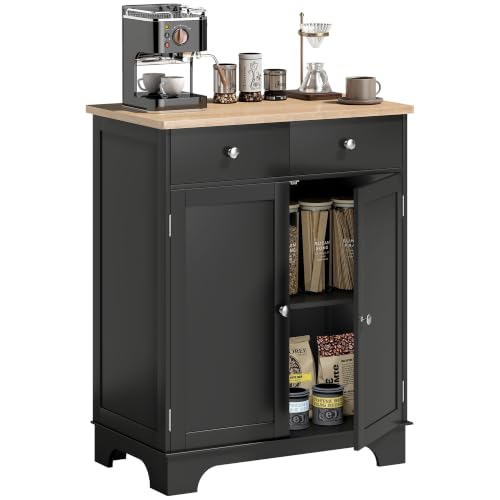
2. HOMCOM Sideboard Buffet Cabinet
HOMCOM makes budget-friendly home furniture. This buffet cabinet offers closed storage below and a work surface above for a coffee station.
Suits: an affordable start. Strengths: useful storage. Weaknesses: check the top surface size. Skip it if you want solid wood.
View HOMCOM Sideboard Buffet Cabinet on Amazon
Best for a long, low station
3. Sauder Select Buffet
Sauder is a well-known maker of ready-to-assemble furniture. Its buffet is a wide cabinet with room for pods, filters and mugs behind doors.
Suits: a long, low station. Strengths: a recognized brand. Weaknesses: the top is laminate, so use a mat. Skip it if you want a rustic piece.
View Sauder Select Buffet on Amazon
Best for a family kitchen
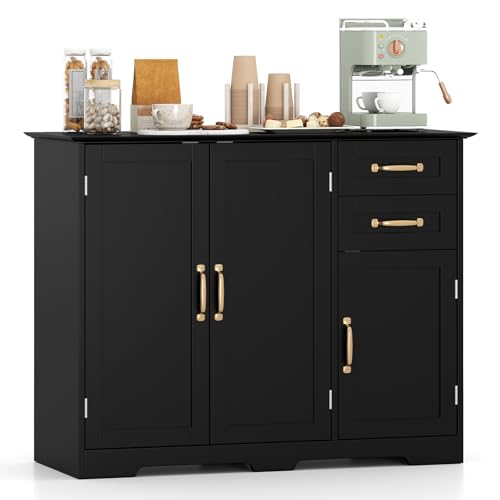
4. Giantex Sideboard
Giantex sells budget home furniture. Its sideboard combines cabinets and drawers, which suits storing small coffee items.
Suits: a family kitchen. Strengths: plenty of compartments. Weaknesses: finish durability depends on care. Skip it if you want premium wood.
View Giantex Sideboard on Amazon

Best for larger rooms
5. Tribesigns Sideboard
Tribesigns sells modern office and home furniture. Its sideboards tend to be wide, which gives a coffee bar plenty of top space.
Suits: larger rooms. Strengths: wide surfaces. Weaknesses: a heavy item to move. Skip it if you have a small room.
View Tribesigns Sideboard on Amazon

Best for tight budgets
6. Yaheetech Sideboard
Yaheetech is a value furniture brand. Its sideboards offer basic cabinets that cover everyday storage for a small home coffee corner.
Suits: tight budgets. Strengths: simple storage. Weaknesses: check the weight limit. Skip it if you plan to add a heavy espresso machine.
View Yaheetech Sideboard on Amazon
Care and Setup
- Anchor tall or heavy sideboards to the wall if the maker provides straps.
- Use a silicone mat under the machine to protect the top.
- Keep the back clearance the machine needs for ventilation.
- Wipe spills at once, since laminate edges can swell with moisture.
Mistakes to Avoid
- Skipping a measurement of the machine against the top depth.
- Putting a brewer under a low cabinet that traps steam.
- Overloading a flat-pack top with heavy equipment.
- Running cords across a doorway or walkway.
Planning the Coffee Station in Zones
A coffee bar works best when it is organized into zones rather than treated as a flat surface to pile things on. Think of three areas: a brewing zone for the machine and its water supply, a supply zone for beans, filters, pods and sweeteners, and a serving zone for mugs, spoons and a place to set a cup down. Giving each activity its own space keeps the top from becoming cluttered and makes the routine faster.
Start by deciding what the main machine will be and how much room it needs, including space to open the lid and remove the water tank. Put it toward one end so the rest of the top stays free for other things. Closed storage below is good for bulky items like bags of beans and boxes of filters, while drawers suit small items such as stirrers and spoons.
Consider how many people use the station and at what times. A household with a single morning drinker needs less surface than one with several, or one that serves guests. Measure the sideboard against your available wall, leaving a clear walking path. Think about outlets too: a coffee bar needs reliable power, and a cord that stretches across a room is both a hazard and an eyesore. Sketch the layout on paper before buying, with your actual equipment dimensions, to see whether the piece can handle the load.
Measuring for Your Machine and Your Cabinets
Dimensions decide whether a sideboard works. Measure the machine’s width, depth and height, and add space for the tray, the water tank and any movement of the lid or steam wand. Compare that with the top surface of the sideboard, not just its overall size. Some designs have a lip or raised edge that reduces usable space. Depth is often the limit, since many sideboards are shallow.
Check the height from the top of the sideboard to anything above it, such as a shelf or cabinet. Many machines need clearance for filling and for steam, and you do not want steam rising directly into wood. Leave a few inches around the machine for ventilation if the manual calls for it.
- Measure the room, including door swings and walkways, before ordering.
- Confirm that doors and drawers can open fully with the machine in place.
- Check the weight capacity on the top surface, since machines, grinders and canisters add up.
Also consider assembly. Flat-pack furniture requires time and space to build, and larger pieces can take two people. Read the listing for the assembled weight and any hardware included. Once built, a heavy sideboard is hard to move, so place it carefully.
Cord Management and Power Planning
Coffee machines, grinders, kettles and warmers all need power, and a sideboard rarely has built-in outlets. Plan where cords will run before you set up. Sideboards with a back panel or a small gap behind them can hide cords, and some have a pass-through hole. If yours does not, you may need to drill a hole or use cable clips to keep cords tidy, as long as the manufacturer allows it.
Check how many devices will run at the same time. A machine and a kettle together can draw a lot of current, and sharing a circuit with other appliances could trip a breaker. Use a surge protector or power strip rated for the load, and avoid daisy-chaining. Do not run cords under rugs or across walking paths, and keep them away from water.
Think about heat as well. Machines produce warmth, and the cord and plug should not be pinched or pressed against the back wall. Leave a small gap for airflow if the manual recommends. If the sideboard is against an exterior wall or window, watch for condensation and cold drafts, which can affect machines and stored beans. Label cords and plan their length so that you can unplug a machine easily for cleaning without moving the whole unit.
Surface Protection and Spill Planning
Coffee stations are messy by nature. Drips, steam and spills land on the top, and a finish that looks good in a showroom can stain or swell after a few weeks. Engineered wood with a laminate or melamine surface wipes clean more easily than raw wood, but any edge or seam where moisture can penetrate is vulnerable. Check the edges and joints, and note whether the surface is sealed.
Protect the top with a silicone mat, a tray or a heat-resistant pad under the machine. A tray with a raised edge catches drips and can be lifted out for washing. Use coasters or a mat under mugs. Keep a small cloth within reach to wipe up spills as they happen, since coffee left to dry can leave marks. Avoid placing hot kettles directly on the surface unless the maker says it is heat resistant.
Inside the cabinet, use bins or small containers to prevent leaks from spreading, and keep bags of beans in airtight containers. Be careful with cleaning products, since some chemicals can damage finishes, and test a small hidden area first. If you notice swelling or peeling near the machine, move it or add more protection. Over time, regular wiping and good habits keep a sideboard looking presentable.
Styling and Keeping the Station Tidy
A coffee bar should look inviting but remain practical. Decide what stays out and what goes inside. The machine, a canister of beans and a few mugs are enough for the top, and the rest can live behind doors. A tray or basket can corral small items like sweeteners and stirrers, making them easy to move for cleaning.
Use vertical space with a shelf or wall rail above the sideboard if you have room, but leave clearance for steam and for filling the machine. Hooks under a shelf can hold mugs. Choose containers with labels so that you can find things quickly, and decant coffee into airtight canisters, which keeps it fresher than leaving it in an open bag.
- Keep only a few days of supplies on top and store the rest inside.
- Group items by use: brewing items together, serving items together.
- Wipe the surface and empty drip trays as part of your daily routine.
Style choices come down to taste. Farmhouse pieces suit warm, casual rooms, while modern designs suit clean-lined spaces. Whatever you pick, a few consistent colors and materials help the station look deliberate. Revisit the arrangement after a few weeks and adjust anything that is awkward.
Choosing Between the Picks in This Guide, One by One
Six options is a lot to hold in your head at once, so it helps to work through the shortlist for this coffee bar sideboard guide pick by pick, using only what the reviews above already establish. Each pick below is framed the same way: who it suits, what it does best, and the limitation to accept with open eyes. Read the six in order and mark the one whose weakness bothers you least — that simple test resolves most shortlists faster than chasing an abstract idea of the single best option.
Consider the Walker Edison Modern Farmhouse Sideboard if its particular balance of trade-offs matches how you actually work. The guide above notes that it suits farmhouse and country rooms, and that its appeal rests on a warm look and closed storage. Set against the other picks, that makes it the natural shortlist entry when those qualities matter more to you than all-round convenience. Its honest limitation is worth weighing just as carefully: assembly is required. Skip it if you want a minimalist cabinet. If that limitation touches something you do every day, another pick in this guide will serve you better; if it touches something you rarely do, it is a fair price in kind for the strengths you gain. The mistake to avoid is choosing it for a use case it was never aimed at, then blaming the product for a mismatch that was visible from the start.
The HOMCOM Sideboard Buffet Cabinet earns its place for a narrower reason than the headline suggests. It suits an affordable start, with useful storage as the qualities that separate it from the rest of this list. Read it as a specialist rather than a default: when your routine lines up with what it does well, it can outperform a more general pick, and when your routine does not, its drawback — check the top surface size. Skip it if you want solid wood — will be the thing you notice daily. A useful test is to picture your most ordinary session, not your most ambitious one, and ask whether this is the pick you would reach for then. Ordinary sessions are where satisfaction is actually decided.
With the Sauder Select Buffet, the decision comes down to priorities. It is aimed at a long, low station, and it stands out for a recognized brand. Those are real advantages, but they sit alongside a clear compromise: the top is laminate, so use a mat. Skip it if you want a rustic piece. Compared with the neighbouring picks in this guide, it asks you to accept that compromise in exchange for doing its main job in its own way. If you have read the other reviews and found yourself nodding at this one’s strengths while shrugging at its weakness, that reaction is usually the right signal. If the weakness made you hesitate, trust the hesitation and look at the pick whose strengths match the task you found yourself defending.
Consider the Giantex Sideboard if its particular balance of trade-offs matches how you actually work. The guide above notes that it suits a family kitchen, and that its appeal rests on plenty of compartments. Set against the other picks, that makes it the natural shortlist entry when those qualities matter more to you than all-round convenience. Its honest limitation is worth weighing just as carefully: finish durability depends on care. Skip it if you want premium wood. If that limitation touches something you do every day, another pick in this guide will serve you better; if it touches something you rarely do, it is a fair price in kind for the strengths you gain. The mistake to avoid is choosing it for a use case it was never aimed at, then blaming the product for a mismatch that was visible from the start.
The Tribesigns Sideboard earns its place for a narrower reason than the headline suggests. It suits larger rooms, with wide surfaces as the qualities that separate it from the rest of this list. Read it as a specialist rather than a default: when your routine lines up with what it does well, it can outperform a more general pick, and when your routine does not, its drawback — a heavy item to move. Skip it if you have a small room — will be the thing you notice daily. A useful test is to picture your most ordinary session, not your most ambitious one, and ask whether this is the pick you would reach for then. Ordinary sessions are where satisfaction is actually decided.
With the Yaheetech Sideboard, the decision comes down to priorities. It is aimed at tight budgets, and it stands out for simple storage. Those are real advantages, but they sit alongside a clear compromise: check the weight limit. Skip it if you plan to add a heavy espresso machine. Compared with the neighbouring picks in this guide, it asks you to accept that compromise in exchange for doing its main job in its own way. If you have read the other reviews and found yourself nodding at this one’s strengths while shrugging at its weakness, that reaction is usually the right signal. If the weakness made you hesitate, trust the hesitation and look at the pick whose strengths match the task you found yourself defending.
Planning the Inside: Storage That Matches the Ritual
A sideboard succeeds or fails behind its doors. Before yours arrives, lay out everything the coffee station must hold — machine supplies, beans, filters, cups, mugs, sweeteners, the kettle, cleaning cloths — and group them by how often you reach for them. Daily items belong at the front of the easiest shelf or drawer; occasional items can live deeper. Measure the tallest item, usually a syrup bottle or a French press, against the interior height. Five minutes with a tape measure prevents the classic discovery that the cabinet is beautiful and the grinder does not fit inside it.
Drawers and doors ask different habits. Drawers suit small, loose items — filters, spoons, pods — because you see everything from above; doors suit bulkier pieces and appliances. If your shortlist mixes both, picture your own routine honestly: are you a drawer person who files things, or a door person who shelves them? The sideboard you keep organised is the one that matches the habits you already have, not the ones you aspire to.
The Top Surface: A Working Counter, Not a Display
Treat the top as a counter with a workflow: machine on one side, preparation space in the middle, finished drinks landing on the other. Leave genuine elbow room in front of the machine for tamping, filling and wiping; a top crowded edge to edge with decor makes every morning slower. Protect the surface from day one — a tray under the machine catches the drips and grounds that otherwise stain wood and swell veneer, and coasters under hot mugs prevent rings that no polish fully removes.
Heat and steam are the slow enemies of furniture finishes. A machine steaming daily against a wall can mark paint and swell a sideboard’s back panel over time, so leave a small air gap behind the unit and wipe condensation rather than letting it sit. If the top is wood, expect honest wear and choose a finish you can live with ageing; if that thought bothers you, a stone, metal or laminate top from this guide will suit you better than daily anxiety.
Blending a Coffee Station Into a Dining Room
Most sideboards live in dining rooms, where the coffee bar shares space with meals and guests. The trick is a station that can present two faces: working face in the morning, furniture face by evening. Supplies that disappear behind doors, a machine with clean lines, and cups stored inside rather than ranked on top let the piece read as a sideboard first. A small plant or framed piece above it finishes the disguise. Guests should discover the coffee bar with pleasure, not trip over a café that colonised the dining room.
Lighting helps more than accessories. A small lamp or nearby natural light makes the station inviting at dawn and lets you see what you are doing without flooding the room. If the sideboard sits far from an outlet, solve power properly with a short, rated extension rather than a cable trailing across a walkway. These unglamorous details — light, power, a surface that wipes clean — are what separate a station that delights daily from one that photographs well once.
A Slower Decision Routine Before You Order
Most disappointment with a coffee bar sideboard is not caused by a bad product; it is caused by a quick decision made on the wrong criterion. The criteria table near the top of this guide is short for a reason — those are the checks that actually predict whether you will be happy. Work through them in the order below, in writing if necessary, before you commit to any of the six picks.
Start with depth. The guide’s table puts it plainly: the top must be deep enough for the machine and its drip tray. Do not treat that as a box to tick and move on. Picture it in your own space and routine — where this coffee bar sideboard will live, who else will use it, and how often. A criterion that looks minor on a product page becomes major when it is part of a daily habit, and minor daily friction is what quietly pushes a purchase into a cupboard. If a pick is weak on the criterion that matters most in your routine, that weakness outweighs several strengths elsewhere.
Start with height. The guide’s table puts it plainly: leave room between the top and any shelf or cabinet above. Do not treat that as a box to tick and move on. Picture it in your own space and routine — where this coffee bar sideboard will live, who else will use it, and how often. A criterion that looks minor on a product page becomes major when it is part of a daily habit, and minor daily friction is what quietly pushes a purchase into a cupboard. If a pick is weak on the criterion that matters most in your routine, that weakness outweighs several strengths elsewhere.
Start with storage. The guide’s table puts it plainly: doors and drawers hide pods and supplies. Do not treat that as a box to tick and move on. Picture it in your own space and routine — where this coffee bar sideboard will live, who else will use it, and how often. A criterion that looks minor on a product page becomes major when it is part of a daily habit, and minor daily friction is what quietly pushes a purchase into a cupboard. If a pick is weak on the criterion that matters most in your routine, that weakness outweighs several strengths elsewhere.
Start with top finish. The guide’s table puts it plainly: a wipeable surface handles coffee drips better than raw wood. Do not treat that as a box to tick and move on. Picture it in your own space and routine — where this coffee bar sideboard will live, who else will use it, and how often. A criterion that looks minor on a product page becomes major when it is part of a daily habit, and minor daily friction is what quietly pushes a purchase into a cupboard. If a pick is weak on the criterion that matters most in your routine, that weakness outweighs several strengths elsewhere.
Start with cable access. The guide’s table puts it plainly: a cord hole or back clearance keeps machines plugged in neatly. Do not treat that as a box to tick and move on. Picture it in your own space and routine — where this coffee bar sideboard will live, who else will use it, and how often. A criterion that looks minor on a product page becomes major when it is part of a daily habit, and minor daily friction is what quietly pushes a purchase into a cupboard. If a pick is weak on the criterion that matters most in your routine, that weakness outweighs several strengths elsewhere.
Finish the routine by re-reading the review of your leading pick one more time, looking only for reasons not to buy it. If the reasons you find are things you can genuinely live with, you have made a sound choice. If they are things you are merely hoping will not matter, keep looking — the other five picks exist precisely because no single coffee bar sideboard suits everyone.
Three Mistakes That Lead to the Wrong Choice
Choosing looks before interior fit
A sideboard whose shelves cannot take your tallest bottle or whose doors block the machine’s tank is a daily frustration wearing nice clothes. Measure interiors, door swings and the machine’s working clearances before falling for a finish. Furniture returns are miserable; measurements are free.
Putting the machine against the wall
Steam, heat and splashes need somewhere to go. A unit jammed to the wall marks the paint, swells panels and makes the tank awkward to remove. A modest gap and a protective tray cost nothing and prevent the two most common regrets with furniture-based coffee bars.
Over-decorating the top
When every surface is styled, there is nowhere to set a hot mug or wipe a spill, and the station stops being used. Keep decoration to the edges and the wall above. A coffee bar that works will always look better in real life than a styled one that does not.
Living With It: The First Month and Beyond
In the first month, live with the doors open mentally: notice what you reach for, what migrates to the front, and what you never touch. Reorganise once, decisively, around that evidence. Most owners find the station settles into a pattern — beans and filters together, cups above the machine, cleaning supplies exiled to the far end — and after that single reorganisation it stays stable for years.
Care for the furniture as furniture: dust it, treat the top according to its material, and tighten hinges and handles when they loosen, as they quietly do. Coffee oils on handles and steam marks behind the machine are the two spots to watch. A sideboard maintained like the dining furniture it is will outlast several machines, which is exactly the point of buying furniture instead of a stand.
Over time the sideboard becomes the room’s quiet hub — morning coffee, evening tea, a landing place for dessert at gatherings. That versatility is why the category endures. Buy the piece that suits the room even if your coffee habit changes, because a good sideboard forgives a change of hobby in a way a dedicated stand never will.
More Questions About Choosing and Using One
How much weight can the top hold?
Check the maker’s stated limit for the specific model and respect it — espresso machines are dense, and weight concentrates on small feet. Spread load with the machine’s own base or a tray, and never stack additional heavy appliances on top. If a listing is vague about capacity, treat that as a reason to choose a clearer one.
Can I drill a hole for cables?
Many owners do, at the back panel, to keep cords invisible — but it is permanent and may affect resale and warranty. Try routing through the rear gap first; most sideboards leave enough space. If you drill, measure twice, choose the least visible spot, and keep the hole modest.
What if my machine is too tall for the space above?
Measure from the sideboard top to any shelf, cabinet or artwork above, with the machine’s lid and cup warmer in use. If it does not fit, the honest options are a lower machine, a different wall, or a cart instead. Forcing a tall machine into a short gap makes daily refilling a chore you will resent.
How do I child-proof a coffee sideboard?
Machines get hot and cords invite pulling, so keep the machine toward the back of the top, route cords out of reach, and store beans and cleaning products behind a latched door if small children visit. The station can stay beautiful and still be sensible — it just needs the same thought you would give a stove.
Three Readers, Three Different Right Answers
Abstract rankings matter less than fit, so consider three typical readers of this coffee bar sideboard guide and notice how the same shortlist resolves differently for each. Their situations are composites, but the reasoning is the reasoning you should apply to your own circumstances, using the reviews above as the evidence base.
The first-time buyer has never owned one and wants the fewest possible surprises. For this reader, the Walker Edison Modern Farmhouse Sideboard is the natural landing place: it suits farmhouse and country rooms, and its case rests on a warm look and closed storage. Crucially, its known limitation — assembly is required. Skip it if you want a minimalist cabinet — is one this reader is well placed to accept, because it does not collide with the use they actually have in mind. The lesson generalises: the right pick is rarely the one with the fewest weaknesses, but the one whose weaknesses fall where you will never step. Read your own situation into these three sketches, decide which reader you most resemble, and let that resemblance — not the numbering in the list — order your shortlist.
The upgrader already owns a basic version and is replacing it because one specific frustration finally outweighed the rest. For this reader, the Sauder Select Buffet is the natural landing place: it suits a long, low station, and its case rests on a recognized brand. Crucially, its known limitation — the top is laminate, so use a mat. Skip it if you want a rustic piece — is one this reader is well placed to accept, because it does not collide with the use they actually have in mind. The lesson generalises: the right pick is rarely the one with the fewest weaknesses, but the one whose weaknesses fall where you will never step. Read your own situation into these three sketches, decide which reader you most resemble, and let that resemblance — not the numbering in the list — order your shortlist.
The host or gift buyer is choosing for other people’s use, or for a household where several people will share it. For this reader, the Tribesigns Sideboard is the natural landing place: it suits larger rooms, and its case rests on wide surfaces. Crucially, its known limitation — a heavy item to move. Skip it if you have a small room — is one this reader is well placed to accept, because it does not collide with the use they actually have in mind. The lesson generalises: the right pick is rarely the one with the fewest weaknesses, but the one whose weaknesses fall where you will never step. Read your own situation into these three sketches, decide which reader you most resemble, and let that resemblance — not the numbering in the list — order your shortlist.
Coffee Bar Sideboards FAQ
What height works best?
Counter-like heights feel natural, but any height works if you can reach the machine. Check the listing for the stated height.
Can I use a buffet cabinet?
Yes. Buffets and sideboards are similar, and either can host a coffee station.
How do I protect the top?
Use a tray or mat, and wipe up drips quickly.
Do I need ventilation?
Machines that give off steam should not sit directly under shelves, so leave open space above.
How should I organize a sideboard coffee bar?
Keep the machine on top with daily mugs and canisters within easy reach. Store pods, filters, spare beans and syrups in the cabinets below, and use a small tray to corral sugar, stirrers and spoons so the top stays uncluttered.
Is engineered wood fine for a coffee station?
It can be, provided you keep it dry. Engineered wood and laminate resist light splashes but can swell if water sits on the edges, so a mat and prompt wiping matter more than the exact material.
Can I add a small fridge?
Some people place a mini fridge nearby for milk. Check clearances first.
How deep should a sideboard be for a coffee machine?
It should be deep enough for the machine plus room to remove the tank and tray. Measure your machine and compare it with the usable surface depth on the listing. A little extra depth is helpful for ventilation.
Can I put a grinder next to the machine?
Yes, if the top surface is wide enough and the load is within the weight limit. Leave room so you can use both comfortably. Keep the grinder away from drips.
What is the best way to hide cords?
Use the gap behind the sideboard, a cord pass-through or cable clips. Avoid running cords where they can be pinched or get wet. Check the manufacturer's notes before drilling.
Will steam damage a cabinet above the machine?
Repeated steam can affect finishes, especially wood or laminate. Leave clearance, and consider moving the machine forward when steaming. Check your machine's manual for placement guidance.
How do I keep beans fresh in a cabinet?
Store them in airtight containers away from heat, light and moisture. Keep only what you will use soon on the counter. Avoid storing beans next to the oven or stove.
Is assembly difficult?
Flat-pack furniture can take time and may need two people. Check the listing for the number of pieces and tools required. Allow space to build and follow the instructions carefully.
Can a kettle sit directly on the sideboard top?
Only if the maker states that the surface tolerates heat. Otherwise, a trivet or heat-resistant pad is the safer choice. Check the listing for any finish ratings.
Weight, Load Capacity and Stability
A coffee machine, grinder, kettle and a collection of mugs add up. An espresso machine alone can weigh more than 20 pounds when its tank is full, and a tray of cups and canisters adds more. Before choosing a sideboard, estimate the total load on the top and the shelves.
Manufacturers often list a weight capacity for the top surface and for each shelf. Treat these as ceiling values, and leave margin, because a load concentrated in one spot is harder on a panel than the same weight spread out. If a listing does not mention capacity, look at the material and construction instead. Thick panels, center supports and metal frames generally carry more than thin, unsupported spans.
Stability also matters. A tall, narrow cabinet is more prone to tipping than a low, wide one, and a coffee station invites bumps and reaching. Check that the feet are level, and use furniture pads or small shims if the floor is uneven. A wobbling top can send hot liquid across the counter.
For families with children or pets, anchoring the unit to the wall with a furniture strap is a smart safety step, especially if you put heavy items on the top shelf. Most sideboards, including the Walker Edison and Sauder models on this list, come with some form of anti-tip hardware or have mounting points, but you should confirm that before you buy.
Lighting and Atmosphere
A coffee bar is a small, visible feature, and lighting makes it both easier to use and more inviting. Dim corners make it hard to read labels or see the level of water in a tank, so a bit of added light helps.
Under-cabinet LED strips are an affordable option if the sideboard has an upper shelf or hutch. Battery-powered puck lights or adhesive LED bars require no wiring, and many have motion sensors that switch on when you approach. A small table lamp beside the station adds warmth, though it takes up counter space.
Consider the color temperature. Warm white tones feel cozy and suit wood finishes, while cooler white is cleaner and brighter for task use. Choose lighting that avoids glare on glossy surfaces.
Keep any lighting cords tidy and away from water. If you use plug-in lights, route them behind the unit and use cord clips so they do not dangle near the machine.
Working Without a Sink: Water and Cleanup Routines
Unlike a kitchen counter, a sideboard has no running water nearby, and that shapes how you set up a coffee bar. Planning a simple water routine prevents the station from becoming a chore.
Keep a dedicated pitcher or water jug for filling the reservoir, and refill it at the kitchen sink. A small tray or bin for used grounds and a lidded container for rinse water help you avoid trips mid-brew. If your machine has a large tank, refilling will be infrequent.
Plan where used cups and spoons go. A small tray for dirty dishes, or a tote you carry to the kitchen, keeps the sideboard from collecting clutter. A small stack of cloths or paper towels within reach lets you wipe spills right away.
Drip trays should be emptied regularly, since standing water can leave marks on wood surfaces and create odors. Using a silicone or cork mat under the machine adds another layer of protection.
Fitting a Coffee Bar into a Small Space or a Rental
Not everyone has a spacious dining room. A slim sideboard can work in an apartment hallway, a corner of the living room or the end of a kitchen, as long as you measure carefully and keep the clearance around the machine in mind.
In rentals, avoid anything that requires drilling into walls if your lease discourages it. Free-standing cabinets with self-contained storage are the natural choice. Use removable adhesive hooks for mugs and cord clips that do not damage paint. If you need anti-tip protection, ask your landlord or choose a model with a stable footprint and a low center of gravity.
Think vertically. A shelf above the sideboard or a hanging mug rack makes use of wall space without crowding the top. Baskets and canisters keep supplies contained, and a narrow cart that tucks beside the sideboard can hold backup supplies.
When you move, a sideboard that disassembles cleanly makes the next apartment easier. Keep the assembly hardware in a labeled bag taped to the back panel so you can rebuild it when you need to.
Whatever you choose, do a dry run before loading the cabinet. Place the machine, grinder and a few mugs on the empty top, step back and check reach, sight lines and the swing of any doors or drawers. Confirm the outlet location and cord length, and leave a clear spot where hot items can rest. Adjusting the layout before the cabinet is full is far easier than moving heavy appliances after the fact.
Frequently Asked Questions
How much weight can a sideboard hold?
It varies widely by material and construction. Manufacturers often list capacities for the top and shelves, and these are best treated as maximums. Add up the weight of your machine with a full tank, a grinder and accessories, and leave a margin. Spread heavy items out instead of concentrating them.
Should I anchor a sideboard to the wall?
It is a good safety step, especially with children or pets, or if you place heavy items high. Many sideboards include anti-tip hardware. If you rent and cannot drill, choose a wide, low unit with a stable base and keep heavier items on lower shelves.
How do I run a coffee bar without a nearby sink?
Use a dedicated pitcher to refill the reservoir at the kitchen sink, keep a small bin for used grounds and a tray for dirty cups. A tank with a large capacity reduces refills. Wipe spills immediately and empty the drip tray regularly to protect the surface.
What lighting works best for a coffee station?
Battery-powered LED strips or puck lights are easy options because they need no wiring, and many have motion sensors. Warm white suits wood finishes, while cooler tones are brighter for tasks. Keep cords tidy and away from water, and avoid placing lights where they create glare on glossy surfaces.
The Short Version
For farmhouse style, the Walker Edison. For an affordable cabinet, the HOMCOM. For a known brand, the Sauder. For drawers and cabinets, the Giantex. For a wide top, the Tribesigns. For a tight budget, the Yaheetech.

