Disclosure: topratedkitchenware.com is reader-supported. When you buy through links on our site, we may earn an affiliate commission from Amazon and other retailers, at no extra cost to you.
Where to buy
If you are shopping for the best coffee makers with hot water dispenser, the six models below are the shortlist this guide is built around. Prices and availability change often on Amazon, so use the links to check the latest price on Amazon before you buy. Orders are placed on Amazon, and the listing there carries the full manufacturer detail for each model.
- Best Overall: Ninja Single Serve Coffee Maker PB051 — Check on Amazon
- Keurig K-Elite (Brushed Silver) — Check on Amazon
- Keurig K-Express (Black) — Check on Amazon
- Keurig K-Express (Warm Stone) — Check on Amazon
- Elite Gourmet Single-Serve Coffee Maker — Check on Amazon
- Keurig K-Mini Mate — Check on Amazon
Read the full guide ↓
Precision first, because this keyword demands it: shoppers searching for the best coffee makers with hot water dispenser usually picture a machine with a dedicated spout or lever that pours hot water on demand, separate from the coffee path. None of the six verified machines in this guide lists such a dispenser in its specification. What they do — all of them — is dispense hot water through the brew cycle itself: select a size, run the machine with no pod and no grounds, and hot water arrives in the cup. This guide treats that distinction as the main event rather than a footnote. It ranks the six machines as hot-water dispensers in the cycle sense — by reservoir capacity, dispense size range and routine — and it explains plainly where a true dispenser appliance would serve you better, so you can buy the right category, not just the right model.
Why rank cycle-dispensing at all? Because for the majority of household hot-water needs — tea by the mug, oatmeal, instant soup, hot chocolate, a top-up for a cafetière — a cup-at-a-time dispense from a reservoir machine is functionally a dispenser, with one appliance doing two jobs and no kettle on the counter. The machines separate on how well they sustain that role. Reservoir size decides how often the station runs dry: 56 oz on the Ninja PB051, 42 oz on the K-Express platform. Maximum dispense size decides what a single cycle can fill: the Ninja reaches 24 oz, enough for a small pot, where the minis serve a single mug. And format decides whose drinks the station serves, from pod-only simplicity to the Elite Gourmet, which brews loose-leaf tea itself rather than merely supplying its water.
A final framing note before the reviews. If your household fills teapots for a crowd, keeps a kettle busy all day, or needs water at a true rolling boil on tap, the honest recommendation is a dedicated hot-water dispenser or a kettle alongside a coffee maker — a different purchase, compared in the lens sections below. If your hot-water life is measured in cups and mugs, read on: one of these six is your station, and the differences between them are practical rather than cosmetic. Our companion guide to Best Coffee Makers With No Carafe looks at the neighbouring single-serve formats from the coffee-first angle.
Key Takeaways
- No pick here has a separate dispenser tap; hot water is dispensed by running a brew cycle with no pod or grounds.
- As dispensers, these machines rank by reservoir and pour size: Ninja 56 oz and up to 24 oz leads, K-Express 42 oz follows.
- Cycle dispensing suits cups, mugs and bowls; teapot-for-a-crowd households still need a kettle or a true dispenser.
- The Elite Gourmet is the exception that brews loose-leaf tea directly, not just its water.
- Run a small discarded rinse cycle before dispensing water for delicate tea after strong coffee.
- True instant dispensers exist as their own appliance class — buy that class if tap-style water is the priority.
In this guide
Quick Picks
Six single-serve brewers ranked as hot-water dispensers in the cycle sense: capacity first, then the benchmark platform, then the per-cup and mini specialists. Badges match the detailed reviews.
| Pick | Badge | Why it earns its place |
|---|---|---|
| Ninja Single Serve Coffee Maker PB051 | Best Overall | The largest reservoir here at 56 oz, four brew styles and sizes to 24 oz — the closest thing in this set to a household hot-drinks dispenser. |
| Keurig K-Elite (Brushed Silver) | Best Premium Finish | The premium brushed-silver Keurig: the established single-serve format for buyers who want the dispenser-style routine in a polished finish. |
| Keurig K-Express (Black) | Best Classic Choice | The standard K-Express platform in black: 42 oz reservoir and three sizes covering coffee and water-only dispensing for cups and mugs. |
| Keurig K-Express (Warm Stone) | Best Neutral Finish | The K-Express in warm stone, bringing the same reservoir routine to light kitchens without the black-box look. |
| Elite Gourmet Single-Serve Coffee Maker | Best for Grounds and Tea | A reusable filter for grounds and loose-leaf tea plus per-cup water dispensing for the solo drinker who values freshness over volume. |
| Keurig K-Mini Mate | Best for Dorms and Desks | The compact portable pick: water-only cycles for tea and instant foods in dorms, offices and the smallest counters. |
How These Picks Were Chosen
Value, finally, was assessed as cost per job rather than cost per machine. A dispenser-role appliance does the work of two devices, so the fair comparison for a reservoir machine is not the cheapest coffee maker but the combined cost and footprint of a coffee maker plus the kettle or dispenser it replaces. On that arithmetic the mid-size platform machines are the value centre of this set, the Ninja justifies itself only where its capacity is genuinely used, and the minis win outright in the small spaces where the alternative was never a second appliance at all. Tier language in the reviews follows that logic throughout.
Before ranking anything, the pool was walked through the dispenser scenario in its purest form: a household that treats the machine as its hot-water source for one full day. Breakfast drinks for the household, a mid-morning tea, instant lunch for two, an afternoon top-up, an evening hot chocolate. The walk-through sorted the set faster than any specification table. Machines with reservoirs above forty ounces absorbed the day. Machines at the per-cup end revealed their true nature — personal appliances, excellent for one persons rhythm, visibly labouring as a household utility. Both kinds earned places in this guide, but for different readers, and the reviews keep that distinction in front of you rather than letting a single ranking blur it.
The scenario also exposed a criterion no listing states: recovery. After a large dispense, how ready is the machine for the next one? Reservoir machines with stored hot water pathways — in practice, all of them once the first cycle has run — settle into a rhythm where consecutive cycles feel routine. The discipline this demands is not mechanical but human: refilling before the tank runs dry, refreshing before the water stales, descaling before the flow slows. A dispenser, of any class, is a small system, and systems reward owners who run them as systems. The how-to section of this guide is written in that spirit.
Finally, the guide applied a language audit to itself, because this keyword invites sloppy words. Every use of the word dispenser in these pages refers either to the cycle mechanism, named as such, or to the dedicated appliance class, named as such. No machine below is credited with a tap, a lever, a spout of its own or an always-hot tank, because none lists one. If that restraint makes the guide read more carefully than others on this keyword, the care is the point: a reader who understands the mechanism they are buying is a reader who will still be satisfied with the machine in a year.
Each model was verified against its current Amazon listing, and every specification below — reservoir ounces, size ranges, formats, finishes — traces to that listing text. On this keyword the verification rule does heavy work: dispenser language is where buying guides most often drift from mechanism into metaphor, describing a brew cycle as if it were a tap. This guide keeps the mechanism in view throughout. A model is credited as a dispenser only in the precise sense that it heats and delivers measured hot water on demand of a button press, through its brew path, in the sizes it lists.
Ranking criteria were set by the dispenser job itself. Capacity first: how much water the station holds and how large a single dispense can be, because those two numbers define the role. Refill and cleaning effort second: removable reservoirs score because a water station must stay fresh-tasting, and a tank that lifts out and washes beats one that can only be wiped. Coffee competence third — this is still a coffee maker, and pods, grounds, strength options and iced modes decide the other half of its life. Footprint and finish closed the criteria, legitimately last: a station that does not fit the counter dispenses nothing.
Method, stated plainly: research-led guidance from verified listing data and established category knowledge, not hands-on laboratory testing, and no invented dispenser features anywhere. Where the guide compares these machines with true dispenser appliances, it does so at category level — how the appliance class works — rather than by naming unverified rival models. Readers focused on the coffee side of the same pool can cross-check Best Coffee Makers With Metal Carafe for the carafe formats, and milk-drink readers will find Best Coffee Makers With Pods Frother useful.
The 6 best coffee makers with hot water dispenser-style convenience, ranked
Each review states the verified specification, then judges the machine as a dispenser — capacity, pour size, freshness of routine — before its coffee credentials.

Ninja Single Serve Coffee Maker PB051
Badge: Best Overall
Strengths
- 56 oz removable reservoir means the fewest refills of any pick here
- Sizes up to 24 oz dispense enough hot water for small pots and large mugs in one cycle
- Four brew styles plus pods and grounds make it a full hot-drinks station, not just a brewer
Trade-offs
- No separate dispenser tap in the listing; water is dispensed by the brew cycle like the rest of the set
- The largest footprint here, the price of the largest reservoir
- A big tank demands refresh discipline in low-use households
Key specs from the listing: Format: single serve combo machine. Accepts: K-Cup pods and grounds. Brew styles: 4. Cup sizes: up to 24 oz. Reservoir: 56 oz, removable. Model: PB051. Finish: Black.
The Ninja PB051 is the closest machine in this set to a household hot-drinks dispenser, and the reasons are arithmetic. Its 56 oz removable reservoir is the largest here, so the station runs longest between refills. Its dispense sizes reach 24 oz, so a single water-only cycle fills a large travel mug, a bowl of noodles for two or a small teapot — vessels that force every other pick here into double cycles. Add four brew styles and acceptance of both pods and grounds, and the coffee side matches the water side: this is a full station, sized for households that draw hot drinks in rounds and resent refilling anything.
The honest debits mirror the strengths. There is no separate tap — dispensing is by the cycle, at brewing pace — and the machine is the largest footprint in the guide. A 56 oz tank also demands an owner with refresh discipline: filled and forgotten, it will stale like any stored water, and its descaling matters because scale slows and cools both coffee and dispensed water. For the heavy-use household, those are management notes, not objections. This is the dispenser-role champion of the set.
Best for: households that draw hot drinks and hot water in rounds / Not suited for: anyone needing a true instant dispenser tap

Keurig K-Elite (Brushed Silver)
Badge: Best Premium Finish
Strengths
- Brushed silver finish is the most premium presentation in the set
- The Keurig single-serve format is the most familiar routine in the category
- Water-only cycles deliver hot water in the standard way for this format
Trade-offs
- The verified listing is brief, so detailed specification must be confirmed on the live listing
- Pod-only, with water dispensed via water-only cycles
- Premium finish positioning in the Keurig line
Key specs from the listing: Format: single serve, K-Cup pods. Finish: Brushed Silver. (The verified listing for this model is brief; this guide claims no features beyond the format and finish it states.)
The K-Elite in brushed silver represents the premium end of the classic single-serve format, and its review observes this guides evidence rule strictly: the verified listing confirms the single-serve K-Cup format and the brushed silver finish, and is brief beyond that, so no reservoir capacity or size list is claimed for it here. In dispenser terms, what the format guarantees is the standard mechanism — a water-only brew cycle delivering a measured cup of hot water on a button press — in the most established routine in the category, with pod shelves everywhere stocking its coffee.
The debits are the informational ones this guide has flagged before: a comparison shopper cannot rank its capacity from the listing alone and should confirm the full current specification on the live listing before ordering. Pod-only coffee bounds the coffee half of the station. Buyers for whom finish and format familiarity are the decision — a polished machine for a designed kitchen, a routine nobody in the household needs to learn — will find it coherent. Buyers ranking dispensers by the numbers should start with the Ninja and the K-Express line, whose listings state their capacities outright.
Best for: buyers prioritising finish within the classic format / Not suited for: spec-sheet comparison shoppers

Keurig K-Express (Black)
Badge: Best Classic Choice
Strengths
- The benchmark platform: three sizes, removable reservoir, Strong Brew
- Black finish hides the wear of a hard-working drinks station
- Travel mug clearance suits the commuter routine
Trade-offs
- Cycle-paced dispensing rather than instant tap water
- Pod-only coffee; no grounds or loose-leaf brewing
- One of three finishes of one platform in this guide
Key specs from the listing: Format: single serve, K-Cup pods. Brew sizes: 3. Reservoir: 42 oz, removable. Features: Strong Brew button, travel mug friendly. Finish: Black.
Black is the K-Express in its definitive form, and as a dispenser it is the balanced middle of this guide: a 42 oz removable reservoir that carries a days mixed dispensing for a typical household, three brew sizes that map onto a tea cup, a soup mug and an oatmeal bowl, and a water-only cycle simple enough that guests use it without instruction. The coffee half is the platform standard — Strong Brew for bolder cups, travel mug clearance — and the black finish is the pragmatic choice for a station that works hard, hiding the splashes and drips that dispensing duty accumulates.
Its limits are the platform limits, stated once for all three finishes: dispensing is cycle-paced rather than instant, the largest single pour is a mug rather than a pot, and coffee is pod-only. It is also, transparently, the same recommendation as the warm stone version below in a different finish — this guide lists the platform finishes separately because kitchens choose finishes, but no reader should mistake them for different machines. As the default station for a cup-and-mug household, black is the version that asks the least housekeeping in return.
Best for: households wanting the standard station in black / Not suited for: fresh-grind households
Keurig K-Express (Warm Stone)
Badge: Best Neutral Finish
Strengths
- Full K-Express specification in a warm, light finish
- Removable reservoir keeps the water supply washable and honest
- Suits pale kitchens where black appliances dominate
Trade-offs
- Mechanically identical to the black and mint versions of the platform
- Pale finish shows splashes sooner
- Cycle-paced dispensing, as with the whole platform
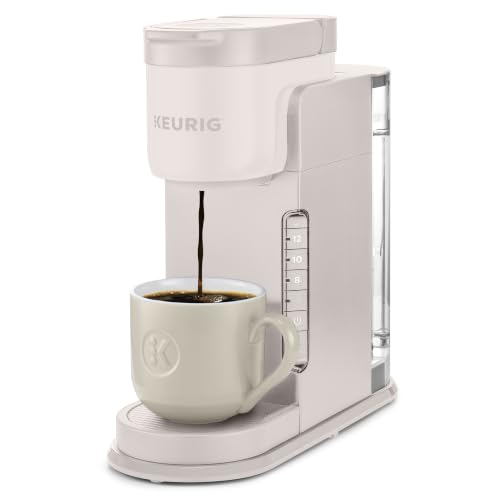
Key specs from the listing: Format: single serve, K-Cup pods. Brew sizes: 3. Reservoir: 42 oz, removable. Features: Strong Brew button, travel mug friendly. Finish: Warm Stone.
Warm Stone brings the identical K-Express dispenser routine — 42 oz removable reservoir, three sizes, water-only cycles, Strong Brew coffee — to kitchens designed around light surfaces, where the black version reads as a interruption in the room. The dispensing judgement is therefore the platforms judgement: well sized for cups and mugs across a day, simple for any household member to operate, and dependent on the rinse habit if delicate tea follows strong coffee through the shared brew path.
Choose between this and the black version purely as a room decision, with one practical footnote: pale finishes show coffee splashes and water spots sooner, so a dispensing station in warm stone wants a wipe-down rhythm to stay looking like the kitchen it was bought for. Households whose dispensing runs to pots and rounds should step up to the Ninja instead of choosing between these finishes; households whose dispensing runs to cups will be equally served by either.
Best for: light kitchens wanting the standard station / Not suited for: fresh-grind households

Elite Gourmet Single-Serve Coffee Maker
Badge: Best for Grounds and Tea
Strengths
- Reusable filter brews grounds and loose-leaf tea directly — the only pick that makes tea, not just tea water
- Per-cup water means every dispense is freshly heated and measured
- Dishwasher-safe parts and auto shut-off suit a one-person routine
Trade-offs
- No reservoir, so dispensing is one measured cup at a time
- A 14 oz ceiling rules out pots and rounds
- At 600W it is the gentlest heater here
Key specs from the listing: Format: single serve, 14 oz. Power: 600W. Controls: one-touch. Filter: reusable, for grounds and loose-leaf tea. Features: auto shut-off, dishwasher-safe parts. Model: EHC111A.
The Elite Gourmet breaks the pattern of this guide in an interesting way: it has no reservoir and dispenses one measured cup at a time — and yet it is the only pick that actually brews loose-leaf tea, through the same reusable filter that takes ground coffee. As a dispenser, it is a per-cup purist: every pour is freshly heated, exactly measured, with no stored water to stale. For the solo drinker whose hot-water needs are a morning coffee from fresh grounds and an evening loose-leaf tea, that purity beats capacity. The one-touch operation, auto shut-off and dishwasher-safe parts complete a routine designed for one person, done well.
The limits are absolute, though: 14 oz is the ceiling, there is no serving a round, and at 600W each cycle takes its time. A household station it is not. Judge it as a personal hot-drinks appliance — the freshest, simplest version of the dispenser idea, scaled to one — and it earns its place in this guide on merit rather than novelty.
Best for: solo drinkers who brew grounds and loose-leaf tea / Not suited for: households dispensing for several people
Keurig K-Mini Mate
Badge: Best for Dorms and Desks
Strengths
- Dispenses coffee and water-only cups in spaces no reservoir machine fits
- Brews up to 12 oz, enough for a mug of tea or instant soup
- Portable format moves between dorm, desk and spare room as life changes
Trade-offs
- No reservoir listed; every cup starts with a fresh fill
- Pod-only, so tea means water plus your own bag or infuser
- One modest cup at a time
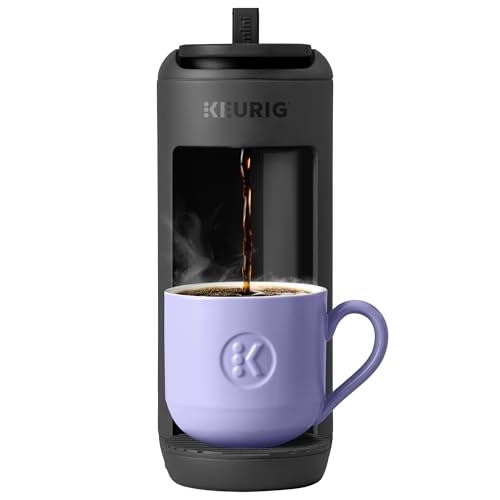
Key specs from the listing: Format: single serve, K-Cup pods. Brew size: up to 12 oz per cup. Design: compact and portable, for small spaces, dorms and offices. Finish: Black.
The K-Mini Mate is the dispenser idea at its smallest: a compact, portable single-serve machine, brewing up to 12 oz, that dispenses water-only cycles for tea, instant soup and hot chocolate in the places reservoir machines cannot go — dorm rooms, office desks, studio kitchenettes, the RV. There is no tank to stale and nothing to plumb or store; fill for the cup you want, press, and the machine delivers. For a student, that is the difference between having a hot-drinks station and not having one at all.
Its debits are the mini format itself: one modest cup per cycle, a refill between cups, pod-only coffee, and no loose-leaf or grounds path. It is a personal appliance, and households should not promote it into a family role it cannot fill. Within its role — the smallest spaces, the single drinker, the second station in a spare room or office — it is the right tool, and its water-only dispensing is a large part of why.
Best for: students, desk workers and tiny-space households / Not suited for: households dispensing in rounds
Comparison Table
Side by side, using only the verified listing specification for each model. Finishes aside, this is where the best coffee makers with hot water dispenser shortlist separates: reservoir size, format flexibility and cup range.
| Pick | Reservoir and brew sizes | Pods, grounds and extras | Stands out for | Listing |
|---|---|---|---|---|
| Ninja Single Serve Coffee Maker PB051 | 56 oz removable reservoir; up to 24 oz cups | Pods and grounds; 4 brew styles | Volume dispensing for households | Check on Amazon |
| Keurig K-Elite (Brushed Silver) | Single-serve format | K-Cup pods; brushed silver finish | Premium presentation | Check on Amazon |
| Keurig K-Express (Black) | 42 oz removable reservoir; 3 brew sizes | K-Cup pods; Strong Brew button | The classic dispenser-style routine | Check on Amazon |
| Keurig K-Express (Warm Stone) | 42 oz removable reservoir; 3 brew sizes | K-Cup pods; Strong Brew button | The routine in a pale finish | Check on Amazon |
| Elite Gourmet Single-Serve Coffee Maker | 14 oz single cup; no reservoir listed | Reusable filter for grounds and loose-leaf tea; 600W | Fresh, per-cup dispensing for one | Check on Amazon |
| Keurig K-Mini Mate | Up to 12 oz per cup | K-Cup pods; compact portable body | Dispensing in the smallest spaces | Check on Amazon |
How to choose between a cycle dispenser, a true dispenser and a kettle
Name the mechanism before comparing models, because this keyword covers three different appliances wearing one phrase. A cycle dispenser — every pick in this guide — heats and pumps a measured volume through a brew path when you press the button. It is really a coffee maker moonlighting, and it moonlights well for cups and mugs. A true hot-water dispenser is a dedicated appliance that keeps a tank of water hot and pours from a spout or lever on demand, instantly, in any volume up to its tank size; it makes no coffee at all. A kettle boils a volume and pours it by hand, fastest for pots and rounds, with no measured dispensing. Households go wrong by buying the first while picturing the second. Decide which mechanism your life needs, then compare within it.
Within the cycle-dispenser class, rank by the dispenser numbers. Reservoir capacity should cover your days draws with at most one refill: heavy households belong with the Ninja 56 oz, typical ones with the 42 oz platform. Maximum dispense size should match your largest regular vessel, remembering that two cycles into one bowl is a minor nuisance while two cycles into a teapot for guests, daily, is a genuine one. Then check the coffee half with equal honesty — pods, grounds or both, strength control, iced modes — because a station that serves water beautifully and coffee grudgingly will be resented by the coffee drinkers who share it. The FlexBrew-style dual format, represented in this pool by the Ninja, is the household-peace option.
Finally, cost the whole arrangement. A true dispenser plus a coffee maker is two appliances, two footprints, two descaling routines — justified when hot water is a primary, all-day need, wasteful when it is a sideline. A kettle is the cheapest partner appliance of all and the fastest for volume, at the price of counter space and manual pouring. Most households land, correctly, on the cycle dispenser: one machine, two jobs, cups and mugs served well. The mistake is only in expecting it to be the other appliances as well. For the neighbouring one-cup formats, see Best Coffee Makers With One Cup Mode.
How to set up a coffee maker as your hot-water dispensing station
A little arrangement turns the water-only cycle from a trick you know into a station the household uses. The steps below cover the setup, the daily dispensing routine and the care rhythm that keeps dispensed water tasting neutral — the quality on which the whole idea stands or falls.
- Place the tea and instant kit beside the machine — bags, infuser, oatmeal, soup, honey, mugs — so dispensing becomes a one-stop routine rather than a cupboard hunt.
- Learn the machines sizes against your vessels once, with a measuring jug, and note which setting fills your tea mug, your soup mug and your largest bowl.
- Start each day with fresh reservoir water; dispensed water exposes staleness that coffee would mask, so the refresh habit matters more here than anywhere.
- Dispense by selecting the size, placing the vessel, inserting no pod or grounds, and running the cycle; for pots or large bowls, run the largest size or two cycles back to back.
- Before dispensing for delicate tea after strong coffee, run one small water-only cycle and discard it to rinse the shared brew path.
- Wipe the spout area and tray daily, wash the removable reservoir weekly, and keep the area under the spout clear so vessels sit level.
- Descale on your water-hardness rhythm and run two full water-only cycles afterwards before dispensing for drinks again.
Safety deserves one plain paragraph. Dispensed water is hot enough to scald, and cycle dispensing invites a casualness that kettles, with their obvious heft of boiling water, do not. Keep the station out of small childrens independent reach, dispense into stable vessels on the drip tray rather than holding cups under the spout, and treat the largest sizes on the bigger machines — a 24 oz pour is a small pot of hot water — with the respect you would give a kettle.
Troubleshooting
Problem: Dispensed water tastes of coffee → rinse with a discarded small cycle before dispensing for tea, wash the pod holder or filter area, and descale if the taste persists — oils and scale hold flavour.
Problem: The dispense has slowed and the water runs cooler → descale the machine; the shared heater is insulated by mineral build-up, and dispensed water shows the decline before coffee does.
Problem: The reservoir runs dry mid-day, every day → your census has outgrown the tank — move up a capacity class, or schedule a midday refill ritual before the tank empties rather than after.
Dedicated dispenser vs coffee maker: an honest category comparison
A dedicated hot-water dispenser keeps its tank at temperature around the clock and pours instantly from a spout, in any amount from a splash to a pot, without a cycle wait. For a household that draws hot water twenty times a day — a home bakery, a tea-drinking family, a small office — that immediacy is a real quality-of-life difference, and the appliance earns its counter. Its costs are equally real: energy spent holding water hot all day, a second appliance to descale and maintain, tank sizes that still run dry at parties, and zero coffee capability. It is a specialist, and specialists should be bought for workloads that justify them.
The cycle dispenser inverts the trade: water heated on demand, only when asked, in measured cups, from an appliance that also makes the households coffee. Its waits are measured in the length of a brew cycle and its volumes in cups rather than pots. For the large middle of households — hot water wanted several times a day, always by the mug — the cycle dispenser is not the budget imitation of the true dispenser; it is the correctly sized tool. The decision rule is frequency and volume: daily pots and constant draws argue for the specialist; daily mugs argue for the machine already on your counter learning a second job. Shoppers who decide for the specialist should still keep this guides coffee rankings for the other half of the station.
Small spaces, dorms and offices: the dispensing station where kettles cannot go
Many small living situations quietly ban or discourage kettles — dormitory rules, office policies, the sheer counter economics of a studio flat — while welcoming a compact coffee maker. In those spaces the water-only cycle is not a sideline but the main event: tea, instant noodles, oatmeal and soup are the actual cuisine of small-space living, and a machine like the K-Mini Mate or the Elite Gourmet becomes the kitchens hot-water supply in full. That reframing changes the buying criteria: reliability of the basic cycle, simplicity of cleaning in a shared or tiny sink, and a footprint that leaves room to prepare food all outrank coffee sophistication.
It also changes the etiquette of shared stations. In an office or shared dorm kitchen, the rinse habit and the reservoir refresh stop being personal preferences and become courtesies: the next users tea should not taste of your coffee, and the tank should not be left empty or stale for the morning shift. A small note beside a shared machine — how to run a water-only cycle, where the descale supplies live — turns a contested appliance into a genuinely shared one. The smallest machines in this guide were designed for exactly these rooms; used with a little consideration, they run them well.
Energy and running costs: the two dispensing philosophies compared
The dedicated dispenser and the cycle dispenser embody opposite energy philosophies, and the difference shows up quietly on household bills and habits. A tank dispenser spends energy all day holding water at temperature so that any single pour is instant; for a household drawing water constantly, that readiness is used often enough to justify itself. A cycle dispenser spends energy only in the minute it is actually dispensing, then sits cold; for a household drawing water a handful of times a day, the always-hot tank would spend most of its energy heating a room, not a drink. Neither philosophy is wasteful in itself — waste is the mismatch, the always-ready tank in the occasional household or the cycle machine pressed into constant service.
Running costs follow the same pattern on the coffee side. Pod dispensing carries a per-cup cost that repeats forever; grounds dispensing shifts the cost into a grinder bought once and cheaper coffee thereafter. Over a year of daily drinks the totals are rarely close, which is why the dual-format machines in this guide keep appearing in the recommendations: they let a household move between the two cost structures without changing the station. Choose the philosophy that matches your frequency, and the arithmetic takes care of itself.
Common Buying Mistakes
The defining mistake on this keyword is buying a cycle dispenser while picturing a tap. Read the mechanism in the listing — brew sizes and reservoirs describe a cycle machine; a spout, lever or dedicated dispenser tank describes the other class — and order the class you pictured. The second mistake is the capacity error in both directions: a mini bought for a households dispensing becomes a refill chore, while a 56 oz station bought for a solo drinker stales its tank. Census first, capacity second, colour last.
Care mistakes undermine the role quietly. A shared brew path never rinsed between coffee and tea water; a reservoir topped up for weeks; descaling postponed until the dispense cools — each one degrades dispensed water first and coffee second, so the dispenser role fails before the owner understands why. And a final, subtle mistake: placing the station where vessels cannot sit level under the spout, or where the largest, hottest pours happen over a cluttered counter. Dispensing is a small ritual; give it a clear, stable stage.
A further mistake is treating the largest reservoir as automatically the best dispenser. Capacity only serves the household that uses it: a big tank in a low-draw home is stored water going stale on schedule, and the owner ends up either drinking the staleness or wasting the water. The best dispenser is the one whose tank empties roughly as fast as your household drinks — freshness and convenience are the same criterion seen from two sides, and the mid-size platform in this guide outsells the extremes for exactly that reason.
Final Recommendation
Our first choice is the Ninja PB051: the largest reservoir, the largest single dispense, four brew styles and both coffee formats make it the most complete hot-drinks station in this set — the machine that comes closest to dispenser service while remaining an excellent coffee maker. For households whose hot-water draws are counted in rounds, it is the answer.
Start with the Ninja Single Serve Coffee Maker PB051 if you want the safest all-round choice from this list. It leads because the dispenser role is a capacity role, and on capacity it has no rival here.
If that first choice does not fit your kitchen, the Keurig K-Express (Black) is the alternative we would look at next. It is the Black K-Express: the 42 oz platform in its most practical finish, for the typical cup-and-mug household that wants the balanced station without the Ninja size or the premium finishes questions.
Related guides
- Best Keurig Coffee Makers For Hot Chocolate
- Best Hot Coffee And Hot Tea Makers
- Best Hot Coffee Makers
- Best Kuirig Coffee Makers
Frequently Asked Questions
Do any of these machines have a real hot water dispenser tap?
No. None of the six verified listings includes a dedicated dispenser spout, lever or separate hot-water tank. Hot water is dispensed by running a brew cycle with no pod and no grounds, in the size selected. If instant, tap-style dispensing is essential, shop for a dedicated hot-water dispenser appliance, which makes no coffee, or pair a kettle with your coffee maker.
Which machine dispenses the most hot water?
The Ninja PB051: a 56 oz removable reservoir and single dispenses up to 24 oz, the largest figures in this set on both measures. The K-Express platform follows with a 42 oz reservoir and mug-scale sizes. The Elite Gourmet and K-Mini Mate dispense per cup, freshly measured each time, for solo users.
Can I fill a teapot from one of these machines?
A small teapot, yes — most easily from the Ninja, whose 24 oz maximum can cover a small pot in one cycle. A family-size teapot means repeated cycles on any pick here, which is the point at which a kettle or a dedicated dispenser becomes the right tool for the job. Judge by your real routine: occasional pots are fine; daily pots deserve their own appliance.
Does dispensed water taste of coffee?
It can, faintly, after a strong brew, because the water shares the brew path. The fix is simple: run one small water-only cycle and discard it before dispensing for tea, keep the pod holder washed, and descale on schedule. With those habits, dispensed water tastes neutral.
Is a dedicated dispenser better than a coffee maker for hot water?
For instant access and pot-scale volumes, yes; for measured cups and mugs several times a day, the coffee maker is the better-sized tool and saves an appliance. The dedicated dispenser also holds water hot continuously, which costs energy, while the coffee maker heats only on demand. Match the appliance class to your frequency and volumes.
Can children use the dispensing cycle safely?
Only with supervision appropriate to their age. The cycle itself is a button press, but the output is water hot enough to scald, delivered into whatever vessel sits under the spout. Set the station up so vessels sit stably on the tray, teach the routine explicitly rather than letting it be discovered, and keep the largest pours — the big sizes on the bigger machines — as adult jobs.
How often should a dispensing station be descaled?
On the rhythm your water hardness sets — hard-water homes using the machine daily for both jobs may need to descale every one to three months. Watch for the early signs in the dispensed water first: slower flow and cooler pours. Descaling protects both halves of the station, since they share one heater.


