Disclosure: topratedkitchenware.com is reader-supported. When you buy through links on our site, we may earn an affiliate commission from Amazon and other retailers, at no extra cost to you.
Where to buy
Independent testing is a tool, not a verdict, and this guide uses it that way. If you are researching the best consumer reports coffee makers, the six verified home machines below are assessed the way a careful test reader would assess them: on brew consistency, convenience, capacity and the honesty of their own listings. They are sold on Amazon. Read the full guide ↓
- Ninja Single Serve Coffee Maker (PB051)
- Keurig K-Elite
- Keurig K-Express (Black)
- Keurig K-Express (Warm Stone)
- Elite Gourmet Single-Serve Coffee Maker (EHC111A)
- Keurig K-Mini Mate
People who search for the best consumer reports coffee makers are usually looking for something specific: a referee. Faced with a wall of product pages, each claiming excellence in the same vocabulary, they want an independent tester, a laboratory, a score earned rather than asserted. That instinct is sound, and this guide honours it, but it also teaches the skill that makes testing useful, which is reading a report like an analyst rather than a fan. A test score compresses many judgements into one number, and the number is only as relevant to you as the judgements inside it. Learn what testers measure, what they cannot measure, and how categories are drawn, and the reports become a powerful servant instead of a misleading master.
An honesty note belongs at the front. This guide does not reproduce or invent any test scores for the six verified machines below, and it does not claim that any of them has been tested, ranked or endorsed by any particular publication. Scores change as models are revised, categories are redrawn and new cohorts are tested, and a figure printed here would age badly and might never have been accurate for the exact version on sale. What this guide does instead is more durable: it reviews each machine against the criteria testers themselves use, brew performance, convenience, capacity and care, using only verified listing data, and it shows you how to cross-check any current test coverage of these exact model names for yourself before you buy.
That approach suits the machines in this pool particularly well. All six are single-serve home brewers, a category testers treat separately from batch drip machines because the questions differ: not how a carafe tastes an hour later, but how consistent one cup is, how fast the machine is ready, how much counter and cleaning it demands, and how the pod or grounds format shapes running costs. Readers who want the plain household view can find it in Best Consumer Coffee Makers; readers who stay here will leave able to read any test table in the category and know exactly which rows matter to their kitchen.
Key Takeaways
- This guide prints no test scores and claims no endorsements; it teaches you to assess these machines on the criteria testers use, and to verify current coverage of exact model names yourself.
- Category is everything in test reading: single-serve machines are judged on consistency, speed and convenience, not on the carafe criteria used for batch brewers.
- Exact model identity matters. A score belongs to a tested version, and colour variants and silent revisions can make a near-match meaningless.
- On tester-style criteria, the Ninja PB051 leads this pool for range and reservoir, and the K-Elite represents the polished end of the Keurig line.
- The Elite Gourmet and the K-Mini Mate are the pool’s simple, low-complexity options, the kind of machines convenience criteria tend to reward.
- Use test reports as one input beside your own routine: the best-scoring machine that does not fit your household is still the wrong machine.
In this guide
Quick Picks
| Pick | Badge | Why it earns its place | Link |
|---|---|---|---|
| Ninja Single Serve Coffee Maker (PB051) | Best on Tester-Style Criteria | The widest verified range in the pool: two formats, four styles, sizes to 24 oz and a 56 oz reservoir. | Check on Amazon |
| Keurig K-Elite | Best Premium Candidate | The flagship-style Keurig, held to a conditional recommendation because its verified listing is brief. | Check on Amazon |
| Keurig K-Express | Best Verified Default | Three sizes, a Strong Brew button and a 42 oz reservoir: the most completely specified everyday Keurig here. | Check on Amazon |
| Keurig K-Express | Best for Checking Variants | The Warm Stone finish makes the variant problem concrete: same machine, different listing, identical substance. | Check on Amazon |
| Elite Gourmet Single-Serve Coffee Maker (EHC111A) | Best Simple Test Case | One touch, a reusable filter and dishwasher-safe parts: the convenience criteria, embodied. | Check on Amazon |
| Keurig K-Mini Mate | Best Minimal Footprint | Up to 12 oz a cup, compact and portable: the smallest claim set in the pool, and the easiest to verify. | Check on Amazon |
How These Picks Were Chosen
Selection followed the same discipline a good test programme claims for itself. The six machines come from the verified pool for this category, each confirmed against its listing data, and the spec boxes in the reviews contain only what that data states. Where a listing is brief, the K-Elite being the clearest case, the review flags the gap as a finding in its own right, because a test reader should notice when a manufacturer or a listing asks to be taken on trust. No scores, prices or endorsements have been added from outside that verified base.
The evaluation framework borrows the structure of independent testing without borrowing its results. Each machine was assessed on the consistency its design can deliver, the convenience of its daily routine, its capacity and size range, its format flexibility, and the care it demands, then ranked for a reader who values evidence over marketing. That framework explains the ordering: range and reservoir lift the Ninja, simplicity lifts the small machines, and unverifiable detail holds the K-Elite to a conditional recommendation despite its premium positioning. For a noise-first view of similar machines, Best Consumer Quiet Coffee Makers applies a different framework again, and comparing the two rankings is a lesson in how criteria shape conclusions.
Finally, a methodological confession that good testers also make: this is research-led assessment, not laboratory measurement. We did not brew instrumented cups or time cycles with a stopwatch for this guide, and we do not present the rankings as measurements. They are structured judgements from verified facts, offered transparently, which is exactly the spirit in which you should read any test report, including the famous ones.
The 6 Best Consumer Reports Coffee Makers — Detailed Reviews

Ninja Single Serve Coffee Maker (PB051)
Badge: Best on Tester-Style Criteria
The Ninja PB051 is the heavy lifter of this single-serve pool. It is a combo machine that brews K-Cup pods or ground coffee, offers four styles of brewing, pours sizes up to 24 oz for a large travel mug, and carries a 56 oz removable reservoir, the largest listed here. That combination makes it the natural pick for a busier kitchen where cups are bigger, drinkers are pickier and refilling a tank twice a morning would get old quickly. It remains a single-serve machine, so a brunch crowd still waits cup by cup, but within that format it asks the fewest compromises.
Assessed the way a tester would, on breadth of verified capability, the Ninja PB051 leads this pool. Its listing supports more checkable claims than any rival here: two formats, four brew styles, cup sizes up to 24 oz and a 56 oz removable reservoir. A test programme rewards exactly that kind of substance, because each claim can be verified on the bench: does it brew both formats well, do the styles differ meaningfully, does the large size hold its flavour? We cannot publish bench answers here, and we do not pretend to, but as a specification to be tested, this is the strongest sheet in the group, and a buyer cross-checking current test coverage should start with this model name.
Strengths
- The 56 oz reservoir is the largest in this pool, cutting refill trips
- Four brew styles and sizes up to 24 oz give the widest range here
- Pods and grounds in one machine keeps every drinker in the house happy
Trade-offs
- The biggest capability set also means the biggest presence on the counter
- More styles mean more experimenting before you find your default cup
- Single-serve format still cannot replace a carafe for a crowd
At a glance
- Format: combo single-serve, pods and grounds
- Brew styles: 4 styles of brewing
- Cup sizes: up to 24 oz
- Reservoir: 56 oz, removable
- Colour: Black
Best for: evidence-led buyers who want the most capable verified machine in the category / Not suited for: buyers whose routine is one small identical cup, who would never use the range
Check on Amazon to see the current version of the Ninja Single Serve Coffee Maker (PB051) and confirm the details that matter to you.

Keurig K-Elite
Badge: Best Premium Candidate
The K-Elite is the flagship-flavoured option in this pool: a single-serve K-Cup machine in a brushed-silver finish that looks at home next to stainless appliances. The verified listing for this guide is deliberately brief, naming the format and the finish rather than a long feature sheet, so treat the product page as the place to confirm the exact controls and cup sizes of the current version before you buy. What is certain is the proposition: Keurig’s pod ecosystem, the widest flavour catalogue in this guide, presented in the most polished body in the line-up. Occasional drinkers may not need it; daily Keurig loyalists will understand it immediately.
The K-Elite is this guide’s most instructive review. It occupies the premium position in the Keurig line represented here and wears a brushed-silver finish, yet its verified listing is the briefest in the pool, naming format and finish and little else. A test-led reader should find that gap decisive in a particular way: not as a condemnation, because the machine may well be excellent, but as a task. Confirm the current version’s exact controls and sizes on the product page, search current test coverage under the exact model name, and only then decide whether the premium is buying verified substance or presentation. That discipline, applied here, is the entire method of this guide in miniature.
Strengths
- The brushed-silver finish is the most premium presentation in this pool
- Sits at the top of the Keurig single-serve line represented here
- Full K-Cup compatibility keeps the flavour catalogue wide open
Trade-offs
- The pool listing is brief, so verify the exact feature set on the product page before buying
- Pod-only brewing carries the usual pod running costs and waste
- A flagship-style machine is harder to justify for an occasional drinker
At a glance
- Format: single-serve K-Cup pod brewer
- Finish: brushed silver
- Compatibility: K-Cup pods
Best for: buyers who will verify the current version and its test coverage before paying a premium / Not suited for: anyone who buys on a badge alone; the whole point here is to check first
Check on Amazon to see the current version of the Keurig K-Elite and confirm the details that matter to you.

Keurig K-Express
Badge: Best Verified Default
The K-Express is Keurig’s straightforward answer to a familiar brief: one cup at a time, quickly, with as little ceremony as possible. You get three brew sizes, a Strong Brew button for days when a pod tastes thin, and a 42 oz removable reservoir that frees you from filling the tank before every single cup. It accepts the full K-Cup range, so the flavour catalogue is as wide as the pod aisle itself, and the drip tray arrangement welcomes a travel mug for the school run or the commute. There is no carafe, no timer and no grinder to manage, and that simplicity is precisely the point: the machine asks for water, a pod and one button press.
The black K-Express is what a tester would call a well-posed product: its listing states its sizes, its reservoir and its strength control plainly, so every claim can be checked and every owner report can be compared like for like. That completeness is why it anchors the middle of this ranking. It is not the most flexible machine here and it brews pods only, limits a test framework notes without drama, but within its format it asks to be judged on facts rather than adjectives. When you search for independent coverage of this category, this is the model whose specification will be easiest to match against a tested unit, colour aside, and that matchability has real value.
Strengths
- A removable 42 oz reservoir means several cups between refills, unusual at this size
- The Strong Brew button gives a simple way to deepen flavour without changing pods
- Travel-mug friendly clearance suits commuters who brew straight into a tall mug
Trade-offs
- Pod-only brewing, so running costs and packaging waste follow the pod format
- Three colour variants of the same machine appear in this pool, so choose on finish, not features
- No grounds basket is listed, so your own coffee needs a separate reusable pod solution
At a glance
- Format: single-serve K-Cup pod brewer
- Brew sizes: 3 sizes
- Reservoir: 42 oz, removable
- Controls: Strong Brew button
- Cup clearance: travel-mug friendly
- Compatibility: works with all K-Cup pods
Best for: test-minded buyers who want a fully specified, mainstream machine to cross-check / Not suited for: grounds drinkers, for whom the flexible picks are the honest recommendation
Check on Amazon to see the current version of the Keurig K-Express and confirm the details that matter to you.
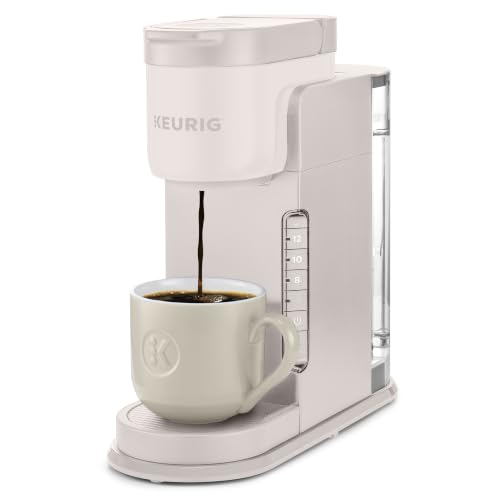
Keurig K-Express
Badge: Best for Checking Variants
The K-Express is Keurig’s straightforward answer to a familiar brief: one cup at a time, quickly, with as little ceremony as possible. You get three brew sizes, a Strong Brew button for days when a pod tastes thin, and a 42 oz removable reservoir that frees you from filling the tank before every single cup. It accepts the full K-Cup range, so the flavour catalogue is as wide as the pod aisle itself, and the drip tray arrangement welcomes a travel mug for the school run or the commute. There is no carafe, no timer and no grinder to manage, and that simplicity is precisely the point: the machine asks for water, a pod and one button press.
Warm Stone earns its place in a test-reading guide as a teaching example with a power cord. It is the K-Express again, in a different finish, with its own listing and its own identifier, and a careless shopper could easily believe a test result for one variant settles the other, or, just as wrongly, that the untested colour is a different machine entirely. The disciplined view is simpler: performance-relevant identity lies in the model and its specification, which these finishes share in full, while the identifier and the colour are retail facts. Learn to separate those layers here, on a harmless example, and you will read every test table in every category more accurately afterwards.
Strengths
- A removable 42 oz reservoir means several cups between refills, unusual at this size
- The Strong Brew button gives a simple way to deepen flavour without changing pods
- Travel-mug friendly clearance suits commuters who brew straight into a tall mug
Trade-offs
- Pod-only brewing, so running costs and packaging waste follow the pod format
- Three colour variants of the same machine appear in this pool, so choose on finish, not features
- No grounds basket is listed, so your own coffee needs a separate reusable pod solution
At a glance
- Format: single-serve K-Cup pod brewer
- Brew sizes: 3 sizes
- Reservoir: 42 oz, removable
- Controls: Strong Brew button
- Cup clearance: travel-mug friendly
- Compatibility: works with all K-Cup pods
Best for: readers learning to match tested models to retail listings with confidence / Not suited for: anyone who believes a finish variant implies a performance difference; here, it does not
Check on Amazon to see the current version of the Keurig K-Express and confirm the details that matter to you.

Elite Gourmet Single-Serve Coffee Maker (EHC111A)
Badge: Best Simple Test Case
The Elite Gourmet EHC111A takes the opposite route from the pod machines around it: a reusable filter, your own ground coffee, and one button. It brews up to 14 oz, which is a full travel mug, and the same filter handles loose-leaf tea, a small bonus no pod machine in this line-up offers. One-touch operation, auto shut-off and dishwasher-safe parts keep the ownership experience deliberately plain. At 600W it is not built for speed records; it is built for a desk, a dorm or a small kitchen where a simple, inexpensive route to a fresh cup matters more than a feature list.
The Elite Gourmet is the machine convenience criteria were invented for. One-touch operation, auto shut-off, a reusable filter for grounds or loose-leaf tea and dishwasher-safe parts are all claims a tester, or a buyer, can verify almost by looking, and together they describe a machine whose daily friction is close to zero. Its limits are equally legible: 14 oz at a time, a gentle 600W heater, no reservoir story to tell. In a test table this is the product that scores its points honestly in the convenience columns and concedes the capacity columns without argument, and there are many small households for whom that is exactly the right profile.
Strengths
- A reusable filter lets you brew your own grounds and even loose-leaf tea, with no pods to buy
- One-touch operation and auto shut-off make it hard to use wrongly
- Dishwasher-safe parts simplify the weekly clean
Trade-offs
- The 14 oz capacity is one generous mug and no more, so couples brew in turns
- At 600W it is a gentle heater, so patience helps on the largest pour
- The pool lists no reservoir, so expect to add water for each brew
At a glance
- Format: single-serve, grounds and loose-leaf tea
- Capacity: 14 oz
- Power: 600W
- Filter: reusable filter for grounds
- Controls: one-touch operation
- Care: auto shut-off, dishwasher-safe parts
Best for: buyers who value a machine whose convenience claims can be checked at a glance / Not suited for: households needing volume; its 14 oz, one-cup design is a deliberate limit
Check on Amazon to see the current version of the Elite Gourmet Single-Serve Coffee Maker (EHC111A) and confirm the details that matter to you.
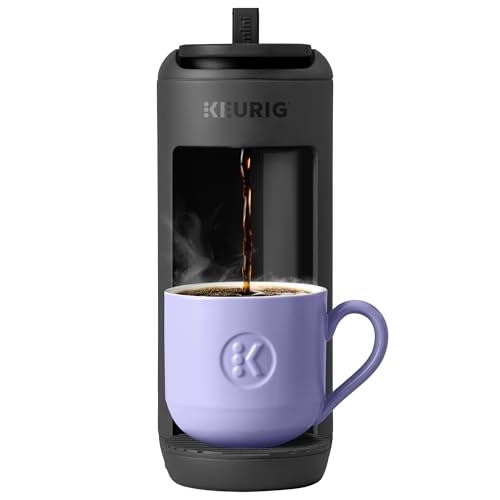
Keurig K-Mini Mate
Badge: Best Minimal Footprint
The K-Mini Mate is the pool’s true minimalist. It brews one cup of up to 12 oz from a K-Cup pod, you add fresh water for each brew, and the body is compact and portable enough to live in a dorm room, a small office or the corner of a rental kitchen. That per-cup water routine is both its charm and its limit: every cup starts with fresh water and there is nothing to leave sitting in a tank, but there is also no reservoir to carry you through a busy morning. For a solo drinker with very little space, that trade is often exactly right.
The K-Mini Mate closes the ranking as the pool’s minimal case: a compact, portable pod machine brewing up to 12 oz, aimed at small spaces, dorms and offices. Test frameworks handle such machines well when the category is drawn correctly, because the questions are few and answerable: is the cup consistent, is the routine as simple as promised, does the small body survive daily handling? Judged against batch brewers it would look absurd; judged against its own brief it is coherent and complete. That is the final lesson of this guide in product form. Always ask which category a score belongs to before you let it move you, because a fair test in the wrong category is still the wrong test.
Strengths
- The smallest footprint story in this pool, made for tight counters and shelves
- Brews up to 12 oz, which covers a standard mug without a second cycle
- Portable design travels between dorm, office and home without fuss
Trade-offs
- Water is added per brew, so there is no reservoir convenience
- Pod-only, with the running costs and waste that pods bring
- A single small cup at a time will not serve a queue of guests
At a glance
- Format: single-serve K-Cup pod brewer
- Brew size: up to 12 oz per cup
- Design: compact, portable
- Intended spaces: small spaces, dorms and offices
- Compatibility: K-Cup pods
Best for: dorms, small offices and solo drinkers checking a simple machine against simple needs / Not suited for: families and reservoir seekers, whose criteria this design deliberately does not chase
Check on Amazon to see the current version of the Keurig K-Mini Mate and confirm the details that matter to you.
Comparison Table
| Pick | Reservoir | Formats | Evidence note | Link |
|---|---|---|---|---|
| Ninja Single Serve Coffee Maker (PB051) | 56 oz removable reservoir | Pods and grounds, 4 brew styles | Cup sizes up to 24 oz | Check on Amazon |
| Keurig K-Elite | K-Cup single-serve format | Brushed-silver finish | Feature details to confirm on the listing | Check on Amazon |
| Keurig K-Express | 42 oz removable reservoir | 3 brew sizes, Strong Brew | Travel-mug friendly | Check on Amazon |
| Keurig K-Express | 42 oz removable reservoir | 3 brew sizes, Strong Brew | Travel-mug friendly | Check on Amazon |
| Elite Gourmet Single-Serve Coffee Maker (EHC111A) | 14 oz single-serve | 600W, one-touch operation | Reusable filter, auto shut-off, dishwasher-safe parts | Check on Amazon |
| Keurig K-Mini Mate | Up to 12 oz per cup | Compact, portable design | Made for small spaces, dorms and offices | Check on Amazon |
This comparison table is deliberately headed differently from a sales table. Alongside the capacity and format facts, its final column records an evidence note for each machine: what is verified, what is brief and what a careful buyer should check next. That column is the soul of a test-led guide. Two machines can share a row of specifications and differ entirely in how well those specifications are supported, and a reader trained to notice the difference will shop every category better for the rest of their life.
Use the table as a pre-purchase checklist. For the machine you favour, confirm the current version on the product page, search for current independent coverage under the exact model name, and check that the tested or listed unit matches the one in your basket, variant by variant. If coverage does not exist, that is information too: fall back on the verified specification and the fit with your household, as this guide has done, rather than borrowing confidence from a similarly named product. Shoppers who prefer to decide on household fit alone can cross-reference Best Consumer Coffee Makers.
How to Choose Like a Tester: Reading Reports and Choosing Well
Understand what testers actually measure
Independent test programmes earn their authority from repeatable measurement, and knowing the menu of measurements tells you what a score can and cannot say. In this category, testers typically assess brew consistency from cup to cup, the temperature and strength of the delivered coffee, speed and readiness, the convenience of controls and cleaning, and the accuracy of the maker’s own claims about sizes and capacity. Taste panels may add a human layer, structured and blind where the programme is serious. What no bench can measure is your household: your water, your pods or grounds, your staggered alarms and your patience for descaling. A score is therefore a statement about a machine under test conditions, and its relevance to your kitchen is a judgement you still have to make.
Category boundaries are the second thing to internalise. Single-serve machines are tested against single-serve criteria because their purpose differs from a batch brewer’s; a machine that would fail a carafe test on volume may top its own category on consistency and convenience, and both results can be true. When you read any report, find the category definition before the rankings, and refuse to import a score across a boundary. Most consumer confusion in this market is not caused by bad testing but by good testing read carelessly, one category over from where it belongs.
Match the tested model to the product in your basket
A score belongs to a specific tested unit, identified by model name and often by a version or a suffix, and retail listings are not always careful about the distinction. Before you let any report influence a purchase, perform the match deliberately: the model name exactly, the specification point by point, and the variant, remembering this guide’s K-Express finishes, where colour changes the listing but not the machine. Manufacturers also revise products silently, so a test of an earlier version is evidence about the current one, but weaker evidence than its headline suggests. None of this makes reports useless; it makes them documents to be read with the same care with which the good ones were written.
Where no coverage of your exact model exists, resist the gravitational pull of the nearest famous name. A test result for a different machine, however similar the marketing, is not data about yours. Fall back instead on the verified specification, on the fit criteria in this guide’s other sections, and on the accumulated pattern of owner experience for the exact model, read for recurring specifics rather than for sentiment. That fallback is not a second-best embarrassment; on many purchases it is the best evidence available, and using it knowingly is what evidence-led buying means.
Turn criteria into your own scoring sheet
The practical endpoint of test literacy is a personal scoring sheet. Take the criteria the testers use, consistency, convenience, capacity, flexibility and care, and weight them for your household before you look at any rankings, so the rankings inform your weights rather than replacing them. A dorm buyer weights convenience and footprint heavily and capacity barely at all, which lifts the small machines in this pool. A large household inverts those weights and lands on the Ninja. A grounds loyalist adds a format row that eliminates half the field before scoring begins. The sheet takes ten minutes and prevents the commonest expensive mistake in the category, buying the machine that won somebody else’s test.
Keep the sheet after the purchase, too. When the machine arrives, score it yourself against your own criteria over the first month: the consistency of your cup, the reality of the routine, the cleaning as actually performed. That habit closes the loop between testing and living, and it makes your next purchase, in any category, calmer and cheaper. It is also, not coincidentally, the habit that the best test programmes are trying to teach their readers between the tables. Readers whose decisive criterion is a quiet house should build their sheet from Best Consumer Quiet Coffee Makers instead.
How to Verify a Coffee Maker Before You Buy: A Step-by-Step Check
This guide’s how-to layer is a verification routine, the same one its own reviews were built under. Run it on any machine in this list, or any machine anywhere, and you will know more about your purchase than most product pages ever tell you. It takes one sitting, a notebook and a sceptical frame of mind.
- Write down the exact model name and identifier from the listing, and treat every other name, however similar, as a different product until proven otherwise.
- Extract the verifiable claims: sizes, reservoir, formats, modes and care features, and note which claims the listing does not make.
- Search for current independent test coverage under that exact model name, and record the category the testing used before recording any conclusion.
- Compare the tested or listed specification against the unit in your basket, variant by variant, including finish and any version markers.
- Score the machine against your own weighted criteria, consistency, convenience, capacity, flexibility and care, using only the verified claims.
- Make the purchase decision on the combination of verified specification, any genuinely matching test coverage and your own weights, in that order.
The same discipline improves life after the purchase. Keep your coffee consistent by controlling the variables testers control: fresh water, a consistent dose, the same size setting while you learn a new pod or roast, and a descaling schedule set by your water rather than by symptoms. When a cup disappoints, change one variable at a time and note the result, exactly as a bench test would. A household that adopts that habit stops blaming machines for supply problems and stops replacing hardware that a descale would have saved.
And keep perspective about what verification cannot do. It cannot taste the coffee for you, and it cannot live your mornings. The final check is always the imagined routine: this machine, your counter, your people, your water, at your worst hour of the week. Test reports, including the framework in this guide, exist to inform that imagination with facts, not to substitute for it.
Troubleshooting: small problems, simple fixes
Problem: two reports rank the same category differently — Check the categories and criteria before suspecting either report: different category boundaries, different weights for convenience against performance, and different test cohorts routinely produce different winners from honest work.
Problem: you cannot find any test coverage of your exact model — Treat the absence as neutral, not damning: verify the specification from the listing, score it against your own criteria, and read owner experience for the exact model, watching for recurring specifics rather than overall sentiment.
Problem: the listing and a report describe different features — Trust neither until you have matched versions: manufacturers revise machines and reuse names, so confirm the current version specification on the product page and date any report you rely on.
The Limits of Scores: What Testing Cannot Tell You
A test programme measures a machine; it cannot measure a marriage between a machine and a household. It cannot know that your water is hard enough to scale a neglected brewer in a season, that your household’s second drinker will only accept grounds, or that your counter’s only free corner sits under a low cabinet. Those facts, which decide real satisfaction, are knowable only to you, which is why the most sophisticated use of a report is also the humblest: let it eliminate the genuinely weak, verify the claims of the plausible, and then choose among the survivors on fit. Buyers who skip the last step own excellent machines they dislike, a common and expensive species of regret.
Scores also age. Models are revised, pods change, a category is redrawn, and a ranking that was fair for its cohort becomes a historical document while still wearing the authority of print. Date every conclusion you borrow, prefer current coverage of current versions, and hold older results as background rather than verdict. This guide has modelled that restraint by printing no scores at all; your own reading should apply the same restraint in proportion, trusting the method of testing completely while trusting any individual number only as far as its date and its category allow.
How This Guide Used the Test Framework
It is worth closing the loop on method, because a guide about evidence should show its working. The six reviews above rest on three layers. The foundation is verified listing data, the only facts asserted without qualification. Above it sits a tester-style framework, consistency, convenience, capacity, flexibility and care, used to organise judgement and to make the ranking’s reasons inspectable. Above that sits household fit, the layer where your circumstances rightly overrule any framework, including this one. Where the layers conflicted, the reviews said so: the K-Elite’s premium position is recorded, its thin verified detail is recorded, and the recommendation is conditional precisely because the layers disagree.
That transparency is the standard to demand from any source, this one included. A review that hides its criteria can never be argued with, and a review that cannot be argued with is marketing wearing a lab coat. Take the framework, keep your own weights, verify the exact model in your basket, and the phrase consumer reports will have done for you what it does at its best: not chosen your coffee maker, but taught you how to choose it. For the plain household ranking without the laboratory framing, Best Consumer Coffee Makers remains the companion read.
Common Buying Mistakes
- Treating a score as a property of a name. Scores belong to tested units in defined categories. Match the exact model and version in your basket before letting any number influence you.
- Importing results across categories. A batch brewer ranking says nothing about a single-serve machine, and vice versa. Find the category definition before the table, every time.
- Assuming a colour variant is a different machine, or the same listing. Variants share performance-relevant identity and differ in retail identity. The three K-Express finishes in this pool are the standing example of both halves of that rule.
- Buying the winner of somebody else’s criteria. Weight consistency, convenience, capacity, flexibility and care for your own household first, then read rankings through your weights.
- Ignoring the date of a test. Models are revised and cohorts move on. Old coverage is background, not verdict, and current versions deserve current evidence.
- Skipping verification when no coverage exists. Absence of a test is not absence of evidence. The verified specification, your criteria and exact-model owner experience remain a sound basis for a decision.
Final Recommendation
On tester-style criteria applied to verified facts, the Ninja PB051 is this guide’s leading recommendation: the broadest checkable specification in the pool, with two formats, four styles, the largest reservoir and the widest size range, giving an evidence-led buyer the most substance to verify and the most capability to use. The Elite Gourmet and the K-Mini Mate are its honest counterweights, machines whose small, legible claim sets make them easy to assess and easy to live with in small households.
The K-Express in black is the fully specified mainstream default, its Warm Stone twin the standing lesson in variant matching, and the K-Elite the premium candidate whose purchase should be conditional on the verification routine this guide teaches. Whichever machine you favour, run that routine before you buy: exact model, verified claims, current coverage in the right category, and your own weighted criteria. Do that, and you will not merely own a well-regarded coffee maker; you will know why it deserves its place on your counter. Start the verification with the leaders here:
Check on Amazon Check on Amazon Check on Amazon
Frequently Asked Questions
Does this guide reproduce Consumer Reports scores?
No. This guide prints no scores from any publication and claims no endorsements, because scores belong to specific tested versions and change as models and categories are revised. Instead, it reviews the machines against the criteria testers use, from verified listing data, and teaches you to check current coverage of exact model names yourself.
How do I find test coverage of one of these exact machines?
Search the exact model name, including any suffix or version marker, and confirm that any coverage you find used the same model and a category that fits single-serve brewers. Check the date of the coverage and compare its specification against the current product page before relying on it.
Why are single-serve machines tested separately from drip machines?
Because their purpose and their failure modes differ. Single-serve testing emphasises cup-to-cup consistency, speed, convenience and format, while batch testing adds carafe capacity and held-coffee quality. A score earned in one category does not transfer to the other, however similar the machines may look.
Are the three K-Express finishes in this series different machines?
For performance purposes, no: they share one verified specification and differ in colour and listing. For purchasing purposes, treat each listing on its own terms, confirm the specification on the page in front of you, and remember that a test of the model speaks to all finishes while a listing speaks only to itself.
What should I do if no tester has covered the machine I want?
Use the fallback this guide models: verify every claim from the listing, score the machine against your own weighted criteria, and read owner experience for the exact model, looking for recurring specifics. Many good purchases rest on exactly that evidence, gathered carefully.
Which machine here is easiest to assess before buying?
The machines with the most complete verified listings: the Ninja PB051 for capability and the K-Express models for everyday specification. The K-Elite is the hardest to assess from its listing alone, which is why its recommendation in this guide is explicitly conditional on checking the current version first.


